No Pot on Purvine

0

Purvine Road runs for two miles from Middle Two Rock Road to Springhill Road in West Sonoma County. Barns, cows, farmhouses and barbed wire fences dot the landscape. There are no grapevines on Purvine Road, though there are cannabis gardens.

Some residents say they’d like to grow more pot than they’ve grown in the past. They’ve applied for permits from the county, and, like many others, they’ve been waiting for a long time for approval.

They might have to wait a whole lot longer. Pot prohibitionists in Sonoma County, and on Purvine Road, aim to delay and upend the permitting process.

Alexa Rae Wall, chair of the Sonoma County Growers Alliance (SCGA), doesn’t like what she sees and hears from the neighbors. A native of Texas and now a veteran California marijuana grower, she was recently zoned out of participating in the cannabis economy. She bought another property and is now going through the permitting process.

“It’s frustrating when people reach out to me and I don’t have anything positive to say about the future of cannabis in the county,” Wall says.

At a recent public meeting, Wall listened to citizen complaints about cannabis. Then, she heard Sonoma County Supervisor David Rabbitt tell the crowd, “I would not want to live next door to a grower, either.”

Rabbit’s district includes Petaluma and Cotati, part of Rohnert Park, as well as Penngrove, Two Rock and Bloomfield. Much of his second district is zoned Land Extensive Agriculture, which means that it has large properties appropriate for commercial cannabis operations.

Purvine Road looks peaceful and even bucolic. But it’s a volatile frontier in the long-simmering culture and agriculture war that has set Sonoma County neighbor against neighbor and NIMBYs against backyard cultivators. Old bugaboos about marijuana as a dangerous drug have resurfaced as foes of weed insist it breeds crime and undermines civil order. Save Our Sonoma Neighborhoods, a leading local anti-cannabis group, was born and bred on Purvine.

“Our area is under siege,” the organization’s website insists. SOS has promoted “commercial cannabis exclusion zones” in the very places zoned for agriculture. SOS also calls for the county to disband its Cannabis Advisory Group, which has nearly two dozen members, claiming that the CAG is “an embarrassment to good government.”

Signs declaring “No Pot on Purvine” are tacked to gates and fence posts up and down the road; the group is a spin-off from SOS.

Pot supporters say the signs are ugly. Too bad, says SOS and No Pot on Purvine, who are in communication with Preserve Rural Sonoma County, the organization formed during the recent drought to stop the spread of wine-driven event centers.

Former grape grower and winemaker, and now cannabis grower Mike Benziger worries about this looming alliance between anti-pot and anti-wine forces.

“Wine and weed are both connected to the earth and both are fighting accusations that they violate the land,” Benziger said.

He’s part of a new organization called the Sonona Valley Cannabis Enthusiasts (SCVE). In a press release announcing the group’s formation, SVCE says it will protect small growers in the nearby Sonoma Valley, influence cannabis policy and support local charities as part of its mission.

The group will hold its first open meeting on June 14 at the Sonoma Grille in Sonoma as it sets out to “create the conditions in which Sonoma Valley cannabis is recognized for its best practices and cleanliness from artificial chemicals and additives,” through partnerships with area food, wine and entertainment businesses.

Meanwhile, Ayn and James Garvisch help lead the battle against pot on Purvine. Ten years ago they moved from Alameda to Sonoma County.

“I’m against pot here because it’s a violation of federal law,” James Garvisch says. “And because there’s only so much water to go around.”

The Garvisches have not been opposed to the expansion of vineyards and wineries. Garvish defines himself and his wife as “conservative capitalists and libertarians.” The family raises goats, sheep and cattle and grows vegetables as a hobby. He says he smoked pot as a teenager. “I didn’t inhale,” he laughs.

The “No Pot on Purvine” signs are so numerous, it seems everyone on Purvine is against pot.

Not so. Walter Collings is 82 years old, a hunter and fisherman who was born on Purvine and who raised sheep until coyotes killed most of his flock. Collings uses a marijuana salve for his aching joints. “I’m not a pothead,” he says.

He has grown marijuana for years and will continue to do so no matter what his neighbors say. Many no longer talk to him.

“I’m the bad guy,” he says. “Not long ago, I went down to a meeting held by the supervisor and some guys practically jumped me and wanted to know if I was going to grow pot.”

Collings is defiant about his rights.

“Last year, I grew four plants and gave away all the pot. I’ll put in six plants this year. I won’t do seven because that’s against the law. My son also grows. He gets his plants in Ukiah where they cultivate a lot of it.”

Sam Magruder lives on Purvine Road a short distance from Collings. He’s one neighbor who still talks to him. Magruder learned about cannabis at Humboldt State University and has worked as a licensed caregiver for a medical cannabis patient. He sees cannabis as a civil rights and a health issue.

“I think we’re at a tipping point now, and at much the same place that the Prohibition against alcohol was at in the 1930s, when it was repealed,” he says.

“Imagine what Sonoma County would be like now if Prohibition had continued. We would have no grapes, no wine and no craft beers. Cannabis belongs in Sonoma County along with our artisan products.”

Magruder says there’s a cultural divide on Purvine Road, with NIMBYs on one side and old timers on the other. He’s a newcomer in a neighborhood where pot has been grown for decades and has a pending application to grow cannabis on his property.

“Old timers think if it’s your land you should be able to do what you want with it,” Magruder says. “But the neighborhood is being gentrified and the gentry don’t like cannabis.”

He has invited neighbors to tour his property, but none has taken him up.

If and when his application is approved—he applied last August—Magruder plans to grow marijuana outdoors and in a greenhouse. His weed will be fenced-in and screened with fire resistant plants. There will also be a security system linked to the Sonoma County Sheriff’s Office.

The armed home invasions and the violence that have taken place around cannabis in the county, he notes, have all taken place at unlicensed grows sites.

According to Kimberlee Cordero, legal staff coordinator for the sheriff’s office, two homicides in the county this year were marijuana-related while three were domestic-related. Cordero added that it was “unknown if alcohol or any other drugs were involved.”

Sonoma County Agricultural Commissioner Tony Linegar recognizes that “marijuana is so valuable that people are willing to kill for it.”

But he doesn’t point a finger at growers. “It’s our collective failure, the feds and the whole country,” saysLinegar. “The onus is on us.”

Like Collings, Magruder is disappointed with elected officials’ reactions to the nascent pot economy. “I don’t see anyone in the county standing up and being a leader on cannabis.”

Sonoma County Supervisor Shirlee Zane, has done more than any other county official to ban cannabis grows from property zoned agriculture-residential and rural residential. Along with the work undertaken by community groups like SOS and its subsidiary, “No Pot on Purview,” Zane has gone out of her way to generate anti-pot sentiment in public comment.

In May, she spoke to the students who produce The Star, the campus newspaper at Sonoma State University. When asked about the role of the supervisors vis-à-vis cannabis, she said, “Cannabis has been, as far as I’m concerned, a real burn in the butt.”

She went on to explain that, “we’re seeing a lot of people who live in rural areas have their quality of life diminished.”

John Kagia, a marijuana industry analyst, keeps a sharp eye on Sonoma County from his perch at New Frontier, a cannabis think-tank in Washington, D.C. What does Kagia see in the future?

“A lot of turbulence. The home invasions have not driven cultivators out of the industry, but rather forced them to become increasingly invisible and minimize their exposure. It’s not what the law intended.”

Andy and Helena Martin live downhill from Collings in an octagonal house built in the 1850s that they’d like to leave to the county as an historic landmark. The Martins don’t cultivate cannabis, but don’t have a problem with their pro-pot neighbors.

“Better that little people grow it than big corporations,” Helena Martin says “Keep it local.”

“No one is going to stop cannabis in California,” adds Andy Martin. “I’d rather have it grown legally and in the open by people I know, rather than illegally and in the dark.”

Triathlon of Art

0

While it may not be widely known about outside of Humboldt County, the annual Kinetic Sculpture Race has taken on cult-like status in the Northern California communities of Arcata, Eureka, Ferndale and everywhere in between.

Marking its 50th year this Memorial Day weekend, the Kinetic Sculpture Race is a human-powered trek over land, sand and water that covers more than 40 miles and lasts three days. Participants in teams of up to a dozen must design, build and pedal their artistic creations on wheels. These creations can take on the forms of imaginative creatures and contraptions, and the event has become a pastime for many artists and makers in the area, including Santa Rosa artist and teacher Dawn Thomas.

“We started building kinetic sculptures before we knew about the race,” says Thomas, who had previously designed mobile works of art for events like the Rivertown Revival in Petaluma with her partner Bob.

Once she heard about the race, Thomas knew she had to participate. After her first race in 2014, she was hooked.

“We’ve been racing ever since,” she says. “It’s kind of a profound cultural experience to be somewhere that’s had a race for three generations. Everybody knows about it, everywhere you go you’re a celebrity because you’re in the race, and all the people in the race are lovely. A lot of them are lifers.”

Soon after joining the ranks, Thomas looked around for a book on the subject, but found virtually nothing documenting the event. “I could see it in my head; a giant coffee table book with all these pictures and all this history,” she says.

For more than three years, Thomas made it her mission to track down hundreds of stories and compile hundreds of never-before-seen photos for the new 600-page book Kinetic Kompendium: 50 Years of Kinetic Sculpture Racing.

“I think I was the right person to come along at the right time in a way,” says Thomas.

Thomas dug through newspaper archives, interviewed countless people and combed through boxes in attics throughout Northern California to find the various ephemera that makes up the “Kompendium.”

R Thomas would ideally like to see something similar to the Kinetic Sculpture Race take place in Sonoma County. “I feel like if it was done correctly, it would be a tremendous success,” she says. “We have the bike-builders, people who want to do outdoor sports, people who are creative.”

Until then, anyone with an interest in the race will enjoy thumbing through the Kinetic Kompendium and should consider traveling to Humboldt to see the race first hand. “There are so many amazing images out there of this race,” says Thomas. “It’s a spectacle.”

Tip of the Spear

0

It’s called spearfishing, but it’s really spear-hunting. The fish don’t come to you. You must go to them, with your finger on the trigger.

That fact became clear as soon as I dove beneath the surface into the 48-degree water in a picturesque cove north of Fort Ross. I’d been abalone diving before and once I learned to regulate my breath and stay calm, finding and prying the mollusks off rocks was relatively easy.

Spearfishing is different. While some fish hole up under rocks and stay put, many species are on the move, which means you have to first spot them and then have the wherewithal to get close enough to take aim with your speargun, all before your breath gives out and you need to surface and start over again.

Outfitted in a 7-millimeter wetsuit, hood, booties gloves, mask, fins and a 18-pound weight belt—and toting a menacing–looking speargun—I dove into the icy water again and again in search of my prey.

But I never fired my weapon. I spotted a few rockfish darting about, but they were too small to shoot. There was no sign of the hulking lingcod I hoped to find. My visions of a grilled fish and cold beer were not to be.

It turns out spearfishing is a lot harder than diving for abalone.

My dive partner, Zeke Cissell, had better luck and plunked two black rockfish. He’s the manager at Seals Watersports in Santa Rosa and a veteran diver. Seals is Santa Rosa’s outpost for spearfishing gear as well as scuba and surfing supplies. Cissell took me out last year on my first ab dive, too. While I was hunting for abalone, he was spearfishing. He enjoys the challenge and says he likes the taste of fish better than abalone. Cleaning a fish is easier than butchering an abalone, he adds.

A few months after my first ab dive last year, state regulators closed the season to recreational divers this year in hopes of helping the embattled shellfish recover.

Now spearfishing is the only game in town for divers who want to capture their dinner. All you need is a regular sport-fishing license. Abalone diving season usually begins in April, but according to local dive shops, interest in spearfishing is spiking as seasoned abalone divers pick up spearguns and newcomers like me take up the sport.

“We’ve definitely seen an uptick,” says Tom Stone, owner of Rohnert Park’s Sonoma Coast Divers. “We have many people coming in just because of their love of the water.”

While I got skunked, I’m eager to go back. Fish or no fish, spearfishing offers passage into an underwater world most of us never get to see. While I spied precious few fish, I saw iridescent, waving anenomes, starfish and more than a few hefty abalone that will be left in peace for at least the next year, poachers notwithstanding.

But mostly what I saw were purple urchins. Thousands of them carpeted the rocks like tiny cacti. The proliferation of the spiny buggers is part of the reason for the abalone’s demise. The urchins gobbled up most of the kelp, which is abalone’s primary food source. Aided by the die-off of urchin-eating sea stars and warming ocean temperatures, the exploding population of urchins has transformed what was an undersea garden into the equivalent of a clear-cut forest.

While the underwater scene is beautiful to behold, it’s a landscape that has been transformed. Now the nacreous shells of abalone that starved to death litter the ocean floor.

On Memorial Day, the Waterman’s Alliance is organizing an urchin gathering dive at Ocean Cove to try collect as many urchins as possible in hopes of getting kelp to grow back and coax the abalone population back to health.

Fortunately, the urchins (which are edible) have not affected the rockfish population, which Stone says is growing in number thanks to the creation of California’s network of Marine Protected Areas (MPA), zones of protected marine life and habitat.

The North Bay’s MPA is the North Central California MPA, and it runs from Point Arena to Pigeon Point in San Mateo County. In addition to lingcod and black rockfish, sought-after species for spearfishing include cabezon, vermillion and sand-dwelling halibut.

For newcomers like me, Cissell recommends going out with a buddy to spots with easy access, like Stillwater Cove and Fort Ross. Better yet, take a class. Sonoma Coast Divers and Petaluma’s Red Triangle Spearfishing offer courses that teach diving and breath-holding techniques, as well as water safety.

Parviz Boostani, co-owner of the menacingly named Red Triangle Spearfishing in Petaluma, says interest in the sport is growing following the abalone ban. The shop offers a free-diving (no scuba) certification class.

“People still love to get out on the ocean,” he says. “The only alternative is spearfishing. It’s a different kind of hunt.”

OK, what about sharks? Well, they’re out there. Stone suggests avoiding drop-offs and pinnacles where great white sharks sometimes lurk. Cue the John Williams score.

Sharks are known to inhabit deep waters and ambush prey in shallower depths. But Stone says attacks are rare. “You’re more likely to die driving off a cliff getting up there” to Fort Ross, he says.

Cissell tries to not think about sharks, given the low odds of an encounter. Diving at shallower depths can further minimize the risk.

“You don’t have to go super deep to get what’s on our coast.”

Even though I was diving at 25 feet or less, I felt better facing into deeper water with the shore behind me, lest I get surprised with my back turned.

“That’s the risk,” says Boostani. “You’re in their world.”

Boostani likes to go deep and hunt in waters he knows are sketchy. After his friend was attacked by a shark in Monterey last year, he now wears a Shark Shield. The $500 device is worn around a diver’s ankle and sends out an electromagnetic pulse that is supposed to deter a hungry shark.

“That makes me feel a heck of a lot better,” he says.

For Stone, the risks and enjoyment that come with spearfishing are worth the risk, especially if you go home with dinner.

“Fresh seafood is more expensive than ever,” he says,

Heck yeah, it is.

Back in the cove with Cissell, he looked like an underwater commando with a flashlight strapped to his wrist and knife on his ankle. He uses the light to peer into dark holes and crevices in search of lunkers.

“You’re looking for a pair of eyes looking back at you.”

I saw no eyes. Cissell took pity on me after I came up empty-handed and gave me his fish. I got to enjoy fresh fish and cold beer after all. The fish were small, and made for great tacos. I’m hooked.

May 9-10: Words of Wisdom in Napa & Sonoma

0

When illustrator Hallie Bateman had the realization as a young adult that her mom, writer Suzy Hopkins, would not be around forever, she decided to make a record of her mother’s wit and wisdom. Together, mother and daughter collaborated on ‘What to Do When I’m Gone,’ an illustrated step-by-step guide of sorts that offers insights into both pragmatic and poignant issues that are lovingly illustrated. Hopkins and Bateman appear with the book on Wednesday, May 9, at 7pm at Napa Bookmine (964 Pearl St., Napa; 707.733.3199) and Thursday, May 10, at 7pm at Readers’ Books (130 E. Napa St., Sonoma; 707.939.1779).

May 12: Pump It Up in Santa Rosa

0

This Mother’s Day weekend, the whole family can add some sporty fun to the brunch-heavy schedule by checking out the Ironman Santa Rosa triathlon and getting a glimpse of the many iron men and women partaking in the running, swimming and bicycling challenge that acts as a qualifying race for October’s Ironman World Championship in Hawaii. For locals, the best place to see the action is at the Ironman Village, where the athletes will be crossing the finish line throughout the day on Saturday, May 12, at Courthouse Square, Fourth Street and Mendocino Avenue in downtown Santa Rosa. ironman.com.

May 12-13: Toast to Moms in Napa

0

With Mother’s Day food and wine events everywhere, the CIA at Copia is flipping the script on the culinary offerings with a weekend of interactive events. On Saturday, May 12, celebrate “Moms Who Make Wine” in a 21-and-over tasting event that pours selections from several local matronly winemakers. On Sunday, May 13, the CIA’s family fun day gets the Mother’s Day treatment with a “Brunch Batters” cooking class that teaches you and the kids, ages four and up, how to make pancakes and waffles with creative flair. CIA at Copia is located at 500 First St., Napa. Times and costs vary. 707.967.2530.

May 14: Empowering Pageantry in Sebastopol

0

Veterans returning from duty can have trouble adjusting back to civilian life, women as much as men. In Lysa Heslov’s documentary, ‘Served Like a Girl,’ several American women who were wounded in action after serving in Iraq and Afghanistan try to adapt to emotional, social and economic challenges in the United States. The film also highlights the Ms. Veteran America Competition, founded to help women veterans regain identities they lost in the war. “Served Like a Girl” screens as part of the Indie Lens Pop-Up series on Monday, May 14, at Rialto Cinemas, 6868 McKinley St., Sebastopol. 1pm and 7pm. Free. 707.525.4840.

Elephant in the Room

0

It’s been a couple of wild weeks for the California State Republican Party now that it’s been revealed that one of the highest polling Republicans in the state is a blatant neo-Nazi who denies the Holocaust happened.

The party has been dealing with fallout from a recent statewide poll, which revealed that self-described “counter-Semite” Patrick Little was leading all challengers, Democrat and Republican, in the race for Sen. Dianne Feinstein’s seat. Feinstein is Jewish.

The state GOP’s Little headache piled on to a set of grim statistics that keep mounting for a party whose support is cratering in the state since Donald Trump’s election as President. Only about 25 percent of registered voters in the state are Republicans, and the last time the party took a statewide race was in 2006, when immigrant Arnold Schwarzenegger took the governor’s race. This year, immigration hard-liners in the southern part of the state have rallied around their antipathy for the state’s sanctuary law, while more moderate Republicans helplessly fret over Latinos’ wholesale abandonment of Republicanism in the Trump era.

Enter Patrick Little. He tried to attend the state GOP spring convention in San Diego over the weekend. It didn’t go well, he said in a brief interview. Little was booted from the event when he attempted to register at the VIP table, despite his declaration to organizers, he notes, that he’s the top-polling Republican in the state. As a parting shot, he stomped on an Israeli flag as he departed the convention.

Little has taken a square aim at the powerful lobbying organization American Israel Public Affairs Committee (AIPAC) in his campaign. The organization did not respond to requests for comment.
In scanning leading state newspapers in the lead-up to the convention last weekend, a consensus view emerged in the various editorials and analyses which indicated that among California’s political and media class, ignoring Little seems to be the best strategy to make him go away. News stories about the convention barely mentioned Little, if they mentioned him at all, and focused on the party’s challenging work ahead in a state whose Democratic supermajority has dug in as the loyal opposition in the aftermath of Trump’s minority-vote victory in 2016.

The state GOP has tried to gain traction with California voters this year with its initiative to repeal a new state gas tax—but it’s really hard to ignore the fact that the same party is fielding a candidate for U.S. Senate who doesn’t believe there were gas chambers at Auschwitz. Can Little be so easily dismissed? It’s a hard row to hoe for the GOP. The party wants voters to believe that Gov. Jerry Brown has bankrupted the state, even as last week California leapt over Great Britain to become the world’s fifth largest economy.

When the poll broke that showed Little’s surprising surge, national political outlets such as right-leaning The Hill were replete with stories from state GOP leaders of the “we’ve never heard of this horrible person before” variety.

The Bohemian made numerous attempts to contact the state Republican Party to discuss the Little phenomenon, to no avail. They clearly want him to go away. The takeaway from state party leaders is that they are aghast that an unapologetic anti-Semite could lay claim to the mantle of the state GOP’s messaging with his 18 percent showing in the polls.

Yet this is the same state GOP which supported a candidate for president in 2016 who refused to disavow an endorsement from American Nazi David Duke; who said there are “good people” among violent white supremacists; and whose “America First” platform is a throwback to anti-Semitic American isolationism prior to WWII, though wrapped in a proverbial “dog whistle”—coded language that appeals to a specific constituency while not rattling the mainstream.

There’s no dog-whistling in Little’s campaign, where he calls for the deportation of Jews, among other “counter-Semitic” policy proposals.

Meanwhile, the Anti-Defamation League recently reported that incidences of anti-Semitic violence have spiked since Trump’s election, including in California. The organization conducted a workshop on combating anti-Semitism recently in Silicon Valley.

Trump visited the state in March. At that time, Kurt Bardella (a Republican messaging strategist and former staffer to retiring California Congressman Darrell Issa) wrote on CNN’s opinion page online that “the reality is Trump’s brand of xenophobia is toxic to what little is left of the Republican Party in California. . . . Instead of evolving with the changing demographics, Republicans in California have continued to embrace the fringe policies and rhetoric of the most extreme edges of the GOP.”

Bardella did not respond to requests for an interview for this story.
In the end, the state Republican Party did not endorse anyone at its weekend convention to run against Feinstein, who is both a deeply unpopular and unmovable force in California Democratic politics. Her would-be challenger from the left, State Sen. Kevin de León, crawled in at a meager 8 percent support in that same poll which found Little at 18 percent. The growing irrelevancy of the Golden State Republicans appears to have provided political space for a candidate such as Little to emerge, especially given that the fix is in on Feinstein’s re-election. The party hasn’t pushed out a favored candidate in what’s sure to be a losing race for her seat, and has struggled to find candidates to run at all this year. The big promised news going into the state GOP convention was over whether the party would endorse John Cox or Travis Allen in the governor’s race. It ended up endorsing neither man.
Into this political vacuum enters Patrick Little.

So who is he? The former Marine has filed campaign certification paperwork with the California Secretary of State that lists his address as an apartment located in a student housing complex owned by UC Berkeley. But he’s not a student there and has never been. Little confirms this in a phone interview and says, “That’s my campaign address.”

The address under file with the Secretary of State is in the city of Albany, which is just north of Berkeley and where the university owns a sprawling apartment complex with various amenities, called University Village.

The Bohemian is not printing the address given that, according to UC Berkeley, the person at the address has every right under university policy to allow Little to use the location as his campaign address.

But it does raise a question about Little’s connection to the university, the site of numerous protests and tense stand-offs between Trump supporters and anti-fascist activists over the past couple of years.

A university spokesperson says no person named Patrick Little is currently enrolled at Berkeley, nor has anyone ever been enrolled at the university who has that name. The spokesperson could not identify the person who lives at the Berkeley-owned apartment associated with Little’s campaign. “We didn’t find any name matching that name either now or in the past,” says spokeswoman Janet Gilmore, who added, “I can’t talk about who may or may not live there because of state privacy laws.”

Little’s Twitter account says that he lives in Albany. He reported online that he was thrown off the social media site on April 29 over his denial of the Holocaust, and wrote that “Hitler saved more [J]ewish lives than any man in history.”

His campaign slogan is: “Liberate the U.S. from the Jewish Oligarchy.”

UC Berkeley has come under intense fire from the so-called alt-right for its security concerns, and cancellations of appearances by such hard-right Trump supporters Milo Yiannopoulos and Ann Coulter. Those episodes have called the university’s vigorous and historic embrace of free speech into question among critics on the right.
Has the university now become a free-speech zone for anti-Semitic students who support the likes of Little and are using university housing to promote his campaign?

[page]

Gilmore sent along information about who may qualify to live in the University Village complex: full-time graduate or undergraduate university students, and their families.

The university does have rules for its tenants, but does not restrict free speech or political activities. “University Village’s residential code of conduct prohibits use of the property for any for-profit activity,” says Gilmore in an email follow-up, “unless as part of a campus Residential and Student Service Programs–sponsored event. It does not prohibit a resident from engaging in political activity that any resident might choose to engage in from their own home. And, we are not aware of any University Village resident engaged in activity inconsistent with residential use.”

Newsweek dug into a poll commissioned by KPIX 5- SurveyUSA that found Little second behind Feinstein and reported on Little’s praise for Adolf Hitler and his call for Jews to be deported from the United States. KPIX, the San Francisco CBS affiliate, blew right past the part of the poll which identified Little’s surprise showing and instead gushed about how the poll indicated that voters were ramped up for an exciting campaign season.

While neither KPIX or Newsweek made mention of it, the poll also showed he was running with 30 percent support from California’s Asian-American population, which clearly contributed to his overall 18 percent support among those who were polled. Feinstein polled with 39 percent support among Asian-Americans.

Little noted his support as he praised their intelligence in a Yahoo interview that ran last week as he engaged in a post-Newsweek round of online self-promotion of his views about the so-called Zionist Occupation Government. In his online postings, the ZOG-ophobe Little says he attended the tiki-lit white-power demonstration in Charlottesville last summer, where a young woman was murdered by a white supremacist who crashed his car into a crowd of protesters.

If the polling numbers hold and are reflected in the primary vote on June 5, Little would face Feinstein in the general election in November.

The next leading Republican candidate running against Feinstein is Rocky De La Fuente, a San Diego businessman and founder of the Delta Party who is also running for Rick Scott’s Senate seat this year in Florida. Fuente ran for president as a Democrat and says he’ll run again in 2020 in the Democratic primary.

Little also beat out Erin Cruz in the KPIX poll, a candidate who might charitably be said to occupy the “mainstream” Trump position in this race. Cruz has adopted the #Americafirst hashtag as her own and riffs off the reality-show president’s slogan when she says her aim is to Make California Golden Again. Her campaign materials indicate that she plans to do this by deporting undocumented immigrants. Cruz did not follow through on an interview scheduled by her staff for Monday.

Late last week, I contacted Little at the email address he posts on his campaign website and he responded with an offer to do a live-stream interview. That’s not an option, I responded, but let’s talk. I sent him several questions about his campaign and asked if he could provide some further context about his support among Asian-Americans.

Late Friday night, Little sent a series of quick emails from the road, saying he was headed to San Diego and the GOP convention, from whence he would be booted. Early this week, he called to set up an interview for a future date, he said, given that he had lots of other media requests to sift through.

I asked him about his support among Asians, and about the Berkeley student housing address, and inquired after who lives there.

“I think you could take a few good guesses,” he responded. “I think you can put two and two together.”

Albany Assistant City Manager Isabelle Leduc declined to comment on the specter of a Holocaust-denying anti-Semite in their midst. “We really don’t know where that person lives,” she says.

It’s not known what Little’s actual connection to the Berkeley address is, beyond that he listed it on a state form as his address and confirms that it’s where his campaign is located. There’s nothing illegal about that. A spokesman at the Federal Election Commission says that candidates for higher office don’t have to reveal their home addresses, and only need to provide a mailing address to the FEC.

“The FEC has no jurisdiction over any residency requirements (i.e., a candidate running from a particular state or congressional district within a state),” says Myles Martin, public affairs specialist at the commission. “The Statement of Candidacy that a candidate files with the [FEC] requires that a candidate provide a ‘mailing address,’ but this need not be their actual residence address.”

Little has not filed a Statement of Candidacy, or any other disclosure reports with the FEC, says Martin. He may not need to. The FEC only requires financial disclosures from candidates who have eclipsed a $5,000 threshold in contributions, or expenditures related to the campaign.

The FEC has assigned a candidate identification number to him, says Martin, which it may do if a candidate “is qualified for the ballot in a state but has not filed a Statement of Candidacy with the FEC.”
Little told the Yahoo interviewer that he’s cautioned supporters to not contribute any money to his campaign, given that those contributions, and who made them, could ultimately be subject to public scrutiny. He also noted that he’s gotten some volunteers to help out with the campaign.

The Anti-Defamation League (ADL) has been tracking Little’s campaign, and in 2014 released a report on anti-Semitism around the world, which, surprisingly, found that there’s quite a bit of anti-Semitic sentiment among various Asian populations. For example, the survey found that some 53 percent of South Koreans answered “probably true” to a majority of anti-Semitic stereotypes, says the ADL’s Joanna Mendelson, the league’s senior investigative researcher and director of special projects.

“If you look at the Asians supporting Little, there is no specific indication that he will be the knight in shining armor to the Asian community,” she says. “The optimist in me just hopes that individuals are just not totally educated on the divisive nature of his platform, and that they become educated.”

She says of Little, “He is not nuanced in his anti-Semitism, and outright condemns any ‘dog whistle’ references [to Jews] in favor of his hate.”

The Maine native’s blatant anti-Semitism is on display on his campaign platform. Among other promises, he says he’ll “introduce a bill to the U.S. Senate making it illegal to raise funds for any foundation related to the perpetuating of propaganda related to a ‘holocaust,’ formally making US’s stance on the holocaust to be that it is a Jewish war atrocity propaganda hoax that never happened.”

He also calls for Twitter, Google and Facebook to be nationalized.
Little’s least controversial campaign pledge is his plan to crash asteroids into the Mars atmosphere to make it more amenable to future humans who may travel there.

That’s how far out things have become for the California Republican Party.

Young at Heart

0

Peter Pan has been seen onstage in one form or another for well over a hundred years.

The J. M. Barrie classic survived being Disney-fied and even Christopher Walken–ized in a disastrous live television spectacle. The most popular adaptation is the 1954 musical starring Mary Martin. It’s that version that takes flight in a well-mounted production running at the Spreckels Performing Arts Center through May 20.

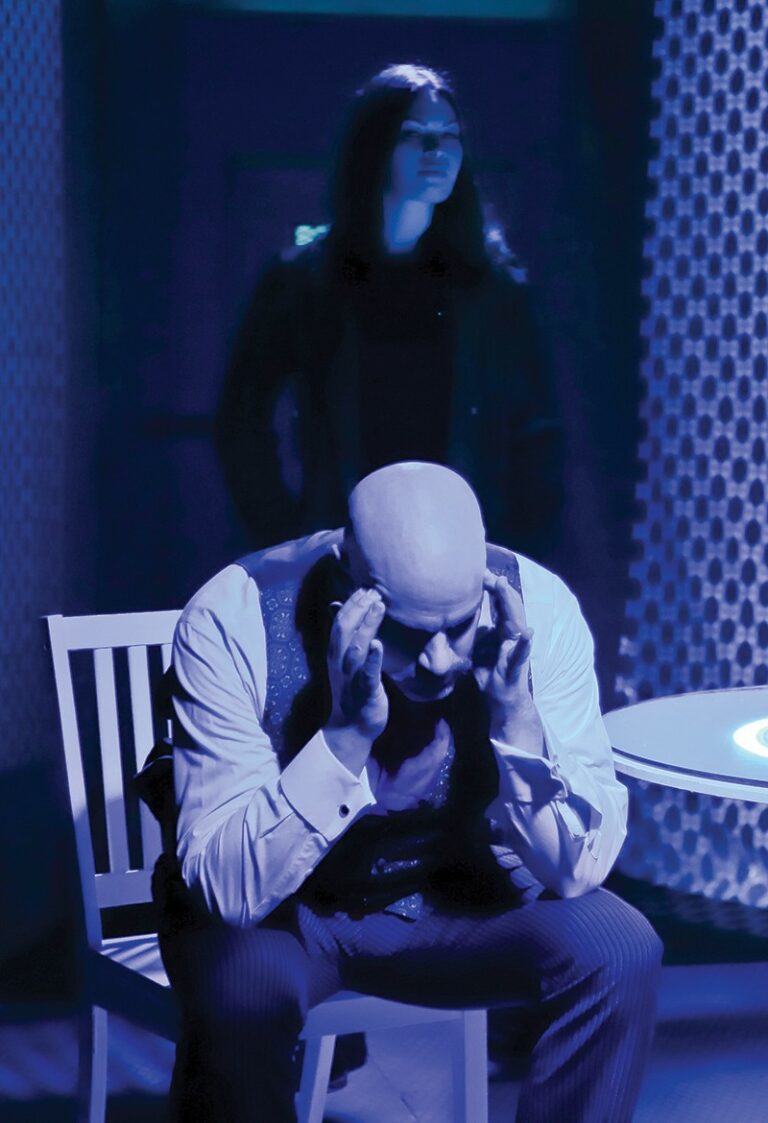
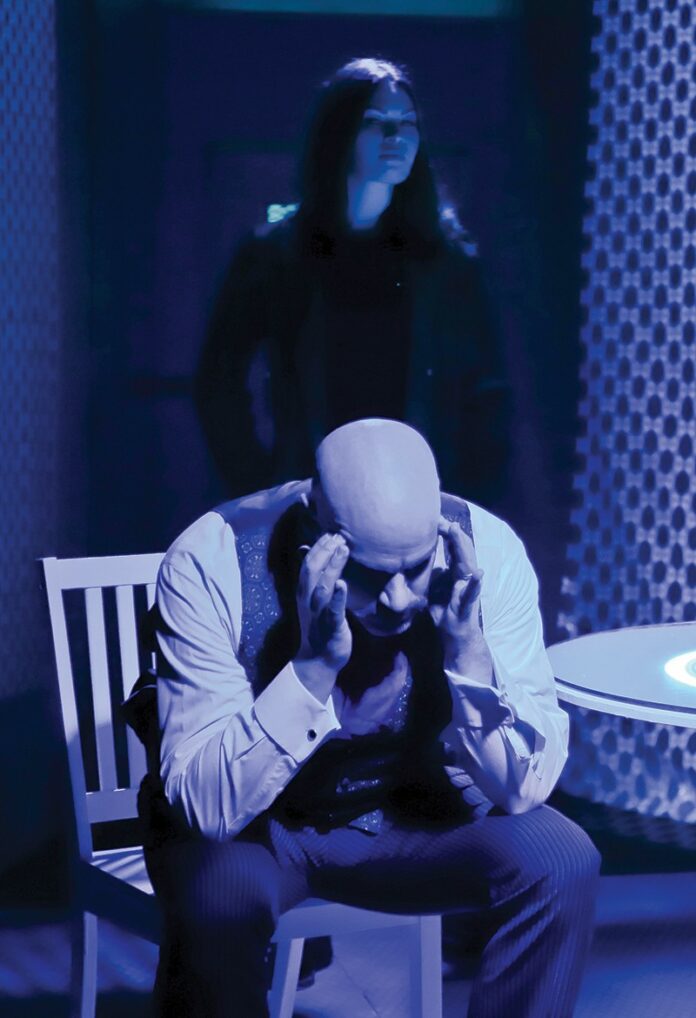
Peter Pan (a winsome Sarah Wintermeyer) has lost his shadow while eavesdropping on story time at the Darling household. While retrieving it late one night, he awakens eldest child Wendy Darling (Lucy London), and after a quick flight demonstration, Peter convinces Wendy and her brothers to join him in Neverland. They’ll soon cross paths with some warriors and the dastardly Captain Hook (David Yen) and his scurvy pirate crew.

Director Sheri Lee Miller and her team get almost everything right here, from casting to costumes and sets, from choreography to musical direction. Yen must be on a low-fiber diet, as he doesn’t really chew up the scenery as much as one would expect with such a role. Still terrifically entertaining, his decision to go small with some things puts the bits in danger of being lost on the large Spreckels stage.

Nice supporting work is done by Craig Bainbridge as Hook’s right-hand man, Smee, Morgan Harrington as Mrs. Darling and the entire cast as Wendy’s siblings, various warriors, pirates and Lost Boys. Honorable mention goes to the backstage “flight crew” and to Andy Templeton who spends the show costumed as either Nana the dog or a tick-tocking crocodile, but manages to get some of the biggest audience reactions.

Miller handles the problematic parts of Barrie’s script—its depiction of Native Americans—by transmogrifying them from an “Indian” tribe to nonspecific “warriors” and costuming them in a patchwork of styles and designs. It helps, but some dialogue (“Let’s smoke a peace pipe!”) and lyrics are still a bit cringe-worthy. Nevertheless, Peter Pan makes for a great evening of family entertainment.

Rating (out of 5): ★★★★

Tone Deaf

0

As reported in both the Bohemian (March 18 and May 2) and SFGate (March 20), the Sonoma County Sheriff’s Office, in cooperation with the Santa Rosa Police Department, has contracted with the nationally televised show Cops and invited a production crew to “ride along” with both agencies. This project has moved forward despite feedback to the sheriff’s office from community leaders who felt this would further damage the shattered trust between the sheriff’s office and the community.

As a former post commander for the Los Angeles Police Department, I understand the imperative for our officers to feel appreciated and supported. Recognizing those who risk their lives to keep us safe is not just important, it’s essential. But it seems to me that inviting the nation to experience our community through such a negative lens, particularly at this time, profoundly misses every mark.

It’s also unfathomable that the Sonoma County Sheriff’s Office would choose Erick Gelhaus to be the liaison for this particular project. Gelhaus is the same deputy who, in 2013, shot young Andy Lopez seven times—killing him less than 17 seconds after the officers had arrived on the scene. How could anyone have thought that Gelhaus was an appropriate emissary? How could this decision be seen as anything other than blatant disregard for our community and a slap in the face to the Lopez family? The whole process demonstrates a shocking level of insensitivity, and highlights the profound separation between the sheriff’s office leadership and our community.

I can’t imagine any community that would want to be nationally portrayed in a damaging way, but especially ours, which is still
very much in a place of recovery and healing following multiple tragedies. Seeking recognition for our law enforcement, at the expense of our communities, seems extremely tone-deaf, insensitive and out-of-touch.

Not one part of this project serves the interests of our communities. I emphatically urge both departments to revisit their decisions.

John Mutz is a candidate for Sonoma County sheriff.

Open Mic is a weekly feature in the ‘Bohemian.’ We welcome your contribution. To have your topical essay of 350 words considered for publication, write op*****@******an.com.

No Pot on Purvine

Purvine Road runs for two miles from Middle Two Rock Road to Springhill Road in West Sonoma County. Barns, cows, farmhouses and barbed wire fences dot the landscape. There are no grapevines on Purvine Road, though there are cannabis gardens. Some residents say they'd like to grow more pot than they've grown in the past. They've applied for permits from...

Triathlon of Art

While it may not be widely known about outside of Humboldt County, the annual Kinetic Sculpture Race has taken on cult-like status in the Northern California communities of Arcata, Eureka, Ferndale and everywhere in between. Marking its 50th year this Memorial Day weekend, the Kinetic Sculpture Race is a human-powered trek over land, sand and water that covers more than...

Tip of the Spear

It's called spearfishing, but it's really spear-hunting. The fish don't come to you. You must go to them, with your finger on the trigger. That fact became clear as soon as I dove beneath the surface into the 48-degree water in a picturesque cove north of Fort Ross. I'd been abalone diving before and once I learned to regulate...

May 9-10: Words of Wisdom in Napa & Sonoma

When illustrator Hallie Bateman had the realization as a young adult that her mom, writer Suzy Hopkins, would not be around forever, she decided to make a record of her mother’s wit and wisdom. Together, mother and daughter collaborated on ‘What to Do When I’m Gone,’ an illustrated step-by-step guide of sorts that offers insights into both pragmatic and...

May 12: Pump It Up in Santa Rosa

This Mother’s Day weekend, the whole family can add some sporty fun to the brunch-heavy schedule by checking out the Ironman Santa Rosa triathlon and getting a glimpse of the many iron men and women partaking in the running, swimming and bicycling challenge that acts as a qualifying race for October’s Ironman World Championship in Hawaii. For locals, the...

May 12-13: Toast to Moms in Napa

With Mother’s Day food and wine events everywhere, the CIA at Copia is flipping the script on the culinary offerings with a weekend of interactive events. On Saturday, May 12, celebrate “Moms Who Make Wine” in a 21-and-over tasting event that pours selections from several local matronly winemakers. On Sunday, May 13, the CIA’s family fun day gets the...

May 14: Empowering Pageantry in Sebastopol

Veterans returning from duty can have trouble adjusting back to civilian life, women as much as men. In Lysa Heslov's documentary, ‘Served Like a Girl,’ several American women who were wounded in action after serving in Iraq and Afghanistan try to adapt to emotional, social and economic challenges in the United States. The film also highlights the Ms. Veteran...

Elephant in the Room

It's been a couple of wild weeks for the California State Republican Party now that it's been revealed that one of the highest polling Republicans in the state is a blatant neo-Nazi who denies the Holocaust happened. The party has been dealing with fallout from a recent statewide poll, which revealed that self-described "counter-Semite" Patrick Little was leading all challengers,...

Young at Heart

Peter Pan has been seen onstage in one form or another for well over a hundred years. The J. M. Barrie classic survived being Disney-fied and even Christopher Walken–ized in a disastrous live television spectacle. The most popular adaptation is the 1954 musical starring Mary Martin. It's that version that takes flight in a well-mounted production running at the Spreckels...

Tone Deaf

As reported in both the Bohemian (March 18 and May 2) and SFGate (March 20), the Sonoma County Sheriff's Office, in cooperation with the Santa Rosa Police Department, has contracted with the nationally televised show Cops and invited a production crew to "ride along" with both agencies. This project has moved forward despite feedback to the sheriff's office from...
11,084FansLike
4,446FollowersFollow
6,928FollowersFollow