June 18: Hop On in Napa

0

The Wine Train has long been a popular tasting tour of the Napa Valley for wine aficionados, but the valley is branching out into the microbrew scene and the train is switching tracks for the new Hop Train weekly riding event. Think of it as a tap takeover on the rails, as Napa Palisades Beer Company hops aboard and brings a couple kegs with them to serve their Gold Rush Red, Loco IPA and other selections alongside small bites in an open-air car. Hop to it on Monday, June 18, 1275 McKinstry St., Napa. 5pm. $75. winetrain.com.

June 18: Pedal Party in Petaluma

0

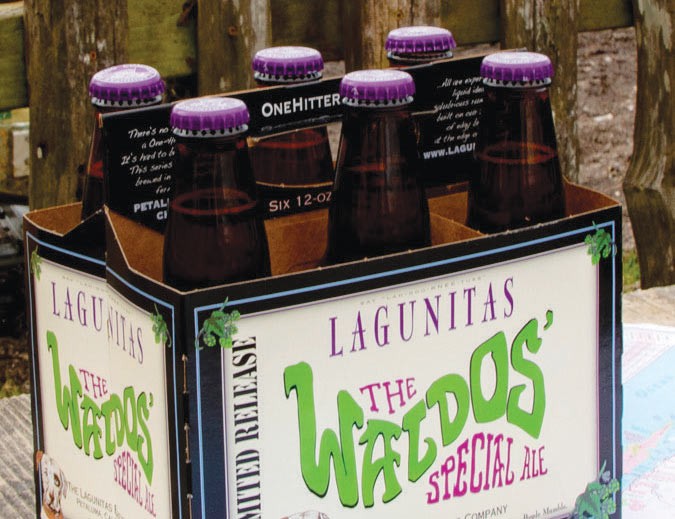
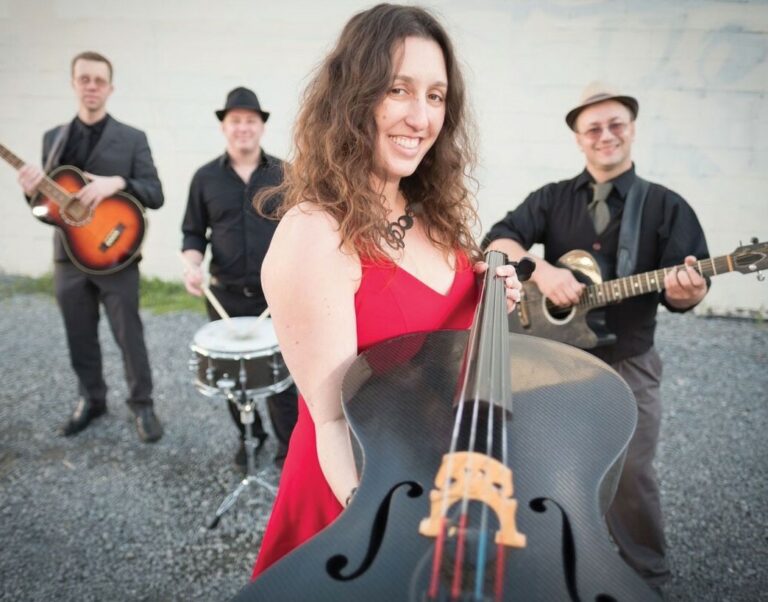
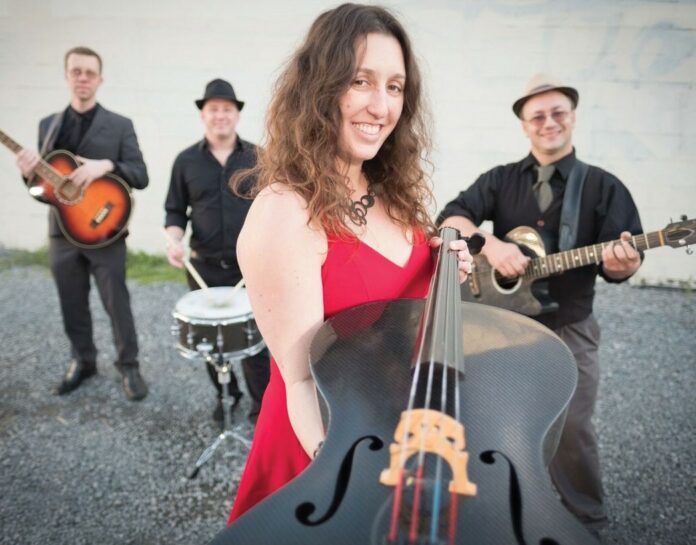
Bicycling is an everyday activity in communities across the North Bay, and it’s thanks in part to the work of organizations like Sonoma County Bicycle Coalition, which promotes bicycling in and between local cities, and the Redwood Empire Mountain Bike Alliance, which focuses on bicycling in nature. These two groups host the debut Paths & Pavement Mixer, where bicycle advocates and lovers can come together to enjoy Lagunitas brews, catered food from Lombardi’s Gourmet Deli and BBQ, and live music from the Pulsators. Monday, June 18, at Lagunitas Tap Room, 1280 N. McDowell Blvd., Petaluma. 5:30pm. $20–$25. pathsandpavement.brownpapertickets.com.

Building a Better Burger

0

While there are plenty of North Bay restaurants that do burgers and barbecue very well, summer wouldn’t be summer without your own backyard cook-out. You could run to the grocery store for a one-stop shop for all your barbecue needs, but this being the food and drink paradise of North Bay, you can turn your cookout into a showcase of all the great homegrown ingredients the region has to offer.

What follows is our grilling dream team of all the best fixings—meat, cheese, buns, pickles, condiments and even fuel from across the North Bay. We know it’s unlikely you’ll travel the region to acquire all these provisions, but isn’t cool to know you could? Even if you just pick up a few of these signature ingredients and products, you’re sure to elevate your grilling game.

Of course, there are more than a few wine and beer choices in the North Bay. We’ll leave the part up to you, but do check out James Knight’s rundown of barbecue-friendly Zinfandel in this week’s Swirl.

So here’s to summer, friends and good local food on the grill!

The Meat
of the Matter

You have to start with the best, which is why a proper North Bay grill fest must honor the sturdy and multi-platform meat emporium that is Marin Sun Farms. Right out of the gate, the grillable ground beef is consistently leaps and bounds beyond the corporate ground chuck routine, with all of that allowable water content and antibiotic back-bite. Blech. A typical Marin Sun burger, drawn from humane pastures and dales, has hints of sirloin to go with a juicy, bloody disposition that is at once all-natural and viscerally pleasurable.

The Marin Sun Farms corporate philosophy is just right: all their animals are pasture-raised on a local family farm, the cows are lovingly embraced until their last and final date with destiny, and the fat-to-meat ratio is absolutely exquisite when it comes to grillability. The North Bay staple sells chickens and lamb, too, and operates a restaurant and butcher shop in Point Reyes Station and also in Oakland. It’s worth noting that the Marin Sun Petaluma abattoir is the only one in the Bay Area, and that ain’t no slaughterhouse jive. May the Marin Sun forever shine on your barbecue. marinsunfarms.com.

In scenic Tomales, Stemple Creek Ranch has been in the Poncia family for four generations. The beef here is certified organic, grass-fed and grass-finished. For hamburger lovers, gift boxes are ready for purchase online; premade patties supplemented with smoked maple bacon or, if you prefer to ground it yourself, various cuts can be shipped as well. For a face-to-face meat encounter, head to the website to find a list of retailers and farmers markets, many of them in Marin County. stemplecreek.com.

Sebastopol’s Green Star Farm is just what you want it to be: a diversified, pasture-based operation on several rolling acres overseen by conscientious farmers Sarah Silva and Marc Felton. The pigs, goats, chicken and sheep live a good life, while a pair of on-point cattle dogs keep any of the critters from straying too far. Pasture-based means just that—the animals scratch, forage and root about as they were born to do. No cages here. You’ll find Green Star’s stuff at the Sebastopol farmers market and Andy’s Market; for extra convenience, there is Green Star meat subscription—a box of protein delivered to your door throughout California or available at five pick-up locations in Sonoma County. Feeding a crowd? Whole animal available for sale. Go whole hog! greenstarfarm.com.

Hamburger Buns

San Rafael’s Bordenave’s bakery celebrated its 100th anniversary this year, marking its 1918 inception by French immigrant Frank Bordenave. Originally, Bordenave was exclusively into French-style sourdough, but with the years, the bakery’s selection has grown to include hamburger and hot dog buns, croissants and different pastries. While a good portion of its business is wholesale, the storefront supplies the customers with pillowy, soft hamburger buns that make perfect bookends for sophisticated hamburgers. There’s onion, seeded brioche, multi-seed and even whole wheat, plus your old-school plain. bordenavesbakery.com.

Seems like no matter we go these days, Ray’s Delicatessen and Tavern in Petaluma keeps popping up as the place with the soft-inside, kind-of-crunchy-outside rolls, baked on-site and, not coincidentally, known as a Ray’s Roll on the menu. Ray’s has been around since grandpa met Douglas MacArthur on a bomb-cratered Micronesian airstrip—which is to say it’s been in business since 1946.

The joint has hole-in-the-wall appeal in Petaluma, and the menu is chocked with sandos loaded down with local ingredients and juicy meats—Reubens, Rachels, corned beef. You need a sturdy roll to stand up to a proper Reuben, and Ray’s has bragging rights. The funny thing about Ray’s is that the only burger on the menu is a veggie burger slathered with a pesto Aioli. Skip the sawdust patty, can we get a tub of that to go? rays-deli.com.

[page]

Cheese Please

It’s hard not to appreciate the melting qualities and childhood memories inspired by a molten slice of Kraft cheese draped over a burger patty. But given that we live in a dairy dreamland of artisanal cheesemakers, it seems downright ungrateful to not reach for one of the North Bay’s great homegrown cheeses.

We like the tang of a cheddar and blue cheese. First choice is St. Jorge cheese from Santa Rosa’s Joe Matos Cheese Factory. It’s full-flavored and melts like a champ. Best is the trip out a dirt road to the no-frills creamery off Llano Road. This is real deal. facebook.com/Joe-Matos-Cheese-Factory-1530291580548953.

Point Reyes Farmstead Cheese Co. reigns supreme in the blue category. A generous crumble of the salty, funky goodness takes your burger to another level. Established in 2000, the farm and creamery is the heritage business of the Giacomini family, originally from Northern Italy. The cheese is made on a farm in West Marin, under the supervision of head cheesemaker Kuba Hemmerling, and is made with unpasteurized cow’s milk. For a punch of flavor, go for the Original Blue, the winner of many regional and nationwide awards. For a more delicate touch on your patty, opt for Bay Blue, a rustic, mildly moldy cheese reminiscent of Stilton. pointreyescheese.com.

Pick a Pickle

Hey, we’re pretty much regular folks, just like the next red-blooded American on a fixed North Bay income, and we’re not the type to turn our noses up at adequate supermarket-aisle dill pickles, or humble yellow mustard out of the squeeze-bottle, for that matter. But there’s no getting around it: Sonoma Brinery does bring out our inner topping snob—it is priced to do so, after all—and, in a moment of culinary punk-rock reminiscent of the late Anthony Bourdain, the company has us reaching for a square tub of their probiotic sauerkraut, too. Tell us where it says you can’t put sauerkraut on a hamburger? We’re headed to parts unknown in your honor, Tony. sonomabrinery.com.

Purists might claim that a quality patty needs no company, but we commoners know that condiments, pickles and additions just make a good hamburger better. At Pig in a Pickle, a full-flung barbecue spot in Corte Madera, condiments, barbecue sauces and pickles are made in-house and available to be taken home for your grill party. Chef Damon Stainbrook is behind all of the creations, from the rubs to the pickles, and you can trust his judgment: among the chef’s career stints are a grill cook at barbecue-centric One Market Restaurant in San Francisco and a sous chef position under Thomas Keller at the iconic French Laundry.

At Pig in a Pickle, though, Stainbrook sticks to the basics and does it remarkably well. Start with the sauces, each inspired by a region from the South: there’s a Memphis-style sauce, a mustard sauce from South Carolina, a tangy North Carolina condiment and a habañero Alabama white sauce. Then, take home a few jars of pickles and maybe even a homemade kombucha to cool yourself down before the hot sauces hit the burger. piginapickle.com.

Lettuce,
Tomato, Onion

As we plunder our burger for its local source code, ingredient hackers on alert for the freshest local toppings, let us turn our attention to greenery as rendered at Big Mesa Farm, which offers 10 acres of organic industriousness where one can at once glamp and spend some time in the fields picking lettuce. A typically crispy cornucopia from Big Mesa includes the classic red leaf, and wee heads of crunchy little gem. Live a little and float a frond of each on your burger. Big Mesa sells around the North Bay, and their produce is in use at Farm Burger in San Anselmo, in case there was any question about burger-friendliness when it comes to Big Mesa lettuce. bigmesafarm.com.

Need more fresh goodness? Little Wing Farm is back in action after a devastating fire and now operates an honor-system farm stand in the shadow of Black Mountain along Pt. Reyes-Petaluma Road. See if proprietor Molly Myerson has some seasonal tomatoes or onions to round out the trifecta of vegetative toppings.

While it’s early in the season yet, be on the lookout for dry-farmed tomatoes from Santa Rosa’s Quetzal Farm. The stingy application of water means the tomatoes must dig deep for hydration. The result is an uncommonly intense, umami-loaded, beefy tasting tomato that is fantastic on a burger or great all by itself. localharvest.org/quetzal-farm-M3969.

Get Saucy

A burger slopped with spicy baked beans sounds good right about now, especially if it’s topped with smoked bacon and a few splashes of the hyper-local barbecue sauce Saucin’. This silky, tangy ‘cue sauce is courtesy of Santa Rosan Matt Werle, who’s also a California highway patrolman, family man and Overseer of the Family Grill. This is a family recipe, produced by a family business, available at Pacific Market and elsewhere. saucinsauces.com.

Now, for a no-nonsense, locally rendered hot sauce, any respectable grill-meister with an ear tuned to the diverse splendor of the North Bay has to go with Tia Lupita. The hot sauce is the labor of love of Tiburon’s Hector Salvidar, who named his sauce after his mother, and whose online business presence comes complete with the cheering hashtag #makehotsaucegreatagain. Salvidar, who hails from Sacramento by way of Mexico, offers his tongue-tickling tincture at Oliver’s Market and elsewhere around the region. tialupitahotsauce.com.

Fuel for the Fire

Charcoal and gas are fine, but given that the North Bay is wine and apple country, why not add the very essence of those signature crops to your cookout? Apple wood is a superior fuel for grilling burgers and just about anything else. Apple-wood grilled salmon is sublime. Grape wood, gathered from vine cuttings or an uprooted vine, excels as a smoking wood but is best for grilling.

As you serve an apple- or grape-wood grilled burger, ask your guests if they can pick up the taste of the North Bay. Finding a farmer who will sell you some wood makes for a good gather-round-the-barby story.

Ugly Words

0

The Bohemian‘s letters and opinion pages, appropriately called “Rhapsodies & Rants,” is a free speech forum that invites community views and a wide range of perspectives. Sometimes a rant can create awareness of an issue worth considering. The counterpoint to that is that extremist views, without context or response, can legitimize dangerous extremism.

Two letters to the editor that appeared in our May 16 issue may have crossed a line. The letters were written in response to a May 9 cover story by Tom Gogola about Republican senatorial candidate and anti-Semite Patrick Little, titled “Elephant in the Room.”

The letters took aim at ethnic groups and have been called to our attention as doing nothing to promote a civil public discourse. One letter by a writer who identified himself as a Korean-American wrote that he found Koreans and Korean-Americans “bigoted, ignorant and selfishly indifferent.” The second letter attacked Jewish influence on the American political system and named a number of Jewish individuals.

In retrospect, we should have not published either letter. Neither offered a reasonable argument or advanced a civil public discourse. To argue that any one group of Americans is less American than another, that all members of a group think alike or that anyone should be removed from participating in the democratic system, is repugnant.

Bohemian letters must be free of libel, personal attacks or calls to violence. There is value in airing letters that some readers will find distressing. After all, the First Amendment is not for the protection of pleasantries. It’s for the protection of speech that some—or many—may find offensive. But there is no public service in promoting irresponsible, closed-minded thinking.

Thanks in part to President Donald Trump’s flame-fanning rhetoric, white nationalism has emerged from its dark corner and into the light. The internet is awash with trolls spewing vitriol and emboldened by anonymity. While inflammatory discourse has become more common and acceptable, we’ll seek to keep our pages more constructive in the future by being more vigilant against hate speech.

Stett Holbrook is the editor of the ‘North Bay Bohemian’ and the ‘Pacific Sun.’

Open Mic is a weekly feature in the ‘Bohemian.’ We welcome your contribution. To have your topical essay of 350 words considered for publication, write op*****@******an.com.

The Road Ahead

0

It’s a sunny Friday morning on Railroad Square in downtown Santa Rosa, and sheriff-elect Mark Essick is about to spend the day removing his large and numerously deployed campaign signs from around the county.

The newly elected sheriff of Sonoma County surprised everyone at the polls earlier in the week when he gained 57 percent of the vote in a three-way race against former L.A. police captain John Mutz and Santa Rosa councilman Ernesto Olivares. As he eclipsed 50 percent of the vote on primary day, Essick was elected to his new post outright without a runoff in November.

Today Essick is dressed casually in a San Francisco Giants T-shirt, jeans and a baseball cap as he sits before a big mug of coffee at the Flying Goat cafe and fields questions. Essick, 48, won’t take office until January, and next week he’s going on vacation. It’s been a long campaign season, but now it’s over. His pickup truck is in the parking lot, awaiting the piles of signage that were seemingly everywhere this spring as Sonoma County had its first contested sheriff’s race in a quarter century.

Essick has been on the force of the Sonoma County Sheriff’s Office (SCSO) for about that long, and as a manager, he’s been the point person on mental-health training for officers. He says the two biggest budget issues he’ll likely face when he takes office are both related to dealing with a shifting demographic at the Main Adult Detention Facility and the preponderance of mentally ill inmates at the jail. Today, some 40 percent of inmates suffer from one form of mental illness or another, “which is crazy,” Essick says.

The state’s “realignment” approach to dealing with its overcrowded prisons by moving them into county lockups now means that the SCSO is dealing with an older and sicker demographic at the jail, whose traditional demographic, Essick says, was typically a young person doing a short bid at the jail on a misdemeanor charge.

The state provided funds for localities to deal with fallout from realignment, and Sonoma County decided to put its $40 million in state realignment money into a new Behavior Health Unit (BHU), scheduled to break ground in late summer and be completed in about a year. The county is kicking in an additional $8 million, but it’s also been shedding mental-health workers in a climate of post-fire belt-tightening, and Essick has taken notice.

“I have spent the last 10 years of my career training officers on this, creating these partnerships between our agency and Behavioral Health, and to have those people evaporate is going to be a huge impact on us.”

And Essick says he’ll need to staff up the BHU when it’s completed.

“We have calculated that we’ll need 24 additional correctional deputies to staff the BHU, so we are going to have to go back to the [board of supervisors] and ask for some additional allocations to staff that,” he says. “I could see myself going before the board of supervisors in the next year or so as sheriff and saying, ‘This was a great idea, we spent all of this money on it, and don’t forget—now we have to staff it.'”

Essick will also be charged to continue to implement state-mandated training required annually by the state of California Commission on Peace Officer Standards and Training.

“Any police organization today runs so thin on staffing that every time we take someone off the line to train them, at least 80 percent of the time we have to backfill it with overtime.”

During the campaign, Essick was pegged by opponents and detractors as an SCSO insider who couldn’t deliver on necessary reforms at the agency and who would continue an SCSO “culture” that’s been under fire for years. Critics argue that those “cultural” issues—a generally white and male force—came to a tragic head when a sheriff’s officer shot and killed a 13-year-old Latino boy in 2013. Any past progress in building community relations went out the window following the shooting.

But the Andy Lopez shooting did prompt a series of reforms at SCSO, some of which Essick opposed at the time they were implemented, such as the creation of the Independent Office of Law Enforcement Review and Outreach. There’s also a direct line that can be drawn between the Lopez shooting and the creation of a new community engagement post at SCSO occupied by Misti Harris.

During the campaign, all the candidates highlighted the need for better recruitment of women and minorities into the force. You can’t just stick an ad in the Latino community newspaper anymore, Essick says. “You have to do more,” and he pledges to do so in conjunction with the county’s Human Resources Department.

Essick is well aware of the challenges ahead in rebuilding trust in Latino and police accountability circles in Sonoma County. If it’s a truism that all policing is community policing, those challenges are as much a matter of practicality as they are a sort of moral imperative to, as Essick puts it, keep extending the healing hand.

[page]

As a practical matter, to fully engage in “community policing” in Sonoma County would require about another 10,000 officers on the beat, he says.

“That is the challenge for us,” he says, “and not just because we’ve kind of drifted off that course in the last six years, but also because the beat-cop mentality is way easier to do when you have a downtown core, when you have bikes, foot patrols.

“In Sonoma County, we have about 20 distinct communities, and it would be my dream if we could have a community-policing presence in all those communities. I see that as a challenge. Guerneville is great because we have a substation there, but we don’t have one in Geyserville or Penngrove—and wouldn’t it be cool if we did?”

Essick’s election comes at a moment when law enforcement agencies across the country are re-examining tried-and-truisms around policing, especially when it comes to use-of-force issues.

Longstanding police protocols, such as the “21-foot rule” and the principle of “drawing a line in the sand” when dealing with perpetrators, are being reexamined, if not outright set aside, as agencies incorporate de-escalation tactics into their training protocols and work to enhance communication between officers and the communities they serve. The 21-foot rule delineates a line where a perpetrator, even if unarmed, is in a position to attack a peace officer, and a 2016 Police Executive Research Forum (PERF) recommendation highlights that de-escalation training is a necessary precondition to eliminating the old rules and traditions. Essick gives props to Mutz and Olivares for raising diversity and de-escalation training issues in the campaign.

Throughout the campaign, Essick identified a very tricky nexus point of homelessness, mental illness and use of force as he waded into issues raised by the PERF study, which called for use-of-force reform, highlighted communication as a prime de-escalation strategy, and that encouraged more training in mental-health for officers, “crisis intervention training” or CIT. As a trainer, Essick’s speciality is CIT.

Essick may be the new sheriff in town, but he’s also just a regular guy. He grew up in Novato and listened to Def Leppard and AC/DC as a kid, and says his first concert ever was AC/DC at the Cow Palace. He graduated high school in 1988 and is married with two kids. On his downtime, he likes to go camping with his wife, bicycling with his son, and says he attends the Healdsburg Community Church, a half-Presbyterian and half-Methodist house of worship which he’s been going to for three years.

“I grew up in a family that was absolutely non-religious,” Essick says. “We never went to church, and I was a non-church-going person for the first 45 years of my life, though I wasn’t against it or anything.”

That changed when Essick and his wife were on the edge of being empty-nesters (their children are 19 and 21 years old), and all the various community-service activities they’d done that involved their children “started to evaporate for us,” Essick says. “My wife and I were having dinner one night, and I said, ‘I’d kind of like to check out going to church.’ And she said, ‘Yeah, let’s check that out.’ It was very natural for us, this next step to serve our community. We’d heard from friends about the Healdsburg Community Church, a husband-and-wife team are the pastors, and the first time we went—the subject was forgiveness. Someone came to Jesus and said, ‘How many times are you going to forgive that person for his wrongdoing?’ And Jesus says something to the effect of, ‘I will never stop forgiving him.'”

Essick pauses. “Look, I’m not a person who can quote you chapters from the Bible, I’m just not, but they talk about Jesus washing the feet of the Samaritans, and at that point, the Samaritans were the under-people, they were the dregs of society, and Jesus would wash their feet. People said, ‘Why are you doing that?’ Service. And my mentality on that is you never stop. You always have to take the higher road, look for the sunny side of the situation and keep extending the hand. If it gets batted away, take a different route.”

During the campaign, Essick took some heat for his departure from the Republican Party, which his opponents framed as a matter of political expediency. But Essick describes himself as a moderate who has voted for Democratic and Republican candidates. As the father of a 19-year-old daughter, he says he left the Republican Party after Trump was elected, because the party left him.

“I’ve always voted my conscience,” he says, noting that he’s been a member of both parties over his lifetime. “As a Democrat, I probably voted for Republicans, and as I Republican, I’ve supported Democrats. I voted for President Obama, and I have no problem saying that. I was really disappointed in the way Trump talked about women. Really disappointed. I thought the Republican Party was the party of moderation, but it’s not.”

Essick later notes that his daughter’s career objective is to work a position similar to the one held by Misti Harris, whose job was created in the aftermath of the Lopez shooting.

“We all evolve,” Essick says, as he reflects on a hard-fought campaign. “Of the hundreds of people I met during the campaign, one or two of them stood out as jerks, but mostly they were really, really good people, and having them come up to me and say, ‘I want to support you, but here is what is important to me,’ hearing that perspective, definitely enlightened me. We are always in a process of learning about ourselves, evolving as humans, and if I can be more compassionate, more understanding, that’s a work in progress that I’d like to get to.”

Letters to the Editor: June 13, 2018

Head Spinner

A recent article in the Press Democrat about Branch Wroth’s Taser death by Rohnert Park police officers caused me to tremble with a mixture of anger and sadness. As I delved further into the article, my head began to spin as a plethora of potential remedies for peaceful resolution flooded my mind. Here’s a partial list: summon the mental-health crisis unit (which, we recently were informed by a separate article, serves the Highway 101 corridor); call an ambulance; buy him a new pair of pants (he thought his were poisoned); offer to get him a blanket; wait him out.

One fact that must be highlighted above all others is that Wroth was inside a motel room and wasn’t posing an immediate threat to anyone. But he was experiencing a mental breakdown, for which he desperately needed professional help.

I will leave you with this question: Has the state’s sanctity and respect for human life really degenerated to such a low point that expedience of process has become the preferred alternative to careful, compassionate and meticulous preservation of a human life?

Sebastopol

Dirty Downtown

What is happening in downtown Santa Rosa? We have an $11 million square, yet the surrounding streets are strewn with garbage, broken glass, cardboard boxes flattened from where the homeless slept or will be sleeping. I’ve had to walk around puke and human waste, and I honestly don’t want to touch a thing downtown.

Seems insane that parking prices and hours increased, the meter maids issue hundreds of tickets per day, events at the square generate thousands of dollars, and you’d think Santa Rosa could afford a cleanup crew on a daily basis. I know I’m supposed to feel good about coming downtown, but I don’t. Business owners should display more care outside of their doors.

Santa Rosa

Inequities

Last Monday night, I attended the Sonoma County Rises Summit on Equity, Recovery & Resilience. While waiting for the auditorium doors to open, I had the opportunity to chat with a woman (whom I’ll call Annie). She said that she has a nine-year-old daughter and has a full-time job. Despite the fact that she wishes she could afford to live in Sonoma County, she hasn’t the means to do so—hence, her homelessness.

Annie has a support system in San Joaquin Valley, but the Sonoma County Court has ordered her to stay in Sonoma County because her daughter’s father shares custody of their daughter. She has sought help from agencies throughout Sonoma County but is stuck: she can’t afford to live here but has been ordered to stay here.

I shared Annie’s story with a friend at the summit. I told him I felt guilty. He asked me if I felt guilty because I’m not homeless. Upon reflection, I said I felt guilty because I couldn’t offer her any resources she hadn’t already tried to help her get out of her dilemma.

I guess I’m confused. The word “equity” kept coming up in the summit.

Executive director,
Friends Outside in Sonoma County

Write to us at le*****@******an.com.

Faces of Zin

0

Somewhere in between Mother’s Day and the Fourth of July—between brunch and barbecue—rosé season transitions to Zinfandel season. If it’s Father’s Day that marks the turn, all the more apropos for the granddaddy of California wine.

Zin is at home in the North Bay. Sonoma County is, in terms of Zinfandel acreage, a distant second to San Joaquin County, home to some pretty decent Lodi Zinfandel, and maybe a portion of the Central Valley’s inland sea of white Zinfandel. But Zin’s good reputation for red wine quality, outside of a few notable spots around the state, has a more than 150-year record here. The Kenwood Vineyards 2014 Sonoma County Zinfandel ($18) may be the kind of uncomplicated, tangy and red-fruited hamburger washer that many people think about when they think Zin, but it’s just the beginning.

Zin has classic style. Kenwood’s 2013 Six Ridges Dry Creek Valley Zinfandel ($26) is the epitome of that valley’s Zin style. Wine-soaked wood and Mexican chocolate spices, cinnamon and vanilla, kick up a blackberry-flavored sipper that’s not too tangy, not too tannic—just right.

Zin has historicity. A darker, more brooding Zin, if you will, Kenwood’s 2014 Jack London Vineyard Sonoma Mountain Zinfandel ($28), comes from the northeast-facing flank of a dark, brooding mountain. This wine teases with fruit and spice scents of raspberry and bergamot—patchouli, maybe—and with fanciful notions of Jack London, vintner, which he was not. However, much of the red wine enjoyed by the author and other Californians around the turn of the previous century was certainly Zinfandel. Here, a wave of sweet red berry flavor carries furry tannins across the tongue.

Zin has backup. Although the Sidebar Cellars 2016 Russian River Valley Zinfandel ($28) contains less Zin than the previous vintage, which was labeled as a “red blend,” with 78 percent it makes the varietal cut (75 percent is required by law), so why not? Part of the charm, but also the intangible value, of old-vine Zinfandel plantings is that they include a seemingly random hodgepodge of accessory vines. This wine comes from a vineyard originally planted in 1890, and contains Petite Sirah, a common companion to Zinfandel, along with some real outliers like Beclan, Peloursin, Plavac Mali, Palomino and Monbadon.

An unusually large fraction of Alicante Bouschet contributes color to this wine, which seems also aromatic of purple ink, along with oily oak, Graham cracker and chocolate biscuit. Why all of those other grapes? Well, in this wine the combination makes for a palate-coating yet surprisingly supple mix of blackcurrant and boysenberry liqueur flavors—maybe those forefathers knew best, after all.

The Voice

0

Just when Bernie Dalton was ready to sing, his voice was taken from him.

Dalton, a surf-crazed Santa Cruz native and single father who cleaned pools for a living, always had a passion for music. In January 2016, he responded to a Craigslist ad for vocal lessons from veteran San Francisco singer-songwriter Essence Goldman.

“When I met Bernie, he wanted to pursue his songwriting after having a lifelong dream,” Goldman says.

For two months, Dalton drove from Santa Cruz into the city once a week and worked with Goldman on voice lessons while showing her his original song ideas. Then his voice mysteriously disappeared. “We didn’t know what it was,” Goldman says.

Dalton still came for lessons and continued to share his lyrics with Goldman, and the two connected not only over his music, but also as single parents. Goldman even began giving vocal lessons to Dalton’s teenage daughter, Nicole.

“When you work with someone on their songs,” Goldman says, “you get to know them, and it’s a very personal experience.”

Time passed, but Dalton was not getting better. In fact, he was getting worse, having trouble swallowing, losing weight, drooling. He went to a doctor, and, after a series of tests, was diagnosed in early 2017 with bulbar-onset ALS, also known as Lou Gehrig’s disease. The life expectancy for people with bulbar-onset ALS is one to three years. Dalton was 47 years old.

“It was devastating to watch this happen to somebody so sweet, so down-to-earth, so generous in spirit,” Goldman says.

Immediately, Goldman set out to help Dalton by setting up a GoFundMe page to raise money. Originally, Goldman planned it as a fundraiser to send Dalton and his daughter on a trip together, but Dalton wanted something else. He wanted to make an album, and he wanted Goldman to be
his voice.

“He started mailing me handwritten lyrics and asked me to put them to music,” says Goldman. At first, she hesitated, as she was already working on her own album.

“I sat down and I did one song, and it poured right out,” says Goldman. “It was a very amazing moment. I channeled a different voice I had never used before—I felt like I was trying to share his voice.”

Moved by the initial experience and an outpouring of GoFundMe support that totaled over $27,000, Goldman put her own project on hold and called her band members, guitarist Roger Rocha and drummer Daniel Berkman, to record a full album of Dalton’s lyrics.

Dalton was on hand for the recording sessions, delivering input via a dry erase board and giving a thumbs up or thumbs down. The project became known as Bernie & the Believers, and the album, Connection, was released in February with a concert at Slim’s in San Francisco.

“It was the most prolific creative collaboration I’ve ever been part of by far,” Goldman says. “It had a life force all its own. This is a real-life dramatic tale that has a soundtrack.”

One of those in attendance at that show was Howard Sapper, a music-industry veteran whose credits include CEO of Global Pacific Records, the Harmony Festival and Extrordinaire Media.

A longtime resident of Sonoma County, Sapper books music at the new Reel Fish Shop & Grill in town while also running his own nonprofit, Everybody Is a Star, which helps artists and musicians with special needs achieve their dreams of performing.

“Essence was a client of mine years ago. I’m a big believer in her gifts,” Sapper says. “I went down to see the album release at Slim’s. It was very powerful. I started thinking to myself, this project needs to be seen and heard in a big way.”

Dalton’s story has found an audience through features on NPR’s All Things Considered and in the San Francisco Chronicle, and Sapper recently reached out to the ALS Association Golden West Chapter, covering California and Hawaii, to organize a benefit concert featuring Goldman fronting Bernie & the Believers.

The show takes place at Reel Fish June 15. While Dalton won’t be able to attend, his spirit will reverberate at the event.

“Bernie, through this project, has had a lot of grace and a lot of reason to fight and stay alive,” Sapper says. “Every challenge
has a blessing that comes with it, and the challenge of Bernie’s disorder came with the blessing
of meeting Essence and being able to bring his gift as a songwriter forward.”

Black and White

0

‘Everyone’s a little bit racist” sing the puppets in the musical Avenue Q. Playwright Greg Kalleres takes that thought and runs with it in Honky, running now at Left Edge Theatre.

It opens up with a commercial for Skymax 16, the latest craze in athletic footwear. It ends with the tagline “S’up now?” which we soon learn is the last thing said to a black teen before he’s killed for the shoes.

Lights up on the office of Davis Tallison (Mike Pavone), the white president of a company that makes footwear “by black people for black people.” Thomas Hodge (Trey G. Riley) is there to unveil his latest design and is aghast to learn that sales of the 16s have exploded in the white youth community since the shooting. Tallison announces the new 17s will now be marketed to them. Hodge is furious that something he created for “his people” has become bastardized, and seeks retribution.

Enter Peter Trammel (Mark Bradbury), whose issues about the commercial’s impact have led him to a therapist (Liz Rogers-Beckley) with her own issues. In a coincidence that only occurs to writers, she happens to be Hodge’s sister. Credulity is further strained when Hodge runs into Peter’s fiancée (Lydia Revelos) and sees a way for some payback, but credulity really shouldn’t be an issue in a play with a subplot involving a new pharmaceutical cure for racism with side effects that lead to visions of a lusty Abraham Lincoln (Nick Christenson) and a foul-mouthed Frederick Douglass (Julius Rea).

Part absurdist farce and part blistering social commentary, Honky will make you laugh and leave you uncomfortable. More about racial identity than racism, the play explores feelings of being “too white” or “not black enough” and deftly combines that with swipes at our consumerist society where discrimination is masked as “marketing” and stereotypes are just “demographics.”

Director Argo Thompson has a terrific cast with California-newcomer Riley outstanding as the conflicted Hodge. The opening scene with veteran Pavone crackles and sets the tone for the duration. It’s excellent work by all with an extra shout out to Rea and Jim Kaskey for their work as a variety of “urban” youth the other characters encounter.

Funny, infuriating, profane and profound, shows like Honky don’t play on wine country stages that often. Catch it while you can.

Rating (out of 5): ★★★★

Sounding Off

At the annual California Citizen Lobby Day on
June 5, cannabis activists from Sonoma County gathered in Sacramento to speak to their elected officials. The representatives listened politely, though they made no promises.

Earlier in the day, at the appropriately named Citizen Hotel on J Street, cannabis advocates, cannabis lawyers, cannabis doctors and cannabis users listened to speakers who talked about the complex and often contradictory world of marijuana in California.

Dale Gieringer, the director of California NORML told the audience that “two-thirds of the municipalities in the Golden State have no legal pot dispensaries” and that “there’s a crackdown on cannabis cultivation from one end of the state to the other.”

Of the 600 bills that came before the California State Legislature this session, 60 were about cannabis: cannabis delivery services, cannabis dispensaries, cannabis for pets, cannabis and employment, and the removal of felony cannabis convictions from criminal records in California.

According to Gieringer, there are 100,000 felony convictions on the books for cannabis in California. Senate Bill 1793, which was introduced in January 2018 by Rob Bonta, would make the expungement process the responsibility of the state attorney general, not county district attorneys.

Most of all, Gieringer explained, NORML wants civil rights for cannabis users, including no obligatory drug testing by employers, plus the opportunity to use cannabis to help end addictions to opioids. The Service Employees International Union thinks that workers ought to have the legal right to smoke marijuana on their own time, away from work, in much the same way that people enjoy a cocktail or a glass of wine.

Matt Hummell, the chair of the Cannabis Regulatory Commission in Oakland, explained that the marijuana black market is thriving in Oakland because rents are so steep that many wanna-be dispensary owners can’t afford to enter the legitimate cannabis business.

“It’s a struggle to get a permit,” Hummell said. “At the same time, big money for the cannabis industry has flooded the city.”

One longtime Sonoma County cannabis cultivator called himself “disgruntled” and added that he wasn’t going to apply for a permit.

“I’m willing to take a chance,” he said. “It’s an act of civil disobedience.”

Jonah Raskin is the author of ‘Marijuanaland: Dispatches from
an American War.’

June 18: Hop On in Napa

The Wine Train has long been a popular tasting tour of the Napa Valley for wine aficionados, but the valley is branching out into the microbrew scene and the train is switching tracks for the new Hop Train weekly riding event. Think of it as a tap takeover on the rails, as Napa Palisades Beer Company hops aboard and...

June 18: Pedal Party in Petaluma

Bicycling is an everyday activity in communities across the North Bay, and it’s thanks in part to the work of organizations like Sonoma County Bicycle Coalition, which promotes bicycling in and between local cities, and the Redwood Empire Mountain Bike Alliance, which focuses on bicycling in nature. These two groups host the debut Paths & Pavement Mixer, where bicycle...

Building a Better Burger

While there are plenty of North Bay restaurants that do burgers and barbecue very well, summer wouldn't be summer without your own backyard cook-out. You could run to the grocery store for a one-stop shop for all your barbecue needs, but this being the food and drink paradise of North Bay, you can turn your cookout into a showcase...

Ugly Words

The Bohemian's letters and opinion pages, appropriately called "Rhapsodies & Rants," is a free speech forum that invites community views and a wide range of perspectives. Sometimes a rant can create awareness of an issue worth considering. The counterpoint to that is that extremist views, without context or response, can legitimize dangerous extremism. Two letters to the editor that appeared...

The Road Ahead

It's a sunny Friday morning on Railroad Square in downtown Santa Rosa, and sheriff-elect Mark Essick is about to spend the day removing his large and numerously deployed campaign signs from around the county. The newly elected sheriff of Sonoma County surprised everyone at the polls earlier in the week when he gained 57 percent of the vote in a...

Letters to the Editor: June 13, 2018

Head Spinner A recent article in the Press Democrat about Branch Wroth's Taser death by Rohnert Park police officers caused me to tremble with a mixture of anger and sadness. As I delved further into the article, my head began to spin as a plethora of potential remedies for peaceful resolution flooded my mind. Here's a partial list: summon the...

Faces of Zin

Somewhere in between Mother's Day and the Fourth of July—between brunch and barbecue—rosé season transitions to Zinfandel season. If it's Father's Day that marks the turn, all the more apropos for the granddaddy of California wine. Zin is at home in the North Bay. Sonoma County is, in terms of Zinfandel acreage, a distant second to San Joaquin County, home...

The Voice

Just when Bernie Dalton was ready to sing, his voice was taken from him. Dalton, a surf-crazed Santa Cruz native and single father who cleaned pools for a living, always had a passion for music. In January 2016, he responded to a Craigslist ad for vocal lessons from veteran San Francisco singer-songwriter Essence Goldman. "When I met Bernie, he wanted to...

Black and White

'Everyone's a little bit racist" sing the puppets in the musical Avenue Q. Playwright Greg Kalleres takes that thought and runs with it in Honky, running now at Left Edge Theatre. It opens up with a commercial for Skymax 16, the latest craze in athletic footwear. It ends with the tagline "S'up now?" which we soon learn is the last...

Sounding Off

At the annual California Citizen Lobby Day on June 5, cannabis activists from Sonoma County gathered in Sacramento to speak to their elected officials. The representatives listened politely, though they made no promises. Earlier in the day, at the appropriately named Citizen Hotel on J Street, cannabis advocates, cannabis lawyers, cannabis doctors and cannabis users listened to speakers who talked...
11,084FansLike
4,446FollowersFollow
6,928FollowersFollow