The Funny Boom

When standup comedy went mainstream in the 1980s, it was largely confined to the comedy club, a ubiquitous term for the low-ceilinged, low-lit rooms where comedians rattled on with observational wit in front of brick walls on television shows like An Evening at the Improv and Caroline’s Comedy Hour.

A lot has changed in standup in the last three decades, beginning with the advent and evolution of the alternative comedy scene that moved standup out of the comedy club and into comic-book shops, taprooms, black-box theaters, jazz clubs, dive bars and rock venues.

This month, the North Bay gets a major dose of a new crop of top alternative comedians at the inaugural Pet-A-Llama Comedy Festival, which boasts more than a dozen hilarious shows taking place at the Mystic Theatre, the Big Easy and elsewhere in downtown Petaluma Aug. 16–18.

Headlining the opening night show is Sonoma-raised comedian, writer and actor Brian Posehn. At six-foot-seven-inches, and usually sporting a bushy beard, Posehn is a gentle giant in comedy, a pioneering voice of the alternative scene since he appeared on HBO’s groundbreaking sketch comedy series Mr. Show with Bob and David in 1995.

Posehn grew up in Glen Ellen and Sonoma after his family moved there from San Jose in 1975, when he was 9. Though it was small-town living, Posehn remembers being enamored with the region almost immediately.
“I already loved that it had been in commercials in the ’70s and it was like this touristy cool little place,” Posehn says by phone from his home in Los Angeles. “One of my favorite things about Sonoma was that they knew what was great about it and kept certain things away—like we didn’t get a McDonalds until I was in high school.

“I loved growing up there. You know, I’ve talked a lot about getting picked on and all that, but I think that would have happened in any town I went to at nine years old with the glasses and the bowl haircut,” says Posehn. “And then when I got braces and headgear, it’s like, what else are kids going do? Of course they’re going to make fun of that kid.”

Luckily, Posehn was funny from a young age, and says that comedy is what turned things around for him at Sonoma Valley High School. “I was the nerdy picked-on kid, but by junior or senior year most kids knew I was funny and kinda weird,” Posehn says. “I would say amusing things, and that really helped me become more social. My humor definitely won me friends.”

Growing up, comedy as a career never came into Posehn’s mind, though he recalls that a teacher in high school once told him that she used to write jokes for Phyllis Diller, and that idea clicked with him.

Posehn first got on a stage while attending college in Sacramento, performing at a local bar the week he turned 21. “It went awesome,” he says. “And then the second time I had completely new material, and it all stunk, it all went terribly. But I still loved it so much. I was bitten.”

In 1995, comedians Bob Odenkirk (Better Call Saul) and David Cross (Arrested Development) discovered Posehn and hired him as a writer and actor for Mr. Show, which launched his career. “That still is my favorite job I’ve ever had, working for those two guys,” he says. “I owe them a lot. I learned how to write through them, but I also wouldn’t be on Big Bang Theory and some of these other shows that I wound up doing if it wasn’t for those guys.”
In the 1990s, Mr. Show was considered “the cool kid thing,” according to Posehn, among other television writers and producers, and soon he got gigs on shows like Seinfeld, Friends, Just Shoot Me and many others.

“That’s all from Bob and David finding my surliness to be amusing and putting me on their TV show,” he says.

In his comedy, Posehn explains that the most important thing for him is to be himself. “Most of what alternative comedy is to me is people being more real onstage,” he says.

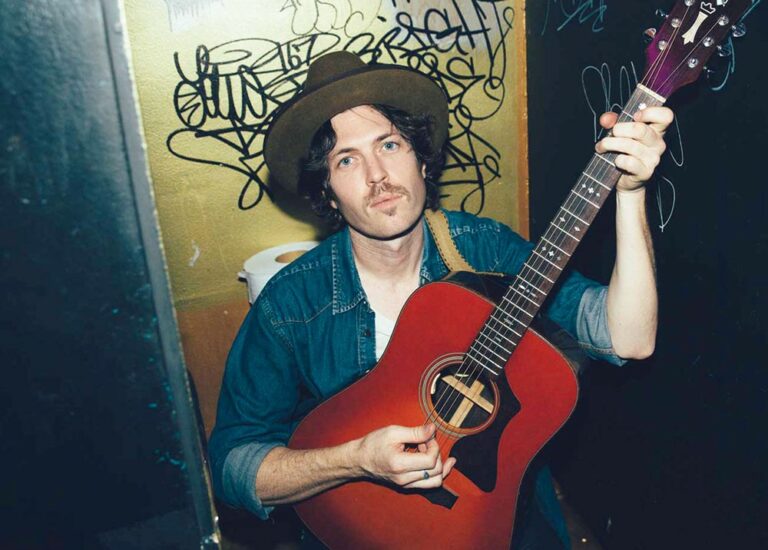
A lifelong nerd who grew up reading comic books and riding the bus from Glen Ellen to Santa Rosa’s Last Record Store, Posehn’s comedy often talks about his love of all things pop culture, which has also transitioned into penning issues of Deadpool for Marvel Comics, composing mock heavy metal tracks with members of Anthrax—and writing his soon-to-be released first book, Forever Nerdy: Living My Dorky Dreams and Staying Metal.

“That is who I am, I am a fan-boy,” Posehn says. “So that came out in my standup, and when I saw that people actually liked it and identified with it, it encouraged me to go further. It’s like, I can talk about Star Wars for 10 minutes and people aren’t going to yell, ‘Boring’? It’s been great.”

Pet-A-Llama Comedy Festival founder and director Dominic Del Bene was also raised in the North Bay, and after years in the music industry, has worked in the Bay Area comedy scene for over a decade. Since starting with San Francisco record label Rooftop Comedy Productions, the Petaluma-based Del Bene has been busy producing content for comedians and producing events for groups like SF Sketchfest. He also runs his own label, Blonde Medicine, and hosts a radio show on KPCA Petaluma. For Del Bene, Pet-A-Llama is the intersection of all of his interests.

“I have an office in downtown Petaluma, and outside of my window I just look at the Mystic Theatre longingly all day,” he says. “I’ve always wanted to book comedy shows there.”

Rather than hosting occasional one-night stands, Del Bene decided to create the festival as a way to showcase several big names all at once.
“I’ve worked on a number of festivals before, and it’s a good way to get everybody excited once a year instead of trying to develop a scene that isn’t exactly focused on comedy in Sonoma County.”

Leading up to Pet-A-Llama, Del Bene has been testing the local comedy waters, bringing headlining performers like Judah Friedlander to town for shows at venues like the Griffo Distillery. He’s been excited by the response from North Bay audiences at these shows, and he notes there is a burgeoning open mic comedy scene happening at bars like Jamison’s Roaring Donkey.

“If people see some of the greats in their own backyard, it might help impact the pace at which that stuff is developing,” Del Bene says.

The Mystic hosts Posehn on Aug. 16 and Del Bene has booked an impressive lineup of performers for the rest of the festival. On Aug. 17, Los Angeles comedian Todd Glass & the Todd Glass Band, recently seen on the Netflix special Todd Glass: Act Happy, will bring rapid-fire repartee to the Big Easy with guests like Blake Wexler and Emma Arnold, while standup’s most famous twins, the Sklar Brothers, take over the Mystic to present a live version of their popular podcast Dumb People Town, in which they skewer local news stories culled from small-town sources across the country.

Other notable names scheduled to appear at Pet-A-Llama include Canadian actor-comedian Scott Thompson, who portrays his socialite character Buddy Cole from The Kids in the Hall television series. Thompson was a principal member of the hit TV series.

Beyond the Mystic, author, television writer and comedian Guy Branum makes his way to Copperfield’s Books in Petaluma for a reading from his new collection of essays, My Life as a Goddess. Comedians Ryan Sickler and Jay Larson present their storytelling podcast, The CrabFeast. Comedian and musician Drennon Davis hosts The Imaginary Radio Program, and the fast-rising comedy group the Dress Up Gang, featuring Healdsburg native Cory Loykasek, offer a screening from their yet-to-be-released TV series with the TBS network. “There’s going to be a lot of diverse programming, and I’m excited about all of it,” says Del Bene.

“I would like to say we’ve been really lucky to work with so many local businesses who’ve been supportive of this,” adds Del Bene, who points to charitable partner Petaluma Paints, the participating venues and sponsors like Windsor’s Barrel Brothers Brewing Company, who’ve released a special Pet-A-Llama Hazy IPA in custom cans around the North Bay. “I’m glad it came together,” Del Bene says. “I’m hopeful we can create a community that’s supportive of comedy.”

.

State EPA Eviscerates Trump Plan to Undo Emissions and Fuel Standard Regulations

From the staff report out today:

This threat of weakening the standards of the unified national program, left unaddressed, could substantially slow progress towards the emission reductions needed to address the serious threat climate change poses to California, the country, and the world, waste billions of gallons of gasoline, and cost consumer money on fuel. Now that U.S. EPA has stated that it intends to abandon the rigorous U.S. EPA standards the record supports, regulated entities and the public confront considerable uncertainty as to the fate of the program, undermining the goals of the unified national program to provide a clear path towards necessary pollution reductions.

Here’s the whole, feisty report:

[pdf-1]

Let’s Dance

0

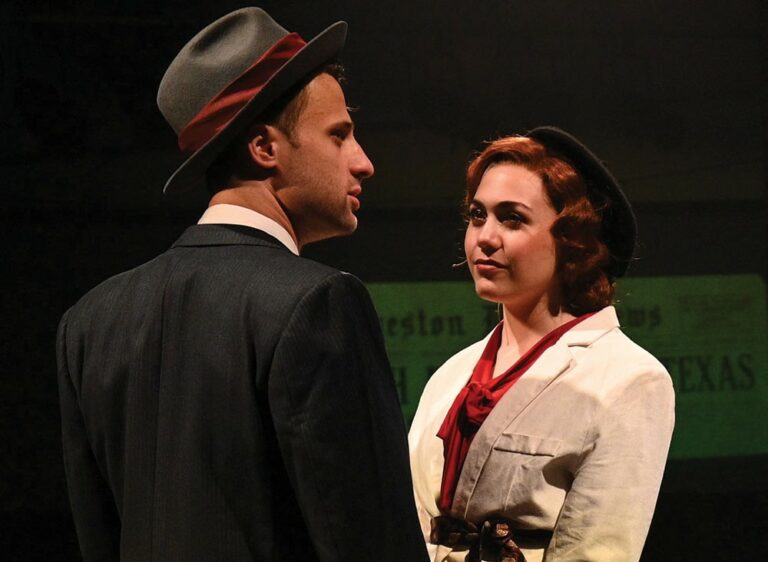
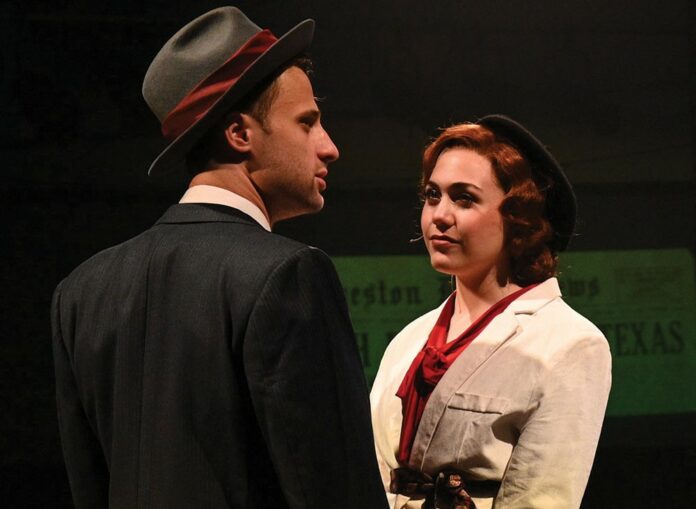
Transcendence Theatre Company’s seventh season of Broadway Under the Stars continues with a dance-centric production titled, appropriately enough, Shall We Dance. The show runs through Aug. 19 at Jack London State Historic Park in Glen Ellen.

Transcendence imports Broadway and national touring professionals to populate its productions, so the caliber of performance is always quite high. Director Leslie McDonel and choreographer Marc Kimelman guide a cast of 17 talented artists through a program featuring songs from 18 Broadway shows like The King and I and Hamilton, as well as pop hits from artists like Madonna and Ed Sheeran.

The show opens, as is tradition, with a passage from Jack London as introduced by a coterie of tap dancers. The full company then welcomes the audience with an amusing adaptation of “Be Our Guest” from Beauty and the Beast that replaces banquet table staples with wine varietals, though I’m not quite sure what dancing strawberries are doing on the stage.

The (mostly) fast-paced, 40-minute first act includes numbers from In the Heights, West Side Story, My Fair Lady and Kiss Me, Kate. The highlight of the act is an energetic production of Louis Prima’s “Sing, Sing, Sing” which incorporates a variety of dance styles that complement its swing roots. Things slow down with “Mama Who Bore Me” from Spring Awakening, which seems tonally out of step in a mostly joyous program, before concluding on a lighter note with the hilarious “A Musical” from Something Rotten.

Act two features dancing set to numbers from a diverse group of artists ranging from Janelle Monáe (“Tightrope”) to Madonna (“Vogue”). The evening’s most visually striking moment comes courtesy of a tango-infused production of the Police’s “Roxanne” from Moulin Rouge with the winery ruins bathed in red.

The juxtaposition between the diversity in dance styles and music selection with the lack of diversity among the cast is noticeable. For a company that imports a great deal of its talent from New York, the relatively small number of artists of color in the cast is disappointing. Simply put, it’s jarring to have Coolio’s “Gangsta’s Paradise” and Michael Jackson’s “Bad” sung and danced by a bunch of white guys, talented as they may be.

It’s time for Transcendence’s cast to be as colorful as the costumes they wear.

Rating (out 5 five): ★★★★

Groovy Grav

0

Here’s a bit of an irony about the heritage Gravenstein apple, darling of Sonoma County’s recent craft cider boom: it isn’t really a heritage cider apple at all. But a bitter irony, it is not.

“It’s shockingly good!” says Chris Condos, cofounder of Horse & Plow, a Sebastopol winery that’s also a cidery, of the Grav. What the apple lacks in tannin, which gives traditional European cider a backbone in a blend, it makes up for in acidity and floral aromatics, Condos says.

Available at the Gravenstein Apple Fair this year, Horse & Plow’s collaboration cider Tilted Plow, with Windsor’s Tilted Shed cidery, combines Gravenstein goodness with the firm tannin and orange oil, Muscat-like aromatics of the Muscat de Bernay apple.

Last week, I asked a group of Bohemians for their take on four takes on local, mostly Gravenstein ciders.

Ethic Ciders Gravitude Sparkling Dry Cider ($9.99) This newcomer focuses on organically grown heritage apples while they grow their own orchard of cider varieties. Fermented with wine yeast strains, this 90 percent Gravenstein cider is clean and crisp, showing fine effervescence, mellow notes of this mellow apple, and has an extra brut-style finish. A big hit with Bohemians, it’s 7 percent alcohol by volume (abv).

Horse & Plow Gravenstein Sonoma County Cider ($14) Looking for “funk,” a legitimate, and not really negative, cider tasting term? Find it here. Fermented on naturally occurring yeasts, aged in neutral barrels and bottle-conditioned, this is a slightly cloudy, funky or medicinal smelling but also ebulliently floral example of Grav gone wild, the kind of rustic refresher that gets me ready to go out and cut some more hay. But seems like some first-time tasters of craft cider may not appreciate the style. 8 percent abv.

Ace Blackjack Gravenstein Cider ($9.99) The Sebastopol cider pioneer returns to its roots with this special release from local apples. A county fair, caramel apple character comes from aging in Chardonnay barrels. 9 percent abv.

Local cider makers have kicked off the first-ever Sonoma County Cider Week, culminating in the cider-soaked Gravenstein Apple Fair. Cider Week events still to come include a Sonoma Strong collaboration release at Barley & Bine Beer Cafe in Windsor, Wednesday, Aug. 8, 5–8pm; Cider on the Patio at Campo Fina, Healdsburg, 5:30–8:30pm; cider pairing at Spinster Sisters in Santa Rosa, Saturday, Aug. 11, 5–9pm, and more at sonomacountyciderweek.com.

Apple Days

0

A harvest fair on the second weekend of August?

It does seem early, at a time of the year when gardeners in many parts of the North Bay are lucky to pluck a sun-ripened red tomato or two from the vine, and vineyards are still full of sour, green grapes. Yet the timing’s just right for what organizers of the Gravenstein Apple Fair call the “sweetest little fair in Sonoma County.”

The Grav is an early-ripening apple, as a quick tour of Sebastopol back roads this week will demonstrate. See the four-by-four bins—some, new white plastic; some, weathered old plywood holding up against the years—alongside a tractor or two staged in an orchard. Over here, a thicket of wooden poles holds up three limbs groaning with fruit. There, a picker on a tall ladder tucks apples into a big bag slung over her shoulder. And everywhere, that telltale aroma, as the signature apple of Sonoma County is the first to fall from the tree in late summer, is just beginning to waft about: apples turning from green to red to brown on the hot, dusty Goldridge ground.

It’s tempting to say the Gravenstein is like the Pinot Noir of local pomes—tender, it bruises easily and doesn’t ship like other often less flavorful commercial varieties—if it wasn’t for the bad sap between the two, after apple trees were ripped up and burned in great piles by the thousands and replaced by grapevines in the 1990s. So maybe the Zinfandel of apples? The Gravenstein apple, native of Denmark, reportedly arrived on the shores of the Sonoma Coast with Russian settlers and, although less obscure worldwide than Zinfandel, reached heights of popularity in Sebastopol, California, one-time Gravenstein apple capital of the world.

The Apple Fair, though celebrating 45 years on Aug. 11 and 12 this year, is kind of a late arriver, created by Sonoma County Farm Trails as its main fundraiser supporting local agriculture, while celebrating the holdouts among this heritage apple. Now the Gravenstein is enjoying a second act as the star apple of local craft cider.

Two centuries after the Russian colony at Fort Ross was established, way back in 2012, Tilted Shed cider makers Ellen Cavalli and Scott Heath launched their ciders at the fair, but were squeezed into a corner of the wine tent. The next year it was dubbed the wine and cider tent, and in 2015 they got their own cider tent, which this year features the boozy beverage with terroir and a kick from 17 local producers.

The fair keeps cider, wine and microbrew in their respective tents, available by the glass ticket at $6 per ticket, but a funny thing crops up on the way to the ticket stand: an extra $20 buys entry to the oak-shaded oasis of the Artisan Tasting Lounge. Here, beer, cider, wine and craft spirits are poured alongside cheese and nibbles from the likes of Redwood Hill Farm, Moonlight Brewing, Spirit Works—and look, over here is Michele Anna Jordan with an apple-inspired treat. Sip Heidrun Meadery’s bee-friendly tipple, spy Eye Cyder from the latest converts to Johnny Appleseed, cult winemakers Radio-Coteau, and then go round again.

There are so many purveyors in this space, in fact, they’ve got them working in shifts—i.e., not all spirits, cheese and cider businesses on the list will be there at once. But there’s no crowd to wait for the next taste. Conducting an investigation into the amenities of the Artisan Tasting Lounge on the last day of the fair, 2017, our Bohemian reporter found it difficult to leave the Artisan Tasting Lounge. Why venture out?

To pet the llamas and baby goats, of course. More hands-on opportunities available for cow milking at 12:30 daily; look and learn how to do sheep shearing right at 4:30. A full schedule of the Agrarian Games, née Farmer Olympics, sponsored by Community Alliance with Family Farmers and Farmers Guild, offers the hayseed advantage in such contests as the potato-sack race, hay-bale toss, watermelon-seed spitting, compost relay and . . . chicken-poop bingo.

So then, back to the food. Get there early and beat the long line for grandma’s apple fritters, a fair fave since 1986, when they cost 25 cents. The recipe for grandma’s fritters is closely guarded by the Masonic Goldridge Order of Eastern Star, so maybe don’t ask. A vendor new to the fair this year, Clint McKay offers a sweet take on his traditional Pomo Indian food with fry cake apple shortcake.

Non-apple-related foodstuffs also abound, including Estero Café’s all-local version of an American summer fair standby: the corn dog, made with local dog, corn and all.

But just to remind us that it’s all about the apples, the fair allows shoppers free 30-minute admittance to the fair just to make a beeline for a box of apples from local grower Lee Walker. Get them apples!

Under the Hood

Twenty eighteen has been a phenomenal year for black-themed films, and Spike Lee’s oddly merry, nostalgic and ultimately hopeful BlacKkKlansman, released on the anniversary of the shame of Charlottesville, continues the streak.

In Colorado Springs in the late ’70s, rookie detective Ron Stallworth (John David Washington) is sent undercover at the local college’s Black Student Union. Noting a classified ad seeking recruits to the KKK, Stallworth makes a spontaneous prank call.

The gang is enthusiastic to meet Ron, so the detective talks his partner, Flip (Adam Driver), into impersonating him at an audition with the secret society. “For you, this is a crusade,” the Jewish Flip tells Ron. “For me, this is a job.” Through exposure to the KKK’s Jew-hatred, Flip comes to identify his common cause with Ron.

Together, they learn the rites and the secret handshake, and discover you’re not supposed to mention the K-word around Klansmen eager to mainstream their organization.

It’s easy to get wrapped up in this story, thanks to Lee’s force, thoughtfulness and evenhandedness. The KKK members are sometimes formidable, sometimes lonely. The only one-dimensional character is a cracker imbecile played by Paul Walter Hauser, as the kind of dunce that scratches his forehead with a pistol barrel.

Lee’s own double-consciousness—loving cinema while realizing it sometimes poisons people—is apparent in an impressive scene with His Eminence, Harry Belafonte. The 90-year-old performer plays an instructor recounting the grisly details of a lynching, who makes the point of mentioning that the vicious mob had been ginned up by a viewing of 1915’s racist sensation The Birth of a Nation.

This is a big movie from Lee, warm and smart. It’s not essentially radical, unless the subject of self-defense is radical. For instance, BlacKkKlansman comes out in favor of supporting your local police, as long as they’re trying to hunt down the Klan.

‘BlacKkKlansman’ opens Friday, Aug. 10, in wide release in the North Bay.

Bard al Fresco

0

‘Tis the season for Shakespeare
al fresco, so pack a picnic, grab a blanket and check out these North Bay productions.

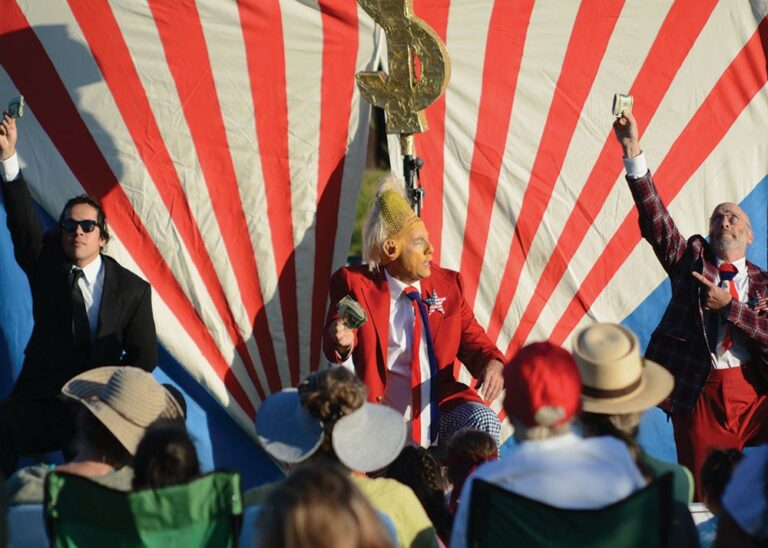
The Marin Shakespeare Company closes out its season under the stars with Pericles, a play whose authorship has fostered many a debate. Plot points include incest, assassination, famine, a shipwreck, marriage, maternal death, familial separation, attempted murder, kidnapping, pirates, prostitution and a seemingly dead person rising from a watery grave. Who knew Shakespeare wrote a zombie play? And this is a comedy.

Director Lesley Currier and her design team have taken all these elements, dressed them up in modern garb, added a few topical references and come up with the theatrical equivalent of a B-movie. It’s entertaining and even moving at the end, but it evaporates quickly in the night air.

Artist-in-residence Dameion Brown brings his commanding stage presence to the title role. Fine supporting work is done by Cathleen Riddley as the loving Queen Simonedes and the treacherous Dionyza; Eliza Boivin as Marina, Pericles’ daughter; Rod Gnapp and Richard Pallaziol in a variety of roles; and Diane Wasnak, who is very engaging as the puckish storyteller Gower.

Rating (out of 5): ★★★½

Santa Rosa’s Shakespeare in the Cannery ceases to exist after this season’s production, as the property is being “repurposed.” Co-founder and director David Lear decided to go out on a lighter note, so they’re presenting Shakespeare in Love, the stage adaptation of 1998’s Best Picture Oscar winner.

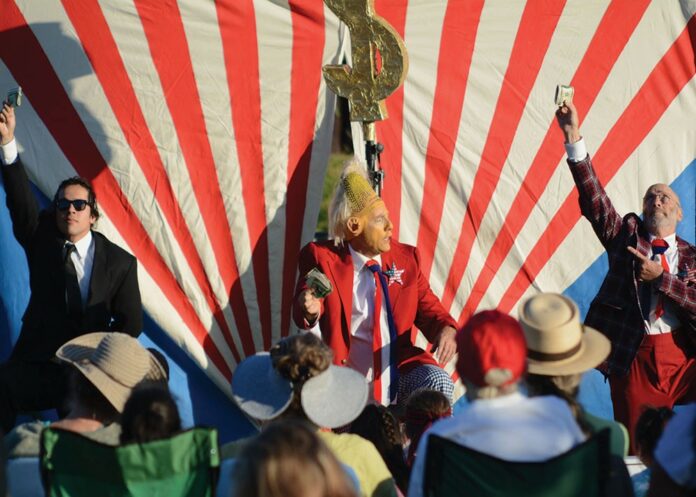
Poor Will Shakespeare (John Browning) has writer’s block and can’t seem to finish his latest opus, Romeo and Ethel, the Pirate’s Daughter. A muse arrives in the person of Viola (Sidney McNulty), who disguises herself as “Thomas Kent” so as to get around the “no women onstage” rule. Shifty theater producers, a loathsome lord, a treacherous boy and a haughty queen all come into play before Romeo and Juliet sees the light of day.

It’s a piffle, but the cast has fun, with good comedic support from Alan Kaplan and Liz Jahren. Isiah Carter impresses in two roles and keep an eye out for Isabella, one of the moodiest, scene-stealing “bitch” characters I’ve seen on a North Bay stage. ★★★½

Over the Moon

0

It’s a short ride back in time to Rossi Ranch. One of Sonoma’s surviving vineyards from the old school of field-blended wines, Rossi was planted in 1910 in the back roads above the Valley of the Moon. It’s best rediscovered on a 20-mile bicycle ride.

Let’s begin this two-hour ride at Spring Lake Regional Park, heading out southeast on shady Channel Drive. Back in 1910, a railroad ran along this same route to Sonoma. After a mile plus, look for a turnout on the left and a narrow footbridge and path to Stone Bridge Road. Turn right, and then right again at Oakmont Drive. At Valley Oaks Drive, follow the signs to Pythian Road, and take in a dramatic view of Hood Mountain on the gentle descent to a wide-shouldered stretch of Highway 12.

It’s just under a mile to Lawndale Road. Near the east entrance to Trione-Annadel State Park, the climb begins. This forested area was hit hard by the Nuns fire in October and the route is still in the burn zone when, rounding a bend, bright green grapevines swing into view, backdropped by the mountain vineyards of Kunde to the north. After longtime farmer Val Rossi died in 1999, many of these old vines were rehabilitated, while new Rhône variety grapevines were planted in the traditional, head-trained style.

Watch speed on the steep descent to the left turn at Warm Springs Road. Follow the road into Kenwood, past Kenwood Plaza Park (where wine is allowed at picnic tables) to the signal and back to Highway 12.

Winery Sixteen 600 2014 Val Rossi Hommage Sonoma Valley Red Blend ($64) The Coturri family has a long history with Rossi, and now farm it organically for the current owners. This wine focuses attention with vibrant blackberry juice color, drizzles raspberry syrup over a fanciful aroma image of charred chocolate cookie with oak sprinkles, sweetens a gravelly palate with blackberry licorice and brushes by like dried velvet—soft, but a little grippy.

Carlisle 2015 Rossi Ranch Sonoma Valley Zinfandel ($47) Talk of wine with a “lifted palate” smacks a little of lofty winespeak, until I sip a Zin like this. There’s an herbal character that Carlisle founder Mike Officer calls “Rossi garrigue,” sweet, bright red fruit flavors of strawberry liqueur and maraschino cherry, and then it just sings skyward, not insubstantial, but ethereal all the same—a gift from the last century to the next.

Mosh Split

0

It’s a little after 6pm when an assemblage of people in boots, denim and leather congregate outside a small building on Orchard Street in downtown Santa Rosa. The flier said doors at 7pm, but the building opens early for the eager crowd.

These days, downtown Santa Rosa resembles more of a travel destination for Bay Area techies on a weekend getaway than a place for local youth longing for an escape from the suffocation of dead-end, suburban cul-de-sacs and business parks.

The cover charge is $7, but if you don’t have that, the door will take $5. If you don’t have anything at all, they’ll still grant admission. No one is turned away.

A staging area for bands is set up in a corner of the room, parallel to an illuminated cross hanging on the wall. This is a house of worship; however, the hymns will sound slightly different tonight. Punk shows aren’t typically held inside a church, but finding any venue willing to accommodate the subculture is slim pickings in post-wildfire Santa Rosa.

The punk scene here is mostly sour grapes for the dwindling population of “true heads” left. Ian O’Connor is a true head. He’s the man behind Shock City, USA events (formerly Pizza Punx) for the past five years. A Shock City event may be the only live punk show in Santa Rosa for a month, sometimes longer.

“Pizza Punx started out as a joke on a flier,” O’Connor says. “We’d get five pizzas from Little Caesars and two 24-packs of PBR for the bands. Now it’s hummus and craft beer.”

A Santa Rosa native, O’Connor witnessed the decline of what was once a promising environment for artists to live and express their art. “The people who used to make the scene left because of the expensive rent,” he says. “We need new people. The older heads and key players aren’t around anymore. Housing has a major effect on the scene.”

Among the devastating fallout from the 2017 October wildfires is the damage done to the presence of a sustainable and thriving music scene. The wildfires’ impact on the city’s housing stock amplified what was already a housing crisis.

“In the early days it was smaller, DIY shows,” O’Connor says. “In the first year of Pizza Punx, we had 100 percent house shows.”

The existence of house-show hot-spots in the area, like Hendley House and Funkden, are now threatened by frustrated neighbors and opportunistic landlords looking to cash in, leaving the Orchard House as one of the only house-show options remaining in the city.

O’Connor has been forced to book shows at a tattoo parlor, a vintage clothing store and a tire shop owned by a friend’s dad. Last April, O’Connor announced Shock City, USA will host its final show this fall. It’s a major blow to a community attempting to establish an identity amid sweeping changes in a city forced to rebuild.

“The community that we worked so hard to build has been scattered,” says Santa Rosa native and Acrylics vocalist Mark Nystrom. “Some of the folks who participate in attending shows don’t have homes and had to relocate.”

Nystrom started in the music scene four years ago. He now feels like the scene has to “start all over” following the wildfires.

“Just booking a show costs a promoter $200 to $300 to get a space, and that’s a steal around here,” he says. “We need to make spaces affordable and open to everyone; that means including more queer, more female and more people of color.”

[page]

Local artist and event organizer Jasmine Partida collaborates with Nystrom to curate shows that provide a sense of inclusion. “I want to inspire the youth,” she says. “I want them to see women, brown people, LGBTQ people, all of the above and beyond in bands, performing and showing art.”

As a Mexican-American woman in a white male–dominated environment, Partida has a different viewpoint on the struggles within the scene. “I don’t care about the music scene here because a lot of the men are so ego-driven, so insecure, so entitled,” Partida says. “I care about the kids. I want them to feel inspired and let that inspiration drive them, mentally but also literally out of Sonoma County.”

Nystrom shares her frustration and says the “farm-to-table wine country gentrification” creates an atmosphere only for those who can afford it. He believes Santa Rosa’s economy is too reliant on tourism, which causes feelings of neglect among local youth. “Venues around here would rather have yoga night or wine country night than host a punk show.”

Partida agrees. “Sonoma County has no interest in supporting artists and musicians that don’t represent their aesthetic,” she says. “If it’s not Americana, or if the music or art steers away from wine culture, they’re not interested.”

One venue that serves as a beacon of hope is Atlas Coffee. The small cafe tucked away in the South A Street arts district of Santa Rosa is one of the premier places for punk shows.

Gregory Thompson, a local artist and Atlas Coffee employee, creates a welcoming space. “Being that artists run the shop and there is a recording studio next door, shows became part of the natural trajectory,” Thompson says. “Atlas has been a hidden gem that provides unestablished artists the space to express themselves. We believe we need more spaces that run off creativity and not money. The owner is a huge supporter and advocate for the art community.”

Thompson says the housing crisis is threatening people’s economic security, which creates feelings of isolation—common themes among Santa Rosa’s dwindling punk community.

“There is fear that having house shows will lead to evictions and not being able to find another home due to lack of housing because half our city fucking burned down,” says B-Ward drummer and Santa Rosa native Mason Wilkinson.

B-Ward’s guitarist, who goes by the name “Ducky,” is a veteran of the scene and native of the city. “Ten years ago,” he says, “I could get a room for $300; now you’re lucky if you get a living room for less than $700.”

The tech industry’s rapid growth and the Bay Area’s skyrocketing rents have forced many to cities like Petaluma and Santa Rosa. The influx of new residents and steady stream of tourists are straining local resources.

“We’re getting all the problems that big cities have,” Ducky says, “crime, traffic, rent hikes—but we’re not getting the culture of a big city.”

Ducky has seen fluctuating fortunes over time but he remains hopeful for the future. “The scene will be going off, then it’ll die down, and pick back up again.”

For others like Partida, it’s not a matter of ebb and flow or raging wildfires; it’s a matter of genuine unity. “The DIY scene here is not a strong community,” she says. “I think the biggest threat to the community is the community itself.”

A Positive Spin

First it was being called a revival; now it’s being hailed as a renaissance. Vinyl albums, once on the verge of obsolescence, just marked their 12th year in a row of growing sales numbers, with Nielsen Music reporting 14,320,000 records sold in 2017, the highest number since the company started tracking vinyl sales back in 1991. In fact, 2017 also marks the first year since 2011 that physical album sales topped digital downloads.

It’s a staggering comeback for a medium that was all but dead 15 years ago when the internet opened the floodgates of digital music streaming, downloading and pirating. That came after the advent of the vinyl-killing CD in the 1980s.

How did this resurgence come about? More new artists are releasing their music on vinyl, and classic records are getting deluxe reissues, like the Beatles’ Sgt. Pepper’s Lonely Hearts Club Band, 2017’s No. 1 selling vinyl record. Add to that, major retailers like Urban Outfitters and Barnes & Noble have recently started racking vinyl in their stores.

Then there’s the renewed interest in the independent record store that’s grown since Record Store Day began 10 years ago, an annual event that celebrates the country’s nearly 1,400 indie record retailers as cultural hubs.

In the North Bay, the local record store lives on in shops like Santa Rosa’s Last Record Store, which has been operating since 1983, and San Rafael’s Red Devil Records, which is celebrating its 20th anniversary.

Doug Jayne already had a long history of working in corporate record shops like Music Plus in 1970s Southern California, where he was raised, but he was making a living as a mechanic when he relocated to the North Bay.

“I got sick of L.A., and I ditched with a girl I worked with and we moved up here so she could go to Sonoma State in 1979,” Jayne says. “I was living in Santa Rosa and I found myself driving down to Cotati and Petaluma to buy records, because all the stores in Santa Rosa were lame—Record Factory, Rainbow Records, you know.”

Jayne so badly wanted Santa Rosa to have a cool record store, he decided to get into the business again and called up his old friend, Hoyt Wilhelm, whom he had worked with at a store in Azusa, Calif. (“A to Z in the USA,” remembers Jayne) and who was working as a teacher in Santa Cruz at the time. Jayne convinced Wilhelm to move up to Sonoma County, where they tried to buy Prez Records in Santa Rosa’s Railroad Square. When the owner reneged, the pair found a space at 739 Fourth St., a few doors down from where the Russian River Brewing Company sits today, and opened the Last Record Store in 1983.

These days, the store’s name seems to carry a prophetic connotation, as the Last Record Store has long outlasted corporate retailers like the Wherehouse and Sam Goody, though the name was inspired by the band Little Feat’s 1975 release, The Last Record Album.

That album also boasts a mural on its cover that prominently features a jackalope, the mythical half-rabbit, half-antelope that is the Last Record Store’s official mascot. The logo of the jackalope wearing sunglasses that adorns the store’s walls and merchandise was designed and drawn by artist Rick Griffin, who created several iconic psychedelic posters and album covers for the Grateful Dead.

“We never thought that people would walk by and go, ‘The Last Record Store—you truly are, aren’t you?'” Jayne says. “We never thought we’d be the last dudes standing.”

For two decades, the Last Record Store was a focal point of Santa Rosa’s downtown scene, sandwiched between the Old Vic pub and popular magazine and periodicals purveyor Sawyer’s News.

After 20 years on Fourth
Street, the Last Record Store moved to its current location at
1899 Mendocino Ave., next door to Community Market, in 2003. Despite several lean years during the early 21st century’s digital revolution, the store has seen an uptick in business, especially in new and used vinyl sales, that matches the national trends.

“Our business really suffered for a couple years, but finally people started buying stuff again,” Jayne says. “It’s been pretty good for the last 15 years, really, and the thing with vinyl [sales] is just nuts. I have no real answer for that.”

Jayne may not claim to have answers, but he has a perfect analogy. “There’s a bit of what I would call the PBR angle. It’s cool to like a cheap beer, and people love coming into the record store and finding a cheap record,” Jayne says. “And we are also able to appeal to people who like the high-end stuff. We’re selling $30, 180-gram vinyl albums that are more like a fine wine. So we’re like a bar that sells to cheap drunks and to wine enthusiasts, musically. And we have people that come in all the time, multiple times a week, so there’s a collector angle to it. God bless those people.”

[page]

The record-buying bug bit Barry Lazarus as a teenager driving around to record stores in his native Los Angeles, and he’s been a music fanatic ever since. Moving to the Bay Area at 19, he’s lived in the region for 40 years, and he just marked 20 years of owning and running Red Devil Records.

“I lived in San Francisco back when it was a lot rougher than it is now, and I had a stressful job, and I was trying to think of what would be the opposite of that,” Lazarus says. “I decided opening a record store in the North Bay would be the opposite of having a stressful job.”

Originally, Lazarus opened
Red Devil Records in downtown Petaluma in 1998, at 170 Kentucky St. near Copperfield’s Books. The store spent six years in Petaluma, until a nearby restaurant fire and long-running construction basically halted all foot traffic at the same time digital music sales were killing the record industry. Once the store’s lease ran out, Lazarus moved to downtown San Rafael.

“San Rafael has more of an arts and music downtown vibe than I knew about,” Lazarus says. “I just had a feeling it would be a good place, and I happened to find a fantastic location.”

Now located at 894 Fourth St. in San Rafael, in the heart of the city’s hub of venues and shops, Red Devil is thriving thanks to the local community of music lovers and collectors. For the store’s 20th anniversary, San Rafael mayor Gary Phillips even issued an official proclamation praising the store as a valuable business and declaring Lazarus a steward of downtown San Rafael.

Red Devil Records has earned a reputation as the go-to source for serious, old-school LP enthusiasts. “The number one advantage of having the store here is the quality of used records brought in,” Lazarus says. “Because Marin County has such a rich musical history, there are just endless record collectors who’ve pretty much been supplying my store with used records, and the flow doesn’t stop.”

Adorning the store’s wall of fame is a massive assortment of original pressings and hard-to-find LPs from bygone eras, and the store’s social media shows off an ongoing Record of the Day series that includes gems like Jeff Beck’s Beck-Ola 1969 original pressing in mint condition, or Nirvana’s “Smells Like Teen Spirit” gold-colored, 12-inch vinyl promotional pressing. Lazarus says he gets a lot of people coming up from San Francisco or the East Bay to get their hands on these albums. “I’m really lucky to get a lot of rare records here,” he says. “That’s what we are known for.”

Lazarus sums up vinyl’s popularity in two ways: it sounds better and it looks better. From the unmistakably warm real-live analog sound of the record, to the engaging cover art, Lazarus finds that people love to have a shelf of records in their home to admire and enjoy, and it’s not just collectors. “The age range of customers in my store is from 10 to 80 years old,” he says.

The Last Record Store, 1899-A Mendocino Ave., Santa Rosa. Monday–Friday, 10am–8pm; Saturday, 10am–6pm; Sunday, noon–5pm. 707.525.1963.

Red Devil Records, 894 Fourth St., San Rafael. Monday–Friday, 11am–7pm; Saturday–Sunday, 11am–6pm. 415.457.8999.

The Funny Boom

When standup comedy went mainstream in the 1980s, it was largely confined to the comedy club, a ubiquitous term for the low-ceilinged, low-lit rooms where comedians rattled on with observational wit in front of brick walls on television shows like An Evening at the Improv and Caroline’s Comedy Hour. A lot has changed in standup in the last three decades,...

State EPA Eviscerates Trump Plan to Undo Emissions and Fuel Standard Regulations

From the staff report out today: This threat of weakening the standards of the unified national program, left unaddressed, could substantially slow progress towards the emission reductions needed to address the serious threat climate change poses to California, the country, and the world, waste billions of gallons of gasoline, and cost consumer money on fuel. Now that U.S. EPA has...

Let’s Dance

Transcendence Theatre Company's seventh season of Broadway Under the Stars continues with a dance-centric production titled, appropriately enough, Shall We Dance. The show runs through Aug. 19 at Jack London State Historic Park in Glen Ellen. Transcendence imports Broadway and national touring professionals to populate its productions, so the caliber of performance is always quite high. Director Leslie McDonel...

Groovy Grav

Here's a bit of an irony about the heritage Gravenstein apple, darling of Sonoma County's recent craft cider boom: it isn't really a heritage cider apple at all. But a bitter irony, it is not. "It's shockingly good!" says Chris Condos, cofounder of Horse & Plow, a Sebastopol winery that's also a cidery, of the Grav. What the apple lacks...

Apple Days

A harvest fair on the second weekend of August? It does seem early, at a time of the year when gardeners in many parts of the North Bay are lucky to pluck a sun-ripened red tomato or two from the vine, and vineyards are still full of sour, green grapes. Yet the timing's just right for what organizers of the...

Under the Hood

Twenty eighteen has been a phenomenal year for black-themed films, and Spike Lee's oddly merry, nostalgic and ultimately hopeful BlacKkKlansman, released on the anniversary of the shame of Charlottesville, continues the streak. In Colorado Springs in the late '70s, rookie detective Ron Stallworth (John David Washington) is sent undercover at the local college's Black Student Union. Noting a classified ad...

Bard al Fresco

'Tis the season for Shakespeare al fresco, so pack a picnic, grab a blanket and check out these North Bay productions. The Marin Shakespeare Company closes out its season under the stars with Pericles, a play whose authorship has fostered many a debate. Plot points include incest, assassination, famine, a shipwreck, marriage, maternal death, familial separation, attempted murder, kidnapping, pirates,...

Over the Moon

It's a short ride back in time to Rossi Ranch. One of Sonoma's surviving vineyards from the old school of field-blended wines, Rossi was planted in 1910 in the back roads above the Valley of the Moon. It's best rediscovered on a 20-mile bicycle ride. Let's begin this two-hour ride at Spring Lake Regional Park, heading out southeast on shady...

Mosh Split

It's a little after 6pm when an assemblage of people in boots, denim and leather congregate outside a small building on Orchard Street in downtown Santa Rosa. The flier said doors at 7pm, but the building opens early for the eager crowd. These days, downtown Santa Rosa resembles more of a travel destination for Bay Area techies on a weekend...

A Positive Spin

First it was being called a revival; now it's being hailed as a renaissance. Vinyl albums, once on the verge of obsolescence, just marked their 12th year in a row of growing sales numbers, with Nielsen Music reporting 14,320,000 records sold in 2017, the highest number since the company started tracking vinyl sales back in 1991. In fact, 2017...
11,084FansLike
4,446FollowersFollow
6,928FollowersFollow