Louche Company

0

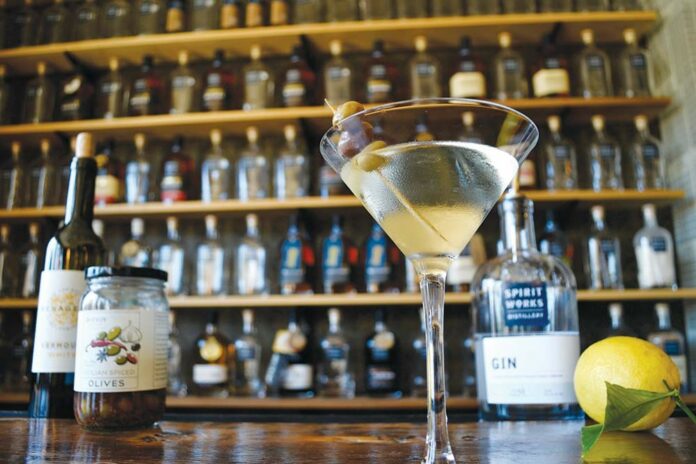
You’ve heard the one about the little retirement project that got out of hand, and somehow became a big cult Cabernet winery. And by the one, I mean the dozens of the same story, up and down wine country. But these kids in the craft spirits game, they don’t have time to wait around for all that. They jump ship young, and fire up that still yonder.

Hence the name, explains Josh Opatz, a Healdsburg native who co-founded Young & Yonder Spirits with his wife, Sarah. The pair met in San Francisco, where Josh was working in banking policy, Sarah in graphic design. But they packed up early in their careers to play around with distilling in Cloverdale in 2013. Moving to Healdsburg four years later helped with the walk-in traffic, Opatz says, even if they’re tucked away in an industrial zone. Without direct sales at the tasting room, it’d be tough to break even in the cruel world of liquor distribution, where it’s hard for a small brand to get noticed.

One way local craft distillers get noticed is by touting their “grain to glass” process, in contrast to outsourcing the base spirit. But bringing in grain-neutral spirit helps a business get up and running with less overhead, Opatz explains. Young & Yonder plays it both ways, bringing in booze for their vodka ($30) and re-distilling it six times, but making small batches of bourbon ($45) from their own mash bill.

In the capacious tasting room, good tunes play to movies set on silent and black-and-white. It’s weird how the Big Lebowski, in certain stretches, just looks like a closed circuit of a guy wandering around in his bathrobe. No White Russians here, but they mix up a menu of seasonal cocktails ($10) at the bar.

The lime vodka ($32) has a fine aroma of fresh Persian limes that banishes ethanol overtones—good choice for a vodka tonic or a Bloody Mary with subtle saucing. The H.O.B.S. gin ($35) is cardamom-forward and earthy, with juniper and citrus juicing the spicy finish.

Unusual in the North Bay craft spirits scene, the Fellows and Foragers absinthe ($50) is a naturally light green-hued spirit distilled with wormwood and anise, among other herbs. Absinthe originally gained popularity, then infamy, as the tipple of bohemians and louche café society in 19th-century France.

Fun fact: when water is poured into the spirit from the absinthe fountain, it is said to “louche,” turning cloudy. One more shot of this, and you might find yourself dreaming of a new career—impressionist artist, for one.

Young & Yonder Spirits, 449 Allan Court, Healdsburg. Thursday–Sunday, noon–6pm. 707.473.8077.

Monster Party

0

New on the Bay Area scene, the hard-hitting and socially conscious rock band Modern Monsters take their primary inspiration from the 1990s era of alternative and experimental rock, hip-hop, soul and grunge, a time when the members were all coming of age.

Formed in San Rafael by Marin-based bassist Brody Bass and also featuring Marin vocalist Chari Glogovac-Smith, East Bay–based guitarist Rich Wells, and Sonoma County drummer Keenan Tuohy and guitarist Wyatt Lennon, the group is less than two years old but has already evolved a self-assured sound.

Local audiences can catch the band in action this week, when Modern Monsters take over the Whiskey Tip in Santa Rosa on March 8.

With Bass and Wells splitting co-writing duty, Modern Monsters have gelled in the last six months after several lineup and name changes.

“Brody and I are both very down-to earth people, and don’t let things get under our skin,” says Wells. “And if things do get under our skin, we both have music as a release for that. Whatever emotions are trapped inside us, whenever we write a song, we just let it all out.”

The band is midway through recording their debut EP, having laid down several tracks with Grammy-winning producer and engineer Michael Rosen (Rancid, Santana), and they’ve started an online fundraiser on IndieGoGo to help complete the project. Campaign perks include a chance to smash a guitar onstage with the band and a private concert.

The group is also gearing up to play an unofficial showcase in Austin during the annual South by Southwest music conference and festival. That showcase will be hosted by Balanced Breakfast, who organize music-industry meetups in cities throughout the country, including Santa Rosa.

More than just a party band, Modern Monsters carry messages of social positivity and tap into an uplifting collective energy at
live shows.

“What we do as a band is try to get conversations started, bring down the walls between people,” says Wells. “We appreciate the community and whatever brings it together—we want to be a part of that.”

Modern Monsters rock on Friday, March 8, at Whiskey Tip, 1910 Sebastopol Road, Santa Rosa. 9pm. 707.843.5535.

Family Jewels

0

Sprouting up like mushrooms after rain, frozen yogurt shops seem to have taken over every shopping mall nook and retail strip cranny in 21st-century America, including a quiet little corner on the western edge of Sebastopol, Calif.

So it is a morsel of tasty, and, indeed, somewhat more savory, irony to learn that a failed fro-yo shop has been improbably replaced with a mushroom shop. Or is that “mushroom shoppe”?

The unfortunate venture might have done better than to open in November, speculates Wyatt Bryson, co-proprietor of Jewels of the Forest, the mushroom shop that popped up in its place. But it was fine timing for a business whose principal product crops out of the ground after a late fall rain.

The tiny retail space, which seems to have an air of things fungal about it—in a good, antiquarian sort of way—is dedicated to all things mycological, albeit in a limited and eclectic selection. Here are books, T-shirts, shroom-related baubles, edible items and even some disarmingly Old World–style hats and handbags that are hand-made from a kind of velvety-smooth mushroom by a craftsman in Romania, and wouldn’t look out of place on Radagast the Brown. Wyatt swears the hat won’t melt, like a mushroom, under the next rain it meets.

Pointing to a colorful sign at the back of the shop, Wyatt explains that the Jewels of the Forest logo—a grayscale assembly of a mushroom with a forested background—was adapted from the sign for a video store his father operated in Occidental, where the family has a multi-generational history.

But is there more to it than a quirky little homespun mushroom shoppe? Back to those edible options mentioned above: the real business of Jewels of the Forest happens beyond the swinging doors to the commercial kitchen where, thanks in part to the yogurt setup (plus $50,000 in extra renovations), Wyatt’s brother, Hunter, is cooking up a new batch of mushroom jerky, and Wyatt starts talking about the hard-nosed world of snack-food entrepreneurship.

These are hard times no more for vegans who love the taste of jerky but cannot abide texturized soy protein versions of meatless pretenders to the cured-meat category. Mushroom jerky is trending lately, as are all things mycelial, according to Wyatt. He got bit by the shroom bug eight years back while working in shipping logistics in Hawaii (he retains a habit of greeting emails with “aloha”), when he bought some used lab equipment off craigslist and began growing oyster mushrooms.

I’d never heard of this fashion of toadstool treat until I happened upon a booth they’d set up on a quiet backwater of last year’s Taste of Sonoma wine event at the Green Music Center. I was skeptical, maybe because of the bad reputation of the kind of dried mushrooms that are endured with a hearty slug of red wine, as a foul tasting means to a mind-altering end—or so I’ve been told.

But Jewels of the Forest mushroom jerky, which the Bryson brothers have named “Shroom Snack” in hopes of adding products, is steeped with spice and savory flavors—even though the organically grown oyster mushrooms do arrive in dried condition, from suppliers in Asia. The retail price, $8.99 for a 2.5-ounce packet, would be twice that if they sourced locally grown mushrooms, according to Wyatt.

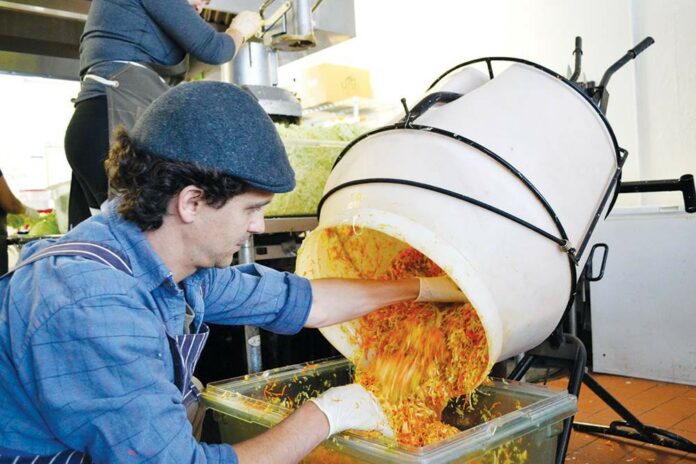
After the mushroom pieces are rehydrated, washed, cut and sorted by Hunter, who has worked for Stark’s restaurants for eight years, they are fresh-looking enough, shining with juicy vitality. The mushrooms are cooked, principally for food safety and because raw mushrooms contain a hard-to-digest substance called chitin; treated to sesame or sweet chili seasoning (they make a black pepper version exclusively for HenHouse Brewing’s taproom) with tamari sauce and organic cane sugar; and then put in the dehydrator. That’s the part that takes “some finesse,” says Wyatt, to get just the right texture—Shroom Snack mushroom jerky is gummy, and sticks to the teeth like very moist beef jerky, but the seasoning doesn’t stick to the fingers.

The snack was a hit at its debut a few years ago at a West County ethnobotany festival, selling out within an hour or so. “That was really our proof of concept and validating moment,” says Wyatt. To prepare for their next move, they’ve already attended a New York scale-up accelerator workshop, had “speed dating” sessions with venture capitalists, and are talking level one (or is it round two?) financing—it’s all a fast-moving blur in the reporter’s notebook.

They’re also a few steps ahead on that old homemade logo: soon, new packaging will emphasize the spinoff-savvy Shroom Snack brand, and shrink the Jewels of the Forest logo, which they hope to keep after any potential multimillion dollar sellout, for their mycological education efforts. The Bryson brothers present beginner courses on growing mushrooms several times a year at Santa Rosa’s Finley Center. Participants get to bring home a bag of sawdust medium that will grow oyster mushrooms. The brothers have also worked with landscapers to create mushroom landscape designs.

Alas, there is no sweet scoops of frozen mushroom dessert in the pipeline yet, but who knows what will trend next: fro-oy?

Jewels of the Forest, 175 Pleasant Hill Ave. N., Sebastopol. 707.326.6308. Shroom Snack is sold at Oliver’s Market, Community Market, Pacific Market, Bill’s Farm Basket, Shelton’s, Made Local and other Bay Area stores including Berkeley Bowl and Rainbow Grocery.

One for the Money

0

On Dec. 4, 1956, Johnny Cash, Jerry Lee Lewis, Carl Perkins and Elvis Presley held a once-in-a-lifetime jam session at rock ‘n’ roll pioneer Sam Phillips’ legendary Sun Records studio. They were labeled the “Million Dollar Quartet” by a local journalist, and that moniker was affixed to the recordings of the session released decades later.

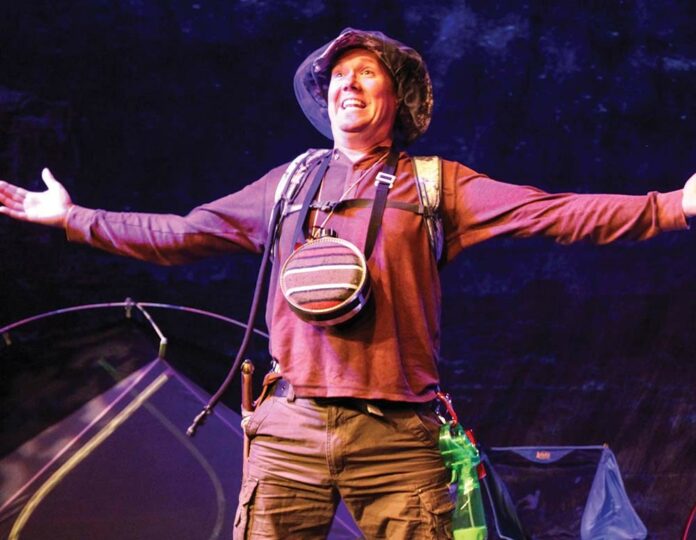
In 2006, Colin Escott and Floyd Mutrux unleashed a highly fictionalized and time-compressed theatrical version of the event, also titled Million Dollar Quartet. Santa Rosa’s 6th Street Playhouse gives the North Bay a chance to check out the popular jukebox musical with a production running now through March 24.

Jukebox musicals usually comprise a couple dozen well-known songs connected by expository material, and Million Dollar Quartet is no different. Sam Phillips (Benjamin Stowe) narrates the tale of the event, filling in the backstory and presenting the dramatic conflict around which the music swirls—will Johnny Cash sign a contract extension or fly the coop?

At a recording session for Carl Perkins (Jake Turner) with Jerry Lee Lewis (Nick Kenrick, also music director) on piano, who should happen to drop by but Elvis Presley (Daniel Durston) and his girlfriend (Samantha Arden) and Johnny Cash (Steve Lasiter)! In no time, there’ll be a whole lotta shakin goin’ on, as we’re treated to “Blue Suede Shoes,” “Folsom Prison Blues,” “That’s All Right,” “Great Balls of Fire” and 20 other classics.

Director Michael Ray Wisely—who has played Phillips and directed this piece before—had the benefit of 6th Street expending significant coin on this production, beginning with an impressive set (Conor Woods adapted Kelly James Tighe’s original scenic design) and imported talent. It’s not an easy show to cast, as each performer must be a “triple threat”: actor, singer and musician.

Kenrick reprises his Theatre Bay Area Award-winning performance as Jerry Lee Lewis and steals the show with his kinetic piano playing and entertaining characterization. Local performer Turner manages to hold his own as Carl Perkins, and Durston and Lasiter do fine in capturing the essence of their characters while avoiding simple caricatures. They receive good musical support by locals Nick Ambrosino on drums and bassist Shovanny Delgado Carillo.

Ignore the shaky musical history and often pedestrian exposition, and you’ll find yourself enjoying a well-performed staged concert of some of rock ‘n’ roll’s greatest hits.

Rating (out of 5): ★★★½

Big Bites

Well, it’s Restaurant Week and that can only mean one thing: stay home and eat some soup! No, no, no—it means get out there and get happy and enjoy yourself at one of the legion of top-notch dining destinations we’re blessed with here in the North Bay. We love participating in this annual civic event devoted to eating. We love eating, we love coffee and we love oysters. We don’t really love this incessant rain outside since it’s keeping us from our Restaurant Week mandate to stuff our fat face in a highly public manner, but don’t let a little atmospheric river keep you from hitting the pavement pounding down some choice North Bay eats this week. But before you do, take a spin through this selection of write-ups from our peerless crew of foodies.

Rocker Oysterfeller’s Kitchen & Saloon

“The soul of the South, coupled with the bounty of our coastline is what inspired the menu at Rocker’s,” says Brandon Guenther, co-owner of Rocker Oysterfeller’s Kitchen + Saloon in Valley Ford.

Guenther revels in serving up local, seasonal and sustainable farmed foods with a Southern-inspired twist. Five styles of Sonoma County’s own barbecued oysters, followed by an heirloom tomato salad and Rosie organic fried chicken, are on the menu, as well as a cornmeal fried oyster po’boy. Are you hungry yet?

Life in Arizona and an interest in hotel and restaurant management led to Guenther’s marriage to Shona Campbell, and also his partnership at Rocker’s, as co-owner of a Mexican restaurant in Placerville and a catering service in Oakland. The two founded Firefly Catering in Oakland in 2003 before they relocated to west Sonoma County. By 2006, they had opened Valley Ford Hotel and Rocker Oysterfeller’s in 2006, housed in a building built in 1864.

Guenther actively consults on new restaurant concepts, designs and operations. His most recent venture was in 2016, to develop a coastal flatbread concept at Gourmet au Bay wine bar in Bodega Bay. In this same year, the couple took over a 40-year-old Mexican Restaurant in downtown Placerville, remodeled the restaurant, crafted a cocktail program, installed a “from scratch” authentic Mexican menu and opened Tortilla Flats Cantina.

It’s obvious there is no shortage of motivation between Brandon and Shona, who plan to tweak the menu at Rocker’s a bit more in the coming months.

The inspiration, says Guenther, is his wife’s heritage. “Shona is from Galveston on the Gulf Coast of Texas. Our menu will begin to focus more on that particular region of the South in the coming months as it shares a lot of similarities food-wise with this part of California.”

Rocker Oysterfeller’s Kitchen + Saloon, 14415 Hwy. 1, Valley Ford. 707.876.1983. rockeroysterfellers.com.—Charlene Peters

Smokin’ Bowls

Nick Topolos’ earliest memories revolve around food. With a heritage that speaks to Greek and comfort food from the American South, he was influenced by more varied cuisines than would be expected from a suburban boy growing up in Petaluma. In addition to his heritage, he attributes his multicultural culinary background to his mother and a Chinese-American friend of the family. His diversity in cuisine is self-recognized.

“Food has often been part of my most treasured memories, whether it was at the French Laundry or a $2 street taco,” says Topolos. “What they have in common is great food that’s made from the heart.”

Topolos entered the restaurant business in September 2017, bringing with him a professional background in graphic and web design for Jackson Family Wines, Hog Island Oysters and Diageo Chateau & Estate Wines, to name a few. His passion for food and drink led to a partnership in the restaurant business with two of his friends.

Smokin’ Bowls was born from a desire to reinvent the concept of comfort food with a focus on flavor and value. It was built with the intention to provide a space for those with gluten sensitivities to enjoy a variety of quality meals without the anxiety that comes with dining out. This inspiration behind this idea was based on the experiences of his gluten-intolerant business partners.

Located in the heart of Rohnert Park, Smokin’ Bowls showcases menu items such as the Rohnert Pork—slow-cooked, pulled-pork barbecue served on french fries fried in beef fat, covered with house-made cheese sauce and topped with bacon and green onions. Another popular option is the Dragon Bowl, filled with white-meat chicken with hot-sweet Asian sauce over bacon-fried rice. And then there’s the Bowl Named Sue, with white-meat chicken over creamy mashed potatoes covered with country gravy, bacon and green onions. The options for gluten-free diners are fun and seemingly endless.

Says Topolos, “My favorite moments at the restaurant are when people who are celiac come up and genuinely thank us for finally providing them a place where they have a choice.”

Smokin’ Bowls, 290 Southwest Blvd., Rohnert Park. 707.665.5265. smokinbowls.com.—C.P.

The Girl & the Fig

Does it seem like just yesterday that the Girl & the Fig opened up a little space in the little village of Glen Ellen? Maybe not, because it was darn well over two decades back. “We’re going to turn 22 this summer,” says restaurant founder Sondra Bernstein. Those many years ago, Bernstein recalls, she had just left Viansa Winery and Italian Marketplace, and thought it would be nice to open her own little cafe in a 42-seat space in Glen Ellen. “It was just a really fun, funky place, and that started everything.”

Everything includes a catering service, a food truck dubbed the “Fig Rig” and a few ventures that have opened and run their course, in addition to the original restaurant—or “the Fig,” in Bernstein’s fig world—which now occupies a more spacious, choice spot on the Sonoma Plaza, and “the cafe,” in the original digs. Confusing? Not to worry—both locations offer prix fixe dinners for Sonoma County Restaurant Week.

At the Fig Café, where the house style is what Bernstein calls “California home cooking,” $29 gets a diner a first course of roasted beet salad, mache, orange-chèvre crema and toasted pistachios; a second course of roast pork loin, farro, Brussels sprouts and bacon vinaigrette; and a dessert course of chocolate budino, vanilla Chantilly and cinnamon pecans.

Over at the original “Fig,” $39 worth of what Bernstein calls “country food with a French passion” starts with a crispy Brussels sprouts and kale salad, with shaved Vella dry Jack, herb croutons and creamy pepper vinaigrette. The main course features duck sugo, a slow-roasted duck stew, served on creamy polenta with seasonal baby vegetables. Dessert is butterscotch panna cotta, chocolate croutons, Italian meringue and candied cocoa nibs.

“We try to pick out things that tend to be crowd pleasers,” says Bernstein of the menu choices. “They are not totally luxurious, but things that people feel they’re getting a great value for.” But something that diners may not realize is that both figgy eateries offer three course, fixed price options every day at just a few dollars more—it just may take Restaurant Week to overcome diner expectations that they’re really “expensive” wine country restaurants, Bernstein muses.

An even hotter tip on value is the $12 wine pairing. The Fig has a thing for wines from France’s Rhône region, and California wines in those styles—think Viognier, Roussanne for whites, Syrah and Grenache for reds. Get three two-ounce pours of customizable wines for each course, or sample them to then splurge on a bottle. Girl & the Fig’s house brand is another good value for Sonoma Valley Syrah made by their friends at Highway 12 Winery, or Viognier made at Cline.

About that winning name? Sondra Bernstein says it was “name brainstorming with a friend under a fig tree—totally random.”

The Girl & the Fig, 110 W. Spain St., Sonoma. 707.938.3634. thegirlandthefig.com.—James Knight

Central Market

When I moved to the North Bay in early 2015, my foodie cousins couldn’t stop gushing about Central Market in Petaluma. For the next few years, the pricey menu, along with my general ignorance about fine dining, kept me away. However, when my best friend visited Sonoma County for the first time not too long ago, I knew I had to treat him to a great dinner that featured local ingredients. The plates we sampled that night—wagyu beef skewers, fried shoestring zucchini and a charcuterie plate—were delightful and worth the splurge.

Not only does Central Market offer first-time Sonoma County visitors great flavors, but the restaurant itself says much about our corner of the world. The tasteful décor pays tribute to Petaluma’s agricultural roots. You might find yourself sitting next to a painting of a cow, restored cabinet or egg basket. These additions play into chef Tony Najiola’s vision of serving up amazing dishes in a warm, welcoming, and authentic environment.

During Restaurant Week 2019, Central Market has some fantastic sounding dishes for budget-conscious gourmets. For just $39, diners can indulge in a three-course menu that boasts soup or roasted veggies for the appetizer, fennel sausage or chicken breast for the main, and butterscotch pot de crème or almond macaroons for dessert. Pro tip: have you and your dining partner order opposite courses so you can taste a little bit of everything.

But don’t feel too guilty if you end up spending more than you intended. Central Market has an extensive wine selection, including a whole page dedicated to German Rieslings. Also, you may end up ordering one—or more likely two—baskets of rustic bread straight from the restaurant’s wood-fired stone oven.

Central Market, 42 Petaluma Blvd. N., Petaluma. 707.778.9900. centralmarketpetaluma.com.
—Thomas Broderick

Zazu Kitchen
& Farm

In 2001, what inspired Duskie Estes and John Stewart to open Zazu Kitchen & Farm was a commitment to slow cooking, sustainability and “knowing the face that feeds you.” They spread the gospel of responsible and ethical handling and purchasing of meats by sourcing direct from the farmer. The husband-and-wife team are also farmers in their own right, with three locations in Sonoma County where they raise rabbits, ducks, chickens, goats, sheep and pigs. With respect to the animal’s life, they use all parts “snout to tail” and teach their cooks at Zazu to butcher the whole animal.

Duskie has come a long way since she began cooking in her EZ-Bake oven at the age of five. She has proven to be a fierce competitor on the Food Network’s Next Iron Chef (seasons 3 and 5) and has served as a judge on Guy’s Grocery Games; her beloved Zazu Kitchen & Farm was featured on Food Network’s Diners, Drive-Ins & Dives.

John is an avid salumist who studied at the University of Iowa’s meat science program. The couple met in Seattle, both working for Tom Douglas at Palace Kitchen before moving to Sonoma County, leaving behind Duskie’s year-2000 status as City Search’s Seattle Best Chef. During her tenure at Palace Kitchen, Gourmet magazine ranked it one of the top 20 restaurants in the country. No stone was left unturned for Duskie, who also co-authored Tom Douglas’ Seattle Kitchen, which received the James Beard Award in 2001.

As one of the San Francisco Chronicle‘s Top 100 restaurants and San Francisco Magazine‘s Top 50 restaurants, Zazu continues to accumulate accolades. Adding to the list, Zazu has been recommended in the Michelin Guide from 2008 to 2018, and in 2017, Duskie and John were featured on the cover of Wine Spectator in recognition of the restaurant and their Black Piglet food truck.

“We are lucky to be in Sonoma County,” Estes says in regard to life with her husband, children and animals. “We want to represent what is awesome about this place, [especially] its proximity to source.”

Mission accomplished.

Zazu Kitchen & Farm, 6670 McKinley St. #150, Sebastopol. 707.523.4814. zazukitchen.com. —C.P.

Sonoma County Restaurant Week runs March 1–10. Visit sonomacounty.com/restaurant-week.

Full Tilt

0

When it comes to global climate change and what to do about it, there’s a meme you hear in California politics that says Jerry Brown was a man of ambition but Gavin Newsom’s a man of action.

It was Gov. Brown, after all, who set California’s highly ambitious 2045 goal for the state to be weaned off of fossil fuels and fully shifted to an all-renewables energy matrix. Now Brown’s gone and it’s upon Newsom’s administration to decide or declare whether the state should get onboard with an ambitious new offshore wind-farm plan released by the Berkeley-based American Jobs Project in February.

“We hope that state policy leaders take a look at this,” says Mary Collins, managing director and co-founder of the American Jobs Project.

The American Jobs Project (AJP) paper endorses two wind farms currently under consideration for development—in Morro Bay and off the Humboldt County coast—and could add some 18,000 jobs to the California mix by 2045. Given California’s deep-water offshore challenges, the AJP proposal would emphasize cutting-edge offshore windmill technology—huge floating windmills with massive, football-field-length fins that would be tethered to the ocean floor. The AJP’s jobs-focused vision also discusses future technologies such as giant wind-catching kites called Makani devices to fully leverage the renewable promise of wind energy, especially on a cloudy day.

That’s all very ambitious, but is it politically feasible?

Newsom has taken an all-of-the-above approach as he entered office pledging to meet the 100 percent goal. As lieutenant governor he chaired the Lands Commission and in a statement online from late 2017 noted that “we must continue diversifying our energy supply—that means increasing our output of solar, wind, geothermal, hydro and ocean-based energy.”

The AJP is a nonprofit think tank founded by former Michigan Gov. Jennifer Granholm that was incubated out of Berkeley and has an office in the Washington, D.C., area. The organization says it’s been engaged in New Green Deal–type work in 24 states over the past five years but that this is its first foray into California climate-change waters.

The AJP California Offshore Wind Project: A Vision for Industry Growth proposal came about because of the 2045 goal set by Brown and pledged to by Newsom on his first day in office—and because the federal Bureau of Ocean Energy Management (BOEM) started the leasing process for offshore wind-farms development as of last year.

As a result of these intersecting forces, says Collins, “We could see a federal lease as early as 2020 in California waters.”

Could being the operative word.

The AJP has dotted the expected i‘s and crossed the mandatory t‘s in its exhaustive wind project blueprint for California energy independence—it has interviewed the fishermen, solicited input from environmental groups, gotten the public-private ball rolling, engaged in discussions with the Department of Defense, and made sure that organized labor has a place at the table.

The AJP vision comes with the promise of thousands of permanent jobs in the renewable and clean-energy industry—and with big-ticket investment interest in the California project from the likes of Google, Shell and Apple. If fully implemented, the AJP says “offshore wind could be utilized to achieve 100 percent carbon-free energy, improve grid reliability, and support over 17,500 California jobs in 2045.”

That’s a ways off. In the shorter term, Collins says there’s work to be done between now and next January, but is optimistic that the various stakeholders and interested parties will see their concerns fully mitigated.

Historically, onshore and offshore wind projects have been fraught with concerns over negative interactions with birds. North Coast U.S. Rep. Jared Huffman has taken an exceedingly dim view of offshore oil platforms but has signaled an openess to offshore wind farms (his district includes Humboldt County).

Huffman notes that the BOEM hasn’t indicated yet whether the lease procurement will be a wide-open bidding process or “whether they could go right to a decision right away with the local energy project.” He’d prefer the latter option and says that while the “devil is in the details” (transmission issues, impacts on fisheries) the Humboldt project—which he’s more familiar with than the Morro plan—is “a site that looks like a spot that could be appropriate. I am for it in concept for sure. We’ve got to find some ways to say ‘yes’ to projects like this—but it also has to be done thoughtfully.” The conditions are very favorable in Humboldt Bay, he notes: “The wind is good, the conditions are good, and the Department of Defense doesn’t need to protect it for military purposes.”

Fishermen have been wary of offshore wind farms because of the potential negative impacts on where they can fish, and for their gear getting torn up in the windmills. Environmentalists, and Donald Trump, have pointed to the deleterious impacts on birds. But there’s been a attitudinal sea change in recent years over offshore wind farms, as the existential issue of massive global catastrophe has trumped concerns about pelicans flying into the windmill fins.

[page]

The East Coast has led the way in offshore wind projects domestically, but for many years, commercial fishermen along the Atlantic were among the biggest critics of the development of a wind farm off the coast of Rhode Island and New York. That project came online in 2016 and, irony of ironies, fishermen there are now charging windmill tourists for a boat ride to go check out the aesthetically appealing wind turbines, says Collins.

“People are really intrigued with this,” says Collins. “There’s a fusion of this renewable energy technology with new maritime opportunities. We’ve seen it in Germany—a tourism industry bubbling up.”

California fishermen were at the table as the AJP put together its private-public blueprint for California, she adds, and have been since an intergovernmental task force was created at the beginning of the BOEM wind-farm lease process in 2016. What’s needed moving forward, she says, is data. “We need more data on fisheries, that’s one thing.” Fishermen have given input to the renewables industry on issues such as whale migration patterns, she says.

Land-bound aesthetic concerns won’t be an issue, she adds, given that the turbines will be tethered about 20 miles offshore and out of view—or barely visible—from land. Besides, she says, after the installation of the wind farm off of Rhode Island, a survey of tourists there found that only one in 10 had a problem with the visible windmills.

Collins says the mainline environmental groups—Sierra Club, the National Resources Defense Fund—have submitted comments under the lease proposal that indicates that they’re open to offshore wind farm development. “They are not against it but want it to happen in the right way,” says Collins.

The Sierra Club has applauded offshore wind project developments on the East Coast and says on its website, “Offshore wind is a key part of transitioning our nation off dirty energy sources like coal, and toward our clean energy future.”

Still, there are concerns that these new proposed leases could be a portent for what’s to come. There’s a possibility that wind farms could one day appear in California’s coastal marine sanctuaries, says Paul Michel, superintendent for the Monterey Bay National Marine Sanctuary, which stretches from San Luis Obispo County to Marin County’s Rocky Point, seven miles north of the Golden Gate. Just beyond the sanctuary’s border there are two more, including the Greater Farallones National Marine Sanctuary, which stretches all the way to Point Arena.

Oil drilling is prohibited in the sanctuaries, barring a reversal from the feds, but Michel, who works under the federal National and Oceanic and Atmospheric Administration (NOAA), says that sanctuary officials are working on a permitting process that could potentially allow wind farms in these protected areas.

So what’s in it for Sonoma and Marin counties? Potentially a lot, says Collins, especially given recent events surrounding PG&E.

The AJP proposal notes that offshore wind projects could sync with the emergent and growing community choice aggregation movement, where counties and regions are determining their energy future through a mix of renewables. Offshore wind could be a dynamic addition to the mix. The AJP estimates that there’s enough wind energy blowing offshore to provide California with one and a half times its annual electricity needs. The proposals in Humboldt and Morro Bay aim to harvest 18 kw a year through an array of the floating windmills. In Huffman’s view, ideally, the energy would be created and utilized by the Redwood Coast Energy Authority (the local CCA)—and as Collins notes, could also be procured by the regional CCAs Sonoma Clean Power and Marin Clean Energy, which purchase renewable energy from solar and wind farms that are often many miles down the electric wire from the point of consumption. “There’s way more energy potential than there is demand” in Humboldt County, says Huffman.

The offshore wind farm push from AJP arrives as the state is engaged in multiple legislative efforts and discussions about how to upgrade its electric grid, especially in light of the recent catastrophic wildfires and how they’ve put the finger on the aging grid. The CCAs rely on that same grid to deliver renewable energy to its customers—whether it’s from local geothermal sources, or from massive solar panel farms or distant wind farms.

“One question we have to ask,” says Collins, “especially with the PG&E fallout, is: can the Marin and Sonoma CCAs be early procurers of this and share the costs and benefits of this new technology?”

Speaking personally, Collins notes that the PG&E bankruptcy has raised broader questions about power-grid systems as they relate to wildfire risk. And again, she says, this is where offshore wind can be a win-win.

She decries “proposals to connect us to high wind areas in Wyoming—we’d build these long-range transmission lines from Wyoming to California to connect us to areas of wind.”

The argument often made against cross-state power procurement is that it bleeds jobs from California. “But I think the issue is one of fire risk,” says Collins. “Why don’t we instead look at offshore resources closer to home?”

Letters to the Editor: February 27, 2019

Dark Stage

Beware! Once again, Main Stage West has chosen a very dark theme with its latest production of After Miss Julie. It portrays men and women at their worst, this time mixing cruelty with the heightened vulnerability of sexual intimacy. (See Harry Duke’s review, p18.) In The House of Yes, we were expected to laugh about the suffering caused by incest, suicide and mental illness. For me, and many of my friends, with our current world full of hostility and strife, when I go out to be entertained, I would like to be uplifted, or at least see some redemption in human suffering. If you want to see a provocative play, try Left Edge Theatre’s Sex with Strangers.

Sebastopol

Us & Them

You can write about the problem we are facing here in Sonoma County, but the problem is deeper (Open Mic, Feb. 20). Why can’t those in government get off their asses and open their eyes to what is failing around them. I was once told by a gal who works for the city of Santa Rosa that landlords will not sign on to rent control because they don’t want “those kind of people to live in their homes.” Those kind of people? WTF? Some of those folks are working two or more jobs trying to make ends meet. Some of those same folks don’t have children, but the wages in Sonoma County will never sustain the rental costs or leasing costs to live here. We saw how the Napa Valley screwed its locals out of being able to rent, lease or buy in the early to mid ’80s. Sonoma County is going down that same nasty path.

Via Facebook.com

Normal Behavior

I heard that Robert Kraft and R. (couldn’t afford a first name) Kelly petitioned the Catholic church to designate them Cardinals, so folks wouldn’t consider their “transgressions” anything other than normal behavior.

Monte Rio

Small Price

I am disturbed, disappointed and frightened that so many mainstream Americans continue to place all responsibility for the dangerous rivalry between the United States and Russia on the shoulders of Vladimir Putin. The future of humanity is in grave danger from the ongoing destructive competition between the U.S. and the former Soviet Union. It should be obvious to almost everyone who follows the events of the world that unless the United States and Russia are able to change this dangerous and hundred-year-old rivalry into a more friendly and cooperative relationship, ridding the world of nuclear weapons will never be possible. In addition, without this marked improvement in our relationship, stopping the progression of global warming will also remain a virtual impossibility.

Clearly humankind’s only real hope for our long-term survival on this planet requires that both we Americans and the Russians can somehow manage to end our hostile relations and move into a new era of genuine peace and harmony.

I hope that this change becomes possible. And every sacrifice in our excessive national pride will be a small price to pay for saving the entire human race from total destruction.

Fairfax

Write to us at le*****@******an.com.

Healdsburg’s Challenge

0

As a 53-year resident of Healdsburg, I know that we as a community show what we value by where we put our resources.

For instance, we rightfully value tourism, which has brought many positive changes to Healdsburg over the past 37 years. We continue to spend $225,000 per year to promote Healdsburg as a “world-class small-town.”

We rightfully value our parks and trails. The city is currently planning to spend $1.6 million to extend the Grove Street trail north of town, a wonderful amenity for our residents who have the health, time and energy for long walks.

But do we value all of our residents? Are those with the least resources being given their fair share of attention? Given our current revenue, the city is spending $6,906 per capita on 11,840 residents. How much of that money is being allocated to our residents with no or little income? Currently, .00085 percent.

Many Healdsburg residents, with roofs over our heads, are comfortable with our lives but unhappy with the lack of compassion and care for those who have no place to call home. For more on this, please view our three-minute video at NoPlaceToCallHome.org.

According to the most recent report from the county, 84 percent of those who are homeless lived in Sonoma County before becoming homeless. Fears that temporary legal encampment and even transitional and permanent housing, the end goal, act as a “magnet” are unfounded.

According to that same report, 64 percent of our county’s homeless population report living with one or more health conditions.

The U.S. Department of Housing and Urban Development reported that in 2017–18, of 10 California counties, Sonoma had the largest increase in its homeless population. The report revealed that 72 percent of our homeless cited lack of affordable rent as the primary obstacle in obtaining permanent housing.

A group of residents, acting on their own behalf and independent of organization, find the lack of the city’s attention to our shelterless population unacceptable. And we are trying to do something about it. Won’t you join us?

Gail Jonas is a resident of Healdsburg.

Open Mic is a weekly feature in the ‘Bohemian.’ We welcome your contribution. To have your topical essay of 350 words considered for publication, write op*****@******an.com.

Got DTS?

I‌admit to chronically suffering from Deranged Trump Syndrome and have tried to take steps in recent months to mitigate against the disease’s worst health impacts, since, who needs this, really? Life’s too short to have some boorish loonie-boon in the White House ruin it—unless he already has ruined it, in which case, here’s another round of DTS as I think about those poor kids separated from their parents. Grrrr.

I’ve discovered three cannabis products that serve to take the edge off the daily dilemma of dealing with President Trump, who in his own way could sure stand for dab or two. Each of these products addresses a specific DTS symptom that gets knocked back upon consumption of the cannabis product.

Kiva Confections Kiva Bar has emerged as my go-to dessert choice for lunch, and I’m especially taken by the tangerine take on their dark-chocolate bars. The tangerine flavor is fresh and fruity and is an aid to anyone seeking to reclaim any and all orange-tinged things from the Cheetoh Jesus, as he is known affectionately in some quarters. At $27 per candy bar, you’d half expect to get an online degree from Trump University along with the chocolate—but like the warning-label says: You don’t have to eat the whole darn thing at once. In fact, that’s not a good idea. A little bit goes a long way and provides for a delightful escape from the present reality, and into Wonka-land.

But be warned—if you eat the whole candy bar at once, you may get so high that you’ll start thinking things like, “Hey, this Trump guy’s not such a menacing idiot, after all.” You’ll be hallucinating a second term where he morphs into Bobby Kennedy. So go easy on this stuff. Kiva also offers a CBD rich chocolate bar that’s quite lovely in its own right, with none of the bizarre side effects should you overdo it.

Marigold’s Pineapple-Harlequin pre-roll is a high-CBD joint with a bit of a THC boost underneath it that brings some euphoria along with the medical benefit. Mostly, you’ll notice the immediate health benefit. My chronic case of TDS takes form on occasion as very painful bone spurs in my feet. Ouch! This number’s the perfect end-of-day accompaniment to putting your feet up and relaxing over a nice taco bowl.

Farm Direct’s Night Owl pre-roll is an Indica-rich doobie that goes down easy and with a very tasty, sort of fruity-spice aftertaste. It’s the perfect come-down enabler after a long day staring at the Twitter screen waiting for the next presidential emergency declaration so you can give yourself an excuse to sulk around the office. That sort of stress can really take a toll—on you and your fellow co-workers—but the only emergency you’ll be declaring after puffing one of these suckers is: I hope they don’t run out of the Night Owls again at the dispensary.

Questlove Pops Up in Napa This Week

With a singular name and an eclectic resume, Questlove knows how to get around. He’s a drummer, DJ, producer, best-selling author and musical director for The Tonight Show Starring Jimmy Fallon, where his longtime outfit The Roots serves as house band. He even showed up on the red carpet at the Oscars last Sunday.

Now, Questlove is making his way to the North Bay for a rare appearance, performing a DJ set in Napa on Friday, March 1.

A dedicated DJ, Questlove puts a love of love and creativity into his sets, but not every gig goes perfectly. Watch this clip below about his DJ horror story that made him quit the turntables for six months.

Thankfully, Questlove is back to spinnin records, and his recently announced Napa show is sure to sell-out, so grab tickets now.

Questlove hits the stage and spins tunes on the first of March at JaM Cellars Ballroom at Margrit Mondavi Theatre, 1030 Main St, Napa. Doors at 8pm; show at 9pm. $35 and up. Get more info and purchase tickets here.

Louche Company

You've heard the one about the little retirement project that got out of hand, and somehow became a big cult Cabernet winery. And by the one, I mean the dozens of the same story, up and down wine country. But these kids in the craft spirits game, they don't have time to wait around for all that. They jump...

Monster Party

New on the Bay Area scene, the hard-hitting and socially conscious rock band Modern Monsters take their primary inspiration from the 1990s era of alternative and experimental rock, hip-hop, soul and grunge, a time when the members were all coming of age. Formed in San Rafael by Marin-based bassist Brody Bass and also featuring Marin vocalist Chari Glogovac-Smith, East Bay–based...

Family Jewels

Sprouting up like mushrooms after rain, frozen yogurt shops seem to have taken over every shopping mall nook and retail strip cranny in 21st-century America, including a quiet little corner on the western edge of Sebastopol, Calif. So it is a morsel of tasty, and, indeed, somewhat more savory, irony to learn that a failed fro-yo shop has been improbably...

One for the Money

On Dec. 4, 1956, Johnny Cash, Jerry Lee Lewis, Carl Perkins and Elvis Presley held a once-in-a-lifetime jam session at rock 'n' roll pioneer Sam Phillips' legendary Sun Records studio. They were labeled the "Million Dollar Quartet" by a local journalist, and that moniker was affixed to the recordings of the session released decades later. In 2006, Colin Escott and...

Big Bites

Well, it's Restaurant Week and that can only mean one thing: stay home and eat some soup! No, no, no—it means get out there and get happy and enjoy yourself at one of the legion of top-notch dining destinations we're blessed with here in the North Bay. We love participating in this annual civic event devoted to eating. We...

Full Tilt

When it comes to global climate change and what to do about it, there's a meme you hear in California politics that says Jerry Brown was a man of ambition but Gavin Newsom's a man of action. It was Gov. Brown, after all, who set California's highly ambitious 2045 goal for the state to be weaned off of fossil fuels...

Letters to the Editor: February 27, 2019

Dark Stage Beware! Once again, Main Stage West has chosen a very dark theme with its latest production of After Miss Julie. It portrays men and women at their worst, this time mixing cruelty with the heightened vulnerability of sexual intimacy. (See Harry Duke's review, p18.) In The House of Yes, we were expected to laugh about the suffering caused...

Healdsburg’s Challenge

As a 53-year resident of Healdsburg, I know that we as a community show what we value by where we put our resources. For instance, we rightfully value tourism, which has brought many positive changes to Healdsburg over the past 37 years. We continue to spend $225,000 per year to promote Healdsburg as a "world-class small-town." We rightfully value our parks...

Got DTS?

I‌admit to chronically suffering from Deranged Trump Syndrome and have tried to take steps in recent months to mitigate against the disease's worst health impacts, since, who needs this, really? Life's too short to have some boorish loonie-boon in the White House ruin it—unless he already has ruined it, in which case, here's another round of DTS as I...

Questlove Pops Up in Napa This Week

Drummer and 'Tonight Show' music director will DJ at JaM Cellars Ballroom
11,084FansLike
4,606FollowersFollow
6,928FollowersFollow