Sole Man

0

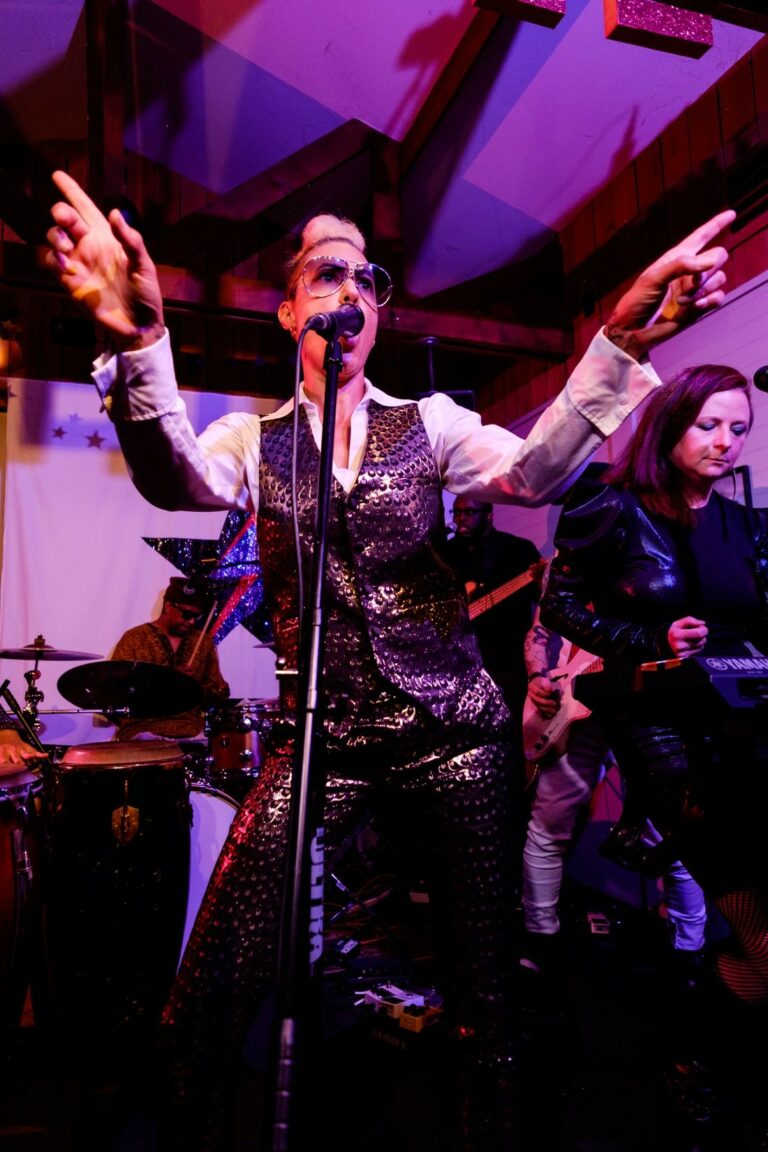
Two years ago, Petaluma-based singer-songwriter and bandleader Saffell seemed to have it all.

On the surface, he had a great relationship to the band members in his piano-driven

funk-rock ensemble. Gigs were coming, fanbases were growing, but Saffell found himself struggling personally and creatively.

“I got to the point where I’d been grinding so long like all musicians do,” he says. “I knew I wanted to keep doing it, but it was the way I was doing it. Something wasn’t working.”

So, he stopped to take stock and says he had to find a new balance in the joyful-versus-jaded approach to making music. For that, he stepped into the unknown, turning Saffell into a one-man show both live onstage and on his new LP, Lay It on the Line, which he debuts on Saturday, June 22, at Twin Oaks Roadhouse in Penngrove.

“There was a sound I had in my mind, of an album that I always wanted to make, but it required a lot more production, and I never had the money to do that,” says Saffell. Once the band dissolved, Saffell returned to the idea of that album just as he was gifted some recording gear and found a cheap grand piano. Suddenly, he had the tools he needed, and he spent the last two years diving deeply into the engineering side of recording, mastering live-looping and embracing the electronic effects that would become the basis for much of Lay It on the Line.

“I didn’t want to end up with a bedroom demo,” he says. “I wanted to have the time to learn, explore, investigate and reach those sounds.”

Keeping the music funky and fun, Lay It on the Line sounds like a full band effort in its made-from-scratch beats and blips, while also keeping the emotional core of Saffell’s songwriting intact.

“The trick is not to get lost in the tech,” he says. “I stayed rooted in the songwriting. I want the song to be able to live and breathe with just me, the piano and my voice.”

That said, the upcoming album-release show promises lots of techno-flair, with Saffell performing with synthesizers, organs and live-looping and with opener Sebastian St James and analog-visual artist Bill Wiatroski projecting real-time modulated images.

“One thing worth mentioning, live-looping is not meant to replace a band,” says Saffell. “I think it’s its own craft, as a different kind of artistry.”

Saffell performs on Saturday, Jun 22, at Twin Oaks Roadhouse, 5745 Old Redwood Hwy, Penngrove. 8pm. $8. saffellmusic.com.

The Walking Meh

Like the zombies it depicts, Jim Jarmusch’s The Dead Don’t Die is dead on its feet and ambles toward no clear destination. The existential nonchalance of Jarmusch’s many films (Down By Law, Only Lovers Left Alive, Patterson) harmonizes well with love stories of bemused, alienated characters. But it doesn’t quite work with horror-show material.

“Centerville, Population 738: A real nice place”, reads the welcome sign. Fans of Zappa’s 200 Motels—this one’s for you. When Chief Cliff Robertson (Bill Murray) and officer Ronnie (Adam Driver) investigate a chicken theft, the mild-mannered pair are easily run off by the accused thief, Hermit Bob (Tom Waits), who’s living in the bushes. As they head back to the cop shop, the policemen worry about the unnatural amount of daylight and televised reports that polar fracking may knock the globe off its magnetic axis. “This isn’t going to end well,” says Ronnie.

Other signs and wonders mirror troubling disturbances in the small town, until Chief Robertson stumbles into a hole in the cemetery and discovers the dead gophering their way out of their graves.

For unknown reasons, the ensuing zombie attacks make the two cops more laconic than they already are. Officer Mindy (Chloe Sevigny), the other member of the three-cop police force, is the only one who actually expresses emotions and she alone faces the hordes of walking dead with some degree of hysteria.

By the time the fourth wall is broken—a tacit admission that the film isn’t working—The Dead Don’t Die has regressed from puzzling, to just plain dull. Though zombies have served as a parody of hypnotized consumers for 40 years now—ever since the first Dawn of the Dead—Jarmusch can’t find new flavor in this long-standing cliche.

Jarmusch tries his usual method of directing warm, humane actors as they negotiate a zone of vagueness and disconnectedness. It doesn’t work here, even with celebrity zombies including Selena Gomez, Carol Kane and Iggy Pop. From foreshadowing to end-game turkey shoot, it’s an exhausting movie.

‘The Dead Don’t Die” is playing in limited release.

Deep Roots

0

Need evidence that cannabis is now fully in the mainstream? The Museum of Sonoma County has debuted a summer-long exhibit on the weed’s local and national history.

It will likely blow minds both in and out of the cannabis industry with stunning photos and pithy quotes about hemp and cannabis from the likes of botanist Luther Burbank, novelist Jack London—who loved hashish—and the Emerald Cup entrepreneur genius Tim Blake.

The exhibition is supported by many of the usual North Bay suspects: Mercy Wellness, CannaCraft, Fiddler’s Greens, Lagunitas Brewing Company, Rogoway Law Group and Sonoma Patient Group.

I can claim some credit for the exhibit that’s billed as “Grass Roots: From Prohibition to Prescription,” which traces how we as a culture got into the pot mess and how we’re slowly digging our way out. Nearly 10 years ago, I suggested to the museum’s history committee that it was imperative to mount an exhibit devoted to marijuana. “You planted the seed,” says Eric Stanley, the co-curator of “Grass Roots,” a week before the show opened. “The idea has always been in the hopper. Now is a perfect time for it to become a reality. We’re post Prop-64, and, as a society, we’re trying to figure out where we go from here.”

If 2019 is a perfect time for “Grass Roots,” Santa Rosa is a near perfect place for it. After all, for more than 50 years cannabis has been grown both indoors and outdoors, in and around Santa Rosa by farmers of
all kinds and not just by first-, second- and third-generation hippies. The city has also provided, unintentionally, the locations of hundreds, if not thousands, of clandestine deals where cash and cannabis changed hands.

Conveniently located between the vast cannabis-growing regions to the west and the north, and the huge markets to the south, Santa Rosa has for decades been a truck stop on the cannabis highway. Much of that story has never been told in print or on film. Some of it might never be told. Dealers have disappeared. Records are non-existent and the black market days of old have faded. Still, the Museum of Sonoma County has located a trove of long-hidden materials.

In fact, the “Grass Roots” exhibit breaks new ground, though the Oakland Museum of California hosted a cannabis show in 2016 and helped raise awareness with voters who approved of Prop 64 in November of that year. The museum brings the history, the politics and the culture of cannabis to visitors who’ve never entered a dispensary nor understood the lyrics to Little Feat’s 1978 hit, “Don’t Bogart That Joint.” After all, it’s not everyday that marijuana memorabilia appears in a museum as a subject for serious attention.

Forestville’s Nathan Henry Silva installed much of the exhibit and says he enjoyed nearly every moment of it.

“I have a personal connection to the topic,” he says as he holds a power drill in his right hand. “My parents used marijuana and I use it, too, so it’s not totally new to me. But I’m learning a lot of the history as I work. I’m glad to see that marijuana users are being de-stigmatized and people are realizing that cannabis is less harmful to minds and bodies than alcohol.”

Stanley learned the hard way that mounting a cannabis exhibit was more challenging than many of the other exhibits he’s curated. Over the last few months, he’s been a detective looking for clues and evidence to tell a vital story.

“A lot of the history of cannabis has been underground,” he says. “People who have been involved haven’t documented their activities. Sometimes we can’t find the kind of solid, reliable information, like names and dates, that are necessary for a museum.”

Still, members of the community have come forward, offered their expertise and shared hundreds of posters, flyers and photos, some of which will be displayed. Vince Dugar, an amateur archivist from Petaluma, offered his cannabis collection of memorabilia. Joe Rogoway’s Santa Rosa law office made a cannabis timetable for the exhibit and Sarah Schrader from Americans for Safe Access handed over a box of her old photos.

“Sonoma had a medical cannabis ordinance in 1993, six years before the state,” Schrader says. “I’m excited that the exhibit will highlight some of the pioneering role that our county has played.”

With help from Schrader and others, Stanley has uncovered a treasure of cannabis lore, legend and real products manufactured in Sonoma County, including a remedy for corns concocted by a Sebastopol pharmacist more than 100 years ago. Stanley also unearthed an 1883 news story from The Press Democrat about a 12-foot hemp plant that grew in Santa Rosa, prompting locals to wonder why hemp wasn’t grown as a commercial crop.

“Grass Roots” is divided into five sections that cover almost everything related to cannabis including its origins, classification, medical use and commercialization.

Commercialization is what’s happening now. There’s also a section at the end of the exhibit that Stanley calls “a fun space” that has humorous cartoons, like those of the stoned hippie icons, the “Fabulous Furry Freak Brothers” who appeared in underground newspapers in the 1960s and ’70s.

Co-curator Brian Applegarth is as excited about the exhibit as anyone else at the museum. A cannabis tourism pioneer and historian, he says, “As we go forward into the multi-billion dollar global hemp and marijuana industries, we need to remember the history and the pioneers and preserve the positive values of the past so they aren’t swept away.”

What are those values? “Reverence for nature, appreciation for sustainability and mindfulness,” Applegarth says.

Forty-five years ago, when I first saw cannabis cultivated in direct sunlight in Sonoma County, I never imagined the day would come when it would be the star of a museum show. We’ve come a long way since helicopters raided gardens and sheriffs deputies’ arrested growers, took them to jail in handcuffs and stigmatized them as the enemies of society. Maybe there’s hope for the future of cannabis, after all.

Reflux Redux

0

Whiskey fans have even more reason to celebrate the arrival of summer on June 21, when Sonoma Distilling Co. officially reopens for tours and tastings.

The first time I visited the distillery’s new digs in Rohnert Park, founder Adam Spiegel stood in a then-empty corner of the warehouse beneath a large overhead crane, and promised there’d be a bar and tasting room there the next time I stopped in. A month later, there’s a bar in the corner alright, but the crane’s still suspended above it, a leftover from the previous tenant, a machine shop. And it’s still a warehouse, not the expensively-styled artisanal whiskey lounge I’d pictured.

That’s the right style for Spiegel. It’s bare-bones, it’s industrial, it’s authentic, says the whiskeymaker, who’s rebranded Sonoma Distilling Co. (formerly Sonoma County Distilling Co.) yet again, this time with a simple, somewhat retro label. The company’s singular new-and-shiny luxury piece is around the corner—a 3,000 gallon copper still. Spiegel designed the one-of-a-kind gleaming behemoth himself; Forsyths in Scotland built it after await of a few years—the customer in line before him was Macallan.

The body of the still is based on those used by Highlands distiller Glenfarclas, while the top mimics the 250-gallon traditional alembic stills which now handle the secondary distillation, Spiegel explains on a tour of the facility. But with increased volume, he’s actually brought prices down.

So, how about that whiskey? Hang on. Tours, and the transparency of the operation to consumers, are important to Spiegel, who says he’ll be jumping in now and then to relieve his tasting room manager, and lead groups of up to 12 visitors himself. He’s sure to point out that the new fermenting tanks, constructed in Healdsburg, capture ambient yeast from the Rohnert Park air, and to note that leftover water is used by a local farmer.

Got it. Now, the whiskey? Sonoma Distilling Co’s signature spirit is the all-rye Sonoma Rye Whiskey ($39.99), made with 20 percent malted rye. It’s a dry, minty rye with the structure for cocktails, but with a vanilla cream soda note to please the neat sipper. The Sonoma Bourbon ($39.99) is only on the slightly sweeter side, and the Cherrywood Rye ($49.99) is made with malted barley that’s smoked onsite with California cherry wood, to evoke a Manhattan cocktail or a slightly smoky Scotch—just the right style for me.

Sonoma Distilling Co., 5535 State Farm Dr., Rohnert Park. By appointment at 11am, 2pm and 4pm, Friday–Sunday. $15. Schedule a tour and tasting at sonomadistillingcompany.com or call 707.583.7753.

New Outdoor Venue Coming to Downtown Napa

0

64675518_472337913527555_953447602584551424_n
This Summer, Rock & Roll Hall of Fame members The Steve Miller Band and country legend Marty Stuart & His Fabulous Superlatives perform in the kick-off concert for a new series of outdoor events at Napa’s newest outdoor venue, the Oxbow RiverStage, located at the Oxbow Commons in the heart of historic downtown Napa.
The festival-style venue, which will hold up to four thousands attendees, opens with the two headlining icons on August 25, and the producers of the forthcoming series, Blue Note Entertainment Group and Another Planet Entertainment, have announced that this inaugural 2019 season will feature both ticketed and free concerts, spanning many genres of music.
More concerts will be announced in July. Tickets for the August 25 concert go on sale Friday, Jun 21 at 10am and can be purchased at OxbowRiverStage.com, Ticketmaster.com and at the Blue Note Napa box office located at 1030 Main Street in downtown Napa.

Local Mixers

0

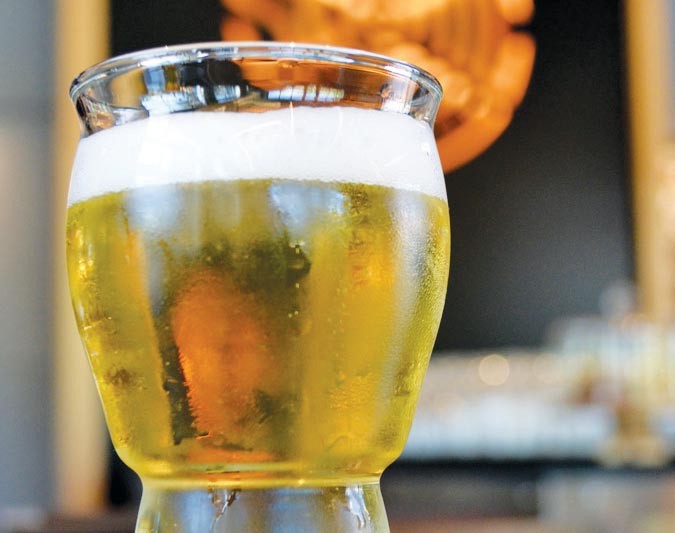
The conversation around locally sourced food and beverage products is so much about organic microgreens, heritage pigs and that sort of wholesome, farmers market stuff. Nice, yeah, but how about the booze, the icy cocktails that are shaken, not stirred, and served up in that very international symbol of tippling, the martini glass?
To answer this pressing question, I narrowed the field of cocktails to five unfussy, mostly standard-issue drinks you’d order in any bar, anywhere, with the stipulation that both booze and mixer—garnish, if possible—be North Bay-made, and presented samples in little plastic cocktail cups to a group of Bohemians.
Gin and Tonic
This citrusy, balanced, not too sweet and very summery refresher was the hands-down favorite. The gin was the easy part—Spirit Works Distilling of Sebastopol makes one from organic winter wheat. It has a sweet nose, big on coriander, with a vanilla note and a silky mouthfeel—if you can believe I’m still talking about gin, here. Finding a local craft tonic alternative to the mass-market, high-fructose corn syrup or artificially sweetened brands was the hard part. I asked Phaedra Achor, maker of Monarch Bitters in Petaluma, if she knew of any. “I make a delicious tonic syrup!” she replied. Her product is a concentrated syrup made with organic cane sugar and organic lemon peel, plus herbs and bark. It’s customizable—just add carbonated water to your liking. I liked best a mix of one-half ounce syrup to 4 or 5 ounces soda water—a higher dose seems to suppress the bubbles. The only local fail here is the lime—ask friends and neighbors if they’ve got a rare lime tree, or more likely, a Meyer lemon tree tucked away in the yard.
Runner up: Bummer & Lazarus gin, a grape-based spirit from Raff Distillerie of San Francisco, is more forward with green herbs and crushed juniper leaf aromas, and lends a more medicinal character to the G&T. H.O.B.S. gin, from Healdsburg’s Young & Yonder Distillery, is also juniper forward, but the aroma here is a bit too “medical” for my taste, reminiscent of depressing well drinks from dive bar days gone bye-bye.
When I asked a bartender for a ready-to-go list of classic cocktail recipes, I was at first disappointed that he couldn’t offer advice unless he’d tasted all of the components to make sure the balance was correct. But when I started mixing, beginning from recipes cribbed from the International Bartenders Association (IBA) and Wikipedia, I not only understood, but also was more excited about the project. Mixing an all-local cocktail is more than just a feel-good subbing of a craft spirit for a corporate brand—it’s a whole new cocktail.
Just for kicks, I mix 3 ounces gin with 3 ounces club soda, and 1 ounce Monarch tonic syrup, and find it’s just hard to overdo it on that Spirit Works.
Martini
Forget about where the martini was invented—Martinez or San Francisco—because we can reinvent the martini right here in the North Bay. Let’s start with 2 ounces Spirit Works gin, again, but where to find the vermouth, besides those bottom shelf brands that smell like stale wine breath? It’s rare—just 67 cases of Paul Hawley’s side project, Menagerie white vermouth ($22), were made from fortified Sonoma County Sauvignon Blanc and Viognier, but it smells just as pretty as you’d expect from those grapes, plus a whiff of fresh fennel.
Mixed at 2 ounces gin to one-fourth ounce vermouth, this martini was clean and pretty, and it’s even nice at the old-school ratio of two to one. But it’s almost too pretty too dirty up with a splash of juice from McEvoy Ranch’s spiced olive blend. Vodka partisans will find Spirit Works’ vanilla-scented vodka makes the martini so pillowy and soft, a thin slice of Meyer lemon peel is the better garnish.
Like it dirty? That’s where Young & Yonder’s H.O.B.S. gets its turn to shine in the neon light. The Menagerie warms the aroma, but it retains that cool, alcohol edge, and can take an olive or two. Alas, the Raff had a bummer reaction to this particular vermouth.
Manhattan
Years ago, I liked Manhattans for about a week before I tired of the sickly-sweet vermouth. Menagerie red vermouth ($22), made from Sonoma County Zinfandel, is wholesomely delicious with real red cherry-like fruit, scented with fennel, and is not at all sweet.
The Bohemian Manhattan is a fairly dry and adult beverage matching 1 part vermouth to 2 parts Sonoma Distilling Sonoma rye. Monarch provides the bitters. The “dash” of bitters called for in the recipes was too subtle, however, so I consulted Achor—she likes to add at least 5–10 drops, and that was about right for her aromatic bitters, which round out the palate like an oak addition in wine. This is very dry with less vermouth—Sonoma rye stands up to a 2 to 1 mix, with Monarch’s cherry-vanilla bitters adding a tease of a sweet topnote. It’s cherry season, so go find a fresh one for garnish instead of the grotesquely colored candied kind.
Sazerac
Sonomify this New Orleans cocktail with 2 ounces Sonoma rye, and just one-fourth ounce of Raff’s Emperor Norton absinthe adds more than enough green herbal notes (Young & Yonder also makes a fine absinthe). Instead of Peychaud’s bitters, Monarch’s bacon-tobacco bitters, which does not contain nicotine, contributes a leathery note, like a smoky Johnnie Walker.
White Russian
The dude abides in the North Bay, if you skip the vodka and just pour Griffo Distilling’s Cold Brew coffee liqueur, made from their grain-to-glass distilled vodka and Equator Coffee’s mocha java, over ice. No syrupy Kahlua-like liqueur, Cold Brew smells transparently like coarse-ground medium roast coffee. Add a splash of Straus Family organic cream to tie the whole drink together.

The Bohemian Manhattan is a fairly dry and adult beverage matching 1 part vermouth to 2 parts Sonoma Distilling Sonoma rye. Monarch provides the bitters. The “dash” of bitters called for in the recipes was too subtle, however, so I consulted Achor—she likes to add at least 5–10 drops, and that was about right for her aromatic bitters, which round out the palate like an oak addition in wine. This is very dry with less vermouth—Sonoma rye stands up to a 2 to 1 mix, with Monarch’s cherry-vanilla bitters adding a tease of a sweet topnote. It’s cherry season, so go find a fresh one for garnish instead of the grotesquely colored candied kind.SazeracSonomify this New Orleans cocktail with 2 ounces Sonoma rye,

New Jam

0

Welcome to the Neo-Heathen Male Bonding and Drumming Society’s annual camp out, where a dwindling group of aging death metal fans communes in the desert to ceremoniously beat their bongos, reveal their deepest fears and failures, pass around a really big stick and pay tribute to the Egyptian lord of death. But unbeknownst to the membership, this year’s recruit—AKA “The New Bitch”—is actually Anubis, the lord of death himself. Will anyone make it out alive? Let the mead flow and the rituals commence!

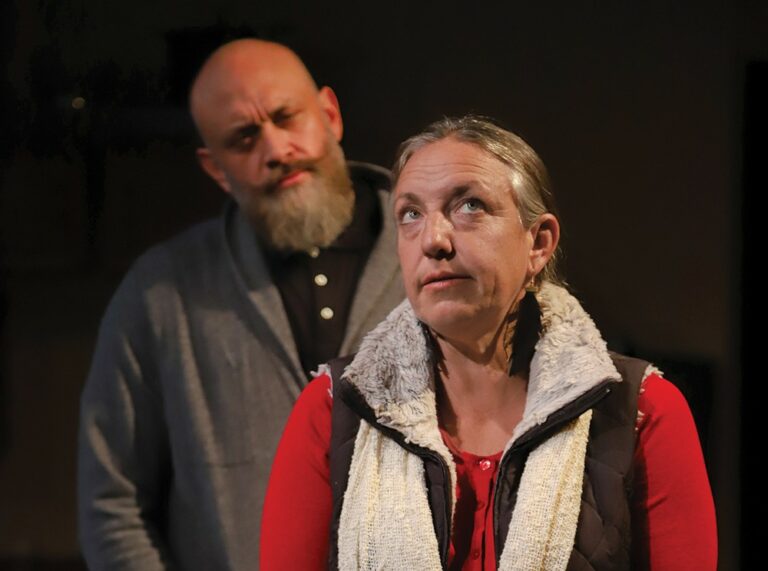
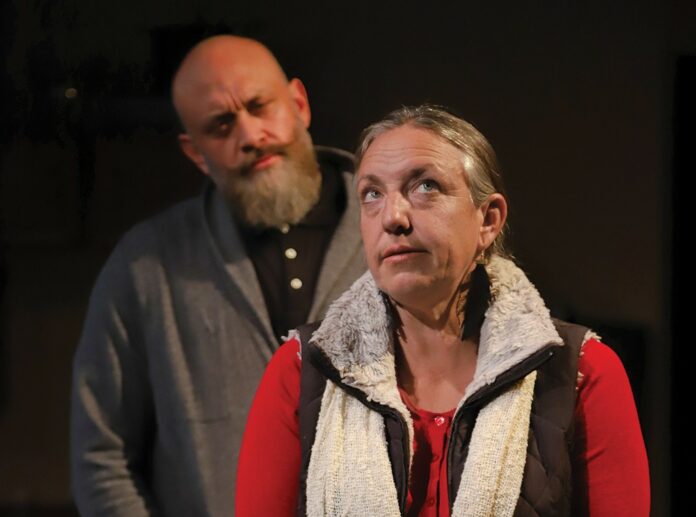
Outrageously funny and surprisingly poignant, Drumming With Anubis makes its world premiere at Santa Rosa’s Left Edge Theatre through June 30. Local playwright David Templeton (and occasional Bohemian contributor) has crafted a clever tale as unique as it is hilarious, imbuing grave material with carefree humor, indelible humanity and ample room for heartfelt reflection.

Under the capable direction of David L. Yen, a well-matched ensemble scores with impeccable pacing and lively action. Chris Schloemp is hysterical and endearing as the tribe’s makeshift leader, “Chick,” chanting “Dethdog” songs around the campfire. Nick Sholley delivers a touching performance as arthritic Neil (“Professor”), earning laughs with his steadfast recitation of group regulations. Leather jacket-clad Anthony Martinez brings the right amount of fragile masculinity to macho “Bull,” and Richard Pallaziol is the perfect fit for reformed alcoholic “Stingray,” whose wide-eyed reactions and strange obsession
with a cooler add much to the
general amusement.

Mark Bradbury shines as Anubis, evolving from innocuous to ominous and ultimately sympathetic. In fact, the lord of death turns out to be a pretty complicated dude. But he’s not the only unexpected guest at this year’s retreat, nor is he the only one harboring a secret. When no-nonsense Nicky Tree (Ivy Rose Miller, also excellent) shows up to crash the party, everything tumbles out into the open.

Argo Thompson’s static set is appealing and immersive, brought to life by Schloemp’s beautiful projections. Costumes reflect clear attention to detail, aptly chosen by Sandra Ish. Technical work is commendable, too, thanks to Joe Winkler’s desert nightlife sounds and April George’s seamless lighting.

To put it bluntly, there is nothing about this show that isn’t highly enjoyable and remarkably good. It’s a one-of-a-kind, must-see production.

Rating (out of 5): ★★★★&#9733

“Drumming With Anubis” runs through June 30 at Left Edge Theatre. 50 Mark West Springs Road, Santa Rosa. Fri & Sat, 8pm; Sun, 2pm.
$25-$40. 707.546.3600.

I Can’t Go There

Tom Gogola used great fortitude in maintaining objectivity in describing the tight-rope straddled by Republican Fred Schein in a substantial article “Log Cabin Fervor” (May 29, 2019) Schein admits, “it is lonely being a Gay Republican.” Curiosity held my attention as I try to understand the seeming contradiction. Schein touched on Republican support for small business and boasts of Young Republicans; college students at Berkeley, Davis and Sonoma State, saying: “they can shoot.”

I read with a nondiscrimination effort the difference between Democrats and Republicans while I process the current strangeness of our country. I appreciate that we should all be treated equal and Schein’s effort is heartfelt, but I cannot cross the party chasm.

Novato

Stop the Burning

Woody Hastings said it so well in his Open Mic (“Pass on New Gas Stations,” May 29, 2019): approving “any new fossil energy-based facilities or infrastructure in Sonoma County” should be an exception, because of commitments the county has made to respond to the climate crisis. It’s time to be done burning fossil fuel.

I’m hopeful we’re nearing a tipping point. In Congress, HR 763, with 41 co-sponsors and counting, will put a fee on carbon. Just like with cigarettes, we need to charge more for what we don’t want people to buy. The bill pays the fees back as dividends to American households to help us jump-start our own energy-wise investments. We need to stop burning carbon every which way!

Petaluma

Try a Little
Tenderness

I read in the SF Chronicle the Trump Administration plans to allow medical staff in the nation to deny treatment to lesbians, gays, bisexual or transgender patients because of religious or moral beliefs held by the health care workers; thus allowing doctors, nurses, ambulance drivers, emergency medical technicians, even receptionists to deny care. I thought of my late wonderful lesbian cousin, Denise, who lived in a rural county whose only hospital was religious based, and I wonder if they would have helped her with her ovarian cancer.

So, I turned immediately to Stevie Wonder vinyl and his 1976 ‘Songs in the Key of Life’, put on side one, cut one and listened:

“Love’s in need of love today

Don’t delay

Send yours in right away

Hate’s goin’ round

Breaking many hearts

Stop it please

Before it’s gone too far”

That’s only the first few bars in this remarkable song and album. One wonders how cruel Trump and his staff are willing to go

San Rafael

Write to us at le*****@******an.com.

Minimum Rage

0

After prevailing in the city of Sonoma, a local effort to jump start the state’s 2023 $15 minimum wage mandate now moves to Petaluma and Santa Rosa, says local wage-equity activist Marty Bennett.

Last week the Sonoma City Council unanimously passed a local minimum wage ordinance that will see the city’s minimum wage rise to $16 an hour by 2023. The effort was driven by the local umbrella-advocacy organization North Bay Jobs for Justice and opposed by a number of restaurants in Sonoma.

The labor push was designed to get a jump on the state’s new minimum wage law which, by 2023, will see California’s floor wage rise by stages to $15 an hour for companies that employ 25 people. Companies that employ more than 25 will be onboard with the $15 wage by 2022. The current minimum wage in the state is $11 an hour; that will rise by a dollar a year until 2023.

The California law that prompted the wage hike was opposed by a cross-section of industries in the state, including the state’s restaurant lobby. The wage hike, when fully implemented, will raise restaurants’ operating expenses by between 2 and 3 percent, according to industry analyses of its impact. In the restaurant business, that means customers could see higher menu prices to offset the impact.

The regional restaurant industry has also highlighted the economic fallout from 2017’s catastrophic wildfires that struck the North Bay—and that an accelerated minimum wage rollout is the last thing they need right now as the region rebounds from the $14 billion in damage wrought by the fires. Conversely, Bennett highlights the benefits to restaurants insofar as higher wages mean a higher rate of employee retention.

Under California labor law, when there’s a conflict between the federal, state and local minimum wage, “the employer must follow the stricter standard; that is, the one that is most beneficial to the employee.”

The national “Fight for $15” was the backdrop that led to the 2017 effort in California to increase the state minimum wage, as the state push then became “$15 by 20.”

Bennett says the campaign to encourage localities to get a jump on the 2023 mandate is driven almost entirely by the cost of housing in the region. According to online data, the median cost of a home in Sonoma County is $614,900 compared to a statewide average of $548,000 and a national average of $219,000.

In Sonoma County, the average rent for a one-bedroom apartment, according to data assembled by bestplaces.net, is $1,447, about $100 more than the state average and $500 more than the national average. The situation for families is even more challenging: a four-bedroom home rental in Sonoma averages $3,300 a month compared to $2,755 for the state as a whole and $1,800 nationally.

In opposition to Sonoma’s action on raising the minimum wage, a consortium of restaurants brought in the legal firepower of the Littler Mendelson Workplace Policy Institute, which has positioned itself as a foil to much of the pro-$15 studies and analyses that have been undertaken since the state raised the minimum wage.

A June 3 letter from the law firm and a group of restaurants filed with the Sonoma City Council on the eve of the voted stressed that while the restaurants supported the council’s efforts to increase the financial well-being and security of its residents and those working in the city, they opposed the local ordinance.

The restaurants—which included the Girl and Fig, Mary’s Pizza Shack and HopMonk Tavern Holdings—argued that they shouldn’t pay front-of-the-house employees the proposed minimum wage because they were already making more than the minimum wage when their tips were included in the tally of their hourly wage. The argued in favor of a continued “two-tier” wage structure and said that since the state minimum wage doesn’t apply to all employees, nor should a local minimum wage.

The restaurants noted for example that the “vast majority of California cities with minimum wage ordinances potentially may not cover unionized workers,” given that most localities in the state have laws that “allow unionized workers to waive all or part of an ordinance’s requirements via collective bargaining.”

The restaurants also argued that Sonoma could have limited the scope of the ordinance without sacrificing the council’s goal of ramping wages for its local workforce. California is one of seven states that prohibits employers from considering tips when determining whether an employee has earned at least the minimum wage, they note. “As a result, tipped employees in California are economically better off than their counterparts in most other parts of the country.”

The restaurants then encouraged the council to establish one minimum wage for so-called “back of the house” employees and another, lower minimum wage, for tipped employees. Citing state law, the council rejected the restaurants’ lawyers efforts to enact the tip credit.

The nine signatories to the June 3 letter did not prevail, and Bennett at Jobs for Justice is unsurprisingly not moved by the bad-for-business arguments advanced by Sonoma’s local restaurants.

Now he says the local effort to get a jump on 2023’s state-mandated $15 an hour wage moves to Petaluma and then to Santa Rosa. Bennett’s cautiously optimistic, he says, that restaurants and businesses in Petaluma will be more amenable to accelerate the minimum wage hike, even if at least one of the signatories to the Sonoma letter (Mary’s Pizza Shack) has an outpost in Petaluma.

Bennett says small businesses have told him they support the $15 minimum wage by 2023, and in a report on Jobs with Justice’s efforts, the head of Petaluma’s Chamber of Commerce, Onita Pellegrini, told the North Bay Business Journal in February that “We are all very much aware that the minimum wage is not anywhere near to a living wage.” Whether or how that sentiment translates into on-the-ground ordinances remains to be seen, though Bennett says that, at the very least and unlike the experience in Sonoma, the Petaluma business community has so far been neutral on the accelerated plan to get to $15 before 2023.

Bennett’s been reading the tea leaves in Santa Rosa and is cautiously optimistic that the city’s at least taking up the issue in a public workshop scheduled for this summer.

City officials in Santa Rosa like councilman Tom Sawyer have expressed concern over the potential impact a minimum wage increase could have on downtown Santa Rosa’s bustling restaurant-and-retail scene—especially in the aftermath of wildfires.

But it’s not just restaurant workers who would benefit from an enhanced minimum wage. According to numbers assembled by the Massachusets Institute of Technology’s “Living Wage Calculator,” California workers in the food preparation and service industry earn an average of $25,234. Workers in the region’s farming, fishing and forestry industry make about $1,000 less a year on average.

Classical Soiree

0

Franz Schubert (1797–1828) is considered a titan of the Romantic period of classical music. While the Austrian composer died young, he left behind a vast opus, including more than 600 vocal works, seven complete symphonies, several operas and a large body of piano and chamber music.

During his lifetime, Schubert also established a new kind of musical gathering, called a

schubertiade, in which he and his friends would convene at a private residence for daylong musical festivities that were informal and spontaneous. Music, conversation and other merriment, as well as feasts of Viennese delicacies, were a common sight at these Schubertiades, and the tradition continued on after Schubert’s death.

In fact, schubertiades are still happening around the world today, celebrating the music of Schubert. In Sonoma County, the Sky Hill Cultural Alliance is bringing the festivities to the Petaluma Historical Library & Museum for the North Bay’s first ever schubertiade on Sunday, Jun 16.

“Schubert wrote some of the most beautiful music in the world,” says Sky Hill Cultural Alliance founder and director Elizabeth Walter. “Music came out of him like a fountain, his friends would say. He didn’t ‘compose;’ music poured out of him.”

The afternoon affair will feature a dozen musicians and vocalists, including local violin prodigy Nigel Armstrong, filling the museum with the romantic-era music. Schubert’s beloved “Trout Quintet” will be the centerpiece of the show, but the event will showcase many other small masterpieces as well.

In the schubertiade tradition, complimentary wine and traditional Viennese savories and sweets will be served during breaks in the performances. Walter stresses that the relaxed event is designed so that people can come and go throughout the afternoon.

Sky Hill Cultural Alliance has made the museum its primary venue for concerts and events that aim to introduce classical music to local audiences, especially young people.

“There are scientific studies all over that show that listening to classical music at a young age helps the brain develop,” says Walter. “So many kids nowadays don’t get a chance to fall in love with classical music. We want to bring music to everybody, especially young people.”

Schubertiade happens Sunday, Jun 16, at Petaluma Museum, 20 Fourth St., Petaluma.1pm. $30-$40; students are $10; kids under 10 are free. schubert2019.brownpapertickets.com.

Sole Man

Two years ago, Petaluma-based singer-songwriter and bandleader Saffell seemed to have it all. On the surface, he had a great relationship to the band members in his piano-driven funk-rock ensemble. Gigs were coming, fanbases were growing, but Saffell found himself struggling personally and creatively. "I got to the point where I'd been grinding so long like all musicians do," he says. "I...

The Walking Meh

It may not have much going for it, but 'The Dead Don't Die' does have Tom Waits in full hermit-mode

Deep Roots

Need evidence that cannabis is now fully in the mainstream? The Museum of Sonoma County has debuted a summer-long exhibit on the weed's local and national history. It will likely blow minds both in and out of the cannabis industry with stunning photos and pithy quotes about hemp and cannabis from the likes of botanist Luther Burbank, novelist Jack London—who...

Reflux Redux

Whiskey fans have even more reason to celebrate the arrival of summer on June 21, when Sonoma Distilling Co. officially reopens for tours and tastings. The first time I visited the distillery's new digs in Rohnert Park, founder Adam Spiegel stood in a then-empty corner of the warehouse beneath a large overhead crane, and promised there'd be a bar and...

New Outdoor Venue Coming to Downtown Napa

This Summer, Rock & Roll Hall of Fame members The Steve Miller Band and country legend Marty Stuart & His Fabulous Superlatives perform in the kick-off concert for a new series of outdoor events at Napa's newest outdoor venue, the Oxbow RiverStage, located at the Oxbow Commons in the heart of historic downtown Napa. The festival-style venue, which will hold up to four...

Local Mixers

The conversation around locally sourced food and beverage products is so much about organic microgreens, heritage pigs and that sort of wholesome, farmers market stuff. Nice, yeah, but how about the booze, the icy cocktails that are shaken, not stirred, and served up in that very international symbol of tippling, the martini glass? To answer this pressing question,...

New Jam

Welcome to the Neo-Heathen Male Bonding and Drumming Society's annual camp out, where a dwindling group of aging death metal fans communes in the desert to ceremoniously beat their bongos, reveal their deepest fears and failures, pass around a really big stick and pay tribute to the Egyptian lord of death. But unbeknownst to the membership, this year's recruit—AKA...

I Can’t Go There

Tom Gogola used great fortitude in maintaining objectivity in describing the tight-rope straddled by Republican Fred Schein in a substantial article "Log Cabin Fervor" (May 29, 2019) Schein admits, "it is lonely being a Gay Republican." Curiosity held my attention as I try to understand the seeming contradiction. Schein touched on Republican support for small business and boasts of...

Minimum Rage

After prevailing in the city of Sonoma, a local effort to jump start the state's 2023 $15 minimum wage mandate now moves to Petaluma and Santa Rosa, says local wage-equity activist Marty Bennett. Last week the Sonoma City Council unanimously passed a local minimum wage ordinance that will see the city's minimum wage rise to $16 an hour by 2023....

Classical Soiree

Franz Schubert (1797–1828) is considered a titan of the Romantic period of classical music. While the Austrian composer died young, he left behind a vast opus, including more than 600 vocal works, seven complete symphonies, several operas and a large body of piano and chamber music. During his lifetime, Schubert also established a new kind of musical gathering, called a schubertiade,...
11,084FansLike
4,606FollowersFollow
6,928FollowersFollow