Cooking with Laughs

0

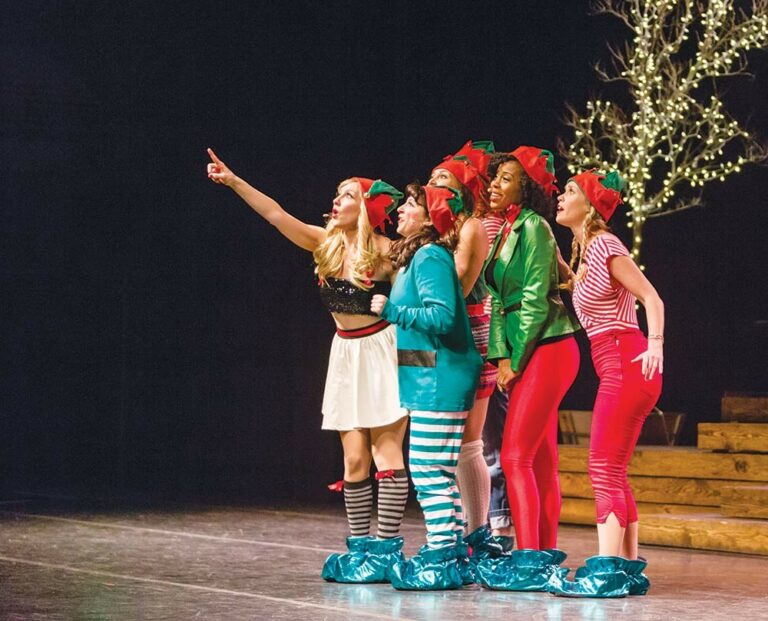
It’s been said that the only two things guaranteed to survive the apocalypse are cockroaches and Cher. Playwright Matt Lyle would like to add one more thing to that list—barbecue—the setting of his 2014 play Barbecue Apocalypse, running now at the Spreckels Performing Arts Center through April 20.

Deb (Jess Headington) and Mike (Sam Coughlin) are getting their backyard deck ready to host some friends. Deb’s a little status conscious, hence the decision to host a barbecue as opposed to a sit-down dinner. She’s not too thrilled with the beanbag chair in the living room or the movie posters tacked to the wall.

The friends they’ve invited are an odd lot. Ash (Trevor Hoffman) and Lulu (Lyndsey Sivalingam) are yuppie-hipster-foodies, with Ash permanently attached to his phone and Lulu permanently attached to a drink. Win (J. T. Harper) is your basic supply-side economics striver who seems to thrive on putting Mike down. Win’s girlfriend Glory (Katie Kelly) is a dancer who’s hoping for a successful audition with the Rockettes.

Things go south fairly rapidly at the barbecue, followed by things going really south for the rest of the planet. While we never find out the specifics, the first act ends with the end of the world as they know it—and they do not feel fine.

The second act takes place at a barbecue one year after the first, and a lot of role reversals have taken place. Deb’s become a “female MacGyver,” milquetoast Mike has come into his own, the lack of cell phones has forced Ash and Lulu to have an actual relationship, and Win has been reduced to a blubbering mess. Where’s Glory? No one’s sure.

Larry Williams directs this jet-black comedy with a sure hand and has the right ensemble to pull it off. See it before it (or the world) ends.

Rating (out of 5): ★★★★

‘Barbecue Apocalypse’ runs through April 20 at Spreckels Performing Arts Center, 5409 Snyder Lane, Rohnert Park. Friday – Saturday, 8pm; Sunday, 2pm; Thursday,
April 11 & 18, 7pm. $16 – $26. 707.588.3400. Spreckelsonline.com

Bunny Tale

California’s hot on the trail of Hawaii for bragging rights over which state will be the first to enact a ban on fur sales and manufacturing—but there’s a potential catch in Sacramento when it comes to rabbits.

Assemblywoman Laura Friedman (D, Glendale) sponsored AB 44 this year and calls fur production “completely out of line with our state’s values.”

The sentiment is largely shared by her colleagues, as AB 44 has sailed through two committee votes in Sacramento. But citing concerns about the impact on Northern California’s rabbit farmers, Assemblyman Marc Levine (D, San Rafael) has proposed an amendment that would exclude from the ban rabbits grown for their meat.

There’s a small but sturdy rabbit farming industry in the North Bay that mostly provides meat to regional restaurants. Animal-rights advocates say Levine’s proposal would defeat the purpose of the proposed ban on the sale of fur in California—and offer the state’s rabbit industry a monopoly on legal fur production in the state. Friedman says she’s talking to the rabbit industry about a way to exempt “animals that are clearly and demonstrably raised as food,” but so far, Levine’s amendment has not been attached to the bill.

“This is not a de facto ban on eating rabbits and I totally agree that if you’re killing the animal for food, that you should use every single bit of that animal,” Friedman told fellow lawmakers at a recent meeting of the body’s Water, Parks and Wildlife committee

“The flipside is that we don’t want to encourage killing animals just for their fur because that’s wasteful and not sustainable. We are afraid the rabbit exemption would create more of a market to do just that,” Friedman said.

Levine proposed his amendment at a March 12 meeting of the Water, Parks and Wildlife Committee.

Levine spokesperson Terry Schanz notes via email that “Assemblymember Levine supports maintaining the highest ethical standards for the production of legal animal products in California.” Schanz says that “AB 44 currently exempts most commercially produced fur and hide products including cowhides, lambskin, sheepskin, or the skin or hide of any lawfully taken game mammal. Including the skin or hide of an animal that is raised for food production in AB 44’s exemption is consistent with ethical farming standards, reduces waste and maximizes limited resources.”

His office also notes that Levine has a 100 percent voting record with PawPAC for his work on animal-rights issues. PawPAC’s 2018 voter’s guide confirms this, but gives Levine an A- grade because he hasn’t written any animal-rights bills.

“I support the goal that you are trying to seek,” Levine told Friedman during the March 12 hearing. “You have a number of carve-outs about the use of the whole animal. There are a number of [rabbit] farms in Northern California that do use the pelts and I’d like you to incorporate amendments that allow for that use.”

The proposed bill already has a number of exemptions, including wool, cowhide, and religious uses, but some rabbit advocates say Levine’s proposal would gut the broader ban if it exempted rabbit fur. The prohibition on fur would apply to the sale and manufacture of clothing, handbags, shoes, slippers, hats or key-chains that contain fur, according to the text of the bill.

While beef is equally if not more popular than leather, rabbit meat is significantly less popular (and valuable) than rabbit-fur products, says Noah Smith, a volunteer with SaveABunny, a Mill Valley nonprofit that focuses on rabbit adoptions.

Marcy Schaaf, the executive director at SaveABunny, a rabbit advocacy group. says that if Levine’s amendment is included, the fur ban “has the potential to set rabbit advocacy back to the Dark Ages.”

San Francisco implemented a fur ban in 2018, joining Los Angeles and a couple other cities around the state that have banned fur. The local ordinance in San Francisco doesn’t have a carve-out for rabbit fur, even if its high-end restaurant customers have a taste for the meat. While rabbit meat is not generally popular with the general public, the rabbit fur industry has continued to grow across the nation. And as the politics around claims of animal cruelty associated with fur farming or trapping has intensified in recent years, clothing brands such as Versace and Gucci stopped using furs in clothing and accessories. Meanwhile, rabbit fur sales increased by more than 50 percent in the U.S. between 1993 and 2015, according to a report on AB 44 compiled by assembly staff.

Locally, there doesn’t appear to be much of an appetite for rabbit meat on the supermarket shelf. In September 2015, Whole Foods announced the end of the sale of rabbit meat in its Northern California stores, officially ending a short-lived experiment to test the market.

A company employee leaked sales figures to NBC Bay Area showing that Whole Foods was selling one to three rabbits in each store per day.

Still, a smaller and largely high-end market is still alive and kicking.

Mark Pasternak, owner of Devil’s Gulch Ranch, a diversified family farm in West Marin, says he primarily sells rabbit meat to restaurants. He also sold a trio of breeder rabbits to Split Grove Family Farms in Penngrove farms several years ago as they were building their rabbit business. Split Grove now sells rabbit meat to regional restaurants for $8 a pound. Old World Rabbitry in Sebastopol is engaged in similar business.

Business is hopping, he says.

“I’m almost always sold out,” says Pasternak. He supports the intention of Friedman’s fur ban to discourage farming animals just for their fur, but says the ban would force him to throw away rabbit pelts or sell them out of state. He’d be affected, he says, but wouldn’t go “completely out of business,” because of AB44, he says.

Pasternak and his wife sell a variety of rabbit products online and at local farmers markets, including rabbit-foot keychains, rabbit fur and rabbit-based cat toys. He dismisses the argument that Levine’s proposal would incentivize the production of rabbits for their fur within the state.

“You can always do an end run around regulations,” Pasternak said. “You can do that in any case. It wouldn’t act as an incentive [to raise rabbits for their fur].”

The religious exemption in the bill applies to federally recognized Native American tribes and other religious uses of fur. But the bill also singles out key-chains containing fur, which are, in many cases, made from rabbits’ feet and are considered a lucky charm. According to Wikipedia, “the rabbit-foot charm in North American culture” stems from its use in West African hoodoo rituals.

Friedman’s still in discussion with industry representatives as her bill makes its way to the Appropriations Committee later in April.

“My biggest concern is that they’re going to exempt rabbits to get the bill passed,” says Schaaf. “It’s either a ban or it’s not. I’d rather have no ban than a compromise.”

Bluegrass Wizards

0

Tommy; the name is synonymous with the rock opera concept ever since the Who released their double-album Tommy in 1969. Featuring classic rock songs that tell the story of a “deaf, dumb and blind kid” who played a mean game of pinball, Tommy has been made into a movie, a Broadway stage production, and, of course, its own pinball machine.

Now, fans can hear it in a new light, as a bluegrass opry courtesy of the HillBenders, who perform on Sunday, April 7, at Sweetwater Music Hall.

Formed in Missouri 10 years back, the HillBenders wear a variety of influences, making them popular with all kinds of audiences. One of their biggest fans was SXSW co-founder Louis Jay Meyers, a former Folk Alliance director and longtime musician and producer who first conceived of transposing Tommy into a bluegrass sound almost two decades ago.

“About five years ago, our friend Louis Meyers hit us with this idea,” says HillBenders guitarist Jim Rea. “So I just ran through some of these tunes, and he was right. It was a great idea.”

Rea took on the project as musical director and charted the album into bluegrass form. In 2015, the HillBenders released an album, Tommy: A Bluegrass Opry, that featured their rendition of every track on the original double-album, and they turned the opry into a 75-minute live show that they’ve toured with around the world.

“It can be a head-scratcher,” says Rea of turning classic rock songs into bluegrass. “But you can fool with the rhythms to give it an up-tempo bluegrass feel and almost all the songs seemed to fit into that.”

While the band’s instrumentation remains traditionally bluegrass, they achieve a percussive beat in their acoustic music. “We’ve got the Keith Moon of the dobro,” says Rea of band mate Chad “Gravy Boat” Graves, who slaps the resonating stringed instruments like a drum.

“We wanted to stay true to the original stuff,” says Rea. “The biggest compliment we get from the Who fans who see us is that we are honoring the music.”

The HillBenders present ‘The Who’s TOMMY: A Bluegrass Opry’ on Sunday, April 7, at Sweetwater Music Hall, 19 Corte Madera Ave, Mill Valley. 7pm. $28-$32. 415.388.3850.

By Book or Nook

0

Only a few years ago, a visit to the main branch of the Santa Rosa public library on E Street downtown was a visit to no man’s land. It wasn’t just the homeless who congregated outside, used the bathrooms and sometimes monopolized the newspapers. The homeless were the least of the problem.

The library was underfunded, resources were dwindling and a kind of malaise hung not only over the Sonoma County library system, but on public libraries from coast to coast. The onrushing digital future meant that print was dead, books were dead, libraries were a relic—and everyone loved their Kindle so much that they didn’t notice that their local libraries’ hours had been slashed.

Well, not so fast. As libraries emerged from the wreckage of the 2008 Great Recession—and with the assistance, locally, of Measure Y—they adapted and reinvented themselves for the digital era. Now the E. Street library feels new, clean and sharp—and is a more vital community resource. Along with its usual functions, for example, Coffey Park fire victims flocked to the library after the catastrophe to help them find records of deeds, maps and property lines that were buried under ash and soot.

A big part of the library budget—$30.5 million for the current fiscal year—comes from about $19 million in property taxes, which can vary from year to year; when Sonoma County prospers, its libraries prosper. Measure Y, approved by voters in 2016, pumps an additional $11 million a year into the library budget.

Amy Tan, the daughter of Chinese immigrants and the author of The Joy Luck Club, attended grammar school in Santa Rosa and recalls the impact the local library had on her.

“I borrowed books from the public library and read all the Little House on the Prairie novels by Laura Ingalls Wilder,” Tan says. “I won a prize for an essay titled, ‘What the Library Means to Me.’ I said that it “Turned on a light in the little room in my mind.”

Clare O’Brien has been a librarian in Sonoma County for 22 years, and has watched as young readers have grown up in the library. “The public library is often the entrance to the big world beyond the family,” she says. “Reading books brings people together and instills a sense of empathy for others.”

The revived culture of the book is growing in Santa Rosa, Cloverdale, Petaluma, Cotati, Sebastopol, and beyond. Books live. “People are reading a lot,” says Sonoma County librarian Nancy Kleban. “They’re reading more than ever before.” Why? Because books like Shoshana Zuboff’s The Age of Surveillance provide the kind of in-depth information unavailable on radio, TV or the internet. Books present unorthodox viewpoints that tend to get buried under the sheer mass of data that saturates markets. A book is a friend in a way that a computer rarely if ever is.

The Sonoma library system is 12 branches strong, and most of the libraries have a built-in specialty collection. For researchers, the main branch downtown is just a few paces from a county building that houses the History and Genealogy library.

For enologists, there’s the Wine Library on Piper Street in Healdsburg. For archivists and genealogists, there’s the Petaluma History Room at the Petaluma Fairgrounds. For readers at far-flung Sea Ranch and Stewarts Point, a bookmobile delivers the latest bestsellers, along with the classics.

Jack London’s literary career began when he wandered into the Oakland Public library and met Ina Coolbrith, who sent him home with an armful of books. London never forgot the librarian who started him on a literary journey that led to the publication of 50 books, many written in Sonoma. His books are in constant circulation at the Sonoma branch (rare editions of his work are kept under lock and key at the History and Genealogy library).

According to the county, 223,771 Sonoma County residents have library cards. An additional 23,000 public school students are enrolled in a new, innovative program that provides them with unlimited access to all the technologies that the 21st-century library has to offer.

The students don’t have a library card and use a school identification number that serves as a passport to the library. They don’t pay fines for late books.

Last year, Sonoma County library patrons checked out 2,000,000 individual items—CDs, books and DVDs—a stunning figure that’s on the ready fingertips of Ray Holley, community relations manager for a library system that now offers digital services, e-books, e-audiobooks, streaming movies, language-learning programs, reference databases, magic shows, storytimes for children, trivia nights, live music for all ages, writing workshops for teens, and workshops for adults to help them maximize their Social Security benefits.

And plain ol’ books, too: Right now the most popular book with Sonoma County adults is Delia Owens’ bestselling debut novel, Where the Crawdads Sing. The library system has 116 copies of the book. As of late last week, 350 people were on the waiting list.

Holley has an office at the new library headquarters on State Farm Drive in Rohnert Park. It’s a step up from the former headquarters housed in the basement of the central library. The new headquarters is bigger, brighter and well-staffed. Some employees spend the day doing nothing but ordering books. Holley attended Santa Rosa Middle School in the 1960s and says he still has his library card from when he checked out adventure stories from the main branch. “I was a bookworm.”

The library system also has a new director in Ann Hammond, former librarian for the city of Lexington, Ky. who brings with her library experience in Maryland and California, and at both private and public institutions. She’s making $183,000 a year at her new post; beginning library aides earn around $16 an hour, and branch managers make up to $58 an hour. Holley says the 11-member Sonoma County Library Commission is tuned in to the acutely high cost of living in the county “and are committed to a fair, equitable and sustainable contract” as the commission negotiates a new labor agreement for non-executive library employees on the lower rungs. Holley says Hammond’s doing a fine job in her new post. “From what I’ve seen, she’s earning every penny of her salary,” he says.

Hammond’s still finding her way, she says. “I’m trying to get a handle on everything. In Lexington I had a simple budget. Sonoma is a challenge, though I know that the library here has amazing programs, great collections, and a staff that wants to do more than it’s doing.” It’s a challenge, she says, because Sonoma County has nine cities and a population of about 500,000. Lexington is a single city with a population of about 322,000.

Thanks to Measure Y’s passage the Sonoma County library system’s in good shape to meet the challenges of literacy in the digital age. They’re buying lots of books and DVDs, upgrading computers and buying 500 wifi hot-spots at a cost of $400,000 to help residents without internet access. None of it would have happened without Measure Y, which allocates an eighth-of-a-cent from county sales taxes to fund libraries, and pumped $11.5 million into the library system last year.

As part of its mission to democratize information, the library is making it easier for people without access to the internet—because they live in remote geographical areas and can’t afford it—to get online.

A poster at the Roseland library reminds patrons, many of them Spanish speakers without home computers, that one-fourth of all households in America don’t have internet access. In Sonoma County, many of those households are clustered in southwest Santa Rosa and along the Russian River.

Kate Keaton, the Roseland branch manager, says that many kids assume they’ll have to pay to take a book home when they come to the library. They’re elated when they learn that they can leave with a picture book in English or Spanish.

Marlene Vera is a native of Peru who works at the Roseland branch. She helps the neighborhood kids learn the letters of the alphabet in English.

“There are no real libraries in Peru,” she says. “Not like here.”

Cafe Culture

0

When I moved to New Orleans 10 years ago I thought it would be a good idea to buy some William Faulkner.

I had it in mind to spend the summer sitting in cafes reading the titan of southern literature, who wrote his first novel in New Orleans in the 1920s and lived there for a time. I’d drink coffee, eat beignets and read his short stories.

The problem was, it took awhile before I even found a copy of any of Faulkner that wasn’t half-destroyed by a student’s yellow marking pen. I hit all the local used bookstores in the French Quarter and thereabouts, and struck out on the Faulkner everywhere I went. I finally bit the bullet and purchased a Faulkner short story collection at Border’s.

I told a friend over coffee and beignets one night at the legendary Café Du Monde that I thought it was kind of curious that even though Faulkner lived and wrote in New Orleans, that you have to go to the big (and now defunct) chain store to find a copy of one of his books. I thought my insight would render me an immediate local in her eyes. I was wrong.

“Did you try Faulkner House Books?” she said. “On Pirate’s Alley? Heart of the French Quarter?”

“Oh. You mean there’s a whole store devoted to Faulkner’s books?”

Jeez, who knew. But indeed there is—and the Faulkner store’s pretty much a stone’s throw from Café Du Monde.

So I was very pleased when the Parish Cafe opened on Fourth Street in downtown Santa Rosa last year and started pushing out po’ boys and other New Orleans fare. I just like the idea that it’s there as a reminder of the life I left behind in New Orleans. One of these days I’m going to stroll in with some Faulkner under my arm and pick up that storyline again. They’ve got plenty of Faulkner at Treehorn Books just up the street and I could spend a whole summer just checking out the ever-expanding Chandi Hospitality menu of downtown offerings, starting with Mercato and ending at Bollywood.

For now, I’m obsessing over the part of the Faulkner story where I told it to my friend over coffee and beignets (beignets is how the Parish Cafe got its start at farmers markets way back when). Beignets play a critical role in the daily life and functioning of New Orleans, maybe not as critical as the surrounding levees, but still. I learned living there that there’s no bad time for a cup of coffee and a couple of sugary beignets, and that the combination is as totemic as it is delicious and bracing.

So, it’s 2am and the jazz just stopped playing? Time for a beignet. It’s lunchtime and your energy is flagging but those deadlines aren’t going anywhere? Grab a coffee and a couple beignets, and get on with it. You had dinner three hours ago, complete with bananas foster for dessert? Well, there’s a difference between dessert and a beignet, and the two words should never be uttered in the same sentence. Coffee-and-a-beignet is its own thing, and it’s not dessert.

Book Nooks

0

Whether it’s cold and rainy, or bright and sunny, there’s nothing as satisfying as cracking open a new book and diving in, and not just at home. Here are a few Santa Rosa locales that best pair with a slew of new releases by North Bay authors.

Splitting her time between Sonoma and San Francisco, novelist Terry Gamble sets her works in the Midwest where her Irish ancestors settled in the early 1880s. Gamble’s latest novel, The Eulogist (William Morrow), continues the trend by telling the fictional story of an Irish family in pre-Civil War Cincinnati who experience the political and cultural shifts in America through the eyes of immigrants.

For this richly realized Irish family drama, grab a Guinness and sit at Stout Brothers Pub & Restaurant on Fourth Street near Courthouse Square. Whether you feel like curling up in a dark corner or sitting in the sun at the small outdoor seating area, nothing compliments Irish eulogies like a wee dram.

Northern California author Kerry Lonsdale is acclaimed for her best-selling novels All the Breaking Waves and her Everything trilogy. Later this summer Lonsdale unveils Last Summer (Lake Union Publishing), a dramatic novel about trauma, memory and discovery. Following a woman suffering from memory loss after a tragic car crash, Last Summer travels from the Sierra Nevada Mountains to the slopes of Alaska in an adventurous journey.

To recreate these mountainous settings, trek the trails to Hood Mountain in east Santa Rosa. Straddling Kenwood in the Sonoma Valley, the park boasts panoramic views of the Bay Area that can be seen from the mountain’s peaks on a clear day.

Forestville native, journalist and author Michael Levitin has a knack for taking on contemporary issues in projects like “The Occupied Wall Street Journal,” and lately he has been turning heads with his debut novel, Disposable Man (Spuyten Duyvil Publishing), which takes a timely stance on issues like masculinity, feminism, generational conflicts and even anti-Semitism. Set in Berlin, the novel tells the story of an American grandson of Holocaust survivors who comes to term with his past and himself.

It’s a heavy novel with a European vibe, so coffee needs to go with Disposable Man, and readers should head to A’Roma Roasters Coffee & Tea on Fifth Street in Santa Rosa’s Railroad Square to sit in front of the café’s old stone facade, watch the SMART trains pass by and sip a cappuccino.

Santa Rosa songwriter-author Abraham Entin has spent a life on the edge, and he recounts it all in his new memoir, Living on the Fringe (Steiner Books). Starting with Entin’s life-changing decision to torch his draft card in 1966, the story is sometimes harrowing, often hilarious and always illuminating—and it’s the perfect book to have in hand when visiting Santa Rosa’s ‘South of A’ arts district, where you can browse exhibits at Santa Rosa Arts Center and other galleries, see fringe theater masters the Imaginists, get resources at the Peace & Justice Center and enjoy a great meal at the Spinster Sisters Restaurant.

Femme Force

0

“That’s so meta” is a phrase you hear bandied about a lot these days. It’s usually used to describe a reference by someone about themselves.

Metatheatre is a style of play that acknowledges it is a play within a play—actors are aware of the audience and may interact with them or acknowledge they’re actors and not the characters they play, or they’ll reference props, sets, location, etc.

Playwright Lauren Gundersen takes metatheatre to the extreme with ‘The Revolutionists’, her story of a French playwright’s attempt to write an “important” play about the French Revolution. It’s running now at 6th Street Playhouse through April 7.

The play opens with Olympe de Gouges (Tara Howley Hudson) headed for the guillotine until she realizes that’s no way to start a comedy. As de Gouges struggles with writer’s block, she’s visited by Marianne Angelle (Serena Elize Flores)—the only fictional character in the play—a Caribbean revolutionary seeking independence for her island and an end to the slave trade. She needs de Gouges’s help writing pamphlets and declarations.
A bellowing at the door heralds the arrival of Charlotte Corday (Chandler Parrott-Thomas), soon-to-be-assassin of Jean-Paul Marat. She’s looking for a memorable last line to utter after the deed.

Marie Antoinette (Lydia Revelos) soon joins them and insists she did not say that thing she’s been accused of saying, and just needs better press.
Before meeting their fates, these four badasses challenge each other’s place in history and the role of the artist in the world. One remains to tell their stories.

Director Lennie Dean has an excellent cast at work here. Hudson is solid as the insecure playwright struggling to find the right words for everything. Flores communicates as much with a look as she does with a page of dialogue. Parrott-Thomas keeps her slightly unhinged character just this side of insane. Revelos takes the cake as Marie Antoinette, managing to be both touching and hilarious. It’s a breakout performance.

‘The Revolutionists’ has clever characters, great performances, and effective design work that are too-often overwhelmed by Gunderson’s need to wrap it all up in a meta-theatrical cloak, a device that diminishes some interesting points about women in history and the arts. The play would be better if she had used a metaphysical guillotine and cut a lot of it out.

Rating (out of 5): ★★★&#189

Rock ‘n’ Roll Excesses

0

After making shock waves in the underground music scenes of his home state of New Jersey and then Los Angeles, cult icon John Trubee moved to Sonoma County some 20 years ago.

Yet, the songwriter far too seldom performs in his backyard, preferring to keep his longtime band, John Trubee & the Ugly Janitors of America, a recording project.

That project got a major shot in the arm in 2015 with the release of two Ugly Janitors records. Now Trubee returns with two new 180-gram, translucent virgin vinyl LP releases for 2019,

Salivary Excesses from the Kapok Embryo by John Trubee & the Ugly Janitors of America, and Ever Have I Crawled ‘Neath X-Ray Suns, by his revived high school band Gloop Nox & the Stik People.

What’s more, Trubee shares these tunes live onstage in a rare full band headlining appearance on Saturday, March 30, at Spancky’s in Cotati.

If you’ve not heard the name John Trubee, it may be because of his near-total rejection of self-promotion. “Here’s the thing that I think about, everybody loves music and it’s such a joy to make,” he says. “But when I think about music it doesn’t make sense the importance we attach to it. For example, you’re interviewing me to place this information about me in the newspaper. Now, I consider people who do contracting and put up drywall important because they built the house I live in, whereas the music I make is just vibrations in the air. But you don’t usually write articles about guys who are hanging drywall. “

For the people (like this reporter) who do value Trubee’s spacey psychedelic music and left-of-center pop sensibility, he offers both his most relatable material and his most cosmic conceptions on Salivary Excesses. One side of the record features four largely upbeat songs with titles like “Highway 99” and “Bright New Day” that reflect Trubee’s whimsical take on classic rock, while the other side consists of “Beyond Infinity’s Vortex,” one 18-minute track of electronic effects that Trubee calls “pure audio Hell,” with a laugh.

“It’s not going to be everyone’s cup of tea,” he adds. “But, I’m almost making the records for myself. I just want them out there. I call it my quest of perverse defiance. I’m making records regardless of what the feedback is or the reaction is. I just enjoy doing it so much.”

John Trubee & the Ugly Janitors of America performs with Set in Stone and Immortallica on Saturday, March 30, at Spancky’s Bar, 8201 Old Redwood Hwy, Cotati. 8pm. Admission by donation. 707.664.0169.

Run Rabbit Run

It’s not Avon calling The new neighbors are strangely familiar in ‘Us.’

Break out your decoder rings; the flawed but intriguing Us‘s political subtleness is hidden by its straightforward terror.

Among other things, Jordan Peele’s follow up to Get Out breaks a long drought. Santa Cruz, with its deep cold bay and hoodooed mountains, ought to be California’s Transylvania. But there hasn’t been a good movie made there since Killer Klowns from Outer Space (1988). Now the curse is lifted, even if much of Us is shot at a lake in the San Bernardino Mountains.

There’s a strange ride at the boardwalk that most visitors fail to notice. In 1986, young Adelaide slips away from her family and wanders into “The Shaman’s Cave.” Passing an old derelict holding up a cardboard sign with a particularly vicious Bible verse (“Jeremiah 11:11”), she enters. An electric owl calls her name. Amid the hall of mirrors, her identical double awaits.

Somehow she survived. In our present, she (Lupita Nyong’o) is a calm, pretty mom married to a living dad-joke, Gabe Wilson (Winston Duke, of Black Panther). Two kids: one a monkey-mask-loving naughty little boy Jason (Evan Alex), the elder, a disdainful daughter Zora (Shahadi Wright Joseph). They are as tight as the quartet of stick figures on the back window of their SUV.

The “Shaman’s Cave” is still on the beach 30 years later, with a new paint job. It’s Arthurian now instead of Native American. The doorway beckons young Jason.

That night, as the Wilsons go to bed, the power goes off. Standing in the driveway are four figures in red jumpsuits, smiling maliciously, armed with long sharp scissors. Jason’s monkeyish double is crouched on all fours. On his face is what the burn-ward doctors call a “TFO mask”—so you’ll know what to ask for next Halloween. At some cost, the family gives their captors the slip. But they’re not the only ones visited tonight.

Home invasion terror isn’t always elegant, but it’s always effective. Peele is a genial shocker: Comic relief arrives in between the never-too-horrible mayhem.

The film’s suggestiveness is in the title, which could be misread “U.S.”; what will be the fate of a society divided between influencers and the influenced? Deeper analysis of Us will be deserved.

‘Us’ is playing in wide release.

With the ‘Resisterhood’

0

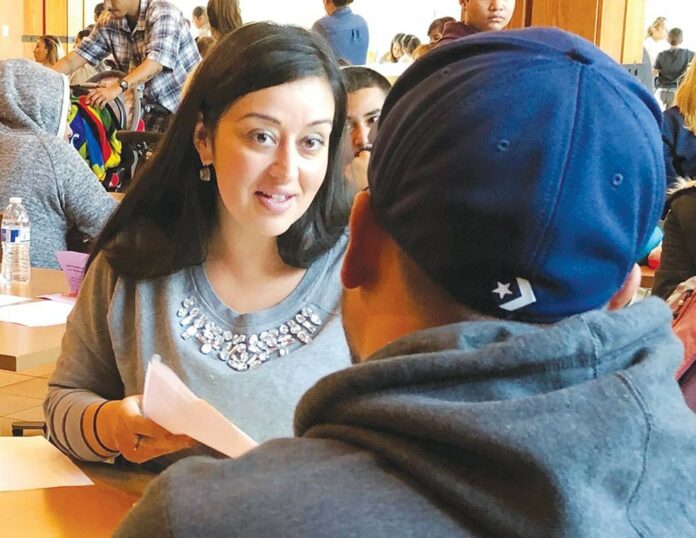
Maria Colvin is a native of Mexico and an immigrant to the U.S. who has moved back and forth across the border between the two countries for years. Over that time she has lived and worked as a house cleaner, near the bottom of a social ladder where 40 million Americans are often caught in a never-ending cycle of poverty.

A slender woman, Colvin looks fragile but has deep reserves of strength. She’s still near the bottom of the wage-slave abyss but she’s not alone in her struggle. She’s with the “Resisterhood,” a nationwide movement made up largely of Latinos who are fighting back against deportations and exploitation on the job—not to mention all the other injustices that characterize the Latino immigrant experience in America these days.

Colvin says the key to her awakening into activism was unearthing her pain and suffering, telling her story to empathetic listeners and forgiving herself for not knowing what to do when she felt trapped.

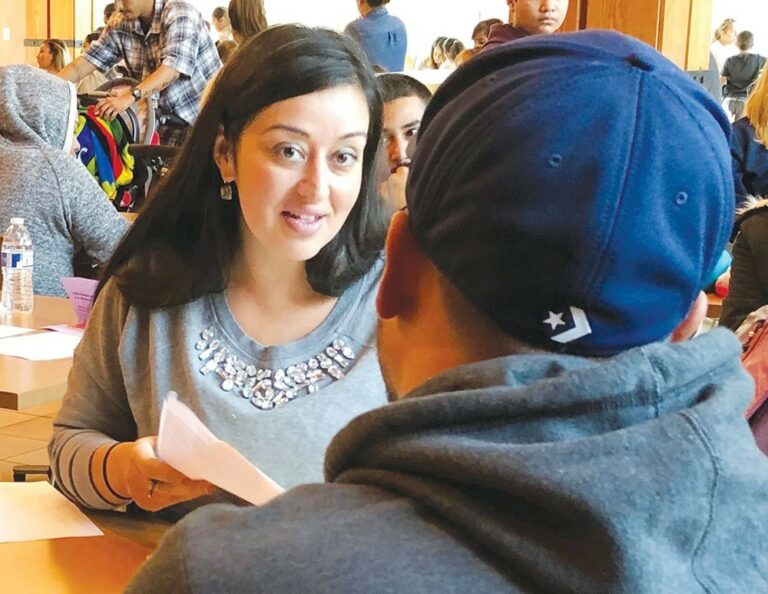
“I cleaned house for a family every day,” she says though an interpreter, as we all sit in the sun in front of the Arlene Francis Center in Santa Rosa, where domestic workers often meet. “I cooked, I cared for a baby, and sometimes I was not paid. Finally, after talking with a cousin I realized that I was a victim of manipulation and the bad environment in the house where I lived and worked.”

She looks up from the paper that has her story, and adds, “I am speaking today, despite my shyness, despite my insecurity and my trauma because I have learned that there are thousands of women like me in California who don’t speak English, don’t know their rights and are afraid to sue the people who exploited them.”

According to Christy Lubin, director at the Graton Day Labor Center (GDLC), house cleaners are often overworked, underpaid and often at risk when using toxic chemicals to scrub tubs, sinks and toilets, and clean in places many don’t want to go. In Sonoma County they have rallied under the banner of “the Resisterhood,” and they’re backed by the Graton Day Labor Center (GDLC), which has helped improve the lot of house cleaners as well as field workers since it was founded more than 15 years ago.

Domestic workers in Sonoma County have emerged from behind closed doors over the past decade, more than ever before. They are speaking in public about their own lives and the conditions under which they labor.

Legislation has helped. In 2013, State Assemblyman Tom Ammiano championed the California Domestic Workers Bill of Rights. Three years later, in 2016, the California Domestic Worker Coalition (CDWC) and members of ALMAS celebrated former Gov. Jerry Brown’s signing of a Bill of Rights, which gave permanent overtime protections to domestic workers—though not wage guarantees. Immigrant domestic workers earn close to minimum wage without basic labor protections that many take for granted. Lubin says domestic workers in Sonoma County make between $17,000 and $25,000 a year.

“That’s nowhere near a living wage,” she says.

The Graton center is home to the Alianza Laboral de Mujeres Activas y Solidarias (ALMAS), a new organizing project for domestic workers. The organization is less a union than an alliance of politically active women.

“We do the work that makes all other work possible, and relaxation, too, so people can come home and not have to clean and wash,” says ALMAS leader Socorro Diaz. “I tell women they have rights, that they shouldn’t hide and don’t be afraid to work hard and live life the way you want it. If you need help I will show you how to be a professional house cleaner.”

It’s hard to imagine a house cleaner and domestic worker with more pride, self-confidence and inner beauty than Diaz, though those traits didn’t come easily. She acquired them through struggle and solidarity with other women.

Diaz, who is married with three children, has worked as a house cleaner and a nanny for 14 years. She’s been sexually harassed, she says, and one boss tried to intimidate her into working overtime without pay. Employers could discriminate against her because she was an immigrant, a woman and also simply because she was a domestic worker. The Trump administration’s attacks on immigrants, she says, shocked her, inhibited her, and made her feel more afraid.

Finally, it was all too much. She went to the GDLC, attended workshops, and educated herself about her basic rights as a woman, a worker and as a human being.

“I found out my rights to my lunch break, my meal and to be paid overtime if and when I worked more than eight hours,” she says. “Now I know my rights as an immigrant worker and I feel safer knowing I’m supported by the law.” She adds, “I want our work to be valued as an important pillar for the health, well-being and peace of all households and families in this country.”

Alfonso Cuarón’s Roma, which portrays the life of a domestic worker in Mexico (and won an Oscar for best director at the 2019 Academy Awards), has served to inspire house cleaners and nannies like Diaz who live and work in Sonoma County. “Roma tells our story,” she says. “We’re expected to move about the houses we clean without making a sound and without being seen.”

And if the house cleaner dares to speak up? Not long ago, Diaz explained to an employer that she was bringing her children from Mexico to the U.S. and couldn’t work the same number of hours she had been working as a nanny and house cleaner. She was told, “That’s unacceptable.” In her case and in many others, there’s little if any room to negotiate with employers.

Domestic work in the U.S. is never-ending. There’s always another load of laundry to wash, dry and fold, a carpet to vacuum, a floor to sweep. The workday often runs to twelve hours, especially when domestic workers double as nannies. Children have to be put to bed and roused the next morning, then clothed, fed and sent off to school. Domestic workers are also employed as caregivers and personal assistants; sometimes they perform three jobs for the same family in the same house.

In Sonoma County, the ranks of immigrant house cleaners have grown sharply as demographics have changed. With older and more affluent folks and a soaring tourist industry, the demand for domestic workers has intensified.

“Jobs are especially hard with vacation rentals in private homes,” says a Latina woman who does a lot of cleaning of homes rented on Airbnb. “Guests are always going and coming, which means there’s a small window of opportunity to clean, and so everything is speeded up. I recently had to ready a place for 30 guests.”

While not all immigrant domestic workers are undocumented, many are. And many have homes, husbands and children of their own. Some have left children behind with family members in their home countries, and send monthly remittances to cover their expenses. In the local Resisterhood, the women age 20 to 50 and come from Guadalajara, Mexico City, Tijuana and other cities in Mexico and Central America.

Barbara Ehrenreich, the author of Nickel and Dimed, has written that many domestic workers in the U.S. toil under conditions “indistinguishable from slavery,” where “affluent employers live in intimate dependency on people who are poorer than themselves.” Progressive-leaning lawmakers are taking note. U.S. Senator and presidential candidate Kamala Harris recently introduced a Federal Domestic Workers Bill of Rights that would embrace the rights that house cleaners already enjoy in California and in seven other states. The legislation would create a retirement savings plan funded by employers. It would offer workers affordable health insurance and create training and development programs. It would also create a commission that would police the industry and make sure that employers complied with the rules.

All this is long overdue, says the GDLC’s Lubi. She says domestic workers in Sonoma County often work “without contracts, either written or oral, and without breaks, or overtime pay after eight hours of work.” Industry analysts estimate that nationwide, wage theft adds up to $105 billion in unpaid labor per year.

Sonoma County ALMAS leaders have launched a Fair Work/Clean Homes campaign, which aims to educate house cleaners about their rights. The campaign also supports the workers when they have been the victims of wage theft. Another goal is to educate employers and to identify the “bad actors” who are, in some cases, other domestic workers who hire women to work with them, pay below minimum wage and when they work more than eight hours a day, don’t pay overtime.

“We’re not a union,” Lubin says. “But we’re like a union in that our goal is for house cleaners to set the wages and conditions for the work they do.”

Maria Colvin is older than most of the domestic workers in Sonoma County, but her age doesn’t prevent her from doing a hard day’s work. As a spokesperson for the CDWC, Colvin calls for basic rights “so that other women won’t have to face the exploitation and abuse I experienced as a housekeeper and nanny.

“I worked in hotels and restaurants in Mexico before I came to the United States,” she adds. “That experience helped me find a job here. When my husband died suddenly, I lost my home and didn’t have a way to support myself. I found a live-in job with a family. I spoke no English. I didn’t know I had rights. I thought that the people who hired me were doing me a favor by giving me this job. I worked five days a week from 8am until 8pm. I slept in the same room as the two little children I cared for. I was paid $120 a week. That’s $2 an hour.”

Diaz adds, “The difference between my life and the lives of the people I work for is unbelievable. I want enough; they have everything. They travel, eat in expensive restaurants, buy new cars and fancy shoes.”

Colvin nods and says, “We live in two different worlds.”

Cooking with Laughs

It's been said that the only two things guaranteed to survive the apocalypse are cockroaches and Cher. Playwright Matt Lyle would like to add one more thing to that list—barbecue—the setting of his 2014 play Barbecue Apocalypse, running now at the Spreckels Performing Arts Center through April 20. Deb (Jess Headington) and Mike (Sam Coughlin) are getting their backyard deck...

Bunny Tale

California's hot on the trail of Hawaii for bragging rights over which state will be the first to enact a ban on fur sales and manufacturing—but there's a potential catch in Sacramento when it comes to rabbits. Assemblywoman Laura Friedman (D, Glendale) sponsored AB 44 this year and calls fur production "completely out of line with our state's values." The sentiment...

Bluegrass Wizards

Tommy; the name is synonymous with the rock opera concept ever since the Who released their double-album Tommy in 1969. Featuring classic rock songs that tell the story of a "deaf, dumb and blind kid" who played a mean game of pinball, Tommy has been made into a movie, a Broadway stage production, and, of course, its own pinball...

By Book or Nook

Only a few years ago, a visit to the main branch of the Santa Rosa public library on E Street downtown was a visit to no man's land. It wasn't just the homeless who congregated outside, used the bathrooms and sometimes monopolized the newspapers. The homeless were the least of the problem. The library was underfunded, resources were dwindling and...

Cafe Culture

When I moved to New Orleans 10 years ago I thought it would be a good idea to buy some William Faulkner. I had it in mind to spend the summer sitting in cafes reading the titan of southern literature, who wrote his first novel in New Orleans in the 1920s and lived there for a time. I'd drink coffee,...

Book Nooks

Whether it's cold and rainy, or bright and sunny, there's nothing as satisfying as cracking open a new book and diving in, and not just at home. Here are a few Santa Rosa locales that best pair with a slew of new releases by North Bay authors. Splitting her time between Sonoma and San Francisco, novelist Terry Gamble sets her...

Femme Force

“That’s so meta” is a phrase you hear bandied about a lot these days. It’s usually used to describe a reference by someone about themselves. Metatheatre is a style of play that acknowledges it is a play within a play—actors are aware of the audience and may interact with them or acknowledge they’re actors and not the characters they...

Rock ‘n’ Roll Excesses

After making shock waves in the underground music scenes of his home state of New Jersey and then Los Angeles, cult icon John Trubee moved to Sonoma County some 20 years ago. Yet, the songwriter far too seldom performs in his backyard, preferring to keep his longtime band, John Trubee & the Ugly Janitors of America, a recording project. That project...

Run Rabbit Run

It's not Avon calling The new neighbors are strangely familiar in 'Us.' Break out your decoder rings; the flawed but intriguing Us's political subtleness is hidden by its straightforward terror. Among other things, Jordan Peele's follow up to Get Out breaks a long drought. Santa Cruz, with its deep cold bay and hoodooed mountains, ought to be California's Transylvania. But there...

With the ‘Resisterhood’

Maria Colvin is a native of Mexico and an immigrant to the U.S. who has moved back and forth across the border between the two countries for years. Over that time she has lived and worked as a house cleaner, near the bottom of a social ladder where 40 million Americans are often caught in a never-ending cycle of...
11,084FansLike
4,446FollowersFollow
6,928FollowersFollow