Fresh Princes

0

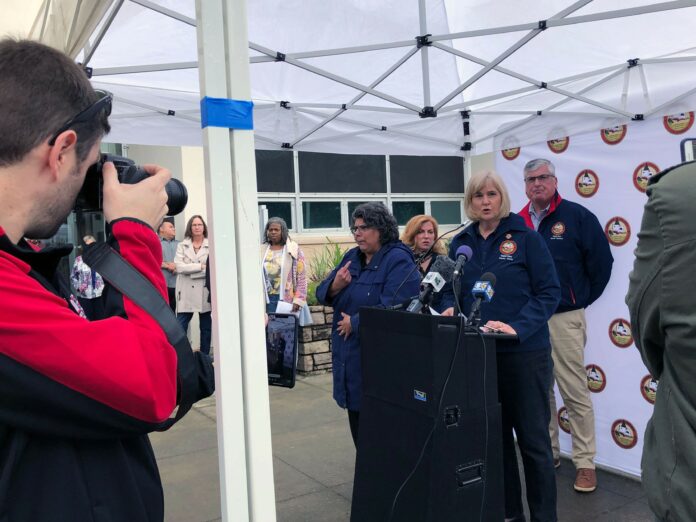
East Bay Pride: Richmond-based East Brother Beer Company is one of over 50 breweries pouring fresh beer this weekend at SOMO Village.

The table on the patio of HenHouse Brewing Company’s Palace of Barrels tasting room in Petaluma already overflows with beer flights and fried chicken sandwiches when HenHouse co-founder Collin McDonnell comes out of the back with several additional cans—of the craft brewery’s signature IPA.

We’re here for a taste test, except that all three of the IPAs placed before us appear to be the exact same beer.

Yet, appearances can be deceiving, and a closer look at the three cans reveals one small, but important, difference between them—the expiration date. Yes, HenHouse Brewing marks each of their cans with a best-by date, and it’s more than a suggestion.

Best-by dates are a mantra for McDonnell and the staff at HenHouse—one that makes freshness their top priority. That mantra is on full display this weekend when HenHouse Brewing hosts the first-ever “Freshtival” beer festival on Saturday, Oct. 12, at SOMO Village Event Center in Rohnert Park, in which more than 50 brewers pour over 100 less-than-a-week-old beers, celebrating the flavorful power of fresh beer alongside live music, great food, a gallery of beer industry art, interactive freshness demos
and more.

But, back to the taste test.

McDonnell first cracks open a five-day-old can of HenHouse IPA, then pops the tab on a three-month-old can and finally opens a nine-month-old can.

The differences in the flavor profiles are striking, with ripe notes of fruit and hops in the young can, and a stale, metallic flavor in the old can.

“So much about what we do is shortening the chain between us and the beer drinker,” says McDonnell. To that effect, HenHouse employs a strict, 28-day shelf-life policy for any beer it distributes to tap rooms or stores.

“You can really tell that the beer tastes so much better in those first 28 days,” says McDonnell. “I think it’s super important for the consumer to drink 28-day-old beer. You can tell how much brighter and vibrant and more fun the hop flavor is in new beer.”

McDonnell adds that the company’s 28-day shelf-life policy advocates for the consumer.

“Life is actually better for the people drinking the beer if they get it in the first 28 days,” he says. “At 90 days it’s a muted and boring experience, and when we get to nine months old it’s sad and gross. The more it oxidizes (in the can), the beer’s hop flavors get grating and it’s super unpleasant. Even under the best treatment, nine-month-old beer is still not fun to drink.”

HenHouse is not alone in this thinking; the entire craft beer industry has moved towards the fresh trend in recent years, meaning that the Freshtival comes at a perfect time for beer lovers.

“It’s something that Bay Area Brewers Guild and us put our heads together and collaborated about,” says HenHouse account manager and Freshtival co-organizer Kristie Hubacker. “It’s a change in the industry, people are moving to packaged-on or drink-by dates, and you can see consumers checking that, you’ll see people in the aisles turning the cans, checking the dates—that is a growing trend.”

Due to time constraints and travel logistics, the majority of breweries at the Freshtival will be Bay Area-based, with North Bay brewers like Barrel Brothers, Bear Republic, Cooperage Brewing, Crooked Goat, Iron Springs Brewing, Indian Valley Brewing, Russian River Brewing, Stone Brewing Napa and Third Street Aleworks getting in on the freshness.

Other West Coast breweries are taking advantage of HenHouse’s distribution side of the business and utilizing the company’s cold transport system to get beers from as far away as Los Angeles and Washington State to the fest in less than a week. “We were not exclusive, any brewery from anywhere can come if they can bring beer that’s seven days or fresher,” says Hubacker.

While there’s not exactly a competition for the freshest beer, HenHouse will use the event as a means to further propel the craft beer scene into the era of freshness. For its part, HenHouse will release an “Art of Freshness” IPA at the event, which McDonnell says will be kegged that morning. They will also pour a “Mr. October” double-IPA and other signature releases packaged that week.

“The Freshtival for us is about going out and making (freshness) a big deal in front of a lot of people,” says McDonnell. “Hopefully, it’s something we can do to not just make our beer better, but make beer better.”

Don’t Scream

0

I ‌might never have been born if it weren’t for one of my favorite films.

Let me explain.

My parents worked together in San Francisco for a few years before dating in secret to avoid office gossip. They watched their first film together as a couple in May, 1979, at a theater in Corte Madera. The lead actress, a nobody, had only one prior credit—as an extra in Annie Hall. The simple sets included bomber-plane parts left over from World War II, Christmas lights and cathode-ray television sets. The even-simpler plot had been repeated a million times before: a spaceship crew, led by Sigourney Weaver, encounters a monster and fights for survival.

But the monster my parents—and millions of other moviegoers—first met in 1979 never left our collective unconscious.

The Alien

As Alien celebrates its 40th anniversary this year, I’ve thought a lot about both the movie and the creature that enthralled and terrified me as a kid. After three sequels, two prequels and two tie-ins with the Predator franchise, it’s hard for viewers to remember pre-1979 sci-fi aliens; the Alien changed the genre forever.

Beginning with H.G. Wells’ The War of the Worlds, just about every alien depicted in literature, film and television possessed either an intelligence or motivation people understood. Possessed with “intellects vast and cool and unsympathetic,” Wells’ Martians “regarded earth with envious eyes.” In the following decades, these and other “bad” aliens were either highly intelligent menaces or zoo creatures on the loose.

The Alien, however, was completely different—primal, dangerous and, as science officer Ash states near the film’s end, pure. It didn’t even need eyes to pick off the Nostromo‘s crew one by one.

The Alien possessed a Freudian nightmare of a lifecycle that combined rape, birth and a whole lotta phallic imagery—it wasn’t what hid in the shadows, it was the shadows. It wasn’t something to fear, it was fear.

The Alien as we know and love it resulted from two problems screenwriter and USC grad Dan O’Bannon encountered while writing the screenplay’s first draft. Firstly, in similar films, the alien always entered the spacecraft through a ridiculous plot device such as someone forgetting to close a hatch.

Secondly, O’Bannon received a diagnosis of Crohn’s Disease, a condition that led to his death in 2009. Feeling as if your guts are tearing apart from the inside out is one of Crohn’s main symptoms.

So, O’Bannon wondered, what if the creature entered the ship inside someone and then burst its way out of them?

“The thing emerges” are three words from the Alien script that describe the day the film’s cast entered the set—the spaceship Nostromo‘s dining room—and found the cameras wrapped in plastic and the air heavy with the stench of animal blood and formaldehyde. Two puppeteers, two technicians manning plungers full of all that nasty fluid, and most of actor John Hurt’s body—only his arms and head were visible—hid beneath the dining room table. The rest of his “body” above the table consisted of dummy legs and a chest cavity filled to the brim with rotting cow parts and the “chestburster” puppet.

The scene, from the chestburster’s bloody entrance to its now-famous scurry off-set, lasts only 25 seconds. But those 25 seconds are a master class in how to make actors perform genuinely in spite of them knowing everything that is going to happen well in advance. Veronica Cartwright, no stranger to horror since her days as a child actor in Alfred Hitchcock’s The Birds, let out a genuine scream of mixed horror and disgust.

And from that iconic moment on, monster movies, sci-fi movies and horror movies were never the same.

From Oct. 13-16, North Bay cinemas celebrate the 40th anniversary of Alien with special showings: Century Napa Valley (195 Gasser Drive, Napa), San Rafael Regency 6 (280 Smith Ranch Road, San Rafael) and The Clover (121 E. First Street, Cloverdale). Reserve your tickets online by visiting Fathom Events.

If you’re one of the few people who never saw Alien, I envy you. And if you can’t wait until later this month to view it on the big screen, do yourself a favor and watch it in a pitch-black room late at night with the sound turned way up. It’s an old movie, you might tell yourself. CGI didn’t even exist back then. How could it be scary?

I won’t lie to you about your chances of surviving the ordeal, but . . . you have my sympathies.

Hot Room

0

One of Healdsburg’s favorite watering holes and the busiest stage in town, the Elephant in the Room first opened its doors in early 2018. Now it boasts live music an average of four to five nights a week.

That’s due to co-founder KC Mosso, a Healdsburg native, musician, booker and occasional bartender who’s hosted shows and booked bands to play in North Sonoma County since the 1990s. Under Mosso’s command, the Elephant in the Room, which also boasts an impressive selection of craft beer and food, became a focal point of local music, and the number of touring bands who stop into the room keeps steadily increasing.

This week, acts from all over the West Coast and beyond play the Elephant, beginning with folk duo The HawtThorns, on Saturday, Oct. 12. The Los Angeles-based act, made up of husband-and-wife duo Johnny and KP Hawthorn, finds the couple bringing their respective musical lifetimes together in a sun-drenched mix of Americana and roots-rock.

California native KP (formerly Kirsten Proffit) was already deep into a solo career as a singer-songwriter when she met Johnny Hawthorn; himself a songwriter, multi-instrumentalist, lead guitarist and record producer with prior experience performing with bands like Toad the Wet Sprocket and Everclear.

Together the two make beautiful music and their debut collection, 2019’s

Morning Sun, consists of a bright array of songs full of warm melodies and high-spirited lyrics. The HawtThorns bring that spirit to Healdsburg as part of their latest tour.

The next day, Sunday, Oct. 13, things get funky with Portland, Ore., trio Lost Ox, a hit in their hometown since forming in 2017. Comprised of drummer Scott Cowherd, guitarist Dylan DiSalvio and bassist Reed Bunnell, Lost Ox is a shredding machine, mixing funky rhythms with complex arrangements and searing guitar solos. Exploring music in a manner akin to collage, Lost Ox always offers something new, with a penchant for improvisation and an eclectic array of styles that fuse together into the vibrant melting pot heard on the group’s 2018 debut album, Wildheart.

Before Lost Ox takes the stage at the Elephant on Oct. 13, the venue hosts an afternoon show with two performers from Nashville—multi-instrumentalist Diatom Deli and experimental folk figure Thom Roy, both touring the West Coast together.

And, acclaimed indie-folk singer-songwriter David Dondero returns to the Elephant in the Room on Wednesday, Oct. 17, performing his intimate, stripped-down brand of music for a mellow, mid-week show.

Elephant in the Room is open daily, noon to midnight, at 177A Healdsburg Ave., Healdsburg. elephantintheroompub.com.

.

Measure Up

0

Pins and Pols Don’t suppress it, get out there and vote!

The big-ticket item in Sonoma County this election year is Measure B. Rohnert Park voters will consider a proposal to extend the life of the city’s Urban Growth Boundary until 2040.

Sonoma County adopted the boundary around the city, known as a UGB, for 20 years in July 2000. The UGBs have a special place in the history of Sonoma County’s environmental movement.

In the late 1990s, multiple Sonoma County cities, including Santa Rosa, Healdsburg and Rohnert Park created UBGs, which set a boundary to restrict urban sprawl development. They’ve pretty much worked out as planned.

Under the Measure B proposal, the life of the boundary would be extended to July 2040.

The renewal comes at a time when many Sonoma County cities and the county planning agency have renewed calls for more dense developments in downtown cores near public transit.

If Rohnert Park’s UGB is renewed, it will pressure the city into focusing on in-fill development —building on vacant or under-developed lots within city boundaries—rather than building outwards. Instead of fighting over one development at a time, the UGB lays down the rule all at once and, according to the measure’s supporters, there’s still plenty of developable land left within the UGB.

“The UGB will not prevent the development of needed housing or new businesses, but it will keep new growth contained, surrounded by open space, hillsides and agricultural land,” an argument in favor of the measure signed by all five members of the Rohnert Park City Council states. “The UGB includes enough land to accommodate our carefully planned growth for at least 20 years.”

Expect to see more UGB-extension ballot measures or city council decisions in the coming years. The City of Sonoma’s UGB, passed by ballot measure in 2000, will expire on Dec. 31, 2020.

Four if by Fire

There are four measures to raise or extend funding mechanisms for fire districts around the county. If passed, several of the funding measures will allow several of the county’s all-volunteer fire departments to hire full-time firefighters. Backers argue this will increase the level of service in those communities.

Measure C – Occidental Community Services District

This measure would raise an estimated $250,000 per year via parcel taxes on land within the Occidental Community Services District, the parent organization of the Occidental Fire Department, an all-volunteer district.

The measures’ supporters argue that the extra funding “will enable 24/7 coverage, reduce response times, modernize equipment for firefighter and community safety, and help protect us from dangerous wildfires.”

Measure D – Bodega Bay Fire Protection District

Measure D would extend a special tax to fund the Bodega Bay Fire Protection District’s services for another four years. The tax, first approved in 2003, was renewed by ballot measure every four years thereafter.

Measure E – Gold Ridge Fire Protection District

An effort to significantly boost funding for the all-volunteer district covering portions of the rural communities outside Sebastopol, Measure E would levy a parcel tax generating an estimated $1.2 million annually.

“Our local fire department has reached a crossroads. Fire and emergency calls are increasing steadily, placing more demand on our limited services … Existing staffing levels are not meeting best coverage practices, and we are not retaining staff due to budget shortfalls,” the measure’s supporters state in an argument submitted to the county.

On Sept. 9, the Gold Ridge Firefighters Association contributed $10,000 to a campaign committee supporting the measure, according to campaign finance documents filed with the county.

Measure F – Graton Fire Protection District

With funding generated by Measure F, another proposed parcel tax, the all-volunteer Graton Fire Protection District could hire career firefighters for the first time in the district’s 70-year life span.

Faced with an increase in calls and volunteer firefighters struggling to live due to the lack of affordable housing, the district’s current level of service “is not safe or sustainable,” according to an argument submitted to the county in favor of the measure.

If passed, the parcel tax would generate an estimated $800,000 each year.

The Graton Firefighters Association contributed $10,000 to campaign committee supporting the measure.

Forestville Water District Director

Five water fanatics are running for three open seats on the district’s board of directors.

Candidates Diane Hughes, chief business officer for the Forestville Unified School District, and Heather Aldridge, a forensic assistant, are outsiders. Matthew McDermott, Don Reha and Richard Benyo currently serve on the board.

Occidental Community Services District Director

Four candidates are running for three open seats on the board of directors. Carol Schmitt, who works in clean energy marketing, is the only fresh face in the race.

Candidates Ray Lunardi, Steven McNeal and Coy Brown are all incumbents.

Timber Cove County Water District Short Term Director

Warren Doyle, an incumbent, faces off against Kris Kilgore, a retired water engineer, for a seat on Timber Cove’s water district’s board of directors.

‘F’ Scoop

St. Helena, the idyllic Napa County town surrounded by vineyards and tourism-rich countryside, has a problem. The town of roughly six thousand is grappling, as many other North Bay cities are, with the task of housing a range of workers, retirees and tourists in a region of the world that is known for its ecological beauty and wine tourism.

Although the problem isn’t new, it’s growing worse and, to many residents, Measure F, an expensive and contentious measure included on this summer’s special election, was an unfortunate set back to efforts to solve the housing problem.

In June 2018, city staff issued a 33-page report outlining the scope of the housing problem and possible means of easing it.

“The gap between housing supply and local workforce is so large now that there is no viable means for serving the entire need,” an introduction to the housing report states.

Among the recommendations included in the report was enacting rent control on the 214-unit Vineyard Valley Mobile Home Park. The park, which is reserved for those above 55 years-old, is a valuable source of housing for seniors, according to the city.

“Vineyard Valley provides both affordable senior housing but also opportunity for affordable homeownership and the stability that homeownership provides to a community. In order to ensure preservation of this housing type in the community its preservation would need to be further incorporated into the city’s housing goals and a rent stabilization ordinance considered,” the city report states. Vineyard Valley, they report, is the only mobile home park in Napa County that does not have a rent stabilization ordinance.

In November 2018, after several months of discussion, the city council narrowly approved a staff-suggested ordinance requiring Vineyard Valley units to either the annual cost of living increase or three percent of the base rent, whichever was lower.

A representative of the park’s owners soon pushed back, gathering enough signatures to add the rent stabilization referendum on the June 2019 ballot. If the ballot measure —Measure F— failed to pass, the rent stabilization ordinance would not go into effect.

The Western Manufactured Homes Association, an industry group for mobile home park owners, pumped cash into the Save Our St. Helena campaign opposing Measure F, hiring law firms and political consultants for help, according to political finance documents filed with the state.

Greg Reynolds, the managing member of the parks ownership group, filed a complaint in May with the state Fair Political Practices Commission, the state body that hears election-related arguments, alleging that the Yes campaign had violated election rules by failing to post proper disclaimers on its website, fliers and promotional videos.

The complaint is currently under investigation by the FPPC’s investigations unit, according to Jay Wierenga, the commission’s communications manager. If the unit decides the complaint has merit, it will go to the FPPC for a final verdict.

In an argument submitted to the city, the No campaign stated that Measure F would “force all residents of Vineyard Valley into a mandatory rent control that they don’t want and don’t need” and said that it would cost the city money to administer.

For supporters, the measure was considered to be a crucial effort to maintain an affordable housing option for trailer park residents, especially in case the park is sold.

“Our landlord corporation has not increased rents beyond [the current 3%] cap on any current tenants. But, they have taken sizeable increases in rents when houses are sold, 10% or more,” Michael Merriman, a member of Citizens for Secure Senior Housing, the group supporting Measure F, wrote in an email

Last September, Reynolds told the Napa Valley Register that the park is “not for sale,” but Measure F supporters argued city action would provide them protection in case the park is sold.

In the end, the no campaign won the race by 188 votes – 594 to 882. Campaign finance statements show that the No campaign spent $86,554 on the campaign, much of it going to law firms and political consultants.

The mobile home park’s backers paid $97.92 per vote, while the Yes campaign spent $22.74 per vote, for a total of $13,232.70. The high-dollar campaign left residents exhausted, but not defeated.

Mayor Geoff Ellsworth, who voted for the city council ordinance, says he was disappointed by F’s failure: “It was a chance for the community to come together.”.

The owners of Vineyard Valley Mobile Home Park did not immediately respond to a request for comment.

Although they aren’t always featured heavily in modern debates, mobile home parks have long been a source of affordable housing or home ownership. In California, mobile home tenants are often protected by forms of rent stabilization.

But investment funds are increasingly viewing mobile home parks as lucrative real estate investments. For instance, Merriman says he joined the Measure F campaign in part because of news articles “illustrating the attractiveness of mobile home parks to predatory investors.”

“I wanted protection from a future park sale and resultant substantial rent hikes,” Merriman says.

In February, the Private Equity Stakeholder Project and two other affordable housing advocacy groups released a report outlining the rapid consolidation of mobile home park owners, as financial investment firms continue to buy up large numbers of parks across the country.

“The top 50 manufactured housing community owners own around 680,000 home sites,” the report states. “With more than 150,000 home sites, private equity firms and institutional investors now control a substantial portion of manufactured home communities.”

In some cases outlined in the report, a buyout can mean monumental rent hikes for mobile home renters.

Judy Pavlick, a mobile-home tenant in Sunnyvale, told the authors of the report that, after the Carlyle Group bought her park, their rent was spiked by 7 to 8 percent, instead of the more modest 3 percent increases tenants were accustomed to.

“The previous owners didn’t tell us that our community was for sale. It was just dropped on us like a bomb,” Pavlick says.

Pot Pivot

0

A‌ new, cannabis-devoted “institution of higher learning” is coming to Santa Rosa. “The Galley” will serve as a major center for the co-manufacture and distribution of cannabis in Northern California. “Our mission is to create a cannabis campus,” says Annie Holman, the Galley’s public face. “We have efficient equipment. We’ll be able to produce high-end cannabis products.”

For years, North Coast Fisheries occupied the 8,300-square-foot space on Sebastopol Road. Now the icon for the Galley—a red-headed mermaid with a marijuana leaf—is the only thing fishy about the space.

Nancy Birnbaum, the director of Women’s Cannabis Business Development (WCBD) and the publisher of Sensi magazine, says, “I love the idea of the Galley as a cannabis campus that will help educate the community and a place where people will be able to learn about health and wellness.”

“There’s already a big demand for space at our campus,” Holman says. “A lot of mom-and-pop operations were knocked out of the market because they couldn’t afford to pay for licenses, rent or buy a building, and purchase equipment. We’ll help them get back in business, survive and thrive.”

Holman knows cannabis works. She suffered back pain and insomnia in the 1980s. “I was using too much Advil and sleeping medications,” she says. “I tried CBD and THC and it made a profound difference in my life. I started to sleep again.”

Holman partners with two people at the Galley: Gina Pippin, the CEO, and another woman who wants to fly under the radar for the time being. The company secured authorization from Santa Rosa, and now Holman waits while the city issues an occupancy permit, which will secure a license from the California Department of Public Health.

Holman expects Santa Rosa to become a major hub in the Northern California cannabis world. “At our event center, we’d like to host Sonoma County cannabis groups, organizations and businesses, as well as health and wellness seminars,” Holman says. “We want people to hang out and share their expertise. We want to learn.”

The Galley will employ more than 20 people, most of them skilled bakers, chocolatiers and candymakers. Employees will receive health benefits and a living wage.

“We have not done much advertising,” Holman says. “Word-of-mouth and our presence at cannabis events seems to be the way to go.”

The Galley intends to start operations before the end of the year. Maybe you’ll want to go back to school and continue your education at Santa Rosa’s own cannabis campus.

Jonah Raskin is the author of Marijuanaland and Dark Day, Dark Night and has story credit for the movie Homegrown.

Smoked Out

0

If someone forces you to participate in an unfair and unjust system under fear of financial or physical pain, that is called tyranny. This is exactly what is happening here in the Sonoma County cannabis industry.

For many years the government has been calling me a criminal and trying to take away my freedom with illegal and vindictive prosecutions. They have broken many of the laws that they have lobbied to enact and have sworn to enforce. They’ve realized the futility and failure of their attempts at cannabis eradication in the country. Now they are trying a different approach through legislation.

As our ag commissioner stated at a Ukiah gathering last year, “the government officials could not have come up with a better plan to force the small farmer out of the industry.”

If you take away growers’ income from cannabis, they will need government assistance with housing, medical care and food. You can’t make a living in Sonoma County working at a $15 an hour job. Growing good cannabis requires an advanced skill-set—and we have that workforce already in place. There is a market for cannabis and it will be supplied by people in whatever county allows it.

People will take great risks to survive and the government doesn’t seem to realize the consequences of their policies. Putting a lien on someone’s property is inviting litigation that is both expensive and counterproductive. Many have headed back to the hills where they can walk away unscathed. The head of the California Sheriff’s Association says it will take twenty years to figure out how to make Proposition 64 work. I say it’s already failing, and that it won’t work without significant cottage industry participation.

The world knows about cannabis in the North Bay and we are letting government kill the golden goose of a healthy cannabis culture and industry. The big corporate players are not going to support our local communities beyond mandatory permit fees and taxes. All their profits will be going elsewhere. Car dealers, restaurants, shopping malls and all the businesses that make up the Sonoma County economy are already suffering because of the cruel and corrupt practices and policies around cannabis.

Oaky Joe Munson lives in Forestville. We welcome your contribution. To have your topical essay of 350 words considered for publication, write op*****@******an.com.

Downward Mobility

It’s obvious the culture of California is to eliminate low-income housing (“Trailer Park Blues,” Oct. 2). Mobile-home parks serve a viable solution to low-income housing, but no one wants to pass up making money for the rich developers.
Frankly Speaking
via Bohemian.com

Smashing Failure
“Rogers-Bennett doesn’t feel citizen groups without scientific permits should be tackling the restoration effort.” That’s because Rogers-Bennett failed in her efforts (“Urchin Matters,” Oct. 2).
The Southern Californian groups have done this for years with no accidental spawning. So years of actual practice outweigh her theoretical lab theory. She is scared her work will be shown to be useless and her funding will dry up.
As for eating the problem—anyone who hunts sea urchins knows the RED ones are larger and best harvested. Even in a healthy state, the small purple urchins are far less desirable.
You want to save the kelp forests, smash the urchins (for use as bait of course)—as has been done and proven to work in the wild (not a lab).
jabberwolf
via Bohemian.com

Oh, Henry!
The 1964 movie Becket tells the story of two men: England’s King Henry II, a Norman, and his “loyal” compatriot, Thomas Becket, a Saxon—past sworn enemies. But now, Becket— appointed Lord Chancellor by the king—is his closest adviser in all matters.
In an attempt to vanquish all political/religious opposition and solidify power within his monarchy, King Donald, sorry, King Henry, appoints his friend, Becket, with little to no prior experience in these matters, as Archbishop of Canterbury. Sound familiar?
Soon it becomes apparent there is a complexity beyond the ability of Rudy Giuliani, the Don’s consigliere, to handle. Republican capos take heed! The punishment of ex-communication (impeachment?) on the guilty party is Becket’s edict. Finally, in retaliation, King Henry asks his “loyal” barons, “can no one rid me of these meddlesome priests (aka ‘these treasonous savages of the impeachment inquiry committees’)?”
Trump crossed many bridges in the last two and a half years in office, with little opposition from his own mob, despite flagrant disregard for existing statutes. This latest account now has him threatening “to make an offer that can’t be refused” to his “counterpart” in the Ukraine.
Like King Henry, Trump tried to stack the deck, but failed to understand that political expediency and disregard for the rule of law will eventually fail and erode his support. It is simply too high a price to pay, both politically and morally for our nation. “History doesn’t repeat, but it rhymes,” said Mark Twain (Watergate and Richard Nixon, 1974). Many questions regarding this latest inquiry require answers. But these important questions still remain:
Will Congress find the courage, honor and integrity to decide which master it serves in this time of great peril to our democracy? Where are the Beckets willing to speak truth to this King?
E.G. Singer
Santa Rosa

Write to us at le*****@******an.com.

Heavy Hitters

0

In sports, the term “ringer” generally refers to the practice of using a clearly superior competitor to gain an unfair advantage. In theatrical terms, it describes the importation of outside talent in the hope of drawing a larger-than-normal audience. Both scenarios hope that the player/performer hits it out of the park.

Santa Rosa’s 6th Street Playhouse cast a ringer—in the person of Kathy Fitzgerald—in Gypsy, running through Oct. 20. A successful character actress with featured roles in several Broadway hits (Wicked, The Producers), Ms. Fitzgerald takes on the challenging lead role of Momma Rose in what many consider the greatest American musical.

Momma Rose stops at nothing to make her daughter “Baby” June (Gigi Bruce-Low) a star, keeping her perpetually young as they cross the country with a third-rate vaudeville act. When the grown up “Dainty” June (Melody Payne) tires of the child act and elopes with one of the young men from the troupe, Momma Rose turns her sight to frequently dismissed second daughter Louise (Cecilia Brenner, then Carmen Mitchell). With vaudeville dying, they appear at a low-rent theatre that turns out to be a burlesque house. With the main “attraction” unable to perform, Momma Rose sees the chance to make Louise a star, if only for a night. The shy and retiring Louise soon becomes Gypsy Rose Lee.

The classic Jule Styne/Stephen Sondheim score complements the book by Arthur Laurents with such classics as “Let Me Entertain You,” “Together Wherever We Go,” “You Gotta Get a Gimmick” and “Everything’s Coming Up Roses.”

Director Jared Sakren got a “two-fer” with the casting of Ms. Fitzgerald, who is joined onstage by her husband Roger Michelson in the role of Herbie, the harried agent hopelessly in love with Rose. Michelson’s performance is quite good and often the emotional heart of the show. Mitchell also shines as the coming-into-her-own Louise.

Spotty production values keep the show visually flat until late in the second act, when bright costuming by Pamela Johnson and lighting by April George elevate the show. The same can be said for Ms. Fitzgerald’s performance.

To return to sports parlance, she spent most of the show hitting singles and doubles and didn’t really get a great at-bat until the show’s conclusion with “Rose’s Turn.”

It was a solid triple.

Rating (out of 5):★★★½

‘Gypsy’ runs through Oct. 20 at 6th Street Playhouse, 52 W. Sixth St., Santa Rosa. Thursday–Saturday, 7:30pm; Saturday–Sunday, 2pm. $35–$48. 707.523.4185. 6thstreetplayhouse.com

Capo Taste-o

0

It’s hard to imagine this corner of the world without Healdsburg.

But it was new to Mary Roy when, seeking a breather from an intense medical conference in San Francisco, she asked a hotel concierge where she could go to get off the beaten path, away from tourist-trammeled wine country. The answer was Healdsburg.

Some years later, just after Mary and her husband, Bob Covert, fired their realtor after a pricey prospect fell through, their new realtor said, “Would you try looking in Healdsburg?”

Hard as it is to imagine that a 50-acre parcel with a neglected old-vine Zinfandel vineyard, some run-down barns, and lots of potential, could still be found in 2014 in these parts, they found their dream property on Capo Creek.

The little seasonal stream didn’t actually have a name, Mary explains while I sample a floral—but fleshy—2018 Grenache Blanc ($28), so they named it for the guitarist’s clamp, capo tasto. They’re big music fans, Mary explains, as the croon of the late Eva Cassidy wafts from the kitchen alongside savory scents. It’s not a random play from streaming music: they named the vineyard below the rustically landscaped tasting area Eva’s after one of Mary’s beloved recording artists, and named the new planting of Rhône varieties on the hill above the handsome barn-style winery Eric’s, for his. While the vines grow, Capo Creek’s 2016 Grenache Noir ($52) is sourced from Carneros, but this cool and silky, mint-accented red is a standout rendition, sure to ease any worried mind.

Bob and Mary’s dream-winery retirement project hit a few roadblocks along the way. It seems that wresting a building permit or two from the County is not the stuff of dreams. So, while Bob stays on in Chicago, where he’s a noted neonatologist, Mary runs the winery with the help of her sister, with whom she formerly founded a radiology service.

“I don’t want to just be serving wine to people,” Mary says of her winery’s approach to hospitality. There is no tasting bar. She does like to cook, however, and serves up a tasty little pierogi to pair with the plush, estate-reserve Zinfandel ($52), which she farms with organic inputs, though not certified as such. “I’m a doctor, so I don’t do Roundup,” Mary says.

It might be a good idea to upgrade from the one-hour tasting to the two-hour food pairing experience ahead of time. “People come here, and they never want to leave.”

Capo Creek, 7171 W Dry Creek Rd., Healdsburg. Wed–Sun 10am–5pm. Tastings, pairings, and tours by appointment, $35–$135. 707.608.8448.

Urchin Matters

0

Kelp Killers Unbridled urchins are a menace to aquatic plants and abalone.

Some breathe through scuba gear, while others hold their breath—and each carries a large rock. Until several years ago, these recreational divers preferred to spend a weekend visit to the North Coast diving for abalone—the giant, prized sea snails. This last month, though, they spent hours smashing purple sea urchins.

“We’ve been hearing other divers already saying they’re seeing fewer urchins,” says Josh Russo, the president of the Watermen’s Alliance, a diving advocacy group, and the chief organizer of the urchin smashing outings.

Russo’s group represents just one faction of a broader community of divers, commercial fishermen, biologists and state officials hoping to cull a plague of millions of purple urchins laying waste to the North Coast’s once lush and abundant kelp forests, bringing down an entire ecosystem with the iconic macroalga.

Another, very separate and more complex urchin-culling project is still in its planning stages at the Bodega Marine Laboratory, in Bodega Bay. Here, Laura Rogers-Bennett, an environmental scientist with the California Department of Fish and Wildlife, helps feed and fatten hundreds of purple urchins, captured off nearby rocky reefs, in tanks of seawater. Urchins are valued for their richly flavored golden gonads, or uni. But because these urchins ate their own food supply down to the bare rock, they now persist in a semi-starved state; their gonads have shriveled, turning gray and worthless.

But Rogers-Bennett says it takes less than three months to restore them to health, and culinary value, on a diet of dried seaweed pellets. The project is part of an experimental collaboration with a Norwegian company called Urchinomics, which is pursuing a unique business model of making commercial industries out of overpopulated urchins. Scaling up the experiment into a viable business—which could occur over the next few years—will mean building onshore facilities with large tanks and recirculating seawater systems.

It could also represent a symbolic step forward for sustainable seafood.

“It wouldn’t just be sustainable—it would be restorative, where the more you take, the more you help restore the kelp forests of California,” Rogers-Bennet says.

And California is hardly alone as a victim of escalating urchin numbers. In many regions around the world, changing marine conditions—including ocean warming—encourage the spread of urchins, which overwhelm underwater ecosystems when their numbers exceed the environment’s carrying capacity. This happened in Tasmania, Norway and British Columbia, among other regions, where local urchin species proliferated and destroyed once-magnificent kelp beds and seaweed meadows. In their place are what scientists call urchin barrens—rocky underwater seascapes where little but urchins dwell. Urchinomics is conducting trials in all these regions.

In Northern California, bull kelp grew so thick as recently as five years ago that it posed a real hazard and a logistical consideration for recreational abalone divers. Often, the kelp was so dense that swimming over the surface became a grueling task—like walking through a thicket of blackberries. The nuisance became a danger under the surface, where the numerous kelp stalks running to the seafloor like vines in a jungle created a drowning hazard.

But the kelp today is all but gone, as are the prized sea snails that rely on it. In place of prior ecological diversity are chiefly one thing—purple urchins, tens of millions of them in the shallow waters of the North Coast. The animals proliferated starting about five years ago after a mysterious disease wiped out their main predator, the sunflower sea star. Almost simultaneously, a spell of warm ocean water caused a massive die-off of kelp. Urchins eat kelp, and prevent recovery of the vegetation.

Abalone also eat kelp, and with their food source depleted they have starved and died by the millions. Urchins, though, can live for years without eating solid food. For now, the semi-starved urchins rule the seafloor, eating any sprouts of kelp that appear and thereby keeping the ecosystem locked in its gray and dreary, barren state.

Red sea urchins have also been impacted by the purple urchin scourge. Larger than the purple urchins, reds were until recently the valuable core of a small but thriving commercial market. Now, like the purples, the reds have little to eat, and their prized gonads have withered into unappetizing strips of gray flesh. The North Coast’s commercial urchin diving economy has collapsed.

When—and if—all this will change is not clear. Urchin barrens have lasted for decades in other regions, making the future of California’s coastal marine environment look bleak.

“These urchin barrens are very different from the barrens we’ve seen before in Southern California, where they were patchy and very small and the kelp system would often bounce back the next year,” Rogers-Bennett says. “These barrens are much more extensive and long-lasting.”

In Van Damme cove, a few miles south of Fort Bragg, Russo anchored four buoys to mark a large quadrant inside of which he and other volunteer divers smash urchins by the thousands. Russo’s plan, independent of more formally guided initiatives, is to create a clearing in the urchin barrens where kelp can potentially take root and grow.

“It can’t recover if it can’t even start growing,” he says.

The daily recreational bag limit on purple urchins is 35. However, an addendum made this year to state law bumped up the bag limit in Sonoma, Mendocino and Humboldt counties to 40 gallons per day. Russo estimates this equals 600 to 800 pounds of crushed urchins, with three or four urchins to the pound.

State law prohibits wanton waste of fish and game, but it allows harvested fish or invertebrates to be used for bait.

“We’re baiting with these urchins,” Russo says. “We’re not just smashing them. That would be illegal.” He notes rockfish, surfperch and lingcod swarm around divers as they work.

“The law doesn’t say you have to catch what you bait, so we’re just baiting,” he says.

Smashing urchins underwater has helped restore urchinated kelp forests before. It proved successful in Southern California, for one, where concentrated efforts to kill the animals allowed denuded giant kelp groves to grow back.

But the scale of the problem on the North Coast far surpasses anything seen at any other time in California’s history, and the extensive barrens might prove more than hand-held hammers can undo.

Smashing urchins is also controversial because the process can allegedly release eggs and sperm into the water, where the gametes might meet and produce larvae, and eventually more urchins. Russo says so few urchins in the overpopulated areas currently contain viable gonads that the concern is not legitimate.

Rogers-Bennett doesn’t feel that citizen groups without scientific permits should be tackling the restoration effort, partly because of the risk of promoting reproduction.

“Most urchins in a barren are sterile, but you do find some that are reproductive,” she says. “We want to be sure nobody is smashing urchins during the reproductive cycle.” Purple urchins usually spawn naturally in winter months.

However, she believes in the basic concept of creating bull kelp seed banks.

“We need to create small pockets where we can defend the bull kelp,” she says. “This will keep the spore bank alive. If the bull kelp gets totally wiped out, it would make recovery almost impossible.”

Another program to thin out the urchins involved sending the harvested animals to a commercial composting site in Ukiah. The Watermen’s Alliance, in fact,sponsored this project. Russo says the organization donated $80,000 last year to support the work of nine commercial urchin boats at several locations, mostly near Fort Bragg.

But efforts like this one require volunteers.

What’s different about Urchinomics’ proposal is that it creates an economic incentive to harvest the urchins. Proceeds from commercial sales will be used to pay divers, driving a profitable new industry.

Urchinomics’ director of global brand marketing Denise MacDonald explains that the plan is to create a California market for purple urchins. She describes a dining arrangement where freshly cracked urchins, their golden uni exposed, are served on the half shell to restaurant diners, much the way an oyster bar works. On a per-urchin basis, proceeds could be substantial—a few dollars per animal—and financially, the model—which is being similarly tested in Japan, Norway and coastal sites in Canada where urchins have taken over the seafloor—looks good.

Whether it will operate at a speed sufficient to reduce urchin densities remains the question.

Uni is in high demand, MacDonald says, and supplies are down, partly as a result of spreading urchin barrens.

But taking on an urchin barren is no easy task, as overpopulated urchins are notoriously difficult to effectively cull.

Mark Carr, a professor of marine ecology at UC Santa Cruz, believes the pace of catching, ranching, selling and serving the urchins may not be fast enough to make a significant dent in the urchin population.

“The level of production and consumption is likely to have a pretty minimal effect on the vast current population of urchins on the coast,” he says of the Urchinomics’ business plan. “But having said that, any time you create an industry that might be sustainable out of an outbreak like this, you’re creating jobs and income providing an economic alternative in areas where fisheries have been impacted.”

He points to the spread of invasive lionfish in the Caribbean and the Gulf of Mexico as an example; the introduced fish became pests of locust-like magnitude, and while efforts to fish them into submission didn’t work, they created a sustainable—and, one could say, restorative—fishery.

“That just demonstrates adaptive capacity of human communities to respond to these disturbances,” Carr says.

In Tasmania, urchin barrens replaced kelp forests over the past several decades. As in California, increasing water temperatures led to a kelp die-off, while the urchins prevented recovery.

Scientist Craig Johnson, a biologist at the University of Tasmania, closely studied the local urchin barrens and led experiments in which he introduced lobsters into overpopulated urchin barrens. Lobsters are a natural predator of urchins but have been fished to low levels in much of their range in Australian waters. Working in marine reserves where the lobsters could not be fished, Johnson and colleagues studied the predators’ effects on the urchins. They ate large numbers, he says, but in extensive barrens, the predation was never enough to allow algae to recover.

As Johnson explained to this reporter in 2017, “You can pour in as many large lobsters as you like, and they will eat hundreds of thousands of urchins, but they cannot reduce the urchins enough for any kelp to reappear. Even if you turned all those urchin barrens into marine protected areas tomorrow, you could wait 200 years and you still wouldn’t get a kelp forest back.”

In ecologists’ jargon, an urchin barren is the alternative stable state to the lush kelp forest. True to the name, a stable state is very stable. That is, unless a tremendous environmental upheaval—like a fast change in water temperature, the outbreak of disease or a predator introduced to the system—dislodges the urchins’ grip on the ecosystem, the urchin plague may never go into remission. As Johnson explains, it takes a great number of urchins to turn a kelp forest into a barren. Thereafter, however, it only requires a relatively small number of urchins to maintain that barren. Put another way, urchins must be almost entirely eradicated from a barren in order for kelp to reclaim the environment.

“For all intents and purposes, once you flip to the urchin barren state, you have virtually no chance of recovery,” Johnson says.

In Alaska, existing urchin barrens first formed several decades ago, and in Hokkaido, Japan, barrens have lasted for more than 80 years.

Some scientists discuss the potential for reintroducing the predatory sunflower sea star back into the urchin barrens of California. This would mean catching some in the wild and breeding them in captivity. Since survivors of the sea star die-off of 2013 likely bear genetic resistance to the disease that wiped them out, a newly established population might be able to persist and significantly cull the purple urchins.

But in local water, there may not be any sunflower sea star survivors.

“Unfortunately, we haven’t seen one since 2014,” says research diver Tristin McHugh, the Northern California regional manager for the seafloor monitoring organization Reef Check.

The organization, which uses the help of volunteer scuba divers who count and record marine life, has surveyed California’s coastal ecosystems since 2006. Their data shows the various population trajectories of different species, with bull kelp presence dropping precipitously several years ago as purple urchin counts spiked.

Now, says McHugh, patterns in fish abundance may be starting to emerge, with a recent dip in counted fish after a brief spike from 2013 to 2016. She speculates the abrupt loss of kelp made fish more visible to divers, creating an illusion of greater numbers.

But the recent drop in observed fish suggests declining populations of rockfish, lingcod and other local species—the probable next victims of an ongoing trophic cascade.

Russo says his smashing program is already making a visible difference in the numbers of urchins at Van Damme.

“It’s not just us who see it—other divers have been mentioning it,” he says.

Russo is optimistic about Urchinomics’ strategy, though he notes harvesting for uni creates demand for larger urchins only, leaving sub-adults and juveniles in place.

“But if they go in and take out the big ones, and they let us smash the rest, I think we have a good chance,” he says.

Fresh Princes

<image-1] East Bay Pride: Richmond-based East Brother Beer Company is one of over 50 breweries pouring fresh beer this weekend at SOMO Village. The table on the patio of HenHouse Brewing Company's Palace of Barrels tasting room in Petaluma already overflows with beer flights and fried chicken sandwiches when HenHouse co-founder Collin McDonnell comes out of the back with several additional...

Don’t Scream

I ‌might never have been born if it weren't for one of my favorite films. Let me explain. My parents worked together in San Francisco for a few years before dating in secret to avoid office gossip. They watched their first film together as a couple in May, 1979, at a theater in Corte Madera. The lead actress, a nobody,...

Hot Room

One of Healdsburg's favorite watering holes and the busiest stage in town, the Elephant in the Room first opened its doors in early 2018. Now it boasts live music an average of four to five nights a week. That's due to co-founder KC Mosso, a Healdsburg native, musician, booker and occasional bartender who's hosted shows and booked bands to play...

Measure Up

Pins and Pols Don't suppress it, get out there and vote! The big-ticket item in Sonoma County this election year is Measure B. Rohnert Park voters will consider a proposal to extend the life of the city's Urban Growth Boundary until 2040. Sonoma County adopted the boundary around the city, known as a UGB, for 20 years in July 2000. The...

Pot Pivot

A‌ new, cannabis-devoted "institution of higher learning" is coming to Santa Rosa. "The Galley" will serve as a major center for the co-manufacture and distribution of cannabis in Northern California. "Our mission is to create a cannabis campus," says Annie Holman, the Galley's public face. "We have efficient equipment. We'll be able to produce high-end cannabis products." For years, North...

Smoked Out

If someone forces you to participate in an unfair and unjust system under fear of financial or physical pain, that is called tyranny. This is exactly what is happening here in the Sonoma County cannabis industry. For many years the government has been calling me a criminal and trying to take away my freedom with illegal and vindictive prosecutions. They...

Downward Mobility

It’s obvious the culture of California is to eliminate low-income housing (“Trailer Park Blues,” Oct. 2). Mobile-home parks serve a viable solution to low-income housing, but no one wants to pass up making money for the rich developers. Frankly Speaking via Bohemian.com Smashing Failure “Rogers-Bennett doesn’t feel citizen groups without scientific permits should be tackling the restoration effort.” That’s because Rogers-Bennett failed in...

Heavy Hitters

In sports, the term "ringer" generally refers to the practice of using a clearly superior competitor to gain an unfair advantage. In theatrical terms, it describes the importation of outside talent in the hope of drawing a larger-than-normal audience. Both scenarios hope that the player/performer hits it out of the park. Santa Rosa's 6th Street Playhouse cast a ringer—in...

Capo Taste-o

It's hard to imagine this corner of the world without Healdsburg. But it was new to Mary Roy when, seeking a breather from an intense medical conference in San Francisco, she asked a hotel concierge where she could go to get off the beaten path, away from tourist-trammeled wine country. The answer was Healdsburg. Some years later, just after Mary and...

Urchin Matters

Kelp Killers Unbridled urchins are a menace to aquatic plants and abalone. Some breathe through scuba gear, while others hold their breath—and each carries a large rock. Until several years ago, these recreational divers preferred to spend a weekend visit to the North Coast diving for abalone—the giant, prized sea snails. This last month, though, they spent hours smashing purple...
11,084FansLike
4,606FollowersFollow
6,928FollowersFollow