Fish On

0

Bob Dooley has been fishing since he was 11, having spent most of that span as a boat owner, often traveling up the West Coast to the waters off Alaska, searching for pollock and other whitefish.

Now 65 and retired, Dooley serves on the Pacific Fishery Management Council, weighing in on regulatory policy. The Half Moon Bay fisherman realizes the term “fishery management” has at times been cast as a bad word among fishermen, especially those from the generation prior, but Dooley credits the federal regulations with keeping the nation’s fisheries sustainable and letting populations rebound—ultimately giving fishermen like himself a shot at a career.

The backbone of this whole framework is the 1976 Magnuson-Stevens Fishery Conservation and Management Act. Among its provisions, it outlined a system to create fish allotments for individual fisheries. Congress has reauthorized the act a few times over the years, most recently in 2006. In the years since, efforts to revisit the law have stalled out before netting any results. Now, U.S. Rep. Jared Huffman (D, San Rafael) is starting a “listening tour” to get perspectives on how to improve Magnuson–Stevens. Huffman plans to introduce a bill to tackle the reauthorization within the next year.

Looking ahead, Dooley says Congress may take this important opportunity to clarify wording that often gets misinterpreted. By and large, though, he’s hoping that legislators hold interest groups at bay.

“The problem is when you open the door, a lot of special interests can climb through. It’s a good act, and I don’t think we need to fool with it much,” he says.

As the recently elevated chair of Congress’ Democrat-controlled Water, Oceans and Wildlife Subcommittee, Huffman says his goal is to help manage oceans and fisheries “to be as environmentally and economically resilient as possible.” He’s asking how issues like global climate change should be considered in a revised version of the act.

Noah Oppenheim, executive director of the Pacific Coast Federation of Fishermen’s Associations, is looking forward to the listening tour. Oppenheim has his doubts about how Congress can make any legislative progress on global warming under a White House that denies the existence of climate change. Nonetheless, he believes the opportunity will prompt fishermen to start thinking more globally and get involved outside of the individual policies undertaken by local fishery councils.

Representative Huffman, for his part, enjoys support from an environmental community that’s aligned with his values. Huffman riding herd over the process, Oppenheim says, “will be an interesting dynamic to watch.”

“He needs to understand,” he says, “that fisheries management is about the industry first,” and that the Magnuson-Stevens Act wasn’t intended to shut down the industry, but to figure out how to make it work in a manner that’s sustainable for fish and fishermen alike.

Oppenheim knows full well that fishing has an impact on fish stocks.

“We’ve brought back many stocks from the brink,” he says. He adds that California fishermen have, if grudgingly, “throttled back their activities to protect them.” Overfishing is one issue, but it’s “climate impacts and industrial activities outside of fishing,” he says, “that are the biggest impact” on fish stocks.

Oppenheim explains that lawmakers should take a hard look at any offshore industry development as they study reauthorization. He says external threats to fishermen’s livelihoods—offshore oil and gas rigs and wind farms—should be a part of the discussion. Concerned about the impacts of a proposed wind farm south of the Monterey Bay Sanctuary National Marine Sanctuary, Oppenheim notes that the current law doesn’t allow for any regulation of industries that might have a deleterious impact on fishermen’s livelihoods. The Bureau of Energy Management oversees the leasing for such projects.

With Huffman still testing the winds on this topic, it’s unclear which direction policy discussions might take.

Tobias Aguirre, CEO of the nonprofit advocacy group Fishwise, believes Congress should strengthen the act’s environmental aim to let fisheries continue rebounding. “We need to keep our foot on the gas,” says Aguirre. Fishwise has been collaborating on the international Seafood Alliance for Legality and Traceability, which aims to improve transparency in global seafood markets. Fishwise’s next mission, he says, will be improving the working conditions of fishermen.

The livelihoods of fishermen is certainly a chief concern of Oppenheim.

A fisherman himself, he’s the first to admit that fishermen have occasionally been part of an “anti-science” agenda when it has suited them, but he also says they provide valuable data to scientists and regulators. “Fishermen can both be far better observers of ocean conditions and the real-time status of fisheries,” he says, “and simultaneously be in denial over the impacts that broad-scale fishing can have over time.”

But it’s also true that the science isn’t always right, he adds. Scientists have missed the mark when it comes to fish stocks—surveys have been wrong. The bottom line for Oppenheim when it comes to fisheries management is that “we’re doing better than we ever have in the past,” though there’s much to be done. He believes the “ship can be righted to some extent by bringing in the fishermen,” especially small-scale operators. “One of the more interesting things to note about fish politics is to notice how ‘flipped’ it is,” he says. “The quote-unquote ‘liberal’ politics of egalitarianism and support for communities” has not been the traditional Democrat approach, he argues.

At the same time, conservative lawmakers pegged with being too pro-business at the expense of the environment, he says, have in fact led the charge to focus on localities and small-time operators.

“Fundamentally, liberals should be about supporting communities,” Oppenheim says as he pines for a post-partisan fisheries management debate. “Partisanship in fisheries is terrible, counterproductive and we’ve been seeing too much of it lately.”

Art Market

0

Since opening in 2013, the Barlow has become west Sonoma County’s hub of local artisans and crafters, with over a dozen acres of industrial-chic structures currently housing brewers, distillers, restaurants, retail space, art galleries and more.

Much of that was in jeopardy during February’s flood, but the businesses that survived or opened since are savoring the summer weather. Now, the Sebastopol marketplace is unveiling a daylong celebration to showcase art and local businesses on Saturday, July 27.

The walkable art show is curated by Sebastopol artist Saree Robinson and encompasses the entire marketplace, with 10 newly painted mini-murals on display and special showings and events at venues throughout.

“I did a public art project in Petaluma along American Alley with O-Positive Festival in 2015,” Robinson says. “I wanted to do something like that in Sebastopol because I love this town and I want to see more public art here.”

Sonoma County artists selected by Robinson and a jury painted 10 murals, which feature a range of styles and techniques, from the graffiti-inspired art of Ricky Watts and Rhett Johnson, to the whimsically nature-influenced paintings by Angela Hunter Geiss and Mica Jennings (pictured). Local educational nonprofit group ArtStart even got in on the murals and contributed one created by several local summer art
camp students.

In addition, the Barlow’s three resident galleries—Adelle Stoll, Lori Austin Gallery and Gallery 300—will offer indoor-outdoor exhibits, and several Barlow business are hosting their own. .

Other artists whose work will be featured include Bradley Jacob Cox of Giant Eye Photography, West Coast mixed-media artists Sarah Hessinger and Nate Valensky, and Petaluma-based Michael Garlington, an internationally acclaimed photographer, sculptor and installation artist best known for his work with partner Natalia Bertotti.

Participating Barlow businesses include Sebastopol Community Market, Pax Wine Cellars, the Farmer’s Wife, Fern Bar, Woodfour Brewing Company and Crooked Goat Brewing—who will be hosting live music as well—among others.

“There’s a lot of great art involved in this event,” Robinson says. “I would love to see the entire community turn out and celebrate and support our
local artists.”

Hella Firkin

0

You may know the story about the fox and the grapes. In a nutshell: fox can’t get grapes, so fox disparages grapes as sour. Fewer know the one about the firkin and the mill.

Mad Fritz Brewing Company’s eclectic label designs depict scenes from Aesop’s Fables, such as the story about the fox and the grapes, as re-imagined in a series of 17th century prints. Bohemian readers liked them so much, they voted Mad Fritz “best beer label in Napa” in the 2019 Reader’s Poll. But there’s more to the story than a pretty picture.

Brewer Nile Zacherle has been working toward the ideal of making a beer of true terroir, or as he calls it, “origin beer,” since he founded the brewery in St. Helena a half decade ago. That means the hops are, increasingly, locally sourced, and the barley, if it’s not from a small, Colorado or Pacific Northwest farm-and-malt house, may even be grown in Napa Valley.

Does it make a difference? Of course it does. “I like to say, our beers are for the beer nerd,” Zacherle says, quickly adding, “You don’t have to be. But this is a deep dive into beer nerdom.”

Zacherle recently opened a tiny tap room in St. Helena behind the Clif Family Velo Vino tasting room on Highway 29 south of town. It’s pretty spare, equipped mainly with beer and record albums. “We’re all about the beer and the vinyl,”
says Zacherle.

You like IPA, they’ve got IPA: Oast House IPA is made with Columbus hops. Everything here is cask-conditioned, like a home brew, meaning the secondary fermentation—which adds bubbles—happens in the bottle or the keg. There’s a big, fresh, citrusy aroma of Meyer lemon here.

This August, Mad Fritz marks its fifth anniversary with a one-of-a-kind, catered beer fest, that a dozen or so other breweries and wineries will help celebrate. A quick look at the lineup reveals it’s smaller, yet deeper, than your average beer fest—check out Logsdon Farmhouse Ales, for one. The event benefits the Bale Grist Mill, where Zacherle grinds his blue corn.

The Larks in the Corn pale ale has an aroma reminiscent of fresh-cooked tortilla, for sure, and although it’s barrel aged, like all Mad Fritz beers, it’s absolutely fox friendly—that is, it isn’t a “sour” at all.

Mad Fritz tap room, 1282B Vidovich Ave., St. Helena. Open Thurs–Mon, 12:30–6pm. 707.968.5097. Mad Firkin Fest, Bale Grist Mill State Historic Park, 3369 St. Helena Hwy., St. Helena. August 3, 2019, 1–5pm. $95. madfirkinfest.com.

Sláinte!

0

Drawing from his Irish heritage and punk upbringing, Sonoma native and multi-instrumentalist Tony Gibson feels right at home when he’s fronting folk-rock revivalists the Gentlemen Soldiers on stages and at festivals throughout the Bay Area.

“We’re a fun band, we really enjoy performing for people, but we also enjoy each other onstage,” says Gibson.

The band’s been an Irish-music institution for nearly a decade, and now they’re sizing up a proper debut album—slated for release later this year—and making July feel like March when they perform in Novato on July 26 and in Petaluma on July 27.

Gibson, who moved back to the North Bay after working in the Southern California music business in the early 2000s, started the band in 2011 with high school friends and musicians Marcos Garcia (guitar and vocals) and JB Duff (drums and vocals) as a way to celebrate Saint Patrick’s Day at Murphy’s Irish Pub in Sonoma.

“We decided we wanted to put a sort of Pogues-ish band together,” Gibson says. “We spent the first three years grinding through the Sonoma music venues. Eventually, we took a direction forward to playing throughout the Bay Area.”

The group recruited bassist Emily Froberg a few years back and plays a mix of traditional and modern Irish songs and other folk tunes with an upbeat rhythm and acoustic instrumentation accompanied by stirring harmonies. While this sound made them a mainstay on North Bay stages for eight years, they weren’t able to commit to a recording until now.

Furthermore, Gibson is looking ahead musically and plans to write more original material and fill out the band’s live sound. Having learned mandolin in addition to guitar, he’s now practicing Irish Bouzouki, which lies somewhere between the two instruments.

“We’ve got a little bit of everything,” Gibson says, of the music. “It’s rowdy, but it’s playful. It’s a good time; and in times like these, it’s good to seek out good times.”

Gentlemen Soldiers play on Friday, Jul 26, at Finnegan’s Marin (877 Grant Ave., Novato. 9pm. Free. 415.899.1516) and Saturday, Jul 27, at the Big Easy (128 American Alley, Petaluma. 8pm. 707.776.7163.

Facts Matter

There is this toxic rhetoric when the president says “send them back.” He is telling you that America is only for white people. Do Trump supporters who approached the Lights for Liberty Vigil in Petaluma recently know the following facts?

White immigrants did not universally “assimilate” and not all had papers. Twenty-two percent of adult white immigrants did not speak English in 1910. Thirty-eight percent of adult white immigrants did not have papers in 1920. Undocumented Americans paid $23.6 billion in federal income taxes in 2015. Like everyone else they pay for highway repairs, police, firefighters, public schools and social security to list a few.

Immigrant adults in 2016 had been in the U.S. more than 10 years, compared with 41 percent in 2007.Undocumented immigrants increasingly arrive by plane, not the border. In 2014, 42 percent of all undocumented Americans in the U.S. were “overstays.” This trend is expected to continue.

Perhaps those individuals choose to ignore the truth. By keeping silent, you then allow someone to tell a Latinx family to stop playing Spanish music, hate symbols are “innocent” and it’s acceptable for white males to approach a peaceful vigil to intimidate and spread fear. Welcome to Petaluma.

Petaluma

I Predict

Contrary to what one previous reader predicted will happen (“Letters to the Editor, July 17, 2019), the chief racist, rapist, treasonous Trump will take a dump in the next election. The people in the United States by an overwhelming margin will elect a democratic president who can bring back honor, truth, and civility to the White House. They want a president who will instigate human treatment of migrants coming across the border, offer Medicare for all, a living wage and labor rights, free college for those who want it, renewable energy, clean water in Flint, hold Wall Street accountable and tell the truth. I predict on the day of the inauguration, the second the Democratic president is sworn in and Trump becomes an ordinary citizen, a team of FBI agents will descend on Trump, arrest is sorry ass, and carry him off in handcuffs in front of the millions watching on television and in front of millions of cheering citizens watching at the National Mall.

Via Bohemian.com

Craters

Congratulations to Sonoma County for commemorating the lunar landing anniversary—by making our roads replicate the moon’s surface.

Occidental

Write to us at le*****@******an.com.

A Model Program

0

As I compose this I’m at a national conference presenting information on our Mobile Support Team, an initiative that has saved lives in Sonoma County and one that should be replicated nationwide.

One of my first responsibilities when I became a county supervisor 10 years ago was to settle a lawsuit following the tragic death of Jeremiah Chass, a teenage boy who was shot and killed as he experienced a mental break, dangerously escalating a public safety situation. This case was my motivation for pressing Sonoma County Behavioral Health to establish the Mobile Support Team.

Law enforcement officers routinely provide the first line of crisis response for calls involving persons with mental illness. These calls for service are common, but pose active problems for officers and agencies, as they are not always the best equipped to respond to individuals in crisis. Because of this, these situations can result in significant negative outcomes to the lives of persons with mental illness and their families (due to an increased risk of injury to the person with mental illness) and/or to the officers responding to these events.

Mobile support teams allow law enforcement organizations to call upon mental health professionals to assist them in the field with individuals who may be experiencing mental health crises. The two major goals of these mental health mobile support teams are to resolve the crisis and to reduce criminalization. Studies evaluating such teams found that they had arrest rates ranging from 2 to 13 percent (with an average of less than 7 percent) in contrast to an arrest rate of 21 percent for contacts between non-specialized police officers and persons who were apparently mentally ill.

If we fast forward to our national debate on how to address the insufficient treatment of mental health disorders and the violent use of firearms, the Mobile Support Team can and should be a model of how we can both reduce violence and improve treatment for the mentally ill.

Not long after the Mobile Support Team hit the streets, a therapist reached out to thank me because one of her clients was among the first patients treated by the Mobile Support Team. She felt it was a life-changing intervention.

We have a long way to go before we fully integrate mental health services into our health care system, but we are making progress here in Sonoma County, one call at a time.

Shirlee Zane is the 3rd district Sonoma County supervisor.

Step Two It

0

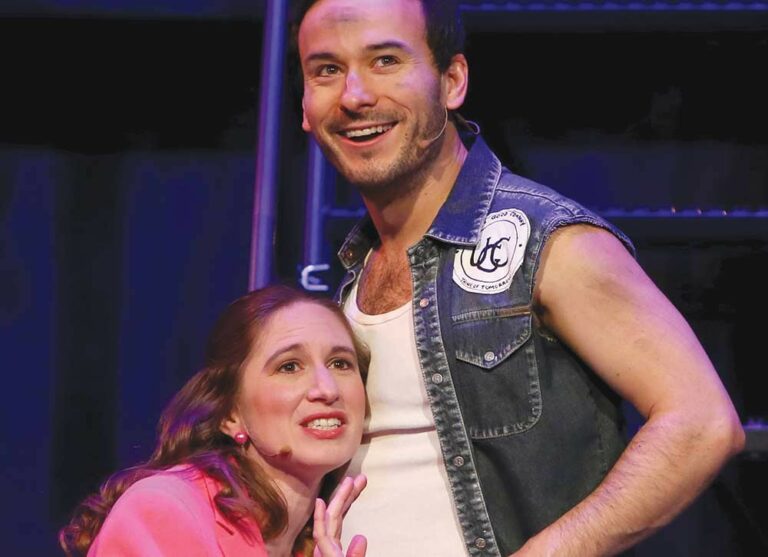
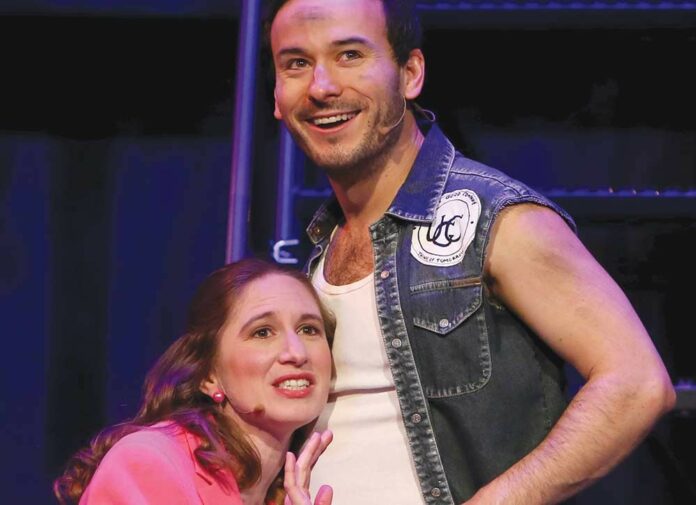
In comedy, timing is everything, and two North Bay theater companies have timed productions of the same comedy to run concurrently. The Cloverdale Performing Arts Center and SRJC’s Summer Repertory Theatre program are presenting Patrick Barlow’s adaptation of The 39 Steps.

Based on the 1915 adventure novel by John Buchan and the 1935 Alfred Hitchcock film, it’s your basic “innocent man gets caught up with an international spy ring and ends up falsely accused of murder” story given the farcical treatment. It ran for a few years on and Off-Broadway and is a popular choice for regional and community theaters.

It’s a challenging show with 33 scenes, but it requires only four actors. One plays the lead while the other three take on every other role. One actor can play a newsboy, a lingerie salesman and a cop—often in the same scene.

Richard Hannay (Chris Johnston at CPAC, Nicolas Fernandez at SRT) is enjoying an evening at the theater when a shot rings out. A femme fatale asks him for his help, as she’s on the run from a mysterious organization intent on stealing vital information about the country’s defenses. She ends up dead, and Hannay finds himself on the run. Can he avoid the police, the murderers, a villainous professor and a randy Scottish innkeeper’s wife?

Quick changes, horrible accents and the occasional swapping of hats allow the troupes of three (Sandy Ziviani, Dan Stryker and Austin Schmidt at CPAC; Caroline Pernick, Roberto Perez Kempton and Carson Cerney at SRT) to essay a couple of dozen roles, and all earn their share of laughs.

Scenic design is the main difference between the two productions.Theron Wineinger brings a nicely detailed set, which holds almost every item necessary for each scene, to SRT’s version. The actors double as the crew as they grab things off of shelves or utilize chairs or boxes on stage to represent a car or a train. CPAC’s Yavé Guzmán moves in the opposite direction, with large set pieces that require additional crew—and time—to move. This tends to bring the action to a screeching halt.

Some bits ran long, and at two-plus hours both shows tend to lose steam (the film runs a scant 82 minutes), but if you’re looking for some laughs, either show will do.

Rating (out of 5):★★★&#189

‘The 39 Steps’ runs through July 28 at the Cloverdale Performing Arts Center, 209 N. Cloverdale Blvd., Cloverdale. Saturday, 7:30pm; Sunday, 2pm. $12 -$25. 707.894.2219. ‘The 39 Steps’ runs through July 31 runs in Santa Rosa Junior College’s Newman Auditorium, Elliot Ave., Santa Rosa. Dates and times vary. $25–$28. 707.527.4307.

July 19: Light Up the Night in Healdsburg

0

When the sun goes down, the arts light up downtown Healdsburg at the Art After Dark series. This weekend. The street art series features more than a dozen artist booths, community organizations like Healdsburg Center for the Arts, the Healdsburg Jazz Festival, and Healdsburg Rocks hosting art activities as well as free games, rides and food concessions by the Sonoma County Traveling Fair and live music from popular acts like American Lore and Tom Shader. Art After Dark offers something for everyone on Friday, Jul 19, on Plaza Street in Healdsburg, 6pm. Free. 707.431.1970.

July 20: River Party in Petaluma

0

Marking its tenth year of revelry, Rivertown Revival once again takes over the McNear Peninsula in Petaluma for a day of old-fashioned fun. Come for the live music from the likes of Ben Morrison, the Crux, La Gente and many more, and stay for interactive arts and excitement, complete with five-dollar wedding ceremonies on site. All the while, the Revival holds a focus on conservation (of both history and habitat), and the event benefits the Friends of the Petaluma River when it commences on Saturday, July 20, at David Yearsley River Heritage Center, 100 East D St, Petaluma. 11am. $5-$20. rivertownrevival.com.

July 21: Feast of Fun in Napa

0

Beyond being a winery collective, Feast It Forward is a philanthropic endeavor that connects locals to culinary delights and raises funds for local charities at events around the region and for, for the last year, at the organizations storefront studio space in Napa. To celebrate the one-year milestone, the group throws an anniversary bash called FEASTival this weekend. Family-friendly activities like crafts and face-painting food trucks, wine by the glass and graffiti art installations are all part of the fest, happening Sunday, Jul 21, at Feast It Forward, 1031 McKinstry St., Napa. Noon. Free admission. 707.819.2403.

Fish On

Bob Dooley has been fishing since he was 11, having spent most of that span as a boat owner, often traveling up the West Coast to the waters off Alaska, searching for pollock and other whitefish. Now 65 and retired, Dooley serves on the Pacific Fishery Management Council, weighing in on regulatory policy. The Half Moon Bay fisherman realizes the...

Art Market

Since opening in 2013, the Barlow has become west Sonoma County's hub of local artisans and crafters, with over a dozen acres of industrial-chic structures currently housing brewers, distillers, restaurants, retail space, art galleries and more. Much of that was in jeopardy during February's flood, but the businesses that survived or opened since are savoring the summer weather. Now, the...

Hella Firkin

You may know the story about the fox and the grapes. In a nutshell: fox can't get grapes, so fox disparages grapes as sour. Fewer know the one about the firkin and the mill. Mad Fritz Brewing Company's eclectic label designs depict scenes from Aesop's Fables, such as the story about the fox and the grapes, as re-imagined in a...

Sláinte!

Drawing from his Irish heritage and punk upbringing, Sonoma native and multi-instrumentalist Tony Gibson feels right at home when he's fronting folk-rock revivalists the Gentlemen Soldiers on stages and at festivals throughout the Bay Area. "We're a fun band, we really enjoy performing for people, but we also enjoy each other onstage," says Gibson. The band's been an Irish-music institution for...

Facts Matter

There is this toxic rhetoric when the president says "send them back." He is telling you that America is only for white people. Do Trump supporters who approached the Lights for Liberty Vigil in Petaluma recently know the following facts? White immigrants did not universally "assimilate" and not all had papers. Twenty-two percent of adult white immigrants did not speak...

A Model Program

As I compose this I'm at a national conference presenting information on our Mobile Support Team, an initiative that has saved lives in Sonoma County and one that should be replicated nationwide. One of my first responsibilities when I became a county supervisor 10 years ago was to settle a lawsuit following the tragic death of Jeremiah Chass, a teenage...

Step Two It

In comedy, timing is everything, and two North Bay theater companies have timed productions of the same comedy to run concurrently. The Cloverdale Performing Arts Center and SRJC's Summer Repertory Theatre program are presenting Patrick Barlow's adaptation of The 39 Steps. Based on the 1915 adventure novel by John Buchan and the 1935 Alfred Hitchcock film, it's your basic "innocent...

July 19: Light Up the Night in Healdsburg

When the sun goes down, the arts light up downtown Healdsburg at the Art After Dark series. This weekend. The street art series features more than a dozen artist booths, community organizations like Healdsburg Center for the Arts, the Healdsburg Jazz Festival, and Healdsburg Rocks hosting art activities as well as free games, rides and food concessions...

July 20: River Party in Petaluma

Marking its tenth year of revelry, Rivertown Revival once again takes over the McNear Peninsula in Petaluma for a day of old-fashioned fun. Come for the live music from the likes of Ben Morrison, the Crux, La Gente and many more, and stay for interactive arts and excitement, complete with five-dollar wedding ceremonies on site. All the while, the...

July 21: Feast of Fun in Napa

Beyond being a winery collective, Feast It Forward is a philanthropic endeavor that connects locals to culinary delights and raises funds for local charities at events around the region and for, for the last year, at the organizations storefront studio space in Napa. To celebrate the one-year milestone, the group throws an anniversary bash called...
11,084FansLike
4,446FollowersFollow
6,928FollowersFollow