Letters to the Editor Aug. 21, 2019

Since an urban growth boundary sets the stage for land use planning for many years, to ensure that a comprehensive land use plan is developed, the Sonoma Valley Housing Group (SVHG) calls for a two-year extension of the exact same UGB and UGB language and a concomitant interrelated discussion of the UGB and the general plan.

We support an open-minded UGB process that starts with reviewing old and possible new UGB provisions and context and builds from there. We ask for a comprehensive and objective public conversation under the auspices of the city planning department and planning commission, where pros and cons can be vetted in a fair analysis of alternatives.

Particular attention needs to be paid to how UGB alternatives will affect housing affordability, and how each alternative will reflect the aspirations arrived at in the city’s “Housing Our Community” forums.

Given that the city and its surrounding unincorporated areas are one community, we believe the city must consider the regional context and options available.

Our interests are centered in the social character of our community, specifically that the cohort at and below the area median income be fairly provided for in the future of the town and its environs.

Sonoma

Off the Rails

Considering the total mess that has resulted from the construction of the SMART train rails in downtown San Rafael, I hope this will be the proverbial last straw with local commuters. This nearly useless system is too expensive to ride and has already wasted millions that could have been spent widening 101. What use is a train which does not go to SF or the East Bay? The bifurcation of the San Rafael bus transit center has resulted in confusion, missed connections and construction, and sometimes has pedestrians literally walking into the road to avoid it.

I’d like to encourage everyone to boycott the rail. Let’s make this fail just as bad as it possibly can.

San Rafael

I just took my first SMART train ride from the Airport station to San Rafael and back. Pleasant ride. Friendly and forthright employees. Here are some tips. You don’t need a ticket. Employees are forbidden to ask for same. Know your license plate number. They charge you $5 for a phone call to get a $2.35 parking pass. Bring your high-tech 6th grader to work the ticket machine which if you are lucky includes downloading an app while you’re standing there. Don’t plan on sitting at one of the tables for four. The tables are all occupied by single dudes with earphones/backpacks/working their phones and employees are not allowed to ask them to double-up so larger parties have a place to sit. Lastly, the pleasant employee told me with a smile and a wink when I ask about riders with no tickets. He said they operate on the honor system. And not very SMART wants more taxpayers money to fund this free ride? No thanks.

Sebastopol

Write to us at le*****@******an.com.

Song & Dance

0

After their success with A Chorus Line, the Transcendence Theatre Company returns to form with Those Dancin’ Feet, an original musical revue running now in the winery ruins in Jack London State Historic Park in Glen Ellen.

Transcendence built its reputation on a series of productions featuring top Broadway and national touring company talent. Past shows featured themes explored through a series of stand-alone vignettes featuring song or dance. In this production, director/choreographer Roy Lightner overlays the music and dance with a narrative.

It’s a simple narrative—the journey of life as experienced by three couples as they fall in (or out) of love. The twist in the narrative presentation is that each couple is represented by four performers. The couples are distinguished by costume color with one dressed in shades of red, another in blue and the third in green. One pair of performers handles the singing, the other handles the dancing. Each pair of couples occupies the stage at the same time, with the singing pair usually upstage and the dancing pair downstage. While not as confusing as it sounds, it does force the audience to split its focus which, in my case, led me to miss an important story point.

The songs and music used to support the narrative are the usual mix of Broadway standards and pop hits. Numbers from Rent, West Side Story and Hello, Dolly! are blended with songs by Justin Bieber, Bruno Mars, Bonnie Raitt, Whitney Houston and others. Most choices worked well, but I’ve yet to figure out what the show’s most emotionally evocative number—a terrific ensemble presentation of Kelly Clarkson’s “Broken and Beautiful”—had to do with anything.

Dancing styles range from the acrobatic to the balletic to the erotic, and there’s a delightful tap-dancing sequence set to “De-Lovely’ from Anything Goes.

It was good to see some diversity represented within the couples, though all adhere to a heteronormative standard. Heterosexuals have never had a lock on love, and with marriage equality the law of the land since 2015, it would have been nice to see a more-encompassing representation of modern romance.

Those Dancin’ Feet shows that Transcendence is willing to take chances and, while they may not all succeed, they should continue to do so. It’s a terrifically entertaining evening of song and dance.

Rating (out of 5):★★★&#9733

‘Those Dancin’ Feet’ runs Friday–Sunday through August 25 in Jack London State Historic Park. 2400 London Ranch Road, Glen Ellen. Park opens at 5pm, show starts at 7:30pm. $49–$149. 877.424.1414. transcendencetheatre.org

Wine Score

0

Too many would-be wine tasters feel they “don’t know enough” about wine to participate. Relax, it’s not like you’re going to have to take a test—except when it’s time for Swirl’s annual go-back-to-wine-school quiz, that is. It’s easy this year—all questions are based on the Bohemian’s wine, beer and spirits columns from the past year.

1. Inspired by Calvados, local makers are making:

A) Hard apple cider from Gravenstein apples

B) Cabernet Sauvignon blended with Sangiovese

C) Vodka aged in French oak

D) Apple brandy distilled from Gravenstein apples

2. True or False: Riesling from Australia is usually a sweet dessert wine.3. A wine called a “claret” is most likely to have which combination of grapes in the blend?

A) Cabernet Sauvignon, Merlot, Cabernet Franc

B) Sauvignon Blanc and Pinot Blanc

C) White Zinfandel and Pinot Grigio

D) Syrah, Grenache, Mourvèdre

4. Drive up to Gustafson Family Vineyards, taste both Cabernet Sauvignon and Riesling, and enjoy the view from high above:

A) Dry Creek Valley

B) Spring Mountain District

C) Napa Valley

D) Lake Hennessey

5. Match each IPA/juicy IPA with the brewery:

A) Thru the Haze 1. Sonoma Springs

B) Pulp Fission 2. Bear Republic

C) Juicy in the Sky 3. 3 Disciples

6. Picture round: This spring we visited a sculpture garden in the Carneros wine region. Which winery?

A) Robert Mondavi

B) Paradise Ridge Winery

C) The Donum Estate

D) Domaine Carneros

7. Choose all the right words for one point: Sonoma Distilling Company makes a (rye/vodka) with (peat/cherrywood) smoked grain in their new copper still from (Poland/Scotland).8. How many of Sonoma County’s 62,000 vineyard acres are certified organic?

A) More than 35,000

B) At least 15,000

C) About 6,000

D) Less than 2,000

9. True or false: Vineyard operators are required to stop using the controversial herbicide glyphosate (Roundup) in order to be certified Sonoma Sustainable.

Answers: 1) D; 2) False; 3) A; 4) A; 5) A-2, B-3, C-1; 6) C; 7) rye, cherrywood, Scotland; 8) D; 9) False
9 points, méthode champenoise; 7-8 points, metodo Italiano; 5-6 points, pét-nat; 4 points or less, fizzle.

Dan Imhoff Releases New Solo Album

0

a2008984874_10
Calling the North Bay home for more than 40 years, singer-songwriter, author and artisanal farmer Dan Imhoff, best known as the frontman of the Americana act Cahoots, made a big move in 2017, splitting his time between Sonoma County and Spain. Imhoff’s latest solo album, Peregrino, reflects that move, not only because it was recorded at Estudios Millennia in Valencia, Spain between May 2018 and February 2019, but it also comes as the creative result of a year living and playing music in Europe, with six original songs and inspired covers of “Working Class Hero,” “After the Gold Rush” and others.
This month, Imhoff is in the North Bay to release Peregrino over the course of three local concerts. The upcoming appearances, featuring Jaume Guerra Meneu and Amadeo Moscardó, takes place August 25, 5 pm, at Medlock Ames in Healdsburg; August 27, 8 pm, at Elephant in the Room in Healdsburg; and August 30, 8 pm, at Throckmorton Theater in Mill Valley. That final show finds Imhoff performing with Tim Weed, Bobby Vega and Shea Breaux Wells. Listen to the album’s opening track, “Poor Wayfaring Stranger,” below and click the link for more details on Imhoff’s upcoming shows.

Taste & See

0

Adhering to Mark Twain’s advice to “write what you know,” Napa Valley’s Barry Martin has written and directed a play based on his experiences in the wine hospitality trade. The Tasting Room: A Napa Valley Comedy, running now at Napa’s Lucky Penny Community Arts Center through August 18, is his comedic take on the individuals found on both sides of a tasting room bar.

The fictional Lusch (that’s pronounced loosh, not lush) Family Vineyards are struggling to survive, and sisters Rebecca (Taylor Bartolucci) and Emily (Danielle DeBow) Lusch are doing their best to keep the doors open.

Assisting them in this endeavor is wine educator Tony Spiccoli (Barry Martin), who’s not above adding some “special flavoring” to a rival vintner’s wine for comparison tasting.

Rebecca treats every patron as an inconvenience and that includes a gentleman named Sid Taylor (Michael Scott Wells). Mr. Taylor, who doesn’t seem to know much about wine, is about to get the heave-ho when it’s revealed that he’s the advance man for Wine Fanatic magazine and its imperious wine critic Elbert Fleeman (Michael Ross).

Fleeman and the Luschs seem to have some history, but that’s secondary to the fact that a good review from him could put the winery back on the path to solvency. They have just a few hours to prepare and a particularly pesky wine tourist (Tim Setzer) is taking up a lot of their time. How will the tasting go? And just what is the connection between Fleeman and Grandma Lusch?

Martin takes good-natured shots at just about everyone involved in the industry, from the jaded front-line hospitality staff to pretentious blogging connoisseurs. He has the most fun and generates the show’s biggest laughs with Tim Setzer’s wine tourist from Hell. Setzer, who knows his way around a tasting room, is very funny in the role and plays well off of Martin’s wine-selling huckster.

Bartolucci earns laughs as well, as the sister who’s never met a mimosa she didn’t like. DeBow’s Emily is there to conveniently fall for the advance man and give the show a bit of a secondary plot, but Martin is asking his audience to swallow a lot in believing that Fleeman would hire someone as un-wine-worldly as Sid to work for him.

The Tasting Room doesn’t aspire to be much more than a live sitcom for locals—there’s nothing wrong with that— and at that level it succeeds.

Rating (out of 5):★★★&#189

Lizard Vision

0

In three refrigerated closets set to precisely 15, 18 and 21 degrees Celsius, Barry Sinervo is using several dozen salamanders assembled in small plastic tubs to predict the future.

On one metal shelf is a contingent of surreal-looking “Mexican walking fish” called axolotls—a nearly-vanished species from the Mexico City canals forged by the Aztecs. Other shelves hold endangered Santa Cruz long-toed salamanders and a black-and-red-spotted species native to the Sierra Nevadas.

“These are going extinct,” Sinervo says as he wrangles a lanky giant salamander. The cast of creatures changes often at the lab in UC Santa Cruz’s coastal biology building, but the goal stays the same.

“We gotta save them,” Sinervo says.

The focus on amphibians—in particular Sinervo’s first passion, lizards—may seem niche within the wide world of evolutionary biology, but scientists find them an excellent proxy for the physical and social changes climate change spurs in all kinds of species. Sinervo uses the data he gathered over three-plus decades of tracking extinctions and adaptations to hone universal formulas that may also predict extinctions for birds, fish and mammals.

“In a funny way, I’m the Nostradamus of biodiversity,” says Sinervo, a trained mathematician and herpetologist (a biologist who specializes in reptiles and amphibians). “We can prove the sixth mass extinction is happening now.”

The affable 58-year-old, whose office door says “Dr. Lizardo,” has a remarkably sunny demeanor for someone who made a career out of predicting environmental catastrophes. He credits his upbringing in Ontario’s rugged Thunder Bay region with instilling an early appreciation for nature’s quirks. “I had iguanas as a kid, and I hunted snakes,” Sinervo says. “You know the mating balls that males end up in, where you get a male copulating a male? That was my sex education.”

Eccentric humor and northern humility lend Sinervo the ability to get away with things many academics can’t, like referencing his own TED Talk without sounding pretentious. In that 2015 talk, he recounted how around 2001 he first noticed European lizards disappearing from their usual habitats. He and his colleagues soon found similar extinctions all around the world, pointing to a new era of mass extinction with die-offs comparable to the last Ice Age. Except this time, it’s happening much faster.

“Biological annihilation,” or an “assault on the foundations of human civilisation” are how recent reports describe the current era of biodiversity loss, which some researchers call the “anthropocene.” Gerardo Ceballos, of the Universidad Nacional Autónoma de México, led a 2017 study that tracked habitat loss for 27,500 land-dwelling species. He told the Guardian, “The situation has become so bad it would not be ethical not to use strong language.”

At their home on the Central Coast, Sinervo and his wife noticed species such as the northern alligator lizard—unique for giving birth to live young rather than laying eggs—disappear from their backyard. The same emissions-driven temperature increases causing habitats to go haywire also accelerate sea-level rise in coastal communities, which are beginning to grapple with how to protect billions of dollars worth of seaside real estate threatened by higher tides and more frequent extreme weather.

“We really have a train wreck coming,” says Gary Griggs, a coastal geologist and author who helped write recent state climate assessments with Sinervo. “Well, there are a couple train wrecks.”

From the California coastline to the mountains of Central Mexico to the Amazon rainforest and the Kalahari desert; Sinervo now reliably predicts death and destruction everywhere he goes.

But he also has a secret which helps him avoid the cynicism and depression that might accompany his line of work: It gets easier after you come face to face with your own demise.

Heat Rising

Sinervo was aware of the conversation about climate change as far back as the late 1980s, while studying at the University of Washington. Back then, it was a theoretical conversation. If people didn’t take action to curb carbon emissions causing global temperatures to spike, the thinking at the time went, it was likely more species would start to disappear.

Sinervo’s frequent research collaborator Donald Miles, a fellow lizard expert and professor at Ohio University, remembers a “small but dedicated” group of ecologists and biologists sounding the alarm about climate change around the time he started working with Sinervo in 1993. Sinervo was always funny and enthusiastic, Miles remembers, but he was intense, working long hours and building a reputation as a prolific publisher in scientific journals.
Sinervo made a name for himself as a doctoral student and was hired by UCSC, after he discovered what he describes as a naturally occurring game of rock-paper-scissors near a research site in Los Banos. For male side-blotched lizards that come in three colors—orange, blue or yellow—he established that each group’s character traits keep the three populations in equilibrium. The orange lizards’ blatant aggression beats the smaller blue lizards, using brute force to win more mating partners. But the yellow lizards can trick the macho orange lizards by imitating females to sneak in and find more mates. Blue can still trump yellow, though, since they’re monogamous and thus more vigilant in protecting mating partners.

The “roshambo” research, as Sinervo calls it, was one of what would become many examples of how lizard evolution can shed light on an issue that confounds humans.

“A lot of people struggle with teaching gender,” Sinervo says. “With the lizards, you can kind of begin to grapple with all that. They’re not just male and female.”

In the process, Sinervo also established his street cred with fellow herpetologists.

By 2007, Sinervo and Miles had worked together enough that the UCSC professor sent a grad student with Miles to Mexico on a supposedly routine research trip. Following the directions of Mexican colleague Fausto Roberto Méndez de la Cruz, the duo headed to a reliable site east of Mexico City. But they couldn’t find the lizards there, nor in several surrounding areas. They called for reinforcements.

“There were five people looking for lizards, and we didn’t find any of the species,” Miles recalls. “Maybe it’s climate change,” he told Méndez de la Cruz.

In the following months, Sinervo made similar extinction discoveries in the Yucatán, and by 2010, a team of more than two-dozen researchers on several continents expanded the findings into a landmark article published in the journal Science under the title “Erosion of Lizard Diversity by Climate Change and Altered Thermal Niches.” In layman’s terms, the researchers connected the dots between extinctions by proving climate change was the common link.

“Then we knew it was global,” Sinervo says. “Other people had published extinctions that seemed enigmatic, but we could explain them all around the world.”

Professionally, things were better than they’d ever been. Within a few years, hundreds of other researchers cited the paper, and Sinervo attracted new funding from groups like the National Science Foundation to train hundreds of graduate students in the field. In 2014, he received a $1.9 million grant from the University of California Office of the President to create an Institute for the Study of Ecological and Evolutionary Climate Impacts.
The following year, Sinervo returned from a whirlwind 26-country tour of Europe, China, the Amazon and other hotbeds for extinction. As usual, the results were brutal. He struggled to process the constant bad news.

“Oh my god it was so depressing,” he says. “For several years I was thinking, ‘I’m leaving my son with nothing.’”

But today, in his office filled with reminders of doom, Sinervo’s attitude is different. And he pinpoints exactly what changed his mind.

“You know I’ve had cancer, right?” he says.

The Brink

Adenoid cystic carcinoma, or ACC, is a rare form of malignant tissue growth often found in salivary glands of the head and neck. Sinervo knew biology better than almost anyone, and the diagnosis was devastating. The cancer invaded his sinuses and soft palate, requiring a team of Stanford researchers to rebuild his throat.

Still, Sinervo was pragmatic. Not wanting to rack up carbon emissions driving to Stanford twice a week, he took the bus from Santa Cruz to a train in San Jose to another bus in Palo Alto, which took about four hours round trip. He still grew lettuce in his backyard for vegetarian meals and insisted he and his family reuse old iPhones. Over time, his perspective shifted.

“As I normalized my fight with cancer and realized maybe I’ll be able to overcome it, I did that in parallel with my fight against climate change,” Sinervo says.

The best way he can describe it is by comparing it to overcoming post-traumatic stress. Virtually everyone is likely to encounter cancer in some way—if not personally, then through someone they know.

“Everybody will be touched by it, and we do everything we can,” he says. “Climate change is like that. It will affect everybody on the planet personally.”
Sinervo points to examples such as mountainous areas of El Salvador and Guatemala being ravaged by drought and intense heat, making it impossible to grow food there, and contributing to the migration crisis on the southern U.S. border. And, California now experiences more frequent deadly wildfires fueled by hotter, drier conditions.

Sinervo is also wading deeper into public policy discussions about reforestation, habitat preservation and other ways to potentially reverse the impacts of climate change. At the same time, his colleagues watching the shoreline warn it’s time to talk about a point of no return with regards to the erosion threatening coastal homes and infrastructure.

Griggs is part of a team of engineers, economists and geologists hired by the city of Santa Cruz to put together a plan for what to do about oceanfront West Cliff Drive and its recurring sinkholes. At the county level, a first-of-its kind coastal armoring program is being discussed to set new rules for building seawalls, which studies show will likely erode public beaches and impact surf breaks. The alternative is retreating from coastal property—a prospect that could require buyout programs or changes in how climate risk is priced into homeowner’s insurance.

“When do we pull the plug? It’s going to be different for the public infrastructure than private residences,” Griggs says. “Every decision that gets made is going to have a huge impact on all these other parts of the puzzle.”

In the process, Griggs says, it’s entirely possible scientists like Sinervo will find themselves at odds over habitat conservation with property owners inclined to dig in their heels and protect their homes or investments. That’s to be expected, Sinervo says.

“We will need government to impose all these things,“ he says. “This is not a moral call. Some people are just more selfish than others, and they won’t do it. Others will.”

“I work on the equations for why we behave the way we behave, and I understand it. It’s the way we evolved.”

Sinervo worked all the way up until his surgery at Stanford in 2017, when Miles was at the hospital with his wife, who is a psychotherapist. While Sinervo underwent radiation therapy, he began work on another paper.

“Barry is not the person who gives up,” Miles says.
New Normal

In January, Sinervo made it to the last destination on the worldwide extinction tour he started before his cancer diagnosis. The findings were brutal. Sinervo’s equation had successfully predicted a 60,000-square-mile extinction zone in the Kalahari desert in Southern Africa.

“That one’s mind-blowing,” he says, scrolling through heat maps on his laptop at UCSC. “This is scary shit. I get afraid sometimes of my own work.”
Sinervo is different now than he was before his battle with cancer. In his 2015 TED Talk, he came across as a quintessential dad-academic in khakis and a lime-green button up. He spoke in a measured tone, and occasionally peppered in PG-rated phrases like, “The world is going to hell in a handbasket.” This spring, he took it up a notch with a stand-up cameo in comedian Shane Mauss’ science-themed show at DNA’s Comedy Lab in downtown Santa Cruz.

“I’m going to try to inject a little levity into this. Not much,” Sinervo quipped in a voice that, post-surgery, has taken on a more nasally, slightly artificial quality. “We’re talking about a fucking mass extinction.”

Sinervo’s curly brown hair is now gray, lending him a mad scientist vibe that’s amplified when he wears goggles to protect his left eye, which has remained closed since the surgery. It all fits when you walk into his small, second-floor office and see a series of incomprehensible equations scribbled on a white board—Sinervo’s working formulas to predict extinction anywhere in the world.

“I’m trying to make it as simple as possible,” he says of the horseshoes and commas and other symbols that denote variables like population growth and species interactions.

A natural teacher happy to explain any of his dozens of papers, there’s just one type of question that visibly irritates Sinervo, and that’s whether this issue can be dealt with, as many climate-change skeptics suggest, 20 years from now, or maybe 50? After 2100?

“It’s now. That’s what my work is showing,” Sinervo says. “It’s now. It’s now.”

The combination of Sinervo’s unique style and his research credentials have attracted a new generation of climate-conscious acolytes to the lab at UCSC.

“Barry is sort of like the climate change guru when it comes to lizards,” says Pauline Blaimont, a 28-year-old recent grad of UCSC’s evolutionary biology doctoral program. With Sinervo’s help, she spent several summers studying how lizards in the Pyrenees mountains are (or aren’t) adapting to hotter conditions.

Blaimont, from Southern California, has always been into animals. Lizards are perfect for studying climate change, she says, since they’re exothermic, regulating body temperature by directly basking in the sun. When it’s too hot, they spend more time in the shade—allowing less time to hunt insects—and see reduced levels of physical activity until they ultimately must migrate or face extinction. Since they’re low on the food chain, what happens to lizards also has ripple effects for the birds, snakes and mammals that eat them.

Like Sinervo, Blaimont says research has bled into her personal life. She and her partner do Meatless Mondays, and she’s distilled her advice to others into one directive: “Reduce, reuse, recycle, but in that order.”
Students in Sinervo’s lab currently study on-the-ground adaptations to climate change, like how “moms reprogram their babies for the future” by passing on altered hormones or genes.

Sinervo, who is currently most enthusiastic about reforesting the Amazon, acknowledges his efforts to “normalize” extinction through comedy, social media and other channels is “more on the edge” in the world of buttoned-up climate scientists. It makes sense, since his research has always been kind of unusual.

Miles, his collaborator, says looking at the bright side is the only real option. Reached while on a research trip in France during another intense heat wave last month, he was enthusiastic about Germany’s efforts to cut coal-fired electricity and ramp up renewable energy. In the U.S., a wave of young, insurgent left-wing politicians are also raising the profile of a “New Green Deal” or similar drastic shift away from fossil fuels.

“Species can recover,” Miles says.

Sinervo harkens back to his first job as a lumberjack cutting down trees in Canada with his brothers (one of whom, Pekka, is also a first-generation college graduate and physicist who studies the Higgs boson, or “God particle,” often described as a fundamental building block of the universe). He remembers a day when he was 16 and had to cut down an old-growth balsam tree. He started to consider the equilibrium between nature and human livelihood. “I went, ‘Wow, I’m gonna change things when I get older,’” Sinervo says.

Susan Landry contributed to this story.

Housing Hurdles

0

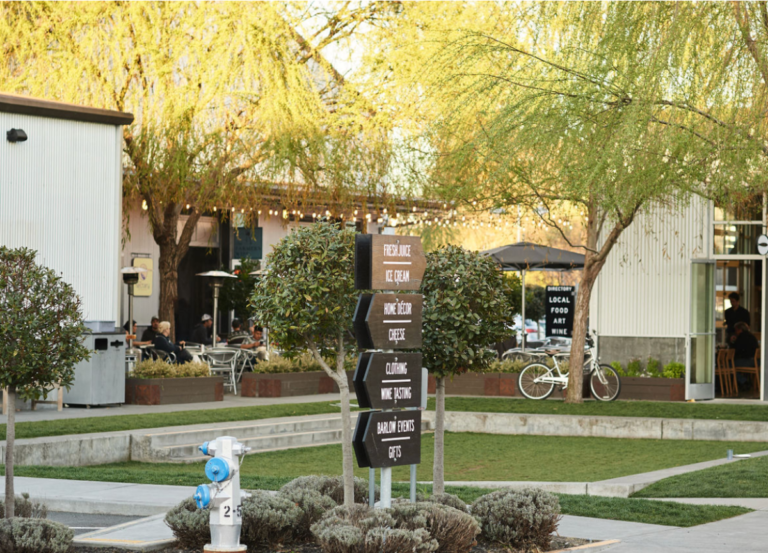
The sign says one thing, but the facts say another—and raise a question: Will construction on the much-anticipated Hotel Sebastopol ever begin?

The boutique project up the block from the Barlow complex of retail and restaurants has been subject to pushback from some residents as plans for the multi-faceted facility were being drawn up five years ago. The proposal, among other things, signaled a sea-change for a town that honored and amped its agricultural heritage to one that was more interested in tourist-friendly boutique hotels catering to the wine economy. The developer, Piazza Hospitality, operates upscale restaurants and hotels in Healdsburg and beyond.

The sign on the lot—former site of Sebastopol Tractor—says to expect construction to begin this summer. That’s not going to happen. Even as the developer has worked with the city planning department to address issues related to disability access, light pollution, solar panels on a carport roof and landscaping issues, Piazza still has to go through another round of approvals from the city as it prepares its construction management plan.

That plan, says city planning director Kari Svanstrom, includes addressing things like road closures, tree protection, noise control during hours of operation, erosion and dust control, securing the site with a fence, construction truck entry points, storm-water protection and more.

During development of the plan, locals expressed concerns over the character of the town—but many also folded in the issue of affordable housing in Sebastopol, and the lack of it. That issue may come to a head in coming months as the city considers another project—the build-out of lots behind O’Reilly Media on Gravenstein Highway.

A developer called City Ventures has come forward with a vision, if not a plan, to potentially buy the lots and develop housing. The company’s CEO, Phil Kerr, told the West County Times the company wants to hear from locals about what sort of housing, if any, to develop on the two lots. The property is adjacent to the West County Trail. They’ve been hearing from at least one local; Michael Carnacchi.

Sebastopol is no different from Healdsburg or Sonoma or Windsor when it comes to the intersection of affordability and tourism. For Carnacchi, town cobbler and Sebastopol city councilman, the question is simple: Can Sebastopol do a better job of encouraging housing development that could, for example, provide options for prospective hotel workers?

“We don’t have a lot of places here to build affordable housing,” notes Carnacchi, who says that if the City Ventures development comes to pass, he may “push for an aspect that’s 100 percent affordable in the new development.”

His vision is of humble yurts and tiny homes. City Ventures’ other developments are condo projects in the $650,000 to $1 million range. That’s great for a summer dacha, but what about local workers already squeezed by high rents and a low prioritization of affordable housing?

“This could be a perfect example of how infill development could work,” he says, “and how it could work with the new hotel.”

Carnacchi’s vision could also be a hedge against future traffic nightmares downtown, already an issue. In the short-term, the Piazza plan will include some road closures and reconfiguring the surrounding sidewalks to provide for ease of and safety of egress for all residents, not just hotel guests.

“Yes, road and sidewalk closures,” says Svanstrom in an email. “They are reconstructing Brown Street and have sidewalk improvements throughout.”

None of that’s been approved and Piazza has submitted “some of this information to date, but not all,” to the city, says Svanstrom.

As for City Ventures, “they have a long way to go before they get their permits in, get it to the design review board or the planning commissioners,” says Carnacchi.

Carnacchi would also like to see consideration of any plan that would keep cars off local streets. “If one of those parcels was developed as wholly affordable—you’d have the workers who are working at the hotel, for instance, would live right next to the West County regional path. That means no cars, no gas, no insurance costs for local workers who could walk to and fro from work,” he says.

Carnacchi’s scoping out a future Sebastopol—whether behind the O’Reilly offices or elsewhere—that could provide a path to ownership for young persons in the service economy who can’t swing $1 million for a condo, but could float a reasonable mortgage note on a tiny home.

None of this is Piazza’s problem, of course. They’re in the business of developing hotels and restaurants, not housing their workers. And they’ve got a few problems of their own to sort out before ground-breaking. Piazza spokesperson Circe Sher says in an email that they’re close to breaking ground in the fall, “pending construction and weather-related variables.”

The hotel’s on high-enough ground to not be impacted by the flooding that hit the city in February. She says the proposed hotel is safe from any 100-year flooding events that may occur.

And Piazza’s been trying to be a good neighbor. Back in 2017 Piazza put out a call to the public to see if anyone had a suggested interim use for the lot. Since then they’ve had a few “activations” on the property including the Sebastopol Documentary Film Festival, the Sonoma County Fair and a blood drive.

Even as the region’s tourism economy lags from the 2017 wildfires and the flood, the overall revenue picture for the Piazza Hospitality group, says Sher, is looking pretty good: “Overall total revenue is up from years prior” among their various businesses in the region, which include the h2Hotel, Hotel Healdsburg and a quintet of upscale restaurants.

The development arrives as Sebastopol is, like many burgs, struggling to deal with the advent of short-term rentals in its midst. That has driven up rents, driven out poorer residents and contributed to a growing chasm between the tourism economy and the cost of living.

Restaurants workers by and large live and work in Sonoma County but are increasingly faced with rising housing costs. According to a recent county-funded study, In order to accommodate employment growth, replacement of fire-related losses and overcrowded housing, the county would need to build 26,074 by 2020, or 6,500 units a year between 2016 and 2020. Between 2013 and 2017, the county averaged 716 permitted units per year.

Sonoma County commissioned the study from a firm called Beacon Economics following the 2017 fires. One takeaway that’s applicable across the small tourists towns of the North Bay: Hotels such as the Sebastopol Hotel can maximize their potential only if there’s a greater balance between the needs of the many and the pampering of the few.

Rising home prices and rents and a robust short-term rental economy have underscored the need for additional housing units across the county, “but the supply response has consistently fallen short,” the study noted. That’s as true in Sebastopol, says Carnacchi, as it is in Sonoma County at large. The county report concludes that “connecting the dots from underbuilding to economic growth, to the extent the county builds insufficient numbers of housing units, it is also limiting the job and overall growth of the local economy.”

Dark Entry

0

Sometimes, life is strange. Case in point: When Sonoma County musician Darwin Meiners was growing up, he fell in love with punk and new wave bands like Bauhaus and New Order, and he picked up the bass to imitate players like David J, of Bauhaus and Love & Rockets.

Twenty years later, Meiners was in a Love & Rockets tribute band when David J saw them in Los Angeles. The two met and immediately clicked on a professional and personal level. Now, David J plays bass on Meiners’ new record under his name Darwin, So Few Comets.

“When I met David, he was the one that encouraged me to do something outside of a band, not because it’s better or worse, but because it was different,” says Meiners, who plays with—and manages—David J. “He’s pretty much a part of everything I do now. Having him around is very cool.”

In addition to working with David J, Meiners has spent a lifetime playing in dozens of bands of all kinds of genres. “I like to keep changing it up as I get interested in new stuff,” he says.

Meiners’ last output was largely acoustic, though this new record finds him turning to an assortment of electronics to create a post-punk sound in the vein of those early loves.

“This record, of any that I’ve done, is the most reflective of what kind of music I like,” he says. “Mostly because I gave myself permission and almost instruction to let my influences be laid bare.”

Meiners collaborated on So Few Comets over the internet with Los Angeles-based musician and producer The Singularity (Julian Shah Tayler) and several featured performers, including David J, vocalist Emily Jane White and Mark Slutsky, longtime drummer for Peter Murphy.

“I was trying to create a world where these songs would live,” says Meiners. “I wanted this to be a record, not just a bunch of songs.”

With spacey, delayed guitars, New Wave-era synthesizers, electronic drums and the like, So Few Comets creates more than a world—it’s a solar system of rock.

This weekend, the album gets a release show with Darwin performing as a full, five-piece band. “It’s going to be a very live-sounding experience with a heavy nod to the record, but a totally different experience from listening to the record,” he says. “It’s going to be really exciting because I’ve never played these songs live.”

Darwin performs on Saturday, Aug 17, at Steele & Hops, 1901 Mendocino Ave., Santa Rosa. 8pm. Free. darwinmeiners.com.

Paradise Revolts

0

United State citizens on an island in the Caribbean Sea have provided a lesson, a “course in miracles” for our current crisis here in America. We and the whole world have witnessed 15 days of non-violent revolution with a victory against corruption and oppression, with pots and pans clanging, famous hip-hop performers,signs, art, songs and chants: “Rossello Renuncia!” “Rossello Renuncia!” with marching demonstrators numbering over 1.5 million.

America and the whole world has watched Puerto Ricans shoulder to shoulder, refusing to leave, but remaining in dialogue, passion and solidarity to break the bonds of oppression and corrupt policies, long endured for almost three years since Hurricane Maria. This is a great movement in the Greater Antilles. This is a wave of oceanic fervor and resistance to change the tide of a dishonest government. President Rossello has officially resigned.

Meanwhile, the United States of America is besieged by a dictator in the White House, gripped by a coup accomplished with a dishonest and criminal election with a Congress mired in dysfunction, collusion
and inhumane executive orders imposed in direct violation of our Constitution. We have a two-party system in disarray, an atmosphere of injustice, a rigged Supreme Court and total absence of morality.

I believe we have been presented by the government of Puerto Rico with a gift of courage to resist, to demonstrate non-violently and to loudly shout: No more! Can we be inspired to act in a power of the people revolution? We, too, must no longer be silent.

I can hear our nightly noises and calls of the coqui and crickets joining the islanders’ echoes of joyous spirit. I feel it. Oh, America. It can be our miracle, too!

Nina Tepedino is former Sebastopol resident who lives in Rincon, Puerto Rico. We welcome your contribution. To have your topical essay of 350 words considered for publication, write op*****@******an.com.

In Praise and Blame

Dirt Family Values

A very well written piece on my favorite place and people (“I Left My Heart in Uranium Springs,” Aug 7. 2019). Just one day with these people and they will become family. I have been going to End of Days events for nearly two years and I try to not miss any of them, especially Detonation. These people have become so much like family that we even make up smaller events in between big events just as an excuse to hang out with our “dirt family.”

BigStik

Via Bohemian.com

Wireless Threats

I recently saw a list of around 70 new Verizon cellphone towers that are to be erected in Santa Rosa. Seems like the telecom industry is just rolling out technology as fast as it can, before it’s common knowledge that the technology isn’t without risk to our health. Although municipalities in Marin County are putting the brakes on cell towers, this kind of precautionary wisdom is spotty throughout the state. I wonder why the review process the Santa Rosa City Council uses is only concerned with aesthetics, like whether the tower should look like a eucalyptus or a pine tree, and not whether the technology is safe?

The $30 million dollar National Toxicology Program study’s chief finding is that non-ionizing (non-tissue heating) radiation causes adverse health effects, especially in children with developing nervous systems.
Seeing this list of tower construction left me momentarily hopeless, but then a mom spoke up about not wanting her kids to be exposed to disease-causing agents like wireless radiation. She had fire in her voice that moms get when their child is threatened. She’s talking with other moms to take action at school and minimizing her families exposure to wireless signals at home. Maybe the next million mom march will be on environmental health and safety issues?

I urge anyone interested in this topic to attend the free lecture, “Keeping safer in a wireless world.” It will be held at the Rincon Valley Library in Santa Rosa Aug. 17 at 2pm

Tom Thedoor

Via Bohemia.com

Poppycock

Nicole West’s letter (Aug. 7, 2019) dissing the grape people in Sonoma County does not provide any insight whatsoever into the problems associated with the grape growing industry. She claims that she is shocked to see “a person in a hazmat suit….spraying something from a tractor.” What does she think is a better way of protecting the person who is working? She claims to have “a background in ecology,” so why not provide the best safety gear available? Organic farmers do the same thing.

She claims that “birds, frogs, dragonflies, etc…” are being “eradicated” because of the spraying and goes on to say that vineyards are essentially “ecological dead zones.” She then states that “there is a link to this spraying” and child cancer rates in the county. This is totally undocumented B.S. written by a person who has a gripe with grape growers, but doesn’t come clean about it. And then she tries to take the Bohemian to task because you do not join her cause inferring that you do not realize you are “swimming in a toxic soup” because you are “lost somewhere between sips of Zin.”

The grape people are trying very hard to make to make the county a world-class destination. Nicole West should try to become part of the solution and quit complaining and fabricating info.

Paul Mikulich

Via Bohemian.com

Not SMART

SMART isn’t cutting it. Throwing more money at a loser makes no sense and should be stopped. We, the voters, made a bad decision the last time around. Maybe we were mislead. Let’s not compound the mistake again.

Art Hackworth

Petaluma

Write to us at le*****@******an.com.

Letters to the Editor Aug. 21, 2019

Since an urban growth boundary sets the stage for land use planning for many years, to ensure that a comprehensive land use plan is developed, the Sonoma Valley Housing Group (SVHG) calls for a two-year extension of the exact same UGB and UGB language and a concomitant interrelated discussion of the UGB and the general plan. We support an open-minded...

Song & Dance

After their success with A Chorus Line, the Transcendence Theatre Company returns to form with Those Dancin' Feet, an original musical revue running now in the winery ruins in Jack London State Historic Park in Glen Ellen. Transcendence built its reputation on a series of productions featuring top Broadway and national touring company talent. Past shows featured themes explored...

Wine Score

Too many would-be wine tasters feel they "don't know enough" about wine to participate. Relax, it's not like you're going to have to take a test—except when it's time for Swirl's annual go-back-to-wine-school quiz, that is. It's easy this year—all questions are based on the Bohemian's wine, beer and spirits columns from the past year.1. Inspired by Calvados, local...

Dan Imhoff Releases New Solo Album

Calling the North Bay home for more than 40 years, singer-songwriter, author and artisanal farmer Dan Imhoff, best known as the frontman of the Americana act Cahoots, made a big move in 2017, splitting his time between Sonoma County and Spain. Imhoff’s latest solo album, Peregrino, reflects that move, not only because it was recorded at Estudios Millennia in Valencia,...

Taste & See

Adhering to Mark Twain’s advice to “write what you know,” Napa Valley’s Barry Martin has written and directed a play based on his experiences in the wine hospitality trade. The Tasting Room: A Napa Valley Comedy, running now at Napa’s Lucky Penny Community Arts Center through August 18, is his comedic take on the individuals found on both sides...

Lizard Vision

In three refrigerated closets set to precisely 15, 18 and 21 degrees Celsius, Barry Sinervo is using several dozen salamanders assembled in small plastic tubs to predict the future. On one metal shelf is a contingent of surreal-looking “Mexican walking fish” called axolotls—a nearly-vanished species from the Mexico City canals forged by the Aztecs. Other shelves hold endangered Santa...

Housing Hurdles

The sign says one thing, but the facts say another—and raise a question: Will construction on the much-anticipated Hotel Sebastopol ever begin? The boutique project up the block from the Barlow complex of retail and restaurants has been subject to pushback from some residents as plans for the multi-faceted facility were being drawn up five years ago. The proposal, among...

Dark Entry

Sometimes, life is strange. Case in point: When Sonoma County musician Darwin Meiners was growing up, he fell in love with punk and new wave bands like Bauhaus and New Order, and he picked up the bass to imitate players like David J, of Bauhaus and Love & Rockets. Twenty years later, Meiners was in a Love & Rockets tribute...

Paradise Revolts

United State citizens on an island in the Caribbean Sea have provided a lesson, a “course in miracles” for our current crisis here in America. We and the whole world have witnessed 15 days of non-violent revolution with a victory against corruption and oppression, with pots and pans clanging, famous hip-hop performers,signs, art, songs and chants: “Rossello Renuncia!”...

In Praise and Blame

Dirt Family Values A very well written piece on my favorite place and people (“I Left My Heart in Uranium Springs,” Aug 7. 2019). Just one day with these people and they will become family. I have been going to End of Days events for nearly two years and I try to not miss any of them, especially Detonation. These...
11,084FansLike
4,446FollowersFollow
6,928FollowersFollow