Self Aware

0

Main Stage West kicks off a new season with big laughs in Annie Baker’s candid snapshot of a dysfunctional, modern family. Body Awareness follows five days in the lives of lesbian couple Joyce and Phyllis, Joyce’s live-in son from a previous marriage and a controversial houseguest who could sink or save the trio’s tense relationship.

Joyce (Nancy Prebilich) is struggling with 21-year-old Jared (Elijah Pinkham), who likely has Asperger’s Syndrome—a suggestion he vehemently resents—and whose social skills are sorely lacking. His violent outbursts and arrogant retorts, obsession with etymology and bizarre bond with an electric toothbrush are equal parts shocking, hilarious and moving. Pinkham’s performance is simply stellar.

Meanwhile Phyllis (Lydia Revelos) is organizing Body Awareness Week at the Vermont college where she teaches psychology. It’s her attempt at a more global, “positive” spin on what was formerly Eating Disorder Awareness Week, featuring a diverse and exhaustive line-up of guest lecturers and artists. (Baker hits on all the hallmarks of liberal academia, poking tasteful fun at its obsession with political correctness.)

But hosting visiting photographer Frank (Zachary Tendick) is not what Phyllis bargained for. A high-strung feminist who abhors the “white male gaze,” she finds his pictures of naked women objectifying and exploitative. Joyce, on the other hand, thinks they’re beautiful and empowering. Are Frank’s intentions pure, or is he just a big phony? If his art speaks to someone, should that matter?

The drama ramps up when Joyce decides she wants to pose for Frank, who’s been counseling Jared on matters of self-confidence and the opposite sex. Exposing ourselves to others may be liberating, but how and when is it appropriate? Jared tests the limits with devastating results while Joyce and Phyllis find themselves at perilous odds.

Tendick does well in his first acting role, keeping pace with a group of talented veterans. Revelos and Prebilich make convincing lovers, breathing life into all the tender and tense moments that comprise a long-term relationship. Directors John Shillington and Janine Sternlieb nail the pacing.

Baker packs subtle depth and room for meaningful reflection into an unassuming and seriously funny package. It stands in stark contrast against the much bleaker family portrait being drawn in Novato Theater Company’s coinciding production of The Humans. Body Awareness succeeds where the competition falls short, serving up a satisfying mix of humor, humility and hope. Go see it.

Rating (out of 5): ★★★★

“Body Awareness” runs through Sunday, Sept. 22, at Main Stage West, 104 N Main St., Sebastopol. Days and times vary. $15–$30. 707.823.0177.

Sept. 13-14: Wowie Bowie in Sonoma

0

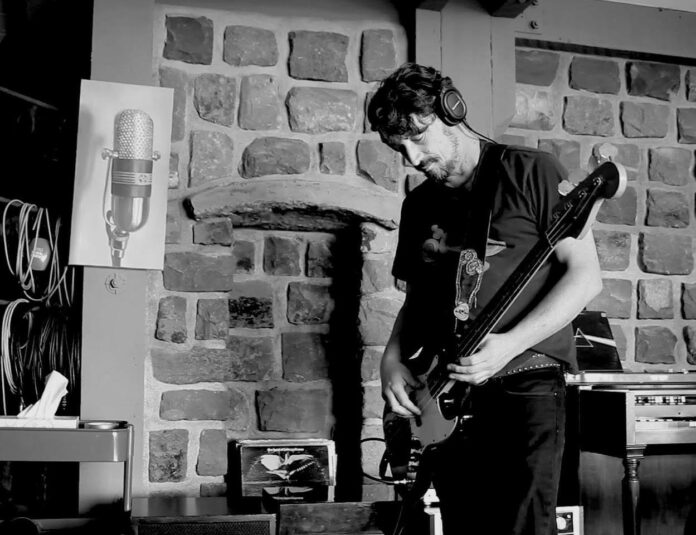
Though he’s been gone for over three years, David Bowie’s musical legacy and influence can still be felt everywhere. This weekend, more than 20 local musicians feel the music when they perform as part of the fourth annual Bowie Forever tribute. Spanning two nights this year, the shows feature members of Bumblin’ Bones, Gentlemen Soldiers and other popular acts performing with special guests like Bay Area guitarist David Walker and bassist Shawn Miller. Bowie’s music lives forever on Friday and Saturday, Sept. 13 and 14, at Starling Bar, 19380 Hwy 12, Sonoma. 8pm. $20. bowieforeversonoma.brownpapertickets.com.

Sept. 14: Five Years of Favorites in Healdsburg

0

In the heart of downtown Healdsburg, the Paul Mahder Gallery has offered dozens of exhibits of contemporary art for five years. Now, the gallery celebrates half-a-decade of engaging the arts with a celebration that coincides with the closing reception of the gallery’s current exhibit, Wosene Kosrof’s “My Favorite Things.” Kosrof is an Ethiopian-born artist who uses the script of his native Amharic language as a core element in his paintings and sculptures. See the art, enjoy live music and dancing and celebrate the Paul Mahder Gallery on Saturday, Sept. 14, 222 Healdsburg Ave., Healdsburg. 6pm. RSVP requested. 707.473.9150.

Sept. 14: Ruby Season in Sebastopol

0

This year marks Redwood Arts Council’s ruby anniversary, and the council opens its 40th season of classical concert performances with a North Bay favorite, the internationally renowned guitarist Paul Galbraith, who makes his fourth appearance courtesy of the Redwood Arts Council. Galbraith performs his specialized 8-string “Brahms guitar,” held like a cello and picked like a harp, in a concert program that includes works by Bach, Haydn and other classical composers on Saturday, Sept. 14, at Sebastopol Community Church, 1000 Gravenstein Hwy N, Sebastopol. 7:30pm. $30; students are $10; kids free with adults. redwoodarts.org.

Strangers No More

0

North Bay bluegrass music fans likely know the name Hellman. Warren Hellman founded the Hardly Strictly Bluegrass Festival in San Francisco, and his son Mick Hellman and the family continue to run it. In addition, the Hellman musical family boasts bands and artists like Mick’s daughter Avery Hellman (Ismay) and the group the Well Known Strangers, formed by Mick and his other daughter,
Olivia Hellman.

“The original idea was to back up my daughters and help them spread their wings musically,” says Mick Hellman.

The Well Known Strangers started as a barroom-ready country-rock band. “Our favorite thing was playing these kind of rowdy songs,” says Hellman, who plays drums in the group. “We had a term for this, which was ‘brutal country.'”

After releasing a self-titled EP of mostly covers, the Strangers broadened their scope, both musically and thematically, for their upcoming LP, TMI, which gets a record-release party on Sunday, Sept. 15, at Sweetwater Music Hall in Mill Valley.

The album features an array of Americana tunes, largely written by Olivia and the band, that get personal quickly. The title track, a stomping, blues-tinged number, is Olivia’s response to all the things men tell her when they’re drunk. The song “Look Me in the Eye” is a Generation X–inspired dirge about political disenfranchisement and frustration, and the album’s final track, “A Song For My Daughter,” is a letter Mick penned to Olivia in the wake of a family tragedy.

Despite the heavy theme, TMI is a raucous, exuberant album that maintains a rough-around-the-edges vibe while also offering robust harmonies and a newly developed musical tenderness.

Shortly after recording the album, Olivia moved to Nashville to further pursue her career, and Amber Morris, who appears on TMI as a guest vocalist, now fronts the band when they play live. Hellman says the group stays together, in spite of his daughter’s absence, because of strong chemistry and camaraderie.

“What we are talking about at the album-release party is honoring the discontinuity that happened between losing Olivia and gaining Amber, to put the album in the context of the changes that are being made,” says Hellman. “And to celebrate the new material we are working on with Amber, where the focus—instead of [on] the brutal country vibe—is more country soul.”

Well Known Strangers perform on Sunday, Sept. 15, at Sweetwater Music Hall (19 Corte Madera Ave., Mill Valley. 6pm. Free. 415.388.3850) and Sunday, Oct. 20, at Twin Oaks Roadhouse (5745 Old Redwood Hwy, Penngrove. 3pm. $10–$25. 707.795.5118).

Trial of Mind

0

While technically not set in a courtroom, Tom Topor’s Nuts, running now at Santa Rosa’s Left Edge Theatre through Sept. 29, has all the elements of a classic courtroom drama—a defendant, a judge, a prosecuting attorney, a defense attorney and witnesses. However, the question is not whether the defendant is innocent or guilty of a crime, but whether the defendant is competent
to stand trial.

Set in a hearing room in the psychiatric wing of New York’s Bellevue Hospital, State Supreme Court Judge Murdoch (Dwayne Stincelli) will determine whether Claudia Draper (Heather Gordon) will stand trial for manslaughter or be committed to a mental hospital. District Attorney Franklin Macmillan (Chris Schloemp, whose suit should have garnered him a contempt citation), along with Claudia’s mother Rose (Bonnie Jean Shelton) and stepfather Arthur (Dodds Delzell), are determined to see her committed. Claudia, with the help of attorney Aaron Levinsky (David L. Yen), is determined to have her day in court.

The play runs in real time with three acts of about 40 minutes each and two 10-minute “recesses” between the acts. The first act consists of testimony from Dr. Herbert Rosenthal (Peter T. Downey), the state’s evaluating psychiatrist. In the second, the parents testify and in the concluding act Claudia takes the stand in her own defense.

Set Designer Argo Thompson utilizes the entire studio theatre in recreating the claustrophobic confines of a Bellevue hearing room, so much so that when the court officer (Scott Wagman) instructed all in attendance to rise, some audience members stood up.

Director Joe Winkler has an A-list cast at work here, with particularly good work by Downey, as the smarmy psychiatrist, and Delzell, as the deceptively doting stepfather. The talented Gordon has little to do but appear perturbed in the background for the first two-thirds, but she gets to shine in the last act when her response to one of the DA’s questions turns into a brutally blunt monologue.

The play, written 40 years ago, probably seemed more daring at the time, with its story of an educated, upper middle-class woman with family secrets who turns to prostitution. Now it plays like an extended episode of Law and Order: SVU.

Its points about our flawed mental health system and the power of the patriarchy are (sadly) still valid, but they are wrapped in what is basically an unexceptional legal drama told by exceptional actors.

Rating (out of 5):★★★½

‘Nuts’ runs through Sept. 29 at Left Edge Theatre. 50 Mark West Springs Road, Santa Rosa. Thu–Sat, 8pm; Sun, 2pm. $15–$42. 707.546.3600.
leftedgetheatre.com

Addicted to Love

0

September is National Recovery Month. Generally speaking, it’s a month devoted to increasing awareness about substance-use disorder and celebrating the successes of those in recovery.

But I’m concerned with the statistics around treatment.

According to the 2018 National Survey on Drug Use and Health, some 21.2 million people above the age of 12 in the U.S. needed substance use treatment in the past year. “Stated another way,” the report says, “about 1 in 13 people aged 12 or older needed substance use treatment.” But only 10 percent of those people get treatment.

Why? Isn’t there a ton of money out there to address the opioid epidemic? I’ll tell you why many people would rather die alone than ask for help: stigma. Many of us carry a deep and weighted shame about experiencing addiction. We know our culture holds individualism and success in the highest regard—and that mentality is fertile ground for the judgement which says: “You did this to yourself. If you were a better (stronger, harder working, more caring, less selfish) person you wouldn’t be addicted. Just say no.”

Those of us who experience addiction come to expect that type of stigma from society. But where do people longing for recovery go when even the recovery community itself judges and rejects them?

For decades we’ve had a gold standard medical treatment for opioid use disorder—buprenorphine, methadone and naltrexone. Despite its undeniable and life-saving effectiveness, medication assisted treatment (MAT) is criticized as “not real recovery.”
People on MAT are often told they may attend 12 step meetings, but they may not speak —because they aren’t considered sober. Partners, friends and family commonly accuse people on MAT of “substituting one addiction for another.” That’s not true. The risk of overdose death is more real than ever.

So the theme for this, the 30th year of National Recovery Month, is Join the Voices for Recovery: Together We are Stronger. I propose a gathering of the recovery community in mutual acceptance, healing and celebration of sobriety—regardless of our treatment choices. Let’s join hands and openly stand together against stigma, not one another. Let’s celebrate the spirit of heart, health and justice that should bind us because together we are stronger.

Please join me in a public celebration of recovery in Santa Rosa on Sept. 21. If you’re a person in recovery, or you want to fight the stigma that has taken so many of our loved ones away, email me at Re***************@***il.com

Marla Pfohl is a resident of Bennett Valley. We welcome your contribution. To have your topical essay of 350 words considered for publication, write op*****@******an.com.

Pushermen

The pharmaceutical industry has been exposed as a conspiracy of drug pushers. It was not just Johnson & Johnson on trial. Every company used addiction as a primary marketing tool. This is no metaphor. These are criminal entities, and the individuals who run them are criminals. They are overwhelmingly rich, white men, making jail time less likely but no less deserved.

There are a small number of people in our country who think that injecting their very young children with products made and marketed by these companies may not be a good idea. They may prefer botanical medicine to pharmaceuticals, or have another basis for their choice. This is a very personal matter regarding one’s own personal health. Or so one might think. When it comes to vaccinations, we are being told, it does not matter what we think—we must do as we are told.

We as a country have mightily resisted doing anything about the presence of violence in our society. Not just the number of children who are slaughtered, but the emotional and psychological trauma done to the children growing up thinking they might be killed at any time. Our leaders cannot or will not do anything about this imminent and exigent threat to our children. But they sure can get an anti-anti-VAXX bill through real quick. That is a no-brainer. It is something that only happens when money is being threatened.

Of course vaccines work in the short run—otherwise no one would use them. But they must have side effects; all drugs do. Anti-vaxxers are a threat to the bottom line of the pharmaceutical industry, not to the other people in our communities.

Santa Rosa

Brexit, Buicks

1) Brexit. What the U.S. owes the UK is almost immeasurable. The prime minister of Britain wants to leave the European Union and have the Continent quake in fear. Didn’t happen, isn’t going to happen. The PM’s skewed vision of reality has left him weakened, confused and compared strikingly to the American president, as well as providing the world with a closer look at incompetent ‘leadership.’ This ridiculous theatre might have already befallen the U.S. were it not for the U.S. being considerably stronger than the UK and, therefore, better able to withstand lowbrow leadership.

Threats and bluster only work if the other side thinks you are as tough as you hope they suppose. The U.S. Congress should look at the Parliamentarian’s response and then look at itself. Congress should realize that immaturity is not an impeachable offense.

2) Auto mileage. The Administration wants California to stop the ‘illegal’ clean car deal.

What this Administration has yet to realize is that Daimler-Benz, Ford and the other three car makers need the fifth largest economy in the world. Moreover, other smaller economies will follow California, making state leadership even more imperative and central to an evolving automotive world. Each of these car makers have already spent millions making their products more efficient. Why would they provide Chinese automakers an opening or otherwise delay presenting the world with a better product? This failing Administration needs to follow California. The rest of the world already is.

Santa Rosa

Write to us at le*****@******an.com.

Sleeper Cells

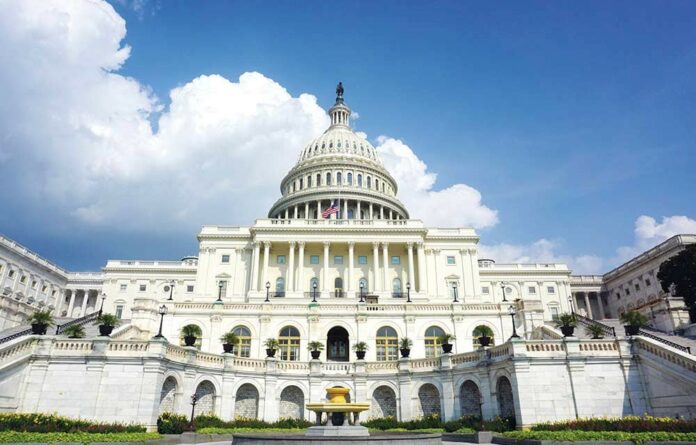
The radio antennas poised to spring up on poles around the North Bay may look innocuous, but are they really? A debate over the fifth generation of wireless cellular technology—known as 5G—ensues while deployment begins across the region. As residents and elected officials ask questions about the potential health impacts the wireless transmitter proliferation brings with it, some localities debate bans on the new hardware.

However, recent FCC rulings designed to ease the way for 5G (under the rubric of National Security) give municipal governments little ability to restrict the new–and–controversial additions to the physical landscape.

At issue are the small devices affixed to light poles or other vertical spots surrounding homes, offices and public spaces. Champions stress the benefits a speedier backbone for data–enabled objects will bring (See News, page 8). Everything from color–shifting light bulbs and eco–friendly thermostats to card swipers used by yoga instructors and dog walkers will perform with less digital lag time. Critics decry small–cell ubiquity as a bath of invisible, cancer–causing radio waves penetrating soft human tissues—and decry the absence of local control over the 5G juggernaut now afoot.

Resistance to the small–cell rollout is growing. In early 2018, Santa Rosa was forced to walk back a 2017 agreement that would have allowed Verizon to improve its network by installing 72 antennas on wooden power poles and streetlights around the city. City councils in San Anselmo, Mill Valley, Ross, San Rafael, Petaluma, Sebastopol and the City of Sonoma all tried to get in front of the issue with ordinances limiting where the devices could be placed.

Last September the Federal Communications Commission (FCC) adopted new regulations to remove barriers to 5G deployment, exempting installation from environmental review, a move that prompted the backlash. The city of Fairfax and the County of Marin joined more than 25 West Coast cities in legal actions to challenge the FCC’s preemption. The court challenges bore some fruit. Last month, Oklahoma’s United Keetoowah Band of Cherokee Indians won an order overruling the FCC’s attempt to prevent local environmental and historical reviews.

Members of the Sebastopol–based EMF Safety Network, founded by Sebastopol artist Sandi Maurer, recently marched through downtown San Rafael to bring visibility to the issue. There’s a robust and regional grassroots letter–writing campaign to put the kibosh on 5G, and numerous local governments have weighed in with hearings and ordinances pegged at the health concerns. The drive by “Big Telecom” to expand its wireless data capacity is not going as smoothly as it may have hoped in the communities north of the Golden Gate.

5G is quite different than the generations that preceded it. It uses a different type of microwave, with a much higher frequency that enables faster transmission of information and optimizes new autonomous gadgets that talk to one another.

The connective infrastructure of the so-called Internet of Things that raised concerns across the North Bay centers largely on the antennae that need to be deployed by the thousands for 5G to work. Owing to 5G’s wavelength, which is shorter and more powerful than its predecessors, the network requires that many radio broadcasting devices be installed—and that they’re located close to one another.

Epidemiologist Devra Davis is the director of the environmental think tank Environmental Health Trust. She’s written that 5G tech has the power to disrupt the flight patterns of bees and birds, and could also disrupt aircraft navigation. CBS news reported last May that the tech could interfere with weather forecasting.

5G is not simply a new generation of cell technology. It employs a powerful wavelength in the radio spectrum—higher frequency non–ionizing microwaves—to transmit the ever–growing volumes of data received and generated on smart devices. Promoted by the industry as being a hundred times faster than 4G, it will allow, for example, videos to be downloaded in seconds.

These so called “millimeter waves” are more powerful and shorter in length than current cell technology. The 5G system planned for the region requires many more cell towers closer together, including in residential areas.

Some 13 million towers would be needed nationwide, according to a recent report done by Google for the Department of Defense. “Ten cities are now online,” says Verizon spokeswoman Heidi Flato. “We hope to have 30 by the end of the year.” There’s lots of competition for the 5G business, she adds, with companies such as T-Mobile and AT&T pushing 5G plans of their own. “There’s definitely a race to 5G,” Flato says. “Verizon is ahead of its competitors and eager to deploy this technology.”

Small–cell towers are showing up cities and towns that are not yet “live.”

North Bay residents concerned about what they describe as negative health impacts of the new technology have pushed back against the proposed rollout.

Some 40 people showed up at the Sonoma City Planning Commission meeting on July 11 to oppose Verizon’s proposed installation of three towers in the city’s commercial hub. Many, but not all, say they suffer from Electromagnetic Hypersensitivity (EHS). For them, health is the primary concern.

The Planning Commissioners says their hands are tied because of FCC regulations, dating back to 1996, that deny municipalities jurisdiction over the towers. Cities can only make decisions regarding the design of the cell towers, nothing more.

“There is no doubt that 5G will affect health,” says Dafna Tachover, citing the results of a $25 million study undertaken by the National Toxicology Program in 2017, which found a link between cumulative exposure to electromagnetic radiation and two rare types of brain cancer and DNA breaks.

Tachover was the Director of Information Technology for the Israeli Defense Force (IDF) when she says she developed symptoms of electromagnetic sensitivity. This month she delivered her three–hour lecture in Sonoma, Napa and Santa Rosa, explaining the research that continues to implicate wireless as the cause of her illness.

Her City of Sonoma talk took place in a classroom at Vintage Senior Center with the fluorescent lights turned off, where she reeled off references to numerous scientific studies claiming 5G has significant health effects.

A study published two decades ago by the National Toxicology Program (NPT) found that the effects of radiation exposure are cumulative. Researchers at NPT found long–time wireless users may develop headaches, fatigue, anxiety, insomnia and brain cancer when exposed to wireless vibrations. EHS is now established as a disability by the nonprofit American Association of People with Disabilities.

In Santa Rosa, installation of the new towers was already in process before residents took note. Like other municipalities around the North Bay, city officials’ hands are tied when it comes to the FCC’s recent rulings.

Gabe Osburn, the deputy director of development services for Santa Rosa, explains that the city only has jurisdiction over poles in the public right of way—namely, streetlights. “The council gave us the authority to approve installation on a pole–by–pole basis,” he says. But the wooden poles are not in their jurisdiction.

Verizon proposed 72 poles for Santa Rosa. It contracted with the owners of the wooden poles, PG&E, and began installing cell towers in residential areas around town.

The city held two public meetings and halted streetlight deployment while officials figure out their next step. Other North Bay cities have taken action in an effort to assuage residents’ concerns. Mill Valley, Belvedere, Sonoma, Sebastopol, Petaluma, San Rafael, San Anselmo, and Fairfax have revised their telecommunications ordinances in an attempt to regulate the placement of the new towers, as did the Marin Board of Supervisors. These ordinances mainly regulate where cell towers may be installed and how close to one another they can be placed.

Petaluma’s ordinance is the strongest in the North Bay. It prohibits small–cell installation on city–owned poles, allows towers on electrical utility poles only in mixed–use commercial zones, (not in residential areas) and decrees a 1,500-foot setback from any two towers.

Assistant city attorney Lisa Tannenbaum says Petaluma sought to incorporate citizens’ concerns within the recently amended guidelines set by the FCC last spring.

“The industry claims that the guidelines give them more freedom,” she says, “but a suit in the 9th Circuit Court claims that the location of poles is beyond the jurisdiction of FCC. The FCC is responsible for regulating communications.” Resolution of this suit is expected by the end of the year.

San Jose and New York have sued the FCC to demand the amended guidelines be repealed.

“But even if those contested guidelines go into effect as written,” says Tannenbaum, “we believe we are still compliant.”

In California, Hillsborough, Piedmont and Danville banned 5G. They’re being sued by Verizon. In Sebastopol, Verizon yielded to citizen pressure and withdrew its applications for two new towers, thanks in part to the actions of the EMF Safety Network, a local nonprofit.

EMF Safety Network director Sandi Maurer says she began experiencing EHS symptoms in 2006. Finding no explanation for her discomfort, she called on Michael Neuwert, a local electrician who started researching the health effects of electromagnetism exposure in the 1980s. He came to her house to examine the wiring. “When he shut off the breakers, I immediately began to feel better.”

Maurer set out to learn all she could about the effects of EMF. In 2007, the Sebastopol City Council took up a popular proposal to provide free WiFi. Maurer began going to meetings. Despite her opposition, the council unanimously approved contracts to provide free WiFi but flip-flopped two months later and rescinded the contracts.

Maurer was more successful in her fight for an opt-out from smart meter installation, which also uses a pulsed–wireless technology. Now her organization is petitioning the Sonoma County Board of Supervisors to block 5G. Sebastopol activist Rebecca Godbe-Tipp reports the supervisors “told us no one has complained about the cell towers.” There are no applications in the unincorporated areas yet.

“People say nothing can be done at the local level, but people really do have power. The science is already there, and we have a right to a safe community,” Maurer says.

In last year’s updated guidelines, the FCC ruled 5G towers would not be subject to two kinds of previously required review under the National Historic Preservation Act (NHPA) and environmental review under the National Environmental Policy Act (NEPA). No public hearings were required.

In April, the California Court of Appeal cited the section of the 1996 law prohibiting towers in the public right of way if they “incommode” public use. The towers may be disallowed if they “generate noise, cause negative health consequences or create safety concerns. All these impacts could disturb public road use, or disturb quiet enjoyment.”

If the Ninth Circuit Court of Appeals acknowledges the FCC does not control local infrastructure, that could support the fight for local control. In the meantime, the FCC’s attempt to usurp local control prompted legislation to restore municipal authority by Sen. Diane Feinstein (S. 2012) and U.S. Rep. Anna Eshoo (HR. 530).

North Coast Congressman Jared Huffman is a co-signer on Eshoo’s bill. He says that while he’s “agnostic” on 5G and purported health issues associated with it, his emphasis is on localism and over-reach by the federal government on this issue. “I don’t like the idea of the federal government—and especially this administration, which consistently shills for big business— running roughshod over our communities. I trust my local government to do its job.”

Verizon hasn’t begun the big push for 5G antenna in the North Bay—at least not yet, says company spokeswoman Heidi Flato, “We have not announced 5G launch for the North Bay yet,” she says.

The small cells installed so far aren’t a signal that 5G has arrived, only that it will: They “pave the pathway for 5G,” she says. Verizon’s working now to densify its 4G LTE network, she adds. “There’s been a dramatic increase in data usage. If you think of cell network as a highway, commuter lanes jam up at certain times of the day.”

Small cells add more capacity, she says, as if you were adding more lanes to a highway. “People are using data–rich applications such as video streaming. Small cells will allow more people to do more things.”

Flato didn’t address health concerns raised by activists about 5G, and directed inquiries on that subject to the Wireless Industry Association website https://www.wirelesshealthfacts.com/

Activists vow to keep up the fight. Anti-5G Novato attorney Harry Lehman notes, “If cities have the courage, they can stop this.”

“It’s now established that this radiation is carcinogenic and harmful to health,” he says. “Cities that go along with the industry people are in direct conflict with their civic responsibilities.”

We All Belong

0

In the face of a growing homeless crisis in Sonoma County, this weekend’s second annual Festival of Belonging, a project from nonprofit groups Homeless Action and Justicewise, invites the public to see the situation through new eyes, with a photography exhibit and discussion taking place at the Glaser Center in Santa Rosa.

The festival began last year as a means of supporting the homeless encampment located behind the Dollar Tree shopping area in Santa Rosa’s Roseland neighborhood. The city eventually dissolved that camp.

“It was the last long–standing homeless camp, so in a sense we thought of it like they were being evicted from their longtime home,” says festival–producer Gillian Haley. “We wanted to support them just like we would any neighbor.”

That inaugural event last year was a small gathering where people shared stories of homelessness and community. This year, the festival aims to help the community relate to the homeless neighbors through the medium of photography.

On Friday, Sept. 13, the Festival of Belonging opens with an art reception for the new exhibit, “Faces,” in which Santa Rosa’s Salvador “Pocho” Sanchez-Strawbridge captures nearly 40 up-close-and-personal photographic portraits of local, unsheltered people and shares their stories. The festival continues on Saturday, Sept. 14, with a program dedicated to “Inherent Worth” and featuring a talk by Robert Sadler, who himself shoots stunning black-and-white formal portraits of homeless men.

“This year, we are presenting photos of people and stories of their lives—their hopes and challenges—to the general public as a way to build a bridge of understanding,” Haley says.

“The portraits are wonderful,” says Kathleen Finnegan, artistic director of the “Faces” exhibit. “Our photographer Pocho has the gift. People just drop their defenses in front of his camera and the photos are natural, spontaneous looks at people as they really are. It’s quite a bit different from the public perception.”

The photos are shot in extreme close-up, with the subjects maintaining eye contact, to offer a portrait of “dignity in the face of adversity,” as Finnegan puts it. The exhibit will stay up until Oct. 30, with viewing hours Monday through Wednesday beginning Sept. 17.

Following Friday’s reception for “Faces,” the festival continues on Saturday afternoon with the discussion featuring Monterey County-based Robert Sadler. “He works with the homeless down there, and had the idea to do these portraits showing their essential dignity and worth,” Haley says. “They’re museum-quality portraits and he shoots in black-and-white, so we thought the contrast in styles was interesting.”

Sadler will talk about his own experience and compassion for the homeless, with a reception to follow. “The idea for the Festival of Belonging is to awaken empathy and a sense of working together,” Haley says.

Self Aware

Main Stage West kicks off a new season with big laughs in Annie Baker's candid snapshot of a dysfunctional, modern family. Body Awareness follows five days in the lives of lesbian couple Joyce and Phyllis, Joyce's live-in son from a previous marriage and a controversial houseguest who could sink or save the trio's tense relationship. Joyce (Nancy Prebilich) is struggling...

Sept. 13-14: Wowie Bowie in Sonoma

Though he’s been gone for over three years, David Bowie’s musical legacy and influence can still be felt everywhere. This weekend, more than 20 local musicians feel the music when they perform as part of the fourth annual Bowie Forever tribute. Spanning two nights this year, the shows feature members of Bumblin’ Bones, Gentlemen Soldiers and other popular acts...

Sept. 14: Five Years of Favorites in Healdsburg

In the heart of downtown Healdsburg, the Paul Mahder Gallery has offered dozens of exhibits of contemporary art for five years. Now, the gallery celebrates half-a-decade of engaging the arts with a celebration that coincides with the closing reception of the gallery’s current exhibit, Wosene Kosrof's "My Favorite Things." Kosrof is an Ethiopian-born artist who uses the script of...

Sept. 14: Ruby Season in Sebastopol

This year marks Redwood Arts Council’s ruby anniversary, and the council opens its 40th season of classical concert performances with a North Bay favorite, the internationally renowned guitarist Paul Galbraith, who makes his fourth appearance courtesy of the Redwood Arts Council. Galbraith performs his specialized 8-string “Brahms guitar,” held like a cello and picked like a harp, in a...

Strangers No More

North Bay bluegrass music fans likely know the name Hellman. Warren Hellman founded the Hardly Strictly Bluegrass Festival in San Francisco, and his son Mick Hellman and the family continue to run it. In addition, the Hellman musical family boasts bands and artists like Mick's daughter Avery Hellman (Ismay) and the group the Well Known Strangers, formed by Mick...

Trial of Mind

While technically not set in a courtroom, Tom Topor's Nuts, running now at Santa Rosa's Left Edge Theatre through Sept. 29, has all the elements of a classic courtroom drama—a defendant, a judge, a prosecuting attorney, a defense attorney and witnesses. However, the question is not whether the defendant is innocent or guilty of a crime, but whether...

Addicted to Love

September is National Recovery Month. Generally speaking, it's a month devoted to increasing awareness about substance-use disorder and celebrating the successes of those in recovery. But I'm concerned with the statistics around treatment. According to the 2018 National Survey on Drug Use and Health, some 21.2 million people above the age of 12 in the U.S. needed substance use treatment in...

Pushermen

The pharmaceutical industry has been exposed as a conspiracy of drug pushers. It was not just Johnson & Johnson on trial. Every company used addiction as a primary marketing tool. This is no metaphor. These are criminal entities, and the individuals who run them are criminals. They are overwhelmingly rich, white men, making jail time less likely but no...

Sleeper Cells

The radio antennas poised to spring up on poles around the North Bay may look innocuous, but are they really? A debate over the fifth generation of wireless cellular technology—known as 5G—ensues while deployment begins across the region. As residents and elected officials ask questions about the potential health impacts the wireless transmitter proliferation brings with it, some localities...

We All Belong

In the face of a growing homeless crisis in Sonoma County, this weekend's second annual Festival of Belonging, a project from nonprofit groups Homeless Action and Justicewise, invites the public to see the situation through new eyes, with a photography exhibit and discussion taking place at the Glaser Center in Santa Rosa. The festival began last year as a...
11,084FansLike
4,446FollowersFollow
6,928FollowersFollow