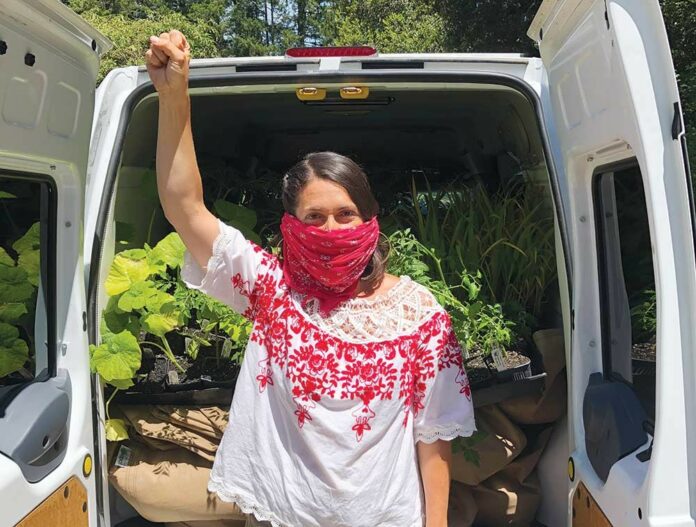
Stay Gold

Director Nancy Kelly has been at her craft long enough to see her only feature film, Thousand Pieces of Gold (1990), come to life not once, but twice.

It concerns Lalu (Rosalind Chao), a Chinese girl sold by her parents and taken to the Old West, followed by her escape and a romance with a sensitive Westerner (Chris Cooper). In a new 4k restoration, the film will play at the Mill Valley Film Festival on Oct. 6 and at Century Larkspur Oct. 8. The restoration happened thanks to Sandra Schulberg’s Independent Film Project, which saves indie films whose original masters are starting to deteriorate with age. The quality of the 4k restoration left Kelly in tears. “I’ll be struck dead by the film guys for saying this,” she says, “but it looks better than it did originally.”

Kelly and her husband Kenji Yamamoto, who produced and edited, made A Thousand Pieces of Gold on a slim budget. “We raised money but didn’t raise all the money we actually needed,” she says. “We had to find a gold rush town that wasn’t a tourist trap, and we couldn’t afford to take out the parking meters and billboards.”

Kelly heard about Nevada City, Montana. “It’s where they shot Little Big Man. This fanatical collector lived there. Whenever a mining town building was coming down, he’d number all the logs or boards, and transport them and put them back together there. The place had a Chinatown and we needed a Chinatown—as long as we were out of there by Memorial Day we could rent it for an affordable price.”

Debuting at the SF International Film Festival, Thousand Pieces of Gold played all over the world.

“We were hoping to have a theatrical release, but we left Cannes without a deal,” she says. “After a year we got a small distributor, Graycat Films, and it aired on American Playhouse. Every cable channel ran it when cable was a big deal. When VHS was the latest thing, we sold it to Hemdale. We didn’t have a choice.” The infamous Hemdale Home Video organization siphoned off the money, but happily, Yamamoto and Kelly still own their film.

“When I look back on it, I realize that at every point where it got good distribution, things would evaporate,” she says. “Then you wait for the next big thing. We were lucky we had an agent who was honest and kept up with this stuff.”

She and Yamamoto headed to L.A. to further their careers, subletting an apartment and getting jobs teaching at UCLA.

Kelly recalled, “I went to a lot of meetings, and they’d ask me, ‘what do you want to do?’ And I’d tell them, and their eyes would glaze over. I didn’t have a sense of what would sell. Back then, it wasn’t female-driven films that would sell, and it also wasn’t women directors. The press says that what sells now are stories of immigration, stories of women! Things might have changed. But L.A. wasn’t a good home for indies; this is really where we belong.”

Kelly is from the working part of the Berkshires. She’s from North Adams, Massachusetts, on the silicon strip of Highway 128, a tech corridor that turned into a rust belt when globalization hit. Kelly later made a film Downside Up, about the beginnings of MassMOCA, the art museum built into the vacant Sprague Electric factory building where her father once worked. Documentaries about art are a specialty of Kelly + Yamamoto; they’ve done short pieces for KQED’s eclectic Spark and a profile of Rene di Rosa of the di Rosa preserve.

“I got a degree in public health education, and so I was hired to do five short, dramatic films to teach UMASS Amherst students to drink responsibly,” she says. “I personally did not drink my way to college.”

Kelly’s collaborator on the project was the filmmaker Gwendolyn Clancy, currently of Reno. Clancy headed west to Modoc County, and Kelly joined her. The two lived on a ranch for several years. Without film production equipment, much less electricity, it was hard to work. Coming down to San Francisco, Nancy met the SFAI-educated, experimental filmmaker Yamamoto and married him.

Recently, Kelly and Yamamoto made a documentary about something that surprised her as a new arrival here. Kelly was in Point Reyes, riding the horse she brought down from Modoc. How could San Francisco be so jam-packed with people and still have all that unspoiled terrain just across the bridge?

Nancy Dobbs of KRCB—founder of Sonoma’s only public tv station, who just retired this week—co-produced Kelly and Yamamoto’s Rebels With A Cause. It played Mill Valley in 2012. John Hart’s San Francisco’s Wilderness Next Door and L. Martin Griffin’s Saving the Marin-Sonoma Coast were Kelly’s guides to how a mix of local activism and federal action kept this heavenly domain from becoming a golf-course-covered purgatory. Kelly hired Frances McDormand, a sometimes-resident of Bolinas, to do the narration.

Since Thousand Pieces of Gold, Kelly and Yamamoto developed three feature films; one got as far as the casting stage before the keystone financer felt out. This didn’t stop Kelly, who is developing a new film, provisionally titled When We Were Cowgirls.

Regarding her 40-year collaboration with her husband, Kelly notes, “We get along pretty well. Whoever is the director on a project has the last word. Kenji is this happy, cheerful optimistic person, and we fight to have the best first joke of the day. Sometimes I do, sometimes he does.”

A word to the young filmmaker? “Oh, God. I think what Kenji said to me when I was ready to give up: nothing in the arts makes any sense. Go in one direction, and you just keep going. Keep getting ideas and doing them. I hope the parents of these young people don’t read that and start crying.”

Rut Causes

0

Although Point Reyes Station catches more than a few sun rays on a recent late-summer day, the northern tip of the Seashore, which is administered by the National Park Service, gets the Pacific Ocean’s full fog-machine treatment.

At historic Pierce Point Ranch, a windbreak of gnarled trees just beyond the parking lot is hardly visible. Yet the bugling of unseen male tule elk is as clear as a bell. The term, “bugling,” with its upbeat, brass instrument connotations, doesn’t do justice to this haunting screech that’s about as wild as it gets, just an hour north of the Golden Gate.

The rut, when male elk (called bulls) compete for influence with groups of females (cows), takes place from August to October, and it’s one of the Seashore’s many natural resource features—along with whale and elephant seal viewing—that draw up to 2.4 million visitors each year.

There are plenty of other bulls and cows to see here, too.

More than 5,700 dairy cows and cattle graze on Seashore land leased to dairy and beef operations. But considering their smaller number, about 750 animals in free-ranging herds and fenced in at Pierce Point, the tule elk surely rank highly among visitors.

“It’s not a popularity contest,” says Melanie Gunn, outreach coordinator for the Seashore, about the latest invitation for public comments on the Seashore’s plans to manage ranches and elk in the future. The comment period for the General Management Plan Amendment Draft Environmental Impact Statement closed on Sept. 23.

“One really important thing for people to realize,” Gunn clarifies, “…it’s not a vote. And we try to make that clear to people. What we’re looking for is substantive information to inform the process.”

Previously, the Park sought to implement an updated Ranch Management Plan (RMP), consulting the public in a series of workshops and comment periods. But a coalition of environmental groups, frustrated that the process did not include an Environmental Impact Statement (EIS), sued and halted it.

“Every park does it that way when they make a big management decision,” says Jeff Miller, a conservation advocate for the Center for Biological Diversity. “They do that through an environmental review.”

The park was trying to skip that step, according to Miller, who traces his activism in the park to family hiking trips when the Seashore opened in the 1960s. “When the park service tried to float the ranch plan, killing the elk was the last straw.”

The Amendment Draft now includes a more specific plan, “Alternative B,” to lethally remove elk from a contentious herd that shares pasture with cows, while extending ranch leases to 20-year terms. This is the NPS’s “preferred alternative.”

The statement does mention five more alternatives, from “no action” to “cessation of ranching operations.”

“It wasn’t about kicking ranchers out, which is what ranchers fall back on when anyone asks questions,” says Susan Ives, whose organization, Restore Point Reyes Seashore, encourages public commentary on the plan.

“It’s how to restore the native prairie—let’s try to bring back some of these native plants that are on the brink,” says Ives, who does not view the preferred alternative as an acceptable compromise. “There really weren’t a lot of alternatives that we could support.”

The Seashore will not release the public comments for several months, according to Gunn. Already, elk advocates are criticizing the process.

“I have helped to collect hundreds of comments from other citizens who also want the park to choose wildlife protection and restoration and to phase out ranching,” forELK founder Diana Oppenheim writes in a letter to park Superintendent Cicely Muldoon.

Melanie Gunn and the NPS refuse to accept those comments, stating a policy of not accepting bulk comments. “We can’t accept comments that have been submitted on behalf of others,” Gunn states. “So, we let that individual know, as soon as we got them, that she could take them back and ask individuals to send them.”

A preview of comments provided to the Pacific Sun highlight the disconnect between the Park Service mission, the environmental findings of the EIS and the preferred alternative. Among writers offering substantive perspectives, Ken Brower, who watched as a “fly on the wall” as his father, David Brower, worked with ranchers and politicians to establish the park, writes, “It is a historical falsehood—despite the widespread myth otherwise—that the park’s founders ever intended that ranching be permanent.”

Judd A. Howell, former ecologist and research scientist at Golden Gate National Recreation Area, questions why the Seashore’s 5,700 cattle units cannot tolerate 124 elk among them. “The notion that elk are a ‘problem’ is obviously misguided, since elk coexist with cattle on BLM and Forest Service grazing lands throughout the western U.S.,” he says.

It remains to be seen how many of the 7,000-plus comments received weigh in for or against the preferred alternative. Some may be classified as opinion only, and will not be incorporated at all, says Gunn. But they won’t be lost in the fog. “We provide a response to those comments.”

Hunger Games

0

Last month, Yuri sat in her dining room in San Jose, turned on the television, and heard something that made her sit up straight and sent her mind racing.

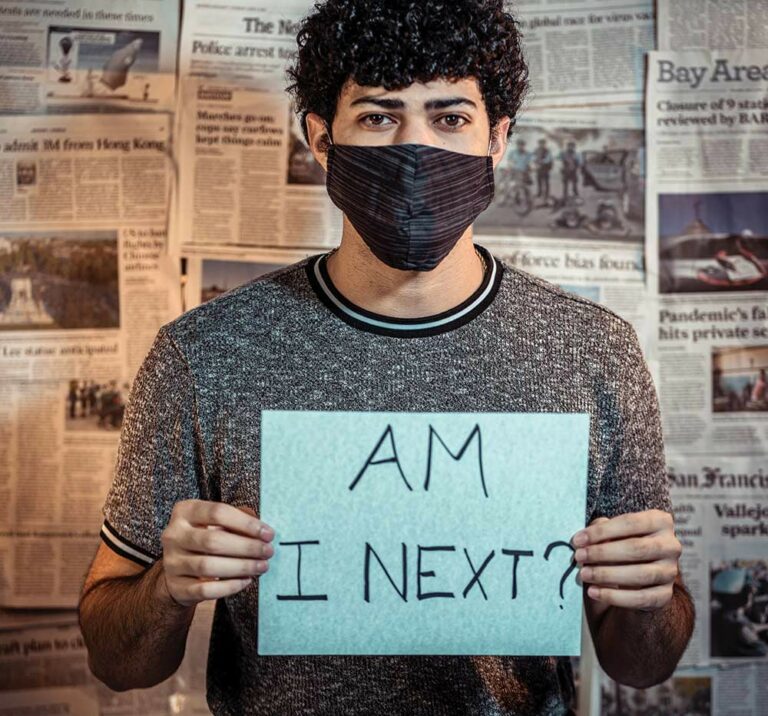
The Trump administration, the newscaster announced, had just published a new rule that could make it harder for immigrants to get a green card if they used, or were likely to use, public government benefits like food stamps or Medicaid.

Yuri, who came to the United States from Michoacán, Mexico, was enrolled in CalFresh, California’s food stamp program, for her seven children, who range in age from just over a month to 15 and who all were born in this country. But with the new rule, Yuri, wondered, would staying on food stamps imperil her asylum application or get her deported? Would she and her family have to move back to Michoacán, one of the Mexican states with the worst cartel violence?

She decided to terminate food stamps for her kids and to dis-enroll herself from MediCal, despite some health complications she said accompanied her latest pregnancy. She worries, she said, about how she will keep her children’s bellies full without food stamps. But she doesn’t want the use of social service programs to put her at risk for deportation somehow.

Across California, the looming change in what is known as the “public charge” rule is sowing confusion and fear within the immigrant community, causing many people to abandon programs they need for fear of retaliation from immigration authorities, according to nearly two dozen interviews with health care providers, lawyers, nonprofit organizations, and social service agencies.

The new rule could affect more than 2 million Californians, most of whom are not subject to the regulation, and could result in 765,000 people dis-enrolling from MediCal and CalFresh, according to UCLA’s Center for Health Policy Research.

Yuri, who did not want her last name used for fear of drawing attention to her family, would not be affected by the rule change: Refugees and asylees are exempted from the policy, as are the food stamps she gets for her children, who are citizens. But many immigrants like her, who are not subject to the rule are feeling the chilling effect, with some withdrawing from social services unnecessarily.

Social service experts describe patients staying away from crucial medical appointments, domestic violence survivors avoiding food stamps, a crime victim with a humanitarian visa dropping health coverage during treatment for cancer, and parents considering removing their children from benefits ranging from free and reduced school lunches to health coverage.

Currently, green card applicants must prove they will not be a financial burden—referred to as a “public charge”—on the United States through use of cash welfare programs or publicly funded institutional care. The new regulation, which if it survives legal challenges will take effect in mid-October, would expand the public charge definition to include Medicaid, food stamps, and housing vouchers. Immigration officials will also consider income, education, English language abilities, and health when making a determination.

Claribel Chavez, an outreach worker for the Second Harvest Food Bank of Silicon Valley, said the primary reason the people she talks to resist signing up for food stamps is public charge.

“They’re just not doing it because they are scared,” she said. “They say, ‘We would rather struggle than put our name into the system.’ It’s getting bad.”

In August, Santa Clara and San Francisco counties sued the Trump administration over the regulation and filed a joint motion for a preliminary injunction seeking to block the rule before it takes effect. The motion argues that the rule, if implemented, would cause “irreparable harm” to the counties and “will cause individuals to dis-enroll from or forgo critical public benefits out of fear of potential immigration consequences.” California is one of a number of states suing to block the policy.

In its publication of the rule change, the Department of Homeland Security estimated that 324,000 people in households with non-citizens will withdraw or stay away from public benefits because of the change.

But immigrants’ rights advocates said they expect the affected pool to be much larger, because the effects are trickling down to legal immigrants and mixed status families who, fearing negative consequences, may now withdraw or stay away from housing assistance, health care or other social services. A recent report by the Kaiser Family Foundation, for example, estimated that the rule could result in up to 4.7 million people withdrawing from MediCaid and The Children’s Health Insurance Program (CHIP).

Although it is difficult to measure the full impacts of the policy before it takes effect, there are some suggestions that it may already be having an influence.

In San Francisco County, according to court records, food stamp enrollment in households with at least one noncitizen dropped sharply when the proposed rule was announced in the fall of 2018, while citizen household enrollment remained relatively steady.

In Santa Clara County, data provided in court records indicates that the number of households receiving food stamps with at least one member who is not a citizen decreased 20 percent—or from about 15,000 to about 12,000—from October 2018 to May 2019. During the same time period, food stamp enrollment in citizen households stayed at roughly 26,000. The records also show that MediCal participation in households with at least one noncitizen decreased 13.5% from the fall of 2018 to July 2019, while participation in citizen households increased 6 percent.

For health care providers in the Bay Area, the prospect of patients declining medical care is worrisome. Santa Clara County has the fourth highest rate of tuberculosis in California, according to Dr. Sara Cody, the county’s director of public health, with almost 10% of the population infected with latent TB. Patients forgoing evaluation and treatment could heighten the risk for spreading infection to county residents, she said.

Asylum seekers and refugees would be exempt from the current rule, as would victims of domestic violence and trafficking. But advocates and lawyers who work with those populations say that many of them, too, are confused about the 800-plus page rule and have asked if they should reconsider using benefits.

In addition, neither the the Special Supplemental Nutrition Program for Women, Infants, and Children (WIC) nor free and reduced price school lunch programs would be affected by the change, but social service providers in the Bay Area say recipients of both benefits have expressed concern about continuing their enrollment.

As for Yuri, the path forward is one without CalFresh for her children, and, although she is seeking the advice of an immigration lawyer, legal consultation seems unlikely to change her mind about withdrawing. For now, she said, it all just seems too uncertain.

“We don’t want to have the risk,”‘ she says, rocking her newborn’s pink crib. “You never know what’s going to happen.”

Buds in the Bunker

0

Read an excerpt from Jonah Raskin’s new book, “Dark Day, Dark Night,” available now.

The man who called himself “No Name” drove the speed limit along the highway, turned on the directional, stopped in the middle lane and pulled into the parking lot for Mono’s Tattoo parlor, where he killed the engine and removed the key from the ignition. Under the blue sky, he locked the car, and with Tioga close behind him, walked under the neon sign, then around the back of the building and into the thicket where he stopped, picked a wild blackberry berry and ate it. Even from outside they could smell the marijuana that had been cut down by the thieves and carted away under cover of darkness.

Tioga found a footbridge where they crossed the stream. No Name crouched down, danced across the bridge and walked along a deer path that led behind the bunker that had no windows on the ground floor and that looked like it might survive, Tioga thought, an assault by Navy Seals.

Mounds of dried dog shit littered the yard. Tioga knelt down, squeezed through the doggy door and then turned her head around and grabbed hold of the AR-15 that No Name handed her. He had a tougher time than she crawling through the door; his shirt ripped and he cut his ear.

Once inside, he was Mr. Tough Guy. “Not to worry,” he said and left Tioga to carry the canvas bag with the ammo, while he toted the AR-15. They entered a storage room with a rusted washing machine and a dryer that had been cannibalized for parts and then climbed a stairway that took them to a balcony.

Now the stink of marijuana assaulted Tioga. It made her want to sneeze and she didn’t think she could prevent herself from sneezing. No Name shook his head and placed two fingers across his lips. On hands and knees, an inch at a time, first No Name, and then Tioga, crawled along the carpet until they reached the edge of the balcony. It was a long way down to the ground floor below.

No Name lay down on his belly with the AR-15 at his side. Tioga peaked over the edge and saw a sea of marijuana plants hanging from the rafters. Fans whirled. Vents expelled the fumes that made her eyes sting.

Hawk, who was one of the thieves, stood in the far corner of the room with a cell phone in one hand and a clipboard in another. He wore a Borsalino, a Yin and Yang pendant and he broke into a rendition of Kid Rock’s “Early Mornin’ Stoned Pimp.” When he finished his performance, he grunted and moaned as though he was in pain, though he did not appear to be hurt or injured. Pablo—one of the workers—emerged from the upside down marijuana plants and applauded. “You da best. You da boss.”

Then he smacked a woman with dreadlocks. “Move it.”

Four women, all bare-breasted, barefoot and in cut-off jeans, moved between a row of upside down plants and pulled dead leaves from the stems. The floor was littered with them.

Hawk cracked a whip. “Hustle. We’re running out of time.” He walked across the length of the room, then stopped in the space directly under the balcony, where he began a conversation with someone whose voice Tioga could hear, but whose face she could not see.

A German shepherd tugged on its chain, barked and lunged toward the woman with the dreadlocks. Tioga felt an instant loathing for the dog. “I’ll shoot him if I have to,” she whispered.

A black spider crawled across No Name’s arm. Tioga watched the beast move one way and then the other, as though searching for a passageway to safety. With thumb and middle finger, she flicked it into the air and saw it land upside down, then right itself and vanish in the carpet.

Hawk was still talking to the invisible presence. “We fronted the dude 30 pounds,” he was saying. It was the same voice she had heard the day he first threw money at her in her office, as though money grew on a tree. Apparently it did, at least for him. The man under the balcony, whom she couldn’t see, uttered a stream of words that didn’t sound like English and that might have been Russian.

Hawk went on with his story. “The asshole rolls the truck, which is packed with weed. He steals a truck, picks up his load which has tumbled down the ravine and gets out of there like a bat out of hell.”

Then came another break in Hawk’s story while he listened to the man under the balcony, his words still unintelligible to Tioga. After an interval, Hawk picked up the thread of the story he had been telling. “In the Valley, the dude goes one way and the chingada cop goes the other way. The guy gets away! Isn’t that the dope! That’s us bro! We’re getting away with the million dollar crop and without a scratch.”

Hawk laughed; the man under the balcony laughed with him.

A slim taut body emerged from the shadows. The man stood in the light, removed the mask that had turned him into a wolf with a long snout and dark eyes.

The man shouted then placed the wolf mask over his face and howled wolf-like. He knew what he was doing. He had practiced, or maybe howling was innate; maybe he was a wolf man. He wore no shirt and no socks or shoes. He had the body of a surfer. A pair of faded jeans hung from his hips, along with a holster that boasted two guns. His body was covered with sweat; bright green marijuana leaves stuck to his arms, shoulders, chest and belly.

Tioga’s head pounded and her stomach heaved. She was going to puke. She felt like a little bird condemned to hover forever, never able to land on a branch or to nest in a tree. Then she looked down at the sea of green. The woman with dreadlocks stopped in the middle of a row of marijuana and put on a T-shirt that read “Guadalajara.”

Hawk stormed across the room and slapped her. She screamed and he slapped her again. “You’re not getting paid to cover your tits, bitch.” Hawk turned to the man with the surfer body who stood behind him. “Isn’t that right, Tomas!”

Tioga wanted to scream.

No Name held the AR-15 in his hands, his finger on the trigger.

“No, don’t,” Tioga whispered. “I don’t know, you don’t know, what these Zombie Devil men might do.” She looked at the watchdog and the woman with the dreadlocks. “I’m going to backtrack and call the police. I hate to involve them, but I don’t know what else to do. I need you to come with me and not do anything crazy.”

No Name’s nostrils flared. His face caught fire. “I don’t want to, but I will.”

He turned around and crawled across the floor on his belly, with the AR-15 in his hand and ready to come alive with a touch on his finger.

They went down the stairs, first Tioga, then No Name, out the doggy door and through the dried turds in the yard behind the bunker with the million dollar crop that the Zombie Devil men had ripped off.

In the thicket along the stream, Tioga stopped, picked a ripe blackberry and placed it on the tip of her tongue. It was as sweet as any jam she had ever tasted. Then, she and No Name followed the path that brought them back to the neon sign outside Mono’s Tattoo Parlor. Tioga looked back at the bunker. “That was my ex with the wolf mask. That was him howling. He stole howling from me and perverted it.”

No Name snickered. “Too late now for me to blow him away, though I wish I had.”

Tioga looked back at the bunker and wanted to howl. She opened her mouth wide and then couldn’t bring herself to do it.

Beneath the neon sign for Mono’s that flashed on and off, she sent Ambrose a text: “Marijuana thieves holed up in the old sausage factory in The Springs next to the tattoo parlor. There’s a shitload of weed. It’s the jackpot. But you gotta move fast, and bring all the fire power you’ve got.”

No Name stowed his AR-15 under the front seat of his white pickup truck. “If the cops are coming, I got to go. They’re looking for me.”

No Name sat behind the wheel and turned the key in the ignition. Tioga took out her cell, checked her messages and shook her head. “Nothing.”

In the distance, a siren wailed. The chief of police and his deputy would arrive with plenty of backup. Hawk and her ex would go down for the count, the women in the bunker would be set free, and the million dollar marijuana, well, it would be up for grabs.

No Name fastened his seat belt. “Are you coming with me or are you staying here?”

Tioga walked toward the thicket. “I don’t know.” Then, she raised her head, opened her mouth and howled. “Wait! I’m coming with you, No Name! The cops don’t need me. My ex will get everything that’s coming to him.”

Solid Gold

The spice, sweetness and sadness of life is keener now in the 4K restoration of two of Les Blank’s documentaries, Chulas Fronteras (“Beloved [or beautiful] Borderlands;” 1976) and the shorter follow up Del Mero Corazon (“Straight from the Heart;” 1979). It’s part of the irreplaceable work of a trio of East Bay filmmakers: the late director Les Blank, co-director Chris Strachwitz, and Maureen Gosling.

These collaborators were the heir to Alan Lomax and others who travelled from the swamps to the mountains. The trio worked on about a dozen films on ethnographic music, each one a treasure that preserved sounds being muscled out by monolithic American pop culture.

Chulas Fronteras shows the team at their best, touring the Rio Grande Valley in the years before los narcos fouled it. The film gives eloquent translation to the lyrics of conjunto trios playing at events as formal as a 50th wedding anniversary and as colloquial as a backyard barbecue. They were there at the right time to film aging legends such as “Flaco” Jimenez, Lydia Mendoza and the one and only “Hurican del Valle,” Narciso Martinez. (Meanwhile, the film promoted musicians for a new audience, as Strachwitz reissued their work and sold it out of his Down Home Music store in fogbound El Cerrito.)

Despite the exuberance of the beat, Chulas Fronteras doesn’t neglect the political side of life. Key to this film is the problem of crossing a line that, as Octavio Paz wrote, is not a border, but a scar. This diaspora culture is shown in Grapes of Wrath-worthy detail. We hear El Pinguinos del Norte play their ballad about Cesar Chavez, against documentary footage of the all-ages stoop labor in the potato and onion patches.

Later, the DJ at the Tamaulipas based XEOR, whose show “Chulas Fronteras” gave the film its title, spins a 45 corrido. It’s all about the beating that the state police gave a pair of UFW labor organizers in 1967 at a strike of melon-pickers trying to get more than 25 cents an hour in wages.

Like The River and the Wall, about the borderlands that administration proposes to maim with their wasteful and stupid wall, Chulas Fronteras is a film we need now more than ever.

‘Chulas Fronteras’ and ‘Del Mero Corazón’ open on Friday, Sep 27, at Rialto Cinemas in Sebastopol. Sunday, Sep 29, screening at 1pm includes Q&A with Maureen Gosling, Chris Strachwitz and other special guests. rialtocinemas.com.

Truckin’ Tasty

0

I know the press release is not supposed to be part of the story. But when I looked back at the emails I received about Clif Family Winery’s bruschetteria food truck and the invitations to sample, taste and dine there, and I compared them to the time it took me to actually get over there and sample said food-truck food, I had the nagging thought: how could this not be part of the story?

The story about press agents courting freelance food-and-wine writers isn’t exactly a gritty exposé of how the sausage is made. We’re a free-range lot, after all, and generally treated humanely, if not certified as such. But it generally boils down to offers of free food and wine in connection with something new and unique, in a world of similarly unique enterprises. Free food and wine—what’s the delay? The reality is that each offering’s utility must be weighed against its cost in gas to get there. And back. On a writer’s pay, that’s not being cheap—that’s triage.

So, I missed the Clif Family bruschetteria’s “celebratory media and industry launch party” in August, 2014. And in 2015, I couldn’t make it to the media lunch with the winemaker. And on it went. Was it bad timing, or was it my bias concerning the truck’s principle product, bruschetta? Isn’t that Italian for “pizza toast?”

Nothing against pizza toast, it’s quick and easy. Put your pasta sauce on your bread, sprinkle on the parm and we’re snacking good. All ya gotta do to get a little wine country flair is sub diced tomatoes and drizzle with olive oil—”extra vergine,” of course, which 60 Minutes has informed me is Italian for “super fraudulent,” or “somewhat adulterated,” depending on the dialect.

When Clif Family added a “Farm Feast” option to the menu at their St. Helena Velo Vino tasting room, it was a bit more enticing—more so than, say, “farm to toaster oven.” But, thankless wretch that I am, I didn’t bother to pop in for a nosh until I happened to pass through town one day around lunchtime. What a nosh I was in for.

I always like stopping in at the Clif Family Winery tasting room, just south of St. Helena’s downtown. They’re road cycling–positive, since cofounders Kit Crawford and Gary Erickson (founder of the Clif Bar snack food company) are big fans of the sport, and while the staff is generally prompt and professional, there’s also something a wee more endearingly wine-geeky and real about the young folks there than in some other valley locales.

Some useful facts about Farm Feast: The experience is priced at $75 per person, which seems high until you consider that if you’d lunched at a nearby restaurant instead, $75 would hardly net you a middling wine, let alone any grub. The Clif team starts your lunch slow and easy, with a pour of Sauvignon Blanc, followed by a rosé and an appetizer of arancini, and maybe dukkah—an herb and nut mix they seem particularly proud of. Then there’s a hearty, fresh fagioli e grano salad, which includes farro grain and garbanzo beans grown on Clif Family’s CCOF certified organic farm on Howell Mountain.

They had me at homegrown farro, but farm-to-table garbanzo beans? Who in hell, or more specifically, the world-famous Napa Valley wine region, grows, processes and then serves up house-sourced garbanzo beans—those chunky, wan legumes I’ve never witnessed very far from a tin can, and generally smelling as such? And, why?

Let’s be honest. A similarly situated row of Cabernet Sauvignon on Howell Mountain would probably net about 10 grand on the open market—or something like that. So what’s with the lowly chickpeas? Are the Clif folks putting me on here—flaunting their energy-bar-derived riches, and laughing all the way to the banca?

I wished to talk to the chef, to explain this outrage. Just about then, Clif Family’s affable Executive Chef John McConnell appeared to check on my progress. McConnell explained that the farm team has freedom to experiment, save seeds, collect obscure ingredients like fennel pollen—which is dusted on one of the dishes—and design seasonal, and harvest-specific, menus to match the produce—including vegetables, fruits and herbs—in peak ripeness at any specific time of the year. Crazy as it may sound, I have to say the garbanzos, although saved and dried from the previous harvest, were the best-tasting chickpeas I’ve ever encountered.

McConnell has headed up the food truck since its inception in 2014, and he’s still its biggest fan—you can follow him on Twitter at, get this, jmac_onwheels. It’s more than a food truck; in reality, there’s another kitchen around the corner from the tasting room. Besides sourcing farm-raised ingredients accessorized with meats from quality sources, some organic, McConnell sources his back-of-the-house expertise locally, bringing in graduates from the Culinary Institute of America at Greystone.

At last, the signature dish arrives; bruschette fungi, available à la carte at the truck for $14. It’s much, much more than a pizza toast, after all. Rich, savory and a meal by itself, it’s a fungi on wheels.

Keep It Clean

0

It’s not as cool to get smashed in public today as it was with the older generations,” says musician Kegan Stedwell, who admits she’s been on both sides of that scenario. “Sure, plenty of people still do it, but there’s definitely a movement of younger folks who are interested in having fun without the drugs and alcohol. Smashed is simply not a look that a lot of young people are going for these days.”

Stedwell, a lead singer with the Marin-based, Northern California soul-collective Venus in Scorpio, will perform this Saturday, Sept. 28, at RockSoberFest at the Sonoma-Marin Fairgrounds. The alcohol-free, multi-performer music event—versions of which have already rocked Mendocino County and Marin County—is the brainchild of Marin County’s Jeffrey Trotter, who decided sobriety shouldn’t come between him and his love of music and dancing.

The Petaluma extravaganza features performances by North Bay rock legend John Allair, a longtime keyboardist with Van Morrison. Allair—exuberantly praised for his high-energy, pulse-and-key-pounding, boogie-woogie blues performances—will perform with Julia Harrell. Also on the bill is the surf-punk band The Happys, Americana singer-songwriter Paul Hayward, acoustic-rocker Tyler Allen, John and Camilla Ford, Angel Amador and the Petaluma-based blues band No Account.

“This is one very eclectic lineup,” says Stedwell, who describes her own band as a theatrical musical showcase of great soul tunes, served up with plenty of razzle-dazzle. “We make our shows very entertaining, and if that means two or three costume changes in the course of a one-hour set, then we are all about doing that.”

In addition to the music, there will be food trucks and other vendors exhibiting wares and information, with the emphasis on enjoying beautiful music in an environment where the buzz comes from good company, high energy and great tunes. According to Stedwell, RockSoberFest is a great idea, and one that’s been a long time coming.

“When I was a kid,” Stedwell says, “going places where the adults were all drinking and getting hammered was normal. But times are changing, and I think that’s a good change.” There’s definitely a kind of rebellion taking place, she believes, what with the Sober Curious movement and the rise of intentional sober breaks. “Today,” she says, “some people are actually growing up to think that maybe alcohol poisoning is not a reasonable way to initiate our youth. That’s a beautiful thing.”

RockSoberFest takes place Saturday, Sept. 28 at the Sonoma-Marin Fairgrounds, 175 Fairgrounds Dr., Petaluma. AA meeting at 1pm. Music and dancing 2–9pm. Tickets $10–22. Rocksoberfest.org.

Exhale

0

Amid a growing crisis over emerging health impacts associated with “vaping” technology, Gov. Gavin Newsom last week announced a big crackdown to confront what he’s calling the “youth vaping epidemic.” The effort is mostly directed at stemming the tide of flavored e-cigarettes and flavored cigarette oils, but the vaping scandal has reached into the burgeoning California cannabis economy as well.

Newsom, who helped usher cannabis legalization into California under Jerry Brown, issued a three-pronged executive order last week to beat back an unexpected development in the state’s nascent legal-cannabis industry: several people have died around the country from lung conditions said to emerge from overdoing it with the vape pen.

Out the gate, Newsom ordered the California Department of Public Health to spend $20 million on a public-relations campaign targeted at keeping kids away from tobacco and cannabis products until they’re of-age, with an emphasis on vaping.

The convergence of weed and tobacco products and the recent spate of deaths prompted the move by Newsom. The state was already dealing with an e-cigarette phenomenon with flavored tobacco products driving concerns over youth smoking when reports started to pop a few weeks ago about mysterious lung ailments associated with vaping cannabis products. Moving forward, Newsom has directed the Department of Tax and Fee Administration to crack down on counterfeit vaping products associated with tobacco, and set a new tax scheme based on the nicotine content of legal e-cigs.

He also ordered the CDPH to come up with a plan to keep vaping products out of the hands of the under-21 set. That will include, according to his executive order, warning signs in stores that sell vaping products that would highlight the health risks now associated with the practice. Newsom’s given the agency until mid-October to come up with new recommendations on the dangers-of-vaping signage that will now join the ironic signage in North Bay medical dispensaries which warn that cannabis can give you cancer.

In a statement Newsom highlighted his especial concern about this issue, given that he’s a parent. He said he understood the anxiety faced by parents when their kids start puffing away on flavored tobacco products, especially given “mysterious lung illnesses and deaths on the rise,” that are now associated with vaping technology.

Into the Flow

0

I ‌seldom rant publically when I am feeling high on life. But, as a devout sleuth regarding the mysteries of peak periods, and seeing as the past two days showered me with unexpected gifts, a positive rant is overdue.

Background: I’d been stewing for months over the erratic pay habits of two of my employers; one a large corporation, the other a local small-business owner. And while I’ve survived four decades as an “indie contractor” on “verbal agreements,” when money isn’t forthcoming I can slip into self-doubt or blaming.

Fortunately, my life skills include mindfulness and a few coyote-medicine tricks to re-enter more empowering states. During Thursday’s morning meditation, I managed to let go of trying to control or micro-manage the situation, and spent my day appreciating what WAS working all around me.

That afternoon, after coaching a young client in L.A. about his lack of money flow, I found in my mailbox a hand-delivered envelope with all the back pay owed by the local employer. An hour later came an unexpected resolution to returning a cushion I’d bought online: an offer from their customer service department to keep the item, along with a store credit for the amount of my purchase. An unbelievably generous offer!

I’m still on a roll. Doors are literally and figuratively opening for me. At the bank and the library, I’m keenly aware of each “Have a good day” greeting; even the worker at a self-bussing restaurant who took my tray for me; and my friend whose birthday we were celebrating over lunch. She, too, is having a week of sweet flow and gratitude.

Minutes ago an old friend I’ve wanted to reconnect with for ages sent me a message asking if I wanted to catch up this weekend. A lucky coincidence? Nah. My so-called luck turns on whenever I focus on appreciating my life, and then I experience everything from small wonders to amazing synchronicities. When I allow my ‘good’ to flow to me and through me; when I let go of resisting, and embrace the Play of my Moments—Life can be so good.

Marcia Singer, MSW, is a healing artist and performer and mentors stress reduction and self-fulfillment locally, in L.A.—and Denmark! Contact her Love Arts Foundation online. We welcome your contribution. To have your topical essay of 350 words considered for publication, write op*****@******an.com.

Threet Street

I appreciate the attention the Bohemian is giving to what looks like a dedicated effort to eviscerate our hard-won Independent Office of Law Enforcement Review and Outreach and its Community Advisory Council. Both were established in 2016 after the tragic shooting death of 13-year-old Andy Lopez by Deputy Erick Gelhaus. (“IOLERO Review,” 9/18]

Recent maneuvers by the current director, Karlene Navarro, strike a note of alarm in the hearts of people who fought hard for the creation of this office and who have closely followed its activities since inception.

Your piece states correctly that the Sheriff’s Office claimed that the original Director, Jerry Threet, was “biased against police and policing.” What wasn’t mentioned, however, is that Sheriff Rob Giordano said nothing of the sort when Threet delivered his first Annual Report to the Board of Supervisors. In fact, he publicly supported Threet’s work at that hearing. But when the second year of audits revealed many more deficiencies in the Sheriff’s investigations of employee misconduct, Giordano did an about-face and launched a full frontal attack against Threet.

It is ironic that Threet carried out his duties with integrity and neutrality, and now only time will tell how his successor stacks up on the neutrality scale. Our current Sheriff, Mark Essick, vigorously supported IOLERO and CAC during his election campaign, but since his election he now says that he wants to ditch both and favors replacing them with one-off contract audits. He enthusiastically supported Navarro’s appointment.

Perhaps some people are banking on the possibility that the community has forgotten all about Andy Lopez. They are dead wrong.

Founding member,
Police Brutality Coalition

Santa Rosa

My questions about Karlene Navarro’s proposed ordinance to change the mission of her office (IOLERO and CAC) were not as represented in “IOLERO Review.” While I am concerned about how IOLERO’s mission will continue under Navarro, my principal concern is why she has changed it with so little experience on the job. I believe that’s the crux of the story.

What I asked was, “Why would Essick, who ran his campaign for Sheriff on his support for IOLERO and community involvement, want to see a change of ‘perspective’? And why would Navarro, with no involvement in the issues which brought us to this moment and with only six months on the job, ignore the duties of her job and work so hard to reverse the policies of the Board-created task force? We and the Supervisors should be seeking the answers to those questions.”

My concern is with power—who wields it, what they do with it, and why and whether it benefits the public or the powerful (in this case, the Sheriff’s Office).

Santa Rosa

Write to us at le*****@******an.com.

Stay Gold

Director Nancy Kelly has been at her craft long enough to see her only feature film, Thousand Pieces of Gold (1990), come to life not once, but twice. It concerns Lalu (Rosalind Chao), a Chinese girl sold by her parents and taken to the Old West, followed by her escape and a romance with a sensitive Westerner (Chris Cooper). In...

Rut Causes

Although Point Reyes Station catches more than a few sun rays on a recent late-summer day, the northern tip of the Seashore, which is administered by the National Park Service, gets the Pacific Ocean's full fog-machine treatment. At...

Hunger Games

Last month, Yuri sat in her dining room in San Jose, turned on the television, and heard something that made her sit up straight and sent her mind racing. The Trump administration, the newscaster announced, had just published a new rule that could make it harder for immigrants to get a green card if they used, or were likely to...

Buds in the Bunker

Read an excerpt from Jonah Raskin's new book, "Dark Day, Dark Night," available now. The man who called himself "No Name" drove the speed limit along the highway, turned on the directional, stopped in the middle lane and pulled into the parking lot for Mono's Tattoo parlor, where he killed the engine and removed the key from the ignition. Under...

Solid Gold

The spice, sweetness and sadness of life is keener now in the 4K restoration of two of Les Blank's documentaries, Chulas Fronteras ("Beloved Borderlands;" 1976) and the shorter follow up Del Mero Corazon ("Straight from the Heart;" 1979). It's part of the irreplaceable work of a trio of East Bay filmmakers: the late director Les Blank, co-director Chris...

Truckin’ Tasty

I know the press release is not supposed to be part of the story. But when I looked back at the emails I received about Clif Family Winery's bruschetteria food truck and the invitations to sample, taste and dine there, and I compared them to the time it took me to actually get over there and sample said food-truck...

Keep It Clean

It's not as cool to get smashed in public today as it was with the older generations," says musician Kegan Stedwell, who admits she's been on both sides of that scenario. "Sure, plenty of people still do it, but there's definitely a movement of younger folks who are interested in having fun without the drugs and alcohol. Smashed is...

Exhale

Amid a growing crisis over emerging health impacts associated with "vaping" technology, Gov. Gavin Newsom last week announced a big crackdown to confront what he's calling the "youth vaping epidemic." The effort is mostly directed at stemming the tide of flavored e-cigarettes and flavored cigarette oils, but the vaping scandal has reached into the burgeoning California cannabis economy as...

Into the Flow

I ‌seldom rant publically when I am feeling high on life. But, as a devout sleuth regarding the mysteries of peak periods, and seeing as the past two days showered me with unexpected gifts, a positive rant is overdue. Background: I'd been stewing for months over the erratic pay habits of two of my employers; one...

Threet Street

I appreciate the attention the Bohemian is giving to what looks like a dedicated effort to eviscerate our hard-won Independent Office of Law Enforcement Review and Outreach and its Community Advisory Council. Both were established in 2016 after the tragic shooting death of 13-year-old Andy Lopez by Deputy Erick Gelhaus. ("IOLERO Review," 9/18] Recent maneuvers by the current director, Karlene...
11,084FansLike
4,446FollowersFollow
6,928FollowersFollow