Big Data Is Watching and Corporate Media Doesn’t Care

As the second Trump administration is dispatching its minions to stalk U.S. streets, smashing citizens’ First Amendment rights, in partnership with unregulated Big Tech, it also surveils online, helping itself to citizens’ personal identifiable information (PII).

In the age of surveillance capitalism, information is a hot commodity for corporations and governments, precipitating a multi-billion-dollar industry that not only profits from the collection and commodification of citizens’ PII, but also puts individuals, businesses, organizations and governments at risk for cyberattacks and data theft.

Social Security numbers, location details, health information, student loan and financial data, purchasing habits, library borrowing and internet browsing history, and political and religious affiliations are just some of the personal information that data brokers buy and sell to advertisers, banks, insurance companies, mortgage brokers, law enforcement and government agencies, foreign agents and even spammers, scammers and stalkers. Over time, that information often ends up changing hands again and again.

As an example, and to the alarm of civil liberties experts, the Airlines Reporting Corporation (ARC), “a shady data broker” owned by at least eight U.S.-based commercial airlines, including Delta, American and United, has been collecting U.S. travelers’ domestic flight records and selling them to Customs and Border Protection and the Department of Homeland Security, and as part of the deal, government officials are forbidden to reveal how ARC sourced the flight data.

Online users should know that many data brokers camp out on Facebook and at Google’s advertising exchange, drawing from such sources as credit card transactions, frequent shopper loyalty programs, bankruptcy filings, vehicle registration records, employment records, military service, and social media posting and web tracking data harvested from websites, apps, and mobile and wearable biometric devices to “craft customized lists of potential targets.” Even when gathered data is de-identified, privacy experts warn that this is not an irreversible process, and the risk of re-identifying individuals is both real and underestimated.

Government’s Misuse and Abuse of Citizens’ Privacy

Many Americans do not realize that the United States is one of the few advanced economies without a federal data protection agency. If the current administration continues on its path of eroding citizen privacy, the scant statutory protections the U.S. does have may prove meaningless.

The Fair Credit Reporting Act (FCRA) of 1970 was enacted to protect consumers from government overreach into personal identifiable data, and has been promoted as the primary consumer privacy protection. However, in 2023, attorney and internet privacy advocate Lauren Harriman warned how data brokers circumvent the FCRA, for instance, “pay[ing] handsome sums to your utility company for your name and address.” Data brokers then repackage those names and addresses with other data, without conducting any type of accuracy analysis on the newly formed dataset, before then selling that new dataset to the highest third-party bidder.

Invasion of the Data Snatchers

Though the “gut-the-government bromance” between the president and Elon Musk appears to be on the rocks just six months into Trump 2.0, the Department of Government Efficiency’s unfettered access to data is concerning, especially after the June 6, 2025 Supreme Court ruling that gave the Musk-led DOGE complete access to confidential Social Security information, irrespective of the privacy rights once upheld by the Social Security Act of 1935. The act prohibits the disclosure of any tax return in whole or in part by officers or employees of the Social Security Administration and the Department of Health and Human Services.

Nevertheless, DOGE has commandeered the Social Security Administration (SSA) and Department of Health and Human Services systems and those of at least 15 other federal agencies containing Americans’ personal identifiable information without disclosing “what data has been accessed, who has that access, how it will be used or transferred, or what safeguards are in place for its use.”

Since DOGE infiltrated the Social Security Administration, the agency’s website has crashed numerous times, creating interruptions for beneficiaries. In June, Senators Elizabeth Warren and Ron Wyden issued a letter to the SSA’s commissioner, detailing their concerns about DOGE’s use of PII. Warren told Wired that “DOGE staffers hacking away Social Security’s backend tech with no safeguards is a recipe for disaster … [and] risks people’s private data, creates security gaps and could result in catastrophic cuts to all benefits.”

Likewise, the Internal Revenue Code of 1939 (updated in 1986) was enacted to ensure data protection, prohibiting—with rare exceptions—the release of taxpayer information by Internal Revenue Service employees. According to the national legal organization Democracy Forward, “Changes to IRS data practices—at the behest of DOGE—throw into question those assurances and the confidentiality of data held by the government collected from hundreds of millions of Americans.”

Equally troubling is that Opexus, a private equity-owned federal contractor, maintains the IRS database. Worse still is that two Opexus employees—twin brothers and skilled hackers with prison records for stealing and selling PII on the dark web—Suhaib and Muneeb Akhter, had access to the IRS data, as well as to that of the Department of Energy, Defense Department and the Department of Homeland Security’s Office of Inspector General.

In February 2025, approximately one year into their Opexus employment, the twins were summoned to a virtual meeting with human resources and fired. During that meeting, Muneeb Akhter, who still had clearance to use the servers, accessed an IRS database from his company-issued laptop and blocked others from connecting to it. While still in the meeting, Akhter deleted 33 other databases, and about an hour later, “inserted a USB drive into his laptop and removed 1,805 files of data related to a ‘custom project’ for a government agency,” causing service disruptions.

That investigations by the FBI and other federal law enforcement agencies are underway does little to quell concerns about the insecurity of personal identifiable information and sensitive national security data. And although the Privacy Act of 1974, the Fourth Amendment, the Fifth Amendment and the Computer Fraud and Abuse Act of 1986 were all established to protect PII, the June Supreme Court ruling granting DOGE carte blanche data access dashes all confidence that laws will be upheld.

Americans Don’t Know What They Don’t Know

Perhaps most disconcerting in this whole scenario is that too few citizens realize just how far their online footprints travel and how vulnerable their private information actually is. According to internet culture reporter Kate Lindsay, citizen ignorance comes not only from a lack of reporting on how tech elites pull government strings to their own advantage, but also from fewer corporate news outlets covering people living with the consequences of those power moves. Internet culture and tech, once intertwined topics for the establishment press, are now more separately focused on either AI or the Big Tech power players, but not on holding them to account.

The Tech Policy Press argues that the government’s self-proclaimed need for expediency and efficiency cannot justify flouting data privacy policies and laws, and that the corporate media is largely failing their audiences by not publicizing the specifics of how the government and its corporate tech partners are obliterating citizens’ privacy rights. “To make matters worse, Congress has been asleep at the switch while the federal government has expanded the security state and private companies have run amok in storing and selling our data,” stated the senator from Silicon Valley, Ro Khanna.

A 2023 Pew Research Center survey of Americans’ views on data privacy found that approximately six in 10 Americans do not bother to read website and application policies. When online, most users click “agree” without reading the relevant terms and conditions they accept by doing so. 

According to the survey, Americans of all political stripes are equally distrustful of government and corporations when it comes to how third parties use their PII. Respondents with some higher education reported taking more online privacy precautions than those who never attended college. The latter reported a stronger belief that government and corporations would “do the right thing” with their data. The least knowledgeable respondents were also the least skeptical, pointing to an urgent need for critical information literacy and digital hygiene skills.

Exploitation of Personal Identifiable Information

After Musk’s call to “delete” the Consumer Financial Protection Bureau (CFPB), approximately 1,400 staff members were fired in April, emptying out the agency that was once capable of policing Wall Street and Big Tech. Now, with the combined forces of government and Big Tech, and their sharing of database resources, the government can conduct intrusive surveillance on almost anyone, without court oversight or public debate. The Project on Government Oversight has argued that the U.S. Constitution was meant to protect the population from authoritarian-style government monitoring, warning that these maneuvers are incompatible with a free society.

On May 15, 2025, the CFPB, against the better judgment of the ​​Committee on Oversight and Government Reform and the wider public, quietly withdrew a rule, proposed in 2024, that would have imposed limits on U.S.-based data brokers who buy and sell Americans’ private information. Had the rule been enacted, it would have expanded the Fair Credit Reporting Act (FCRA) data protections for citizens. 

However, in February, Russell Vought, the self-professed white nationalist and Trump 2.0 acting director of the Office of Management and Budget and the CFPB, demanded its withdrawal, alleging the ruling would have infringed on financial institutions’ capabilities to detect and prevent fraud. Vought also instructed employees to cease all public communications, pending investigations, and proposed or previously implemented rules, including the proposal titled “Protecting Americans from Harmful Data Broker Practices.”

The now-gutted CFPB lacks both the resources and authority needed to police the widespread exploitation of consumers’ personal information, says the Electronic Privacy Information Center, the privacy rights advocacy agency.

Double Standards for Data Privacy

Although the government’s collection of PII has always been a double-edged sword, with Big Tech on the side of Trump 2.0, data surveillance of law-abiding citizens has soared to worrying heights. Across every presidency since 9/11, government surveillance has become increasingly more extensive and elaborate. Moreover, Big Tech is all too willing to pledge allegiance to whichever party happens to be in power. 

According to investigative journalist Dell Cameron, the U.S. Defense Intelligence Agency, Defense Counterintelligence and Security Agency, and Customs and Border Protection are among the largest “federal agencies known to purchase Americans’ private data, including that which law enforcement agencies would normally require probable cause to obtain.”

Meanwhile, it’s a Big Tech and data broker free-for-all. DOGE’s and the feds’ activities are shrouded in secrecy, often facilitated by the Big Tech lobbying money that seeks to replace legitimate privacy laws with “fake industry alternatives.” Banks, credit agencies and tech companies must adhere to consumer privacy laws. “Yet DOGE has been granted sweeping access across federal agencies—with no equivalent restrictions,” said business reporter Susie Stulz.

Knowing One’s Risks

Interpol has warned that scams known as “pig butchering” and “business email compromise” and those used for human trafficking are on the rise due to an increase in the use of new technologies, including apps, AI deepfakes and cryptocurrencies. Hacking agents, humans and bots are becoming more sophisticated, while any semblance of data privacy guardrails for citizens has been removed.

Individual choices matter. At minimum, when using technology, one should consider if a website or app’s services are so badly needed or wanted that they are willing to give up their personal identifiable information. Standard advice to delete and block phishing and spam emails and texts remains apropos, but only scratches the surface of online protection.

Privacy advocates assert that DOGE’s access to personal identifiable information escalates the risk of exposure to hackers and foreign adversaries as well as to widespread domestic surveillance. Trump’s latest contract with tech giant Palantir to create a national database of Americans’ private information raises a big red flag for civil rights organizations, “that this could be the precursor to surveillance of Americans on a mass scale.” 

Palantir’s involvement in government portends to be the last step “in transforming America from a constitutional republic into a digital dictatorship armed with algorithms and powered by unaccountable, all-seeing artificial intelligence,” wrote constitutional law and human rights attorney John W. Whitehead.

A longtime J.D. Vance financial backer, Palantir’s Peter Thiel, the South African, white nationalist billionaire and right-wing donor, is credited with catapulting Vance’s political career. Unsurprisingly, the Free Thought Project reported that since Trump’s return to The White House, “Palantir has racked up over $100 million in government contracts, and is slated to strike a nearly $800 million deal with the Pentagon.” Palantir, incidentally, is also contracted with the Israeli government, as is Google.

Knowing One’s Rights

The right to privacy is enshrined in Article 12 of the 1948 Universal Declaration of Human Rights, which states, “No one shall be subjected to arbitrary interference with his privacy, family, home or correspondence, nor to attacks upon his honor and reputation. Everyone has the right to the protection of the law against such interference or attacks.” Article 17 of the 1966 International Covenant on Civil and Political Rights asserts the same, and in 1992, the United States ratified the treaty, thereby consenting to its binding terms.

But is privacy actually a protected civil right in the United States? According to legal scholars Anita Allen and Christopher Muhawe, the history of U.S. civil rights law shows limited support for conceptualizing privacy and data protection as a civil right. Nonetheless, civil rights law is a dynamic moral, political and legal concept. And if privacy is interpreted as a civil right, privacy protection becomes a fundamental requirement of justice and good government.

Protection from surveillance needs to be top-down through legal and policy limits on data collection, and bottom-up by putting technological control of personal data into the hands of consumers, i.e., the targets of surveillance.

As long as the public is uninformed and the corporate press remains all but silent, the more likely it is that these unconstitutional practices will not only continue but will become normalized. Until the United States is actually governed by and for the people, we the people can start practicing surveillance self-defense now.

Although constitutional lawyers are typically considered the first responders to assaults on the Constitution and privacy rights, a constellation of efforts over time is required to, as much as possible, keep private data private.

Ultimately, though, the safeguarding of data cannot be left to the government or corporations, or even the lawyers. For that reason, the Electronic Frontier Foundation’s tips and tools for customizing individualized digital security plans are made available to everyone. By implementing such plans and possessing strong critical media and digital literacy skills, civil society will be better informed and more empowered in the defense of privacy rights.

Mischa Geracoulis is the managing editor at Project Censored​ (which originated this story) and The Censored Press, contributor to Project Censored’s State of the Free Press yearbook series, Project Judge, and author of Media Framing and the Destruction of Cultural Heritage (2025)​.

Media Served Rare: ‘Legacy’ forms still resonate

The media is like that apocryphal Mark Twain quote—the reports of its death are greatly exaggerated. It hasn’t died so much as evolved, perhaps beyond recognition, but vestigial elements persist.

This is the case for so-called legacy media—print, broadcast, cable/satellite, theatrically released films, out-of-home billboards and artifacts like one’s precious vinyl—which are like neanderthals—they’re cruder, less elegant precursors but still made their mark on cave walls. Digital media is like homo sapiens—ubiquitous and redolent with self-importance.

It should be noted that neanderthals were doing just fine until the homo sapiens ate them. It’s the same for legacy media and the omnivorous, apex predator of digital media that has devoured our culture. Now, dinosaurs like Warner Bros. Discovery are spinning off what remain of their pre-digital assets; ditto Comcast, which has hived off the bulk of its NBCUniversal cable network portfolio into a new entity called Versant—a deceptively simple name that nobody can pronounce correctly (apparently it’s Vers-ANT, like the insect, not croissant).

These so-called “Spin-Cos,” once jettisoned, will atrophy in the chilly vacuum of digital space and eventually wink out. Meanwhile, the myth of a democratized digital marketplace has pushed an agenda of content-to-platform sharecropping, resulting in a Cambrian explosion of influencer Instagrams, podcasts and Substack newsletters that has finally reached Butthole Status—everyone’s got one. The result is an endless scroll of content so abundant it feels disposable. Scarcity, it turns out, is a feature, not a bug.

But scarcity isn’t merely economic; it’s psychological. A limited-press zine feels weightier than the average Substack post. A midnight 35 mm screening feels more cinematic than an algorithmic auto-play. An interesting billboard on the 101 can still catch one’s attention in a way no promoted tweet can.

For creatives, that means legacy channels double as status amplifiers. The very hurdles inherent in their production filter out the sludge. What survives enters a smaller arena, but with brighter spotlights and more attentive audiences. In an era when everyone can publish anything instantly, abundance breeds indifference and scarcity suggests significance.

Legacy media may be diminished, but in its scarcity lies a new power—not reach, but resonance—fewer signals, perhaps, but clearer ones, and maybe worth tuning in before the cave wall crumbles.

Bohemian editor Daedalus Howell hosts At-Large with Daedalus Howell, 2 to 3pm, Monday through Friday, on Wine Country Radio’s 95.5 FM and podcast platforms everywhere. More at dhowell.com.

Alternative History: Cracker and Camper Van Beethoven at Petaluma Music Festival

Winston Churchill is credited with saying that history is written by the victors. And in the world of major labels, these corporate entities have a long history of emerging as top dogs, for example, by controlling artists’ musical output and contracts that gave acts the short end of the stick.

David Lowery and his band, Cracker, definitely experienced that scenario following a wild and often successful ride signed to Virgin Records. But he and fellow founding member, Johnny Hickman, have managed to take the wheel of their band’s narrative in recent years. 

The Lowery-fronted bands Cracker and Camper Van Beethoven will perform Saturday, July 26, as part of the Petaluma Music Festival.

Cracker recently released Alternative History: A Cracker Retrospective, a three-LP/two-CD set that serves as a proxy version of the band’s canon. For Lowery, who is also a lecturer at the University of Georgia, the impetus for this undertaking can be traced to the most nefarious modern day anti-musician piece of technology—streaming services.

“Part of this grew out of me talking to our students, where they would go on a streaming service to see the Cracker best of algorithmic playlists,” he explained in a recent interview. 

“Based on the number of streams, it tends to favor the older stuff. It was sort of skewed and not really representing [us]. And then two of our three greatest hits compilations were also kind of 2002 backwards. We felt there needed to be another compilation. We got into talking about licensing some with Universal Music Group and Concord in conjunction with Cooking Vinyl, but it seemed like it was going to eat up all the money if we licensed the tracks,” Lowery continued.

Rather than funnel money back to their former labels, he decided to sift through re-recordings, demos, outtakes and live tracks for a set that ranges far and wide throughout the Cracker catalog, even managing to include a demo of “Father Winter” recorded by the band’s two founding members before they founded Cracker. 

Lowery’s approach was like what he did with the 2006 compilation, Greatest Hits Redux. Virgin Records released the original versions of those songs via Get On With It: The Best of Cracker, an anthology compiled sans the permission or cooperation of the band. Redux put more control (and money) back into the band’s pockets, and that’s also the case with Alternative History, which also has more of a fan-friendly approach to it. 

“This turned out to be an interesting project because basically what we were doing was telling the story of Cracker sort of using alternate takes, like the stuff we did with Leftover Salmon re-records we’d done through the years, rare B-sides and a few unreleased things,” Lowery said. 

“There are songs that over the years have become fan favorites, and while they were never singles, they were important live songs we do. For instance, ‘One Fine Day’ from the Forever album is an eight-minute, Neil Young/Crazy Horse stomping jam. And then also from that album is ‘Gimme One More Chance.’ Those are big fan favorites and show closers, but they were never singles and not once ever on the radio,” he added.

For anyone wanting to do a deeper Cracker dive, Alternative History sees the aforementioned Leftover Salmon give longtime favorite “Sweet Potato” a bluegrass twang and turn “Eurotrash Girl” into a waltz. Drive-By Truckers members Brad Morgan and Jay Gonzales lend their talents to a Gram Parsons-flavored take on “Sick of Goodbyes.” 

A live version of “Turn On, Tune In, Drop Out With Me” from the German concert show Rockpalast is a reminder of its pivotal use as a closing song on a season of the Showtime series Californication. Even the classic rock warhorse “Low” gets a new coat of paint via the re-recorded version cut for “Redux” that features Kenny Margolis adding a short Middle Eastern accordion solo. 

Lowery is rightfully proud of how Alternative History came out. 

“Some of these songs people have heard before, but usually it’s limited edition, rare or not available,” he said. “I found a demo of ‘Merry Christmas Emily’ that I sort of forgot about that was a completely different vibe. We went ahead and fleshed it out with a completely different vibe—it’s almost like a different song, but the words are the same. This, along with some of the stuff, are things people have never heard. I think [Alternative History] turned out pretty well.”

Lowery has also been busy on the solo front. He released a 28-track solo album, Fathers, Sons and Brothers, which compiled three of his solo albums—In The Shadow of the Bill, Leaving Key Member Clause and Vending Machine, along with four previously unreleased songs and four new tunes. The compilation serves as his musical autobiography and celebrates his 40 years in the music business—in a sense serving as a companion release to Alternative History.

He recently completed a quick run of solo dates to promote Fathers, Son and Brothers and is now back on the road with Cracker. For many of the dates, Lowery and Hickman are adding a twist by bringing out Chicago-based fiddler Anne Harris.

“The setlist will be a pretty strict retrospective approach with a little bit from every part of the catalog. Having Anne play with us means we’ve been able to incorporate some of the Camper stuff as well,” Lowery said, referencing his other band, Camper Van Beethoven. 

He added, “She’s played with a number of different blues people, but she’s also pretty versed in North American Celtic and stuff. It’s almost like she has a Led Zeppelin style is how I describe it. It’s a pretty rock show when we play. Her styling is more blues-rock in a way, partly because that’s where she comes from. She’s actually a very interesting and versatile artist in her own right. It’s a little bit of a different show when we play with her.”

David Lowery performs with Cracker and Camper Van Beethoven at the Petaluma Music Festival, Saturday, July 26, at the Sonoma-Marin Fairgrounds, 175 Fairgrounds Dr., Petaluma. For times, tix and complete festival lineup, visit petalumamusicfestival.org.

Twerk Plus, ‘House of Flow’

So it is that one doesn’t choose their fame … their fame chooses them. 

And so it was that when the name Tristan St. Germain first reached me, it was in the aspect of the neon clad “twerk queen of the North Bay.” The twerk, for those who don’t know, is a hip-hop derived, booty-forward dance style. It’s strong and it polarizes opinion. It has been called both “the final evolution” and “the final devolution” of 20th century dance styles, and it is found everywhere in the clubs. 

And if one lives in the North Bay and dials “twerk” into their Instagram discovery page, chances are they will pull up a viral video of St. Germain leading a big class of “twerkers” at some earthy rave-y music festival (try @tristan_st.germain for a shortcut).  

These classes are fierce and even intimating scenes of (mostly) women backing it forward in martial line. What detractors sometimes miss is that the twerk is about liberating female power. 

Given the fame attached to her name, I was surprised to enter St. Germain’s new dance studio, The House of Flow, and read the schedule of classes she had posted. “Twerk Out” was just one of 10 or 12 of the weekly classes offered by her and two other regular teachers, along with group circuit training, Vinyasa yoga, Buti Movement (high energy yoga and cardio), “Free Your Dance Style,” teacher trainings, master classes, belly dancing, MMA (mixed martial arts) and group fitness with her husband, Matt. 

Taking that weekly schedule of classes as a mosaic portrait of the professional woman, “Twerk” represents only one small tile in her composite image. If there is a word to group her many styles and approach to teaching movement, it would be her own—“movement medicine.” 

Cincinnatus Hibbard: Tristan, tell me about The Healing Sanctuary, the second business inside your House of Flow studio. 

Tristan St. Germain: Yes. I am a trauma-informed somatic transformational life coach. And I like to give homage to my teachers. I was trained in “Compassion Inquiry” by Dr. Gabor Mate. I also studied “Internal Family Systems” under Dick Schwartz and “Holistic Health and Wellness Coaching” through The National Academy of Sports Medicine. With The Healing Sanctuary, I have come to specialize in addiction and psychedelic plant medicine preparation and integration. I do that work here and with people all over the world, remotely. 

Wow, so you ‘sit’ with people before and after they have a therapeutic and intentional psychedelic experience. That’s a whole other interview. Tell me about this wonderful new space, The House of Flow. It’s located on Wilson Street, off Santa Rosa’s Railroad Square. 

It’s about 1,100 square feet. And it’s super fun. It feels like a speakeasy nightclub (laughs). We can pop the lights up, and it can be well lit for whatever workshops or classes, but we can also dim the lights, turn the disco balls on, turn the rainbow lights on and the lasers and have a  dance party. The sound system is off the charts. I did all the flooring myself with my girlfriends. It feels good on the feet and joints.

Tell me about Twerk and Twerk Outs as movement medicine and trauma-informed somatic therapy. 

We tend to hold so much tension in our hips … and with that shame, oppression and sexual trauma. I try to facilitate safe spaces where you can really shake your hips open and shake that stagnant energy out. It is sensual, but it’s more than that … our hips are the center of our being. 

Learn more: Go to houseofflowsr.com and on instagram @house_of_flow.sr. 

Free Will Astrology: 7/9-7/15

0

ARIES (March 21-April 19): In the days before lighthouses, some coastal communities used “fire beacons”—elevated structures where people tended open flames to guide sailors. In the coming weeks, Aries, I invite you to be like both the keeper and the flame. People will be drawn to your brightness, warmth and persistence as they navigate through their haze and fog. And surprise. You may find your own way more clearly as you tend to others’ wayfinding. Don’t underestimate the value of your steady, luminous signal. For some travelers, your presence could be the difference between drifting and docking. So burn with purpose, please. Keep your gleam strong and visible.

TAURUS (April 20-May 20): The ancestors of my American friend, Arisa, lived in Ukraine, Indonesia, the Choctaw nation and the Great Lakes region. Her new husband, Anselme, is of Japanese, Italian and French descent. Their wedding was a celebration of multi-cultural influences. Guests delivered toasts in five languages. Their marriage vows borrowed texts from three religious traditions. The music included a gamelan ensemble, a band that played Ukrainian folk music and a DJ spinning Choctaw and Navajo prayers set to Indian ragas. I bring this to your attention in the hope you will seek comparable cross-fertilization in the coming weeks. It’s an excellent time to weave richly diverse textures into your life.

GEMINI (May 21-June 20): I predict a future when women will hold half of the leadership roles, when their income and time devoted to childcare will match men’s, when women’s orgasms are as common as men’s and when most guys know that misogyny is perilous to their health. Until the bloom of that wonderful era, I invite Geminis of all genders to invoke your tender ingenuity as you strengthen female opportunities and power. In my view, this work is always crucial to your maximum spiritual and psychological health—but even more so than usual in the coming weeks. Boost the feminine in every way you can imagine.

CANCER (June 21-July 22): In Yoruba cosmology, ase is the sacred life force that animates the universe. It’s divine energy that can be harnessed by humans to make things happen, to speak and act with ardent intention so that words and deeds shape reality. I am pleased to report that you Cancerians are extra aligned with ase these days. Your words are not casual. Your actions are not mild or minor. You have the power to speak what you mean so robustly that it has an enhanced possibility to come into being. What you command with love and clarity will carry enduring potency.

LEO (July 23-Aug. 22): In medieval bestiaries, unicorns were said to be fierce, wild creatures. They were very real but also hidden. Only people with pure hearts could see or commune with them. I suspect you now have the chance to glide into a potent “pure heart” phase, Leo. My fervent hope is that you will take this opportunity to cleanse yourself of irrelevancies and rededicate yourself to your deepest yearnings and most authentic self-expressions. If you do, you just may encounter the equivalent of a unicorn.

VIRGO (Aug. 23-Sept. 22): Some Buddhist monks create mandalas on floors from colored sand. They work meticulously for days or weeks to build intricate, symmetrical masterpieces. Once their beautiful work is done, however, it typically doesn’t last long. The creators sweep it away either immediately or soon. The sand may be disposed of, perhaps poured into a river or stream. What’s the purpose of this strange practice? Most importantly, it displays a reverence for the impermanence of all things—an appreciation for beauty but not an attachment to it.  I recommend you consider taking a cue from the sand mandalas in the coming weeks. Is there anything you love that you should let go of? A creation you can allow to transform into a new shape? An act of sacred relinquishing? 

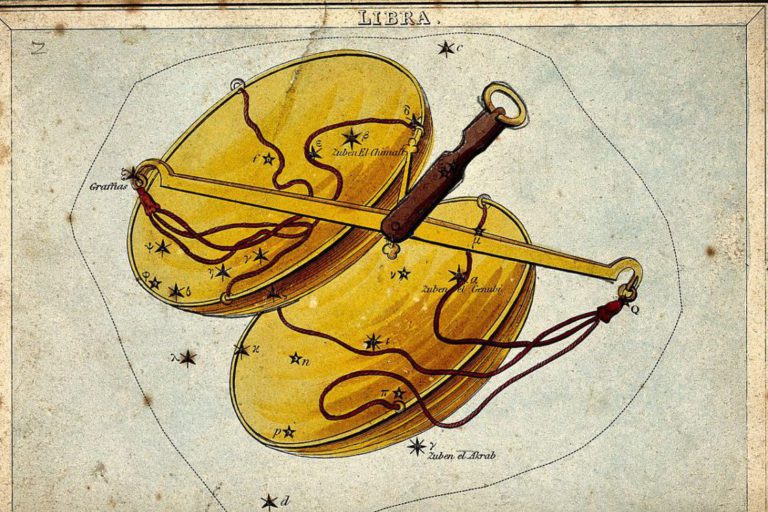
LIBRA (Sept. 23-Oct. 22): Glassblowers shape molten sand with breath and fire, knowing the material can only be formed while it’s hot and glowing. If they wait too long, the stuff stiffens, turns brittle and resists change. But if they push too soon, it collapses into a misshapen blob. In this spirit, Libra, I urge you to recognize which parts of your life are now just the right temperature to be reshaped. Your timing must be impeccable. Where and when will you direct the flame of your willpower? Don’t wait until the opportunity cools. Art and magic will happen with just the right amount of heat applied at just the right moment.

SCORPIO (Oct. 23-Nov. 21): “I have often been racked by obsessive urges that plague me until I act them out.” So says my Scorpio friend, Fatima, a conceptual artist. “Fortunately,” she continues, “I have finally retrained myself to focus on creative obsessions that fuel my art rather than on anxious, trivial obsessions that disorder my life. I’d be an offensive maniac if I couldn’t use my work as an outlet for my vehement fantasy life.” I recommend Fatima’s strategy to Scorpios most of the time, but especially so in the coming days. Your imagination is even more cornucopian than usual. To harness its beautiful but unruly power, you must channel it into noble goals.

SAGITTARIUS (Nov. 22-Dec. 21): The Igbo people of Nigeria have a term: ogwugwu na-adị n’ulo. It means “the medicine is in the house.” It’s the belief that healing doesn’t necessarily come from afar. It may already be here, hidden among the familiar, waiting to be acknowledged or discovered. Dear Sagittarius, your natural instinct is to look outward and afar for answers and help. But in the coming weeks, you should look close to home. What unnoticed or underestimated thing might be a cure or inspiration you’ve been overlooking? How can you find new uses for what you already have?

CAPRICORN (Dec. 22-Jan. 19): I invite you to celebrate the holiday known as Be Your Own Best Helper. How should you observe this potentially pivotal transformation in your relationship with yourself? Divest yourself of yearnings to have someone clean up after you and service your baseline necessities. Renounce any wishes you harbor for some special person to telepathically guess and attend to your every need. Vow that from now on, you will be an expert at taking excellent care of yourself. Do you dare to imagine what it might feel like to be your own best helper?

AQUARIUS (Jan. 20-Feb. 18): In the ancient practice of astronomy, the stars were considered “incorruptible.” Unlike the planets, their movements were unchanging, their lights stationary, their destinies steady and stable. We human beings are the opposite of all those descriptors, of course. There’s no use in hoping otherwise, because constancy just isn’t an option for us. The good news, Aquarius, is that you are now poised to thrive on these truths. The inevitability of change can and should be a treasured gift for you. You’re being offered chances to revise plans that do indeed need to be revised. You are being invited to let go of roles that don’t serve you. But what initially feels like a loss or sacrifice may actually be permission. Evolution is a tremendous privilege.

PISCES (Feb. 19-March 20): The axolotl is an amphibian that never outgrows its larval form. Unlike most creatures, it retains its youthful traits into adulthood. Amazingly, it can regenerate its limbs, its spinal cord and parts of its brain. Let’s make the axolotl your inspirational animal, Pisces. What part of your “youth” is worth keeping—not as immaturity, but as righteous design? Where are you being asked not to evolve past a stage, but to deepen within it? And what might be regenerated in you that seemed to have been lost? Your magic will come from being like an axolotl. Be strange. Be playful. Be ageless and original and irrepressible.

Your Letters, July 9

Free Range 

As we celebrated the Fourth of July, did we pause to consider the basic freedoms of animals? Whether hunted in the wild; confined in laboratories; imprisoned in zoos or circuses; caught in traps; or caged, raised and killed for their fur, skin, feathers, flesh or by-products, animals have no freedom.

Consider farmed animals: billions live in confinement, deprived of autonomy, dignity and joy. Chickens never spread their wings, pigs never root in the soil and cows never feel the sun on their bodies. They’re bred solely for exploitation—caged, mutilated and killed, with no say in their fate.

If freedom is a value we truly cherish, shouldn’t it extend beyond our own species? Choosing a plant-based lifestyle is one powerful way to put our values into action. If the roles were reversed, wouldn’t we want the same?

Steven Alderson
Santa Rosa

Symbol Crash

America was born under the sign of Cancer (“Horoscope for America,” July 2)? It is certainly infected with cancers of misinformation, voter apathy and partisan rancor. But the solution to cancer is remarkably simple, as proven by the effectiveness of pink ribbons saving millions of women’s lives by spreading awareness. 

We need a symbol to show support for the ideals that we strive for with a more perfect union. 

Symbols are powerful—a swastika can be a hate crime and a cross can show love, compassion, justice and caring for the marginalized. A Star Spangled Möbius Strip, visually “Stars and Stripes Forever,” can be worn anywhere to show support for the continuation of our democratic experiment and can encourage neighbors and coworkers to participate in our elections. Download a printable pdf for free at democracyawareness.org

John Rose
Santa Rosa

Culture Crush, 7/9

0

Sonoma

Come to My Living Room

Artist and vintner Alice Warnecke Sutro invites viewers into an intimate world with Come to My Living Room, a solo exhibition of multimedia figurative drawings on view July 11-20 at Alley Gallery in Sonoma. Known for live large-scale works, Sutro offers a rare glimpse at quieter, layered pieces drawn from private drawing sessions in her home—where pencil, etching and digital overlays trace moments of gesture and memory. An opening reception will be held 5-7pm, Friday, July 11, with wine and light refreshments. 11am-4pm, Thursdays-Sundays, July 11-20, at Alley Gallery, 148 E. Napa St., Sonoma. Opening reception RSVP at comeintomylivingroomopening.eventbrite.com.

Cotati

SF Mime Troupe’s ‘Disruption’

The San Francisco Mime Troupe’s latest, Disruption – A Musical Farce, lands in Cotati on Sunday, July 27, delivering a sharp, funny and fiery take on tech, politics and resistance in a rapidly changing San Francisco. Set in a city on the brink of becoming a corporate suburb, the show asks what happens when progress burns a little too hot. The free performance begins at 3pm (live music at 2:30) in La Plaza Park. Presented by the San Francisco Mime Troupe, the 80-minute satire is fast-paced, irreverent and very much of the moment. 3pm, Sunday, July 27, at La Plaza Park, Old Redwood Hwy. & W. Sierra Ave., Cotati. Free; $20 suggested donation. Full schedule at sfmt.org.

Novato

Cemetery Tours

The Novato Historical Guild resumes its Pioneer Park Cemetery Tours, offering guided deep dives into the stories of early Novato residents. Led by docent Sharon Azevedo, the 90-minute walks uncover rich local history among the headstones. Upcoming tours begin at 9am on July 26, Aug. 16 and Sept. 20. Reservations are required, with a suggested $10 donation onsite. 9am, Saturdays: July 26, Aug. 16 and Sept. 20. Pioneer Park Cemetery, Novato. Register at novatohistory.org under ‘Events.

Mill Valley

Modern Age Muse

Poet and the Bench presents Muse for the Modern Age, the first U.S. exhibition of Tokyo-based sculptor Hideki Iinuma, on view through July 11. Known for his commanding wooden figures carved using traditional ichiboku-zukuri techniques, Iinuma’s work explores identity, independence and feminine presence with a fashion-forward edge. The free exhibition showcases Iinuma’s vividly painted, intricately adorned sculptures—celebrating form, spirit and craftsmanship at a striking new scale. 10:30am-5pm, Tuesday-Friday, through September, at Poet and the Bench, 11 Throckmorton Ave., Mill Valley. Details at poetandthebench.com.

Cycle of Wine, Dutcher Crossing Winery’s Debra Mathy

Debra Mathy acquired Dutcher Crossing Winery in 2007, transforming it from a 35-acre property producing five varietals into 75 acres of estate-designated vineyards crafting 30 wines across Sonoma, Napa and Mendocino regions. 

The vintage penny-farthing bicycle on the Dutcher Crossing label is a nod to Mathy’s love of cycling, and also a tribute to her father, who encouraged her to pursue her dreams.

Amber Turpin: How did you get into this work?

Debra Mathy: My path to winemaking wasn’t traditional. I grew up in Wisconsin exposed to my family’s business, and began my career in education and nutrition. While this exposure gave me valuable perspective on building business, managing relationships and solving problems, I was developing a real passion for wine that started with a high school trip to France. I fell in love with their approach to wine, and the culture that surrounds it. Ever since, I always dreamed of owning a winery.

When my father was diagnosed with stage four melanoma, it was a wake-up call that life is precious and short. With his encouragement, we began searching for a winery in Sonoma together. Sadly, he passed away three months before I purchased Dutcher Crossing, but he continues to be my inspiration.

Did you ever have an ‘aha’ moment with a certain beverage? If so, tell us about it.

German Riesling in a German wine garden. The wine was unlike anything I’d tasted before, sparking my curiosity to explore different wine regions and varietals—a philosophy that’s now at the core of what we do at Dutcher Crossing. We are always inspired to seek out new AVAs and experiment with different varieties and winemaking techniques.

What is your favorite thing to drink at home?

Obviously I love wine, but every once in a while you need an Aperol spritz or dirty martini to get your evening off to the right start. During harvest, when my palate needs a break from wine tasting, I’ll often enjoy a crisp beer instead.

Where do you like to go out for a drink?

I love Catelli’s Restaurant in Geyserville for the Michael’s Pasta, a cocktail and a great glass of wine. In Healdsburg, I love to frequent Baci Cafe & Wine Bar, as they have a great gluten-free menu that goes along with their killer wine list. If I want a cocktail before or after dinner, Lo & Behold is my go-to.

If you were stuck on a desert island, what would you want to be drinking (besides fresh water)?

Tejava Tea and Scarecrow Cabernet Sauvignon.

Dutcher Crossing Winery, 8533 Dry Creek Rd., Healdsburg. 707.431.2700. dutchercrossingwinery.com.

Indie Yoyo: Declaration of Codependence

Due to some strange alignment of the stars, this happens to be the 249th anniversary of the Declaration of Independence as well as the 249th edition of the North Bay Bohemian that I’ve overseen as editor.

The whimsical side of me can’t help but find this somehow significant. As Galileo once opined, “Mathematics is the language with which God has written the universe.” I personally believe, however, that the universe was written with heaps of irony—hence Galileo praising the deity, then ending up under house arrest for a little heliocentrism.

Likewise, the notion of independence in media—especially a printed tabloid like this one—is itself ironic. I am inherently and absolutely dependent on you, dear readers. There is no independence here. Any armchair psychologist would rightly observe that I’m codependent on you. You complete me—at least to the extent that I rely on you to render meaning from these inkblots on wood pulp.

“Declarations” and “independence” are contradictory concepts for someone like me, who pivots and reinvents constantly. And not because I’m especially dynamic—but because I’m possessed by a compulsion to chase the next idea, and the next, without fully declaring allegiance to any of them. Beneath this cool exterior is a roiling mass of anxiety that avoids declarations because they imply commitment—which, again, sounds like the opposite of independence to me.

Of course, I came of age in the ’90s, when corporations co-opted the term “independent” from the DIY movement to sell us movies, music and, eventually, the internet bubble. “Indie” became a marketing concept—no longer an ethos but a pre-distressed aesthetic pushed by an algorithm. Independence got monetized, then quietly deprecated. Record stores used to run “Declaration of Independents” promos on the Fourth of July; now they sell vinyl reissues to millennial dads looking to relive a youth they never actually had.

Incidentally, this Fourth of July marks my kid brother’s 50th birthday. That he managed to be born in 1975 rather than the more auspicious bicentennial year of 1976 only proves he’s always been ahead of the curve—or the universe dealt him a rounding error. (Happy birthday, brother.)

My own birthday falls between Bastille Day and the anniversary of the moon landing. And if you subtract the year of the French Revolution (1789) from the year of the moon landing (1969), you get an even 180—colloquially, the degrees one turns when reversing direction, behavior or belief. So, in that spirit, here goes my 180:

I used to think independence meant freedom from obligation and the tyranny of other people’s taste. But now, I realize real independence might mean choosing one’s dependencies with care. Like choosing to show up, week after week, for this gig that sometimes feels like therapy, sometimes like performance art. To keep pivoting, remixing, rewriting the terms of engagement until something true emerges—or at least something publishable by deadline.

It’s about finding meaning in the absurd alignment of anniversaries and edition numbers, and maybe believing, just for today, that coincidence is a kind of cosmic wink. That we’re, somehow, on the right page.

So yes—249 issues under my belt. Two hundred forty-nine years since a gaggle of powdered wigs declared themselves free. Divide one by the other and you get one. Which is how many of me there are writing this and how many of you are required to make it worth it.

More at dhowell.com.

Summer ‘School’: Atypical Webber Musical at Raven

Which of the following does not belong: Joseph and the Amazing Technicolor Dreamcoat, Jesus Christ Superstar, Evita, Phantom of the Opera, Sunset Boulevard, School of Rock.

It’s a trick question because they are all Andrew Lloyd Webber musicals. Even School of Rock?

Yep. 

Webber bought the stage rights to the 2003 Richard Linklater/Mike White film starring Jack Black and joined with playwright Julian Fellowes (Downton Abbey) and lyricist Glen Slater (The Little Mermaid) to bring the tale of Dewey Finn’s transformation of a group of prep school students into rock stars to Broadway as a musical.

If you know the movie, you know the show. Wanna-be rockstar Dewey Finn (Declan Hackett) is desperate for money, so he takes to impersonating his friend, Ned Schneebly (Jordan Anderson), and grabs his gig as a substitute teacher at the hoity-toity Horace Green School under the watchful eye of constipated principal Rosalie Mullins (Tamara Brooks).

Just looking for a quick payday, Dewey pays little mind to the students until he discovers they all have musical talent. He envisions whipping them into shape and entering the local Battle of the Bands. Amazingly, each student blossoms under his tutelage, as does Dewey. Now, if they can only get past their stick-in-the-mud principal and oblivious parents.

The show, at the Raven in Healdsburg, is about as faithful a screen-to-stage adaptation as there is, which is a good thing because the film was pretty damn near perfect. Webber’s songs don’t get in the way (much) and frequently merge nicely with an element from the film (“Stick It to the Man”).

Declan Hackett is pretty much a carbon copy of Jack Black, which is also a good thing because that’s what you expect to see, and he bombastically delivers it. 

Director Steven David Martin has a very talented group of young folk playing the students. Sylvia Whitbrook is perfect as the by-the-book Summer. Lennon Whitaker as the flamboyant Billy and William Young as the not-cool Lawrence are fun to watch. Bernadette Lilian Gibson wows when she finally opens her mouth.

While the members of the student band each get a moment to display some musical prowess, the heavy lifting is done by a five-piece on-stage band—Greg Call, John Mayer, Scott Rosen, Joe Campbell and musical director J. Sun Howze. They rock.

At two hours and 45 minutes, it’s a long show, but credit to everyone involved for keeping the energy up. That includes the audience, who hooted and hollered throughout.

Rock on, Healdsburg.‘School of Rock’ runs through July 13 at the Raven Performing Arts Theater, 115 North St., Healdsburg. Thu–Sat, 7:30pm; Sun, 2pm. $10–$40. 707.433.6335. raventheater.org.

Big Data Is Watching and Corporate Media Doesn’t Care

Online surveillance of Americans
As the second Trump administration is dispatching its minions to stalk U.S. streets, smashing citizens’ First Amendment rights, in partnership with unregulated Big Tech, it also surveils online, helping itself to citizens’ personal identifiable information (PII). In the age of surveillance capitalism, information is a hot commodity for corporations and governments, precipitating a multi-billion-dollar industry that not only profits from the collection and...

Media Served Rare: ‘Legacy’ forms still resonate

Daedalus Howell hosts At-Large, a new radio show.
The media is like that apocryphal Mark Twain quote—the reports of its death are greatly exaggerated. It hasn’t died so much as evolved, perhaps beyond recognition, but vestigial elements persist. This is the case for so-called legacy media—print, broadcast, cable/satellite, theatrically released films, out-of-home billboards and artifacts like one’s precious vinyl—which are like neanderthals—they’re cruder, less elegant precursors but still...

Alternative History: Cracker and Camper Van Beethoven at Petaluma Music Festival

Cracker to perform at Petaluma Music Festival
Winston Churchill is credited with saying that history is written by the victors. And in the world of major labels, these corporate entities have a long history of emerging as top dogs, for example, by controlling artists’ musical output and contracts that gave acts the short end of the stick. David Lowery and his band, Cracker, definitely experienced that scenario...

Twerk Plus, ‘House of Flow’

“Twerk queen of the North Bay"
So it is that one doesn’t choose their fame … their fame chooses them.  And so it was that when the name Tristan St. Germain first reached me, it was in the aspect of the neon clad “twerk queen of the North Bay.” The twerk, for those who don’t know, is a hip-hop derived, booty-forward dance style. It’s strong and...

Free Will Astrology: 7/9-7/15

Free Will Astrology by Rob Brezsny
ARIES (March 21-April 19): In the days before lighthouses, some coastal communities used “fire beacons”—elevated structures where people tended open flames to guide sailors. In the coming weeks, Aries, I invite you to be like both the keeper and the flame. People will be drawn to your brightness, warmth and persistence as they navigate through their haze and fog....

Your Letters, July 9

Free Range  As we celebrated the Fourth of July, did we pause to consider the basic freedoms of animals? Whether hunted in the wild; confined in laboratories; imprisoned in zoos or circuses; caught in traps; or caged, raised and killed for their fur, skin, feathers, flesh or by-products, animals have no freedom. Consider farmed animals: billions live in confinement, deprived of...

Culture Crush, 7/9

San Francisco Mime Troupe performing
Sonoma Come to My Living Room Artist and vintner Alice Warnecke Sutro invites viewers into an intimate world with Come to My Living Room, a solo exhibition of multimedia figurative drawings on view July 11-20 at Alley Gallery in Sonoma. Known for live large-scale works, Sutro offers a rare glimpse at quieter, layered pieces drawn from private drawing sessions in her...

Cycle of Wine, Dutcher Crossing Winery’s Debra Mathy

Debra Mathy, owner of Dutcher Crossing Winery in vineyard
Debra Mathy acquired Dutcher Crossing Winery in 2007, transforming it from a 35-acre property producing five varietals into 75 acres of estate-designated vineyards crafting 30 wines across Sonoma, Napa and Mendocino regions.  The vintage penny-farthing bicycle on the Dutcher Crossing label is a nod to Mathy’s love of cycling, and also a tribute to her father, who encouraged her to...

Indie Yoyo: Declaration of Codependence

Daedalus Howell has edited 249 issues of the North Bay Bohemian
Due to some strange alignment of the stars, this happens to be the 249th anniversary of the Declaration of Independence as well as the 249th edition of the North Bay Bohemian that I’ve overseen as editor. The whimsical side of me can’t help but find this somehow significant. As Galileo once opined, “Mathematics is the language with which God has...

Summer ‘School’: Atypical Webber Musical at Raven

'School of Rock' cast members on stage at the Raven Performing Arts Theater in Healdsburg.
Which of the following does not belong: Joseph and the Amazing Technicolor Dreamcoat, Jesus Christ Superstar, Evita, Phantom of the Opera, Sunset Boulevard, School of Rock. It’s a trick question because they are all Andrew Lloyd Webber musicals. Even School of Rock? Yep.  Webber bought the stage rights to the 2003 Richard Linklater/Mike White film starring Jack Black and joined with playwright...
11,084FansLike
4,606FollowersFollow
6,928FollowersFollow