Abuse of Power

0

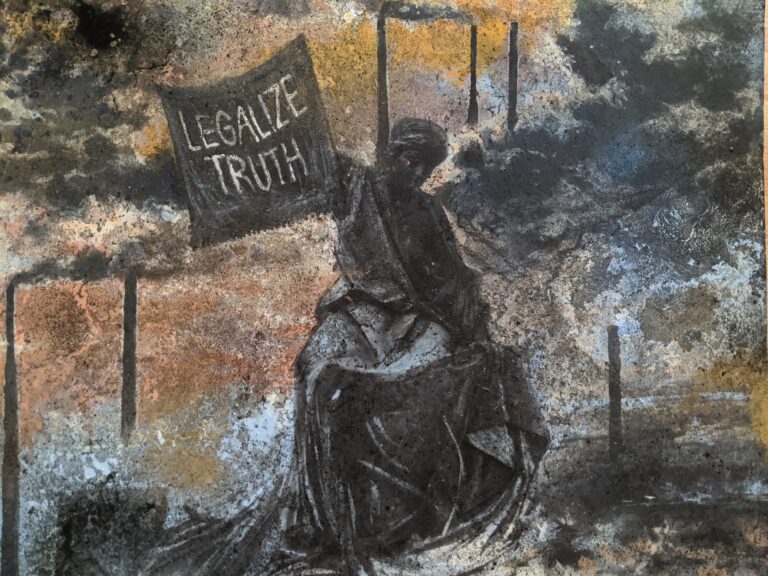
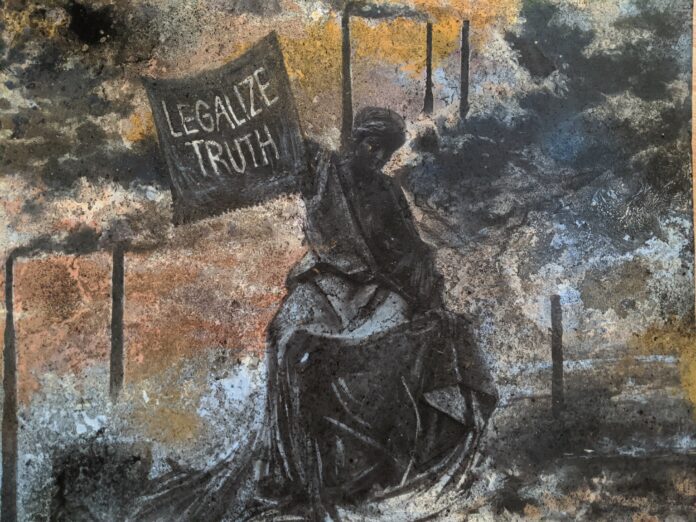
Once again PG&E has crossed the line and exposed its customers to an awkward and dangerous situation. If this time had been an actual emergency, the community would have worked together and weathered it with our strong Sonoma spirit. Rather, we were driven to frantic gas lines and unnecessary grocery store hysteria and economic and personal disruption.

This latest utility debacle should have been handled with a little more thought, planning and grace. Even the utility linemen who came by to inspect our electric lines prior to reconnection were perplexed and scratching their heads as to why this event was handled the way it was.

Once again, the customers of the utility have been played for fools. Yes, emergencies do happen and we need to be prepared, but this was an inexcusable display of mismanagement. Maybe the time has come to relieve PG&E of some of its power. This lack of care is what we get when the only option we have is a for-profit privately owned monopoly.

How about a publicly owned utility, led and owned by the customers. It has worked in other locations, why not here. Has the time come? Let the public speak and come up with a positive alternative to this persisting power grab. We need to develop a fair solution that spreads the responsibility and yes burdens and the gains to Californians everywhere. We need to unite to resolve this ever-troubling dilemma for our county and the State.

In the October 2019 edition of Jim Hightower’s “Lowdown” newsletter, he suggests that “CO-OP electricity has transformed rural America, but co-ops offer something even more electrifying: democratic power.” He goes on to offer that “by law, every household that uses the electricity as a member of the co-op has actual decision-making authority to control resources including cash flow, good jobs, a customer base, facilities and financial acumen. Moreover, unlike the corporate ethic of shareholder supremacy, these decentralized, grassroots utilities can be guided by an egalitarian ethic formulated in 1937, the Rochdale Principles of cooperative organization.”

PG&E doesn’t have to prove again and again that it shouldn’t be the only player in this game. Maybe it’s time to take our power back. What about the common good that has been overlooked again.

We welcome your contribution. To have your topical essay of 350 words considered for publication, write op*****@******an.com.

Climate Concerns

I am a concerned 6th-grade student at Live Oak Charter School in Petaluma, California, and I stand with the children and future generations of Earth. There is a problem that we need to fix and its name is climate change.

Climate change happens when we disturb the natural carbon cycle by taking fossil fuels from the earth and burning them. By doing that we release greenhouse gases, including CO into the air, causing more extreme temperatures, especially heat. This heat makes glaciers melt, causing flooding and water level changes. It also causes more ocean acidity, killing coral and fish. Climate change is disturbing many natural cycles and it could seriously damage the future. However, we can still fix this.

You can help us stop climate change by using compostable and reusable packaging and riding a bike or using public transport more than using a car. You can help even more by voting for The Green New Deal. Thank you.

Petaluma

Feel the Burns

I am responding to E.G. Singer’s piece about Ken Burns’ documentary on Country Music (Open Mic, Oct. 2). Mostly, I thought it was a fantastic retelling of American history through cultural and social contexts, but have two critiques of it.

The first is that in light of our current national discourse on race, I believe Burns should have devoted more time to the appropriation of black musical songs, style, and lyrics. He gave some credit to various early black musicians, including Louis Armstrong and Deford Baily. He also included the important efforts of Alan Lomax and A.P. Carter to catalog the rural traditional music originating with freed slaves. But he did not bring to consciousness how white musicians like Elvis Presley, the Carter Family, and others financially benefited from original black music without sharing a dime with the artists who provided the prototype and inspiration for their music.

The other critique is a matter of personal musical preference. Burns did an excellent job of detailing the origins of bluegrass and Bill Monroe’s influence on it, but he failed to highlight the directions bluegrass has traveled with Bill’s “children,” such as “New Grass” musicians Johnnie Hartford, Sam Bush, Tony Rice, David Grisman, and Tim O’Brien. I wish he had added a contemporary component to the ark of the story.

Willits, CA

Dark Stars

Long before Dan O’Bannon wrote Alien, (“Don’t Scream,” Oct. 9) he and I spent years in deep space aboard the scout ship Dark Star (John Carpenter’s 1974 debut feature film). When Dan watched a screening of a handful of movie goers staring blankly at the screen, he stormed out and said, “F’em! If I can’t make them laugh, I’ll scare the shit out of them.” Well done, Dan. Well done.

Rohnert Park

Write to us at le*****@******an.com.

Trailer Park Farce

Way to go Santa Rosa… Two years on and you still can’t get your act together to make something happen here (“Trailer Park Blues,” Oct. 2). What was that about simplifying and expediting the rebuild process? Shameful.

Via Facebook

Family Matters

0

Alfred Hitchcock popularized the term “MacGuffin” to describe objects or events that took place in his films that were necessary to begin the plot and motivate the characters but were essentially irrelevant. It may be harsh to refer to a baby as a MacGuffin, but the title character in Luna Gale, running through
Oct. 27 at Petaluma’s Cinnabar Theater, is just that.

She’s the newborn of meth-addicted parents Karlie (Miranda Jane Williams) and Peter (Zane Walters). After bringing their baby into an emergency room, they’re met by Caroline (Liz Jahren), a social worker who informs them the baby will be taken out of their custody while they receive treatment for their addiction. Faced with the choice of placing the infant in foster care or with Karlie’s mother Cindy (Gina Alvarado), Caroline recommends placement with the child’s grandmother—a decision she soon regrets.

Cindy, an evangelical Christian, seeks to gain full custody of the child with the support of her influential pastor (James Pelican). Caroline thinks the mother’s move will ruin her daughter’s recovery, but Cindy thinks Karlie’s a lost cause. She wants to save the child (in more ways than one).

Overworked and out of time as her tight-laced boss (John Browning) supports Cindy’s request, Caroline devises a plan to stall the custody hearing. Will this agnostic sell her soul to save three others?

Playwright Rebecca Gilman delivers a devastating portrayal of the underfunded and frequently unavailable social services world. Our nation talks a good game when it comes to the treatment of damaged individuals, but often fails to deliver.

Director Jessica Litwak brings a stylish directorial approach to the material that, while visually interesting, detracts from the text. The show opens and closes with movement pieces, and cast members dressed in lab coats act as shelves, flag poles, etc. when not in a scene. Rather than absorb what’s being said, one ponders why there’s an arm sticking out of the refrigerator holding a banana.

When not scenery, the cast acts the hell out of the script. Jahren gives a towering performance as the social worker exhaustively swimming against the tide of an entrenched bureaucracy. Williams and Walters effectively portray the troubled parents. Pelican gives an interestingly restrained performance as the church leader.

Not as depressing as it sounds, Luna Gale pays tribute to all those fighting the good fight—professionally and personally. There’s still hope.

Rating (out of 5): ★★★★

‘Luna Gale’ runs through Oct. 27 at Cinnabar Theater, 3333 Petaluma Blvd. N., Petaluma. Fri–Sat, 7:30pm; Sun, 2pm. $20–$32. 707.763.8920.
cinnabartheater.org

The Giving Grog

0

Traffic light. Disheveled dude, standing on the traffic island, turns to you with his cardboard sign. “Hungry—please help.” Buy a bottle of 2017 Frank Family Carneros Pinot Noir ($38) next month, and you can confidently lower the window a crack and reply, “I already gave!”

Throughout the month of November, up to “Giving Tuesday” following the national ritual shopping spree of “Black Friday,” Frank Family Vineyards donates 10 percent of the proceeds from their Pinot Noir, which shows classic dried cherry and potpourri spice notes of the region, to Feeding America, a network of food banks across the country. For $52, upgrade to the “Frank Fights Hunger” package including t-shirt. Buy two for the table and one for yourself for tonight—the winery matches the final amount, doubling the donation.

1091 Larkmead Lane, Calistoga. frankfamilyvineyards.com/wine/gift-collection/Frank-Fights-Hunger-Package

Last year, Cline Cellars moved the pink and purple ribbons on their Cashmere wines—signaling the Cline’s commitment to donating over $325,000 for breast cancer awareness and support organizations, plus over $100,000 for Alzheimer’s care and research, and other causes—from the front to the back of the label. Good news—on the latest Cashmere, the whole darn wine is pink.

24737 Arnold Dr., Sonoma.

OK, as prominent businesses in the community, most wineries support a nonprofit. Giving back lies at the heart of Breathless Wines’ founding mission. Bubbly wine, good causes—but you’re there already, right?

499 Moore Lane, Healdsburg.

You’re not in the clear because the power shut off and you dumped a fridge full of spoiled food. It doesn’t work like that. Every year, Sonoma Springs Brewing Co. thanks the first responders who saved them from a structure fire by brewing a robust, malty, double-red ale. This year’s Sottile Red, and the release party scheduled for Nov. 9 with bands, brats and beer, benefits the Sonoma Firefighters Association.

19449 Riverside Dr. Suite 101, Sonoma.

Twice a year I get a call from a tree-saving outfit, asking, can we count on you for $20 to save the trees? Fogbelt Brewing Co. not only takes inspiration for their beer names from the giants of the Redwood Empire, they give back to Stewards of the Coast and the Save the Redwoods League—and it’s so much easier to lift a pint than hang up the phone.

1305 Cleveland Ave. Santa Rosa.

The 2019 Boho Awards

0

Every year, the North Bay Bohemian staff has the pleasure of reflecting on the accomplishments of those in our community who give of their time and talents to improve the community-at-large.

There are many who make meaningful contributions daily and keep our community vital. This year, the honorees stood out for how they overcome divisions with dialogue, deliver aid to those in need, and foment belonging while shaping tomorrow’s leaders. Their collective desire to benefit all of us and to cohere a community that is often at odds with itself is exemplary and makes the North Bay truly greater than the sum of its parts. We salute you, our 2019 Boho
Award Winners!

Zahyra Garcia

By Karen Hess

Community organizer Zahyra Garcia came to America at the age of 1 when her parents crossed the border. She lived in the U.S. as a Deferred Action for Childhood Arrivals (DACA) recipient for 25 years and is now a permanent resident. “I’m also a queer woman of color, which makes me a triple threat.” she quips.

Her personal experiences pushed her to become an active community organizer. Since the 2016 election, Garcia has been a clear voice for the many unheard in our community. “Being silent just wasn’t an option for me anymore.”

Garcia is currently District 2 Commissioner for the Commission on Human Rights, where one role is working with youth.

“Working with the Junior Commission gives me hope. They are amazing human beings, and they are leading the way,” she says.
Most recently the Junior Commission’s Butterfly Project places painted butterflies that include immigrant stories in public spaces. As Garcia says, “Migration is beautiful and humanizing immigrants is what the youth wanted to do.”

As co-chair of the North Bay Organizing Project (NBOP) Garcia works with the Sonoma County Tenant Union to ensure renters’ have a voice. Currently, they identify and support local leaders and candidates who will act on climate change. She also co-founded the Climate Action Commission in Petaluma to work locally for environmental and equitable solutions.

Her work as co-chair with Indivisible Petaluma includes taking the reins from the Petaluma Progressives to produce the 21-year-old Progressive Festival. With this organization, she addresses racism in schools and identifies new leaders at the local and state levels that will represent all voices in the community.
“Living in a blue state doesn’t mean we are free of injustice. I want people to know that all the -isms happening at the national level, also occur at our doorstep,” says Garcia.

Additionally, Garcia is a founding member for the LGBTQI+ Families of Sonoma County – a volunteer-led group made up of parents to advocate, build and protect queer families.

“I took up being a community organizer to shine a light on the struggles of people like myself and break the status quo. It’s a lifelong commitment. My work is my life on the line, every day. We are here to remind people that no matter what walk of life you are from, you deserve basic human rights,” she says. “My hope is to have accomplices fight with our marginalized communities. So many voices are often left out of our democracy and conversations. To exist is to resist.”

John Crowley

By Daedalus Howell

For the uninitiated, a term like “social capital” might sound like corporate jargon a la “human resources,” or worse— perhaps it has something to do with pre-IPO social media companies.

Fortunately, it’s neither. Popularized in Robert Putnam’s book Bowling Alone: The Collapse and Revival of American Community, social capital refers to the factors that contribute to functioning social groups like a shared sense of identity, understanding, or just trust. Suffice it to say, it seems we’re running low on the stuff at present, which is why Petaluma-based Aqus Community Foundation executive director John Crowley is leading a local charge to get people together to start talking.

Petaluma Conversations is part of Crowley’s continuing mission is to bring people who often have disparate values together in real dialogue. Since its inception earlier this year, conversations have convened weekly and the event has blossomed into a well-attended and dynamic safe space for those on different parts of the ideological spectrum to discourse without rancor he had seen online.

“We first started on a year ago when I saw a lot of my friends being not-their-best-selves online to other friends of mine who weren’t being their best selves back,” recalls Crowley, whose initial Petaluma Conversations were hosted at Aqus Cafe in the Foundry Wharf of which he’s a proprietor.

The goal, Crowley emphasizes, is not to find solutions but simply understanding. He immediately noticed a change in the conversation’s tone after the first event.

“There was more civility after that,” Crowley observes. “When you know somebody, you’re going to be more civil with that person.”

The series has proved popular, so much so that Crowley recently changed the venue from the west Petaluma cafe to the more central, if not perceptibly neutral, Petaluma Library.

“Aqus Cafe has got, I guess, a certain reputation—a good reputation—but one that might not be terribly welcoming to everybody on the political spectrum,” he says with a laugh.
The conversations have taken a variety of issues over the past few months and never shy away from the more challenging topics of the day. The suggested subjects for next week’s scheduled chat at the Petaluma Library, for example, are immigration and addiction, which can be difficult enough to discuss over a family dinner, let alone in public with one’s neighbors.

“People have to trust each other but before that, they have to know each other. And before that, they have to meet each other,” says Crowley. “So, a lot of the work that I do is involved in getting people to meet each other and getting the conversation going. In order to get people to trust each other, those two things have to come first.”

Susan Farren:

First Responders Resiliency, Inc.

By Charlie Swanson

Susan Farren has always been in the business of saving lives. After graduating from the Stanford paramedic program in 1985, she began a career as an emergency medical services provider, cutting her teeth as a paramedic in West Oakland before serving the North Bay as a paramedic, then as a supervisor and a clinical manager.

All that changed in 2016, when Farren was diagnosed with kidney cancer. “Initially, that diagnosis was terminal,” says Farren.
After surgery removed a tumor in her right kidney, the doctor who performed the work said something that propelled Farren down a new path of work.

“The doctor made a comment after my surgery, and said, ‘We see a lot of this in first responders,’” Farren recalls. “I asked him, ‘A lot of what?’”

The answer was organ cancer, and after Farren got out of the hospital, she dived into research on the subject. She found articles about increased risk of cancer for first responders, primarily kidney cancer. “That’s where your adrenaline is dumped when you’re in a fight-or-flight situation, which is common for first responders,” Farren says.

She also discovered that through strokes and heart attacks, first responders suffered a 15-year drop in their life expectancy versus civilians. Depression, substance abuse, divorce and suicide statistics were also elevated for first responders. “Everything I looked at was like alarms going off, because I had worked in this industry my whole life; I’d seen it,” Farren says. “I realized something was happening to us, way beyond being treated for post traumatic stress.”

Farren decided that treating stress after the fact was already too late. After consulting with experts and developing a proactive program, Farren sold her house to start the nonprofit organization First Responders Resiliency, Inc.

Through the organization, Farren and her team lead workshops and conferences with first responders to give them tools to retain their physical, emotional and relational well-being while they perform their high-stress, often life-or-death duties.

The group trains first responders in modalities of how to be aware and recognize symptoms of trauma and gives them techniques to help keep their nervous systems calm. These trainings also boost “right-brain” thinking that allows for creative and intuitive thinking.

“Once I got the word out, people realized the value in it,” says Farren, who notes that these conferences are for first responders only, to allow attendees a safe space among colleagues. The organization’s staff is also entirely comprised of retired first responders.

First Responders Resiliency, Inc. leads events throughout the Bay Area, and with overwhelmingly positive responses from attendees, Farren now receives requests to lead conferences in other states and other countries. “As we continue to grow, we’re going to get this message out to as many people as we can, because we know that what we are doing works,” she says. “We know we are saving lives.” (resiliency1st.org)

Hot Water

0

PG&E’s decision to turn off the lights on close to 700,000 Northern California customers last week was widely regarded as the latest debacle for the nation’s largest investor-owned utility.

Grappling with the fallout, local politicians called for increased oversight while activists push for a possible public takeover of the utility.

As if things couldn’t get worse, news broke Thursday that a dozen or so PG&E gas executives attended a customer appreciation party for 50 to 60 of the utility’s largest gas customers at Silver Oak Winery in Sonoma County on Tuesday, Oct. 8.

Not only did the utility shut off the power the next day; the party was held on the second anniversary of the 2017 North Bay fires.

PG&E’s CEO Bill Johnson acknowledged the timing of the gathering was “insensitive, inappropriate [and] tone deaf,” according to the San Francisco Chronicle.

In a later statement, PG&E said they had planned the party for about a year and that, “Moving forward, we will no longer hold these types of events.”

Even Gov. Gavin Newsom, whose 2018 gubernatorial campaign received $208,400 from PG&E and high-level PG&E employees, criticized the utility for its management of the outages and ongoing management practices.

“They’re in bankruptcy due to their terrible management going back decades,” Newsom said. “They’ve created these conditions, it was unnecessary. This can’t be the new normal.”

The power shutoffs were not only dangerous for drivers and residents with medical needs, they were also expensive.

Michael Wara, director of Stanford University’s Climate and Energy Policy program, estimated the power outage cost customers and businesses $2.5 billion. Other experts put the cost lower.

Santa Rosa Mayor Tom Schwedhelm estimates the power outage cost the city $250,000 due to additional staff time and emergency preparedness efforts, according to the Press Democrat.

The Big City

On Thursday, Sonoma County Supervisor Shirlee Zane and other county officials visited PG&E’s corporate headquarters in San Francisco. In an interview, Zane called the county’s relationship with the utility “rocky,” adding that, while she supports the need for limited power shutoffs as a tool to prevent possible wildfires, the recent outage was too broad and done without sufficient input from public agencies.

Zane said that among other requests, the county asked to have a representative in the utility’s emergency situation room next time the utility considers a planned power outage.

Another county supervisor, Lynda Hopkins, called for increased investments in infrastructure improvements, such as modern micro grids.

“We have to do more than trim trees,” Hopkins told the Press Democrat over the weekend. “We need to be investing in long-term solutions.”

Going Public

Some Democratic Party members and San Francisco officials are supportive of a bolder move, long advocated by activists: Purchasing, or seizing, PG&E property through eminent domain—the government’s right to take over private property in times of need.

In April, the Sonoma County Democratic Central Committee, a group of representatives from all the county’s smaller Democratic clubs, passed a resolution asking the state party to push for a public takeover of PG&E.

Citing fallout from PG&E’s ongoing scandals, the resolution proposes that California take over the investor-owned utility and run it as a “non-profit public utility owned by the people.”

“California has numerous municipal public utilities including [the Los Angeles Department of Water and Power and the Sacramento Municipal Utility District], and Nebraska has statewide public utilities, all of which can be used as models on how to run a nonprofit public utility owned by the people,” the resolution states.

Lowell Young, a member of the Mariposa County Democratic Club and a co-author of the resolution, says he’s helped push the idea through the state party apparatus for the past year.

“If we’re going to bail them out, let’s use that money to buy them out instead,” Young told the Bohemian.

Other entities within the state party, including the Rural Caucus, the Progressive Caucus, two regional democratic clubs and a handful of county and city clubs around the state, also passed the resolution, according to Young.

Stuck in limbo at the moment, the resolution awaits consideration at a party leadership meeting in March of 2020.

Despite the delay on Young’s proposal, a trial run is playing out in San Francisco, while the city attempts to purchase PG&E’s infrastructure within city limits.

Last week, PG&E rejected San Francisco’s offer to purchase the utility’s infrastructure within the city for $2.5 billion as part of the utility’s bankruptcy deal.

PG&E’s CEO Bill Johnson said, in a letter to city officials, that the deal would impact the utility’s ratepayers outside of San Francisco, according to the San Francisco Chronicle.

“We disagree with the suggestion that PG&E’s San Francisco customers would be better served by another entity,” Johnson wrote. “Our San Francisco customers—and our customers in the rest of our service territory—rely upon us every day to deliver safe, reliable, affordable and clean power.”

San Francisco Mayor London Breed and City Attorney Dennis Herrera defended the city’s offer and indicated their continued efforts to buy the utility’s infrastructure.

“We would not be leaving PG&E’s remaining customers in the lurch,” Breed and Herrera wrote in a Chronicle article. “San Francisco is only a small portion of PG&E’s service territory. Our city includes some of PG&E’s oldest equipment that will require substantial work to remain in service. If we take on that responsibility, PG&E can refocus on the balance of its system.”

IBEW 1245, the largest electrical workers union chapter in Northern California, began a campaign opposing San Francisco’s proposal, arguing that a takeover could harm workers’ compensation and pensions.

Young’s proposal calls for “keeping the existing employees of PG&E and installing a new executive management team initially appointed by the governor and the leaders of the state Senate and Assembly.”

While getting on the party platform is just a stepping stone for Young’s cause—most items added to the state party’s platform sit on the party’s website without ever becoming law—Young says he and his colleagues are speaking directly to lawmakers about a possible PG&E takeover due to the urgency of the situation.

“The only way we’re going to stop [PG&E] is through public ownership,” Lowell says, regarding the utility’s “negligent” behavior.

Tasty Tech

No wonder spice inspired Marco Polo’s adventures. A little goes a long way, much like Le Petit Chef, who guides the palates of diners on a global tour of the Silk Road via a three-dimensional dining experience at the Culinary Institute of America (CIA) at Copia in Napa.

The “Spice Trail of Marco Polo” journey leads participants through the wonders of augmented reality via light projection tech dubbed TableMation, literally turning the pages of history and sharing a story about five indigenous courses of spice-infused specialties.

All was dark when I entered the private dining area—except for the table settings, which were lit circles of vignettes the size of dinner plates. The lights hovered over actual books titled Dinner Time Stories. I took my seat next to a woman who introduced herself as Syeda, originally from Pakistan. My dining companions consisted of a mix of local residents, as well as intrepid travelers. We opened our books to blank pages and the scene was set, thanks to Skullmapping, a visual-storytelling technique developed in Belgium.

Zach, our human host for the evening, worked with Le Petit Chef to lead us through each course with a humorous, yet educational, tale to share the footsteps of “that crazy Italian Marco Polo” who discovered spices and exotic cuisine en route to the Silk Road.

Background music and Le Petite Chef’s squeaky techno French accent narration conveyed the story, along with dimension-enhancing visuals. The animation on our pages jumped as he began in Marseilles, France—his birthplace. Once the pages turned and the introduction was made, waiters placed an actual, travel-sized piece of hand luggage at each table setting. We opened the luggage to a taste of Piquillo Gougere Tart, a savory pâté a choux infused with red pepper. Our two-sip cups of tomato soup, paired with glasses of Brut Rosé from Domaine Carneros, were a nice touch.

From Marseilles, we sailed through ocean waters as each plate, and then the table, projected the sea, with waves crashing against the wall for added effect. Amid the thrill of the light show on the wall and the lively conversation among this communal table of diners, the delectable food and wine competed for my attention.

Onward to Arabia, where the table settings metamorphosed into a light show of scroll designs with a batik-blue background. Cartoon smoke from a cartoon hookah puffed over Le Petit Chef while the wall shifted into a desert scene with camels led by men wearing headscarves. Le Petit Chef humorously identified the camels as “big dogs” and then plucked a large red pepper that caused smoke to shoot from his ears. He ran across the book’s pages, madly plunging his face into a half-cut fig for relief.

Then, each of us received a portable tray laid carefully over our individual books, while we passed a handful of cloth bags between us. We played a blind guessing-game on what spices were in each bag. Every diner participated. Some aromas, like cloves and cinnamon, were easy to identify; others, like bay leaf, cardamom and fenugreek—not so much.

We were then asked to identify how these spices factored into our meal and the answers flowed like the complimentary sparkling wine served before dinner. The majority of us correctly identified “cardamom” in the room-temperature lamb meatballs, and a sprinkling of cinnamon over the bed of apricot chutney they were served on.

A few goat-cheese blinis and a sparse portion of lentil stew later, we finished the course with sips of a 2016 Joseph Burrier, Chateau de Beauregard, “Poncie” Fleurie AC paired with tiny bowls of candied hazelnuts and sumac-coated plums.

As our culinary journey continued into India, I devoured a decent portion of Halibut Masala served over a spread of curry with a golf ball–sized Indian eggplant, a few cashews and green peas. With this course, we sipped on a 2017 ZD Chardonnay from Napa Valley and sailed forward.

A palate cleanser of yogurt and a scoop of CIA’s own garden-strawberry sorbet, served in a teacup, awaited each of us at the Himalayas. They told us to restrain from eating this until instructed. Waiters distributed tiny pitchers of hot water to our trays and we carefully poured the water around the small saucer—not in the teacup. This resulted in a “smoke effect,” thanks to the clever use of dry ice, adding drama to the sorbet course.

Upon our arrival in China, dragons displayed on our plates, table and the wall chased Le Petit Chef. We also noticed our live staff of servers now wore red frocks.

While in China, a glass of 2017 Abiouness Pinot Noir from Stanly Ranch in Carneros paired nicely with our next course: a few slices of duck breast and delicious, transparent sweet-potato noodles and a few soybeans, baby carrots and enoki mushrooms.

Dessert was a mix of all the places and the spices we experienced throughout dinner—a cardamom cake, vanilla crème brûlée and a glass of Alvear, “Solera 1927” Pedro Ximenez Sherry, Montilla-Moriles DO, NV for those who purchased the wine pairings with the experience (an additional $50).

We departed with much laughter, newfound friends, bellies filled with food and a better understanding of the spices found along the Silk Road.

Witches Brew

0

Lifelong horror film fanatics and Sonoma County natives Josh Staples, Jef Overn and Brian Henderson scare up a lot of fun as the trio behind the podcast Forever Midnight, a horror-centric audio series where the friends review classic and contemporary flicks and offer their wicked perspective on all things scary.

“Brian, Jef and I have a forum where we get to talk about our lives, and pass stories back and forth, and every time we say, ‘that would be such a cool movie,'” says Staples.

Three years ago, the Forever Midnight trio got their foot firmly in the door of horror film-producing by releasing the official soundtrack of the short underground cult film Coven, nearly 20 years after the film’s release.

Now, the aficionados take another huge leap into the genre, with their new short film, Night Drive, co-produced with Dogfilm Studios, and screening at a special Witchcraft & the Occult Movie Night event on Thursday, Oct. 24, in Santa Rosa.

All three members of Forever Midnight are multi-talented creative producers in their own right, and each contributed to the production of Night Drive. Henderson takes credit for creating the story, based on a real-life event, and oversaw the film’s special effects. Staples wrote the screenplay and the original score, which includes three original songs. Overn co-directed and co-edited the film alongside Sonoma County filmmaker Timmy Lodhi, the man behind DogFilm Studios.

The six-minute film concerns a group of friends on a late-night drive and a stranger on the side of the road who propels the group into a weird odyssey of terror.

Staples credits ’80s horror films like The Twilight Zone and Creepshow 2 as inspirations for the film.

Night Drive’s debut on Oct. 24 at the Roxy Stadium 14 in Santa Rosa also marks the release of a new collaboration beer between Forever Midnight and HenHouse Brewing, where Staples is the art director. The collab is a black saison aged in burgundy wine barrels that they call Batch 666: Witchcraft & the Occult.

After a beer reception and the debut Night Drive, the Forever Midnight crew is screening Coven with director Mark Borchardt in attendance for a Q&A and signing. Borchardt and Coven caught the nation’s attention when his attempt to complete the film became the subject of the 1999 documentary American Movie.

“Mark is a great personality, he’s a film historian, writer, actor and director,” says Staples. Coven is also an occult-centric horror film in which Borchardt plays an alcoholic writer who joins a recovery group that turns out to be more than it seems.

Capping off the night is a screening of the film Haxan, originally produced in 1922 in Sweden as a long-form silent film on witchcraft and re-cut as a psychedelic trip with narration by William S. Burroughs.

“This is a great opportunity to do a real witchy showcase,” says Staples. “It’s a perfect series of movies to drink to.”

Witchcraft & the Occult Movie Night happens on Thursday, Oct. 24, at Roxy Stadium 14, 85 Santa Rosa Ave., Santa Rosa. Beer reception at 6pm; movies start at 7pm. $8.50–$11.50. santarosacinemas.com.

Strangers No More

0

North Bay bluegrass music fans likely know the name Hellman. Warren Hellman founded the Hardly Strictly Bluegrass Festival in San Francisco, and his son Mick Hellman and the family continue to run it. In addition, the Hellman musical family boasts bands and artists like Mick’s daughter Avery Hellman (Ismay) and the group the Well Known Strangers, formed by Mick and his other daughter, Olivia Hellman.

“The original idea was to back up my daughters and help them spread their wings musically,” says Mick Hellman.

The Well Known Strangers started as a barroom-ready country-rock band. “Our favorite thing was playing these kind of rowdy songs,” says Hellman, who plays drums in the group. “We had a term for this, which was ‘brutal country.'”

After releasing a self-titled EP of mostly covers, the Strangers broadened their scope, both musically and thematically, for their new LP, TMI, which the band plays on Sunday, Oct. 20, at Twin Oaks Roadhouse in Penngrove.

The album’s array of Americana tunes, largely written by Olivia and the band, get personal quickly. The title track, a stomping, blues-tinged number, is Olivia’s response to all the things men tell her when they’re drunk. The song “Look Me in the Eye” is a Generation X–inspired dirge about political disenfranchisement and frustration, and the album’s final track, “A Song For My Daughter,” is a letter Mick penned to Olivia in the wake of a family tragedy.

Despite the heavy theme, TMI is a raucous, exuberant album that maintains a rough-around-the-edges vibe while also offering robust harmonies and a newly developed musical tenderness.

Shortly after recording the album, Olivia moved to Nashville to further pursue her career, and Amber Morris, who appears on TMI as a guest vocalist, now fronts the band when they play live. Hellman says the group stays together, in spite of his daughter’s absence, because of strong chemistry and camaraderie.

“What we are talking about doing (at the show in Penngrove) is honoring the discontinuity that happened between losing Olivia and gaining Amber, to put the album in the context of the changes that are being made,” says Hellman. “And to celebrate the new material we are working on with Amber, where the focus—instead of [on] the brutal country vibe—is more country soul.”

Well Known Strangers perform on Sunday, Oct. 20, at Twin Oaks Roadhouse (5745 Old Redwood Hwy, Penngrove. 3pm. $10–$25. 707.795.5118).

Trickle-Up Economics

0

Does anybody besides me think we’re looking at the wrong end of the horse? The wealthy of this country, and their political emissaries the Republican Party, attack Obama’s healthcare reforms declaring it will result in jobs being taken away from American workers. Jobs, jobs, jobs, they say, is what Americans need the most, and what government ought to focus on. This from the wealthy—the plutocracy, if you will—that have spent the last 30 years systematically eliminating jobs in this country by taking their business overseas to exploit cheap labor and, in effect, exploit our less organized, less represented, more desperate brothers and sisters.

Oh, that’s right—the money trickles up. The wealthiest 1 percent take home 23 percent of all the income in this country. The wealthiest 10 percent take 50 percent of the entire wealth of the country. By the way, it didn’t use to be this way. The largest period of growth for the middle class occurred between 1945 and 1980. But between 198 what we miss by looking only in this direction is that the wealthy are 0 and 2005, 80 percent of all new income went to the top what we miss by looking only in this direction is that the wealthy are doing just fine.

Remember the banking crisis? The deregulation sought and obtained by George W. and company created the ground for rampant exploitation of regular working people. And after they created the economic disaster, who did they turn to for the bailout? Us. We the People saved their sorry asses. So with foreclosures happening everywhere, job losses everywhere, basic services threatened everywhere, it’s a bit galling that Wall Street CEOs are now earning more money than they were before the bailout.

The depletion of money for basic services isn’t happening because there’s no money to be had; it’s because the wealthy have found ways to avoid paying their fair share. It’s an old story: the rich get richer while the poor, and now middle class, gets poorer. This is the conversation we’re not having. And to the extent that we don’t, we participate in our own demise.

We welcome your contribution. To have your topical essay of 350 words considered for publication, write op*****@******an.com.

Abuse of Power

Once again PG&E has crossed the line and exposed its customers to an awkward and dangerous situation. If this time had been an actual emergency, the community would have worked together and weathered it with our strong Sonoma spirit. Rather, we were driven to frantic gas lines and unnecessary grocery store hysteria and economic and personal disruption. This latest utility...

Climate Concerns

I am a concerned 6th-grade student at Live Oak Charter School in Petaluma, California, and I stand with the children and future generations of Earth. There is a problem that we need to fix and its name is climate change. Climate change happens when we disturb the natural carbon cycle by taking fossil fuels from the earth and burning them....

Family Matters

Alfred Hitchcock popularized the term "MacGuffin" to describe objects or events that took place in his films that were necessary to begin the plot and motivate the characters but were essentially irrelevant. It may be harsh to refer to a baby as a MacGuffin, but the title character in Luna Gale, running through Oct. 27 at Petaluma's Cinnabar Theater,...

The Giving Grog

Traffic light. Disheveled dude, standing on the traffic island, turns to you with his cardboard sign. "Hungry—please help." Buy a bottle of 2017 Frank Family Carneros Pinot Noir ($38) next month, and you can confidently lower the window a crack and reply, "I already gave!" Throughout the month of November, up to "Giving Tuesday" following the national ritual shopping spree...

The 2019 Boho Awards

Every year, the North Bay Bohemian staff has the pleasure of reflecting on the accomplishments of those in our community who give of their time and talents to improve the community-at-large. There are many who make meaningful contributions daily and keep our community vital. This year, the honorees stood out for how they overcome divisions with dialogue, deliver aid to...

Hot Water

PG&E's decision to turn off the lights on close to 700,000 Northern California customers last week was widely regarded as the latest debacle for the nation's largest investor-owned utility. Grappling with the fallout, local politicians called for increased oversight while activists push for a possible public takeover of the utility. As if things couldn't get worse, news broke Thursday that a...

Tasty Tech

No wonder spice inspired Marco Polo's adventures. A little goes a long way, much like Le Petit Chef, who guides the palates of diners on a global tour of the Silk Road via a three-dimensional dining experience at the Culinary Institute of America (CIA) at Copia in Napa. The "Spice Trail of Marco Polo" journey leads participants through the wonders...

Witches Brew

Lifelong horror film fanatics and Sonoma County natives Josh Staples, Jef Overn and Brian Henderson scare up a lot of fun as the trio behind the podcast Forever Midnight, a horror-centric audio series where the friends review classic and contemporary flicks and offer their wicked perspective on all things scary. "Brian, Jef and I have a forum where we get...

Strangers No More

North Bay bluegrass music fans likely know the name Hellman. Warren Hellman founded the Hardly Strictly Bluegrass Festival in San Francisco, and his son Mick Hellman and the family continue to run it. In addition, the Hellman musical family boasts bands and artists like Mick's daughter Avery Hellman (Ismay) and the group the Well Known Strangers, formed by Mick...

Trickle-Up Economics

Does anybody besides me think we're looking at the wrong end of the horse? The wealthy of this country, and their political emissaries the Republican Party, attack Obama's healthcare reforms declaring it will result in jobs being taken away from American workers. Jobs, jobs, jobs, they say, is what Americans need the most, and what government ought to focus...
11,084FansLike
4,446FollowersFollow
6,928FollowersFollow