Column Alums

Back in the ’90s, in my early newsroom days, the editors would let us cub reporters stray from our beats into a journalistic DMZ dubbed the “Reporter’s Notebook.” This was where we could write in the first-person, hone our voices and basically indemnify the paper from any of our outré opinions.

Such columns were a sanctuary for those of us, like me, who were generalists and fancied ourselves more “writer” than “reporter.” Sigh. Can your career be summed up by a Kinks’ lyric? Here’s mine: “And now we’re back where we started / Here we go ’round again!” I write that with gratitude, which I’m paying forward by injecting the Reporters Notebook ethos into these pages. Why? Because I still believe in alt-weeklies and the pack of lone wolves who howl their truth at the paper moon to make them.

Yokels like myself hesitate to proceed in this regard without first nodding to Santa Rosa’s own Robert Ripley of Ripley’s Believe It or Not fame, whose column of cultural curios first dropped 90 years ago this month. That was long before the TV series and the tourist attractions that came to bear the same title—also before he hired Norbert Pearlroth, a Polish-born polyglot, as the sole researcher, qua writer, for
the endeavor.

Pearlroth worked 10 hours a day, six days a week scouring the New York Public Library’s Main Reading Room for the bits that comprised the one-panel strip. Ever hear of him?

Believe it or not, Ripley was neither the first nor the last employer to exploit immigrant labor—but he was the first to do it in print and at scale. By the 1940s, the feature boasted 80 million readers worldwide. Pearlroth went largely unknown and underpaid for 52 years—thus spake Wikipedia. When, a couple of decades hence, this column has 80 million readers worldwide, you can bet every word of it was written by me, or at least an algorithm based on me.

By the time he filed his last edition of three-dot journalism, the Chronicle’s Herb Caen wrote 14,133,000 words worth of columns on his loyal Royal typewriter. I wrote this with my thumbs on a phone. I don’t even know how to type Caen’s trio of bullets without incurring the kind of sprain that would end my thumb-wrestling career. It’s bad enough that autocorrect doesn’t know what the duck I’m writing half the time. Worse yet, when I attempt to dictate to the device, Siri just offers to call me an Uber so I can “go home and sleep it off.”

With or without technology, I’ll persist and “write doodads because it’s a doodad kind of town.” That’s a bit I picked up from Mrs. Parker and the Vicious Circle a quarter-century ago. Dorothy Parker wasn’t in Kansas any more than she was trapped in some Nietzschean eternal recurrence—the film’s title, of course, a reference to the Algonquin Round Table. But here we go ’round again: I can’t help but think this is a fresh start, not just for me but for you, Dear Reader. I’m no pillar of the community, but I make a decent column. Send doodads.

Rage Rage

0

Don’t just evacuate and meditate, agitate, it’s nearly
too late,

As my hero, Swedish teenager, Greta Thunberg, says.

There is no before and no after, only implacable present.

No winners and no losers, only passengers on the arc called Earth,

crossing sea that’s rising, air that’s blackening, temperature that’s soaring.

Homo sapiens, us, created infernos

Hell born in Paradise; no Phoenix rose from the ashes that fell on 14,000 Butte houses, only 14 rebuilt, nor did Phoenix rise on farmers and field workers Sonoma 2019,

swarms of survivors from 2017 fires still suffering PTSD,

though Pollyannas say it’s all good. “Sonoma Strong,” bla bla bla,

insensitive to homeless suffering, and what of toxic air pollution in India now?

Maybe, despite tech, our savvy, humans not savvy survive future winds, fires, droughts, earthquakes, climate change, global warming.

Maybe species doomed like dinosaurs,

only big question now how to make Earth exit less painful not just for moneyed madmen but for all, from Delhi and Cotati to Ojai and Shanghai.

Meanwhile, do not go gently into the dying of the light

Rage, rage; don’t hesitate

Rage, rage against the coming of the night.

We welcome your contribution. To have your topical essay of 350 words considered for publication, write op*****@******an.com.

Welcomed Water Coverage

Thank you so much to Alastair Bland (“Saving Salmon,” Nov. 6) and Will Carruthers (“Petaluma

River Waste Deep,” Nov. 6). So appreciative of your investigative journalism on these important issues. Your paper is our watchdog on local resources being pressured by our negligence and a prayer for Jaren Huffman’s challenging dance around water stakeholders.

Santa Rosa

Dam’d if you Do

Regarding “Saving Salmon” (Nov. 6, 2019), Cape Horn Dam was completed in 1907, not in 1920 as the article states. Cape Horn Dam cut off about 100 miles of stream habitat and Scott Dam cut off about 29 miles of habitat.

The Potter Valley Project Diversion is a major focus of debate, as it provides recreational, agricultural and residential use to parts of South-Eastern Mendocino County and North-Western Sonoma County.

Fish habitat and biodiversity loss on the Eel River has had a negative impact on the environment and local indigenous people. Due to the construction of the Van Arsdale Dam and the Cape Horn Dam, salmon spawning grounds have been adversely affected, resulting in great harm to the biodiversity of the Eel River. Twenty-nine miles of the main stem of the Eel River is completely cut off from salmon habitat. This stream alteration severely damaged the once-thriving fish populations of the Eel River.

With less fish comes a less bio-diverse terrain and a shortage of traditional indigenous food sources. Throughout the past century, logging and ranching created erosion and water pollution issues along the Eel River. In Central Humboldt County, where the Mighty Eel flows into the Pacific Ocean, dairy ranching has replaced the natural landscape. The loss to the Eel River salmon runs are estimated to be “800,000 Chinook, 100,000 Steelhead and 100,000 Coho,” and the disappearance of vast numbers of fish and wildlife has become the norm.

Constructing new fish ladders around the dams or removal of both dams is the second chance this life-giving river needs. The Potter Valley aqueduct tunnel that diverts the river south was likely built before any considerations of the impact on the environment or indigenous people were taken into account. Now, over 100 years later, the liability of this project and the responsibilities of river stewardship are up for review, as the water rights and use permit are set to change hands. Verified historical reports claim a Clear Lake outlet to the Russian River once existed but was blocked by a landslide. The landslides prevented natural water flow from Clear Lake into the Russian River. Now, Clear Lake currently drains into the Sacramento River.

Everyone must have water but the long term health of our environment must take precedence. Ultimately, it is possible to build a new and environmentally friendly water system that satisfies the concerns of each group and helps to restore salmon. As we go forward in planning the future of this critical California waterway, we must work to cultivate a healthy environment that will benefit everyone—and “by way of a river,” as the salmon, whales, birds, wildlife, insects, plants, plankton, minerals and micro bacteria will span out to every natural thing on Earth. It is all connected!

Peace & Harmony Foundation
of Mendocino

Write to us at le*****@******an.com.

Kids Are Alright

0

Author Roald Dahl’s children’s stories usually feature an exceptional child living in an unexceptional world of abusive adults and oppressive institutions. Whether it’s James traveling in a giant peach or Charlie touring a chocolate factory, the young protagonists usually triumph with the help of a loving grown-up.

That formula is at work in Matilda the Musical, an adaptation of Dahl’s 1988 novel by Dennis Kelly with music and lyrics by Tim Minchin. A co-production of Napa’s Cafeteria Kids Theater and the Napa Valley College Theater Arts program, it’s running through Nov. 17 at the College’s Performing Arts Center.

It makes sense that the two entities would join forces, as it’s a humongous show with a cast of 55 performers—ages 7 and up—comprised of kids, college-age students and an adult guest artist. Several of the main roles are double-cast.

Matilda (Sophia Grace Passaris) is the neglected daughter of a shallow competitive-ballroom dancer (Courtney South) and an unscrupulous used-car salesman (Francisco Gutierrez). They mock Matilda’s intellect and encourage her to watch more television. She finds her escape in books and in trips to the library where she regales the librarian (Ashley Zaragoza) with her original stories. She also finds some relief in occasionally being naughty.

Matilda’s days are spent at Crunchem Hall, a school whose motto is “Bambinatum est Magitum” (“Children are Maggots”). It is run by the tyrannical Miss Trunchbull (an imposing Michael Conte in a role traditionally cast with a male). Matilda’s teacher, Miss Honey (Maeve Roberts), takes an interest in her and seeks to have her moved to the “top” class. Miss Truchbull will have none of it. She smells rebellion, and soon the children she calls revolting may do just that.

Kelly’s book and Minchin’s music honor the macabre spirit of Dahl’s writing, and co-directors Aimée Guillot and Olivia Cowell show firm hands in steering this massive show. A stronger hand is needed at the soundboard, though, as microphones were repeatedly brought in late—a real problem with a musical. Other technical work is strong with nice set design and shadow-screen work, and the kids look great in their school uniforms.

Eleven-year-old Miss Passaris is an absolute delight as the steadfast little girl coming into her own, and the rest of the youthful cast all get moments to shine.

It’s a fun family show, but parents might want to watch their hats.

Rating (out of 5): ★★★★

‘Matilda the Musical’ runs through Nov. 17 at the Napa Valley College Performing Arts Center, 2277 Napa Vallejo Hwy, Napa. Fri., 7:00pm; Sat. & Sun., 2pm. $5–$25. 707.256.7500. performingartsnapavalley.org.

Humble Pinot

0

Surely the labors of countless vignerons in medieval Burgundy, centuries ago, were meant to produce a varietal wine that pairs particularly well with the most American of holidays as part of some divine plan? A topic for discussion.

Alloy Wine Works Central Coast Pinot Noir ($6.99): Meeting up with six-pack drinking kin? Toss them a 12-ounce aluminum can of, surprise, Pinot Noir. This gets cheap Pinot in just the right way for the Thanksgiving meal: bright strawberry fruit and a festive—but very slight—spritz (I’m told that canned wine benefits from a tiny addition of CO2—uh oh, did someone mention greenhouse gas?).

Gary Farrell 2016 Hallberg Russian River Valley Pinot Noir ($55): This wine passes the cranberries right to your palate. The spice aromas are on the woody side of cinnamon, and the sweet cranberry preserve flavor is balanced with a puckery, cranberry crunch on the finish. Holiday-ready.

Dutcher Crossing 2017 Terra de Promissio Sonoma Coast Pinot Noir ($52): This should manifest a good Merlot-drinker conversion rate. Leaning on toasty wood and chocolate notes, it’s nuanced with clove oil spice and graham cracker, but delivers crowd-pleasing, raspberry-shake flavor.

LaRue 2017 Thorn Ridge Sonoma Coast Pinot Noir ($70): This real nice turkey wine still goes strong a few days after opening, for that turkey sandwich snack. Sandalwood incense, raspberry candy, chocolate liqueur, and cranberry liqueur tease the nose, and a tangy smack of acidity brightens a silky palate.

Masut 2016 Mendocino Pinot Noir ($40): From the brothers Fetzer, this savory, meaty Mendo Pinot, with smoky, Syrah-like qualities, is one for the barbecued-turkey club. How do wine writers find these notes of mixed berry jam, secchi salami, green peppercorn and garam masala in plain old wine? Discuss.

Clos Pegase 2018 Mitsuko’s Vineyard Carneros Pinot Noir ($40): Here’s a wine to please flying horse fans, architecture buffs and wine drinkers, alike. An alternative to some of the ponderous Pinots out there, this lighter-bodied wine is likely to match the holiday menu with wood-spice, coriander and dried-fennel aromas; and red-cherry flavor. The front label features Pegasus from winery-founder Jan Shrem’s art collection, while the back label reminds us that the facility was designed by postmodernist architect Michael Graves. Is it just me, or is anyone else fed up with the long date-expired, watered-down postmodernism that adorns every new strip mall with a useless, symbolic portico that doesn’t shelter from the rain? Also, a topic of discussion: If horses had wings, would we roast them for our holiday meal? Discuss.

Petaluma River Plan

The board charged with overseeing the water quality in the San Francisco Bay Area unanimously approved a plan requiring local businesses, residents and government agencies to reduce the amount of fecal bacteria they put into the Petaluma River watershed.

At a meeting in Oakland on Wednesday, members of the San Francisco Bay Regional Water Quality Control Board voted unanimously to implement the plan, known as a Total Maximum Daily Load.

As the Bohemian reported last week, the main stem Petaluma River has been considered ‘impaired’ due to excessive amounts of fecal bacteria since 1975. [Waste Deep, Nov. 6]

In tests conducted between 2015 and 2018, water board scientists found bacteria tied to humans, horses, cows and dogs throughout the Petaluma River and its tributaries.

While it is undeniable that river is polluted, letters submitted to the water board highlighted differing opinions about the water board’s plan.

In a letter to the water board, staff from San Francisco Baykeeper, an environmental nonprofit, stated that the board’s proposal “broadly represents a status quo approach with little to no consequence for non-compliance.” Baykeeper’s letter critiques the water board for failing to identify how much different bacteria sources are contributing to the river’s problems.

Without identifying which sources are most prevalent it will be difficult for the water board to prioritize which problem to tackle first, Ben Eichenberg, a staff attorney with Baykeeper, told the board Wednesday.

“The [current plan] simply says “everything is the problem,’” Eichenberg said.

In a written response to Baykeeper’s letter, water board staff repeatedly state that they “disagree” with the group’s assessment of their plan. Baykeeper’s Eichenberg told the board Wednesday that the board’s response had not solved any of Baykeeper’s concerns about the water board’s plan.

The board instructed staff to continue communicating with Baykeeper and other concerned groups but did not amend the plan before approving it.

In comment letters, several North Bay groups, including the North Bay Realtors Association and the Sonoma County Farm Bureau, pushed in the other direction, asking the board to extend the amount of time the board allows various groups to comply with new rules. 

“We agree there needs to be a way to monitor and improve water quality in the Petaluma River; however, the imposed action steps enacted to get to a level of acceptable water quality needs to be affordable, unencumbered by regulatory overreach and fair to all local agencies and property owners involved,” Jeff Carlton, president of the Sonoma County Farm Bureau, wrote to the board on September 2.

In a separate letter, the North Bay Association of Realtors suggested that the board increase the time for compliance for homeowners with septic systems from ten to 15 years. The realtors group also suggested delaying the compliance requirement until a public source of funding for upgrades and test is available to homeowners.

In their response, board staff noted that they had extended the compliance timeline from ten to 12 years. While no public funding for septic tank inspections currently exists, water board staff say they are “exploring options for offering financial support to low-income property owners.”

Water board staff will test the bacteria levels across the entire Petaluma River Watershed once every five years to determine whether levels of bacteria have been sufficiently lowered. Local government agencies charged with making changes will test parts of the watershed more frequently, according to water board staff.

More information about the Petaluma River Bacteria TMDL is available here.

Waste Deep

0

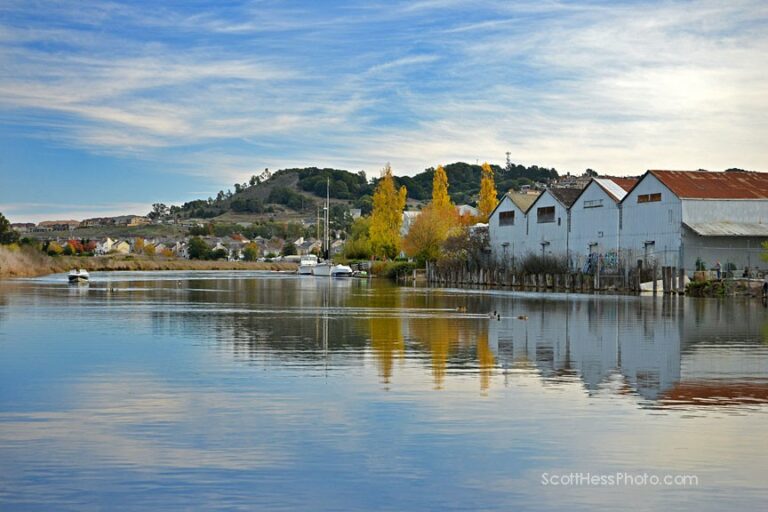
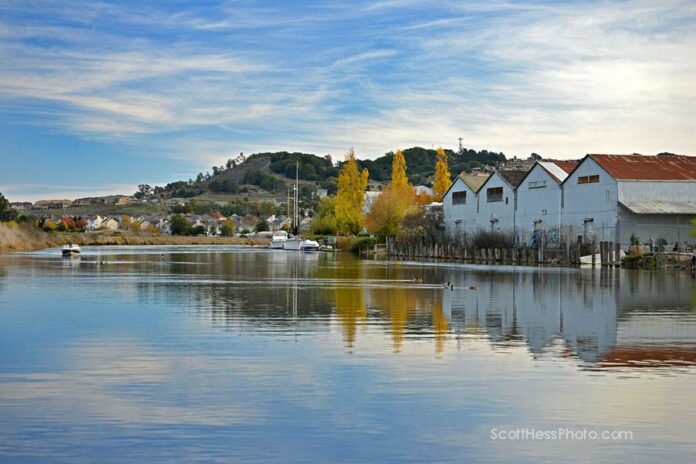
The river winding through downtown Petaluma might be the city’s single most defining feature. The city’s annual Rivertown Revival Festival features views of the river and, farther south, recreationists use the water for entertainment and exercise every day.

Yet, since 1975, the state has designated the water a contaminated water body due to excessive levels of bacteria tied to fecal matter. The river has also been included on the list for excessive amounts of pesticides, trash and sediment at other times.

Now, a state water oversight board may pass a plan laying out the steps to lower the levels of bacteria in the river and its watershed.

At a Wednesday, Nov. 13 meeting in Oakland, the San Francisco Bay Regional Water Quality Control Board will consider approving an amendment to the board’s water quality control plan for the region, a document known as a basin plan. The proposed amendment will set a cap on the amount of fecal indicator bacteria in the river’s watershed—the TMDL—and identify actions required to reach that goal.

The federal Clean Water Act requires the state to create the cap and cleanup plan, known as a Total Maximum Daily Load [TMDL].

Staff members working for the water board, one of nine similar regional bodies tasked with setting water quality rules in California, have been assembling the Petaluma River plan for several years, according to Farhad Ghodrati, an environmental scientist with the San Francisco Bay board.

Although there are over 100 potentially dangerous bacteria related to fecal matter, scientists generally only test for a few varieties. These “fecal indicator bacteria,” including E. Coli, are a sign that animal waste has contaminated the water body. If those levels are above the bar set by the water quality control board, they add the water body to a list of “impaired” waterways.

“High FIB levels indicate presence of pathogenic organisms that are found in warm-blooded animal (e.g., human, cow, horse, dog, etc.) waste and pose potential health risks to people who recreate in contaminated waters,” a report prepared by water board staff states.

The results of the Petaluma River tests weren’t good.

Multiple tests for traces of E. Coli between winter 2015 and summer 2016 across 16 testing stations in the watershed revealed levels far in excess of water board requirements.

For instance, water quality rules allow for the discovery of excessive levels of E. Coli in less than 10 percent of samples, but tests in the Petaluma River watershed showed excessive levels in 65 to 100 percent of samples in a series of six rounds of tests conducted over 18 months.

“This result shows that the magnitude of impairment in the river is pretty significant, and some of the highest concentrations we have seen in the region,” Ghodrati said about the E. Coli results.

While many strains of E. Coli are harmless, others can cause health problems, including diarrhea and vomiting, according to the Centers for Disease Control and Prevention.

If the water board passes the proposed amendment, San Antonio Creek, a creek running along the border between Sonoma and Marin counties, will also be added to the list of impaired water bodies for excessive levels of fecal bacteria.

“The testing we did as part of this TMDL development showed that the bacteria levels in all tributaries, including San Antonio Creek, were well above the impairment threshold level,” Ghodrati, the state scientist, told the Bohemian.

Because the Petaluma River has long been unhealthy, the news that state scientists have discovered excessive levels of bacteria, while concerning, was not all too surprising to one long-time river recreationist.

Susan Starbird, a coach for the River Town Racers, a kayak-racing group based in Petaluma, has been using the river since the 1980s.

While Starbird takes for granted that the urban rivers she uses around the Bay Area are somewhat contaminated, she still uses them with caution.

Although it is inevitable that kayak racers tip over in the river—”It’s part of the sport,” Songbird says—she makes sure her students rinse off completely before leaving each day.

Potential Sources

There are many potential sources for the excessive fecal indicator bacteria in the river. Agricultural uses and various human sources, including city and county sewer systems, private septic tanks, boats on the river and homeless encampments are among the sources named in the water board’s report. For each source, the water board recommends actions to reduce bacteria levels.

The water board has set a zero tolerance rule for human waste, because it presents the greatest risk to humans and is entirely preventable if one follows the proper procedures, according to the staff report.

“When operated properly and lawfully, sanitary sewer collection systems, [onsite wastewater treatment systems] and vessel marinas are designed to not discharge any human waste to waters,” the report states.

One source of bacteria may be the two public sewer collection systems within the watershed: the Sonoma County Water Agency’s small but aging sewer collection system serving Penngrove; and Petaluma’s larger city collection system.

“Sewer line backups, overflows and leaks occur, frequently during periods of wet weather, creating a potential source of bacteria on land surface that may be transported via urban runoff to the nearby water bodies,” according to the staff report.

Because recent tests by water board staff detected “fecal bacteria of human origin” throughout the watershed, “discharges from the sanitary sewer collection systems [are] a likely source,” the report states.

The county’s Penngrove sewer collection system, which serves 1,300 customers compared to the 62,000 served by the Petaluma collection system, is has been disproportionately prone to overflowing leaking, according to the report.

Between 2007 and 2017, Petaluma’s system overflowed 77 times, while the county’s Penngrove station spilled over just 17 times.

However, despite being a fraction of the size of the Petaluma system and leaking far fewer times, the Penngrove system poured 534,331 gallons of sewage into the watershed over the 10-year period, compared to the roughly 818,475 gallons of overflow tied to the Petaluma collection system.

Overall, the Penngrove system’s mainlines were over four times more likely to overflow than the average public sewage system in the state, according to the water board’s report. The Petaluma system’s overflow rates for mainlines are below the state average.

Overflows are generally caused by “aging infrastructure that needs maintenance or replacement,” according to the water board report.

Sonoma Water officials say that recent work on the Penngrove system – including redirecting some water into Petaluma’s system and cleaning the Penngrove system’s mainline – are expected to reduce the number of overflows at the Penngrove system.

Still, more repairs and upgrades are required, Pamela Jeane, an assistant general manager at the Water Agency, told the Bohemian. Some, such as maintenance work, are in process. Others are planned.

For instance, Sonoma Water plans to elevate the Penngrove pump station, which is located in a flood plain, so that the station can continue to operate during floods. The project will cost around $900,000 and be funded by local and FEMA dollars.

Onsite wastewater treatment systems (OWTS) within the watershed, such as septic tanks owned by homeowners in unincorporated areas, may also be a source of human fecal matter. Owners may have to make changes to their systems pending review by Sonoma or Marin county authorities.

Farming facilities with horses and cows within the watershed are another possible culprit. All told, there are approximately 16,000 grazed acres in the river’s watershed, and 149 grazing operations within the watershed which are larger than 50 acres. If those operations are not following water quality controls properly, animal waste may make its way into the rivers and creeks.

Water board staff will test the waters five years after passing the plan to give local governments and businesses time to fix potential problems, according to Ghodrati.

Once they have the results, the water board can revisit the Petaluma River’s listing on the list of impaired rivers. If the river is clean, they will remove it from the shit list.

[Editor’s Note: This article previously referred to the City of Petaluma’s wastewater treatment facility as a potential source of contamination. The facility, which is used to treat raw sewage to a high level, is not a potential source, according to the water board’s staff report. The sanitary sewer collection system, the pipes which carry sewage from the city to the treatment facility, is a potential source. The article has been updated to reflect the distinction.]

Reality Grip

0

As locals reel over the Kincade fire, the Napa Valley Film Festival (NVFF), running Nov. 13–17, keeps a grip on reality with apt screenings of powerful films.

First up, Code and Response, which tracks four coders bent on using technology to fight the wrath of Mother Nature. The IBM-produced documentary goes inside the aftermath of some of the worst natural disasters of 2018, as four “coders,” from California, Japan, Puerto Rico and Mexico, use technology to support front-line first responders.

“We were compelled to get on the ground and learn more from first responders but also learn from some local coders who are making a difference,” said executive producer/writer George Hammer. “When we actually saw towns turned to ash and the personal toll on individuals, it really hit home. I am pleased that we can premiere the film for the people of California as their battle with Mother Nature rages on and their search for answers inspires the next generation of ideas.”

The war against anti-LGBTQ laws peacefully unfurls through a song in Gay Chorus Deep South, which takes viewers on an emotional ride of reckoning. The award-winning film follows the San Francisco Gay Men’s Chorus, as they perform throughout the Southern states, to enlighten and shift thinking in a place where people remain divided over faith, politics and sexual identity.

Motherload propels the cargo-bicycle movement and the mission to decrease the carbon footprint, one cycler, bike and family at a time. Director Liz Canning went in search of a way to bike with her young twins and unearthed a new way of life. Canning posted a trailer for the film in 2011 and invited submissions that captured the cargo-bike experience. The effort fueled a crowdsource initiative that resulted in the feature-length documentary. “There’s a Fairfax family in the film who replaced a car with a cargo bike after watching the trailer online,” she says. “They were one of hundreds of local families whose lives were transformed by Jelani Bertoni and The Bicycle Works [one of two Marin-based cargo/utility/e-bike shops featured].”

Provocative programing continues with Coach, which follows the plight of San Francisco State Women’s Soccer Coach, Tracy Hamm, who the U.S. Soccer Federation denied access to an internationally recognized accreditation. Martha: A Picture Story, chronicles the life of Martha “Marty” Cooper who upset the continuum when she documented the first images of graffiti to appear in New York City subway cars in the 70s and became the first female photographer at the New York Post. Cooper’s book Subway Art went on to become one of the most stolen books of all time.

Frothy features like Greener Grass step in to lighten the mood. The farcical romp stars Upright Citizens Brigade mainstays Jocelyn DeBoer and Dawn Luebbe, who make their directorial debut. They set the film in a candy-coated, soccer-mom-infested, Stepford-like suburbia, where family members are “swapped,” braces reign, and social-climbing and neighborliness hit hilarious highs.

Good vibes roll on at the screening of I Want My MTV, where ’80s-lovers and MTV-worshipers unite. The buzzed-about doc takes viewers on a nostalgic ride that chronicles the rise of the network that brought music videos to the masses. Commentary from Sting, Pat Benatar, Billy Idol and more is sure to get people dancing not only with themselves, but down the aisles. The throwback theme continues at the Saturday-night Gala at Lincoln Theater, which encourages attendees to tease up their hair, stick on the shoulder pads and slide into a pair of acid-washed jeans to rock the night away.

A-list celebs will light up screens throughout the fest, starting with the Tuesday Sneak Preview of Ford V Ferrari (Matt Damon and Christian Bale) and the Wednesday Opening Night screening of Just Mercy (Jamie Foxx, Brie Larson).

This year’s Celebrity Tribute programing honors Kevin Bacon, Olivia Wilde, Vanessa Hudgens, Jillian Bell, Mena Massoud, Kelsey Asbille, Dean-Charles Chapman, Jacob Elordi, Kelvin Harrison Jr., Liana Liberato and others, who should attend events on Thursday, Friday and Saturday.

The fest rolls out the red carpet for locals with a new community-screening program that grants Napa Valley residents free entry to all morning screenings at Lincoln Theater.

No NVFF would be complete without a hefty pour of wine-related screen talk. The closing night showing of Verticals delivers. The series, directed by Jason Wise, focuses on Napa Valley winemakers and the human condition that comes with the territory. The Sunday screening at the Uptown Theatre marks not only the world premiere of Verticals, but the launch of SOMMTV, the first food and wine dedicated streaming platform. Wise, whose filmmaking cred includes the SOMM trilogy, describes the venture as a Netflix-like streaming service for wine and culinary enthusiasts. After days of turmoil over wildfires, public safety power shut offs and the general state of the union, a clink of the glass to honor the strength and endurance of our valley and the people who inhabit it feels like the perfect “wrap” to the festival week.

Oiled Up

0

Now that the grape harvest is complete, it’s time to turn to the olive groves to pick, crush and extract the oil. According to Jamie Anzalone, in about a week, olives in Napa Valley will be ready for harvest, and he should know. As the former owner of two storefront olive oil companies in Upper Napa Valley, Anzalone’s experience dates back to 2011.

Initially lured from his roots in Buffalo, New York, to enroll in a food and beverage education at the Culinary Institute of America 20 years ago, Anzalone last worked at Solbar at Solage Calistoga as maître d’ before he switched his career to accommodate his restructured family life.

He knew he wanted to do something different, so when he found an available retail space on Lincoln Avenue, he transitioned to an olive oil sommelier and opened the storefront, Calistoga Olive Oil. He later changed the name to Napa Valley Olive Oil and opened a second storefront in St. Helena.

At first, he bought olive oil direct from producers, but when the late Bob Pecota of Bennett Lane entered the store and asked if he’d be interested in picking from the 100 olive oil trees on his property, Anzalone accepted the opportunity to produce his own olive oil and began to research the process.

“That year when I picked olives, I took a gold medal at the 2012 New York International Olive Oil Competition,” he said. “The valley proved to be the perfect growing area.”

He knew he was onto something—utilizing a crop he noticed usually falls to the ground and goes ignored. Through connections he made while working at Solbar, Anzalone arranged to source from olive trees at several wineries and estates within the Napa Valley. His neighbor introduced him to some olive pickers and everything fell into place.

He worked with viticulturists on properties where he picked from the olive groves, advising them on pruning techniques and necessary nutrients. When the time is right for harvesting, he takes his crew in to pick and then press the olives. Once they’ve harvested the olives, the processing begins at a local mill in either Sonoma or Lake county. The mill process takes about an hour per ton.

“Once they go in the machine,” he explains, “an hour later you’ve got fresh olive oil.”

Anzalone allows the oil to rest for 45 days, or until the sediment falls to the bottom.

The business deal varies with each grove, but in the case of Pecota, Anzalone forfeited 10 percent of the olive oil in exchange for owning the olives.

“Sometimes they hire me to pick with the crew, and they pay the mill and own the oil,” Anzalone explained. “I’m like a consultant. They keep the oil, but I can buy it back from them.”

When his family situation changed, however, so did Anzalone’s business model. His young daughter moved to San Diego with his ex-wife and he could no longer work 12-hour days with the new visitation in place. So, in one slick move, Anzalone closed the doors to both his storefront Napa Valley Olive Oil companies and succumbed to the online shopping world. That was in 2016, when he realized the online presence of his company was enough to sustain him.

“I trimmed the fat,” he said. “Looking at the numbers, I asked myself why I gave landlords so much money every month?”

The online plan allows him time to participate at local events such as Calistoga Food & Wine and Festival Napa Valley’s Taste of Napa and across the country to a circuit of food and wine shows. He continues to source from olive groves on Mt. Veeder, Diamond Mountain and in St. Helena. A few wineries, such as Cliff Lede, Duckhorn, and Spottswoode, are sources as well.

Next year, he plans to sell his olive oil and products at the St. Helena Farmers Market on Fridays, and every other Saturday at the Napa Farmers Market, alternating between the San Diego Farmers Market during visitation with his daughter.

Storefronts that carry his new label, Anzalone’s Olive Oil (honoring his Sicilian surname), include Cal Mart in Calistoga, Oakville Grocery and potentially the new Gary’s Wine & Marketplace in St. Helena. Restaurants such as Perry Lang’s in Yountville serve Anzalone’s Olive Oil with their bread service, and it’s also on the menu at Angèle’s Restaurant & Bar on the riverfront in Napa.

The new business model agrees with Anzalone, who has more time to spend with his daughter and more time to travel.

“Now, I love it. It’s the dream for me,” he said. “It’s afforded me a great lifestyle, freedom and the ability to make great olive oil—100 percent pure, property-specific from the Napa Valley.”

Anzalone plans to create a food line based on olive oil, and to create a healthy line of olive oil beauty products such as soaps and lotions, in the new year. He admits olive oil is best served in its raw form as a finish to soups, as a salad dressing, over risotto and for use in baking (he says it’s a natural preservative). His personal favorite is to make scrambled eggs pooled in his own olive oil.

Saving Salmon

Salmon three feet long seem to clog the water as the chrome-colored fish, fresh from the ocean, begin their journey upriver toward the high-elevation gravel riffles where they were born. Here, in the remotest tendrils of the watershed, they will lay and fertilize the eggs that ensure the next generation of salmon.

At least that’s how it once was early each autumn on the Eel River. But nature’s security system for fish survival is only as good as the health of a river. In the case of the Eel, a local power company built a dam on the Eel’s main fork in 1920. As a result, Chinook salmon lost access to about 100 miles of spawning habitat. Steelhead, which swam farther upstream into smaller tributaries, suffered even greater impacts. Intensive in-river commercial fishing, water diversions, logging and other land degradation took their toll, too. Today, annual salmon runs in Eel River that once may have totaled a million or so adults consist of a few thousand. Lamprey eels, too, have dwindled.

Now, there is serious talk of removing Scott Dam, owned by PG&E since 1930.

For fishery proponents, such a river makeover is the optimal way to revive the Eel’s salmon runs.

“We want to see volitional passage, both ways,” says Curtis Knight, executive director of the conservation group California Trout.

Volitional, in this context, means the salmon are able to make their historic migration on their own—downstream as newly born juveniles and, later, upstream as sexually mature adults—all without the assistance of human hands.

“We think dam removal is one possibility here,” Knight says.

California Trout is one of several local groups and agencies now formally considering taking over the operation of Scott Dam from PG&E. As a hydroelectric facility, Scott Dam is not very productive, and with PG&E’s operating license scheduled to expire in 2022, the utility giant recently stepped away from the project. PG&E even briefly put the Potter Valley Project up for auction, though the offer attracted no takers.

Potter Valley Project

Congressman Jared Huffman began eyeing the orphaned dam-and-diversion operation as the future of the project came into question over the past several years. Recognizing an opportunity to revive fish runs by overhauling the dam and a variety of connected infrastructure pieces—collectively called the “Potter Valley Project”—Huffman rounded up more than two dozen local stakeholder groups, including tribes, environmental groups, government agencies and farmers, to weigh in and help steer the process.

Huffman determined that everyone with a stake in the Eel River, its fish and its water would need to make compromises.

“The two-basin solution is built around a fairly central compromise,” Huffman explains. “There are certainly folks in the Russian River basin who, in their perfect world, would not be making changes to provide fish passage or alter the way the project is operated, and there are people in the Eel River drainage who would like to see the dam and the diversions go away completely.”

Huffman describes his vision as one of “coequal goals,” and a “two-basin solution,” which treats the needs of fish and people with equal consideration. The hope is that no stakeholders will be left high and dry, says Huffman, who represents people in both river basins.

But keeping this process civil to the end could prove a challenge in an era where water management often takes shape as a tug-of-war between farmers and fishery advocates.

A core consideration in amending the project to help fish will be a community of about 150 farms in Potter Valley, actually in the upper Russian River basin, which receive water from Lake Pillsbury, contained by Scott Dam, via a one-mile tunnel bored through a mountain in the first years of the 20th century.

Scott Dam effectively creates a pool of water that can be drawn from in the summer months. If the dam comes down, Potter Valley farmers will need an alternative source of summertime water—a complicated problem.

“If we didn’t have that diversion, you’d be putting a whole lot of people out of business,” says Mac Magruder, who irrigates 300 acres in the Potter Valley for his grass-fed meat farm.

Altering the operation of Scott Dam and the diversion tunnel a few miles downriver will require a new license—what California Trout, Humboldt County, the Sonoma County Water Agency, the Mendocino Inland Water and Power Commission and the Round Valley Indian Tribes are now pursuing. They will first conduct a feasibility study and submit it to the Federal Energy Regulatory Commission no later than April.

Currently, representatives for the relicensing stakeholder groups try to talk in careful terms, without showing strong preference for one plan over another.

“All options are on the table,” says Janet Pauli, the chair of the Inland Water and Power Commission.

However, there is no doubt that the interests of farmers and fishery advocates hardly align. For farmers in Mediterranean climates where virtually no rain falls for four straight months, dams and aqueducts make farming possible.

Dam-nation

But for 21st-century river and salmon advocates, dam removal is the holy grail of achievements.

“A free-flowing river without dams is optimal for anadromous fish,” says Joshua Fuller, a fisheries biologist with the U.S. National Marine Fisheries Service. “Unfortunately, in today’s world that setting doesn’t exist in a lot of places. It’s a major reason why we have many listed salmonid species.”

In Washington, the removal of two dams on the Elwha River five years ago reportedly resulted in increased returns of depleted salmon.

On the Klamath River, four dams face dismantling as part of an aggressive effort to revive the river’s Chinook and Coho salmon runs, once among the largest on the West Coast.

Fuller says providing access to the spawning habitat upstream of Lake Pillsbury is a key component of his agency’s Chinook-and-steelhead recovery plan. Creating that access would be, in some ways, simplest by removing Scott Dam.

But it’s not the only way. Building fish ladders is another means of opening the higher reaches of the watershed to spawning salmon and steelhead. These winding stairways of cascading water allow migrating fish to climb up and over otherwise impassable dams. They allow juveniles to safely return downstream, too.

But the Eel River system poses complications. Scott Dam bridges a deep canyon, and building a fish ladder up and over the dam could prove technically difficult. Ascending such a ladder might be difficult for fish, too.

The other big problem with relying on a fish ladder system at Scott Dam involves a non-native predator called the pikeminnow that was somehow introduced to the system in the late 1970s. Pikeminnows, which can grow to about four feet in length, prey aggressively on smaller fish and are abundant in Lake Pillsbury. Thus, a system that requires young salmon and steelhead to swim across the lake to the outflow might be a death sentence for many, if not most, of the fish.

The pikeminnow is a major reason why dam removal remains a favored option among environmentalists.

“A salmon smolt in a reservoir full of pikeminnows hardly stands a chance,” says Craig Tucker, a natural resources consultant working for the County of Humboldt.

David Keller, with the Friends of the Eel River—a stakeholder group but not one of the relicensing applicants—says elaborate systems are necessary for assisting the juveniles across the lake.

“It would be extremely labor-intensive and time-intensive,” he says. “You’d have to have people there at the right time, when the fish are coming through.”

Like Knight, he wants to see fully volitional passage.

“The only way that makes ecological sense is to allow the fish to do it themselves, and that means taking out the dam,” Keller says.

Keller thinks more efficient storage in Lake Mendocino, on the Russian River’s east fork just upstream from its confluence with the main fork at Ukiah, could meet summertime irrigation needs for Potter Valley farmers. This would involve pumping systems that push water various directions, often against gravity. It could also require increasing the height of Coyote Valley Dam to store more water in Lake Mendocino—what stakeholders say would be a very expensive strategy.

Using Lake Mendocino for new storage would be complicated, too, since the U.S. Army Corps of Engineers, which operates Coyote Valley Dam, prefers not to fill Lake Mendocino in the winter months and instead maintain significant available storage for flood control purposes. Only in the spring could surplus water be retained in the lake—though relying on late-winter rains in California is a chancy gamble. In many years under such a system, they may find it impossible to top off the reservoir with water for the Potter Valley farms.

“We don’t see increased storage in Lake Mendocino as a very likely, affordable option,” says David Manning, the environmental resources manager with the Sonoma County Water Agency.

Keller also says Scott Dam is a hazard and “a disaster waiting to happen.” He says its south side is “anchored to an ancient landslide” that is liable to continue sliding.

The dam is also situated almost on top of Bartlett Springs Fault, an offshoot of the Hayward fault that runs beneath Lake Pillsbury and which seismologists have modeled for the potential to cause a 7.5 earthquake.

“Scott Dam was not built for that level of shaking,” Keller says.

Writers have cited the hydroelectric barrier before as a poster child for poor dam building.

“This dam is literally a textbook example of where not to build a dam,” Keller says.

Water wonk and
a fish-head

The evolutionary sharpening stone that honed the Chinook into the most resilient and adaptive species of the Pacific salmon could not prepare the fish for the advent of the concrete hydroelectric dam. Beginning early in the 20th century, state and federal agencies reengineered California’s major rivers with massive walls of cement and steel, connecting canals and tunnels, and pumps to move water.

In their respective waterways, Chinook salmon nosed up against the newly built barriers. In the San Joaquin River, where salmon runs of half a million to a million fish survived for millennia migrating every summer through a valley as hot as the deserts of Saudi Arabia, Chinook evaporated into extinction about five years after Friant Dam’s completion.

While effective fish hatcheries maintained the Chinook of the Sacramento River, the Eel River’s salmon were already nearly gone. So was the Eel’s namesake representative species, the Pacific lamprey.

Now, salmon in California face even greater challenges than dams. Global warming will make the cold water the fish require for spawning a rarer and rarer asset. In fact, Knight, at California Trout, co-authored a report in 2017 warning that most of the salmon and trout species and subspecies in California are likely to go extinct if efforts are not made to preserve their habitat. In some watersheds, there may be no saving the fish.

But rivers born in high elevations, and fed by year-round, ice-cold springs, have the potential to keep salmon and steelhead alive and running.

The uppermost tributaries of the Eel River constitute precisely this type of habitat.

“It’s high and it’s got cold water and it’s going to be cold for a long time,” Knight says.

Fuller, with the National Marine Fisheries Service, also sees that habitat as critical for maintaining salmon runs in a warmer future.

“Tributaries above Scott Dam contain high-value habitat with cold water and perennial flows essential for long-term population viability and recovery of anadromous salmonids within the Eel River,” he says.

Human beings are more adaptable than salmon, and if they remove Scott Dam, nobody will perish, though the livelihoods some now enjoy could be shaped by new and unwelcome pressures.

“We have more than a lot to lose—we have everything to lose,” Magruder says.

Tucker, with Humboldt County, says he is open to all options now being discussed in the relicensing feasibility study.

But full dam removal is the one he thinks may be most amenable to salmon while still allowing human users to get the water they need.

“There are engineering possibilities for producing agricultural diversions without Scott Dam,” he says.

Huffman calls himself a “water wonk and a fish-head.” He says the potential of creating “a win-win” solution that sustains fish populations amid dense human populations and thriving farm economies drew him to the project.

But he also knows all bets are still off.

“There’s no guarantee that this plan holds together,” he says. “There are centrifugal forces at play that could pull it all apart before the end.”

Column Alums

The journalistic DMZ dubbed the "Reporter's Notebook" is alive and well.

Rage Rage

Don't just evacuate and meditate, agitate, it's nearly too late, As my hero, Swedish teenager, Greta Thunberg, says. There is no before and no after, only implacable present. No winners and no losers, only passengers on the arc called Earth, crossing sea that's rising, air that's blackening, temperature that's soaring. Homo sapiens, us, created infernos Hell born in Paradise; no Phoenix rose from the ashes...

Welcomed Water Coverage

Thank you so much to Alastair Bland ("Saving Salmon," Nov. 6) and Will Carruthers ("Petaluma River Waste Deep," Nov. 6). So appreciative of your investigative journalism on these important issues. Your paper is our watchdog on local resources being pressured by our negligence and a prayer for Jaren Huffman's challenging dance around water stakeholders. —Kathleen Needels Santa Rosa Dam'd if you Do Regarding "Saving...

Kids Are Alright

Author Roald Dahl's children's stories usually feature an exceptional child living in an unexceptional world of abusive adults and oppressive institutions. Whether it's James traveling in a giant peach or Charlie touring a chocolate factory, the young protagonists usually triumph with the help of a loving grown-up. That formula is at work in Matilda the Musical, an adaptation of Dahl's...

Humble Pinot

Surely the labors of countless vignerons in medieval Burgundy, centuries ago, were meant to produce a varietal wine that pairs particularly well with the most American of holidays as part of some divine plan? A topic for discussion. Alloy Wine Works Central Coast Pinot Noir ($6.99): Meeting up with six-pack drinking kin? Toss them a 12-ounce aluminum can of, surprise,...

Petaluma River Plan

The board charged with overseeing the water quality in the San Francisco Bay Area unanimously approved a plan requiring local businesses, residents and government agencies to reduce the amount of fecal bacteria they put into the Petaluma River watershed. At a meeting in Oakland on Wednesday, members of the...

Waste Deep

The river winding through downtown Petaluma might be the city's single most defining feature. The city's annual Rivertown Revival Festival features views of the river and, farther south, recreationists use the water for entertainment and exercise every day. Yet, since 1975, the state has designated the water a contaminated water body due to excessive levels...

Reality Grip

As locals reel over the Kincade fire, the Napa Valley Film Festival (NVFF), running Nov. 13–17, keeps a grip on reality with apt screenings of powerful films. First up, Code and Response, which tracks four coders bent on using technology to fight the wrath of Mother Nature. The IBM-produced documentary goes inside the aftermath of some of the worst natural...

Oiled Up

Now that the grape harvest is complete, it's time to turn to the olive groves to pick, crush and extract the oil. According to Jamie Anzalone, in about a week, olives in Napa Valley will be ready for harvest, and he should know. As the former owner of two storefront olive oil companies in Upper Napa Valley, Anzalone's experience...

Saving Salmon

Salmon three feet long seem to clog the water as the chrome-colored fish, fresh from the ocean, begin their journey upriver toward the high-elevation gravel riffles where they were born. Here, in the remotest tendrils of the watershed, they will lay and fertilize the eggs that ensure the next generation of salmon. At least that's how...
11,084FansLike
4,446FollowersFollow
6,928FollowersFollow