Point of Pride

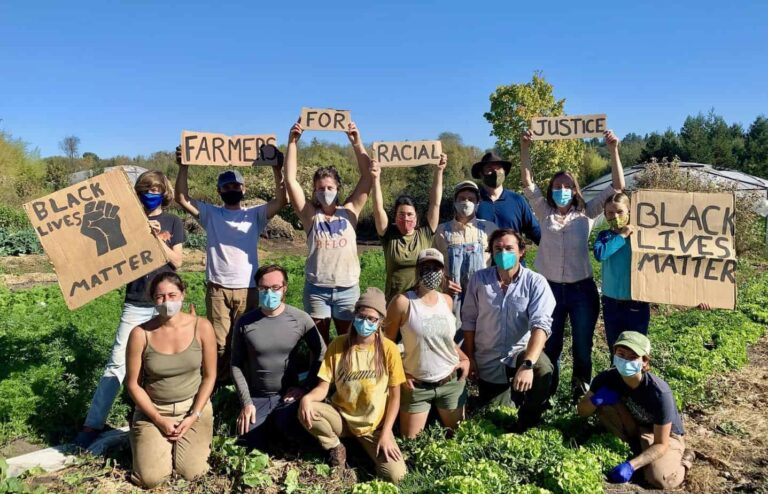
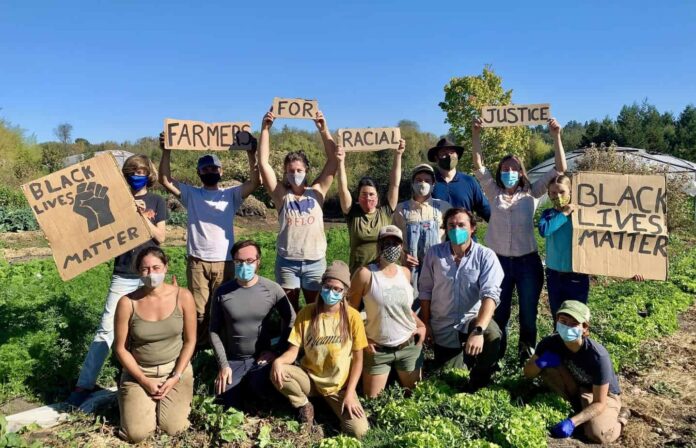
It may seem unfathomable to some, but being gay was a crime in 1969 in New York City. Habitually harassed by law enforcement, the patrons of the Stonewall Inn, a gay bar in Greenwich Village, resisted and rioted against a police raid and in so doing galvanized the Gay Rights Movement. The following year, gay communities throughout the nation embraced the term “Gay Pride” and commemorated Stonewall that June. Pride Months have returned every June since. This year, however, due to the quarantine, the way we celebrate will be markedly different.

“This year will have a different feel than any other year that I can remember in my lifetime, as Prides have been canceled across the country,” says Gary Saperstein, founder of Out in the Vineyard, an experiential Wine Country event and travel company for the LGBTQ+ community. “It is quite disheartening to know that we will not be able to gather as a community to celebrate who we are today and those who came before us.”

The need to abide by shelter-in-place orders notwithstanding, there is also the need to support and celebrate a community that has endured growing prejudice during this politically-fraught era. According to FBI data, hate crimes committed against LGBTQ+ people have been on the rise in the past few years. Last August, the Trump administration filed an amicus brief effectively asking the Supreme Court to legalize anti-gay workplace discrimination. Even locally, a prominent Sonoma real estate developer posted some anti-gay speech on social media.

As reported in the Sonoma Index-Tribune in April 2019, it came to light that developer Stacy Mattson had made anti-gay Facebook posts in the past (they are no longer visible, though screenshots of the posts still circulate online). The public outcry was instant and led to calls to boycott businesses owned by Mattson who, with her husband Ken Mattson, had spent recent years acquiring 26 properties throughout Sonoma Valley at a cost of $80 million.

“It hit me over the head and I realized that they probably are not the only ones who feel that way,” says Saperstein, who has lived in Sonoma for 25 years and says he never felt homophobia in the wine-country burg. “This was my impetus for wanting to create and send a message of equality here in Sonoma.”

Saperstein will do just that with his recent victory for LGBTQ+ visibility; this June, Gay Pride–themed banners will adorn the Historic Sonoma Plaza for the first time in history.

The banners were unanimously approved by the City of Sonoma’s Design Review and Historic Preservation Commission and will remain present through the month of June. They will also become an annual plaza tradition.

“I wanted to find a way to make a statement that would resonate with all that Sonoma is an inclusive community that believes in equality,” Saperstein says. “These Pride Banners will showcase that for locals and visitors alike.”

Designed by Matthew Long, each banner is sponsored by a Sonoma Valley business and features a different color from the rainbow flag. People can make a positive contribution by supporting businesses that “support all” suggests Saperstein, who is also director of development at Face to Face, which has endeavored to address the challenges presented by the HIV epidemic in Sonoma County since the ’80s.

“I do believe it is everyone’s right to choose what businesses they want to support,” he says. “I also believe that everyone should be educated and informed in order to make that decision for themselves. Personally, I cannot support a business that will donate money to groups and organizations that do not believe in equality and discriminate.”

The Gay Pride banners coming to Sonoma’s plaza are among Saperstein’s many accomplishments in recent years. He has raised over $400,000 for Face to Face, and Out In The Vineyard has become a beloved nexus for the LGBTQ+ community. Saperstein, however, is quick to direct the applause to other local organizations such as Positive Images and LGBTQ Connection, which support queer youth, and to Sonoma’s Vintage House, which has a very active senior LGBTQ+ group.

“Pride, to me, is about community and connection,” Saperstein says. “It is a coming together of a group of people who believe in each other and want to see each other succeed. Pride celebrates who we are and where we are today. It serves as a reminder of those that came before us. We can never forget our history and how we got to where we are today so we can go further into the future.”

Undocumented workers face tough circumstances amid pandemic

0

Gervacio Peña, who has worked in agricultural fields in Wine Country and elsewhere for more than three decades, says fieldworkers’ lives during the coronavirus pandemic are grim.

“A majority do not receive any support from the government,” he says, in Spanish.

Peña is a founding member of the Graton Day Labor Center, a Sonoma County nonprofit which helps undocumented immigrants and others find work. The people the Graton Day Labor Center works with are always vulnerable, but during Covid-19, they are even more so.

“If they don’t work, don’t pay their bills, then they don’t have enough for food for their families,” Peña says.

The situation is made worse because although undocumented workers pay taxes, they don’t receive any of the unemployment benefits other unemployed workers are now relying on.

Undocumented workers in California pay $3,199,394,000 per year in state and local taxes, according to the Institute on Taxation and Economic Policy (ITEP). The Institute estimates that 26,100 undocumented Californians live in Sonoma County and contribute $16,400,600 into local coffers. In Marin, 8,100 undocumented people contribute $5,032,000 a year to the county, and in Napa, 9,800 individuals generate $5,357,000.

Furthermore, depending on their employer, some do not receive paid sick leave, and many may be discouraged from using even those services to which they have legal access.

As the Covid-19 pandemic has already shown, the supply chain is only as strong as the human hands holding it together.

In the North Bay, undocumented residents play an important role in growing and harvesting wine grapes, but also in a variety of other critical industries.

Undocumented workers can be found in restaurant kitchens, construction sites and offering home care for many of the North Bay’s elderly residents. And, as another fire season begins, undocumented landscape workers help to complete potentially life-saving, home-saving and business-saving fire-abatement projects.

As Sonoma County begins to reopen some businesses it’s worth noting that some essential workers never stopped working, and many undocumented workers could not afford to take time off due to a lack of any direct government aid.

Last week, Gov. Gavin Newsom’s administration launched a program to offer one-time aid to undocumented workers but, even on paper, the numbers fell short of providing meaningful help to all undocumented workers.

Newsom’s Disaster Relief Fund will distribute $75 million in state funds, along with an additional $50 million from nonprofits contributions. Under the program, undocumented workers will be eligible for a one-time payment of $500 with a $1,000 cap per household.

In the end, the $125 million package only pencils out to $500 for 250,000 undocumented people in a state that is home to an estimated 2 million-plus undocumented people.

On May 12, the Sonoma County Department of Health Services released figures broken down by race and ethnicity.

The numbers reveal stark inequality. Latinx residents comprise 26.6 percent of the total number of Sonoma County residents, but 69 percent of Covid-19 cases, as of Tuesday, May 26. By contrast, white people comprise 63.5 percent of the county’s population, but only 25 percent of Covid-19 cases.

Many things remain unclear based on the numbers the county has released. For instance, Sonoma County has yet to release data by zip code, a step that Santa Clara County took on May 18. The county has also not released data about Covid-19 patients’ income levels or immigration statuses.

The Sonoma County Department of Health Services did not respond to a request for comment on its plans to release additional data.

Salvador G. Sarmiento, campaign director of the National Day Laborer Organizing Network, spoke during an April 28 online meeting about immigrants’ concerns during the pandemic, focusing on the action—or inaction—of local governments as an important factor moving forward.

“The question for local officials is: What are you going to do?” Sarmiento said. “We know what Trump is going to do. The real question is what are the mayors going to do, what are the governors going to do?”

In February 2017, eight months ahead of the catastrophic wildfires, the Sonoma County Board of Supervisors passed a non-binding resolution committing the county, at least in theory, to “Providing essential services to all County residents regardless of immigration status” and “Developing solutions to ensure respect for the rights of all residents and to take actions to ensure the family unity, community security, dignity and due process for all residents of Sonoma County.”

Yet, in a May 14 interview, Sonoma County District 1 Supervisor Susan Gorin wasn’t able to point to activity on the board’s part to protect undocumented immigrants during the Covid-19 pandemic.

“We’ve been slow to really embrace worker conditions, or safeguards for undocumented workers,” Gorin acknowledged.

That lack of action was also pointed out by county residents and activists during a May 18 supervisors meeting, the supervisors’ first public meeting after the county released data about Covid-19 disproportionate impact on the county’s Latinx population. Several supervisors spoke in favor of ramping up efforts to support the county’s Latinx communities and, since then, the health department has ramped-up testing in some areas with large Latinx populations.

Asked how many constituents contact her about the health and welfare of the people who perform their fire abatement, care for their houses and children, tend their vineyards and pick their food, Gorin gave a quick answer: “Not many.”

She also says that some landlords are trying to evict undocumented tenants during the pandemic.

“They can’t complain loudly about living conditions, and they’re desperate for housing, and it’s impossible for them to get additional housing [if they’re evicted.],” Gorin says. “So they’re mostly the silent part of the equation.”

Sonoma County Legal Aid’s caseload is ever-increasing, Gorin says. But, despite passing a local eviction ordinance for the duration of the Covid-19 pandemic in late March, the county has not set aside substantial funding to provide legal assistance for renters, documented or not.

Graton Day Labor Center Executive Director Christy Lubin is a vocal critic of the county’s track record so far, saying, “I don’t know that our Board of Supervisors has made any commitment to protect our farmworkers.”

So, with no serious amount of financial aid on the horizon and local plans to reopen the economy rolling out day by day, the Graton Day Labor Center started sending workers out again in early May.

“Garden, landscape and construction jobs are legal now,” Lubin said on May 14. “No indoor jobs at this time, but everyone who can work is working. There’s a lot of grass to be cut; weed abatement and fire safety.”

But are the workers the Center sends out safe?

“I sure hope so,” Lubin says.


North Bay Students Curate Online Art Show on Theme of Belonging

Located on the grounds of the Veterans Home of California in Yountville, the Napa Valley Museum closed its doors in mid-March to help stop the spread of the Covid-19 pandemic. What’s more, due to the virus-vulnerable residents who live at the Veterans Home, it’s unlikely that the museum will be able to open on the same timeline as other venues.

“They haven’t had any (Covid-19) cases among the veterans which is wonderful, but they’re understandably very protective,“ says Laura Rafaty, Executive Director of Napa Valley Museum. “And then there’s a lot of (Covid-19 related) retrofitting that has to get done before we can reopen; things like the elevator, stairwells and the gift shop, we can’t have people touching things. It’s going to be a very different environment and we are going to work our way through that.”

The closure means the museum’s current exhibit of visual works by actor and activist Lucy Liu, “One of these things is not like the others,” is currently sitting in the dark until the museum reopens, at which time the exhibit will run through October.

The closure also means that the museum’s planned student-curated youth art exhibition in April was delayed until now; transformed into a virtual exhibit available to view on the Napa Valley Museum website.

“We had this student exhibition scheduled for April, but suddenly the kids were out of school and most of this artwork was stranded in the school building without a way to physically get at it,” Rafaty says. Once the museum could get the works in hand, the plan became to show the artwork virtually and, if possible, to display the pieces physically at the museum once it can reopen.

“The opportunity to have your work seen in a museum is so impactful for kids,” Rafaty says. “We don’t want to miss that, and at the same time, this is maybe a chance for people who would never physically get to our museum to see the work of these talented artists from the North Bay.”

The now-virtual exhibit, titled “Not From Around Here,” is the fourth annual youth art show that the museum presents in partnership with Napa’s Justin-Siena High School visual arts department.

The goal of the annual exhibit is to present diverse artwork centered on a timely or personal topic, and this year’s theme aims to raise questions within the student artists’ minds, “about our sense of belonging somewhere or to something.”

Nearly 30 student artists are participating in this year’s online exhibit, representing Justin-Siena High School, Vintage High School, The Oxbow School, Saint Helena High School, Marin Catholic High School and Novato High/Marin School of the Arts.

The works on display include paintings, photography, collage and assemblage and drawings that explicitly or abstractly tackle the topics of identity and society as it relates to the theme. In addition to the art, students write an accompanying artist statement that speaks to their intent.

“When you look at the statements, you get that sense of some of them asking, ‘Who am I?’” Rafaty says. “Being different, being out of place, that seems to be a theme that goes through this.”

Led by a panel of student jurors and curatorial teams, this is a youth exhibit through and through. The young artists even decide where to hang the work in the museum normally.

“Our team gets to work with the kids and see how they envision this, and sometimes they do things that we might not have thought to do that are really impactful,” Rafaty says. “We’re really missing that with the virtual exhibit.”

In addition to viewing the work online, virtual visitors are encouraged to vote online for the exhibit’s “People’s Choice” award and to donate to the museum’s efforts to reopen its galleries and educational programs.

Napa Valley Museum’s fourth annual student-curated exhibit, “Not from Around Here,” is on view virtually now through July 31 at napavalleymsuem.org.

Rock Steady with North Bay Musicians at Upcoming Virtual Festival

0

North Bay grass-roots organization RockSteadyFest is committed to connecting local audiences and artists through the shared experience of live music.

Since 2017, the group has held several local, live events to do just that, though their plans to hold a concert last month were canceled in the face of the Covid-19 pandemic.

“We canceled one week before it was a mandatory stay-at-home order; we saw the writing on the wall,” says RockSteadyFest artistic director Jeffrey Trotter.

Like other event producers in the North Bay, RockSteadyFest knew they would have to transform their model to continue their musical mission. This weekend, the organization unveils the RockSteadyFest Virtual Concert, which is in fact three days of live musical performances from popular North Bay artists that runs Friday to Sunday, May 29–31, via Facebook TV and airing on Marin TV, channel 30.

The virtual weekend opens with a Youth concert on May 29, 3–8pm, featuring talented Marin student musicians. Saturday and Sunday concerts begin at 2pm and 3pm respectively, and feature artists including the boogie-woogie team of Wendy DeWitt and Kirk Harwood, the Tom Finch Trio, Jonathan Korty, Darren Nelson and Jimmy Dillon, among many others.

“We already had this festival planned, and we’re not going to let the virus run things completely,” Trotter says. “There are ways to make this work and the artists all said, ‘“Let’s try to do something online.’”

Trotter and the organizers of RockSteadyFest have been working hard for the last month and a half to ensure the online event will be as seamless as possible, with one-off shows to test the Facebook video feed and a slew of technical rehearsals with the musicians from their studios and with youth performers.

“The kids are performing from their backyards, of course with the consent of their parents,” Trotter says.

“The youth concert is in cooperation with the Tomales Bay Youth Center, so lots and lots of talented kids out in West Marin are going to play music on Friday, and they’re going to scare everybody or everybody is going to love it,” Trotter adds, laughing.

On Saturday, RockSteadyFest opens its lineup with a tribute to late North Bay–vocalist Stefanie Keys, who headlined the organization’s first concert in 2017 with Big Brother & the Holding Company. Keys lost her battle with ovarian cancer last year at the age of 51.

Saturday’s lineup then opens with keyboardist Peter Keys, brother of Stefanie, and also features Chelsea the Piper, Courtney Erwin, Lorin Rowan, Vikki D’Orazi, Kevin Griffin, Susan Zelinsky, Jimmy Dillon, Darren Nelson and Jonathan Korty.

Sunday’s locals lineup includes Danielle Vantress-Salk, Gene Ptak, Clementine Darling, Chris Holbrook, John Ford, Tom Finch Trio, John Allair and Wendy DeWitt with Kirk Harwood. All the performances are free to stream on Facebook and watch on Marin TV channel 30; donations are welcomed through Paypal and Venmo.

RockSteadyFest Virtual Concerts happen Friday to Sunday, May 29–31, Fri, 3–8pm; Sat, 2–8pm; Sunday, 3–8pm. Visit www.rocksteadyfest.org for more details.

San Francisco’s Punk Pioneers Tell Their Stories in Online Exhibit

“In the 1980s, San Francisco grew blander, wealthier and more corporate almost by the day, but a resilient multi-cultural underground thrived in nooks and crannies.”

So writes former Sonoma State University professor, prolific author and longtime Bohemian– and Pacific Sun–contributor Jonah Raskin in his introduction to the new virtual exhibit, “Alternative Voices.”

The show, originally scheduled to open at the San Francisco Main Public Library’s Jewett Gallery this month, looks back on the city’s ’80s punk scene with intimate and grandiose black-and-white images taken at the time by Jeanne Hansen that are paired with recollections from the subjects as told to Raskin in interviews over the last few years. Raskin also wrote the introduction for the show.

“It was very interesting for me to find out about San Francisco and this underground culture in the 1980s,” Raskin says. “This was a way for me to get connected to a generation that was not my own generation, and to see the way that counterculture gets reinvented as each new generation comes along.”

Luckily, almost all of the individuals Hansen photographed in the ’80s were still alive to tell their stories, and they all still embody their younger, DIY personas in their work and their ethos.

Those subjects include Stannous Flouride (real name Kevin Kearney), who now works as a local historian leading Haight-Ashbury walking tours. Back in the day, Flouride worked the door at punk venues like Deaf Club and Target Video and was part of the Suicide Club, a group of urban spelunkers who went on outings at abandoned sites in the city.

Raskin writes the interviews from a first-person perspective, allowing each “Alternative Voices” subject’s personal experiences to come through in the writing as well as the photos.

“At first, I wasn’t sure about the title of the exhibit, because it started with the photographs,” Raskin says. “Though I think the two of them, the photos and words, go really well together. It’s a good combination.”

Raskin’s main challenge in writing these 500-word stories was the editing.

“Some of these people’s interviews started as a manuscript with, like, 10,000 words,” he says. “I was really wrestling with the text to get it down to a manageable length while being true to the people and using some of their language and their expressions to keep them as distinct individuals.”

Of the sample interviews that are available to view online now, Raskin’s words paint detailed and imaginative memories from people including Mia Simmons, leader of punk band Frightwig, whose story includes gems like this paragraph:

“In the ’80s we could work our crappy little jobs and get minimum wage, which was, I remember, $3.25 an hour at the Egyptian and the Strand on Market Street. Our studio was opposite the Sound of Music; we had to carry our equipment at three a.m. downstairs in spiked heel shoes and really blotto drunk.”

In addition to revealing details about the city in the ’80s, the interviews also tell the story of how San Francisco remained a hub for creative and nontraditional people after the ’50s Beat movement and the ’60s hippie movement, as all but one of the exhibit’s subjects were San Francisco transplants who moved there from across the country.

“It’s about people who want to spread their wings and do something different and not be knocked down the way that can happen in so many other places in the country where there’s more conformity than in San Francisco,” Raskin says.

Even today, as tech companies continue to push San Francisco towards a bland corporate epicenter, Raskin says there’s still some subterranean culture left in the Bay Area.

“There’s people still doing their thing, Jeanne (Hansen) is still taking photographs,” Raskin says. “There are still pockets of alternative voices.”

“Alternative Voices” is available to view online now, with an in-person exhibit opening at the San Francisco Main Public Library at a later, so far undetermined date. Visit sfpl.org for more details.

Hospitality Workers Hit Hardest By Layoffs

0

State unemployment data shows that North Bay hotels and spas are among the most likely to have laid off or furloughed massive numbers of employees in the first months of the Covid-19 pandemic.

Mass layoff data, published by the state’s Employment Development Department (EDD), shows companies that have laid off—temporarily or permanently—a large number of employees at one time. Companies are required to file the reports under the California WARN Act.


As could be expected, the number of reports filed in recent months skyrocketed. For instance, on April 13, Tesla, the electronic car manufacturing company, temporarily laid off 11,083 workers in Alameda County—the largest single action in March and April, according to the state data.

Although the WARN reports do not capture all layoffs within the state, the data offers a snapshot of which industries and companies have been impacted. Perhaps not surprisingly, the largest single group of California workers losing their jobs are those working in the Hospitality and Leisure industries—a big section of the wine-, beer- and leisure-obsessed North Bay’s economy.

Between February and March, the hospitality industry laid off 67,200 workers, according to figures published by the EDD.

The WARN Act data shows 544,000 workers were affected by mass layoffs across the state in March and April. That includes 4,252 workers in Sonoma County and 2,397 workers in Napa County.

Hotels are by far the largest single type of employer to lay off employees in the two North Bay counties.

In Sonoma County, 13 hotels—some are separate LLCs for the same hotel chain—let go 1,502 employees. In Napa County, 10 hotels and spas temporarily laid off 1,458 employees.

Hotel Healdsburg (303), Fairmont’s Sonoma Mission Inn & Spa (300) and MacArthur Place Hotel & Spa (180) are among the largest hotel layoffs in Sonoma County.

Solage in Calistoga (294), Auberge du Soleil in Rutherford (220) and The Estate Yountville (156) are among the largest layoffs in Napa County.

Other industries, including chain restaurants and wineries, are represented on the list, but the number of employees tend to be smaller.

In Sonoma County, Stockham Construction, a Cotati-based company specializing in steel-stud framing, laid off the most employees in the county—temporarily letting go of 394 employees effective March 16.


Tune In: Santa Rosa Symphony Hits North Bay Radio Waves

Had enough of logging onto Facebook Live for all your stay-at-home concert needs?

Well, close the laptop and turn on the radio this Sunday, May 24, at 3pm,when Northern California Public Media’s radio station, KRCB, broadcasts a Santa Rosa Symphony concert featuring special guest guitarist Sharon Isbin on 91.1FM and 90.9FM in Sonoma County.

Recorded in November 2018 at the acoustically immaculate Weill Hall at the Green Music Center in Rohnert Park, the concert, “Dancing Across Time,” features the Santa Rosa Symphony, led by conductor and music director Francesco Lecce-Chong, performing musical selections as varied as “Dances of Galánta,” a 1933 orchestral work by Zoltán Kodály; “The Mephisto Waltz No.1” composed by Franz Liszt in 1859; and Leonard Bernstein’s Symphonic Dances from West Side Story, extracted from his own musical score in 1960.

Isbin joined the symphony for the 2018 concert to perform the “Guitar Concerto,” written by the Brazilian composer Heitor Villa-Lobos in Rio de Janeiro in 1951. A multiple Grammy-Award winning guitarist, Isbin has been acclaimed for expanding the role of the guitar in classical and contemporary music, earning her Guitar Player magazine’s Best Classical Guitarist award.

In addition to this weekend’s broadcast, Isbin is premiering two new recordings of works. One album, Affinity, features multi-faceted works created by leading composers from three continents. Isbin’s other new album, Strings for Peace, is steeped in the North Indian classical tradition of ragas and talas, with help from sarod-master Amjad Ali Khan and his virtuoso sons Amaan and Ayaan Ali Bangash.

In addition to the May 24 KRCB radio broadcast, Santa Rosa Symphony is keeping up with the community through a series of other online offerings. Francesco Lecce-Chong, who took over as the Santa Rosa Symphony’s fifth music director in 91 years with his first full season in October 2019, is hosting live watch parties on his Facebook page, (I know, Facebook is still the main source for online events), where he touches upon several educational and musical topics.

The maestro has also created three music playlists on Spotify with some of his favorite compositions by Mozart, Beethoven, Brahms, Vivaldi, Prokofiev, Mahler and more. Find those playlists now and check back often; they are updated every week.

Also available for your listening pleasure, groups from the Santa Rosa Symphony Youth Orchestra recently collaborated on a virtual performance, featuring the world premiere of Michael Murrin’s “Fuel for the Soul,” which was commissioned by the youth orchestra to celebrate its 60th anniversary. That virtual chamber concert, sponsored by Santa Rosa’s Stanroy Music Center, features a whopping 14 separate chamber groups from the youth orchestra performing various selections, and the whole video can be seen on Santa Rosa Symphony’s YouTube channel.

Finally, a challenge grant from Dr. Richard and Barbara Ferrington has given the Santa Rosa Symphony the opportunity to raise $10,000 through matching donations for their education programs, and they invite patrons to double their support of the Santa Rosa Symphony’s ongoing community work.

Five Ways to Stay Connected in the North Bay This Weekend

Though Memorial Day weekend is customarily a time for gatherings, Covid-19 has put a halt to all the parties and festivals that usually take place in the North Bay over the three-day weekend.

Even with some North Bay parks opening back up, most folks may still want to stay at home—but that doesn’t mean they have to be bored. Many arts groups have ramped up their online offerings in recent weeks as venues and artists alike adapt to the new era of social distancing get-togethers.

San Rafael’s Terrapin Crossroads is one such venue, having expanded their digital offerings since closing down in March. Terrapin co-founder and Grateful Dead–icon Phil Lesh leads the way on the new Terrapin TV, performing with his son Grahame Lesh and friends from their respective living rooms to raise funds for the venue’s 100-plus staff members who are feeling the financial strain since the stay-at-home orders shuttered the space.

This evening, May 22, Terrapin Crossroads hosts a special cook-along dinner and show from vocalist Elliott Peck and guitarist Jesse Barwell, live from their kitchen and living room at 5pm. First, join the pair in making “Something like a Stroganoff” before enjoying some comforting music.

Deadheads can also enjoy live and recorded concerts streaming on Deadheadland. The long-running, Marin-based Grateful Dead fan site is hosting over 10 different streaming sessions this weekend, including performances by Marin musicians Scott Guberman and Stu Allen, as well as classic sets from Mark Karan and friends. Visit Deadheadland.com for a full schedule.

Napa’s Blue Note Jazz Club, another venue renowned for hosting nightly concerts, has also been dark for two months. In the meantime, it is participating in “Blue Note at Home,” a daily streaming showcase hosted by the original Blue Note in New York City. The live-streaming series showcases artists in their homes, and this weekend’s schedule includes a set from influential jazz-guitarist Marcus Miller, who will be talking about Miles Davis and playing bass on May 23 at 5pm. The next day, on May 24, Soul Rebels’ trombonist Paul Robertson streams at 1pm, followed by a set from harpist Brandee Younger and double-bassist Dezron Douglas at 3pm.

Up the road from Napa, St. Helena’s Cameo Cinema is one of several local theaters streaming on-demand films. In addition to offering streaming movie rentals, Cameo takes the online concept to new heights with its upcoming Zoomfari, in cooperation with Santa Rosa’s Safari West wildlife preserve.

The live virtual experience will feature a meet-and-greet with Safari West’s resident giraffes, and Safari West’s expert rangers will be on hand to answer questions. This Zoomfari pairs with Cameo’s streaming of the documentary The Woman Who Loves Giraffes, which follows 23-year-old biologist, Anne Innis Dagg, on her unprecedented 1956 solo journey to South Africa to study giraffes in the wild. The documentary is available to stream now, and the Zoomfari, presented as part of the theater’s “Science on Screen” series, happens on Saturday, May 23, at 10am on Zoom; RSVP links available on cameocinema.com.

In addition to this family-friendly event, kids will also get a kick out of a pair of online readings being offered this weekend through the new virtual version of the Bay Area Book Festival.

First, bestselling children’s author Colin Meloy—who’s other talent is leading the rock band The Decemberists—and illustrator Shawn Harris appear on YouTube together to discuss their newest collaboration, Everyone’s Awake. The read-aloud book for families is a fun new bedtime-routine for kids who have trouble getting to sleep. That program happens on May 23 at 10am, and is immediately followed by another kid-centric event, as the Bay Area Book Festival hosts author Brian Weisfeld on May 23 at 11am for a lemonade-making session aimed at inspiring kids to get that lemonade stand ready for summer.

Both of these events are part of a massive online pivot for the Bay Area Book Festival, which presents its #UNBOUND series of engaging conversations and readings through June at baybookfest.org.

Local Arts Groups Coordinate on Virtual Summer Camps

Three Sonoma County arts and education organizations are coordinating their summer schedules this year to collectively provide North Bay students with seven weeks worth of virtual summer arts camps, June 22 to August 7.

The Alexander Valley Film Society, Luther Burbank Center for the Arts and Transcendence Theatre Company are each engaging local youth with online arts experiences in their respective disciplines this summer, with the AVFS Filmmaking Bootcamp, the LBC Summer Arts Sampler Camp, the Transcendence Virtual Kids Camp and then a final AVFS Editing Bootcamp running consecutively to keep the kids busy all season.

“The collaboration is in the scheduling,” says Ashleigh Worley, director of education and community engagement at Luther Burbank Center. “The camps are independently run, and we’re working together so kids can participate in all three.”

Worley and the LBC have been offering virtual arts programming since a week after the shelter-in-place orders took effect in late March, and by meeting with several other arts organizations, it became apparent that everyone was worried about the status of summer camps in the North Bay.

“We started talking about how we can uplift and support each other’s work, whatever form it ended up taking,” Worley says. With so much unknown about the evolution of social distancing rules through the summer, LBC quickly made a plan to host a virtual summer arts camp, and Worley found likeminded groups in AVFS and TTC, which aligned their individual virtual camp schedules so students could attend all three camps.

First, the AVFS Filmmaking Bootcamp, running June 22–26 and led by Sonoma County–based writer/director and film educator Malinalli Lopez, welcomes students grades 5–12 to learn the basics of filmmaking over Zoom, using smartphones to creatively capture their story. The idea is for students to then continue to film themselves and their families during the rest of the summer camps for the final Editing Bootcamp that happens in August.

“The reason the three of us collaborated to get these programs out was to give families a sure-fire schedule that they could put into their calendars now and count on in the months to come,” says Alexander Valley Film Society founder and executive director Kathryn Hecht. “Even though we might be dealing with a little bit of screen fatigue, we want kids to stay engaged, meet new people and try to prevent much of that learning slide that is supposed to happen in the summer anyways.”

After the initial AVFS bootcamp, students are invited to participate in LBC’s Summer Arts Sampler Camp, a weeklong virtual experience for students grades 5–12 that will explore music in the form of ukulele, percussion and hip-hop dance. Available in three sessions, June 29–July 3, July 6–10 and July 13–17, the camps rotate through all three activities. The center’s massive instrument lending library will be open for students who don’t have a ukulele, and Worley adds there is no skill requirement to attend the virtual camps.

From there, students ages 7–12 can also choose to attend Transcendence Theatre Company’s virtual camp, July 27–31, that focuses on musical theater, improvisation, dance and movement. TTC is also hosting a Virtual Teen Intensive Camp for ages 13–18 a week earlier.

“Each day, they’ll have an hour of instruction and it’ll culminate in a 10-minute musical and solo concerts,” says Transcendence Theatre Company director of education and community engagement Nikko Kimzin. “It’s taking our in-person experience that we’ve had and seeing what works virtually and what can we amend for the virtual experience.”

The AVFS filmmaking bootcamps and the LBC sampler camps are free to attend. Transcendence Theatre Company is charging a modest fee, $35–$100, to pay the Broadway professionals who will be leading their camps, though Kimzin adds that TTC has several need-based scholarships available for students on their website.

“This is a collective mission of our arts organizations in the county,” says Kimzin. “I think arts are sometimes viewed as the side dish and not the main meal. We are trying to band together to say, especially in this time, connection and creating things as a group, as an ensemble, is a necessity for the mental health of our youth. The arts can be a main meal when it comes to that.”

The Alexander Valley Film Society, Luther Burbank Center for the Arts and Transcendence Theatre Company virtual summer arts camps run June 22–Aug 7. Registration is required for each camp. Avfilmsociety.org; lutherburbankcenter.org; bestnightever.org.

Rivertown Revival Comes to Your Living Room

During the past 10 years, Petaluma’s Rivertown Revival has become one of the North Bay’s most beloved annual events of the summer.

Dubbed “the Greatest Slough on Earth,” and held on the Petaluma River to benefit the conservation and education organization Friends of the Petaluma River, the one-day festival annually attracts thousands of attendees to the river to enjoy live music, art, kid-friendly entertainment and even weddings, all done up with avant-garde revivalist flair and boasting communal creativity.

The organizers of the planned 11th annual Rivertown Revival were just beginning to map out the details of the event in early April, when Sonoma County went into shelter-in-place mode meant to stop the spread of Covid-19. Given the current pandemic’s uncertain timeline, Rivertown Revival—like many other popular summer offerings—was forced to cancel the show this year in the name of public health and safety.

“It was going to be awesome,” says Rivertown Revival music director Josh Windmiller. “Every year, it always is a mind-blowing event.”

Windmiller, who also organizes the annual Railroad Square Music Festival in Santa Rosa, not only laments the loss of the Rivertown Revival’s festivities this summer, he realizes how much funding the Friends of the Petaluma River will fail to receive as a result of the cancellation.

“I’m sure so many people can relate to how devastating this is, not just in terms of having parties, but in terms of fundraising,” he says. “It’s kind of a bleak summer for a lot of people. So, we thought, ‘What could we do?’”

To answer that question, Windmiller and the other festival organizers asked themselves, what is Rivertown Revival besides that one-day festival each summer?

“It’s about celebrating the arts, celebrating the community and supporting our natural resources, our environment, through raising awareness and funds,” Windmiller says.

With those goals in mind, Rivertown Revival and Friends of the Petaluma River are teaming up for a new, free online venture, Living Room Live, which will present all of the best parts of the festival in a streaming weekly showcase.

Living Room Live kicks off at 7pm this Saturday, May 23, and will run for four weeks, with new performers and new surprises each week. Windmiller will play Johnny Carson for the show, hosting and interviewing musicians, artists and others from the comfort of his living-room couch.

The streaming production will feature three to four musical performances each week, starting with May 23’s lineup featuring rock ’n’ roll giant John Courage, spirited singer-songwriter Sebastian St. James (Highway Poets) and melodic indie-folk performer Ismay.

Each week, kid-friendly musician, artist and author Gio Benedetti will lead a family-oriented segment, “My Town Is Magical,” that will be a show-within-a-show, and Living Room Live will also feature videos from visual artists, comedy segments and even a mass vow-renewal for stay-at-home married couples who may or may not have tied the knot at a previous Rivertown Revival.

“Basically, it will be a mix between a variety show and late-night talk show,” Windmiller says. “We’re trying to fit in what people love about Rivertown into something we can get right into their living rooms.”

Living Room Live will stream for free on the Rivertown Revival Facebook page and YouTube page, and audiences are encouraged to engage in the show through the online chat that will be available.

Windmiller hopes folks will also hit the donate button that will accompany the stream to support the Friends of the Petaluma River, which connects the community to the Petaluma watershed through hands-on educational activities as well as artistic events like Rivertown Revival.

“Stuff like Rivertown, it’s these crossroads, these meeting points, where you get to encounter your own community, and we still want to be that,” Windmiller says. “I’m really happy, and Rivertown is really happy, to provide another place where people and the artists can meet and build something stronger. That’s what the event has always been, so this is the same thing. A different time, different conditions, but the same thing.”

Rivertown Revival and Friends of the Petaluma River present Living Room Live Saturdays, May 23, May 30, June 6 and June 13, on Rivertown Revival’s Facebook page and YouTube page. 7pm. Free, donations welcome.

Point of Pride

It may seem unfathomable to some, but being gay was a crime in 1969 in New York City. Habitually harassed by law enforcement, the patrons of the Stonewall Inn, a...

Undocumented workers face tough circumstances amid pandemic

Gervacio Peña, who has worked in agricultural fields in Wine Country and elsewhere for more than three decades, says fieldworkers’ lives during the coronavirus pandemic are grim. “A...

North Bay Students Curate Online Art Show on Theme of Belonging

Napa Valley Museum’s annual youth exhibit moves to the web.

Rock Steady with North Bay Musicians at Upcoming Virtual Festival

RockSteadyFest hosts three days of music online May 29-31.

San Francisco’s Punk Pioneers Tell Their Stories in Online Exhibit

Jonah Raskin and Jeanne Hansen combine interviews and photographs in “Alternative Voices”

Hospitality Workers Hit Hardest By Layoffs

State unemployment data shows that North Bay hotels and spas are among the most likely to have laid off or furloughed massive numbers of employees in the first months of the Covid-19 pandemic. Mass...

Tune In: Santa Rosa Symphony Hits North Bay Radio Waves

May 24 public-radio broadcast features special guest guitarist Sharon Isbin.

Five Ways to Stay Connected in the North Bay This Weekend

Online concerts, readings and safaris, oh my!

Local Arts Groups Coordinate on Virtual Summer Camps

Seven weeks of online classes encompass film, music, theater and more

Rivertown Revival Comes to Your Living Room

‘Living Room Live’ streaming showcase premieres Saturday, May 23, with musicians, artists and family-friendly fun.
11,084FansLike
4,606FollowersFollow
6,928FollowersFollow