Banks Agree to Coronavirus Mortgage Relief in California

0

With a million Californians filing for unemployment over the last two weeks, several major banks have agreed to delay foreclosures and offer mortgage relief to homeowners impacted by the coronavirus, Gov. Gavin Newsom announced Wednesday.

It was the latest sign that the pandemic is hammering the economy—leaving many people without jobs or with slashed incomes—and came as lawmakers in Washington agreed to a stimulus package that would increase unemployment payments by $600 a week. In California, where unemployment benefits are up to $450 a week, the federal stimulus could allow some workers to receive more than $1,000 a week in unemployment.

But with California’s astronomical housing costs, the increased unemployment checks could still leave many homeowners unable to make their mortgage payments. “I’m very pleased that Wells Fargo, US Bank, Citi (and) JP Morgan Chase have all agreed to 90-day waiver of payments for those that have been impacted by COVID-19,” Newsom said.

Bank Of America agreed to waive payments for 30 days, Newsom said, adding that he hopes it “will reconsider and join those other banks that are willing to do the right thing by at least extending that commitment to their customers for 90 days.”

The agreement does not eliminate debt for California homeowners. Instead, it gives them a 90-day grace period in which to make each month’s payment. Homeowners who want to use the grace period should contact their lender to make arrangements. It’s available not only to people who have gotten sick from the coronavirus, but also to people who lost jobs or had hours cut because of efforts to curb the spread of the virus.

The mortgage relief doesn’t do enough to keep a roof over Californians as some Democrats would like. Calling attention to the plight of renters in the state, more than three dozen lawmakers sent Newsom a letter Wednesday calling on him to ban evictions statewide until the state of emergency caused by the pandemic ends.

“Around the state, there is enormous apprehension by countless renters about the upcoming April rent due date,” said the letter signed by Assemblyman David Chiu (D-San Francisco), who chairs the housing committee, and 37 other legislators from around the state. “At this time of crisis, we respectfully ask you to take action immediately to provide relief to millions of California renters and to ensure that sheltering-in-place policies can flatten the curve and reduce casualties due to the coronavirus.”

Last week, Newsom issued an order that allows cities and counties to stop landlords from evicting tenants who miss their rent, but it’s been widely criticized as too weak because it defers to local governments. Though some cities—including L.A., S.F., Oakland, and Sacramento—have passed local rules temporarily prohibiting evictions, large swaths of the state have not. On Wednesday, the governor said he was exploring whether a statewide ban on evictions is possible.

“We have a team reviewing the legal parameters related to that issue,” Newsom said. “The issues are much more complicated than they may appear.”

The Trump administration last week announced a moratorium on evictions of single-family homeowners with federally backed mortgages, but it does not apply to the vast majority of renters in the U.S.

CalMatters.org is a nonpartisan media venture explaining California policies and politics.

Gig Economy

As Sonoma, Napa and Marin county residents continue to endure a “shelter-in-place” order meant to stop the spread of the coronavirus, social gatherings and many businesses have been put on hold until at least April 7.


While many well-heeled full-time professionals in the North Bay are enduring their downtime more worried about homeschooling their kids than they are about their income, many furloughed employees of closed businesses are able to reach out for unemployment benefits.

But, for thousands of musicians, artists and entertainment professionals in the region, the sheltering has completely wiped out their main source of income, as concerts, exhibits and other social activities are canceled or postponed.

“At this point everything that I have in my calendar has been canceled,” says Sonoma County singer-songwriter Clementine Darling. “I’d say about 10 shows in the next 30 days, at least 3,000 dollars worth of income I’m losing.”

In addition to her Bay Area gigs, Darling had also booked five days of showcases for South By Southwest Conference & Festival in Austin, Texas. Now, she has zero dates coming.

“There is panic that my music career is over, and I don’t know if that’s a justified thought or not,” she says. “But I don’t know how things are going to look when we come back.”

This is not Darling’s first brush with disaster, as she was one of many forced to flee from the Mark West Springs neighborhood during the 2017 Tubbs fire. In many ways, she is still recovering from that event, subletting apartments and living part time in her van.

“I have a bit of savings, but I also have to pay my bills and my rent, so that’s what my resources are going to,” she says.

In Petaluma, vocalist Stella Heath averaged four gigs a week with her bands Bandjango Collectif, the Billie Holiday Project and Stella & the Starlights.

“As they started to shut down things, I thought I could keep my small gigs going,” she says. “But it became quickly clear that the restaurants and everywhere I would have been playing were shutting down. That has been devastating; I have zero income now, pretty much.”

Longtime North Bay 8-string guitarist Nate Lopez also feels the pinch. He has already canceled a Washington State tour in May, where he was to perform and lead workshops at the La Conner Guitar Festival, and a trip to Ireland in June.

“In addition to my regular gigs at Lagunitas and Seismic Brewing and all the winery gigs, I had some lofty plans trying to get around the world and tour,” Lopez says. “Now I have no idea what to do. I’m fortunate to have saved a little bit of money, so I think I’ll be OK for a month or two, but who knows.”

Other North Bay and Bay Area bands who’ve had to cancel or postpone tours include Kinsborough, Rainbow Girls and the Sam Chase.

San Francisco stringband Hot Buttered Rum was in Africa, performing 10 dates each in Rwanda and Zambia as part of a tour with cultural-diplomacy group American Music Abroad before the outbreak, and front man Nat Keefe nearly missed the flight back home.

“We were able to finish our tour; I took an earlier flight back and didn’t do the trip to Victoria Falls after the tour because I wanted to be back with my family,” he says.

On March 14, Keefe flew from Zambia to Dubai for a layover before flying to the US.

“I registered a slight fever,” he says. “They pulled me out of line, put me into an ambulance with a nurse in a hazmat suit, and I spent four nights in quarantine.”

Keefe eventually tested negative for COVID-19, but in those four days he worried that airlines were going to shut down, stranding him halfway around the world from his wife and two small children for weeks.

Now that he is back home and healthy, the next thing on his mind is Hot Buttered Rum’s planned April 3 release of their new album, Something Beautiful.

“It’s like one of our best albums ever,” Keefe says, laughing. “We put so much time and love into it, and we don’t get to do a big brewhaha for it.”

But it’s not just the performers who are being hit with the stoppage. Talent buyer, booker and promoter KC Turner, whose company KC Turner Presents puts on popular concerts at venues such as HopMonk Tavern in Novato and Buena Vista Winery in Sonoma, says the last week has been the unraveling of six months worth of work in tour routing, promotion and everything else that goes into producing a concert.

“That’s my biggest focus lately,” Turner says. “Taking all of that and trying to reschedule and postpone, versus canceling, shows. Trying to shift the entire calendar has been the challenge.”

As of right now, Turner’s income is on standby, and the same goes for venues. Already, live music spots like the Blue Note in Napa have taken to crowd-funding sites to ask the public for help in supporting their employees through the sheltering.

Watch Party

Faced with self-isolation, musicians around the world have taken to the internet to broadcast concerts from home, performing live on platforms like Facebook and Instagram, and asking for donations with virtual tip jars. Others are using Patreon and other membership platforms, where artists upload exclusive content for monthly subscription fees.

“I don’t typically look forward to the Facebook Live stuff,” says Nate Lopez. “But I am looking forward to this opportunity because I have the time now and I have a decent online set-up like everybody does, so I’m excited to do what I’m thinking of as house concerts, where I can chat with people and take requests.”

Stella Heath is also setting up live streams with her bands, something she is learning to do as she goes. She is also beginning online vocal lessons with students.

“I’ve never done live streaming, and I’m a person who likes good quality, so I’m trying to figure that out really fast,” she says.

Heath says it’s interesting to watch, on a global scale, musicians at every level making the adjustment to live streaming.

“The jazz artist Cecile McLorin Salvant did this live stream; she had a big concert in San Francisco canceled and this was her alternative and it was cool and intimate,” Heath says. “It could open up possibilities to connect with people on a different level.”

Uncertain Future

“Well, you know, I did have a bunch of gigs booked until August,” says Marin guitarist and bandleader Danny Click. “I guess maybe some of those gigs will come back, but truthfully probably not. I don’t think we’re all going to get back to work until the summer’s out.”

Click doesn’t see a quick fix on the horizon for the pandemic, and says that if and when things return to normal, it will be a scramble for musicians to get the coveted stage time.

“It’s going to be cluster-fuck, pardon my language,” he says.

The veteran musician thinks he can last it out for a while financially, but as a guitar player in Marin County, he knows the need for a revenue stream.

“We have to rely on people donating and streaming, and I see every musician known to mankind is playing live online now, and that’s fantastic, but at a certain point I think it will be inundating,” he says.

Of course Click, like every other artist, hopes things start to return to normal soon, but the uncertainty that comes with this sheltering is at the foremost of his mind.

“I’ve had people contact me and book things for the summer—but in all of those emails, people say ‘we hope this is back to normal by then,’” Heath says.

“The way my personality works is that I can work really hard if I have something on the horizon,” Clementine Darling says. “Even if I’m exhausted I can still focus on doing this thing; but if that gets wiped out, all that time and energy is for what?”

Darling is jumping in with the live-streaming trend, but she also plans to hunker down and write and prepare to record a new album, “whenever we come out of this,” she says.

Darling also plans to reach out to MusiCares, a nonprofit associated with the Grammys, which provides musicians with emergency financial assistance. The California Arts Council, Californians for the Arts and other avenues of financial assistance for creative professionals are taking special care to ensure help during the sheltering, with Creative Sonoma and Arts Council Napa Valley providing detailed information to North Bay artists and musicians.

“When this does come around, maybe people will appreciate music again,” Danny Click says. “I think people take the arts for granted, until it’s gone. I think that’s true with anything. Maybe we’ll learn.”

Natural Magic

0

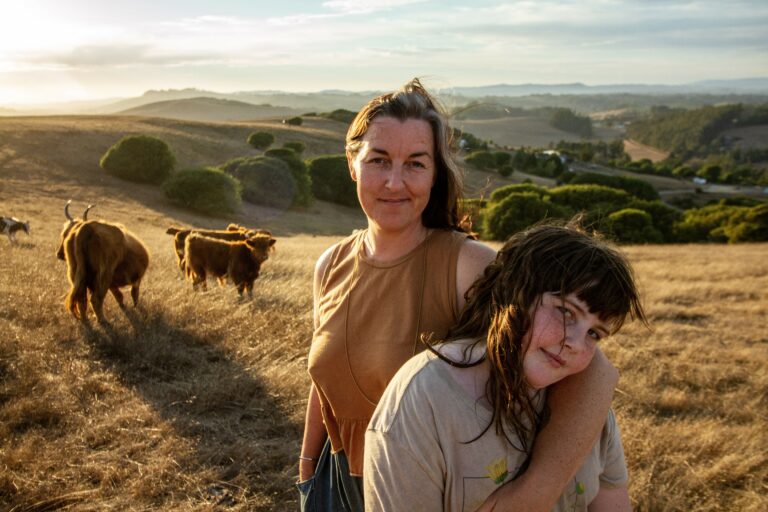
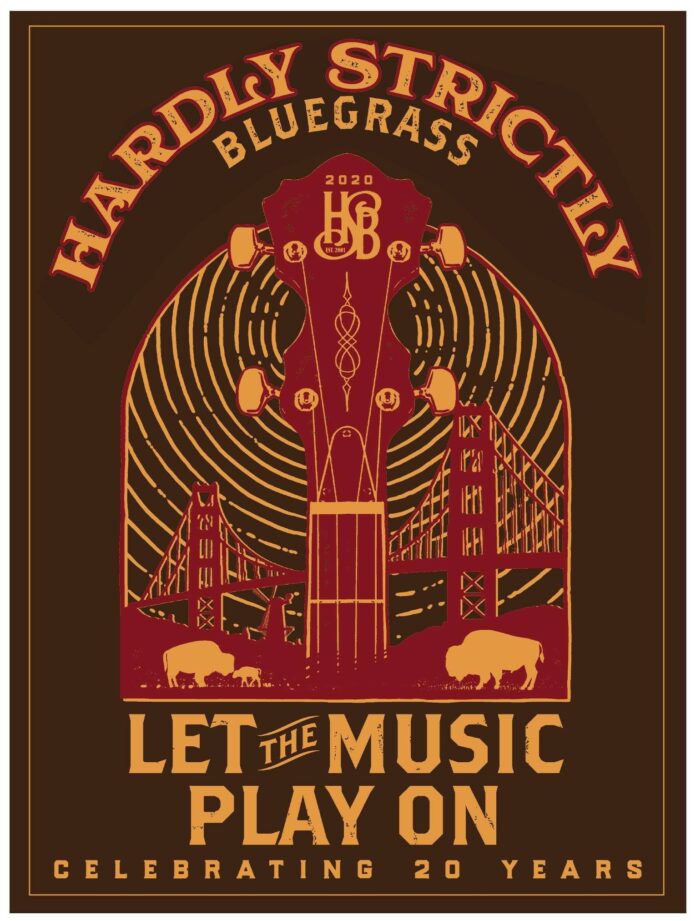
North Bay singer-songwriter and rancher Ismay (aka Avery Hellman), grandchild of Hardly Strictly Bluegrass founder Warren Hellman, has spent a lifetime immersed in music and nature.

Now, Ismay merges those two territories in an enthralling, full-length debut album, Songs of Sonoma Mountain, available on vinyl, CD and digital download.

“I tried to focus my songwriting on this place as much as possible,” Ismay says of the new record. “I tried to think about what my experiences were on the mountain and tell those stories.”

Ismay wrote the album over several years while working and living on the family ranch on Sonoma Mountain, usually taking shelter in the ranch’s barn during the evening when no one was around.

“It’s kind of weird to write songs about birds and inanimate objects and places,” Ismay says. “It’s more common to write about relationships. It seems to just work for me to write songs about living in the natural world.”

In that vein, many of the songs on the album contain a folkloric quality, as if the mountain itself wrote the lyrics. Ismay’s musical approach of intricate finger-style guitars and emotionally affecting vocals set over field recordings lends a fairytale air of imagination to the entire record.

“That is a big part of my life,” Ismay says. “If we are able to spend time in the natural world, we get to engage more in those mystical elements of it; these strange things that you encounter that are unbelievable. These folklore stories used to be so much more a part of our lives.”

Within the framework of the natural world, Ismay also lyrically explores deeply personal issues such as identifying as non-binary or genderqueer.

“That was a big challenge for me in the record, because it’s so much easier for me to keep those things private,” Ismay says. “But I feel like I owe it to other people who are like me to be more honest and open with who I am and express this feeling I’ve had so deeply for so long.”

In addition to Songs of Sonoma Mountain, Ismay is also launching a new podcast, Where The World Begins, at the end of March to tell more stories from the mountain and the natural world.

“It’s a podcast about our connection to place,” Ismay says. “It’s about how humans shape places and how places change us.”

‘Songs of Sonoma Mountain’ is available now. Ismaymusic.com.

Dear Landlord

0

Hi. How are you? Probably you are quite concerned, as are the rest of us. Many of you own small commercial buildings or complexes housing businesses disrupted by the shutdown. Many of you are small businesses yourselves and are straining to figure out cash flow and income for the next few periods.

I have a big favor to ask of you, and it may work to your advantage in the long run. If your tenants must continue to pay rent when no income is coming in, most of them will go out of business, which leaves your property vacant and producing no income for you until it is leased again. New leases will be difficult to sign in the midst of an economic downturn or recession. If your tenants can stay in business till the shutdown ends, your properties will stay leased and your income will resume.

Seventy percent of the U.S. economy is consumer spending. Much of that is mom-and-pop stores and restaurants that fight like terriers to stay afloat during the best of times. By keeping your tenants in business, you will see the benefits in your bottom line but also in the local and national economies as well.
We’ve often been told that a rising tide lifts all boats. Well, the opposite is true as well. We don’t want our local businesses and restaurants to fail. We don’t want you, the landlords, to lose your shirts either.

We all have a vested interest in keeping our local economy afloat. Thousands of empty storefronts and shuttered restaurants is a terrible thought to consider and will have ripple effects all throughout our area. Please consider the long-term consequences of businesses shutting down.

Can you find it in your hearts to work out arrangements with your tenants so that rent can be deferred or delayed until business comes back? To quote Fred Rogers, “I know you can.”

Thank you very much,

Andrew Haynes

Andrew Haynes lives in Petaluma.

Making Plans

Very interesting (“A Man, a Van, a Plan” Features, March 11). I have often thought of adopting a life on the go in some kind of RV or converted bus or vehicle, but haven’t had the nerve to do it.

Having to do so because I’d be obligated to is altogether another story and reality I haven’t had to face yet (knock on wood).

Alejandro Moreno S.
Via bohemian.com

More Questions

Very good point (“A Man, a Van, a Plan” Features, March 11); the lack of input from the homeless, including on the policies that affect them!

Some questions you might ask, please:

How are they coping with the virus lockdowns? Do they manage to vote in elections or contact elected officials? What is the best & worst thing about this way of life?

Good work, this project—looking forward to reading more about it.

Leslie Ronald
Via bohemian.com

Public Relations

“Warts and all”??? (“Goldilocks” Film, March 18). It’s a slick PR move by the Clintonistas to rehab the image of what’s become a lost soul.

I supported her twice, but the warts (trashing other women, being a doormat for Bill, Walmart Board, influence peddling) aren’t really covered in this unneeded opus.

Peter J Logan
San Francisco

Digging Dirt

A difficult part of this quarantine stems from an essential loss of American identity: If you’re not working, and you can’t buy things, who are you?

“Your job is your life, here in the U.S.,” says Kilian Colin in season two’s first episode of Dirty Money (Netflix), “The Wagon Wheel.” He was one of the original whistleblowers in the Wells Fargo scandal concerning the “cross-selling” of phony accounts that led to then-CEO John Stumpf receiving a $17.5 million fine.

Colin, an Iraqi immigrant turned bank teller, soon found out the real motto was “eight makes great”—tellers needed to wrangle eight new accounts every day.

Fellow whistleblower Yesenia Guitron, of Napa County’s St. Helena branch, calculated that a bank with several tellers in a town of 5,000 would run out of citizens quickly. She was sent to recruit grape-pickers from the local labor exchange, her manager allegedly telling her to “unbutton your shirt and shake your skirt.”

Alex Gibney, the Oscar-winning director of Taxi to the Dark Side, co-produces the six-part series.

The story is deftly told. It explains a complicated grift with pointed visuals, a clip of “The Wells Fargo Wagon” number from The Music Man (1962), wrenching personal stories and an interview with The Wall Street Journal’s Emily Glazier, who wrote 250 articles about the bank. And Krauss gives Woody Guthrie the last word.

Another Dirty Money episode, “Slumlord Billionaire,” by Daniel DiMauro and Morgan Pehme, is about Jared Kushner, who came from a family of New Jersey developers and is now an adviser on numerous U.S. policies.

Jared’s Damien-like smoothness suited the equally kneecap-faced Ivanka Trump, and his fortunes have increased since their marriage. Still, his 666 5th Avenue building required investments from Russians and Persian Gulf potentates, creating a situation that looks awfully like influence-peddling.

Jared’s illegal business practices as a landlord are illustrated in stories about his New York City buildings, where he pressures rent-controlled tenants with horrible neglect and ’round-the-clock construction crews.

For some reason, Kushner refused interviews, and his underlings excuse what they did as “Fiduciary duty.” That’s today’s version of, “We were only following orders.”

‘Dirty Money’ is streaming on Netflix.

Tech Tasting

0

With apologies to Orson Welles, it seems, “We shall sell no wine unless it’s online.” With the closure of wineries for all but production during the pandemic, wineries are embracing online technology to continue some semblance of the tasting-room experience.

Among them is Napa Valley’s St. Supéry Estate Vineyards, which will host a series of virtual wine tastings, online, every Thursday afternoon for the next several weeks. Naturally, it’s expected that you already have some St. Supéry in your glass (conveniently available in a 6-pack #Injoy At Home Tasting Kit from the winery—be sure to use coupon code: INJOY@HOME) and an account with Zoom, the video conferencing app that’s become the de facto group encounter platform in the age of social distancing.

Participants will receive a timely login link, and one of the resident winemakers will guide them through a spread of St. Supéry wines. Gimmicky? A bit, but that’s part of the experience—nobody opens a Cracker Jack box just for the prize. There is, of course, the wine— and the Rutherford-based institution has earned its reputation with 100 percent estate-grown, sustainably farmed sauvignon blanc and red Bordeaux varieties that are often media darlings.

“With improvements in technology, we are able to engage more directly with our customers than in the past,” says St. Supéry Estate CEO Emma Swain, whose offering comes with promotional pricing and free shipping. “We feel Zoom is the best platform to facilitate a more interactive session.”

Those wishing to up the interact ante can also elect to make the St. Supéry selections part of their dinner on tasting evenings. The winery will facilitate this with suggested recipes to pair with each.

Those of us who came of age watching Capt. Picard bark, “Computer, tea, Earl Grey, hot,” may find virtual tastings a bit lacking in the tech department (really, how hard can it be to 3-D print an award-winning wine?) but they are a fantastic option until we arrive at 24th-century technology, and perhaps they are an idea worth repeating with friends. If you’re interested in a Bohemian-themed virtual wine tasting led by your humble editor (c’est moi!), sign up here: dhowl.com/bohowine.

Until then, the next two St. Supéry virtual tastings are slated as follows:

March 26: 2015 Rutherford Estate Vineyard Merlot, 93 Points, The Tasting Panel. April 2: 2017 Napa Valley Estate Virtú, 90 Points, Wine & Spirits Magazine.

Email di*******@******ry.com for a dedicated link to the Zoom hangout. If you are interested in learning more, winery staff remain available via email and phone (+1.866.612.2582) to discuss all things wine-related.

M-M-M-My Corona

0

It was inevitable that the Knack’s 1979 classic track, “My Sharona,” would catch corona and go viral as a song satire. Though pop-parody godfather Weird Al scrupulously avoided the notion (“Yeah, no, sorry. Not gonna do ‘My Corona,’” he tweeted when petitioned by fans to cover the song), others have risen (or sunk?) to the occasion.

Eric W. Baker of Papa Bakes currently leads the YouTube charts with his band’s take, which features the revised lyric, “Ooh my little deadly one, my deadly one, symptoms don’t show up for some time, Corona … M-M-M-My Corona!” It’s worth a spin, not least of which for the video’s classic ’80s white cyclorama set (which sounds much fancier when written than it actually is). Good or bad taste? Probably no more unpalatable than the Mexican lager the band sips throughout the vid. I’ll let you guess which one.

• • •

While we’re kicking around pandemic puns consider this: Though National Novel Writing Month (a.k.a NaNoWriMo) isn’t until November, it’s probably high time to dust of the manuscript moldering in your desk drawer and hunker down for CoroNaNoWriMo. Instead of taking a month to write 50,000 words, you can use your Corona-enforced downtime to write your own version of the Never Ending Story.

• • •

When solo, I’m the alpha male in the movie unspooling in my own mind. But amongst the urban canyons of our empty streets, I am now the Omega Man. In other words, I’m the last man on earth until I have to get six feet away from the other last men on earth in the grocery store.

During the fires last fall, I acquired a fashionably black N-95 mask that matches my sartorial uniform of dark blazers and boots. It pushes my look from “casual sophisticate” to “calculating psychopath” in about three seconds. Needless to say, I’m no longer the one stepping aside in the wine aisle. Thus far, I’ve only been bested for a bottle by a gent dressed as a Plague Doctor—beaky mask, black hat, cloak and all. Dude earned that $8 bottle of pinot so far as I’m concerned. Moreover, his creepy presence suggests it’s time to update our slogan— #SonomaStrong suited the esprit de corps of our community during the fires but this moment is entirely weirder—#SonomaStrange is more apt. Alas, someone is already squatting the domain name (I had to check).

Naturally, #SonomaStrange merch, like “My Corona,” is inevitable. Tag your #SonomaStrange pics on Instagram and I’ll compile a “Corona Casual” virtual fashion show at Bohemian.com. Remember, fellow dystopian fashionistas—you’re not alone. You’re … fabulous.

Interim Editor Daedalus Howell is quarantined online at DaedalusHowell.com.

Ismay Connects to Sonoma Mountain on New Record

0

Bradley Cox, Giant Eye Photography

North Bay singer-songwriter and rancher Ismay (aka Avery Hellman), grandchild of Hardly Strictly Bluegrass founder Warren Hellman, has spent a lifetime immersed in music and nature.
Now, Ismay merges those two territories in an enthralling, full-length debut album, Songs of Sonoma Mountain, available on vinyl, CD and digital download.
“I tried to focus my songwriting on this place as much as possible,” Ismay says of the new record. “I tried to think about what my experiences were on the mountain and tell those stories.”
Ismay wrote the album over several years while working and living on the family ranch on Sonoma Mountain, usually taking shelter in the ranch’s barn during the evening when no one was around.
“It’s kind of weird to write songs about birds and inanimate objects and places,” Ismay says. “It’s more common to write about relationships. It seems to just work for me to write songs about living in the natural world.”
In that vein, many of the songs on the album contain a folkloric quality, as if the mountain itself wrote the lyrics. Ismay’s musical approach of intricate finger-style guitars and emotionally affecting vocals set over field recordings lends a fairytale air of imagination to the entire record.
“That is a big part of my life,” Ismay says. “If we are able to spend time in the natural world, we get to engage more in those mystical elements of it; these strange things that you encounter that are unbelievable. These folklore stories used to be so much more a part of our lives.”
Within the framework of the natural world, Ismay also lyrically explores deeply personal issues such as identifying as non-binary or genderqueer.
“That was a big challenge for me in the record, because it’s so much easier for me to keep those things private,” Ismay says. “But I feel like I owe it to other people who are like me to be more honest and open with who I am and express this feeling I’ve had so deeply for so long.”
In addition to Songs of Sonoma Mountain, Ismay is also launching a new podcast, Where The World Begins, at the end of March to tell more stories from the mountain and the natural world.
“It’s a podcast about our connection to place,” Ismay says. “It’s about how humans shape places and how places change us.”
‘Songs of Sonoma Mountain’ is available now. Ismaymusic.com.

PODCAST: State of the Arts, No Evictions and M-M-M-My Corona

0

This week we explore the State of the Arts — namely audiences, artists and the pandemic between them — a new series by arts editor Charlie Swanson about how COVID-19 and the coronavirus that causes are affecting the art scene. Meanwhile, reporter Will Carruthers updates us on the new anti-eviction measures afoot and we sample M-M-M-My Corona, which was inevitable. Takeshi Lewis produces, Daedalus Howell hosts.

[embed-1]

Subscribe on Apple Podcasts, Spotify, Stitcher and Google Podcasts.

Banks Agree to Coronavirus Mortgage Relief in California

With a million Californians filing for unemployment over the last two weeks, several major banks have agreed to delay foreclosures and offer mortgage relief to homeowners impacted by the coronavirus, Gov. Gavin Newsom announced Wednesday. It was the latest sign that the...

Gig Economy

As Sonoma, Napa and Marin county residents continue to endure a “shelter-in-place” order meant to stop the spread of the coronavirus, social gatherings and many businesses have been put on hold until at least April 7. While many well-heeled full-time professionals in the North Bay are enduring their downtime more worried about...

Natural Magic

North Bay singer-songwriter and rancher Ismay (aka Avery Hellman), grandchild of Hardly Strictly Bluegrass founder Warren Hellman, has spent a lifetime immersed in music and nature. Now, Ismay merges those two territories in an enthralling, full-length debut album, Songs of Sonoma Mountain, available on vinyl, CD and digital download. “I tried to focus my songwriting on this place...

Dear Landlord

Hi. How are you? Probably you are quite concerned, as are the rest of us. Many of you own small commercial buildings or complexes housing businesses disrupted by the shutdown. Many of you are small businesses yourselves and are straining to figure out cash flow and income for the next few periods. I have a big favor to ask of...

Making Plans

Very interesting (“A Man, a Van, a Plan” Features, March 11). I have often thought of adopting a life on the go in some kind of RV or converted bus or vehicle, but haven’t had the nerve to do it. Having to do so because I’d be obligated to is altogether another story and reality I haven’t had to...

Digging Dirt

A difficult part of this quarantine stems from an essential loss of American identity: If you’re not working, and you can’t buy things, who are you? “Your job is your life, here in the U.S.,” says Kilian Colin in season two’s first episode of Dirty Money (Netflix), “The Wagon Wheel.” He was one of the original whistleblowers in the Wells...

Tech Tasting

With apologies to Orson Welles, it seems, “We shall sell no wine unless it’s online.” With the closure of wineries for all but production during the pandemic, wineries are embracing online technology to continue some semblance of the tasting-room experience. Among them is Napa Valley’s St. Supéry Estate...

M-M-M-My Corona

Pandemic parodies

Ismay Connects to Sonoma Mountain on New Record

North Bay singer-songwriter and rancher Ismay (aka Avery Hellman), grandchild of Hardly Strictly Bluegrass founder Warren Hellman, has spent a lifetime immersed in music and nature. Now, Ismay merges those two territories in an enthralling, full-length debut album, Songs of Sonoma Mountain, available on vinyl, CD and digital download. “I tried to focus my songwriting on this place as much as possible,”...

PODCAST: State of the Arts, No Evictions and M-M-M-My Corona

This week we explore the State of the Arts — namely audiences, artists and the pandemic between them — a new series by arts editor Charlie Swanson about how COVID-19 and the coronavirus that causes are affecting the art scene. Meanwhile, reporter Will Carruthers updates us on the new anti-eviction measures afoot and we sample M-M-M-My Corona, which was...
11,084FansLike
4,446FollowersFollow
6,928FollowersFollow