Limited services for first responders

0

In 2017, a retired police captain woke up in the middle of the night with his gun in his hand, his wife’s shriek breaking the 3am silence. The metal felt cold against his sweaty palm, his heart beat like it was ready to explode. He was crouched in attack mode, his shoulders tensed together, ready for a fight. He doesn’t remember running around the house with his weapon, believing there was an intruder somewhere. 

According to his wife, this wasn’t the first time it had happened.

The captain—who asked his name not be used because of the sensitivity of his medical condition—worked at a mid-sized, East Bay police agency and had long suffered from night terrors, extreme PTSD and alcoholism during his 25-year career. But the mental health services that once kept his conditions at bay were shut down—like so many other businesses and services—in the wake of Covid-19 stay-at-home orders.

The West Coast Post-traumatic Retreat Center in Napa County that the former captain relied on to get his life back on track specifically serves first responders. It closed its doors on March 13 to help curb the spread of the disease.

“I think if he didn’t go to this program, he would have died,” his wife said. “You have to hit a bottom to get there. Somebody drives you there.”

First responders have long been known to suffer from mental trauma, with law enforcement officers especially vulnerable to depression and suicide. And while first responders now work on the front lines of the pandemic, there is renewed concern over their mental health and the safety of their loved ones. With state-wide shelter-in-place orders, these essential workers have nowhere to go to receive the mental-health help they need, particularly for the heightened trauma they’re now facing—risking exposure to Covid-19 every day while out on patrol or responding to calls for service, sometimes without the necessary personal protective equipment needed to protect themselves.

According to the International Association of Chiefs of Police and the Center for Evidence-Based Crime Policy at George Mason University, around 130 agencies, of the nearly 1,000 agencies that responded to the survey, reported their ability to provide PPE for their officers as “poor” or “very poor.” Their survey responses were collected in mid-to-late March, just after the president declared a national emergency and after California’s shelter-in-place ordinance went into effect. 

At that time, around 70 agencies reported their ability to manage exposed officers as poor, and a little over 25 percent did not report having a contingency plan or strategy in place to handle a significant number of officers on sick leave or in quarantine. 

Which, according to data collected by The National Police Foundation, is happening all too frequently. According to their Covid-19 real-time data dashboard, California has a higher rate of exposures and diagnoses than any other state. More than 21 percent of reported personnel—nearly 4,000 people—have been exposed, with 0.4 percent diagnosed. 

First responders risk Covid-19 exposure every day, with dire mental-health implications. And this population is already more vulnerable than others.

According to Blue H.E.L.P., a nonprofit aimed at mitigating the stigma of mental health in police departments, 228 officers committed suicide nationalwide in 2019, an increase from 172 the year before. During the years Blue H.E.L.P.’s been collecting data, more police officers in the United States have died by suicide than by all line-of-duty deaths combined.

Which is what makes centers like WCPR so vital to this community. WCPR relied heavily on group therapy. Using what they call a tri-pronged system, the facility relied on licensed clinicians, chaplains and peers. Peers—people who’ve been through the program before—were hailed as the most pivotal parts of the program, said Cyndee Thomas, chaplain director at WCPR.

An LAPD homicide detective, who asked to remain anonymous, was on the WCPR waitlist. He was specially interested in its peer support, to help him cope with his alcoholism and recurring nightmares. His most recent nightmare occurred three weeks ago, when he awoke in a sweat, his body tense, recovering from the mental image of a young officer he’d trained who died brutally in a car chase just a month into the force.

“He was one of my favourite trainees,” he said. “The car wrapped around the telephone pole and he died. That was 18 years ago and it’s still with me.”

The detective tried seeking help during his 20 years on the force, but found therapists were unable to help him.

“A lot of the time it makes it worse,” he said, regarding usual therapy.

Being in law enforcement is a “unique experience,” something that is not easily or completely understood by the general public. Opening up to first responders who have lived a similar reality can help facilitate the healing process.

“What’s the backup plan?” he asks, as mental health facilities like WCPR shut down because of shelter-in-place. The detective shares his concern that first responders need more support than ever during Covid-19. He believes suicides, alcoholism and substance abuse are going to skyrocket; that the numbers and overall impact will only be visible in hindsight. 

Preventing exposure among personnel is already difficult enough, even more so when departments are hindered by a lack of PPE. According to the NPF, nearly 28 percent of personnel in California have reported insufficient access to PPE. And even more concerning is the lack of information being provided to law enforcement.

The California Police Chiefs Association surveyed the 322 law enforcement agencies throughout the state during the last week of April, and more than a third responded. Of the respondents, 30 percent said they were not receiving information from health officials on Covid-19 cases in their city. Meaning, several law enforcement agencies in California are being forced to send their officers to answer calls without knowing whether or not the call is related to someone Covid-19 positive, potentially and unknowingly risking them exposure. And, half of all respondents said they have had to quarantine at least one officer due to Covid-19.

Without access to facilities like WCPR, these first responders have to handle the anxiety from being put in these stressful situations on their own.

“This is not a luxury thing,” said the detective, “there are a lot of guys out there who’re really worried [that they’re] at the end of their rope and are needing to get into a facility.”

The WCPR retreat was crucial, as attendees were physically surrounded by peer-support and constant check-ins. WCPR is a no-substance zone, and those dealing with addiction were physically removed from drugs and alcohol.

In order to provide some relief, WCPR has been moderating online video conferencing where first responders can find a safe space to talk. Not meant to be a replacement for the retreat, the virtual platform functions as an SOS helpline.

At the retreat, the captain found clients who’d been in similar situations as him and were willing to talk about their experiences. They understood his trauma.

“I felt an affinity for them almost immediately, which happens at WCPR,” he recalled.

He attributes recovery and bonding to their physical presence, a connection missing in online meetings.

Other types of first responders are also at a high risk for death-by-suicide. The Firefighter Behavioral Health Alliance recorded 139 firefighters and EMT suicides last year, and nearly 40 deaths this year so far.

“Covid-19 is just the beginning of a lot of issues that my brothers and sisters will be dealing with,” Jeff Dill, founder of the FBHA, said.

Adding to existing PTSD and depression, first responders are expected to face compassion fatigue, a higher risk of exposure to Covid-19 and the stress of potentially infecting their own families.

David Bevers, an engineer and paramedic with the Sacramento Fire Department, said paramedics are under intense pressure in the midst of the pandemic. Stress already occurs from working on the front lines, but the added tension around protecting against a deadly contagion makes first responders particularly vulnerable.

“We’re fighting the invisible war,” Bevers said.

Bevers emphasized the need for first responders to deal with their mental trauma, which if left untreated, often worsens into more dangerous health situations. Symptoms of mental trauma begin subtly, with a person acting distant. Feelings of isolation evolve into substance abuse as a method of suppressing trauma, which can eventually lead to addiction. State-wide shelter-in-place orders prevent first-responders access to the typical recreational outlets, such as going to the movies or shopping, that once helped them cope with daily job pressures.

Bevers recalled his own experience attempting to resuscitate an unresponsive infant, who later died in the hospital. At the time, he had his own newborn at home. Soon after, Bevers realized he had to avoid developing attachments to patients.

“If I were to look at this kid, or look at the patient, and see somebody I know, or relate this to my kid or my family, that is what would tear me up,” Bevers said.

By Aashna Malpani and Natalia Gurevich

Cannabis-Grower Lisa Lai Helps Close Industry Gender Gap

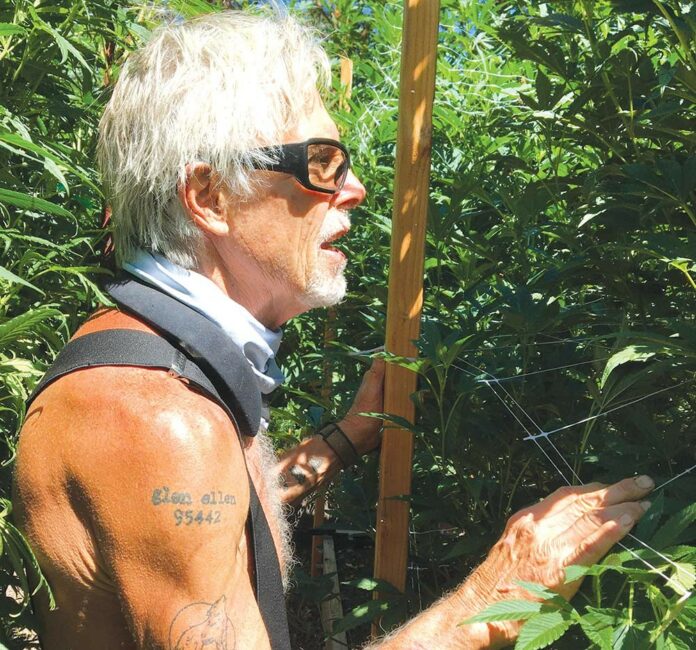
Lisa Lai stands, hands on hips, on a remote mountain top with her watch dog Smokey at her side. She tells me, “I’m a no bullshit person.” She goes on to explain that she doesn’t bullshit her husband, her daughters, her friends, the county of Sonoma or the cannabis industry to which she belongs.

To get to her fifteen-acre property, I’ve had to pass through two locked gates and cross two cattle guards. To get into Lisa’s indoor garden she’s had to unlock three doors.

It’s unlikely anyone would come this far to steal her crop, first on paved road, then on dirt road, along the edge of a cliff. It would take serious effort to get here, and then even more effort to harvest, transport downhill safely and sell on the black market, the only place you can hawk “hot” weed. Only a fool would try.

“I have what’s called ‘penalty relief,’” Lisa explains when I first arrive. “I’m allowed to grow weed even though I don’t have final county approval.”

Lisa calls the whole approval process expensive and frustrating. Members of the Hessel Grange, the local organization to which she belongs, echo her view, though they each tell their own individual stories. Some don’t want to be written up and photographed. They prefer to be anonymous. That’s not Lisa.

I met her at the Hessel Grange at the end of a meeting held outdoors, with everyone sitting in chairs in a circle, practising social distancing and yet still smiling and laughing. Lisa gave me her cell number and the name of her business, All Cali Farms, and asked, “What do you know about me?”

I replied, “That you’re a marijuana grower and a woman.”

The daughter of a mechanic and a nurse, Lisa attended Humboldt State University and cut her eye teeth in the Humboldt cannabis industry. She remembers the days when feds helped state and local police raid gardens and make arrests.

Not surprisingly,  she hasn’t returned to her cannabis roots in Humboldt.

“I’ve been in Sonoma County for 10 years now,” she tells me. “This is home. I keep bees here and make honey, my daughters go to school in The Springs, and I’m a member of the Hessel Grange.”

At a recent meeting, the members swapped stories and talked about Black Lives Matter and George Floyd. The men tended to be loud and say “fuck” a lot. The women seemed to listen more carefully than the men.

Lisa likes the no-bullshit style of the Grange and the fact that the organization supports Black Lives Matter.

“I stand in solidarity with the Black, Latinx, and LGBTQ communities,” she tells me. “I think that people in prison for cannabis ought to be released.”

She’s on her feet much of the day in a room with artificial lights, whirling fans and there’s really only enough room for one person.

Lisa’s organic grow is “a sea of green,” which might be accurately described as a small, compressed version of a large outdoor plantation on steroids, so to speak. The marijuana plants in Lisa’s sea of green are protected by a complex security system.

“I have 400  girls here,” she says, “I’ll harvest 30 pounds of flower in a couple of months and then I’ll start another crop. I grow different strains because I believe in diversity and because connoisseurs and aficionados want variation and not the same-old same-old same-old.”

Lisa gets up close and personal with her “girls,” energizing them with her energy, providing good soil, bright lights and good clean water, which she has to give them every three to four days or they’ll shrivel and die.

“Growing indoors was originally a way to hide,” she reminds me.

Indeed, it was a way to conceal plants from aerial surveillance. Indoor also opened up opportunities. You can grow and harvest three to four times a year, protect the environment and have zero waste, though bad actors operate everywhere. Lisa’s sea of green looks healthy, smells fresh and clean, and it’s also pesticide free.

Lisa and her husband have two school-age daughters who have grown up knowing their mother was a successful pot grower.

“They know what I do for a living,” she tells me. “They also know marijuana is medicinal and not for little girls.”

Lisa is a success in a fledgling industry that the state of California and local municipalities have often tried to stymie. Indeed, officials have created a maddening and monstrous system and made a woman—Lori Ajax—the czar of the Bureau of Cannabis Control.

If Ajax is near the top of the cannabis pyramid, Lisa is near the bottom, not scraping it and yet scraping by. She plans to make real money soon and expand.

To get to the place where she is now she’s had help from family and friends and she gets along with neighbors who know what she’s doing and who like her. That’s essential. She doesn’t want anyone to file a complaint with the county. Lisa also gives credit to her own “grit,” her ability to stay focused and her ability to be happy on her remote mountain top.

“I’m never bored,” she says. “I can always process my thoughts.” She pauses, looks out at the forest in the distance, and adds, “There’s a revolution in our own country.”

Lisa is on the side of the whole cannabis community and especially with the women in the industry including Erin Gore, Dona Frank and Nikki Borracal—newly appointed a county deputy administrator—who aims to end the chaos and confusion at the county level where folks acted as though pot was still illegal and had to be stamped out before it multiplied.

Lisa thinks that men have dominated the industry because they’re likely to be tougher and rougher than women and more likely than women to provide “security.”

David Downs, the California editor of Leafly and the author of four stellar books about cannabis, has probably written more copy about women in the industry and provided more insights than any other reporter.

“There’s a gender gap in the industry, and there’s sexism, too,” he tells me during a phone interview. “There is support by women for women, but in general women have more to lose when they come out of the cannabis closet than men.

“Young men who want high levels of THC in their weed tend to spend more money and to talk more than women. Guys go online and brag about the big bong hit they did.”

Downs pauses a moment and adds, “There’s real feminine energy to the cannabis plant that should be respected. Some of the best growers are female. They tend to be less obnoxious than the guys.”

Lisa doesn’t brag, though she has bragging rights. She harvests the crop herself, dries it, cures it, manicures it, weighs it, packages it and keeps the books.

“I’ve never hired a lawyer or a consultant to do anything for me in the industry,” she says.

She is looking forward to final county approval, building a greenhouse, growing more weed and maybe exchanging seeds with another farmer and growing a strain or two, for her own personal use. Wasn’t that how she got started?

To get out of her sea of green and into the sunlight, I have to pass through three doors. To get downhill I have to get beyond two gates. Once I’m back on the paved, two-lane road, I can hear Old Courthouse Square and Santa Rosa civilization calling out to me.

Jonah Raskin is the author of Marijuanaland: Dispatches from an American War.

Windsor’s Open

Eighteen years ago, Windsor officially incorporated into a town. What’s in store as it heads into its next decade? At this point, who knows what’s in store for any small American town? What a strange time to be entering your 20s, Windsor—you have my sympathies. And yet, you seem to be doing just fine; perhaps even better than ever.

My month began in Windsor with a guest appearance on your locally produced, nationally syndicated TV show, Creature Features (Crowhaven Productions is your best-kept secret—pssst … vimeo.com/crowhaven) and will likely end with a flurry of letters to the editor about how I know nothing about the place. But I do, just ask your local Rotarians about my Zoom chat with them. They asked me to speak about media at an hour that was both early and ungodly. In my delirium, I claimed to have been conceived in the ’70s during a cocaine-fueled night in a Marin County hot tub (for the record, it was more likely jug wine at Bodega Bay). Their polite reception of my rant was followed by what we in the biz call “crickets.”

To fill my Windsor knowledge gap, I visited it—last night, in fact. At first blush, the suburban idyll might appear as a rogue Disneyland colony, perhaps Stepford, Conn. or a simulacrum of a natural human habitat. Works for me—clean and quiet—a perfectly lovely place, particularly for a jaded Gen Xer who just wants to chill the F out. The electric cars made nary a purr, the wind whispered, even the preponderance of children around the Town Green played in near silence. Kids—so many kids. I had to ask myself, “What did they do to all the adults?” My companion and I finally spied some grownups at nearby Kin Windsor—which looked too adult for my state of mind—so we ventured up the block to Lupe’s Diner. 

Germaphobes like me will be happy to know that Lupe’s seating is properly socially-distanced, the waitstaff wore masks and gloves, and the outdoor seating undergoes thorough spraying and wiping-down between diners. My grilled-chicken burrito was dependable and perfect. My companion’s tilapia tacos, ditto. The guacamole will make you rethink the green substances being eaten elsewhere—good to the last chip. 

Lupe’s Diner, 710 McClelland Drive, Windsor. 707.836.0150. lupesdiner.com.

A Writer Confronts Her Own Implicit Bias

When I was 7 years old, my implicit biases against Black people began to show. When talking about Black people, I would opt to say African American or whisper the word “Black” as if the word was a derogatory slur rather than a term as basic as “white,” to describe one’s race.  

When I was 17 years old, a friend asked me if I would ever date a Black guy. I hesitated before saying, “Yes.” 

When I was 19 years old and interned at a documentary film company that focused on racial relations, I drafted a Tweet that used the hashtag #AllLivesMatter when Zachary Hammond, a young white teenager, was shot by police. My supervisor kindly responded me that although my intent was good and what had happened to Zachary was tragic, #AllLivesMatter contradicted the significance of #BlackLivesMatter.

Now I cringe at my transgressions, ashamed I could have ever been so wrong. And unfortunately, many of us remain guilty of implicit biases, even those like me who grew up in a diverse, progressive community like the Bay Area. It shows in the way women cross the street when a Black man walks in their direction, in the way parents lock car doors as they drive their children through predominantly Black neighborhoods such as the Fillmore District and Oakland, and in the way children associate “black” with bad and “white” with good. 

Yet, the first step to address the brutality and injustices towards Black people is to address our own implicit biases, regardless of how uncomfortable that may feel, in spite of how ugly they are to face. 

Once I acknowledged the implicit biases I held, I questioned why. Racism is taught. Prejudice is taught. To fear or think of someone in a certain way because of how they look, is taught. I was taught to regard Black people as anything but equal to white people—not because the adults in my life were racist or because I lived in a conservative town, but for countless other reasons. For one, the news and entertainment I watched growing up highlighted Black men as violent, intimidating and angry or comedic; lesser caricatures. They were more often than not the criminals in Law & Order or the funny sidekick who only existed to serve the story of the white protagonist. 

Secondly, despite the “diversity” of my suburb, only 2.5 percent of residents are Black. As I recall, there would be at most two Black children in my class, if any at all. I could typically count all the Black students in my school of 500 children on both my hands. This reality ties into the fact that the histories of redlining remain prevalent and integration movements have been slow to act, particularly with the Bay Area’s gentrification and the segregation of Black communities from neighborhoods like the one I grew up in. 

This is not to excuse my former racial biases, but to understand how they are frequently produced within non-Black people. These are deep-seated, complex issues that we must address and realize; they bolster our underlying prejudices and racism. 

I want us to get out of this cycle, yet I realize that my previous passivity was a sign of complicity for a system that inherently seeks to oppress Black people. I want to break this perpetuity of violence, but did not actively seek to do so. I let the excuses of school, work and my own ambitions stop me from doing more. 

For my failure, I am so, so, so sorry. Yes, some, like me, feel guilty and can apologize for our past faults and inaction. But this is insignificant, paralyzing and futile. 

Oscar Grant, Eric Garner, Mike Brown, Trayvon Martin, Sandra Bland, Philando Castile, Tamir Rice, Jordan Davis. Atatiana Jefferson, Ahmaud Arbery, Breana Taylor, George Floyd. I, like millions of us, am tired of hearing tragedies like theirs occur, time and time again. Yes, we non-Black people are exhausted, but this weariness pales in comparison to the suffering of Black people who are depleted, enraged, terrified and heartbroken that they and their loved ones are murdered senselessly for something as arbitrary as their skin color. 


So we need to keep going and the first step is recognizing our implicit biases and pointing these out to our peers and loved ones. However, despite the frustration of what we feel people have yet to learn, shaming them will not encourage them to evolve and grow. I did not learn because people screamed at me about how ignorant I was (though I understand the urge to do so and wish I could yell at my younger selves). I learned because people remained patient and were willing to discuss with me why I was wrong. 

We should not leave this obligation solely to Black communities; all of us who have gone through this process of shedding our own racial biases should take it on. These responsibilities to help wholly eradicate racism and implicit prejudices are ones all of us must bear equally, long after the protests end, the stream of woke social media posts stop and the news on police violence pauses. We must continue to listen and to learn from Black voices and leaders, to speak out, to struggle, to shoulder the fight as our own. Please hold me accountable for this. We are all accountable for this now. If no one is coming to save Black people, no one will save us all. 

Katrina Fadrilan worked as a staff writer for The Daily Californian and has published works on a variety of platforms including the San Francisco Chronicle, East Bay Express and HuffPost.

Letters: ‘Defund’ the Sheriff

Marin, the most orderly, low-crime county in California, should redirect the proposed $6-million-dollar Sheriff’s-budget increase toward more immediate needs.

The Sheriff already regards his heavily equipped department as a “paramilitary” force, which is out of step with the times and Marin’s real needs.

I still object to his use of Stingray listening devices to monitor the calls of Marin’s citizens, along with his connections to the National Security Agency.

Alex Easton-Brown
Lagunitas

What’s the Fuss?

Whoa … wait … maybe the cannabis industry would like Jill Ravitch to retire (“Top Cop’s Kerfuffle,” Rolling Papers, June 10), but for other residents of Sonoma County, she is doing exactly what she promised to do when she was elected to office in 2010.

She took an agency that was faltering under the previous administration and focused it on safety. She opened the Family Justice Center, expanding services to victims of family violence, sexual assault, child abuse and elder abuse.

Ravitch, described as a “tough prosecutor” with 27 years of experience, personally took a murder case to trial and won a first-degree conviction. The first in more than 20 years.

Her office has been clearing nearly 3,000 cannabis-related convictions.

Even her detractors (Omar Figueroa) praise her as a “great trial lawyer.” Lawyer and longtime Sonoma County “police watchdog,” Jerry Threet, admits Ravitch brought criminal assault charges against a police officer, but the jury declined to find him guilty.

Jill Ravitch is seeking justice in her work. She is doing the job she was elected to do. Twice.

Cathleen Howell
Santa Rosa

Dark of Love

0

By Jan Ögren

Does the term “Dark of Love” feel awkward to you? Most people are more familiar and comfortable with the phrase “Light of Love.”

All my life I have been deeply saddened by the continual racism I see in our country. I’m a writer, so I look to words for understanding. I see embedded in our language a basic racism. We talk about blackmail as bad, but white lies are OK. The examples are endless. And spiritually you’re supposed to go to the light and avoid the darkness.

As a person of light skin, I imagine what it would be like to frequently hear people say, “I just went through a really light time in my life and it was terrible. I’m glad to get away from the light. That lightness was truly ugly and disturbing.”

I believe that there is a pervasive “spiritual racism” occurring in this country, deeply embedded in our spiritual communities.

Equating light with spirituality doesn’t even make sense. When I get ready to meditate, I don’t go around turning up all the lights or sit under a spotlight. I turn down the lights, close my eyes and enter a blessed darkness where I can feel a connection with all Oneness.

I feel more inspired and peaceful staring up at the black night sky than staring at the sun.

I believe it is time to “blackwash” our language and avoid the terrible lightness of prejudice. Let’s talk about encouraging love and connection and avoiding disconnection and chaos. I find it a good spiritual practice to be aware of my words and try to avoid the white/good, black/bad bias. As a white person it also helps me stay aware of racism and white privilege as I listen to my language and other people’s use of words.

I wish I had a magic wand to change the entire world but I can change my words and so I invite you to join me in embracing the beautiful dark of love.

Jan Ögren, MFT, works in Santa Rosa practicing Psychological Shamanism. JanOgren.net

Salvador Dalí Exhibit Debuts in Sonoma

Salvador Dalí is best known for painting surrealist works featuring melting clocks and long-legged elephants, though the multi-faceted and famously mustachioed artist was also a sculptor, filmmaker and wine connoisseur among other talents.

Dalí even wrote a book on the subject of wine, 1977’s The Wines of Gala, an eccentric guide that features California wine as one of the “Ten Divine Wines” of the world. Throughout his life, Dalí connected wine with art and other emotional experiences, and is credited with saying, “A real connoisseur does not drink wine but tastes of its secrets.”

Now, wine and Dalí come together once again as Wine Country becomes the setting for a new exhibit of the iconic artist’s prints and sculptures, presented in collaboration with The Dalí Universe­—one of the largest private collections of Dalí artworks in the world—and SBHG Gallery at Cornerstone Sonoma.

“The Dalí Universe­” exhibit opens Friday, June 26, and runs through August at the Cornerstone Sonoma outdoor marketplace. The showings run 11am to 5pm on Fridays, Saturdays and Sundays, and curator Bertrand Epaud will be in town through the first week of the exhibit to offer expert insight into the artworks. Individual pieces are also available for private viewings that can be scheduled by appointment Mondays through Thursdays.

“We are honored to house this stunning collection from the undisputed master of Surrealism, Salvador Dalí,” said Karin Rogers, director of business development at the collective Sonoma’s Best Hospitality Group, which runs Cornerstone’s SBHG Gallery. “Dalí’s thought-provoking works feel rather suited to the surreal times in which we are living, and we look forward to sharing these pieces with the Bay Area and our local community.”

The exhibit will display eight of Dalí’s surrealist prints and will include a collection of nine of his bronze sculptures, which are a previously unknown aspect of Dalí’s work. In addition to painting and writing, Dalí was fascinated by the medium of sculpture, and he created original models and designs that were made into surreal objects based on the subjects in his paintings, such as the melting clocks of his painting “The Persistence of Memory,” and the recurring elephants that appear in works such as the painting “Dream Caused by the Flight of a Bee Around a Pomegranate a Second Before Awakening.”

For more than 40 years, Beniamino Levi, an Italian art dealer and collector who worked with Dalí during the 1960s, has headed The Dalí Universe collection of art. Fascinated by Dalí’s ability to use different mediums, Levi began collecting Dalí art and sculpture when he opened Galleria Levi in Milan in 1955. The Dalí Universe’s flagship exhibition space is located in Paris, France, though the company tours and loans Dalí artworks to over one hundred prestigious museums and locations worldwide.

Cornerstone Sonoma’s expansive outdoor marketplace includes many independently owned retail shops and wineries, a distillery and a restaurant. The Cornerstone property also includes art-inspired gardens, event venues and the Sunset Gardens & Outdoor Test Kitchen, where gourmet food and wine pairings will be available for purchase and served by Sonoma-based Ramekins Culinary School while the exhibit displays Fridays through Sundays.

Cornerstone Sonoma and the SBHG Gallery will observe strict hygiene and social distancing guidelines in conjunction with Sonoma County’s most current Covid-19 safety measures. Additionally, many of the marketplace’s tenant vendors have updated their services and hours during the COVID-19 outbreak and are taking extra precautions to insure the safety of the community.

‘The Dalí Universe’ is on display Fridays–Sundays, Jun 26–August 30, at Cornerstone Sonoma, 23570 Arnold Dr. in Sonoma. 11am to 5pm. Free admission. For more information, visit cornerstonesonoma.com.

California Honeydrops to Play New EP on Sweetwater Stage

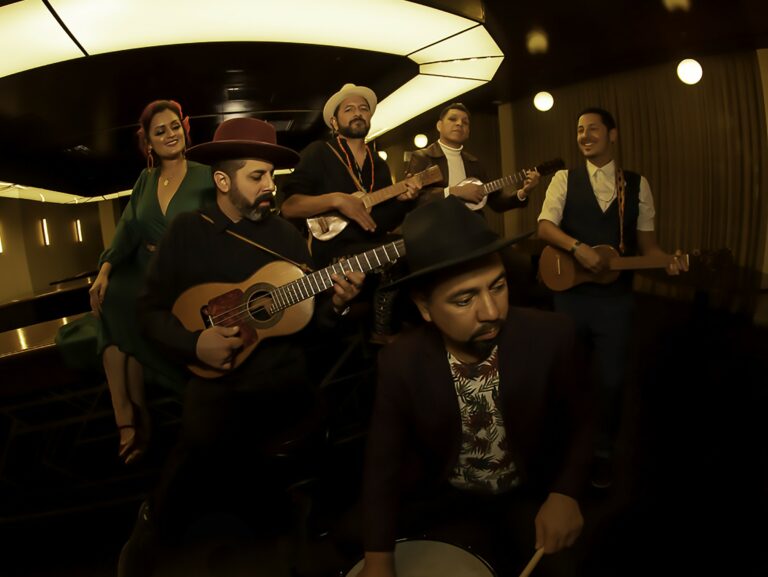
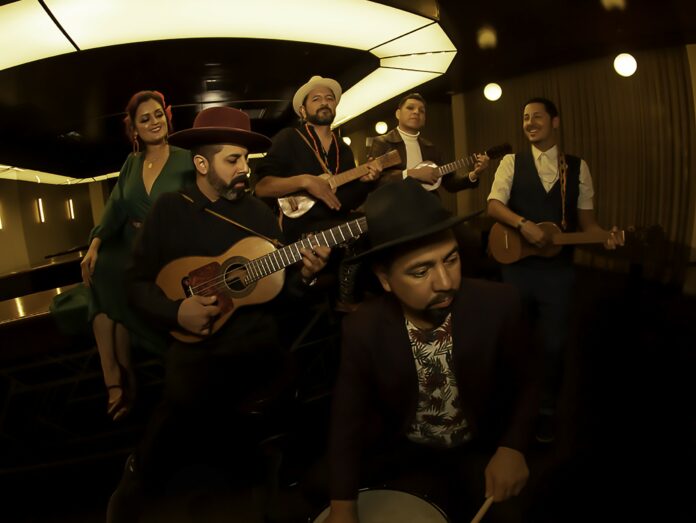
More than 10 years after forming as an Oakland busking duo, the California Honeydrops are now one of the Bay Area’s most popular bands, performing an upbeat brand of irresistibly danceable soul music and garnering acclaim for both their energetic live performances and ambitious album recordings.

Even in the midst of the Covid-19 pandemic, the funky five-part band is throwing a party this weekend, albeit a live-streamed virtual party, when they celebrate the release of their new EP, Just One More, And Then Some with an online concert on Friday, June 26.

The streaming concert will feature the California Honeydrops performing two full sets of music live from the stage of the Sweetwater Music Hall in Mill Valley, beginning at 7pm. The online event is free to watch, and virtual tickets can be reserved now.

Like other Marin County venues, Sweetwater Music Hall has been closed to social gatherings since March when shelter-in-place orders went into effect. Recently, Sweetwater has been open for take-out food and limited outdoor dining, though concerts have been on hold.

The California Honeydrops are also feeling the effect of the enforced social distancing, and saw their planned summer concert schedule evaporate in the wake of the pandemic. In lieu of tour dates, the Honeydrops have been performing weekly “Friday Night Sessions” that are reaching online audiences of over 25,000 people per stream. The band is also giving back through these online offerings, donating 25 percent of each week’s revenue to a different charity.

Now, with their new EP, the California Honeydrops are ready to really party.

“We wanted the EP to be super raw and to reflect how we play live, so there’s little-to-no dubbing on the tracks—what you hear is what you get,” says vocalist and multi-instrumentalist Lech Wierzynski, in a statement. “They’re fun, upbeat songs. Kind of let your hair down, celebrate joy and making music together. That’s why people come to our shows, so we tried to capture that feeling during a time when we can’t gather, a time when people may be looking for a little love and connection. As always, more than anything that’s what we’re trying to put out there.”

Just One More, And Then Some features four tracks that showcase the band’s ability to musically move between Bay Area R&B, Southern soul, Delta blues and New Orleans funk. The title track that opens the EP boasts dueling guitars and organs before a raucous chorus takes over.

“These songs are an open invitation for anyone listening to follow that sound you might hear from the street, coming from the little house tucked away in the back,” says drummer Ben Malament, in a statement. “We want to conjure a place where anyone and everyone is welcome to pick up an instrument or a microphone, a piece of floor to tear up, and just be appreciated for digging in and being a part of it.”

That place in Malament’s mind could easily be the Sweetwater Music Hall, where the band has played several times over the years. In addition to co-founders Wierzynski and Malament, the California Honeydrops lineup includes Johnny Bones on tenor sax and clarinet, Lorenzo Loera on keyboards and Beau Bradbury on bass.

For the last decade, the California Honeydrops have extensively toured in support of legendary artists including Bonnie Raitt, B.B. King, Buddy Guy and Dr. John. On their own the California Honeydrops regularly sell out headlining shows at venues across the country, and they have performed at major festivals such as Outside Lands, Monterey Jazz, High Sierra and many others.

While the upcoming concert on June 26 will not include a live audience at the Sweetwater, the band is still eager to get on the stage and musically conjure that happy place for the viewers and listeners at home, as the group remains dedicated to cultivating a live music connection with their audiences.

“The whole point is to erase the boundaries between the crowd and us,” Wierzynski says. “To make people become a part of the whole thing by dancing along, singing, picking the songs and generally coming out of their shells.”

The California Honeydrops perform live online Friday, June 26, at 7pm. Reservations and more information are available here.

Protesters Allege Motorist Tried to Hit Them

0

A white Porsche SUV was driven into a crowd that was marching to the Santa Rosa Police Department — now, the driver and police claim she was the victim. The incident occurred just before 9:20 p.m. on Saturday, June 20, 2020, as about 150 marchers participating in a 24-Hour Protest for Peace and Justice took to Santa Rosa’s Sonoma Avenue as part of a candlelight vigil for victims of police brutality.

The crowd was led by a bicyclist and a pedestrian, each wearing body cameras, who alerted cars to the marchers so drivers could wait or alter their route. At about 9:20 p.m., protesters say that a white Porsche SUV briefly paused before the cyclist, then angled directly toward the center of the road and the crowd and accelerated toward marchers.

[embed-1]
Several protesters say they filed police reports that night against the driver. Rigel Bowen and another protester who wished to remain anonymous each downloaded their body camera footage onto USB drives and provided them to police that evening when they filed official reports of the incident.

These videos show the vehicle approaching the front of the crowd. One protester motions toward the motorist with a flashlight to alert the vehicle of the march, directing her to turn around. The marchers can be heard chanting, “Black Lives Matter!”

Then, the car’s engine revs. The cyclist can be heard saying, “Hey, slow down,” just before the driver accelerates directly toward the marchers. The crowd’s chanting turns to screams and shouts of “What the f—-?”

Panicked protesters shouted to one another to get out of the way as the driver sped at them, dispersing marchers to each side of the road.

Protester Cindy Norman—who elected to use a pseudonym to protect her privacy—told The Bohemian that she and two of her children were almost hit by the driver.

Norman’s 11-year-old son said, “I was terrified. One minute we were peacefully marching down the street with our candles and then people started screaming…I froze until my mom told me to run. [The driver] was just a couple of feet from running me over.”

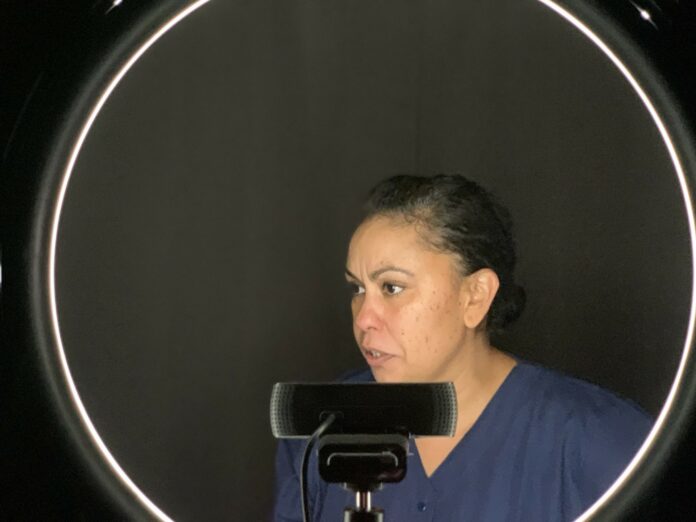
The next day, Santa Rosa Police Department issued a press release via Nixle titled, “Vehicle Vandalism and Assault during Planned Protest.” It describes the driver as a local nurse who was on her way home from work when she encountered the protesters.

The release, which describes only the driver as a victim, notes that several protesters called to report that the driver had driven recklessly through the crowd.

According to the press release, the driver stated that she pulled over as far to the right as she could, thinking protesters would let her through. She told police that she was “scared due to a ‘swarm’ of people blocking the street and her vehicle as she tried to continue westbound out of the crowd.”

As she passed, the driver told police that her vehicle was hit with a bicycle and a skateboard, breaking her windshield. She then alleged that someone followed her on a bike and punched her through her open window.

Protesters who spoke to the Bohemian expressed doubts that the driver was punched. “I don’t believe anyone was able to catch up to her car,” said Bowen.

In the press release, Santa Rosa Police Sgt. Summer Gloeckner said, “The videos do show the driver trying to accelerate somewhat away from the crowd.”

Norman disputes this account. “I absolutely feel that she meant to scare and hit as many people as possible. Her actions were not self-preservation — ours were,” she said.

Libby Cuffie called the motorist’s actions “domestic terrorism” and attempted murder. “The cops and local media are spinning that story as much as possible about her being a nurse to make her out to be a victim,” Cuffie said.

On June 22, a group of about 20 protesters who witnessed the encounter with the car gathered outside the Sonoma County District Attorney’s office and the Santa Rosa Police station, speaking to deputies at each location.

Cuffie said, “The goal was to get the DA and the cops to speak out on the situation and offer their support to the community and denounce this.”

“I’m worried,” said Cuffie. “Are more people going to be emboldened to do what this driver did, knowing that they may get away with it?”

On Monday, June 22, the Santa Rosa Police Department said the case has been passed to their Violent Crimes Investigation Team. That same day, protesters who spoke with a Deputy District Attorney indicated that charges have not yet been brought to their office.

Stay Real: Rio Nido’s Popular Music Fest Goes Online

0

When Eli Meyskens was very young, he misheard his parents talking about the town of Rio Nido and thought they said, “Real Neato.”

That phrase stuck with the Sonoma County–raised and San Francisco–based musician, and after he shared the story with music promoter and booker Daniel Strickland, the Real Neato Music Festival was born.

Last year’s inaugural Real Neato helped kick off the North Bay’s summer with a concert on June 15, 2019, at the historic Rio Nido Roadhouse. This year’s planned festival was canceled in the wake of the Covid-19 pandemic that is keeping everyone at home.

Undeterred, Strickland, Meyskens and fellow organizers will present Real Neato at Home, a virtual music festival streaming on Saturday, June 27, at 9pm. The online showcase will feature several Bay Area and North Bay bands and artists, and in keeping with the festival’s original fundraising mindset, donations are encouraged and will support the performers as well as raise money for the NAACP Legal Defense Fund.

Daniel Strickland works in San Francisco, promoting concerts with Noise Pop and managing shows at venues such as the Swedish American Music Hall. Back in 2018, he held an independent fundraiser to support people impacted by the Mendocino Complex Fire of August that year. There he met Meyskens, who plays in the San Francisco indie-rock trio EagleWolfSnake.

The two became friends, and quickly began talking about doing an event together. Once the term Real Neato was revealed by Meyskens, they decided upon hosting the show at the Rio Nido Roadhouse.

“No sooner had we gone up and done some site visits with [Rio Nido Roadhouse manager] Raena Metzger, [then] the flooding happened,” Strickland says, referring to the Russian River flooding in February of 2019.

“We wanted to move forward and Raena was really excited about having the event when she re-opened,” Strickland says. “We did a fundraiser for her in April 2019 to help her rebuild and then we had our event last June.”

The first Real Neato Music Festival was a huge success, and all parties were excited to host a second fest this summer, until Covid-19 put the plans on hold.

“Three years and three different disasters,” Strickland says.

While Rio Nido Roadhouse is open for take-out food orders, Strickland is not entertaining the idea of hosting an on-site, 400-person concert. Instead, he and the other festival organizers decided to offer Real Neato at Home on June 27 as a way to keep the music alive and support the artists who have seen their source of income disappear since live music events went away in March.

“In talking with bands, we found out they are struggling with their finances,” Strickland says. “At first, we were going to do a fundraiser because of what’s going on with Black Lives Matter. Now, we’ve settled on doing something online that raises money for both the artists and for the NAACP Legal Defense Fund.”

Real Neato at Home’s confirmed online lineup of bands and artists include Oakland indie-pop artist Emily Afton, world music ensemble La Gente SF, North Bay rocker John Courage, psychedelic soul outfit Down Dirty Shake, self-proclaimed “Beach Funk Americana” group The Ha, outlaw country stars Caravan 222, folk singer-songwriter Dominique Gomez, longtime North Bay alternative rock band The Spindles and indie-rock duo Jesse Judies.

“It’s going to be like a TV show,” Strickland says.

Strickland’s recent work with Noise Pop, producing streaming concerts and online events with bands such as Built to Spill and Rogue Wave, inspired Real Neato at Home’s format.

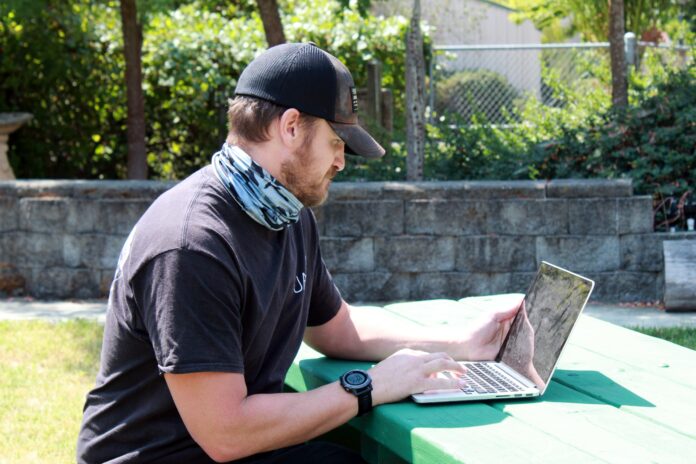
“What I found about live streams is that there are a lot of challenges in making the sound and video quality good, because you have so many potential technical bottlenecks between where the artist is and where we are in the control room,” Strickland says. “Each of our artists is working on videos they are recording live. They’re sending that to us, we edit it and we’re going to stream it out on YouTube, Facebook, Twitter and Twitch in real time. The artist will then be on our site and will be able to chat, and that will give people a live experience with the artist while they are watching the show.”

While Strickland and the rest of the Real Neato crew hope to get back to hosting live shows later this year, he says, “the big thing for us is that we want to give people something fun to watch at home and to remind people that just like local restaurants and other businesses, musicians need your support right now, too.”

‘Real Neato at Home’ streams online Saturday, June 27, at 9pm. For information on where to watch and how to donate, visit Realneato.com or linktr.ee/realneato.

Limited services for first responders

In 2017, a retired police captain woke up in the middle of the night with his gun in his hand, his wife’s shriek breaking the 3am silence. The metal felt cold against his sweaty palm, his heart beat like it was ready to explode. He was crouched in attack mode, his shoulders tensed together, ready for...

Cannabis-Grower Lisa Lai Helps Close Industry Gender Gap

Lisa Lai stands, hands on hips, on a remote mountain top with her watch dog Smokey at her side. She tells me, “I’m a no bullshit person.” She goes on to explain that she doesn’t bullshit her husband, her daughters, her friends, the county of Sonoma or the cannabis industry to which she belongs. ...

Windsor’s Open

Eighteen years ago, Windsor officially incorporated into a town. What’s in store as it heads into its next decade? At this point, who knows what’s in store for any small American town? What a strange time to be entering your 20s, Windsor—you have my sympathies. And yet, you seem to be doing just fine; perhaps...

A Writer Confronts Her Own Implicit Bias

When I was 7 years old, my implicit biases against Black people began to show. When talking about Black people, I would opt to say African American or whisper the word “Black” as if the word was a derogatory slur rather than a term as basic as “white,” to describe one’s race.   ...

Letters: ‘Defund’ the Sheriff

Marin, the most orderly, low-crime county in California, should redirect the proposed $6-million-dollar Sheriff’s-budget increase toward more immediate needs. The Sheriff already regards his heavily equipped department as a “paramilitary” force, which is out of step with the times and Marin’s real needs. I still object...

Dark of Love

By Jan Ögren Does the term “Dark of Love” feel awkward to you? Most people are more familiar and comfortable with the phrase “Light of Love.” All my life I have been deeply saddened by the continual racism I see in our country. I’m a writer, so I look to words for understanding. I see embedded in our language a basic...

Salvador Dalí Exhibit Debuts in Sonoma

Surrealist’s prints and sculptures display in Wine Country beginning Friday, June 26.

California Honeydrops to Play New EP on Sweetwater Stage

More than 10 years after forming as an Oakland busking duo, the California Honeydrops are now one of the Bay Area’s most popular bands, performing an upbeat brand of irresistibly danceable soul music and garnering acclaim for both their energetic live performances and ambitious album recordings. Even in the midst of the Covid-19 pandemic, the funky five-part band is throwing...

Protesters Allege Motorist Tried to Hit Them

A white Porsche SUV was driven into a crowd that was marching to the Santa Rosa Police Department — now, the driver and police claim she was the victim. The incident occurred just before 9:20 p.m. on Saturday, June 20, 2020, as about 150 marchers participating in a 24-Hour Protest for Peace and Justice took to Santa Rosa’s...

Stay Real: Rio Nido’s Popular Music Fest Goes Online

Bay Area bands and artists perform virtually for 'Real Neato at Home' on Saturday, June 27.
11,084FansLike
4,606FollowersFollow
6,928FollowersFollow