‘Grav & Go!’ Pop-Up Replaces Canceled Gravenstein Apple Fair

Sebastopol’s popular Gravenstein Apple Fair has celebrated the locally grown Gravenstein apple for more than 40 years with a weekend gathering every August that always features entertainment, education and lots to eat and drink.

Unfortunately, the Covid-19 pandemic forced the fair to cancel its in-person event for 2020. Agricultural organization Sonoma County Farm Trails, host of the fundraising fair, officially announced the cancellation in June, writing on the fair’s website, “Though we can hardly imagine August in Sebastopol without the Apple Fair, we are fully on board with the County’s decision to cancel large gatherings. We are so grateful for the health care workers and first responders on the front lines and for all of the essential businesses (farmers/producers, nurseries, grocery store workers, postage and parcel services, etc.) who continue to sustain and support our lives during these unprecedented times.”

Even though the Gravenstein Apple Fair is canceled, Gravenstein apples are still falling off of trees in West Sonoma County this month, and Sonoma County Farm Trails is setting up its first-ever “Grav & Go! Gravenstein Pop-Up” event in Sebastopol this weekend so that Gravenstein apple lovers can at least get the fresh Gravenstein apples and related products they love.

The pop-up will take place at the Sebastopol Community Cultural Center on Saturday and Sunday, Aug. 15 and 16, the same weekend the fair was originally scheduled. Anyone interested in purchasing apples or apple products must preorder online by Thursday, Aug. 13, at Noon.

Sonoma County Farm Trails farmers and producers make all the available products from local Gravenstein Apples. The apple and apple-related items that can be purchased include fresh organic Gravenstein apples, applesauce, apple juice, apple butter and hard cider (note: cider must be ordered on the Tilted Shed Ciderworks’ site due to alcohol sales rules). Other available apple treats include apple pies, hand pies, cider apple doughnuts and much more.

Upon checkout, shoppers will be guided to select which day and time they would like to pick up their order. Show up at your reserved time for contactless curbside pickup of your Gravenstein apples and related items, and enjoy.

For the health and safety of customers and Farm Trails staff and volunteers, facial coverings, social distancing and thorough hand-and-surface sanitization will be implemented at the “Grav & Go! Gravenstein Pop-Up.” Additionally, Farm Trails asks customers to abide by all County and State public health requirements.

Established in 1973, Sonoma County Farm Trails is a nonprofit promoter of local agriculture, and the Gravenstein Apple Fair is the organization’s largest annual fundraiser. Without the benefit of the fair this year, Farm Trails is in need of financial help to continue its efforts to preserve Gravenstein apples and keep farms a vital part of Sonoma County’s culture.

“We’re doing everything we can to make sure that Farm Trails continues to make good on its mission to preserve farms forever in Sonoma County,” says Farm Trails Board President Vince Trotter, in a statement. “With our main fundraiser off the table, we’re certainly facing some financial challenges this year, but our farmers are fighting through this, and so will we. We’re cutting our expenses to the bone and looking at some creative ways to bring in revenue and make the 2021 fair better than ever.”

“Grav & Go! Gravenstein Pop-Up” takes place on Saturday and Sunday, Aug. 15 and 16, at Sebastopol Community Center, 390 Morris St., Sebastopol. Online orders must be placed by Thursday, Aug. 13, at noon. FarmTrails.org.

Marin Sanctuary Marks 75 Years of Arts and Gardens

Even in picturesque Marin County, the Marin Art & Garden Center stands out.

The 11-acre property in the town of Ross is an oasis of floral beauty and historic buildings, and the nonprofit organization that owns and operates the center hosts year-round events and programs on the grounds, including performances from resident theater company the Ross Valley Players.

This summer, as the country stays shut down due to Covid-19, the Marin Art & Garden Center remains open to visitors on foot or on bicycle who are welcomed to safely enjoy the spacious gardens for some much-needed respite. This month, the center celebrates its 75th anniversary, and Marin Art & Garden Center Executive Director Antonia Adezio hopes the grounds remain a fixture of Marin for many years to come.

“We’ve been here for 75 years and the world is a very different place, of course,” Adezio says.

The gardens were originally formed at the end of World War II by the women members of the Marin Conservation League, who also helped save Angel Island and Tomales Bay, among other Marin locales.

“(The Marin Conservation League) were very committed to the natural environment and the environment for people in the North Bay,” Adezio says. “We have that legacy, and there’s also the legacy of the groups that have come together to present programming and arts at the center, and that tradition is alive and well today.”

Working with the center for five years, Adezio is the nonprofit’s first professional executive director for many years, and she is helping raise the center’s profile along with expert horticulturist and garden manager Steven Schwager.

“He’s really taken hold of the gardens,” Adezio says. “People who come and see it now say, ‘I’ve been visiting here for 30 years and it’s never looked like this.’ And they’re right.”

Still, the massive property runs on a tight budget, and Adezio describes the nonprofit running the grounds as a small organization that does a lot with a little.

“We’re working to build our team and keep developing the garden for people to come and enjoy it but also to learn from it,” she says.

In light of the 75-year anniversary, Adezio invites Marin residents to look at the Marin Art & Garden Center with new eyes and to revisit the distinctive and charming gardens and buildings that were designed by mid-century master architects such as Thomas Church.

As the gardens remain open for foot traffic, the organization is also bolstering its presence online with its virtual art exhibition, “Rooted in Wonder,” featuring a video tour of works by painter Frances McCormack and interdisciplinary artist Miya Hannan.

“We have seen that during the pandemic it’s become more important to have a place like the gardens, and people are appreciating that they’ve been able to stay open and let people spend some time in nature,” Adezio says. “We want people to know that we are still here for them, they can visit and we hope to be able to gather again before long.”

Marin Art & Garden Center is located at 30 Sir Francis Drake Blvd., Ross. oOpen daily, foot traffic allowed sunrise to sunset, parking lot is available 10am to 4pm. Free admission and parking. maringarden.org.

Virtual Art in the Park Showcases North Bay Creators

0

The Petaluma Arts Association has supported North Bay artists for more than 60 years, and the group’s signature event, Art in the Park, annually displays dozens of artists from Sonoma, Marin and Napa Counties at Walnut Park in Petaluma for a weekend of art and performance each summer.

This year’s Art in the Park could not happen in person due to the ongoing Covid-19 pandemic. However, the PAA was able to transition to an online format, much like other arts and entertainment organizations facing a new socially-distanced normal.

Now, the Virtual Art in the Park electronically showcases the PAA’s members with an online showcase for the entire month of August, meaning arts lovers can see a vast selection of locally-produced paintings, sculpture and performances online now at VirtualArtinthePark.com.

“The art association is here to provide support, community education and promotion of the arts, and any money we make off of Art in the Park provides scholarships and rewards for students engaged in the arts or [goes] to centers and schools,” PAA Board President Yvonne Glasscoe says.

Not having Art in the Park this year meant that several artists and arts organizations would lose out on that support, so PAA moved to the virtual format in hopes of providing a means of continuing to highlight locals arts through an online platform.

“The overall plan is that when you go to the website, there will be a gallery of highlighted artists that rotates each week,” Glasscoe says. “You can look at the gallery and click on the highlighted artists or search for artists by name.”

In addition to visual artists, the Virtual Art in the Park’s roster of creativity includes musicians and poets, featuring videos of performances and readings. Each artist or performer is given their own page on the site with ways to contact them directly or find them elsewhere on the web.

Visitors to the Virtual Art in the Park site can see an eclectic selection of art on display ranging from Marin County painter Barbara Libby-Steinmann’s colorful bird portraits drawn on recycled redwood to Sonoma County electronic music producer Lenkadu’s avant-garde music videos.

Glasscoe says that PAA reached out to hundreds of local creators, and the event is free for the participating artists. PAA is not even taking a commission on works that are sold through the event.

“We thought that was important because right now artists and musicians have nowhere to go to show their work,” Glasscoe says. “We thought it would be a great idea to give this as a gift to the community.”

Glasscoe also envisions this new virtual venture as a way for families stuck at home or friends who are socially distant during the sheltering orders to experience art together while they are apart.

“Like having a book club where you all read a book and discuss it, people can share this art with other people,” Glasscoe says. “One day you can look at artwork, one day listen to poets; have dance night by listening to the musicians. I think of the possibilities of what people could do to explore and maybe find something new that they like.”

VirtualArtinthePark.com

Healing Sounds: Eki Shola finds power in her voice

0

Born in London to Jamaican parents, raised in New York City and now living in the North Bay, classically trained pianist and songwriter Eki Shola brings a multicultural wealth to her original compositions and embraces music’s healing properties.

Working on her keyboard, and backed by digital effects, the multiple Norbay Award-winner for electronica crafts jazzy, ambient tones with ethereal melodies that often carry dreamlike messages of hope and a sense of gratitude for life.

In 2016, Shola first displayed that relaxing blend of jazz and ambient piano on her debut album, Final Beginning. A year later, the Tubbs Fire in Santa Rosa destroyed her home on Riebli Road. Shola turned to music after that tragedy. She decided to forego trying to recreate her already recorded songs and instead opened the floodgates of her creativity with a torrent of songwriting that led to a trilogy of albums.

That trilogy debuted in the spring of 2019 with the album Possible, followed by the release of Drift in late 2019. Now, Shola concludes the musical journey with the release of Essential.

Shola was in the process of mixing and mastering Essential at the beginning of this year when the Covid-19 pandemic shut down the economy. With a background in medicine, Shola recently began performing disability evaluations for veterans in Sonoma County, though she’s been home since March.

“The extra time afforded me the time to reflect on our current events, the coronavirus, health care advocacy, and Black Lives Matter,” she says. “The album was extended to incorporate some of those events. The message was broadened.”

For Shola, writing new compositions while in shelter-in-place mode has been a therapeutic experience akin to writing music after surviving the fires.

“Between March, April and May, it was almost as if I was writing my own prescriptions,” she says of writing her new songs.

Shola is donating a portion of proceeds from sales of the album to the Freedom Community Clinic, which offers holistic healing practices for underserved people of color who live in the Bay Area. The community clinic provides free wellness and care and even during the pandemic, they are offering healing modalities like Reiki and acupuncture in socially distant settings.

Shola is also embracing the online platforms that many musicians and artists are flocking to until social gatherings can begin again, and she will be hosting an album-release livestream listening party for Essential on August 8.

“I know live performances are on hold for a bit but that pushes you to think a little more out of the box,” Shola says. “I’m excited to be doing different things, I’m looking at doing animation with my music and some online shows. I would have never thought I’d being doing that, but this has opened my eyes to other options.”

Ekishola.com

Ask a Freak

0

“Somehow I became respectable. I don’t know how,” writes John Waters in the opening lines of his new book Mr. Know-It-All: The Tarnished Wisdom of a Filth Elder.

But the rest of us do. The world might have been scandalized by the sight of a 300-pound drag queen eating dog droppings in 1972’s Pink Flamingos—the only movie in exploitation history to have a tagline that actually undersold its excesses: “An exercise in poor taste.” But almost a half-century later, Pink Flamingos now plays unedited on cable, not to mention the fact that it’s one of most beloved cult films of all time. And Divine, the outrageous drag queen at the center of the Dreamland troupe of actors and associates who appeared in Waters’ early films—including the “Trash Trilogy” of Pink Flamingos, 1974’s Female Trouble and 1977’s Desperate Living—now adorns everything from shirts to votive candles to coronavirus-resisting face masks on Etsy.

Waters, meanwhile, is now the unofficial Dirty Grandpa of several generations of misfits. He’s been to Hollywood and back, and won over audiences in both arthouses and multiplexes. Hell, you could even take your mom to the Tony-award-winning Broadway version of Hairspray.

But when it comes to the question of how he became respectable, the answer is simple: He stepped out from behind the shock tactics and movie gimmicks (although, let’s be honest, the “Odorama” scratch-and-sniff cards for 1981’s Polyester—featuring scents like gasoline, dirty shoes, new car smell and farts—were genius). He started getting real all the way back in the ’80s with his book Shock Value, and he hasn’t stopped. His crazy early films were always comedies at heart, but the humor he revealed in his writing was warmer and more relatable, and he connected with his growing legion of fans in an entirely different way. That appeal has only expanded over the years through his subsequent books, live shows and holiday-themed music compilations. There’s even a John Waters summer camp now.

In Mr. Know-It-All, he connects all of his various cultural obsessions, sharing stories and offering advice on everything from filmmaking to fine art to food to political activism—and, of course, sex, drugs and rock ’n’ roll. I spoke to Waters about his new book, and why respectability didn’t ruin his career.

I just finished ‘Mr. Know-It-All’ last night. I want to do a spoiler where I tell everyone ‘He dies at the end.’

JOHN WATERS: Yeah, you could do that, that’s definitely true. But I die and then tell you how to beat dying.

One critic called you ‘an indefatigable coiner of droll one-liners,’ and that’s as true as ever in the new book. It’s not really just one-liners though. You’ve expanded into two-liners and three-liners.

I could spend my entire life speaking in blurbs, in sound bites. I think that’s from enjoying the media and always reading how journalism takes something and makes it appealing to everybody. There was a headline in the New York Post the other day when Dr. Fauci threw out the first ball at the baseball game: “Catch This.” It was so funny. That’s the kind of thing that, I don’t know, you need media training. I mean, I start my day with about eight newspapers.

Has anyone ever actually called you Mr. Know-It-All?

Nobody ever called me that—well, I think it was always used in a negative way. People would say, “Well, Mr. Know-It-All! You think you know everything!” And I’ve kind of made a career of embracing negative images. I don’t know, I just liked the title. I always come up with titles. Every one of my movies, I had to have the title first. Since I was going to cover every subject and tell every anecdote I had in my anecdote bank, I thought it would be, in a way, passing on advice to young people about what I’ve learned about negotiation through 50 years. And I think it is a self-help book, for real, even though it’s a humorous book. Hopefully.

The first 100 pages or so is devoted to filmmaking. You write, ‘Winking at the audience was not necessary if you believed, as I did, that the lines were funny enough on their own.’ I love that, because your movies are often described as ‘campy,’ but I think of Steven Dorff in ‘Cecil B. Demented’ and how he’s playing the opposite of camp—with total conviction. And that’s why it works.

He doesn’t do that once—he never winks at the audience. That’s my first direction with everybody in every movie: “Say the lines as if you completely believe them to be the most serious lines.” And that is why I usually hate movies that the critics say are very “John Waters-esque.” Usually they’re in purposeful bad taste, being blatantly obvious about it, and trying to be campy. I like the idea of saying it as if you believe every word of it, and I think all my movies have had that. Even the most ridiculous dialogue, like in Female Trouble where Divine says, “I’m going to go upstairs and sink into a long, hot beauty bath, and erase the stink of a five-year marriage.” I mean, that is the most ludicrous soap opera line. But Divine said it as if she believed it. I think that’s important to the humor.

How much did Divine influence your view of gender fluidity?

Well, Divine had no desire to be a woman at all. He was not trans in any way. He was a drag queen and an actor. In the old days, when I first saw the Jewel Box Revue [a company of female impersonators which toured for decades, beginning in the late 1930s], you had to go see it in African American theaters, even though white people went. That was the first drag show I ever saw; it was a professional drag show that toured. Diane Arbus took a lot of pictures of that. It was all men playing women, except the lead was a woman playing a man—a drag king, which was even kind of more radical then. Milton Berle fucked with it; he was the most watched person on television, and he was in drag. But then Divine fucked with it, because he was overweight. They all tried to be beauty queens and Miss America—Divine would have burned down Miss America’s house! Divine was a monster and a drag queen. And Divine got his best reviews when he put aside that image he first got famous for and played a loving mother, a normal person, because he was going so much against this type we had made up for him.

Your memories of ‘Hairspray’ are very sweet, and it’s funny that the name of that chapter is ‘Accidentally Commercial,’ and then the following ones are ‘Going Hollywood,’ ‘Clawing My Way Higher’ and then ‘Tepid Applause,’ ‘Sliding Back Down’ and ‘Back in the Gutter.’ 

I failed upwards a lot. I don’t know if that’s as possible to do today. But it is, in a way. Something has to have been successful recently that it reminds [studio executives] of, even if it’s not yours. You can pitch it in a certain way, although every pitch I ever gave about my films being commercial, I meant it. I was never lying. I believed that every one of them could make money. And weirdly enough, eventually they all will. Because they won’t go away.

Was there a particular moment where you felt like, ‘Finally, the weirdos won!’?

Yes, I think three times in my entire career. Once, when Pink Flamingos had been out, and I had been showing it myself in different cities and saw that it worked—but it had never played New York. New York was the very last place it played. Finally, New Line picked it up, and we showed it one week at the Elgin, and maybe 50 people came. They said, “Okay, you can have one more week,” and I went back the next week and the line was around the block from word of mouth. That was one night my career changed. Another night was when Hairspray won the Tony. I mean, that was definitely career-changing. And the first time one of my later books made the bestseller list. Not because that says it’s good or bad, but it was something I never thought possible.

How did mainstream culture come to accept the Pope of Trash? Do you think you changed, culture changed, or both?

I didn’t change that much, but I kept up with the times and always knew the audience was changing—and coming my way. I realized that people wanted me to scare them, but not in a negative way. I loved everything I made fun of, always. I think that’s why I lasted. I mean, I can be mean-spirited, but if I ever am, it’s about Forrest Gump. Who cares that I don’t like Forrest Gump? Even Tom Hanks doesn’t. The movie won every Oscar and made a billion dollars. I never say negative things about people too much, except Donald Trump. And even when I make fun of him … no, I’m mean about him. I don’t feel guilty about that. Because he won’t last. That’s why I would never put him in anything I write or anything. He’s not mentioned in the book, because that dates it. You immediately date yourself if you put something in like that.

Speaking of being caught up in the moment, was it hard to write your commencement speech to the graduating class of the School for Visual Arts in May?

Well, I had to write it in the middle of the virus—it was supposed to be 5,000 people in Radio City Music Hall, but of course I had to do it virtually. Now, I must admit I’m a little lucky because it happened right before the racial uprising, which would have been even harder—as a white man—to ever cover that with humor in any way. I think that anybody that has any speaking engagement, everything has to be completely rewritten now. Because you can’t just ignore what’s going on now. It’s a completely different time. I did say in that speech, “You kids, if it ever goes back to the old way of ‘normal,’ it’s your fault.” I didn’t mean to be prophetic, but they didn’t go back to the old normal. They certainly thought up the new normal in protesting, and how great that it’s gone this far. And how sad that I’m old! I don’t want to get the virus!

I love that the only reason I have to ask whether this is actually true is because you’re John Waters and it just might be, but that part in the book about you and your staff licking every parcel you send out to studios—is that a joke?

No! I have pictures of them doing it. In the old days—well, when I finish something I still don’t submit it totally online. If I had a new script, I would send them a bound copy with a cover and everything, right? As we put it in that FedEx, as we turn in the final thing—like when I send in a book for the first time—everyone who works for me knows they have to wet the package before they put it in the mailbox.

What the hell? How did that even start?

I don’t know! It was just for good luck. It’s a little ritual. I have a picture somewhere—I’m not going to give it to you—of the staff all licking the same envelope out in front of my house. These days, I guess that’s not too safe. I hadn’t better be saying that, or FedEx won’t come to my house for pickup! I guess I’d have to put that on hold if we were doing it today. Then I wouldn’t get the deal, though.

John Waters speaks in conversation with Steve Palopoli for a virtual event presented by Bookshop Santa Cruz on Wednesday, Aug. 12. 7pm. $24; includes a shipped copy of ‘Mr. Know-It-All.’ bookshopsantacruz.com.

Wine, Unmasked

0

In normal times, I’m not one to dither about an invitation to a gourmet lunch, with wine—and real Champagne!—at Jordan Vineyard & Winery. But, these times not being normal, dither I did.

I hedged. I even offered up a proxy—wouldn’t Bohemian editor Daedalus Howell rather enjoy this experience?

The experience is called Paris on the Terrace, a $110 wine tasting and lunch in an outdoor setting, which Jordan is offering in summer 2020 to welcome visitors back to their picturesque corner of the Alexander Valley wine region, while complying with an ever-shifting regime of shutdown and reopening guidelines set by state and county authorities in ongoing efforts to limit the spread of Covid-19.

The latest state health order, at press time, limits wine tasting in Sonoma County to outdoor experiences until at least Aug. 2, but does not require food service, an earlier reopening stricture that many wineries found confusing or impractical. Bars, clubs, breweries, brewpubs, and distilleries, however, may only serve drinks in the same transaction as a meal.

Eventually, the winery’s longtime director of marketing, Lisa Mattson, conscripted me to attend the tasting—not virtually, through the video conferencing tools like Zoom that have become indispensable, if also problematic, during the Covid-19 pandemic. This was a real-time tasting, in the flesh, tender parts of which are susceptible to infection by a stealthy, novel coronavirus that continues to stalk every corner of California Wine Country.

If that last line doesn’t sound overwrought, you’re catching up with these times.

Mattson explained that seatings, at 11am and 2pm, Thursdays through Mondays until Sept. 7, are scheduled to allow ample time to wipe down and disinfect high-touch surfaces and objects like tables and chairs. Currently, all tasting rooms must require visitors to secure a reservation, and the three I visited in the past month declared that all such surfaces were cleaned in between parties of visitors.

At first, my visit to Jordan’s terrace tasting felt just like a dream! Well, I’ve been having these dreams for the past several months, in which I’m wading through a happily buzzy pub, and suddenly realize that nobody’s wearing a face mask—good heavens, what are they thinking? Or worse, leaning in to talk to someone, I realize with horror that I am unmasked. It’s the new “naked” dream.

No—you, too?

This is the first time in months I’ve sat down and talked this close, without a face covering, with anyone except my very senior cat (and even then maybe I should, as she would appear to anyone as nothing so much as a hobbling ball of fur and underlying conditions). Speaking with Mattson and her colleagues, who are wearing fashionable—if not entirely medical grade attire—at all times, I self-consciously pull mine back on—since hospitality workers are more at risk over the long term than the visitor—and again when I’m speaking with Howell, who turns up at the table a judicious six-plus feet away from mine.

Yet, when Howell declares halfway into lunch that he’s actually feeling kind of alright about things for once, I have to agree. Who wouldn’t, after half a glass each of Jordan Cuvée by Champagne AR Lenoble; Jordan 2016 Chardonnay, which shows more bright apple and toasty character than previous vintages; two vintages of Jordan Cabernet Sauvignon, the 2016 displaying the remarkable consistency of the supple, leather-and-mixed berries hallmarks of this restaurant favorite wine, despite a recent switch to French oak. And there’s the cuisine, by Jordan chef Todd Knoll: a precious arrangement of greens, vegetables and flowers from the estate garden just below the terrace; charcuterie from Healdsburg’s Journeyman Meats; crispy fougasse and rillette. Completing the pastoral scene, Jordan’s herd of cattle head for pasture, with uncommitted leisure.

Wineries have been hit hard by the pandemic and shutdowns, especially those that rely heavily on “on-premise” restaurant sales. Luckily for Jordan, according to Mattson, they moved to better position themselves in “off-premise” retail back in 2019. Many wineries count on a steady stream of walk-in wine tasters to generate immediate revenue, as well as wine club sign-ups. But are these kinds of limited, if tentatively sanctioned, wine-tasting experiences enough to keep them afloat?

“Yes and no,” answers Suzanne Hagins, co-owner of Horse & Plow Winery. “We get good support from our locals, but people are just not out. And I get it.”

Hagins is also concerned about the musicians and artists who used to regularly appear in afternoon shows and exhibits at their “tasting barn,” which has become a popular hangout in the four years they’ve been open in Sebastopol. But, the patio space, garden and oak-shaded picnic area adjacent to the tasting room has allowed them to separate tables widely and reopen for bottle service only, Fridays through Sundays, noon to 5pm.

Although Horse & Plow shut down voluntarily two days before California’s state-wide order in mid-March, they became the unlucky poster child of Covid-era wine tasting when a Bay Area daily newspaper published an undated photo of their tasting room—that was taken two years previously—as an example of the kind of activity that would have to shut down in the coming weeks.

For guidance, Hagins says she relies on the governor’s press conferences, County of Sonoma health orders and helpful tips from Sonoma County Farm Trails and industry colleagues. But there’s been no direct guidance or auditing, according to Hagins.

In between each seating, tables and chairs are sprayed and wiped down, and the kraft paper that covers picnic tables is changed. On a recent Sunday, groups of two to four adults stop by a table fronting the now-closed tasting room, to make their selection and choose a table. Food is not required here, but cheese and charcuterie plates are available, plus a pack of snacks and juice box for kids. Visitors, many from out of town, are generally quite respectful of the new rules, says Hagins, allowing that some tend to loosen up on their mask strings a little when leaving, after a glass or two of wine.

It’s certainly a must to lower my mask to take a whiff of Horse & Plow’s 2019 Sauvignon Blanc, a rush of juicy, nectarine and grapefruit aromas, or the 2019 Draft Horse Red, a soft and easy-drinking summer red with hints of dried Mediterranean herb and raspberry sour candy.

I’m glad that the unmasked party of four twenty-somethings at the next table, a good 10 or 12 feet away, are enjoying themselves, too. But, while I can’t assume they’re not in the same household, snippets of their conversation suggest otherwise. And I wonder—is this all going to work out OK?

• • • 

My host at the outdoor bar at Iron Horse Vineyards says he’s not afraid of a little “policing,” asking members of groups next to each other who get to talking excitedly, and a little too close—as people do when drinking the bubbly wine—to please don a mask if they’re going to converse. Still, “It’s not a frat party anymore,” he says, “with people six deep at the bar.”

The tastings here are also spaced apart in time, four per day, to allow cleaning. But at the bar, it’s clear it could get a little too close to comfort. In mid summer of 2020, the obsession with blasting seldom-touched objects with sanitizer (remember dubiously dunking your bag of tortilla chips in a tub of chlorine solution—anyone else?) seems a bit quaint, as guidance has moved toward mask-wearing as the best effort to ward off viral infection.

Indeed, an oft-quoted, recent article in The Atlantic dubbed the deceptively reassuring practice of surface disinfecting, “hygiene theater.”

Curiously, the County of Sonoma still has the outdated statement, “CDC does not recommend that people who are well wear a face covering to protect themselves from respiratory diseases,” on their Epidemic Preparedness website page. The CDC currently recommends, “people wear masks in public settings and when around people who don’t live in your household.”

It’s easy to relax with a pour of the latest Iron Horse Brut X, which was particularly rich in 2014, with the sweet, creamy aroma of glazed Danish, and grapefruit, for a wine with zero sugar added to the dosage. Another surprise, and sign of the times, is the winery’s seldom-seen Fairytale Cuvée, a special 500-case lot that’s been sent down south to the Mouse for the past 15 years at Disneyland California, and related cruises and venues. It’s pretty darn tasty—and it’s also hard to beat the view in this corner of California wine country.

Having had enough with driving around Wine Country in post-lockdown traffic, I call up Liam Gearity, director of hospitality at Frank Family Vineyards, to get a perspective from Napa Valley.

“In the beginning, I don’t think anyone saw it dragging on as long as it did,” says Gearity.

Frank Family opted to open up a week after the go-ahead on June 6, in order to focus on preparedness. Like other wineries, they book distinct slots of time for guests, at 1:30pm and 3:30pm, and allow 30 minutes for cleaning. (They also still welcome guests with a glass of sparkling wine.)

The biggest challenge, says Gearity, is the quality of the guest experience.

“Wine tasting is a guided experience,” he explains. “If you want a good glass of wine, there’s a wine bar or a wine shop for that. But people come to Napa for the experience.”

For the month of July, guest counts have only been down 30 percent, says Gearity. Staff presence, on the other hand, has been 100 percent so far.

“That’s the thing about hospitality workers,” Gearity says. “They feel successful when their guests are happy.” 

To help ensure workers take care of themselves, and each other, Frank Family hospitality staff work on the “buddy system,” with a partner.

“We stress to partners: you are each other’s eyes,” Gearity says. “We’re going to keep doing this style of service as long as our guests, and the weather, allow it. People need an outlet; they need a break. It’s still a weekend in Napa … . It’s different, but people still enjoy it.”

Defending Dreamers

Thank you for this explanation of what DACAs face in our court system. (“Dreams Deferred,” News, July 29)

I’m surprised and angry that our (Sonoma County) DA is being so brutal in this case. It seems they are not only ignoring, but violating the Penal Code Sections 1016.2 and 1016.3 mentioned. This was a first time offence (I assume), and the Dreamer had a job and was in school!

Leslie Ronald 

Via bohemian.com

Sad to See

Poignant prose … (“Sadness in His Madness,” Open Mic, July 29). They tug at my heartstrings at the traffic light. I always give them a few bucks; but for the grace of God it could be me on that curb.

JD Compian

Via Bohemian.com

Live Online

I enjoy the online theater (“Out of the Dark,” Feature, July 22) from BroadwayHD, Broadway on demand and National Theater in London. If there were mostly online productions that would be fine with me. 

Since it is difficult to get to Broadway or the West End from Sonoma County, online is the perfect alternative. I would like local companies to do more virtual performances. The time has come to embrace virtual technology.

Larry Loebig

Via Bohemian.com

Waive It 

A working nurse at a Petaluma hospital that cares for Covid-19 patients, emailed me, “How about having the Covid waiver include waiving all rights to medical treatment if you get the virus!” (“Pandemic Fuel,” News, July 22). That is a good point. 

Peter Byrne

Via Bohemian.com

Cannabis and the County

A sense of frustration characterizes the mood of the Sonoma County cannabis community, but cultivators are also smiling more now.

That’s due to Niki Berrocal who runs the county’s cannabis cultivation program, and who has help from analyst, McCall Miller, and from Andrew Smith, the current ag commissioner, who tells me, “It’s a team effort to amend our cannabis policy, and it’s especially challenging with Covid-19.”  

Smith and Berrocal have written and released an extensive report that calls for significant improvements to the county’s cannabis program. (sonomacounty.ca.gov/Cannabis-Program). It ought to be read and studied by everyone in the cannabis community.

Tony Linegar, who recently retired as ag commissioner, tells me “Cannabis can be a significant crop for Sonoma County farmers and ranchers so they’re protected from the fluctuations of the market.” He suggests that the one-acre cap on cultivation ought to be lifted.

I recently caught up with Niki Berrocal on a farm where twenty-five thousand plants were flowering, “I welcome and am grateful for cannabis economically, medicinally and recreationally,” she tells me, Berrocal feels comfortable with pot farmers and at the same time, doesn’t wilt under pressure from Permit Sonoma, which has its head in the sand and has resisted change.

For Berrocal to do her job properly the cannabis program needs more resources and fewer bureaucratic barriers. Sadly, too many applications for the cultivation of cannabis are sitting in an office, begging to be processed. Other changes are also needed.

Four years after California voters approved Prop 64, which ushered in the era of the adult use of cannabis, some growers are stuck in the old outlaw days, and some citizens want to roll back the clock and make the county weed free.

“It’s hard to go beyond long-standing paradigms,” Berrocal tells me. “But I’d like to see the day when the community can work together and make Sonoma a destination for wine, weed and wilderness.”

Berrocal grew up in a small farming community and graduated from University of Idaho and the University of Nevada, Las Vegas. A natural born leader, she has slowly and steadily begun to chip away at the institutionalized barriers to the fledgling cannabis industry.

Berrocal tells me, “Cannabis never should have been made illegal. For a long time it has been a sacred medicine. It helped my dad when he had cancer.”

Berrocal’s father worked in law enforcement and emphasized community police work, now essential in the wake of Black Lives Matter. Like her father, Berrocal wants sustainability. “We need to understand the impact the laws have had on certain communities,” she tells me. “And not leave people behind.”

Jonah Raskin is the author of “Marijuanaland: Dispatches from an American War.”

A call for reform

0

This is a plea for any reform-minded citizens to run for the open seats on the Marin Municipal Water District board currently held by Larry Russell, District 5 (Corte Madera, Tiburon, Belvedere) and Armando Quintero, District 2 (San Rafael). We need someone new who will look out for the best interests of the ratepayers.

For years now the Board has turned a blind eye to the corruption at MMWD. The district suffers from excessive management salaries, nepotism and cronyism, financial mismanagement, inefficiency and incompetence. Both Russell and Quintero have approved salary and pension spiking. Russell rarely attends meetings in person. Quintero basically lives and works in Merced. Each one gets $200 per meeting and paid medical insurance.

Here is just one of many examples of corruption at MMWD: Their former general counsel, Mary Casey, whose 2018 total compensation was $376,742, used $35,000 in ratepayer funds to fly out a psychiatrist named Robert Weisman from Rochester, NY. Among Mr. Weisman’s many expenses: $9,468 for travel time; $206 for taxis; $773 for hotels; $56 for parking and $217 for meals. But the most glaring example of corruption is his $2,347 airfare. An online search will show that a roundtrip from Rochester to San Francisco is only $600. It’s no wonder that we pay some of the highest water rates in the country.

So, why didn’t Mary Casey just hire a local doctor and save us all a few thousand dollars? It’s because Mr. Weisman is a friend of one of the members of Mary Casey’s goon squad, Bobbi Lambert, who runs a company called “Confidante” from her home in Novato. Ms. Lambert pulled in nearly $30,000 on this same scam. This is an absolute abuse of power and a waste of ratepayer resources.

If Russell and Quintero succeed in staying in power you can be sure that right after the November election our water rates will go up again so they can continue to finance their wasteful spending. Let’s show both of them the door so we can have a water district that serves the people instead of self-serving bureaucrats.

Eric Morey lives in Woodacre.

Wine Country Women Fight Glyphosate

0

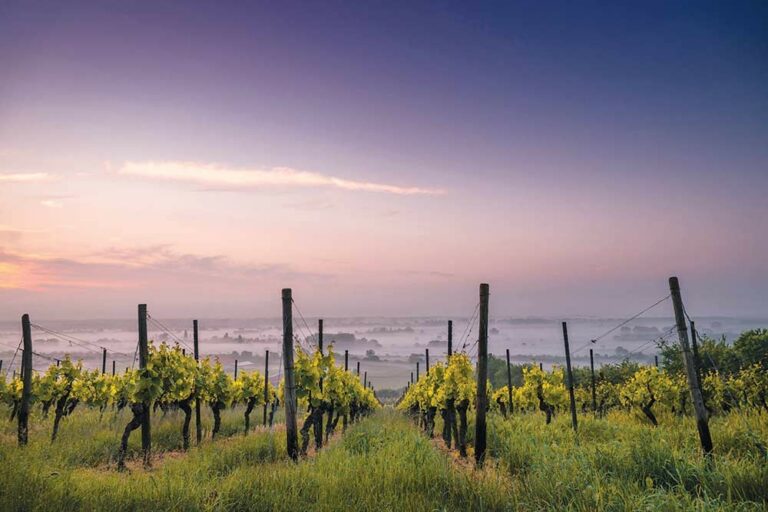
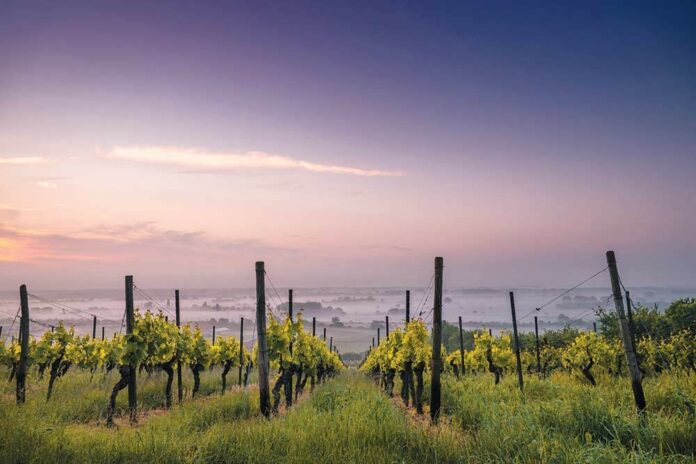
Call it Wine Country or call it Glyphosate Country. According to Padi Selwyn, the cofounder of Preserve Rural Sonoma County, and Laura Morgan, a local physician concerned about the health of the environment, millions of pounds of pesticides have been applied, mostly to wine grapes, in Sonoma County. They say that in 2015, for example, 2,839,007 pounds were applied.  

Exact figures for recent years are hard to come by. Winery owners aren’t publicizing that information. It would undermine their claims to be “sustainable.” Still, the scientific evidence is strong enough for Sonoma County to ban the use of synthetic pesticides such as glyphosate—the most important active ingredient in Roundup—on public property, including parks and bike paths. But land owners, ranchers and farmers have been free to go on using synthetic pesticides.

Not only that, but once an old pesticide is banned, the corporate giants concoct new ones that are even more deadly, according to Mitchel Cohen, who has devoted much of his life and work to the study of Roundup and glyphosate.

Selwyn speaks for Cohen and for many others when she says, “Our paradise is poisoned with herbicides and pesticides.” She’s alarmed and thinks her neighbors should start asking questions and taking action to protect children who have been developing cancers at an alarming rate. According to data from Wine and Water Watch, an organization that coalesced during the last big drought, Napa County has had the highest cancer rates for children in California at 22.8 deaths per 100,000 kids. Sonoma is a close second at 20.6 deaths per 100,000 kids. Any number is too high. Nearly everyone knows someone—a mother, a sister, an aunt, a daughter or a friend—with breast cancer.

Dr. Kurt Straif, a key researcher at the International Agency for Research on Cancer (IARC), argues that glyphosate—which can be absorbed by humans though “our daily bread”—is “genotoxic,” which means that it damages human DNA, and can lead to cancer.

Buying organic foods and beverages is beyond the means of most working families. For the unemployed it’s impossible. You have to be wealthy or grow your own fruits and vegetables—which requires land and access to water—to eat healthy. The only real salvation is a total transformation of the for-profit food system and the creation of an alternative that doesn’t trash land and labor. Marketing campaigns like “Sustainable Sonoma” and “Sustainable Napa” are little more than sops meant to disguise what’s really happening in fields and on farms, though some who are eager not to offend say they’re a step in the right direction.

Right now, Covid-19 occupies front and center in the American consciousness, but N-(phosphonomethyl)glycine, aka Glyphosate, has to be confronted and abolished soon or the planet will be totally polluted. Rachel Carson warned about toxic chemicals, especially DDT in Silent Spring, published in 1962. American women who looked to Carson for inspiration are at the heart of the movement today to ban the contemporary equivalents of DDT.

Zen Honeycutt, the founder and executive director of Moms Across America, points out that “moms buy 85% of the food” in the U.S. and that “moms are taking the helm here.” Honeycutt adds, “Husbands and kids help, too.” The organization Honeycutt founded amplifies voices from coast to coast and targets the powers-that-be. All across the U.S. and especially in Wine Country, women’s voices are growing louder and more eloquent, too,

Increasingly, judges and juries are listening to complaints against Bayer, which recently bought Monsanto for $66 billion. Bayer’s stock recently tumbled, but there’s still big money to be made in toxic chemicals and the seeds that the company sells and that are resistant to glyphosate.

Monsanto/Bayer has just developed a new corn seed that can survive bombardment not only from glyphosate but also by dicamba, glufosinate, quizalofop and 2, d-D, one of the ingredients in Agent Orange which defoliated Vietnam. The U.S. Department of Agriculture has been asked to approve Bayer’s new seed for corn. The company also manufactures the pharmaceuticals that are used to treat the illness caused by toxic chemicals, which has prompted activists to say, “They get you coming and going.” 

Marion Nestle, a New York University professor and the author of Food Politics, points to the growing body of evidence that “glyphosate is carcinogenic, promotes weed resistance, and causes genetically modified crops to require even greater use of toxic chemicals.” The more we poison, the more we need to poison, or so it seems in the world according to Bayer/Monsanto.

Welcome to our poisoned planet. The picture is grim, though some activists, including Sonoma County filmmaker Carolyn Scott, use humor to tell stories about cancer-causing chemicals. Her satirical animated short, Roundup Wine, is an official selection at film festivals this summer.

At the start of summer 2020, when Bayer reached a $10 billion settlement rather than go to court and fight thousands of claims, environments were crying, not cheering. After all, Bayer continues to insist Roundup is perfectly safe when used “properly.”

Thousands of farmers, ranchers and gardeners use glyphosate to kill weeds, as though weeds were un-American and had to be exterminated as quickly as possible, no matter what the risks to life itself.

No warnings appear on the labels for the product. A large container of glyphosate sells for $21.99 and comes with what’s called a “comfort wand” that supposedly makes for an easy application on “the toughest of weeds.”

Mitchel Cohen, the editor of the book, The Fight Against Monsanto’s Roundup: the Politics of Pesticides, who recently bought his message to Sebastopol, says that glyphosate is still used widely in New York City where he lives and works, and that kids (and adults, too) come in contact with it every day and are made sick. Jonathan Latham, the director of the “Poison Papers” project, the editor of Independent Science News and one of the contributors to Cohen’s book, suggests that glyphosate is “unsafe at any dose.” He tweaks consumer advocate Ralph Nader, who insisted that Ford’s Pinto was “unsafe at any speed.”

Bob Cannard, who raises organic fruits and vegetables and sells them at Petaluma’s Green String Farm, and who cultivates organic grapes that go into Cline wines, asks, “What business do you know that benefits financially from poisoning its customers?” For years, Cline used glyphosate in his vineyard. Cannard persuaded him that it was harmful to the environment and to all living things, including humans. Now sheep eat the weeds and fertilize the soil.

Cannard wants the state of California to ban toxic chemicals. He calls his cause “Organic California 2050.” Cannard isn’t rushing anyone. Nichole Warwick, who belongs to a new, hardy breed of environmentalists, is eager to have Roundup banned now. Her own friends have cancers. Kids exposed to toxic chemicals often don’t show symptoms for years, Warwick says. Acting today can prevent health issues tomorrow.

A survivor of breast cancer—it was first diagnosed in 2012 when she was 37—Warwick was born and raised in Merced in the Central Valley, where ag is king and glyphosate is ubiquitous.  She thinks she developed cancer because of her proximity to farms and fields that were sprayed with chemicals.

“There is no history of cancer in my own family,” she tells me.

Soon after Warwick moved to Sonoma County, her son came home with a note from his school, Forestville Academy, that said that Roundup would be sprayed on the campus.

“I was  appalled,“ she tells me. “At first, I felt despair and depressed, but I also wanted to protect my son.”

She adds, “My birth as an activist was very personal.” Nichole joined the Petaluma-based organization Daily Acts and became the Environmental Health Program Manager.

She co-founded, and has served as the executive director of, Families Advocating for Chemical & Toxic Safety (FACTS). She also co-founded and co-directs Sonoma Safe Agriculture Safe Schools (Sonoma SASS). The Sonoma SASS has links to the state-wide body of SASS organizations and is affiliated with Californians for Pesticide Reform (CPR).

For a time Warwick taught school. Now, she’s a full-time activist. At her son’s school, she worked with the principal and helped to educate the custodial staff. After her campaign, there was a moratorium on the use of Roundup. Warwick was successful, she says, because she was persistent and wouldn’t take “No” for an answer. She lobbied for a stewardship program at Forestville Academy, but the school wasn’t ready to take that step.

“Schools in Sonoma County, especially in Forestville and Sebastopol, are flanked by vineyards,” Warwick tells me. “Chemicals get into the dirt, the dust, the air. They drift. Kids are routinely exposed to toxic chemicals. They cough, their eyes itch, they get sick, have respiratory problems, stay home and miss school.”

Students aren’t the only population that has reported health issues. Teachers have also been sick.

Warwick and her fellow activists know what they’re up against in a county in which Sustainable Sonoma is more a reflection of greenwashing than genuine ecological awareness or the embodiment of best practices. Philanthropic organizations, which are often dependent on funding from wineries, are loath to fund the groups that Warwick works with, though funding for pesticide education, outreach and policy change has come from the Jonas Children’s Environmental Health Fund and the Rose Foundation. 

Warwick doesn’t go out of her way to make enemies where there’s no need to do that, though she can be persistent and even a tad confrontational, as she was during a recent Zoom meeting with Sonoma County Ag Commissioner Andrew Smith. Still, she wants allies, not foes, and, as she points out, “farmers and their families are also getting sick. There’s Parkinson’s Disease, dementia and non-Hodgkin Lymphoma, a form of cancer that attacks the lymph nodes.”

Sonoma County’s Edwin Hardeman, now in his 70s, was exposed to Roundup for decades. He developed non-Hodgkin’s Lymphoma and was one of the first American citizens to win a suit against Monsanto. A jury in San Francisco determined that his exposure to Roundup was “a substantial factor” in the development of his cancer. Hundreds of others have filed complaints and are ready to go to court. Tens of thousands of them refused to accept the terms of the June 2020 settlement.

In Sonoma County seven environmental organizations work together to ban toxic pesticides and herbicides: Wine and Water Watch, Families Advocating for Chemical and Toxic Safety, Daily Acts, Preserve Rural Sonoma County, Sonoma Safe, Ag Safe and the North Bay Organizing Project.

Local organizations work with groups around the state. Warwick recently spoke at a meeting of the St. Helena City Council and recommended banning Roundup. She also had a recent online meeting (due to Covid-19) with Val Dolcini, the Director of the Department of Pesticide Regulation (DPR), for the state. Warwick told him that citizens had a right to know when fields, vineyards, orchards and parks were going to be sprayed. He seemed to agree with her.

GRAPE, the Graton Pesticides Research Project, in partnership with UCSF and CPR—with funding from the Breast Cancer Research Foundation—has embarked on a much-needed study of the use of pesticides in and around Graton, where Alexis Kahlow has helped to lead the grassroots opposition to toxic chemicals.  

At a West County organic vineyard, Nichole Warwick tells me, “I’m aware of corruption and collusion, but I’m optimistic about changing the trajectory for the health of our children and our children’s children.” 

‘Grav & Go!’ Pop-Up Replaces Canceled Gravenstein Apple Fair

Online orders for curbside pickup in Sebastopol must be placed by Thursday, Aug 13, at Noon.

Marin Sanctuary Marks 75 Years of Arts and Gardens

Marin Art & Garden Center remains open for visitors to enjoy much-needed respite.

Virtual Art in the Park Showcases North Bay Creators

Petaluma Arts Association's signature event goes online for the month of August.

Healing Sounds: Eki Shola finds power in her voice

Born in London to Jamaican parents, raised in New York City and now living in the North Bay, classically trained pianist and songwriter Eki Shola brings a multicultural wealth to her original compositions and embraces music’s healing properties. Working on her keyboard, and backed by digital effects, the multiple Norbay Award-winner for electronica crafts jazzy, ambient tones with ethereal melodies...

Ask a Freak

“Somehow I became respectable. I don’t know how,” writes John Waters in the opening lines of his new book Mr. Know-It-All: The Tarnished Wisdom of a Filth Elder. But the rest of us do. The world might have been scandalized by the sight of a 300-pound drag queen eating dog droppings in 1972’s Pink Flamingos—the only movie in exploitation history...

Wine, Unmasked

In normal times, I’m not one to dither about an invitation to a gourmet lunch, with wine—and real Champagne!—at Jordan Vineyard & Winery. But, these times not being normal, dither I did. I hedged. I even offered up a proxy—wouldn’t Bohemian editor Daedalus Howell rather enjoy this experience? The experience is called Paris on the Terrace, a $110 wine tasting and...

Defending Dreamers

Thank you for this explanation of what DACAs face in our court system. (“Dreams Deferred,” News, July 29) I’m surprised and angry that our (Sonoma County) DA is being so brutal in this case. It seems they are not only ignoring, but violating the Penal Code Sections 1016.2 and 1016.3 mentioned. This was a first time offence (I assume), and...

Cannabis and the County

A sense of frustration characterizes the mood of the Sonoma County cannabis community, but cultivators are also smiling more now. That’s due to Niki Berrocal who runs the county’s cannabis cultivation program, and who has help from analyst, McCall Miller, and from Andrew Smith, the current ag commissioner, who tells me, “It's a team effort to amend our cannabis policy,...

A call for reform

This is a plea for any reform-minded citizens to run for the open seats on the Marin Municipal Water District board currently held by Larry Russell, District 5 (Corte Madera, Tiburon, Belvedere) and Armando Quintero, District 2 (San Rafael). We need someone new who will look out for the best interests of the ratepayers. For years now the Board has...

Wine Country Women Fight Glyphosate

Call it Wine Country or call it Glyphosate Country. According to Padi Selwyn, the cofounder of Preserve Rural Sonoma County, and Laura Morgan, a local physician concerned about the health of the environment, millions of pounds of pesticides have been applied, mostly to wine grapes, in Sonoma County. They say that in 2015, for example, 2,839,007 pounds were applied.   Exact...
11,084FansLike
4,606FollowersFollow
6,928FollowersFollow