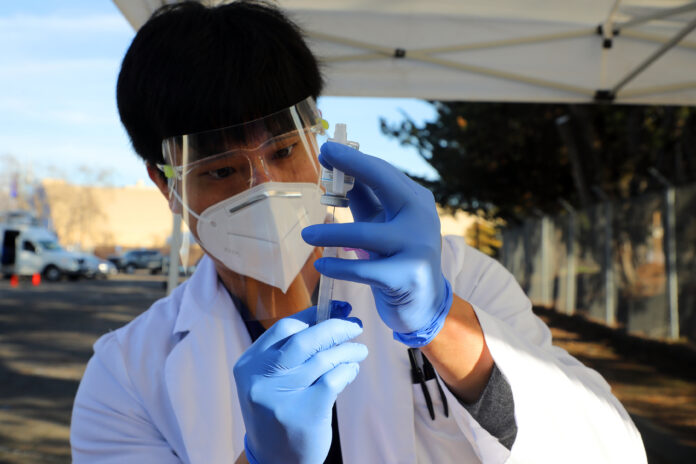
Covid-19 creates cause for paws

People flocked to shelters during the first month of the Covid-19 pandemic to foster or adopt an animal according to Elena Bicker, executive director at Tony La Russa’s Animal Rescue Foundation (ARF).

“Everybody was on lockdown and wanted the unconditional love and companionship of a furry friend,” Bicker says, about the early days of quarantine. 

Soon, the Walnut Creek shelter housed only nine animals—medical cases who stayed on site for veterinary care. As of last Tuesday however, they had 92 animals in their system. That’s back to a normal number of cats and dogs being prepared for adoption.

ARF has adjusted to social-distancing regulations in the same way restaurants have. First, the animals go through the process of getting appropriate shots, spay/neuter surgery and microchips before being placed in appropriate homes. Potential pet owners fill out an online application, which is followed by a telephone call or video chat with a counselor.

“Once the adoption is finalized, we schedule a time for you to come to the curb and pick up your dog or your cat,” Bicker says. 

While the division of animal care and control is still active at Marin Humane, the shelter currently cares for just four dogs, three cats and a reptile. Lisa Bloch, the director of marketing and communications, says that they sent nearly all of their animals to foster homes within a day or so of the shelter-in-place order.

“We were lucky to have a solid group, already on hand; vetted, knowledgeable, caring, loving people who opened their homes,” Bloch says. 

Marin Humane was initially concerned that they might have to furlough some employees but the Paycheck Protection Program (PPP) loan prevented them from having to take that step. There’s a core group of employees at the main campus in Novato but the rest of the staff, and nearly 600 volunteers, have been working remotely.

“We’re not out of the woods,” Bloch says. “We have not really determined the effect of losing revenue from the cancellation of our spring events, summer camp and animal behavior and training program.”  

Bloch also recalled some of the early unknowns shelters across the country faced at the start of the pandemic. Would so many people get sick that they wouldn’t be able to take care of their animals?

“We were worried that people would get scared that their pets might give it to them and they might start relinquishing their pets,” she says.

But that hasn’t happened.

At Oakland’s Cat Town Adoption Center, development director Quinn White says people have been responding to financial appeals, “kindly and beautifully.” But those donations haven’t provided any extra revenue. A large part of their funding comes from visitors who come to the center. They pay $10 to play with cats for an hour, while having an espresso and a pastry at the Rawr Coffee Bar. Like ARF and Marin Humane, Cat Town canceled a big fundraising event, and likely will cancel one planned for the fall.

One change that is working remarkably well is the virtual-adoption process. Typically a potential adopter would meet a cat at a foster’s house. Now, the visit is virtual. This is turning out to be a benefit to the shyest cats, who normally hide under the bed at the sight of a stranger. In these virtual visits, the cat is already comfortable in a foster home and shows off their personality. The cat is, of course, going to hide when it arrives in a new home. But the new owner has already seen a playful or snuggly side of the animal.

“It’s a nice incentive for people to be patient and put in the work to win over a shy cat’s heart,” White says.

Cat Town might even keep this protocol in place for those especially shy cats after shelter-in-place ends.  

Deemed an essential business, the owners of the Sonoma Pet Center, Eric and Lauren Warddrip, haven’t had to close. They’ve changed their approach to daily operations, offering delivery, curbside pickup and limiting the number of patrons allowed in the store. Before Covid-19, they had kittens and cats that were available for adoption from places such as Pets Lifeline and the Napa County Animal Shelter and Adoption Center.

“That’s come to a halt,” Erik Warddrip says. “We don’t think it’s a great idea to have people congregating in the store like we typically would.” 

Sonoma Pet Center is two doors down from a Whole Foods, but many of the other stores in the mall have kept limited hours or remained closed. The energy of customers coming and going is missing.

“I don’t want to say it’s depressing, but it’s eerie, is a better way to put it,” Warddrip says.

Jack, the shop cat who’s been at the store for 14 years, used to hang out with the lunchtime crowd. He’d wander out to the gazebo in front of the store for attention and treats but, Warddrip says, “those folks aren’t there right now because they’re limiting the amount of time they’re spending outside of the home.” The Warddrips know most of their customers. Now they see them on a monthly, rather than a weekly, basis. 

Along with “an army of trapping volunteers,” Adam Myatt has continued his work during Covid-19 as an active board member of Feral Change. Myatt’s mantra is Trap-Neuter-Return (TNR). Feral Change is “dedicated to helping the Oakland community control and manage its feral and homeless cat population.” Myatt—a.k.a. the Cat Man of Oakland—defines his role as someone who “keeps the machine rolling.” He acts as a conduit to connect trappers with people who contact him about feral cat sightings. He also teaches people the trapping trade so they can do it themselves. Or, as on the day I spoke with him, he can transport a van of 15 to 20 cats to the Richmond-based Fix Our Ferals for neutering.

Resources are thin during these “weird times,” but Myatt is an expert at dispensing the crucial tenets of TNR, education and communication.

“I can point you to the resources to make it happen,” he says. “You don’t want to show up in someone’s neighborhood and start snatching cats. Leave notes. Put up a sign, ‘Have these cats been fixed?’ Talk to your neighbors.” 

Myatt, along with Ann Dunn, co-founded Cat Town in 2014. Although he left the organization on a sabbatical in 2016, he continues to admire the way they’ve approached their mission during the pandemic.

“They still have their foster homes; they’re still doing virtual adoptions like crazy,” Matt says. He believes they’ve been highly adaptive. “What’s the situation? How do we continue and still help? That’s the spirit of Cat Town and of Oakland.”

Star-Crossed

For many months I’ve wondered about the inclusion of astrology in the Pacific Sun. What? You could be having a column on Zoroastrianism, for all the ways there are of coping with life on Earth. Or a humor column. That would be great! We need one now more than ever. Whatever happened to Stan Sinberg? In all the column-inches that you devote to the pseudo-knowledge of astrology, you could be putting out real facts about the real happenings of the day. Oh!? It’s entertainment? Excuuuuse me!

Tenney Ford

San Rafael

Diseased

Friends, let us talk about herd immunity. Covid-19 is ugly. It is a virus. It will make a large number of us sick. It will kill some of us. Those who don’t die will most likely develop some sort of immunity. This disease will steal lives. But here’s what it can’t do; it can’t steal souls. It is another disease altogether that is doing that.

I ask you, what kind of disease makes men chase a young jogger, or go into a person’s house and shoot them then say “Oops, wrong address?” What God-Forsaken disease makes a man so sick that he believes, forgive me for saying this, that he can taunt a man in handcuffs as he kneels on his neck? What kind of disease is this that takes the soul of one man and then the body of another? 

I ask you as Americans, how many have to die before we declare this a state of emergency and quarantine those infected? How long until we have gotten sick enough of racism that we develop a herd immunity?

I fear, my friends, that we are a long way off. And for this more than anything, I am incredibly sorry.

Jolene Cox

San Rafael

UPDATED: Memorial Hospital Workers Protest Proposed Contract

0

Healthcare workers represented by the National Union of Healthcare Workers (NUHW) gathered in front of Santa Rosa Memorial Hospital on Wednesday to protest a proposed new contract which the union says would result in a two-fold increase in hundreds of workers’ health insurance costs.

In a press release distributed ahead of the four-hour socially-distanced protest, the event’s organizers accused Providence St. Joseph Health, the Santa Rosa hospital’s parent company, of trying to pass costs onto workers while paying for newspaper advertisements praising healthcare workers for their bravery and sacrifices during the Covid-19 pandemic.

The proposed change could increase healthcare premium costs for almost 800 workers from $1,887 to $4,609 per year, among other negative impacts on workers, according to the union.

“We have caregivers who reported for work while their homes burned down in the 2017 wildfires and while their families were being evacuated in the 2019 wildfires because they’re committed to serving our patients,” said Steven Batson, an anesthesia technician, said in the press release. “Now, during this pandemic, hospital management calls us ‘heroes’ and runs paid ads to convince the public that they care about us, but actions speak louder than words. They clearly don’t respect or value us.”

Memorial’s parent company is much larger than one might expect. According to its website, Providence has “51 hospitals, more than 800 clinics and a comprehensive range of health and social services across Alaska, California, Montana, New Mexico, Oregon, Texas and Washington.” St. Joseph Health, the Santa Rosa hospital’s direct parent company with operations in California and Texas, is one of eight chains owned by Providence.

In the past few months, Providence has received at least $509 million in federal Covid-19 stimulus funding, a healthy addition to the company’s $12 billion in cash reserves, the New York Times reported on May 25.


Still, Melissa Tizon, a Providence spokesperson, told the New York Times that the company lost $179 million in April “even with the federal grants.”

“Remember, the pandemic isn’t over,” Tizon added. “We need to be financially stable for the next possible wave.”

For its part, Santa Rosa Memorial Hospital reported $72.8 million in operating profits last year, according to data filed with the state. A hospital spokesperson did not respond to a request for comment on Wednesday afternoon.

Workers on the picket line worried that Providence’s financial stability will come from in the form of pay cuts and reduced benefits for workers.

Mito Gonzales, a lab technician who has worked for Memorial for nearly 25 years through multiple owners, stood on the picket line on Wednesday afternoon.

“We’re tired of all the takeaways,” Gonvales said. “When we bargained our current contract three years ago, we figured there wasn’t much more they could take away.”

The new contract is all the more insulting for workers because of the three emergencies the staff has worked through: first the October 2017 and November 2019 wildfires and now the Covid-19 pandemic.

During the wildfires, Memorial remained open while Kaiser and Sutter closed their doors and evacuated, says Tammera Campbell, a radiological technician who has worked at Memorial for 12 years.

Now, Memorial workers’ hours have been cut by as much as eight hours per week during the pandemic despite the fact that Providence received millions of dollars in aid from the federal government, according to Campbell.

While she acknowledges that Memorial has lost revenue due to the Covid-19 pandemic, she argues that those losses shouldn’t be passed on to workers. Providence could cover Covid-19 costs with the $12 billion it has stashed in savings along with the hundreds of millions the company recently received from the federal government, Campbell says.

“It feels like they are using the pandemic against us,” Gonzales adds.

UPDATE, JUNE 5: 


In an emailed response received yesterday, Christina Harris, a St. Joseph Health spokesperson, said that the New York Times article “does not provide a complete picture of the economic impact the virus has had on our organization.”

Harris cited the need to purchase additional supplies at the same time that elective surgeries, a moneymaker for hospitals, were delayed due to Covid-19 restrictions.

Still, it’s worth noting that all hospitals have faced similar restrictions and workers speaking on the picket line Wednesday said they expected further cutbacks in the new contract whether or not Covid-19 had hit.

In the same email, Frank Beirne, the regional Chief Operating Officer for St.
Joseph Health in Northern California, gave the following statement about the NUHW picket:

“At St. Joseph Health, we want the same thing as our
caregivers represented by unions—contracts that provide competitive pay and
benefits to support caregivers and their families, and allow us to attract and
retain the best talent while remaining good stewards of our resources.

It is important to note that informational picketing is not
a strike and does not impact patient care in any way. We respect the
right of our caregivers to participate in these activities, but we are
disappointed that NUHW at Santa Rosa Memorial Hospital is picketing against our
current contract offer. That contract offer is as good as, and even better
than, contracts that NUHW members ratified at every other St. Joseph Health
ministry in Northern California.”

‘Them Belly Full’

0

“Them belly full, but we hungry / A hungry mob is an angry mob”

Those opening lines are from a 1974 song by reggae musician, Bob Marley, in describing the reaction of people to their plight against hunger brought on by the “system.” Marley, born in “British” Jamaica, knew something about oppression, reflected by his song lyrics.

However, this anthem could easily be sung by people hungry not only for food, but for justice. In American Society, where for centuries, African Americans continue to be treated as second-class citizens—“them belly full,” all right! It’s not that black lives don’t matter, it’s that they don’t matter enough!

I am old enough to remember, 55 years ago, the Watts “riots” while living in Los Angeles. The subsequent summers of the late 1960’s saw many urban ghettos aflame, throughout our country. The lethal combustion of summer heat and years of collective internal frustration and anger in those communities that were denied the equality of opportunity to provide for themselves and their families produced toxic consequences and further despair. All it took was “one incident,” usually involving an infraction of the law—and human rage scorched the landscape—city blocks were reminiscent of war zones. Investigations would be carried out and commissions formed to seek the causes of the “unrest,” with remedies promised but rarely fulfilled.

“To Protect and Serve” is understood to be the underlying coda by which law enforcement operates on the streets. Unfortunately, too often in our still racially segregated communities, the police force is looked upon, as it was many decades ago, as an occupying force.

The latest victims’ names now yelled out and seen written on the placards among the demonstrators may change as the years go on. The issues don’t! It’s not rocket surgery! The answers are within our reach.

The question we must ask ourselves is—are we, as Americans, “Belly full”; and hungry and angry enough to change?

E.G.Singer lives in Santa Rosa.

Poetry as Prophecy

0

I’m hazy on the details, but apparently a couple of freelance astronauts parked a Tesla at the International Space Station, Trump outlawed Twitter or something and the river of sh*t, racism, murder and disease that America presently resembles caught on fire. I dunno for sure—it’s difficult to sip from the news firehouse while wearing this N-95 mask. 

Frankly, the only thought I’ve had of late is a lyric from a song by Yacht:

“I thought the future would be cooler / I thought the brave world would be newer.”

The future has proven neither cool nor new as the same old stories cycle back into the media—white cops perpetrating violence against people of color, a mystery disease killing thousands and the finger of an entertainment industry figure resting atop the Button. This is not the nuclear bang promised Gen X at the apogee of the Cold War. This is worse and somehow more radioactive.

So, do any other lyrics fit this moment? Thousands. Any line from the “Ball of Confusion” works as well, if not better, as does “The End” by the Doors—before the snake bit (“This is the end, my only friend, the end”—too doomsday?). As Dorian Lynskey at The Guardian points out, however, the lyric of our times is not from a song but a poem and that poem is and always has been William Butler Yeats’ “The Second Coming.”

Lynskey wrote an analysis about the poem’s enduring utility as shorthand for troubled times that included a look at some of the work’s greatest hits:

“Things fall apart; the centre cannot hold;

Mere anarchy is loosed upon the world,”

And…

“The best lack all conviction, while the worst

Are full of passionate intensity.”

Sound familiar?

“If it feels especially potent now, perhaps it is because we have become painfully accustomed to the idea that progress is fragile and it is all too easy to fall back,” writes Lynskey. “The only consolation the poem offers is the knowledge that, for one reason or another, every generation has felt the same apocalyptic shudder that Yeats did 100 years ago.”

Perhaps it’s my own naivete or a relative lack of years but this turn of the cycle seems … different. There is a constellation of bright lights just over the horizon and if you squint at these stars just right you might even see what they spell: To misquote Yeats, “Surely some revolution is at hand.”

Daedalus Howell slouches toward Bethlehem at DHowell.com.

A cannabis ‘Cinderella Story’

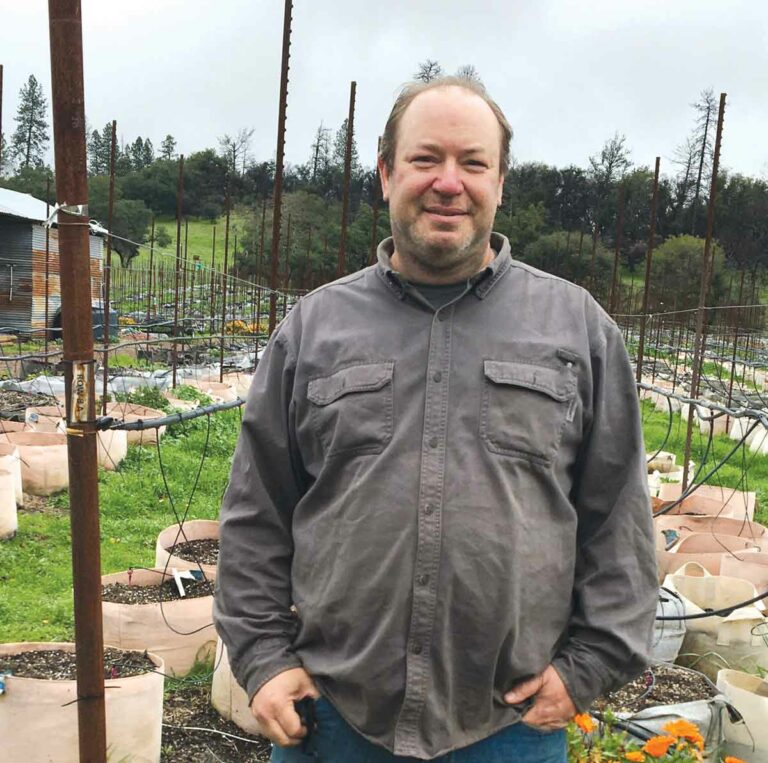
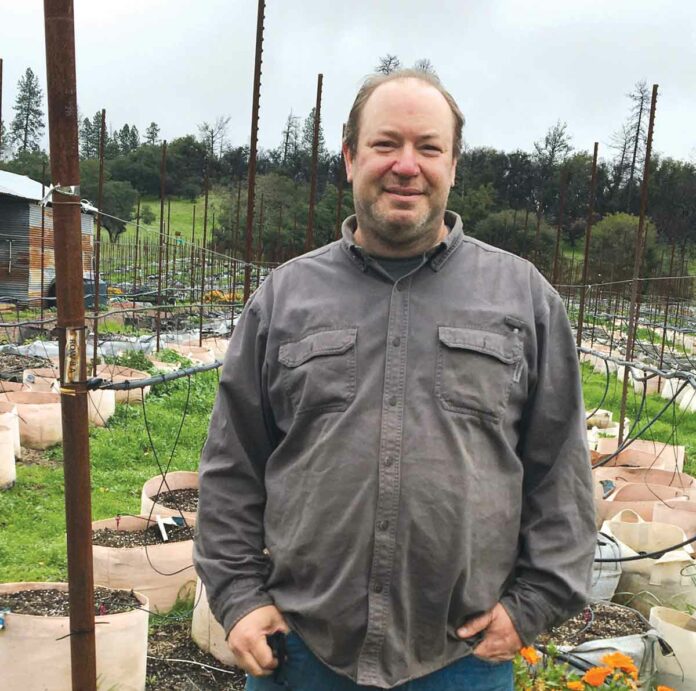
When it comes to cannabis, Erich Pearson doesn’t take “No” for an answer. That approach has got him to where he is today: SPARC’s CEO and one of the marijuana industry’s biggest public faces. Now he’s bringing about a revolution in his own company, planning for pot tourism and a cannabis lounge with a view of Sonoma Valley.

He’s also changing his company’s roots and planting Cannabis ruderalis, the Cinderella in the marijuana ballroom long dominated by the world-famous sisters, Cannabis indica and Cannabis sativa.

Not everyone has heard of Cannabis ruderalis, which has been around for thousands of years, and has been used to treat depression and aid digestion in Russia and Poland. It still grows wild in that part of the world.

Farmers in Sonoma County and elsewhere crossbreed ruderalis with sativa and indica and then harvest, process and turn ordinary weed into extraordinary concentrates and pre-rolls.

The hybrids don’t look, smell or taste the way many cannabis connoisseurs expect weed to look, smell and taste. Still, the new girl in the fields has distinct advantages over her well-established sisters. Like the ruderalis that grows in the European wilds, the cultivated kind has built-in triggers that tell it to ignore the cycles of daytime and nighttime and to flower on a fast biological clock called “autoflowering.”

A crop is produced every three months, all year long, except in the dead of winter.

Over the years, Pearson has married outlaw ways to lobbying skills and business savvy. Plus, he knows all about cannabis. And if he doesn’t know what he wants to know, he finds someone who does.

“The industry now has specialists everywhere,” he says. On the subject of the new autoflowers, he explains that the plants “only grow two-to-three feet tall and 18–20 inches around.” 

Pearson buys seeds from a Sonoma County geneticist and ships them to Salinas, where they’re sprouted and shipped north 10 days later.

“I have 24–48 hours to plant them,” Pearson says. “You can’t miss a beat with autoflowers.”

A field with 20,000 ruderalis plants is a sight to behold!

After years of urban living, Pearson has moved to his farm, where he’s close to the action.

“I love it,” he says. “I’m outside almost all day long in a clean, healthy environment.”  

With tens of thousands of marijuana plants in his backyard, he’s never alone.

Jonah Raskin is the author of “Marijuanaland: Dispatches from an American War.”

Santa Rosa Protests Turn to Grief Vigil Tonight

0

For the past three nights, Santa Rosa has seen the North Bay’s largest gatherings of protest against police brutality, part of a nationwide movement that began in the wake of George Floyd’s death at the hands of Minneapolis police on May 25.

These local protests, centered in downtown Santa Rosa’s Old Courthouse Square, have been marked by peaceful, but determined, demonstrators holding signs and chanting slogans like “Black Lives Matter” and “I Can’t Breathe,” Floyd’s last words.

Some isolated outbursts of vandalism led Santa Rosa Police to enact a citywide curfew starting Monday, June 1, and running until Thursday, June 4, from 8pm to 5am each night. Police allowed protesters to continue well past that 8pm time last night as they marched through downtown, though 27 arrests were made and there are reports that police used tear gas and rubber bullets to finally dispel the crowd around 11pm.

Tonight, June 2, will look very different from the last three nights, as a Grief Vigil to End Brutality and Honor Life is planned to take place in Santa Rosa’s Roseland neighborhood, specifically at the Dollar Tree Plaza at 777 Sebastopol Road, beginning at 5pm and running officially until 7pm.

The vigil is in honor of Andy Lopez, who was killed by a Sonoma County Sheriff Deputy in 2013. Today, June 2, would have been Andy’s 20th birthday.

The Police Brutality Coalition of Sonoma County is organizing the grief vigil. The event is also a vigil for George Floyd and other Black Americans who have been killed by police, and the coalition hopes to honor victims of police violence locally and nationally at the event.

Yet, unlike the recent protests, the coalition states that there will be no marching tonight, nor is there a program of featured speakers. Instead, the vigil is being planned as a gathering to grieve and remember. Signs are welcome, face coverings and social distancing is required, and water is recommended. The forecast calls for 90-degree heat at 5pm.

On the Facebook event page, the coalition writes, “There is much to grieve at this time, here in Sonoma County, across this country and around the world. Though the impacts vary considerably from person to person, we are all grieving; many of us for much of our lives. Whatever your grief, come grieve together, if you feel safe enough doing so.”

While Santa Rosa has been the center of the recent protests in the North Bay, there is a planned youth-organized event on Wednesday, June 3, at the Sonoma Plaza in downtown Sonoma. “Sonoma Stadning with Black Lives” will be a peacefull gathering at 1pm on the plaza for a show of solidarity with Black Americans.

On the “Sonoma Standing with Black Lives” Facebook event page, the organizers state, “Because of the current events, Sonoma’s youth has decided to organize a peaceful protest to help amplify the words of our black brothers and sisters, to support them in this fight they are facing. This protest will be peaceful, and we will not be standing in the street or inciting violence with police at the event. We want our voices heard.”

UPDATED: DA Drops Charges Against Anglero-Wyrick

0

In a brief court hearing Tuesday morning, a representative of Sonoma County District Attorney Jill Ravitch’s office dismissed all charges in a controversial case against a Graton man, citing insufficient evidence.

On April 4, deputies from the Sonoma County Sheriff’s Office approached Jason Anglero-Wyrick’s Graton home after receiving a phone call alleging Anglero-Wyrick had threatened the caller and his family with a gun.

In a separate hearing the same morning, Ravitch’s office dismissed additional charges against Naustachia Green, a woman who was arrested at the time as Anglero-Wyrick.

A bystander video of the April 4 events before the arrest shows Anglero-Wyrick and Green standing in front of a house with their hands raised. Almost simultaneously, deputies shot Anglero-Wyrick with a Taser, pulled Green away from Anglero-Wyrick, and released a K-9 unit on Anglero-Wyrick. The dog, Vader, bit Anglero-Wyrick, who was lying face down in the driveway, for over a minute. Deputies did not find a gun after searching the property.

Sonoma County Superior Court records show that Ravitch’s office filed multiple charges—including two counts of felony resisting arrest—against Anglero-Wyrick on April 6, two days after the arrest. The same day, Ravitch’s office filed two misdemeanor charges—one for resisting arrest and another for battery of a police officer—against Green.

All of the April 6 charges were dismissed on June 2.

The Court officially reopened the day before the June 2 trials, about two months after most court procedures were delayed due to efforts to slow the spread of Covid-19.

Approximately 30 of Anglero-Wyrick and Green’s relatives and supporters gathered across the parking lot from the courthouse as other court attendees lined up for Covid-19 health screenings now required to enter the court.

The protesters, all wearing white, were unaware that Ravitch’s office planned to dismiss the charges when they showed up in the morning.

Robert Evans, Anglero-Wyrick’s stepfather, said that charges were unjustified.

“His hands were up. He was giving up,” Evans said, adding that he believes the deputies involved in the arrest should be fired.

In an emailed statement on Tuesday afternoon Brian Staebell, the Chief Deputy District Attorney, said that the charges against Anglero-Wyrick and Green were dismissed because “we feel we do not have sufficient evidence to prove these charges beyond a reasonable doubt at trial.”

“After gathering additional information we simply feel that there is not enough evidence to prevail at trial on these charges,” Staebell wrote.

Two weeks ago, after the Bohemian broke the news that Ravitch’s office had filed charges against Anglero-Wyrick, Staebell told the Press Democrat that, “The evidence received so far indicates that those officers attempted to detain him and he physically resisted them.”

Staebell did not respond to a follow-up inquiry about what new information has come to light.


[NOTE: This article was updated at 4:35pm with information about the charges against

Naustachia Green and quotes from Robert Evans and Brian Staebell.]

Music Industry Goes Silent for Blackout Tuesday

Tuesday, June 2, is going to be a quiet day meant to send a loud message from those in the music industry. On this day several major record companies and artists join a national media movement, Blackout Tuesday, that intends to shine a light on the “long-standing racism and inequality” in the music business and American society in general.

With participants ranging from producer Quincy Jones to MTV, Blackout Tuesday is a daylong planned media blackout led by The Show Must Be Paused, an initiative created by black music executives Jamila Thomas and Brianna Agyemang in response to the killings of George Floyd and other black Americans at the hands of police.

For the last four days, Black Lives Matter protests have erupted around the country, beginning in Minneapolis where George Floyd, an African American, was killed in police custody on May 25. The day after Floyd’s death, the Minneapolis Police Department fired all four of the officers involved in the incident, and Hennepin County announced murder and manslaughter charges against Derek Chauvin, the officer who was filmed pinning Floyd to the ground by pressing his knee down on Floyd’s neck for nearly nine minutes.

Joining those Black Lives Matter protests, The Show Must Be Paused selected Tuesday, June 2, as Blackout Tuesday specifically to interrupt the work week for a day of reflection and conversation about “what actions we need to collectively take to support the Black community.”

In addition, The Show Must Be Paused notes that the billion-dollar music industry has “profited predominantly from Black art,” and they want to hold the industry accountable for supporting those Black artists whose work has benefited others, writing “To that end, it is the obligation of these entities to protect and empower the Black communities that have made them disproportionately wealthy in ways that are measurable and transparent.”

Thomas and Agyemang note that Blackout Tuesday is not just a 24-hour event, adding that a larger plan of action will soon be announced. “In the meantime,” they write, “to our Black friends and family: please take the time for you and your mental health. To our allies, the time is now to have difficult conversations with family, friends and colleagues.”

Announced this last weekend, Blackout Tuesday has already gained major industry allies. On Instagram, producer Quincy Jones joined the movement, writing “It’s hard to know what to say because I’ve been dealing with racism my entire life. That said, it’s rearing its ugly head right now & by God it’s time to deal with it once & for all. My team & I stand for justice. Conversations will be had & action will be taken.”

Other high-profile musicians and companies participating in the June 2 initiative include Peter Gabriel, Billy Bragg, Mumford & Sons, Def Jam Recordings, Interscope, Sony Music and Columbia Records.

In the North Bay, where Black Lives Matter protests are entering their fourth day in cities including Santa Rosa and Napa, BottleRock Napa Valley announced on Twitter that it was joining Blackout Tuesday “for a day of reflection,” adding that it will not be airing “(re)LIVE BottleRock” online this Friday as scheduled.

Music-industry meetup group Balanced Breakfast, which began in the Bay Area and features Santa Rosa and Napa networking meetings for musicians and promoters, is also joining the blackout, posting on its Facebook page, “Due to recent events, please join us as we take an urgent step of action to provoke accountability and change. As gatekeepers of the culture, it’s our responsibility to not only come together to celebrate the wins, but also hold each other up during a loss.”

The Show Must Be Paused website urges those directly impacted by police violence in recent days to take a break for Blackout Tuesday, writing “there is a lot going on and sometimes we all just need a minute. Take that minute.”

The website also directs visitors to links to help George Floyd’s family and others, and provides information on ways to donate to community bail funds for jailed protesters and additional anti-racism resources.

Redwood Empire Food Bank Offers Free COVID-friendly Kids “Summer Lunch”

From June 1 through August 7, the Redwood Empire Food Bank will offer free and healthy breakfast and lunch to children 18 and under across Sonoma County.

Nearly 1,000 Sonoma County children risk experiencing hunger over the summer months. Without enough food or proper nutrition, children face a variety of setbacks. The Summer Lunch Program sites give children a structured source of food to recharge body and mind during this critical time.

“While schools are closed, The Redwood Empire Food Bank is partnering with school kitchens to provide meals for students at varying sites across the county,” says Itzul Gutierrez, Hunger Relief Worker at the Redwood Empire Food Bank, which is the largest hunger-relief organization serving north coastal California from Sonoma County to the Oregon border.

“Families with children ages 0-18 can pick up meals from any of the schools, even if the child doesn’t attend that school,” says Gutierrez.

With the threat of coronavirus infection, this year’s Summer Lunch Program will have varying operations with some sites offering grab-and-go breakfast, lunch and care packages of groceries for the family that can be taken home to prepare and eat.

To find the nearest location, visit refb.org/summer-lunch-2020, or call 2-1-1. For immediate assistance or more information about the Summer Lunch Program. The Redwood Empire Food Bank can be reached directly at (707) 523-7900.

Covid-19 creates cause for paws

People flocked to shelters during the first month of the Covid-19 pandemic to foster or adopt an animal according to Elena Bicker, executive director at Tony La Russa’s Animal Rescue Foundation (ARF). “Everybody was on lockdown and wanted the unconditional love and companionship of a furry friend,” Bicker says, about the...

Star-Crossed

For many months I’ve wondered about the inclusion of astrology in the Pacific Sun. What? You could be having a column on Zoroastrianism, for all the ways there are of coping with life on Earth. Or a humor column. That would be great! We need one now more than ever. Whatever happened to Stan Sinberg? In all the column-inches...

UPDATED: Memorial Hospital Workers Protest Proposed Contract

Healthcare workers represented by the National Union of Healthcare Workers (NUHW) gathered in front of Santa Rosa Memorial Hospital on Wednesday to protest a proposed new contract which the union says would result in a two-fold increase in hundreds of workers’ health insurance costs. ...

‘Them Belly Full’

“Them belly full, but we hungry / A hungry mob is an angry mob” Those opening lines are from a 1974 song by reggae musician, Bob Marley, in describing the reaction of people to their plight against hunger brought on by the “system.” Marley, born in “British” Jamaica, knew something about oppression, reflected by his song lyrics. However, this anthem could...

Poetry as Prophecy

I’m hazy on the details, but apparently a couple of freelance astronauts parked a Tesla at the International Space Station, Trump outlawed Twitter or something and the river of sh*t, racism, murder and disease that America presently resembles caught on fire. I dunno for sure—it’s difficult to sip from the news firehouse while wearing this N-95 mask.  Frankly, the only...

A cannabis ‘Cinderella Story’

When it comes to cannabis, Erich Pearson doesn’t take “No” for an answer. That approach has got him to where he is today: SPARC’s CEO and one of the marijuana industry’s biggest public faces. Now he’s bringing about a revolution in his own company, planning for pot tourism and a cannabis lounge with a view of Sonoma Valley. He’s also...

Santa Rosa Protests Turn to Grief Vigil Tonight

For the past three nights, Santa Rosa has seen the North Bay's largest gatherings of protest against police brutality, part of a nationwide movement that began in the wake of George Floyd's death at the hands of Minneapolis police on May 25. These local protests, centered in downtown Santa Rosa's Old Courthouse Square, have been marked by peaceful, but determined,...

UPDATED: DA Drops Charges Against Anglero-Wyrick

In a brief court hearing Tuesday morning, a representative of Sonoma County District Attorney Jill Ravitch’s office dismissed all charges in a controversial case against a Graton man, citing insufficient evidence. On April 4, deputies from the Sonoma County Sheriff's Office approached Jason Anglero-Wyrick’s Graton home...

Music Industry Goes Silent for Blackout Tuesday

Day of reflection happening in conjunction with Black Lives Matter movement.

Redwood Empire Food Bank Offers Free COVID-friendly Kids “Summer Lunch”

From June 1 through August 7, the Redwood Empire Food Bank will offer free and healthy breakfast and lunch to children 18 and under across Sonoma County. Nearly 1,000 Sonoma County children risk experiencing hunger over the summer months. Without enough food or proper nutrition, children face a variety of setbacks. The Summer Lunch Program sites give children a structured...
11,084FansLike
4,446FollowersFollow
6,928FollowersFollow