Open Mic: Rethinking Halloween

0

I’ve long been disturbed by Halloween, and here we are again. Money spent on lights, plastic skeletons, bones and headstones to frighten small, costumed children eager to stuff themselves with sugar. Perhaps a cynical view of the holiday, but one that arises as I walk in my neighborhood during this season.

If the message were, “We’re dying here, death is real, we must do all we can to save this precious planet on which we depend for life.” Then I might get behind it. If we put out bowls of autumn fruit, an offering of the harvest which the season actually celebrates. Then I might get behind it.  If we stopped training children to use sugar to dull fear trumped up by bones, ghouls and skeletons looming at them out of the darkness. Then I might get behind it. If we stopped to consider what else might be done with money spent on decorations, wigs and empty calories. Then I might get behind it.  

I haven’t participated in the ritual for many years. It’s easy to avoid the flow of children at our house, situated on a hill with no street lights and down a flight of wooden steps. But this year I am tempted. I would put out the scariest thing I can imagine: large white letters on a black background, red Christmas lights illuminating the words, CLIMATE CHANGE! Alongside the sign a bowl of crisp apples with an invitation to take one if you’re hungry, give it to someone who is if you’re not. And a parting message, placed so visitors see it as they’re leaving, “Join hands against the darkness.”

Of course, all this is impossible in the year of our frustrated Lord, 2020. We can’t hold hands, we can’t give out apples, fear having long convinced us a potential razorblade is the real enemy. How convenient to focus on razor blades, candy and consumerism instead of what really matters. How long will it be before we heed the voice calling out, “When will you stop destroying Eden?”

Laura Bachman is a writer, retired body worker and library assistant living in San Anselmo.

Letters: Talking Props

NO! The point of prop 13 was to not force families to sell due to property taxes. THIS WILL FORCE SALES DUE TO PROPERTY TAXES. (“Prop the Vote,” Oct. 21) I have no objection to people being able to transfer assessed value, but Prop 19 will be the slow death of family ranches and dairies in this area.

A million-dollar exemption on a low-impact livestock ranch is small compared to the total market value. The profit from livestock ranching is small. The next generation of multi-generation stewards of the land who put in so many hours caring for the land will often be forced to sell or put in grapes or cannabis, which many can’t due to slopes, water or other issues. Regulations make it also difficult to put in campgrounds, and they must compete with county sales tax subsidized campgrounds, which is unfair. Going from a $10,000 tax bill to a $80,000 tax bill on a few hundred acres of low-income, open-space pasture is only doable for very high-income people, which few ranches are. Ranches pay school and hospital assessments, but livestock do not attend. And the ranch family does not use any more property tax-funded services than other families. 

Save family farms and ranches and vote NO.

Farmer Jane

Via Bohemian.com

Kids Are All Right

Thank you very much for this inspiring article about how teenagers are finding ways to thrive even during these challenging times (“From A to Gen Z,” Oct. 7). Our family has a fourteen-year-old in the house and it’s wonderful to be able to share this article whenever they say something like “things are really hard, I can’t do anything because of the pandemic!” More content like this would be wonderful!

Healdsburgian

Via Bohemian.com

A reflection on online home-decor inspiration

0

My friend Heather and I met at UC Santa Barbara during our junior year, in Literature of the Reformation (out of respect for her privacy, we’ll keep on a first name basis here).

I used to wave to her as she rode around Isla Vista on her beach cruiser in a long peasant skirt and pink Jellies, her long strawberry curls trailing behind her in the breeze. She smiled a lot. Heather was one of the few students I knew with her own room in a real house, with a new mattress and high-thread-count sheets.

At 20—and decades before Instagram and Pinterest and Pottery Barn—she had a flair for pattern, color, texture and quality second-hand clothing. We both thought David Nagel prints were not only ugly, but the sign of an undisciplined mind.

I saw her last week for the first time since the March lockdown. Honoring our tradition, we went thrift-store hopping and then ate lunch at El Molino, both of us wearing masks and feeling frayed around the edges with too many daytime inhabitants in our respective domestic spaces.

“So, how much time do you spend looking at Zillow?” I asked in the dishware shelves.

She laughed. “Omigod. How did you know? Too much.”

“Have you seen that house in Bolinas?” I didn’t even have to specify which one.

“Bolinas isn’t happening for us,” she said. “I like Fort Bragg.”

Sometimes I spend hours in the listings. It seems like everyone I talk to these days is on Zillow.

“You can look at the inside of people’s houses,” I said. “Some of the desert houses are wild, but I’m still seeing balloon curtains in homes.”

“Don’t get me started,” she said.

Alone-time has all but disappeared for many of us, while for others life has become a 24/7 dialog with CNN and crane flies. With spouses and partners working from home, with adult children returning to the nest with IKEA bed frames and plastic tubs, and with thrift stores so backlogged with donations that many aren’t accepting more, the domestic sphere can feel like life on the inside of a hamster ball. Residents have taken to putting items on the sidewalk in hopes that their trash is someone else’s treasure. Most often it’s not.

But for creative types like Heather, the lockdown has unlocked potential to reimagine the home, to fearlessly shirk design trends and to turn domesticity on its head without worrying about the Joneses. While the home has been repurposed as an office, a gym, a daycare, a studio, a campus, a greenhouse, a test kitchen, a Zoom stage and a dojo, it’s also being reinvented. Heather describes her home decor as somewhere between “cabinet of curiosities and opium den.” She credits her matrilineage.

“My grandmother and my mother were very ahead of their time, very avant garde in their tastes,” she says. “My great grandmother was from Guadalajara and my great grandfather built custom furniture in Philadelphia. He mixed traditional furniture design with elements of Mexican folk art. Both my mother and I inherited a love of objects. For example, some of my favorite things in my house are on my desk; a brass crab, an inkwell from my grandmother, a handmade silver bookmark from my grandfather.”

Heather’s house is made from both materials and memories. She doesn’t shop for new stuff, and she doesn’t follow trends.

“The Marin farmhouse chic is just stamped out,” she says. “I’ve always been into repurposing, restoring and rule-breaking; I like every room to evoke memory and emotion when you walk into it. My daughter goes through things that I put away, and helps me reacquaint myself with what I have. The pandemic has given me a certain sort of freedom to experiment with a style that is more for me than other people since nobody is coming over to look or judge. There is a need right now, I think, to be surrounded by things that provide comfort—there is so much that is leaving and going out of our lives, and fading. I keep a lot of rocks.”

Comfort is often quite different than luxury.

In The Poetics of Space, Gaston Bachelard writes, “We comfort ourselves by reliving memories of protection… Memories of the outside world will never have the same tonality as those of home and, by recalling these memories, we add to our store of dreams…” Thus spoke Zillow.

Because we are breaking with so many traditions in the home, we can now see ourselves in different kinds of spaces, environments and places and with different kinds of things.

“We are tired of our own spaces,” Heather says. “With websites like Zillow, you can vividly imagine these changes, which can be both positive and negative.”

Zillow is as full of $25,000-a-month coastal luxury rentals as it is of foreclosures, drive-by photos with the occasional shot of sagging curtains in the windows and sad, dead garden shrubs.

You might just want to stay put after all that snooping.

In my house, we’ve been letting kids paint the walls for years. In the living room four teenage girls painted a mural, an homage inspired by Klimpt’s “Tree of Life” and populated by the characters in Miyazaki’s Princess Mononoke. In one of the rooms my older daughter hand-painted wallpaper with a design by French textile artist Paule Marrot. I painted a mural in my kitchen I found on the design blog “The Selby,” and have used work by Eugène Séguy, Ukrainian artist Polina Rayko and Vanessa Bell. The boundary between home and studio for artists is often poorly defined. I’ve always thought it’s better to paint the walls than climb them. And speaking of boundaries, let’s not forget the great outdoors, brought indoors during our extended stay inside. Shelter-in-place has been a boon for nurseries. I myself have acquired five banana trees.

In a recent Washington Post article on the rise of the houseplant, gardening columnist Adrian Higgins writes, “… I now sit and watch current affairs and news programs on the TV, not for the perspicacity of the pundits, but to see how they’ve decorated their home offices. Some of the wall art is so bad, it’s good, but I’m on the lookout for the quantity and quality of the vegetation. Tip to commentators: Enough of the bookshelves — we know you’re smart; load up on far more houseplants and tropicals.”

As if we weren’t buried enough in our own long-neglected crap—both material and psychological—many women my age, including myself, have cared for, or lost, parents during these last few grueling months and now find ourselves not only dealing with grief but acting as lead curator of our parents’ possessions. Maybe for the first time, people have started to contemplate in earnest the total life cycle of things, as the life cycle of everything else becomes more precarious.

An artist friend who recently lost her mother told me, “I’m torn between the obligation of honoring my mother by taking care of her things and the burden of holding onto belongings I might not love. Do we all want to be perpetual curators of our own lives? I don’t think so—one thing the pandemic has taught us is that our time here is so limited. I’ve had to confront the reality that some of my clutter is not so creative. Swedish death cleaning is on my mind a lot.”

Bachelard agrees. “It is better to live in a state of impermanence than in one of finality.”

In the past, peeking inside a seaside mansion in Pebble Beach or a Napa Valley estate might have evoked feelings of impossible outsiderness and envy. Now these palatial spaces resemble empty hotel lobbies, halls of mirrors filled with designer furniture and fixtures that the future has neither room nor desire for; these are the lonely hunting grounds of the Wendigo, rooms appointed with store-bought grandeur on an inhuman scale when humanity is what’s in order. So much clutter is not going to just disappear when the new owners move in. Maybe after the thrift stores open donations back up, they’ll take what’s left.

Virtual & Walking Cemetery Tours Share North Bay History This Halloween

Whoever said, “Dead men tell no tales,” never visited a cemetery tour like the ones that pop up in the North Bay every Halloween season. Even with this year’s pandemic making group gatherings difficult in parts of the region, two local groups are telling tales about the historical figures residing at local cemeteries.

First up, Tulocay Cemetery in Napa holds a thousand stories waiting to be told among its grassy hills and century-old tombstones. This week, the Napa County Historical Society launches the first phase of an ambitious three-year project to tell several of these stories through interactive, self-guided and virtual tours of Tulocay and the surrounding community.

The society debuts “Echoes of Napa Valley: The Tulocay Project” on Thursday, Oct. 29, online at 7pm. The creative team at NCHS will be on hand for a discussion about the project before NCHS presents a virtual cemetery tour that is “hosted” by an actual historical figure.

Of course, the dead are not actually rising from the grave, but actors will embody figures like Maria de Jesus Higuera Juarez (1815-1890), who comes to life to host the virtual Oct. 29 tour.

“Echoes of Napa Valley: The Tulocay Project” will cover figures like Juarez and her husband Don Cayetano Juarez, early North Bay settlers who obtained the original land grant from the Mexican government for what is now Napa and gifted Tulocay’s acreage.

Other figures who are coming to life for virtual tours includes Nathan Coombs, founder of the city of Napa. The project will also highlight the First Peoples of the Napa Valley, the Patwin and Wappo, whose stories remain largely untold.

The project is operating in partnership with New Tech High School in Napa, where students are developing dramatic monologues and graphic displays, and Napa Valley College Performing Arts, which is providing opportunities to workshop new performances.

NCHS also hopes to inspire the audience to research their own stories and ask themselves important questions about community, identity and culture.

‘Echoes of Napa Valley: The Tulocay Project’ debuts on Thursday, Oct. 29, at 7pm. $10 donation. Napahistory.org.

In Marin County, Mt. Olivet Catholic Cemetery has stood for 140 years in San Rafael, situated on twenty acres of hilltop property along Los Ranchitos Road. The cemetery currently provides a final resting place for over 14,000 persons. Some of those people are famous; some of them are infamous.

This weekend, Marin History Museum hosts the Halloween-appropriate “Walking Tour: Mt. Olivet Cemetery & Its Famous–and Infamous–Residents,” on the morning of Oct. 31. Historian Marcie Miller will lead the guided tour and will reveal who resides at the cemetery, from some of Marin’s most prominent pioneers to convicts executed at San Quentin State Prison such as Juanita Spinelli, aka “The Duchess,” who was the first woman to be executed by the state of California via San Quentin’s gas chamber in 1941.

The walking tour of Mt Olivet Cemetery, 270 Los Ranchitos Road, San Rafael, begins at 10am on Saturday, Oct. 31. To pre-register, email ma****@**********ry.org or call 415.446.8869.

Local Bands Dress Up for Phoenix Theater’s Virtual Halloween Concert

0

Petaluma’s historic Phoenix Theater looks stunning right now, thanks to a new paint job. The roof is also in fine form after being replaced earlier this year, and the sprinkler system is almost installed and up to the city’s codes.

Unfortunately, the inside of the Phoenix Theater is effectively closed to the public due to Covid, and the popular concert venue and teenage hangout has been unable to host events since March.

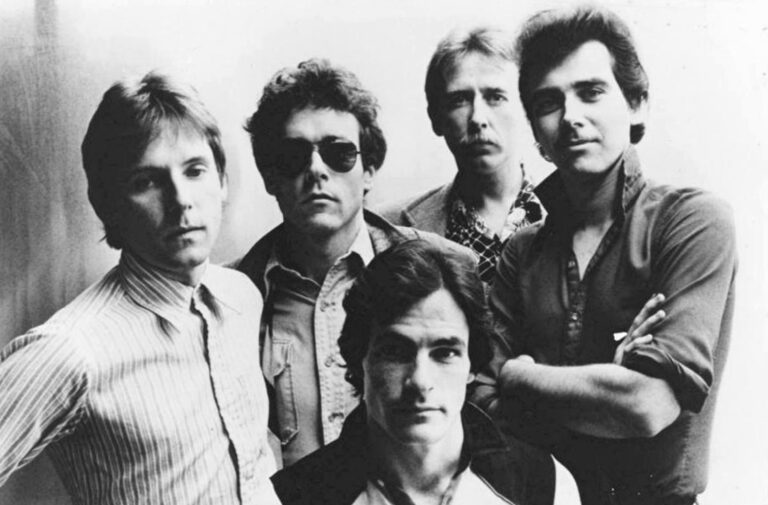
Nonetheless, in keeping with tradition, the venue will present its annual Halloween Covers Show this Saturday, Oct. 31. The only difference is that this year’s concert will be virtual, with several local bands and artists dressing up as classic rock groups and performing their songs for the camera instead of a live audience. The concert will be available to view on YouTube at 8pm on Oct. 31.

“The show is very cool, and it existed long before we hosted it,” says Jim Agius, talent buyer for the Phoenix Theater and co-host of the venue-based podcast Onstage with Jim & Tom. “It was a fixture at one of the punk houses in Santa Rosa. In 2016, we offered to take it and we hosted it, and from there we put our own spin on it.”

The annual Halloween Covers Show is one of the North Bay’s biggest yearly parties, and the participating bands and artists go above and beyond to embody the classic bands they are covering; perfecting the clothes, the between-song banter and more.

“All of the things I love about Halloween are represented in this show,” Agius says. “It gets a great variety of people from all sorts of different musical corners.”

In past years, local bands have performed as everything from AC/DC to the Spice Girls, and this year’s virtual lineup is another varied assembly of musical genres and artists.

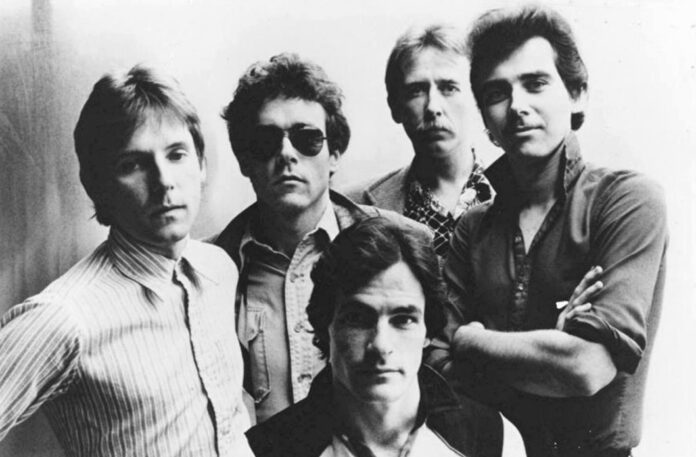
Seven bands appear at this year’s online concert. Marin County’s young rock star Matt Jaffe—with bleached blonde hair—embodies Lou Reed and leads a Velvet Underground set. Marin natives The Happys don socks (and nothing else) to perform as the Red Hot Chili Peppers. Young Sonoma County punks Kurupi take on Rage Against the Machine, and local performer Kara Ferro sings as Loretta Lynn with a full backing country band. Other sets include Moon Sick performing as Toadies, Dry Ice Queen performing as No Doubt and several young rockers from various local bands performing as The Strokes.

Also in keeping with tradition, this year’s Halloween Covers Show ends with a massive balloon drop.

“It’s a wonderful dot on the exclamation point to end the show,” Agius says. “This year, of course, there’s no audience. It’s very surreal actually to see 800 balloons sitting where the audience would have been.”

Despite its current inability to host live shows, the Phoenix Theater’s nonprofit foundation is staying afloat through the pandemic thanks to private donors and the Paycheck Protection Program.

“It looks like the Phoenix is going to be OK,” Agius says. “Obviously, things can change and who knows how long this is going to go on for, but we’re feeling positive about coming out the other end of it.”

The Phoenix Theater’s Halloween Covers Show debuts on the “Onstage with Jim & Tom” Youtube channel on Saturday, Oct. 31, at 8pm. Find more details at Facebook.com/thephoenixtheater.

Olive Park Memorial Honors Sonoma County’s Unhoused Residents Who Have Died

0

On the afternoon of Saturday, Oct. 24, dozens of people filtered through Santa Rosa’s Olive Park to honor the lives of people who have died on the streets of Sonoma County over the past eight years.

The event, titled “A Walk to Remember for Those Gone But Not Forgotten,” was organized by members of Sonoma Acts of Kindness, the Squeaky Wheel Bicycle Coalition, Mask Sonoma, Homeless Action!, the North Bay Organizing Project (NBOP), and Health Professionals for Equality and Community Empowerment (H-PEACE) with input from people living on the streets throughout the process.

Event organizers asked shelterless people how they would like to honor their friends and loved ones who had died on the streets, often without formal space to mourn or grieve, said Heather Jackson, one of the event’s organizers.

“We wanted to do something to offer the unsheltered an opportunity to mourn the passage of their friends and loved ones,” Jackson said. One local houseless woman, Little Lisa, was integral in organizing the event, according to Jackson.

At one end of the park, the organizers arranged dozens of images of the deceased, many of which were taken or shared by people still living on the streets. Nearby, volunteers distributed sack lunches so that attendees would not have to seek food elsewhere.

Tyrell Brown, a 34-year-old Sonoma County native who has been living on the streets off and on for the past four and a half years, knew two of the deceased people. Brown said he was not involved in organizing the event, but was glad to take part.

“They may not be with us today, but they are looking down on us,” Brown said. “They would want us to make the best of it while we’re here.”

Event organizers distributed a list of 78 people who have died on the streets beginning with Michela Ann Wooldridge, a 24-year-old woman who was stabbed to death by a stranger on Halloween night in 2012.

Organizers were quick to admit that the count, which was gathered by word of mouth, press reports, Internet research, among other methods, is almost certainly incomplete.

Unsurprisingly, living on the streets is hard on the body for a variety of reasons. Increased exposure to the elements and a lack of medical care, combined with drug use and murder, all make an earlier death more likely.

For instance, the average age of death for homeless people in Los Angeles County was 48 for women and 51 for men, compared to 83 and 79 respectively for sheltered people, according to a recent study by the Los Angeles County Department of Medical Examiner-Coroner.

In 2018, 918 homeless people died on the streets of Los Angeles County, which had an estimated houseless population of 53,000 that year.

Earlier this month, the Bohemian’s sister publication San Jose Inside reported that 163 homeless people died in Santa Clara County last year, according to data from the Santa Clara County Coroner’s Office. The county had an estimated 9,706 homeless residents in 2019.

While Sonoma County is a more rural county with a smaller overall population, it still has a significant number of people living without shelter. For the past five years, the estimated number of homeless individuals in the county has hovered just below 3,000.

Since late May, after a pause in the early months of the pandemic, Santa Rosa police have continued to relocate encampments throughout the city citing health and fire risks at a series of large camps, first below Highway 101 near Railroad Square and, most recently, in Cancer Survivors Plaza on Fourth Street.

An ongoing injunction, a legal agreement between the local homeless residents and Santa Rosa and Sonoma County, restricts the ways in which local governments are allowed to move encampments by requiring them, in most cases, to provide homeless people with housing alternatives before forcing them to move.

But, in a Thursday, Oct. 22, court filing, lawyers representing local homeless people in the lawsuit argued that Santa Rosa and Sonoma County have violated the injunction six times since late May by repeatedly moving large-scale encampments without meeting the injunction’s requirements.

“The City has forced unhoused people to leave public property without first providing adequate shelter, often ignoring reasonable accommodation requests made by people with disabilities,” the attorneys allege in the filing. The case is scheduled to return to court on Nov. 17.

Sebastopol Center for the Arts Opens Its Doors for Distanced Learning

0

Sonoma County schools continue to operate online and over Zoom due to the Covid-19 pandemic, and some students are facing more challenges than others as they adjust to online education.

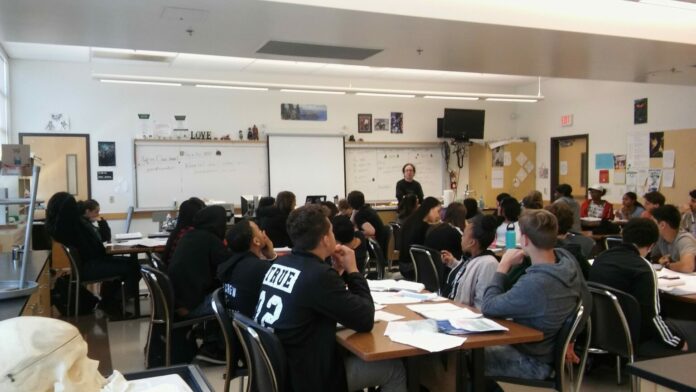
In West Sonoma County, the Sebastopol Center for the Arts is launching a new Supervised Distance Learning program aimed to help those students and families struggling to learn in isolation.

“Back in July, we were running virtual classes and on-site arts camps,” says Dana Swint, Education Manager at Sebastopol Center for the Arts. “The feedback I was getting from parents who were anticipating another upcoming semester or beyond of distance learning was, ‘How do we support our children and make sure they have success learning from home?’”

The families that Swint heard from were households where either a single parent or both parents were working full-time in essential jobs, meaning they had to decide between working or staying at home to supervise their children’s virtual learning. Now, those parents have another option.

Next week, center is opening it’s facility to provide a safe and supportive environment for more than 40 elementary school children who will work on their daily virtual classes and learning exercises while getting to experience social connection and daily afternoon arts enrichment activities. The Supervised Distance Learning program begins on Nov. 2, and runs Mondays through Fridays, 7:30am–5:30pm, until Dec. 18. Pre-registration is required, and the program is available at a sliding scale cost.

The center’s 17,000-square-foot building allows for safe 6-foot social distancing, in designated spaces for groups of 12 students. Designated Distance Learning Assistants who are trained to offer academic and technical support and classwork assistance will supervise the students. In between their classes, students will have access to outdoor patios for lunch, play and exercise, and the center will also take advantage of having Ives Park across the street. The program will employ all Covid-19 safety procedures such as daily temperature readings and strict sanitation practices.

“We started by reaching out to the county childcare licensing program and applied for an exception to offer programming during the school day,” Swint says. “In visualizing how we could build an enriching program, we decided we’re an arts center and that’s what we have to offer, so we will have teaching artists coming on to teach dance, ceramics, music, painting and drawing in the afternoon.”

For the Supervised Distance Learning Program, the Sebastopol Center for the Arts is working closely with Sebastopol Union Elementary School District, though the program is open to any elementary-age schoolchildren in the county.

“Although our teachers at Sebastopol Union are doing a phenomenal job, there is no replacement for in-person education and socialization,” says Linda Irving, Superintendent of Sebastopol Union Elementary School District. “It’s a wonderful opportunity that mixes the digital learning environment provided by our teachers and local artists.”

Irving notes that many families and students in her district are dealing with emotional fallout caused by the pandemic, the economy, and other factors that make learning at home in isolation even more difficult.

“Sebastopol Union has a higher population than our surrounding districts of students that qualify for free or reduced lunch, and that means they’re living in the poverty zone,” Irving says. “There are struggles going on and it’s taking a toll.”

Irving hopes to re-open schools for in-person instruction on January 19, “depending on all sorts of factors,” meaning this new program at the Sebastopol Center for the Arts will get families to the winter break.

“I love that they are reaching and stretching themselves to create this program,” Irving says of the Sebastopol Center for the Arts. “This is a serious commitment in partnership with Sebastopol Union and it will enhance the experience for the students.”

For more information and to register for the Supervised Distance Learning Program, visit SebArts.org.

North Bay Nonprofit Sanctuary Launches ‘Saving Senior Dogs Week’

People love dogs, as evidenced by the estimated 14,000 animal rescue organizations that exist nationwide. Yet, less than 40 of those 14,000 organizations are dedicated to rescuing, rehabilitating and re-homing senior dogs.

One organization that focuses exclusively on senior dogs is Lily’s Legacy Senior Dog Sanctuary in Petaluma. The nonprofit rescue organization saves and re-homes homeless senior large-breed dogs in California.

Now Lily’s Legacy is going national with its second annual ‘Saving Senior Dogs Week,’ an online education and fundraising campaign running October 26 to November 1. The campaign, presented in partnership with senior dog rescue organizations from across the United States, is using social media to raise public awareness of the plight of homeless senior dogs throughout the country.

“There is a perception that senior dogs are harder to adopt, which we have not found to be the case,” says Alice Mayn, founder and Executive Director of Lily’s Legacy. “I wanted to find a way to educate the public, and I also wanted a way to bring the existing rescues together, let people know they’re out there, and maybe encourage other people to start a senior rescue so there are more of us. Because there needs to be more of us.”

‘Saving Senior Dogs Week’ will take to Facebook, Twitter, Instagram and other social media outlets all week to share images, videos and stories about senior dogs. Mayn notes that the awareness campaign is more important than ever this year, as the Covid-19 crisis is increasing the number of surrendered pets due to financial hardships.

“It’s not people that have contracted Covid, it’s people who have lost their homes, their livelihood or both, due to Covid,” Mayn says. “It’s hard for them, they’re giving up a family member.”

In August, the American Society for the Prevention of Cruelty to Animals released data estimating that 4.2 million pets will enter poverty in the next six months as a result of the Covid-19 pandemic, a 21-percent increase from pre-pandemic estimates. The total number of animals living in poverty could rise to more than 24.4 million dogs, cats, horses, and other animals.

For more than a decade, Mayn and the volunteer-run staff at Lily’s Legacy have been giving large-breed senior dogs a second chance through fostering and adoption programs, and they care for senior dogs with hospice care.

“The biggest lesson I’ve learned from these dogs is gratitude and resilience to hard times,” Mayn says. “Senior dogs, who have been through some kind of trauma, they seem to bounce back when they get some love and good nutrition and medical care. It’s an amazing phenomena.”

In addition to sharing stories of senior dogs, Lily’s Legacy is highlighting the network of other senior animal rescues working throughout the nation.

“I get calls from all over the country from people who want senior dogs, and now I have a resource,” Mayn says.

Seventy-five percent of the proceeds from the ‘Saving Senior Dogs Week’ fundraising campaign will be divided equally among the participating senior dog rescue organizations, and the remaining funds will go into a Saving Senior Dogs Grant program to provide startup funding and support for individuals interested in founding a new senior dog rescue.

Two months ago, Lily’s Legacy awarded its first Saving Senior Dogs Grant to Daisy Lu Ranch Senior Dog Sanctuary in Camarillo to provide medical care for their senior dogs.

“Senior dogs make great companions,” Mayn says. “If you’re considering getting a dog, consider getting a senior dog.”

Get more information and donate to ‘Saving Senior Dogs Week’ at Lilyslegacy.com or the event’s page on Donately.com.

What Farmers Really Think About Measure P

When Sonya Perrotti, owner of Coyote Family Farm in Penngrove, saw big signs lining nearby roads that read Farmers Say No on Measure P, she thought to herself, “Oh, do I?”

And she wasn’t alone. Farmer Caiti Hachmyer was taken aback to find the credibility of her beloved vocation used to oppose what she views as long-overdue, commonsense oversight of law enforcement. Farmers Vince and Jenny Trotter took to their tractor with a “Yes on Measure P” sign to counter all those going up around them that claimed to speak on their behalf. “Measure P will ensure that officers are held accountable to their actions,” said the Trotters. “Opponents of this measure are spreading a lot of misinformation.”

The list of farmers who support Measure P could feed much of this county: Laguna Farm, Singing Frogs Farm, Bernier Family Farm, Tierra Vegetable, Kibo Farms, Red H Farm, Full Bloom Flower Farm, Green Star Farm and Chiatri de Laguna Farm, to name a few–the last of which is run by Wendy Krupnick, president of the Sonoma County chapter of Community Alliance with Family Farmers (CAFF), which advocates on behalf of smaller-scale farms.

“As the local chapter of CAFF,” says Krupnick, “we hadn’t planned on weighing in on this ballot measure. It just felt beyond the purview of an agricultural group. But when folks started inquiring with us last week, asking why farmers were so adamantly opposed to this measure, we felt the need to set the record straight. Firstly, no one can speak for all farmers. But I can tell you this: there are a lot of local food producers in Sonoma County, like me, who believe that when it comes to law enforcement, transparency and community participation matter.”

So, to clear up a few things:

Measure P does not cut any money from the Sheriff’s Office budget. Measure P does not cut safety or emergency services. Measure P will not increase response times to emergency calls, fires and disasters.

And last but certainly not least: all farmers are NOT opposed to Measure P.

Family farmers care deeply about the safety of everyone in our community. And the values behind Measure P are the same that you’ll find behind the booths at your local farmers market. So on behalf of these farmers and the Sonoma County CAFF chapter, we invite you to join us in voting YES ON MEASURE P.

Signed,
The Sonoma County Chapter of Community Alliance with Family Farmers

For more info, visit caff.org

Scary Movies Invade North Bay Cinemas & Drive-Ins for Halloween

0

“They’re coming to get you, Barbara!” So far, 2020 has felt a bit like a horror movie. Currently, the North Bay is enduring a global pandemic, braving regular attacks from wildfires and preparing to vote in one of the most dramatic elections ever.

So, who wants to go to the movies?

Turns out, a lot of people do, and cinemas in Marin County and Napa County are reopening at limited capacity while Drive-In Theaters continue to pop-up outdoors in Sonoma County. With Halloween around the corner, now’s the time to escape from today’s horrifying reality and enjoy an old-fashioned scare on the silver screen.

Tonight, Oct. 22, the horror fiends at CULT Film Series conspire with the Luther Burbank Center for the Arts in Santa Rosa for a drive-in screening of the classic granddaddy of zombie-flicks, Night of the Living Dead. Writer-director George Romero’s 1968 low-budget film was a groundbreaking achievement in horror, and it spawned the zombie genre as we know it today. The movie was also a major Drive-In hit back in its day, and tonight’s screening offers old-school chills. Gates open at 6pm, and tickets are $25 per car. Lutherburbankcenter.org.

This weekend, the Alexander Valley Film Society screens a friendlier Halloween favorite, when they present the 1993 family-film Hocus Pocus as part of its Carpool Cinema series. While Hocus Pocus did not exactly cast a spell on the box office when it premiered in the early ‘90s, the witchy comedy starring Bette Midler, Sarah Jessica Parker and Kathy Najimy has developed a cult following. On Saturday, Oct. 24, the AV Film Society turns the Cloverdale Citrus Fairgrounds into a Drive-In to screen the film in English, with Spanish subtitles. Gates open at 6:30pm, and tickets are $30 per car. Avfilmsociety.org.

Hocus Pocus is also playing in St. Helena for Halloween, as the Cameo Cinema presents a “BYOB (Bring your own Broom)” screening on Oct. 31. The night before, on Oct. 30, Cameo Cinema is also screening a horror classic from one of wine country’s favorite directors when it presents Bram Stoker’s Dracula. The 1992 film from director Francis Ford Coppola is heralded as a faithful and ambitious adaptation of the 1987 novel that introduced the world to the most infamous vampire of all time. Both movies screen at 7:45pm, and tickets are $10. Cameocinema.com.

In Marin County, the Lark Theater and The Village at Corte Madera are still hosting Lark Drive-In: Movies Under the Stars screenings at the Village’s north parking lot, and the series goes all out for Halloween weekend with several spooky, scary and fun movies Oct. 28–31.

First up, on Oct. 28, the classic story of “Frankenstein” plays out from the National Theatre stage in London in a screening of the stage play, filmed in 2011 and starring Benedict Cumberbatch (Dr. Strange) and Jonny Lee Miller (Trainspotting) in a production directed by Danny Boyle (Trainspotting, Slumdog Millionaire). On Friday, Oct. 29, Lark Drive-In presents a double bill featuring the original Ghostbusters and the recent mockumentary What We Do in the Shadows. The next night, on Oct. 30, the horror-comedies continue with a double bill of Beetlejuice and Shaun of the Dead. Finally, on Halloween night, Oct. 31, Lark Drive-In presents two late-night classics, screening Young Frankenstein and The Rocky Horror Picture Show. Showtimes vary, tickets are $15-$30. Larktheater.net.

Other movie theaters in Marin and Napa County that can reopen at limited capacity include the Century Northgate in San Rafael and the Century Rowland Plaza in Novato, as well as the Century Napa Valley in Napa. All these theaters are offering special Halloween screenings of classics like the North Bay-shot Scream and others. Check with the theaters for times and tickets.

All of these theaters are also practicing CinemaSafe protocols, enforcing social distancing seating and touch-less concessions among other health and safety measures. Get more details on this program at CinemaSafe.org.

Open Mic: Rethinking Halloween

I’ve long been disturbed by Halloween, and here we are again. Money spent on lights, plastic skeletons, bones and headstones to frighten small, costumed children eager to stuff themselves with sugar. Perhaps a cynical view of the holiday, but one that arises as I walk in my neighborhood during this season. ...

Letters: Talking Props

NO! The point of prop 13 was to not force families to sell due to property taxes. THIS WILL FORCE SALES DUE TO PROPERTY TAXES. ("Prop the Vote," Oct. 21) I have no objection to people being able to transfer assessed value, but Prop 19 will be the slow death of family ranches and dairies in...

A reflection on online home-decor inspiration

My friend Heather and I met at UC Santa Barbara during our junior year, in Literature of the Reformation (out of respect for her privacy, we’ll keep on a first name basis here). I used to wave to her as she rode around Isla Vista on her beach cruiser in a long peasant skirt and pink Jellies, her...

Virtual & Walking Cemetery Tours Share North Bay History This Halloween

Napa and Marin historical organizations host events.

Local Bands Dress Up for Phoenix Theater’s Virtual Halloween Concert

Annual covers show goes online due to Covid.

Olive Park Memorial Honors Sonoma County’s Unhoused Residents Who Have Died

On the afternoon of Saturday, Oct. 24, dozens of people filtered through Santa Rosa’s Olive Park to honor the lives of people who have died on the streets of Sonoma County over the past eight years. ...

Sebastopol Center for the Arts Opens Its Doors for Distanced Learning

Elementary schoolchildren can safely use the facility in a six-week program.

North Bay Nonprofit Sanctuary Launches ‘Saving Senior Dogs Week’

Lily’s Legacy leads national campaign running Oct. 26–Nov. 1.

What Farmers Really Think About Measure P

When Sonya Perrotti, owner of Coyote Family Farm in Penngrove, saw big signs lining nearby roads that read Farmers Say No on Measure P, she thought to herself, “Oh, do I?” And she wasn’t alone. Farmer Caiti Hachmyer was taken aback to find the credibility of her beloved vocation used to oppose what she views as long-overdue, commonsense oversight of...

Scary Movies Invade North Bay Cinemas & Drive-Ins for Halloween

Classic and campy horror films screen this week and next.
11,084FansLike
4,606FollowersFollow
6,928FollowersFollow