Prop the Vote: A Cheat Sheet to California’s Statewide Ballot Measures

0

Issues proposed in California’s statewide ballot measures can sometimes be as opaque as they are varied, which is why the Bohemian’s staff decided to wade through the morass to help make voting easier. Below are breakdowns of the big decisions going to state voters on Nov. 3:

PROP. 14

In 2004, California voters approved Proposition 71, which created and funded the California Institute for Regenerative Medicine (CIRM), a public agency that distributes funds to pay for stem cell research. The $3 billion allotted by Prop. 71 ran out last year and the issue is back in voter’s hands with Prop. 14 on this year’s ballot. If it passes, the state would issue $5.5 billion in bonds to fund additional CIRM research grants for years to come. While the pro-Prop. 14 campaign has spent $9.1 million in support versus $0 in opposition, critics, like the San Francisco Chronicle’s editorial board, argue that the CIRM funding pot contributed to the rise of “opportunistic quacks hawking stem cell snake oil.”

PROP. 15

Today, all property taxes—whether it’s homes, office buildings or golf courses—are capped at the purchase price with a 2 percent annual tax increase. Prop. 15 would mandate commercial properties be assessed every three years and taxed at their current fair market value. The measure would not apply to residential properties. Proponents, including the Chan Zuckerberg Initiative, Working Partnerships USA and California Teachers Association, say the measure will apply primarily to large companies and generate between $6.5 trillion and 11.5 trillion for local governments and schools. Opponents, including the Howard Jarvis Taxpayers Association, California Business Roundtable and California Taxpayers Association, say the tax increases will trickle down to small businesses and customers and push business out of California.

PROP. 16

In 1996, California voters banned the use of affirmative action, but 24 years later a majority of state lawmakers are looking to bring it back. Prop. 16 would reinstate affirmative action, meaning universities and public entities could factor someone’s gender, race or ethnicity into admissions or hiring decisions. Supporters, who include Gov. Gavin Newsom, Sen. Kamala Harris and the state’s NAACP conference, say that it would level the playing field for people of color. Meanwhile, opponents like the California Republican Party, the Asian American Legal Foundation and the Chinese American Alliance say that it would legalize discrimination.

PROP. 17

Prop 17 would restore voting rights for parolees with felony convictions. The current law on the books requires individuals to complete both their prison sentence and parole before being able to reclaim the right to vote. Supporters, which include the ACLU of California, Gov. Gavin Newsom and the Brennan Center for Justice, say that denying parolees the right to vote extends punishment and disproportionately disenfranchises people of color. But opponents, like the California Republican Party, Crime Victims United California and the Election Integrity Project California, say that parolees need to prove they can be rehabilitated before they can vote again.

PROP. 18

If Prop. 18 passes, 17-year-olds will be able to vote in primary and special elections as long as they’re 18 by the time of the next general election. Currently, 18 states and Washington D.C. give 17-year-olds this right. Supporters, like Secretary of State Alex Padilla, the ACLU of Southern California and Assemblyman Evan Low (D-Cupertino), say that it will allow first-time voters to participate in the full election cycle and boost youth voter turnout. However, opponents, like the Election Integrity Project California, the Howard Jarvis Taxpayers Association and the California Republican Party, say that 17-year-olds are still kids who could be easily influenced by teachers or counselors.

PROP. 19

Prop. 19 would allow homeowners who are 55 or older, disabled or wildfire and disaster victims to transfer their primary home’s tax base up to three times, up from the one-time move allowed today. The lower tax base could also still be passed to children, but only if they plan to live in the home, or if the property is a farm. Proponents, including the NAACP, California Democratic Party and California Business Roundtable, say the measure would close “unfair tax loopholes” for out-of-state investors and offer older residents more freedom. Opponents, including Howard Jarvis Taxpayers Association and the ACLU of Southern California, don’t agree with the provision mandating children live in the home to get the tax break.

PROP. 20

California’s prisons were already bursting at the seams before the pandemic hit, and the overcrowding led to a wave of deaths that health experts and civil rights activists called preventable. Prop. 20 would lead to more women and men ending up behind bars by allowing some property crimes of more than $250, such as “serial shoplifting” and car theft, to be charged as felonies instead of misdemeanors. The law would also increase the rate of recidivism and create a DNA database for people convicted of other low-level crimes, such as drug possession, furthering the goals of conservative prosecutors and police unions who would rather see the carceral state flourish than work on other meaningful reforms.

PROP. 21

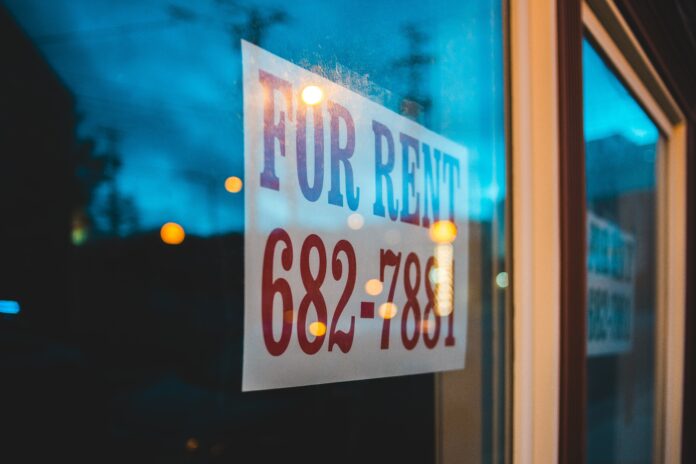
Rent control is on the ballot for the second time in two years, and advocates hope the pandemic and economic downturn will push Californians to expand renter protections. Prop. 21 would allow cities and counties to pass rent control for more properties than currently allowed, including those built before 2005 and owned by landlords with more than two properties. Single-family homes would be exempt. Proponents, including the AIDS Healthcare Foundation, Sen. Bernie Sanders and California’s public employees union, say the measure is key to tackling homelessness. Opponents, including Gov. Gavin Newsom, the state’s Republican Party and large apartment developers, say Prop. 21 would worsen the housing crisis by disincentivizing landlords from renting and developers from building.

PROP. 22

When tech companies spend a couple hundred million dollars supporting an initiative, it’s an easy answer on who stands to gain the most from its passage. Uber, Lyft and other gig companies want the state to exempt them from treating their workers as employees instead of independent contractors, thereby saving the companies gobs of money. The passage of AB 5 last year threw a wrench in the way numerous industries compensate freelance and part-time workers, and Prop. 22 seeks to limit the amount of pay and benefits gig companies are required to cough up. A few concessions in the prop, such as strengthened rules on driver background checks, appear to be window dressing meant to cover up the fact that Prop. 22 would require a 7/8th supermajority in the state Legislature to amend, which would basically give control of any changes over to the Republican minority.

PROP. 23

We are a nation going through a global health crisis, and access to safe and reliable treatment should be a priority for all of us, right? Prop. 23 would force kidney dialysis clinics to have at least one physician on site during operating hours to better respond during emergencies, and it would require data on infections to be reported to the state. The initiative would also stop clinics from discriminating against patients for their type of insurance. Dialysis companies oppose the effort, saying staffing levels are already adequate and the enhanced regulations would cut into their bottom line and force some clinics to close. California unions and the state Democratic Party support Prop. 23, and they’ve argued that dialysis companies are making serious bank so those profits should coincide with better patient protections.

PROP. 24

The pet project of real estate investor Alastair Mactaggart, Prop. 24 would update California’s consumer privacy laws and create a state Privacy Protection Agency to enforce the rules. The initiative’s supporters, including a handful of elected Democrats, say it would increase user’s control over their personal data. Opponents, including the ACLU, Green Party and Republican Party, warn that the proposition was written behind the scenes and opens up new loopholes which companies can exploit. The Electronic Frontier Foundation (EFF) landed somewhere in-between. Declining to endorse or oppose the proposition, the EFF wrote that Prop. 24 is “a mixed bag of partial steps backwards and forwards.”

PROP. 25

If Prop. 25 passes, it would uphold a 2018 California law that would end cash bail and instead use a risk-based algorithm to decide who gets out of jail while awaiting trial. Supporters, which include the SEIU California State Council, the League of Women Voters of California and Gov. Gavin Newsom, say that Prop. 25 would eliminate an unfair system for those who can’t afford to pay bail. Criminal justice advocates have been trying to get rid of cash bail for years, but many argue that Prop. 25 isn’t the solution. Opponents, like the California Black Chamber of Commerce and the ACLU of Southern California, say that the algorithm could create more biased outcomes for people of color. Bail bond groups, such as the American Bail Coalition, also oppose the measure, but for different reasons. They say that it would eliminate their industry, put public safety at risk and cost taxpayers more money.

Scrutinizing Sonoma County’s Ballot Measures

0

If social media chatter, yard signs and on-going street protests are any indication, many Sonoma County voters have been activated by local issues this year. In addition to selecting a new president and city councilmembers, voters will decide whether to extend a countywide transportation funding sales tax, to boost county spending on mental health care and to strengthen outside oversight of the Sonoma County Sheriff’s Office. 

Although we can’t cover everything on the ballot, here are three items every Sonoma County voter will be asked to weigh in on.

Measure DD: Transportation Funding

Placed on the ballot by the Sonoma County Transportation Authority (SCTA), the county agency in charge of most local transportation projects, Measure DD would extend an existing ¼-cent sales tax measure until 2045, 20 years after the tax’s current sunset date in 2025.

If passed with a two-thirds vote, the measure would raise an estimated $26 million each year to fund road improvements and infrastructure projects throughout the county. The projects identified in the measure were compiled as a wishlist for the county’s cities, which will all receive Measure DD funds for their favored projects over the next 20 years. 

Measure DD’s spending plan would allocate 65 percent of the funding towards fixing roads, filling potholes and improving road safety. The remainder of the funds would go towards increasing the frequency and affordability of bus service (23 percent) and building bikeways and pathways (12 percent).

The campaign funding behind the measure comes from the contractors who might stand to get work from the SCTA. So far, Ghilotti Brothers Contractors chipped in $2,500; the Northern Californian Engineering Contractors Association put up $7,500. The Sonoma County Alliance’s Political Action Committee also contributed $7,500 in support of Measure DD, according to a campaign finance filing. 

The main opposition of Measure DD is a new anti-tax coalition known as the “2020 Tax Moratorium Coalition.” The Coalition has not disclosed any campaign spending yet.

The coalitions’ members include the Sonoma County Farm Bureau, North Bay Leadership Council, the North Coast Builders Exchange, the Santa Rosa Metro Chamber of Commerce, and Sonoma County Citizens for Action Now! The anti-tax group argues that because of the ongoing pandemic and resulting economic turndown, 2020 is the wrong year to increase taxes.

“There are four years remaining on the Measure M tax, so we don’t need to vote on a new tax now. Measure DD should come back in two years when the economy has hopefully improved” the group wrote in their argument against Measure DD.

The Sonoma County Bicycle Coalition, Sonoma County Conservation Action (SCCA) and Operating Engineers Local 3 have endorsed Measure DD.

Measure O: Mental Health Boost

Measure O asks voters to approve a ¼-cent sales tax expected to raise approximately $250 million over the next 10 years for additional mental health, addiction services and support facilities for vulnerable people.

While Measure O’s supporters primarily use a moral argument to support the tax increase, they and the initiative’s opponents also offer economic arguments. The 2020 Tax Moratorium Coalition also opposes Measure O, arguing that passing the tax would be financially irresponsible. 

Measure O’s supporters disagree, proposing that increasing preventative care with Measure O funding could lower other costs in the long run. In their ballot argument supporters, including Congressman Mike Thompson and Supervisor Shirlee Zane, say that the funds generated by Measure O would “provide dedicated funding to ease the burden on emergency services and our healthcare systems, and keep those in need of mental health services out of the jail.”

Measure O’s ballot language does not specify how much money would go towards any particular program. Instead, the estimated $250 million the measure is expected to generate is split into five categories, with a percentage of the pie for each category. 

The largest single chunk of the money—44 percent, or an estimated $11 million per year—would go towards the county’s Mobile Support Team and other crisis response services—including the county’s Crisis Stabilization Unit, longer-term residential crisis services and inpatient hospital services for adults. 

The other funds would be allocated to behavioral health facilities (22 percent or $5.5 million), mental health and substance use disorder outpatient services (18 percent or $4.5 million), homeless behavioral health and care coordination (14 percent or $3.5 million) and transitional and permanent supportive housing (2 percent or $500,000).

As of Sept. 19, Measure O had received $24,471 in political contributions. The largest financial backers include the Service Employees International Union (SEIU) Local 1021 ($10,000) and nonprofit housing developer MidPen Property Management Corporation ($5,000).

Measure P: Law Enforcement Oversight

Perhaps the most highly-anticipated measure on the ballot this year, Measure P would increase the power and funding given to the county’s Independent Office of Law Enforcement Review and Outreach (IOLERO). IOLERO was formed in 2016, several years after a Sonoma County Sheriff’s deputy killed 13-year-old Andy Lopez in a then-unincorporated area of Santa Rosa. 

If passed, Measure P would more than double IOLERO’s budget and empower the office with additional abilities, including the power to force the Sheriff’s Office to release certain documents to IOLERO. 

The fight over Measure P is a microcosm of the ongoing debate about the role of law enforcement in America. The campaigns supporting and opposing Measure P have tapped into images and language associated with the nationwide protest movement, which reached its peak this summer. For instance, while the “Yes” campaign’s website features pictures of Breonna Taylor and George Floyd, the “No” campaign’s website claims that Measure P would “defund our deputies,” a reference to the protesters’ call to “defund the police.” 

Measure P’s supporters say that the “defunding” claim is completely baseless. 

If passed, Measure P would lock in IOLERO’s budget at one percent of the Sheriff’s Office total budget, which was $184 million in the 2019-2020 budget, compared to IOLERO’s $598,793 budget. As a result, IOLERO’s budget would be increased to $1.84 million, an additional expense of $1.25 million. However, the additional funds would come from the county’s General Fund, not directly from the Sheriff’s Office. 

Still, the law enforcement union officials opposing Measure P have claimed that Measure P would increase the cost of compliance by forcing the Sheriff’s Office to set aside more funding to redact videos before releasing them to IOLERO. Those additional costs are not mentioned in the County Auditor’s Fiscal Impact analysis of Measure P.

Instead, Measure P’s supporters argue that strengthened law enforcement oversight could lead to significantly lower costs for the county over the long run by reducing the number of costly civil rights lawsuits which are regularly brought against the Sheriff’s Office. In recent years, the costs associated with those lawsuits have ballooned, causing the county’s insurance premiums to increase as well.

Supporters of IOLERO have long argued that the independent body is too underfunded and weak to provide a meaningful check to the county’s largest law enforcement agency. But, until the summer’s nationwide racial justice movement helped to bring hundreds of new activists to the issue of local police oversight, the county’s Board of Supervisors were hesitant to add Measure P to the ballot.

Ultimately, they only added Measure P to the ballot in early August after dozens of residents called into numerous public Zoom meetings in support of increased law enforcement oversight. 

The decision angered the unions who represent Sheriff’s Department employees, who have argued that the supervisor’s decision was too hasty. However, the majority of other regional politicians—including four of five members of the Board of Supervisors, both U.S. Congressmen who represent Sonoma County, and numerous state-level politicians—now support Measure P, signalling a shift in political will which would have likely been impossible prior to the local racial justice movement this summer.

In addition to the grassroots support, the pro Measure P campaign had raised $81,352 by Sept. 19. According to more recent campaign finance reports which record large contributions, the “Yes on P” campaign has continued to rake in cash since then. The next summary reports are due on Thursday, Oct. 22, after the Bohemian’s print deadline.

Meanwhile, despite branding themselves the “Committee for Transparent Justice,” the “No on P” campaign has been slow to file any campaign finance disclosures with the county or state, making it unclear exactly who exactly is paying the campaign’s bills. 

In early October, the “No on P” campaign launched a website, Facebook page and started distributing large yard signs. The campaign’s main non-law enforcement ally appears to be the Sonoma County Farm Bureau, which has been distributing “No on P” signs to its members for the past few weeks. 

The Sheriff’s Office and the Farm Bureau have a natural connection: The Sheriff is tasked with enforcing laws in the county’s rural areas, where most of the Farm Bureau’s members’ interests lie. And, based on recent Bureau blog posts, it seems the group is happy with Sheriff Mark Essick’s job performance.

In a July 2019 blog post, the Bureau’s president thanked Essick and the Sheriff’s Office for arresting 98 animal rights activists at a Petaluma chicken farm the previous month. The protesters, who were trespassing on the McCoy Chicken Farm, have argued that local and state law enforcement are not properly investigating and enforcing alleged cases of animal cruelty.

This July, the group awarded Essick its “Friend of Farm Bureau Award” for leading an agency which has been “instrumental in preventing and solving rural crimes in agriculture and also protecting farms from the animal activists who have infiltrated our county.” 

Not all farmers are opposed to Measure P, of course. In response to the recent rise of “Farmers Say No on Measure P” signs around the county, the Sonoma County Chapter of the Community Alliance of Family Farmers (CAFF) felt compelled to announce their support for Measure P.

“When folks started inquiring with us last week, asking why farmers were so adamantly opposed to this measure, we felt the need to set the record straight,” Wendy Krupnick, the president of CAFF’s local chapter, is quoted as saying in an Oct. 19 blog post. “Firstly, no one can speak for all farmers. But I can tell you this: there are a lot of local food producers in Sonoma County, like me, who believe that when it comes to law enforcement, transparency and community participation matter.”

Check Bohemian.com for information about the statewide propositions on this year’s ballot.

Open Mic: Sonoma County Defies State Wildfire Safety Standards

0

by Marylee Guinon, Craig S. Harrison and Deborah A. Eppstein

While many Sonoma County residents feel wildland fire fatigue, we should embrace some hard facts about the underlying factors that have contributed to the situation. California, our county, the nature of the wildland-urban interface, climate change and human factors have led us to a troubling wake-up call. Decisions about roads and development in high fire-risk areas are being made that will determine our future.

Sonoma County’s fire ordinance does not meet the statewide Fire Safe Regulations for the wildland-urban interface. The Department of Forestry and Fire Protection’s standards went into effect in 1991, and counties have been required to implement them or present an ordinance to the Board of Forestry for certification that either “meets or exceeds” the CalFire regulations. Any ordinance “shall provide for safe access for emergency wildfire equipment and civilian evacuation concurrently.” New development requires 20-foot road widths (two lanes) and dead- end roads are limited to one mile.

The Board of Forestry concluded in May that the county’s 2019 ordinance failed to provide safe and concurrent access of fire apparatus and egress of civilians. In August, the supervisors made the ordinance worse. It now exempts all existing roads from state standards, which is where new development in the wildland-urban interface occurs. It substituted a single lane requirement instead of two lanes, making it impossible for fire apparatus and civilian vehicles to pass one another. The supervisors claim the ordinance exceeds the state standards, but the Board of Forestry at its September board meeting again declined to certify it. One lane exceeds two lanes? Bottlenecks on one-lane roads have the same practical effect as safe passage on two-lane roads?

Traffic jams associated with fire evacuations are common in recent years. Our subpar roads cannot support the existing development in the wildland-urban interface, so why encourage more development there? Sonoma County should meet or exceed the state regulations, lest more people die and more homes are lost to wildfire in the wildland-urban interface. Not only should the supervisors do things right, but they should also do the right thing.

Marylee Guinon lives in West County and is a retired owner of an environmental planning consulting firm. Craig S. Harrison is a retired lawyer living in Bennett Valley. Deborah A. Eppstein, PhD, is a scientist and retired biotech entrepreneur. Her home burned in the Glass Fire when firefighters would not enter Cougar Lane because it is one lane and they didn’t want to hinder evacuation.

Letters: Support Measure P

Measure P, Sonoma County’s proposed ordinance to make IOLERO (Independent Office of Law Enforcement Review and Outreach) more effective, does not take a single penny from the Sheriff’s budget. And there was only one signature-gathering effort, which had to be suspended because of the Covid-19 quarantine and, therefore, the Board of Supervisors stepped in to place the ordinance on the ballot.

On its signs and in its voter-guide counter-arguments, the Sheriff’s Office and the Deputy Sheriff’s Association claim otherwise. Both the Board of Supervisors and the County Counsel can prove the Sheriff’s claims are false. It’s that simple.

Seems to me that, if the truth worked, why would the opposition rely on falsehoods? Might it be that the truth lies on the side of Yes on Measure P?

And it’s sad to see the firefighters damaging their incredible goodwill with the community by signing on to the deception. But they have an excuse. They’ve been very busy lately (thank you!) and may not have adequately researched the issue. I don’t know what the Sheriff’s excuse is. You’d think that with $6.6 million in legal settlements in one year alone, $2 million in legal fees and a $2.7 million increase in insurance premiums, he’d be eager for the changes that will make both his officers and the public safer at a much smaller cost.

$1.9 million for IOLERO or $11.3 million for business-as-usual. An ounce of prevention is worth a pound of cure.

Susan Collier Lamont

Santa Rosa

Eddie Alvarez Runs for Council

A local environmental group recently endorsed Eddie Alvarez, though it also called him “rough around the edges.” Alvarez is running for a position on the Santa Rosa City Council, which meets a short distance from 817 Russell Avenue, the location of The Hook, his cannabis dispensary, which serves the Latino community more than any other in the region.

“I’m not an angel,” Eddie tells me, and, while that seems to be true, he also has angelic qualities, including a deep-seated desire to help people who are on the edge and in the margins.

Twelve years ago, he was arrested on bogus charges at 1:30am in Rohnert Park. The black Cadillac he was driving might have caught the eye of cops looking for an easy mark. Also, Eddie might have been a target of racial profiling. All charges have been dropped.

Born and raised on Boyd Street in southwest Santa Rosa, he smoked his first joint, he says, at age 4, and learned about the medicinal benefits of cannabis from a great-grandmother who combined weed with alcohol to make a tincture good for fevers and arthritis.

Eddie’s dad worked as a dishwasher for much of his life, his mom as a waitress in a restaurant. For his first job, Eddie woke at 4am and headed for a vineyard where he carried buckets filled with grapes. For lunch he enjoyed bean tacos and hot chocolate.

He might have gone to one of the big high schools in Santa Rosa, but, as he tells me, “Trouble followed me around.” He went to a “continuation school” where a teacher gave him a copy of Rudolfo Anaya’s Bless me, Ultima, a brilliant coming-of-age novel which traces the life of Antonio Márez y Luna, a Chicano kid, and a wise older woman known as “La Grande.”

It would be an exaggeration to say that the novel totally transformed Eddie, though it certainly helped him refocus. At Heald Business College, he earned an AA in Business Software Applications. “I wanted to make a million dollars and needed to learn the value of a dollar,” he tells me. He adds, “As a community we have to move from survival mode to thrive mode.”

At Hook Dispensary, which hooks up strangers and turns them into friends, and where “the driver is the customer and the people set the tone,” Eddie has exceeded his own expectations. A vote for him Nov. 3 is a vote for District One, which includes South Park and Roseland—the heart of the Latino community. It’s also a vote for Santa Rosa and its future.

Jonah Raskin is the author of “Dark Past, Dark Future: A Tioga Vignetta Murder Mystery.”

Dining Al Fresco

We have all noticed the “parklets” popping up in front of restaurants throughout the county.  Decorative wood lattice, elaborate custom-made planter boxes and strings of twinkly lights now bedeck many a Marin eatery that deftly pivoted to meet these changing Covid times. Here is a roundup of some favorites. Of course there are others—and many that are already known for their comfortable outdoor digs; however, most of these favorites were not previously known for their al fresco option.

Insalatas

This beloved San Anselmo institution has created a haven of greenery and calm that wraps around the north side of the restaurant’s parking lot and on either side of the entrance to the restaurant. The always-reliable upscale Mediterranean cuisine can now be enjoyed beneath twinkling lights amidst plenty of foliage—even space heaters are now keeping diners comfortable and warm while they enjoy fattoush salads and tasty entrees. 

120 Sir Francis Drake Blvd, San Anselmo. 415.457.7700, insalatas.com

PizzaHacker

Open for barely two months, PizzaHacker (the flagship is in SF) brings a spacious beer garden and 14-inch blistered Neapolitan pies to Tam Junction. Arguably one of Marin’s hippest locales, this area manages to hold onto its low-key, hipster local vibe in spite of the fact that it draws most of its business from out-of-county weekend revelers. Finding the entrance is a bit tricky—and it’s best to enter through the back garden. A selection of 12 pizzas—with witty names such as Rocketman, Get a Room and Yo Vinny—are topped with fresh, inventive ingredients. There are also plenty of beer options to enjoy, with the pizzas, on well-spaced picnic tables. A fire pit, bike rack and string lights complete the al fresco décor. Even the neighboring business has created a large eating area that customers can enjoy. It’s important to remember that this is a cashless-only business. Yes, that is right: NO CASH ACCEPTED.

226 Shoreline Hwy, Mill Valley. 415.662.3212 Tj.thepizzahacker.com (note: they ask that you order online).

Jerry’s Delicatessen & BBQ

On Sept. 1, Jerry’s Delicatessen opened up in a space that was previously home to Perry’s Deli in Novato. With a massive menu, very friendly staff and reasonable prices, this refreshing new spot will likely have something for everyone. While barbecue is the focus here—brisket sandwich, smoked tri-tip, ribs and BBQ combo plates are popular—salads and breakfast items including chicken and waffles are also on the menu. Wine barrels, orange tables and grey fabric umbrellas fill the adjoining one-time parking lot, and a live-music stage has been erected. Servers wear black t-shirts that include the words “Smoke, Eat, Repeat” on their backs. It’s safe to say this lively new spot is all about tasty barbecue and live music, and perhaps the deli shares the namesake of a well-known musician—Jerry Garcia—whose photo graces an indoor wall.

7380 Redwood Blvd, Novato. 415.895.5592, jerrysdelibbq.com.

Farley Bar

Truth be told, the outdoor porch connected to Farley Bar has always been the preferred dining option over the indoor bar and the formal dining room Murray Circle at Cavallo Point. Despite the oft-chilly Sausalito sea air (blankets are provided), this special spot rates as an all-time Marin favorite. Well-made burgers and fresh California fare—including oysters, of course—are always on this reliable American menu. 

Cavallo Point Lodge 601 Murray Circle, Sausalito. 415.339.4751 cavallopoint.com.

Longway

Longway is the veritable “renaissance woman” of San Anselmo’s local business scene. Formerly known as neve & hawk, the recently re-branded Longway is a fashion brand, a meticulously-curated retail experience, cafe, iced-coffee delivery service and now an outdoor dining experience. Longway offers their signature coffee drinks as well as poke bowls, salads and other sundries to enjoy on their beautifully crafted downtown parklet.

641 San Anselmo Ave, San Anselmo. 415.306.7657, neveandhawk.com.

Santa Rosa Symphony Exceeds Expectations in Debut Virtual Concert

0

The Santa Rosa Symphony, the resident orchestra of the Green Music Center, is among the many arts and music organizations that has changed it’s production model in the face of a pandemic that makes live performances impossible for the time being.

In reimagining their planned 2020-2021 concert season, the Santa Rosa Symphony presented its first ‘SRS @ Home’ virtual concert on Oct. 11, recorded on the Weill Hall stage at the Green Music Center and available to view for free on YouTube.

The decision to move the performance online and to make the concert free of charge proved to be a success, and the symphony is reporting that their inaugural virtual presentation exceed expectations and drew nearly 3,000 unique viewers when it premiered.

“We are so thrilled at the response to these virtual concerts,” SRS President and CEO Alan Silow says in a statement. “The challenges of implementing appropriate health and safety protocols and obtaining approvals, which spanned months, has paid off with an unprecedented dividend.”

The Oct. 11 virtual concert was enhanced for the at-home audience with live pre-concert talks and post-concert Q&As with the symphony’s conductor and music director, Francesco Lecce-Chong, as well as introductions of the pieces from the musicians.

“What an absolute joy to be on stage again with my fine colleagues, making music together and sharing it freely with the world,” Lecce-Chong says in a statement. “This model affords our audiences a closer look at our exquisite hall and the programming beautifully showcases the tremendous talent within our orchestra. I’m so very grateful to all of the musicians, everyone in our organization and to our loyal patrons for making this successful event possible and helping to pave the way forward.”

The Santa Rosa Symphony’s next ‘SRS @ Home’ concert is schedules to air on YouTube on Sunday, Nov. 15. The upcoming concert will feature classical selections such as Beethoven’s Second Symphony and works by American composers Scott Joplin, Chen Yi, Gabriela Lena Frank and Max Bruch.

“I am delighted to showcase several of our own musicians as soloists on this program, violinists Jay Zhong and Michelle Maruyama, and cellist Adelle-Akiko Kearns,” Lecce-Chong says.

The Nov. 15 virtual concert will again feature a live pre-concert talk by Lecce-Chong at 2pm. The music starts at 3pm, and the concert is followed by a live post-concert Q&A.

All three elements of this event will be free, though donations to support the ongoing music and outreach programs of the symphony will be gratefully received during the event. The Santa Rosa Symphony’s comprehensive music education programs serve nearly 30,000 youths annually, and the symphony has gained national attention for its work in collaboration with Sonoma County schools and organizations.

Get details on the ‘SRS @ Home’ virtual concert series at srsymphony.org or facebook.com/srsymphony.

Zach Woods Delights at San Jose Int’l Short Film Festival

0

There comes a time in every reporter’s career when an actor must be interviewed because they’ve directed a short film. These moments are fraught with anxiety because the films are often vanity projects created for the sake of showcasing some nascent talent the actor believes has been overlooked, without ever questioning why. I’m happy to report this is decidedly NOT the case with Zach Woods’ debut directorial effort, David, a hilarious, humanistic portrait of psychic healing that should be prescribed viewing for the sake of global mental health. Seriously.

David is one of the 100-plus line-up of shorts that are part of the 12th Annual San Jose International Short Film Festival – Home Edition, playing Oct. 22–25.

Some might recognize Woods for his roles in The Office (“Gabe Lewis”) and Silicon Valley (Donald “Jared” Dunn), but you will not find him onscreen in his film. When asked why, Woods quips, “I auditioned, but I just didn’t get the part.”

Rather, he was steadfastly behind the camera, directing a stellar trio of talents—William Jackson Harper stars as (one of) the titular characters as a man in crisis, Will Ferrell is his therapist and Fred Hechinger is a surprise third-wheel whose presence catalyzes the story after a cleverly deployed slow burn that results in equal measures of chaos and caring (saying anything more would steal from the true delight of watching the film).

“The thing about directing that’s so nice is that your attention is so monopolized,” says Woods. “There are so many questions to answer, there are so many things to pay attention to and there are so many people to attend to that it’s like, you really don’t have much bandwidth left to turn on yourself, which I thought was really, really nice. It’s more like hosting a party or something. You’re just trying to create optimal conditions for everybody to do their best work and it feels like you disappear a little bit.”

Woods’ ability to find humor in human frailty (without punching down) is evident in his own turns as an actor. When he brings these sensibilities to bear in David (co-written with Brandon Gardner), the result is an authorial wholeness that adds emotional ballast. This bodes well for his trajectory as a filmmaker, one which Woods is continuing with another short film currently in post-production.

San Jose International Short Film Festival – Home Edition runs October 22–25. The film festival features more than 20 themed blocks of films. All films can be screened via Chromecast, Apple TV, computer, tablet, and most smartphones. For more information and festival passes and packages, visit sjsff.com.

Fright Nights: North Bay Theaters Get Spooky

0

The North Bay just marked seven months since the region and the state moved to shelter-in-place to curb the spread of the Covid-19 pandemic.

In those seven months, local nonprofits that depend on social gatherings to operate scrambled to find ways to stay afloat until large groups can come together once again. This is especially true for local theater companies, who need an audience to perform to.

In the wake of Covid-19, nonprofit theaters throughout the region transitioned to online venues to perform for at-home crowds and to raise funds, and with Halloween approaching, several local companies offer spine-tingling showcases.

On Saturday, Oct. 24, the nonprofit Novato Theater Company presents a live-streamed fundraiser, Fright Night, featuring magic and musical performances on YouTube. This is NTC’s second virtual endeavor; the company held its centennial celebration online back in May.

“What NTC is trying to do is stay alive until we can reopen,” says Marilyn Izdebski, President of NTC’s Board of Directors. “Unfortunately, our 100-year season ended on March 12. We rely on our members and supporters regularly, but now we need them more than ever.”

NTC’s Fright Night promises to be a high-spirited show with appearances by magicians Jay Alexander and Cousin OTiS, and Halloween-themed musical numbers by NTC stars such as Anna Vorperian (pictured), Amanda Morando Nelson, Dani Innnocenti Beem and others. From the NTC stage, Izdebski—a veteran actor and director—hosts the mayhem on Oct. 24, starting at 7pm.

“Because it is a virtual performance, what the performers and the virtual designers have been able to create is delightful,” Izdebski says. “What can be done with a green screen is just so much fun. We’re all used to the creativity on the stage with the lights and the sets, but this is just something completely different.”

In addition to the streaming performances, NTC’s Fright Night offers other ways to donate to the company, such as the “Buy a Song” promotion and an online auction with over 40 items that can be bid on now at NovatoTheaterCompany.org.

Elsewhere in the North Bay, Santa Rosa’s nonprofit 6th Street Playhouse is also going online, opening its virtual season with live-streaming performances of the classic ghost story The Turn of the Screw, Fridays to Sundays, Oct. 23–25 and Oct. 30–Nov.1, at 6thstreetplayhouse.com.

Director Jared Sakren will use five cameras to capture the two-actor show, based on the 1898 horror story about a young governess caring for two children in a seemingly haunted manor house. Gillian Eichenberger and Andre Amarotico star in the production, Eichenberger as the governess, and Amarotico as all the other characters. The two actors both starred in Sweeney Todd, 6th Street Playhouse’s last production, in March 2020.

Additionally, the Raven Players—the resident theater company of the nonprofit Raven Performing Arts Theater in Healdsburg—will spend Halloween with horror-icon Edgar Allan Poe, streaming the Raven Poe-Palooza on Saturday, Oct. 31 at 7pm on Facebook.com.

The Raven Poe-Palooza will feature filmed performances, by the Raven Players, of Edgar Allen Poe stories and poems such as “The Tell Tale Heart” and (of course) “The Raven.”

Over 100 Gather in Roseland to Celebrate Andy Lopez’s Life

0

On Saturday, Oct. 17, about 120 people gathered to memorialize Andy Lopez, a 13-year-old who was killed by a Sonoma County Sheriff’s deputy nearly seven years ago, and to support a Sonoma County ballot measure aimed at strengthening oversight of the Sheriff’s Office.

The memorial began with a car caravan around Santa Rosa and concluded in Roseland with performances by local Latinx and Black musicians, many of whom knew the teen. Measure P, the ballot measure which attendees supported, would strengthen and add funding to the county’s Independent Office of Law Enforcement Review and Outreach (IOLERO), which arose out of the work of a county task force established in response to Lopez’s death.

The event, which was organized by Love and Light in collaboration with Raizes Collective, featured “performers chosen to share the light of Andy,” according to Love and Light founder Tavy Tornado.

The audience gathered throughout the parking lot at 777 Sebastopol Rd., which is now home to a mural of Lopez. The lineup included Anette Moreno, Kayatta, Los Rascuaches, Richie Bridges, Kurupi and DJs Chill-E and Chiquita. Attendees lit candles surrounding a flower arrangement that formed Lopez’s initials.

Tornado says that she could not have organized the event without the collaboration of Concepción Dominguez, whom she calls the Mama Bear of Roseland.

“Concepción leads with love and intent and a lot of times we forget that activism starts with community and community members like her,” Tornado explained.

Dominguez, who is a friend of the Lopez family, tends to Andy’s Unity Park, which opened in 2018 to commemorate the teen.

Karym Sanchez of North Bay Organizing Project spoke to the crowd and performed with his band Los Rascuaches. He pointed out that Lopez’s friends are of voting age now.

“Let’s show [the county] what we can do,” said Sanchez. “Let’s show them that Yes on P is something that the community wants. We want the police to be held accountable and to be transparent when they’re doing messed up things to our community. Literally killing our babies.”

Regarding Measure P, Tornado told the Bohemian, “I think the youth are hopeful but tired. A lot of the young people who showed up to the first few protests for George Floyd this year were Andy’s friends. And they’ve been intimidated. They’ve been silenced.”

“Yes on P” signs were distributed during the memorial and supporters were encouraged to volunteer in support of the measure by signing up to call voters.

Prop the Vote: A Cheat Sheet to California’s Statewide Ballot Measures

Issues proposed in California’s statewide ballot measures can sometimes be as opaque as they are varied, which is why the Bohemian's staff decided to wade through the morass to help make voting easier. Below are breakdowns of the...

Scrutinizing Sonoma County’s Ballot Measures

If social media chatter, yard signs and on-going street protests are any indication, many Sonoma County voters have been activated by local issues this year. In addition to selecting a new president and city councilmembers, voters will decide whether to extend a countywide transportation funding sales tax, to boost county spending on mental health care and...

Open Mic: Sonoma County Defies State Wildfire Safety Standards

by Marylee Guinon, Craig S. Harrison and Deborah A. Eppstein While many Sonoma County residents feel wildland fire fatigue, we should embrace some hard facts about the underlying factors that have contributed to the situation. California, our county, the nature of the wildland-urban interface, climate change and human factors...

Letters: Support Measure P

Measure P, Sonoma County’s proposed ordinance to make IOLERO (Independent Office of Law Enforcement Review and Outreach) more effective, does not take a single penny from the Sheriff’s budget. And there was only one signature-gathering effort, which had to be suspended because of the Covid-19 quarantine and, therefore, the Board of Supervisors stepped in to place...

Eddie Alvarez Runs for Council

A local environmental group recently endorsed Eddie Alvarez, though it also called him “rough around the edges.” Alvarez is running for a position on the Santa Rosa City Council, which meets a short distance from 817 Russell Avenue, the location of The Hook, his cannabis dispensary, which serves the Latino community more than any other in the region. “I’m not...

Dining Al Fresco

We have all noticed the “parklets” popping up in front of restaurants throughout the county.  Decorative wood lattice, elaborate custom-made planter boxes and strings of twinkly lights now bedeck many a Marin eatery that deftly pivoted to meet these changing Covid times. Here is a roundup of some favorites. Of course there are others—and many that are already known...

Santa Rosa Symphony Exceeds Expectations in Debut Virtual Concert

The symphony performs online again on Nov. 11.

Zach Woods Delights at San Jose Int’l Short Film Festival

There comes a time in every reporter’s career when an actor must be interviewed because they’ve directed a short film. These moments are fraught with anxiety because the films are often vanity projects created for the sake of showcasing some nascent talent the actor believes has been overlooked, without ever questioning why. I’m happy to report this is decidedly...

Fright Nights: North Bay Theaters Get Spooky

Online theatrical productions and fundraisers feature Halloween-themed entertainment.

Over 100 Gather in Roseland to Celebrate Andy Lopez’s Life

On Saturday, Oct. 17, about 120 people gathered to memorialize Andy Lopez, a 13-year-old who was killed by a Sonoma County Sheriff’s deputy nearly seven years ago, and to support a Sonoma County ballot measure aimed at strengthening oversight of the Sheriff’s Office. The memorial...
11,084FansLike
4,606FollowersFollow
6,928FollowersFollow