Salons, Personal Care Services Got a Bad Rap in Pandemic, Industry Members Say

Workers in the beauty industry generally usually celebrate the holidays with more work. In a regular year, a surge of bookings can double or triple the income of a hairstylist.

But, in 2020, the most glamorous time of year—a mainstay of the $50 billion beauty industry—lost its verve when California ordered another lockdown in early December, slashing earnings for hairstylists, manicurists, aestheticians, massage therapists, plastic surgeons, barbers, herbalists and massage therapists.

Last month’s news of Gov. Gavin Newsom’s relaxation of pandemic-related business restrictions brought some relief. But, after nearly a year of abrupt closures, cautious re-openings and a steady stream of bad press, stylists still struggle. 

In addition to the closures, safety regulations have greatly restricted the number of clients a stylist can serve on a work day.

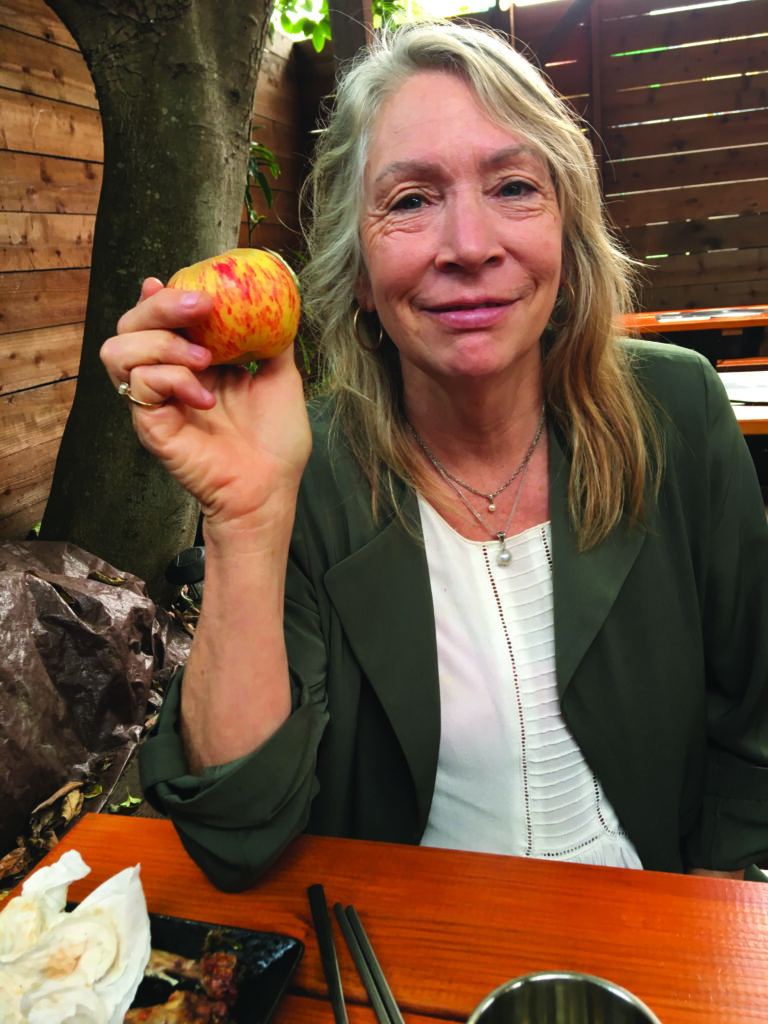
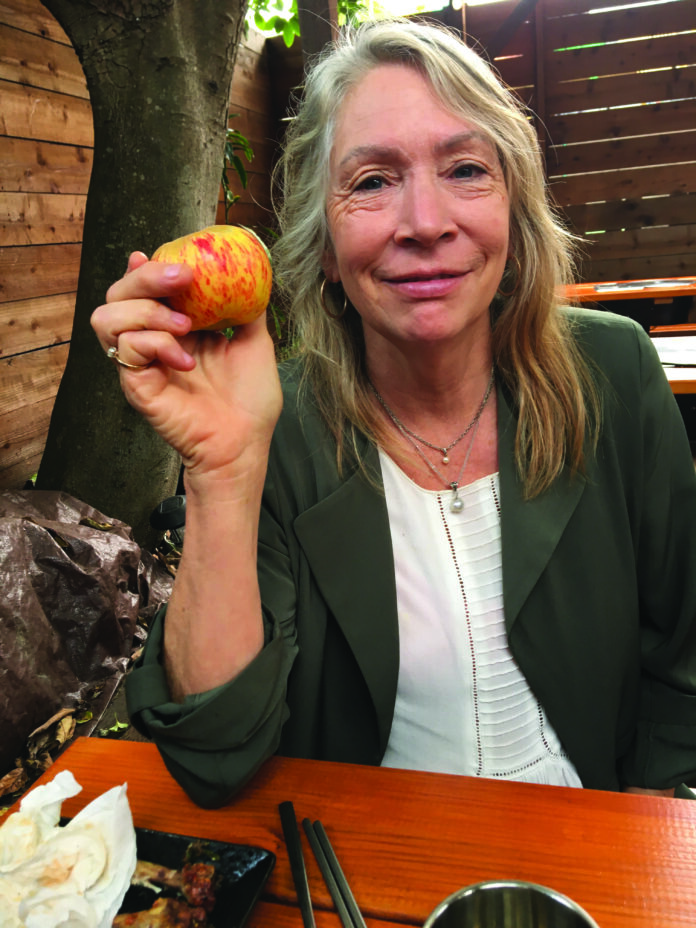
“I was happy to be able to make half of what I would normally make during the holidays,” says Shelby Neubauer, the owner of Sparrow Hair in downtown Santa Rosa.

Still, the most frustrating part of the most recent shutdown for many workers is that the state failed to prove that the beauty industry posed a greater risk than retail stores and shopping malls, many of which remained open throughout the holidays.

In a lawsuit filed Jan. 21 against Newsom and other state officials, the Professional Beauty Federation of California (PBFC) argues California singled out the industry because of its lack of lobbying power.

“The personal-services sectors are the quintessential small-business sectors,” PBFC attorney Fred Jones said in a recent phone call, “and yet, because we don’t have the same clout as Hollywood or big business, we have become the sacrificial lambs to the Covid gods.”

It’s a sacrifice borne disproportionately by minorities, he points out.

The state’s assiduous focus on salons and cosmetic services has hammered an industry composed overwhelmingly of women, immigrants and members of the LGBTQ community. Of PBFC’s 621,000 dues-paying licensees, Jones says, more than 80 percent are female and 75 percent are first-generation immigrants.

“This is the profession that this governor has sacrificed,” he says. “That’s not very politically correct, is it?”

Rachel De La Montanya, who currently works at Cheveux Studio in Corte Madera, says it was disheartening to see that many larger retailers like Nordstrom and Sephora were allowed to remain open while small businesses in the beauty industry, which follow stringent safety guidelines even in normal times, were restricted.

“This industry is made up of women who generally went into it so they could have some level of freedom to be able to make a living and provide for their family,” says De La Montanya. “The beauty of the industry is that it allows you to set your schedule and still make a decent living.”

In Jones’ telling, the industry’s financial woes began when Gov. Newsom blamed a Northern California nail salon for the first known case of community spread of the novel coronavirus. PBFC, reporters and other industry groups demanded data to support the assertion. State officials never provided that.

Newsom’s claim proved baseless. But the damage was done.

“What he didn’t realize was that he was throwing all this shade at our industry in the minds of Californians,” Jones says. “As a result, we’ve had a cumulative seven months of lockdowns. This is our third reopening after our third closure since March, and every time we reopen, there are less clients coming back because they’re picking up the message that this industry is unsafe.”

While state officials and their local counterparts repeated the narrative of the dangers inherent to salons, research by the U.S. Centers for Disease Control and Prevention (CDC) suggested otherwise. The study published last summer found face masks may have prevented a pair of Covid-positive Missouri hairstylists from spreading the virus to as many as 140 clients.

Missouri’s Springfield-Greene County Health Department, which led the investigation, determined that policies requiring people to cover mouths and noses and the salon’s strict sanitation policies played a substantial role in curbing what could have been a huge outbreak.

Jen Erickson, founder and CEO of Silicon Valley Apprenticeship Barbering/Cosmetology and a 25-year industry veteran, says clients should rest assured that salons are safe to patronize. Passing the California Board of Barbering and Cosmetology test requires 1,600 class-hours—about 1,000 more than needed to become a cop—and fluency in sterilization and cross-contamination.

“With the pandemic,” she says, “a lot of us even went above and beyond, retrofitting salons to make things safe, spending money even though we weren’t making any.”

For the first time, Erickson says, she took out a business loan—a 30-year mortgage to sustain her training program.

“I’m not making any money right now,” she says. “I’m trying to work with students to find them other places to work, but it’s tough. Salons have shut down. I’ve lost apprentices—almost a third of them got pregnant and quit. And me, myself, I’m at a standstill.”

If public health officials produced data that showed salons as high-risk for coronavirus outbreaks, that would be one thing, Jones says. But he has yet to see any from the state or local governments. What few numbers are available seem to back his suspicions about the shutdowns being less science-and-data-based than Newsom lets on.

Statistics released last month by New York Gov. Andrew Cuomo’s office show that 74 percent of Covid cases for which there’s contact-tracing data available were attributed to household gatherings. Bars and restaurants accounted for just 1.43 percent of the spread. Salons and personal care services, just 0.14 percent.

Jones wants to see similar California data.

The PBFC lawsuit, which includes restaurant owners as plaintiffs, argues that lobbying money influenced the state’s double standard for certain industries. When California initially defined what work it considered essential enough to continue at the start of the pandemic, it excluded Hollywood studios. A month later, the lawsuit points out, a new state order deemed “the entertainment industries, studios, and other related establishments” to be essential “provided they follow Covid-19 public health guidance around physical distancing.”

Newsom’s press secretary, Daniel Lopez, says the governor stands by the state’s public health mandates.

“We will vigorously defend against any lawsuit challenging public health orders implemented to preserve the ability of our medical system to provide needed care to all Californians,” he says. “We are confident the court will uphold the order, as have numerous courts that have recently considered similar challenges.”

Additional reporting by Will Carruthers.

Heart and ‘Soul’: Marcus Shelby’s journeys through Healdsburg, Pixar and beyond

Near the start of Disney/Pixar’s latest animated film Soul, the character Ray Gardner encourages his son to appreciate live music: “Black improvisational music,” he says. “It’s one of our great contributions to American culture. At least give it a chance, Joey!”

“This is where it all started! This is the moment where I fell in love with jazz!” says actor Jamie Foxx, playing the now-grown-up Joe Gardner.

It’s a small moment in a big film. Soul was one of the two most-watched motion pictures across streaming platforms in December 2020, and its box office earnings hover around $7.5 million. Six seconds, the time it takes Ray Gardner to change his son’s life, isn’t long. But Nielsen ratings are calculated in time spent, and Soul tops the most-watched list over the 2020 Christmas weekend: Americans watched Soul for over 1.66 billion minutes.

The voice of Ray Gardner is Bay Area musician, bandleader, composer and educator Marcus Shelby, who is also the artistic director of the Healdsburg Jazz Festival. For Shelby, the three lines are a cool moment in a big life.

On a cloudy day in early 2021, Shelby has just wrapped up the Festival’s annual Dr. Martin Luther King Jr. Day performances. In the event video, he appears a calm, commanding presence, watchful from behind a flawlessly polished, mahogany-hued standup bass. Over the phone, he says he got the role the old-fashioned way: a Pixar casting director called him. Having done a little voice acting in Los Angeles in the past, he was ready, if a bit baffled. Why him?

“There’s 15,000 voice actors between here and New York, right?” he asks.

But off he went, to Emeryville.

“I was not improvising,” Shelby says, laughing, but also serious. “I went in there thinking about my colleagues, about Margo and Rhodessa [Hall and Jones, who also appear in Soul] and Intersection for the Arts and Campo Santo and Sean San Jose,” he says, ticking off Bay Area giants of independent theater.

The character’s lines resonated with Shelby immediately. “This is a natural way I’m always talking to kids anyway,” he says. “And I refuse to just call myself a jazz musician, or even contain music that way anymore. I think the great Black musicians in our music, that created this—they never adhered to this nomenclature. Charles Mingus, Nina Simone, even Duke Ellington—did they have to?” he asks.

As for his own kids, “Have I tried to convince them to like jazz? No, no. I mean, yeah.” Shelby’s more interested in what he learns from his two daughters, 11 and 18, than in what he’s taught them. The eldest studies “something they call” World Jazz at UCLA, he says, and she loves hip-hop and pop, and makes him playlists. “My 11-year-old is part of the TikTok nation,” he says. She likes Billie Eilish, ABBA and the Hamilton soundtrack. He values musical conversation with both of them, profoundly.

“If you work with kids, you want to be able to understand how they’re expressing themselves,” he says. “And perhaps how to meet them there. Music carries so much information and communication, I don’t think it hurts to get to know it a little better.” He laughs. “Not saying you have to like it.”

His youngest can’t stop watching Soul. “I think she’s seen it five times,” Shelby says. “I’ve only seen it once!” 

Skylaer Palacios is an expert on Healdsburg. She grew up there, lives there, won the Miss Sonoma County pageant and is the first Latinx and the first Black person to serve as City Councilmember. She has stories. Among them is a vivid memory of the Healdsburg Jazz Festival’s programming from her first year in junior high school.

“They came to the Raven theater, and they did a show, and some kids got to hold instruments or play instruments onstage,” she says by phone.

“I remember, to this day, someone talking about rhythm & blues. And they told us what the blues was, and how most music comes from that form of blues. And that’s stayed with me,” she says. Her voice sounds every bit as young as her 25 years—sweet, yet steady and confident. 

“On a cultural level, I also connected with it, being the only ambiguous, and usually, the only Black student in my grade. There was a certain sense of ‘This is a part of me,’” she says. “I was probably 12 years old.” The music history she learned through the Healdsburg Jazz Festival stayed relevant through college, she says, and remains important to her as a musician herself.

As Councilmember, Palacios has worked with Shelby (she appeared in the Healdsberg Jazz Festival’s MLK Jr. Day show) and recounted her memory to him. His response? “That was probably me up there!” Palacios was shocked, but the now-artistic director developed many of the festival’s programs, and has been part of them for years—standing on the Raven theater stage, metaphorically encouraging young listeners to “At least give it a chance.” 

Healdsburg Mayor Evelyn Mitchell headed home from Santa Rosa one afternoon in late January, and took a small detour.

“I don’t have to go through downtown to get to my house, but I drove through downtown on purpose to see what it looked like,” she says over the phone, describing the pandemic-induced emptiness of the town’s historic plaza. The tables in the rain, the closed umbrellas.

Not one to be kept down by a mere virus, she begins speaking about the Jazz Festival cheerfully and in the present tense. “It’s a great opportunity for all of us to hear music, but also to get educated on jazz, and the African American community’s role in jazz, and the history of it.”

Like all mayors, she’s also the Mayor of Boostertown.

“Plus, it brings a lot of people to our community; we’re a tourist-based town,” she says. “It’s a vibrant, exciting time when it’s going on!” She’s aware, as all Healdsburgers seem to be, that the festival’s previous artistic director, Jessica Felix, was greatly beloved.

“Jessica’s shoes are big shoes to fill,” she says. “But I think she’s really laid such a great foundation for [Shelby] to pick it up and create a little more innovation—he’s integrating some poetry and whatnot; it’s a nice, natural progression. He’s doing great!” 

“It’s interesting: My relationship with Healdsburg goes back to the ’80s,” Shelby says. He talks about his Sacramento-area high school years; they were lean times. “We never went anywhere. Never. Our parents didn’t have money to travel.” The Highland High basketball team, however, played tournaments for two years running, tournaments held “in, of all places, Healdsburg.”

“There would be families in Healdsburg that would volunteer to put up this basically all-Black basketball team to be part of this tournament,” he says. “So I always had this amazing, welcoming memory of this place. We looked forward to this trip, when we got to go to Healdsburg!”

He doesn’t discount or ignore the racial inequities or the problems the town has had, notoriously, recently.

“I haven’t had any problems or issues or incidences,” he says. “Not that they don’t exist.” Characteristically, he’s interested in spinning the issue into ways he can serve the community through art, and launches into a detailed set of plans for the future of the Healdsburg Jazz Festival. They will continue with the innovations the mayor mentioned, it seems, and with a focus on the local Latinx community and its inherent musical possibilities. How can the festival be an artistic voice, and an extension of the often-overlooked roughly 30 percent of the town? He lists cumbia, Afro-Puerto Rican forms, Afro-Brazilian music, mariachi and more.

“In a community that diverse and large, in Healdsburg, it can play out in so many different ways,” he says. “With just a little consciousness in how we communicate—by translating our information into Spanish, and just being real intentional in our programming. And we’ve already started that process.”

He goes on outlining plans: artists-in-residence, the all-yearification of Black History Month and his own intention to become ever more part of the fabric of the community. It’s as if he’s speaking to the town that has welcomed him, challenging it to see things in a new way, to follow his lead and to appreciate new things about itself and others. “At least give it a chance, Joey!”

Ultimately, Black improvisational music has found a warm welcome in Healdsburg. Thanks to Marcus Shelby and to a humble, earthy Northern California town, art continues to be given more than just a chance.

Public Murals Hit the Streets in Sonoma County

Because he wrote plays, Shakespeare thought all the world was a stage. Had he been a painter, the bard might have said, “all the world’s a canvas.”

In the North Bay, local and visiting artists alike are doing their best to make the region’s cities and towns feel like canvases with a slew of visually appealing murals that are transforming industrial spaces, shops and neighborhood spots into community-minded outdoor galleries.

Now, with the pandemic keeping indoor gatherings away, the University Art Gallery at Sonoma State University is celebrating local art in public places with its new virtual exhibition, “Spray It Like You Mean It: Contemporary Murals of Sonoma County.”

The online collection of images features several large-scale works that adorn silos, fences and parking garages. Some of the featured murals are well known to commuters, some are hidden gems tucked away in alleys.

“I kept driving around Santa Rosa and seeing all these different murals, and new murals in my neighborhood,” Carla Stone, University Art Gallery exhibitions coordinator, says. “Once you start noticing them, you notice them everywhere.”

Toying around with the idea of a virtual mural exhibit, Stone reached out to Sonoma County–based arts advocate Spring Maxfield to curate the collection.

“Murals once were seen as a double-edged sword, either identifying blighted or down-market communities or as a harbinger of potential gentrification to come,” Maxfield writes in a statement accompanying the exhibit. “These ideas have changed, and our region is now embracing murals for the many benefits they provide to communities.”

The benefits of murals in public spaces extend beyond visually enhancing a drab-looking wall or landmark. The array of murals in Sonoma County highlight the vibrant cultures that live here, speak about social issues that matter to locals, and bolster the community’s interest and support of overlooked neighborhoods.

Selected murals in the exhibit include Good vs. Evil, by artist Joshua Lawyer and collaborators MJ Lindo and Hepos. Located on Sebastopol Road in the Roseland Village, the piece depicts a “David versus Goliath”–type standoff between a young indigenous woman and a hulking luchador figure. Also in Santa Rosa, Nameless (pictured) and an adjoining mural, Beauty Not Forgotten. The Pomo People, inject natural beauty into the downtown neighborhood and honor Sonoma County’s native Pomo people.

The online exhibit also features images of the whimsically abstract Keller Street Parking Garage Installation in Petaluma and The Lady of Life and Death/Vida de la Muerte mural in Boyes Hot Springs, which was created by artist Chor Boogie and nearly 20 local teens in 2018.

“Spray It Like You Mean It” is the fourth exhibition the University Art Gallery has hosted online since the beginning of the fall semester last September, and the first that takes advantage of its digital format by presenting a show that could never fit inside the gallery’s walls.

“It was a big adjustment to wrap my head around how you hang art if you can’t hang art,” Stone says. “In the fall we were finding our way, but now I think we are finding our groove.”

“Spray It Like You Mean It” can be viewed at artgallery.sonoma.edu.

Open Mic: Michael Krasny Signs Off

It is a rarity these days, to find someone who has devoted decades to several professions concurrently. Radio host, college professor, author and public speaker Michael Krasny (who is retiring as host of Forum on KQED Public Radio) has been blessed—and has blessed us—with his genuine curiosity to explore and educate the general public through his interviews and conversations with program guests.

His far-reaching knowledge on many subjects and insightful questions have encouraged his listeners over the years to quietly pay attention, and in the process, become better informed. It has been one of his defining contributions to us.

We have been privileged to start our mornings listening to a marvelous variety of topics discussed. To say he has developed a large following would be an understatement—he has, for lack of a better term, become an institution or radio personality with Forum (characterizations he would humbly disavow, I’m sure!). At the very least, he has provided a forum where ideas and views can be exchanged.

Being a boomer, television was the medium I grew up with, but radio was always, and still is, a presence in my life. And I realized that the tone and tenor of a voice could draw in my attention. Michael’s voice was steady—never shrill or angry or mocking; his demeanor, respectful and calm. He created a safe and sane environment for dialogue with his guests, and always invited his listeners to participate. The discussions were always civil and erudite (No small accomplishment these days!).

The San Francisco Bay Area and its outer environs will be losing a voice that has brought incalculable pleasure to the many listeners who chose to tune in these many years.

Michael’s personal vision, along with his staff, have provided an educational platform that has encompassed the political, social, cultural and artistic worlds, we live in—and tried to make sense of it all.

Our mornings will not be the same without you! You will be missed.

Thank you. 

E. G. Singer lives in Santa Rosa. Michael Krasny’s final broadcast as host of KQED’s “Forum” is Friday, Feb. 12, at 9am. Tune in at KQED Public Radio 88.5 FM or stream live at kqed.org.
To have your topical essay of 350 words considered for publication, write to us at op*****@******an.com.

Letters to the Editor: Support the People

For the People

For far too long, inequity has corrupted our democracy. It is time for all Americans to stand up and demand an expansion of voting rights, limits to big money in politics and accountability by ending gerrymandering. This is why I support the For The People Act, also known as H.R. 1.

The For The People Act was recently reintroduced in the House of Representatives as a sweeping bill that provides for reform in our electoral process; including redistricting, ethics reform, campaign finance and voting rights. For the last two years, Mitch McConnell blocked a vote on H.R. 1 in the Senate.

We need a government that’s fair—where representatives listen to their constituents. The For the People Act would help make that a reality. I believe it’s crucial to restore accountability in our democracy. I support this bill because it would provide much-needed democracy reform.

Now is the time to reshape our democracy into one that is truly of, for and by the people. That is why I’m asking my fellow citizens to contact their representatives and demand they vote “Yes” on the For The People Act.

Tracey Turner, Marin County

Sonnet Bloom

There is a THING out there

a thing you don’t want to bring home

so you stay in place

and erase your face

with a mask and a flask

you zoom till you fume

quickstep from room to room

waltz with a broom

You wish “it” would bloom

into healthy flesh and blood,

a flood of emotions

oceans of devotions,

so you can touch like it’s 1999

and dance like it’s 1959

Selena Anne Shephard, Marin County

Sonoma Supervisors Discuss Next Steps in Vaccine Rollouts

By Bay City News Service

The Sonoma County Board of Supervisors on Tuesday discussed the county’s Covid-19 vaccine rollout after recent confusion over vaccination appointments made online.

Urmila Shende, Sonoma County’s Covid-19 vaccine chief, fielded questions from the supervisors about the vaccine rollout and how the county can best reduce the spread of the virus and follow public health directives.

The supervisors also aired their frustrations with the vaccine distribution, and floated ideas about what they could potentially do to mitigate the effects of Covid-19 on Sonoma County.

Last week, a vaccination clinic in Rohnert Park meant for people 75 and older had thousands of people younger than that sign up online for appointments after a link for the OptumServe scheduling website was shared on social media. The county canceled the appointments for those under 75 and has since announced several additional clinics for people 75 and older.

“We are looking to partner with different groups within the community that are working on communications, to try and reach out and to have both public messaging as well as targeted meetings, conversations, lunch chats, that kind of thing to try and explain to people [the science behind the vaccine],” Shende said. 

Shende also noted that Sonoma County receives, on average, 6,500 doses of the coronavirus vaccine from the state per week, but that based on the supply, it’s difficult to predict how much vaccine they’ll receive each week.

As of Monday, Sonoma County has reported 26,189 positive coronavirus tests and 265 deaths, according to county data. 45,681 vaccine doses have been administered. 

However, Sonoma County’s current rate of vaccination is far from ideal, according to Supervisor Lynda Hopkins.

“If we were to vaccinate every single person in Sonoma County, half a million people, multiply that by two because there are two doses, that’s a million. If you’re looking at our current rate of vaccination, we’re talking about three years,” Hopkins said. 

Responding to Hopkins’ concerns, Shende was optimistic that the next two to three months will see a dramatic increase in vaccine production and a more coordinated federal response to the pandemic. 

The next phase of the vaccine rollout will include education and childcare providers, in addition to essential workers in the food and agriculture sectors. 

Supervisor Chris Coursey mentioned concerns over the Johnson & Johnson vaccine, which is yet to be released, because its effectiveness hovers around 66 percent, whereas the Moderna and Pfizer vaccines currently in use are 95 percent effective. However, Shende noted that because all of the vaccines are so effective, there is no reason to prefer one over another. 

The supervisors also discussed the technical issues many residents were experiencing with the OptumServe vaccine appointment website and noted that people should call (877) 218-0381 if they’re experiencing technical difficulties. 

Near the tail end of their discussion about the vaccine rollout, supervisors discussed what they need to do better moving forward, and the pressure they face from various groups each jockeying to get a vaccine sooner.

“I would love to just blame the governor, the federal government for all of that. But I think we all share the responsibility of providing vaccines safely, and in a prioritized way,” said Supervisor Susan Gorin.

“Look at the folks who are most vulnerable in our communities, prioritize them first, then the rest of us will wait, I’m confident that I will receive my vaccine in a month or two or three,” she added.

Sonoma County Mails Ballots for March Special Election

By Bay City News Service

Sonoma County began sending out ballots this week for two special elections taking place in March on tax measures in the western part of the county.

The two proposed taxes being voted on in the March 2 elections are Measure A, a $48 parcel tax annually for three years to support high schools in the West Sonoma County Union High School District, and Measure B, a 4 percent transient occupancy tax for hotel and short-term rentals within that school district and the Bodega Bay Fire Protection District. 

Registered voters who elected to receive their ballots in the mail and reside in the districts should expect to receive their ballots within five to 10 days.  

For voters who want to receive their ballots sooner, they can pick it up by coming to the Sonoma County Registrar of Voters Office located at 435 Fiscal Drive in Santa Rosa.

For those who don’t receive their ballot or need a replacement, they have until Feb. 23 to request that a ballot be mailed to them. After that, requests for vote-by-mail ballots must be made in person at the Registrar of Voters Office.

The office is open from 8am to 5pm Mondays through Fridays excluding Feb. 12 and 15. Residents should wear a mask and practice social distancing.  

Residents may direct questions about the March 2 special elections to the Registrar of Voters Office at (707) 565-6800 or ro******@***********ty.org.

Newsom Signs Bill Extending State Eviction Protections Through June 30

Gov. Gavin Newsom signed a bill extending the state’s coronavirus-related eviction moratorium Friday, keeping protections intact through June 30.

Newsom’s signing of Senate Bill 91 comes two days before protections would have ended statewide, triggering a wave of evictions in counties that had not passed their own moratoriums. 

Tenants are required to pay at least 25 percent of their monthly rent to benefit from the moratorium and also have a minimum of 15 days to provide proof of financial hardship to remain protected from eviction.

Newsom said he was “not naive” in acknowledging that SB 91 would not be a panacea for the state’s renters struggling to keep pace with their bills amid the pandemic.

“We recognize we have to do more,” Newsom said Friday during the signing ceremony. “And we have to continue to support those most vulnerable in this pandemic-induced economy, in the recession that we continue to work our way through. 

The bill also established the State Rental Assistance Program, utilizing the $2.6 billion in aid for renters the state received from the latest federal stimulus bill.

Newsom said Monday during a briefing on the pandemic that the state will use the federal funding to pay up to 80 percent of low-income residents’ outstanding back rent to landlords, while the remaining 20 percent will be forgiven. 

That funding will be targeted at renters who make less than 50 percent of the area median income for their local jurisdiction, with the potential to expand relief to renters making less than 80 percent of their AMI.

SB 91 represents “the nation’s strongest rental protections,” Newsom said. “And that’s a point of pride at this moment in our nation’s history, certainly in the history of this state.”

State legislators passed the original eviction moratorium, co-authored by Assemblyman David Chiu, D-San Francisco, in late August after the California Judicial Council voted to rescind the statewide ban on evictions during the pandemic that it had adopted in April.

At that time, Chiu characterized the moratorium bill, Assembly Bill 3088, as necessary but not perfect, and not as sweeping as his original proposal, AB 1436, which would have prohibited evictions for missed rent payments until 90 days after the state’s emergency order is lifted or April 1, 2021, whichever came first.

AB 1436 also would have granted tenants an additional 12 months after that to pay back rent before a property owner could take them to court.

“I expect there will be a need to revisit this legislation to address gaps and provide relief to additional tenants,” Chiu said Monday in a statement. 

Shortly after AB 3088’s signing, tenant rights activists criticized the bill as being too conciliatory toward landlords and property managers and failing to forgive outstanding rent payments that had piled up for struggling tenants. 

SB 91 has spurred similar disapproval from activists, who note that the State Rental Assistance Program is strictly voluntary, allowing landlords and property managers to continue asking tenants for back rent rather than accessing relief funds from the state.

Activists plan to hold a demonstration Friday at Oakland’s Elihu M. Harris State Building to chide state officials, call for stronger protections and hold a candlelight vigil for tenants at risk of eviction and lawsuits over back rent. 

Oakland City Councilwoman Carroll Fife is expected to attend. 

“It is imperative that we do the work to protect everyone with this federal stimulus whether the landlord lobby likes it or not,” Fife said in a statement. 

The demonstration and vigil are expected to begin at 5:45pm, according to organizers.

Stay Online with Weekend of Virtual Events

Even as vaccines start rolling out in the North Bay, the Covid-19 pandemic continues to halt in-person gatherings in 2021.

Due to social-distancing, several North Bay organizations are hosting online events boasting music, theater and other family-friendly delights this weekend. Here’s a round up of what’s worth looking forward to.

Virtual Film

Each year, countries from across the globe submit their best films for consideration in the Academy Awards Best International Feature Film category. For the last 17 years, the California Film Institute has screened many of these acclaimed films in “For Your Consideration,” a screening series that normally takes place at the Smith Rafael Film Center in San Rafael. Due to the pandemic, this year’s series screens directly to the audience at home, with online access to a selection of more than two-dozen movies. “For Your Consideration” is live now and runs virtually through Feb. 11. Single tickets, $7–$12; all-access pass, $55–$75. Cafilm.org.

Virtual Theater

Years before the Covid-19 pandemic, award-winning virologist Dr. Nathan Wolfe proposed a then-ignored plan to protect the economy from pandemics. Now, Wolfe’s story is told in a new one-man show. “The Catastrophist” was recently written by Wolfe’s wife, acclaimed playwright Lauren Gunderson, and it’s currently debuting in a world premiere digital production starring William DeMeritt (Death of the Last Black Man in the Whole World, HBO’s The Normal Heart) and helmed by Marin Theatre Company in collaboration with Washington, D.C.–based company Round House Theatre. The online production is available to stream through Feb. 28. $30. Marintheatre.org.

Virtual Concerts

Each summer, world-renowned classical ensembles and soloists come to North Bay for the Music in the Vineyards chamber music festival. This past summer, the festival moved online due to the pandemic, and organizers are keeping the music going into the winter for the first time in the festival’s history with this weekend’s virtual winter festival. The online affair features four string quartets performing music that ranges from Beethoven to traditional Scottish folk tunes. The program also features a family concert that acts as an introduction to string quartets for young ones. Tune in on Friday and Saturday, Jan. 29–30. Free. Musicinthevineyards.org.

The next day, Jan. 31, the Napa Valley Music Associates presents their first virtual concert. The group is celebrating its 26th annual “Mostly Mozart in Napa Valley” on Youtube. The online showcase will include works by Mozart, Schubert, Bach and Beethoven as performed by featured guest artists such as vocalists Emily Thebaut and Dr. Christina Howell, as well as guitarist Dr. George England and pianist Aaron Petit. Tune in on Sunday, Jan. 31, at 2:30pm. Free; $25 suggested donation. Napavalleymusicassociates.org.

Virtual Reading

Lured by the myths and mysteries of the American West, author and historian Sherry L. Smith writes about the region’s indigenous people and contemporary characters. This week, Smith reads from and talks about her new book, Bohemians West: Free Love, Family & Radicals in Twentieth Century America, as part of Book Passage’s ongoing online Conversations With Authors series. The book examines a particular moment in American history as told through letters between poets Sara Bard Field and Charles Erskine Scott Wood, and Smith appears in a discussion with Peter Coyote on Saturday, Jan. 30, at 4pm. Free. Bookpassage.com.

Virtual Concert

Renowned trumpeter and composer Wynton Marsalis (pictured) spent much of 2020 writing a new instrumental work in response to the events that unfolded over the last year. The Democracy! Suite is an inspiring reflection on the political, economic and social issues that dominated headlines all year. Fear not, The Democracy! Suite also carries an uplifting message of how the country can collectively create a better future. Marsalis leads the Jazz at Lincoln Center Orchestra Septet in a virtual performance of The Democracy! Suite, via the Green Music Center, on Saturday, Jan. 30. 7pm. $10 and up. Gmc.sonoma.edu.

Napa County Man Charged With Possession of 5 ‘Fully Operational’ Pipe Bombs

By Bay City News Service

A Napa County man was charged Tuesday with violations of federal weapons laws after investigators discovered a trove of pipe bombs and firearms at his home and business.

Ian Benjamin Rogers, 44, was found in possession of five pipe bombs, 49 firearms, and two dozen ammunition boxes containing thousands of rounds, according to an affidavit filed by FBI Special Agent Stephanie Minor. Investigators also found materials “that could be used to manufacture explosive devices” and a copy of “The Anarchist Cookbook.”

Minor’s affidavit stated that she is assigned to the Domestic Terrorism Squad of the FBI’s San Francisco Field Office.

“Several of the firearms, including what appears to be a kit-built replica MG-42 belt-fed machine gun, appear to be capable of firing fully automatic,” according to the allegations in the affidavit.

Investigators recovered text messages from Rogers’ phone that allegedly reflect his belief that “Donald Trump won the 2020 presidential election and [Rogers’] intent to attack Democrats and places associated with Democrats in an effort to ensure Trump remained in office.”

The affidavit alleged that Rogers displayed a decal on his website proclaiming his membership in a group referred to as “Three Percenters.” Minor said the term is associated with “people who ascribe to extreme anti-government, pro-gun beliefs … a reference to the belief that only three percent of American colonists fought against the British in the American Revolution.” 

The affidavit contained a photo of a so-called “White Privilege Card” found by investigators that stated “Trumps Everything.” The cardholder’s name is shown to be “Scott Free.”

The affidavit quoted Jan. 10 text messages recovered from Rogers’ phone in which he allegedly texted, “I hope 45 goes to war if he doesn’t I will,”  “I want to blow up a democrat building bad,” and “The democrats need to pay.”

Minor stated that based on her investigation and training, those texts and others evidenced “Rogers’ belief that Trump (“45″) actually won the presidential election and should ‘go to war’ to ensure he remained in power.”

She believes that the messages show “Rogers’ intent to engage in acts of violence himself locally if there was not an organized ‘war’ to prevent Joe Biden from assuming the presidency.”

Citing texts that refer to a “sac office first target” and to “bird and face,” the agent alleged that Rogers meant “their first target should be the offices of California Governor Gavin Newsom in Sacramento” and that the offices of Twitter (“bird”) and Facebook (“face”) would be next because they locked Trump’s accounts to prevent him from sending messages on those platforms.

The affidavit reports that a bomb technician associated with the Napa County Sheriff’s Office examined the seized pipe bombs and preliminarily determined them to be “fully operational”.

Rogers was arrested Jan. 15 and according to a statement from the U.S. Attorney’s Office in San Francisco, he is being “held in state custody in lieu of a $5 million bail as he awaits a preliminary hearing.”

The weapons offenses carry a maximum penalty of 10 years imprisonment and a $10,000 fine, according to the federal complaint.

Salons, Personal Care Services Got a Bad Rap in Pandemic, Industry Members Say

Shelby Neubauer Santa Rosa, CA
Workers in the beauty industry generally usually celebrate the holidays with more work. In a regular year, a surge of bookings can double or triple the income of a hairstylist. But, in 2020, the most glamorous time of year—a mainstay of the $50 billion beauty industry—lost its verve when California ordered another lockdown in early December, slashing earnings for hairstylists,...

Heart and ‘Soul’: Marcus Shelby’s journeys through Healdsburg, Pixar and beyond

Marcus Shelby
Near the start of Disney/Pixar’s latest animated film Soul, the character Ray Gardner encourages his son to appreciate live music: “Black improvisational music,” he says. “It’s one of our great contributions to American culture. At least give it a chance, Joey!” “This is where it all started! This is the moment where I fell in love with jazz!” says actor...

Public Murals Hit the Streets in Sonoma County

Because he wrote plays, Shakespeare thought all the world was a stage. Had he been a painter, the bard might have said, “all the world’s a canvas.” In the North Bay, local and visiting artists alike are doing their best to make the region’s cities and towns feel like canvases with a slew of visually appealing murals that are transforming...

Open Mic: Michael Krasny Signs Off

It is a rarity these days, to find someone who has devoted decades to several professions concurrently. Radio host, college professor, author and public speaker Michael Krasny (who is retiring as host of Forum on KQED Public Radio) has been blessed—and has blessed us—with his genuine curiosity to explore and educate the general public through his interviews and conversations...

Letters to the Editor: Support the People

For the People For far too long, inequity has corrupted our democracy. It is time for all Americans to stand up and demand an expansion of voting rights, limits to big money in politics and accountability by ending gerrymandering. This is why I support the For The People Act, also known as H.R. 1. The For The People Act was recently...

Sonoma Supervisors Discuss Next Steps in Vaccine Rollouts

Testing Stanford Lab Covid-19
By Bay City News Service The Sonoma County Board of Supervisors on Tuesday discussed the county's Covid-19 vaccine rollout after recent confusion over vaccination appointments made online. Urmila Shende, Sonoma County's Covid-19 vaccine chief, fielded questions from the supervisors about the vaccine rollout and how the county can best reduce the spread of the virus and follow public health directives. The supervisors...

Sonoma County Mails Ballots for March Special Election

By Bay City News Service Sonoma County began sending out ballots this week for two special elections taking place in March on tax measures in the western part of the county. The two proposed taxes being voted on in the March 2 elections are Measure A, a $48 parcel tax annually for three years to support high schools in the West...

Newsom Signs Bill Extending State Eviction Protections Through June 30

Gavin Newsom California Democratic Party 2019
Gov. Gavin Newsom signed a bill extending the state's coronavirus-related eviction moratorium Friday, keeping protections intact through June 30. Newsom's signing of Senate Bill 91 comes two days before protections would have ended statewide, triggering a wave of evictions in counties that had not passed their own moratoriums.  Tenants are required to pay at least 25 percent of their monthly rent...

Stay Online with Weekend of Virtual Events

Even as vaccines start rolling out in the North Bay, the Covid-19 pandemic continues to halt in-person gatherings in 2021. Due to social-distancing, several North Bay organizations are hosting online events boasting music, theater and other family-friendly delights this weekend. Here’s a round up of what’s worth looking forward to. Virtual Film Each year, countries from across the globe submit their best...

Napa County Man Charged With Possession of 5 ‘Fully Operational’ Pipe Bombs

By Bay City News Service A Napa County man was charged Tuesday with violations of federal weapons laws after investigators discovered a trove of pipe bombs and firearms at his home and business. Ian Benjamin Rogers, 44, was found in possession of five pipe bombs, 49 firearms, and two dozen ammunition boxes containing thousands of rounds, according to an affidavit filed...
11,084FansLike
4,606FollowersFollow
6,928FollowersFollow