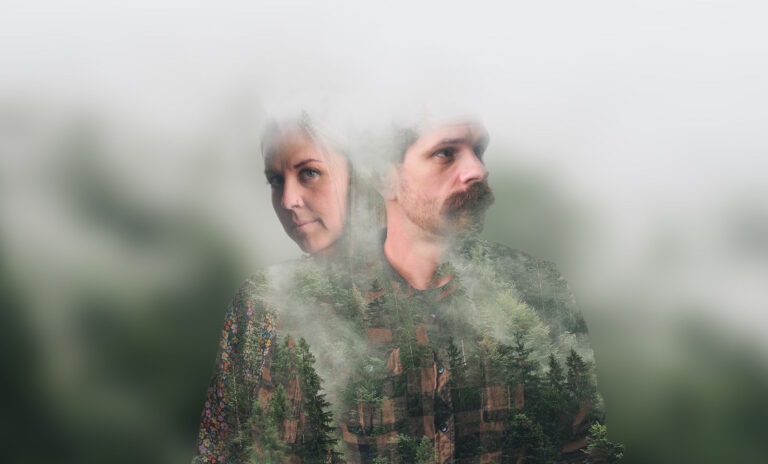
Summer is “wedding season,” but why feel left out when you can simply marry yourself? That probably sounds like something a narcissistic celebrity would say, but we in the spirit world know that even the most trivial notions reveal deep cosmic secrets.
The inner union between soul and spirit is an idea found in many of the world’s traditions, including high magic, Hinduism and Native American mythologies. In Greek it is known as the hieros gamos, or sacred marriage, and forms the chief aim of alchemy, whose magnum opus is the conjunction of opposites symbolized by the sun and moon. Countless woodcuts from the Medieval and Renaissance periods depict a disturbing but fascinating mystical-erotic union of king and queen, who are royal because this path is trod by the few, and brother and sister because they share the same Father.
If you suffer from frustrating inner conflict, then you probably need to officiate over an inner marriage. The hieros gamos bequeaths a four-dimensional consciousness that transcends the masculine-feminine binary, with one reborn as the Hermetic hermaphrodite, child of Hermes and Aphrodite. As one alchemical text puts it, “I lost myself, I found myself, I mated with myself, I gave birth to myself, I am myself.”
Jungian psychology refers to the process of integrating opposite-sex characteristics as individuation, with the result that ones becomes a Self with a capital S. Spiritual seekers might call the process a return to the Primordial State of the original spiritual blueprint of Man—as in mankind—an androgynous being called in Gnosticism the Anthropos.
It was only after the descent into material form, or because of a “fall” from the spiritual Garden of Eden, that the sexes were divided into two, for purposes of reproduction. The quest for inner wholeness thus marks the journey back to the original state, and preparation for the real marriage, which is the soul’s brideship with its creator upon the completion of its earthly life.
It requires a long and arduous courtship to wed one’s mind-spirit-consciousness solar side with one’s feeling-intuitive-unconscious lunar side. It is also fraught with danger, as the ego feels deeply threatened and destabilized by the injection of opposite-gender content into consciousness with the goal of assimilating it. Not afraid? In the words of a big-eared little green sage, “You will be.”
But, if you succeed, you will be able to echo the words of Oscar Wilde, who famously quipped, “Love of oneself is the beginning of a lifelong romance.”
Christian Chensvold blogs about the wisdom tradition at trad-man.com and is available for astrological readings. Email ch*******@******an.com.
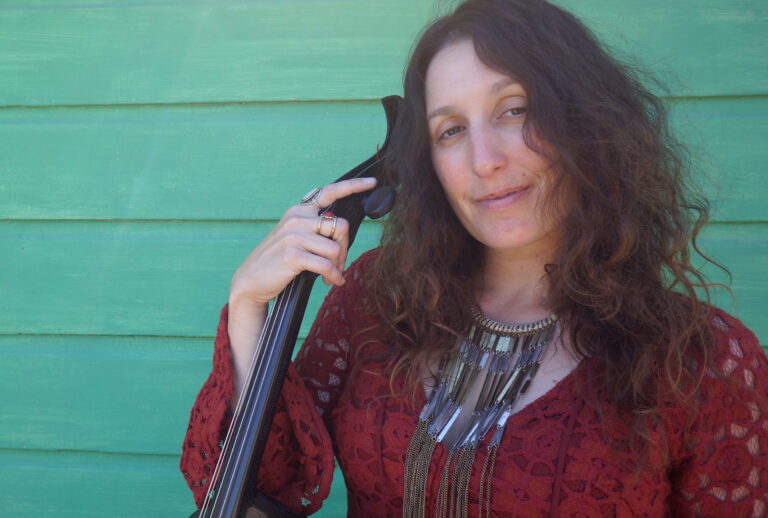
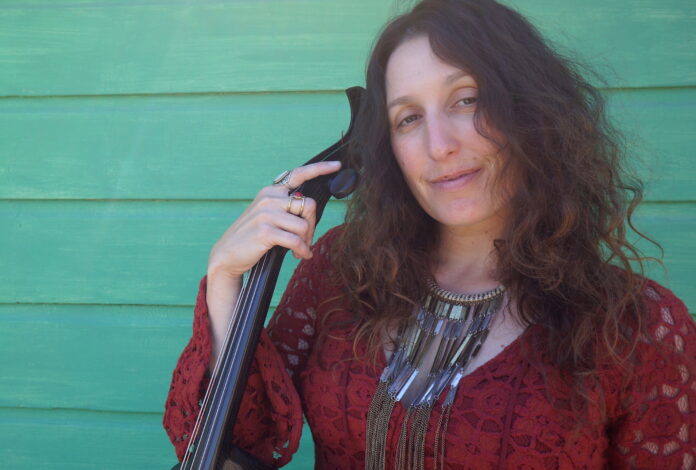
Before heading to Iceland for a tour later this month, acclaimed cellist Rebecca Roudman and her virtuosic bluegrass band Dirty Cello will play all around the North Bay this week. The band performs a concert in the park on Thursday, July 8, at Lyman Park, 1498 Main St., St. Helena. Following that, the band plays two sets on Friday, July 9, at HopMonk Tavern, 230 Petaluma Ave, Sebastopol. Next, Dirty Cello once again rocks outdoors with a concert on Sunday, July 11, at at Piccolo Pavilion in Menke Park, Redwood and Corte Madera Avenues, Corte Madera. Dirtycello.com/shows.
Sebastopol
Showing traditional, modern and functional art, Gallery 300 is reopening in the Barlow for its first show since the onset of the pandemic. “Through Her Eyes” is a multicultural women’s figurative show exploring all depictions of women, from artists with widely ranging experiences and styles. Co-curated by Jennifer Hirshfield, artist and owner of Gallery 300 and Santa Rosa-raised artist Maria De Los Angeles, “Through Her Eyes” opens with a reception on Thursday, July 8, at 6780 McKInley Street #130, Sebastopol. 5pm. The show runs through Aug. 12. gallery-300.com.
Santa Rosa
Man’s best friend will put on a show at the inaugural Wine Country Canine Fun Run. The fundraiser for Marin Humane will feature local pups racing against time—not each other—in groups of small, medium and large dogs, with special groups for puppies, senior dogs and dogs with disabilities, too. The daylong event will also feature a ceremony to honor first responders, live music, demonstrations and more. See dogs run on Saturday, July 10, at the Sonoma County Fairgrounds, 1350 Bennett Valley Rd., Santa Rosa. Gates open at 7:30am. Free admission, dog entry fee is $25 and race entry deadline is July 8. FastDogsUSA.com.
Napa
After missing a year due to the pandemic, Napa County Landmarks’ annual Riverfront Captains & Mansion District Walking Tour is back in town this weekend. Napa Mayor Scott Sedgley leads the walk around the town’s old Riverfront District down to the Napa Abajo East neighborhood on the Napa River. Along the way, Sedgley will point out the many historic homes from the 19th and early 20th centuries, and share the homes’ interesting stories and the neighborhood’s role in Napa’s past. The walking tour meets on Saturday, July 10, at 500 Main St., Napa. 10am. $5–$10. Napacountylandmarks.org.
Larkspur
The French cuisine connoisseurs at Left Bank Brasserie in Larkspur always celebrate the holidays with special menus and offerings, though the restaurant goes all-out each summer on the French holiday of Bastille Day. This year, Left Bank gets into the spirit of the day with rustic, authentic French additions to the restaurant’s lunch, dinner and cocktail menus, plus festive blue, blanc and rouge decorations, live music and other attractions ranging from a stilt walker and face painter to staff ensembles and costumes. Reserve a spot at the all-day celebration on Wednesday, July 14, at 507 Magnolia Ave., Larkspur. Leftbank.com.
Last Saturday at Acre Petaluma, over iced coffees and salmon toast, I had the pleasure of sitting down with Dr. Jim Matto-Shepard, psychologist, psychotherapist and licensed Soul Motion Conscious Dance teacher.
We discussed the properties and benefits of MDMA—a hot topic at the moment, as the DEA and FDA have begun to ease back on restrictions around the drug’s medical use, and we enter a sort of MDMA renaissance.
MDMA, also known as Ecstasy or Molly, was first developed in 1912 by German chemist Anton Kollisch, as a parent compound to a drug intended to control bleeding during medical procedures. Its psychedelic properties weren’t explored until the 1970s and early ’80s, when psychiatrists began to notice an enhanced capacity for communication in their patients who were under the influence of the drug.
At this time MDMA also became more common at parties and other recreational settings, and in 1985, despite numerous testimonies from psychiatrists and psychoanalysts—including Rick Doblin, the founder of the Multidisciplinary Association for Psychedelic Research (MAPS), who has spear-headed MDMA legalization and treatment—the DEA declared an emergency ban on the substance. MDMA is a Schedule 1 drug, meaning a substance with “no currently accepted medical use and a high potential for abuse.”
But circumstances are beginning to change. And this is where my conversation with Dr. Jim Matto-Shepard took off.
Matto-Shepard is one of the founders of Temenos Center for Integrative Psychotherapy in Petaluma. Temenos offers psychedelic assisted psychotherapy to people suffering from depression, PTSD and other psychological issues. In early 2020 Temenos was one of nine clinics in the country selected to do Expanded Access work with MDMA. Developed by Dr. Doblin and the staff of researchers, scientists and psychiatrists at MAPS, the Expanded Access program allows for the legal use and study of MDMA, as a treatment for patients suffering from PTSD who have been unresponsive to other forms of treatment. Since this approval, and in the wake of Covid, Temenos is gearing up to take referrals.
You may be wondering what “temenos” means. It’s a Greek word which refers to a piece of land dedicated to sacred use. Matto-Shepard and his colleagues chose it because the clinic provides a safe, sacred space in which to begin and fortify lasting trauma resolution and psychological evolution in its patients. The use of psychedelics—in this case, MDMA, though the clinic also works with ketamine—allows for a state of brain function from which the patient can engage with circumstances and memories negatively impacting their life, from an observational and self-empathetic space. Matto-Shepard explained the neurodynamics of an MDMA dose to me in this way:
“Essentially, the medicine calms the amygdala, which is your brain’s fight-or-flight center. A traumatized person essentially lives in the amygdala, in a perpetual state of fight or flight. It’s a crippling experience. So, MDMA quiets the amygdala, while amplifying the communication between the hippocampus, your memory and emotional regulation center, and your neocortex, where your brain processes language and general function. All this while increasing the production and release of oxytocin, often referred to as the ‘love hormone,’ which produces empathy, trust and indeed, love.”
From this brain state, a person can safely observe and analyze their circumstances, and begin to observe and resolve harmful neurological patterns. They put their brain into a state which allows them to begin rewriting its system of functioning. A great book on neurodynamics, by the way, is The Neuropsychology of Grace by Charlotte Tomaino, which affords amazing and super-digestible insight into brain function.
Matto-Shepard was quick to emphasize that the medicine itself is not the cure, but the thing that enables the patient to assess their state and address the immediate needs. From this place, they are then able to implement lasting change in their lives. I offered the analogy of shining a light into a closet that needs to be cleaned out, which he liked, but after our conversation I thought of a better example. MDMA works in the way that an anesthetic does: calming the brain enough to enable the reopening of an infected wound. Once opened and sterilized, the wound begins to heal itself, being now in optimal condition to do so.
MDMA, unlike most contemporary legal antidepressants, is not meant to be used perpetually. It is administered once-to-a-handful of times, in a moderated setting, in order to optimize neurological function. Once this process is initiated, like the healing wound, the brain works on its own, and patients need only assist the process, with the same TLC they would give a scraped knee or a broken arm. We know how to heal, but we still need the cast and the care, and MDMA allows the brain to move into that mode of function. No longer fighting or freezing, we can start actually being.
This MDMA revitalization is almost entirely thanks to MAPS. Doblin has advocated for the legalization and right to administer MDMA since the DEA-declared emergency ban in 1985. It’s taken 36 years, but clinics like Temenos—for a full list, visit the MAPS website—do finally have their green light to begin legally working with patients who fit the DEA outlined profile. At this point in legality only the aforementioned PTSD patient profile, unresponsive to all other treatment, qualifies for MDMA treatment, but hopefully within the next five to 10 years, MDMA-assisted therapy will become available to those of us experiencing other forms of acute and developmental trauma, without us having to first go through other, potentially less effective and certainly longer-term, avenues. Frankly, I hope this treatment will soon be available to everyone who feels called to participate in it.
Matto-Shepard and I also discussed my personal experiences with MDMA, of which I’ve had two.
The first time I used anything like MDMA I was 17 years old. It wasn’t pure—we called it Thizz. I had a boyfriend at the time who, one evening, asked if I wanted to try some. It came in the form of a little red pill with an alien face impressed upon it. I stared at that face for nearly 20 minutes before someone knocked loudly on the bathroom door—I was at a coffee shop. Without another thought, I popped it into my mouth and swallowed it.
It was an exceptional night. As the drug took hold, I remember my vision seeming to expand, my peripheral sight becoming sharper. The textures of clothing, the feeling of skin, the very act of drawing breath, felt better. I felt calmer than I had in a long time, and when I looked in the mirror, I saw a playful, joyful version of myself looking back at me. Everyone seemed illuminated, and I felt an expansive sense of love.
But I was looking for excitement and new experiences, not engaging with the drug to resolve my trauma in any conscious way. Though the experience was overall intriguing and pleasurable, it ended at 5am with a headache that rivaled the birth of Athena—right out of Zeus’ skull. This, I suppose, is the risk you run when a semi-suspect guy you’re dating hands you a red, alien-faced pill. But hey, I wouldn’t trade in the experience.
That was in 2009. Fast forward 10 years. At 27 I was living in upstate New York, having just graduated from Bard College. I’d developed a close relationship with a family whose children I took care of, and their mother, an amazing woman I’ll call Margaret, was a huge proponent of MDMA. Margaret and her husband often took it to aid them in working through relationship challenges. Matto-Shepard, by the way, is particularly interested in developing MDMA treatments geared toward couples. As I packed to move across the country to California, Margaret gave me a double dose, pressed into a little blue pill—insert Matrix reference—straight from Amsterdam. Take it when you’re ready, she said. You’re going to love it.
I drove across the U.S. with that little blue pill, scored to split, in a small cigar box next to some Picasso projector slides and a perfume bottle from my grandmother. It became another treasure, loaded with story and sentiment, but I didn’t know when I would ever take it, or if I ever would.
I’m not opposed to drug use—though I was raised with the “Just Say No” mantra, I was generally open to the experiences of LSD, mushrooms and marijuana. LSD in particular, which I took in New Mexico with a very dear friend, brought me to a level of emotional awareness and receptivity that shapes me to this day. But my experience with Thizz hadn’t left me feeling anything I felt the need to revisit; my recollection of the headache alone was enough to turn me off from future use. Even though I knew what Margaret had given me was different, I didn’t feel compelled to explore its effects.
On my extended migration to California I stopped back in New Mexico for almost a year, and one evening found myself at a birthday party out in Tesque. It was hosted in a beautiful, small adobe, nestled in those inimitable New Mexican mountains veined with quartz and magic. Under a dome-sky turning fuchsia and lavender, and filled with sparkling stars, I pulled up, the cigar box still in the trunk of my car.
My friend Prince—not the rockstar, sadly—was there. Prince was really the only person I would consider doing MDMA with at the time, and somehow it came up in conversation that there was a little blue pill in the vicinity.
“Let’s do it!” Prince said, his eyes and smile wide and sweet. Margaret’s voice echoed in my mind: Take it when you’re ready. I went to the car, opened up the trunk and took the pill out of the cigar box. We looked into each other’s eyes, promised to have a wonderful time, cut it and ate it, and then Prince began telling a story.
People I didn’t know, and people I did, stood around the kitchen island as he wove his narrative, illustrating with his hands and emphasizing with his shoulders and eyebrows.
As I stood listening, chiming in, laughing, I felt something begin to swell inside of me. A wave began building, sweet and strong, becoming stronger and stronger. I felt it gathering momentum, and I took a deep breath. Suddenly it broke—
I was flooded.
I felt, for two or three minutes, utterly miraculous. I was entirely alive and entirely at peace.
Then, something changed.
A voice entered my head, and rang clearly through the sensation.
This isn’t real, it said. This sensation of peace is externally induced. You’re not actually this content, Jane.
A wave of frustration swept through me. It wasn’t sharp or acute, but I felt anger. Something was off. I looked around, and took a brief assessment of my situation: I was in a beautiful house, yes. I was with people I loved, yes. But it was almost midnight, and I knew I’d be awake through the morning. People were smoking cigarettes, drinking Fireball, railing lines of cocaine and lying in various states of incapacitation. I don’t want to be here, I realized. This isn’t who I want to be.
I’d been actively trying to break away from a certain lifestyle—this lifestyle—for the last four years. Throughout college I’d practised crossfit, yoga, meditation, good nutrition, sleeping eight hours a night—fighting to get away from the destructive nihilism and ennui that liberal arts colleges can perpetuate, and working to restructure my social circle towards people who desired the same kind of physical, mental and emotional health. I wanted a life that allowed for natural serotonin and oxytocin production; a life lived outside of a hyperactive amygdala which left me in a constant state of running or fighting. I’d transferred schools in search of it, studied somatic therapy and Zen Buddhism, and written my thesis on the psychology of divinity; I was endeavoring to build my life on pillars of physical, mental and spiritual excellence. Yet, my old patterns kept returning, triggered by one thing or another, and I would find myself lost again, as though sleepwalking, living behaviors that weren’t serving me.
Usually, becoming aware of this filled me with panic and vicious self-judgment. My feelings of weakness and shame around struggling to liberate myself from bad habits built on pain from my youth were often as crippling as the habits themselves. It was a Catch-22. Try, fail, shame myself for failing, fail again. We all know some version of this utterly ineffective cycle.
At that moment, while at a party in Tesuque, New Mexico, on an MDMA pill from New York via Amsterdam, I was able, for maybe the first time in my life, to observe without being hijacked by emotion, my own habits and practices. I was able, without being thrown into the hyperactive amygdala state, to witness myself.
I was able to construct clear directives with myself like, Jane, you don’t want to be here. You love these people, but they’re not part of your life anymore. Jane, you’re a different person than you thought you were, and these habits are coming from a place of pain, not a true part of your identity. Jane, babe, you know what you need to do, you’ve been doing it. Just keep at it, girl.
I was able to calmly, peacefully, witness the things in my life that were not calm or peaceful. Two years almost to the day after this experience, the circumstances of my life are as I had always prayed they would be. I sleep well, eat well, study and cultivate my spiritual and mental health. I am reconciled with past trauma, and I experience that very sense of natural joy I desired so clearly that night in Tesuque.
I’ve always thought of that night as a turning point in my development, but until my conversation with Matto-Shepard, I wasn’t aware of the degree to which MDMA assisted in that shift. Having the neurological language to explain and understand my experience only increases my amazement and gratitude. If I had such a beneficial experience alone and unguided, I can only marvel at what a clinically administered and professionally guided session can offer patients, and I see no reason why such treatment should not be available to the population at large.
As of 2019, the MAPS success rate in the treatment of PTSD was 68% at the one-year mark, meaning these men and women are no longer diagnosable with PTSD. This research and treatment could bring about a new way of being with one another in the world.
As Dr. Stanislav Grof—a Czech-born psychiatrist and mentor to Doblin—said, “Psychedelics are to the human consciousness what the microscope is to biology and the telescope is to astronomy.”
We all remember how people responded to Galileo when he posited the universe was not, in fact, geocentric. But he was on to something, wasn’t he? It might be a tough pill to swallow—pun absolutely intended—but we owe it to each other, and to the world at large, to continue exploring the frontiers of psychological wellness. To learn more about Temenos and Dr. Matto-Shepard, visit temenos.center.
In Marin and Sonoma, we love our wildlife—but in the wild, not in our houses. Alas, in our house our cats and their cat door mean that raccoons, rats, mice, birds and, yes, one skunk have all ended up inside. We awoke one night to find two bats flying around the living room. They were part of the feline catch-and-release program—catch outside and release inside. My wife, Judy, and I do our best to usher this wildlife back into the wild as gently as possible.
This nonviolent attitude seems to have rubbed off on our cat, Harold. For a time, Harold caught mice and brought them into the house. He never killed them, but played with them until they inevitably escaped under some piece of furniture.
Occasionally, in the evenings, one of the mice would emerge into the living room. This provoked an explosion of activity as Judy leaped up to catch the mouse and carry him outside, while Harold tried to pin him down for more one-sided play. Eventually, the mice formed a commune behind the stove, which they soon rendered unusable by employing the oven as a toilet. We were saved by a better mousetrap: a device that trapped the mice without harming them.
A more difficult problem has arisen recently: a plague of tiny moths that lay eggs in flour and other foodstuffs. The resulting worms are hard to detect and are sometimes baked into bread or muffins, thus causing the most dedicated vegetarian to become an unwitting meat eater.
Some weeks into this invasion, I told Judy I had a solution: I would buy a small butterfly net, and remove all the moths from the house. She pondered this for a while, then announced that, while this method might work, we had certain responsibilities. The moths, like Elsa the lioness of Born Free, had grown up in captivity. Before we released them into the wild then, we would—as they did with Elsa—have to teach them how to hunt.
I’m still trying to figure out how to accomplish this …
Sam Case lives in Fairfax.We welcome your contribution. To have your topical essay of 350 words considered for publication, write op*****@******an.com.
For many North Bay music lovers, summer is a smorgasbord of outdoor concerts and community gatherings. Last summer, all the popular concert programs were forced to cancel their plans due to the pandemic, though this summer is heating up with free live music in July and August.
This week, the St. Helena Chamber of Commerce’s Summer Concert Series opens four weeks of fun in Lyman Park. Live music, local restaurant partners and lots of wine are on hand each Thursday in July, from 6–8pm. The free series opens with Dirty Cello on July 8, and features Planet Groove on July 15. sthelena.com
Also in Napa Valley, Calistoga’s Concerts in the Park returns for a summertime schedule of music, wine and picnics at Pioneer Park. The series opens on July 22, from 6:30–8:30pm, with Arkansas-based indie-folk duo National Park Radio. visitcalisotga.com
Dynamic wine country marketplace Cornerstone Sonoma is currently hosting its Summer Music Series every Saturday and most Sundays; gathering local musicians, organic wine country cuisine, local wines and craft cocktails.
On Saturday, July 10, the Cornerstone’s Summer Music Series features singer-songwriter Sean Patrick Garvey’s solo Americana project Obsidian Son, performing 11am to 3pm. Future dates bring out local rockers the Henry Coopers on July 17 and the Steve Pile Band on July 18. cornerstonesonoma.com
In Sebastopol, the long-running Peacetown concert series is moving from Ives Park to the Barlow for an expanded weekly event that encompasses four stages of local music running each Wednesday through Sept. 8.
On July 14, the Peacetown concert series hosts the Pulsators at the Barlow’s main stage, Free Peoples on the Crooked Goat Brewing stage, Mundo Rio on the Woodfour and Fern Bar stage, James Patrick Regan at Community Market and Kevin Russell’s Americana showcase with 3 Acre Hollar at nearby HopMonk Tavern. The music starts at 4:30pm at the Barlow and 5:30pm at HopMonk. peacetown.org
In Marin County, the City of Sausalito Parks and Recreation Department once again presents its annual summer concert series Jazz and Blues by the Bay. Concerts take place at Gabrielson Park in Downtown Sausalito every Friday, 6:30–8pm, through Aug. 27.
Jazz and Blues by the Bay’s local lineup of live music includes West Coast Cool on July 9 and Andre Theirry on July 16. Attendees can reserve table seating for the concerts, and free lawn seating will be available as well. In addition to the music, local nonprofits will be selling food and beverages again this year at each concert. jazzandbluesbythebay.com
Local bands and musicians are also appearing weekly at Town Center Corte Madera for the center’s Summer Music Series, running on select Saturdays and every Sunday, 1–3pm, through Sept. 19.
The family-friendly shows will highlight the region’s array of talented musicians while also shining a light on the Town Center’s variety of food, shopping and other delights. The series will feature popular acts like Z & the Benders on July 11 and Brian Francis Baudoin on July 18. shoptowncenter.com
The article in the Bohemian and Pacific Sun(“Death by Design,” June 30) describes the horror of the mistreatment of the beautiful tule elk herd at the Point Reyes National Seashore. I have seen them many times hiking there, and they are amazing. Starving them, forcing them to die of thirst and sadistically butchering them is just unacceptable. Point Reyes is a public resource owned by the people of the United States, but is being run at our expense for the benefit of a few ranchers. The ranchers are charged rent far below market rate, $7 per head, which probably does not even cover the cost of separating the cattle and elk.
Point Reyes is a very unique place where such a large coastal tract is preserved in an approximate natural state. We need to focus on strengthening the protections of the natural environment there, and not rolling them back.
One curious thing is that the ranchers claim to barely break even, but somehow have enough money to contribute to Rep. Huffman’s campaign to influence him. Could there be outside money involved? If so who is contributing? If not, the ranchers are doing well enough they can do with fewer cattle to make room for the elk and pay more to rent the land from us. Huffman should steer clear of this money—there are interests who strive to erode the protections of our National Parks to build hotels, golf courses and drill for oil. This is not just an attack on Point Reyes, it is part of a privatization attack on our beautiful National Park System.
The agreements that were made 60 years ago were from a different era. Things change, and it’s time to start buying out the ranchers and letting the elk roam free. If the elk overpopulate because there are no predators, then cull the herd. Don’t cull them just to make room for more environmentally destructive cattle so we can produce more milk and burgers.
On Oct. 22, 2013, Sonoma County Sheriff’s deputy Erick Gelhaus shot and killed 13-year-old Andy Lopez on Moorland Avenue in Southwest Santa Rosa.
Gelhaus, a 24-year veteran of the Sheriff’s Office, and his partner spotted Lopez walking down the street holding what looked like an assault rifle. Seconds after calling out to Lopez, and as the boy turned around to see who was yelling at him, Gelhaus fired eight shots, seven of which hit Lopez. Lopez’s weapon turned out to be a toy, and the killing sparked months of protests seeking criminal charges against Gelhaus.
Nearly eight years later, despite a sizable financial settlement paid to Lopez’s family, some law enforcement reforms and the county’s creation of a memorial park at the site of the boy’s death, Lopez’s name is still invoked in many conversations about the role of law enforcement in the North Bay and beyond. The persistent anger tied to the case may be in part because, although Lopez’s death made national news, many details of the handling of the case have largely remained hidden from public view while law enforcement scandals—many involving the Sheriff’s Office—continue to be common occurrences in Sonoma County.
3 Seconds in October: The Shooting of Andy Lopez, a 28-minute documentary set to debut on KRCB TV on July 15, offers some needed insight into Lopez’s death and the events that followed. Despite its short length, the film covers a lot of ground—centering Lopez’s death within the ongoing nationwide debate about law enforcement accountability and transparency following a fatal incident.
According to Ron Rogers, the film’s producer, the filmmakers conducted 45 interviews and obtained numerous internal documents and recordings during the past seven years.
“The impact of the Andy Lopez shooting can still be felt today, and will continue for a while. I don’t know that there has been closure yet,” Rogers said in an interview after previewing the film for the Bohemian/Pacific Sun. “The [Lopez family’s civil] lawsuit was settled for $3 million, but additional details of what happened were never released. That doesn’t help the closure or bringing closure to the family or the community.”
One of the most shocking moments of the film is based on the Santa Rosa Police Department’s (SRPD) independent investigation into whether Sheriff’s deputy Gelhaus should face criminal charges for shooting Lopez.
“Starting from the very day of the incident continuing to the present time, there was a huge difference between how Erick Gelhaus was treated and the Lopez family [was] treated,” Rogers said.
For instance, according to the documentary, immediately following the shooting, Gelhaus consulted with a union representative and an attorney for six hours at a Santa Rosa hotel. Then, he was questioned by an SRPD detective and an attorney supplied by the Sonoma County Deputy Sheriffs’ Association as part of the SRPD’s independent investigation. According to a recording of the interaction played during the documentary, an SRPD detective assured Gelhaus that he was being “interviewed as a victim.”
The same day, Lopez’s family members were taken to SRPD headquarters where detectives asked whether Lopez was affiliated with any gangs or had anger management issues. At the end of the interview, the detectives informed Andy Lopez’s family members that the boy was dead.
Knowing that the investigation began this way, it is not surprising how it ended.
After receiving SRPD’s independent investigation into Gelhaus, Sonoma County District Attorney Jill Ravitch declined to press criminal charges. Gelhaus later quietly retired from the Sheriff’s Office after being promoted to sergeant.
Shortly after Lopez’s death, his family filed a civil case against Gelhaus, the Sheriff’s Office and Sonoma County. The County appealed the case all the way to the U.S. Supreme Court before settling with the family for $3 million in December 2018, more than five years after Lopez’s death.
Despite the long production period, the film’s subject matter is still very timely.
According to the documentary, 32 people have died during or after interactions with law enforcement in Sonoma County since Lopez’s death. In the same time period, Sonoma County jurisdictions have paid out $10 million to settle civil lawsuits tied to law enforcement’s use of excessive force—a figure which, though high on its own, does not include the amount of money the public agencies spent on lawyers fighting the cases.
“3 Seconds in October: The Shooting of Andy Lopez” will air on the North Bay’s KRCB TV on Thursday, July 15, at 10pm on Channel 22 (Comcast, AT&T and Dish) and on the South Bay’s KPJKTV on Saturday, July 17, at 10pm. A live stream of both channels is available for Bay Area residents at norcalpublicmedia.org.
Located in downtown Santa Rosa, the Museum of Sonoma County engages locals and visitors through a massive collection of historical artifacts and contemporary works of art.
Now, the museum is creating a new permanent exhibition that will take a cue from long held Oral traditions to inform and enthrall attendees through stories rather than objects. Due to open in 2022, “Sonoma County Stories” will capture the area’s culture and people through true tales representing the county’s diverse population and the local connection to the land.
Groundbreaking journalist and historical writer Gaye LeBaron anchors the planned exhibit. LeBaron has been devoted to bringing Sonoma County’s stories to the public for her entire life, and exhibition will feature selections from her video Oral History Collection, amassed over three decades.
“Gaye LeBaron, who spent over fifty years chronicling Sonoma County history, conducted video interviews so that the people she wrote about throughout her career could share their own stories,” says Eric Stanley, the Museum’s Curator of History. “To hear about the remarkable history of Sonoma County from many of the people who lived it is powerful. This exhibition celebrates that idea–Gaye’s unrelenting attention and love for the people and stories of this place and the desire to elevate their voice.”
Combining the Oral Histories with other sources, the exhibition presents stories from a variety of perspectives. Spanning time and geography, the array of voices featured in the exhibition tell the stories of individuals, families and communities representing the many cultures present in the county over the last two centuries, including Latino, Native American, Asian, African American, European and more.
The “Sonoma County Stories” exhibition will include several participatory components. At the interactive listening and viewing “kitchen table” station, visitors can feel as if they are telling their own story to Gaye or reading her column at home. A focal point of the exhibition will be a forty-foot-long glass case displaying well over 100 artifacts from the Museum’s extensive permanent collection. As a dazzling window into the past, accompanied by videos and other related content at the viewing station, the objects will serve as a three-dimensional timeline, bringing Sonoma County’s history to life.
More than just a set display, “Sonoma County Stories” will recognize the region’s ongoing history, and the notion that everyone has a story to tell. A critical aspect of the “Sonoma County Stories” project will be the invitation to visitors to share their stories, thereby continuing to collect and present community stories into the future.
While the exhibit’s opening is several months away, the museum is kicking off the program’s fundraising with a launch event on Thursday, July 22. The evening will include an overview of the proposed project and exhibition. LeBaron will also appear in conversation about the stories that define the region and the challenging journey in gathering and telling the many stories of Sonoma County. Admission is $50 for the in-person presentation and after-program reception (space is limited). Registration for the virtual event is $10 for Museum members, $15 for non-members. museumsc.org/events.
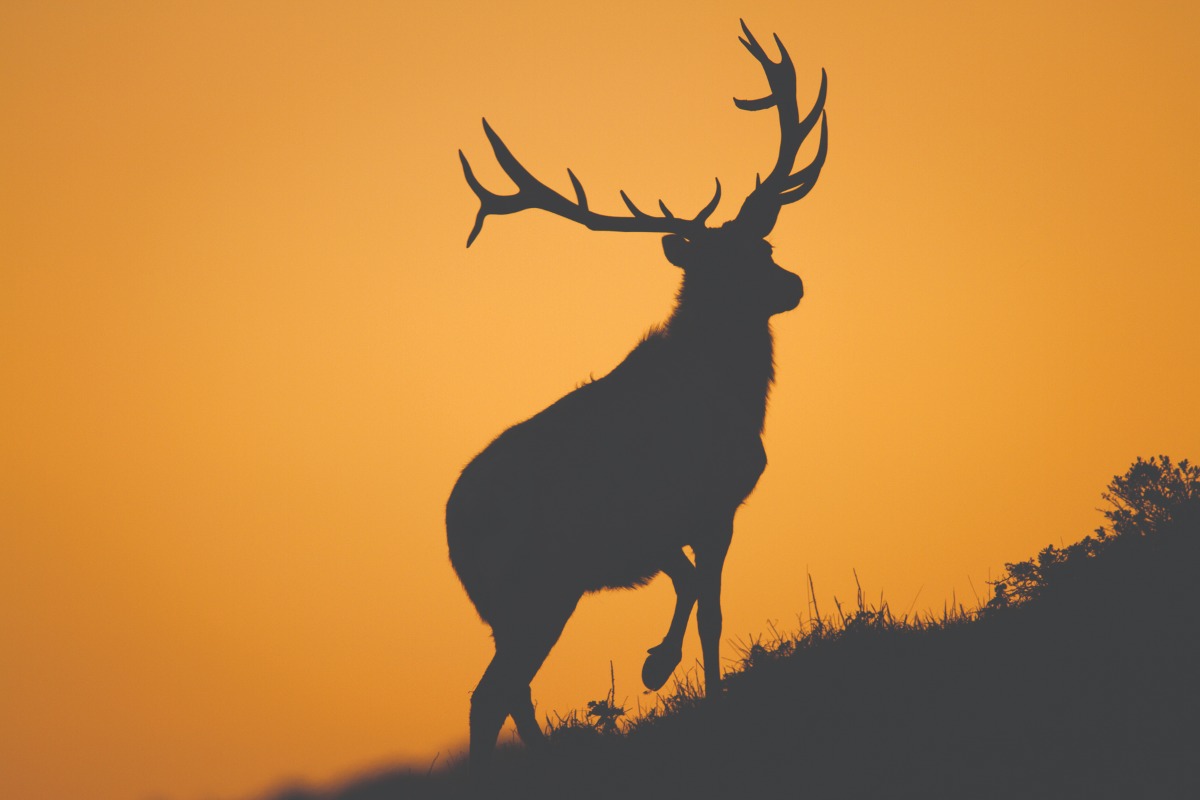
Instagram users love the captive tule elk hoofing Tomales Point at the northern tip of Point Reyes National Seashore.
The sleek, befurred mammals seem to commune with tourists who stroll a well-traveled trail in the preserve. Tule elk are Yoda-like, with big, brown eyes. They trumpet, munch flowers and make love in harems.
According to a 1998 National Park Service brochure, “Given the mild climate and lush habitat of Tomales Point, the elk live in a virtual paradise.”
Let’s take a closer look. Using the fact-focusing lens of science, we learn that hundreds of tule elk inside the preserve are dying in agony from starvation and thirst and eating poisonous plants. They are trapped in an ecological hellscape operated by a bureaucracy that fences the animals away from forage and water for political reasons.
The Pacific Sun/Bohemian has uncovered that the National Park Service at Point Reyes has killed tule elk, often in torturous ways, in medical experiments for decades. The federal agency absolves itself of any moral responsibility by blaming nature for the deaths. If only that were true.
Apex Predator
Theresa Harlan was raised in the Indigenous culture of the Tamáls, or Tomales Bay Indians. She speaks of tule elk as embedded with humans in the web of life.
“Indigenous peoples maintained and practiced ancient and interdependent relationships with all things; animals, plants, water, rocks—all things,” she says. “In the lands of Tomales Bay, the people took care of their environment like a loved one, since time immemorial.
“The life cycles of tule elk and human moved in synchronicity. A time to burn, to ensure the animals grazed on nourishing grasses. A time to prepare and teach young hunters to respect the elk.
“And then, the immigrant colonial settlers hunted them to extinction.”
Once a half-million strong in California, the tule elk were churned into meat, hides and tallow by settlers. By the turn of the 20th century, their number could be counted on two hands. In 1976, responding to civilian-led conservation efforts, Congress protected the tule elk. Federal agencies partnered with the California Department of Fish and Wildlife and Indigenous tribal councils to locate wilderness habitats. In 1978, the National Park Service released 10 tule elk into 2,600 acres of scrubland at Tomales Point, and locked the door.
In 2018, Fish and Wildlife reported that 5,700 tule elk were thriving in the human-contoured wilds of California. The state agency protects them by controlling invasive weeds that replace elk forage, and providing mineral supplements and water when needed. Herd sizes rise and fall with the seasonal waxing and waning of resources. In the wild, matriarch-led herds are pruned by predators: bears, lions, wolves and licensed hunters squinting through rifle scopes.
But at the Tomales Point elk preserve, where thousands of tule elk have lived their lives confined behind a woven-wire fence, their principal predator is the Park Service.
The trapped animals suffer for lack of adequate plant forage, essential micronutrients and water. The Park Service acknowledges that the barrier is intended to keep thirsty, starving elk from foraging on 18,000 acres of seasonally grassy cattle and dairy ranches that are amply watered by streams and wells. Supporting 5,500 cows and bulls, the ranches are leased from the Park Service by members of immigrant ranching clans that settled at Point Reyes in the 19th century.
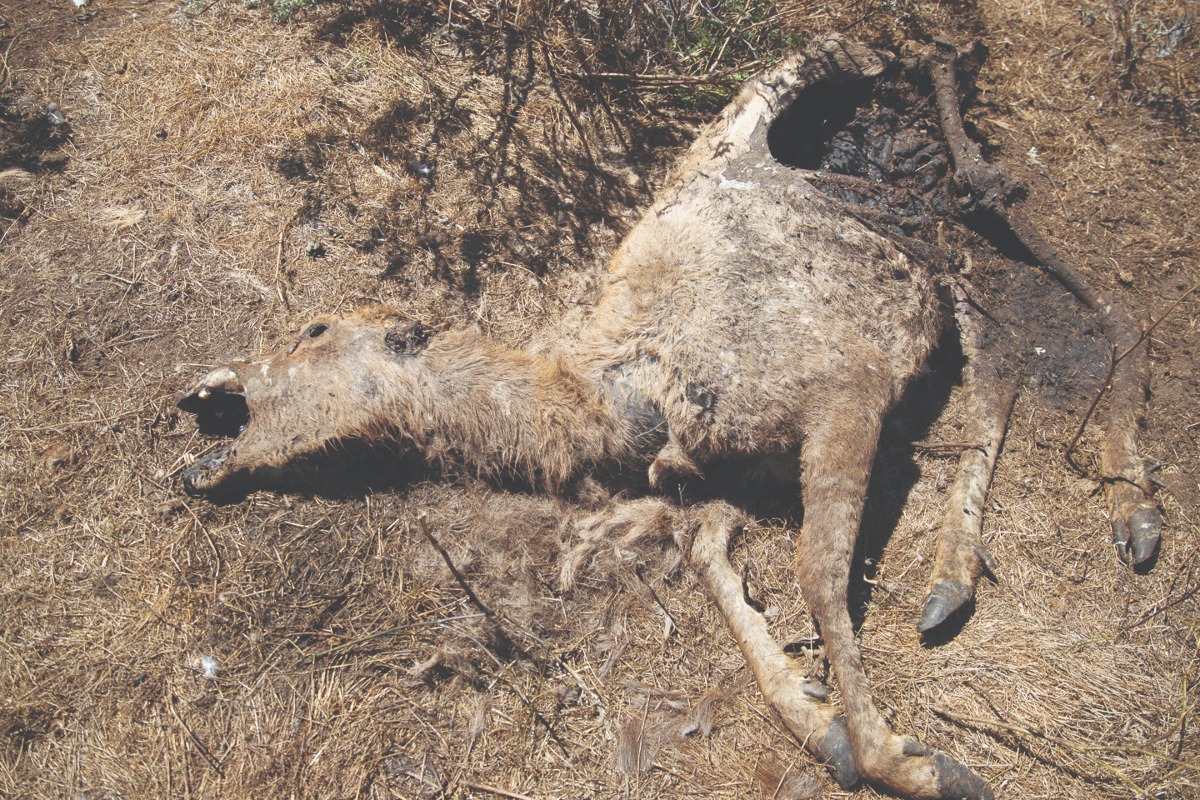
DESSICATED All of the necropsied elk were severely emaciated. They had either died of starvation, or by plant poisoning brought about by starvation.
Thirst
In March, the Park Service announced that the population of the tule elk herds confined at Tomales Point fell from 445 to 293 during 2020, a loss of 152 individuals. During the drought of 2013–2015, the loss was 250 elk. In both instances, the Park Service blamed “over-population and poor nutritional quality of forage” for the “drought-related” demise.
Last year, the Park Service removed water sources placed inside the preserve by kayakers practicing civil disobedience. But on June 11, the agency responded to public outcry and national press reports about elk dying from thirst and starvation. The agency then installed three gravity-fed water troughs near the entrance to the preserve, but they provide water for only one of the enclosure’s four, territorially non-interacting herds, according to wildlife biologist Laura Cunningham of the Western Watersheds Project.
On June 22, the Harvard Animal Law and Policy Clinic sued Secretary of Interior, Deb Haaland, and Craig Kenkel, park superintendent, on behalf of the Animal Legal Defense Fund. The plaintiffs are demanding that the Tomales Point fence be removed because it is illegally killing the tule elk through forced starvation and dehydration. More lawsuits are likely as more facts about the historical treatment of the tule elk come to light.
In that regard, the Pacific Sun/Bohemian has obtained necropsies, scientific studies and Department of Interior records which tell a story of a half century of often lethal experiments performed on the Point Reyes tule elk.
Park personnel have defied scientific practices by “euthanizing” scores of healthy elk bulls and pregnant elk cows as a way of “testing for Johne’s disease,” a syndrome that can be tested by non-lethal techniques. Rangers have chased elk cows with helicopters, hobbled and drugged them, and inserted radio transmitters into their vaginas.
The conditions of confinement of the elk at Tomales Point were known from the start to be incapable of supporting healthy herds. Each tule elk needs 10 to 15 pounds of forage per day, plus ample water and several acres of suitable habitat. For decades, the primary cause of elk mortality at Point Reyes has been outright starvation, drought or no-drought. A related cause of death is hemlock and lupine poisoning, as hungry elk eat toxic plants they would normally avoid. This is death by design.
In 1993, a panel of national elk experts told the Park Service that the best way to ensure the health of tule elk was to remove the fence and allow the herds to self-regulate their numbers. The report recommended removing the cattle ranches. The scientists’ recommendation was ignored by the Park Service, which then proceeded to do the opposite.
Poison Park
The Park Service released necropsies of seven tule elk who died in during the fall of 2020. In total, 152 elk expired inside the enclosure. It is reasonable to extrapolate the probable causes of the deaths of the necropsied elk to the larger population, as the Park Service does.
All of the necropsied elk were severely emaciated. They had either died of starvation, or by plant poisoning brought about by starvation.
No doubt, they were all thirsty, but bodily dehydration was not the sole cause of death. Focusing on environmental dehydration is a key to understanding the decimation.
During droughts, edible plants dry out and fail to reproduce. The few and meager seasonal springs and seeps inside the preserve become baked mud.
Three of the necropsied elk were found alive, unable to stand or lift their heads; they expired within hours or were euthanized by gunshot. Before he passed, one young male, a “spike,” was “observed laying down, kicking and unable to right itself.” As with the other emaciated elk, the spike’s muscle, fat and bone marrow were severely atrophied; his body was eating itself. He perished foaming at the mouth and nose. His abdomen was swollen with excess fluid, and he suffered from hepatitis and liver abscesses. Worms were devouring the linings of his lungs, trachea and intestines. He died from starvation and maladies tied to mineral deficiencies and eating poisonous plants.
The Animal Legal Defense Fund lawsuit contains the affidavit of a highly credentialed veterinarian who reviewed the necropsies. Dr. Amy Allen testified, “I can think of no worse way to die. It is prolonged agony, where the elk are presumably hungry all of the time.”
The spike had “consumed toxic plants which may indicate a lack of adequate forage.” Three of the necropsied elk apparently expired from hemlock or lupine poisoning. When miner’s lettuce, sheep sorrel, purple needlegrass, cheat grass and wild licorice are not to be found, a starving elk will eat poison hemlock, which flowers on tall stalks near water.
According to a University of California plant encyclopedia, “The leaves of poison hemlock look somewhat like parsley or wild carrot and have a disagreeable mousy odor.” Ingesting the plant or its seeds is fatal to cattle, elk and humans. Within two hours of eating even a small amount, the body is wracked with nervous trembling and weakness. The pulse weakens and the heart beats irregularly, then the body convulses, falls comatose and dies. There is no antidote. The only prevention is to extirpate the invasive plants.
Yellow bush lupine is equally fatal. Inside the preserve, it roots in sandy, dry sites. “Signs of acute lupine poisoning include muscular trembling, incoordination, and excitement. Affected animals may wander aimlessly, push against objects, and appear dizzy.”
In summary, the necropsies indicate that most of the 152 confined elk died from starvation and diseases resulting from a lack of essential minerals. Close to 50% may have eaten from the preserve’s cornucopia of poisonous plants, which are allowed by the Park Service to thrive despite their deadly effects. By contrast, poisonous plants are continually removed from the park-owned, commercially-leased cattle pastures located outside the fence.
Metal Illness
All of the seven necropsied elk suffered from a serious lack of copper and selenium, trace minerals which regulate ruminant health. Elk bodies require minuscule amounts of copper to strengthen bones and antlers, and to protect reproduction. Bodies absorb copper from eating plants that suck it from the soil. But at Point Reyes, the mass of granitic rock supporting top soils does not provide a sufficient reservoir of leachable copper.
Compounding the problem, tart, crunchy miner’s lettuce, an elk diet staple, contains molybdenum. That chemical weakens the health functions of copper. And, the oceanic fogs which bathe Point Reyes with life-giving moisture contain sulfates that interact negatively with copper, lowering mammalian resistance to disease and parasites.
Selenium repairs damaged cells and protects metabolic and reproductive functions. It is a necessary component in the diets of all mammals. As with copper, selenium is not present in life-enhancing amounts in the soils at Point Reyes. That is why cattle ranchers feed copper and selenium supplements to cows. But the Park Service refuses tule elk such “unnatural” help inside its man-made, institutionally-engineered preserve.
Outside the three-mile-long fence, free-ranging elk also suffer from copper and selenium deficiencies and, during droughts, die from starvation, although to a lesser degree than the perennially starving herds confined at Tomales Point.
Free Range
Two herds of “free-ranging” tule elk live near Limantour Beach and Drakes Beach. Established 20 years ago, they number about 450 individuals. The animals graze stretches of grassy, non-ranching park land and, when they can, pastures along Drakes Beach Road that are leased to ranchers; although they avoid these fields when cattle are present.
Officially labeled “free-ranging,” the movements of the Drakes Beach and Limantour herds are constrained by twisted-wire fences, ranching infrastructure and “hazing” by rangers in vehicles and horseback who harass them away from green pastures.
In a series of letters to the Park Service from 2011–2014, the Point Reyes Seashore Ranchers Association claimed that free-ranging elk knock down fences, eat valuable grasses, drink precious water, harass cows and reproduce at an alarming rate.
On its list of written demands for expanding the current scope of allowed ranching activities, the Association asked the Park Service to “recognize that the seashore ranchers are more endangered than the tule elk.”
It is not really a secret that the park’s de facto policy is that tule elk must perish so that park administrators can avoid disgruntling Rep. Jared Huffman and Sen. Dianne Feinstein. Both of these politicians accept large campaign contributions from agricultural and weapons-manufacturing corporations, while lobbying and legislating to expand commercial ranching at the expense of wildlife inside the national park. In 2006, for example, Feinstein wrote and passed a bill allowing prosecution of non-violent animal rights activists as terrorists. Likewise, in 2018, Huffman proposed Congressional legislation to derail an environmental impact study on ranching at Point Reyes; it failed to pass into law.
The Association falsely blames the tule elk for infecting cattle with Johne’s disease. It asks for large numbers of elk to be periodically “culled,” i.e., killed. Public opinion and the law stand in the way of lethal culling to satisfy rancher complaints. But, according to 21 additional necropsy records obtained by the Pacific Sun/Bohemian, the Park Service has been “euthanizing” healthy and pregnant tule elk under the rubric of controlling Johne’s disease. “Euthanasia” is a term reserved for mercifully ending the life of a suffering animal or person. These healthy tule elk were not euthanized.
From October 2015 to December 2016, the park’s “wildlife ecologists” killed 27 free-ranging tule elk, including five pregnant females. The 300–550 lb. corpses were gutted and inspected in the field, or transported to a mortuary lab at UC Davis for more sophisticated testing and analysis. Records suggest that the animals were scheduled to be “collected” when park visitors were not able to bear witness.
The killings were authorized under a “Johne’s disease surveillance” program. The healthy elk were “submitted” with bullets to the neck or brain. Their internal organs were photographed and inspected for lesions and microbes peculiar to Johne’s disease. Tissue slices and blood samples were delivered to a laboratory in Wisconsin for analysis. Notably, the 21 necropsies do not record any positive findings of Johne’s disease in the examined elk.
DEFIED Park personnel have defied scientific practices by ‘euthanizing’ scores of healthy elk bulls and pregnant elk cows as a way of ‘testing for Johne’s disease,’ a syndrome that can be tested by non-lethal techniques.
Angels of Death
On the morning of Oct. 22, 2015, park rangers shot three healthy adult males “in the vicinity of Drakes Beach Road.”
On Nov. 4, two bull elk “in good nutritional condition” were shot in the brain.
On Nov. 19, rangers “collected” two cow elk: “Both elk appear to be generally healthy without evidence of serious disease. [They were] euthanized by gunshot.”
On Dec. 2, two females wandering near Drakes Beach road were “euthanized by gunshot and submitted.” One was pregnant with a “13 cm crown-rump male fetus.”
On Dec. 11, the Johne’s surveillance team killed two elk; one was pregnant. “Both elk seemed to have been in good health at the time of euthanasia.”
On Jan. 21 an elk with a “mid-term pregnancy” was shot in the head and a “well-fleshed” female was shot in the face.
On Jan. 26, two elk “in good body condition with adequate amounts of reserve fat” were shot in the brain. “The 404 lb. female elk is pregnant with a male fetus.”
On Jan. 28, two healthy elk were “collected.” A 330 lb. female was “pregnant with a male fetus.”
On Feb. 10, a 556 lb. “healthy adult” male in “good nutritional state with well-fleshed muscles” was “euthanized for health surveillance.”
On Feb. 26, a 592 lb. “healthy adult” male in “good nutritional state” was “shot in the head … euthanized for Johne’s assay. … The lungs are diffusely soft and pink. The rumen contains abundant green and fibrous ingest … the colon contains soft, unformed feces. … There was no evidence of Johne’s disease.”
On Dec. 20, 2016, a 482 lb. male in “good nutritional condition” was “sacrificed as a disease suspect. … The results from the Johne’s testing lab were negative.”
Counting the unborn, the death toll of the testing was 32 elk. During this period, three other elk were killed by cars or died of “unknown causes” in the Drakes Beach vicinity.
In 2018, the Park Service released a report on tule elk management, coauthored by wildlife ecologists David Press and Tim Bernot. “Park staff monitored the presence of Tule elk on park ranches … through visual observations and the deployment of GPS collars.” The growth of the free-ranging herds fell due to “the [lethal] collection of elk … to test for the presence of Johne’s disease, [and] the removal of a portion of breeding age females for disease surveillance.”
The report noted that two necropsied elk tested positive for Johne’s in the lab. But no positive results were reflected in the necropsy reports reviewed by the Pacific Sun/Bohemian. Kenkel and his staff have not responded to repeated requests for comment.
Non-Lethal Testing Works
According to the National Institutes of Health, cattle are the No. 1 vector for Johne’s disease, which is rampant in confined herds in the United States. Tule elk are not considered Johne’s vectors. However, the paratuberculosis bacteria associated with Johne’s disease is carried by deer, goats, sheep, rabbits, foxes, birds and monkeys. In humans, it is conjectured to cause Crohn’s disease, a painful, incurable gastronomic infection.
Johne’s is commonly tested in cattle by examining the chemistry of feces. And that was the method initially deployed for testing tule elk at Point Reyes. But, after the Association began complaining about the size of the elk herds at Drakes Beach and Limantour, “euthanizing” elk for “disease surveillance” commenced on an unprecedented scale.
The Park Service publicly claims it resorted to post-mortem laboratory testing of tissue and blood samples because the feces-testing method can result in false negatives, i.e., failing to find evidence of disease when it is actually present. But according to the National Institute of Health’s Johne’s-disease guidelines, laboratory tests often result in false positives, i.e., finding supposed signs of Johne’s when the animal is not diseased.
And, the NIH reports, feces testing has the highest rate of diagnostic accuracy, and it is by far the scientifically preferred method.
The main indications of Johne’s are heavy diarrhea combined with lethargy and emaciation. When those signs are evident, death is not far off, and it is reasonable to euthanize and conduct lab tests to try and confirm the cause of death.
According to the NIH, the most effective Johne’s tests look for cellular-level evidence that emerges after the disease progresses to the diarrhetic stage.
Importantly, the NIH states that tissue and blood tests of uninfected animals in an environment where Johne’s-causing bacteria is present can “yield a false positive result.” Such could be the case for tule elk grazing in pastures fertilized with liquified cow manure, as is done throughout the park.
Further calling into question the viability of Johne’s testing methodologies, the NIH reports that lab tests utilizing radioactive markers are subject to high levels of false negatives and false positives. And the agency found that an unacceptable number of Johne’s testing labs are themselves failing to meet industry proficiency standards.
In short, under the best of circumstances, Johne’s is a difficult disease to diagnose before it reaches its nasty, final stage. Consequently, the NIH and the Cornell University College of Veterinary Medicine recommend using relatively cheap, on-site fecal tests, because they tend toward a lower rate of false positives than high-tech lab tests.
The only way to really get rid of Johne’s disease in Point Reyes is to extirpate cattle ranching, which is the primary Johne’s vector. The Park Service agrees. According to the agency’s 2020 Environmental Impact Statement, “Under Alternative F [eliminating ranching], ranching activities would not disturb elk once ranching activities cease, which would result in long-term, beneficial impacts on the elk population compared to existing conditions.”
Good Science
Now retired, University of California, Berkeley wildlife biologist Dale R. McCullough studied the tule elk for decades. In 1993, he chaired a scientific panel of national experts chartered by the Park Service to consider the possibility of deploying chemical contraception to limit the growth of the confined herds at Tomales Point. The panel concluded that such attempts to control birth rates would likely flounder due to unintended consequences.
The panel explained that chemically-based contraception is expensive, ineffective after a year and technically difficult to implement on enough females to make a difference. Inside the confined preserve, it would likely increase birth rates because the population numbers are already depressed by lack of proper nutrition. This is a complex and counter-intuitive argument worth deconstructing, because contracepting the tule is still being discussed as a viable option by the Park Service.
McCullough’s panel began by reporting that the captive herds at Tomales Point are perennially “malnourished [and overstocked with] dead and dying animals.” Calves suffered abnormally high death rates. Due to a general lack of nutritive resources, because of the depleted soil and frequent droughts, the scientists found that the preserve is simply not a suitable habitat for tule elk.
Secondly, the panel observed that pregnant females need to consume more energy in the form of forage than males and non-pregnant females. Therefore, artificially preventing a subset of females from becoming pregnant could increase the amount of nutritive resources beyond what would be available in the absence of contraception. That bounty would increase the survival chances of the herd-at-large. It would also energize previously food-challenged females, who would not have become pregnant, to gestate.
Because trying to artificially control the size of a confined herd leads to unexpected consequences, the scientists declared, “[The] data suggest that natural regulation of this population in the absence of control is a real possibility.”
The panel also cautioned that the health of confined and isolated herds is inevitably jeopardized by genetic inbreeding, which reinforces biological weaknesses. Therefore, the panel concluded, “We recommend that the elk herd be permitted to self-regulate with regard to population size … The long-range goal of elk management at PRNS should be the re-establishment of free-ranging elk throughout the seashore and associated public lands. This would involve … removal of the fence across Tomales Point.”
In 1998, “consistent with sound scientific principles,” the Park Service released its “Tule Elk Management Plan and Environmental Assessment.” It concluded, “Tule elk at Point Reyes are a component of the original native fauna. …Their limitation to Tomales Point is an historic artifact of their reintroduction onto an area bounded by historic ranches and the intent to restrict their movements to a protected preserve. If they are to remain as part of the Seashores’ fauna and ecological processes, they should eventually become free-ranging throughout most of the Seashore’s natural zones where conditions allow.”
That was nearly a quarter century ago, and the elk are still trapped, still dying of starvation and subject to experiments that profane the name of science.
Helicopter Science
Between 1997 and 2001, the Park Service ignored the McCullough panel’s warning about the futility of contraception. Terrified tule elk were chased with helicopters. Two hundred females were hobbled, blindfolded and injected with porcine zona pellucida. The chemical birth control program was soon abandoned as costly and ineffective.
From 2005 to 2008, the Park Service partnered with University of California, Berkeley wildlife ecologist, McCrea Andrew Cobb, as he researched his doctoral thesis, “Spatial Ecology and Population Dynamics of Tule Elk at Point Reyes.” Cobb concluded, “The primary cause of death for [tule elk] cows and calves was starvation, which was often accompanied by copper and selenium deficiencies.” He noted that, historically, tule elk passed through Point Reyes during fecund, rainy seasons; it was not their year-around residence of choice.
Tule elk prefer to graze and browse in low-lying, flat, wet, grassy pastures, not the steep, brushy, windy, desertifying, hiker-infested slopes of Tomales Point. The pastures leased to cattle ranchers are a more pleasing habitat for tule elk, although McCrea observed elk “avoiding pastures when cattle were present.”
However, Cobb’s findings do not describe the behaviors of non-captive, wild tule elk. And the methods by which he collected his data are chilling.
According to Cobb, “Between 2005 and 2008, 42 tule elk cows were immobilized using helicopter net-gunning. Captured elk were hobbled, blindfolded and fitted with uniquely numbered ear tags and a mortality-sensing VHF radio telemetry collar. …One cow died of capture-related injuries during the helicopter-based capture.”
Immobilization was achieved by injecting the bound animals with cocktails of ketamine, medetomidine, xylazine and lidocaine. The bodily dimensions of unconscious elk were recorded. A tooth was extracted from each elk to estimate age.
He further noted that,
“Attempts were made to fit pregnant elk with a radio telemetry vaginal implant transmitter to determine calving success and to facilitate calf [radio] collaring.”
“I captured, collared and monitored 84 neonatal elk calves to determine calf survival rates and cause-specific mortality. …Calves average 3 days old at capture.”
“25% of the radio-collared calves died, and I opportunistically discovered 19 unmarked calf mortalities. …The most commonly identified cause of calf mortality was starvation.”
“Another primary source of calf mortality was septicemia …the cause was unknown,” although he acknowledged that fatal infections could have been caused by bacterial loads passed from researchers to the hobbled and drugged newborns with permeable immune systems.
One day, a female “escaped from the Tomales boundary and [was] shot by the NPS.”
Cobb noted that the quality of forage outside the fenced reserve is of “much more high quality.” He concluded, “Conflicts between elk and local ranchers are likely to occur.”
In reality, the conflict is not between elk and humans, but between humans and our visions of the past, present and future. We can continue the environmental destruction of our planet as exemplified by settler colonialism and Wall Street and the Pentagon. Or, we can find our way back to our sociobiologically robust community roots, threading, as Harlan spoke of, “the ancient and interdependent relationships with all things, animals, plants, water, rocks—all things.”
In the Indigenous culture of Tomales Bay, elk are people.
SUNSET FOR TULE ELK Congress created the national park in 1962 as a haven for wildlife, not cows.
Settlers Forever
During the 19th century, European immigrants settled as beef and dairy ranchers at Point Reyes peninsula and West Marin on lands taken from Indigenous people. After working as tenant-farmers, some families bought large spreads on both sides of Tomales Bay. The families often intermarried, coalescing into land-owning clans.
Tens of thousands of acres of ranchlands in West Marin and Point Reyes National Seashore are controlled through deed or lease by members of the Grossi, Mendoza, McClure, Kehoe, Evans, Rossotti, Giacomini, Dolcini, Straus and Spaletta clans.
Family members wield considerable political power through organizations such as Marin Agricultural Land Trust (MALT), Marin Board of Supervisors, Marin County Farm Bureau and the Point Reyes Seashore Ranchers Association.
In the early 1970s, family members sold their Point Reyes farms to the National Park Service at fair market prices. The sellers signed “Residential Reservations of Use and Occupancy” or “RUO” contracts with the Department of the Interior. In return for being allowed to rent and farm the now-government-owned ranches, sellers agreed to vacate in 20–25 years.
Meanwhile, the RUOs required them to maintain ranch buildings, roads and fences; to not pollute the waterways with chemicals and manure; and to return the property in the same condition it was in when leased. Sellers agreed to abide by this term: “Wildlife shall be permitted to graze or browse unmolested.”
When the RUOs began to expire in the 1990s, the Department of Interior issued a “briefing statement” to a congressional committee. It concluded, “National Park Service policy, NPS-53, clearly prohibits an extension of a Reservation of Use and Occupancy.”
Regardless, the Park Service signed multi-year Special Use Permits with the ranchers, who did not want to vacate, despite having banked tens of millions of dollars, collectively, in return for promising to do so. Notably, NPS-53 prohibited the issuance of permits that “conflict with other existing uses.” Elk grazing, for example.
And now that the Special Use Permits have expired, the clans are clamoring for more special treatment: 20-year leases renewable in perpetuity, bed and breakfasts, and retail stores. And they insist that the free-ranging tule elk be permanently removed. Rancher Ralph Grossi wrote to the Park Service in his capacity as the board chair of MALT, “When livestock are found in Wilderness, they are removed. Likewise, when Elk are found on leased ranches.”
More than 50,000 comments submitted to the Park Service and the California Coastal Commission by members of the public and scores of environmental organizations demand that the fences and cattle be removed, so that wildlife and native plant species can live. Congress created the national park in 1962 as a haven for wildlife, not cows, which, bless their innocent souls, are an invasive and ecologically destructive force embodying capital.
EDITOR’S NOTE: After publication of this story, the Park Service released information to Northern District Superior Court in the Animal Legal Defense Fund Lawsuit indicating that two of the necropsy records pertain to a single elk, meaning that the total necropsied was seven, not eight.
Jazz vocalist Deborah Winters has a long history with Mill Valley’s Throckmorton Theatre, performing there since the theater opened in 2002.
“It’s kind of like a homebase for me,” Winters says of the theater. “(Theatre founder) Lucy (Mercer) is so gracious, she supports the musicians and she takes care of everyone. It’s a beautiful facility for Marin to have, and it’s just an extraordinary room. It has such a warm vibe to it, I just love that theater.”
Of her many shows at Throckmorton Theatre, Winters is best known for her annual “Jazzin’ Up The Holidays” concert with the Peter Welker All Star Band, which she and Welker started a decade ago, and which annually sells out far in advance.
“It was sad to not do it last year, and Peter moved to Arizona, but I’m hoping to still be able to do it again,” Winters says.
Last year, Winters performed the final show at Throckmorton Theatre on March 9, on the eve of Marin County’s pandemic-related shutdown. During the 15 months since that show, Winters says her life was on pause in many ways, even though she still occasionally performed virtually, and taught vocal students over Zoom.
Throckmorton Theatre has also been dark for most of the last year, with exceptions for some limited-capacity children’s and teen theater productions in which all performers and audience members wore face coverings.
This week, Winters will press “Play” on live music again, and Throckmorton Theatre will return to in-person concerts in “The Gathering: A Musical Celebration of Reconnection” on Thursday, July 1. The event features Winters performing uplifting, joyful tunes with pianist Frank Martin, bassist Sascha Jacobsen and percussionist Ian Dogole.
“I’m kind of pinching myself, honestly, because I have a show,” Winters says. “I’m anticipating a lot of emotion; I feel like I’ve been through a lot of waves of emotion this last year. I think it’s going to be quite an extraordinary night, and it’s going to be very special because we have been underground for so long.”
The show will include several original compositions from Dogole, Martin and Jacobsen, and the ensemble will also play songs by an eclectic array of legendary artists including the Beatles, Duke Ellington, Burt Bacharach and many others. The venue will be fully open for a full audience for this first concert in over a year, and the show will also be livestreamed for at-home audiences.
“I’ve been really cautious, so I don’t feel terribly uncomfortable about it,” Winters says of performing for a full audience. “Of course, we’re all vaxxed, and the theatre is asking that if you are not vaccinated, to wear a mask.”
While Winters is unsure if her annual “Jazzin’ Up The Holidays” concert will happen in 2021—especially with Welker now living in Arizona—she is excited to get back on local stages, teach vocal students in-person and work on new recordings.
“Never a dull moment,” she says. “Even in the pandemic.”
“The Gathering: A Musical Celebration of Reconnection” happens on Thursday, July 1, at Throckmorton Theatre, 142 Throckmorton Ave., Mill Valley. 7pm. Reserved tickets are $25–$30; livestream tickets are $15. Throckmortontheatre.org.
Saying 'I Do' to You
Summer is “wedding season,” but why feel left out when you can simply marry yourself? That probably sounds like something a narcissistic celebrity would say, but we in the spirit world know that even the most trivial notions reveal deep cosmic secrets.
The inner union between soul and spirit is an idea found in many of...
North Bay
Before heading to Iceland for a tour later this month, acclaimed cellist Rebecca Roudman and her virtuosic bluegrass band Dirty Cello will play all around the North Bay this week. The band performs a concert in the park on Thursday, July 8, at Lyman Park, 1498 Main St., St. Helena. Following that, the band plays two sets on...
Last Saturday at Acre Petaluma, over iced coffees and salmon toast, I had the pleasure of sitting down with Dr. Jim Matto-Shepard, psychologist, psychotherapist and licensed Soul Motion Conscious Dance teacher.
We discussed the properties and benefits of MDMA—a hot topic at the moment, as the DEA and FDA have begun to ease back on restrictions around the drug’s medical...
By Sam Case
In Marin and Sonoma, we love our wildlife—but in the wild, not in our houses. Alas, in our house our cats and their cat door mean that raccoons, rats, mice, birds and, yes, one skunk have all ended up inside. We awoke one night to find two bats flying around the living room. They were part of...
For many North Bay music lovers, summer is a smorgasbord of outdoor concerts and community gatherings. Last summer, all the popular concert programs were forced to cancel their plans due to the pandemic, though this summer is heating up with free live music in July and August.
This week, the St. Helena Chamber of Commerce’s Summer Concert Series opens four...
The article in the Bohemian and Pacific Sun (“Death by Design,” June 30) describes the horror of the mistreatment of the beautiful tule elk herd at the Point Reyes National Seashore. I have seen them many times hiking there, and they are amazing. Starving them, forcing them to die of thirst and sadistically butchering them is just unacceptable. Point...
"The impact of the [2013Andy Lopez shooting can still be felt today," says Ron Rogers, the producer of "3 Seconds in October: The Shooting of Andy Lopez."
Located in downtown Santa Rosa, the Museum of Sonoma County engages locals and visitors through a massive collection of historical artifacts and contemporary works of art.
Now, the museum is creating a new permanent exhibition that will take a cue from long held Oral traditions to inform and enthrall attendees through stories rather than objects. Due to open in 2022,...
Instagram users love the captive tule elk hoofing Tomales Point at the northern tip of Point Reyes National Seashore.
The sleek, befurred mammals seem to commune with tourists who stroll a well-traveled trail in the preserve. Tule elk are Yoda-like, with big, brown eyes. They trumpet, munch flowers and make love in harems.
According to a 1998 National Park Service brochure,...
Jazz vocalist Deborah Winters has a long history with Mill Valley’s Throckmorton Theatre, performing there since the theater opened in 2002.
“It’s kind of like a homebase for me,” Winters says of the theater. “(Theatre founder) Lucy (Mercer) is so gracious, she supports the musicians and she takes care of everyone. It’s a beautiful facility for Marin to have, and...