In reference to your Dec. 29th issue, the letter from Mr. Neil Hammaris (“Historical Veracity”) whitewashed the treatment of the now mostly extinct indigenous tribes of what we now call the San Francisco Bay Area, and shows his profound ignorance of history. The indigenous people did not want or need anything from the Europeans—not their presence, religion nor inventions.
The Europeans were cruel, ignorant invaders, who kidnapped, jailed, coerced, raped and murdered the native people. The food and “shelter” they demanded the natives agree to was completely dependent upon their accepting the Catholic religion, which they did not understand.
My ancestry is part European and part Indigenous. I’m an old hippie and I’m grateful that some of the young people are trying to save our Earth. Sorrowfully, their efforts may be “too little, too late.” We hippies tried to warn everyone for decades that human overpopulation has caused or exacerbated every problem our Earth now has.
The cross definitely was not the world’s oldest symbol (“Crosstalk”). Mr. Chensvold needs to engage in more historical research for his “Spirit” column. The Vesica Piscis and many other Goddess symbols predate the cross. The Vesica Piscis symbol was one of many stolen by the Christians.
Barbara Dougherty
Santa Rosa
Biden’s Word
In November 2020, millions of voters like me went to the polls and cast a ballot for Joe Biden.
It’s time for Biden to go further than talking about supporting voting rights legislation. We need him to fully support ending the filibuster so the Senate can finally pass voting rights legislation like the Freedom to Vote Act and the John Lewis Voting Rights Advancement Act.
We can’t out-organize voter suppression. History will remember how President Biden handles these attacks on our right to vote. I’m urging him to do the right thing.
When he’s not writing, Jonah Raskin is writing; which is to say he is always writing.
The prolific author and frequent contributor to the Bohemian and Pacific Sun seems to publish something every year. And nothing changed during the pandemic.
Out now, Raskin’s latest literary wonder is the novel, Beat Blues: San Francisco 1955, which features fictional cameos by several of the city’s famous and infamous members of the Beat Generation, including Jack Kerouac, Allen Ginsberg and Lawrence Ferlinghetti.
“It started as a love story between Natalie Jackson and the protagonist Norman,” Raskin says.
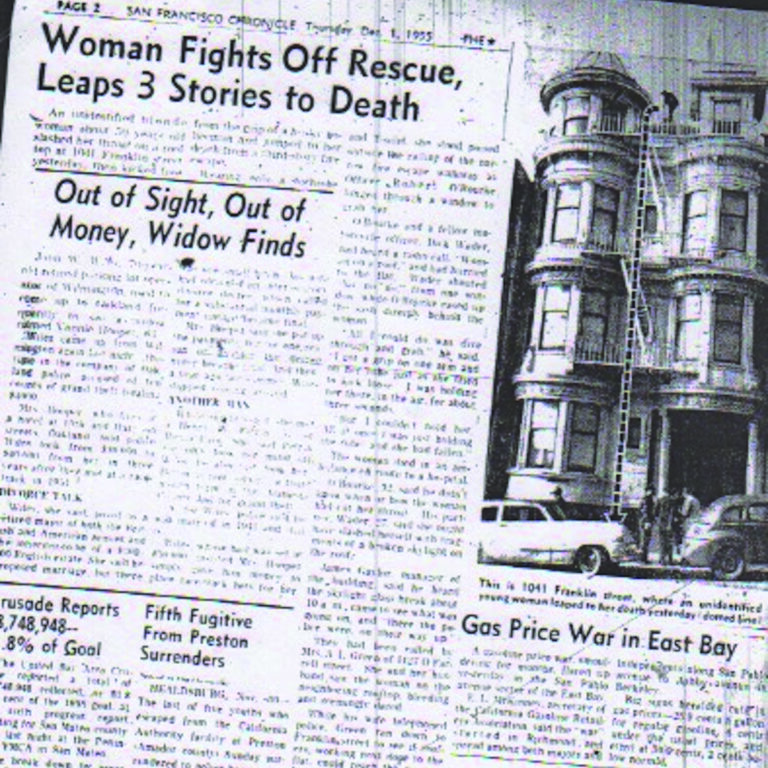
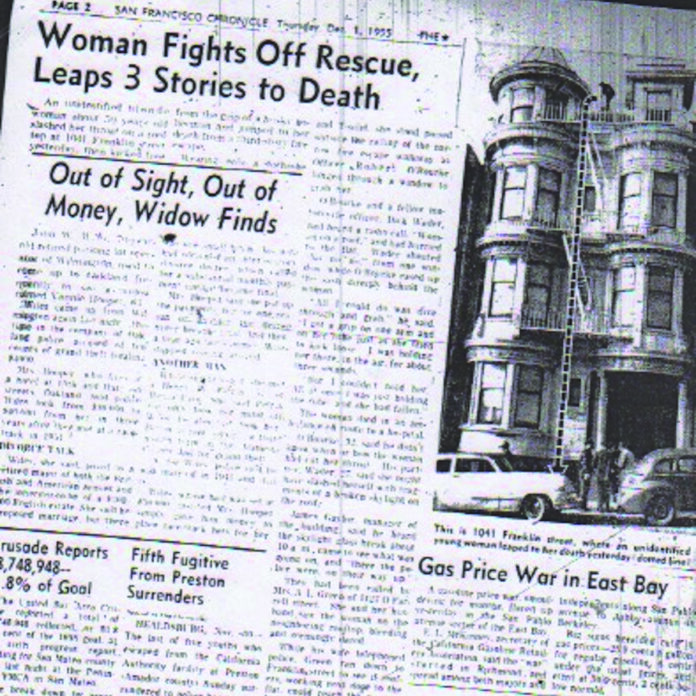
Jackson became a notorious figure of the Beat Generation for having an affair with Kerouac’s buddy, Neal Cassady, before committing suicide in San Francisco in November of 1955. Yet, very little is actually known about Jackson other than the tabloid headlines of the time.
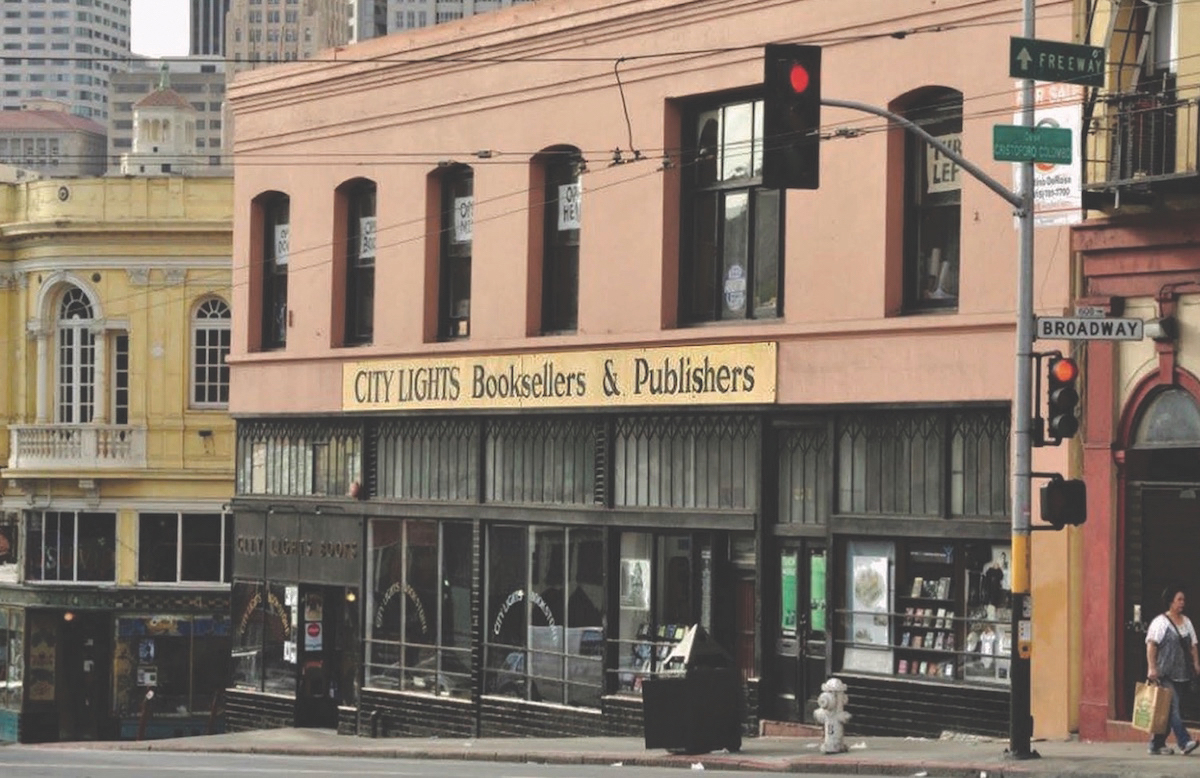
Several years ago, Raskin began looking deeper into Jackson’s life with the help of his brother, who is a private investigator. From there, Raskin decided to put Jackson in this novel, which led him to set the action in San Francisco in 1955. Then he incorporated iconic spots, such as City Lights Bookstore and the Blackhawk jazz club, and began including other Beats in the story.
Coming off of writing three noir detective stories, Raskin says there is some darkness in Beat Blues, but it’s not a whodunit. Rather, the story offers a behind-the-scenes look at the culture of jazz and poetry that permeated the city in the 1950s.
“1955 was also the birth of the Civil Rights movement, and there was the murder of [Emmett Till] in Mississippi,” Raskin says. “So I brought together in the novel these two sides of the mid-50s, the Black Civil Rights movement and the mostly white cultural revolution of the Beats. They’re interacting.”
In the novel, Raskin also puts words in the mouths of Beat figures like Ginsberg, who Raskin invited to read and lead poetry workshops at Sonoma State University, and City Lights Bookstore-owner Ferlinghetti, who Raskin also knew.
CITY BLUES Jonah Raskin’s new novel, which takes place in San Francisco in 1955, features several famous characters from the Beat Generation. Photo by Jonah Raskin.
“I took more liberty with Natalie Jackson than with the other characters, because there are more blank spaces in Jackson’s life than their lives,” Raskin says. “Kerouac says Jackson was a writer, but as far as I know, none of her work exists. So, I did take the liberty of having Jackson perform one of her poems publicly, and she’s kind of outrageous. In a way, she’s a liberated ’60s woman before the ’60s. She points the way to the future even though she didn’t make it there herself.”
In the following excerpt, from Chapter 10 of Beat Blues, Norman reconnects with Natalie Jackson at San Francisco’s Blackhawk jazz club. Beat Blues: San Francisco, 1955 is now available online and in bookstores.
–––
The Blackhawk felt funky, as in rough around the edges, and funny, as in strange, not ha-ha funny. Except for a few couples who might have been described as “interracial,” white folks and Black folks sat at separate tables, with only jazz to bring them together. The place wasn’t segregated, but it wasn’t really integrated, either. A few young kids accompanied adults and sipped through straws from bottles of Coca Cola.
A couple of guys who struck Norman as queer leaned against the bar and a couple of women he thought of as lesbians stood near the back wall. This place is gonna be raided, Norman thought. I don’t want to be here when that happens. His paranoia was acting up again.
He remembered that he had first heard bebop in Harlem six months after he came home from the war. At first, he resisted it and wanted to go back to the days of swing and the big bands when he danced in a clumsy, albeit graceful sort of way. He missed the dancing, missed Gene Krupa on drums and Dizzy on his horn, but bebop wore down his resistance, swept him up and carried him away.
Dancing, he decided, was for squares. He had been a weekend hipster. Now he was a fulltime hep cat. The sax became his deity; he worshipped at its shrine. No wonder he heard it at odd hours and in odd places.
Ezra arrived at the Blackhawk after the first set came to a close, and found Norman seated at a small round table, where he sipped a cocktail. Norman reached discretely for the brown paper bag in his jacket and surrendered it before Ezra asked for it. His pal held it in the palm of his hand, scampered across the floor and ducked behind the curtain on the stage.
A few minutes later, Lester appeared with his sax for the start of the second set and began to play slowly and sweetly. He transported Norman to a place that felt blissful. A photographer took Lester’s picture with the band members, and pictures of the audience, too.
Ezra returned to the table, sat down, folded his arms across his chest and let the music wash over him. It helped that he was stoned. There was no doubt about it, the reefer had worked its magic. Norman could smell it.
But it wasn’t just on Ezra; it was all over the Blackhawk, mixed in with, but not dominated by the smell of tobacco, beer, perfume and perspiration. Norman’s own bittersweet longings welled up from inside and made him feel hornier than he had felt for a long, long time. Perhaps he had a contact high.
Ezra clapped Norman on his back and roused him from his reverie.
“You did right bro! The cops didn’t find nothin’ on me. Let me go once I showed my driver’s license and papers from the army. I carry ’em to keep me outta trouble.The uniform didn’t hurt, neither.”
Norman surveyed the room.
“Great show! Fantastic audience. I could stay here forever.”
He noticed parents with their children in tow.
“What gives with the kids?”
“They gotta get with jazz same as adults.”
“What about the guy with the camera?”
“That’s Fred Lyon. He nails ’Frisco, from the Golden Gate to Coit Tower and Nob Hill; he’s famous all over town. If you pay him he’ll take your photo.”
Norman watched Lyon move around the room like a dancer, snapping shots of the audience, as well as shots of Lester Young, who wore a pork pie hat. Norman fixed his eyes on Ezra, who didn’t look or sound like the man he had seen on the sidewalk, hemmed in by the cops. Ezra snapped his fingers. His head bobbed up and down.
“Man, oh man, Prez is hot tonight. Did you hear that riff?”
“I did! It’s better to hear him in person than to hallucinate his harmonies.”
When Lester played “D.B. Blues” Ezra looked like he was lodged in jazz heaven.
“Fuckin’ outrageous that he was busted with booze and reefer, locked up, kicked out of the military and court-martialed.”
“Dishonorably discharged! Disgraceful!”
Ezra’s lithe black body moved to Lester’s elastic blues.
Seemingly taller and more robust now than he had been on the street surrounded by the cops, Ezra leapt to his feet, sashayed across the room, pulled up a chair and sat down at a table opposite a woman who wore a purple evening gown that revealed her back. In his spiffy uniform with his hair slicked back, Ezra looked, Norman decided, like a confidence man who might talk a man or a woman into or out of most anything. He was cheeky.
Norman could not see the woman’s face, though he twisted this way and that way and tried to find a clear line of sight. There were too many people sitting and standing between them. Her face was turned away from him, though for a few moments he had a good look at her slender neck and shoulder blades.
He thought he remembered them, especially now with the sax swirling around and around. Lester, the funky bebop king and the woman with the beautiful shoulder blades, a white queen reigning effortlessly over the crazy scene at the Blackhawk. Norman didn’t want to be her vassal, or express his fealty, and he resented the intimacy she seemed to share with Ezra, her Black prince.
The Blackhawk was a kind of pressure cooker that heated everyone. It intensified Norman’s red hot rage and his cool green jealousy, and something he didn’t want to know and acknowledge, the noir at the heart of noir: the Blackness of his own whiteness.
His ancestors were talking to him, though he didn’t want to hear them. He calmed himself down by sheer willpower and crossed the room at a diagonal, the music growing louder and louder. He glanced over his shoulder and found Natalie’s flinty eyes—yes, yes, Natalie’s eyes—as hers found his, their eyes locking until he blinked, his head pounding.
Lester was fucking his sax, the music rising and falling until it climaxed and the room thundered.Then came a moment of silence and clarity. Natalie had the same hard eyes and soft mouth that he remembered.
Who am I? He asked himself. Who is Norman de Haan, who traces his ancestors from Holland to Suriname on the coast of the Atlantic Ocean? He didn’t like to admit it, but he thought that the white queen was threatened by the Black prince, who was supposedly his buddy and obviously as queer as the queers who stood at the bar. Race trumped everything every time. It whipped friendship, sex and class, too.
Where was his Oreo self now? Nowhere. He was white on the outside and white on the inside.
“Mind if I join you?”
Norman didn’t wait for an answer. He grabbed a nearby chair, sat down and drilled Natalie with his eyes.
“Long time no see.”
He was instantly embarrassed by the cliché that told him he was at a loss for words. It was cliché time at the Blackhawk. The clichés piled up and crashed down to the floor along with the notes that spilled from Lester’s sax.
There they were, the three of them: the two army veterans and the woman between them. New York Norman and San Francisco Ezra, East entangling with West, white coexisting and colliding with Black, and the noir queen at the crossroads. There would be no balancing act. Something or someone had to give. It wasn’t going to be Norman. He would stand his ground, even if there was no ground to stand on.
Ezra piled another cliché on the pyramid of clichés.
“I might as well break the ice.”
To Natalie he said, “This is my buddy, Norman,” and to Norman, “Meet Natalie, a Jersey girl, just blew into ’Frisco.” At least he didn’t say “my girl.” Norman was thankful for that. Maybe Ezra went both ways. Maybe he bedded women as well as men.
Norman vowed not to seem too curious and vowed, too, not to toss out another cliché. He didn’t want to utter another fake phrase, or make a face that would reveal his invisible connections and disconnections to Miss Natalie Jackson, formerly of New Jersey.
She was more beautiful than he remembered her, more womanly and less girly, more sophisticated and less rough around the edges. He knew he was still dangerously in love with her.
“Pleased to meet you.”
He tried to hide the embarrassed expression he was sure had to be on his face. He wanted to slap himself.
Natalie wore a bemused smile that seemed to belie her anxiety.
“Pleased to meet you, too, Norman. Do you come here often?”
Norman shook his head.
“No, this is my first time.” Once he started to talk, he couldn’t stop talking. Words concealed his own nervousness.
“Ezra brought me here and I’m glad he did. Lester is amazing and the Blackhawk is the coolest club I’ve ever been to, including Birdland, though Bird was phenomenal until he started shooting up. Truth to tell, I love Shearing’s lullaby to the place. It’s a classic.”
He heard himself speak and thought he sounded like his glib prof in Jazz 101.
Natalie lifted her cocktail glass.
“Bebop is ancient history.You should hear ‘Shake Rattle & Roll.’ It’s the newest thing. I have a stack of 45 RPMs. You know, don’t you, the DJs call it ‘rock ’n’ roll’ and say it has already blown bebop out of the water. Elvis is bound to hit ’Frisco ASAP.”
Norman wanted to be cantankerous.
“I would not like bebop to go the same way as the novel, which is dead or at least dying, according to my friends who read Partisan Review.”
He turned toward Ezra.
“What about you, pal. What do you think?”
Ezra took a deep breath.
“I’m partial to Muddy Waters and Ray Charles and turn a deaf ear to the Crew Cuts, and as for Patti Page, that doggie in the window she sings about ought to pee all over her lily white shoes.”
Natalie laughed until her whole body shook. She turned from Norman to Ezra and then back to Norman, and wore a smug expression on her face that said she wanted to pick a fight.
“You sound like you’ve got a stick up your royal Dutch ass.”
“No reason to jump at every new fad.”
Norman growled.
Natalie growled back.
“It’s not a fad.”
“What is it if not a fad?”
“You wouldn’t understand.”
Ezra listened to the verbal volley with amusement and seemed disinclined to add his own feelings to the mix. But then he broke his stony silence.
“If you pay attention to rock and roll, you’ll hear rhythm and blues.” He didn’t say “rock ’n’ roll” or “rhythm ’n’ blues.” He used the word “and,” which lent a certain formality to the terms.
Natalie glared.
“If you listen, you’ll hear country and western in rock.”
Ezra huffed.
“A lot of white boys tryin’ to sound like they come from Tupelo.”
Natalie practically jumped out of her seat.
“Some of them are from Mississippi.”
When it came to rock ’n’ roll, she obviously knew what she was talking about. The table went suddenly silent until Ezra leaned forward and roared over the din in the room.
“How ’bout we hit my mama’s place and dig her race records.”
Natalie glanced at her wristwatch.
“I don’t know. I’m a workin’ girl.”
Norman’s ears perked up.
“You workin’?” He sounded incredulous. “You don’t seem the type.”
“Yeah, I’m a little shop girl. You heard of us? Nine to five Monday to Saturday. Pays the bills.”
On the street outside the Blackhawk, with the neon sign glowing in the dark, Ezra stood on the sidewalk and tried to hail a Yellow cab. First one driver and then another switched off the light on the roof and accelerated when Ezra came into view, a dark shadow outlined by the streetlight.
“Off duty my ass. Fucking cracker oughta go back to Johannesburg.”
Ah, finally, Norman thought, he’s expressing his true feelings.
Love comes first: We need unity, forgiveness and peace to find a loving solution.
We understand we all need understanding, and we should agree to try our best to create it. Only experience and facts are the way to guide us. We know that we are different. But just because our parts are not compatible with your engine, does not mean that we cannot operate with a different motor and could even have better results if we just had the chance.
We are a community; we came from the same one as you. We understand the needs of the people in a community, and we represent the same people that make up yours. Because we are you, we just didn’t fit in the same as you. But when you can’t afford to remove your trash, you dump it by us so it can be swept away when we are. We were rejected, but we are human beings—people, like you. Our community is different, but we are capable of providing for ourselves. We share well with each other, but a growing industry sees no future in that. We can offer the general public arts and entertainment, and let them experience our culture as well as any segment of society.
Many of you are afraid you could end up in this situation. We understand your fear. We are afraid, too. Neither of us got a handbook or guide when we entered this life, we just survive. We understand our Earth, and we try our best not to hurt it. We can understand each other when we listen to each other. We live selflessly, we create, we share. Can you listen to us? We listened to you and tried your way. We are outside the box—inside it, we suffocate.
I hear the word “coexist,” as if it’s a suggestion, a choice or a concept that we should consider, something we should maybe try. It’s none of those things. Coexisting is what a society does no matter what, and it’s not an option, it’s a matter of how well or how badly we do it. Come look outside the box with us, let us enlighten you. When you see how much we have to offer, let us live, so that we can all find directions home.
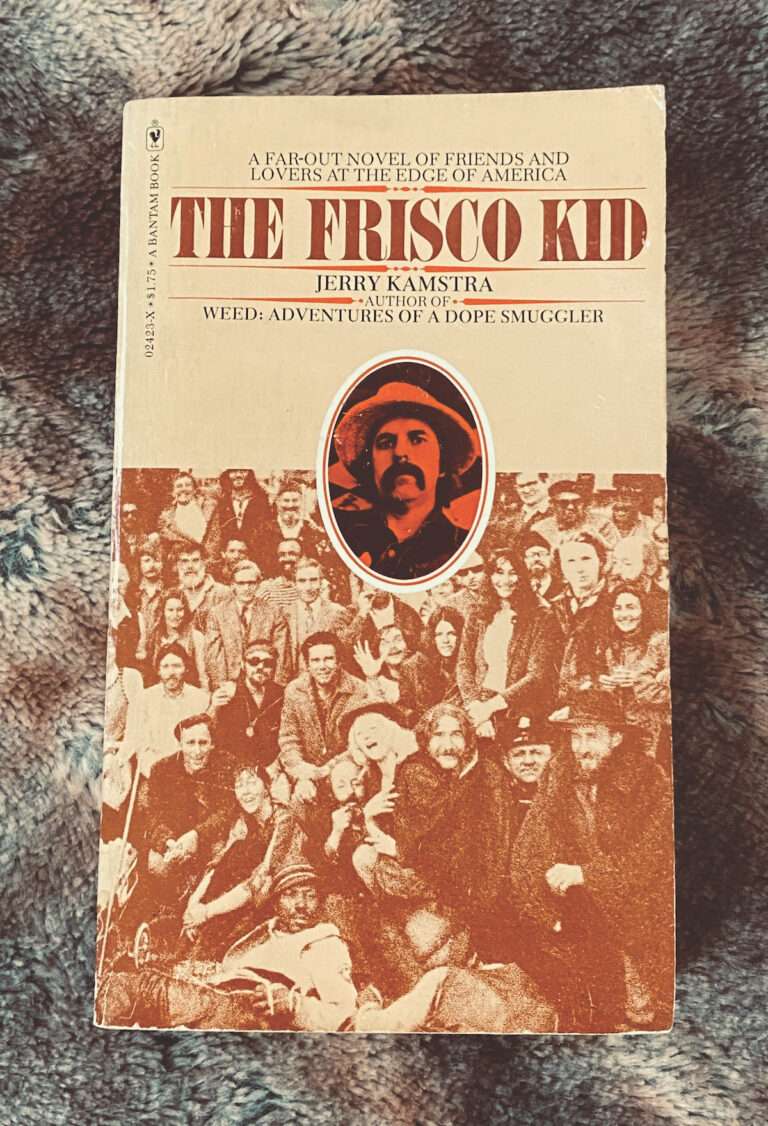
I spend my days and years haunted by the past; whether my own or someone else’s makes little difference. My father’s intense love for Old San Francisco imprinted itself upon me at a young age, and to this day I wistfully recall a Depression-era city of drunken Swedes and striking longshoremen that I never actually experienced.
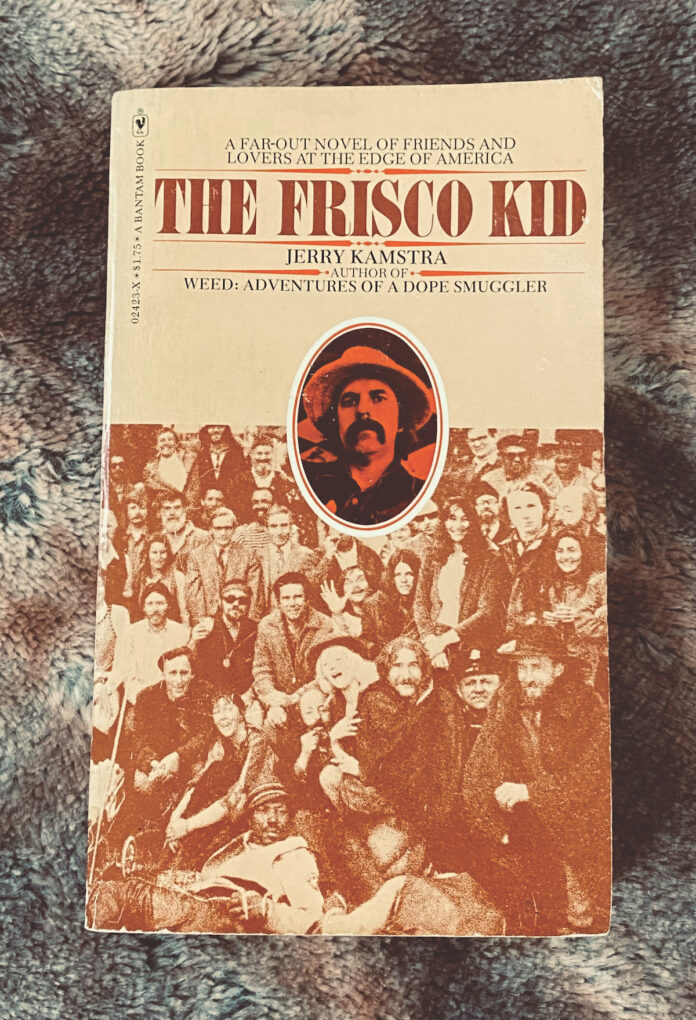
Twenty five years ago, while living in San Francisco and attending a class taught by poet Diane di Prima, I happened upon a Beat anthology which contained a bittersweet morsel from a book called The Frisco Kid, by Jerry Kamstra. My curiosity peaked, I did some research and tracked down a copy, and the book—a raw, poetic reminiscence of Kamstra’s time spent among the Beatniks of San Francisco’s 1950s-era North Beach—proved to be the most beautiful and heart-rending book I’ve ever read. Four copies now sit on my bookshelf, along with a copy of Kamstra’s Weed: Adventures of a Dope Smuggler.
So taken with The Frisco Kid was I, that a few years later I left a message in a Beat-related chat room inquiring as to whether anyone knew what had become of Kamstra. I received a response from a man who told me that Kamstra lived in Santa Cruz. He also related a story that was as haunting as Kamstra’s own memoir: His mother, an up-and-coming singer in San Francisco’s underground countercultural cafe scene, had overdosed in a hotel room in La Paz, Baja California, in the mid-1960s, leaving him, a toddler, alone with her body until they were discovered. His father, a renowned San Francisco Beat painter named Michael McCracken, had died tragically and in obscurity in a London hospital not long after, leaving him orphaned. Both his parents had known Kamstra.
Kamstra himself outlived his North Beach colleagues by over 50 years; he died in 2019. Through his obituary I was finally able to learn his entire life story, which, unsurprisingly, was far more interesting than I could have imagined. Knowledge was never so bittersweet.
The Beatniks are all but gone now. Only their literature remains, and much of that is lost in the dustbin of history. I was fortunate to know one Beat writer in person—Diane di Prima. During the year and a half I spent under her tutelage, I learned to fine-tune my own writing to an uncanny degree and to embark upon magical journeys through my imagination. It was during one such inner journey that I met an iteration of another of my Beat literary icons: the ghost of William S. Burroughs. But that is a story for another time.
Mark Fernquest lives and works in Northern California. He imagines he is a writer.
The New Year’s Baby is a tradition that goes all the way back to ancient Egypt, though many of us probably associate it with more recent iterations, such as JC Leyendecker’s vintage covers for the Saturday Evening Post stacked at the antiques store alongside plaster busts of Dionysus, who was symbolically reborn on Jan. 1, bringing fertility for the year ahead.
While hailing Dionysus and philosophizing with a hammer, Nietzsche said that in order to be a creator one must first be a destroyer. And so, armed with New Year’s resolutions and determination to bring forth our stronger and wiser selves, let’s look at what is meant by “ego death,” a common term in spiritual circles.
The process of awakening follows a familiar pattern. We find ourselves in a crisis for which our conventional personality cannot find a solution, because it does not operate in four dimensions. But in this dark night of the soul a glimmer of light appears, the divine spark greater than the troubled ego.
We can experience this in a Pure Consciousness Event, typically triggered by a really bad day with much weeping. When the suffering ego exhausts itself, a rainbow appears through the tears. Staring at the ceiling, or with one’s face buried in a pillow, we suddenly realize we’re alert, wide awake even, but at a level beyond name and form. What happened to that miserable person we were just a few minutes ago? We have now passed through the first gate, and possess an entirely new perspective on what is meant by the word “me.”
In Christianity, this process is called making room for God, while Hinduism might say it’s the realization of the unity of atman, or soul, and braman, or spirit. Alchemists would call it the Great Work, astrologers the realization of the natal chart and Jungian psychologists the relocation of the center of gravity in the personality from the ego to the Self, which includes the shadow and contrasexual dimension, which is called the anima for males and the animus for females.
Bidding farewell to one’s outgrown ego is less an event and more a process. It is a long journey, filled with growing pains and confusion. Consciousness must come to know that many more things comprise the personality than previously imagined, including a flaming energy source at the heart that one intuitively feels comes from somewhere else.
We’ll examine more of the rebirth process in this column throughout January, as we valiantly vow to have a Happy New Year, no matter what life sends our way.
Since the state announced plans to close the Sonoma Developmental Center several years ago, the potential of the sprawling property has captured the imaginations of Sonoma County residents.
The 900-acre plot of land near Glen Ellen is seen by many as a rare opportunity to address worsening problems—among them, a lack of affordable housing in the midst of a worsening climate crisis and soaring inequality.
That’s not to say the SDC is an entirely blank slate. It has plenty of history—good and bad.
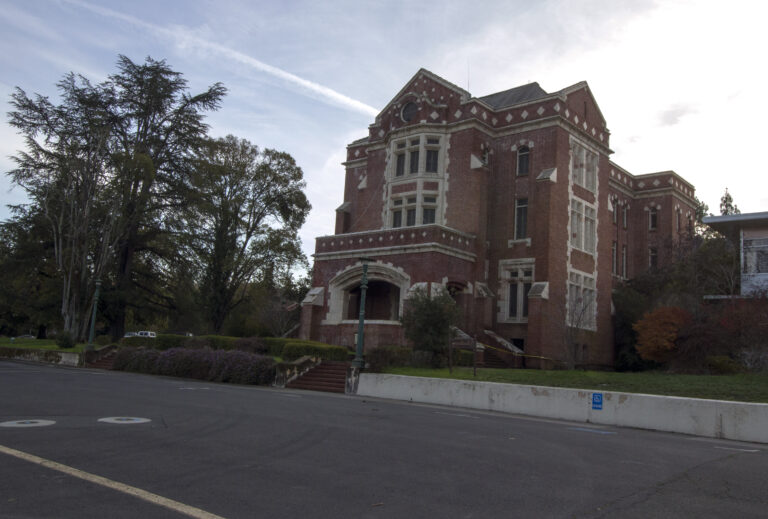
Nestled between the Sonoma Valley Regional Park and Jack London State Historic Park, the center of the property is populated with buildings spanning the past century-plus.
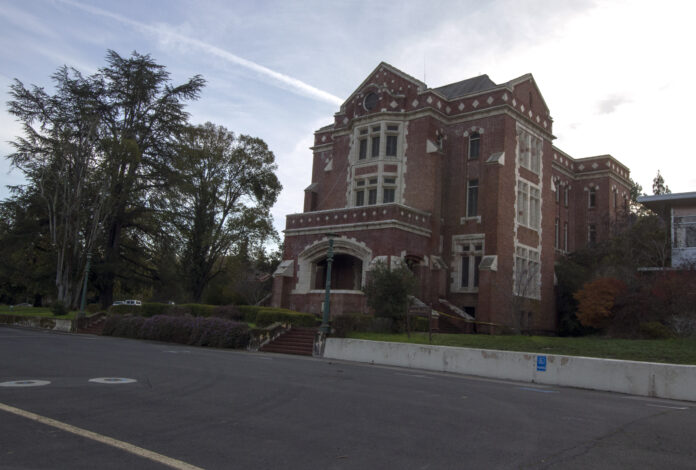
The brick-clad “Main Building,” constructed in 1908 after its predecessor was damaged in the 1906 earthquake, stands at the end of a long drive dotted with pollarded trees and flanked by a variety of vacant buildings.
The SDC was one of numerous state-run “developmental centers” sprinkled throughout California. For decades, the campus served as a medical and residential center for people with mental illness and various medical conditions. At the height of its use, the SDC was the county’s largest employer and housed thousands of residents, who were offered job training and access to farms and orchards.
However, the track record wasn’t all positive.
“Between 1909 and 1952, [a] total of 5,530 men and women were involuntarily sterilized at Sonoma State Home, more than at any other state hospital or at any single facility in the nation,” says the SDC planning website. The practice was legal in California until 1979.
On a late-December weekend tour, the campus was deserted except for a few dog walkers wandering the grounds, some of whom headed off to explore the hills above the main campus.
In 2015, the state announced plans to close the developmental center. It was officially closed in late 2018 after all residents were relocated. Now, the state wants to sell the now-surplus land.
The state has paid to maintain the buildings, but most of them are no longer used.
To residents of the surrounding areas—and, presumably, real estate developers—the next chapter in the history of the SDC represents enormous potential. In an age of great systemic problems, the SDC looks like a relatively blank slate which could be used to address some local societal problems.
However, the vision considered by planners has been limited since 2019 when the state legislature passed a bill defining the process to plan the future use of the SDC. Although the property is state-owned, as a form of courtesy, the state would collaborate with Sonoma County on a plan.
Per the state law, the plan needs to include market rate and affordable housing; preserve open space around the 180-acre developed core; and, likely the most unpopular restriction, be mindful of the “economic feasibility of [a] future development.” In other words, the state wants to sell the property to a private party and the plan should allow the future owner to make money.
The baked-in costs of redeveloping the SDC make the last requirement a significant constraint on any possible plan. All told, the cost of tearing down buildings and remediating the property is expected to cost the future owner $100 million or more. As a result, if the new owner intends to profit on the project, they’ll want to build as many market rate—read: expensive—units and commercial buildings as possible.
The three alternatives released in November call for between 990 and 1,290 units of housing, 75% of which would be market rate. Almost immediately, the proposals were met with frustration and calls for a “4th alternative.” One common concern is that the total number of housing units is too high and the portion of affordable units is too low.
According to the latest Regional Housing Needs Assessment released by the Bay Area planning agency last month, Sonoma County needs to construct 3,881 affordable housing units in the unincorporated county for people making less than a Moderate Income between 2023 and 2031. A Moderate Income in Sonoma County is currently defined as less than $123,950 for a family of four. Of the total required, 1,036 units need to serve extremely low-income residents, currently defined as a family of four that makes less than $34,900 per year.
Facing that massive need for affordable housing, it might be tempting to build as many new units on the property as possible. However, many have concerns about evacuating a large number of residents from the property along Highway 12 during a fire, and about the long-term transportation and climate impacts of building a significant housing development far from any existing city.
On Tuesday, Jan. 25, the Sonoma County Board of Supervisors will consider the three proposals on the table. It remains unclear whether the Supervisors will push for a fourth alternative.
The Bohemian took a tour of the property in December with two of the many people following the SDC planning process.
Bonnie Brown, a Sonoma Valley resident, advocates for reusing as many of the existing buildings on the property as possible. Brown argues that this approach would save a developer money and be more environmentally-friendly, since construction is a carbon-intensive process.
Tracy Salcedo, the Bohemian’s second tour guide, prioritizes maintaining the open space surrounding the SDC’s core. The author of numerous hiking guides, Salcedo sees the potential of having hundreds of additional acres of open space in addition to the nearby Jack London State Park.
“What I do see personally as being important, and I think will always be important, is preservation of the open space, because there has not been a time in human history when it hasn’t been important for us to be able to access wildlands for us to make that connection,” Salcedo said.
Ultimately, Salcedo, who has written about the SDC planning process for publications including the Kenwood Press, sees the process as a balancing act. Different advocates are excited by different aspects of the property today, and the needs of future generations are always in flux.
The trick will be for the numerous groups to come together around a shared vision, a process Salcedo already sees happening. Whether they can break free of the financial constraints set by the 2019 state law is another question.
Art Moura—refreshingly—doesn’t have a significant online presence. I pieced my knowledge of him together through different articles and time spent with images of his work.
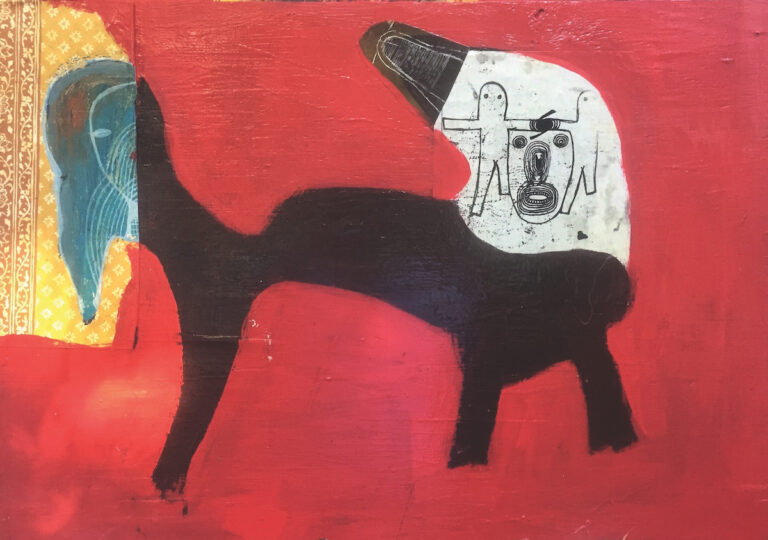
Moura’s story is interesting—he’s traveled extensively in Spain, worked as an electrician and—until its demise in a 2018 demolition derby—drove a Volvo 740 Station Wagon covered in doll’s heads, painted figures and mannequin legs. Growing up in Santa Rosa, I saw this car many times.
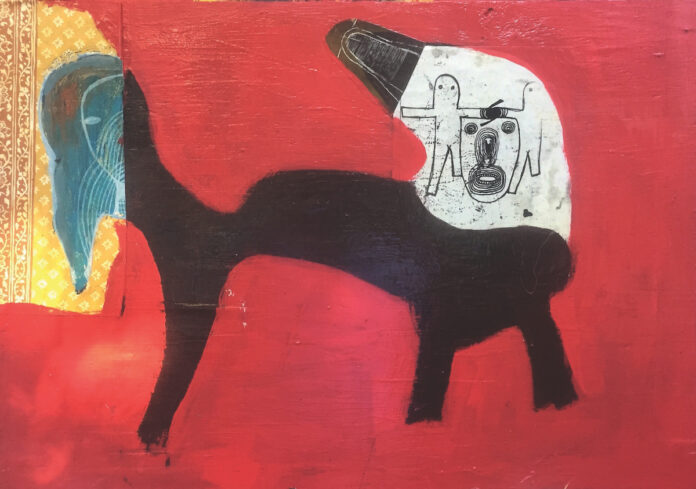
Among other things, Moura creates dolls—I would call them creatures—out of found objects such as fabric, paper and wire. Looking at them is intense. I spent a while with the images I found from Moura’s exhibition with the Good Luck Gallery in Los Angeles in 2015 and came away feeling slightly haunted, as though his gaze was on me.
In explaining his process, Moura says that a piece isn’t complete until it has a soul. In an interview at the 2015 Good Luck Gallery exhibition opening, Julian Stern wrote, “Moura explains that, though he doesn’t believe his pieces to truly have souls, he imagines them vividly and personifies them. Each of them has what he describes as a rascally, slightly wounded personality.”
I don’t believe that Moura doubts his pieces truly have souls—I think he knows they do. Something truly magnificent about the motivation to create art is its root in the experience of inspiration, in its etymological sense, from the Latin inspirare, meaning “to breathe life into.”
For the creator or artist, the experience of inspiration is a transfer of vital force from an internal to an external manifestation, a.k.a. the imparting or producing of a soul. It is what separates bad art from good art, and here the word bad could be substituted with dead, or sterile. “Bad” art meaning lifeless art, lacking that pulse of vitality that animates “good” art, or simply, art that is alive. This is how the artist knows their work is real, even if it stares back at them mockingly or with the X-ray vision one’s art can sometimes have when it takes shape outside of their own consciousness.
This is an alchemical process, taking rags and wire, or paint and canvas, and creating something vital from them. No, the creature does not take literal breaths, does not independently reach its hand out or stand up on its own, but it is undeniably alive, animate with the inspiration by which it was conceived.
This imparting of soul is what makes Moura’s work such a reactive pleasure to experience.
His latest exhibition is on view at the Hammerfriar Gallery in Healdsburg. The video his daughter, Aja DeWolf Moura—an exceptional artist in her own right—made of his creative process is also on view for the length of the exhibition, as well as on her website at ajadewolfmoura.com.
North Bay-native Mo Mandel is a comedian and actor who’s been seen on TV shows including Conan, Chelsea Lately and 2 Broke Girls. This week, he’ll be onstage, delivering standup at two shows. First, Mandel gets funny at a show hosted by Barrel Proof Comedy on Thursday, Dec. 30, at Sally Tomatoes (1100 Valley House Dr., Rohnert Park. 7pm. $15–$45. barrelproofcomedy.com). Then, Mandel headlines the annual “Best of the San Francisco Stand-Up Comedy Competition” showcase on Friday, Dec. 31, at Marin Center (10 Avenue of the Flags, San Rafael. 9pm. $25–$58. marincenter.org). Covid mandates apply.
North Bay
Walk It Off
One popular way to welcome in the new year is with a First Day Hike at one of the North Bay’s parks. These hikes include a New Year’s Day Hike of Mount St. Helena, in Napa Valley, on Saturday, Jan. 1 at 9am (napaoutdoors.org). Additional hikes are offered at Jack London State Park (jacklondonpark.com) and Sugarloaf Ridge State Park (sugarloafpark.org) in Sonoma Valley, both on Jan. 1 at 10am. The Stewards of the Coast & Redwoods leads four walks among the Armstrong Redwoods on Jan. 1, 10am to 1pm (stewardscr.org). Friends of Mt. Tam offers a hike of Mount Tamalpais State Park on Sunday, Jan. 2, at 9am (friendsofmttam.org). Covid mandates apply.
Healdsburg
New Year Jazz
Featuring the region’s best players performing an eclectic mix of jazz with diverse influences, Hotel Healdsburg’s Jazz Music Series rolls into 2022 with an intimate concert outdoors at the Fireside Lounge at the hotel’s Spirit Bar on New Year’s Day. Curated by local arts ambassadors Healdsburg Jazz, the weekly series presents a performance by the Neil Fontano Trio; fronted by pianist Neil Fontano and including Trevor Kinsel on bass and Ian Scherer on guitar. The trio plays a blend of jazz and Harlem swing on Saturday, Jan. 1, at 25 Matheson St., Healdsburg. 5pm. Free. healdsburgjazz.org/hotelhealdsburg.com. Covid mandates apply.
Napa
Grand Return
After a 22-month hiatus due to the pandemic, Napa’s acclaimed Jarvis Conservatory relaunches the monthly concert series, “It’s a Grand Night for Singing,” with a concert on New Year’s Day. The longest-running show in the Napa Valley returns to the conservatory’s jewel box theater for it’s 25th season, which will also see the musical torch passing from longtime host Richard Evans to newly-named Resident Music Director Frank Johnson. Hear popular Bay Area vocalists and up-and-coming talent at the monthly singing series, opening on Saturday, Jan. 1, at 1711 Main St., Napa. 7pm. $20. Jarvisconservatory.com. Covid mandates apply.
Matt Metzler’s letter (“Historical Accuracy,” Letters to the Editor, Dec. 22) about naive exhibits at Mission Sonoma State Park, like much recent scholarship, attempts to blame genocide upon the Spanish Viceroyalty and Mexican, Catholic missions.
However the cultural violence of Christianity affected the Native Californians, a firm study of the well-researched life of Chief Marin shows the missions as both a refuge from settler violence and an education in adapting to new technologies such as steel, firearms, the written language and horses. Spanish-era documents show a self-criticism of their failings, and renewed legal rights—such as voting and owning property—for the Indians. Chief Marin was an elected alcalde in both Mission Dolores and Mission San Rafael Arcangel.
All of these rights were removed by the new State of California, in 18 of the 24 paragraphs of the 1850 State of the State address to the California legislature by our first governor. These paragraphs deal solely with the need to make a war of complete annihilation against the Native Californians.
Therefore, we have to look at the actual intentional attempted genocide, by American settlers of the Golden State, with government bounties, and not fall into the trope of “Black Legend” anti-Catholic scapegoating.
Neil Hammari
Marin City
DEPARTMENT OF CORRECTIONS: Last week’s Bohemian/Pacific Sun news article (“Mouse Management,” Dec. 22) incorrectly stated that the approved plan includes dropping 2,880 pounds of poison on the Farallon Islands. That figure should have referred to the weight of the poison-laced pellets, not pure poison.
In addition, last week’s feature story (“Countdown to the Countdown,” Dec. 22) about New Year’s Eve events failed to emphasize that all in-person gatherings will follow Covid-related safety and health protocols, including requiring proof of vaccination or negative Covid tests, and requiring face coverings indoors.
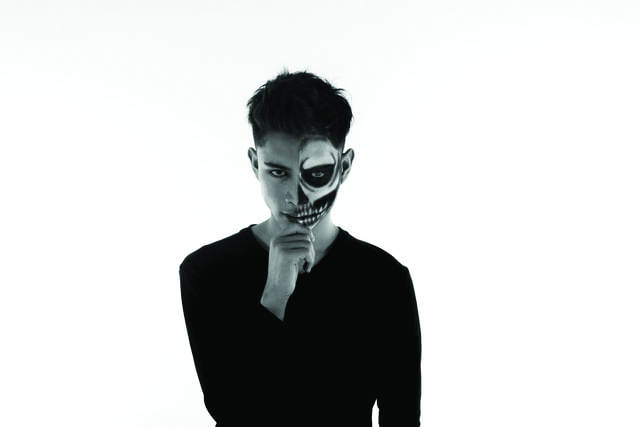
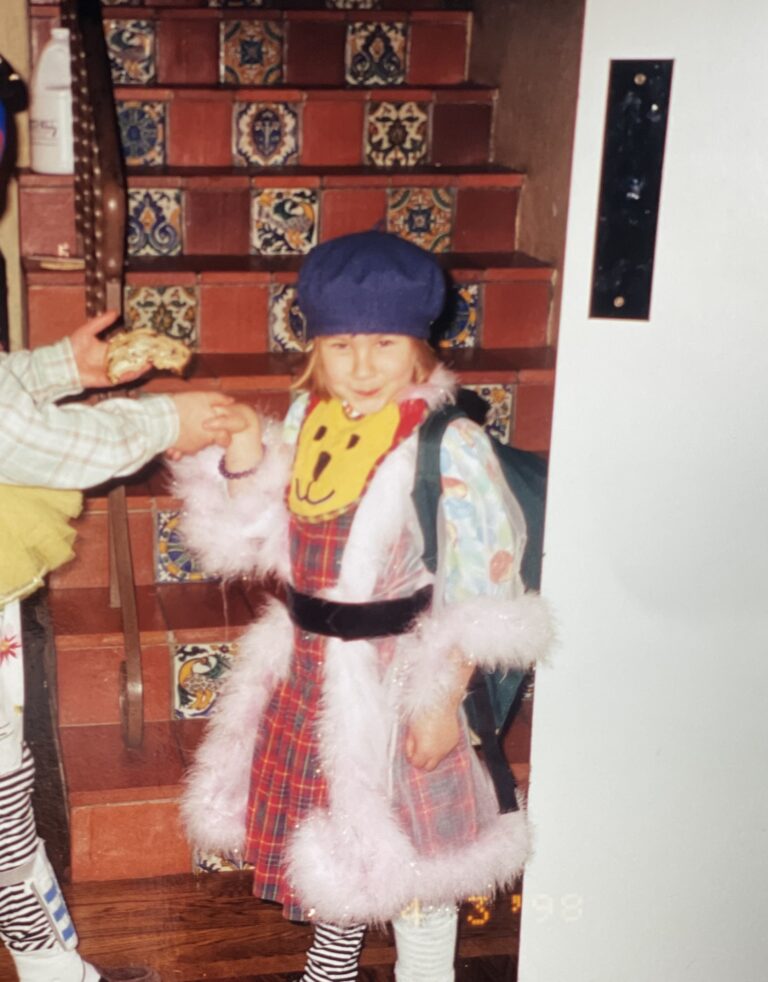
I thought for a while about this week’s “Look.” With 2022 around the corner bringing us to two full years of overt strange, and last week devoted to sequins and metallics to keep spirits shining, this one needed something extra.
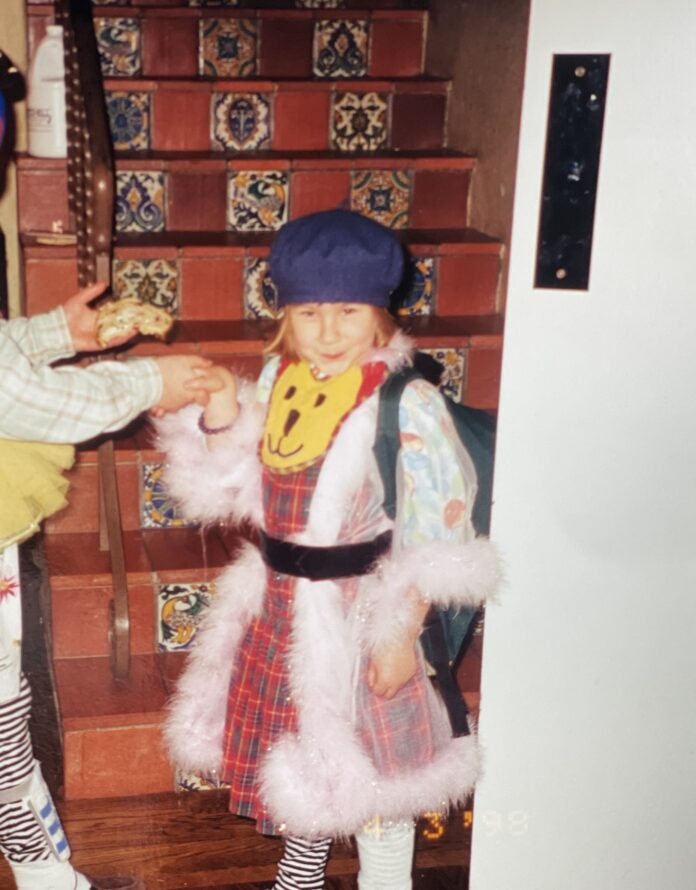
I sat contemplating fashion for a while, and the image flashed into my mind of me as a little girl, wearing a long, pearl-colored slip on my head.
As a little girl I had a rebellious relationship with scissors—resulting in generally very short hair and precarious bangs. I also had a deep love of dressing up and a sense that glamour and long hair were deeply associated. There was a mood, a character, I felt I couldn’t really access without a mane of hair to gracefully draw over one shoulder and stroke.
I found a solution in my mother’s slips, which more often than not went unused—the late ’90s rendered the slip largely irrelevant, except to young children playing dress up. I would wrap and secure the elastic waistline around my head, letting the fabric hang down my back, or else if I was going for casual chic, I would secure it in a scrunchie.
Dress up was a huge part of my childhood—not long after my slip-wearing, hair-cutting days ended I began to experiment with shirt-cropping, fringe-cutting, power-clashing and so on. There was a year in middle school where I recall going to Six Flags with upwards of 16 rings on my fingers, all of which had to be removed when I went through security.
My childhood fashion sense—free, curious and inimitable—was influenced by movies like Auntie Mame and pictures of Greek gods and goddesses. I was fearless in my experimentation and proud of my combinations.
Now, as an adult woman who studies fashion from an artistic and an anthropological standpoint, I find incredible benefit in returning to the mindframe of that fearless, creative little girl in her mother’s slip. It reinforces my sense of courage in creativity without boundaries.
As 2022’s sun rises in the sky and a new year breaks, I look back on those first few hilarious outfits and take inspiration from the open-minded, free-thinking dresser I once was. Now is a time when creativity without boundaries is needed, in fashion and in everyday life. This is a great moment to let the inner kid offer some refreshing direction.
To this end, I’m calling on all the fashion heads out there who started early. From Wednesday Dec. 29 through Wednesday Jan. 5 post your wildest childhood fashion photos to your instagram story, tagging @pacificsunweekly or @northbaybohemian and using #firstlook. We will feature you on our socials, and the winner will get a special shout out in next week’s “Look.”
Looking good, everyone.
Love,
Jane Jane Vick is a painter, writer and journalist who has spent time in Europe, New York and New Mexico. She is currently based in Sonoma County. View her work at janevick.com.
In reference to your Dec. 29th issue, the letter from Mr. Neil Hammaris (“Historical Veracity”) whitewashed the treatment of the now mostly extinct indigenous tribes of what we now call the San Francisco Bay Area, and shows his profound ignorance of history. The indigenous people did not want or need anything from the Europeans—not their presence, religion nor inventions.
The...
When he’s not writing, Jonah Raskin is writing; which is to say he is always writing.
The prolific author and frequent contributor to the Bohemian and Pacific Sun seems to publish something every year. And nothing changed during the pandemic.
Out now, Raskin’s latest literary wonder is the novel, Beat Blues: San Francisco 1955, which features fictional cameos by several of...
Love comes first: We need unity, forgiveness and peace to find a loving solution.
We understand we all need understanding, and we should agree to try our best to create it. Only experience and facts are the way to guide us. We know that we are different. But just because our parts are not compatible with your engine, does not...
I spend my days and years haunted by the past; whether my own or someone else’s makes little difference. My father’s intense love for Old San Francisco imprinted itself upon me at a young age, and to this day I wistfully recall a Depression-era city of drunken Swedes and striking longshoremen that I never actually experienced.
Twenty five years ago,...
The New Year’s Baby is a tradition that goes all the way back to ancient Egypt, though many of us probably associate it with more recent iterations, such as JC Leyendecker’s vintage covers for the Saturday Evening Post stacked at the antiques store alongside plaster busts of Dionysus, who was symbolically reborn on Jan. 1, bringing fertility for the...
Since the state announced plans to close the Sonoma Developmental Center several years ago, the potential of the sprawling property has captured the imaginations of Sonoma County residents.
The 900-acre plot of land near Glen Ellen is seen by many as a rare opportunity to address worsening problems—among them, a lack of affordable housing in the midst of a worsening...
Art Moura—refreshingly—doesn’t have a significant online presence. I pieced my knowledge of him together through different articles and time spent with images of his work.
Moura’s story is interesting—he’s traveled extensively in Spain, worked as an electrician and—until its demise in a 2018 demolition derby—drove a Volvo 740 Station Wagon covered in doll’s heads, painted figures and mannequin legs. Growing...
Rohnert Park/ San Rafael
Local Laughs
North Bay-native Mo Mandel is a comedian and actor who’s been seen on TV shows including Conan, Chelsea Lately and 2 Broke Girls. This week, he’ll be onstage, delivering standup at two shows. First, Mandel gets funny at a show hosted by Barrel Proof Comedy on Thursday, Dec. 30, at Sally Tomatoes (1100 Valley House...
Matt Metzler’s letter (“Historical Accuracy,” Letters to the Editor, Dec. 22) about naive exhibits at Mission Sonoma State Park, like much recent scholarship, attempts to blame genocide upon the Spanish Viceroyalty and Mexican, Catholic missions.
However the cultural violence of Christianity affected the Native Californians, a firm study of the well-researched life of Chief Marin shows the missions as both...
I thought for a while about this week’s “Look.” With 2022 around the corner bringing us to two full years of overt strange, and last week devoted to sequins and metallics to keep spirits shining, this one needed something extra.
I sat contemplating fashion for a while, and the image flashed into my mind of me as a little girl,...