In the Eye of the Beerholder

Craft beer label art explodes

You may have noticed that craft beer has taken the supermarket cold box aisle by storm. Along with the revolution in unique brews has come a new spin on the look of beer cans and bottles. 

Sparked by Petaluma’s Lagunitas Brewing Co.’s legendary Lagunitas IPA label, the North Bay—perhaps more than anywhere else in the country—marries the art of beer with the art of, well, art.

“We put a lot of work and care into our brewing process and ingredients,” says Paul Hawley, co-founder of Fogbelt Brewing Co. out of Santa Rosa. “I try to approach our labels with a respect for everything that went into the liquid inside.”

“Our brand is about bold simplicity,” says Bryan Rengal, co-founder and Head of Sales at Old Caz, named for West County’s Old Cazadero Road. “Each can stands out on a shelf but doesn’t distract from the taste of what’s inside.”

“We think of our beers as elegant and balanced,” says Erin Latham-Ponneck, chaos management specialist and adult in charge—a.k.a. general manager—at Santa Rosa’s Moonlight Brewing Company. Moonlight’s bold, simple designs make a marked distinction from many busier labels commonly found on other craft beers. “On a packed beer shelf our elegant and balanced labels stand out in a sea of loud, busy cans.”

As suits the counterculture ethos of craft beer, label styles often go against trend. “Our labels are edgy because they are not edgy; we don’t follow the status quo or trends, we don’t go in for hype,” Latham-Ponneck says. Brian Hunt, founder and heart and soul of Moonlight adds, “One problem with ‘edgy’ is that when one goes too far, one falls off into the abyss of BS.”

But Is It Art?

Perhaps the most famous example of this balance between bold and buyable is the Chupa Chups lollipop wrapper designed in 1969 by the surrealist painter Salvador Dali. Still in use today, the label had an of-the-moment artistic appeal that catapulted the Spanish candy brand into global recognition and brought in billions of dollars in revenue. Art leading commerce.

Josh Staples, of the HenHouse Brewing Art Department, says, “Making the art on our cans an additional level of entertainment for our customers is very important to everyone at HHB, for sure.” HenHouse’s signature “Hen” character, which Staples invented and drew, is often depicted costumed in humorous scenarios. Let’s cut to the chase: “Beer drinkers are going to be spending some time with these cans in front of them and in their hands.”

This conceptual approach to marketing has its roots in great design.

Hawley has “been drawn to the graphic style of block and screen printing. The exaggerated contrast and colors, use of negative space, and limited palate can create powerful imagery that is anything but subtle.” The classic design approach conveys a real sense of place. “Most [Fogbelt] beers are named after giant coast redwood trees found in the fog belt of Northern California, so many of our labels reflect this connection to the outdoors.”

Rengal is “a fan of Buckminster Fuller’s ‘Do More With Less’ ideas and the concept of design through engineering.  Practical and aesthetically pleasing can happen at once.”

“I’m a huge fan of Chris Ware and his Acme Novelty Library,” Staples says. “Basically, cartoons for grown-ups from the ’70s and ’80s.” Ware’s is a graphic design-leaning art “influenced and inspired by hand-illustration, typography and printing.”

Yet, this is art that sells. “[Our cans are] recognizable from 20 yards and the more beers on someone’s shelf, the more expressive the brand becomes as the Old Caz rainbow [of monochrome cans] shows itself,” Rengal says, explaining the practical advantage of a unique-looking label.

Staples has “hand-drawn and specially created [a number of fonts and typefaces] for the company,” carrying forward the DIY origins of craft beer into its branding.

Outsider Art

The last great major-brand beer labeling coup may have been the Coors mountain logo that turns blue when cold, saving potential drinkers the trouble of using their sense of touch to determine drinkability.

Craft beer companies rarely have the resources for such vital innovations.

“When the lockdowns came in 2020, we lost 100% of our business income,” says Rengal of Old Caz. “Kegs were no longer going to restaurants and our taproom was shut down, so we immediately pivoted to cans.  We reached out to a couple designers, but couldn’t afford it so decided to step out of our comfort zone and figure it out.

“I used a borrowed account for Adobe Illustrator and spent a weekend watching YouTube videos and tutorials and playing around with the program … within a week I had our first can, Free Craigs Tropical Hazy IPA, ready for the printers.”

Rengal and his team are used to doing things themselves. The brewery was built “with very little money using broken down equipment and salvaged parts.”

Fogbelt Brewing makes it a point of pride to support the talent in the art community. “The art for our labels comes from a variety of artists,” Hawley says. “We often collaborate with local painters, graphic artists and photographers. I do a lot of the graphic design in-house, but prefer to work with people who are much more talented.”

Staples invented the image of the hen that spawned HenHouse-the-brand. “The constant, stoic hen keeps it all consistent,” he says. “These days, we also have an awesome in-house marketing team keeping track of the beer family tree, and how the story and labels all fit together with the beer roster.”

It’s in the Name

Great art needs a great title. Names like Little Sumpin’ Sumpin’, Hop Stoopid and Phase Shift—from Lagunitas—set the tone as the modern craft beer industry took off.

Latham-Ponneck takes the fun seriously. “We believe you should always have a sense of humor, hence our fun beer names,” he says. “We design as a team, always seeking input from all of our employees. It’s a collaborative process.” Creating together is a part of their company DNA.

Rengal agrees that “craft beer is meant to be fun! Beer names can be inside jokes, social commentary or just a silly reference, and a good ‘sticky’ name can lend itself to loads of creative expression. There’s LOTS of room for creative types to thrive in the beer industry, because at the end of the day we’re not putting rockets into space, we’re not doing open heart surgery, we’re making beer.”

“I’ll just draw a couple silly 3D holes with silver cans that look like Einstein and Schrödinger popping out of them,” Staples says, about the winning strategy of whimsy. “Then, with a handful of ideas in place, I can just draw pictures and listen to records all day.” Perhaps he works with a HenHouse Oyster Stout at hand. This writer did.

Culture Crush

0

Hollywood comes to West County, J.Lately brings his signature beats to Hopmonk, heavy metal at the Phoenix and run for your life—oops, your beer—at the Barlow.

Rialto Cinemas

Sebastopol

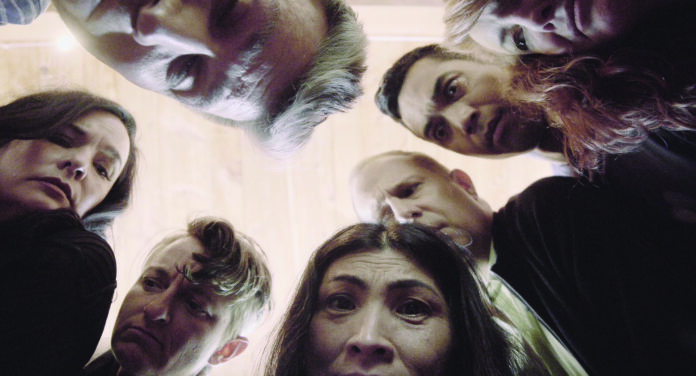
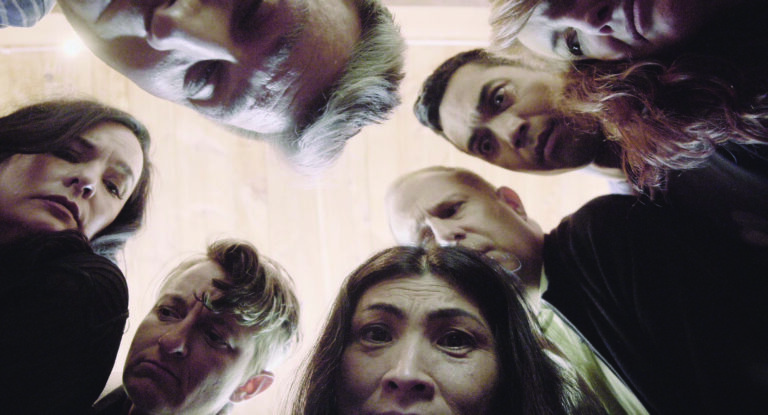
It’s time to get your lights, camera and action on for some  hyper-local cinema! This Thursday, Sept. 23, celebrate West County at a one-day-only fundraiser screening of the award-winning film Lost in the Middle, a feature comedy developed and shot in Sebastopol, Occidental and Forestville by Sonoma County local Angie Powers. Lost in the Middle won Best Feature in the Broad Humor Film Festival in Los Angeles 2019 and was named a Festival Favorite by Palm Springs’ Cinema Diverse. The star, Guinevere Turner—known for films like American Psycho (for which she wrote the screenplay) , The Notorious Bettie Page and the original television show The L Word, will be available for a Q & A after the show, along with other members of the cast and crew. Come see your home geography on the big screen, and support West County creativity! Proceeds go to the Occidental Arts & Ecology Center—where some of Lost in the Middle was filmed. 

The screening commences at 7pm, Sept. 23 at Rialto Cinemas, 6868 McKinley St., Sebastopol. 707.525.4840. Tickets at rialtocinemas.com. Please note: The Rialto requires proof of vaccination to attend.

Hopmonk Tavern

Sebastopol

Come out to your favorite Sebastopol tavern and music venue this Saturday, Sept. 25, for a stellar set from Sebastopol-grown, Oakland- and L.A.-shaped artist J.Lately. The local phenom distinguishes himself as an emcee with a soulful style and laid-back flow. A true appreciation for music, along with the unique ability to put everyday life into a relatable perspective, has allowed him to flourish in the Bay Area scene and beyond. A relentless drive keeps Lately on tour across the country with artists such as Zion I, Andre Nickatina, Locksmith and A-Plus of the Hieroglyphics, and now he’s back in the area! What does this portend for the next chapter of his auspicious music career? Come grab a beer and vibe out to the scintillating next chapter. You will happily say “I knew him when…” Don’t miss your opportunity to say you saw J. Lately before he was cool. Just kidding—he’s already cool. 

HopMonk Sebastopol, 230 Petaluma Ave., Sebastopol. 707.829.7300. Doors open at 9pm. Ages: 21+, tickets $15 advance and $18 at the door. www.hopmonk.com/sebastopol

 
Phoenix Theater

Petaluma

The Phoenix has some sweet shows lined up for late September and early October.  Let your hair down and get ready to headbang Wayne’s World–style Sept. 24  with Unleash The Archers. UTA embraces a commercial appeal that attracts music lovers of all types while staying true to their death metal roots. Their Abyss album won the 2021 JUNO Award for “Metal/Hard Music Album Of The Year.” This is your show if you need a hardcore release and a night of solid moshing.  Municipal Waste, one of the bigger names in crossover thrash, plays locally Sept. 24 and Oct. 5. Born in the sewers of Richmond, Va. in  2000 with the aim of spreading the shred, Municipal Waste played their first gig at a Richmond New Year’s Eve keg party in 2000/2001. Their fast, raw thrash drew from the tradition of DRI and Suicidal Tendencies. Catch them in Petaluma and try not to start a riot. 

Shows are Sept. 24 and Oct. 5 at the Phoenix Theater, 201 Washington St., Petaluma. 707.762.3566. Buy tickets and view more events at thephoenixtheater.com. Please note: The Phoenix Theater requires proof of vaccination to attend.

Farmers Market

Novato

The Downtown Novato Community Farmers Market continues to offer online ordering with curbside pickup. Orders can be placed by 5pm the day before the market and pick up instructions will be provided. More information about this service is available at ilovefarmersmarkets.org. Additionally, COVID-19 guidelines will be in place in compliance with local and state guidance to protect the health and safety of all in attendance. They ask that you please comply with the following guidelines to keep our market safe and open: Stay home if you are sick. Wear your face covering at all times. Wash your hands before entering the market. There will be handwashing stations provided, as well as hand sanitizer. Customers may choose their own produce, at the vendor’s discretion, and food sampling is not allowed. Practice social distancing by always maintaining a 6-foot distance from others. Make a shopping list to help make your visit to the market as short as possible, and limit interactions with others. Be prepared with small bills to offer exact change to vendors when possible. CalFresh is also accepted at the market. 

4pm, Tuesday, Sept. 28 at 7th Street and Grant Avenue, Novato. For questions, email in**@*****************ts.org or call (415) 999-5635. 

Letters to the Editor

Peace Wall Pt. Reyes protest and an appreciation for good journalism

ALT FACTS

Peter Byrne, in his opinion piece about the Peace Wall event and the Pt. Reyes protest, is right on many counts. Yes, those of us at the Sebastopol gathering were a bunch of alte cockers. That’s Yiddish for old folks, although a more direct translation would be considered scatological. But, ya know, Peter, in many Native traditions elders are considered role models and wise people because of our many years of experience in the world. I suspect you are in that category, but we have never met, so I don’t know for sure. And, another thing, you are certainly entitled to your opinions, but I think being afraid to criticize someone because they are a member of a racial minority, is racist. I hold everyone to the same standard of decency. Of course it was political suicide in the old days to stand up for Palestine. But the world has moved forward and some members of Congress, many of them people of color, are taking that risk and not losing their jobs. That’s all we are asking of Barbara Lee, who was willing to take a risk 20 years ago, and could hopefully work up the courage to take another risk today.

Lois Pearlman

Guerneville

PRAISE FOR DAYS

Am floored by your superb reporting. Pt. Reyes NPS debacle (Cows vs. Elk), an issue near and dear to my heart as a 3rd generation lover of Marin’s natural beauty and hater of all things political, led me to your exceptional articles on this issue. As I see the breadth of your coverage on this site I am further amazed. You deserve a Pulitzer on this one and others. You write the journalism I miss. If there ever was a time it was needed it is now!

Paula McNamee

EDITOR’S NOTE: Peter Byrne’s article, “Come Together,” Sept. 15, stated that protesters chanted at a Sept. 11 event in Sebastopol. The protesters did not chant, but did wave signs. The article has been updated online.

The Write Stuff

Linda Jay

Welcome to our new column, Luminary, in which the Bohemian asks questions of local luminaries who kindly answer them. We begin with Petaluma’s Linda Jay, a writer and copy editor who helps authors get “publisher-ready.”

Daedalus Howell: When an author comes to you with a book project, how do you know they’re a good client for you, instead of an insane person who just gives you a phone book of gibberish?

Linda Jay: On the back of my business card, you’ll see that the genres I work in run from “Business to Zombies.” That is the truth. I’ve done at least five zombie books. I prefer to work with authors who are open-minded and will not say, “I’ve worked on this book for 10 or 15 years.” If they say, “Here it is, but don’t do too much,” well, then don’t give it to me. I am a very thorough, picky editor, copy editor and proofreader. I can see a mistake at 50 paces. I’m just one of those annoying people.

DH: What’s the most important aspect of the author-copyeditor relationship?

LJ: The most important thing is, am I able to work with this person? Edits are suggestions. It is up to the author to accept or reject them. That’s as simple as it is.

DH: In your experience, what’s the difference between a novice writer and an experienced writer?

LJ: Well, first of all, they should have learned something, one would hope, depending on how many years they’ve already been writing. There’s a quality that I look for—is the person “educable?” One would hope. I would say that being open to suggestions is important. Oftentimes, novice writers are just, “Get this book out and don’t tell me … .” They have the wrong attitude toward editing.

DH: I love that idea—that editing is, in some way, a conversation.

LJ: Yes. And I’m not a scary editor. I always say, “Look, if you have any questions or anything, just email me.” I’m from the Midwest, I’m a friendly person. No, really, I am. If I had been raised in New York, I probably wouldn’t be like this, but Cincinnati is a very friendly place.

DH: On the other side of the equation, as a writer submitting articles to editors, how do you feel about that relationship?

LJ: I’m prideful enough to think that he or she is not going to find very many mistakes, because if he or she does, I should be in another field.

DH: I would trust you’re turning in extremely clean copy.

LJ: Yes.

Linda Jay can be reached at wordsbylj.com.

North Bay Cities Take Differing Approaches to Cannabis Dispensaries

Sausalito, Marin County restrict businesses while Santa Rosa aspires to ‘mecca’ status

In 2016, California voters legalized recreational cannabis for adults, setting off a rush of entrepreneurs who wanted to enter the newly legal market.

Legalization was intended to uplift people impacted by decades of cannabis criminalization, but the rollout has not been the same across the state. Local governments are allowed to decide whether to allow cannabis businesses to operate, resulting in a complicated patchwork of regulations.

Cannabis industry-insiders often argue that the extensive permitting processes and regulations lock out many of the people legalization was meant to help, leaving the business opportunities to those with the money and political savvy to reap the benefits of legalized weed.

A version of this dynamic is playing out in the North Bay. While Santa Rosa, Sonoma County’s largest city, has embraced cannabis businesses as a new tax revenue source, Marin County and its cities have hindered the spread of brick-and-mortar weed businesses.

Marin County

It’s ironic that Marin ordinances ban recreational cannabis storefronts, as the county lays claim to being the home of the first licensed marijuana dispensary in the nation. The Marin Alliance for Medical Marijuana opened in Fairfax in 1997, a year after California passed Proposition 215, an initiative which legalized medical marijuana.

Federal laws, however, prohibit the sale of marijuana, and owner Lynnette Shaw was forced to close the dispensary in 2011. Shaw fought the federal government for the right to stay in business.

“I spent 20 years in court as the test case to stop the marijuana industry,” Shaw said. “My case was the make-or-break. And I won.”

Shaw reopened the medical marijuana dispensary in 2017, in the same Fairfax office building it previously occupied. Now called the Marin Alliance Cannabis Buyers Club, it remains the only in-person dispensary in Marin County, although several cannabis businesses provide delivery service to residents.

That status could change in November 2022, when Sausalito voters decide whether to allow one recreational cannabis storefront and one delivery operation within the city limits. Sausalito’s local ordinances prohibit all cannabis businesses; however, sponsors of the ballot measure did an end-run by collecting signatures from 10% of the electorate, forcing the city to act. The City Council could either allow the cannabis businesses to open, or they could pass the issue to voters.

In a 3–2 vote in July, council members placed the measure on the ballot. The close vote seems to reflect the sentiment of Marin residents, who are divided about whether recreational cannabis businesses belong in the county.

The ballot measure was sponsored by Sausalito resident Karen Cleary, one of three owners of Otter Brands, a company wanting to open a retail cannabis dispensary in Sausalito. The other two proprietors are Sausalito CrossFit owner Chris Monroe and Seattle resident Conor Johnston.

Johnston is no stranger to politics. Formerly the chief of staff to London Breed when she was president of the San Francisco Board of Supervisors, he also served as the strategy advisor on her mayoral campaign. Today, Johnston owns Berner’s on Haight, a cannabis dispensary in San Francisco. He has been courting Sausalito officials and residents since 2018 on behalf of  Otter Brands.

Surely, Otter Brands proprietors had their eye on the prize when they crafted the very specific provisions of the ballot initiative. For example, the measure requires that prior to April 20, 2021, the applicant must have expressed interest in opening a storefront cannabis retail location during a City Council meeting, met individually with at least three city council members and hosted at least two community meetings. Otter Brands has met all these conditions and the many others listed in the measure.

“Otter might as well have put their name on the ballot initiative,” Laurie Dubin, a Larkspur parent, said.

Dubin belongs to several local organizations opposing recreational dispensaries, including Marin Residents for Public Health Cannabis Policies. Concerns center on the high THC potency of the products, the commercialization of the industry and cannabis use by youth.

For recreational marijuana, a person must be at least 21 to enter a dispensary. Anyone 18 or older with a medical marijuana ID card may also cross the threshold. However, Dubin maintains teens purchase cannabis products with fake IDs. She also fears that if the Sausalito initiative passes, it will open the door for ballot measures throughout Marin. Stores will pop up everywhere, she said.

Johnston claims licensed dispensaries have no impact on teen usage, citing a 2021 study by D. Mark Anderson of Montana State University. Regulating cannabis is the safest path forward, according to Johnston.

Getting the measure on the Sausalito ballot has been a significant undertaking for Johnston, a four-year process by the time of the election. Johnston says he has no plans to do it elsewhere in Marin.

“Eventually, this is all going to seem quaint,” Johnston said. “San Rafael and Novato and other towns in Marin will have dispensaries.

Sonoma County

After recreational weed was legalized, Santa Rosa aspired to become a cannabis hub.

The idea seems obvious enough. Producers in the historic Emerald Triangle would ship their product down Hwy 101 for quality testing and manufacturing in Santa Rosa, before the products were sent south to dispensaries in the Bay Area or Southern California.

By May 2018, just over a year after the market opened up, 38 companies had applied for retail permits, though only three were immediately approved. A total of 44 other companies vied for open distribution, manufacturing, testing and cultivation within city limits by May 2018, according to a city report from that year.

The sudden demand for industrial warehouse space caused rents to spike from around $1.00 per square foot to $2.00 per square foot in one year. Today, the city of approximately 175,000 has 12 licensed dispensaries operating within city limits with a few more in the pipeline, Kevin King, a city spokesperson, says. 

In 2017, both Sonoma County and Santa Rosa voters passed tax measures targeting cannabis businesses. Last fiscal year, Santa Rosa brought in nearly $1.9 million in tax revenue from the budding business sector. The majority of the money, almost $1.1 million, came from dispensaries.

Eddie Alvarez, the owner of The Hook dispensary who was elected to the Santa Rosa City Council last year, has been involved in the cannabis industry for decades. Alvarez argues that lowering the economic barriers to entry into the legal market is a form of equity. But now, with cities across the state competing for cannabis business, Alvarez fears that Santa Rosa’s role in the state’s cannabis industry is slipping.

“For the longest time, I saw Santa Rosa as the mecca of mota. I don’t know where it happened down the line, but Los Angeles started being progressive in their stance, and I saw it slip away from us,” Alvarez said, using a slang term for cannabis.

The most obvious marker of the change came this May when the Emerald Cup announced it would move its 2022 awards event, long hosted in Santa Rosa, to Los Angeles. The group will host a separate annual event, the Emerald Cup Harvest Ball, in Santa Rosa starting this December. Still, the announcement suggests there’s a new “mecca” for cannabis.

“The tribe has spoken and we are making the move to bring our Cup to the world’s largest cannabis community and industry – Los Angeles,” the Emerald Cup’s May announcement states in part.

EDITOR’S NOTE: Paragraph 16 has been updated to reflect the fact that customers 18 and older can purchase cannabis from dispensaries if they have a valid medical marijuana ID card. The final paragraphs of this article have been updated with additional details from the Emerald Cup’s May 2021 announcement.

Pot Shots

0

Marijuana musings

I’m a hippie survivalist. I came of age in the late ’70s/early ’80s, experimenting with weed and going to Grateful Dead shows while reading Soldier of Fortune magazine articles about the Soviet invasion of Afghanistan as the Pentagon and the Kremlin built enough Cold War nukes to barbecue the planet.

Flash back to 1978, when my friend and I bought a $10 gram of Columbian Gold off his brother and spent a weekend higher than kites. We were 10. Life will never be that wholesome or innocent again.

A few years later, Soldier of Fortune magazine seared the battle for Afghanistan into my pubescent American mind with color photos and bloody stories from the front lines. Then I began listening to the Grateful Dead.

Flash forward to 1984, when my friends and I climbed to the top of a windy Bay Area hill to illegally camp for the night. We watched Silicon Valley twinkle in the dark below, and then we climbed into our tent and hotboxed it with a pipeful of opiated Thai stick. I’ve never been so high before or since, and I never want to be again.

Between Dead shows, my bored teenage mind dreamed of joining the Mujahideen in their fight against the evil Soviet Empire. I wanted to smuggle arms to them, but instead I got hold of some Afghani hashish, and—acutely aware of the centuries of culture behind the aromatic product—smoked history.

Nowadays, pot is so strong that I don’t want to smoke it. If I ran the circus, I’d market a strain of 1986-quality “shake” for the older Gen X crowd. I’d sell 86™, the VW bug of the marijuana industry, in 35mm film canisters.

Will America’s current love affair with weed last? Who knows? Legal weed and electric cars and Afghani refugees flooding America are the stuff of my 8th-grade sci-fi dreams. The truth is, as California burns and the world heats towards an apocalyptic boiling point, we all have bigger fish to fry.

Which brings us back to my hippie-survivalist roots. In my idealized vision of the imminent greenhouse future, I spend my retirement in a neo-kibbutz in the Mendocino redwoods, where an organic garden is the center of our community. We grow vegetables and pot to Grateful Dead tunes each day, and armed with antique .303 Lee Enfield rifles and rusting RPGs, we trade hashish for salmon with pirate Russian fishermen on the local beach each night. No one ever fires a shot, and we all part stoned and satiated friends, as the gods of California have always wanted it to be.

Mark Fernquest lives and writes in Sebastopol.

Fish Tale

‘Little Mermaid’ makes splash

What’s a community theater to do when it wants to put on a large-scale family musical in the age of Covid? Well, if you’re Napa’s Lucky Penny Productions, you hire Scottie Woodard to direct the show and follow his lead in assembling a really creative design team and cast. Their production of Disney’s The Little Mermaid runs through Sept. 26.

The story of undersea Ariel falling for a land-living prince has been a kids’ favorite since the 1989 animated film. The stage show adds a few numbers—and pads its running time to two-and-a-half hours—but keeps all the favorite songs and characters. It’s usually produced on a large stage with a large cast, neither of which the relatively small Lucky Penny space can or, in these times, should accommodate.

There’s a small but magnificently detailed set by Brian Watson that transforms from a ship’s deck to an undersea kingdom and its various lairs with relative simplicity, aided immensely by April George’s terrific lighting design. Music tracks are used in place of a live orchestra, which is an understandable adjustment.

Woodard pared a listed cast of 20 down to nine and assigned most of the cast members multiple roles. They also act as stagehands and, in some cases, puppeteers. Even the audience is recruited to safely participate in a large ensemble number.

Kirstin Pieschke makes for a charming Ariel, and Tommy Lassiter is just fine as the typically bland but handsome Disney prince. Ariel’s friends Flounder, Sebastian and Scuttle are portrayed by puppets that are manipulated and voiced by Michael Doppe, Chanel Tilghman and the aforementioned Watson. As puppets, the characters lose some of their—for lack of a better word—humanity. While Watson’s Scuttle is appropriately silly and Doppe’s Flounder is lovingly earnest, I wish Tilghman’s Sebastian was bigger in voice and personality. All are supported by a strong ensemble.

Woodard also helmed the choreography and sound design. The character switches and hand-offs that occur onstage come off flawlessly. Sound levels were an issue, however, particularly with Tayler Bartolucci’s Ursula. Ursula is a character you should not have a problem hearing.

Minor performance and tech issues aside, if you’re looking to reward your kids for handling the last 18 months like champs, by all means pack ’em up and head under the sea. Just don’t forget your masks!

“Disney’s The Little Mermaid” plays through Sept. 26 at the Lucky Penny Community Arts Center, 1758 Industrial Way, Napa. Thurs–Sat, 7pm; Sun, 2pm. $25–$42. 707.266.6305. luckypennynapa.com
Proof of vaccination and masking are required to attend.

The ‘Incider’

0

Sonoma and Marin’s cider scene

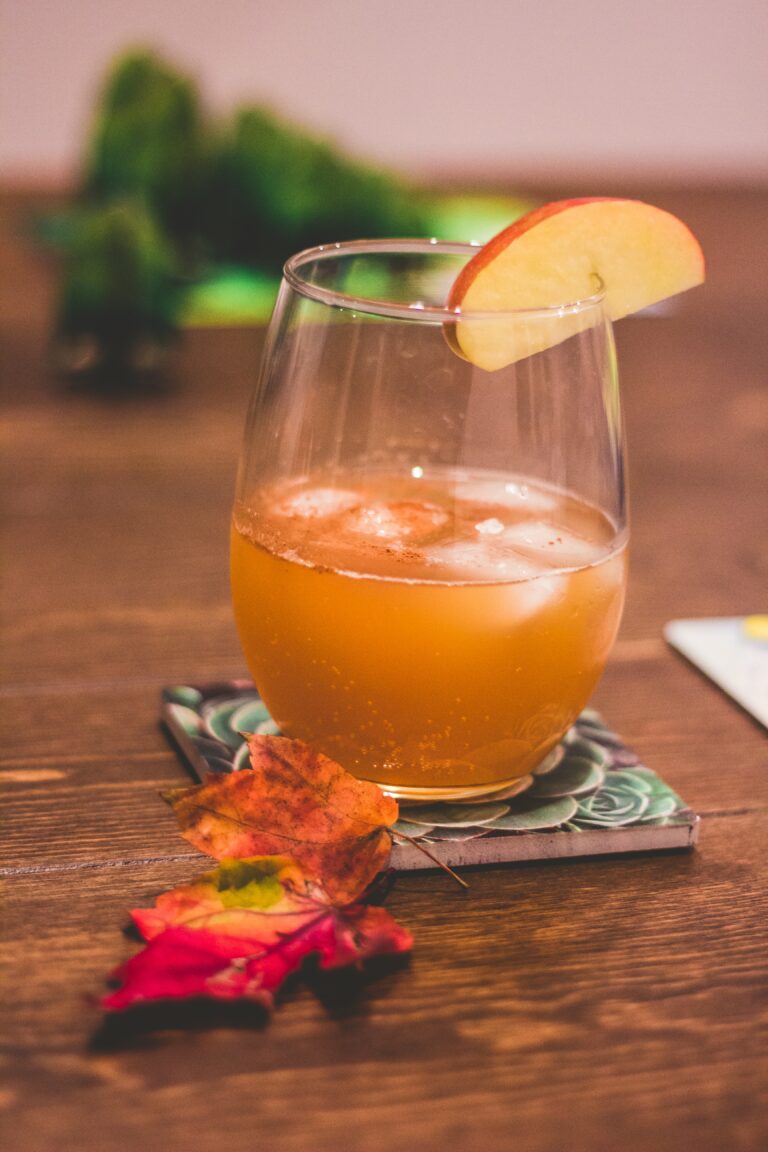
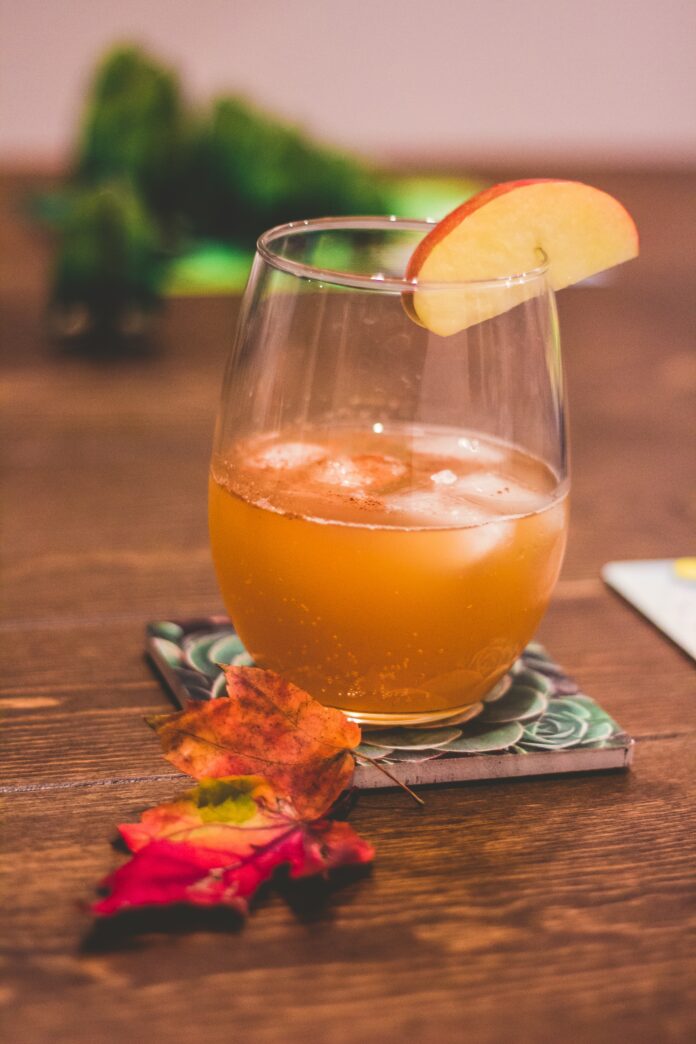
If you haven’t yet been bitten by the craft cider bug, I hope I can convince you to get out there and try some of the excellent local craft ciders being brewed up by our local cideries.

As a longtime wine industry veteran and wine lover/aficionado, I started developing a love for—or obsession with—craft cider a little over a decade ago when I found myself sipping on a crisp, dry cider I don’t remember the name of at a bar I also don’t remember the name of, in San Francisco. As a non-beer drinker, I had been mostly relegated to drinking cocktails or expensive glasses of wine when I was out and about at upscale or trendy bars, pubs or taprooms. But once dry craft ciders made an entrance into the West Coast craft beverage scene, we celiacs and non-beer drinkers suddenly had a lower-alcohol, more casual beverage option. Something we could drink out of a pint or bottle, like our craft beer drinking friends.

Since that time, cider has continued to evolve with more and more craft cideries and cider brands starting up every year and the quality of craft cider sky rocketing over the past decade. You can now find a craft cider to suit any palate-from funky, stinky or sour ciders to clean, crisp, elegant and wine-like ciders, to slightly sweet or co-fermented fruit-infused ciders. And, in response to the increasing quality and diversity—as well as to the fact cider is naturally gluten free—more and more beer and wine drinkers are embracing the beverage.

In California alone, we have 80-plus cideries, and a good percent of them are located right here in our own backyard, in Sonoma County. For good reason. We are and always have been—at least since the 1800s—an apple-growing region.

Are there challenges involved in growing and selling apples or making cider from locally grown apples in a region where grapes reign supreme and command a much higher price per ton and labor costs are sky high? Yes. Which means some of our local cideries have to go elsewhere to source the fruit they need to produce the amount of cider they need to produce to meet demand while also keeping costs down.

At the same time, we’re also starting to see a budding evolution in the use of apples in co-fermentations—with wine—and the planting of more apple orchards seemingly in response to the new problems facing grape farmers and vineyards in Sonoma County in the form of the devastating wildfires that have wreaked havoc on grape crops during the past few years. Something I heard from more than one cider-making winemaker or winery owner this year was “smoke taint doesn’t affect apples.”

This is all to say that apples are making a real comeback, maybe in a bigger way than we even imagined, and that’s in no small part thanks to some of our local cideries and apple advocates.

Good  #$%* is happening here in the North Bay. Get out and taste it. Oh, and thinking ahead … did I mention that craft cider makes an excellent addition to a Thanksgiving dinner table? Think: cider + turkey = match made in heaven.

Ace Cider Pub

The original OC—like original OG but with C for cidery … get it?—of Sonoma County cider, Ace is still going strong after almost three decades in business. 2019 and 2020 brought more tropical-themed inspiration in the form of their new pineapple, guava and mango ciders which have met such success country-wide that owner Jeffrey House and his sons, who co-lead the company, plan to keep unveiling new flavors.

Visit Ace’s taproom Fridays 1–3pm to grab a pint, do a tasting flight or fill up your growler.

Ace Cider Pub, 2064 Gravenstein Hwy N #40, Sebastopol. 707.829.1101. www.acecider.com

Applegarden Farm & Cidery

Located just minutes from Tomales, Applegarden Farm opens its gates to the public Saturdays and Sundays from 11am to 4pm. Visitors can purchase their farmstead ciders—ask for a taste if you haven’t tried them yet—here directly from owner/cidermaker Jan Lee or her husband Louis. What’s changed for Applegarden over the past couple of years? They’ve seen an increase in demand for their ciders—they are up to about 400–500 case production currently—as well as from people, especially those coming from the city, who want to get outdoors more often.

Note: if it’s apple season and there are apples hanging on the trees, Jan and Louis will usually let visitors pick some to take with them.

Applegarden Farm & Cidery, 3875 Tomales Petaluma Rd., Tomales. 707.878.9152. www.applegardencottage.com

Goat Rock Cider 


Trevor Zebulon, of Goat Rock Cider, had to shut down his travel tour business in 2020 thanks to Covid-19 wiping out tourism, but in doing so was able to focus fully on Goat Rock Cider. His work paid off.

Goat Rock Cider upped its production in 2020, expanded their distribution around the state, took home a Good Food Award for their rosé cider and opened up a new production plant in Petaluma where they now offer tastings by appointment.

Goat Rock Cider, 1364 N. McDowell Blvd., Petaluma. 707.409.0738. www.goatrockcider.com

Golden State Cider Taproom

Over at Golden State, things were moved 100% outdoors over the past 18 months until recently when a few tables were moved back inside to start preparing for chillier weather and indoor tastings. New developments at Golden State include the soon-to-be-seen-on-menus apple brandy-cider cocktails made with their Devoto Farms’ apples and a new farm series cider flight featuring ciders that can only be found at the taproom.

Golden State Cider Taproom, 180 Morris St. #150, Sebastopol. 707.827.3765. www.drinkgoldenstate.com

Horse and Plow Winery and Cidery

Horse and Plow now offers tasting flights of both wine and cider again—they only had full glasses or bottles available during Covid. They’re also hosting Live Music Sundays and art receptions again. 

Current limited-release cider on tap at the tasting room: Ashmead’s Kernel.

Horse and Plow Winery and Cidery, 1272 Gravenstein Highway N., Sebastopol. 707.827.3486. www.horseandplow.com

Dutton Estate Winery

Thanks to overwhelming demand from their customers, Dutton Estate tripled their cider production in 2021. They also moved their farmstead cider from bottles into cans in 2020 and recently started distributing their ciders for the first time to businesses—mostly in the North Bay. For a family that comes from an apple farming background, the success of Dutton’s cider shouldn’t be a surprise, but it’s been great fun to watch their evolution over the past few years from a family-run winery with apple-grower roots to a winery and cidery, using the apples they farm on their property. They even have a Core Cider Club!

Dutton Estate Winery, 8757 Green Valley Rd, Sebastopol. 707.829.9463. www.duttonestate.com

Ethic Cider

Ethic Cider has been super busy during the past couple of years, and are even more excited about their plans moving forward. From bringing on veteran cider maker Dwight Harrington in the summer of 2019 to moving some of their bottled ciders into cans, releasing their first Pommeau and taking home a 2021 Good Food Award, these guys are rocking it. What’s next? Ethic is working on a co-fermentation with a local winery, experimenting with an oaked cider and working on plans to open up a Sonoma County tasting room in early 2022.

You can purchase Ethic Ciders at many local businesses, or place an order online via their website for pick up or delivery at www.ethicciders.com.


Old World Winery/Trowbridge Cider

2020 brought smoke and fires that cost wineries a lot of grapes. Some winemakers, like Darek Trowbridge, who work with both grapes and apples, realized that investing further in apples and cider was going to be a good idea and started looking for places to plant more apples and/or do co-fermentations with cider and wine. The results have been delicious so far. Pick up a bottle of Old World Winery’s lambrusco-style sparkling Abourio fermented with apples next time you’re in the area—and while you’re there, why not do a wine- and cider-tasting?

2021 also prompted a move to a smaller bottle and a new label design for the winery’s farmstead sparkling cider. The new label features a hummingbird in homage to the farm’s thriving hummingbird garden. 

Old World Winery/Trowbridge Cider, 850 River Rd., Fulton. 707.490.6696. www.oldworldwinery.com

Radio Coteau/Eye Cyder 

Did you know that Radio Coteau winery also produces some damn good cider made from 100% Sonoma County dry-farmed apples? All of EyeCyder’s farmstead ciders are fermented using native yeasts, are unfiltered and are bone dry—even the fruit-infused ciders like their Brambleberry—a wild blackberry-infused Gravenstein apple cider—and Plum—co-fermented with Satsuma plums—ciders. Production and staff are limited, so please send an email to request a cider-tasting appointment to in**@******er.com. www.radiocoteau.com

Tilted Shed

As always, lots of new stuff has been happening at Tilted Shed. 

Firstly, the cidery has opened up a new—and adorable—cider bar/tasting room. So guests can now opt for either an outdoor tasting or an indoor tasting, and choose from tables and chairs or simply belly up at the bar.

The cidery also continues to keep things fresh, coming up with new ciders and new nifty, unique cider labels seemingly every month, while still maintaining a focus on giving back by donating percentages of certain ciders’ proceeds to different nonprofits each year.

Co-owner and co-cidermaker Ellen has also been experimenting more with macerating local fruit with vinegar to make shrub—an apple cider vinegar drink mixer—”cocktails” which she mixes with cider and sparkling water to make fun, flavorful low-alcohol spritzes.
Tilted Shed, 7761 Bell Rd., Windsor. 707.657.7796. www.tiltedshed.com

Open Mic: Isolation and Connection

We need to start talking about the effects the pandemic is having on our mental health before we have a collective nervous breakdown.

As the pandemic drags on, what I’m most worried about is how we all seem to be putting on the same smiling social media airs, acting as if everything is okay. As if we haven’t been living under a constant strain on the spirit for over a year and a half.

We’ve had no guide through this time—no leader has stepped up to offer a clear view of the challenges we face, while relating to our worries and struggles. 

We’ve feared for not only our lives, but our jobs and our homes. Many of those worries could have been removed by a caring government, but ours has shown a sad inefficiency at taking care of its citizens.

This has left us—the general, doing-our-best us—in a state of uneasy panic. During the quarantine, out of necessity, we pulled away from all we loved. For months, our friends and families were suddenly only accessible through computer screens. But for each other, we pushed on.

We were strong for the ones we held dear, who were also dealing with a period of isolation we were all ill-prepared for.

Now, as we return to society, it is important for each of us, individually and collectively, to slow down and admit, “I struggled.”

If there is a silver lining to be found through all this trauma, it is that—for once—we all gained a shared experience.

We can all reach out to each other now and open up, knowing that if we say “That was hard,” everyone will understand.

The pain is now a connection, a bond, that quietly exists between us. This does not change the loss, but it will help us step forward once we’ve truly come back together.

I look forward to that day.

Michael Johnson is a resident of Santa Rosa and serves on the Sonoma County Mental Health Board. The views expressed above are his individually and not meant to speak for the board itself.

SRJC Trustees Rename Campus Museum

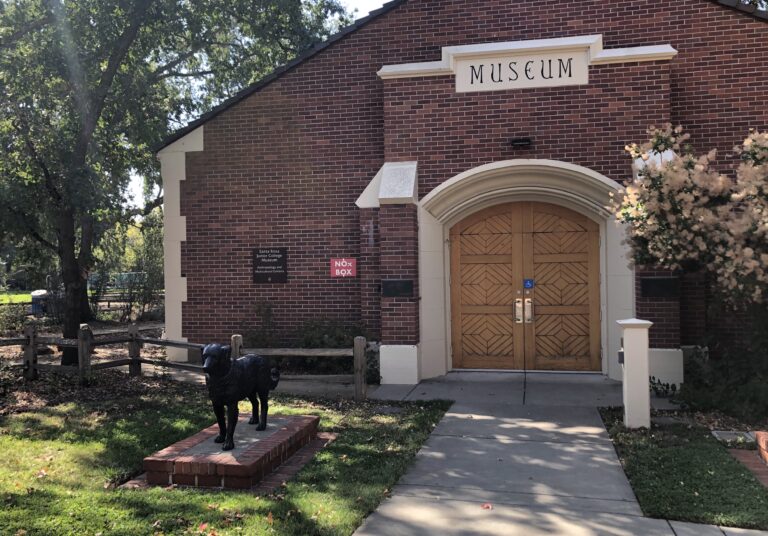
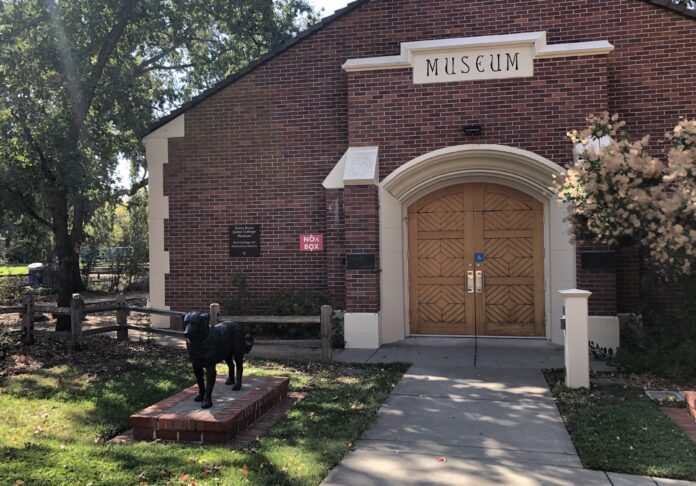
On April 13, 2021, the Santa Rosa Junior College (SRJC) Board of Trustees unanimously voted to remove the name of Jesse Peter, Jr. from its on-campus museum six months after receiving a letter from local Native American tribal officials urging them to make the change. 

Peter was an amateur anthropologist who reportedly collected hundreds of Native American artifacts throughout his life and helped found the SRJC’s museum. The Board of Trustees’ decision comes during a period of renewed discussion nationwide about  the removal of the names of historical figures from public institutions.

Unlike other North Bay renamings, such as San Rafael’s decision to drop the name of Sir Francis Drake from a local high school last year, the SRJC’s Trustees’ vote drew little public attention or debate, although the decision was listed in an agenda for the April 13 Trustees’ public meeting.

The museum, which currently houses a collection of over 5,000 historic photographs, documents and Native American cultural items relevant to Sonoma County, was built in 1938 after a Works Projects Administration Grant was awarded to then-SRJC President Floyd Bailey and Peter, according to SRJC’s website.

Until his death in 1944, Peter served as the museum’s director and curator. In the same year of his passing, the Board of Trustees voted to name the museum in honor of the late collector.

However, Peter’s archaeological practices have come into question in recent years. Jeff Elliot, a Sonoma County-based historian and journalist, wrote in a 2011 blog post that when he “mentioned [Jesse Peter] to archeologists, 2 out of 4 dismissed him using the same description: ‘Pothunter,’ which is an insult that ranks at the bottom near ‘grave robber…’”

Elliot’s blog post also credits Peter with the “discovery” and donation of over 600 items, including rocks, fossils and Native American artifacts, to the University of California, Berkeley.

A letter sent to SRJC President Dr. Frank Chong last August expressed local tribes’ desire for Peter’s name to be removed from the museum. The letter was signed by chairs of neighboring Sonoma County tribal nations, including Dry Creek Rancheria, Cloverdale Rancheria, Stewarts Point Rancheria and Lytton Rancheria.

“We support the SRJC’s mission of inclusivity and diversity,” Greg Sarris, Tribal Chairman for Graton Rancheria, wrote. “However, the SRJC and the museum must recognize that Jesse Peter does not embody that mission.”

Sarris further described Peter as a “white man who pursued his hobby of collecting Native American cultural items for his own pleasure and procurement.”

In an interview with the Bohemian, Chong said that the SRJC Board of Trustees felt the name no longer represented the vision and mission of the junior college, which he said is prioritizing “multiculturalism, inclusivity and celebrating diversity” among its student body. He added that the SRJC plans to reinstate its Ethnic Studies program within the next two years.

“The college, when I first came here, was majority white [students],” Chong said. “Fast forward ten years, the college is now a majority [students] of color. Our values should reflect that.”

As for Peter’s legacy and the name removal, Chong said “It’s a much more complicated history than what we read about in textbooks.”

The Board of Trustees’ handling of the issue did draw some ire, primarily from SRJC faculty member Michael Von der Porten. Von der Porten, who describes himself as a concerned citizen and community member, stated during a Board Facilities Committee meeting in early August that he was “disappointed [the committee] did not take the issue to a broader audience”.

“[The junior college] missed the opportunity to be forthcoming, to engage the community and to have a discussion,” he said. “There was an opportunity to discuss, how bad does someone need to be to have their name stripped off of a building? None of us are perfect.”

He further alleged that the board’s actions in not publicizing the letter from Graton Rancheria until after the April 13 meeting was an effort to obfuscate the reason for the name change.

SRJC officials stated that the letter was publicly available and that it was excluded from the April 13 meeting due to time restraints.

“We are a transparent public institution,” Erin Bricker, the Director of District & Community Relations at SRJC, told the Bohemian.  “[The letter] was something that was part of the conversation. There’s no standard that says, ‘this must be presented at a board meeting.’”

While Bricker states that the letter was not the primary reason for the removal of Peter’s name, it was a strong deciding factor for the board.

College officials have stated that there are no additional plans to change the names of other locations on either the Santa Rosa or Petaluma campus. Any similar decisions in the future would be considered on a case-by-case basis, according to the Board Facilities Committee.

Dropping Peter’s name from the museum may only be the start of making things right.

In his letter, Sarris states that the SRJC has never attempted to return many of the items, considered sacred cultural objects, which Peter claims to have discovered on his family’s property, despite a set of laws passed several decades ago. 

The federal Native American Graves Protection and Repatriation Act (NAGPRA), was passed in 1990 in an effort to repatriate a number of Native American remains, cultural items and sacred objects to their respective tribes.

CalNAGPRA, a similar bill passed through California state legislature in 2001, intended “to cover gaps in the federal Native American Graves Protection and Repatriation Act (Udall, 1990) specific to the State of California,” according to the California Native American Heritage Commission.

Bricker stated that the SRJC plans to begin repatriation efforts with the various tribes in Sonoma County, in accordance with NAGPRA and CalNAGPRA.

The museum’s staff said that they would continue their tradition of working with local Native American artists, performers and educators once Covid-19 regulations deem it safe to do so.

In the Eye of the Beerholder

Craft beer label art explodes You may have noticed that craft beer has taken the supermarket cold box aisle by storm. Along with the revolution in unique brews has come a new spin on the look of beer cans and bottles.  Sparked by Petaluma’s Lagunitas Brewing Co.’s legendary Lagunitas IPA label, the North Bay—perhaps more than anywhere else in the country—marries...

Culture Crush

Hollywood comes to West County, J.Lately brings his signature beats to Hopmonk, heavy metal at the Phoenix and run for your life—oops, your beer—at the Barlow. Rialto Cinemas Sebastopol It’s time to get your lights, camera and action on for some  hyper-local cinema! This Thursday, Sept. 23, celebrate West County at a one-day-only fundraiser screening of the award-winning film Lost in the...

Letters to the Editor

Peace Wall Pt. Reyes protest and an appreciation for good journalism ALT FACTS Peter Byrne, in his opinion piece about the Peace Wall event and the Pt. Reyes protest, is right on many counts. Yes, those of us at the Sebastopol gathering were a bunch of alte cockers. That’s Yiddish for old folks, although a more direct translation would be...

The Write Stuff

Linda Jay Welcome to our new column, Luminary, in which the Bohemian asks questions of local luminaries who kindly answer them. We begin with Petaluma’s Linda Jay, a writer and copy editor who helps authors get “publisher-ready.” Daedalus Howell: When an author comes to you with a book project, how do you know they’re a good client for you, instead of...

North Bay Cities Take Differing Approaches to Cannabis Dispensaries

Sausalito, Marin County restrict businesses while Santa Rosa aspires to ‘mecca’ status In 2016, California voters legalized recreational cannabis for adults, setting off a rush of entrepreneurs who wanted to enter the newly legal market. Legalization was intended to uplift people impacted by decades of cannabis criminalization, but the rollout has not been the same across the state. Local governments are...

Pot Shots

Marijuana musings I’m a hippie survivalist. I came of age in the late ’70s/early ’80s, experimenting with weed and going to Grateful Dead shows while reading Soldier of Fortune magazine articles about the Soviet invasion of Afghanistan as the Pentagon and the Kremlin built enough Cold War nukes to barbecue the planet. Flash back to 1978, when my friend and I...

Fish Tale

‘Little Mermaid’ makes splash What’s a community theater to do when it wants to put on a large-scale family musical in the age of Covid? Well, if you’re Napa’s Lucky Penny Productions, you hire Scottie Woodard to direct the show and follow his lead in assembling a really creative design team and cast. Their production of Disney’s The Little Mermaid...

The ‘Incider’

Sonoma and Marin’s cider scene If you haven’t yet been bitten by the craft cider bug, I hope I can convince you to get out there and try some of the excellent local craft ciders being brewed up by our local cideries.As a longtime wine industry veteran and wine lover/aficionado, I started developing a love for—or obsession with—craft cider a...

Open Mic: Isolation and Connection

Microphone - Kane Reinholdtsen/Unsplash
We need to start talking about the effects the pandemic is having on our mental health before we have a collective nervous breakdown. As the pandemic drags on, what I’m most worried about is how we all seem to be putting on the same smiling social media airs, acting as if everything is okay. As if we haven’t been living...

SRJC Trustees Rename Campus Museum

SRJC Multicultural Museum - Will Carruthers
On April 13, 2021, the Santa Rosa Junior College (SRJC) Board of Trustees unanimously voted to remove the name of Jesse Peter, Jr. from its on-campus museum six months after receiving a letter from local Native American tribal officials urging them to make the change.  Peter was an amateur anthropologist who reportedly collected hundreds of Native American artifacts throughout his...
11,084FansLike
4,606FollowersFollow
6,928FollowersFollow