Petaluma River Cleanup Plan Approved

On May 10, the Environmental Protection Agency (EPA) quietly signed off on a plan meant to reduce pollution in the 146-square-mile Petaluma River Watershed.

That’s right. Although the problem is rarely discussed, the Petaluma River has been listed as “impaired” by excessive levels of bacteria since 1975.

The bureaucratic document approved by the EPA is known as a Total Maximum Daily Load (TMDL). It sets levels of acceptable waste discharge from various sources in an attempt to lower the levels of fecal bacteria found in the watershed until the water is deemed clean.

While preparing the TMDL, scientists from the San Francisco Bay Regional Water Quality Control Board tested water from throughout the watershed for Fecal Indicator Bacteria to determine the amount of waste from warm-blooded mammals that has seeped into the water. Although indicator bacteria themselves are not dangerous, scientists use the strains to detect potentially dangerous levels of contamination in the water.

In a report accompanying the TMDL, water board staff identified 12 sources of pollution, which they then lumped into three general categories: human waste, animal waste and municipal stormwater runoff. In tests conducted between 2015 and 2016, water board scientists found bacteria tied to humans, horses, cows and dogs throughout the Petaluma River and its tributaries.

When asked in late 2019 about the levels of E. coli discovered in the Petaluma River, Farhad Ghodrati, an environmental scientist with the San Francisco Bay board, said the test results showed “some of the highest concentrations we have seen in the region.”

At the same time, Dr. Celeste Philips, who then served as Sonoma County’s Health Officer, warned Petaluma River users against drinking the river water or using the water for cooking due to the levels of E. coli. “Adults and children should wash hands/shower and towel dry after swimming; rinse off pets after they come into contact with the water,” Philips added.

Although some of the various parties named in the report appear to be undertaking the work required of them by the TMDL, the clean-up process will likely stretch on for at least a decade, according to an implementation timeline.

However, if critics of the plan are correct, the process may stretch on much longer due to flaws in the TMDL. San Francisco Bay Keeper, a nonprofit focused on cleaning up Bay Area water sources, raised concerns throughout the approval process that the plan does not meet the legal requirements of a TMDL laid out in the Clean Water Act.

“Baykeeper has concerns about the strength and legality of the Petaluma River Bacteria and Nutrients TMDL because we believe the TMDL isn’t specific enough or strong enough to lead to meaningful improvements for the river,” Ben Eichenberg, a staff attorney with Bay Keeper, said in a statement. Among other weaknesses, Eichenberg says that the current TMDL fails to identify specific pollutant sources and “underestimates the scope and cost of what it will take to clean things up.”

The regional and State Water Quality Control Boards largely dismissed Bay Keepers’ concerns throughout the plan approval process, and the EPA appears to have signed off without making any changes.

Whether or not the current plan is strong or specific enough, the current TMDL and accompanying documents do offer some insight into the reason the watershed is polluted—and what should be done about it. Now, without further delay, let’s take a look at a few of the sources and suggested solutions.

Cattle and Horses

According to a 2020 staff report, the 17 cow dairies in the Petaluma River Watershed are home to an estimated 11,000 cows. Meanwhile, 32 horse farms house approximately 8,600 animals in the watershed.

Given the number of four-legged watershed residents, it shouldn’t come as a surprise that tests found that bacteria originating from cow and horse waste “were identified at very high rates throughout the watershed, in both dry and wet seasons.”

In order to comply with the TMDL, Confined Animal Facilities, the technical term for high-density commercial ag operations, must prove they comply with Water Board regulations “as soon as possible,” and monitor water quality as required by the Water Board moving forward.

Meanwhile, grazing operations in the watershed, which include less dense ag operations, must obtain a Grazing Order from the Water Board by September and follow Water Board regulations.

Sewer Systems

Sewer system overflows during heavy rainstorms appear to be another historically significant source of pollution in the watershed.

Between 2007 and 2017, the Petaluma and the Penngrove Sanitation Zone, a small district located north of Petaluma, reported 94 large overflows, spewing a total of 1.35 million gallons of sewage into the watershed.

Tests in 2016 and 2017 “detected fecal bacteria of human origin at many sites throughout the watershed, which could point to discharges from the sanitary sewer collection systems as a likely source,” the 2020 staff report notes.

The report tasks Petaluma and the Penngrove Sanitation Zone with preparing an updated Sewer System Management Plan identifying necessary repairs to the systems within a year. Once the plans are approved by the water board, the agencies will have 10 years to complete all of the required improvements. More pressing projects identified in the report must be completed within five years.

Homeless Encampments and Marinas

People living in informal shelters inside the watershed may also pose a risk to water quality.

In July 2017, there were an estimated 17 encampments along waterways within Petaluma city limits. If encampment residents are not disposing of their waste properly, it could make its way into the waterways.

As a result, the TMDL requires Petaluma and CalTrans, the state transportation agency, to create a plan to “prevent human waste discharges into storm sewer systems from homeless encampments on City of Petaluma and Caltrans properties within the Petaluma River watershed” by next May. The resulting plan must be implemented by the end of 2022.

The TMDL also requires marina owners and operators to increase “no dumping” education for boat owners by the end of 2021, and to create a plan review and install proper waste management equipment by next May. The marina owners must complete the improvements within five years.

More information about the Petaluma River Bacteria TMDL is available here.

How Pandemic Pets Eased the Loneliness of the Covid Lockdown

I’ve fallen hopelessly in love dozens of times over the past decade. Apparently, I’m just a girl who can’t say no, immediately opening my heart and home to every new sweetie who comes my way. Age, breeding and even gender never matter to me.

I’m addicted to caring for foster dogs.

The furry faces and soulful eyes of abandoned pups do me in every time. My first foray into fostering was with a black toy poodle named Alfie, who came from Muttville, the Bay Area’s senior dog rescue. Since then, I’ve cared for so many that I’ve lost count. Some stay only a few days, and others, like my current foster dog Jordan who had health issues, live with me for months.

Jordan, a four-year-old, 90-pound Alaskan Malamute/Siberian husky mix, was dumped at the Peninsula Humane Society & SPCA. The family he lived with since he was a puppy said they were moving, a common reason given for surrendering a dog. The notes on Jordan’s paperwork indicate he stayed outside on a balcony in Daly City for most of his life.

Unfortunately, Jordan, who started out as a friendly fellow, emotionally shut down in the shelter after being there for two months. He no longer wanted attention, became unresponsive and even growled at a staff member. With Jordan’s spirit broken, it was clearly time for him to leave the noisy, fast-paced shelter.

Shelters often work with rescues to help find homes for animals, particularly those with special needs. The Bay Area Siberian Husky Rescue, a small rescue focusing on Northern breeds, took Jordan into their foster program. I volunteered to foster the pooch, and brought him home to Sausalito.

Foster dogs and cats live in a home, and are treated as a member of the family, until they’re adopted. The foster parent gets to know the pet’s personality, and works with the animal on socializing and training. Sometimes, as with Jordan, the foster person nurses a pet back to health as they recover from medical conditions or surgeries. Mostly, the foster family provides love and stability.

“All dogs thrive better in a home,” said Sherri Franklin, founder and CEO of Muttville. “Even though we have a shelter, we stay foster based. It’s best for the dog and the adopter. We’re able to give an adopter a clearer picture of what sort of dog they’re bringing home. We can matchmake a dog with a person in a more confident way.”

Most shelters remained closed to the public during the pandemic, and relied on foster homes to care for their animals. The foster program was such a success for Marin Humane in Novato, they have decided to continue the model of keeping as many pets as possible in foster homes. In fact, they recently tripled the size of their foster program by partnering with Hopalong Animal Rescue.

Baxter was recently placed in a loving home by Marin Humane. Photo courtesy of Marin Humane.

“We found that we had less sickness among pets in foster homes,” said Lisa Bloch, director of marketing and communications at Marin Humane. “Especially with cats, because stress can often lead to upper respiratory infections.”

Kittens also benefit from staying in foster homes. Spring marked the start of kitten season, and shelters are now overflowing with the tiny felines.

“Our foster program is essential, because we bring in kittens from shelters across the state that have too many kittens to handle,” said Asher Belden, adoption program manager of the Humane Society of Sonoma County. “If we didn’t take the kittens, they might be euthanized.”

The agency has taken in 329 kittens this season, with 60 in foster care right now. People are flocking to their kitty adoption events.

During the pandemic lockdown, pets available for adoption were in high demand, an unusual and gratifying phenomenon, according to animal welfare groups. Some rescues and shelters are still seeing more adoption applicants than in pre-pandemic times.

“It was an explosive year,” said Hannah Houston, director of foster and adoption at Dogwood Animal Rescue, based in Sonoma County. “It became abundantly clear during Covid that people were suffering from loneliness and isolation. They didn’t just want a dog, they needed a dog.”

Dogwood Animal Rescue adopted out 750 dogs and cats in 2020, close to double the amount of a typical year. Each dog had at least 25 applicants, and 60 people were on the kitten waiting list.

Adoption applications during the pandemic increased by 400% at Muttville, the senior dog rescue. Even dogs that are typically harder to place, such as blind or diabetic dogs, were adopted quickly.

Popcorn, an eight-year-old Parson Russell terrier, is awaiting adoption. Photo courtesy of Muttville.

With last week officially marking the end of the lockdown in the Bay Area, many pet parents are heading back to the office for the first time in more than a year. There have been dire headlines in the media about people giving up their newly adopted companions now that we’re on the move again.

“The pandemic brought about a pet adoption boom—but now, U.S. shelters are struggling to take in growing numbers of cats and dogs,” the BBC reported last month.

Not so, according to Bay Area shelters and rescues. The agencies say the extra time and effort they invested to prepare adopters for the inevitable return to normalcy was well worth it.

“We’re not seeing returns at Muttville as people go back to work,” Franklin said. “Most of us in the adoption world talked to the adopters about their expectations and their plans for when they go back to work. We made sure people thought this through, because it’s a commitment. Having these conversations during the adoption process really helped.”

Discussions with pet owners have now shifted to how to leave their dogs and cats at home alone. It’s not just the animals suffering from separation anxiety—humans are having a hard time adjusting, too.

Experts recommend initially leaving your pet for a few minutes, exiting and returning without fanfare. Come and go frequently, gradually extending the amount of time you’re away.

“It’s also helpful to increase their exercise,” Bloch, of Marin Humane, said. “Take your dog on an extra-long walk or jog. Play with your cats as well. Leave toys at home that provide mental stimulation.”

Although we managed to foster and adopt in record numbers during the pandemic, the never-ending flow of stray and abandoned animals entering shelters and rescues continues. Fostering and adopting remain just as important in our post-pandemic world.

When I picked up my foster dog Jordan from the shelter, I didn’t think he’d be with me for seven months and counting, far longer than any of my other fosters. It will be bittersweet when Jordan goes to his forever home, but I’ll dry my tears quickly and make room for the next foster dog who will, no doubt, steal my heart again.

Iconic Flamingo Resort Debuts Multimillion-Dollar Redesign

A neon icon in Santa Rosa for over 60 years, The Flamingo Resort is known for its pink tower and mid-century aesthetic courtesy of master architect Homer A. Rissman.

This summer, the Flamingo Resort–currently operated by Santa Rosa-based hotel management company Point Group’s SPOKEN Brand–unveils a multimillion-dollar reimagination and new immersive wellbeing experiences set across its 10-acre campus.

Taking a cue from Rissman’s design, Weddle Gilmore Architects and BAR Architects have transformed the mid-century hotel into a modern wine country oasis with a stunning new entryway and several redesigned points of interest, including the lobby and check-in experience, the Lazeaway Club restaurant and bar, and all 170 guest rooms and suites.

The new architectural palette of wood, steel and glass complements the classic mid-century design and the modern touches honor the resort’s legacy while infusing a relaxed contemporary vibe into the Flamingo. 

“The rebirth of Flamingo Resort embodies our vision to create an environment where guests, locals and team members can embrace spiritual wellbeing and the adventure of life,” said Stephen Yang, Founder and Co-CEO of SPOKEN. “We are excited for guests and locals to stay with us to relax and find their flow.”

As guests arrive at Flamingo Resort, they are first drawn to the floor-to-ceiling glass windows of the new “Porte Cochere” entryway and led to the focal point and social center of the hotel; the pool and outdoor courtyard featuring a commissioned HYBYCOZO garden sculpture.

The designers recreated the Flamingo’s lobby into an inviting greeting space that emulates the experience of arriving at someone’s home. Guests check-in at a large table similar to a kitchen island surrounded by serpentine-shaped couches done in a velveteen fabric. Custom light fixtures play off a tropical feel, bringing the outdoors in with palm leaves, pompous grass, and other references to the natural agricultural area of Santa Rosa.

The integration of art throughout the hotel consists of curated vintage and modern photographs, prints, paintings and commissioned art pieces including a multi-ethnic, provocative lobby wall mural by Serge  Gay Jr., a HYBYCOZO pendant chandelier in the Entry Foyer of the meeting spaces, and a stunning rope  sculpture by artist Windy Chien which adorns the wall outside the main ballroom.

Flamingo Resort’s guest rooms and spacious poolside suites, many with private outdoor patios, are also redesigned to blend the resort’s mid-century architecture with a modern design, featuring floor-to-ceiling windows and a color palette inspired by the ‘50s, ‘60s and ‘70s.

As part of its redesign, Flamingo Resort is also introducing new wellness and culinary programming that celebrates the spirit of Sonoma County and invites guests to connect to the local community and the great outdoors with an array of complimentary and by-reservation activities like Afternoon Tea, yoga, meditation, sound healing and more.

Flamingo Resort room rates start at $189 per night and suites start at $350 per night. The resort is offering two grand opening packages; “Flock to Flamingo” which includes a $100 daily spa credit or “Recharge and Relaunch” which includes 15 percent off accommodations plus a daily $25 resort credit.

Flamingoresort.com

Recycling Your Dead Batteries

Trash or Charge?

What happens when the single-use batteries in your flashlight, remote or toy go dead? You replace them. What do you do with the dead batteries? If you throw them in the trash, you’re a criminal.

In California and 18 other states, it is illegal to dispose of batteries in the trash. By law, California’s batteries must be recycled at a hazardous waste disposal facility, a universal waste handler like a storage facility or broker, or at an authorized recycling facility. If batteries reach a landfill, rains will come, eventually corroding the batteries, which then leach nasty chemicals such as mercury, lead and cadmium into the soil.

The chemicals pollute the water table, eventually permeating our food and bodies. Valuable metals and minerals in the batteries such as steel, iron, brass, manganese, nickel, cobalt and zinc are lost. According to some estimates, the average person in the United States discards eight dry-cell batteries per year, amounting to three billion batteries annually, and worldwide, about 15 billion batteries are tossed every year.

In Central Marin, some Next Door contributors are discussing environmental problems and what individuals can do about them. You might now be wondering about how to recycle your household batteries: The alkaline and the lithium, and those old Ni-Cad and NiMh rechargeables, plus the newer lithium-ion batteries found in mobile phones, laptops, tablets, medical equipment, electric vehicles and power tools that all contain recoverable materials.

Fortunately, if you live in Marin, there are approximately 58 drop-off locations that accept batteries for recycling, including some food stores and other commonly visited businesses. Most take all types of batteries, but some take only rechargeables.

However you accumulate your used batteries, the important thing is to keep them out of the trash. Marin County has two main waste streams for consumer batteries. They work something like this: The first end-point is the Marin Household Hazardous Waste Facility at 565 Jacoby St. in San Rafael, near Marin Sanitary Service’s processing center.

This stream is fed by drop-off points at 23 fire stations; seven city offices and police stations; six hardware stores; both Good Earth stores; both United Markets; Radio Shack; Waterstreet Company in Sausalito; Staples and Renew Computers; and, in Mill Valley, the Library, the Sewerage Agency and the Community Center. Additionally, batteries can be dropped off directly at the hazardous waste facility.

Kathy Wall, the Facility’s program manager, provided me with a spreadsheet showing all the locations. She informed me that, although the list is not currently online, it will be made available soon and will include one or two locations that I discovered were not yet on the list. Below, there is a link to Zero Waste Marin’s collection locations:

zerowastemarin.org/residents/zero-waste-resources/bulb-battery-take-back-program/

In Sonoma County, the ZeroWasteSonoma.gov website reminds us that “By law, retailers selling rechargeable batteries are required to take back used rechargeable batteries weighing 11 pounds or less from their customers.”

Santa Rosa and Windsor have an alternate collection solution for batteries that, well, kicks ass. All you have to do is prevent shorting by taping the terminals of all rechargeable batteries and alkaline batteries 9-volt or larger, then tape your batteries up with heavy-duty clear tape. Place the batteries in a bag—preferably paper, of course—and seal it firmly, then place the bag on top of the blue recycle cart for pick up.

In addition, you can dispose of all kinds of batteries through the Agency’s Household Hazardous Waste Facility and related programs. The same packaging instructions apply. Each of the three Sonoma haulers have their own sorting guidelines, also found on the Zero Waste Sonoma website, ZeroWasteSonoma.gov.

Call2recycle.org has a partial list of other local recycling locations, which I have rounded out with the following: Both Staples stores take all household batteries, plus many office and home items. Home Depot accepts rechargeable batteries only. Best Buy and Renew Computers, in San Rafael, seem to be the overall recycling champions, although they, too, only accept rechargeable batteries and not common, single-use batteries such as alkaline, lithium and “heavy duty” non-alkaline batteries.

Best Buy also accepts button batteries, along with a long list of office and home equipment. Renew Computers also takes computers and electronics to be “sorted, repaired, reused, or properly recycled.”

Those batteries are organized, then taped up for shipping by one person at the hazardous waste facility, then are sent to a Battery Solutions center in Mesa, Arizona, for aggregation with other deliveries, which then go on to Battery Solutions headquarters in Wixom, Michigan, for processing.

Battery Solutions processes batteries to recover materials by sorting batteries by their various chemical components. Then, rather than using high heat, they use a mechanical process to separate the component materials.

The 20% that is steel is magnetically separated and sent on to steel mills. The 15% comprising the paper and plastic bits of the label and the brass pin are sifted out and distributed. The 58% that is a powdered zinc/manganese concentrate is separated. Interestingly, at least some of the zinc and manganese are used as soil amendments to enhance the productivity of such crops as corn and beans. 7% is lost in moisture.

The second all-types-of-batteries stream, run by Zero Waste Marin, is fed by 10 collection points from Bolinas to Sausalito. Those collection points can be found at: https://zerowastemarin.org/residents/zero-waste-resources/bulb-battery-take-back-program/

Not listed at that site is Batteries + Bulbs in San Rafael, which accepts only rechargeable batteries.

Zero-waste batteries are periodically collected by Don Lees of Revolt Recycling in San Leandro. According to Lees, “Only 22% of Californians recycle their household batteries.”

Lees also collects from several other jurisdictions in the Bay Area. He organizes them by type, tapes them up and ships them to Battery Recycling Made Easy (BRME) in Georgia.

BRME is headed by John Patterson, who says his company accepts all household batteries for recycling. However, they melt only cell phone batteries, creating a “recovered remelt alloy,” which includes nickel, cobalt and iron, and is sold to “the super specialty alloy industry.”

Patterson says that “nickel and cobalt are used in jet engines.”

Iron, of course, can be used to make steel and other iron alloys. When asked what exactly is done with the other batteries that he accepts, Patterson states that, “We recycle them.” When pressed about how that is done and what happens to the resulting metals, Patterson, unlike Spalding of Battery Solutions, responded, “I’m not going to tell you,” a recurring phrase throughout our conversation.

While all batteries have some potential for fire and explosion, there are many more potential hazards with lithium-ion batteries. They are high-energy, and sensitive to humidity and puncture. Stories circulate about computers and toys that use li-ion batteries catching on fire. A runaway fire in a shipment of li-ion batteries brought down a UPS cargo plane, killing its two crew members. That’s why you can’t airmail li-ion batteries.

Fires have also started in garbage trucks, at least one Fedex truck, in homes and at various fire station collection points. Because of that, it’s recommended to put a little tape on the battery terminals when recycling, especially on the lithium-ion ones and alkaline batteries of nine volts and greater.

Robert Alexander massages, trains people, writes and digs through the trash in San Anselmo.  He can be reached at rp*****@***il.com.

Sonoma County Struggles to Disburse Covid-19 Rent Relief

Six weeks into its existence, a Sonoma County program to distribute state and federal money to assist tenants and landlords impacted by the Covid-19 pandemic had dealt out less than 10% of the total $32 million available.

In a June 8 report to the Sonoma County Board of Supervisors, Tina Rivera, the interim director of the county’s Department of Health Services, said that the county had distributed nearly $2.7 million to 1,477 applicants between April 19 and June 3.

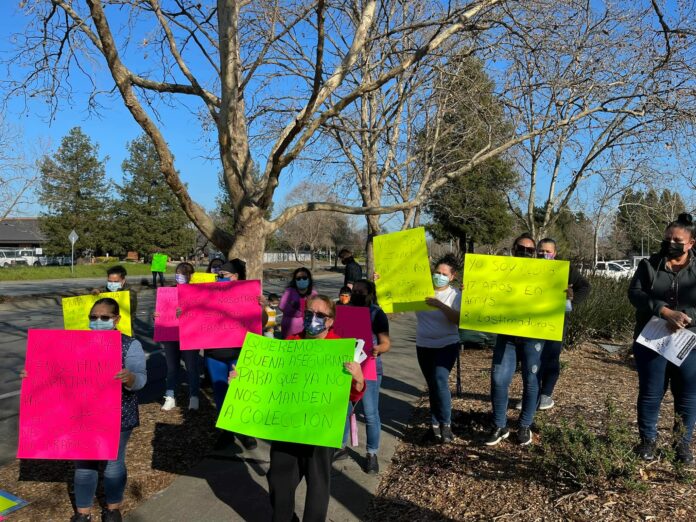
Under state law, tenants and landlords must apply for funding together. If the landlord agrees to participate, they can receive up to 80% reimbursement for some rent which went unpaid due to a reason related to the Covid-19 pandemic. If the landlord does not agree to participate in the program, the program will cover 25% of a tenant’s unpaid rent under the time period covered by state law.

Asked about the struggle to distribute the funds, local officials at recent meetings often pointed to state and federal restrictions on how local governments can spend the money. Meanwhile, the head of one of the nonprofit organizations which the county has contracted with to distribute the funds reported cited the fact that the application paperwork is lengthy and complicated, leaving the organizations distributing the funds on behalf of the county with considerable backlogs of requests.

Sonoma County is by no means the only area struggling to hand out the funds. On June 8, the Wall Street Journal reported that, “Local governments across the U.S. have struggled with how to distribute the money, and some have complained that their staffs are being deluged by a flood of aid requests.” The federal government estimates that approximately 11 million renter households across the country are considered at risk of eviction due to financial hardship, the Journal reported.

A recent survey of 177 California tenant advocates by the Bay Area Regional Health Inequities Initiative (BARHII) and two other organizations found that tenants were struggling to access the funds because of technical difficulties, failure to properly document loss of income and owing money to someone other than their landlord, among other things.

As a result, the state had paid out only $20 million of the $4.6 billion available at the time the report was published in late May.

One major flaw identified by Sonoma County officials is that state and federal laws do not allow local government agencies to distribute funds to struggling tenants who paid their rent during the pandemic by turning to friends and private lenders for loans.

“What we’re finding is that many of our community members really compiled credit card debt to pay down the rent, so that they had a place to stay, and now they’re faced with the interest rates accumulating along with the debt on the credit card,” Supervisor Susan Gorin said during a June 8 Board of Supervisors meeting.

“Accumulated interest and loans is not an eligible use for these [state and federal] dollars. So unfortunately we cannot use these particular dollars for that particular debt,” Rivera responded.

Concerned that the restriction could cause the county to leave some of the $32 million wasted, Gorin and other local officials are requesting that state and federal officials loosen the rules governing how the existing funds can be used.

“My plea [to state and federal lawmakers], is that these restrictions around these dollars be loosened or lifted so that we can use these dollars to provide security for individuals who are facing the mounting debt that creates the housing insecurity for them,” Rivera said at the June 8 Board of Supervisors meeting.

The lengthy paperwork process and the sheer number of requests for assistance are other problems local officials are dealing with when distributing the funds.

“There is a lot of phone time associated with each one of these applications,” Elece Hempel, the executive director of Petaluma People Services Center, said during a May 19 public meeting with city and county officials. 

“We’re getting about 900 questions a day from landlords and tenants on ‘how does this work,’ and ‘what does it mean,’” Hempel added.

On May 10, fresh off the news that the state had a $38 billion budget surplus, California Gov. Gavin Newsom announced a plan to allocate $5 billion of the funds to increase rent debt reimbursement from 80% to 100% for tenants and landlords who qualify. So far, that change has not come to pass, although negotiations are likely ongoing.

In response to criticisms of the online application system, the state has simplified the application process for rental assistance. However, as of press time, state and federal lawmakers have yet to change what kinds of debts can be covered with the rent aid dollars.

Protection Patchwork

Another issue no doubt causing frustration among tenants and landlords alike is the complexity of the local, state and federal rules governing evictions during the pandemic. Beginning last March, state and federal agencies passed restrictions on some evictions during the pandemic. Then, in response to pressure from tenants’ advocates, Sonoma County passed its own protections.

To make matters more complicated, the rules at all levels have been updated numerous times throughout the past year, making for a dizzying number of interlocking regulations. 

On June 30, some state and federal evictions are set to expire. The restrictions passed by the Sonoma County Board of Supervisors are set to outlast the higher orders. However, some Sonoma County cities seem to be getting antsy.

On June 8, the Santa Rosa City Council discussed the possibility of opting out of the county’s more stringent protections in favor of the state law. In effect, the change would have allowed landlords the ability to evict tenants for a wider array of reasons.

Supporters of the proposal argued that the county regulations are too burdensome on local landlords, discouraging them from continuing to own or manage rental properties in Sonoma County’s largest city.

Ultimately, after the majority of the public speakers at the June 8 council meeting urged the council to remain under the county’s rules, the council voted to revisit the issue in late August.

Local Galleries Share Eco-Centric Art This Summer

Since the beginning of the environmental movement, artists and creators have worked to expose humanity’s detrimental impact on the Earth and to provoke positive societal change through their art.

This summer, several North Bay galleries are taking up the movement once again with exhibitions that speak to the perils facing the planet and the importance of saving the natural landscapes we call home.

Across the country, the multimedia project “EXTRACTION: Art on the Edge of the Abyss” is shining a light on all the ways the extractive industry of mining and drilling exploits and destroys fresh water, fertile soil and other resources. The project—founded by members of Bay Area-based CODEX Foundation—encompasses nearly 50 exhibitions, performances, publications, poetry readings and other events.

In the North Bay, a group of creatives and galleries are participating in “EXTRACTION,” including Santa Rosa’s Calabi Gallery, which is displaying a diverse array of artists who respond to environmental issues through a variety of mediums.

“The world is in crisis, and people just don’t seem to be aware of it,” says gallery Director Dennis Calabi. “As artists tend to be in the vanguard of progressive thinking, art is a great way to spread the word that we are in crisis and we need to fix it.”

“EXTRACTION” exhibits at Calabi Gallery, Saturdays from noon to 5pm and by appointment, through July 31. (calabigallery.com)

Elsewhere, Sonoma Valley Museum of Art is showing a retrospective exhibition, “Sacred Landscapes: The Art of Ynez Johnston,” featuring paintings, sculpture and prints spanning seven decades.

Born in 1920, Johnston grew up in the Bay Area and held her first solo exhibition at San Francisco Museum of Modern Art—now SFMOMA—at age 22. Influenced by natural and cultural iconography, Johnston’s modernist paintings almost always featured imaginative animals and environments.

“Sacred Landscapes” exhibits at SVMA along with an innovative video installation titled “Question Bridge: Black Males”—which explores challenging issues within the Black male community across geographic, generational, educational and economic levels—through Sept. 5. (svma.org)

In San Rafael, artist Peter Adamyan exhibits his post-consumer art in the solo show “This Land Is Land,” at Art Works Downtown. Running June 25 to August 1, the show includes paintings that reflect modern society’s obsession with resource consumption. Adamyan contrasts that notion with several works that represent Native American societies, and environmentalists both past and present.

“I want to show what over extraction of resources and commodification of land looks like in the extreme of a materialistic society,” writes Adamyan in his artist statement. “‘This Land Is Land’ is about giving ownership of land to itself.” (artworksdowntown.org)

In July, the Santa Rosa Arts Center will provide artists and writers a way to respond to current environmental concerns in the non-juried group show, “Our Precious Planet.” The exhibit opens with a reception as part of the SOFA Arts District First Friday Open Studios on July 2, and will feature artistic and poetic interpretations of nature, people and places, with works that express environmental respect, love, fear and caution. (santarosaartscenter.org)

Culture Crush: Four Live (and One Online) Events This Week

Live Art Reception

North Bay photography lovers and collectors are about to get a new space to view and purchase both classic and contemporary photos in Marin County this month when the Collectors’ Photography Gallery celebrates its grand opening. The 2,500-square-foot space in Corte Madera Town Center welcomes the public to view works by featured contemporary photographers Jane Olin, Wilton Wong, Bob Kolbrener and Anna Rotty. In addition, the gallery displays historic photos from several top photographers that were originally part of a private collection. Collectors’ Photography Gallery opens on Thursday, June 17, at 105 Corte Madera Town Center, Corte Madera. 3–6pm. Collectorsphotographygallery.com.

Live Event

After closing its doors more than a year ago due to the pandemic, the Napa Valley Museum welcomes in-person visitors when it reopens all galleries to the public this week. In the main gallery, the museum will resume its U.S. premiere exhibition, “Lucy Liu: One Of These Things Is Not Like The Others,” which opened a month before the pandemic hit the North Bay. The museum will also exhibit “The Yates Collection,” currently on long-term loan to the Museum, and a new permanent exhibition, “Land and People of the Napa Valley” beginning Friday, June 18, at 55 Presidents Circle, Yountville. Fridays–Sundays, 11am to 4 pm. Napavalleymusuem.org.

Virtual Reading

Scotland-born journalist and author Cal Flyn has an affinity for places that many people find eerie and desolate; those places that were abandoned by humans due to war, disaster, disease, or economic decay. Each time that Flyn visits these locations, she finds an “island” of teeming natural life that fills the cracks and the voids in concrete and metal with flora and fauna faster and more thoroughly than even the most hopeful projections of scientists. Flyn captures these places in her new book, Islands of Abandonment: Nature Rebounding in the Post-Human Landscape, and she reads from the book in a virtual event hosted by Point Reyes Books on Friday, June 18, at noon. Ptreyesbooks.com.

Live Concert

After spending the last year online, Healdsburg Jazz Festival presents four days of in-person shows this week featuring award-winning local and national artists performing musical, spoken word, theatrical and visual art commissions and collaborations. The festival’s centerpiece event is the Healdsburg Jazz Juneteenth Celebration, featuring the Dynamic Miss Faye Carol and Her Trio performing a specially commissioned Juneteenth performance, as well as several other acclaimed bands, visual artist Malik Seneferu, comedian and emcee Donald Lacy, and poets Tongo Eisen-Martin (2021 San Francisco Poet Laureate) and Enid Pickett (2021 Healdsburg Jazz Poet Laureate) on Saturday, June 19, at 164 Healdsburg Ave. Healdsburg. Healdsburgjazz.org.

Live Event

A longtime cornerstone of West Sonoma County’s art scene, the Sebastopol Center for the Arts returns to hosting live events and exhibitions this month, and the center welcomes patrons back with a grand reopening party. The event includes a ribbon-cutting ceremony, live music and light refreshments. Additionally, the center’s galleries, classrooms and studios will all be open, and party-goers can see the exhibitions, sign up for classes and check out the center’s new schedule of upcoming events, concerts, exhibitions, lectures, classes, workshops and performances. Join the party on Wednesday, June 23, at 282 S. High St., Sebastopol. 5pm. Sebarts.org.

Letters to the Editor: June 16, 2021

An Open Letter to Erick Roeser

In December of 2019, the Sonoma County Board of Supervisors passed a Socially Responsible Investing Resolution requesting that you, Mr. Roeser, our county treasurer “…make no new or renewed investments in fossil fuel development corporations to the extent that other, more socially responsible investments achieve substantially equivalent safety, liquidity, and yield.”

The major banks that finance the fossil fuel industry are listed in the annual Fossil Fuel Finance Report. It has come to our attention that, since the passage of this Resolution, you have to date invested over a half billion into the major commercial banks that invest in and profit from “fossil fuel development corporations.”

Given the urgency of the climate crisis and our County’s ongoing experience of devastating climate-driven drought, wildfires and flooding, the Sonoma County Climate Activist Network—comprised of over 50 Sonoma County climate activist groups and hundreds of local group members—request that you make no future investments with our tax dollars into banks listed in the Fossil Fuel Finance Report.

We urge you to respect the direction of your Board of Supervisors and of the people of Sonoma County whom you represent.

Sonoma County Climate Activist Network

Guerneville Gab

Why on earth would you say that “Guerneville is not a tourist town” (“Go Guerneville,” June 2)? All of San Francisco and residents of far-flung cities, and all those visitors enjoying Johnson Beach, renting air BnBs, eating in the restaurants, drinking in the bars and shopping certainly come as tourists. Otherwise, thank you for your appreciation of our small river town.

Laurie Lippin, Guerneville

Open Mic: Finding Eden in an Eddy

Here in Sonoma County, you don’t have to travel far or look very hard in order to find your little slice of Eden. I found mine at a forested eddy on the banks of the Russian River.

This spot has completely transformed since I was last here a couple of months ago. Back then the earth was on the cusp of awakening, now spring has arrived in all her glittering, green glory. The trail down to the river is overgrown with blackberry vines, thimbleberry and willow branches.

This place is well hidden—invisible—unless, like me, you know where to look. The river is in no hurry today and moves past me at a snail’s pace. The water’s subtle hue reflects the deepening shades of green from the surrounding forest. Tiny leaves drift butterfly-like to the surface; they make an inaudible splash creating small ripples that spread slowly to the shore.

The Ludwigia weed on the opposite bank is in full bloom. A mighty shake from God’s paintbrush has dotted the tops of the plants with bursts of brilliant yellow. The dappled light beneath the trees where I sit is in constant motion and shifts with each gentle breeze.

When I arrive today I’m greeted by the wood fairy flute notes of the Swainson’s Thrush.

Beginning on a low note, its song gradually rises in pitch and speed, spiraling up and up, note by note, until the sound disappears into the forest air. This elusive and difficult-to-spot songbird appears in our area right around this time every year and is one of the indicators that summer is on the way. In this crazy and unpredictable world, it’s reassuring to know that some things can still be counted on.

Everything here moves at its own deliberate pace. The sights, sounds, smells and feelings combine to create the perfect recipe for quiet meditation. Like Monet in his garden and Vincent with his sunflowers, I see something new every time I visit this magical place.

Louie Ferrera is a retired elementary school teacher in Santa Rosa who publishes writing at  musingsofalatebloomer.net. We welcome your contribution. To have your topical essay of 350 words considered for publication, write op*****@******an.com.

Napa’s Summer Concert Schedule Heats Up

As the state reopens its economy, the North Bay is starting to put live music back on the calendar. In Napa, both nationally touring acts and local favorites are hitting stages for a summer of shows that’s starting to look lively.

Currently, Napa’s Blue Note Jazz Club is road-tripping to St. Helena and the Charles Krug Winery for a lineup of live, outdoor concerts featuring chart-topping bands.

This weekend features four shows over two nights with soul-funk outfit Karl Denson’s Tiny Universe, June 18 and 19. Next weekend, Blue Note and Charles Krug Winery host an evening with R&B and jazz singer-songwriter Jody Watley on June 26.  Watley’s performance is presented in partnership with Napa Valley Pride, and Blue Note Napa will donate a portion of the ticket sales to local nonprofit organization LGBTQ Connection Napa.

“We are ecstatic to be the venue of choice for her first live performance since the pandemic halted live music last year,” says Blue Note Napa owner Ken Tesler in a statement. “For such an iconic artist like Jody Watley to join us in our first wave of shows is really special for us.” (bluenotenapa.com)

In July, one of the city’s most popular summer events series returns to the stage when Napa City Nights kicks off a seven-week schedule of shows.  Formed by local musicians and music lovers in 2008, the nonprofit Napa City Nights concert series is a free, family-friendly tradition that takes place outdoors at the Veterans Memorial Park Amphitheater in downtown Napa.

Last year, the series was canceled due to the pandemic, though this summer is looking clear for distanced shows, and Napa City Nights opens its 2021 concert series on Friday, July 9, at 6:30pm, with a funky, soulful show featuring Joy & Madness, Sweet HayaH and Vince Costanza.

Following weeks include headliners like party rock ensemble The Pat Jordan Band on July 16, R&B outfit The Soul Section on July 23, country duo Crossman Connection on July 30 and old-school rock band The Hots on August 6. (napacitynights.com)

Later this summer, Blue Note’s Entertainment Group teams up with Another Planet Entertainment to produce a genre-spanning outdoor concert series at Oxbow RiverStage in downtown Napa.

This year’s Oxbow RiverStage concert series, running from August through October, marks the venue’s first full season.  The series launched its first season in 2019 with four ticketed concerts. Following that, a full 2020 concert series was announced, but then postponed due to the pandemic.

The 2021 concert series will feature world-class performers and kicks off on August 14 with a co-headlining show featuring Mt. Joy and Trampled by Turtles. The legendary Billy Idol will perform on August 21, followed by a free show featuring Brett Dennen on August 22.

Oxbow RiverStage’s calendar also features Rodrigo y Gabriela on September 11, Death Cab for Cutie on September 17, Gary Clark Jr. on September 18, Herbie Hancock on September 25, and STS9 performing two nights on October 8 and 9.

The venue entertains up to five thousand attendees at each show and will feature reserved seating, general admission, or a combination of both based on the event. A Gold ticket option is offered at every concert through a partnership with Feast It Forward, featuring a wine bar lounge, a dedicated entrance, and more. (oxbowriverstage.com)

This Labor Day Weekend features the return of BottleRock Napa Valley, presenting three days of live music, food, wine and beer in the heart of Napa. The festival is already sold-out, yet BottleRock has more shows up its sleeve, and the festival has announced a series of “BottleRock AfterDark” shows in Napa, San Francisco, Berkeley and Sacramento, featuring many of the 2021 BottleRock Napa Valley musical artists and other special guests.

These intimate performances, produced by BottleRock Presents, take place beginning Thursday, September 2, and runs through the festival weekend. All four Napa concerts happening as part of “BottleRock AfterDark” will take place at the JaM Cellars Ballroom, located on Main Street in downtown Napa.

The show schedule includes veteran power-pop rockers Jimmy Eat World on September 2, German alternative band Milky Chance on September 3, Texas-based psychedelic soul band Black Pumas on September 4 and Foo Fighter drummer Taylor Hawkins’ acclaimed cover band Chevy Metal on September 5. (bottlerocknapavalley.com.)

Petaluma River Cleanup Plan Approved

Petaluma River, California - June 2021
On May 10, the Environmental Protection Agency (EPA) quietly signed off on a plan meant to reduce pollution in the 146-square-mile Petaluma River Watershed. That’s right. Although the problem is rarely discussed, the Petaluma River has been listed as “impaired” by excessive levels of bacteria since 1975. The bureaucratic document approved by the EPA is known as a Total Maximum Daily...

How Pandemic Pets Eased the Loneliness of the Covid Lockdown

Jordan foster dog - June 2021
It’s not just pandemic pets suffering from separation anxiety now that the lockdown is over—humans are having a hard time adjusting, too.

Iconic Flamingo Resort Debuts Multimillion-Dollar Redesign

A neon icon in Santa Rosa for over 60 years, The Flamingo Resort is known for its pink tower and mid-century aesthetic courtesy of master architect Homer A. Rissman. This summer, the Flamingo Resort–currently operated by Santa Rosa-based hotel management company Point Group’s SPOKEN Brand–unveils a multimillion-dollar reimagination and new immersive wellbeing experiences set across its 10-acre campus. Taking a cue...

Recycling Your Dead Batteries

Trash or Charge? What happens when the single-use batteries in your flashlight, remote or toy go dead? You replace them. What do you do with the dead batteries? If you throw them in the trash, you’re a criminal. In California and 18 other states, it is illegal to dispose of batteries in the trash. By law, California’s batteries must be recycled...

Sonoma County Struggles to Disburse Covid-19 Rent Relief

Santa Rosa City Hall - June 2021
Six weeks in, Sonoma County had distributed less than 10 percent of the $32 million available for relief. The rules and complexity of the state rent relief program seem to be to blame.

Local Galleries Share Eco-Centric Art This Summer

Since the beginning of the environmental movement, artists and creators have worked to expose humanity’s detrimental impact on the Earth and to provoke positive societal change through their art. This summer, several North Bay galleries are taking up the movement once again with exhibitions that speak to the perils facing the planet and the importance of saving the natural landscapes...

Culture Crush: Four Live (and One Online) Events This Week

Live Art Reception North Bay photography lovers and collectors are about to get a new space to view and purchase both classic and contemporary photos in Marin County this month when the Collectors’ Photography Gallery celebrates its grand opening. The 2,500-square-foot space in Corte Madera Town Center welcomes the public to view works by featured contemporary photographers Jane Olin, Wilton...

Letters to the Editor: June 16, 2021

An Open Letter to Erick Roeser In December of 2019, the Sonoma County Board of Supervisors passed a Socially Responsible Investing Resolution requesting that you, Mr. Roeser, our county treasurer “…make no new or renewed investments in fossil fuel development corporations to the extent that other, more socially responsible investments achieve substantially equivalent safety, liquidity, and yield.” The major banks that...

Open Mic: Finding Eden in an Eddy

Here in Sonoma County, you don’t have to travel far or look very hard in order to find your little slice of Eden. I found mine at a forested eddy on the banks of the Russian River. This spot has completely transformed since I was last here a couple of months ago. Back then the earth was on the cusp...

Napa’s Summer Concert Schedule Heats Up

As the state reopens its economy, the North Bay is starting to put live music back on the calendar. In Napa, both nationally touring acts and local favorites are hitting stages for a summer of shows that’s starting to look lively. Currently, Napa’s Blue Note Jazz Club is road-tripping to St. Helena and the Charles Krug Winery for a lineup...
11,084FansLike
4,606FollowersFollow
6,928FollowersFollow