Selling Art

0

Art & Soul


doesn’t mean
selling out,
say local artists

By David Templeton


Illustration by Bruce Stengl


Like many artists, Paul Boudreaux lives close to his work. In fact, it shares his bedroom. A prolific painter and creator of numerous “street-style” comic books, the intense, 27-year-old artist lives in a tiny backyard cottage in Penngrove, with little space and no room for a dedicated studio in which to allow the creative fluids to flow.

This explains the pair of large drawing boards that are crammed in across from his bed, effectively dominating the area while providing a pregnant metaphor for the passions that dominate Boudreaux’s life. His one spare room would make an adequate studio were it not already packed to the plaster roof with other people’s art, evidence of Boudreaux’s standing as a kind of underground artist’s P. T. Barnum, fervently hawking their wares.

Many of the larger works quartered here are slated for upcoming coffeehouse exhibitions, while the stacks of edgy sketches and “comix” will end up in next month’s issue of Crust, a quarterly street-art magazine that he’s been mothering along for the last few years.

“Unfortunately,” Boudreaux amiably shrugs, “I make no money from any of this, so I have to work a full-time job. The bills must be paid.”

He waves at a towering stack of T-shirts, proof of his day job designing whimsical images for LifeForms International in Rohnert Park, the company famous for unleashing the shirts depicting sunglass-adorned frogs. Last week, he took time off from drawing frogs to attend an independent publishers’ convention in San Jose, where he spent a few days promoting Crust while talking shop with other artists.

“It’s important to get together with other people who are out there creating and publishing stuff on their own, basically just for the love of it, just to get our ideas across. We’re not looking for any kind of commercial success,” he says.

Asked to rethink that last remark, Boudreaux laughs. “Maybe we just don’t expect commercial success, though I personally would have no problem with it. In fact, it’s what I dream about.”

Boudreaux has just touched on one of the most basic and daunting questions of living the life of an artist: how to maintain a working balance between pure artistic craft and survival-level commerce. In other words, how can artists devote themselves soul and shoelaces to their creative impulses, yet still expect to eat dinner now and then? Curious and curiouser, The Independent decided to survey some of the county’s most talented underground artists to get their views on this perspective.


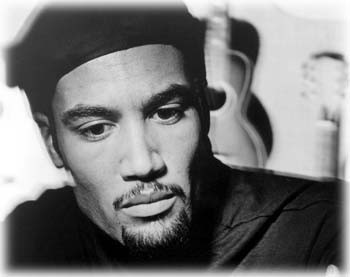
Erica Montgomery

The art world–above and below ground–is full of talk that illustrates this financial multiple-personality syndrome of the serious artist. Many artists say you’ve sold out if ever you accept cash for your work, while others insist you have not become a real artist until you’ve sold your work. One local painter welcomed a broken leg so he could stay home from work and devote himself to his artwork. A Petaluma bookseller, who paints in his spare time, reportedly turned down an offer of $200 for a painting, opting instead to sell it for $25 to someone who, he felt, truly understood it. Though a few local artists have found ways to make a living from their art, many of them never sell a single thing.

Though Boudreaux has sold a number of pieces, he expresses a loud discomfort with having taken cold cash for something he created without cash in mind.

“If you paint something, it’s a holy thing,” he says. “So when you sell it, you go, ‘My God! What have I done? I prefer to give my stuff away.”

There’s no shame in using your art to make money,” insists Diana Kelly over the phone. A painter and sculptor who recently earned an arts degree from Sonoma State University, she has been known to take on the occasional freelance art job while juggling a new baby and her own loftier artistic endeavors. “I don’t think commercialism is necessarily the Work of the Devil.

“Look at history,” she remarks. “The pre-Raphaelites all designed wallpaper so they could afford to do what they wanted to do. Even the Sistine Chapel was a commissioned work. That wasn’t Michelangelo’s idea, but no one’s going to say it isn’t art. My passion may not lie in doing commercial work, but my husband and I would like to own our own home someday. You gotta do what you gotta do.”

Kelly’s husband, Richard, also an artist, agrees. To save up for that house, he works with Boudreaux at LifeForms, and has learned to stave off the niggling fear that he is somehow selling out his artistic skills.

“The notion we all once had as aspiring 18-year-old artists–that we would spend our time creating nothing but gigantic masterpieces–that ideal does get tempered by a dose of reality.” Even so, he confesses that his most satisfying artistic experience was creating a plaque as a gift for some friends. He’s also proud of having created an illustration that is worn on the peg leg of a man in the Midwest. “It’s kind of a thrill to know that my art is a part of somebody like that.”

“I will only do the work I’m comfortable doing,” states Santa Rosan Bruce Stengl, leading the way into his own bedroom/studio bedecked with high-energy, comic book­style illustrations (and a tiny framed Rembrandt print, smack in the middle of the cartoons).


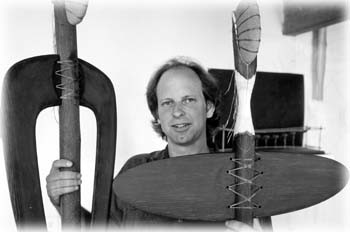
Andy Cook

Though recently employed as a label designer, Stengl is trying to find work that is more satisfying, hoping for a job that allows him enough time to illustrate his offbeat, ongoing mini-comic series, Rabbit Boy. Though fiercely anticipated by a core cluster of fans, the comix are hardly a moneymaker; Stengl spends months designing each issue, which he prints up at Kinko’s in small batches of 35 at a time, only to sell them for a scant dollar apiece. Often, if an appreciative fan has no money, he’ll give the book away.

“I don’t have a problem making a living off my art, if I can,” he says “though I suspect I’ll end up finding the balance somewhere. The formula I’m seeking is to have half of my income come from my art. Then I could probably stand to have another 9-to-5 job. I just don’t want to sell out my art.”

“In the art world, people do tend to resent those who seem especially fixed on selling their work,” offers Gaye Shelton. As both a painter and the director of the California Museum of Art, Shelton understands the treacherous duality of making a living from art. “If you are good at promoting yourself, and you are eager to close a sale, you can be seen as an artist who’s sold out. On the other hand, it’s a very luxurious point of view to think you can focus only on the work–and never on how to sell it.”

On the edge of Santa Rosa stands an old World War II­era building that now houses an ever-shifting number of artists, each residing in small studios where they work and live for relatively little expense. With one or two exceptions, all these artists hold day jobs, while spending their evenings pursuing their craft. The classic of the struggling artist, this loose-knit community known simply as The Studio reflects the same disparity of viewpoint as has been reflected by all the above artists. While planning for a recent open-studio event, there was–according to resident Glennith Lambert–an intense debate over whether proceeds from any sales might be donated to charity. Those opposed felt that selling work is so rare an occurrence that it would be wrong not to benefit personally from the cash. In the end, the charity idea was dropped.

“It’s a never-ending struggle,” sighs Lambert, who works as a substitute teacher, and whose living quarters are packed with intriguing sculptures that blend ethnocentric claywork with computer art. “A lot of artists actually quit doing art altogether, because they can’t afford to go on,” he says. “I certainly don’t think of this as a source of income. I’d just like to sell enough to maintain my art habit.”

Across the hall lives sculptor Miguel Maceira. His viewpoint is decidedly resigned.

“We’re fortunate to be able to do art at all,” he says, smiling widely. “Most people don’t even have that. No one’s forcing me to do this. I do odd jobs to pay the rent, and I do my art for myself. Sometimes I get paid for my work, sometimes not. I never feel like I’m selling out. I know how lucky I am.”

“You do your work, that’s all there is to it,” comments William DeRaymond, a painter of vibrant canvases who resides on the second floor of the building and drives a bus for the county. “You may never see the rewards of the marketplace. That doesn’t matter. You have to remain true to your vision.

“Aside from that, taking money does not constitute selling out, no matter what some people say. We live in a culture where we are rewarded for producing something that people like by being paid for it. That’s the way it works.” He pauses before offering his final thought, a remark that serves as an apt summation of the entire subject.

“As long as you are working to please yourself, and not some potential buyer, then you are a true artist,” says DeRaymond, nodding. “Beyond that–let the financial gain come. I personally am all ready for it.”

From the January 23-19, 1997 issue of the Sonoma County Independent

This page was designed and created by the Boulevards team.
© 1997 Metrosa, Inc.

Hard Cider

0

Serious Cider

By Bruce Robinson

OF ALL THE OBSTACLES that Jeffrey House has confronted in establishing his young business, the most elusive has been linguistic. “That word cider is the problem,” the founder and president of the California Cider Co. acknowledges cheerfully.

“That word normally means fermented, in most European cultures. In America, the word got changed to be a softer cousin, just like apple juice really, around the 1930s. That’s part of our problem: to try and convince people that ours are fermented.”

House’s Graton-based company now produces three Ace brand ciders–apple, pear, and honey–whose smooth carbonation and strong fruitiness belie their 5 to 6 percent alcohol content. But those same characteristics are a big part of cider’s appeal.

“It’s fresh, it’s natural, it’s half the alcohol of wine,” House elaborates. “Ladies can drink it instead of beer. It’s low in calories, it mixes with things. It’s got a lot of positives.”

Apples combine readily with most other fruits, opening myriad possibilities for punches and spritzes, but cider has long been blended with beers, too. “You can take an average lager, like a Miller or a Coors, and you can make a better-tasting drink by adding cider to it,” House explains.

Snakebite–a 50/50 mix of cider and lager–is a standard quaff in British pubs, while a combination with a dark stout, such as Guinness, is commonly known as Black Velvet or Black Satin.

One unusual benefit the cidery provides is a new market for Sebastopol-area apples, fruit that historically has been primarily pressed into juice use. “We use Gravenstein and about five other apples, all of them grown locally,” says Dave Cordtz, the Ace brewmaster. Apple juice is the main ingredient in all Ace flavors. For Ace Pear, “We remove the aroma from the apple juice so that when we add the pear juice back to it, it takes on the whole characteristic of pear,” Cordtz explains.

Ace Honey, which has been available for only a few months, is the driest of the three, and appeals to more experienced palates, says House. It collected the gold medal for cider at last fall’s Sonoma County Harvest Fair.

CIDER’S HISTORY in America extends back 1629, in the earliest years of the Massachusetts Bay Colony, House says, but after Prohibition its popularity waned, owing to the erratic quality (and potency) that consumers associated more with moonshine than with predictable brews such as beer.

Across the Atlantic, however, cider has endured as a popular alcoholic libation, served alongside a range of beers at pubs throughout Great Britain, where it accounts for about 8 percent of the beer market.

“In the UK now, it’s over a $1.5 billion business,” says House, a British native, who got his start in the trade by importing cider to the States. “The three top cider makers are producing over 100 million gallons a year of cider.”

He is hoping cider will attain comparable popularity here, and the trends appear to be heading in that direction. Industry figures cite sales of 115,000 cases in 1990 jumping to a whopping 606,000 cases in 1994. Total sales last year reached 2 million gallons nationwide; that is projected by some analysts to jump to 15 million gallons by the turn of the century.

So who is drinking all that cider? “I think Generation X has always liked hard cider and has taken it as their own,” House replies. “The obvious consumption is going to be with the 21- to 28-year-olds. We’re the alternative to a wine or beer.”

Ace Ciders produced 56,000 cases in 1996, the company’s second year, and has been hard-pressed to keep up with the demand for its products. House expects sales to triple or more in 1997, and plans to add an as-yet unnamed fourth flavor before summer.

Along with that growth, House has already prepared plans to build a micro-cidery, complete with tasting room, tours, and historical displays, to be located on Highway 116 at Graton Road. He hopes to begin construction later this year.

A big part of their business is kegs, which are rapidly gaining favor in youth-oriented bars. “If you look at all the taps that are going into all the bars across America, one or two of them should be a cider tap,” House says. By aggressively courting that market, he hopes to see Ace Ciders grow to a business doing “somewhere between $15 million to $20 million” annually in another five or six years, which, he jokes, “means that we might put Graton a little more on the map.”

From the January 23-19, 1997 issue of the Sonoma County Independent

This page was designed and created by the Boulevards team.
© 1997 Metrosa, Inc.

Preserving Biodiversity

0

Last Days of the Ark


Janet Orsi

One World, One Beast: Ranch manager Serge Etienne tends to a rare goat at C. S. Fund’s farm facility in Freestone.

Common livestock breeds are vanishing at a rapid rate. The few strains the world depends upon for food and clothing belong to a few corporations.

By Kelly Luker

There is a battle being fought. Although it rarely, if ever, has made the evening news, it is a war that all but a very few are guaranteed to lose. The battlefield? Look no further than your morning breakfast of scrambled eggs, toast, and glass of milk. The conflict rages around the newest eco-buzzword–biodiversity–and who owns God’s handiwork. If biotechnical companies continue undeterred, our food sources will be neither God’s nor nature’s, but the property of Ciba-Geigy, Royal Dutch/Shell, Sandoz, or one of the other half-dozen multinational chemical corporations.

Welcome to the real One World Order.

NESTLED IN THE ROLLING HILLS a few miles from the Sonoma County coast, the little town of Freestone could be a postcard for rural living. About five miles west of Sebastopol, the handful of homes, volunteer fire department, and country store that compose this village hinges on a two-lane road, generously named “highway,” that snakes through the pastures and farms of Sonoma County. The silence is deafening, sometimes punctuated only by the scraws of turkey vultures that glide effortlessly above.

Although Freestone’s population hovers around 60, it is still quintessentially Californian, claiming an espresso stand that opens at 6 a.m. and a quaint bed and breakfast. It is also home to the C.S. Fund and its executive director, Martin Teitel. Both are dedicated to prodding an already disaster-numbed world to recognize this latest crisis that threatens our future food supply.

Teitel looks like a man who would be comfortable on a farm, which is a good thing, since that’s one of the Fund’s many objectives. First, however, explains Teitel as he relaxes in the den of this nondescript building, the Fund is a philanthropic organization of the heirs of C. S. Mott, one of the founders of General Motors. The heirs distribute about $1 million annually to carefully selected organizations dedicated to preserving two ideals held dear by Americans–the environment and the right to dissent. But we are here today to talk about the former cause and what may be Teitel’s driving passion–preserving biodiversity.

To that end, his workplace is more than the Fund’s office. It is also home to “walking gene banks,” as Teitel calls them, livestock that are on the verge of extinction. For Teitel, a philosophy major who has been with the C.S. Fund since 1981, this is much more than a job: it is a calling.

He lives with his family next door–“a short commute,” he laughs–and spends much of his time writing and publicizing his research and concerns about biodiversity. What makes these vanishing breeds on his farm so fascinating is their very ordinariness. As the world focuses on the disappearance of such exotics as the ocelot, elephant, and meercat, it is the many breeds of domestic livestock–like pigs, cows, and sheep–that are rapidly approaching extinction, creating a economic and social disaster in the making.

Teitel will be the first to tell you that people would eventually survive without the meat and dairy products these animals provide. But the critically endangered breeds of goats, sheep, and chickens that live here mirror the story that is unfolding with grains like barley, wheat, and rice–three crops that provide 75 percent of the world’s food. Explains Teitel, “For the past 150 years or so, we’ve applied the industrial mode to agriculture.”

Enthusiastic scientists have worked to develop a steady supply of uniform, high-quality goods–large white eggs, lean pork meat, lots of beef on the hoof. One by one, livestock breeds shrink or disappear, no longer needed by a population that they are dependent upon to survive. But Teitel’s concerns aren’t just nostalgic. The cost of these lost and threatened breeds promises to be devastating.

We wander out to the back pasture, where a San Clemente Island goat named Uno frolics with his friend, a more common Alpine breed named Dos. A couple of freckle-faced Navajo-Churros wander up to sniff inquisitively at Teitel’s clothes. Bending to scratch the ram between its curling horns, Teitel explains that breeding these creatures is a double-edged sword. Any farmer will tell you that production traits (rapid growth, milk production, and meat conformation) respond quickly to selection pressure, while adaptability traits (reproductive fitness, climate tolerance, and parasite resistance) take a fair while longer. On the road to creating a “super producer,” the qualities that makes the animal hardy are bred out, compensated by massive amounts of antibiotics and chemically enhanced feeds to counterbalance its frail constitution.

Now the problem is twofold: not only are animals more susceptible to illness, but there are fewer breeds to rely on if disease wipes out a particular strain.

As an example, Professor Bill Heffernan of the University of Missouri’s Department of Rural Sociology, points to the domestic turkey that appears on dinner tables each Thanksgiving. “We found that in 90 to 95 percent of turkeys produced worldwide, the genetic stock comes from one of three breeding stocks,” he says. These birds have been genetically altered to create breasts so large (for the favored white meat) that they are unable to breed naturally and must be artificially inseminated. “It’s only a matter of time before we end up with some disease that, with this narrow genetic base, we have no resistance to,” Heffernan says.

This situation is, of course, not limited to turkeys. Virtually all–95 percent–cows’ milk comes from one breed, the Holstein-Friesian. About 60 percent of those dairy cows can be traced to only four breeding lines. And, those morning eggs and sausage? Nine out of 10 eggs come from the White Leghorn, while 25 to 30 percent of the hogs that provide the “country links” come from only six breeding lines.

IF THE LACK of diversity in gene pools is disturbing, to get very nervous one need only look at how just a few corporations own our food supply from pasture to table. Heffernan is especially interested in the growing concentration and control of the food supplies by a few large transnational organizations. He cites disturbing figures: “Three firms mill 80 percent of the flour in North America. Three firms handle the distribution of three-quarters of the grain moved globally. Three firms slaughter about 82 percent of the beef cattle in North America.”

Companies achieve dominance by mastering the art of “vertical integration,” the attempt to control every aspect of their product, from genesis to distribution. Like the neighborhood drug pusher, these companies develop frail, chemically dependent livestock and crops, and then supply the needed fertilizers and antibiotics to sustain them.

Heffernan points to one of the three major companies that slaughter 80 percent of the cattle in Australia. “Conagra is the world’s largest chemical distributor and fertilizers producer,” he explains in a soft Midwest twang. “Conagra owns 12,100 barges; 2,000 railroad cars; and 100 grain elevators. They are the fourth largest [poultry] broiler producer.” Heffernan sums up: “They control everything . . . all the way from seed to shelf.”

It becomes obvious what is most priceless in the quest to rule the world’s food supply, say advocates of biodiversity. As science and technology move ever faster than the guidelines that may harness them, the race is on to patent the very stuff of creation itself, germ plasms of the grains and plants and livestock embryos.

“Plant life arose in about 12 centers around the planet,” explains Teitel. “All 12 of those are in the Third World.”

While we have all of the money, he adds, the Third World has the germ plasm. This has led to an intense struggle for control of that basis for life, he says, with mostly corporations fighting to patent germ plasm from these countries. “They caught on 20 years ago–whoever controls the food supply controls everything,” observes Teitel drily.

His fears are echoed by Jeremy Rifkin, author and biotechnology watchdog, who notes in Teitel’s book Rain Forest in Your Kitchen (Island Press, 1992), “With the big chemical companies moving in to collect seeds and patent animal embryos, they potentially will have power over many of the living things [and] of the future of this planet.”

The solution for the survival of both flora and fauna–and, ultimately, those that depend on them–is diversity, both of the gene pools and of those that try to claim ownership of them.

Teitel’s remote demonstration farm is only one example of what are known as preservation breeders, a network of hobbyists and small farmers throughout the world in organizations such as the American Livestock Breeds Conservancy and Rare Breeds Survival Trust, dedicated to keeping breeds of domestic livestock from disappearing. Besides the Navajo-Churro sheep (fewer than 5,000 left in the world) and San Clemente goats (fewer than 2,000 remaining), Teitel also raises Delaware chickens and Ossabaw Island pigs, both on the American Livestock Breeds Conservancy’s list of critically endangered species.

Like Teitel’s organization, the farm at the Institute for Agricultural Biodiversity, an adjunct of Iowa’s Luther College, attempts to both preserve breeds and educate the public about biodiversity. Its director, Peter Jorgenson, calls the institute, housed in a 19th-century barn outside of Decorah, “the first museum/zoo to entirely focus on interpreting the genetic revolution.”

The solution to the shrinking diversity in our crops and livestock–and those that attempt to control them, believes Jorgensen–will be found when we start confronting and challenging some of our basic concepts about food, farming, and the economy. “In my view,” states Jorgensen, “I don’t call what we have in this country a farm policy or agricultural policy–we have a ‘cheap food’ policy.”

He continues, “It doesn’t factor in the social or environmental costs. It only looks at how to keep cheap food in the supermarket.”

Some nations, however, are finally rebelling against this Wal-Mart approach to keeping our freezers and cupboards full, and which in the process is driving family-owned farms into extinction. Heffernan points to Sweden, which took steps to ban giant livestock containment facilities, such as one in Oklahoma that houses 1 million hogs.

“The [Swedish] government has helped the farmers during the transition,” Heffernan notes. “[Now] farmers are making good money off their hogs. [They] produce some of the best pork in Europe, and family farms are being preserved.”

Teitel hopes that shoppers begin to question just what their mass-produced, buck-a-quart milk or 59-cent-a-pound broiler is actually costing them–or the next generation. They can vote for change with that most democratic of ballots, he says, the almighty buck. “Shopping is where we can have a direct impact by making choices,” Teitel observes. Vote for organic greens, he suggests, or brown eggs instead of white, or meat and produce from family-owned farms.

With what we buy and from whom we buy, believes Teitel, “we can make a direct choice on our future and our children’s future.”

From the January 23-19, 1997 issue of the Sonoma County Independent

This page was designed and created by the Boulevards team.
© 1997 Metrosa, Inc.

Exercise

0

Tight Fit


Vim and Vigor: Joan Price’s exercises can be done in shortbursts.

Photo by Janet Orsi


Joan Price counsels 10-minute
workouts for the exercise averse

By Bruce Robinson

PEOPLE WHO SAY they don’t have time to exercise are too busy not to,”declares Joan Price, neatly nipping my best excuse in the proverbial bud.”Exercise does not take time from your day,” she continues. “It gives it backto you in increased productivity, increased energy, and needing less sleep.”

To be sure, all that sounds good to a graying, roundish writer who has, overthe years, become much too short for his weight. But, but, but …

Price has heard it all before. A Sebastopol-based fitness writer, instructor,and adviser, she is the author of the immodestly titled Joan Price Says,Yes, You CAN Get in Shape (Pacifica Press; 1996), and claims herspecialty is helping non-exercisers start and stick to an exercise program.

“So, are you a non-exerciser or a lapsed exerciser?” she demands, locking adeterminedly healthy gaze on my sedentary self, as I attempt to take notes asaerobically as possible.

I can claim fair-weather status as a weekend warrior on the tennis courts,but beyond that my greatest regular exertion is dragging the trash out to thestreet every week.

“I would like to see you have a more rounded program,” Price clucksdisapprovingly. “Let’s see if you can work in some other fitness activitiesduring the week.”

These come in three types, she elaborates: conditioning, strengthening, andflexibility. The first is most easily accomplished simply by going for awalk. “Go out the door, walk for 10 minutes, and come back. You don’t needanything special,” she suggests. Just keep the pace up enough to make yourheart pump a little harder, a rate at which “you can talk, but not sing.”

Strength and fitness exercises can also be done in short bursts between otheractivities, again without requiring a change of clothes or elaboratemachinery. One easy substitute is “Dyna-Bands, latex strips that you push orpull and that give you resistance.”

And there are lots of exercises that allow you to use your own body weight asa foil for your muscles, push-ups being a basic example.

Price explains that even 10-minute workouts of particular muscle groups,scattered throughout the day and the week, can add up to a passable regimen.”If you do it correctly, each muscle group only has to do a minute or two. Soyou can work in a couple of muscle groups when you have a spare threeminutes.

“If you keep accumulating spare three minutes of strength-training over thecourse of a week, you could have 20-30 minutes twice a week, enough tostrengthen your major muscle groups,” she smiles. Then she reminds, “We’retalking about a health program, not the body builders.

What’s most important for health benefits is the exercise you getcumulatively, not all in one session,” she expounds.

But no matter how intense the tennis may get on a given Sunday morning, it’snot enough to carry me all week, she says, much less through the rainyseason.

“You can’t store fitness,” Price says flatly. “You store fat.”

Short sessions also help counter another major impediment to exerciseroutines–boredom. Swimming laps, running around a track, or extendedsessions on an exercycle, Stairmaster, or rowing machine quickly get tediousand tiresome, a drawback that Price readily acknowledges.

“But it is really good for some people,” she emphasizes, “especially thosewho have to relate intensively to others during the day,” as it allows themquiet, introspective time to “meditate, plan their day, or solve problems.”

To keep the mind active while the body is busy, Price suggests reading,listening to music, or even watching TV. “If you’ve got someone you’ve beenmeaning to write to and never get around to it, you can tape [record] aletter while you’re on the exercise machine,” she offers brightly.

“Then you get to do something productive.”

Another option is to alter the program to something that is notbrain-numbingly repetitive in the first place. “If you don’t like riding thestationary bicycle, maybe riding a real bicycle would do it for you,” shesuggests, contrasting the inspiring Sonoma County countryside with theconfines of a well-equipped health club.

Working out with a friend or partner, Price adds, is another way to enliventhe proceedings, regardless of the regimen. As for the preferred optimalexercise activity, Price says that walking, running, swimming, free weights,and even cross-country skiing all offer myriad benefits.

“But I always say,” she smiles, “that the best exercise is the one you’llactually do.”

From the January 16-22, 1997 issue of the Sonoma County Independent

Thispage was designed and created by the Boulevards team.
© 1997 Metrosa, Inc.

Ginseng

Root Up

FOR UNTOLD thousands of years the root of Panax ginseng has been usedby Asian healers as an all-round tonic, said to increase the potency ofone’s Qi, which probably best equates with what Westerners might calllife force. A great deal of 100 percent owl puckie has been slung concerningthe powers of this unglamorous groundcover.

As you can guess, most of them centered on sexual potency, and it was as analleged aphrodisiac that ginseng made fortunes for its savvy traders.

Sexual potency aside, alternative practitioners classify it as an adaptogenand provide anecdotal support for ginseng as an energy booster (that’s whythose vials of Tiger Ginseng are sold at gas stations and 7-Elevens), as astress fighter, and to restore youthful vigor.

In a controversial 1995 study conducted by Consumer Reports, 10different ginseng products were found to have wildly varying amounts of theactive ingredient–ginsenoside–and at least one of the brands contained noneat all. Soviet studies support ginseng’s powers as an immune system stimulantand a protector of liver function. And ginseng may reduce cholesterol levels.

Ginseng is on the FDA list of “safe” herbs. I wouldn’t start the morningwithout 10 drops of Siberian and 10 drops of Korean ginseng in my orangejuice.

From the January 16-22, 1997 issue of the Sonoma County Independent

Thispage was designed and created by the Boulevards team.
© 1997 Metrosa, Inc.

Lotus Thai

0

Thai Sticks

By Steve Bjerklie

RESTAURANTS featuring a particular cuisine fight a constant battle ofcompromise. Authentic flavors, textures, and presentation struggle againstthe need to offer food that local patrons will like and buy. This is not muchof a factor anymore for Italian, Mexican, and French restaurants, whoseculinary traditions have been nationalized by Americans, but for newertraditions such as Indian, Moroccan, and Thai the battle of compromise stillrages. Should a chef spice dishes with strict adherence to tradition or holdthe hot stuff to accommodate moderate American palates? Should fat, sodium,and MSG be cut back to respect America’s diet obsessions? What about foodsthat are traditional in other parts of the world–monkey, for example–butthat Americans wouldn’t lift a fork for?

In the case of Lotus Thai, a cozy 36-seat storefont on the square inHealdsburg, chef Vilaiwan Bentall (she goes by “Jackie”) strikes anear-perfect balance between offering authentic dishes of her native Thailandand acknowledging the tastes and desires of Californians: she serves nomonkey. She does serve the best peanut sauce in the county, andarguably the most succulent chicken satay. Some of Lotus Thai’s dishes may bea tad mild for devotees of traditional Thai fireworks-in-your-mouth foods,but I found them immensely flavorful and delicious. They accompany the Singhabrand of Thai beer that Lotus Thai serves with grace and aplomb.

And they gave me something new in life to appreciate: the wonders of coconutmilk.

This elixir is to Thai food what cream is to French. It smooths and blendsmotifs and textures as precisely and elegantly as an orchestra stringsection. Bental’s Masaman Curry, with slices of beef accented by slivers oforange, swims in the delicate milk. (Indeed, Thai curry, unlike Indian curry,cannot be made authentically without coconut milk). The Beef Pumpkin Curryentrée amazingly creates harmony from a triad of disparate elements.And for the straight stuff, try what Lotus Thai’s menu describes as a”refreshing young coconut drink”: sweet, milky, and yes–exquisitelyrefreshing.

But coconut milk is not anyone’s idea of health food, so order at Lotus Thaiin variety (Bentall points out that this is the way Thais eat anyway). GingerPork presents tender sautéed meat on a bed of organic vegetables. Thenight I enjoyed this dish the pork was a hair dry, left in the pan forperhaps 30 seconds too long, but this is a minor quibble. A bowl of Pad Thai,the noodly signature food of Thailand, was considered just a bit mild andmushy by dining companions who have eaten the stuff in Bangkok, but I thoughtLotus Thai’s version as good as any I’ve eaten stateside. All agreed that theSatay Chicken is nothing short of magnificent–the chicken butter-soft, thepeanut sauce perfection incarnate. High marks also for the Mee Krob appetizer(fried angel-hair rice noodles with egg, green onions, and cilantro).

For dessert, try the crispy and sweet fried banana. Also available to end themeal are tapioca pudding and orange sherbet.

Dinner for three, including appetizers, three entrées, two desserts,and a few Thai beers, cost less than $90 with tip, a definite worth-the-tripvalue.

Jackie Bentall opened Lotus Thai with her husband, Gerald, last Februaryafter running the kitchen at California Thai in Santa Rosa for a year. Shecomes by her talent honestly: several members of her family are in therestaurant business in Thailand. Indeed, this couple met in Bangkok severalyears ago, when Gerald, who now helps out his wife in several capacities(including waiting tables occasionally) was there on assignment for theRockefeller Foundation.

“I like to cook,” says Jackie, who glows with smiles beneath a black clocheof short-cropped hair. “In Thailand, everything revolves around food. Allmeetings, all gatherings–food is at the center. It means hospitality andwelcome.” Exactly what the food means at Lotus Thai, too.

Lotus Thai

109 A Plaza St., Healdsburg; 433-5282
Hours: Lunch from 11:30 a.m.; dinner from 5 p.m.; closed Monday
Food: Bangkok meets Healdsburg
Service: Unobtrusive and adequate
Ambience: Neat, clean, well-lit storefront
Price: Relatively inexpensive.
Wine list: California wines; also domestic and imported beers

From the January 16-22, 1997 issue of the Sonoma County Independent

Thispage was designed and created by the Boulevards team.
© 1997 Metrosa, Inc.

From a Voyeur’s Diary

0

Being There

By Gretchen Giles

FIRST OF ALL, I think that the human form is a very beautiful form and shape,” artist Alv Wilenius says, standing before the paintings hung ’round his under-house Rio Nido studio. Larger than life, painted in the distinct creams, tans, and pinks of the flesh, Wilenius’ figurative works–mostly of caul-faced men who seem to float in the viscous world of the canvas–have a heavy beauty, the limbs as thick with the fullness of life as Wilenius’ own. Probably because they’re modeled on Wilenius’ own.

“With a face, if you make it too specific, it also takes on a specific meaning,” he continues, gesturing towards an eyeless man, whose paint-shrouded face leans upward on the wall. “So sometimes I like to obscure the face to maintain a vagueness. I started out doing portraits, and I did some pretty nice pieces, but maybe because I was working as a mental health worker, [the patients] became more interesting as a subject matter than regular people.

“Because regular people, they have a lot of stuff, too,” Wilenius–whose day job indeed brings him in daily contact with the mentally disabled–says, looking directly at the reporter. “But it’s shielded, it’s hard to see. Whereas with mentally ill people, you can really see what’s happening with them.”

Seeing what’s happening with them is the theme of an exciting new exhibit, “From a Voyeur’s Diary,” now mounted by the Cultural Arts Council of Sonoma County in its storefront SoFo Gallery. Featuring works by Wilenius, Petaluma painter Susan Wolcott, Sonoma State professor Shane Weare, and sculptor Carol Setterlund, this examination of the little-seen and the intimate is staggeringly powerful in its scope.

Planning to mount a figurative show, co-curator Barbara Thoulion based the theme for this exhibit on the work she saw in Wilenius’ studio. “This is figurative work that is very vulnerable,” she says, standing in jeans amid the new-paint smell of the gallery, the show’s works arrayed on the floor or put casually against the walls in readiness for hanging. “I wanted it to be as though [viewers] are peeping into someone’s emotional secrets.”

After deciding on Wilenius, Thoulion approached painter Susan Wolcott, who prepared large, gromet-spiked canvases that reward long looking. Centering on the small, giving intimacies of the body–the back of the knee, the taut vulnerability of the Achilles tendon, the softness of the inner arm–Wolcott’s smart, chewy canvases grudgingly give their beauty away, her superb draftsmanship highlighted next to more abstract figures, repeating forms from E-Z Sew pattern transparencies married to the surface, hearts dropping like ripe plums from the opening in a chest.

Painter Shane Weare’s colors offer the disgruntled hues of burned scrambled eggs, yellow and brown washing the canvases from which nightmarish images of skull, monkey, chieftain, and anguished nude loom darkly. Surprisingly, gifted Cloverdale sculptor Carol Setterlund’s busts weigh in lightly amid her colleagues, much of her stronger work consigned already to a college exhibit in Southern California. Placed on found-wood podiums, these rakishly topped heads (she plops on one a nature-perfect tree branch) are clearly having too much fun–beachy and cool–for the darkness of this exhibit. Of exception is one of Setterlund’s older pieces, a curiously serene female bust–the slope from shoulder to breast cracking–that sits erectly postured and completely enfenced.

THE PURPOSE in my painting is not to produce these images that have all of this emotional content,” Wilenius says, back in his Rio Nido studio. “I paint because I want to paint and because I enjoy it. That’s the first thing–I really enjoy painting. The second thing is how I paint: how I use the material, how I dry the paint on the surface. And the third thing is what happens when I paint: what comes out in the struggle, what images appear.”

Known for the strong emotional content of his work–his rendering of a Norse god rising from the sea dangerously near another man’s genitals got him briefly booted from the Quicksilver Mine Co.’s then-Guerneville window–this Swedish native trained as an architect before coming to the States and enrolling at the San Francisco Art Institute. There the instructors, steeped in the school’s abstract expressionistic history, taught the painter to make figurative work with an abstract bent, adding a charged dimension to his heavy men.

We walk to one canvas hanging on the studio wall. A man lies cradling the egglike fragility of his head. He is at rest, limbs curved round, his genitals softly exposed. Above the figure a large expanse of canvas remains unmarked, the paint soothing and smooth. But at the top, a beaked vulva waits with perhaps a predatory patience. “You spoke of my paintings being dark,” Wilenius says, pointing at the canvas. “And this is the opposite to me. This is a happy picture to me. Because he’s all closed in and folded in on himself, and he’s content–there’s no drama going on.”

But what about the menacing genitals? “It’s the only thing that’s going to wake him up,” Wilenius laughs. “Maybe that’s what life is about. Anyway,” he chuckles again, “it’s my attempt to be happy.”

“From a Voyeur’s Diary” shows through Feb. 28 at the SoFo Gallery, 602 Wilson St., Santa Rosa. A reception for the artists is planned for Friday, Jan. 17, from 5 to 7 p.m. Gallery hours are Monday-Friday, noon to 5. 579-ARTS.

From the January 16-22, 1997 issue of the Sonoma County Independent

This page was designed and created by the Boulevards team. © 1997 Metrosa, Inc.

Echinacea

Echinacea

By Christina Waters

ONE OF THE PRIMARY medicines among native peoples of North America,Echinacea angustifolia–purple coneflower– was used in a favoritepoultice against snakebites, as a cold treatment, and to ease the aches ofarthritis. European settlers in the Midwest quickly adopted echinacea as aremedy, attracting the attention of the East Coast medical community, whichsoon sent samples of the flower and roots to colleagues across the Atlantic.

By the turn of the century, echinacea was a fixture in every medicine cabinetand enjoyed favor as a cold remedy until the raging debate betweenalternative healers and the AMA practitioners sent its use into a steepdecline. Once patent medicines and antibiotics came on the scene after WorldWar I, echinacea almost disappeared from use in the United States.

Today echinacea enjoys huge sales, largely owing to its widely reportedeffectiveness against that most stubborn of maladies–the common cold.Echinacea seems to be most potent as an extract. Confirmed users report thatif taken at the first sign of a scratchy throat or plugged-up nose, echinaceacan actually prevent a cold from developing.

How it does this occurs in several ways, according to a body of Germanstudies done over the past several decades. Echinacea not only acts toprevent infection from invading tissue, but is believed to strengthen theimmune system. Echinacea appears to boost the white blood cells’ ability tokill germs.

Studies also indicate that it can increase levels of infection-fightingT-cells, and even more important–in terms of possible cancer-fightingimplications–echinacea simulates the infection-fighting abilities of ahormone called interferon, which is produced by the body. Purists can trygrowing their own echinacea, using organically grown seeds packaged by Seedsof Change.

From the January 16-22, 1997 issue of the Sonoma County Independent

Thispage was designed and created by the Boulevards team.
© 1997 Metrosa, Inc.

Herbal Remedies

Nature’s Way


Christopher Gardner

Supplemetal Income: Pioneer herbal therapist Michael Tierraattributes the upswing in mainstream interest in herbal cures to “theinadequacy of conventional medicine. People are looking for other solutions,”he says. “And those solutions are here to stay because people are gettingresults.”

To some a plague, to others a godsend, herbal remedies are flying off theshelves and into the mouths of mainstream Americans

By Christina Waters

Scenario: Sometime in the near future. MDs are folding uppractice and learning computer graphics to upgrade their employment skills.Botanical companies with names like Rain Forest Rush and Forever Young topthe Fortune 500. Americans regularly spend half their monthly incomes onherbs, plankton, and vitamins. Budgets are slashed for scientific research ondisease control. Fewer malpractice lawsuits are balanced by increase indeaths due to herb abuse.

IT MAY NOT BE SO FAR-FETCHED. Echinacea. Astragalus. Ginseng. Valerian.Goldenseal. Not long ago, these herbal remedies would have been consideredthe antique arsenal of apothecaries and backwater eccentrics. In themid-1990s, I can grab a cheap vial labeled “Tiger Ginseng” at almost any gasstation. At Trader Joe’s in Santa Rosa, I can snap up bargains in echinaceaand goldenseal, right across the aisle from discounted single-malt whiskies.Ginkgo has joined the expanding vitamin shelves in Safeway markets, andvalerian is available in drugstores all over the country.

Have we suddenly run out of aspirin, Valium, and antihistamines? Are doctorswriting a mass prescription for exotic herbs? Au contraire. This growing rushto herbal judgment has very little to do at all with traditional, Western,AMA-style medicine. In fact, it might represent a collective vote of noconfidence in the kindly GP of yore, and his high-priced, drug-dispensingcolleagues.

Heady with self-empowerment–fueled by aggressive herb and vitaminadvertising claims–ordinary Americans are taking the state of their healthinto their own hands. A widely quoted 1993 report in the New EnglandJournal of Medicine revealed that a whopping one in three Americans hadexplored some alternative therapy during the past year. The same studyindicated that not only were people seeking the counsel of alternative healthpractitioners, but they had spent–out of their own pockets, sincealternative strategies are seldom covered by insurance–over $10 billion onthis care. Such a figure indicates a serious courtship between alternativehealth options and mainstream clients.

It’s no big surprise, given the current honeymoon herbal supplements areenjoying with the self-healing public, that vitamins and supplements haveremained the top-growth category in natural products stores for the pastthree years, according to market research done by the Council for ResponsibleNutrition.

But the mass market also seems to be experiencing a sizable bloom of herbsand vitamins. A 1994 survey by trade consulting group Natural FoodsMerchandizer puts the U.S. natural products market at around $8 billion, withvitamins and supplements as the highest growth category. The Wall StreetJournal noted that supplement sales increased by almost 25 percent duringthe first quarter of 1994. There’s no end in sight.

“We’ve definitely seen growth in the herbal category over the last twoyears,” says Michael Polzin, spokesperson for Walgreen’s, the largestdrugstore chain in the country. “The idea of natural vitamins is appealing toa lot of people,” Polzin says. “There’s more awareness because there’s moreadvertising.”

“And it’s a nationwide trend,” agrees Sharon Findley, over-the-countercategory manager for Longs Drugstores. “Supplements are performing very well.The whole category of dietary supplements is up 10 percent.”

Sonoma County–home to the acclaimed California School of Herbal Studies inForestville, the Shaman Healing and Massage Center in Santa Rosa, and theSebastopol-based Traditional Medicinals herbal tea company–is a bastion ofnatural cures. Local health food stores and quality supermarkets–includingRosemary’s Garden, Fiesta Market, and Nicole’s Health Food Store inSebastopol; Food for Humans in Guerneville; Oliver’s Market in Cotati;Organic Grocers and Community Market in Santa Rosa; Petaluma Natural Foods;and the Food for Thought chain–maintain well-stocked herbal remediessections.

Only the least conscious among us has failed to feel the surge of promotionalfroth over “natural,” non-synthetic pharmaceuticals–often called botanicalsor nutriceuticals. Products and magazines appear overnight, featuring adizzying array of supplements du jour. First it was echinacea–with agrassroots campaign so successful that even my mother now prescribes it to mewhen I come down with a cold. Then came melatonin, which spawned an empire ofbooks and talk-show chatter. Now it’s blue-green algae for energy, wild yamfor estrogen control, and gingko to combat senility. No red-blooded Americanmale over the age of 45 would be without his daily dose of saw palmetto, thealternative shield against prostate enlargement.

Herbalism Continued:

More about Echinacea, the cold killer,
and Ginseng, the energy booster.

For detailed information, access the huge and informative files of the Herb Research Foundation or consultthe vast archives of the National CouncilAgainst Health Fraud.

A Natural Reaction

Reasons for the high-profile affair between alternative and mainstream healthagendas are abundant. Baby boomers are aging, the same baby boomers who didtheir own thing in their youth and already are tuned in to exploringalternative options. There’s increasing distrust of drugs–the very wordresonates with danger–and the anti-additive, all-natural attitude is in stepwith a groundswell toward sustainable lifestyles and environmentalstewardship.

But lest you think this is all an altruistic, love-and-peace proposition,keep in mind that big bucks are the bottom line here. And since this isAmerica, the advertising campaigns have been impressive. Flip through anynumber of the new publications–bearing titles like Health, Delicious,Eating Well, The Natural Way–and be dazzled by the ads.

There’s no mistaking the message of a product called Rocket Fuel–subtitledAction Caps. “Max your energy,” the ad shouts, “with ginseng, bee pollen,sarsaparilla and licorice.” The ad also points out that this product containsno ephedra (which is also known as ma huang and has been linked to overdosedeaths), nor does it contain caffeine (that questionable stimulant in coffee,tea, cola, and even cocoa).

So–in the midst of the growing prohibitionism of a culture that isanti-tobacco, anti-alcohol, anti-mind-altering drugs–we can get high on aquartet of natural substances, which the company has helpfully packagedtogether for us. I’m getting the picture. Another ad pulls another string.”Would you pick your phyto nutrients from the earth,” it asks coyly, “or alab?” Laboratories are the bad guys, Dr. Frankensteinian shops from whencespring toxic substances and chemical additives. Many ads work the libido beatwith photos of healthy, attractive men and women clad in outdoor exerciseclothing and an aura of romance.

So the natural, alternative market is growing the old-fashioned American way,with hype–what’s the problem?

Act Naturally

Echinacea is a little purple flower that grows wild on the North Americanprairie. Ginseng root has been used for 5,000 years in Chinese medicine.Increasing numbers of people flee Western technology to experiment withtime-honored, plant-based nutrients, which all seem simpler, more romantic.Who doesn’t want to strengthen their immune system, improve their vision,enjoy more stamina, sleep better, slow the aging process, and increase brainfunction? Could it really be this easy? And if so, why aren’t we all downingdaily doses of ginseng, echinacea, and St. John’s wort? Possibly becausewe’re too damn cautious.

Since 1994, herbal supplements have been legally bundled into a twilight zonecategory of “dietary supplement” that is neither food nor drug. As such, itmay make no outright preventative or curative claims, but labeling mayindicate uses and effects on bodily functions. Valerian can’t claim to cureinsomnia, for example, but can be labeled with wording like “may be helpfulin inducing sleep.” More important, dietary supplements are not held to thesame testing standards as required of drugs by the FDA. Drugs must undergodouble-blind, randomized testing. Drugs must provide documentation about use,safety, ingredients, indications, warnings, and dosage.

Herbal supplements require no such regulation.

But what’s really causing the vociferous battle in the media (Newsweek,Consumer Reports, Herbalgram) over natural vs. FDA-approved? Is it simplywatchdog paternalism vs. freedom of choice? Or is it something that looks andsounds a whole lot like greed?

In a paper he recently presented to the National Institute of Health’s newOffice of Alternative Medicine, herb honcho Rob McCaleb theorized that thedemand for strict scientific regulation of herbal supplements was hinderingaccess to traditional healing techniques. The price of all the rigoroustesting to meet FDA approval can be as high as $300 million, according toMcCaleb and other experts in his field. The inventors of Prozac probablywouldn’t mind that kind of investment, given the juicy patent waiting at theend of the laboratory trail.

But what if it turned out that a daily dose of St. John’s wort could achievethe same anti-depressant results for a fraction of the price and noprescription needed?

“Yes, that’s why double-blind testing isn’t done for something likeechinacea,” says McCaleb, founder of the Colorado-based Herb ResearchFoundation and recent appointee to the Presidential Commission on DietarySupplements. “Nobody gets a payoff.”

Patent medicines are just that–medicines that have been syntheticallycreated, and whose chemical formulae have been patented. He who patents,prospers. It’s because no one can patent–i.e., own–an herb; no one canexclusively profit from it. Hence, no one stands to gain by proving–throughlong, costly testing–that Herb X cures cancer. Nobody, except cancerpatients and their families, that is.

So far, claims for botanicals and herbs remain primarily anecdotal–accountsof trial and error, personal sagas of use and effectiveness–rather thanempirical test results that can be retested and verified in labs anywhere inthe world. In a capital-driven society, what generates patented profits iswhat we get.


Christopher Gardner

Supporting Evidence: New studies back claims of the curativepowers of such herbal remedies as echinacea.

The ‘Sick Care’ System

Nonsense, says Dr. William Jarvis, director of the National Council AgainstHealth Fraud Inc. “It’s only because we’ve had strong food and drug laws inthis country that the American pharmaceutical industry has become the worldleader in its field,” says this hunter of charlatans. “It’s not because theyare angels from heaven. It’s just that they’ve had to meet the law.”

Jarvis, professor of consumer health education at Loma Linda University andrenowned thorn in the side of alternative health claims, feels thatbotanicals’ lack of standardized testing is a clear case of industriallaziness. “If they test them, maybe they’ll find that they don’t really doanything. It’s kinda like this old saying, ‘If you build a better mousetrap,the world will beat a path to your door.’ Well, in quackery, if you cancreate the illusion that you’ve built a better mousetrap, the world will beata path to your door. “As long as you can keep the illusion alive, it’s justas effective as if you’d actually built the mousetrap.”

Obviously many disagree with Jarvis’ grouse about the ineffectiveness ofherbs and they welcome the growing numbers of cross-over health seekers andpractitioners. “We know pediatricians who are recommending echinacea to theirkids for colds and sore throats,” says McCaleb. “Some doctors are turningtheir patients on to valerian instead of benzodiazotenes. And it’s becausepeople are increasingly concerned that what we have in the United States is a’sick-care’ system, instead of a health-care system–we wait until diseasehas set in and then look for dramatic interventions.”

Herbalists offer “the major answer to the health-care problem,” saysherbalist James Green of Forestville’s California School of Herbal Studies.Commonly prescribed drugs have produced a virtual epidemic of dire sideeffects. For example, 20 of the more than 250 prescription drugs thatshouldn’t be used by older adults account for 80 million prescriptionspurchased by that same population–to the tune of more than $1 billion ayear. The usually affable Green is hardly sanguine when he talks about themedical and pharmaceutical industries, which, despite their unsavory recordand with the blessing of the FDA, are allied in defending their turf againstinroads being made by alternative therapies such as herbalism. The medicaland drug behemoths would like to convince the public that herbalism is basedon faith and whimsical logic, Green says, and they submit “shoddy evidencethat certain herbs are lethal. But herbs are powerful, and one must know howto use them.”

McCaleb points to the provincialism of American attitudes. “In the Europeanmarket, when synthetic and botanical medicines are sold side by side, thenatural remedies outsell the synthetics almost every time. When people have achoice, they just trust the natural more.” Critics note with chagrin that alltoo often consumers equate “natural” with “safe.” And McCaleb, weary of allthe high-profile press condemning botanicals as unsafe because untested,likes to remind consumers that the same doctors who won’t go on the recordabout the benefits of Vitamin E “are themselves taking vitamin E forcardiovascular protection.”

McCaleb admits that consumers are demanding greater “quality and potency andconsistency in natural remedies. And the industry is responding.” He alsoagrees that the glut of glitzy advertising stands to blur integrity ofclaims. “Everybody’s trying to get the consumer’s attention in a louder way,”he says.

Meanwhile, McCaleb is convinced that the new commission formed in response tothe Dietary Supplement Health and Education Act of 1994 will improve thesituation by “examining supplement regulation and recommending changes to thelabels–to make them more informative and science-based. The mainstream,”says the respected ethnobotanist, “has definitely begun to take an interestin herbal supplements.”

Lasting Solutions

If you think that’s just a facile claim by a professional in the alternativehealth field, try firing up your modem and key up your favorite search enginewith the words “alternative health.” Not only is there enough botanical lore,research, and archival material available on the World Wide Web to give everyone of us a degree in pharmacognosy, but there are growing numbers ofrespected medical schools now offering courses in alternative therapies,herbal medicine, and Eastern healing techniques.

And this is just as it should be for those who’ve paid their dues in thefields of herbal therapy for the past several decades–waiting for the restof the world to catch on.

“I think the increased attention to herbal supplements is a wonderful,incredible thing,” says herbalist Michael Tierra. “That’s the way it shouldalways have been. People should always use herbs before they go to drugs. Ifthe herbs aren’t helping them, and they’re not getting the results they need,then they should look for other means. But I figure that herbs can take careof 85 to 90 percent of the problems that most people are having with theirhealth.”

Tierra, a pioneer herbal therapist, author of the much-reprinted Way ofHerbs and teacher at Santa Cruz’s East/West Herb and Acupuncture Center,says there’s a single reason for the current revival of herbal alternatives:”The inadequacy of conventional medicine. People are looking for othersolutions, and those solutions are here to stay because people are gettingresults.”

Tierra emphatically states that any negative effects due to herbal ingestionare “incredibly minuscule, especially compared to over-the-counterprescriptions. I don’t think regulation is required. People will always findall kinds of ways to hurt themselves. It’s just not necessary to regulatemost herbs,” he says.

For Tierra, the real danger involved in this debate is that “if we don’t havea voice as professionals in the herbal field–like we now have with thepresidential commission, then someone else will do the regulating for us.”

Such insistence on freedom of choice is “just a stupid way of thinking,” toDr. Jarvis. “It’s just folly. You’re putting something in people’s hands thathas a great potential for harm and then saying, well, anybody should be ableto do as they please. You don’t let children play with firearms or poisons.”

As for the presidential commission that’s been formed to provide someguidance on the question of regulating dietary supplements, Jarvis scoffinglyagrees with Tierra. “It’s definitely an industry group. It’s stacked with theleading advocates and those who stand to gain from the marketing of theseproducts, like the Herb Research Foundation.”

Boom or BS

William Jarvis is happy to trash the prevailing theories that aging boomersor failure of confidence in medical doctors have generated the herbal boom.”There is no boom–at least not among consumers. The boom is amongmarketers,” Jarvis laughs. “What you have here is a very interesting set ofdevelopments: In 1962 when the Kefauver-Harris amendment was passed requiringproof of efficacy of drug products, a lot of products were grandfathered.They were given time to get their act together, essentially.

“Then in the late ’80s and early ’90s,” he lectures, “the FDA began takingproducts off the market by the hundreds that hadn’t met the efficacystandard. Into this vacuum of essentially useless products, 60 companiespetitioned the FDA to market homeopathic products–a lot of which areherbal–and then the herbal market took off. Now we have the the new DietarySupplement law.

“What happened was that the marketers got the government to acknowledgecategories that did not have to meet the efficacy requirement. And theseproducts are moving into the void left by pulled standard products.

“So you have a marketplace phenomenon going on here–anybody who thinks thatthis is a consumer thing is naive.”

Despite the emotional rhetoric on both sides of the issue, it seems clearthat sales and use of herbal supplements will continue. And the intensifiedinterest by McCaleb and other botanical professionals in adding scientificcredibility to claims parallels the traditional health community’s interestin educating consumers about all their options.

Even Jarvis believes there should be a different category created for herbalmedicines. “I don’t think you have to take each product and test it on arandomized, controlled clinical trial,” he says. “But if you work from thebasic constituents and the pharmacological knowledge of those, and have aprovision to track unanticipated adverse effects, then I think you could goforward with it.”

Judging from McCaleb’s recommendations to the National Institutes of Healthand the recent National Council Against Health Fraud position paper onover-the-counter herbal remedies, the two camps are moving closer to accord.Both urge something less costly than full double-blind testing, requesting”realistic standards of evidence for established plant medicines,” asMcCalebs notes.

In its detailed listing of recommendations to bring greater credibility andsafety to the herbal medicine market, the NCAHF paper states that “many[over-the-counter] herbal remedies could be marketed without costly andlengthy clinical trials if basic principles of consumer protection areattended to. While caveat emptor should still be the consumer’s guidingprinciple, it will be that same consumer who wins, should the warringfactions–those who want to provide informed access to life-enhancingsubstances, and those who want to protect the innocent from potentialfolly–meet each other halfway.

From the January 16-22, 1997 issue of the Sonoma County Independent

Thispage was designed and created by the Boulevards team.
© 1997 Metrosa, Inc.

Talking Pictures

0

Rach Star


Black and White: ‘Shine’ depicts pianist David Helfgott’s keysto sanity.

Pianist Jeffrey Kahane shines

Writer David Templeton takes interesting people to interesting movies in hisongoing quest for the ultimate post-film conversation. This time out, hemeets up with esteemed pianist/conductor Jeffrey Kahane of the Santa RosaSymphony to discuss the musically savvy, critically acclaimed filmShine.

RENOWNED MUSICIAN Jeffrey Kahane is a man so desperately busy that he has notbeen out to a movie theater in days, weeks, months. Furthermore, I ampolitely informed, he probably won’t make it to a movie anytime soon.

Though intrigued by my offer to see the brilliant new film –thestory of Australian pianist David Helfgott and his roller-coasterrelationship with sanity and Rachmaninoff’s Third Piano Concerto–andadmittedly eager to see it, Kahane has expressed concerns that he would notbe able to find the spare time to go off to a show.

Fortunately, a conveniently released videocassette of the film (intended forhomebound Oscar voters; Shine is still in its initial theatricalrelease) has made its way into my timely possession, and I quickly arrange todrop the film off for Mr. Kahane’s private viewing.

“All right. I may have a moment after midnight,” he says.

The hard-working pianist and former rock musician is currently holding a postas conductor of the award-winning Santa Rosa Symphony, a choice job that hesandwiches between numerous recording projects and international tours. Lastyear, Kahane saw the release of Made in America (Sony Records), apassionate assemblage of works by Gershwin and Leonard Bernstein, on which hecollaborated with acclaimed violinist Yo Yo Ma, whom he met while playingwith the Gardner Chamber Orchestra in Boston. The duo frequently worktogether, as in last year’s successful tour of South America.

“I hope you like your coffee somewhat strong,” Kahane warns. A man ofboundless natural energy, he nevertheless clearly enjoys the extra punch of agood cup of joe; this stuff is explosive.

Of course, he was up pretty late.

“There is an extraordinary sequence in the film,” Kahane says, setting hiscup on a blank music sheet, “where the young David Helfgott performsRachmaninoff’s Third Concerto for the first time. All of a sudden–he can’thear the music, we can’t hear the music, but he’s playing. We hear thepounding of his fingers on the keys, the pounding of his heart, and when wedo hear the music, it sometimes seems out of phase with his playing.

“This really happens,” Kahane says earnestly. “Most performers experiencesomething like this at one time or another. It’s very difficult to explain.I’ve certainly had that experience–though not to the severity that Daviddoes.”

At the end of that sequence, Helfgott, soaked in sweat, finishes the concertoand promptly passes out. He is next shown receiving shock therapy in anasylum. The implication is that his attempt to master Rachmaninoff’s ThirdPiano Concerto–nicknamed “Rach 3”–has been so traumatic that it pushes thealready unstable young man over the edge. Indeed, the piece is considered oneof the most difficult works in classical music, with some pages nearly blackwith notes. The remainder of the film details the adult Helfgott’s ultimateredemption, as he rises out of a schizophrenic fog and finds his way back tomusic. The real David Helfgott could not resist returning to the Rach 3,either. His CD recording of the piece is now considered the definitiveperformance of the work.

“I love the Rachmaninoff Third,” Kahane says. “It’s a piece I’ve played alot. For me, as it is for most aspiring pianists, it’s something you have todo. Once you’ve accomplished that, it’s like climbing a greatmountain–you’ve really done something.”

And is it the kind of piece that could drive one to madness?

“Oh yes,” he affirms mildly. “It could put you right over the edge. Manypianists injure themselves, physically, trying to play it. And if you arepsychologically vulnerable, as David was–yes, I believe it could do that toyou.” Kahane himself learned the piece when he was 22, but did not perform itpublicly for several years. He has performed it frequently since.

“What I love about the movie, ultimately, is its depiction of the redemptivepower of music,” Kahane continues. “I’ve devoted myself so much to the ideathat music does have that kind of power. David was saved by the powerof music, and the power of love, of course, with the love of his wife, whosaw who David was even though everyone around him just saw a nut case.”

Asked to verify a rumor that Rachmaninoff had tremendously large hands,Kahane laughs.

“That’s true, that’s what they say,” he says. “He could reach an octave and afifth! Way beyond the reach of most pianists.”

Holding up his own hands, spreading his fingers to demonstrate his reach,Kahane adds, “My hands, however, are definitely on the smaller end of thespectrum. Interestingly, though, Rachmaninoff’s work can be played with avery small hand, unlike that of other composers: Brahms, Liszt, Bartok. Ican play Rachmaninoff, and I am eternally grateful to him for making thatpossible.

“My life,” he smiles, “has certainly been the richer for it.”

From the January 16-22, 1997 issue of the Sonoma County Independent

Thispage was designed and created by the Boulevards team.
© 1997 Metrosa, Inc.

Selling Art

Art & Souldoesn't meanselling out,say local artistsBy David TempletonIllustration by Bruce StenglLike many artists, Paul Boudreaux lives close to his work. In fact, it shares his bedroom. A prolific painter and creator of numerous "street-style" comic books, the intense, 27-year-old artist lives in a tiny backyard cottage in Penngrove, with little space and no room for a dedicated studio...

Hard Cider

Serious Cider By Bruce RobinsonOF ALL THE OBSTACLES that Jeffrey House has confronted in establishing his young business, the most elusive has been linguistic. "That word cider is the problem," the founder and president of the California Cider Co. acknowledges cheerfully. "That word normally means fermented, in most European cultures. In America, the word got changed to be a...

Preserving Biodiversity

Last Days of the ArkJanet OrsiOne World, One Beast: Ranch manager Serge Etienne tends to a rare goat at C. S. Fund's farm facility in Freestone.Common livestock breeds are vanishing at a rapid rate. The few strains the world depends upon for food and clothing belong to a few corporations.By Kelly Luker There is a battle being fought....

Exercise

Tight FitVim and Vigor: Joan Price's exercises can be done in shortbursts.Photo by Janet OrsiJoan Price counsels 10-minuteworkouts for the exercise averse By Bruce RobinsonPEOPLE WHO SAY they don't have time to exercise are too busy not to,"declares Joan Price, neatly nipping my best excuse in the proverbial bud."Exercise does not take time from your day," she continues....

Ginseng

Root UpFOR UNTOLD thousands of years the root of Panax ginseng has been usedby Asian healers as an all-round tonic, said to increase the potency ofone's Qi, which probably best equates with what Westerners might calllife force. A great deal of 100 percent owl puckie has been slung concerningthe powers of this unglamorous groundcover. As you can guess, most...

Lotus Thai

Thai SticksBy Steve BjerklieRESTAURANTS featuring a particular cuisine fight a constant battle ofcompromise. Authentic flavors, textures, and presentation struggle againstthe need to offer food that local patrons will like and buy. This is not muchof a factor anymore for Italian, Mexican, and French restaurants, whoseculinary traditions have been nationalized by Americans, but for newertraditions such as Indian, Moroccan, and...

From a Voyeur’s Diary

Being There By Gretchen Giles FIRST OF ALL, I think that the human form is a very beautiful form and shape," artist Alv Wilenius says, standing before the paintings hung 'round his under-house Rio Nido studio. Larger than life, painted in the distinct creams, tans, and pinks of the flesh, Wilenius' figurative works--mostly of...

Echinacea

EchinaceaBy Christina WatersONE OF THE PRIMARY medicines among native peoples of North America,Echinacea angustifolia--purple coneflower-- was used in a favoritepoultice against snakebites, as a cold treatment, and to ease the aches ofarthritis. European settlers in the Midwest quickly adopted echinacea as aremedy, attracting the attention of the East Coast medical community, whichsoon sent samples of the flower and roots...

Herbal Remedies

Nature's WayChristopher GardnerSupplemetal Income: Pioneer herbal therapist Michael Tierraattributes the upswing in mainstream interest in herbal cures to "theinadequacy of conventional medicine. People are looking for other solutions,"he says. "And those solutions are here to stay because people are gettingresults."To some a plague, to others a godsend, herbal remedies are flying off theshelves and into the mouths of...

Talking Pictures

Rach Star Black and White: 'Shine' depicts pianist David Helfgott's keysto sanity.Pianist Jeffrey Kahane shinesWriter David Templeton takes interesting people to interesting movies in hisongoing quest for the ultimate post-film conversation. This time out, hemeets up with esteemed pianist/conductor Jeffrey Kahane of the Santa RosaSymphony to discuss the musically savvy, critically acclaimed filmShine.RENOWNED MUSICIAN Jeffrey Kahane is a...
11,084FansLike
4,606FollowersFollow
6,928FollowersFollow