Campaign Cash

0

High Stakes Game

By Doug Ireland

HAROLD ICKES IS undoubtedly the most skilled of Bill Clinton’s serial amnesiacs. As White House deputy chief of staff Ickes, documents show, coordinated the cover-up of interference by the president’s men with federal bank regulators’ investigations of Jim McDougal’s Madison Guaranty (the looted S&L at the heart of the Whitewater mess), as well as the sordid Travelgate and FBI files scandals. Quizzed about all this by previous congressional probes of Whitewater, Ickes repeatedly pretended to have no recollection of key events in which sworn testimony and documentary evidence showed him to have been intimately involved.

When Ickes–who, as the president’s political and fundraising enforcer, ran the Democratic National Committee from the White House–was called before the Thompson committee last week, he gave a repeat performance, invoking before the Senate panel memory loss 40 times after having claimed amnesia 227 times in his deposition to the committee’s lawyers.

Ickes is infinitely smarter than the GOP Senators who interrogated him: his clever combination of theatrics, obfuscation, and failure to remember was saluted by the Beltway press corps as a bravura performance. But Maine Sen. Susan Collins, in the scant 10 minutes allotted her for questioning, managed to turn over the rock on a sleazy tale of influence-peddling that illustrates why a new law to get special interest money out of politics is so urgently needed.

Here goes. It’s the story of three Wisconsin Chippewa tribes-Lac Courte Oreilles, Mole Lake-Sokaogon, and Red Cliff–that wanted to climb out of penury by opening a casino just outside the Twin Cities in Hudson, Wisconsin. Gambling is big business for many Native Americans: 184 of the nation’s 557 tribes operate 281 gaming facilities, and a 1996 report from the General Accounting Office showed that profits from Indian-run gambling are more than $4.5 billion annually.

Unemployment among the tribes was 40 percent; the average income of one tribe was only $6,000, while another was in danger of losing its medical insurance because it couldn’t pay the bills, and a third had no doctor at all. Bureau of Indian Affairs career staffers found the Chippewa worthy of help and recommended okaying their casino application, which required federal approval. But the application was opposed by other Minnesota and Wisconsin tribes grown rich from casinos (including the Shakopee Mdewakanton Dakota’s Mystic Lake). And for the first time ever in such a case, the BIA staffers’ recommendation was overruled by Secretary of State Bruce Babbitt’s Interior Department.

What killed the three tribes’ dreams of casino riches? Campaign cash. In sworn testimony, a lobbyist hired by the tribes declared that on the day the casino was killed, Secretary Babbitt told him that the application had been scuttled at the direction of Harold Ickes because the gambling-rich tribes opposing this unwanted competition had given some $500,000 to the Democrats. This testimony had great credibility because it came from Arizona lawyer Paul Eckstein, a Harvard Law School buddy of Babbitt’s who had also been Babbitt’s campaign manager when he won the Arizona governorship.

Deploying his oh-so-convenient amnesia, Ickes denied to the senators having “any recollection” of “talking to Interior” about the matter, and–having been alerted to the charge during his deposition–produced a letter from Babbitt (unsworn) claiming he never mentioned money in the conversation with Eckstein.

This, combined with Ickes non-denial denial, allowed the president’s enforcer to slip away unscathed.

But the biggest whopper from Ickes came when he said he didn’t consider the casino matter “a big deal.” There’s a lot of gambling money in politics, and non-Indian gaming interests shell out about equally to both major parties. But Indian-run gambling is a big deal for the Democrats indeed: According to a study by the nonpartisan Center for Responsive Politics, Democrats got a whopping 87 percent of the $1.6 million in hard and soft money gambling-rich tribes gave to federal elections in 1995 and 1996. And that doesn’t count hard-to-trace soft-money contribution to state parties.

Documents found in Ickes’ files show that he and the DNC directed Indian casino cash in the hundreds of thousands to Democratic parties in at least half a dozen states.

Neither party is exempt from such sleaze: one reason New Jersey’s GOP Gov. Christie Whitman finds herself in re-election difficulties this fall is that she’s under attack for funding a $330 million tunnel and roadway to a new Atlantic City casino owned by shady Las Vegas gambling mogul Steve Wynn, a megabucks contributor to both Republicans and Democrats. And the entire Nevada congressional delegation from both parties has long been in the pocket of the boys on the strip, as the Vegas casino ghetto is familiarly known.

The Ickes-Babbitt killing the Chippewas’ attempt to climb on the gambling gravy train, however, shows that the Democrats can be just as ruthless to the poor as the “party of privilege” when legally bribed with big campaign cash.

Web exclusive to the Oct. 23-29, 1997 issue of the Sonoma County Independent.

© Metro Publishing Inc.

Sutter Medical Center in Santa Rosa

0

Babes in Arms


Michael Amsler

Man with a plan: Cliff Coates, CEO Sutter Medical Center

Last year voters approved the lease of Community Hospital. Now the state is probing reports of declining patient care

By Paula Harris

ANA GRAY, an amiable woman with expressive dark eyes, curls a protective arm around her newborn son, Bailey, as she briskly carries him across downtown Santa Rosa’s Courthouse Square toward the state Department of Health Services office where she files her complaint.

According to Gray, patients are suffering because Sutter Medical Center in Santa Rosa–formerly known as Community Hospital–has closed its well-baby nursery, which had catered to the newborns while their mothers rested and recovered. In fact, many patients aren’t aware that for the past four months, Sutter Health Center of Santa Rosa has changed to “couplet care,” where mothers and babies are treated as a unit, and babies stay in the same room with mothers at all times.

Gray, 30, is incensed about her treatment at Sutter, where she delivered her son, and makes no bones about it. “I used to say Community Hospital was the best place to have a baby,” comments Gray, who delivered her first two children at Community Hospital. “I wouldn’t go there again.”

After her delivery, Gray opted to stay the two full days allowed by the insurance company, since she had two other children, ages 10 and 2, at home and she wanted to return rested. But, she wasn’t aware that policies regarding well-baby nursery care had changed.

During her Aug. 11-13 stay, Gray claims, after zero sleep for 20 hours–including 13 hours of labor and delivery–she asked a nurse to watch her newborn son, who was fussy, for two hours while Gray got some sleep. Gray says she was told the hospital no longer had a nursery and couldn’t watch babies. “I couldn’t believe it,” recalls the young mother. “All I could do was sob into my pillow from pure exhaustion.”

In her letter of complaint, Gray writes:

“New mothers used to be treated special, I appreciated being rolled from labor and delivery in a wheelchair, having my baby go in the nursery when I needed sleep or a shower. . . . I also missed the red wagons and being wheeled out to the car. These things gave Community Hospital charm and made it special.

“I feel the patient is no longer the priority, but that the appearance of the hospital is most important,” she continues. “Good looks don’t mean good care.”

Sympathetic nurses, Gray says, encouraged her to file the complaint. She has filed one copy with the hospital and another with the state Department of Health Services.

Sutter officials later denied Gray’s allegations, insisting that the nursery was still open, that it was an isolated case, that there was no change in discharge policy, and that all the small red wagons, used to transport baby gifts and belongings, had been stolen. Sutter officials also responded that allegations that nurses were watching newborns at the nursing station–a violation of state health policy–were untrue.

But Helgi Teixiera, health facilities evaluator supervisor for the state Department of Health Services, says complaints about the Well Baby Clinic not being utilized and about babies being left at the nursing station have led to a current state investigation about Sutter’s perinatal services. “We’re aware of [the complaints] and are doing an investigation,” she tells the Independent.

“Leaving babies at the nursing station is not an acceptable practice–that’s why we have nurseries. And well babies are not supposed to be in the intensive care nursery.”

State regulators have told Sutter to utilize the Well Baby Nursery, she adds. “But there have been problems and complaints,” she observes. “It’s a viable issue. More than one person has voiced concerns.”

When asked to comment, Sutter Medical Center of Santa Rosa CEO Cliff Coates says he suspects that the Health Services Department is responding to complaints from “patients, anonymous letters, employees, or the labor union.” Coates insists the hospital is not involved in any wrongdoing. “We’re very confident we’re meeting all licensing requirements,” he says, adding that the hospital is “constantly facing critics.”

Babies on Board

ALTHOUGH COUPLET CARE is on the rise in the obstetrics wards of many hospitals–for mostly economic reasons, since staffing a nursery at night becomes costly–some patients and nursing staff see it as a blatant reduction in patient services and therefore a violation of the Sutter lease agreement.

Emma, a 17-year nurse who works at the facility and spoke on condition of anonymity, verified that the hospital’s well-baby nursery had recently been closed and that nurses were encouraging patients to complain. “Mothers are being told they must keep the babies with them; they have no choice,” she explains.

She claims the main problems are staff cuts, untrained nurses, improper evaluation of newborns, and keeping babies at the nursing station instead of the well-baby nursery because there’s no one to staff the latter.

According to Emma, new mothers undergoing such surgical procedures as tubal ligations, removal of retained placentas, and cesarean sections must also care for their newborns. “I’ve seen a mother recovering from a C-section, under general anesthesia, snoring away with the TV blaring and the baby thrashing and screaming in the bassinet,” she says. “One nurse can’t simultaneously check on all babies.”

However, Coates flatly denies the well-baby nursery is closed (“absolutely untrue”) and dismisses Gray’s complaint as a “possibly isolated case of not having a staff person [on duty].”

Says Coates: “We’ve been engaged in a study to look at what customers want, and what they want is couplet care–they want to be with their babies. So we’ve been engaged in a retraining effort in our OB department so that nurses are cross-trained in taking care of babies and mothers, as the baby should be with the mother and that’s what customers are asking for.

“What that’s meant is that the nursery is used much less than it used to be, but it is not closed.”

He adds that the nursery is still available for babies whose mothers have undergone surgery, and denies reports that babies are being taken care of at the nurses’ station.

But Stacy Giles, a registered nurse in labor and delivery who called the Independent in support of couplet care, says that of the 136 deliveries in August, none went to the well-baby nursery “because it wasn’t an entity.”

When the Independent asked to view the well-baby nursery, a reporter and a photographer were shown a sparsely furnished room with the lights on and viewing window blinds up, but no babies or staff members inside. The photographer was instructed by Sarah Miller, director of physician support services at Sutter, not to take pictures of the area.

Madrone Williams, director of women’s and children’s services at Sutter, says there is the same ratio of nurses to patients in the couplet-care model. “The nurse is 100 percent responsible for the baby’s care, not the mother,” she says. “It’s not a cost-cutting measure.”

The Name Game

IT’S BEEN ALMOST A YEAR since the hotly contested election in which 60 percent of Sonoma County voters passed a controversial ballot measure to lease publicly owned Community Hospital to Sutter Health/California Health Systems, a large health-care conglomerate with headquarters in Sacramento.

Now some critics are charging that the company has violated the lease agreement and broken a pledge not to curtail services at the publicly owned facility, arguing that planned staffing changes will have grave consequences for patient care.

Events leading up to the election can best be described as a messy tussle between the Sonoma County Board of Supervisors, which wanted to unload the debt-ridden Community Hospital, and campaigners intent on keeping it. “It’s always unfortunate when well-meaning citizens get involved in something they know nothing about,” Supervisor Mike Cale chided. Finally, Superior Court Judge Lloyd von der Mehden ruled against the county’s motion to quash a petition drive to place the future of Community Hospital before local voters. Petitioners collected almost double the signatures needed to force an election, but though the initiative qualified in time to make the March ballot, supervisors refused to add it, forcing the measure to go on the November ballot and giving Sutter extra time to fight it.

One week before the election, Sutter ignored its vow to the IRS that the corporation would not intervene in political campaigns, and tossed more than $200,000 of its considerable resources into the campaign, using slick promotional mail, newspaper ads, and a last-minute poster campaign to defend its contract.

Once in charge, Sutter embarked on a snazzy marketing campaign, made exterior changes to the buildings, and ceremoniously dropped the name “Community Hospital” for image reasons. The May 9 “Community News,” a Sutter in-house newsletter for employees, volunteers, and board members, states that “it was determined that keeping [the name] ‘Community’ may reduce the potential image improvement of a name change.”

Ironically, the word community had figured quite prominently in the Sutter 1996 annual report, “1996–The Year in Review. A Report to the Community.” It states, “At Community Hospital, we believe the key to our continued success is an open, positive relationship with the members in our community. . . . We never forget that the support of our community is what makes our success possible.”

‘Dangerous Medicine’

IN PAST MONTHS, and since the takeover, there have been several state Health Services Department citations criticizing Sutter for failing to continuously monitor heart patients on telemetry, not responding to patients’ call buttons, understaffing the perinatal and pediatric wards, serving cold meals, and inadequately training nurses assigned to the intensive care unit.

Sutter officials say they’ve responded well to every state visit and add that the hospital has never been fined.

Last October, Irene Fox, an 80-year-old retired schoolteacher, died while being administered an intravenous injection while under care at the medical center. Her family has filed a wrongful death lawsuit against Sutter and against the nurse who reportedly administered the fatal, concentrated solution of potassium chloride to Fox, who lapsed into convulsions and died moments later while family members were in the room. “We will go forward with the suit and get a trial date in a year or so,” says attorney Michael Casey, who is representing Fox’s relatives. “We’ve had some discussions with the hospital about trying to resolve this, but the family thinks the hospital is not taking the claim seriously,” he adds.

The past year has also seen staffing changes and restructuring of services that have proved unpopular with workers. One detailed internal memo sent by Dr. Marc Eiseman, a physician at the Family Practice Center, to Sutter CEO Cliff Coates and all FPC staff noted that patients had to wait hours for appointments; almost half the patients’ charts were missing; no one answered calls to the radiology department (to help interpret X-rays); and a depleted staff was run ragged attempting to keep up.

“Things were bad before Sutter came on board, and now, with the recent cutbacks in the medical records department, they are shameful,” wrote Eiseman. “From a liability standpoint, it is only a matter of time before something will slip through the cracks (an abnormal Pap smear or mammogram, elevated blood glucose, etc.) which we will fail to follow up on and which will lead to a bad outcome (an undetected cancer, diabetic ketoacidosis, etc.). . .

“This is dangerous medicine.”

Another widely distributed internal memo, this time from Family Practice Center Director Sean Gaskie, M.D., notes “an alarming and unacceptable pattern of office closures and patient dislocation due to staff cuts and consolidation.”

Gaskie later blasted the Independent for publishing that memo, claiming, “It is your prerogative to quote the most inflammatory and hyperbolic rhetoric to be found in the purple prose of a couple of frustrated doctors.”

That Gaskie himself was one of those “frustrated” doctors–his memo also states “an office system based on a floating crap game can only repulse patients from our system”–goes unmentioned.

Team Approach

MEANWHILE, a new “team approach,” effective Nov. 3, is designed to reduce costs and improve efficiency, according to management. It will affect about 31 employees, including nurses, nurse assistants, and housekeepers. Under the restructuring plan, four supervisory roles will be eliminated and the new arrangement will save the financially strapped hospital about $300,000 per year.

The plan has been greeted with skepticism by workers. Michael Allen, manager of SEIU Local 707, says the union is “pessimistic and suspicious” of what looks like “de-scaling” the workforce. Nurses and health-care workers have marched in protest of the impending changes.

“The proposed model will fragment nursing care into tasks that will be performed by unlicensed, inexperienced personnel and will undoubtedly have an effect on the quality of patient care,” says Glenda Canfield, a registered nurse at the hospital.

The Sonoma County Board of Supervisors entered into the private/public partnership after the financially shaky Community Hospital reportedly lost more than $11 million in revenues over five years. Sutter/CHS agreed to run the hospital for at least the next 20 years and gave final assurance to supervisors there would be no decrease in services.

Under the terms of the lease, the Sacramento-based health-care company agreed to maintain all existing programs and services, rehire all existing staff with the same wages and benefits, and spend up to $38 million in charitable health care over the next two decades.

Sutter Medical Center CEO Cliff Coates denies any hospital services have been trimmed or eliminated. “In terms of cutbacks or layoffs, we’re constantly looking for efficiency,” he continues. “We’ve been through at least three process redesigns here, some of which included layoffs and some of which didn’t.”

However, allegations are surfacing from some nursing staff and patients, including Gray, and from consumer advocacy groups like HealthWatch of Sonoma County that the hospital is dramatically reducing services and thus violating its lease agreement. Now, say some observers, there are lingering doubts about whether the community made the right choice in giving up Community Hospital, a venerable 130-year-old public institution that had played a role in the lives of so many local residents.

Dorothy Hansen of HealthWatch of Sonoma County–a watchdog organization that includes many who opposed the Community Hospital lease–says her group has been collecting data to ensure that Sutter Medical Center lives up to its contracts. She believes Sutter is in violation of the lease agreement. “We expected it to be like this,” she notes. “It’s the same progression of staff layoffs and cutbacks in service, and that’s a familiar pattern in other North Bay Sutter hospitals. . . .

“We have to realize that Sutter is an aggressive, acquisitive company with a bottom-line mentality and they bear watching.”

But Coates says Sutter has “far exceeded” the terms of the lease, both in the amount of money invested in the organization and in the amount of indigent care provided. “Charity care under Sutter management has increased to over 8 percent [of admittals], where in previous years it averaged around 5 percent,” he observes.

The commitment made to the county did not specify providing the same services in the same way as Community Hospital did 10 years ago or one year ago, he adds. “There’s not a commitment to make no changes,” he says. “I think any organization that fails to change is not going to make it in the long run, and our commitment here is to the long run. We want to grow the organization, and in order to grow the organization we will make changes and we are making changes–and the county certainly understood that.”

Sonoma County Supervisor Mike Reilly says that the county has an obligation to make sure all provisions within the lease agreement are enforced, but stresses there’s a difference between transformation and transgression. “It’s an easy assertion to say if [Sutter] is changing something, they’re violating the lease agreement,” explains Reilly. “There’s a difference between them modifying services and violating the lease agreement.”

But he adds that if there are citizen complaints brought to him about Sutter, he’d be interested in researching them.

Coates says Sutter Medical Center is involved in a long-term conversion process and the hospital is not making a profit. “In the first nine months, we’ve posted a loss of $4.2 million. I think that’s an indication that this is a long-term project, and a quick turnaround is not something that’s going to happen,” he says. “We consider the losses that we’re incurring now an investment because we continue to do all the good things that this hospital does, and by continuing to do what we’re doing and to be more efficient at what we’re doing, I think we’re going to see growth.

“It really is going to require growth in order to operate in the black here.”

One of the major challenges facing Sutter Medical administrators, he adds, is that the environment in health care is changing so rapidly and the demands are so intense. “The customer is demanding the highest quality [of patient care] and demanding efficiency.

“If we aren’t providing both, then we aren’t serving this community,” he says.

From the Oct. 23-29, 1997 issue of the Sonoma County Independent.

© Metro Publishing Inc.

Spins

0

Roots Rockin’


John Casado

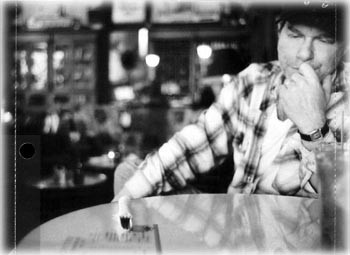
Pensive and ‘Poison’: Buddy Miller thinks about his country.

Three artists chart the American dream

Buddy Miller
Poison Love (Hightone)
THERE’S ALT-COUNTRY–guitar-twangin’, honky-tonkin’, beer-swillin’, cowpie-kickin’, back-to-the-roots sort of stuff–and then there’s the intelligent storytellin’ of guitarist and songwriter Buddy Miller. Local audiences got a taste of Buddy earlier this year when he performed at the Mystic Theater as a member of Emmylou Harris’ Spyboy Band. On this impressive (and seriously twangy) solo debut, Miller teams with his songwriter wife, Julie Miller (who contributed some of the most haunting, emotionally packed material on Harris’ acclaimed Wrecking Ball album), and an ace line-up that includes Harris, country renegade Steve Earle, country singer Jim Lauderdale, bluegrass fiddler Sam Bush, and the Spyboy rhythm section. But the heart of this disc is a singularly rugged set of songs, ranging from the chilling “100 Million Little Bombs” (a compelling call for an end to the use of land mines) to tough little paeans to love lost and found. As a bandleader, Miller deftly handles the reins, knowing when to lie back and graciously allow his guests to snag the spotlight; Harris, Lauderdale, and Julie Miller all take turns singing lead vocals. A cut above the rest of the pack.
Greg Cahill

The Bottle Rockets
24 Hours a Day (Atlantic)

The Delevantes
Postcards from Along the Way (Capitol)

THE NEW COUNTRY-ROCK SCENE loosely known as “Americana” (often called “No Depression” for the magazine that covered this genre for almost three years) may be a flip side that answers the flurry of hype around electronica. Americana/No Depression is song-focused and acoustic guitar-based; it’s an intersection of neo-folk, alterna-country, and roots-rock that extends from the Stones-like honky-tonk of Wilco to the modern bluegrass of Alison Krauss to the hillbilly rebel rock of Steve Earle. Midwestern rockers the Bottle Rockets and the New Jersey pop-folk duo the Delevantes both help paint a larger picture of the Americana/No Depression field. 24 Hours a Day is the Bottle Rockets’ third disc of smoking, swaggering garage rock with a drawl; their idea of country rock comes from years of listening to Neil Young and ZZ Top, John Prine, and the Georgia Satellites. The rollicking remorse of “When I Was Dumb” is worthy of a mature Buddy Holly, and there are healthy echoes of venerable country-rock themes: hating the jukebox in “Indianapolis”; loving the pool hall in “Slo Tom’s.” This disc is long on crunch and heartfelt populism, short on trendiness, and medium on insight.

Melody is a strength of the Delevantes, whose aptly titled debut, Postcards from Along the Way, works in the chiming country-rock model of the Byrds and Buffalo Springfield, where spritely pop melodicism hosts detailed vignettes of hopeful yearning. This duo is composed of brothers who sing harmony with graceful simplicity, so their real roots are the Everly Brothers and the Proclaimers. But lyrical details are the key: “Suitcase of Leather” is one of the best failed kiss-off attempts ever, while “Reminds Me of You” is all tactile color (“Pavement flicking beneath my feet”). These days it’s widely known that folk and country are the last havens of pure songwriting. More important, the Americana/No Depression new breed stands with metal and punk as the last haven of traditional rock for rock’s sake.
KARL BYRN

From the Oct. 23-29, 1997 issue of the Sonoma County Independent.

© Metro Publishing Inc.

Johnny Garlic’s

0

Garlic Is God


Michael Amsler

Lite bulb? Johnny Garlic’s serves a heapin’ helpin’ of our favorite root vegetable. Above, patrons enjoy the wine bar.

Johnny Garlic’s smells like a rose

By Paula Harris

THEY SAY GARLIC has curative powers. As the bodacious bulb is credited with being an antidote for whatever ails you–from toothaches to evil demons–I wondered whether the healing and fortifying properties of this aromatic root could soothe the jangled nerves of my commuter-companion, who’d just arrived suitably grumpy and frazzled from Highway Hell. We experimented with a short trip to Santa Rosa’s Johnny Garlic’s on a recent Thursday night.

The place was jammed. No space in the restaurant parking lot meant a hike up the street, which did not bode well with my commuter-curmudgeon. However, we eventually arrived, pushed open the heavy glass door, and took a deep breath. And a step back. The pungent aroma was enough to fell a vampire at 50 paces.

More likely, it was the sweet smell of success permeating the air. Johnny Garlic’s is not an eatery chain–though it feels like one–and indeed soon will be one. There are plans to expand to a second location somewhere in the county by early next year.

The natural exuberance of the staff was contagious. We were enveloped in an upbeat, comfortable atmosphere where Garlic is God and is worshiped baked, fried, roasted, caramelized, raw, slung into sauces, pasted into pastas, and inhaled any way you can get it.

During the short wait for a table, we sat at the counter and ordered the “famous” garlic potato chips ($2.50) served with sour cream dipping sauce. These proved to be a delicious potent initial infusion that left us with the satisfying sensation of garlic salt clinging to our lips. We washed away the traces with glasses of lightly chilled, slightly oaky J. Fritz Russian River Valley 1994 Chardonnay ($5).

By day, the restaurant looks fairly nondescript, but at night the muted back-lighting and mauve and ochre ceiling resemble a dusky desert sky on the brink of a storm–giving the dining room an interesting luminous but earthy quality.

We nibbled house-made focaccia bread that was herbed and crunchy (but could have been warmer and less oily) and surveyed the 72-item menu. Our server was friendly and efficient.

The roasted California garlic bulb with goat cheese salsa ($3.95) was a delightful melange of Crayola-red tomatoes, fresh basil, and light, creamy goat cheese piled onto barely toasted sourdough bread points. The center attraction was a sizable, fragrant bulb of roasted garlic. “Squeeze it and spread it like margarine,” suggested our server. We did and the cloves were perfectly soft and creamy.

Polynesian coconut-breaded shrimp ($5.95) began as a tropical treat. Four tender and butterflied shrimp were encased in a delectable golden coating that evoked hazy memories of Maui. Unfortunately, there was an abrupt culture clash when we tasted the accompanying warm, orange dipping sauce, which resembled thick English marmalade and was too sweet.

The cream of roasted garlic soup (cup $2.50, bowl $3.95), touted as Johnny Garlic’s “nectar of the bulb,” was agreeably silky but not as full-flavored as we’d anticipated.

Fearing the chardonnay would be overpowered by the next courses, we switched to a full and peppery 1995 Quivira Dry Creek Valley Zinfandel ($26) and were not disappointed.

Next we sampled the penne arrabiata ($7.50): Warning! Not for the faint of heart. The pasta was cooked perfectly al dente and tossed in hot chili and red bell peppers. This spicy, garlicky sauce clung to the ribbed penne and set it afire. “Incredible,” concluded the now-relaxed and sweaty-browed commuter, but he is a spicy-food fanatic. I suspect most diners would find this dish unpleasantly hot.

The three-garlic rosemary chicken breasts ($9.50) were a subtler alternative. Skinless chicken marinated with Creole, Russian Red Torch, and California varieties of garlic was served with a creamy sauce infused with just a kiss of the stinking rose. The accompanying caramelized garlic mashed potatoes were as warm and comforting as pudding. Plain, steamed broccoli, carrot, red onion, and zucchini made a clean counterbalance.

We sampled the two house-made desserts. The unremarkable tiramisu ($3.95) was heavy on dairy but seemed to lack any perceivable depth of espresso coffee and Marsala wine. Far better was the Breath Mint Pie ($3.95). Invented by a regular customer of Johnny Garlic’s, this concoction featured mint ice cream blended with Junior Mint candies and was served on an Oreo cookie crust. With whipped-cream splotches, chocolate syrup squirts, and teeny chocolate chips thrown in for good measure, this cool green dessert was a calorific but completely refreshing contrast to all that garlic (which, by now, had worked like a psychotropic drug to ease our stresses and enliven our taste buds).

Johnny Garlic’s must have figured that the aroma of cigars would vie formidably with the fragrant cuisine, because there was a midrange cache of cigars available on the counter humidor, and some diners relaxed with their smokes on the “outdoor cigar patio.”

Of course, you don’t have to indulge in the stogies; the food is satisfying enough–and, as far as I know, someone has yet to file a lawsuit concerning the dangers of secondhand garlic breath.

Johnny Garlic’s
1460 Farmers Lane, Santa Rosa, 571-1800
Hours: Monday-Thursday, 11 a.m. to 10 p.m.; Friday-Saturday, 10 a.m. to 11 p.m.
Food: Eclectic, full-flavored, mostly involving garlic
Service: Excellent
Ambiance: Cheerful, family-oriented, fun, and energetic
Price: Moderate
Wine list: Well-rounded selection featuring Sonoma County vintages, including 21 wines by the glass, 24 by the bottle
Overall: ***(out of four stars)

From the Oct. 23-29, 1997 issue of the Sonoma County Independent.

© Metro Publishing Inc.
Rush Limbaugh in Night School

0

Humor 101

By Daedalus Howell

ACTOR BILL KILLINGER must have a multiple-personality disorder. At Odyssey Theatre’s production of Charlie Varon’s one-man media lampoon, Rush Limbaugh in Night School, Killinger effects in excess of 20 characters in two hours–a challenge some better-stocked area companies could meet in personnel but not in talent. Killinger could date Sybil.

Originally performed in San Francisco in 1994 by playwright Varon and subsequently touring across the nation, Rush Limbaugh in Night School is posited as a PBS television documentary. The arch-Republican radio personality’s listenership (1 percent of the world’s population) is being chiseled at by rival radio man J. Neil Rodriguez–a popular Latino commentator. Limbaugh’s management devises a doubtful quick-fix in the form of Spanish lessons.

Disguised in a Van Dyke beard and Ben and Jerry’s T-shirt (the perceived garb de corps for liberals), Limbaugh attends an experimental night school and discovers himself amidst fixtures of the lefty population he despises (from feminists to eco-people–each waggishly introduced by Killinger).

In class, Limbaugh meets Nina Eggly (a fugitive ex-member of the Weather Underground also in disguise), and predictable sparks fly as the love plot leads to a climax at a New York Shakespeare Festival production of Othello directed by Spalding Gray and starring Limbaugh in the title role.

Camp reigns supreme. Varon’s convoluted schtick plays like a pitch session for a Tom Robbins novel.

Killinger’s amicable demeanor accounts for much of the production’s effectiveness. A jaunty fellow who beams neighborly charm, Killinger is the West Coast Everyman, adorned in a comfortable (but fashionable) tweed sports-coat, jeans, sensible shoes, and a frosty mustache–the perfect conduit for Varon’s knee-slapping vitriol that all but clips the right wing.

Credit director Carl Hamilton for successfully conducting Killinger through the byzantine monologue. With Hamilton’s guidance Killinger leaps into each character as though hopping cars on a train. The effect is not the trite “seamlessness” one generally expects of a multicharacter performer, but sudden breaks in operation that recall the antics of counterculture orator Lord Buckley (though intelligibly slower).

Killinger’s celebrity impersonations are adept (Garrison Keillor, Spalding Gray, and others) but do not rely on accurate re-creations of voice and manner. Likewise, Killinger’s vocal impersonation of Jackie Mason captures the Zeitgeist of the character even when the actor chucks any semblance of real language and instead importunately barks.

Although Limbaugh, an active (if inadvertent) self-satirist, leaves only meager table scraps for comedians to gnaw on (he’s his own best lampoonist), Killinger bares his fangs and feasts heartily on the gristle and even garners sympathy for the unlikable hulk’s plight.

Killinger also excels at interpreting the play’s myriad female characters (his Nina smacks of Mira Sorvino’s comic voice in Mighty Aphrodite), including a sharp riff on television pundit Cokie Roberts.

Unfortunately, some of Varon’s references date the play–Limbaugh himself is old news (he has already entered the pantheon of kitsch celebrities and has long been overshadowed by radio-rival shock-jock Howard Stern, who too seems to be receding back into the ephemera of the airwaves). To prolong the show’s shelf life, Hamilton and Killinger have augmented the text to include local references, including a clever, if defensive, jab at local theater critic Chris Garcia.

Set director Jamie Smith creates a commodious play-area for Killinger in the smaller of Spreckels’ two auditoriums. The Spartan digs are reminiscent of the BBC’s television show The Two Ronnies set, containing only a stuffed chair, a throw rug, and some stylishly utilitarian end tables bearing a water glass and pitcher. John Kelly’s stark light design is a logical match for the set, with well-hewn spot-work (executed by Mike Bronson) at key moments of the play. The blaring broadcast of Limbaugh’s talk-show that opens each act also contributes to the ambiance.

It is interesting that Varon would write and stage a one-person show well after the trend for solo theater had peaked. Such scaled-down affairs proliferated in the late ’80s and ushered performers of media culture’s middling caste like Rick Reynolds (All Grown Up and Nowhere to Go) and Spalding Gray (Swimming to Cambodia) into micro-celebrity. Varon’s success with Rush Limbaugh in Night School can be attributed, however, to the fact that the writer need not perform the material.

Reynolds’ and Gray’s highly personal works are inextricably tied to their authors, whereas Varon’s satire requires only a competent medium to download its raillery before an audience. Rush Limbaugh in Night School is the first one-person show to be easily and cheaply franchised (Dramatist’s Play Service charges only $50 a performance for the privilege). Hamilton and Killinger were smart to see the play’s potential and create a nimble and engaging collaboration.

Rush Limbaugh in Night School plays on Friday-Saturday at 8 p.m. through Nov. 1 and on Thursday, Oct. 30, at 7:30 p.m., at the Spreckels Performing Arts Center, 5409 Snyder Lane, Rohnert Park. Tickets are $10. 584-1700.

From the Oct. 23-29, 1997 issue of the Sonoma County Independent.

© Metro Publishing Inc.

Media and Democracy

Media and Democracy Anyone?

By Danny Schechter

It’s been l8 months since nearly 700 media malcontents gathered in San Francisco under the auspices of the Institute for Alternative Journalism to sound the alarm about the dangers of media mergers. As the Second Media and Democracy Congress converges on New York, there have been a number of developments worth assessing, frightening trends and puzzling contradictions among them.

First, among the trends, media concentration has actually intensified. A few weeks back, Variety noted that all but two cable networks were recently bought out by the media Goliaths who, in the trade mag’s feisty parlance, “chowed them down.” A week later, Westinghouse, the parent company of CBS, spent another $2 billion to buy up 98 additional radio stations to remain the nation’s largest radio operator.

Ten years ago, veteran journalist Ben Bagdikian spoke of 50 companies dominating the mediascape. There eventually will be seven, he says, if current trends continue.

All of these mergers and acquisitions were encouraged by the passage of the Telecommunications “Reform” Act of l996, which dropped limits on the number of stations any one company could own. At the time it was debated, the law was justified by the Clinton administration (as well as the broadcast lobby) as essential to spurring more competition, which allegedly would then benefit consumers, bla, bla, bla. Instead, as the government’s own report issued on the first anniversary of its passage made clear, the effect was the opposite: less competition and more consolidation, with higher cable rates to boot.

The monopolization of the media marketplace has become so blatant that even mainstream media mavens are speaking out against it. “Our big corporate owners, inflected with the greed that marks the end of the 20th Century stretch constantly for ever increasing profit, condemning quality to take the hindmost,” proclaimed broadcasting legend Walter Cronkite at a recent Radio and TV news directors confab.

Second, the perquisites and effects of this pattern of media ownership is becoming more audacious. Our media moguls are no longer discrete about ramming their cross-promotional “synergy” down our throats. The most blatant example (as usual) came from Rupert Murdoch, whose New York Post front page on September 15, l997, was devoted solely and completely to this world shattering headline news: “New York City Finally Gets Fox News Channel.” In extensive advertising, Murdoch then co-opted the complaints of his critics by branding his network as the only home of “fair and balanced” news, a description that might have provoked a rejoinder from George Orwell if he was among the living. So much for the pretense of a separation between editorial content and advertising mission.

Third, the trends toward the dumbing down of news and information have continued unchecked. Several recent examples don’t need much more comment — the wall to wall saturation coverage of Princess Di’s funeral, which came on the heels of the Cunanan sex serial killer saga, only to be followed by the daily dispatches on sportscaster Marv Albert’s underwear preferences. Uncovered, at the time, were stories that are arguably more important, like the 60,000 casualties of Algeria’s civil war, an event about which coverage has been conspicuous by its absence. (When he did turn to the subject in late September, CBS’s Dan Rather acknowledged that the story had been “vastly underreported.”) What’s clear is that today’s news managers have decided that surfing the tabloid waves is an easier and a more assured method of building audience share than traditional coverage.

Are the networks simply satisfying viewer demand, as they would like to suggest? That market logic would seem to be in command except for one small problem: the steady erosion of viewership on all TV news programs. Why the mass defection of eyeballs? Could it be that the pervasive and systematic dumping down of the news is actually turning viewers off? On that issue, the networks have little to say.

What they are busy doing is targeting viewer disenchantment with hopes of turning it around. ABC is trying that tact with its insipid mellow-yellow ad campaign with slogans designed to mock what ordinary people are really feeling about TV — in essence, to call attention to the criticisms of the medium and then humorously try to defuse them with clever slogans deploying reverse psychology. (Those bright yellow billboards that read: “Eight Hours a Day, That’s All We Ask,” “Don’t Worry, You Have Billions of Brain Cells,” and “It’s a Beautiful Day, What Are You Doing Outside?”)

Increasingly, news organizations are relying on expensive market research and focus groups to shape story line-ups. NBC has come up with “principles” to make its news more relateable — and now emphasizes softer, more featurey “news you can use” rather than news that might get you thinking more critically about the world. Fox has decided to cleanse its local newscasts of too much international coverage by ghettoizing foreign coverage into one minute capsules called “World in a Minute.” CBS is speeding up the story count on its New York newscast, and then bragging about it with the deceptive slogan, “More News in Less Time.”

More money than ever is being pumped into promotional campaigns. In some cities, you can win prizes if you watch the local news. Promax, the TV industry marketing organization is, for the first time this year, holding a seminar on marketing news. CBS has announced that it will now be buying story ideas. This from the network that not that many years ago went through am internal convulsion when it was revealed that a former Nixon aide had been paid for an exclusive interview.

Not all of these tactics seem to be all that effective in building viewer confidence. Brent Magid, the vice president of Frank Magid & Associates, the country’s largest media consulting firm (which advises 115 of the country’s 230 local stations) now reports that their surveys have found that distrust of the news media has never been higher. Oprah Winfrey, who got her start as local TV newscaster, is doing shows on whether we can trust local news. Her program of course airs as the lead-in in most markets to the local news. Oprah’s show was just one of many devoted to airing discontent with the media that the pollsters tell us is now a majority sentiment.

All of the debate and hand-wringing has opened up a new opportunity for those concerned about reforming the media — activists who want more diversity, parents worried about what their kids are exposed to, advocates frustrated by the lack of airtime devoted to their issues and journalists who are becoming furious about shrinking news holes and oozing tabloidization.

There is a potential constituency emerging around a real media and democracy movement. What was once a marginal issue has moved from the media reviews into the weekly magazines, from the realm of professional discourse into public debate. In the ’60s, corporations like Dow Chemical became targets of protest and symbols of corporate greed and irresponsibility. In the ’90s, many media companies deserve similar contempt are slowly receiving it. Citizens groups and movement activists could and should be doing more to embrace these issues. The same people who would be outraged if toxic waste was dumped on their doorstep have to be encouraged to express similar rage at no less toxic junk TV shows being dumped into their living rooms and brains.

Danny Schechter is the executive producer of Globalvision and the author of the, forthcoming The More You Watch, The Less You Know (Seven Stories Press).

Web exclusive to the Oct. 23-29, 1997 issue of the Sonoma County Independent.

© Metro Publishing Inc.

The Dog Pound

0

Big Surprise!

are no surprises anymore

By Maddog

IT SHOULD COME as no surprise to you that there are no surprises anymore. Sure, people still manage to pull off 30th birthday parties without the guest of honor knowing about it. Yes, the boss still gives you that annual 15-cent-an-hour raise without asking. And it’s true that one time a couple of years ago during the full moon a man in Kansas actually put the toilet seat down when he was finished.

But that’s all pretty much in the past. Nowadays people feel compelled to telegraph their intentions.

Take the new TV season. Spending months and untold hours of precious airtime that could be better utilized, the networks run a test pattern to broadcast advertisements that in no uncertain terms tell us how much we’re going to love the new shows. This takes all the surprise out of it. Where’s the thrill of discovering just how bad a sitcom can be when we’ve been watching the same clips over and over, realizing that these are not only the best excerpts they could cull from the new shows, but probably the only funny ones?

In the modern business and political world, the concept of surprise must be the career equivalent of announcing that your personal role model and adviser is shock-rocker Marilyn Manson. No one, it seems, issues a press release or calls a press conference these days to announce that they’ve just done something. Or bought someone. What we get now is advance notice of intent.

Recently, the media reported that Jane Alexander was planning to announce that she would be resigning. The Christian Coalition said it “would announce its new executive director in a few days,” then spilled the beans about who it would be. And Microsoft, never wanting to be one-upped, went and announced that early next week they expect Bill Gates to anoint himself Emperor of Earth. Where’s the surprise? OK, except that we all thought Gates already was the emperor.

The common link here is that instead of just announcing what happened, or at least what’s about to happen, they announce that they will soon announce the impending announcement. And all those announcements are giving me a headache. The worst part is they always tell us exactly what it is they’re going to officially announce. When, that is, they get around to formally announcing what they’ve just announced.

Why even do this? It makes a little sense if it’s a company that wants to stay in the news a few more days. They stretch the process out, hoping for a few more inches of ink and a few more seconds of airtime. But we’re talking about people in the federal government, who, if they were smart, would do their best to stay out of the news, considering the number of independent prosecutors Janet Reno’s got warming up in the bullpen.

Maybe this happens because people have such a hard time keeping a secret. They know something you don’t and it’s just eating them up that they can’t tell you about it. That would answer why it’s always “sources” that make these announcements. Sources, according to the Journalist’s Handbook of Weasely Excuses, are considered to be a reliable and reputable basis for a newspaper story, when in fact they’re mythical creatures that are closely related to trolls, gnomes, and the Easter bunny.

But why should all these people have so much trouble keeping their mouths shut? If they’d been around during World War II, their loose lips would have sunk the whole damned fleet! Face it, if a 17-year-old girl in Central Islip, N.Y., can be pregnant for eight months, have the baby, keep it stashed in a closet for four days, and keep it a secret until her mother accidentally comes across it while looking for a pair of pants (true story!), then a press secretary, public-relations flack, or anonymous source should be able to wait a couple of days before making an announcement.

On the other hand, maybe they think they’re doing it for our welfare, which, when combined with the anxiety of holding it in, can cause gastrointestinal distress that Tums can’t begin to touch. You know, like when something eats you up inside until you just can’t help yourself and you know you can’t spill the beans but you spill just enough that they know there’s something going on but you feel OK about it because in your mind you didn’t really tell them.

Like when Mom thinks she’s doing you a favor the week before Christmas by telling you that your present will “get you to the grocery store and back in record time,” leading you to expect the new car you’ve been praying for when in fact she bought you a used skateboard.

Where will this trend end? Will we ever hear a surprise announcement again? Stay tuned. Next week I expect to have a big announcement regarding the impending announcement I’m going to make about the previous announcement’s announcement. That should clear things up.

From the Oct. 23-29, 1997 issue of the Sonoma County Independent.

© Metro Publishing Inc.

Talking Pictures

0

The Accidental Buddhist


David Appleby

The High and the Flighty: Brad Pitt stars in ‘Seven Years in Tibet,’ which folk-singing Buddhist Peter Rowan thinks is heavy.

Folk-singing Buddhist Peter Rowan discusses the smoking ’60s, the brutal ‘Seven Years in Tibet’ and the always popular noble eight-fold path

By David Templeton

Metro Santa Cruz writer David Templeton takes interesting people to interesting movies in his ongoing quest for the ultimate post-film conversation. This time out, he calls that loquacious bluegrass Buddhist, Peter Rowan, in Austin, Texas, to discuss the sprawling spiritual epic Seven Years in Tibet.

PETER ROWAN IS TELLING a story. “I’d been living in Nashville,” he says, his distinctive voice a bit rough and raw this early in the morning. “I’d been into Buddhism for a while, and suddenly I was in Berkeley feeling like the only Buddhist in the world. One day, I was going somewhere, was lost, and I needed to ask directions. So I stopped at this one place, and a woman opened the door. And I saw a Tibetan painting in the back of the hall, and I said, ‘Oh. Are you a Buddhist?’ And she said, ‘Well . . . only accidentally.’ “

Rowan laughs, an infectious, raucous rumble of a laugh. “An accidental Buddhist,” he chuckles. “I loved that! It’s an apt description of a lot of us who started out in the ’60s holding that vision of heaven on Earth. What we wanted to see was a little less aggression, right, a little more compassion? Well, that’s the Buddhist path.”

That path has now led Rowan–best known as a member of Bill Monroe’s legendary Bluegrass Boys and as the wild-eyed yodeling ringleader of the psychedelic folk band Free Mexican Air Force–around the world and through numerous musical incarnations. His poetic, mystically tinged songwriting, along with his surprising and energetic showmanship, have gained him an international following among those who applaud the twisting and blending of traditional musical forms. Though an occasional song reflects the spiritual side of the musician, his religious beliefs have yet to make an appearance in his music.

“Bluegrass and Tibetan Buddhism don’t really mesh too well,” Rowan laughs. “Though they do have something in common. It’s all mountain music, isn’t it?”

Last night in Austin, Rowan was able to see the film Seven Years in Tibet, which stars Brad Pitt. Based on Heinrich Harrer’s memoirs of the same name, Seven Years is a lush retelling of then-Nazi Harrer’s life-changing experiences in the Himalayan mountains. At the start of WWII, he was sent to conquer a Himalayan mountain peak “for the glory of Germany.” Instead, he was captured by British troops.

After escaping from a POW camp in India, Harrer made his way to Tibet, where–through a series of accidents–he became the tutor of the young Dalai Lama, the spiritual and temporal ruler of Tibet until that country’s violent occupation by China in the 1950s. China, not surprisingly, has denounced the film.

“There’s an underlying sadness in this movie that is just heartbreaking,” Rowan describes. “On one level, it’s the story of an arrogant, egocentric mountain climber and his gradual awakening to kindness. But the deeper theme is the tragedy of Tibet itself. I didn’t know it was going to be so strong of a statement. No wonder the Chinese are upset. It’s brutal. One of the people I saw it with last night is a long-time follower of the Dharma. She was pretty bummed.”

Bluegrass Boy on a Dharmic Path

A FOOTNOTE AT THE END of Seven Years in Tibet announces that since the Dalai Lama fled Tibet in 1959, millions of Tibetans have been killed, and thousands of monasteries have been destroyed. “But the culture is still alive,” Rowan insists. “Just go to Nepal. It’s there. The Tibetans have moved down into Katmandu. You go out to Bohda. It’s a major, thriving area. There are, like, 15 monasteries. There were only five monasteries when I was there in ’92. It’s tripled.

“For people who’ve been connected with this for years, there’s another level at work in the movie, too,” he continues. “They showed that the Dalai Lama was wanting to know about this other world beyond Tibet. He wanted Harrer to tell him about everything–even to build him a movie theater. And, lo and behold, the irony of the thing is that now, the outside world is his world. You’ve got to admit that’s pretty ironic.”

One of the results of the Dalai Lama’s exile from Tibet is his frequent trips to the West–and to America in particular–as an unofficial ambassador of Buddhism. Although Zen and other Eastern religions have enjoyed waves of popularity among Westerners, Buddhism has never had so high a profile here as it does today. Gone are the days when Rowan felt like the only Buddhist in town.

So what accident was it that bumped a bluegrass boy onto the dharmic path?

“You know what it was?” he rumbles. “It was Aristotle.”

Really?

“Oh, yeah,” Rowan says. “In the late ’60s, I was living in Cape Cod and there was a guy there who offered a class called ‘In the Writings of Aristotle.’ There were a bunch of us in the class. We were just hippies, smoking pot but making our philosophical inquiries. One day, I asked, ‘What kind of society could ever survive while devoting themselves to a life of the mind?’ That’s when he told me about Tibet, a culture that dedicated itself entirely to philosophical inquiry.

“Shortly after that,” he goes on, “I was touring in Scotland, and I dropped in on a Tibetan center there. I met the Lamas. I learned about the noble eight-fold path–kind of a Tibetan how-to to enlightenment. To my addled mind, which was suffering under a lot of confusion and guilt at that time, it just seemed a very orderly way. It was comforting to learn that the only thing we owe each other, in this receipt-ridden world, is kindness.”

With another chuckle, he adds, “I can live with that.”

From the Oct. 23-29, 1997 issue of the Sonoma County Independent.

© Metro Publishing Inc.

Janet Reno & the White House tapes

0

Washington Watch

By Doug Ireland

Just when one thought that the Clinton/Gore fundraising machine’s remarkable combination of cupidity and stupidity had lost its power to astonish, the revelation that the White house actually videotaped the fundraisers held there has transformed the Donorgate scandal into Theater of the Absurd.

The taping of these access-selling caffeine fixes was, to borrow Talleyrand’s famous phrase, worse than a crime, it was a mistake. Why? Because the fact that their existence was concealed from the Justice Department makes a mockery of Janet Reno’s claims to have carried out a competent and independent inquest into the sleazy campaign cash collections of the president and his closest aides. If the White House fundraising scandal has dragged on as long as it has, it is because the president’s men wrote everything down, documenting their legal floutings with such an unconcerned arrogance that only unfettered hubris can explain it all. Power, as they say, corrupts.

With Time magazine’s revelations that the organized boodlings were taped, it is clear that the Clintonoids learned nothing from Watergate. First they tried to satisfy the inevitable firestorm of curiosity by releasing edited versions of the tapes. Only 44 cassettes have been made public as of this writing, although the Washington Post reports that at least 150 fundraising events at the White House were recorded. And on the tape of one access-selling orgy featuring the notorious funny-money bundler John Hwang, the audio is conveniently missing. Edited tapes and an audio gap-the parallels with Richard Nixon’s coverup of his crimes are so blatant as to be laughable.

Janet Reno’s argument, in her defense brief for the president last Friday, that she had found no “credible evidence” to trigger the independent-counsel statute came just one day after a front-page New York Times story found that the Clintonoids had illegally transferred at least $32 million to state Democratic parties to pay for more TV ads. As Jill Abramson and Leslie Wayne put it in their report, “the plan was conceived and coordinated by the Clinton/Gore campaign staff and Democratic Party officials as an end-run around legal spending limits… The Clinton campaign had agreed to the limits in return for accepting millions of dollars in public financing.”

This amounts to a conspiracy to obtain taxpayer dollars by fraud. Add–to mention but three of the more odiferous Clinton shakedowns–the systematic transfer of millions in soft-money contributions to hard money accounts by the Democratic National Committee; the DNC money-laundering scandal to help Ron Carey’s re-election as Teamsters president; and fugitive oil financier Roger Tamraz’s purchase of six encounters with the president for $300,000 in campaign cash. This outpouring of evidence spells willful blindness on Reno’s part.

The independent counsel law was created on the common-sense assumption that no administration of either party can properly investigate itself. If there were any doubts that Reno is in a self-evident conflict of interest, the revelation that the White House was able to conceal the videotapes from her less-than-zealous Justice Department underlings should remove those doubts.

The fact is that Reno has been a perfectly execrable Attorney General, who on her watch has countenanced and endorsed a series of assaults on the Bill of Rights worthy of an Ed Meese. To wit: Clinton’s Oklahoma City-driven Anti-Terrorist Bill, drawn so broadly that it would have barred the AFL-CIO from helping Nelson Mandela’s African National Congress; the Clinton demand for FBI access to any and all computer messages it wants (the electronic equivalent of the Post Office opening all one’s mail); the FBI’s proposal for unparalleled access to medical records, hitherto the most sacred of privileged documents; the one-strike-and-you’re-out ukase for federal public housing, permitting the expulsion of an entire family if any of its members is accused-not convicted, mind you–of selling so much as a single joint; and more.

The tape scandal, however, shows that Reno is not simply inconscient but incompetent (and that’s the charitable interpretation). A year ago, Common Cause petitioned Reno for a special prosecutor to investigate the fundraising practices of both major political parties, a request which the A.G. rejected out of hand. Common Cause was right then. The disclosures of the last weeks show that, more than ever, they’re right now.

Web exclusive to the Oct. 16-22, 1997, 1997 issue of the Sonoma County Independent.

© Metro Publishing Inc.

Santa Rosa Brewing Co.

0

[ Brewpub Index ]

Sonoma County Brewpub Guide


Michael Amsler

Galloping Gourmet: Santa Rosa Brewing Company’s head chef Anthony Sissa serves up the goods.

Santa Rosa Brewing Company
Seventh and B streets, Santa Rosa
544-HOPS

Hours: Daily, from 11:30 a.m. except during football season, when Sunday brunch begins at 10 a.m.; closed at midnight Sunday-Wednesday; open until 1 a.m. Thursday-Saturday
Credit Cards: Visa, MasterCard, American Express, Discover, Diners’ Club
Parking: On the street–a nightmare if you’re not willing to cheat and park at the mall

Beer
CURRENTLY ON TAP are the award-winning Naughty Dog Pale Ale, crisp and clean; the Two Rock Amber, rich and, well, yummy; the Bit O’ Black Irish stout with a nice head and rich taste; the Santa Rosa Strong Ale, nicely buzzy; and the English Brown. A recent sampler set also included their annual brewing of a raspberry-infused beer that looked like a ladies’ tea offering and tasted sweet and refreshing. Alas, you poor dogs, it’s all gone until next summer. The sampler is a great deal (four 5-oz. pours for $3), with pints ($2.75) and glasses available ($2).

Seasonal: English Brown, Strong Ale, Santa Rosa Red, and the raspberry.

Brewmaster: Randall DiLibero.

Take-out/Keg Availability: half-gallons, $6.95; five gallons, $45; pony kegs, $60; full-size kegs, $110.

Food
THE SANTA ROSA BREWING CO.–which lays claims to being the first brewpub in the county and still sets a high standard–is dangerously near to the Independent‘s offices, and I am mature enough to admit that any teensy tiny bit of extra flab that might possibly indignify my person perhaps has less to do with the fact that I’m still postpartum (my youngest is only 7, after all) than with the fact that I worship the french fries here ($2.75; with garlic!, $3.25) beyond any reasonable ken. The fries can be ordered as a side to a salad for a well-balanced meal. Crisp, salty, and no doubt responsible for stripping several willingly volunteered years from my life, these fries embody the Platonic ideal.

Typed-up daily specials are slipped into a regular menu that offers a huge and delicious spinach salad ($6.95) and a meal-sized Sonoma salad ($6.95) studded with gorgonzola, walnuts, and apples dressed with a house-made vinaigrette. Other recent lunches have included the fish and chips ($6.95); the brewery burger ($5.95), perfectly cooked, accompanied by, well–you know; and their terrific meal-for-the-day BLT sandwich ($5.75). All sandwiches come with a choice of green or potato salad or fries. You can guess which we order. One editor I know always opts for the Kansas City-style BBQ pork loin sandwich ($6.95). A publisher of my acquaintance is weekly pleased with the French dip ($7.50) served on a roll with au jus sauce. The pizzas ($7.95) are toothsome, and we’ve never yet been heroic enough to save room for either the cheesecake or chocolate dessert specialty ($3.50 each). After all, we are watching what we eat.

Service
THE FRIENDLY, often very fast service neither stuns with its professionalism nor disappoints with gaffes or traumas. Non-intrusive and quite efficient.

Ambiance
THERE IS A VERY RELAXED feeling to the Santa Rosa Brewing Co. Darts are available, televisions are omnipresent, the chairs are comfortable, and they have those little quiz computers to help solo visitors pass the time over a brew. Family friendly, accomodating to live music fans on the weekends, and a good place to watch the game.

Din: Live music on weekends, but aside from the rousing cheers of fans glued to televisions at the bar, ordinary restaurant noise.

Restrooms: Far away and dark but clean.

Non-drinkers: A very comfortable place to sip a soda and watch either sports or other people. Great food doesn’t need beer to wash it down.

Fizz
COMFORTABLE PLACE, good food and brews, nice folks. Fries.

Flat
HMMMMM. Ain’t no negatives.
–G.G.

From the Oct. 16-22, 1997 issue of the Sonoma County Independent.

© Metro Publishing Inc.

Campaign Cash

High Stakes GameBy Doug IrelandHAROLD ICKES IS undoubtedly the most skilled of Bill Clinton's serial amnesiacs. As White House deputy chief of staff Ickes, documents show, coordinated the cover-up of interference by the president's men with federal bank regulators' investigations of Jim McDougal's Madison Guaranty (the looted S&L at the heart of the Whitewater mess), as well as the...

Sutter Medical Center in Santa Rosa

Babes in ArmsMichael AmslerMan with a plan: Cliff Coates, CEO Sutter Medical CenterLast year voters approved the lease of Community Hospital. Now the state is probing reports of declining patient careBy Paula HarrisANA GRAY, an amiable woman with expressive dark eyes, curls a protective arm around her newborn son, Bailey, as she briskly carries him across downtown Santa...

Spins

Roots Rockin'John CasadoPensive and 'Poison': Buddy Miller thinks about his country.Three artists chart the American dreamBuddy MillerPoison Love (Hightone)THERE'S ALT-COUNTRY--guitar-twangin', honky-tonkin', beer-swillin', cowpie-kickin', back-to-the-roots sort of stuff--and then there's the intelligent storytellin' of guitarist and songwriter Buddy Miller. Local audiences got a taste of Buddy earlier this year when he performed at the Mystic Theater as a member of...

Johnny Garlic’s

Garlic Is GodMichael AmslerLite bulb? Johnny Garlic's serves a heapin' helpin' of our favorite root vegetable. Above, patrons enjoy the wine bar.Johnny Garlic's smells like a roseBy Paula HarrisTHEY SAY GARLIC has curative powers. As the bodacious bulb is credited with being an antidote for whatever ails you--from toothaches to evil demons--I wondered whether the healing and fortifying properties...

Rush Limbaugh in Night School

Humor 101By Daedalus HowellACTOR BILL KILLINGER must have a multiple-personality disorder. At Odyssey Theatre's production of Charlie Varon's one-man media lampoon, Rush Limbaugh in Night School, Killinger effects in excess of 20 characters in two hours--a challenge some better-stocked area companies could meet in personnel but not in talent. Killinger could date Sybil.Originally performed in San Francisco in 1994...

Media and Democracy

Media and Democracy Anyone?By Danny SchechterIt's been l8 months since nearly 700 media malcontents gathered in San Francisco under the auspices of the Institute for Alternative Journalism to sound the alarm about the dangers of media mergers. As the Second Media and Democracy Congress converges on New York, there have been a number of developments worth assessing, frightening trends...

The Dog Pound

Big Surprise!are no surprises anymoreBy MaddogIT SHOULD COME as no surprise to you that there are no surprises anymore. Sure, people still manage to pull off 30th birthday parties without the guest of honor knowing about it. Yes, the boss still gives you that annual 15-cent-an-hour raise without asking. And it's true that one time a couple of years...

Talking Pictures

The Accidental BuddhistDavid ApplebyThe High and the Flighty: Brad Pitt stars in 'Seven Years in Tibet,' which folk-singing Buddhist Peter Rowan thinks is heavy.Folk-singing Buddhist Peter Rowan discusses the smoking '60s, the brutal 'Seven Years in Tibet' and the always popular noble eight-fold pathBy David TempletonMetro Santa Cruz writer David Templeton takes interesting people to interesting movies in his...

Janet Reno & the White House tapes

Washington WatchBy Doug IrelandJust when one thought that the Clinton/Gore fundraising machine's remarkable combination of cupidity and stupidity had lost its power to astonish, the revelation that the White house actually videotaped the fundraisers held there has transformed the Donorgate scandal into Theater of the Absurd.The taping of these access-selling caffeine fixes was, to borrow Talleyrand's famous phrase, worse...

Santa Rosa Brewing Co.

Sonoma County Brewpub GuideMichael AmslerGalloping Gourmet: Santa Rosa Brewing Company's head chef Anthony Sissa serves up the goods.Santa Rosa Brewing CompanySeventh and B streets, Santa Rosa544-HOPSHours: Daily, from 11:30 a.m. except during football season, when Sunday brunch begins at 10 a.m.; closed at midnight Sunday-Wednesday; open until 1 a.m. Thursday-SaturdayCredit Cards: Visa, MasterCard, American Express, Discover, Diners' ClubParking:...
11,084FansLike
4,606FollowersFollow
6,928FollowersFollow