Mounting a production of a little-known play in these pandemic and inflationary-influenced times is something of a risk for most theater companies. Audiences have yet to return in full-force to live theater, so a significant leap of faith is required to produce material that has little to no track record.
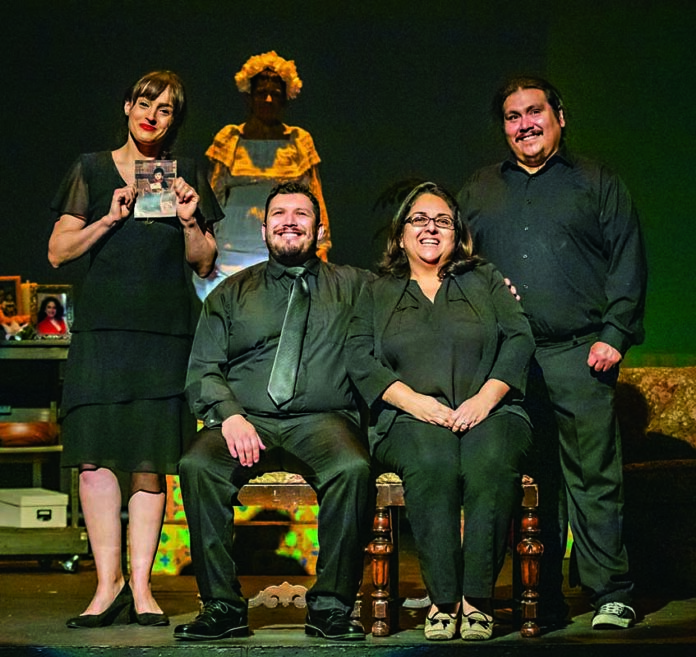
Healdsburg’s Raven Players and the Cloverdale Performing Arts Center have joined together to take that leap with a co-production of Gabriel and John Fraire’s Cesar Died Today. The show recently ran for four performances at the Raven Performing Arts Theater and now moves on to the Cloverdale Performing Arts Center for performances on Jan. 28 and 29.
The play isn’t completely unfamiliar to local audiences, as it had a staged reading one year ago as part of the Raven’s ScripTease program. Originally produced in 1996 by the New Latino Visions Company at New York’s Brooklyn College, Oz Montelongo Medina directs the Raven/CPAC West Coast premiere.
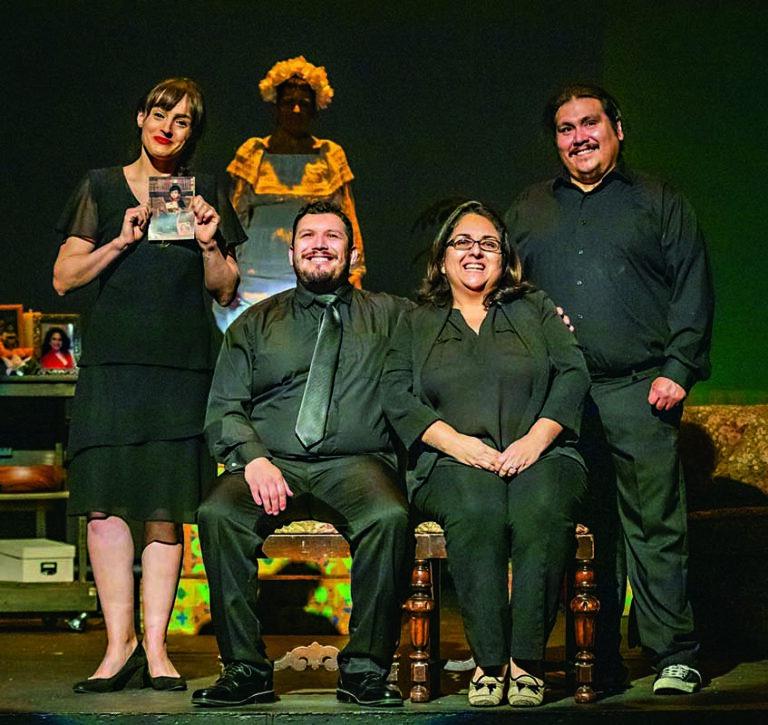
Labor leader and civil rights activist Cesar Chavez has passed away on the day Mother Guerrero (Rosa Reynoza) has asked her family to gather for a special announcement. Daughter Gracie (Sky Hernandez-Simard) was once a part of the Chavez movement, but marriage and a career in nursing now occupy her time. Son Robert (Ignacio Ayala Aguilar) sees assimilation as the way to success at a financial services firm, but that success is being threatened. Youngest son Cesar (Evan Espinoza) finds his indecisiveness in everything (including on how to pronounce his name) has put his college scholarships in jeopardy.
Mother’s announcement that they are to be featured as “Hispanic Family of the Year” in a national magazine sets off a series of family arguments and debates (including whether they’re Hispanic at all), and none of them wish to participate with the article. What’s a mother to do? She must rely on her faith and an impish spirit (Paloma Victoria Rodriguez Irizarry) to set things straight.
Playwrights Gabriel and John Fraire try to cover a lot of material in their 80-minute family dramedy. The script affirms its college origins, with a heavy reliance on expositional material that comes off as more of a lecture than a theatrical piece. But there’s also some good-natured humor and laugh-out-loud moments. The play’s best moments are when the family is allowed to be a family, with Reynosa’s Mother the warm center of a lovingly bickering unit.
It’s also nice to see more progress in increasing the diversity of voices on local stages.
‘Cesar Died Today’ runs through Jan. 29 at the Cloverdale Performing Arts Center, 209 N. Cloverdale Blvd. Saturday, 7:30pm; Sunday, 2pm. $25. 707.894.2219. Masking is strongly encouraged. cloverdaleperformingarts.com.
America can learn from ancient Rome how to better deal with crime today.
Because democracy generally values all human beings, democratic Rome’s criminal statutes were not designed to repress, but quickly judge and inexpensively rehabilitate. For that reason, Rome did not use prisons, except as places of detention before trial.
One historian of early and middle Roman law summarizes: “Penalties were either pecuniary or they were capital. There was nothing else.” But capital punishment was seldom utilized, because the law provided for an alternative way out of society—exile.
After the emperors overthrew democracy, penalties multiplied in variety and savagery. The convict could be sentenced to hard labor, usually in the mines, or to life as a gladiator, which eventually brought death.
Courts had discretion to inflict arbitrary, even savage, punishments like flogging, crucifixion, burning, walling up alive and feeding the felon to the circus lions.
In all this, a person possessing common sense can see two great lessons.
First, the country might want to return to the early practice of dealing with crime expeditiously and humanely, before penitentiaries became all the rage.
Second, America must by any legal means necessary prevent its governors and presidents from becoming kings and emperors and inflicting whatever damage they want on others.
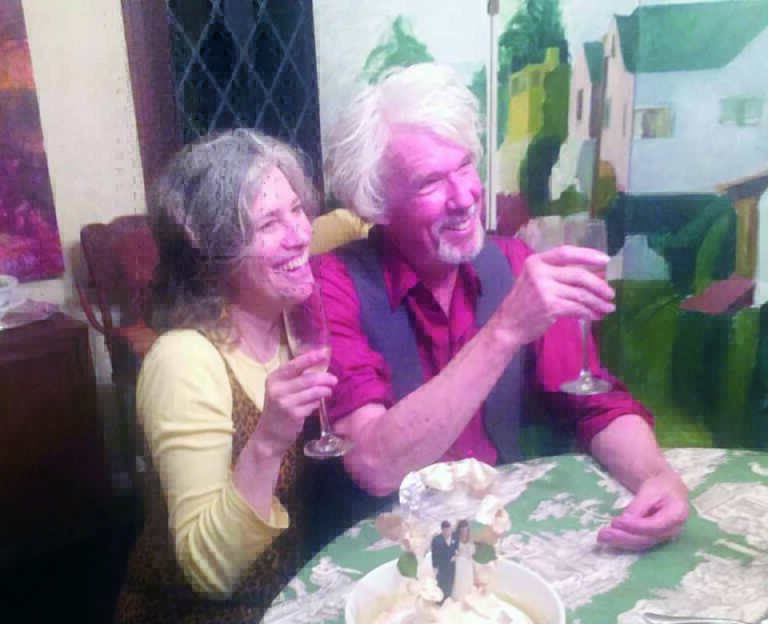
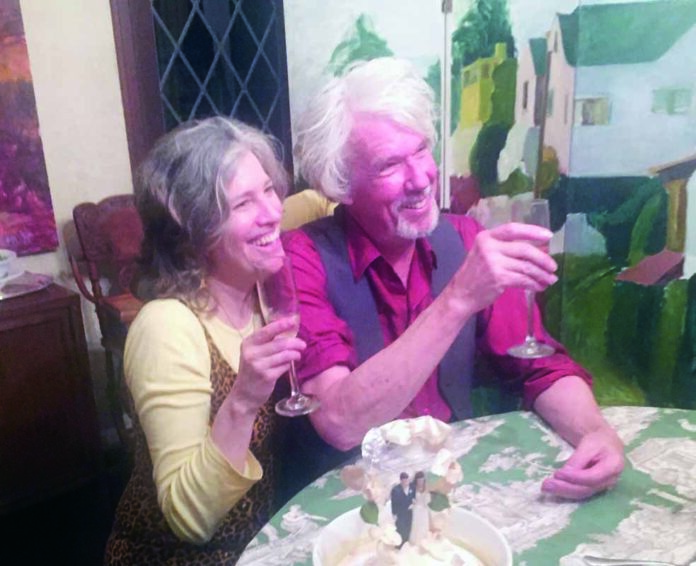
A.R. Gurney’s Pulitzer Prize-nominated play, Love Letters, arrives at the Lark Theater Feb. 9 and 11 for a special Valentine’s-timed engagement. The play is composed of romantic letters exchanged over a lifetime between two people who grew up together, went their separate ways, but continued to share their love for each other through letters. First written and performed in 1988 at the New York Public Library, close to 60 diverse actors, often celebrities, have performed the play since then. As the playwright once put it, the play “needs no theatre, no lengthy rehearsal, no special set, no memorization of lines, and no commitment from its two actors beyond the night of the performance.” That said, there is commitment from the actors in this production, and not just to their performances—performers Nancy Carlin and Howard Swain are a real life married couple. Love Letters has two performances, one at 7pm, Thursday, Feb. 9, and the other at 2pm, Saturday, Feb. 11, at the Lark Theater, 549 Magnolia Ave., Larkspur. Tickets are $35 ($30 for members and seniors) and available in advance at larktheater.net.
Novato
Comedy Cuvée
Standup comedy returns to Trek Winery in Novato with headliner Steve Bruner, who comedy fans will recognize from Showtime’s Comedy Club Network and An Evening at the Improv on A&E. Billed at a “lean, clean comedy machine,” Bruner specializes in observational humor about the challenges of modern life and has played clubs across the country, including The Comedy Store, The Improv, The Comedy & Magic Club, Catch a Rising Star and The Ice House. Special guest Sue Alfieri, a veteran of Hollywood Improv, The Punchline and Cobb’s Comedy Club, will also perform. The show begins at 7:30pm, Saturday, Jan. 28 at Trek Winery, 1026 Machin Ave., Novato. Tickets are $20 to $25. marincomedyshow.com.
Sonoma
‘It’s All About the Snacks’
Sonoma Valley animal shelter Pets Lifeline will host a book signing and reception for It’s All About the Snacks: Adventures in Petsitting, a picture book created by local author Allison Niver. It’s All About the Snacks features photos of dogs, cats and farm animals in Sonoma Valley. “Allison worked for Pets Lifeline many moons ago,” commented Nancy King, CEO of Pets Lifeline, “and we are thrilled to throw a homecoming party to celebrate Allison and her accomplishment of publishing this oh-so-fun book.” Some of the furry faces featured in the book will walk the red carpet and make an appearance at the book signing, which commences at 2pm, Saturday, Feb. 4 at Pets Lifeline, 19686 8th St. East, Sonoma. Wine and cheese will be served during the reception. There is no charge to attend.
Graton
Small Works
In the theater, they say there are no small parts, just small actors. Correspondingly, in the art world, there are no small artists, just small works—at least that’s the case at the Graton Gallery and its 12th annual juried small works show. Juror Tim Haworth had no small task assembling the show, which features the work of nearly 100 artists. The exhibit opened on Jan. 20, with a closing reception scheduled for 1pm, Saturday, Feb. 11, at Graton Gallery, 9048 Graton Rd. For more information, visit gratongallery.net.
ARIES (March 21-April 19): Noah Webster (1758–1843) worked for years to create the first definitive American dictionary. It became a cornucopia of revelation for poet Emily Dickinson (1830-1886). She said that for many years it was her “only companion.” One biographer wrote, “The dictionary was no mere reference book to her; she read it as a priest his breviary—over and over, page by page, with utter absorption.” Now would be a favorable time for you to get intimate with a comparable mother lode, Aries. I would love to see you find or identify a resource that will continually inspire you for the rest of 2023.
TAURUS (April 20-May 20): “The aspects of things that are most important for us are hidden because of their simplicity and familiarity.” So declared Taurus philosopher Ludwig Wittgenstein in his book, Philosophical Investigations. Luckily for you Tauruses, you have a natural knack for making sure that important things don’t get buried or neglected, no matter how simple and familiar they are. And you’ll be exceptionally skilled at this superpower during the next four weeks. I hope you will be gracious as you wield it to enhance the lives of everyone you care about. All of us non-Bulls will benefit from the nudges you offer as we make our course corrections.
GEMINI (May 21-June 20): Poet Carolyn Kizer said the main subject of her work was this: “You cannot meet someone for a moment, or even cast eyes on someone in the street, without changing.” I agree with her. The people we encounter and the influences they exert make it hard to stay fixed in our attitudes and behavior. And the people we know well have even more profound transformative effects. I encourage you to celebrate this truth in the coming weeks. Thrive on it. Be extra hungry for and appreciative of all the prods you get to transcend who you used to be and become who you need to be.
CANCER (June 21-July 22): If you have any interest in temporarily impersonating a Scorpio, the coming weeks will be a favorable time to play around. Encounters with good, spooky magic will be available. More easily than usual, you could enjoy altered states that tickle your soul with provocative insights. Are you curious about the mysteries of intense, almost obsessive passion? Have you wondered if there might be ways to deal creatively and constructively with your personal darkness? All these perks could be yours—and more. Here’s another exotic pleasure you may want to explore: that half-forbidden zone where dazzling heights overlap with the churning depths. You are hereby invited to tap into the erotic pleasures of spiritual experiments and the spiritual pleasures of erotic experiments.
LEO (July 23-Aug. 22): The circle can and will be complete—if you’re willing to let it find its own way of completing itself. But I’m a bit worried that an outdated part of you may cling to the hope of a perfection that’s neither desirable nor possible. To that outdated part of you, I say this: Trust that the Future You will thrive on the seeming imperfections that arise. Trust that the imperfections will be like the lead that the Future You will alchemically transmute into gold. The completed circle can’t be and shouldn’t be immaculate and flawless.
VIRGO (Aug. 23-Sept. 22): Shakespeare’s work has been translated from his native English into many languages. But the books of Virgo detective novelist Agatha Christie have been translated far more than the Bard’s. (More info: tinyurl.com/ChristieTranslations.) Let’s make Christie your inspirational role model for the next four weeks. In my astrological estimation, you will have an extraordinary capacity to communicate with a wide variety of people. Your ability to serve as a mediator and go-between and translator will be at a peak. Use your superpower wisely and with glee!
LIBRA (Sept. 23-Oct. 22): Libran musician Franz Liszt (1811–1886) was a prolific and influential genius who created and played music with deep feeling. He was also physically attractive and charismatic. When he performed, some people in the audience swooned and sighed loudly as they threw their clothes and jewelry on stage. But there was another side of Liszt. He was a generous and attentive teacher for hundreds of piano students, and always offered his lessons free of charge. He also served as a mentor and benefactor for many renowned composers, including Wagner, Chopin and Berlioz. I propose we make Liszt your inspirational role model for the next 11 months. May he rouse you to express yourself with flair and excellence, even as you shower your blessings on worthy recipients.
SCORPIO (Oct. 23-Nov. 21): This may risk being controversial, but in the coming weeks, I’m giving you cosmic authorization to engage in what might appear to be cultural appropriation. Blame it on the planets! They are telling me that to expand your mind and heart in just the right ways, you should seek inspiration and teaching from an array of cultures and traditions. So I encourage you to listen to West African music and read Chinese poetry in translation and gaze at the art of Indigenous Australians. Sing Kabbalistic songs and say Lakota prayers and intone Buddhist chants. These are just suggestions. I will leave it to your imagination as you absorb a host of fascinating influences that amaze and delight and educate you.
SAGITTARIUS (Nov. 22-Dec. 21): “All the world’s a stage,” Shakespeare wrote, “and all the men and women merely players.” That’s always true, but it will be even more intensely accurate for you in the coming weeks. High-level pretending and performing will be happening. The plot twists may revolve around clandestine machinations and secret agendas. It will be vital for you to listen for what people are not saying, as well as the hidden and symbolic meanings behind what they are saying. But beyond all those cautionary reminders, I predict the stories you witness and are part of will often be interesting and fun.
CAPRICORN (Dec. 22-Jan. 19): In this horoscope, I offer you wisdom from Capricorn storyteller Michael Meade. It’s a rousing meditation for you in the coming months. Here’s Meade: “The genius inside a person wants activity. It’s connected to the stars; it wants to burn and it wants to create and it has gifts to give. That is the nature of inner genius.” For your homework, Capricorn, write a page of ideas about what your genius consists of. Throughout 2023, I believe you will express your unique talents and blessings and gifts more than you ever have before.
AQUARIUS (Jan. 20-Feb. 18): Greek writer Nikos Kazantzakis (1883–1957) was nominated nine times for the prestigious Nobel Prize in Literature, but never won. He almost broke through in the last year of his life, but French author Albert Camus beat him by one vote. Camus said Kazantzakis was “a hundred times more” deserving of the award than himself. I will make a wild prediction about you in the coming months, Aquarius. If there has been anything about your destiny that resembles Kazantzakis’, chances are good that it will finally shift. Are you ready to embrace the gratification and responsibility of prime appreciation?
PISCES (Feb. 19-March 20): Piscean educator Parker Palmer has a crucial message for you to meditate on in the coming weeks. Read it tenderly, please. Make it your homing signal. He said, “Solitude does not necessarily mean living apart from others; rather, it means never living apart from one’s self. It is not about the absence of other people—it is about being fully present to ourselves, whether or not we are with others. Community does not necessarily mean living face-to-face with others; rather, it means never losing the awareness that we are connected to each other.”
There used to be good nerds. Band camp kids? Computer geeks? Music nerds—the ones everyone loved to hate, who only liked the band before everyone else did?
They were obsessive. They were annoying. They were vital.
I’m not sure where American nerdery went wrong, but it very much has, and boy do I wish I weren’t here for it (but also, I kinda do). To put this in well-worn terms, nerds used to be so uncool, they were cool. By contrast, most of today’s nerds are guilty of appropriation. They aren’t nerds at all. The vast lot are in fact nothing more than massive dorks.
Let’s conduct a National Survey of The Nerds. Consider: There used to be MacGuyver, the guy one really wanted instead of the Marlboro Man because he’d hack together a stick of gum and a paperclip to rescue someone from the poisonous cabin sliding down the cliff, all in time to take out the casserole. Now? There’s Vin Diesel and biohackers.
Who does a gal have to Big Bang Theory to escape the bilious billionaires buying Twitter? Billionaires, mercifully, used to be invisible. Sure, everyone knew about the one in Omaha and the one making the latest version of Windows, but they seemed alright. (Donald Trump’s Ivana era doesn’t count, because everyone knew then, as now, he was no billionaire.)
I’m not saying the ’80s were the final grand decade of nerdom, because there’s Portia from The White Lotus, but what else? Even nerd moms used to be better. Nerdier. If one is somewhere north of Millennial but south of Boomer, they’ll recall how there was always that one nerdy health mom coming back from aerobics class to make her ’80s mom salad of peas, kidney beans and pasta shells mixed with some kind of sprout or seed.
Now? There are wine moms crafting butter boards. Hashtag #passtheprosecco if she’s going to make it another #blessed (pronounced “bless-ed”) year putting up with her #biglug.
Reaching back further: Hippies. Nerds! Those lovable old stoner burnouts in their striped hemp tunics? The neighbor who never shut up about the importance of recycling, maybe even going through one’s trash to recycle it along with his? This is nerding of the highest order.
Now? There’s optimizing a marriage at dinner time with Life Dinner (I wish I were kidding), the entire concept known as Active Leisure, whiskey tangos cosplaying with Harleys and beard oil, and teenagers not having sex on purpose.
When did the Great Nerd Crisis begin? Was it homeschooling and promise rings? Was it reality television, or just the Kardashians? (I shall contrarily posit in a future column that they are among today’s only good nerds, but I digress.) Was it tech bros quaffing Soylent on the way to the latest Singularity conference? What would The Breakfast Club circa 2023 even look like?
In subsequent columns, nerd culture’s rise and fall will be interrogated with equal parts fascination and exasperation. It will be inconsistent. It will be irresponsible. It will be overly caffeinated or inebriated or both. Pickle guys will probably be picked on while overnight oats will be hypocritically lauded.
The reporting will stop at nothing (because that’s what real nerds do) to make the case that what this country needs is a few good nerds. That nerds are a cultural bellwether as crucial to determining the common health of the commonwealth as the GDP and the S&P. It’s promised that acts of shameless cherry pickery will be committed to support conclusions. I have a master’s degree in American Studies, but I assure, I won’t let scholarly integrity get in the way.
Above all, homage will be paid to the true nerds—not just the good ones (cat ladies), but the ones so bad they’re good, too (vegans). Nerdus authenticus, if one will. #Fauxnerds, wannabros (formerly known as local gods), #cryptocucks, beware: Someone is coming for you.
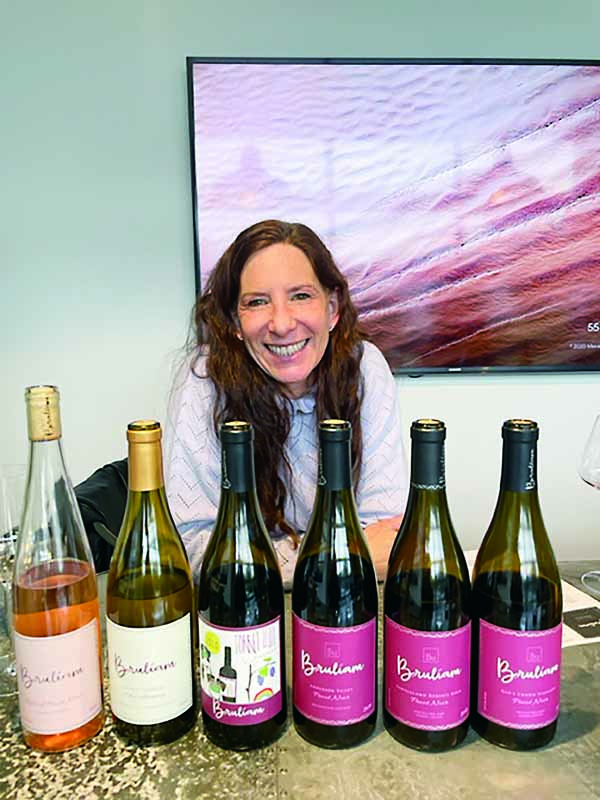
In an era when it sometimes feels like big brands are taking over everything, custom crush and cooperative tasting room facilities that cater to small and micro producers offer consumers an opportunity to connect with small, burgeoning or start-up wineries.
Launched in 2017 by wine industry veterans Erin Brooks, Todd Gottula, and Erin and Robert Morris, Grand Cru was created with “a vision to build a shared creative space for established, independent wineries, allowing them to partner their unique winemaking talent with world-class production technology to create some of the best wines in Sonoma County.” Since then, the business has thrived, growing to take on more than 20 member wineries, as well as additional custom-crush only clientele.
With over 20 tiny producers under one roof, the business’ presence in Windsor—along with the Artisan Alley folks just down the road—makes Windsor one of the most unique urban wine tasting destinations in the North Bay.
The Space and Location
Grand Cru is both a custom crush facility and a cooperative tasting space, meaning that they have both a production and crush pad area, as well as individual tasting rooms (or tasting salons) leased by small brands. The tasting rooms are small, modern and polished with a tasting counter and just enough seating to facilitate a small group.
Their state-of-the-art 31,000 foot production space features a crushpad, destemmer and optical sorter, bladder and basket presses, temperature controlled barrel rooms and temperature controlled glycol systems.
The space is located off of American Way in Windsor, just next door to DuMOL winery.
The Brands
Member wineries at Grand Cru are primarily boutique or micro-winery brands producing between 1,500 and 5,000 cases. Some are established brands that may not have a tasting room of their own, while others are brand new start-up wineries trying to make a name for themselves. A growing number falls somewhere in between.
Tasting Wine at Grand Cru
Six private tasting salon spaces are on-site, where member wineries can host tastings and receive customers by appointment, though a few member brands have their own tasting rooms off-site.
There is also an option to book a “Vintner’s Selection” tasting experience, which allows guests to taste through a selection of wines from different Grand Cru member vintners. The tasting flight includes five wines, takes about 60 minutes and costs $35. There is also an option to do a red wine-only version of this flight.
The Vintner’s Selection tasting experience is a great way to find new producers and wines one may not have heard of. For those who really like a wine from a particular vintner, they can make an appointment to come back and taste more of that brand’s wines.
Single vintner tastings and Vintner’s Selection tastings can be booked on Grand Cru’s website, grandcrucustomcrush.com. Advance reservations are required for all tasting experiences.
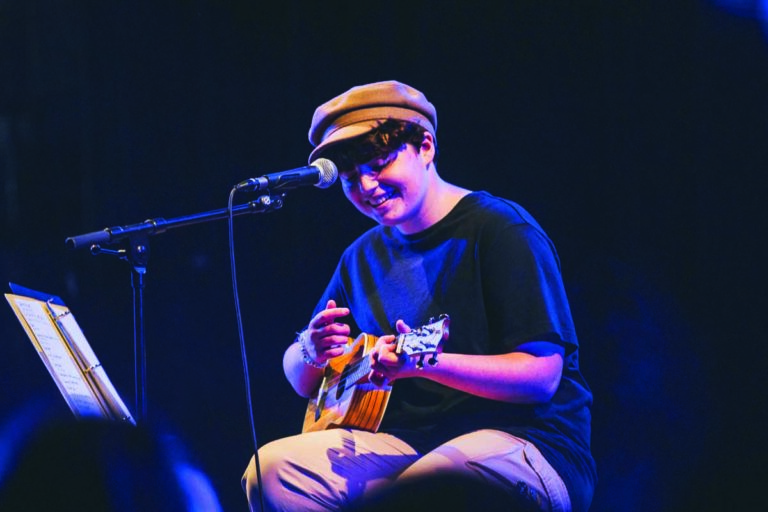
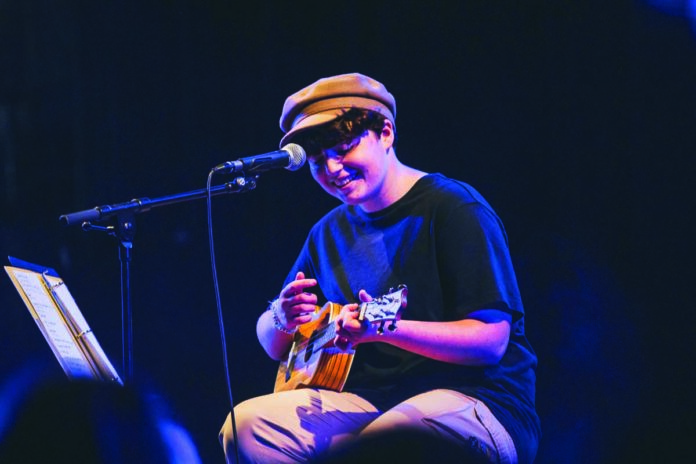
What can be purer than the piercing words of a 14-year-old singer songwriter? Last month, I visited the Black Box theater at ArtQuest High in Santa Rosa to see MJ Ward play the fundraiser for his high school.
Swaying on the venue dark bench seating, teen couples and parents layed heads on shoulders while pressed right up against the stage, a dozen ebullient YAs belting out chorus after chorus along with the giggling artist.
It’s the kind of scene that reminds one why they started making art in the first place.
This weekend, Ward will be playing the Phoenix Theater in Petaluma for the second time, opening for Arizona touring artist Madilyn Mei, darling of the “bedroom pop” scene that has arisen in the wake of a YouTube and Spotify enabled re-indy-fication of music making.
I caught up with Ward recently to talk about songcraft, the show and his brand new single, “Raven.”
Giotis: How long have you been writing your own tunes?
Ward: I’ve been writing music for almost three years. I’m self-taught in like two instruments, guitar and ukulele.
Giotis: Do you play other instruments?
Ward: Yeah, I’ve played piano since I was like six, violin off and on since third grade, and cello for about a year now. I’m just constantly interested in learning new instruments. I tried drums for a little bit, but it didn’t turn out very well. (His eyes twinkle a little behind the KN95 mask.) I also tried bass and gave up on that.
Giotis: That’s so cool. We have drums and various amps in the garage at home, and the kids trade off on them. Me too when they let me play with them.
Ward: Yeah, I really just want to constantly learn how to play different instruments.
Giotis: Is there an instrument you prefer for songwriting?
Ward: I mostly write on guitar, but I used to write like every single song, just on different instruments. I would rotate between them, and sometimes I try … like if I wrote a song on guitar sometimes, I’ll try to play it on piano just to see how that sounds.
Giotis: You have said that you got your start in local open mics. What was a good experience you can share?
Ward: Over the summer, I played a song and afterwards, these two people were telling me how they really liked my lyrics. And that was just really nice to hear, yeah.
Giotis: I love that immediacy of open mics, the way you can get feedback right away. Your new single, “Raven,” just came out. What is different about this song that you haven’t done before?
Ward: Well, it’s a whole like new level of production. With harmonies and just like different background tracks, which I haven’t done before. And I feel like the lyrics are very different from, like my other releases. Just from like, getting better at writing.
Giotis: I remember some animal themes in earlier songs like “Hammerhead Sharks.” Is that a trademark thing for you?
Ward: (laughs) I think so. Yeah.
MJ Ward plays with Madilyn Mei at 7:30pm, Friday, Jan. 27 at the Phoenix Theater, 201 Washington St., Petaluma. Tickets available at thephoenixtheater.com for $12 a pop. All ages.
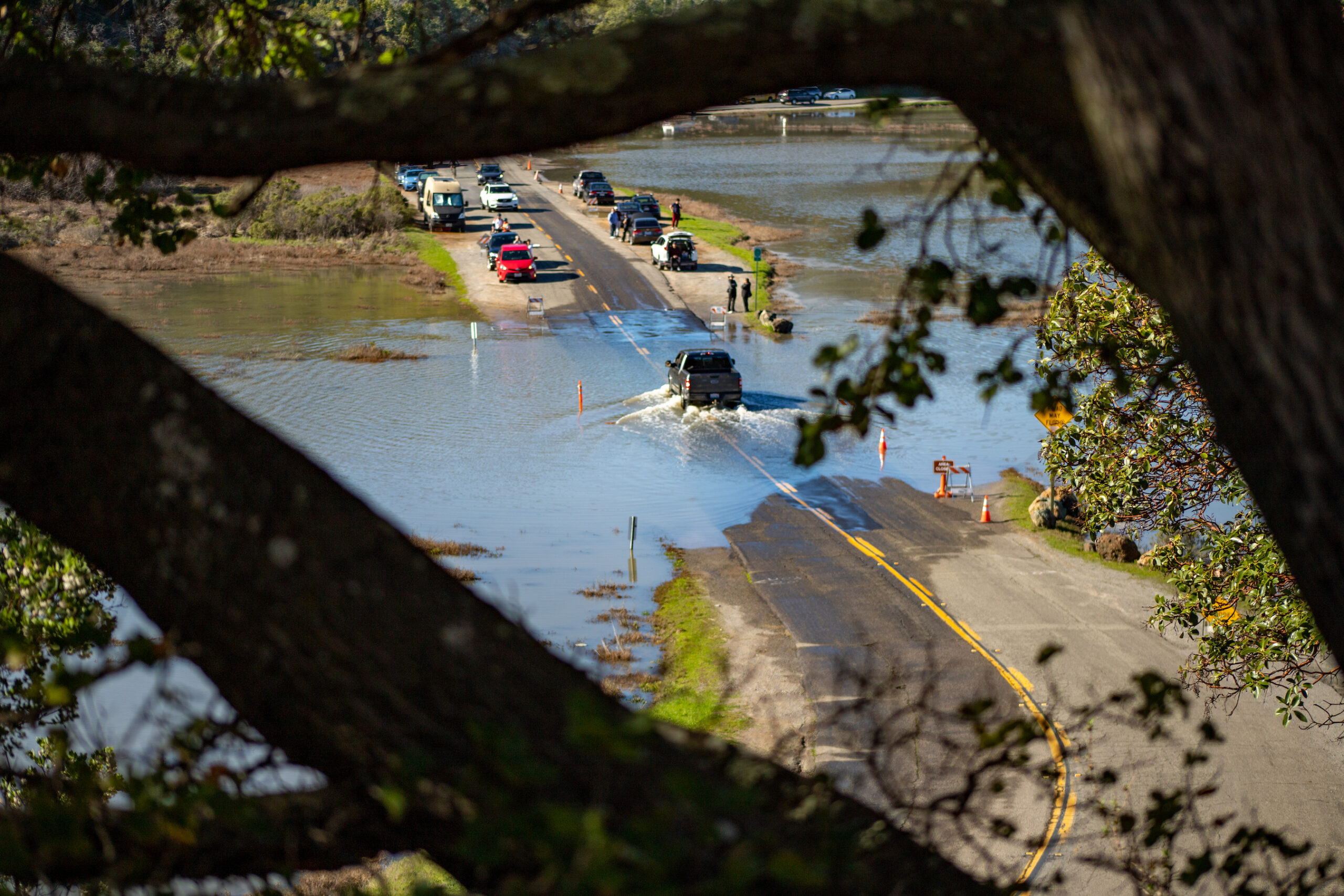
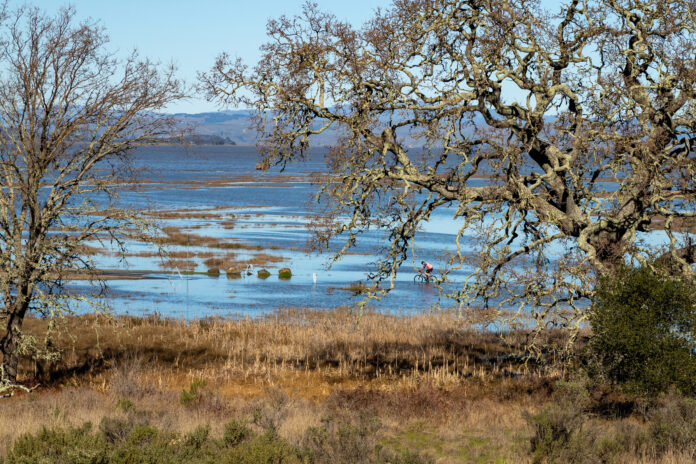
On Sunday, Jan. 22, a group of hikers stood on a hillside in China Camp State Park near San Rafael watching, not wildlife thriving in the park’s salt marshes, but cars and bicycles below.
It was close to 12:30pm, and a short segment of the low-lying North San Pedro Road was covered in water, forcing visitors to brave the shallow water or turn back.
“King tide” is a non-scientific name for the highest tides of the year. Caused by the increased gravitational pull when the earth, sun and moon align in a certain way, king tides offer a valuable teaching moment: a visible representation of the regenerative and destructive powers of water today and in the future.
Using photographs submitted by participants around the state, the King Tide Project helps “document current flood risk in coastal areas, visualize the impacts of future sea level rise in a community, ground-truth and validate climate change models by comparing model predictions with the high-tide reality, [and] serve as a living record of change for future generations,” according to the Coastal Commission’s website.
“King Tides themselves are not related to climate change, but they allow us to experience what higher sea level will be like,” the website states. “King Tides are the highest high tides of the year—one to two feet higher than average high tides, which is a good approximation of how high we expect everyday tides to be over the next few decades due to human-caused sea level rise.” In San Francisco, sea levels are expected to rise between 1.1 and 2.7 feet by 2050, according to a 2018 state study.
Photo by Chelsea Kurnick
Gesturing to the flooded section of North San Pedro Road below, Dr. Stuart Siegel, the director of the San Francisco Bay National Estuarine Research Reserve, said, “With sea level rise, this will happen a bit more often. It’ll be a little deeper each time—a little more of the road will flood—and, instead of an hour or two, it will be underwater for three or four hours.”
Half an hour earlier, when the hiking group assembled in a parking lot, Dr. Mike Vasey, who led the Bay Area NERR before Siegel, dubbed the gathering a “gravitation celebration.”
Then, adopting the role of the earth, Vasey recruited participants to act as the sun and moon. He spun in place a few times, using his hands to show the bulge of water pulled outwards as he turned to face the pretend celestial bodies once again.
“When the sun gets closest to the earth and the moon is in this new moon phase right now, it exerts the largest gravitational pull on the earth, [causing higher tides]… What’s often not mentioned is the rotation of the earth, which really has a big effect on these tides,” Vasey said.
In the Bay Area, though, untouched wetlands and salt flats, like those at China Camp, are fairly rare. Before human development accelerated in the 20th century, there were 200,000 hectares, or approximately 770 square miles, of salt marshes along the edges of the bay, according to the San Francisco Bay Keeper. Today, due to “urban development, land filling, and the construction of dikes, levees, and dams,” there are only about 13,290 hectares of marshes. Rising sea levels are a threat to the remaining areas.
In addition to offering a crucial habitat for a wide range of species, salt marshes and wetlands provide an important buffer between the ocean and nearby communities, slowing or preventing flooding. They also store carbon and other climate-heating emissions, helping to mitigate global warming.
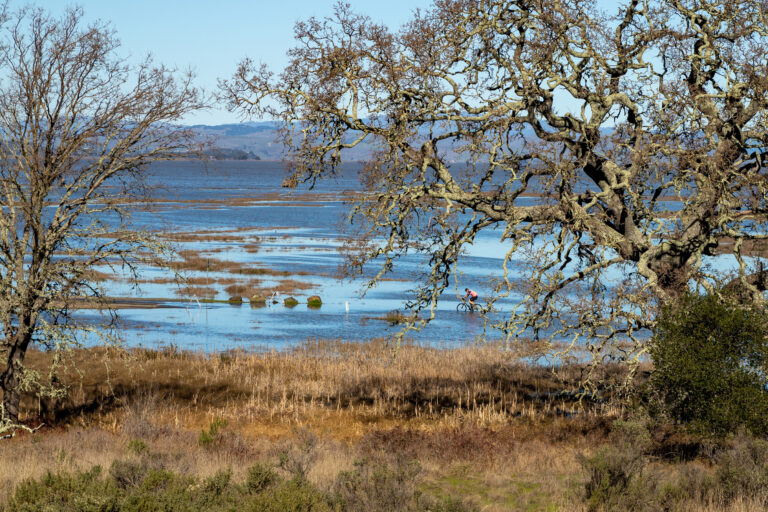
Some 20 miles north of China Camp, the Petaluma Marsh is estimated to cover roughly 5,000 acres, making it the largest remaining salt marsh in the San Pablo Bay. On Saturday, Jan. 21, Drew Dickson, owner of Napa Valley Paddle, led a small flotilla of kayaks and paddle boards up the Petaluma River, setting off from a marina off Lakeville Highway just before the height of the tide.
Partly inspired by the King Tide Project, Dickson wanted participants to experience the might of the river—and the wildlife living in the marsh. On the way into Petaluma, the level reached about five feet below the top of a bridge. On the way out, only 90 minutes later, it had receded 1.5 feet.
From a kayak on Saturday, the river appeared to be safely below any human development, even at the height of the tide. Perhaps it’s thanks to the remaining marsh that the city was not impacted.
“Wetlands detain water, which reduces flooding and erosion downstream during major storms,” states the website of the Petaluma Wetlands Alliance, a nonprofit dedicated to education and preservation efforts. “Think of a wetland as a giant sponge lying between our uplands or cities and the major waterways that drain them, or as a sponge lying between our uplands and our cities.”
Still, king tides do cause damage in the North Bay and other parts of the coast on occasion.
In November 2020, a King Tide inundated a stranded construction barge on the Petaluma River, causing it to leak industrial fluids into the water. Ahead of last weekend’s tides, Marin County officials warned of increased flood risk in some low-lying areas. And, if this year’s King Tides had aligned more closely with the historic rain storms, water levels could have been several feet higher, making them more impactful.
The widespread impacts of the tides, paired with sea level rise projections, have caused a lot of organizations to compete for funding for mitigation projects large and small.
Back at China Camp State Park, Siegel made a pitch for funding improvements to North San Pedro Road, which floods regularly.
To start, the salt marshes on either side are increasingly rare, and although there aren’t any homes along this stretch of two-lane road, it offers emergency vehicles a backup option if other routes are out of service. And, in addition to providing park access for tourists, hikers and mountain bikers, Indigenous people who use China Camp for ceremonial purposes use the road.
On Jan. 5, Siegel filmed the same stretch of North San Pedro Road during a rainstorm.
Thanks to infrastructure funding set aside last year, Siegel noted that all sorts of agencies will compete for sea level rise mitigation funds during the next few years.
Unlike the highly-predictable King Tides, it’s not clear when the next infrastructure investment tide will arrive. Those are subject to political, not gravitational, forces.
King Tide photos from up and down the California coastline are available at www.coastal.ca.gov/kingtides and on various social media sites, tagged #kingtide.
My assignment this week was to write a piece about the monumental storms that packed a wallop in Marin and Sonoma counties, but I needed a break from bad news.
Fortunately, I found a heartwarming story about a fairy, a stranded motorist and a bunny on a flooded road during a downpour.
To satisfy my editor, let me get this out of the way: The first 18 days of January delivered more than 22 inches of rain to Marin, while Sonoma County made it onto President Joe Biden’s list of areas eligible for FEMA funds. It was a mess all over the Bay Area, with flooded roads, mudslides, toppled trees and power outages.
Still, none of this discouraged Marcy Berman from braving an atmospheric river last week to transport a domesticated bunny named Lady Gray to a foster home in Muir Beach.
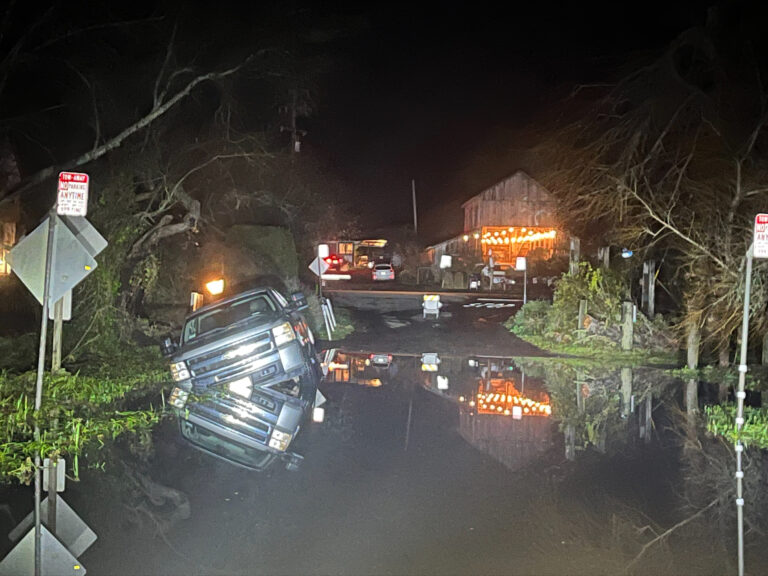
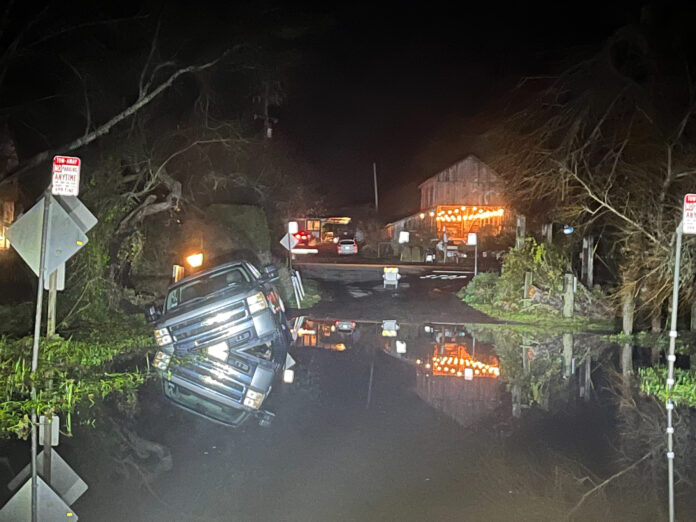
Berman, director of the nonprofit SaveABunny, admits she saw standing water on the road, but thought her truck would plow through it. After all, Lady Gray, a rescued rabbit disabled from severe neglect, required specialized care from the couple at the other end of the flooded street.
A driving miscalculation landed Berman’s truck stuck in the mud on the side of the road, tipping precariously, with the water continuing to rise ever so slightly.
“We were really at a steep angle,” Berman said.
Standing less than five feet tall, Berman considered the depth of the water and her chance of carrying Lady Gray and the bunny’s accoutrements to safety. She decided to stay in her vehicle, where she could keep the heat on for her paralyzed passenger while she called for help. West Marin’s spotty cell service put a kink in that plan.
Two surfers came by and tried to push the truck out of the mud. No go. Then a fire truck rolled up; however, Berman, determined to get Lady Gray to the medical foster home, told the firefighters that she was fine.
Some might question Berman’s stubbornness at this juncture, yet it’s through her tenacity that SaveABunny has rescued 5,000 rabbits over the last 24 years. She wasn’t giving up on this one.
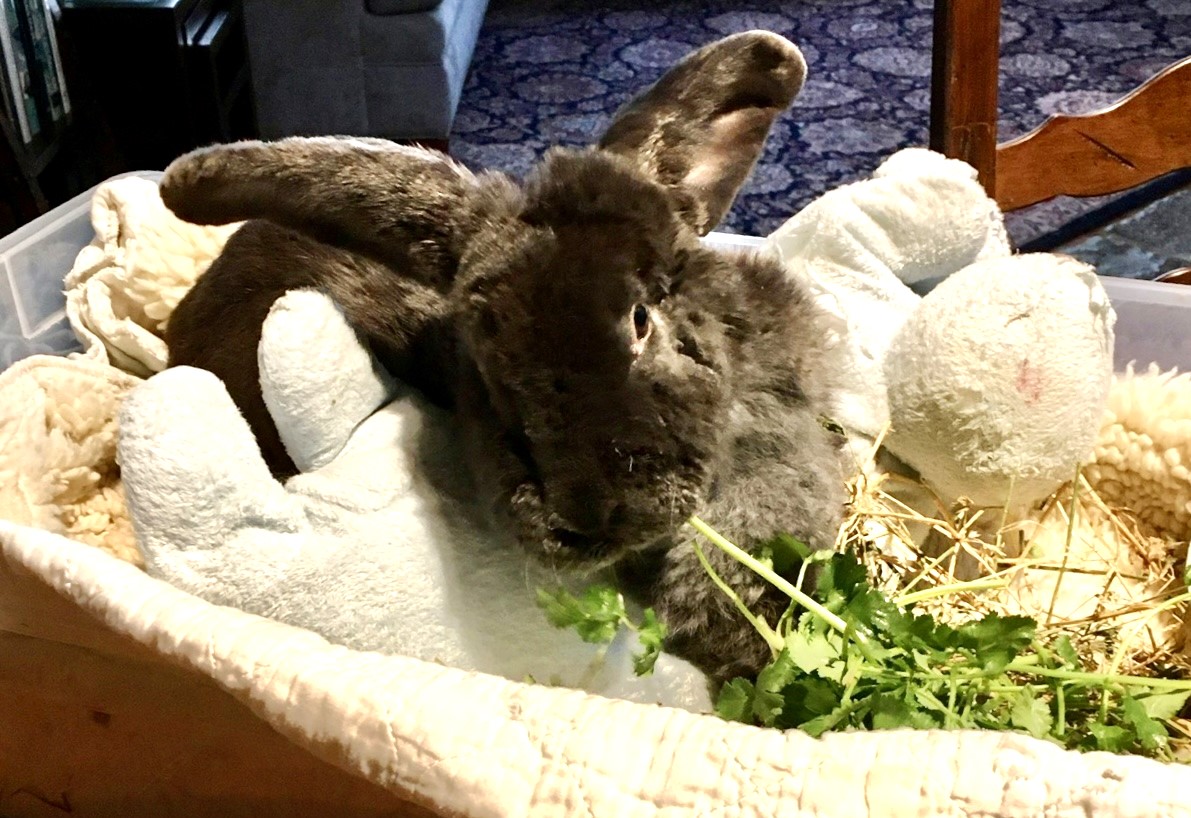
Lady Gray, a rabbit rescued from severe neglect by SaveABunny, munches on nutritious greens.
“I just let go and asked the universe for help,” Berman said. “Ten minutes later, a pretty blonde lady with a lovely accent shows up in an SUV. A fairy.”
Not only did Penny Macphail’s ethereal beauty and Irish lilt inform Berman that her rescuer was otherworldly, but a sign on the SUV confirmed it: “www.goodfairy.org.”
Indeed, Macphail is a real-life good fairy. Although she ventured from her home in Sleepy Hollow on this stormy day to swim with her dog at Muir Beach, Macphail wasn’t surprised to happen upon someone who needed to be saved.
“I run a nonprofit called Good Fairy that matches volunteers with people who need help,” Macphail said. “The funny thing is that I am constantly rescuing people, because once you start looking, you see people in need.”
Good Fairy has helped hundreds of people since its inception three years ago, but Macphail herself attracts those in need. She recently found a five-year-old boy at a gas station after his father accidentally drove away without him. It seems she’s always in the right place at the right time, which is even more remarkable considering she’s disabled with limited mobility.
“I’m seizing the day and making the best of everything I can,” Macphail said.
Together, on the flooded road in the pouring rain, the two women managed to move the bunny and her supplies into Macphail’s SUV and then to the medical foster home.
One will never know whether Macphail appeared because Berman wished for her or because Macphail keeps an eye out for anyone needing help. Either way, both say they wholeheartedly agree with the other line on the sign on Macphail’s vehicle: “I believe in fairies!”
The sign on MacPhail’s SUV explains why magical moments occur when she arrives.
Mounting a production of a little-known play in these pandemic and inflationary-influenced times is something of a risk for most theater companies. Audiences have yet to return in full-force to live theater, so a significant leap of faith is required to produce material that has little to no track record.
Healdsburg’s Raven Players and the Cloverdale Performing Arts Center have...
Roman Rules
America can learn from ancient Rome how to better deal with crime today.
Because democracy generally values all human beings, democratic Rome’s criminal statutes were not designed to repress, but quickly judge and inexpensively rehabilitate. For that reason, Rome did not use prisons, except as places of detention before trial.
One historian of early and middle Roman law summarizes: “Penalties...
Larkspur
‘Love Letters’
A.R. Gurney’s Pulitzer Prize-nominated play, Love Letters, arrives at the Lark Theater Feb. 9 and 11 for a special Valentine’s-timed engagement. The play is composed of romantic letters exchanged over a lifetime between two people who grew up together, went their separate ways, but continued to share their love for each other through letters. First written and performed...
ARIES (March 21-April 19): Noah Webster (1758–1843) worked for years to create the first definitive American dictionary. It became a cornucopia of revelation for poet Emily Dickinson (1830-1886). She said that for many years it was her "only companion." One biographer wrote, "The dictionary was no mere reference book to her; she read it as a priest his breviary—over...
By Dr. Chad Johnson
I’m rejecting cynicism
Renouncing bitterness
Meditations while we sheltered
Have affirmed a yearning
Sanctioned a hunger
The gravitational tug
To mix with our own
We breathe with each other
Like roots of coastal redwoods
Synapses mingle
Resonating with proximity
In spontaneity mode
Let’s attend a show!
Leave our couch
C’mon, we’ll dress up
Even if it’s casual
Impromptu
Flashy or demure
Velvet, silk, flannel
At a trendy bistro
Enlivening the restaurant
We toast to ourselves
Ripe with anticipation
Of...
There used to be good nerds. Band camp kids? Computer geeks? Music nerds—the ones everyone loved to hate, who only liked the band before everyone else did?
They were obsessive. They were annoying. They were vital.
I’m not sure where American nerdery went wrong, but it very much has, and boy do I wish I weren’t here for it (but also,...
In an era when it sometimes feels like big brands are taking over everything, custom crush and cooperative tasting room facilities that cater to small and micro producers offer consumers an opportunity to connect with small, burgeoning or start-up wineries.
Launched in 2017 by wine industry veterans Erin Brooks, Todd Gottula, and Erin and Robert Morris, Grand Cru was created...
What can be purer than the piercing words of a 14-year-old singer songwriter? Last month, I visited the Black Box theater at ArtQuest High in Santa Rosa to see MJ Ward play the fundraiser for his high school.
Swaying on the venue dark bench seating, teen couples and parents layed heads on shoulders while pressed right up against the stage,...
On Sunday, Jan. 22, a group of hikers stood on a hillside in China Camp State Park near San Rafael watching, not wildlife thriving in the park’s salt marshes, but cars and bicycles below.
It was close to 12:30pm, and a short segment of the low-lying North San Pedro Road was covered in water, forcing visitors to brave the shallow...
My assignment this week was to write a piece about the monumental storms that packed a wallop in Marin and Sonoma counties, but I needed a break from bad news.
Fortunately, I found a heartwarming story about a fairy, a stranded motorist and a bunny on a flooded road during a downpour.
To satisfy my editor, let me get this out...