Full Season
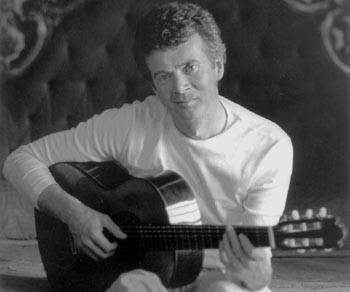
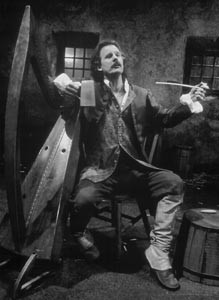
Pluck of the Irish: Master storyteller and musician Patrick Ball delivers a one-man musical and theatrical show about Ireland’s most famous bard, Turlough O’Carolan, starting Sept. 23 at Spreckels Performing Arts Center.
Fall puts big stars and local talent into the spotlight
Edited By Patrick Sullivan
TO EVERYTHING there is a season, as somebody or other once famously remarked. Judging from the action-packed schedules at local arts venues, fall is the season for star-watching. But, of course, we’re not talking about the celestial bodies twinkling in the sky. We’re referring to those fascinating individuals who sing, play, dance, paint, or write their way into our hearts and minds, illuminating dazzling new worlds right here on earth. The next few months on the Sonoma County arts scene offer star-power to suit every taste, but if you don’t know, you can’t go, so below you’ll find our selective guide to the fall arts, compiled by Yosha Bourgea, Greg Cahill, Paula Harris, Liesel Hofmann, and Patrick Sullivan.
September
Sausalito Art Festival
Sonoma Film Institute Enjoy quirky offerings of hard-to-find films (from independents to foreign language to the classics) when SFI opens its doors again for the fall season. First up: The Distraction, a low-budget story of a devoted young husband who strikes up a friendship with an attractive stranger, on Sept. 3 -4. Next: A tribute to the late Stanley Kubrick featuring Killer’s Kiss and Dr. Strangelove on Sept. 10-11. Darwin Theatre, Sonoma State University, 1801 E. Cotati, Rohnert Park. $4. 664-2606.
Gualala Arts Studio Discovery Tour As if the Sonoma and Mendocino coast wasn’t inspiration enough all by itself, the North Coast Artists Guild once again is sponsoring a tour of 27 artists’ studios along that evocative stretch of turf. Visitors will be able to meet the artists, view works in progress, and learn more about the making of Celtic emblems, stained glass, and chain-saw sculpture. Some artists will also be showing at the new Gualala Arts Center near the Gualala River. The tour is held Sept. 4-5 and 11-12 from 10 a.m. to 5 p.m. It’s free, but affords plenty of opportunities to purchase original local artwork. For a brochure including a map and photo index, call 884-1608.
University Art Shows An exhibit that explores the use of color in three-dimensional art kicks off the season at the University Art Gallery. “Chromaform: Color in Contemporary Sculpture,” which opens with a reception on Sept. 9, features the work of 13 emerging and established artists, including the quirky sculpture of Chris Finley of Penngrove, Sept. 9-Oct. 17 (Sonoma State University, 1801 E. Cotati Ave., Rohnert Park; 664-2295.) The Petaluma campus of Santa Rosa Junior College offers “All Souls: Photographs and Installations by Renata Breth,” Nov. 1-24 (Mahoney Library, 680 Sonoma Mountain Parkway; 778-2410)
Chamber Music Santa Rosa Junior College’s chamber concert season begins in its Newman Auditorium on Sept. 10 at 8 p.m., with the Swensen-Herch trio performing a program of Beethoven, Kodály, and Mendelssohn. Season tickets to the six-concert series are $80/general and $55/students and seniors. Individual tickets are $15/general and $10/students and seniors. 527-437 . . . . The Sunday Chamber Music Series at Sonoma State University kicks off Sept. 19 at 4 p.m. with the Navarro Trio performing music by Beethoven and Tschaikovsky; and on Oct. 17 at 4 p.m. it will feature a guest artist yet to be announced. On Nov. 14 at 4 p.m., the Navarro Trio will perform music by Schumann and Beethoven. All performances are in the Ives Concert Theater. $10/general, $8/faculty, staff, and alums, $6/students. In addition, there will be two free chamber music workshop concerts on Nov. 9 at noon, and on Dec. 7 at 7:30 p.m. 664-2353 . . .
Four on the floor: The Lark Quartet with Peter Schickele kick off an action-packed season at the Russian River Chamber Music Society on Oct. 9.
The Redwood Arts Council The Redwood Arts Council kicks off its 20th concert season Sept. 25 with the Amherst Saxophone Quartet. Other performances: Oct. 23, Geoff Hoyle; Nov. 20, Orion String Quartet; Dec. 3, the Aulos Ensemble. All performances are at 8:15 p.m. Locations vary. $17/general, $16/seniors, $10/students. 874-1124 . . . .It’s an action-packed season full of big names at the Russian River Chamber Music Society. Among the fall highlights: the Lark Quartet with Peter Schickele on Oct. 9; the St. Lawrence String Quartet on Nov. 13; and the Los Angeles Guitar Quartet on Dec. 4. (Plus, although it’s not in the fall, KITKA performs April 9–count on tickets to go fast.) Federated Church, 1100 University Ave., Healdsburg. $16. 524-8700 . . . . A chamber music series for the Spreckels Performing Arts Center features Santa Rosa Symphony music director Jeffrey Kahane and other symphony members. They’ll perform Johann Sebastian Bach’s Brandenburg Concerti–six works featuring various soloists, including Kahane on harpsichord. Nov. 4 at 8 p.m., First Presbyterian Church, 1550 Pacific Ave., Santa Rosa; Nov. 5 at 8 p.m. at St. Vincent de Paul Church, 35 Liberty St., Petaluma; Nov. 6 at 8 p.m. at the Raven Theater, 115 North St., Healdsburg. $22. 546-8742.
Opera Guild Another season of the Sonoma County chapter of the San Francisco Opera Guild’s popular preview lectures gets under way next month, with all proceeds benefiting Opera à la Carte, an education program that brings San Francisco Opera singers to Sonoma County schools. Lectures begin Sept. 10, at 10 a.m., with a presentation on Louise. Other lecture topics: Sept. 20 at 2 p.m., La Favorite; Oct. 7 at 7 p.m., Lucia di Lammermoor; Oct. 28 at 7:30 p.m., Wozzeck; Nov. 8 at 10:30 a.m., Idomeneo; Nov. 15 at 10:30 a.m., Nabucco. Locations vary. Meals are often packaged with the lectures. Annual membership is $15. $8 for a single ticket; $40 for the series of six (season tickets are for chapter members only). 546-4379.
Richard Thompson Hailed as one of the world’s greatest guitarists (by Eric Clapton, no less), Celtic rocker Richard Thompson wears his heart on his sleeve and his intelligent songs under a smart beret. Sept. 10 at 7:30 p.m. Luther Burbank Center, 50 Mark West Springs Road, Santa Rosa. $25. 546-3600.
Art in the Park Stroll beneath the shady trees in one of the county’s most quaint Victorian neighborhoods while enjoying works by more than 50 exhibiting artists. The Petaluma Arts Association presents this 42nd annual event, featuring live music in the bandstand. Sept. 11 and 12, from 10 a.m. to 5 p.m. Walnut Park, between Fourth Street and Petaluma Boulevard at D Street, Petaluma. Free. 763-2308.
The Thrill of Brazil coxinha de galinha and pao de queijo. 5409 Snyder Lane, Rohnert Park. $25 and $50. 588-3400.
Russian River Jazz Festival
Art for Life Compassion is still in style, as the ongoing success of the Art for Life Exhibit and Auction demonstrates. Now in its 12th year, the annual silent auction–a benefit for Face to Face: Sonoma County AIDS Network–thus far has raised more than $700,000 for AIDS services in Sonoma County. Featuring more than 250 works of art donated by Bay Area artists, this year’s free exhibit runs Sept. 15-17, from noon to 7 p.m. on Wednesday and Friday, and noon to 4 p.m. on Thursday. The auction is held Sept. 18 from 3:30 to 7 p.m. and includes food, wine, and live music, as well as a great opportunity to help people in need. $39. Friedman Center, 4676 Mayette Ave., Santa Rosa. 544-1581.
José Carreras This Spanish tenor is one hot ticket–his upcoming show sold out in near record time and at near-record rates (up to $250). Mortgage the house, sell the Lexus, and search for a scalper. Black tie is optional. Sept. 16 at 8 p.m. Luther Burbank Center, 50 Mark West Springs Road, Santa Rosa. At 10 p.m., a pricey post-concert reception will set you back another $150. 546-3600.
Day of the Dead Exhibit Celebrate the memory of your deceased love ones at this exhibit based on Día de los Muertos. “A Tribute to Our Ancestors” includes altars made by Latino community groups; children’s art projects; watercolors; a sand painting by Oaxacan artists; and bronze sculptures by Mill Valley artist Ronald Garrigues. Sept. 16-Nov. 2. Sonoma Museum of Visual Art, Luther Burbank Center, 50 Mark West Springs Road. 527-0297.
Dragonfly Cultural Unity Festival A wide variety of musicians and performance artists provide entertainment at this three-day event benefiting the Dine Nation of Big Mountain, Ariz., and the Mayan Zapatistas of Chiapas. The featured bands include Spiral Bound, Cohesion, and Third I Posse. Sept. 17-19. On a 300-acre ranch in west Sonoma County; call for location. $40. 869-3114.
Something’s Brewing Sample the suds at the Sonoma County Museum’s 14th annual Something’s Brewing beer-tasting fundraiser, Sept. 17 from 5:30 p.m. to 8 p.m. The event features unlimited tastings of hop-infused nectar from more than 25 Northern California specialty breweries. Delicacies from local restaurants and groceries will be available for those who wish to clear the palate between tastings. Prizes including free dinners and special tripswill be raffled off. Santa Rosa Veterans Building, 1351 Maple Ave. $20/advance, $22 at the door. 579-1500.
Smuin Ballets/SF Nutcracker shtick. Smuin’s pièce de résistance will be Chants d’Auvergne, a whimsical and witty romantic ballet set to lushly orchestrated French folk music. To see this terpsichorean treat, point your toes to 5409 Snyder Lane, Rohnert Park, on Sept. 18 at 8 p.m. or on Sept. 19 at 2:30 p.m. $26/general, $23/youth and seniors. 584-1700.
River Appreciation Festival The seventh annual River Appreciation Festival, co-sponsored by Friends of the Russian River, the Russian River Environmental Forum, and the Sonoma County Conservation Council, is a perennially popular blend of fun and education. This year, the event will be emceed by Supervisor Mike Reilly. Along with a presentation by state Secretary of Resources Mary Nichols and appearances by other elected officials, the event includes a barbecue, winetasting, readings of essays about the river, and live music. Sept. 18 from 3 p.m. to 6 p.m. $25/advance; $30/at the door (the event routinely sells out ahead of time). Hop Kiln Winery, 6050 Westside Road, Healdsburg. 433-6491.
Glendi International Food Festival Greek treats and more await at this two-day ethnic food fest. The 11th annual Glendi celebration will include Balkan music by Anoush ‘Ellas and Debela Machka, folk dancing, crafts, books, and a children’s games area. Delicacies from around the globe include Greek gyros, Russian piroshki, and sweet-‘n’-sticky baklava. Sept. 18. from 11 a.m. to 9 p.m.; and Sept. 19 from noon to 6 p.m. Holy Virgin Orthodox Church, 90 Mountain View Ave., Santa Rosa. $5/adults; free for kids under 12. 584-9491.
Kenny Rogers He knows when to hold ’em, and also when to fold ’em. Country star Kenny Rogers is comin’ to town to perform from his new Top 10 country-hit album She Rides Wild Horses. Sept. 19 at 7 p.m. Luther Burbank Center, 50 Mark West Springs Road, Santa Rosa. $69, $59, and $49 (includes a country barbecue that begins at 5 p.m.). 546-3600.
Petaluma Poetry Walk A journey of a million words takes its first step at Deaf Dog Coffee, 134 Petaluma Blvd. N., on Sept. 19 at high noon with a reading by poets Gillian Conoly, Trane DeVore, Diana O’Hare, and others. So begins the fourth annual Petaluma Poetry Walk, an eclectic (and electric!) series of readings by acclaimed poets that also serves as a trip through seven downtown shops. Among the highlights: a reading at 4 p.m. featuring Suzanne Lummis, director of the L.A. Poetry Festival, and Joyce Jenkins, editor of Poetry Flash, at Copperfield’s Books, 140 Kentucky St. The day concludes at 6 p.m. with a reading by several poets, including event coordinator Geri Digiorno, at Andresen’s Tavern, 19 Western Ave. Free. 763-4271.
Cesaria Evora This acclaimed Cape Verdes singer brings her elegantly mournful songs back to the North Bay on Sept. 20 at 6 p.m. Luther Burbank Center, 50 Mark West Springs Road, Santa Rosa. $28 (includes a special buffet-style dinner). 546-3600.
Susie Bright Full Exposure, her most personal book to date. Sept. 23 at 7. Copperfield’s Books, 138 N. Main St., Sebastopol. Free. 823-2618.
Loretta Lynn Everybody’s favorite coal-miner’s daughter brings her country stylings on Sept. 23, at 7:30 p.m., to the Luther Burbank Center, 50 Mark West Springs Road, Santa Rosa. $45, $39.50, $35, and $29.50 (includes a country barbecue at 5 p.m.). 546-3600.
Patrick Ball One of the world’s most renowned storytellers and Celtic harp players, Sebastopol resident Patrick Ball presents the West Coast premiere of “O’Carolan’s Farewell to Music.” This one-man musical theater piece fleshes out the life, turbulent times, and captivating music of one of Ireland’s most celebrated and beloved musicians, Turlough O’Carolan, a blind 18th-century bard with a colorful past. This Pacific Alliance Stage Company production will be presented Sept. 23-26, Sept. 30-Oct. 3, and Oct. 7-10 at the Spreckels Performing Arts Center, 5409 Snyder Lane, Rohnert Park. $10/general on Thursdays at 7:30 p.m.; $15/general and $12/youth and seniors on Fridays and Saturdays at 8 p.m.; and $12/general on Sundays at 2:30 p.m. 588-3400.
Sebastopol Celtic Festival Celts in kilts invade the Sebastopol Community Center Sept. 24-26 for the fifth annual Sebastopol Celtic Festival. Beginning Friday at 8:15 p.m., the festivities kick off with a concert by Johnny Cunningham, Susan McKeown, and Distant Oaks. The rest of the weekend will feature a variety of traditional and modern music, including the ever-popular Celtic guitarist John Renbourn on Sunday, as well as workshops, dancers, microbrews, children’s activities, and feats of athletic prowess. 390 Morris St., Sebastopol. Friday night concert: $15/advance, $17/door. Saturday night concert: $23/advance, $25/door. Saturday and Sunday daytime events: $17/advance, $20/gate; free for children 10 and younger. 823-1511.
Pete Escovedo
Cabaret! Life is a you-know-what when international performers Lynne Jackson and Mike Palter bring a revue of their favorite Broadway and Hollywood melodies to Sebastopol on Sept. 25 at 8 p.m. The duo, who made their debut on the Dinah Shore Show and have performed at the Palladium and Carnegie Hall, will appear at the Sebastopol Masonic Center, 373 N. Main St., in a concert sponsored by the Sebastopol Center for the Arts. Tickets may be purchased at such outlets as the Quicksilver Mine Co. and Copperfield’s Books. $12/advance, $15/door. 829-4797.
Divafest
Horseplay: Corrie McCluskey’s White Horse will be displayed at the Camera Art 1 exhibit on Sept. 25-26 at the Montgomery Village Shopping Center in Santa Rosa.
Camera Art 1 Fifty known and emerging Sonoma County photographers–including such luminaries as Baron Wolman–display their most innovative work in this two-day festival. Sept. 25-26. Montgomery Village Shopping Center, Highway 12 and Farmers Lane, Santa Rosa. Free. 539-1855.
Festa Italiana Mama mía! It’s the ninth annual Festa Italiana hosted by the North Bay Italian Cultural Foundation to celebrate the cultural contributions of Italian Americans. Coro Allegro performs Italian folk songs in the afternoon. Plus dancing, Italian dishes prepared by local restaurateurs and chefs, art exhibits, vendors, a raffle, bocce ball, and a kiddies’ corner for the bambinos. Sept. 26 from 11 a.m. to 7 p.m. at the Veterans Building at 1351 Maple Ave. (across from the fairgrounds), Santa Rosa. $4/advance, $5/door. 522-9448.
Ellingtonia
October
Comedy Competition The San Francisco International Stand-Up Comedy Competition returns for its 23rd year. The prestigious competition has helped launch the careers of Robin Williams, Dana Carvey, Marsha Warfield, and many others. Oct. 1 at 8 p.m. at the Luther Burbank Center, 50 Mark West Springs Road, Santa Rosa. $24.50 and $21.50. 546-3600.
ARTrails Open Studio Tour Investigate the haunts and lairs of 117 Sonoma County artists during this 14th annual studio tour, which encompasses all sections of the county and an incredible variety of artists, from photographers to painters to printmakers. A good place to start the tour is at a preview exhibit running from Oct. 1 to Nov. 1 at the Sonoma County Museum, 425 Seventh St., Santa Rosa. (A gala reception will be held at the museum on Oct. 8 from 6 to 8 p.m.) The tour itself takes place on two weekends: Oct. 16-17 and Oct. 23-24. A catalog with maps is available. 579-2787.
Cotati Philharmonic Le Tombeau de Couperin, and Brahms’ Symphony No. 2. Hear Cotati’s new musical treasure at St. Joseph Catholic Church, 150 St. Joseph Way. Free. 762-4600.
Kid Extravaganza! The man himself–comic Tom Smothers–will perform yo-yo tricks at a variety show that also features extreme BMX riders, teen mariachi sensation Mayra Carol, mimes, hog callers, Frogzilla, and lots more. Oct. 6 at 6:30 p.m. at the Luther Burbank Center, 50 Mark West Springs Road, Santa Rosa. $7-$10. 546-3600.
Sculpture Jam II Twenty sculptors work in teams to create art while the public watches. This year the artists (including Warren Arnold and Ron Rodgers) will craft six pieces around the theme of “Portals of Time.” Oct. 7-9. The old Diamond Lumber Yard, next to the Sebastopol Center for the Arts (which sponsors the event), on the plaza, Sebastopol. Free. 829-4797.
Suzy Bogguss This country singer stole the show a couple of years ago on the all-star Buddy Holly tribute CD, and has shown there’s plenty more where that inspired performance came from. Oct. 8 at 8 p.m. at the Luther Burbank Center, 50 Mark West Springs Road, Santa Rosa. $24.50, $22.50, $20.50, and $18.50. 546-3600.
World Wristwrestling Championship It’s all in the wrist at the 39th annual World Wristwrestling Championship, held this year on Oct. 9 from 1 to 7 p.m. at the Mystic Theater in downtown Petaluma. Contestants from across the globe will gird their biceps to compete for cash prizes in 26 divisions, including novice and master, male and female, and, of course, left- and right-handed. $10 covers the entire day’s competition and the finals. Information and entry forms are available at 875-8879 or 778-1430.
Art Access ’99 For the ninth consecutive year, the artists of the Sonoma Valley open their studios to the public. Oct. 9-10 and 16-17. Free maps available. 938-1729.
Tangueros The suave and sexy tango revue that turned New York on its jaded head will appear Oct. 9 at 8 p.m. Luther Burbank Center, 50 Mark West Springs Road, Santa Rosa. $27.50, $25.50, and $22.50. 546-3600.
Open Studios at Atlier One Meet some of Sonoma County’s most innovative artists and see where they work their creative magic during this open house at the Atlier One artists’ collective. Oct. 9-10. 2860 Bowen St., Graton. 829-1966.
Santa Rosa Community Concerts This community-based music series begins Oct. 10 at 7:30 p.m. with the Boston Brass Quintet performing an eclectic selection ranging from baroque to pop. On Nov. 7 at 3 p.m., the Jacques Thibaud String Trio will perform a varied program. Other upcoming concerts include the Moscow Chamber Orchestra in February, and the Los Angeles Opera Quartet in April. Luther Burbank Center, 50 Mark Springs Road, Santa Rosa. $17.50/concert, $55/all six (Oct. 10 is the deadline for season tickets). 542-2032.
Don Giovanni This Mozart opera–presented by the San Francisco Western Opera Theater–has it all: a Casanova, a trio of slighted women, a vengeful ghost, and plenty of spine-tingling drama and sublime music. Oct. 13 at 8 p.m. Luther Burbank Center, 50 Mark West Springs Road, Santa Rosa. Tickets are $35 and $25 (English super-title monitors will not be visible from cheap, limited-view seats). A separate dinner buffet, beginning at 6:30 p.m., is an additional $30. 546-3600.
Susan Faludi The Pulitzer Prize-winning feminist author (Backlash) reads from her new book, Stiffed: The Betrayal of the American Male. Oct. 15 at 7 p.m. Sonoma State University, Person Theater, 1801 E. Cotati Ave., Rohnert Park. Price to be announced. 578-8938.
Santa Rosa Symphony
Mary Black
The Mastermind Word for Word performs this imaginative Alison Lurie children’s story in conjunction with SMOVA’s Mexican Day of the Dead art exhibition. Oct. 21 at 6:30 p.m. Luther Burbank Center, 50 Mark West Springs Road, Santa Rosa. $5-$8. 546-3600.
Cabaret queen: Andrea Marcovicci performs Oct. 23 at the LBC.
Andrea Marcovicci The celebrated cabaret star and actress (remember her as Woody Allen’s brainy girlfriend in the blacklisting drama The Front?) returns with a whole new batch of heart-rending torch songs. Oct. 23 at 8 p.m. Luther Burbank Center, 50 Mark West Springs Road, Santa Rosa. $24.50, $21.50, and $19.50. Buffet style dinner, served at 6:30 p.m., is available for an additional $28. 546-3600.
Wild moves: The Savage Jazz Dance Company performs Oct. 23-24 at Spreckels.
Savage Jazz The Bay Area’s only all-jazz dance company celebrates the 100th birthday of Duke Ellington with two programs featuring a full band on stage. Oct. 23-24. Spreckels Performing Arts Center, 5409 Snyder Lane, Rohnert Park. $18/general, $15/youth and seniors. 588-3400.
Hubbard Street Dance Chicago This talented troupe, which offers what Fred Astaire once hailed as “some of the greatest dancing I’ve seen in years,” employs a wide variety of forms, including jazz, modern, ballet, and theater dance. Oct. 24. Marin Center, Avenue of the Flags, San Rafael. $25-$30. 415/472-3500.
Howie Mandel The comedian presents his skewed take on life and love on Oct. 29 at 8 p.m. Luther Burbank Center, 50 Mark West Springs Road, Santa Rosa. $40, $35, and $30. 546-3600.
J. K. Rowling The popular British children’s author reads from the latest book in her best-selling Harry Potter fantasy series. Oct. 29 at 7 p.m. Co-sponsored by Copperfield’s and Readers’ Books. Location and price to be announced. 578-8938.
November
Double Delight II This family-oriented world music and dance show features award-winning Lakota hoop dancer Kevin Locke, a 40-member Greek dance troupe, and the Minoan Dancers. Nov. 3 at 6:30 p.m. Luther Burbank Center, 50 Mark West Springs Road, Santa Rosa. $7-$10. 546-3600.
Masters of the Steel String Guitar Renowned musicians explore the diverse traditions of guitar music in this traveling show produced by the National Council for the Traditional Arts. Nov. 12. Marin Center, Avenue of the Flags, San Rafael. $18-$22. 415/472-3500.
Festival of the Harps Heavenly sounds abound at this eclectic 10th annual event, featuring Clairseach with Celtic harp great Ann Heymann, German harp virtuoso Rudiger Oppermann, and a newly formed harp orchestra performing a program of early music directed by medieval harp master Cheryl Ann Fulton. Nov. 13 at 2:30 and 8 p.m. Spreckels Performing Arts Center, 5409 Snyder Lane, Rohnert Park. $18/general, $15/youth and seniors. 588-3400.
Tom Jones
Perla Batalla This sublime Latin singer has performed with k.d. lang, Iggy Pop, the Gypsy Kings, and many others. Her latest CD, Mestizak, is a musical pilgrimage through the myths, colors, and cultures of Mexico. Nov. 16 at 7:30 p.m. Luther Burbank Center, 50 Mark West Springs Road, Santa Rosa. $18, $15, and $12. 546-3600.
Balinese Shadow Play Prepare to be tantalized by this evening of evocative Indonesian puppetry and music Nov. 23 at 7:30 p.m. Luther Burbank Center, 50 Mark West Springs Road, Santa Rosa. $15 and $12. 546-3600.
December
Explosive music: Steve Earl is part of the star-studded lineup at the Concert for a Landmine-Free World on Dec. 2 at the LBC.
Concert for a Landmine-Free World Emmylou Harris, Steve Earl, Nanci Griffith, Bruce Cockburn, and Patty Griffin headline this all-star lineup of socially conscious country and folk artists. Dec. 2 at 8 p.m. Luther Burbank Center, 50 Mark West Springs Road, Santa Rosa. $85, $65, and $45 (on sale Sept. 3). 546-3600.
From the August 26-September 1, 1999 issue of the Sonoma County Independent.
© Metro Publishing Inc.