Stanford researchers report they reviewed 82 studies trying to find a link between videogames and violence. They found little to none. That’s the good news. (“Stanford researchers scoured every reputable study,” May 2, 2023, Fortune) The bad news is that Stanford, Fortune and politicians who argue one way or the other about videogames all miss the point. They are standing in the middle of a dense forest and cannot see the full reach of the tall trees.
The problem with videogames is that they sap the discretionary time of young and old alike, time that arguably should be spent on any of a myriad of other more productive endeavors, like face-to-face social life, raising kids and participating in democracy.
I have a theory. Addiction to videogames, porn, on-line shopping, substances, food . . . makes folks vulnerable to any crackpot political dictator who comes along promising to make things right for them. Study that, Stanford.
Kimball Shinkoskey
Marin County
Gift Keeps Giving
When Judge Clarence Thomas and “Adolf” Crow discussed the most recent “contribution” to the judge’s burgeoning estate, Crow told Thomas, “This gift has no family. No one knows this gift works here. It will be as if this gift never existed. All that’s left is our friendship.”
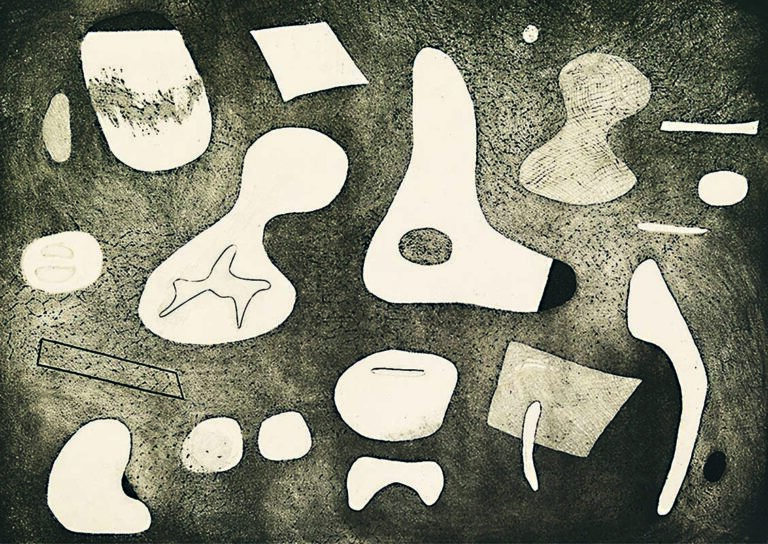
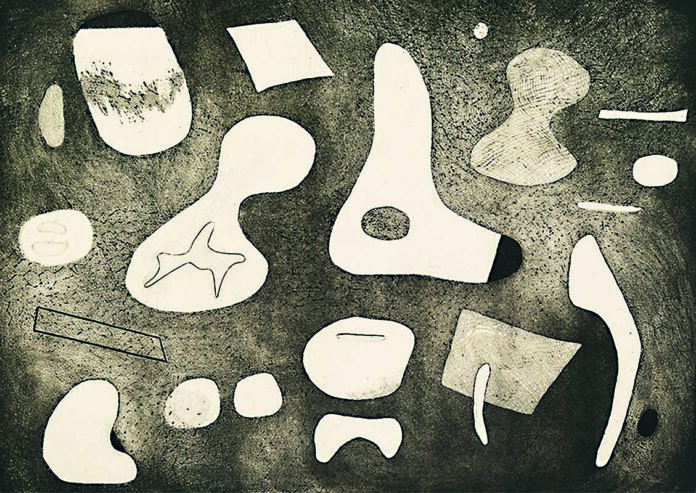
The Sonoma Valley Museum of Art presents “Labyrinth of Forms: Women and Abstraction, 1930-1950,” opening with a reception at 5pm, Saturday, May 13. Organized by the Whitney Museum of Art, New York, the exhibit celebrates the groundbreaking abstract art made by women in the first half of the 20th century. A significant number of American abstractionists were women, and their efforts propelled the formal, technical and conceptual evolution of abstract art in this country. A few, such as Lee Krasner and Louise Nevelson, have been duly recognized, but most remain overlooked despite their contributions. This exhibit helps correct that oversight. The event is free for museum members and $10 for non-members. Registration is required and can be made at bit.ly/svma-lab. The museum is located at 551 Broadway, Sonoma. Visit svma.org for more information.
Petaluma
‘Car’pe Diem
Centered on themes of community and cultural identity, the Petaluma Arts Center’s latest local artists-driven exhibit revs up with a creative response to—and love of—the automobile. Dubbed “Auto-Mobility: Cars and Culture in Sonoma County,” the exhibit jumpstarts with an opening at 5:30pm, Thursday, May 18, at the Center’s 230 Lakeville St., Petaluma, location. Attendees can expect wines from Adobe Road Winery, a race car display from race car driver Kevin Buckler and classic car appearances from local collectors. Continuing through May there will be a “Cruisin’ the Boulevard” wall painting event at 4pm, Saturday, May 20, with other related events through the summer. Visit petalumaartscenter.org for more information.
Sebastopol
Home on the Grange
Live music comes to the Sebastopol Grange at 7pm, Thursday, May 11, in a lineup that features the Towne Dandies, the Undone, the Roast Ranchers and a band that promises to ensure headaches to local copy editors for the typographical travesty that is its name, ?!Interrobang?!. Enough already. All are welcome (ditto donations) to the free gig. The venue is located at 6000 Sebastopol Ave., Sebastopol.
Novato
Earth Mama Vigil
PeaceNovato will hold a vigil honoring mothers and Mother Earth at 5:30pm, Friday, May 12, at Novato City Hall, 901 Sherman Ave. “With this vigil, we decided to go for a more celebratory tone, timing it to coincide with Mother’s Day weekend,” says PeaceNovato chair Julie Manson. “We are also acknowledging Mother Earth, our collective mother, a planet under siege. In these disturbed and disturbing times, it’s important to remember, celebrate and be nourished by the good, and then return to the work of repairing and redressing the world’s many ills.” Attendees are encouraged to bring their own signs to display to passing vehicles. For more information about PeaceNovato, call 415.883.8324.
Celebrating 10 years of indoor-outdoor concerts and movies, Summer at the Green 2023 includes performances from R&B superstars Kool & The Gang; platinum-selling roots trio Nickel Creek in its first tour since 2014; Latin music icons Los Huracanes del Norte; the genre-crossing ensemble Pink Martini with its signature blend of classical, jazz and old-fashioned pop; Rock & Roll Hall of Fame inductee and blues guitar legend Buddy Guy in his Damn Right Farewell Tour; the Texican rock & roll of Los Lonely Boys and much more!
Concerts take place in Weill Hall, with seating in the hall and on the outdoor grass and terraces of Weill Lawn. Lawn tickets for most performances are $30 (kids 12 and under are half off).
New to Summer at the Green is Global Roots Sonoma—a two-day festival with multiple stages, music and food from around the globe, and a VIP area with an after party. Artists scheduled to perform include Las Cafeteras, Mariachi Herencia de México with La Marisoul, San Salvador, Tia Leah’s Neighborhood, Paula Fuga, Balsa de Fuego, and Alasdair Fraser & Natalie Haas. Global Roots Sonoma will have multiple indoor and outdoor stages with tickets starting at $65 for adults and $20 for youth.
View the full Summer at the Green lineup, and buy tickets at gmc.sonoma.edu
Don’t miss the best 4th of July fireworks display in Sonoma County. Featuring performances by Santa Rosa Symphony.
Santa Rosa Symphony Michael Berkowitz, conductor Transcendence Theatre Company Tue, July 4 at 7:30 p.m. Tickets $40-$75
The biggest fireworks display in Sonoma County returns with a bang! Join us for a family-friendly celebration featuring Sonoma County’s own Transcendence Theatre Company and Santa Rosa Symphony in an evening of show tunes and patriotic classics, followed by a spectacular post-concert fireworks show! Bring the whole family—lawn tickets for kids 12 and under are half price! Families. Make sure to arrive early and check out our Kids Zone beginning at 4:30 p.m., complete with carnival games and bounce houses, plus food, music and more!
Supported in part by Clover Sonoma, Exchange Bank, and Sonoma-Cutrer Vineyards
Grammy-winning band Nickel Creek will be at Summer at the Green 2023.
Sunday, July 9 at 7 p.m. Tickets $30-$105 Tickets on sale now
Nickel Creek is the platinum-selling, internationally renowned roots trio of mandolinist Chris Thile, violinist Sara Watkins, and guitarist Sean Watkins. The Grammy-winning band has revolutionized folk and roots music since it broke through in 2000 with its Grammy-nominated self-titled LP, which showcased not just members’ instrumental virtuosity but their burgeoning songwriting prowess.
The tour—the band’s first as a group since 2014—adds to a landmark year for Nickel Creek, which recently released Celebrants, its first new album in nine years. Across the 18 tracks, the trio addresses love, friendship, and time with lyrics both poetic and plain-spoken, as they see bridges built, crossed, burned and rebuilt.
With special guest Thomas Lauderdale Meets the Pilgrims Thurs, July 27 at 7:30 p.m. Tickets $30-$105
Drawing inspiration from music from all over the world—crossing genres of classical, jazz, and old-fashioned pop—Thomas Lauderdale founded Pink Martini in 1994 to provide more beautiful and inclusive musical soundtracks for political fundraisers for causes such as civil rights, affordable housing, the environment, libraries, public broadcasting, education, and parks.
Lauderdale called China Forbes, a Harvard classmate who was living in New York City, and asked her to join Pink Martini. She has since written many of the band’s most beloved songs with Lauderdale, including “Sympathique,” “Lilly,” “Clementine,” “Let’s Never Stop Falling in Love,” and “Over the Valley” to name a few.
Thirty years later, Pink Martini continues to tour the world, singing in 22 languages at opera houses, concert halls, film festivals, museums, and fashion shows. In 2014, Pink Martini was inducted into both the Hollywood Bowl Hall of Fame and the Oregon Music Hall of Fame.
Supported in part by The Press Democrat, Redwood Credit Union, Sonoma-Cutrer Vineyards and Willow Creek Wealth Management
Come see the legendary Buddy Guy perform in Sonoma County this summer.
With special guest Eric Gales Friday, August 4 at 7:30 p.m. Tickets $30–$105 Tickets on sale now
A genuine American treasure and one of the final surviving connections to an historic era in the country’s musical evolution, Buddy Guy is a Rock & Roll Hall of Fame inductee, a major influence on rock titans like Jimi Hendrix, Eric Clapton, and Stevie Ray Vaughan, a pioneer of Chicago’s fabled West Side sound, and a living link to the city’s halcyon days of electric blues.
Buddy Guy has received 8 Grammy Awards, a 2015 Lifetime Achievement Grammy Award, 38 Blues Music Awards (the most any artist has received), the Billboard Magazine Century Award for distinguished artistic achievement, a Kennedy Center Honor, and the Presidential National Medal of Arts. Rolling Stone magazine ranked him #23 in its “100 Greatest Guitarists of All Time.”
Saturday, September 9 at 7:30 p.m. Tickets $30–$105
https://youtu.be/d4YM8whd4ng
Kool & the Gang has influenced the music of three generations and, at the age of 53, the band is a true recording industry legend.
Thanks to iconic songs like “Celebration,” “Cherish,” “Jungle Boogie,” “Summer Madness,” and “Open Sesame,” it has earned two Grammy Awards, seven American Music Awards, 25 Top Ten R&B hits, 9 Top Ten Pop hits and 31 gold and platinum albums.
From Nairobi to Newark, Kool & the Gang has performed continuously longer than any R&B group in history and its bulletproof funk and jazzy arrangements have also made it the most sampled R&B band of all time. A reviewer recently called their performance “a 24-karat show” and every year, even after a half-century on the road, yields a non-stop schedule of shows across the globe.
Supported in part by Redwood Credit Union and Sonoma-Cutrer Vineyards.
Movies at the Green
Supported in part by Sonoma State University Involvement and Sonoma State Alumni Association Lawn tickets only $5 per person | 12 and under free
View the full listing of performances including Los Lonely Boys, Mountain Stage with Kathy Mattea and more at gmc.sonoma.edu or call 707.664.4246.
About the Green Music Center
Nestled in the foothills of Northern California’s esteemed Wine Country, the Green Music Center (GMC) at Sonoma State University is a focal point for arts in the region. It is comprised of the spectacular 1,400-seat Weill Hall, an acoustically exceptional venue with a modular rear wall that opens to terraced lawn seating, providing picturesque views of the surrounding countryside, and the 240-seat Schroeder Hall, a cathedral-like recital hall designed specifically to accentuate instruments, organ and voice in a small, intimate setting. The Green Music Center presents year-round programming of top classical, contemporary, jazz, and world music artists and is home to the Santa Rosa Symphony.
View a complete listing of the Green Music Center’s upcoming events at gmc.sonoma.edu. Weill Hall | Schroeder Hall Green Music Center | Sonoma State University 1801 East Cotati Ave, Rohnert Park, CA 94928
Another epidemic is unfolding. Not a viral disease, but an outbreak that is nonetheless a real sickness killing women in the community.
The trending hashtag to bring awareness to Missing and Murdered Indigenous Women [#MMIW] really only scratches the surface of a bloody phenomenon.
Indigenous women are violently killed at a rate of more than six to 10 times the national average. This shocking statistic is nothing new. Rape and murder have been a fixture of the Native American experience ever since European colonizers arrived.
In each year of his first term, President Joe Biden has issued public statements recognizing May 5 as Missing or Murdered Indigenous Persons Awareness Day. The recognition from the highest office in the land is bolstered by the Not Invisible Act, a bill passed in 2020 which establishes an advisory commission of survivors and family members to address missing and murdered Native Americans.
Now, the North Coast’s Rep. Jared Huffman, along with two other congresspersons, has introduced a resolution calling for the permanent designation of May 5 as the National Day of Awareness for Missing and Murdered Indigenous Women and Girls.
Educating on Genocide
Rose Hammock is an advocate and education specialist whose purpose is to bring broad awareness to the plight of Indigenous communities, in part through the local education non-profit Redbud Resource Group.
Last November, the North Bay Bohemian profiled the nonprofit and its work increasing public awareness of the California Genocide of Indigenous People. During an interview for that article, this journalist discussed MMIW with Hammock and her colleagues.
This article is informed by that conversation, as well as an interview with Hammock conducted for the podcast series, Sonoma County: A Community Portrait, hosted by community journalist Cincinnatus Hibbard.
In case the reader is unfamiliar with the concept of an ongoing genocide, it is vital to start with the understanding that Native Americans are not a thing of the past; they live among us still.
To acknowledge Native people in the present tense is to help an essential segment of the population be seen and feel a part of the whole. This acknowledgement is meant for them to feel equal in importance to the white residents of the county whose colonizing predecessors evicted, raped and slaughtered their way through the fecund hills to make way for a rich agricultural tradition.
“A lot of the times, Native people are talked about in the past tense; ‘Native people used to weave baskets, Native people used to know how to hunt,’” Hammock told Hibbard during the podcast, published in February. “A lot of us still do these things today, and we have a lot of teachers that are really fighting to keep these things in practice for us.”
In short, Native culture, art and people are very much alive and active.
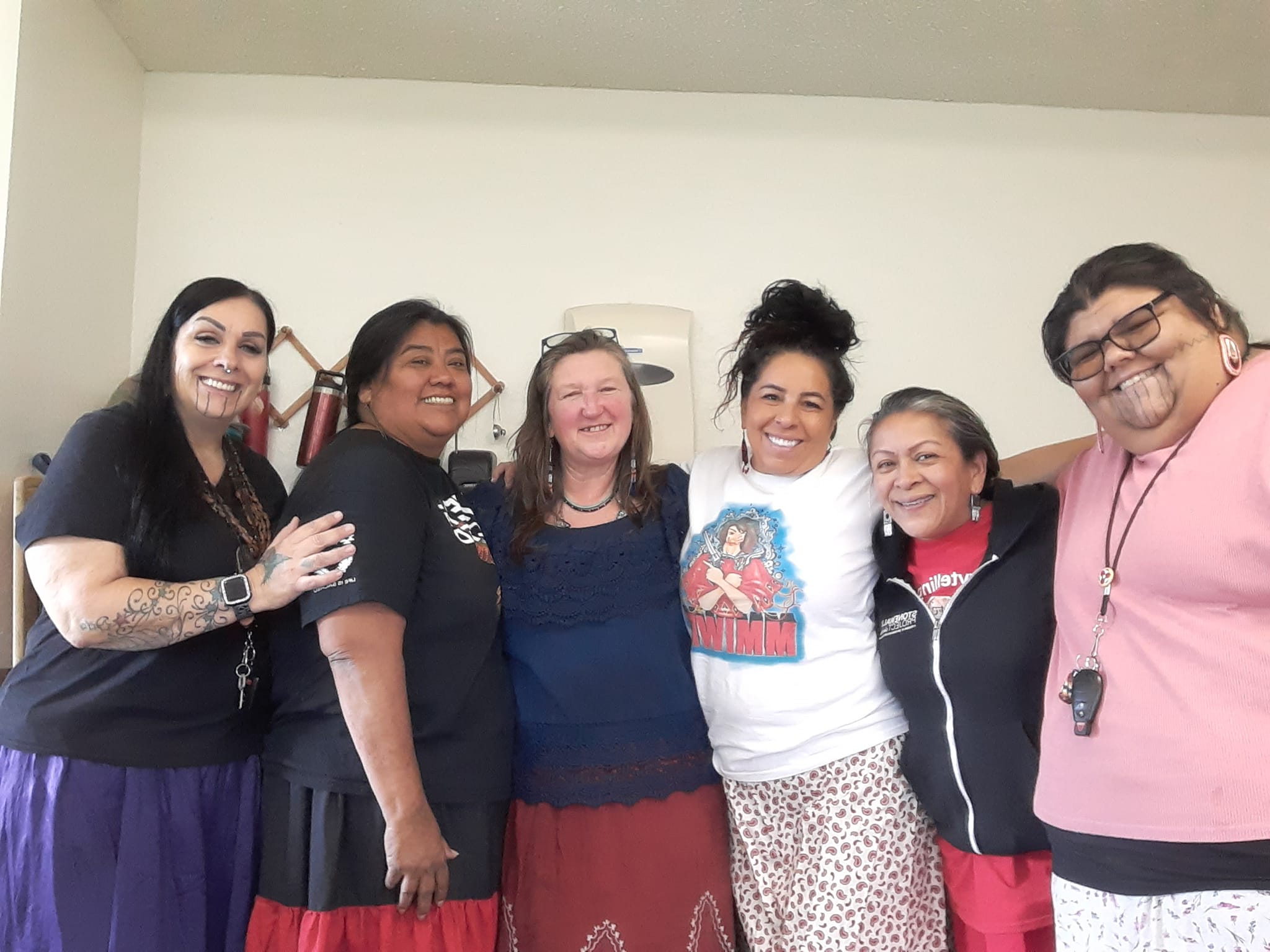
STILL HERE From left, Elizabeth Redfeather, Amie Lucas, Caroline Brewer, Angelica Avina, Brenda, and Rose Hammock at a May 5 MMIW event. Photo courtest of Rose Hammock
#MMIW
The hashtag #MMIW is a tool to raise awareness of a brutal truth that few fully appreciate.
The statistics are stark. As of 2016, there were 5,712 reports of missing or murdered women, girls and two-spirit people, according to the National Crime Information Center. (Two-spirit is a term used by some Native communities to describe those who do not fit within the male/female gender binary.)
Given what is known about the effects of violence on victims and the culture of shame that often prevents reporting of sexual violence, the real numbers are likely much higher. Yet when a woman goes missing from a Native community, the official response is very different from when women of other races disappear.
“People like Gabby Petito and Laci Peterson [are] national news,” said Hammock, referring to two recent high profile missing person cases. “[T]hese are both white women, [while] our people can go missing for four or five years without getting any attention.”
The #MMIW hashtag allows social campaigns to raise awareness of a problem that many do not know exists. Whether it be images for social media posts—like the appropriately unsettling image of red hands painted across the face of an Native woman which has become a hallmark of the #MMIW movement—or for spreading the word about upcoming events and marches, the hashtag has a catalyzing effect for activists and community members.
“People in our community as well, not all of Native people, are aware of these different issues that may be going on, so it’s a way that we can educate our own people but also educate the public and bring awareness in those ways,” said Hammock.
While geographically remote, impoverished populations will always be more prone to suffer and commit violence, the phenomenon of disproportionate killings of Indigenous women is also present in urban areas.
“A lot of the [Native] community people live in towns and cities,” said Hammock, noting that New York City and Sacramento are among the urban areas with significant populations of Native people.
Due to the dearth of active law enforcement investigation and evidence collection, it is impossible to say exactly who perpetrates these crimes. Yet many in Native communities believe that outsiders with knowledge of community activities are most likely to be in the position to stalk and abduct vulnerable people from Native lands. Service workers returning regularly to the area may also know that any official investigation of a crime is unlikely, sources noted.
Resources
Perhaps the most important action the reader can take is to educate themselves on contemporary lives of Native Americans. Many a Californian can name the casinos on Native American land in their vicinity, but how many can also name the tribes that own those casinos?
Those same tribes are on whose ancestral lands the surrounding towns were built when Native people were cleared out by means too graphic to recount here.
The resources listed below exist to help North Bay residents honor the women, girls, boys, men and all Natives who have suffered invisibility.
[EDITOR’S NOTE: Due to an error introduced in the editing process, paragraph 14 of this story previously misrepresented the number of missing and murdered Indigenous women, girls and two-spirit people.]
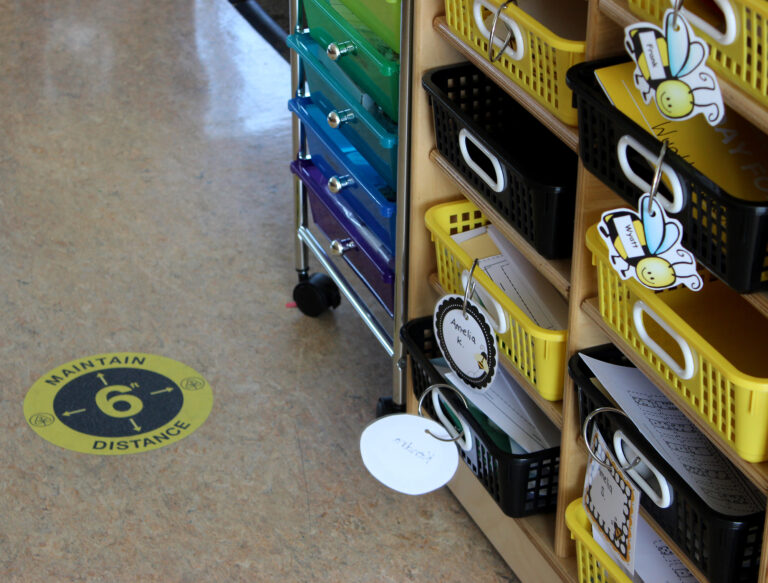
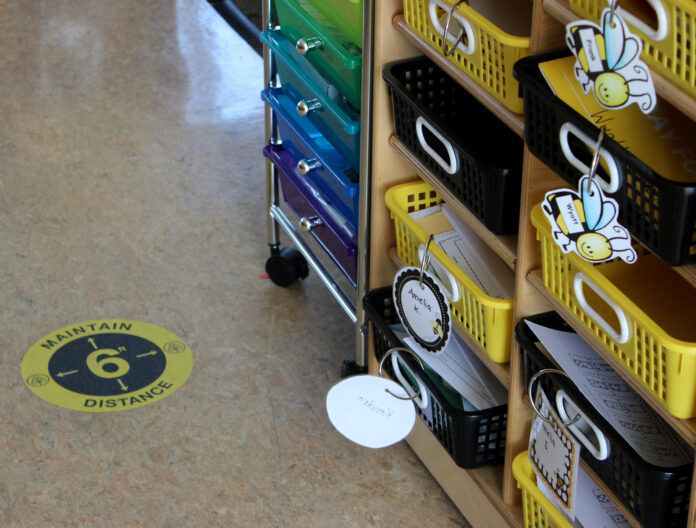
Communities all over the state are reporting impacts on enrollment and test scores for school-age children in the wake of the COVID-19 pandemic, but Sonoma County has released a sobering, detailed report focusing on kindergarteners there and how they are faring post-pandemic.
Only one in five children in Sonoma County were ready for kindergarten when they entered school last fall, according to a report released Wednesday, April 26, from the county Department of Human Services (DHS). Many of the educational disparities fall along ethnic, racial and economic lines, the report said.
Kindergarten readiness declined in the county for the sixth consecutive year, according to the report entitled “Road to Early Achievement and Development for Youth,” or READY, which was initiated by the county DHS and the First 5 Sonoma County Commission, a body that allocates county funds for early education.
Overall, only 22% of Sonoma County children were ready for kindergarten last fall, down from 31% the previous year and 41% in 2016.
The county said the decline can be attributed to repeated wildfires, floods and the COVID-19 pandemic, all of which the county describes as “emergencies that have disrupted early-learning programs and taken a toll on many families’ health and finances.”
During the first nine months of the pandemic, more than 200 of the 608 childcare and preschool facilities in the county closed, the county said.
“Today, about 7,800 children are enrolled in local day care and preschool programs, down from nearly 12,800 before the pandemic,” the county said in a news release about the report.
“We are seeing the decline in kindergarten readiness play out in our schools,” Amie Carter, Sonoma County superintendent of schools, said in a statement. “Students who enter kindergarten unprepared are more likely to struggle academically, and we know how vital the first years of school are in ensuring our children can read well enough to support learning.”
Carter said that lack of preparedness can mean that students struggle with social-emotional skills as well.
Angie Dillon-Shore, executive director of First 5 Sonoma County, an organization that advocates for and funds early childhood development initiatives, said disparities along ethnic, racial and economic lines have been consistent across the six-year period of study and “reflect the impacts of segregation and discrimination that compound over time.”
According to the county, children from families with incomes of $100,000 or more were more than twice as likely to be ready for kindergarten than children in families with incomes of $34,999 or less. Living in poverty also affects a child’s social-emotional and cognitive development, the county said.
The demographics of Sonoma County’s incoming kindergarteners in the READY report are 49% Latino and Hispanic, 1.32% Black, 2.7% Asian American, .5% Indigenous American, .83% Pacific Islander, 39% white and 7% mixed race.
The report cites aggregate data showing that since 2016, on average, only 26% of Latinx children, 33% of Black children and 33% of Indigenous/Native American children were ready for kindergarten. In comparison, 42% of white children were ready for kindergarten, along with 50% of Asian children and 58% of Pacific Islander children.
The county says there are several efforts underway to tackle the problem, such as a state program that will provide universal pre-kindergarten to every four year old by the start of the 2025-26 school year. The county also said that more state funding has been allocated to support the needs of dual-language learners.
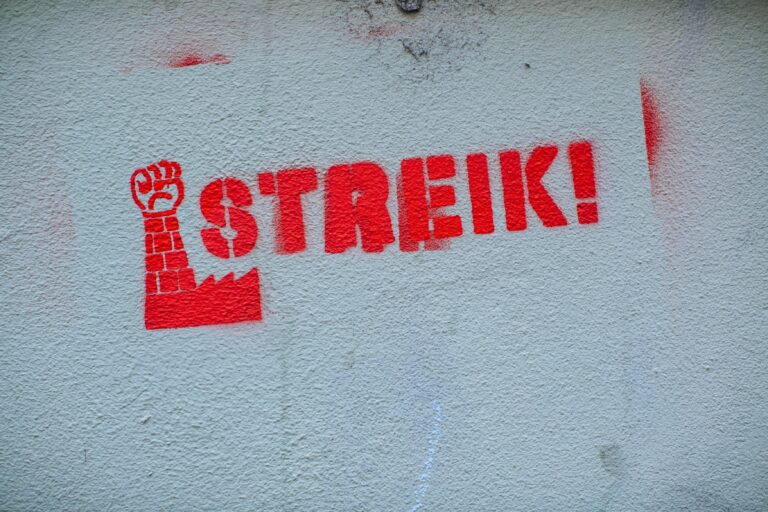
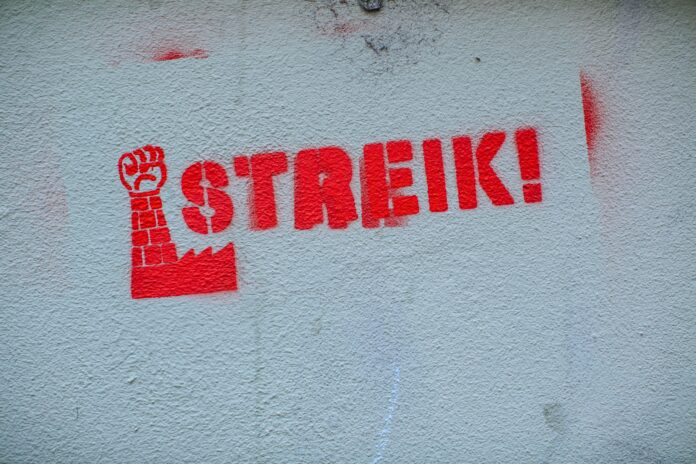
By the time these words are published, the Writers Guild of America (WGA) will be on strike.
Who cares? You care because within its ranks are the kind scribes who write all the shows you stream and movies you watch when dropping in to see what condition the human condition is in.
Though I’m not presently in the guild, as you might expect, I’m personally both pro-worker and pro-word (disclaimer: the views expressed in this column do not necessarily reflect the views of the corporation that owns them).
My guildlessness isn’t due to a refusal to join any club that would have someone like me as a member (thanks, Groucho); I’m just one of the lucky ones who hasn’t made it in the screentrade yet. As Michael Schulman reported in The New Yorker, when Hulu’s hit show, The Bear, won the WGA Award for Comedy Series, one of its writers, Alex O’Keefe, “went to the ceremony with a negative bank account and a bow tie that he’d bought on credit.”
O’Keefe is apparently applying for jobs at movie theaters in anticipation of the strike. I’m forgoing The Bear and name dropping him here in solidarity. It’s the least I can do for a comrade while enjoying the relative comfort of this Starbucks and security as an alt-weekly hack.
Speaking of Starbucks—their workers are organizing. Ditto Amazon’s. And locally, Copperfield’s Books Petaluma employees have voted to unionize (see “By the Book,” page 8). Even I was briefly a local “chapel chair” of the Communication Workers of America (a newspaper writers union, among other vocations). I’ve occasionally asked myself, “Should we organize our newsroom?” The fact is we’d have to have a newsroom first.
Since the pandemic, we all work remotely (which vindicates a career-long predilection of mine), and by we, I mean me and Carruthers. Both of us are editors, which is technically management, and thus the enemy.
Like Harvey Dent said in The Dark Knight, “You either die a hero, or you live long enough to see yourself become the villain.” One of the great movie quotes of the early 21st century—and, of course, written by a guild member.
Now that they’re striking, may they strike gold.
Daedalus Howell is the writer-director of the feature films ‘Pill Head’ and the upcoming ‘Wolf Story.’
Now that teachers are expected to risk their lives every day in school, they need to be represented by the same unions as other socialist occupations like police and firefighters. Caring professions need the same rights and protections as para-military professions have achieved. The bully unions need to step up to help the caring professions as well.
Al Simon
San Anselmo
Call Your Rep
As an environmental author and activist, I was gratified—and edified—by Mark Dowie’s Open Mic (4/26/23), “Park Concessions.” I’m ashamed to say, I didn’t know it was that bad!
This well written article prompted me to immediately call my congressperson, Mike Thompson (4th district). I left a message urging him to investigate the National Park Service’s mandate for both business in national parks and responsibility for environmental protection. I also urged him to get as many other members of that esteemed body to both push for an impartial investigation of the Nord Stream Pipeline bombing and a vociferous demand for Julian Assange’s release.
Barry Barnett
Sonoma
Disney-fied
What is one brief way to describe Gov. Ron De Santis?
Budding pamphleteers, indie publishing moguls and fans of the artisanal small press can turn a new page at the Novato Library’s chapbook-themed open studio event at 11am, Saturday, May 6, at its 1720 Novato Blvd., Novato, location. The workshop will focus on making chapbooks, which are traditionally used to compile ballads, screeds and short works like poetry collections (this is how our editor got his start). During the workshop, participants will learn how to make a single section book with a cover and a sewn spine. Registration is required—call 415-473-205 to reserve a spot.
San Rafael
Force Majeure
The Smith Rafael Film Center takes audiences to a galaxy far, far away with its screening of the iconic space opera, Star Wars: Episode IV – A New Hope, at 7:30pm, Thursday, May 4, at the 1118 4th St., San Rafael, location. Directed by local George Lucas, the 1977 film was a game-changer for space flicks, scifi/fantasy, special effects, genre films and mythologist Joseph Campbell. It has since become a cultural phenomenon to rival The Beatles and Jesus. The story follows Luke Skywalker, Princess Leia and Han Solo as they band together to fight the evil Empire and its dark lord, Darth Vader, and set forth a five decade intellectual property franchise that serves as a reminder that if one’s gonna dream, dream big.
Petaluma
Film-inspired Fashion
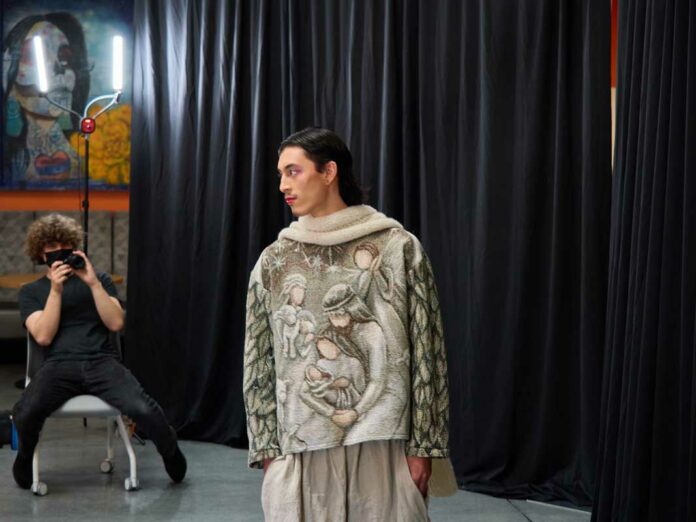
The Santa Rosa Junior College fashion studies program’s annual Spring Fashion Show comes to the runway at 6pm, Thursday, May 11, at the Carole Ellis Auditorium on the SRJC Petaluma Campus, 680 Sonoma Mountain Parkway. This is a student-produced event, featuring garments and accessories designed and made by fashion studies program students and alumni. The theme of this year’s show is “Cinema Paradiso.” The title is adapted from the award-winning Italian movie about an aging director’s memories of falling in love for the first time: with a young woman, and with the cinema. The show is inspired by themes and characters of a variety of movie genres. Tickets are $5 in advance and $10 after May 7, available for purchase at give.santarosa.edu/fashion23. More information, including a video of last year’s show, is available at linktr.ee/srjcfashionstudies.
Sonoma
Mongol Derby
Considered the longest and toughest horse race in the world, the Mongol Derby severely tests the equestrian and survival skills of all who attempt it. In July 2022, Sebastopol native Lena Haug competed in the Mongol Derby, lasting 10 days and through more than 600 miles of Mongolian wilderness. Marking this milestone is The Mongol Derby: A Wild Evening with Lena Haug at 6pm, Thursday, May 4, at the Sebastiani Theatre, on the Plaza in Sonoma at 476 First Street East. The event is a benefit for the wild horses of Montgomery Creek Ranch. Tickets are $30 and are available at sebastianitheatre.com or at lenahaug.splashthat.com.
There is a rare event in theater called catharsis.
Not to be confused with the literary term, it is when a play reaches an audience so deeply that collectively they sit in silence until curtain call frees them. The recent opening of Left Edge Theatre’s production of Antionette Nwandu’s Pass Over marks only the third time this reviewer has witnessed it. The show runs at The California in Santa Rosa through May 13.
Based on Waiting for Godot, this modern surrealist masterpiece takes place on a street corner where Moses (Samuel Ademola) and Kitch (Mark Anthony) are trying to find a way to “get up off this block.” A strange man enters (Skylar Evans), who, though seemingly benign, has the unsettling presence of a pristine porcelain doll sitting on a trash can. Complicating matters further is the sinister Ossifer (Mike Pavone). To say more about the plot would be a disservice. Suffice it to say that things go awry.
At first, the language may seem unnecessarily coarse. It is, however, not gratuitous. As with an August Wilson play, Nwandu’s impressive writing has given us language as a character in its own right.
Complementing the excellent writing is the casting by director Serena Elize Flores. Ademola and Anthony, in addition to having immaculate comedic timing, can also seamlessly pivot on their characters’ emotions. Both men’s performances are a reminder that acting is an art form. Evans’ mysterious Mister may be the best work he has done on stage to date, and Pavone’s Ossifer casts a solid shadow of fear on the world.
This isn’t a perfect show. The squeakiness of the stage during important scenes is annoying, and the choice to make the sound effects so quiet is baffling. However, the acting, directing and script combine to create a night of theater that makes those imperfections seem superficial.
Some audience members last night found their emotional responses confusing or troubling. Happily, by basing the work on the Beckett masterpiece, Nwandu has given us a template with which to examine those feelings. In the words of Beckett, “To all mankind they were addressed, those cries for help still ringing in our ears! But at this place, at this moment of time, all mankind is us, whether we like it or not.”
Left Edge has thrown down the gauntlet for meaningful social activism in local theater. One hopes that the community picks it up and runs with it.
Left Edge Theatre’s ‘Pass Over’ runs through May 13 at The California Theatre, 528 7th St., Santa Rosa. Thu-Sat, 7:30pm; Sun., 2pm. $22–$36. 707.664.PLAY. leftedgetheatre.com.
Indie music is about the freedom to make music in one’s own way, and create the image one chooses for oneself.
To make it at this level, truly independent, takes a whole lot of hustle and a real sense of self. Two independent artists I talked to use very different approaches toward similar goals.
What’s It Like?
Nick Petty is a songwriter and guitarist of the North Bay punk outfit The Happys.
I asked him what it looks like, in reality, for a songwriter to follow their passion.
“For years, it was just hard for me,” Petty said, “because I’d be doing these like 14-hour union shifts and then, you know, a show till like 1 am that night and have to get up at 6 am to get to the [job site].”
Giotis: Playing what, 100 gigs a year?
Petty: “Like 110 to 120 shows a year.”
When I mentioned to my son that I am interviewing The Happys, he said, “Oh, I know them. There was a sign on an overpass.” Indeed, The Happys’ signature cardboard sign advertising perfectly captures both the ethos and the power of the indie way. Self-promotion, no rules, easy, cheap, memorable.
“I’m just trying to be conscientious and basically, as the saying goes, like, not to be a dick,” quipped Petty. “I’m repurposing something. The cardboard was already there.” The ethos in a simple image.
Another indie artist of a very different stripe is synth producer and singer Nic at Night, whose 2023 EP Mirrors is a wonderfully sultry ride. She’s a Bay Area transplant with feet in multiple worlds, mixing the southern culture of her Virginia upbringing with the influence of her Chinese family and the daily realities of a real-world job in tech. But this female won’t be constrained by someone else’s ideas.
“The trajectory [of] what I do day-to-day does not fill me with any good feelings,” she laughed. “It makes me think a little bit of like drinking the Kool-Aid, or drinking the free beverages that the company …”
“The kombucha,” I suggest.
“Yeah, the La Croix,” she added.
“Nice. Topo Chico now,” I said.
“Yeah, very true,” said she, in her southern vocal fry.
How does a woman in tech find herself moonlighting as a bedroom-eyed electro-diva?
“People have asked me, like, ‘Would you ever want to be famous?’ I feel like it’s not about that for me,” she said. “My goal is to have some sort of cultural impact or like to shape the cultural landscape, even, just in my own small way. My current day job does not have room for that. Like it’s not granting me that, and that makes me deeply unsatisfied.”
Giotis: And so you are driven to take charge through your music career?
Night: “It feels kind of as if I don’t have another choice, right? Because if I want to propagate my vision or like my vision to have some impact, connect with others emotionally, it doesn’t feel like I have any other alternatives.”
What Makes a Star?
Trey Hicks is the founder and president of Painting Pictures, a national PR firm that handles several local events, including the upcoming Mill Valley Music Festival.
“You really have to be true to yourself. Authenticity, and having a vision of where you want to go and what you want to build with [your career],” said Hicks. “That’s probably the hardest question that these artists get asked, ‘Who do you want to be?’ You know, ‘Who do you want to play for?’”
Defining an image, adopting an ethos, or communicating authentically with one’s audience helps to create a narrative about “who you want to be as an artist.”
No doubt that labels are part of the monetization solution. There is after all a whole indie music industry that includes indie labels.
“Labels are ultimately looking to leverage your audience for their own, to build their base,” said Hicks. Being able to show an engaged following helps an artist make their case for a partnership. Unlike the major labels, where access to resources can seem remote, indie labels are built on partnerships where artists, producers, and executives all contribute to the common goal of passionate music.
The Power of Image
I asked Nic at Night about social media and the impact of comparing one’s body and beauty to others on Instagram and the like.
“I craft my persona around the person that I am,” said Nic at Night, “the one thing that I can be the best at. Allowing people to take whatever they need to from my lyrics is something I’m more interested in, rather than sexually explicit [lyrics]. Some things are better left unsaid and left murky, I think.”
“When you look at social media,” said Hicks, “you have to separate the entertainer a bit from your personal life and separate the business side from the professional act. The personal/professional [separation] makes it a little bit easier from a mental standpoint.”
When talking about how punk influenced his image and approach to work, Petty said of his childhood, “I didn’t fit in because I had like bad ADHD, always getting in trouble. So I just related a little bit more to the outcast side of things because that was just kind of how life presented itself to me.”
Discovering ’90s punk bands Pennywise and Rancid in those formative years helped cement his punk identity.
Petty understands how to let his passion lead him. He recalls being awed by his father’s work as a firefighter.
“The best side of him, the side that he lived for, was chasing fires. A lot of people don’t like their job, but he genuinely liked that,” Petty reminisced. “He loved to chase. He said it was like the funnest thing for him. Like how I love being on stage. I hate the feeling right before, but I looove once I’m in the groove of it.”
Follow The Happys on Spotify and YouTube. Follow Nic at Night on TikTok, Twitter and IG: @niicatniight. New music is coming from both soon.
Playing Games
Stanford researchers report they reviewed 82 studies trying to find a link between videogames and violence. They found little to none. That’s the good news. (“Stanford researchers scoured every reputable study,” May 2, 2023, Fortune) The bad news is that Stanford, Fortune and politicians who argue one way or the other about videogames all miss the point. They...
Sonoma
Women and Abstraction
The Sonoma Valley Museum of Art presents “Labyrinth of Forms: Women and Abstraction, 1930-1950,” opening with a reception at 5pm, Saturday, May 13. Organized by the Whitney Museum of Art, New York, the exhibit celebrates the groundbreaking abstract art made by women in the first half of the 20th century. A significant number of American abstractionists were...
Sponsored content by The Green Music Center
Celebrating 10 years of indoor-outdoor concerts and movies, Summer at the Green 2023 includes performances from R&B superstars Kool & The Gang; platinum-selling roots trio Nickel Creek in its first tour since 2014; Latin music icons Los Huracanes del Norte; the genre-crossing ensemble Pink Martini with its signature blend of...
Another epidemic is unfolding. Not a viral disease, but an outbreak that is nonetheless a real sickness killing women in the community.
The trending hashtag to bring awareness to Missing and Murdered Indigenous Women really only scratches the surface of a bloody phenomenon.
Indigenous women are violently killed at a rate of more than six to 10 times the national...
Communities all over the state are reporting impacts on enrollment and test scores for school-age children in the wake of the COVID-19 pandemic, but Sonoma County has released a sobering, detailed report focusing on kindergarteners there and how they are faring post-pandemic.
Only one in five children in Sonoma County were ready for kindergarten when they entered school last fall,...
By the time these words are published, the Writers Guild of America (WGA) will be on strike.
Who cares? You care because within its ranks are the kind scribes who write all the shows you stream and movies you watch when dropping in to see what condition the human condition is in.
Though I’m not presently in the guild, as you...
Unions Unite
Now that teachers are expected to risk their lives every day in school, they need to be represented by the same unions as other socialist occupations like police and firefighters. Caring professions need the same rights and protections as para-military professions have achieved. The bully unions need to step up to help the caring professions as well.
Al Simon
San...
Novato
Chapbook Publishing
Budding pamphleteers, indie publishing moguls and fans of the artisanal small press can turn a new page at the Novato Library’s chapbook-themed open studio event at 11am, Saturday, May 6, at its 1720 Novato Blvd., Novato, location. The workshop will focus on making chapbooks, which are traditionally used to compile ballads, screeds and short works like poetry collections...
There is a rare event in theater called catharsis.
Not to be confused with the literary term, it is when a play reaches an audience so deeply that collectively they sit in silence until curtain call frees them. The recent opening of Left Edge Theatre’s production of Antionette Nwandu’s Pass Over marks only the third time this reviewer has...
Indie music is about the freedom to make music in one’s own way, and create the image one chooses for oneself.
To make it at this level, truly independent, takes a whole lot of hustle and a real sense of self. Two independent artists I talked to use very different approaches toward similar goals.
What's It Like?
Nick Petty is a songwriter...