Bridal Registry

0

Bridal Bounty

Ritual of the registry gets some new twists

By Marina Wolf

COME WITH ME to a mystical long-ago land where all brides were virgins, all weddings were huge, and the bridal registries were exercises in prim, proper overindulgence. Twenty place settings of china were de rigueur, silverware sets came with fish knives and butter knives, and monogrammed table linens were chosen with the same care–and cost–as the bridal dress itself.

Admittedly, not everyone really wanted or could afford such a grand opening of their housekeeping endeavors. But the fantasy, pushed forth by bridal magazines, was there in the minds of many a bride-to-be. Now marriage is an entirely different ball game, and the ritual of the bridal registry has changed to match.

Not surprisingly, the computer age has made its mark on the matrimony business. Online registries, where newlyweds can set up their own Web page with lists of their choices, are becoming increasingly commonplace: everyone from Crate and Barrel to the old-school Bloomingdale’s is getting clickable. Target, a relative newcomer to the field of registries, took its Club Wedd online earlier this year, but it was way ahead of the pack back in 1995, when it started handing out scan guns to new couples and letting them loose in the store to pick-and-point their lists.

While the ease of picking items for the lists may lead to some bizarre choices (one Club Wedd couple put dog food on its list), online registries are the perfect choice for guests whose only spare time may be at 11:30 p.m., long after Bloomie’s has closed. They also greet the challenge of America’s increasingly mobile way of life, says Doris Nixon, director of educational services for the National Bridal Service. “Brides are more apt to not be living in their hometown,” says Nixon. “They’ve gone off to college and then moved again to find work, so many weddings have become cross-country affairs, and that can make local shopping a real hassle.”

The fast pace of the modern age has affected not only how registries are set up, but what goes into them as well. Socializing has gotten much more freewheeling, and the accouterments have changed accordingly. At Crate and Barrel, there are 100,000 couples registered at any given time, and many are switching their focus from gourmet cookware to serving ware, according to spokesperson Betty Kahn. “They’re getting beautiful serving platters to put their takeout on,” she says.

The most popular item at Crate and Barrel is the humble chip-and-dip plate. “For some reason every bride wants one. It’s a real basic entertaining tool,” says Kahn.

Another item that shows up repeatedly on bridal wish lists is the buffet plate, which didn’t even exist 40 years ago. It’s larger than a dinner plate and has a rim, making it easier to carry while you’re walking around looking for the wine. “It’s about casual entertaining,” Kahn says. “It’s a lot less pressure on the hostess as well as on the guest if everybody can just pick up their buffet plate and sit wherever they want in the living room.”

Even if new hostesses do want a more formal setup, they likely don’t have the room for it, either in the dining room–what dining room?–or in the kitchen. “More brides are looking for mugs; they don’t want the cup and saucer. They don’t want all those plates,” Kahn says. “You couldn’t have bread-and-butter and salad plates in small city apartments.”

BEYOND simple space considerations, newlyweds are much more savvy in the field of kitchen stuff. They have to be; they’re often on their own for much longer before they marry.

The median age of first marriage for women increased from 20.6 years in 1970 to 24.0 in 1990 (the median age of men showed a corresponding increase, from 22.5 years to 25.9). Add into that the folks coming into second or third marriages and the skyrocketing rate of premarital cohabitation, and you’ve got a lot of folks who are already fairly well stocked. Couples often look outside the kitchen altogether, into the booming field of garden or home-office equipment, or else they go for the upgrade.

Louise McCoy of McCoy’s Cookware, a small specialty store in Santa Rosa, observes a great deal of upgrading in the older clientele that her store attracts. These older brides, women over 30, are more choosy about their registry selections. “They are very clear about what they like,” she says. “They have more opinions and, based on their experiences, they know better what will be useful.”

Newer shoppers, she notes, often need to be guided through a selection process.

What many younger brides seem to know instinctively, say McCoy and other shopkeepers in the bridal-registry industry, is that not all of their guests can afford to be as generous as they might want to be with the Calphalon eight-piece set or Cuisinart blender. McCoy tries to meet this need with her careful selection of lower-priced gadgets and utensils, but admits that Target has a lock on the lower-price-tag items.

“They have good options for people with less money, a good range in price,” she says. “Young people are sensitive to these concerns.”

From the June 22-28, 2000 issue of the Sonoma County Independent.

© Metro Publishing Inc.

The Petaluma River

0

The world in a hard shell: John Thompson of the North Bay Rowing Club calls the Petaluma River the best rowing water in the region.

Life on theWater

A long, lazy trip down the Petaluma River–a day in the life of the folks who live, work, and play along this meandering waterway

Text By David Templeton/Photos By Michael Amsler

SOMEWHERE up there, hidden behind a moist canopy of low-hanging clouds, the sun is rising over the Petaluma River. A gray morning light gradually spreads along the slippery brown-green surface of the water, now being gently pebbled by a thousand drops of falling rain. Down by the Foundry Wharf, an old riverfront mill that’s been converted to upscale offices, there are signs of movement.

The tide is low, revealing the shiny silt-slick banks of mud, riotously marked by the gluey footprints of shore birds and muskrats. A mitten crab sidesteps through a rotting tire, coated with ooze, that protrudes from a spot near the boat-launching dock.

On the dock, nine pairs of tennis shoes stand freshly emptied, silently soaking in the drizzle. A small yacht is moored nearby. Its occupants–resident watch-persons for this bit of the river–are just beginning to stir, sending soft muffled mumblings out along the water, where sounds commingle with the unmistakable bump and swoosh of oars on the water.

Bump-swoosh! Bump-swoosh! Bump-swoosh!

The source of these sounds turns out to be the owners of the orphaned shoes: a hardy handful of rowers, out on the water for their ritual morning workout. Half a dozen racing skiffs–some with one rower, others with two–skim serenely down the waterway in a graceful and elegant waterborne procession, like mysterious water phantoms parading in the mist.

Several mornings a week, the brightly colored skiffs and racing shells of the hard-working, early-rising diehards of the North Bay Rowing Club can be seen here, usually working the six-mile stretch from the turning basin, half a mile north of the Foundry, to Gilardi’s Landing five and a half miles to the south. On occasion, valiant rowers will venture all the way to San Pablo Bay, negotiating a picturesque, though largely unappreciated, 15 miles of truly remarkable river.

The 16-year-old club boasts 50-plus members, men and women, young and not so young.

This morning, however, there are only eight of them, racing south down the river in single file. The rowers face north, effectively traveling backward.

After a few moments, a ninth boat skims by.

“This is the best rowing water in the North Bay,” enthuses longtime rower John Thompson, who leans into his stroke, then pulls easily back as his oars propel him swiftly across the water. “It’s 15 miles of clean, flat water with no waves. In rowing, you don’t want any waves.”

Patiently coaching the first-timer who shares his two-man skiff, the articulate Coast Guard engineer has let the other rowers speed on ahead while he takes a practice trip up to the turning basin. Slicing through the water, just inches above its murky surface, Thompson guides the craft by way of a small rearview mirror extending from his headband.

Master storyteller: “The waterfront has a tendency to attract colorful characters,” says Petaluma Marina harbormaster Wayne Kipp.

The short stretch from the turning basin to the Foundry is usually a highly populated one, though all is quiet now. Even the D Street drawbridge, normally singing with the rumbling percussion of passing cars and trucks, is mostly silent. There’s no sign yet of the anonymous homeless man who’s been sleeping beneath the bridge of late–only the bright orange and purple flowers he’s recently planted in the hollowed-out bowls of the wooden pilings beneath the bridge’s control house. Farther down, the massive crust-bottomed barges and towboats of the Jerico Products construction company, a common sight along the river, are harbored end to end. Across from them is a row of rotting pilings and planks that serve as the back door of the historic Bar Ale feed company, with its corrugated metal siding.

A large “For Sale” sign hangs above the water.

Someday, if city planners have their way, this part of the riverfront will be lined with upscale shops and restaurants, pristine offices, luxury apartments, and walkways. For now, it still bears the marks of the bustling waterway it was for nearly a century until water commerce declined around the mid-1950s.

Though all of this is surely familiar to anyone who’s explored the riverfront by foot, Thompson and his fellow rowers are privileged to view these sights from the middle of the river. From this vantage point, the river’s vibrant atmosphere, thick with the ghosts of old Petaluma, seems especially strong.

AT THE FOUNDRY–a once dilapidated pile of old metal and brick buildings, now a pleasantly refurbished complex of offices and commercial quarters–the river begins to resemble some otherworldly avenue, lined with a motley assortment of oddly parked cars. Here, of course, the cars are actually boats and houseboats, some in shiny shipshape, others in advanced states of decay and berthed at a small dock. The castlelike image of Shamrock Materials’ giant rock mill looms in the distance. The rust-red hulk of an old paddle wheeler floats semi-sideways in the drink; nicknamed The Duke, it was reportedly once used in an old John Wayne film. The spectacular craft was intended to be the replacement for the Petaluma Queen, the famous but troubled Petaluma tourist boat that was relocated two years ago to the Napa River. Those plans were abandoned, and The Duke sits forgotten, eerily entombed in dust and cobwebs.

A new housing complex features a flower-lined walkway right along the river to the south of the Foundry; a woman is out jogging this morning, trotting through the rain with a lanky Labrador galloping beside her.

Thompson speeds past all these sights, now intent on his rowing form. As he maneuvers beneath the towering Highway 101 overpass, he stops suddenly, letting the skiff glide to a stop. He stops to look around, pointing out the odd rotating railroad bridge designed to swing across the river when needed.

A short jaunt from here is the Petaluma Marina.

The tidal currents gently pull the skiff southward, easing Thompson and his student out from under cover of the overpass. It seems to have stopped raining. The other rowers now begin to return from their excursion farther downriver. Gracefully wielding the oars, Thompson turns the boat around and heads back to the dock.

THE PETALUMA River, ironically enough, is not technically a river at all. It’s a tidal slough, an estuary of San Pablo Bay, surrounded by a vast saltwater marsh to the north. Its brackish water rises and falls as the bay’s tides pull it out of a winding, twisting course before sending it all back up the slough again. Unlike real rivers that rid themselves of sediment–and pollutants–as they flow from their source to their final destination, the Petaluma River, so named by an act of Congress in 1959, merely fills and empties at a slow pace, constantly churning up mud as it does so.

Thus the infamous brown-green color.

Before Spanish explorers stumbled upon the channel in 1776, the area was peopled by Miwoks and Pomos, who for centuries had thrived along the marsh’s rich and fertile waters. A major breeding ground for fish and migratory birds, the area was rediscovered in the mid-1800s, this time by hunters looking for meat to send to the burgeoning gold fields. A hunter’s camp was set up near the northernmost tip of the slough. That camp eventually became Petaluma. Over the next 100 years, the channel became one of the busiest waterways in the West, constantly trafficked by steamboats and barges running food and game, grain and eggs, and a significant number of cobblestones–pulled from quarries in Penngrove–down to the growing metropolis of San Francisco. To make things easier for the barges, which had a difficult time maneuvering through the Petaluma slough’s twistier turns, a handful of cuts were dug into the channel just south of town, effectively straightening out the river. Dredging is necessary from time to time to keep the waterway from silting up and becoming unnavigable.

After World War II, when Highway 101 was constructed, the river was no longer the best mode of transportation, and business soon declined. A small amount of remaining barge commerce was just enough to keep the government interested. The act of Congress that bestowed the “river” designation was a necessary legal step to ensure that federal money would continue to pay for the exhaustive dredging efforts. For a time, the river became a mere dumping ground for local businesses: a smelly, polluted trickle of water behind Petaluma Boulevard–and a convenient place to build in the floodplain.

By the mid 1970s, so much shoaling had occurred that a large island of silt had formed in the middle of the river’s turning basin. Around 1976, fueled by a surge of bicentennial enthusiasm, enormous efforts were made to repair the river and recapture some of its former glory. These efforts have been mostly successful. Yachts sail up and down the river again. The marina is undergoing an expansion, and a nearby resort hotel is planned. Clubs like North Bay Rowing have taken to the waters in droves.

Yet to this day, it is a constant struggle to keep the river from becoming too shallow. And there are other concerns as well: fish are no longer plentiful, owing in part to the silt and in part to alien mitten crabs that are eating the smaller bait fish. Though the days are long gone when raw sewage was routinely flushed into the river, lingering fear of contamination still keeps most people from so much as touching the water. The shallowing is beginning to take its toll on yachters, many of whom are once again reluctant to enter the turning basin for fear of becoming grounded.

Especially among the river people, folks are beginning to fear that the Petaluma River is once again being neglected.

River keeper: David Yearsley acts as an environmental watchdog.

THE RIVER PEOPLE are a remarkably mixed lot. Their ranks include tugboat pilots, barge workers, boat dwellers, weekend yachtsmen, kayakers, joggers, photographers, painters, nature enthusiasts, canoers, fishing pole-toting kids, duck hunters, and commercial fishermen. The last group, fishermen, divides into those who claim to eat the fish they catch and those who insist they’d never dream of it. There are the homeless who make their beds near the river, and sometimes on it, taking possession of abandoned boats that cling to the banks a mile or two south of the downtown area. Utility workers visit often, mending the docks and reinforcing the riverbanks with concrete and wooden pilings, while taking time now and then to raise the D Street bridge for passing boats. Environmentalists sometimes patrol the river, keeping an eye out for ecological wrongdoing, as do the Sheriff’s Department and the Coast Guard and, mainly for recreation and training, the hardy young Sea Scouts.

Then there are those who merely come to the river to sit and watch.

River people, by and large, have little in common save their collective fondness for this muddy meandering waterway. They know the river’s drawbacks better than most, yet are often the first to defend its sometimes sullied honor.

“It’s a nice river,” says Nancy Wright, one of the rowing club’s avid early-morning river riders. “It’s just brown.”

“The silt makes the water slimy,” admits Greg Sabourin, founder of the club. “But it’s still a beautiful river. It’s not as bad as it’s maligned to be. As far as pollution goes, the water quality of this river is better than a lot of other bodies of water in the North Bay.”

For the most part, recent environmental reports bear this out. A 1999 study of insecticides in the river, conducted by Petaluma’s Baseline Consulting, revealed low-level traces of diazinon (banned from lawn products last week by the EPA) and chlorpyrifos, common residential pesticides, but concluded that these toxic agents currently exist at levels too low to affect fish and plant populations.

A 1996 study conducted by Sonoma State University’s environmental studies department indicated that the water quality of the river has markedly improved since the 1980s, when massive fish kills were common. Though the study confirmed the drastic reduction of fish populations in the Petaluma River, it pointed to increased upstream filling as the primary culprit–nothing that would cause mutations like three-eyed fish, a surprisingly common joke among longtime river people.

The environmental watchdog Bay Keeper has sued on several occasions in recent years to stop auto dismantlers in Penngrove and other areas along the northern stretch of the river from allowing water tainted with heavy metals to drain into the waterway.

“I’ve seen some weird things in this river,” says Petaluma fisherman Doug Tucker. “I’ve seen pink jellyfish. I’ve seen sea lions. I even saw Humphrey the humpback whale up at the Marina. But I’ve never seen a three-eyed fish. Not yet.”

At high noon in the turning basin behind the downtown, Tucker is shooting the bull with Don Bayer. The unofficial “boat cop” of the basin, Bayer lives aboard his fishing vessel, the Mahalko II, commonly moored near where the Petaluma Queen once docked.

In the evenings, passersby often see him out on his deck, amiably chatting with anyone who’ll stop. On warm days, he’s been known to pull out his barbecue and cook the fish he caught earlier out in the bay.

THE PETALUMA turning basin isn’t a bad spot to sit and relax at the end of a day. The oblong feature is encircled by local eateries and other businesses, some with patios that reach the water’s edge. A series of walkways and docks stretch from the parking lot of the Golden Eagle Shopping Center, down along the water, and over to the River House restaurant on the opposite side. There, a mysterious sculpture rises 20 feet into the air. Resembling a pair of crab arms, or perhaps a set of melting spoons, the stone-gray structure is intended, says Tucker, to represent two people dancing.

“That’s what they tell me anyway,” he says with a laugh.

It is only midweek, and there are an even dozen boats here, with a handful of resident boat people out on their decks, talking, reading, or working. It’s high tide, so most of the mud is hidden beneath the water. A few hours from now, the docks and some of the boats will be resting on a shiny bed of slime.

Bayer points across the basin to the Petaluma Yacht Club. On the weekend, he says, up to a dozen yachts will be moored there. “But I remember the days when there would be hundreds of yachts in this turning basin,” says Bayer. “You could walk across the river, stepping from boat to boat. But now the river is so shallow [from siltation and lack of dredging] that people are afraid they’ll run aground.”

He shakes his head.

“This river is steadily, slowly going into garbage,” he laments. “I remember catching stripers and salmon right here in the turning basin.”

“I caught a 15-pound bass here less than 10 years ago,” agrees Tucker. “I’ve caught salmon, striper, and sturgeon in this river.”

“But not lately, because of the silt,” adds Bayer.

“And the crabs,” concludes Tucker. “Little by little, this river will be dead of fish.”

The two men have plenty of ideas about how to fix the problem, their main solution being better and more frequent dredging of the basin.

“But the city doesn’t seem to care,” says Bayer with a shrug. “The politicians don’t live down here, so they don’t know what’s really going on. But I do. I’m up and down this river every day.

“A lot of problems could be fixed,” he insists, “if the city would only listen to the boat people.”

MATT HODGES is on vacation. Therefore, he is fishing. “Whenever I get some time off, I get the fever,” he says. “I’ll be here all week long.” With a big plastic bag full of anchovies, Hodges–joined by his wife and son and a few of his friends from the East Bay–is fishing from a comfortable little public platform, constructed at the place where C Street meets the river.

Hodges may have the fever, but his friends aren’t catching it. They haven’t been catching any fish either, so they’re packing up to leave.

“There aren’t any fish in there,” grouses one of the men. “And I came all the way here just to catch one of those famous three-eyed fish.” Everyone laughs.

After they leave, Hodges points to a spot in the middle of the river.

“My brand-new fishing pole is down there somewhere,” he says. “I was fishing here yesterday with a brand-new pole. It was the first time I’d used it. I had a line in the water and the pole standing up against the railing. All of a sudden the end of my pole dipped way down, and I thought, ‘OK, finally I have a big one.’ But it wasn’t a fish. It was a duck,” he laughs. “A duck was flying by and hit my line. Before I could catch it, the whole pole went over the edge. So it’s down there somewhere. The duck wasn’t even hurt.”

Hodges, who has lived in Petaluma his entire life, has returned here often.

“I’ve been pulling fish out of this river forever,” he says. “But the last couple of years, it’s really gone down. I used to go through a bag of anchovies in an hour. This bag is still almost full.” He pulls up his line. The bait is gone.

“Crabs,” he sighs. “The crabs take the bait before the fish can find it.” As he begins to thread another anchovy onto the hook, a blue heron flies over and lands about 10 feet away. Seeing it, Hodges breaks into a big smile.

“I come here to fish,” he says, “but I also come down here just because I like it. It’s a pretty nice place to be.”

By midafternoon, every hint of rain has burned away. As one travels south, it’s become a bright, sunny spring day along the river. At the Petaluma Marina–a man-made cove just south of the railroad bridge–a slight breeze is blowing among the rows of neatly harbored boats. The sprawling business center, a series of large adjoining three-story office buildings, looms above the water.

Near the harbormaster’s office, alongside the marina’s launching ramp, a tall, bearded fellow bends over, looking at something in the water. He wears grubby, disheveled jeans and a red bandanna that makes him look like a pirate. He is talking to a pair of ducks. “Now you show up,” he scolds, waving an empty brown paper bag at them. “I just gave my last piece of bread to the seagulls. Next time don’t wait so long.”

With that, he ambles away across the parking lot.

“The waterfront has a tendency to attract colorful characters,” says Wayne Kipp, the marina’s harbormaster since 1993. “Waterfronts have attracted wanderers of all kinds since the beginning of time.”

There are a number of such “colorful characters” who frequent the marina, admits Kipp. He affectionately refers to them as the Wharf Rats. “They’re always kind of interesting to talk to,” he says.

Kipp describes his job as being “part Jack-of-all-trades, part hotel manager for boats.” He oversees the docks, collects launching fees, maintains the facilities, operates the fuel dock, and spends a lot of time talking about the river.

“Everyone who comes down here ends up having very strong opinions about the river,” he says. “And they are very happy to share them.”

The marina is a popular spot to launch recreational vehicles onto the river, from pleasure craft to fishing boats, jet skis to inner tubes. The stretch of river just south of the marina is perfect for such activities. In spite of concerns about the river’s health, Kipp says a lot of people still come to play on the river.

“On a hot day,” he calculates, “I see 60 or 70 people go down this ramp.”

BUT NOT ALL of the river people are looking for recreation. Some, like the flower planter beneath the D Street bridge, are simply looking for a place to sleep. According to John Records of COTS, a local homeless service program, the river has been host to a large number of homeless people over the years.

“The river is one piece of the larger ecology of homeless people and how they meet their needs in the community,” says Records, whose nonprofit agency operates a shelter on the south end of town, just across the boulevard from the river. “There are few remaining low-income housing options in Petaluma, and the river can provide that. Some people live on boats and some camp along the water. People are very resourceful. They often acquire inexpensive boats, sometimes even nonfunctioning boats, and they live on them along the river. It’s like living in a trailer.”

Such situations, Records admits, create sanitation problems that need to be addressed.

“There’s certainly been ongoing concern in the community about people living along the river,” he says. “So there’s a constant turnover. People will camp for a while in one place, and the authorities will pretty much leave them alone until someone in the community complains; then they are told to move on. So they find another place to camp.”

Occasionally, people will move into abandoned boats, of which there are plenty along the river. An elderly couple fortunate enough to have their own powerboat are often seen docking at the turning basin, loading up with groceries at the nearby discount grocery outlet, then motoring back downriver to wherever they’ve been living. “It’s a matter of balance,” says Records. “We must somehow balance the needs of the homeless–who should be able to use the river along with the rest of us–and the needs of the rest of the people in the community.”

The bottom line, he says, is that the homeless who’ve found a way to live on the river have something they can’t get from living in a shelter.

“They have privacy and safety,” he says. “And even a sense of dignity that comes from being allowed a degree of self-reliance. That’s a good thing.”

South of the marina, the Petaluma River widens significantly.

This is the part of the river that most people never see, since it can’t easily be glimpsed from the land. On the east side is Haystack Landing, the site of a ramshackle Victorian and a long series of barge docks, junkyards, and construction storage areas. Intermingling with these are ancient, dilapidated houses, some on stilts that dip into the river, which bunch together alongside houseboats that look like giant wooden blocks floating on the water. In this stretch are also a surprising number of rotting hulks, former boats that have dragged up onto the mud to decompose.

Across the river from this hypnotically crumbling aquatic corpse-yard is the city-owned Shollenberger Park, with a walking-jogging path that wraps itself around a migratory bird sanctuary and runs along the river for about half a mile. The path is much trafficked by bikers, joggers, birdwatchers, and dog walkers. From benches along the water, onlookers can watch the spectacle of Jerico barges attempting three-point turns in the channel, preparing to dock at their southern landing across the river. The city plans to connect the popular park with the nearby marina.

After a few large twists and turns, and close to the Marin County border, the architectural decay all but disappears for a while as the river enters a stretch that is mainly rural, with extensive wetlands and marshes. Fog-caked hills, lush and tree-dotted and pretty as a postcard, stand majestically in the distance. Herons and hawks and ducks and Canadian geese glide in for their watery landings or rise in a cheery blast of tumult from the grass.

Running more or less parallel to Lakeville Highway, the river now flows past a series of farms and pastures on the east and grassy marshlands on the west. A random derelict vessel or a few collapsing buildings are the only structures close to the water. A few miles later, a motley grouping of structures appears on the left, growing in number and joined by a boat or two until Gilardi’s Landing materializes like something out of a John Steinbeck novel.

KNOWN MAINLY as the roadside location of Papa’s Taverna Restaurant–a popular Greek eatery that draws weekend boaters from Napa, Marin, and San Francisco–Gilardi’s Landing provides a well-used entry to the southern stretch of the river. Along the water is a haphazard throng of docks and ramps, tiny fishing platforms, and ancient shacks that appear to be barely standing. Just inland is a surreal village of eccentric houses, many with optimistic yards festooned with whimsical decorations.

Today, the area is mostly deserted, except for one boater attending to his docked vessel–and an energetic pair of women who’ve come to the landing this afternoon, sketchbooks and paint boxes in hand, to paint the river.

Dorothy Porter of Petaluma and Cornelia Watley of Belvedere gleefully refer to themselves as “the Monday-morning painters.” They travel the Bay Area in search of picturesque places to stop and paint. The paintings that aren’t framed and hung in galleries–the two artists have jointly held several shows over the years–are collected in handmade books having covers of corrugated cardboard.

“This is one of our favorite spots,” says Porter, letting her eyes sweep across the view before her. “We both have lots of pictures of the river.”

“Look at the colors!” exclaims Watley, gesturing at the marshes and hills. “Today is fabulous! All those greens and violets and sienna.”

“Those greens are marvelous,” Porter chimes in. “And look at all the shapes the trees make. It’s a painter’s paradise.”

“And when we come here,” adds Watley, “we don’t have to bring a lunch. We can eat right here.”

“Altogether,” smiles Porter, “it’s a perfect arrangement.”

DAVID YEARSLEY eases his small powerboat away from Gilardi’s Landing, careful to observe the 5-knot speed limit until he’s a sufficient distance from the area. As soon as he begins to pick up speed, leaves the river proper and speeds into the narrow Donahue Slough, bordered on both sides by tall grasses.

We have entered the Maze.

Yearsley is the Petaluma river keeper. Supported by the San Francisco BayKeeper Foundation–an organization of environmental butt-kickers dedicated to protecting California’s waters–Yearsley patrols the Petaluma River and its surrounding marshland and numerous ancillary waterways. Following up on calls to BayKeeper’s hotline, Yearsley collects evidence of deliberate or accidental polluting, unlawful agricultural waste, and other environmental crimes. He reports his findings to BayKeeper. If there is sufficient evidence of wrongdoing, the organization will inform the offender of their involvement.

If the charges are not taken seriously, BayKeeper may file a lawsuit.

It is an effective strategy that has already repaired environmental damage at hundreds of sites throughout the North Bay. Yearsley, a professional cabinetmaker, volunteers his time on the river.

Today he is patrolling the marsh, his favorite–and surprisingly the least explored–segment of the Petaluma River.

“This is the largest remaining natural marsh on the West Coast,” he says, turning left up another, even narrower, channel. “This marsh is a nursery for striped bass. It’s so wound with sloughs that it acts as a filter for the bay. This is a very valuable resource.”

And a hauntingly beautiful one, besides.

The muddy banks are so cracked and buffeted by nature they seem to be lined with a thousand smooth round cobblestones. Pickleweed grows everywhere, along with high salt grasses and gum plants, pepper plants, and cord grass. Dozens of century-old structures, cabins, and duck-hunting blinds are rooted here and there in the marsh, most of them nearly disintegrated.

The marsh–adjoining an area once proposed for an Indian casino, replete with visiting riverboats–was a duck hunter’s playground before most of the ducks moved on in the 1960s to other feeding grounds. Though hunting is still allowed here during hunting season, few hunters bother to come out anymore since the area is accessible only by water. Additionally, the siltation problem that threatens the river is equally present in the marsh. Some channels have completely filled in.

Still, there are hundreds of acres of marsh here, crisscrossed and interlaced by so many smaller sloughs and channels that unless novices take a map, they are sure to get lost. Yearsley dreams of repairing the marsh, cleaning out the garbage that has accumulated over the years, and establishing an official “water trail” through the channels.

It will have to be a well-maintained, well-marked trail.

Yearsley has explored most of the marsh, and even he finds surprises every time he comes here. “The marsh,” he says with a grin, “is ever-changing.”

Case in point: Rounding a sharp bend, he comes upon a mass of boards and wires, partially floating in the water but anchored deeply enough that it can’t be moved out of the way. He’s blocked. “That’s new,” he says, maneuvering the boat around to go back the way he’s come. Once out in the Donahue Slough again, Yearsley ventures deeper into the marsh before turning down a channel he’s never explored before.

“You feel like you’re a discoverer every time you come out here,” he says, happily. “That’s one of the wonders of this place. Think about it. We’re less than a mile from the road, but it feels completely removed from the stresses of civilization. The Petaluma Marsh is a gem.”

Suddenly, Yearsley comes face to face with another obstacle. A capsized, partially submerged boat is barring further exploration of this channel. Yearsley stands up and appraises the situation. This is part of his job, locating foreign materials that are clogging the waterways. His own boat is already carrying a load of discarded whiskey bottles and trash some hunter or fisherman left behind among the grasses.

The sunken boat is a more serious problem. It will have to be removed at a later date.

“That’s another thing about this place,” he says. “A whole lot of stuff comes here to die. I don’t know how it all gets here. But it gets here.”

And that’s that. The tide is beginning to fall. Soon the waters will recede and many of these channels will be little more than alleys of mud. Turning his powerboat around, Yearsley begins once more to weave his way out of the Maze, out of the marsh, back to the river.

MOST RIVER PEOPLE don’t fall in love with the river all at once. It happens gradually, little by little. Love tends to grow at a pace commensurate with the amount of contact you have with the river. The more you discover about the river, the more it works its way into your life. You come to the river by necessity, or out of convenience, or by sheer coincidence. And then the river works its weird magic on you.

Not surprisingly, the magic runs deepest in those who’ve grown up on the river. Therefore the youngest of the river people will be the ones to defend and protect the river into the next century.

“Introducing young people to the river,” says skipper Barry Thorsson, “is among the most important things we can do for the river.”

Thorsson is sitting in the pilothouse of the Compass Rose, watching his able crew of teenagers steer the enormous launch southward down the Petaluma River and on to the East Bay. Outside, the day has grown windy. Sunset, still 90 minutes away, will bring a very chilly evening.

These are the Petaluma Sea Scouts, a coed affiliate of the Boy Scouts that has been working the waters of the Petaluma River since 1927. Yet somehow this river-based unit is not all that well known.

“We’re the best-kept secret in Petaluma,” jokes Thorsson.

In Sea Scouts, teens learn all the standard knot-tying, radar-reading details of seamanship while serving as the crew on the their very own boat. Boasting a crew of 12 kids (the majority of them young women), the Compass Rose–a refurbished 1969 Navy torpedo retrieval boat–is on its way to Alameda for a big Sea Scout regatta that will last three days.

“This is all run by the kids,” says Thorsson proudly.

His daughter Rose, the ship’s boatswain, relays orders from the skipper to the rest of the crew, all busy at various assignments. Casey Marketos is stationed outside in the wind, fulfilling her duties as the bow watch. Mainly, she’s eyeing the river for boats and other obstructions in their way. Here, about two miles from San Pablo Bay, the river is choppy and wide, almost 90 yards from bank to bank.

FROM THE DECK, all there is to see on either side of the river is gorgeous rolling pastureland, hayfields, an occasional dairy, and a vineyard or two. An old green wreck of a boat appears on the right, smashed into the west bank. A little bit later, an upended couch is spied along the east bank.

The crew points this out and laughs.

“How does this stuff get here?” someone asks. “You sure see some weird stuff out here.”

There follow numerous jokes about three-eyed fish, while inside the pilothouse Rose is leading a chorus of “Old MacDonald Had a Farm.” Amanda Lefler sits nearby tying a half-hitch. Occasional yachts and other craft pass by in the opposite direction, headed toward town, gleefully tooting their horns. The Marin County hills draw closer. The Compass Rose is reaching the end of the Petaluma River.

Steven Trickel sits happily at the stern, cracking jokes.

“This is an interesting river,” he acknowledges, turning his face into the wind. “It’s fun to hang out on it. We all like the river a lot.”

They like it. A lot. Of course they do. After all, these kids are river people. They like the river.

And they’re learning to love it.

From the June 15-21, 2000, 1999 issue of the Sonoma County Independent.

© Metro Publishing Inc.

Usual Suspects

Millions for ag interests, but grape pest war could threaten public health

By Tara Treasurefield

WEST COUNTY activist Lynn Hamilton, director of the Town Hall Coalition, is worried that chlorpyrifos, a highly toxic organophosphate, may be used in Sonoma County to fight a newly found pest threatening local vineyards. Chlorpyrifos is being used in Southern California to combat the glassy-winged sharpshooter, which devastates vineyards by spreading Pierce’s disease. Through Senate Bill 671, signed by Gov. Gray Davis on May 19, the state Legislature has allocated nearly $15 million to fight the sharpshooter, no holds barred.

In March, and again this week, a 260-acre citrus grove in Temecula, Riverside County, was aerial-sprayed with chlorpyrifos to combat the sharpshooter, even though on June 8 the federal Environmental Protection Agency banned all residential and commercial uses of chlorpyrifos. (In residential/ commercial sectors chlorpyrifos is known as Dursban; in agriculture, it’s called Lorsban.) The EPA also placed restrictions on the use of chlorpyrifos on food crops, but stopped short of an outright ban.

Currently, chlorpyrifos isn’t approved for use on wine grapes in California, but if the wine industry exerts enough pressure, grape growers could get an exemption. Or they could use some other organophosphate.

“Pierce’s disease isn’t encephalitis or malaria; it affects wine grapes, not the public health,” says Hamilton. “Yet they’ve already used chlorpyrifos against Pierce’s disease in Temecula and could use it here.”

Hamilton fears that Sonoma County regulatory agencies may endanger the public health and the environment to protect wine grapes, used to produce alcoholic beverages. She hopes that regulatory agencies will instead use only those pesticides approved by California Certified Organic Farmers, and that they’ll consult local experts in biodynamics and organic agriculture before taking any action against the sharpshooter.

ACCORDING to Californians for Pesticide Reform, chlorpyrifos inhibits nervous system function and can cause headaches, dizziness, mental confusion and inability to concentrate, blurred vision, vomiting, stomach cramps, uncontrolled urination, diarrhea, seizures, birth defects, and multiple chemical sensitivities. In children, acute exposure most often results in seizures and such mental changes as lethargy and coma. Laura Breyer, a specialist in integrated pest management for vineyards, says that all organophosphates have similar effects.

Nick Toscano, an entomologist at UC Riverside, says that using pesticides against the sharpshooter is “like putting a Band-Aid on an amputation.” But he expects that Riverside County will continue to use insecticides to control infestations for some time to come.

According to Joseph Gray, senior agricultural biologist at the Sonoma County Agricultural Commissioner’s Office, “The ideal situation [for controlling the glassy-winged sharpshooter] would be to have a state interior quarantine.”

The first step toward a quarantine is monitoring, and the Agricultural Commission is monitoring nursery stock from the south and sending it back if there’s any evidence of the glassy-winged sharpshooter.

Counties that are already infested with the sharpshooter can be expected to lobby heavily against a quarantine, as it will have a negative impact on their economies. When asked his opinion of a quarantine, Toscano laughs. “I don’t know how they’re going to keep it [the sharpshooter] out,” he says. “But people down here have already lost money ’cause they can’t move their grapes.”

It’s probable that a state interior quarantine is many months away at best. In the meantime, agricultural interests are intent on protecting their crops, and the aerial spraying of Lorsban in Temecula has set a troubling precedent.

One of the provisions of SB 671 is that the Board of Supervisors in each county will designate “a local public entity” or “local public entities” to create an anti-sharpshooter work plan for that area. Supervisor Mike Reilly, chairman of the Sonoma County Board of Supervisors, autonomously designated the Agricultural Commission as the sole local public entity for Sonoma County. But the supes have the discretion to designate more than one public entity to develop the local Pierce’s disease work plan.

Hamilton would like the supes to place this critical issue on the board’s agenda and allow public input. “It’s just too important to leave up to the Agricultural Commission alone,” she says. Hamilton recommends that the supes also designate the Environmental Health Division and the Public Health Department as local public entities to participate in developing the work plan.

On Tuesday, June 20, the Agricultural Commission will present its Pierce’s disease work plan before the supes, at 575 Administration Drive, Santa Rosa. For the time of the meeting or to express your concerns, call the Board of Supervisors at 565-2241.

From the June 15-21, 2000, 1999 issue of the Sonoma County Independent.

© Metro Publishing Inc.

‘Battlefield Earth’

0

Author-historian Jeff Shaara looks at heroism, racial slurs–and ‘Battlefield Earth’

Writer David Templeton takes interesting people to interesting movies in his ongoing quest for the ultimate post-film conversation. This is not a review; rather, it’s a freewheeling, tangential discussion of art, alternative ideas, and popular culture.

“America,” suggests writer-historian Jeff Shaara, “is suffering from a hero deficiency. Ever since the Vietnam war we’ve lost faith in our government. We’ve become suspicious of our own national history. So we’ve deconstructed all our old heroes–Patton, Custer, Thomas Jefferson, George Washington–tearing down the same types of people we once looked to for inspiration.

“This explains why people are now flocking to see a film like Gladiator,” he surmises. “We’re fairly starving for heroes.”

To press the metaphor further, Shaara is feeling particularly hero-hungry today after seeing Battlefield Earth, the futuristic shoot-em-up based on L. Ron Hubbard’s classic science fiction novel. He found it overdone, hard-to-swallow, and frequently tasteless.

In short, he couldn’t stomach it.

Put another way, says Shaara, “It could be the worst film I’ve ever seen in my life.”

Set in the year 3000, it’s the tale of plucky, cave-dwelling humans, led by a one-dimensional wild-eyed hunter named Goodboy (Barry Pepper), who somehow take arms against the Psychlos, an evil race of colonizing, strip-mining aliens, (including a sneering John Travolta) heck-bent on the elimination of mankind–and the systematic exploitation of Earth’s few remaining natural resources. Space ships hover. People blow up. Things die.

“Yet by the end,” bemoans Shaara, “who really cares? The problem with Battlefield Earth is that the hero just isn’t someone we want to rally behind. He doesn’t make us proud to be human.”

Currently residing in Missoula, Montana, Shaara is the author of two best-selling Civil War novels. Gods and Generals and The Last Full Measure are the prequel and sequel, respectively, to The Killer Angels, the Pulitzer-winning epic written by Shaara’s late father Michael Shaara. That esteemed novel was the basis of the 1993 film Gettysberg. Jeff Shaara’s newest book is another prequel, of sorts: Gone For Soldiers (Ballantine), a novel of the Mexican War, features colorful glimpses at the youthful Robert E. Lee and Ulysses S. Grant, learning the rules of war in a conflict that preceded the Civil War by 13 years.

The author is currently working on a novel about America’s founding fathers. Taken as a whole, Shaaras’ oeuvre plays like a veritable parade of multi-layered, complicated manliness. These flagrantly flawed heroes are, above all, men of conviction, often equally worthy of respect and reproach.

To hear Shaara explain it, our rekindled desire for believable symbols of strength and character may signal a new chapter in the story that began with the simplistic, white-hatted heroes of our old westerns and war movies and histories.

“In most old movies,” says Shaara, “you had the good guys and the bad guys, the John Waynes against all those guys in the black hats, John Wayne against the ‘godless Indians,’ John Wayne against the ‘inhuman Japanese.'”

John Wayne vs. the Psychlos.

“There was no confusion about who the heroes were and who we were supposed to root for,” he says. “War is essentially barbaric. No matter what army you’re in, no matter what part of the world or what time in history, it’s extremely important that you convince your troops that those people over there, the enemy, need to be killed. It’s necessary to dehumanize the enemy in order to be willing to slaughter them.”

Of course. In Battlefield Earth, the Psychlos always referred to their captors by dehumanizing slurs: Man-animals. Rat brains. That, says Shaara, is one of the most basic tools of war.

“It was the Japs and the Krauts and the Nips during World War II,” he says, “and the Gooks and the Slopes during Vietnam. They were Commies during the Cold War. All those derogatory terms serve only one purpose: to dehumanize the guy over there so it’s easier to kill him without feeling bad.”

Shaara mentions Confederate General James Longstreet, a veteran of the Mexican War who, at the battle of Gettysberg, told General Lee, “‘You know, I never saw those Union boys as the enemy.’ This because Longstreet had fought side by side with those same soldiers in the Mexican War.

“Historically, the more enlightened you are, the less likely you are to commit these acts of barbarism on your fellow human,” Shaar continues. “Traditionally, the average foot soldier has always been poor and under-educated. Then, in the 1960s, you had so many soldiers who were college educated, people who’d been watching the Civil Rights movement, and that was the downfall of the old doctrine, ‘Those people over there aren’t really human.’ Because the soldiers in Vietnam had enough awareness about the world, they didn’t buy that anymore.”

With the growing cynicism of the ’60s and early ’70s, that hero was all but erased, suddenly deemed a non-existent figment of our childish imaginations.

“Suddenly we were taking delight in saying things like, ‘Hey. Thomas Jefferson was no saint,'” says Shaara. “We point to his failures and say, ‘See? He fathered illegitimate children with his own slave. He was no good.’ But Thomas Jefferson still wrote the Declaration of Independence. He still helped design our system of democracy. He may not have been all good, but he is still worthy of some respect.”

Judging by the success of Shaara’s novels, and the public’s willingness to embrace films like Gladiator–and to fly from the anemic histrionics of Battlefield Earth–one could make a case that our culture is ready for a new breed of hero, without the white hat, but still ready and willing to perform admirable acts.

“I’m convinced that we are all looking for heroes,” insists Shaara. “We desperately want to root for the good guy, we need to root for somebody who does something worth doing.

“Because we long to have worthwhile lives ourselves.”

From the June 15-21, 2000 issue of the Sonoma County Independent.

© Metro Publishing Inc.

Ellen DeGeneres

0

Identity crisis: When Ellen DeGeneres first revealed she was a lesbian, the public couldn’t get enough. But now that interest in her sexuality has waned, can her career as a comedian survive her status as a gay icon?

No Exit

Did Ellen DeGeneres come out of the closet just to land in the celebrity activist box?

By Jeremy Harrell

A FEW WEEKS AGO I came across two pictures in the New York Times’ coverage of the gay rights march in Washington, D.C. One photo showed an aerial view of the National Mall, packed from monument to monument with marchers. The other was a two-column shot of Ellen DeGeneres, with the indispensable Anne Heche draping an arm around her.

These two pictures just about sum up America’s relationship to Ellen, who’ll perform her stand-up routine in a sold-out show on June 25 at the Luther Burbank Center, hard on the heels of the lesbian comic Kate Clinton’s recent sold-out performance at the same venue.

The Times editor who chose to run the photo was probably searching for a celebrity to pluck from the crowd, in the same way the paper ran a picture of Gloria Estefan locked in protest with Andy Garcia outside Lazaro Gonzalez’s house. These celebrities, whom we think we know so well through A&E biographies and Barbara Walters interviews, are fed to us so we can make sense of potentially confusing events like gay rights marches and international custody battles.

So Ellen found herself portrayed in the New York Times as the emblem of lesbianism in America, which should come as no surprise. She is, after all, the Lesbian Celebrity, just as Charlton Heston is the Concealed Handgun Celebrity.

Before she ever came out on television, most rational people had probably guessed that Ellen was gay. But she didn’t reveal anything until she told the cast and crew of her show in the summer of 1996, according to a documentary produced by Britain’s Channel 4. She and the writers decided that the narrative arc of the following season would revolve around Ellen’s coming out in the spring.

Throughout the season the show offered occasional incidents of foreshadowing, such as a friend searching for Ellen in her house, only to have Ellen come out from the closet where she was hiding. At one point, Ellen told Channel 4, they contemplated having Ellen discover that she was Lebanese.

In the final months before the episode aired, Ellen and Heche began conspicuously displaying affection, and not long afterward Ellen appeared on the cover of Time beneath the headline “Yep, I’m Gay.”

The next week the episode (which, by the way, was pretty damn funny) drew a Super Bowl-sized audience, sealing Ellen’s cultural identity. Whatever she does from here on out, she’s fated, like Oscar Wilde, to be remembered for her sexual orientation first and her artistic accomplishments second.

It’s all far too ironic, since basically the whole point of the coming-out episode was that there is no difference between the pre-lesbian and the post-lesbian Ellen (and here I’m dubiously twinning her on- and off-screen personae).

In the episode, Ellen seemed determined that, for her, coming out was not a political statement. She stated emphatically to her group of bookstore friends that she was the same old Ellen as before. In fact, she was put off by the characters who were unabashedly (if stereotypically) lesbian–like k.d. lang’s butch coffee-shop folksinger. Never, Ellen seemed to say, did she ask to be an emblem for any kind of movement.

ELLEN’S FIRST brush with fame came in the mid-’80s, when Showtime plucked her from the comedy joints of her native Louisiana and named her the Funniest Person in America. She became a minor celebrity on the club circuit and appeared regularly on just about every cable TV comedy show.

She got couch on Leno and Letterman (as Woody Allen’s Broadway Danny Rose would say) even before she landed her own sitcom on ABC in 1993. Originally titled These Friends of Mine, the show, Ellen, changed names, producers, and writers but never emerged from the middle of the pack in the weekly Nielsens.

Still, the show was reliably funny–mostly because of the comic delivery she mastered after all her years on the road. Ellen’s character on the show was a lot like her stand-up personality: self-deprecating, but not self-lacerating; sarcastic, but not dark; engaged, but not political.

In her stand-up act, she keenly observed the absurdities of everyday life, but instead of framing her observations in the arch, cynical tone of a Dave Atell or George Carlin, she used the voice of a puckish innocent.

Here she is, in one of her favorite riffs, describing her bewilderment over hunters and the art of taxidermy (recall her bright, wide eyes, for she is an excellent visual comic): “I ask people why they have deer heads on their walls. They say, ‘Because it’s such a beautiful animal.’ I think my mother’s attractive, but I have photographs of her. . . . The deer heads I feel sorry for the most–you see them at bars or restaurants–they have the silly party hats on them, sunglasses, little stringers around their necks. I mean, obviously, they were at a party, having a good time.”

Like just about every humorist of her era, Ellen relies on irony. Her voice isn’t really about innocence, but experience told through the language of innocence. It’s the gentle, detached irony we all use to get through the day.

And it’s this subtle combination of guilelessness and knowingness in her stand-up act and her sitcom that made her coming out such an instant cultural phenomenon. She possessed the attractive quality of being like the daughter of a TV viewer’s next-door neighbor, the girl we all liked but suspected might be a little “different.”

After revealing her orientation, she was embraced almost universally and endured little outrage–except at the hands of Jerry Falwell, who made an obligatory stab at Ellen before going on to tackle another cultural demon, Tinky Winky.

But after the coming-out episode, Ellen’s once staggering Q rating fell into the basement because she became too closely identified with a single concept. People began to complain of Ellen saturation in the same way pundits now say the country is beset by Clinton fatigue. “When will she get over being a lesbian already?” people asked as they switched the channel. In spite of everything, Ellen railed against in the coming-out episode, she was now a lesbian and not much more.

This perception was enhanced by the content of her show during what turned out to be its final season. Though still in sitcom fashion, the show explored the daily life of Ellen as lesbian: she started dating a girlfriend, and one episode, for instance, chronicled her search for a plumber in the pages of a gay-business directory.

In interviews and articles, Ellen made it clear that it was “business as sitcom usual” on the show, with a minor change. But ABC and its parent company, Disney, slapped on a full-screen parental discretion warning before each show began. She complained that the disclaimer made viewers feel as if they were entering a nuclear test site. When the final episode ran in 1998, she told Entertainment Weekly that she was fired “basically because I’m gay.”

Heche at her side, she roundly criticized Hollywood, and the two made a big point of leaving Tinseltown for a time. Ellen returned a year later (where she is rumored to be starring in an upcoming CBS sitcom), but the stakes had changed. She became an outspoken activist for gay rights, and it’s safe to say she’s no longer the bright-eyed comic that audiences propelled onto television.

ELLEN BRINGS this full set of cultural luggage with her to the Luther Burbank Center. What will the audience expect from her performance?

What’s unfortunate is that her comedy routine, if a recent recording is any indication, has fallen off quite a bit. Her peculiar take on daily life, though it will make you chuckle, has grown stale. Now she sounds like Jerry Seinfeld in one of his have-you-ever-noticed-such-and-such riffs.

Here she is talking about airline stewardesses: “They have this attitude, and they can afford to have the attitude because they have the power: they have the peanuts. They have these six peanuts that we need. Somebody could offer that to you on the street, [and you’d say,] ‘I don’t want that shit. Get that away from me. Six peanuts!’ Somehow they’ve done research; they know the higher we go, the more we need nuts.”

But Ellen’s comedy may not be the point, because she’s no longer just a stand-up comic. She’s been expelled from the garden of her prior innocence into the fickle and unmerciful world of celebrity expectation. Maybe her once fine ear for irony will be at work again, allowing her to profit from the potentially dulling experience of being both a person and an object.

From the June 15-21, 2000, 1999 issue of the Sonoma County Independent.

© Metro Publishing Inc.

New CDs

0

Keeper of the fire: Steve Earle.

Perfect Pairs

New CDs offer complementary summer listening

By Greg Cahill

Billy Bragg & Wilco Mermaid Avenue, Vol. II Elektra

Various Artists ‘Til We Outnumber ‘Em: The Songs of Woody Guthrie Righteous Babe

OK, THIS IS AN IDEA that sounded better the first time around, but there’s still plenty to love about Mermaid Avenue, Vol. II. British agit-pop star Billy Bragg returns with another set of previously unrecorded Woody Guthrie tunes culled from the late folk pioneer’s archive and given the royal alt-country treatment by critics’ darlings Wilco. There are lots of gems here. It’s a real testament to Guthrie’s depth as a lyricist that these songs are so remarkably fresh. The lead track, “Airline to Heaven,” sounds like a lost Dylan song. The ragged “Feed of Man” is Wilco at their untamed best. Indeed, the strength of these songs speaks volumes about the legacy of America’s greatest popular songwriter, especially when you consider these songs languished for 40 years. ‘Til We Outnumber ‘Em, recorded at the 1996 Rock and Roll Hall of Fame fundraiser for the Guthrie Museum, is a reverential hootenanny with Bragg, Bruce Springsteen, Arlo Guthrie, Ramblin’ Jack Elliot, Ani DeFranco, David Pirner, and Tim Robbins. It’s a campfire sing-along straight from the heart.

Robert Lockwood, Jr. Delta Crossroads Telarc Blues

Peter Green Hot Foot Powder Artisan

BLUES LEGEND Robert Johnson recorded only 29 songs, but left a legacy as sprawling as the Mississippi Delta that now bears his bones. His short, troubled life–and mysterious poisoning in 1938–have fueled the imaginations of authors, filmmakers, and songwriters for more than 60 years. While he remains enigmatic, Johnson once imparted his trade secrets to the then teen-aged Lockwood, his quasi-stepson. At 85, Lockwood’s voice falters on this collection of mostly Johnson tunes, played on a 12-string acoustic guitar. Yet there is an undeniable authenticity here that often transcends age and infirmity, especially in Lockwood’s steady-rolling fretwork. Guitarist and vocalist Peter Green, who founded the original Fleetwood Mac, has never sounded better than on his new tribute to Johnson. He handles Johnson’s songs like the sacred tablets, but never allows himself to be overwhelmed. Sounding every bit like a young Eric Clapton (and Green can give Clapton a run for his money), Green is joined by special guests Buddy Guy, Honeyboy Edwards (a onetime Johnson sidekick), Dr. John, Otis Rush, Joe Louis Walker, and Hubert Sumlin. Johnson’s canon has been covered hundreds of times, but seldom as satisfyingly.

Bebel Gilberto Tanto Tempo Six Degrees

Zuco 103 Outro Lado Six Degrees

THERE’S just something so soothing about summer sambas. And no one sings them as languidly as Brazilian beauty Bebel Gilberto. The daughter of guitarist Jão Gilberto, one of the most revered musicians in Brazil, Bebel is probably best known to U.S. audiences for her reinterpretations of classic bossa-nova tunes on 1998’s Next Stop Wonderland soundtrack, her 1997 rendition of “The Girl from Ipanema” on Kenny G’s platinum-selling Classics in the Key of G, and her duet with Brazilian composer Cazusa on 1996’s Red Hot + Rio AIDS benefit compilation. Ah, the loving language of the bossa nova. On the other hand, Zuco 103 will kick your summer into overdrive with driving jungle rhythms, hip-hop beats, and electronic samples. This Dutch and German hybrid falls a bit flat when they play it straight, but things rise to a new level as they pump up the jam with speed raps, sassy ’70s soul-jazz, or drum ‘n’ bass grooves.

Dwight Yoakam dwightyoakamacoustic.net Warner

Steve Earle Transcendental Blues Artemis

THESE COUNTRY singer/songwriters both emerged from the mid-’80s neo-traditionalist movement (which dead-ended when Garth Brooks showed up on the scene). Then their fortunes parted ways. Yoakam became the darling of Nashville’s young elite, selling 17 million records before faltering artistically as he embraced the swing craze and a crass commercialism. This oddly packaged (a plain jewel case with a simple mailing label displaying the title) and strangely named release (speaking of crass commercialism, the title is intended to steer fans to Dwight’s own Web venture) is just Dwight accompanying himself on guitar while reworking his original hits. That’s a mixed blessing. It’s unadulterated Yoakam–that’s good. But it’s also a lo-fi rehash of songs we already know and love. Let’s just hope it helps Yoakam find his way back home. Meanwhile, Earle is a Nashville renegade who has crafted a gloriously introspective, rather Beatlesque bluegrass album–replete with baroque strings and Indian drones–that redefines the genre and fulfills the dream of the neo-traditionlists. The themes are familiar to Earle fans–anti-death penalty songs and small-town laments–but Earle’s twangy arrangements and assured songwriting are imbued with a fiery passion. Yoakam’s got a lot of catching up to do.

From the June 15-21, 2000, 1999 issue of the Sonoma County Independent.

© Metro Publishing Inc.
Madrona Manor

0

Hot stuff: Chef Jesse Mallgren–with squab, foie gras vol-au-vent, rhubarb chutney, and baby corn–has enlivened Madrone Manor’s once staid menu.

Victorian Grace

Madrona Manor dishes up a winning formula

By Paula Harris

HER WELL-CUT black silk cocktail dress and pearl choker gleam luxuriously in the dining room’s soft candlelight. Smooth blonde hair cascades to her shoulders as she leans forward to study the menu, tracing the navy print with a perfectly manicured fingertip. We can see only the back of her beau’s equally well-groomed head, but note that he’s wearing a formal dark suit with square shoulders.

Sure, they make a picture-perfect couple sitting here at a corner table in Madrona Manor’s restaurant. Yet they seem slightly out of place. At other tables, diners are dressed more comfortably–not shabbily, mind you, just less constrained. One jovial table is not above zealously clinking their wine glasses and letting out the occasional guffaw–something that makes our nicely coifed pair actually turn and frown upon.

It’s weird. Until recently, dining here in this 1881 grand gabled historic landmark meant sitting up straight, conversing in whispers, and listening to polite, if not pompous, recorded chamber music. Tonight, though, jazz diva Billie Holiday’s relaxed and seductive Lady in Autumn: The Best of the Verve Years melts over the sound system, and the place boasts newly painted mottled soft peach walls and white trim.

It seems the venerable Victorian country inn and restaurant on the outskirts of Healdsburg has shed its stuffy image.

“Yes, we decided to lighten up,” affirms our waiter when we comment on the changes. “Make the place less cold.”

New owners Bill and Trudi Konrad purchased Madrona Manor in April 1999 and completely redecorated the place. Last October, they brought in new chef Jesse Mallgren, formerly of Syzygy in Aspen and Stars in San Francisco, who instituted an additional à la carte menu (available Thursday through Sunday) and revitalized the menu with lighter, more contemporary items.

Madrona Manor’s three intimate dining rooms are still elegantly appointed with comfortable upholstered chairs, white linen tablecloths, cut-glass candlesticks, and heavy silverware. But now the ambiance succeeds in being quite laid-back. We’re eager to see how the food, which used to be somewhat inconsistent, now stacks up.

THE MEAL STARTS with promise. The servers bring us wonderful warm house-baked potato-and-herb rolls and an amuse-gueule of delicate tuna tartare crostini.

Listed for each dish on the à la carte menu is a suggested wine pairing, which may be ordered by the glass–but it’s all very informal. “Don’t feel you have to follow our suggestions,” our waiter tells us. “You can choose whatever you feel like.”

The wine list, by the way, is impressive.

One of the most popular appetizers, according to the waiter, is the crispy lobster spring rolls ($14). We can see why. The dish consists of two generous crisp hot spring rolls with cases thinner than paper, filled with big gobs of plump lobster meat and hints of Szechwan peppercorn. Diced pineapple “marmalade” sauce echoes and coaxes out the sweetness of the lobster. A masterfully presented daikon-cucumber salad drizzled with a touch of peanut oil accompanies the spring rolls. The scrumptious dish is sweet and spicy, fruity and nutty all at once. The menu suggests pairing it with a glass of 1998 Preston Viognier ($6.25 a glass).

A sleek savory Sonoma foie gras terrine ($15) slips and glides between the teeth, rich as creamery butter. Accompanied by a dollop of intense applesauce and a savory popover, it’s a slice of decadence. A sweet 1998 de Lorimier Lace Late Harvest Sémillon ($7.50 a glass) is the suggested wine.

English pea soup ($7) is light and subtle, but has an intense, fresh-from-the-garden flavor. It’s topped by a float of whipped mascarpone, miniature profiteroles, and pumpkin seeds.

The staff is attentive–perhaps a shade too clingy, but that’s a minor quibble. Everything is so well presented, often layered to create small intricate towers on the plate, you almost feel guilty when your silverware becomes a wrecking ball. Still, that doesn’t seem to deter most diners around us, who are digging right in with abandon.

A two-inch-thick boneless pork chop ($19) is cooked perfectly so that the meat is snowy white. It’s capped with wild-mushroom fingerling potato hash and a warm spinach salad with apple cider jus. The recommended pairing is 1997 Kendall-Jackson Vintners Reserve Syrah ($7.50 a glass).

The wild-rice potato gnocchi ($17) are tender little pillows accompanied by baby squash, toasted walnuts, fried garlic, and a brush of basil and tomato oil. The dish pairs well with the 1997 Buena Vista Chardonnay ($7/glass).

We have room for only one dessert, but it’s lovely–a warm chocolate soufflé cake ($5.75) with raspberry and crème anglaise sauces. Tasting like air flavored with chocolate, it has a thin crust that gives way to melt-in-the-mouth creamy chocolate richness. The menu suggests pairing it with 1982 Dows Reserve Tawny Porto ($5.75 a glass).

When you’re dining here, before leaving be sure to stroll through the beautiful landscaped gardens with their illuminated fountain, benches, urns of cascading flowers, and gorgeous scents. And by all means, don your Sunday best if you wish, but Madrona Manor proves that an elegant atmosphere needn’t be stuffy.

From the June 15-21, 2000, 1999 issue of the Sonoma County Independent.

© Metro Publishing Inc.

The Crawl

Morning medication: Bartender Mia Aldrich serves up the hair of the dog.

The Crawl

Testing the waters of a local alcohol-sated college tradition

By Heidi Blankenship

AFTER ATTENDING Sonoma State University for one and a half years, and with the semester at an end, I decide it’s time to descend with a six-pack of friends through the legendary Cotati Crawl, a headlong tour of five bars in a two-block area of this small college town.

The Yacht Club proves a sufficient anchor for the unfolding night of drinking. Peggy, the bartender, advertises the theme with her tank top emblazoned with “Water . . . What Water?” Her topaz and zirconium mariner’s-wheel earrings set off the outfit superbly.

Picking up the mike at 10:30 p.m., she sounds like an experienced announcer as she introduces weeklong drink specials, a midnight buffet, and a weekend barbecue to thank the students for their business. Feeling the crowd move in on my stool, I turn to watch the mingling of youth. Cool-colored plaid shirts turn to gawk at perky tight pink tops. The population at the bar has doubled in half an hour. Rather than suffocate under mock-designer cologne, we climb out the window and move toward the heart of the drinking scene.

A short walk through the park brings us to the Inn of the Beginning, a defining point of Cotati’s history, and the de facto SSU student union. For 25 years, it has survived the challenges awarded to any governing institution and continues to attract generations of music enthusiasts. Everyone from Big Brother and the Holding Company to Fishbone has held forth on the tiny stage. On this night, an AIDS-awareness concert is under way, featuring a small combo playing groovin’ jazz. Here plaids are traded for artistic influence and traditional diversity. A more down-to-earth and age-indiscriminate crowd mingles here. Dancing comes sporadically; instead of hoofing it, many people are comfortable just sitting slack-jawed at the small round tables lining the walls.

The disco ball is dizzying, but the glow of red-and-white Christmas lights keeps the room mellow.

Step back 20 feet and 20 years–next door, Spancky’s is the last refuge for middle-aged drinkers in a college-dominated town. But as we arrive, the usually raucous bar is almost empty the first time we sit down for a drink. A leather-clad couple enjoys a beer at the table next to us, barely tolerating the noise of popular teen hits issuing from the jukebox.

Returning later, we find a crowd and a DJ pumpin’ up the jams with Bel Biv Devo’s PPPPoison.

On down the road to the neon mecca on Cotati’s most frequented corner–the Eight Ball. The drinks here are strong and cheap. I expect an experienced bar crowd and find factions from the Yacht Club have relocated here. There is nowhere to sit, so we trade the comfort of a seat for warmth and collect around the outside patio. The large cement backyard needs heat lamps, although the enormous barbecue will probably be sufficient for the summer. The accommodations–porch, snack machine, pool tables, and pinball machine–are impressive. Keeping the patrons from wandering out the front door to search for provisions seems a more obvious requirement for a bar.

RELUCTANTLY we leave the cheap drinks behind and veer toward the Tradewinds. This friendly bar features live local bands throughout the week, usually with no cover charge. On this night, the room holds but a few drinkers. Theorizing that the more tables there are, the fewer people come in to sit at them, I wonder why more folks don’t like to sit back and watch the band, which rocks on enthusiastically, oblivious to the blank stares of drunken dreamers. Customer satisfaction at 1 a.m. comes when the smiling bartender retrieves an eighth of a bag of potato chips to satisfy my salt craving.

By last call, I feel drowned out–the Crawl has kept a steady pace. At 1:45 a.m., my friends and I end up back at the Yacht Club, seeking out the midnight buffet, but can’t get through the surging crowd.

Rough and reddy: The legendary owner, Red Lehan.

Frustrated, we head for home, stopping at Red’s Recovery Room out on Highway 116–a legendary dive bar recently immortalized in song by crooner Tom Waits. Inside the tiny ramshackle landmark, a woman in a purple salsa skirt dances unencumbered ’round the pool table, while belting out a slurred rendition of Bruce Springteen songs. The woman behind this bar is harder and meaner than the men at either of the two rough-and-ready bars we visited earlier.

In the window is a sheet of paper emblazoned with four Red Cross symbols reading “Road Rage Cured Here.”

Appropriately, we prop ourselves up and order three large keg-cups of cold water to soothe our liquored livers.

From the June 8-14, 2000 issue of the Sonoma County Independent.

© Metro Publishing Inc.
‘Road Trip’

0

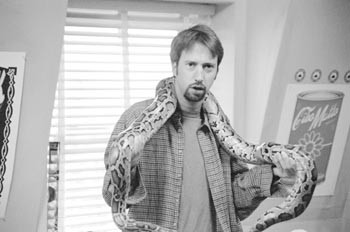
Snake eyes: Tom Green tries to out-ugly a pet snake in the lamentable Road Trip.

Bad ‘Trip’

Philosopher Alain de Botton uncovers the secret cruelty of ‘feel-good’ films

By David Templeton

Writer David Templeton takes interesting people to interesting movies in his ongoing quest for the ultimate post-film conversation. This is not a review; rather, it’s a freewheeling, tangential discussion of art, alternative ideas, and popular culture.

ALAIN DE BOTTON is not comfortable in shopping malls. Nevertheless, here he is: perched on a plastic chair in front of a plastic table in the midst of a food court at the center of a massive mall. The celebrated philosopher is similarly disinclined toward seeing raunchy lowbrow comedies like Road Trip. And yet that’s exactly what we’ve just done.

We’ve seen Road Trip. At a theater. In this very same shopping mall.

Life is funny that way.

De Botton, author of the bestselling How Proust Can Change Your Life and the brand-new Consolations of Philosophy–and a director of the graduate philosophy program at London University–has cheerfully agreed to bring his considerable expertise to bear on today’s film.

Starring MTV’s Tom Green, Road Trip is like Homer’s Odyssey, but with fart jokes. It follows a motley band of college guys who journey from upstate New York to Austin, Texas, on a quest to intercept a video that’s been accidentally mailed to Josh’s girlfriend, Tiffany. The video, it seems, shows Josh having sex with someone named Beth. Crudity ensues. Cars crash. Snakes bite people. Numerous breasts are displayed.

There is a happy ending.

Road Trip is very much, um, a ‘feel-good movie,’ ” de Botton remarks. He utters those words–“feel-good movie”–a bit reluctantly, as if he were saying, “Hey, I’m going to a shopping mall to watch Road Trip.”

But wait a minute. Is there something wrong with feel-good movies?

“Well, yes,” he replies. “In Road Trip, for example, it sets up a situation in which all sorts of conflicts are happily resolved by the film’s end. Yet of course life isn’t like that. So you leave the theater feeling good about those people in the movie. You think, ‘Well, their lives have all worked out nicely, but what about mine?’

“Here I am in a food court at 4 in the afternoon,” de Botton continues, “surrounded by people whose lives are probably not going all that well because, after all, they’re in a food court at 4 in the afternoon, surrounded by artificial music and artificial trees, with a vague sense of menace and despair in the air.

“Most feel-good films are actually quite cruel,” he adds, “because they can leave us feeling irritated and perturbed about our own lives–even though we might have had a good time in the cinema.

“Which, by the way, I did,” he concludes. “I must confess that I rather enjoyed myself.”

In The Consolations of Philosophy (Pantheon; $22.95), de Botton takes a joyride of his own. He deftly maneuvers through the teachings of his six favorite philosophers: Socrates, Schopenhauer, Montaigne, Epicurus, Seneca, and Nietzsche–an assortment of gentlemen every bit as motley as the young crew in Road Trip, though quite a bit smarter.

In a fast 200 pages, de Botton mines the teachings of these six illustrious thinkers, extracting some dazzling gems of practical wisdom, ideas that speak to the pains and insecurities of the average modern-day human.

“So, what would my six philosophers say about Road Trip?” de Botton wonders. “First of all, I think Schopenhauer would say this is a dangerous film, because it’s a fairy tale.”

Arthur Schopenhauer. Born in Danzig, 1788. Notorious pessimist. Once said, “Life is a sorry business.” Died in 1860.

“Schopenhauer valued art a lot,” says de Botton. “He believed that art should prepare us for life, that art should help us meet life head-on by dealing with difficult issues. He’d probably say that truly realistic films, films that make you appreciate real conflicts, can help reconcile you to the nasty conditions of life. So Road Trip misses doing what art should do, because it hints at the difficulties of life, and then the fairy-tale ending allows everyone to avoid having to deal with those difficulties.

“SOMEONE like Montaigne, however, would take a lighter approach.” That’s Michel de Montaigne. Born in France in 1533. Died in 1592. Known to make fart jokes.

“He’d probably say that Road Trip was amusing and fun, and he’d have especially responded to the idea that these characters really needed to get in touch with their bodies,” says de Botton. “Various characters in the film are kind of ‘rescued’ by sex: the nerdy, dweeby guy, for instance, who loses his virginity and promptly becomes a stronger, more confident person. ”

Friedrich Nietzsche, 1844-1900, the German thinker who often expounded the joys and benefits of conflict and suffering, is harder to pinpoint.

“Nietzsche, if he were in a good mood, would have read this thing as a much-too-sentimental resolution of conflict,” de Botton says. “They avoid suffering, so avoid wisdom. On the other hand, Nietzsche did like some stunningly bad art. He liked reading bad sentimental novels about princesses being rescued and things like that.

“I can’t imagine Epicurus sitting through this,” he continues. “And Seneca would have hated it.” Epicurus being the Greek philosopher who taught around 200 B.C., and Seneca being a Roman statesman and Nero’s teacher who was ordered to kill himself in A.D. 65–and complied.

“If forced to see it, Epicurus might focus on the idea of love and friendship,” de Botton says. “The film was about buddies. So Epicurus might point out that friendship is an important part of happiness. Seneca would have had no interest in it whatsoever. He considered hopefulness to be a doorway to frustration.”

And what about Socrates?

“Well, he might have appreciated the film,” suggests de Botton. “He’d have liked its cynical view of teachers and academia. Knowledge was the kind of thing you might acquire in the back of a bus while talking with some guy smoking pot.”

De Botton stops and looks around.

“Socrates,” he says with a smile, “would probably be out here in this food court, eagerly talking to people about their lives.”

From the June 8-14, 2000 issue of the Sonoma County Independent.

© Metro Publishing Inc.
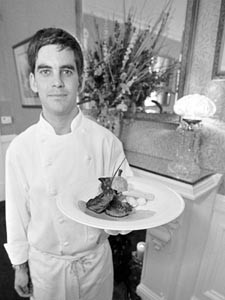
Danger Ha Ha

0

Taking chances: Stilts, stunts, and political theater are all in a day’s work for the women and men of Danger Ha Ha.

Photograph by Michael Amsler

Walkin’ Tall

Nothing stilted about the performance art of Danger Ha Ha

By David Templeton

“ALL PERFORMANCE is a sacred act,” says Kym Trippsmith. “When you bring joy and laughter to people, you are doing something that is purely sacred. It is possible to heal the planet through performance. That’s my party line.

“And that’s the place Danger Ha Ha is coming from.”

Danger Ha Ha: it sounds like a mistake, like random tidbits accidentally cut and pasted from the transcript of some old Underdog cartoon. It’s a name so odd and unusual you can’t help but wonder if you heard it correctly. When people hear it spoken, they instantly wonder how it’s spelled; when they read it in print, they want to say it out loud two or three times, just to feel it playing over their own disbelieving tongue.

Danger Ha Ha–a 10-member environmentally aware performance troupe based in Sonoma County, honchoed by Trippsmith, who lives in Occidental–has been bringing sacred joy and pure laughter to astonished people across the country for over four years.

And if you think the name is weird, just wait till you see them in action.

“What we do,” explains Trippsmith, “is to surprise people by confronting them with something so spectacular and out-of-the-ordinary that they instantly forget their 9-to-5 jobs, forget their worries and problems, feel wonderful and happy, and suddenly realize that they themselves are spectacular and special and out of the ordinary.”

Or, in other words, “We do daredevil stilting,” she says.

And that’s only the beginning. Danger Ha Ha, employing a wild combination of acting, dance, music, acrobatics, operatic harmonizing, and fire-juggling, have taken the art of walking on stilts and elevated it to previously unknown heights of physical daring and visual beauty.

What began as a one-time environmental-theater event at the fabled Burning Man celebration has become a semi-legendary traveling performance-art sideshow at fairs, festivals, and corporate events around the nation.

Wherever they go, people agree that seeing Danger Ha Ha in action is an experience that more or less defies description.

Child’s play: The performer known as “Alma” towers over 9-year-old Christopher Bianucci.

Photograph by Michael Amsler

“We run into that ‘description’ problem all the time,” admits the 30-something Trippsmith, a full-time freelance writer who majored in environmental science and theater production at Evergreen college and trained for years as a modern dancer. “We’re hard to describe. People really have to come see us to believe us. And even then a lot of people don’t believe what they see.”

You have two opportunities to see for yourself. The troupe performs at both the Health and Harmony Festival in Santa Rosa on June 10 and 11 and at the Marin Art Festival in San Rafael on June 18. Danger Ha Ha–Amanda Burton of Guerneville, Heather Wakefield of Sebastopol, and the other members, all of whom hail from around the Bay Area–will be on hand (and on stilts), working their way across (and above) a festive landscape peopled with 150 artists, craftspersons, musicians, and entertainers.

The troupe performs on stilts that range from four to seven feet tall, and the performers usually appear in outrageously elaborate costumes that reach to the ground. Some are blazing white, hoop-skirted gowns adorned with feathers. Some are trees. Some are fairies floating above the crowds, freely dropping flower petals on the upturned faces.

“Fairies are a big part of what we do,” says Trippsmith. “Fairies are wonderful, because they are such an important part of our collective conscious. Kids look up and think, ‘Of course. Fairies. What could be more normal?’ and adults just go ‘Wow.’ Looking down at their expressions, we can see something open up in their hearts, a place of lightness and happiness.”

In the course of a Danger Ha Ha show, the stilters do more than walk around in costume.

Heck, anyone can do that.

Trippsmith and the rest of the company dance on their stilts. They skip and jump up and down on their stilts. They sing arias in five-part harmony on their stilts. They do somersaults on their stilts. They join hands and spin each other through the air on stilts.

“In our most spectacular trick,” she says, “one of our stilters dips a rope in white gas, lights it, then lights his stilts on fire. Then he skips rope. When we perform inside, we turn the lights off. It’s pretty amazing.”

Trippsmith, who broke her hand in a fall from her stilts last year, is enthusiastic about pushing the envelope of what is possible. There are metaphorical reasons for this, she says.

“We want to heal the planet,” she says simply. “We want people to recognize that it’s up to us to heal the planet. But it’s not easy. Most people are doing everything they can just to recycle their plastic. So we know it won’t be easy.

“But it is possible. Just look at what we do up there. We do the impossible all the time.”

Danger Ha Ha will perform at the Health and Harmony Festival on Saturday and Sunday, June 10 and 11, at 2 p.m. at the Sonoma County Fairgrounds, 1350 Bennett Valley Road, Santa Rosa. For prices and details, call 575-9355. They’ll perform again on Sunday, June 18, at 1 and 4:30 p.m. at the Marin Art Festival at Lagoon Park, Marin Center, Civic Center Drive, San Rafael. Admission is $6. For details, call 415/472-3500.

From the June 8-14, 2000 issue of the Sonoma County Independent.

© Metro Publishing Inc.
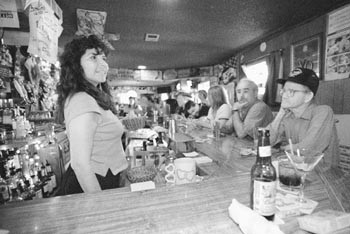
Bridal Registry

Bridal Bounty Ritual of the registry gets some new twists By Marina Wolf COME WITH ME to a mystical long-ago land where all brides were virgins, all weddings were huge, and the bridal registries were exercises in prim, proper overindulgence. Twenty place settings of china were de rigueur, silverware sets came...

The Petaluma River

The world in a hard shell: John Thompson of the North Bay Rowing Club calls the Petaluma River the best rowing water in the region. Life on theWater A long, lazy trip down the Petaluma River--a day in the life of the folks who live, work, and play along this meandering...

Usual Suspects

Millions for ag interests, but grape pest war could threaten public health By Tara Treasurefield WEST COUNTY activist Lynn Hamilton, director of the Town Hall Coalition, is worried that chlorpyrifos, a highly toxic organophosphate, may be used in Sonoma County to fight a newly found pest threatening local vineyards. Chlorpyrifos is being used in Southern...

‘Battlefield Earth’

Author-historian Jeff Shaara looks at heroism, racial slurs--and 'Battlefield Earth' Writer David Templeton takes interesting people to interesting movies in his ongoing quest for the ultimate post-film conversation. This is not a review; rather, it's a freewheeling, tangential discussion of art, alternative ideas, and popular culture. "America," suggests writer-historian Jeff Shaara,...

Ellen DeGeneres

Identity crisis: When Ellen DeGeneres first revealed she was a lesbian, the public couldn't get enough. But now that interest in her sexuality has waned, can her career as a comedian survive her status as a gay icon? No Exit Did Ellen DeGeneres come out of the closet just to land in the celebrity activist...

New CDs

Keeper of the fire: Steve Earle. Perfect Pairs New CDs offer complementary summer listening By Greg Cahill Billy Bragg & Wilco Mermaid Avenue, Vol. II Elektra Various Artists 'Til We Outnumber 'Em: The Songs of Woody Guthrie Righteous Babe ...

Madrona Manor

Hot stuff: Chef Jesse Mallgren--with squab, foie gras vol-au-vent, rhubarb chutney, and baby corn--has enlivened Madrone Manor's once staid menu. Victorian Grace Madrona Manor dishes up a winning formula By Paula Harris HER WELL-CUT black silk cocktail dress and pearl choker gleam luxuriously in the dining room's soft candlelight....

The Crawl

Morning medication: Bartender Mia Aldrich serves up the hair of the dog. The Crawl Testing the waters of a local alcohol-sated college tradition By Heidi Blankenship AFTER ATTENDING Sonoma State University for one and a half years, and with the semester at an end, I decide it's time...

‘Road Trip’

Snake eyes: Tom Green tries to out-ugly a pet snake in the lamentable Road Trip. Bad 'Trip' Philosopher Alain de Botton uncovers the secret cruelty of 'feel-good' films By David Templeton Writer David Templeton takes interesting people to interesting movies in his ongoing quest for the ultimate post-film...

Danger Ha Ha

Taking chances: Stilts, stunts, and political theater are all in a day's work for the women and men of Danger Ha Ha. Photograph by Michael Amsler Walkin' Tall Nothing stilted about the performance art of Danger Ha Ha By David Templeton "ALL PERFORMANCE is a sacred...
11,084FansLike
4,606FollowersFollow
6,928FollowersFollow