Door to Hell

0

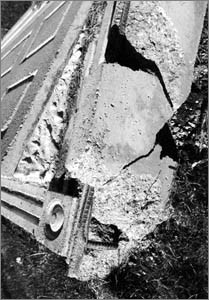
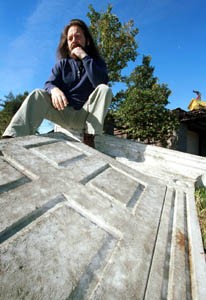
Photograph by Michael Amsler

Door Damaged

By Paula Harris

THE SO-CALLED Door to Hell has some infernal problems. Let’s start with the obvious: some person or persons reportedly took a sledgehammer to it this week. “It was a pretty violent act,” says Tom Montan, one of the creators of the sculpture, currently located off Bodega Avenue in Sebastopol. “Someone took a huge corner out of it.”

Sebastopol Police Officer Joe Soldis says the vandalism occurred Monday night. “There were no witnesses, but this is under investigation,” he adds. “Considering the attraction of the door and that it brought people in to see it from as far as Fort Bragg and Mendocino, we’re taking this act seriously.”

Montan says he doesn’t yet know whether the sculpture can be repaired. “It’s kind of devastating,” he says. At press time no further information was available.

The vandalism comes at a time when the controversial sculpture is having other setbacks. State highway officials have halted this week’s plan to move the infamous sculpture to a new location outside Screamin’ Mimi’s ice cream shop on a traffic island that splits Highways 12 and 116. City of Sebastopol officials recently approved the new location. But Caltrans officials now say the new site would create a sight obstruction for drivers.

“That’s no excuse, because the plants on the island are higher than the door would sit,” contends Ron Rodgers, one of the sculptors. “This is an example of what happens when you have good intentions and go against a huge bureaucracy.”

Caltrans has also restricted the city’s encroachment permit for new sculpture installations in Spooner Park. Meanwhile, city officials are attempting to arrive at a solution. City Planning Director Kenyon Webster says he is waiting for further word from Caltrans. “There may be a chance Caltrans could approve the plan to remove and replace sculptures in Spooner Park, but I don’t think the plan for the door location will work out.” He ticks off a list of several possible alternate sites: outside the Sebastopol library, in the town plaza, on private property, or even outside City Hall. For now, the “Door to Hell” will have to stay put.

From the September 28-October 4, 2000 issue of the Sonoma County Independent.

© Metro Publishing Inc.

Mill Valley Film Festival

0

High Notes

Mill Valley Film Fest spotlights great music programming

By Greg Cahill

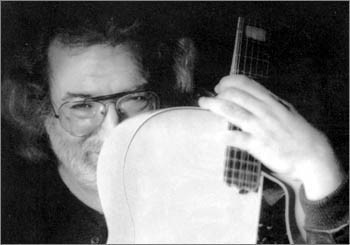
THERE’S a particularly poignant moment in Grateful Dawg–Gillian Grisman’s musical portrait of her mandolin-playing father, David, and his longtime collaborator, Jerry Garcia–in which Gillian’s little brother talks about how much he’ll miss Garcia, who died in 1996 of a heart attack. As the child chokes up at his loss of a good friend, the screen lights up with a shot of Garcia, not the sage rock icon who captivated millions with his freewheeling electric jams, but a good-natured, aging white-haired musician, puttering around Grisman’s makeshift living-room studio with his acoustic guitar and mumbling to himself about not wanting to forget a new lick he’s trying to work out.

Just a kindly old man with an obsession for bluegrass music.

It’s a very human moment that speaks volumes about the character of a man elevated as a deity by a legion of rabid fans who sought out Garcia as a mystical dream-weaver.

The film–chronicling some of the 44 bluegrass sessions shared by Grisman and Garcia–is one of several noteworthy music programs included in this year’s Mill Valley Film Festival, running Oct. 5-15.

Grateful Dawg–featuring unreleased audio tracks and rare concert footage–screens Friday, Oct. 13, at 7:30 p.m. at the Rafael Theater in San Rafael at a special showing that features a post-film concert by Grisman (tickets are $30); the film shows again, by itself, on Sunday, Oct. 15, at 9:30 p.m. at the Sequoia Theater in Mill Valley.

One of the most anticipated music documentaries of the year, Rhythm ‘n’ Bayous: A Road Map to Louisiana Music by Robert Mugge, will make its world premiere Thursday, Oct. 12, at 6:30 p.m. at the Sequoia Theater, and screens again Saturday, Oct. 14, at 9:30 p.m. at the Rafael Theater.

Known for his acclaimed work Deep Blues, which introduced the world to Mississippi bluesmen Junior Kimbrough and R. L. Burnside, and the Robert Johnson tribute Hellhounds on My Trail, Mugge has emerged as the foremost documentarian of American roots music. His latest offering samples a tasty jambalaya of simmering Southern sounds. It provides a tour through the state’s ebullient and diverse musical culture, from Cajun and zydeco to gospel and country, jazz and rockabilly to swamp pop and blues. During the filming, Mugge and his crew traveled to Shreveport (home of the legendary Louisiana Hay Ride), Monroe, Winnsboro, Baton Rouge, New Orleans, Lafayette, Ville Platt, and Eunice to capture such stars as rockabilly great Dale “Susie Q” Hawkins and relatively obscure local heroes like Henry Gray and the Hurricanes. In connection with the film, Hawkins performs two live shows Thursday, Oct. 12, at 7:30 and 9:45 p.m. at Sweetwater in Mill Valley. Concert tickets are $15.

Meanwhile, John Goddard, proprietor of the Village Music record store in Mill Valley, digs into his considerable archive of musical film footage for The Hi De Ho Show, an evening of rare clips from his personal video vault. This eclectic vehicle veers wildly from the hilarious to the outrageous, winding its way through decades of musical history. The footage runs the gamut from Al Jolson and Muddy Waters to the Clash and Hank Williams.

It’s an orgy of visual and musical satisfaction for any serious music lover. The Hi De Ho Show screens Saturday, Oct. 7, at 9:45 p.m. at the Odd Fellows Lodge in downtown Mill Valley. Tickets are $7.50.

For details, call the festival information hotline at 415/383-5346.

From the September 28-October 4, 2000 issue of the Sonoma County Independent.

© Metro Publishing Inc.
Milestone Film Retrospective

South.

Green Miles

Milestone Film retrospective offers parade of cinematic classics

By

CLASSIC FILMS are getting harder and harder to find on the big screen as the revival theaters shut their doors. But is there a ray of hope on the horizon? Writing about the Hollywood screenwriters’ strike, the possibility of which has already put Batman V and The Wild Wild West II on hold, one reporter speculated in Entertainment Weekly that movie theater owners might be forced to fill up the theaters with nothing but foreign films and revivals.

Terrifying possibility, isn’t it?, I ask Denis Doros of Milestone Film & Video, a distributor of independent, silent, and foreign films.

“The strike is an example of how the film business treats everybody,” Doros says, speaking by phone from the company’s Manhattan office.

“Knowing how the writers are treated, you tend to support the writers,” he continues. “I doubt if the theaters will be filled with revivals. Even today, there are so few places you can go now to see the classics. The Castro Theater and the Sonoma Film Institute are among the few that are left. It’s a bad time for rep houses; the prints are bad, the seats are broken. The only survivors are the professionals.”

As the rep theaters closed, Milestone filled the gap with home video and DVD, along with programming for film festivals. Now the company is celebrating its 10th anniversary with a mini-fest of its films at the Sonoma Film Institute at Sonoma State University.

The films in the series include two from 1975: Chac: The Rain God (screening Oct. 6 and 7), restored from too-purple Eastmancolor by Milestone (“restored by hand–digital is for the big boys,” says Doros); and Winstanley (Oct. 20 and 21), the noted silent-film scholar Kevin Brownlow’s feature film about the original Diggers, farmers who seized land from the landlords in 1649.

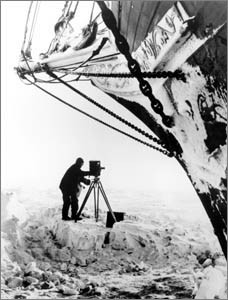
Particularly memorable are two films about the fury of the ocean: the remarkable 1916 Antarctic documentary South (Oct. 13 and 14) and Michael Powell’s terrific 1937 drama Edge of the World (Oct. 27 and 28).

Edge of the World is a compassionate but unsentimental look at Shetland Islanders, as homely, sturdy, and appealing as the stone crofts they live in. Even here you can see the mystical elements that surfaced later in Powell’s The Red Shoes (1948) and Black Narcissus (1947) in the double-exposed figure of the departing villagers, who linger like ghosts as the story is told. Fishing trawlers have cleaned out the ocean, leaving bad harvests and fewer young men to do the work.

Just as Edge of the World makes the waves and cliffs of the island of Foula ominous and ravishing, South–probably the first film made in Antarctica–brings in the deadly beauty of the ice. The 1914 voyage of the Endurance, commanded by Sir Ernest Shackleton, was both success and catastrophe. Shackleton lost his ship and yet returned the entire crew alive.

Milestone’s co-founders, Denis Doros and Amy Heller, came into independent film distribution from two other companies specializing in revival and foreign films. “I was at Kino,” Doros says. “My partner, Amy, was at New Yorker films. We both thought we were smart enough to run our own business. We were wrong. The film business is an oxymoron.”

Despite this gloomy prognosis, heard whenever you talk to those who own their own record business or art gallery, Doros and Heller have an impressive catalog of films, a treasure trove for those burned by Blockbuster.

HERE ARE several films by the silent era’s Mary Pickford, the first female cinema superstar. There’s Rouben Mamoulian’s 1936 musical The Gay Desperado, scored with Rodgers and Hart tunes and as full of irresistible South of the Border trinketry as a 50-year-old Mexican restaurant.

Of the many films Milestone offers, Doros is especially proud of having got Edge of the World back in front of an audience. Doros met the film’s director, Michael Powell, and his wife, Thelma Schoonmaker–editor of Raging Bull and most of Scorsese’s subsequent movies–when a retired Powell was on the film festival and university circuit. Eleanor Coppola brought Powell to the Sonoma Film Institute in the early ’80s.

“He had such a wonderful time,” Doros said. “These trips and award ceremonies meant so much to him.”

Powell managed to prove he did have the rights to Edge of the World, and when the film became available, Milestone sprang into action, working to get it back before the public.

“The day I acquired the rights, I called the British Film Institute and asked how quickly they could get a print,” Doros recalls. “The BFI printed up a new print from the nitrate negative in only two weeks for us. I’ve heard complaints about archives being doddering and unhelpful, but that’s not our experience.”

The 10-year career of Milestone, which made a niche for itself with an eclectic and yet exciting collection of films, shows that there’s a future for non-mall movies, as well as a past.

SFI’s Milestone retrospective begins with a screening of Chac on Friday and Saturday, Oct. 6 and 7, at 7 p.m. at SSU, Darwin Hall, 1801 E. Cotati Ave., Rohnert Park. Tickets are $4. 664-2606.

From the September 28-October 4, 2000 issue of the Sonoma County Independent.

© Metro Publishing Inc.
Gaytán

0

Mind Food

Agustín Gaytán puts a new twist on old Mexican favorites

By Marina Wolf

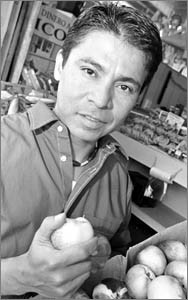
SOME PEOPLE don’t remember anything from their childhoods. Agustín Gaytán remembers everything, and most of it revolves around food. Tamale-making parties for holidays. Moles, the complex sauces ground and mixed by hand in a stone motate. Giant sweet fritters called bu–elos, made in mountains for Christmas and Día de los Muertos; Gaytán remembers a circle of family and friends sitting around and stretching balls of the soft, elastic dough over their knees until the disks were enormous, and then throwing them into a copper vat filled with boiling oil.

Gaytán does his best to pass along the traditions to his classes at Ramekins Sonoma Valley Culinary School, where he is essentially the Mexican expert-in-residence.

Nowadays the dark-eyed, energetic young chef is playing with more exotic ingredients, making things like pesto and smoked chicken tamales. His mother might not recognize what Gaytán calls tamales nuevo, but to Gaytán, they are simply the newest evolution of an age-old cuisine that has survived–and thrived on–countless infusions of foreign influence.

“The cookbooks in Mexico from the 1800s reflect an amazing combination of cultures,” he says, leaning forward excitedly from his perch on a friend’s plush sofa in Petaluma. “It was already basically fusion cookery: European preparations, with lots of chiles.”

Gaytán’s earlier food experiences were somewhat less experimental. San Miguel de Allende, the historic central Mexican city where Gaytán was born and raised, has a large American community. But his mother’s foods were strictly Mexican, so the few times he ate American food at American friends’ homes, Gaytán was a bit taken aback: “The food suddenly wasn’t as exciting and vibrant.”

And when he moved north to Texas in 1986, at age 24, he was even more confused by the food at the restaurant where he found his first American job, as a busboy. On the menu it was called “home cooking,” but with mostly black staff, it was basically soul food. “I didn’t know the difference,” Gaytán says with a laugh. “I thought it was just American food.”

Eventually Gaytán would learn the sad truth, but for the moment he was enchanted by the abundance and flavorfulness of the food. Eventually he became the baker there, making the restaurant’s breads and pies “all from scratcchh,” he says, savoring the word. Pies he had met before, as pays in Spanish, but never the varieties that he was called on to make here: peach, apricot, apple, and the cream pie, in chocolate, coconut, and peanut butter.

IN SPITE OF THIS exciting introduction to the American food industry, Gaytán was initially unswayed: he wanted to go to college and study anthropology. But when he moved to California some 10 years ago, an American acquaintance from San Miguel invited him to form a catering and restaurant partnership called Dos Burros.

It was at the Oakland eatery in 1990 that Gaytán found his second calling: teaching. What began as informal classes grew to include workshops at cooking schools all over California, Texas, and Colorado, and even in New England. And though Mexican food had become a familiar taste to the American palate by then, Gaytán found that many people still needed pointers.

“Most people here think Mexican food is all No. 4 combination: refried beans and rice, chile relleno, and enchilada on the side,” he says with an expressive twitch at the corner of a gentle smile. “But even among the people who are more educated about food, there is still a resistance that clearly comes from ignorance. People are not willing to accept that Mexican food is as well developed and as refined as any other cuisine.”

Some of this reluctance is based on run-of-the-mill racism, something that Gaytán has often experienced in the culinary world. “I always have to work twice as hard to get accepted as a teacher at different cooking schools,” he says. “If I was a white man, I would be accepted more easily, even though I am teaching my own country’s cuisine.”

But he is willing to excuse some of the prejudice as basic culinary ignorance. Gaytán’s students often are simply unaware of what salsas go well with what meats, or what cheeses should be added to what dishes for the most authentic effect. This is no simple thing, for “Mexican” food is indeed as diverse as American regional foods, if not more so. Even for Gaytán, the regional variations were strange and fascinating, especially at the beginning. “Moving from region to region is like going from country to country,” he says.

HIS NATIVE STATE of Guanajuato boasts a proud assortment of chiles, but Gaytán found a selection to rival it in Oaxaca. There he also found seafood being used in ways that Americans might consider strange, if not downright extravagant. Oysters and clams make regular appearances in tamales. There was even a tamal made with a whole, unshelled lobster, surrounded by masa dough that would soak up the juices after the tamal had been baked and the lobster cracked open.

Elsewhere Gaytán found regions that–gasp!–just don’t use chiles that much. In Yucatán, for example, the favored flavor base is recado, a paste made of onion, garlic, and spices. Recado rojo (red recado) gets its distinctive color from achiote, or annatto seed, while recado de bistec is made olive-green with cumin, oregano, and chiles, and recado de negro contains ingredients that have been deliberately and deliciously burnt black.

But before they get to recado and lobster tamales, some folks just have to learn where to shop. To meet this need, Gaytán has created a cook’s tour of San Francisco’s Mission District, in which he leads groups of students, senior citizens, or just plain curious gourmets through the produce markets, panaderias, and carnicerias of that predominately Latin American neighborhood. He realizes that the district, like many San Francisco neighborhoods, is threatened by gentrification, and he sees his popular tours as a way of asserting identity.

“I want to contribute to the stability of the Mission District as a Hispanic community,” says Gaytán. “And food, you know, is very culturally binding.”

Chiles Rellenos de Pescado en Mil Hojas (Chiles stuffed with white fish, tomatoes, and olives, then baked wrapped in puff pastry)

6 poblano chiles 1 1/2 lbs. red snapper filet 1 tsp. sea salt, approximately 1/2 tsp. freshly ground black pepper 3 tbls. fresh lime juice 1/4 cup extra-virgin olive oil 2 lbs. ripe tomatoes, grilled, peeled, and coarsely chopped 1 medium onion, coarsely chopped 3 large cloves garlic, peeled and sliced 10 large green olives, pitted and cut in half 3 tbls. large capers 2 pickled jalapeño chiles, cut into small strips 1/4 tsp. oregano 1 large bay leaf 1/2 tsp. sea salt (or to taste) 10 sheets puff pastry, store-bought, ready-made, cut to size (5×4 inches) 1 egg, lightly beaten

1. Roast chiles over a direct gas flame at medium-high heat or under a broiler. Turn chiles over from time to time until skins are blistered, about 6-7 minutes. Place chiles inside a plastic bag or a towel and allow to steam for 10-15 minutes. Peel chiles, split them, remove seeds, and place in nonmetal bowl.

2. Cut fish into 6 equal portions. Sprinkle all pieces with the salt, pepper, and lime juice. Marinate 15 minutes in a nonmetal bowl.

3. Heat oil in a 10-inch skillet and sauté onion and garlic for about 4 minutes. Add tomatoes, olives, capers, chiles, oregano, bay leaf, and salt. Cook for 15 minutes over medium heat. Cool to room temp-erature. Preheat oven to 400°.

4. Stuff each chile with fish (cut each portion of fish into smaller pieces to fit inside chiles).

5. Roll out each piece of pastry large enough to completely wrap around each chile according to size.

6. Wrap each chile and seal edges with water. Place chiles seam side down on greased baking sheet. Brush top of each chile with beaten egg and bake for about 20 minutes until golden brown. Serve hot or at room temperature with remaining tomato sauce. Serves 6.

From the September 28-October 4, 2000 issue of the Sonoma County Independent.

© Metro Publishing Inc.
Aspartame

0

Killing Me Sweetly

Is aspartame really a safe sugar substitute? If not, why is the FDA blocking the release of a better alternative?

By Bill Strubbe

EVELYN BLAKE’S downhill spiral began in 1994 when she decided to lose weight: she switched to diet sodas and began using Equal as a sugar substitute. “After about four months I began feeling nervous and uneasy,” Blake recalls. “My heart was beating so irregularly that I wondered if I was having a heart attack! Then one night I woke with this very strange feeling, like I was in a zombie state. I felt as if my tongue was swelling, my teeth clenched tight.”

Blake began to shiver, and by the time she reached her son’s room her body shook uncontrollably and she couldn’t talk. The frightening incident eventually subsided, and they decided against visiting the emergency room. “Not making any connection, I continued to use Equal in everything–coffee, bread, cereal, salad–and the seizures got worse.”

Though millions of people sip diet sodas, ingest yogurt lite, and stir the contents of those little blue packets into their coffee without noticeable side effect, Blake’s ordeal is only one of thousands of alleged aspartame-poisoning complaints registered over the last two decades. By the federal Food and Drug Administration’s own admission, 73 percent of all food complaints are aspartame-related–most commonly headaches, memory loss, depression, heart palpitations, and vision problems. Some contend that prolonged use of aspartame is the root cause of their permanent nerve damage, their brain lesions and tumors, and even the untimely deaths of family members.

“Since many consumers may never make the connection between their maladies and aspartame intake, conceivably those complaints are only the tip of the iceberg,” says Betty Martini, who heads Mission Possible International, which attempts to educate the public about the dangers of aspartame.

Industry and FDA spokespersons point out that these accounts are “merely anecdotal” and “unscientific,” but the sheer volume of accusations in itself should raise questions about aspartame’s approval process–the independence of industry-funded research, the ethics of the revolving door relationships between FDA officials and industry–and call for the re-examination of this chemical that is now commonly found in grocery stores, on kitchen shelves, and in children’s lunchboxes.

Sweet Nothing: Proponants of stevia, a natural sweetener, do battle with NutraSweet.

NUTRASWEET–along with Equal, Spoonful, Indulge, Equal-Measure, etc.–is a brand name for aspartame, discovered by accident in 1965 when a chemist with G. D. Searle pharmaceuticals was testing an anti-ulcer drug: he happened to lick his hand, and the rest is history. Originally approved for use in dry foods in July 1974, aspartame was put on hold several months later owing to objections filed by neuroscience researchers and consumer attorneys.

When ingested, NutraSweet breaks down into aspartic acid, a chemical found in the brain; phenylalanine, an amino acid; and methanol (wood alcohol), which converts to formaldehyde, which at high levels can cause brain damage and blindness. Monsanto–the former manufacturer of NutraSweet–and the FDA argue that methanol is present in such a small amount that it poses no health risks and is harmlessly passed from the body.

They also insist that except for people with the rare disease phenylketonuria, aspartame is safe. (G. D. Searle, the original makers of NutraSweet, was bought by Monsanto in the 1980s. This past year, Monsanto sold NutraSweet to J. W. Childs and divested itself of Equal, which is now a registered trademark of Merisant Co.)

Dr. Russell L. Blaylock, professor of neurosurgery at the University of Mississippi’s medical center, explains in his book Excitotoxins: The Taste That Kills that though aspartate (and glutamate in the chemically related substance MSG) is a neurotransmitter normally found in the brain and spinal cord, when aspartate reaches certain levels it causes the death of brain neurons.

The risks to infants, children, and pregnant women are higher because the blood/brain barrier, which normally protects the brain, is not fully developed until adulthood. Dr. Blaylock and numerous other experts believe that long-term exposure to excitotoxins may play a part in diseases such as early-onset Alzheimer’s, Parkinson’s (Michael Fox, coincidentally the former spokesperson for Diet Pepsi, may be an example), lupus, brain lesions and tumors, epilepsy, memory loss, multiple sclerosis, and some hearing problems.

Dr. John Olney, a neuroscientist at Washington University Medical Center in St. Louis, who has demonstrated the harmful effects of excitotoxins and testified before Congress, believes that both glutamate and aspartate damage areas of the brain controlling endocrine functions leading to obesity.

He posits that the 30 percent increase in obesity in America in the past decade might be related to the increased use of aspartame.

“While there were a few inaccuracies [in the original safety tests], there was nothing convincing to keep aspartame off the market,” insists David Hattan, Ph.D., acting director of the FDA’s Division of Health Effects Evaluation. “The large body of animal and clinical research carried out in a controlled environment convinces me that aspartame is safe.”

But a number of his colleagues have disagreed. During a congressional investigation in 1985 to scrutinize Searle’s aspartame safety tests, Dr. Jacqueline Verrett, a former FDA toxicologist and FDA task force member, testified that the tests were a “disaster” and should have been “thrown out.” Dr. Marvin Legator, professor of environmental toxicology at the University of Texas, characterized them as “scientifically irresponsible and disgraceful” and said, “I’ve never seen anything as bad as Searle’s.”

Because of FDA budget limitations, it is standard procedure for the bulk of initial safety tests to be financed, designed, and carried out by the company with a vested interest in the product. The reliability of their results is called into question when 74 out of 74 industry-sponsored articles attested to aspartame’s safety, while 84 out of 91 of the nonindustry-sponsored articles identified problems with the chemical.

“I’ll admit there’s validity to these concerns, but it’s not unusual for industry to fund studies, because they’re expensive–and who else will?” counters a spokeswoman at Merisant Co. “It’s a disservice to the fine scientists involved whose reputations are besmirched by aspartame detractors.”

AND WHAT’S to keep adverse industry test results from disappearing altogether? According to a reliable source, who chose to remain unnamed but has signed a sworn affidavit, Searle in the early 1980s conducted aspartame research in five communities in Central and South America; the groups were told they were ingesting a papaya extract.

By the end of these 18-month studies, the source recalls from translating the reports from Spanish into English that many subjects experienced grand mal seizures and damage to the central nervous system, causing muscular and neural instability, hemorrhaging, brain tumors, and other maladies.

“When I finished the project, I was told to destroy all my records and copies. If those studies had reached the FDA, there’s no way they could have approved aspartame,” the source says.

“Imagine my surprise when I found out soon after that aspartame is being consumed en masse! I urged my family and everyone I knew not to use anything containing aspartame because, as I said, ‘it would make their brains into mush.’ ”

The late Dr. M. Adrian Gross, former senior FDA toxicologist, stated in his testimony before Congress, “Beyond a shadow of a doubt, aspartame triggers brain tumors,” and “therefore by allowing aspartame to be placed on the market, the FDA has violated the Delaney Amendment,” which makes it illegal to allow any residues of cancer-causing chemicals in foods. His last words to Congress were: “And if the FDA itself elects to violate the law, who is left to protect the health of the public?”

The cancer-causing agent referred to above is diketopiperazine, or DKP. So concerned was Searle about toxic DKP that it’s mentioned several times in an early 1970 internal memo distributed by Herbert Helling: “My prime concern at this time is with the production of DKP and our lack of complete toxicological data on DKP if [aspartame’s chemical code broke down] completely to DKP. We then must consider how much DKP could be formed from the time the system is converted to a wet system to the time of consumption allowing for maximum likely abuse.”

“SOUNDS LIKE the tobacco fraud all over again. But this time it’s the drug industry, and it’s big,” says former U.S. Department of Justice attorney Ed Johnson, who for the last 10 years has served as president and CEO of a large law firm in San Antonio. Several years ago, he was diagnosed with a pituitary adenoma and underwent two life-threatening surgeries to remove the tumor, which he believes was caused by his heavy ingestion of Diet Coke and NutraSweet.

“When the class actions [lawsuits] hit, and they will, I predict that they’ll rival the tobacco litigation we have seen in the past few years.”

Aspartame tests in the United States continued until July 18, 1981 when FDA Commissioner Dr. Arthur Hull Hayes Jr. disregarded the Food Drug and Cosmetic Act, which states that a food additive should not be approved if tests are inconclusive, overruling six of the nine scientists on two agency review panels who thought the studies of brain tumors in rats had been inadequate.

Applying an “acceptable daily intake” measure, the FDA approved the chemical for use in dry products and then raised the ADI in 1983 to enable the introduction of aspartame into beverages.

In subsequent years, $30 million to $40 million annually was pumped into advertising by NutraSweet Co. alone, and ads–featuring the likes of Bill Cosby, Raquel Welch, Joe Montana, and Geraldine Ferraro–by diet soft-drink manufacturers and other companies employing the chemical pushed that figure past $100 million a year, quickly making NutraSweet a household word.

Soon after, complaints to the FDA began rolling in: headaches, dizziness, anxiety, depression, memory loss, joint pain, vomiting, heart palpitations, slurred speech, seizures, brain tumors, comas, and even deaths attributed to aspartame.

The FDA took “some of these early reports quite seriously,” and Monsanto performed follow-up studies. But, according to the principles of science, “if test results cannot be reproduced in a controlled setting, then you cannot preclude other factors that might have caused seizure expressions,” explains Hattan at the FDA, who declares that he consumes copious amounts of aspartame with no ill effects.

“I think that many of the symptoms attributed to aspartame are actually caused by something else in the individual’s environment.”

EVELYN BLAKE’S seizures got worse, racking her body on a regular basis, sometimes twice a day. She recalls entering into a “zombie stare . . . looking but not seeing,” and feeling as if her body “were attached to an electrical current,” her heart racing.

More EKGs, EEGs, and blood tests followed, but the doctor could determine only low blood pressure and a slight thyroid problem. Meanwhile, she says, her hair started falling out by “the handful.” Temporary relief finally arrived when she visited her brother in Georgia and she skipped her “diet,” which included the use of Equal. For three weeks, she began to recover.

Upon returning home–and back to her use of Equal–the nightmare revved up again.

“I thought it might be stress from the house remodeling and other duties,” she says. “My memory was getting so bad I couldn’t remember where I was going when I got into my car. My eyesight suddenly got worse. I was afraid of being alone, never knowing when the next seizure would hit! The doctors could find nothing wrong with me.”

WITHIN SEVERAL years of aspartame’s appearance on the market, a number of FDA and government officials left their posts and took jobs closely linked to the food, beverage, and NutraSweet industries. Shortly after pushing aspartame’s approval, Dr. Arthur Hull Hayes left the FDA under a shadow of improprieties and became a consultant–at $1,000 a day–with Burston-Marsteller, Searle’s public relations firm. Wayne Pines, Hayes’ former top spokesman, previously had joined the firm.

In July 1986, Anthony Brunetti, an FDA consumer product officer who drafted the 1983 notice approving NutraSweet’s use in soft drinks, joined the Soft Drink Association as a science adviser.

In the late 1970s, Samuel Skinner and William Conlon, two senior Justice Department prosecutors investigating criminal allegations against G. D. Searle & Co. for falsifying NutraSweet safety-test results, later joined the law firm of Sidley & Austin, which represented Searle during the lengthy investigation. Skinner, who knew of the statute-of-limitations deadline, delayed pursuing prosecution, thus placing Searle out of reach. He subsequently defected to Sidley & Austin in July 1977.

“The aspartame manufacturer has a lot of political influence, and when the FDA director refused to allow aspartame on the market, he was replaced by one who would, and did,” says attorney Ed Johnson, former assistant U.S. attorney under William S. Sessions (who went on to become the head of the FBI).

“Though it’s against ethics laws for an FDA official to sit in on any action regarding a firm with which they had any prior relationship,” explains former FDA investigator Arthur Evangelista, “there is nothing to stop federal officials from being influenced with promises of a position in a firm they are meant to be regulating.”

Evangelista believes that influence-peddling is rife throughout the FDA, both directly and indirectly, via government PAC monies influencing politicians, who in turn use their influence on regulatory agencies.

And the revolving door continues to spin. In 1999, Dr. Virginia Weldon, vice president for public policy at Monsanto (the former parent corporation of NutraSweet), was considered for the FDA’s commissioner post. On June 14, 1999, retiring FDA Commissioner Michael Friedman became the senior vice president for clinical affairs at Searle’s drug unit.

How can the FDA effectively safeguard the public’s health while being influenced by the corporations it is meant to regulate?

For two decades the aspartame controversy has continued to simmer, leaving respectable organizations with opposing verdicts. The American Diabetes Association, the American Academy of Pediatrics, the American Medical Association, and the Epilepsy Institute endorse aspartame as safe (though it is a matter of record that several of these organizations have received donations from NutraSweet).

But hundreds of airline pilots reporting adverse effects from aspartame, including grand mal seizures while in the cockpit, led a dozen aviation publications, including Navy Physiology, Planes & Pilot, Canadian General Aviation News, and Flying Safety, to warn pilots not to consume aspartame before or while flying.

“I am not denying these people’s symptoms,” says Hattan at the FDA, “but it is entirely possible that when patients stopped using aspartame they might also coincidentally have had remission of their symptoms.”

Both the FDA’s and NutraSweet’s categorical dismissal of the thousands of aspartame consumer complaints as coincidental, anecdotal, or unscientific has not diminished the convictions of thousands of unpaid volunteers at Aspartame Victims and Their Friends; the Aspartame Detoxification Center in Atlanta; and chapters in dozens of countries of Mission Possible International that compile aspartame-related articles and personal accounts.

As of 1987, the last year that NutraSweet publicized records, Americans consumed about 17.l million pounds of aspartame, and the number is now estimated to top 25 million pounds. Since the chemical additive is now sold in dozens of other countries, aspartame-poisoning complaints now are fielded from around the world. Those who suspect that they have any symptoms of aspartame poisoning, nutritionists say, should take the aspartame test: For one month stop using aspartame-containing products and see if your symptoms subside.

Evelyn Blake decided to try eliminating, one by one, everything she was eating, but the seizures continued.

“When I finally eliminated Equal, I never had any more attacks or seizures! Since I stopped Equal on Sept. 13, 1997, my health has slowly improved: my eyesight and memory returned, my hair quit falling out, my blood pressure is good. My heart continues with an irregular beat, which my cardiologist says only a pacemaker can correct,” Blake says.

“Because of Equal, my life for four years was one living hell. Can’t someone do something about this unregulated chemically engineered drug called Equal/aspartame that has affected thousands?”

Blacklist

BEWARE of any food product that contains the words “lite,” “diet,” “low-calorie,” or “no calorie.”

Among these are:

diet iced teas diet soft drinks Crystal Light yogurt lite Diet Jell-O some cereals some children’s vitamins.

Bill Strubbe is a California-based freelance writer who confesses to having once been addicted to SweetTarts.

From the September 28-October 4, 2000 issue of the Sonoma County Independent.

© Metro Publishing Inc.
Usual Suspects

0

Jail guard wins First Amendment rights victory in press case

By Francisco P. Riggs

TOUTED BY SOME as a victory for public employees, a Sonoma County Jail guard has won an unusual free-speech suit after he angered county employers with his harsh criticism of articles published in this newspaper.

The 1st District Court of Appeals in San Francisco has now reversed an earlier decision by Sonoma County Superior Court and has ruled that top brass at the Sonoma County Sheriff’s Department were wrong to reprimand correctional officer Jeff DiCello for his letter lambasting articles by the Sonoma County Independent that questioned jail conditions.

The bitter clash between DiCello and Sonoma County Sheriff Jim Piccinini began in 1998 after the Independent published a two-part investigative series on medical conditions and alleged inmate abuse at the county jail.

DiCello was so incensed by the series that he shot off a scathing letter to the newspaper blasting editor Greg Cahill and reporter Paula Harris, who together authored the series, which went on to win the 1999 Sonoma County Press Club’s Lincoln Steffens Award for best investigative reporting in Northern California.

Instead of addressing the in-custody deaths, inmate suicides, and alleged poor medical treatment examined in the series, DiCello, who identified himself as “a jail employee,” chose to fill his letter with personal attacks on the two reporters. The letter was then published, with ensuing embarrassment for Sheriff’s Department officials.

“So, Greg and Paula, relax,” DiCello’s stated in his letter. “You two are never going to be mistaken for Woodward and Bernstein. Go home, kick off your Birkenstocks, and rent All the President’s Men again and wish mommy and daddy had the money to send you to real journalism school so you could write for a real newspaper. Instead, they were too busy smoking weed and working for the Haight-Ashbury Free Clinic in the summer of love! I bet they even met each other when they came in for a VD test.”

THE SHERIFF’S Department immediately set up an internal investigation into whether DiCello had authored the allegedly offensive letter. Piccinini later issued DiCello a formal letter of reprimand, noting that DiCello’s letter contained “inappropriate and unprofessional comments” toward the two reporters. “In making those comments, you brought discredit not only to yourself but to the department you work for,” it stated, adding, “Public statements need to be consistent with public policy.”

In retaliation, DiCello filed a suit against Piccinini, correctional Sgt. John Pels, Asst. Sheriff Sean McDermott, and the county of Sonoma, claiming his First Amendment rights had been violated.

The Independent subsequently ran an editorial defending DiCello’s right to criticize the press.

Last year, the Sonoma County Superior Court ruled that sarcastic portions of the letter could be considered separately and were not constitutionally protected speech and noted that Piccinini was within his rights to discipline DiCello.

This week, the 1st District Court of Appeals reversed the lower-court decision, ruling that DiCello’s entire letter was protected speech and did not affect the department’s operations.

However, DiCello isn’t back at work making his bosses eat crow. According to sheriff’s officials, the outspoken jail guard is currently on long-term disability for a job-related injury.

From the September 28-October 4, 2000 issue of the Sonoma County Independent.

© Metro Publishing Inc.

Aspartame vs. Stevia

0

By Bill Strubbe

SO WHAT’S A SWEET tooth and those with diabetes to do? Well, there’s stevia, a natural sweetener derived from a plant (Rebaudiana bertoni), consumed for centuries by indigenous tribes in Paraguay and Brazil. The leaves of the “honey plant,” which spreads like mint and grows to about three feet, are 30 times sweeter than sugar.

In its processed powdered form stevia is 300 times more potent.

In the 1980s, stevia was gaining popularity in the United States. Several companies, including Lipton and Celestial Seasonings, employed it as a flavoring agent. But rather than treat stevia as a natural plant with a long history of safe use, the FDA began confiscating commercial stevia stocks.

“They came in like we were holding dangerous contraband,” recalls Lynda Sadler, president of Traditional Medicinals in Graton. “They embargoed our finished and raw product. We were right in the middle of tea season, and we suffered the loss of sales and inventory, not to mention warehouse space that took four years to clear out.”

Sadler was not alone. “In 1991, FDA marshals unexpectedly arrived at my warehouse and announced they were seizing my inventory of stevia teas,” recalls Oscar Rodes, president of Stevita (formerly Steviasweet and forced by the FDA to change the name because it contained the word “sweet”).

“Since I did not have time to consult an attorney, they took all my inventory, and when I asked what they would do with the teas, they replied that they were going to burn them.”

These extreme actions prompted Sadler and others to form the Stevia Committee of the American Herbal Products Association and to enter petitions with the FDA to prove stevia’s safety. “Five years and $500,000 later,” adds Sadler, “we could see that no matter what level of science or evidence was presented, it made no difference.

“The FDA was not going to treat stevia fairly.”

Despite extensive testing of stevia in Japan in the 1970s with no noted side effects–stevia constitutes almost 50 percent of Japan’s artificial sweetener market–and although a dozen other Asian countries have approved stevia, the FDA still refuses to “file” submitted petitions citing more than 900 articles and research chronicling stevia’s safe use.

Those in the herbal products market contend that because the stevia plant itself cannot be patented, Nutrasweet, out to protect its aspartame interests in the nearly $1 billion artificial-sweetener industry, secretly pressured FDA officials to harass stevia users and ultimately to ban it. Richard Nelson, the former vice president of public affairs for NutraSweet, dismissed those allegations as “one of those urban myths” in a June 1997 article in Self magazine.

But Nelson’s denial is flatly contradicted by Jim May, owner of Wisdom of the Ancients herbal products in Arizona. “In 1984, the FDA [officials] in Phoenix said to me that there’s nothing wrong with using stevia as long as they didn’t get any complaints,” May recalls. “Later, I was called into the office, and the agent apologized and said that the Washington office demanded that we stop using stevia, and he added that it was NutraSweet that tipped them off.”

“Stevia has been banned by the FDA simply because it has not been deemed safe,” says a spokeswoman at Merisant Co., “and it has nothing to do with NutraSweet.”

The FDA was forced through a legal loophole in 1995 to rescind its 1991 import ban against stevia leaves, extracts, and steviosides and allow stevia to be sold as a dietary supplement. Though consumers still won’t find stevia on packaged-food labels as a food additive, it’s sold among the supplement products in most health food stores, though they’re not allowed to mention stevia’s most remarkable quality: its sweetness.

From the September 28-October 4, 2000 issue of the Sonoma County Independent.

© Metro Publishing Inc.
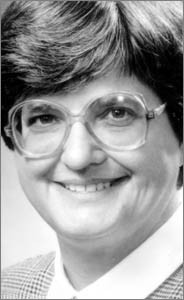
Sister Helen Prejean

0

Last Rites

Capital punishment doesn’t stand a ghost of a chance against Sister Helen Prejean

By Patrick Sullivan

I’M A STORYTELLER, a Southern storyteller to be exact,” says Sister Helen Prejean, sounding just like one as her honey-smooth drawl slides down the phone line from New Orleans. “I’m just going to take the audience through the experiences I’ve had here in Louisiana, experiences with the people on death row and with murder victims’ families and all the different folks involved with the death penalty.”

Not exactly the words one might expect to hear coming out of a nun’s mouth, maybe. But if anyone can weave gripping tales out of the grim facts surrounding one of America’s hottest political controversies, it’s Sister Prejean.

Over the past 16 years, the Roman Catholic nun from Louisiana–who will speak in Santa Rosa on Oct. 5–has repeatedly served as a spiritual adviser to death-row inmates. That work has brought her face-to-face with every aspect of America’s dance with the death penalty, from the airy ideological conflicts of television debates to the hard-core reality of the electric chair and the needle at work.

Prejean, now 61, has personally witnessed five executions. Those experiences have helped transform her into one of America’s most determined and effective opponents of capital punishment.

“It never gets easier to watch a human being who is fully alive be taken and killed in front of your eyes,” she says. “You never get used to it. There’s no way to get used to something like that, a death that doesn’t have to happen.

“That’s what galvanized me to work so hard, to get on planes and talk to people.”

But she wasn’t just talking. Prejean was also writing, and it’s her writing that’s had a major impact on the death penalty debate. Dead Man Walking, Prejean’s 1993 account of her personal encounters with both death-row inmates and the families of their victims, garnered a nomination for the Pulitzer Prize and spent 31 weeks at the top of the New York Times bestseller list.

And that was just the beginning.

The book was like a stone thrown into a still pond, and the ripples are still spreading.

First, Dead Man Walking was made into an Oscar-winning movie in 1995. Directed by Tim Robbins and starring Susan Sarandon as Prejean and Sean Penn as a convicted killer facing death, the film version of Dead Man Walking pulled down four Academy Award nominations and helped reignite the debate over the death penalty.

Now the story has jumped genres again: in early October, an operatic version of Dead Man Walking opens at San Francisco Opera. Featuring opera’s grande dame, acclaimed mezzo-soprano Frederica von Stade, as the death-row inmate’s mother, the work is a collaboration between playwright Terrence McNally and composer Jake Heggie.

Prejean served as a consultant for both the movie and the opera–a job that took her into far different circles than her work in a housing project in New Orleans or her mission on death row. When Prejean attends the premiere of the opera, she’ll be in the company of enough Hollywood luminaries to wear out a whole squadron of paparazzi.

“I was just talking to Susan Sarandon today, and all of them are going to be there,” Prejean says. “She and Tim [Robbins] and the whole family are going to be there, and Sean Penn and Robin Wright. So it should be a really interesting experience.”

It’s a far cry from the sort of audiences Prejean encountered after the execution of Patrick Sonnier back in 1982 drove her to start speaking out on the death penalty.

“Who wants to hear a nun on the death penalty?” she asks. “Not many people. One talk I gave was at a nursing home here in New Orleans called St. Christopher’s. Three people showed up after lunch. Two of ’em nodded plumb off during the talk, so I basically had one lady listening to me. And I mean, I locked onto her eyes, like, “Lady, don’t you go to sleep too, ’cause then I’m talking to nobody.’ ”

And even fairly conservative politicians are listening. Shocked by a string of incidents in which condemned prisoners were found to be innocent, Republican Gov. George Ryan of Illinois declared in January a moratorium on capital punishment.

“All of these innocent people have come off death row by a fluke,” Prejean says. “They’ve been saved at the last minute by journalism students or a DNA test, when the courts were just moving them along, ready to execute them.

“It’s not that the system’s working,” she continued. “Scrappy citizens have gotten involved: Barry Scheck’s Innocence Project, or the journalism students from Northwestern who saved Anthony Porter’s life, or the filmmaker who did The Thin Blue Line and saved Randall Dale Adams.

“So that’s helped till the soil on the issue.”

But, of course, not everybody on death row is innocent, as Prejean conveys in her book. Her outrage at the crimes committed by the inmates she has counseled is clear, and her sympathy for the victims of these crimes and their families is profound.

Those emotions tend to confuse both sides in the death penalty debate.

But Prejean herself has little trouble reconciling opposition to crime with opposition to the death penalty.

“One of the things I’ve come to appreciate over the years is that it’s very important to help people deal with the outrage that we all feel over crime,” Prejean says. “Because we are outraged, and that outrage makes us feel like whoever did this deserves to die.

“And if we don’t deal with those feelings,” she continues, “then we can’t come out the other end with a stance for life and human rights.”

Prejean speaks and signs her book on Thursday, Oct. 5, at 7:30 p.m. at the Cardinal Newman Gym, 4300 Old Redwood Hwy., Santa Rosa. Tickets are $15 (proceeds benefit the Catholic Detention Ministry). For details, call 578-0304.

From the September 28-October 4, 2000 issue of the Sonoma County Independent.

© Metro Publishing Inc.
Sculpture Jam

0

In a Jam

Defiant Sculpture Jam team boycotts review process

By Paula Harris

LAST YEAR they raised a national ruckus when they unveiled the controversial sculpture that religious-minded critics dubbed the “Door to Hell.” Indeed, the piece is so controversial someone vandalized it this week. So what do Sebastopol sculptor Ron Rodgers and his teammates–fellow sculptors Tom Montan, David Hamilton, and Ralph Carlson–have up their diabolical sleeves for this year’s Sculpture Jam?

Nobody’s giving out artistic specifics, but in the wake of new rules imposed on public art by the city of Sebastopol, the team members appear to have revolution on their minds.

“With the formation of a review, the Sculpture Jam event has become too convoluted with too many rules,” says Rodgers. “This a protest!”

The annual Sculpture Jam weekend event, touted by organizers at the Sebastopol Center for the Arts as the only one of its kind in the world, features several teams of artists creating sculptures in public.

Community members get to watch the sculptors in action and maybe even participate in the artistic process. The resulting sculptures are then installed on public sites throughout Sebastopol–a fact that caused more controversy last year than anyone ever expected.

This year Rodgers and his team have defied Sebastopol’s newly created review process. The team has refused to reveal any details about its project, submitting merely a blank sheet of paper to city officials and claiming that they’re waiting for “the muse” for inspiration.

What this means in practical terms is unclear. “This team’s work will probably have to go through the design review board after it’s completed,” says City Planning Director Kenyon Webster.

But the symbolic point is clear. The sculpture team’s action is, of course, a blatant swipe at what Rodgers dubs “typical bureaucracy.” The group is shunning the procedure that now requires artists to show their designs and get city and community approval for their placement during the Sculpture Jam event, now in its third year.

“I used to like the grassroots, hands-on part of the event. These pieces of art are gifts to the city,” says an irritated Rodgers, who designed the now infamous door. “The city should be receptive and grateful instead of dictating what can go where.”

Door Damaged: Vandals attack the so-called ‘Door To Hell’ with a sledgehammer.

THE NEW REVIEW process began this year after controversy arose over the placement of the untitled door sculpture on a grassy berm at the corner of Bodega and Jewell avenues near a local church.

The 3,000-pound concrete sculpture depicts a life-size door, slightly ajar and lying like a tombstone on the ground. Some critics interpreted the piece as a diabolical door to the underworld. Other onlookers placed everything from wreaths to restroom signs on the problematic portal.

The new city guidelines specify that the placement of art on any particular public site is as significant as the art itself. Therefore siting should be considered “early in the process.” Also, the agreed-upon guidelines for placement on a particular public site should provide for the participation and comments of those who will have to “live with” any piece placed there.

The new guidelines have produced quite a bit of comment. Not all of this year’s Sculpture Jam artists agree with Rodgers and his group.

“This is in no way a censorship,” says sculptor Susandra Spicer. “It’s about whether sites are appropriate for placement of the pieces.” She adds that working with the city of Sebastopol was a positive experience.

“All the artists have mixed feelings about the red tape because we are a free-spirited bunch,” agrees Sebastopol stone and metal sculptor Aaron Poovey. “But the city has been really understanding and responsive.”

Spicer says she suspects the Rodgers team is purposely not seeking installation approval in an attempt “to be colorful.”

It’s no secret that Rodgers and company enjoyed a lot of the attention from last’s year’s piece–so are they in it this year to create a little shock value? Teammate Tom Montan says the group is made up of serious artists who are not trying “to be racy.” But hearing Rodgers talk, one might draw different conclusions.

“We’re using the muse as an excuse. If she shows up, we’ll have a good piece. If she doesn’t . . . well then, it’s not our fault,” says Rodgers, somewhat ominously.

So, is Rodgers saying the team plans to top the public forum and controversy stirred up by the door with their mysterious piece, so far known only by its title, A Shrine to the Muse?

“Chances are good that [A Shrine to the Muse] might be controversial,” Rodgers admits. “But I don’t think it will get the attention of the door.”

Of course, this year’s Sculpture Jam theme, “Totems, Shrines, and Icons,” also seems to be purposely provocative.

“The theme is like a can of worms–it can be offensive to everybody,” agrees Rodgers. Then he adds, “But I don’t think anyone’s planning that. But if drama happens, it’s good. Any publicity is good because the [Sebastopol Center for the Arts] needs monetary donations.”

But according to Linda Galletta, executive director of the Sebastopol Center for the Arts, which sponsors the Sculpture Jam, organizers are not trying to make the event controversial.

“[The door] put us in the spotlight, but controversy is in the eye of the beholder,” says Galletta. “The door was actually a traditional Victorian piece, and we didn’t expect controversy. I don’t think that’s the intention of the program. It’s supposed to be an educational showcase and a way for artists to come out of their caves and network.”

Meanwhile, other artists have grown weary of the door and all the histrionics it created. “It’s just a door,” sighed Sculpture Jam founder Warren Arnold during last year’s event. “We’ve got 11 pieces up around Sebastopol, and this is the only one that’s gotten any comment.”

“The door was the least detailed, the least people-involved piece,” observes Spicer.

THIS YEAR Spicer and her teammates will assemble a 4-foot-wide, 7-foot-tall wooden altar “to honor the west county.” They’re asking the public to help decorate it with plastic found objects.

Other teams will create a wide variety of items: a forest of totemlike “spirit poles”; a copper fountain made with jewelry; a stone carving incorporating the yin and yang symbol; and large, decorative woven-wire baskets. There’s even a new unofficial Sculpture Jam website (www.sculpturejam.org) created by one of the participating artists.

Rodgers and his team plan to sculpt their secret piece along with everyone else and wait to see how it’s received and whether it can be installed.

“The city will probably take a look at it and say they can’t find a place for it,” says Rodgers with a short laugh.

Whether any of the sculptures will cause the same kind of disturbance as last year’s door is anyone’s guess. But most agree the attention was advantageous.

“We made national news last year,” reflects Poovey. “Money can’t buy that.”

Sculpture Jam kicks off with an art show on Thursday, Oct. 5, at 6 p.m. that will feature works of art by the participating sculptors. The “jam” itself starts Friday, Oct. 6, and runs through Sunday, Oct. 8, from 10 a.m. to 5 p.m. each day at the former lumberyard on Petaluma Avenue across from the downtown plaza in Sebastopol. Free. Call 829-2416.

From the September 28-October 4, 2000 issue of the Sonoma County Independent.

© Metro Publishing Inc.
Stephen King

Stephen King opens up in new memoir

By Sophie Annan Jensen

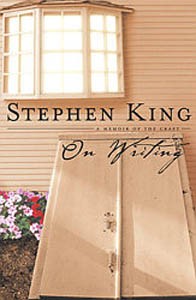
THE WORST-KEPT secret in publishing is that Stephen King’s On Writing: A Memoir of the Craft is as much a confessional autobiography as a guide for aspiring writers. The promise of the cellar door in the cover illustration is kept: King gets down and dirty with the tale of his addictions to booze and cocaine and the recovery that followed wife Tabitha’s tough intervention about 15 years ago.

The book hits the stores Oct. 3, but Simon & Schuster has already been sending excerpts to a free-for-the-asking fan e-mail list. Moreover, The New Yorker ran excerpts, Amazon.com has posted advance reviews from professionals and fans, and Advance Reading Copies have been offered for sale on Web auction sites (although, strictly speaking, ARCs are meant for reviewers only). Of course, given King’s recent history of Web publishing, nothing should surprise us.

Readers familiar with 12-step jargon figured out several books ago that the world’s richest writer had given up booze, recreational drugs, and cigarettes. We also had an idea, based on snippets of autobiography and a steadily increasing list of gutsy women characters overcoming daunting odds, that he had a pretty well-developed feminist consciousness. That’s confirmed, too, with his declarations that his mother–abandoned by their father when Stephen was 2 and his brother 4, and ever after a toiler in menial jobs–was his single biggest influence.

King won’t go so far as to say he’s a feminist, but he has called his writing about women “psychological cross-dressing in order to know the other” (On the Issues, Fall 1995).

Like most writers who write about the craft, he has no startling revelations about the writing process: “The adverb is not your friend.” “If you want to be a writer you must do two things: read a lot and write a lot.” “If you don’t have the time to read, you don’t have the time or the tools to write.” There are no limits on subject matter, “as long as you tell the truth.” “Avoid the passive voice. Omit needless words.”

No revelations there, but it never hurts to be reminded.

What’s new, and quite fascinating, is King’s analysis of what was really going on in some of his books. “There’s one novel, Cujo, that I barely remember writing.” Some blackout.

To readers, they may have been a writer’s imagination, but King says the kidnapper of Misery, the mind-possessing monsters in The Tommyknockers, and the haunting of the blocked writer in The Shining are symbols of his addictions.

A combination of events makes King news right now. He’s recovering from a near-fatal road accident last year. He’s the first big-time writer to totally bypass publishers and release a serialized novel on the Internet. And, in On Writing, he discusses his addictions in graphic terms.

Before a group of family and friends, Tabitha emptied his trash can onto the rug. Out poured, as King writes, “beer cans, cigarette butts, cocaine in gram bottles and cocaine in plastic Baggies, coke spoons caked with snot and blood, Valium, Xanax, bottles of Robitussin cough syrup and NyQuil cold medicine, even bottles of mouthwash.” Interventions are always tricky; this one worked.

Of course, the cynical might say this is just the American Way: we love people who almost die, especially in such dramatic ways, and we love people who publicly confess. That may well be true, but I’d argue there’s more to it.

King respects the darkness we all carry, and he’s not afraid to tap into it. The novel The Dark Half and his collection of essays on the horror genre, Danse Macabre, are filled with the importance of fearless examination of the things that lurk in the cellar. But now the horrormeister, the abandoned kid who did his early writing while living in a trailer park, is finally getting some respect from the literary establishment.

From the September 28-October 4, 2000 issue of the Sonoma County Independent.

© Metro Publishing Inc.

Door to Hell

Photograph by Michael Amsler Door Damaged By Paula Harris THE SO-CALLED Door to Hell has some infernal problems. Let's start with the obvious: some person or persons reportedly took a sledgehammer to it this week. "It was a pretty violent act," says Tom Montan, one of the creators of the sculpture,...

Mill Valley Film Festival

High Notes Mill Valley Film Fest spotlights great music programming By Greg Cahill THERE'S a particularly poignant moment in Grateful Dawg--Gillian Grisman's musical portrait of her mandolin-playing father, David, and his longtime collaborator, Jerry Garcia--in which Gillian's little brother talks about how much he'll miss Garcia, who died in 1996 of...

Milestone Film Retrospective

South. Green Miles Milestone Film retrospective offers parade of cinematic classics By CLASSIC FILMS are getting harder and harder to find on the big screen as the revival theaters shut their doors. But is there a ray of hope on the horizon? Writing about the Hollywood screenwriters' strike, the possibility...

Gaytán

Mind Food Agustín Gaytán puts a new twist on old Mexican favorites By Marina Wolf SOME PEOPLE don't remember anything from their childhoods. Agustín Gaytán remembers everything, and most of it revolves around food. Tamale-making parties for holidays. Moles, the complex sauces ground and mixed by hand in a stone motate....

Aspartame

Killing Me Sweetly Is aspartame really a safe sugar substitute? If not, why is the FDA blocking the release of a better alternative? By Bill Strubbe EVELYN BLAKE'S downhill spiral began in 1994 when she decided to lose weight: she switched to diet sodas and began using Equal as a...

Usual Suspects

Jail guard wins First Amendment rights victory in press case By Francisco P. Riggs TOUTED BY SOME as a victory for public employees, a Sonoma County Jail guard has won an unusual free-speech suit after he angered county employers with his harsh criticism of articles published in this newspaper. The 1st District...

Aspartame vs. Stevia

By Bill Strubbe SO WHAT'S A SWEET tooth and those with diabetes to do? Well, there's stevia, a natural sweetener derived from a plant (Rebaudiana bertoni), consumed for centuries by indigenous tribes in Paraguay and Brazil. The leaves of the "honey plant," which spreads like mint and grows to about three feet, are 30 times sweeter...

Sister Helen Prejean

Last Rites Capital punishment doesn't stand a ghost of a chance against Sister Helen Prejean By Patrick Sullivan I'M A STORYTELLER, a Southern storyteller to be exact," says Sister Helen Prejean, sounding just like one as her honey-smooth drawl slides down the phone line from New Orleans. "I'm just going to...

Sculpture Jam

In a Jam Defiant Sculpture Jam team boycotts review process By Paula Harris LAST YEAR they raised a national ruckus when they unveiled the controversial sculpture that religious-minded critics dubbed the "Door to Hell." Indeed, the piece is so controversial someone vandalized it this week. So what do Sebastopol sculptor...

Stephen King

Stephen King opens up in new memoir By Sophie Annan Jensen THE WORST-KEPT secret in publishing is that Stephen King's On Writing: A Memoir of the Craft is as much a confessional autobiography as a guide for aspiring writers. The promise of the cellar door in the cover illustration is kept: King gets...
11,084FansLike
4,606FollowersFollow
6,928FollowersFollow

