Open Mic: California’s Energy Crisis

Outage Outrage

By Patrick Sullivan

“Maybe you should ask some of those old Eastern Bloc countries how they keep the lights on,” taunted my little brother, calling from Texas to gloat over the blackouts rolling across California. “Maybe Iraq could help. Or there’s always North Korea.”

Then he hung up–but not before kindly offering to mail candles and batteries.

It might be tough to admit, but we deserve all those jibes, all those unfavorable comparisons to poverty-stricken Third World countries. Here we are, citizens of the wealthiest state in the most powerful nation in the world, sitting around in the dark.

Who’s to blame? We could point the finger at the money-hungry energy suppliers that seem to have conspired to limit power supplies and send company profits through the roof. Or we could cast a cold eye on the politicians who pushed the state headfirst into the murky waters of energy deregulation–low-watt Wilson, who signed the bill, and dim-bulb Davis, who never saw this crisis coming.

Or we could blame PG&E and Southern California Edison, whose lobbyists pretty much wrote the deregulation rules that have put out the lights in the Golden State.

Or we could blame all of the above and still have room for one other culprit. Grab a candle, go into your bathroom, and–to paraphrase the ineffable wisdom of Michael Jackson–take a look at the man or woman in the mirror.

No, don’t worry–this isn’t another lecture about personal energy conservation, though God knows we could probably use one.

For far too long, ordinary citizens have assumed we can go about our busy lives and leave important matters like the power supply to folks at the top. Sure, the politicians and the lobbyists and the big corporations pick our wallets every chance they get, but at least they know what they’re doing. At least the trains run on time, at least the economy keeps humming along, at least the power stays on. What’s good for PG&E is good for the state.

Unfortunately, we forgot about greed, we forgot about shortsightedness, we forgot about stupidity. Now we get to pay the price.

Of course, there is one good thing about sitting around in the dark. Maybe we can’t use the computer, or read, or watch TV. But it does give us plenty of time to think.

And that ought to have some folks up in Sacramento sweating bullets.

Patrick Sullivan is the Bohemian‘s associate editor.

From the January 25-31, 2001 issue of the Northern California Bohemian.

© Metro Publishing Inc.

Open Mic

0

Blame Game

By Greg Cahill

SUFFER THE CHILDREN, indeed. When I was a kid, summer vacation was sacrosanct. Those long, hot New England months were the perfect setting for endless hours at the seashore, gorging on cheap pizza, and even cheaper milkshakes. By mid-July, the salty air cleansed our souls, and the sand collected in most of our body cavities. At night, the kids in my neighborhood played kickball, rode bikes through the toxic cloud wafting from behind the mosquito-abatement truck (OK–stupid, right?), or just gathered on door stoops in a rite of passage that usually involved fumbling adolescent sex.

For the most part, summer vacation was 12 weeks of unfettered bliss, with a bit of intermittent hell thrown in for good measure by our older siblings.

Now, Gov. Gray Davis has proposed an end to summer vacation as we know it for middle-school kids in California. He said the little buggers are lagging in their studies. Of course, that may be because California spends less on public education than most states we smugly think of as backwater havens for inbred cousins. But, the governor says, the kids are going to have to pay the piper. What do you expect from a guy named Gray?

The notion that kids are to blame for society’s shortcomings is nothing new. Until the mid-’50s, public schools assigned very little homework. Then the Russians launched Sputnik and the grownups got scared. They heaped on the homework. Things eventually cooled a bit. But when the economy tanked in the ’70s, educators cranked up the volume once again. And when the Japanese began to dominate the hi-tech markets in the ’80s, the schools knew just what to do.

Now kids barely have time to be kids.

Twenty years of neglect has nearly bankrupted the public school system, and Gov. Davis and an army of gray-suited bureaucrats want our kids to spend summer vacation in a stuffy schoolroom atoning for the sins of the state’s tightwad taxpayers.

Those toxic clouds of bug spray didn’t stink half as bad as this sort of pusillanimous public policy.

‘Bohemian’ editor Greg Cahill is still coughing up chalk dust from beating the erasers in front of Whipple School’s coal-fired furnace.

From the January 18-24, 2001 issue of the Northern California Bohemian.

© Metro Publishing Inc.

‘Thirteen Days’

0

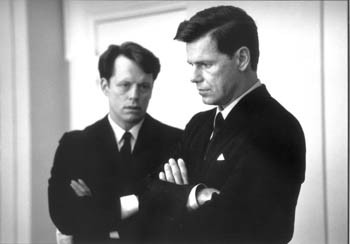
Thirteen Days.

Nuclear Reaction

Atom-savvy trio talks nuclear porn and ’13 Days’

Writer David Templeton takes interesting people to interesting movies in his ongoing quest for the ultimate post-film conversation. This is not a review; rather, it’s a freewheeling, tangential discussion of art, alternative ideas, and popular culture.

“FOR YEARS and years, we lived under this constant threat of nuclear annihilation, a threat so enormous and so devastating, it made it hard to seriously bank on ever having a future. It made it hard to plan for long-term goals. Then the Cold War ended.”

Ken Sitz–clutching a steaming hotdog in one hand, all but bouncing in his wooden chair–delivers these verbal bon mots in a wistful tone of voice that just barely conceals a sharp, nostalgic longing. “When you walk around believing the world might end tomorrow, it makes life interesting. Everything becomes precious, if a little futile. I really don’t think we should easily give that up. I think we should try to hold on to a little bit of that.”

Facing Sitz across his cozy Los Angeles Hills living room are Bill Geerhart and Curtis Samson, similarly armed with frankfurters, similarly nostalgic for those bad old, scary-ass Cold War days. This mood has been heightened by the new film Thirteen Days, which we’ve all just returned from seeing.

An impressive though critically nuked Kevin Costner drama, 13 Days relives the 1962 Cuban Missile Crisis, that special moment in American history when the Kennedy administration came about a hair’s handshake from a bomb-chucking contest with the Soviet Union. Costner plays Special Adviser Kenneth O’Donnell to Bruce Greenwood’s JFK.

The movie’s posters all show Soviet missiles sailing over American landmarks–Mount Rushmore, the Seattle space needle, the famous Hollywood sign–and tease with the words “You’ll Never Believe How Close We Came.”

Sitz, Geerhart, and Samson all liked the posters–but they loved the movie.

“It’s right up our alley,” Samson says laughingly.

It’s true. Since April of 1999, these three gentlemen have calmly and quietly built Conelrad.com, a very cool, very eerie website that is keenly devoted to “all things atomic.” The site takes its name from the old national Emergency Broadcasting System outlet that operated during the early parts of the Cold War and would have spread the word should our corner of the planet have come under nuclear attack.

The website is as packed with kitschy facts and images as a well-stocked fallout shelter, with reviews of the top bomb-themed movies–the Conelrad 100–and Cold War record albums. Then there are the eye-opening reports on the proper way to “duck and cover” and the effects of radiation on real-life witnesses of U.S. nuclear tests.

Sitz, a Web producer for Lazerfish.com, is a pop-music historian whose collection was explored in RE/Search Publications’ Incredibly Strange Music, Vol. 2. Geerhart is an L.A.-based documentarian, and Samson–a retired Air Force captain and the trio’s only actual Cold War military veteran–is an avid collector of nuclear-pulp novels.

For the record, Sitz and Samson were in elementary school during the actual Cuban Missile Crisis. Geerhart wasn’t born yet.

“I remember it pretty well,” says Samson. “I was at school, and they sent us home. It was like the world’s spookiest holiday.”

“I remember going outside to the playground,” adds Sitz, “trying to imagine the playground gone, wiped out by a bomb. I was overwhelmed at the thought that something as big as the playground could be wiped away.”

“During the credits of 13 Days,” I say to Sitz, “you seemed to recognize the person credited with nuclear effects.”

“Peter Kuran!” intone all three.

“The nuclear-porn guy. He’s famous for his footage of nuclear tests,” explains Sitz. “Years ago, he somehow cornered the market on all this footage that was being kept in a secret bunker in the Hollywood Hills. Now whenever a producer needs an atomic bomb explosion, they go to Kuran. He’s built quite a market for it.”

“The guy has archived and processed all this footage,” adds Samson. “He’s even released a few compilation tapes of random atomic tests.”

“But none of them are ever done in any meaningful contexts,” says Sitz, “so it’s a lot like nuclear pornography. Just a bunch of big bombs going off.”

“Some of the images are pretty striking, though,” remarks Geerhart. “Remember that bizarre Chinese test, where they have gas masks on all the horses?” Everyone nods. “Now, there’s an image that sticks with you.”

In regard to the movie’s description of events during the Cuban Missile Crisis, the Conelrad boys admit they were, literally, on the edge of their seats at times.

“I liked that the crisis was told entirely from the U.S. point of view,” Sitz tells us. “It never showed what the Russians were doing or thinking, which is precisely the way to tell this story, since the whole crisis escalated, in part, because we were operating under a severe lack of information. It was almost catastrophic.”

“Over 10 years ago,” he continues, “after the Berlin Wall came down, there was a big summit with a lot of the U.S. and Russian people who’d been directly involved in the Cuban crisis. They got together in Washington and talked about what had happened, comparing notes, putting the pieces together, realizing how paranoia and misinformation fueled the escalation. At one point they were all sitting there going, ‘Shit! It was even closer than we’d thought.’ ”

“The world really had been on the brink of destruction.

A long pause follows. Everyone sits silently, reveling in the tasty terror of that last thought.

“People ask us why we’re so into atomic culture,” says Geerhart at last. “I think the appeal is, everyone likes a secret, and the Cold War era was chock full of really bizarre secrets that are only now coming to light.”

“I thinks it’s deeper,” concludes Sitz. “I think we know we’re too complacent, that our security is illusory. So when we dig into this stuff, or see a movie like 13 Days, we can look up at the sky and say, ‘Wow. We are so lucky to be alive.’ ”

From the January 18-24, 2001 issue of the Northern California Bohemian.

© Metro Publishing Inc.

Usual Suspects

0

Grape growers mount p.r. campaign

By Greg Cahill

CAN’T WE ALL just get along? In an effort to improve feelings between Sonoma County grape growers and the burgeoning cadre of environmental activists now holding civil disobedience training sessions in preparation for a standoff over proposed forced spraying of pesticides to combat a potentially damaging vineyard bug, the Sonoma County Grape Growers Association has published a brochure designed to improve community relations.

According to a Jan. 10 press release, the Common Courtesy, Common Sense guide “signals the intentions of growers to farm responsibly by respecting neighbors, workers, the environment, and our water supply.” It also notes that growers “can no longer assume our rural neighbors [i.e., new suburbanites] have an ag heritage or understanding. Many will have very different expectations.”

Like not being subjected to unhealthy pesticide drift?

Indeed, SCGGA doesn’t mention the steadily rising use of pesticides in Sonoma County, which always ranks high in state pesticide-use figures. But the SCGGA press release does acknowledge that the county is moving ever closer to a monoculture dominated by the almighty grape, which feeds a sea of political campaign contributions. “Grape revenues will likely account for over 60 percent of the county’s farm gates revenues in 2000, up from 54 percent in 1999,” SCGGA president John Clendenen noted. “Strong prices, plus increased yield levels over 1998 and 1999 and expanded acreage, have increased grape revenues. Other major county agricultural products likely decreased in value in 2000 due to lower prices and shrinking production . . . These trends reinforce the importance of grape production, if Sonoma County is to retain its agricultural heritage in the 21st century.”

The Town Hall Coalition, Occidental Arts and Ecology Center, and other organizations are mounting an orchestrated campaign to reverse that trend. But increased reliance on grape production makes forced spraying almost a certainty, since the growers argue that the crop is vital to the county’s economic growth.

Meanwhile, state Assembly-woman Pat Wiggins, D-Santa Rosa, announced last week that she is “encouraged” by Gov. Gray Davis’ willingness to spend $19.6 million this year to fight the glassy winged sharpshooter and the bacterial Pierce’s disease that it spreads to grape vines.

Money talks.

Desolation Row

PROGRESSIVE point man Jim Hightower and an army of Naderistas couldn’t wait for George Dubya to seize the reins of power so the conservative administration would rile up liberals and set the stage for battles over abortion, civil rights, the environment, and other hot-button issues. They didn’t even have to wait for the big guy to put his cowboy boots up on the Oval Office desk–when it comes to the great outdoors, at least. Bush’s nominee for Secretary of the Interior, Colorado Attorney General Gale Norton, and an Interior Department transition team that reads like a Who’s Who of Timber, Mining, and Big Oil Interests has sent shivers down the spines of staffers at the Point Reyes National Seashore and beyond.

And for good reason.

Norton, who was vilified last week by critics for her apparent sympathetic statements about the Confederacy, once opposed the construction of a handicap-access ramp on the Colorado state house because the ramp would diminish the historic architecture. Imagine how she’ll feel about bringing national landmarks and parklands up to code?

Of course, George Dubya isn’t exactly known for cozying up to parklands. During his tenure as governor, Texas ranked 49th among states in the amount of money it devoted to parks. In addition, Bush supported a 1995 law permitting landowners to sue the government for the cost of obeying environmental regulations. And Bush already has made it clear he’ll exploit the sensitive Arctic Wildlife Refuge for its vast oil reserves. But first, Dubya has a bevy of transition-team attorneys looking for ways to overturn President Clinton’s last-minute executive order closing thousands of miles of roads in national parklands to loggers. Bush promised this week to bring “a Western perspective” to parkland management.

Thanks, Ralph.

Usual Suspects likes tips.

JavaScript must be enabled to display this email address.

From the January 18-24, 2001 issue of the Northern California Bohemian.

© Metro Publishing Inc.

Newsgrinder

0

Important events as reported by daily newspapers and summarized by Daedalus Howell.

Monday 01.15.01

Six teen-age inmates tried to escape from Sonoma County’s Los Guilicos (Spanish for “The Gulag”) Juvenile Hall during what authorities are describing as a riot (any excuse to wear those spiffy helmets), reports the PD. The kids made it as far as the tall razor wire-topped perimeter fence before being ordered to the ground and handcuffed. “I’m just shocked,” said Sonoma County Juvenile Justice Commission member Kathleen Harms (whose name is a sentence in itself). Not as shocked as the inmates who were converged upon by 20 patrol cars, K-9 units, and taser stun guns.

Tuesday 01.16.01

San Anselmo magician Patrick Martin will perform for president-elect W at an inaugural dinner Thursday in Washington D.C., reports the Marin Independent Journal. The magic man, who prefers the term “wizard,” does sleight-of-hand moves and makes flames shoot out of coin purses–no word, however, if Martin will make Bush disappear in retaliation for stealing his “sawing the country in half” trick. “If the country is so evenly divided that they feel like [the election result] was almost a gamble, the best thing we can do as a country is come together,” said the sage Martin. His other platitudes include “magic crosses all boundaries,” “everyone needs enchantment,” and “magic is the international language of entertainment.” Funny, we thought that was David Hasselhoff.

Tuesday 01.16.01

Due to recent cutbacks in Earth exploration, the space aliens have canceled crop circle and cow mutilation programs in favor of “crayon graffiti.” Some of the new esoteric markings were apparently discovered on a bench in the Sonoma Plaza rose garden. The Sonoma Index Tribune reports that “the designs, [were] scrawled in red, orange, yellow, blue, purple, and white,” and “included a sun, a snail, and an unknown symbol.” UFOlogists claim that the symbol indicates the exact time that the aliens plan to destroy the Earth and was placed as a courtesy for those who may have plans.

Tuesday 01.16.01

As Northern California’s real estate crunch continues, illegal campers along the Russian River are also beginning to feel the squeeze, reports the Press Democrat. Bob Abbott, a manager at Parnum Paving, which owns various riverfront properties, said the company has hired security guards to patrol some of its land to keep away the homeless. “We are all stewards of the river,” said Abbott. But not every steward knows how to turn a buck out of it–critics of the security efforts believe the river watchers are trying to crack the lucrative market campers have cornered by subletting their campsites to dot-coms and engaging in time-shares. One camper recently leased his refrigerator box to a start-up and moved into a nearby bush. Several other homeless have wheeled in shopping carts as temporary offices for a variety of business until additional refrigerator boxes can be located.

From the January 18-24, 2001 issue of the Northern California Bohemian.

© Metro Publishing Inc.

The Chieftains

0

Celtic Champs

Chieftains take to the road

By Alan Sculley

THE LATEST CD by the Chieftains, Water from the Well (RCA Victor), is being hailed as a return to the venerable group’s Irish musical roots. But Paddy Moloney, the bandleader who has guided the Chieftains through a 37-year history that has seen the group earn their place as the world’s premier practitioners of Irish music, is quick to say he doesn’t necessarily agree with that marketing spin.

It is true, he noted, that Water from the Well is a departure from such recent CDs as The Long Black Veil (the best-selling CD of the group’s long career) and Tears Of Stone. Those CDs featured guest vocals from a host of rock and country stars, including Mick Jagger, Sting, Mary Chapin Carpenter, Bonnie Raitt, and Joni Mitchell. There is no comparable star power on Water from the Well.

But people who perceived past albums as a move away from the Chieftains’ traditional Irish roots were mistaken, Moloney insists. “We never really departed from Irish music. I mean, come on now, The Long Black Veil had the Rolling Stones, but the song we did with them, ‘The Rocky Road to Dublin,‘ is 300 years old,” Moloney says. “And on Tears of Stone, four of the songs are in the Irish language. How much more traditional could one get? It is more or less going out there and asking our friends and great singers from around the world to give us their interpretations of the music and song. That was more or less how it happened.

“So we didn’t really go away from that,” he adds. “In fact, all of our concerts, 80 percent of the music we play, is always traditional Irish music, and maybe the other 20 percent is adding guest artists and a touch of other Breton music or Celtic music, that kind of stuff.”

That distinction noted, Water from the Well, which will be released in February, can certainly claim the title of being one the most homegrown records the Chieftains have made. For the CD, Moloney and the other group members–Martin Fay (fiddle), Sean Keane (fiddle), Derek Bell (harp), Kevin Conneff (bodhran, vocals), and Matt Molloy (flute)–recorded basic tracks in the studio, and then journeyed to 10 Irish counties, where about half of the CD’s 17 songs were supplemented with live performances by the Chieftains with a host of Irish music guests, including the popular Celtic group Altan, banjo player Barney McKenna, and fiddle-layer Ashley MacIsaac.

“It was always our intention . . . to do a musical tour of Ireland,” says Moloney, during a phone interview. “It only took 10 days [to record]. We got going, visited all the little well-known pockets and stuff where traditional music is very popular, and we knew some of our musical cousins, you might say, the Charlie Parkers and Miles Davises of trad music and song. And we filmed the whole thing (for the A&E cable channel).”

“A&E did a great job on it. It’s being shown around the world at the moment. The album was great. I might say half of [the project] perhaps was done in the studio and half on location. In some cases, I faded tracks, that went from studio to live. It was terrific to do. Ten days, as I was [saying], and then put them under the arm, and I went off and mixed it, so the entire package was [done] in a month.”

According to Moloney, merging the studio and live tracks did not present that much of a technical challenge.

“We spent an afternoon in each venue,” he explains. “We had already played, we would have recorded the music in the studio, and I would bring along that tape and listen to it in the location. And we’d just go straight from there straight into it. It was easy for me then to blend across from one to the other and still have the same vibe, the same feel. I love live recordings. You get something out of a live recording, you get the mistakes, but then you get other great little things that happen that don’t normally happen in the studio.”

INDEED, the finished tracks on Water from the Well sound completely seamless and display the variety and vibrance of Irish music, as all six Chieftains showcase an ability to interweave their instruments that seems to have grown almost telepathic after the 25 years in which the current lineup has remained intact.

The music ranges from the winsome tones of “Bean An Fhir Rua (The Red Haired Man’s Wife)” to the spirited multi-faceted romp “The Lovely Sweet Banks of the Moy” to the cinematic changes in mood and spirit of “Lots of Drops of Brandy.”

Moloney put together the first edition of the Chieftains in 1963–ironically the same year that the Rolling Stones debuted. But it wasn’t until the mid 1970s that the group truly began to gain widespread recognition outside of their homeland. In 1975, the Chieftains played a triumphant show at the Royal Albert Hall in London to 6,000 people and capped the year by being voted group of the year by Melody Maker, England’s leading music magazine. A year later, the group recorded music for Stanley Kubrick’s epic 1976 movie Barry Lyndon and won an Oscar for their efforts. The 1980s saw the group’s popularity continue to swell. In 1983, they went to China for a two-and-a-half week tour of that country, becoming the first group to perform on the Great Wall. The group finished the decade on a high note, when in 1989 the Irish government officially named the Chieftains Ireland’s Musical Ambassadors.

But the 1990s would see the Chieftains rise to even greater heights of popularity as the group recorded several albums with all-star casts of guest stars.

Considering the Chieftains’ many achievements, it might seem that the group could feel considerable pressure to live up to expectations with every project. But Moloney says the group takes a low-key approach to its music and doesn’t get distracted from the task at hand. “With the band there’s no big sit down or weeks on end of rehearsing and, ‘Oh you should play this note this way.’ That doesn’t go on,” Moloney says.

“We’re six individuals with our own style, everybody with their own style. And we’ve been together for so long now, that it’s a great happening. We don’t like to discuss or rehearse too much, and just go for it. The pressure to do anything that we do, that’s not the way I look at [things]. I get excited about something and Matt has often said ‘I don’t know what he’s up to, that fella.’ I pursue it to the end because I can see the music, and I can see what I want to do. And I can see how it’s going to turn out.”

“I’ve been fairly OK up to now, after 36 albums and 18 nominations and six Grammys.”

Random notes: Sassy jump-blues diva Lavay Smith & her Red Hot Skillet Lickers will rattle the rafters Jan. 27 at the Rancho Nicasio. . . . Bassist Tony Levin, probably best known for his stint with King Crimson and session-work with Peter Gabriel, brings his classically informed jazz/rock fusion to the Inn of the Beginning on Jan., 28. Levin, whose distinctive bass has graced recordings by Lou Reed, Paul Simon, and many others, will perform with ex-King Crimson member Pat Mastelotto and the California Guitar Trio . . . Cajun superstars Beausoliel, with fiddler Michael Doucet, roll into the Mystic Theatre in Petaluma on Feb. 2 . . . Teen violinist Hilary Hahn, who completed a three-day engagement with the Santa Rosa Symphony this week, grabs her share of headlines, but isn’t the only noteworthy young soloist visiting with North Bay orchestras. Flutist Gary Schocker, known for his poetic and virtuosic playing, will join the Napa Valley Symphony and conductor Asher Raboy for two concerts Feb. 4 and 6 at the First United Methodist Church in Napa. Schocker, who has recorded extensively, will perform works by Rota, Rodrigo, Britten, and Dvorak. For details, call 707/226-8742.

The Chieftains perform, with guests Joan Osborne and Natalie McMaster, on Wednesday, Jan. 24, at 8 p.m. Luther Burbank Center for the Arts, 50 Mark West Springs Road, Santa Rosa. Tickets are $36.50-$46.50. 546-3600.

From the January 18-24, 2001 issue of the Northern California Bohemian.

© Metro Publishing Inc.

Raymond Barnhart

0

Raymond Barnhart has an affinity for the unusual

By Gretchen Giles

This article originally ran in 1996, in conjunction with a major retrospective of Raymond Barnhart shortly before his death. Barnhart was a major influence on a number of North Bay artists, including Kurt Steger, whose work is now on exhibit at the Sonoma Museum of Visual Art.

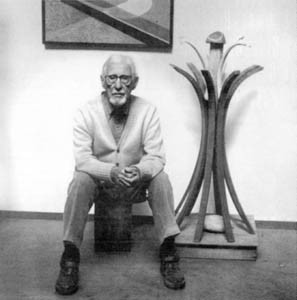
Rock, feather, stone. Shell, glass, wood. Skull, bone, and skull bones. These are some of the elemental objects that Sebastopol artist Raymond Barnhart, 91, gathers to create his assemblages, using them to transcend their original form, using them to honor their past. By now we’ve all been New-Aged to death by artists who find a muddy profit in natural objects. Mother Nature has gone commercial; you can buy her at the mall. However, Raymond Barnhart is not just some old man who found a pretty shell, tacked it on to a piece of driftwood, and voila!–$34.95. Barnhart is the real thing. He is an artist with a huge career behind him, exciting work before him, and a collection of pieces that are stunning in their simple complexity.

“Raymond Barnhart: A Chronological Review,” now at the California Museum of Art in Santa Rosa, traces Barnhart’s career from an adolescent pen-and-ink drawing composed in 1913, to his years as a painter and professor at the University of Kentucky, to his transformation into an assemblagist, a maker of profound three-dimensional collages created from found objects.

Barnhart’s career has almost spanned the century, his work influenced by the Bauhaus master László Moholy/Nagy, color deconstructionist Josef Albers, and painter José Gutierrez, who developed acrylic paint. He has traveled all over the world, setting up studios on-site in foreign countries and obscure parts of this country, and lived for months in Europe in his VW van (when he was in his youthful 70s). He has seen the world, touched it, unearthed it, yanked it from dust and abandoned buildings, and brought it home.

Speaking by phone from his west county home, Barnhart explains a little of what it was like to be involved with the movements of his youth. His voice is rough and aged, but his ideas are not. Barnhart speaks with the meticulousness of an academic, carefully spelling names and pausing politely to ensure I get it all.

“The idea was how to make things by getting acquainted with the materials and following the demands of the materials,” Barnhart says of his work with Moholy/Nagy. “We would study things in a very fresh sort of way. It was a matter of discovery by examining the material freshly all over again and determining what the material wanted to do.” This is exactly what Barnhart has done, particularly with his later work.

This show starts young and evolves with the vision of the maturing artist, as Barnhart’s mediums and ideas changed. The paintings show a range of styles and influences, from still lifes to a Dali-like perspective piece: the work of an alert restless mind trying different things. Barnhart is less than pleased about the shortage of space available to show his early work.

“Of all the paintings you see,” he says, “that’s only one of many many things that I did. It looks as though I just jumped around. I didn’t, but I would need a room four times that size to show them correctly.”

While the paintings are pleasing, and an important key to his later work–which, though no longer involved with canvas retain a painterly manner, examining color and often boxed into an organic frame, held tightly by the beautiful weathered wood that is one of Barnhart’s passions–the whole exhibit stops short and explodes with the assemblage works.

“A lot of my work has to do with things that just happened,” says Barnhart. One of his latest pieces has been brought to the museum from his garden. It’s a long, weathered piece of wood draped with a Japanese print, and aligned along it is a pitchfork collaring a bone and holding in its tines an abalone shell topped with a crown of thorns. Of this piece, which is untitled, Barnhart says,” I respond to the possibilities that I get from the objects. I picked up this wonderful pitchfork that I found years ago on a trip to New England. I set it in the hallway, and I had this pelvic bone and I found that they hooked together. The Japanese script was unintelligible, and it kind of kept the whole thing a secret, you see.” The crown of thorns was picked up years ago after a religious procession in Mexico, and the shell “happened to have a hole in it.”

Barnhart’s home and studio are cluttered with beautiful castoffs that he pairs in an attempt to create a new harmony among disparate objects. “These things come together a little bit at a time,” he says. “I have several going at once.” If one piece isn’t working, he lays it aside until he lights upon an object or an idea that will effect a cohesion within the piece. His work is created from the respect he has for his found objects, and the sense of each object’s own destiny, “a psychological appreciation of what it has become.” One leaves his show feeling deeply refreshed, sluiced by the minute harmonies he has wrought.

Co-curator Gay Shelton says of Barnhart’s work, “What he does is so simple, but so deeply seen.” Yes.

From the January 18-24, 2001 issue of the Northern California Bohemian.

© Metro Publishing Inc.

Charles Portis

Charles Portis’ novels get a second shot with American readers

By Sophie Annan

FOUR of Charles Portis’ novels are being reissued. Was that a resounding “Who?” Thought so. When casual readers know the name Portis at all, which is rare, it’s usually as the author of True Grit.

But in certain cultish circles, Portis is known for his deadpan comic novels Norwood (1966), The Dog of the South (1979), Masters of Atlantis (1985), and Gringos (1991)–all being reissued by Overlook Press in attractive paperback editions. (What an appropriate publisher for such an overlooked, underrated writer–although chances are the folks at Overlook had something else in mind when they named their company.)

This is the man of whom humorist Roy Blount said, “The way I decided whether to marry my wife: I gave her Norwood and waited. And then I heard her laughing upstairs.”

Esquire writer Ron Rosenbaum swears other writers consider Portis to be “perhaps the least-known great writer in America” and thinks he “will come to be regarded as the author of classics on the order of a 20th-century Mark Twain.”

Portis writes road stories that spend most of their time lost on the dusty detours, celebrating the unexpected and the absurd. Characters tell their life stories in non sequiturs. Come to think of it, their life stories are non sequiturs.

My favorite Portis piece is a ’60s essay for the Los Angeles Times, in which the author goes camping in Baja California and is visited by the ghost of one of the early missionaries (possibly Jesuit Father Eusebio Kino, but don’t take that to the bank) who quotes at length, with hilarious effect, from his diary of travels in that strange, desolate land.

That piece sent me on a Portis hunt, which turned up Norwood, a novel starring a hapless guy who sets off from Texas searching for a guy who absconded with $70, and winds up in New York. Then came True Grit. I was much too cool back then to touch anything associated with John Wayne, so I passed on this novel for years, and then found out I’d been missing a true comedy, a road story with a gutsy girl as protagonist.

When Gringos came out, I was living in Mexico. A neighbor once remarked of our little pueblo, “you could just write all this down and pass it off as fiction.” This may be just what Portis did in this tale of neo-hippies in search of psychic happenings, archaeologists illegally unearthing Mayan tombs, and a quest for UFO-landing sites, all of them driving protag Jimmy Burns nuts. The novel is set in Yucatan, but his characters and their loopy concerns are the very same as those I ran into on the Pacific Coast and in the west central highlands. (This is the danger of knowing the territory–a novel can read like straight reporting.)

In The Dog of the South, hapless Ray Midge tries to track down his faithless wife through their credit-card bills, embarking on an odyssey from Arkansas through Mexico and Belize to Honduras, accompanied by the most inept con man in American literature.

Masters of Atlantis is an absurd journey into an America of misfits and True Believers–exemplary Portis. In it, a society dedicated to preserving the arcane wisdom of the lost city of Atlantis winds up in a momentous gathering at (what else?) a mobile home park in East Texas.

Truth or fiction? I’m betting pretty much truth. Arkansas-native Portis has worked as a reporter for several publications, including the Commercial Appeal in Memphis, the Arkansas Gazette in Little Rock, and the New York Herald Tribune, which sent him to London as a correspondent. But journalism didn’t take. Not enough colorful language is my guess.

We’re all surrounded by goofiness; it takes the eye and the ear of a comic genius like Portis to recognize and record it.

Why hasn’t he written more? Beats me. He’s had a couple of autobiographical pieces in the Atlantic Monthly in the last few years about military service in Korea and growing up in WWII-era Arkansas. We can hope they’re part of a longer work.

Maybe he just doesn’t feel the need. Maybe he’s rich. A state of Arkansas web site on “some of the country’s most prominent people who were either born in the state or lived here at some time in their lives” mentions two incomes. One is WalMart’s: when Sam Walton died in 1992, the chain’s “annual sales surpassed $44 billion.” The other is the $300,000 Portis received for the movie rights to True Grit. That’s a very Portisian touch. Back in 1969, 300K probably bought a nice apartment building or trailer park.

Maybe he invested well and is sitting pretty.

From the January 18-24, 2001 issue of the Northern California Bohemian.

© Metro Publishing Inc.

The Wide-Eyed Gourmet

Turning over a New Leaf

By Marina Wolf

SOME SAY cities are alive, dynamic accretions of inanimate objects that have rhythms and reasons of their own. I support the general idea, at the risk of sounding defensive, because it would go a long way toward explaining why it is impossible to keep my cookbooks organized. Instead, they organically come to rest, flotsam in the cosmic ebb and flow.

Oh, I try to assert some guiding principles, especially on those painful but strangely invigorating occasions when the bookcases have to be physically relocated. There are giddy, weeks-long honeymoons, when I pretend that I know what I’ve got and where it needs to go. Essentials go at eye level–ergonomics, right?–while never-used titles are slotted away on the bottom shelf, where they slowly turn to coal under pressure from the shelves that always collapse on top of them.

“Back-to-basic” books (preserving foods, pioneer foods, etc.) are right below the essentials; below that is the food literature section, the barbecue collection, and a small assortment of Japanese cookbooks. Indian foods make a fair showing on the upper shelves, as do herbs-and-spices and dessert cookbooks, all arranged according to relative strength and history of my interest.

SEE, I DO TRY. And yet, sooner or later, the books reassert themselves, chaos with a conscience. Shelves topple, depositing whole sections on the floor to await a second glance before getting reshelved (fly, little books, be free! . . . oh, look, I forgot I had that one!). Some books come off the shelf for a meal and just lie on the counter, their pages held open by a greasy butter dish–or worse, stuck open by some sugary substance–until the next cooking session shoves all earlier readings aside. And here or there books drift off for research purposes, lone expatriates to the bedroom or living room. The point is, once pulled, the books never return to where they supposedly belong.

The bread section, for example, was well used back in the day when I was voluntarily underemployed and had the time to putter. Out of loyalty to that pursuit, I still reshelve them near the eye-level books. But inevitably they drift down to waist level, a mute reproach to my neglect. Other items–edible insects, medieval cookery, kitchen magick, and the like–are most comfortable on the permanent outback of the collection. I always think I’m going to use them, and place them accordingly, but these fringe titles seem to know they’re fringe, and briskly migrate to the far corners.

It has been suggested that perhaps I would have fewer problems with tripping over books and moving books and finding books if there were fewer books. This is a simplistic view of the situation. I’ve seen people with two cookbooks still not be able to find them in the kitchen. Anyway, if we were to continue the notion of a conscious or animate book collection, then those books are drawn to my bookcases by forces beyond my control, and even beyond human perception. It is true that my profession renders me incapable of rejecting stray books, when they appear on the doorstep, but the point is they appear, sometimes without my asking.

It has also been suggested that this tumbled, jumbled state of affairs is more or less my fault. I could, it is said in a carefully-neutral tone of voice, catalog my collection–either Dewey Decimal or Library of Congress–and shelve accordingly. While acknowledging the reason behind such suggestions, I resist the end result. How can a system set up by someone else possibly work for my own needs, when I myself don’t even know what I might need next?

The books seem to be able to sort it out on their own.

From the January 18-24, 2001 issue of the Northern California Bohemian.

© Metro Publishing Inc.

Fair-Trade Coffee

0

Bean There

Fair-trade coffee: Coming to a café near you

By Tamara Straus

HERE’S a breathtaking statistic: The $3 many Americans shell out every day for a latte at Starbucks is equivalent to the daily wage of a Central American coffee picker. Nonplussed? Here’s another heart-stopper, specially designed for the nongourmet coffee drinker: Those $3.95 cans of Maxwell House and Folgers you pick up at your local supermarket, well, the beans that fill them are bought for around a quarter and come from corporate farms that use environmentally poisonous pesticides and clear-cut forests to produce the highest possible yields.

This may just serve as more fodder for those already sufficiently demoralized by the practices of big business. But what is interesting about such stats is that they are being used to create a new American political animal: the ethical consumer.

True, the ethical consumer may pale in comparison to the do-gooders of old–the abolitionist, the suffragist, the fighter for civil rights or no nukes–since his primary act is figuring out how to ethically empty his wallet. Yet considering multinational corporations like Microsoft have annual revenues higher than the GNP of most countries–and deregulation in the United States is on the rise–ethical consumerism may be the best political weapon Americans have got.

Enter Fair-Trade Coffee

Consider the example of fair-trade coffee, or “politically correct coffee,” as Time magazine has dubbed it. Fair-trade coffee sells for a minimum of $1.29 per pound–which goes directly to coffee farmers, not to “coyotes,” the middlemen who pay farmers usually no more than 35 cents a pound. It is grown on small farms, which tend to cultivate in the traditional way: under the rainforest canopy and without pesticides. And because fair-trade coffee has doubled farmers’ annual incomes, more than 500,000 people in 20 developing nations are now living above the poverty line.

Nothing wrong with that. Indeed, those who hear about the benefits of fair-trade coffee tend to support it. The only problem is that a nationwide advertising campaign is needed to get the word out, and large coffee retailers–the ideal candidates for such an effort–will not do it, since buying coffee at fair-trade prices would cut into their profits.

“Oh, it’s the same old story again,” you might say. “Good ideas, impossible to implement.” But what is different about the fair-trade coffee campaign is that, thanks to a coalition of nonprofits, good ideas are being implemented using ethical consumerism as a bargaining chip.

Dutch Innovation

The story of fair-trade coffee begins in 1988, in Holland, motherland of the international human rights movement. A group of fair-traders selling coffee and other products at a crafts’ market decide to create a fair-trade seal–a label that will let customers know the product was bought at a decent price. They call the seal Max Havelaar after a bestselling 1860 book about the exploitation of Javanese coffee workers by Dutch merchants. In doing so, the traders remind their countrymen that coffee is a commodity tied to the history of colonialism.

In the same year, the Fairtrade Labeling Organization is founded, an umbrella institution for European certification organizations like Max Havelaar, which have begun to help coffee farmers create fair-trade cooperatives and connect them to retailers in the North. During the next decade, FLO’s members draw a whopping half-million farmers. The reason? Coffee farmers receive a tripled-per-pound price, and FLO’s arrangement eliminates their dependence on middlemen.

The farmers’ end of the bargain is also relatively simple. In exchange for letting TransFair England, for example, inspect their farms and collect 10 cents per pound on coffee sold, coffee farmers get the right to use the fair-trade logo.

By 2000, FLO’s efforts were a success. Fair-trade coffee cooperatives have spread from Guatemala to Indonesia, and the TransFair certification seal is found in 16 European countries as well as Japan and Canada. Worldwide, over 100 fair-trade coffee brands are sold in approximately 35,000 markets. Organic fair-trade coffee is also on the rise, as farmers are using their increased incomes to cultivate coffee without chemicals.

America the Late

“Where were Americans during all this time?” you might ask. Well, for one, wasting time over cups of joe. Americans consume an estimated one fifth of all the coffee trade, making it the largest consumer in the world. Moreover, as anyone who lives near a Starbucks outlet knows, Americans have developed a yen for gourmet coffee, for cappuccinos and lattes, and decaf-mocha frappés.

This is the main reason Paul Rice, who worked with coffee farmers in Nicaragua for 11 years, founded a U.S. wing of TransFair in the summer of 1999. “I just took the next logical step,” says Rice. “In Nicaragua I saw fair-trade coffee cooperatives find markets in Europe, and I assumed the same could be true for the United States.”

Rice started local. FairTrade USA’s headquarters in Oakland meant it could take advantage of the San Francisco Bay Area’s historic gourmet coffee tradition and liberal politics. Within four months, the Bay Area’s reputation proved true: 12 local roasters signed up to sell fair-trade coffee. Today 35 fair-trade brands are available in 122 Bay Area supermarkets and cafés. The city councils of San Francisco, Oakland, and Berkeley also have passed resolutions to support the sale of fair-trade coffee.

Fair-Trade Frappaccinos?

But fair-trade coffee advocates’ real coup did not come until April 2000, when Starbucks, which controls 20 percent of the U.S. specialty-coffee industry, agreed to carry fair-trade.

Of course, the agreement did not come without a fight. At first Starbucks refused to carry fair-trade, explaining that until there was consumer demand it could not sell the politically correct bean in its 2,300 stores. But after being subject to a year-long campaign organized by Global Exchange, a San Francisco-based human rights organization–a campaign that eventually culminated in plans to stage protests at Starbucks in 29 cities–the retailer decided to avoid a public relations nightmare and sell the beans.

“Fair trade gets the benefit back to the family farmer,” said Starbucks vice president David Olsen shortly after the decision was made. “It is consistent with our values.”

Starbucks’ decision to sell fair-trade coffee, however, does not mean the company will brew it in their stores. This will depend on “consumer demand,” say Starbucks’ corporate heads. So, once again, this will mean that Global Exchange and other fair-trade coffee advocates will have to prove–through a combination of grassroots organizing, educational outreach, and threat of protest–that a demand exists.

Deborah James, fair-trade director of Global Exchange, says that consumer demand is not the chief problem. “Since fair trade became available at Starbucks in October,” she says, “consumers have told us that they are buying it by the pound and that they want to see it as a ‘coffee of the day,’ something that Starbucks, it seems, will not do.”

Alan Gulick, Starbucks’ public affairs director, says the reason Starbucks does not serve fair-trade coffee as a daily brew is because “the volume of fair-trade coffee needed is not available.” Yet, according to Nina Luttinger, communications manager of TransFair USA, there is evidence to the contrary. She reports that in 1999, of the 60 million pounds of fair-trade coffee produced globally, only half sold on the fair-trade market.

“This meant that farmers had to sell their product through the usual channels and got paid much less,” says Luttinger, who doubts that the fair-trade coffee sales figures will be drastically different in 2001.

Is Fair Trade Just for Gourmands?

Still, Starbucks’ introduction of fair-trade coffee is a victory for the movement. And the victory extends beyond the creator of the Frappaccino. During the 18 months fair-trade coffee has been available on the U.S. market, the number of retailers has grown from 400 to 7,000, according to Paul Rice. In November, Safeway, the supermarket king, launched fair-trade coffee in 1,500 of its stores nationwide–a decision Rice says came about not through threats of protest but through the supermarket’s “enlightened self-interest.”

“Companies are coming to me now,” says Rice. “And some, such as Choice Organic Teas, have decided to eat the cost of buying fair trade rather than raise prices. They want to support fair trade, introduce it to their customers, and figure losing a few cents now is worth it.”

But what about the big guns of the coffee industry: Nestlé’s, Folgers, Maxwell House? “I think it’s going to be a challenge to convince companies who are paying less than 50 cents and selling it for around $4 that they should pay $1.29,” says James.

“Fair-trade coffee successes so far have all been in the gourmet coffee industry.”

This fact makes activists in the ethical consumer movement cringe. For it raises the question of how wide the movement can be. Will enough Americans care about labor conditions in the Third World and the environmental problems created there by American coffee corporations to force real change in the industry? Will they, as James has decided, “never voluntarily put someone in a situation of poverty, exploitation, and debt just to enjoy a cup of joe.”

You may say no, but activists like Ronnie Cummins, national director of the Organic Consumers Association, argues that Americans have little choice: “We have an obligation to the environment; we have an obligation to human rights, to drive unsustainable coffee off the market.

“We need to reach that point, like when it became socially unacceptable to buy products from South Africa because of apartheid.”

The Fair-Trade Pitch

How fair-trade advocates will accomplish this sort of mass educational outreach depends on their mission and point of view. Rice, who works directly with coffee retailers, argues that the introduction of fair-trade in the American gourmet coffee industry is having a domino effect. “Corporations realize they must meet the demands of their customers,” says Rice. “And if their customers want fair trade, they’ll provide it.”

James, whose organization Global Exchange is focused on international social-justice issues, believes consumer knowledge about globalization is the key. She and her colleagues have tied coffee farmers’ work conditions to the more familiar issue of sweatshop labor.

“We call nonfair-trade coffee ‘sweatshop coffee’ because many Americans know about sweatshop conditions in Asia and Mexico,” she says. “They know the people who make Nike sneakers and Gap T-shirts are paid inadequate wages and work in unhealthy conditions.”

Cummins, whose Organic Consumers Association is devoted largely to environmental issues, also uses the term “sweatshop coffee” in its activist literature. But he tries to get consumers to think about agricultural and environmental sustainability, too.

“I tell people that the way coffee was grown for hundreds of years had a low impact on the environment,” says Cummins. “And that with sun-grown coffee–the ‘innovation’ of the international coffee cartel–what you do is chop down everything and use a lot of chemical fertilizer, pesticides, and so on. In essence, you destroy the environment.”

European Sophistication

Activists like James and Cummins have wondered why Europeans are ahead of Americans in bringing fair-trade to market. Since 1998, seven different products–coffee, tea, chocolate, bananas, honey, sugar, and orange juice–have been available with the fair-trade label in Europe. Fair-trade products were also available in Japan and Canada before the United States. Why were we behind?

“In Europe, the media [are] better,” says Cummins. “The political system is based on proportional representation. There are the same number of people here as in Europe who support Green Party ideas; the difference is they have 10 percent of the seats in the European parliament, and we have no seats in Congress.”

Cummins adds there is mass support for organic food–and mass antipathy toward chemically-altered or genetically-engineered food–because of Europe’s Nazi past, which makes people extremely wary about a super-race of anything or genetic enhancement. The recent outbreak of mad cow disease is also an undeniable factor.

“We just can’t comprehend what it feels like to know that you might die because the government lied to you about industrial agriculture practices,” says Cummins. “Europeans now say: ‘Never am I going to just accept something because establishment science and the government tell me it’s safe.’ ”

As for a more sophisticated understanding of globalization, James says Europeans are ahead because they are able to tie the lessons of their colonial past to today’s global future.

“Europeans have a direct understanding that the system of agriculture we have now–where farmers are exploited and their products are unfairly sold–is based on a colonial system,” she says. “Whereas in the United States we do not feel responsible for the fact that in the Windward Islands of the Caribbean people there are entirely dependent on banana plantations because we put them there.”

James would like to link nonfair-trade coffee to the history of colonialism or the concept of “neocolonialism,” but she says, “If you bring up the word colonialism or imperialism here, people have no idea what you’re talking about.”

The Future of Ethical Consumerism

Although Americans may be somewhat blind to history, polls show they are awake to the present. According to a December 1999 US News & World Report poll, six in 10 Americans are concerned about the working conditions under which products are made in the United States, and more than nine in 10 are concerned about working conditions under which products are made in Asia and Latin America.

This is good news for ethical consumerism. It shows that consumer choice based on criteria of economic justice and environmental sustainability has a future. But does it mean that ethical consumerism can grow beyond the 50 million Americans who supposedly practice it? Can ethical consumerism–without government support and positive mainstream media attention–be viewed as something other than the ultimate knee-jerk liberal issue?

Argues Ronnie Cummins: “It’s a very good historical trend that consumers are becoming more aware, but unless trade unions and churches, consumer groups and environmental groups work together–North and South–we’re not going to solve this problem. Sure, we can alleviate some of our bad conscience on a day-to-day basis, but that’s not getting to the root of the problem, which is unchecked globalization. Even if you can produce cheaper in China, the hidden costs of doing something like that are pretty darn convincing.”

From the January 18-24, 2001 issue of the Northern California Bohemian.

© Metro Publishing Inc.

Open Mic: California’s Energy Crisis

Outage Outrage By Patrick Sullivan "Maybe you should ask some of those old Eastern Bloc countries how they keep the lights on," taunted my little brother, calling from Texas to gloat over the blackouts rolling across California. "Maybe Iraq could help. Or there's always North Korea." Then he hung up--but not before...

Open Mic

Blame Game By Greg Cahill SUFFER THE CHILDREN, indeed. When I was a kid, summer vacation was sacrosanct. Those long, hot New England months were the perfect setting for endless hours at the seashore, gorging on cheap pizza, and even cheaper milkshakes. By mid-July, the salty air cleansed our souls, and the sand...

‘Thirteen Days’

Thirteen Days. Nuclear Reaction Atom-savvy trio talks nuclear porn and '13 Days' Writer David Templeton takes interesting people to interesting movies in his ongoing quest for the ultimate post-film conversation. This is not a review; rather, it's a freewheeling, tangential discussion of art, alternative ideas, and popular culture....

Usual Suspects

Grape growers mount p.r. campaign By Greg Cahill CAN'T WE ALL just get along? In an effort to improve feelings between Sonoma County grape growers and the burgeoning cadre of environmental activists now holding civil disobedience training sessions in preparation for a standoff over proposed forced spraying of pesticides to combat a potentially damaging vineyard...

Newsgrinder

Important events as reported by daily newspapers and summarized by Daedalus Howell. Monday 01.15.01 Six teen-age inmates tried to escape from Sonoma County's Los Guilicos (Spanish for "The Gulag") Juvenile Hall during what authorities are describing as a riot (any excuse to wear those spiffy helmets), reports the PD. The kids made it...

The Chieftains

Celtic Champs Chieftains take to the road By Alan Sculley THE LATEST CD by the Chieftains, Water from the Well (RCA Victor), is being hailed as a return to the venerable group's Irish musical roots. But Paddy Moloney, the bandleader who has guided the Chieftains through a 37-year history that has...

Raymond Barnhart

Raymond Barnhart has an affinity for the unusual By Gretchen Giles This article originally ran in 1996, in conjunction with a major retrospective of Raymond Barnhart shortly before his death. Barnhart was a major influence on a number of North Bay artists, including Kurt Steger, whose work is now on exhibit at the Sonoma Museum...

Charles Portis

Charles Portis' novels get a second shot with American readers By Sophie Annan FOUR of Charles Portis' novels are being reissued. Was that a resounding "Who?" Thought so. When casual readers know the name Portis at all, which is rare, it's usually as the author of True Grit. But in certain cultish...

The Wide-Eyed Gourmet

Turning over a New Leaf By Marina Wolf SOME SAY cities are alive, dynamic accretions of inanimate objects that have rhythms and reasons of their own. I support the general idea, at the risk of sounding defensive, because it would go a long way toward explaining why it is impossible to keep my cookbooks organized....

Fair-Trade Coffee

Bean There Fair-trade coffee: Coming to a café near you By Tamara Straus HERE'S a breathtaking statistic: The $3 many Americans shell out every day for a latte at Starbucks is equivalent to the daily wage of a Central American coffee picker. Nonplussed? Here's another heart-stopper, specially designed for the nongourmet...
11,084FansLike
4,606FollowersFollow
6,928FollowersFollow