Open Mic

Open Mic

Lost in Space

By Lisa Martinovic

SO NOW it’s official: after summarily debating the president’s proposed budget and tax cut, the Senate made like a good doggie and dutifully delivered 54 well-fed and manicured thumbs up onto the doorstep of young Master Bush. But before we lie back and enjoy the pillaging of our national coffers, I want to make sure that we’re clear on how this coup came to pass.

Apparently one day on the campaign trail, then candidate Bush woke up, rubbed his sleepy eyes, and took a good, hard look around. He was shocked–shocked!–to find a looming energy crisis, faltering New Economy, schoolyard massacres, homeless people, ominous signs of global warming, and a seemingly endless parade of ills afflicting this great land that The Family deemed would soon be his. Then he cogitated for the full length of his attention span and, when the second hand was on the 12 again, he slapped his palm against his forehead and exclaimed: “Well heck sake, the problem with America is that rich people just don’t have enough money!” And thus the tax cut was born.

Clearly, the man is a genius.

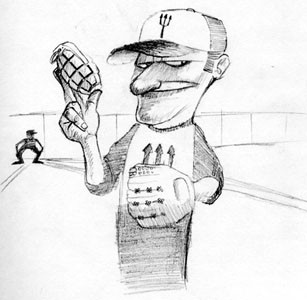
The wisdom of the Bush vision came to me with the speed of the Nasdaq free-fall the moment I saw Dennis Tito strapping into the Russian space capsule. Gosh, I realized, there are probably gobs of other millionaires who can’t afford this basic wealthy person’s right–corporate titans who as children yearned to be the next John Glenn, but instead of following their bliss spent their lives in service to God and country: building fortunes on the backs of happy, toiling wage slaves.

You see, the rich are different from you and me: they have presidents and senators to look out for them. So naturally, Bush wants 45 percent of that $1.35 trillion distributed to the wealthiest 1 percent of Americans. This is as it should be. Since most Americans are not clever or disciplined enough to manage their own money, it’s up to the rich to serve as wise stewards of our collective fortune by trickling down upon us no more than our little ol’ brains can handle.

God also intended that the rich act as inspiration for bottom-dwellers. In their Armanis and limos and, yes, now in outer space, the rich show us what it’s possible to achieve with a firm commitment to putting profits before people, the environment, and any hope for a livable future.

AT A PRESS conference a couple of days after the U.S. Senate vote, the president was asked how he planned to help consumers cope with spiraling energy costs. Mr. Bush pooh-poohed long-range, systemic approaches and instead crowed that his tax cut would put “money in their pockets to deal with high energy prices.” Touché, King George! And I’m sure it goes without saying that people who are too poor to pay taxes (and hence won’t benefit from tax relief) can jolly well downsize themselves into curbside cardboard boxes where they won’t have to worry about energy bills at all!

Well, before my dim bulb got a compassionate conservative re-education, I had this silly idea. I thought, what if we took that whole proposed tax grab–I mean cut–and shared it with everyone equally, say, by investing in solar power. I did a little research, and it turns out that $1.35 trillion worth of installed solar power would generate one half of all our home electricity needs. Indefinitely. It seemed like a good idea at first; then I looked up into the night sky, considered what was orbiting the big picture, and came to my senses.

When it comes down to a choice between cheap, clean, renewable energy for the masses or joy rides in space for deprived millionaires, Mr. President, you’ve got my vote, too.

Oh, and thanks, Dennis, for helping us understand why this tax cut is “just right.”


Lisa Martinovic is a local writer, slam poet, and creativity coach at .


From the May 17-23, 2001 issue of the Northern California Bohemian.

© Maintained by .


Summer Guide: Music Events

0

Heat Wave

Summer sizzles on North Bay arts scene

Edited by Greg Cahill and Patrick Sullivan

READY, SET, kawabunga! Like a smiling swimmer leaping from the high dive into the sparkling waters of your local swimming pool, we’re taking another exuberant splash into the season of warm weather, cold drinks, and lazy days at the beach. As always, under this hot sun a thousand flowers bloom across the North Bay art scene. Music festivals, parades, art shows, dance performances, studio tours: they’re all there, or at least quite a few of them, waiting for you to shake the sand from your swimsuit and point your feet toward fresh sources of fun.

So dive right in!

May

Rose Parade A rose by any other name is not so sweet as the North Bay’s biggest city pours on the small-town charm. The 107-year-old Luther Burbank Rose Parade Festival, replete with 4,000 marchers in 120 units, kicks off May 19, at 10 a.m., with Clo the Cow as grand marshal. Among the participants will be floats, drill teams, bands, clowns, cars, and equestrians. The parade begins at 10 a.m. at Sonoma Avenue and E Street. Curbside viewing is available along the entire route: E Street, Third Street, and Santa Rosa Avenue. The event also offers an assortment of food, music, exhibits, an Italian street painting gallery, and other activities along First Street between Santa Rosa Avenue and D Street. Free. 707/542-7673.

Friday at Falkirk The Falkirk Cultural Center kicks off its summer cultural series with a tribute to George Gershwin on May 25, from 8 to 11 p.m. On June 29, it’s an evening of ragas from North India, and on July 27 listen in for the unmistakable sounds of flamenco. Local caterers craft goodies to complement the entertainment: you can’t go wrong with curry and tapas! Falkirk Cultural Center, 1408 Mission Ave., San Rafael. $15 for general admission, $13 for Falkirk members. 415/485-3328.

Soundfest 2001 Waterline Beach will be awash with great music during this benefit concert for the Guerneville School music program. Performers to strut the sand include blues guitarist Hamilton Loomis, singer/songwriter Tom Finn, outlaw rock and rollers Jeffrey Halford and the Healers, and “get-up-and-dance” R&B from Kathleen Cairns and Tattoo Blue. BYOB (bring your own barbecue), or buy some right there. May 27, starting at noon. Waterline Beach, 15025 River Blvd., Guerneville. $20 for general admission; free for children under 10. 707/869-0828.

Healdsburg Jazz Festival Just cuz it’s called “smooth jazz” doesn’t mean it’s easy to swallow. For those with more discriminating ears, there is the third annual Healdsburg Jazz Festival, which opens this year on May 30 with a gala dinner ($125) and a concert by Ray Drummond, Craig Handy, and Don Moye. On May 31 at 7 p.m., film archivist Mark Cantor shares a few sets from his collection of jazz on film at the Raven. Pianist Renée Rosnes and her trio touch down on June 1 at 7 and 9 p.m., while June 2 is a full day: Jerry Gonzalez and the Fort Apache Band and the Pete Escovedo Orchestra at 1 p.m. at Rodney Strong Vineyards ($25). Later that night the Raven hosts the Ray Drummond Quartet and “All the Magic,” a musical and cinematic tribute to Lester Bowie ($25). On June 3 at 1 p.m., the Heath Brothers and the Billy Higgins Sextet take charge of the Geyser Peak Winery picnic area ($25). The festival winds down with a salute to drummer Billy Higgins. Tickets are available at Levin & Co. in Healdsburg. 707/433-8509.

June

Quilt Shows For comfort and durability, factory-made quilts don’t have a patch on the homemade variety. As quilt shows prove, homemade quilts have the decorative aspect covered, too. In June, the Moonlight Quilters of Sonoma County hosts a weekend showing of its members’ work. June 2, from 10 a.m. to 5 p.m.; June 3, from 10 a.m. to 4 p.m. Veterans Bldg., 1351 Maple Ave., Santa Rosa. Free. 707/528-1671 . . . . Petaluma boasts the distinction of the largest outdoor quilt show in California, with over 700 samples of the breed decorating downtown. Aug. 11, from 10 a.m. to 4:30 p.m. Downtown Petaluma. Free. 707/769-0429.

Marin Home Show and Jazz Fest Time was when the sound of home improvement was a forklift drag-racing backwards and a thousand gangly young men in orange aprons saying, “What?” The Marin Home Show changes all that with a full cart of local jazz favorites, including Jules Broussard, the Royal Society Jazz Orchestra, and the Battle of the Bands high-school jazz band playoff. Listen in while you wander a maze of home improvement exhibits that’ll make you want to bulldoze the house and start over. (Hey, you could always get the forklift racer to help.) June 2, from 10 a.m. to 8 p.m.; June 3, from 10 a.m. to 6 p.m. Marin Exhibit Hall and Fairgrounds, Marin Civic Center, Avenue of the Flags, San Rafael. $6 for general admission, $5 for seniors; free for children under 14. 415/472-3500.

Music on the Square Something about the genteel shadiness of a well-kept public plaza makes good music even better, and the civic boosters of Healdsburg work that point so well with their free summer concert series, on Sundays, from 2 to 4 p.m. The series kicks off on June 3 with Cannonball, and from there ranges from American marches (June 10) to flamenco (Aug. 12). Take the central Healdsburg exit from Hwy. 101 and drive till you see contented people on the grass. That’s the place. 707/433-3064.

Mondavi Winery Summer Festival Robert Mondavi Winery’s historic To-Kalon Vineyard will see its 32nd year of vibrant outdoor concerts this summer, starting with the Preservation Hall Jazz Band on June 30. Other performances include Cesaria Evora (July 7), the Buena Vista Social Club (July 13), Dan Fogelberg in a solo acoustic set (July 28), and smooth jazz with Brian Colbertson, Dave Koz, Michael McDonald, and Norman Brown (Aug 4). Seating begins at 5, concerts start at 7 p.m. $42-$70 for individual shows, with reserve seating for an additional $25. 888/769-5299.

African Marketplace & Film Exposé The West Coast premiere of Black Survivors of the German Holocaust is but one of the cinematic offerings at this cultural confab, with showings scheduled for Friday evening and all day Saturday. If the kids won’t sit still for the serious stuff, send them over for entertainment by the Prescott Children’s Clown Troupe and storyteller Kellmar. The marketplace promises art, clothing, and traditional African cuisine. June 1-2. LBC, 50 Mark West Springs Road, Santa Rosa. $5 for general admission, $10 for a family pass; free for youth under 16. Call for times. 707/794-0729.

Cloverdale Heritage Days The annual Black Bart Festival has been usurped by the Cloverdale Heritage Days. That’s the bad news–for fans of the notorious outlaw at least, though we’re sure the Chamber of Commerce is happier. The good news is that the cow-chip-throwing competition is still on. Other fun includes a display of gas-powered washing machines (which might be making a comeback), an open-air antique show, an art show, crafts, winetasting, food booths, a variety of live music–like rock and roll, country, jazz, opera arias, and easy listening. There’s also entertainment like the Black Bart Gunfighters, a Civil War re-enactment, Pomo Indian dancing, bathtub races, clowns, an era fashion show and costume contest, a barbecue, a balloon jump, street dancing, break dancing, and much more. Phew! June 2. Races start at 8 a.m.; everything else runs from 10 a.m. to 11 p.m. At the Grange Hall. Western dress is encouraged. And tell ’em Bart sent ya. Free. 707/894-4470.–.

Art at the Source Get up close and personal with artists in their native habitats via Sebastopol Center for the Arts’ annual tour of working art studios in the west county. Remember, please don’t feed the artists while they’re working! Free maps are provided at locations throughout the county (including the Sebastopol Center for the Arts and Copperfield’s Books). June 2-3, from 10 a.m. to 5 p.m. A preview exhibit of work by participating artists is open through June 3 at the Sebastopol Center for the Arts, 6821 Laguna Park Way. 707/829-4797.

Sonoma Lavender Festival Maybe it’s not much in one of those dried-up balls of soap at your grandma’s house. But the scent of lavender in the middle of a five-acre lavender farm is nothing to sneeze at. Farm tours, craft making, a taste of lavender cuisine, and U-cut blooms make this a sweet-smelling field trip. June 23-24, from 10 a.m. to 4 p.m. Sonoma Lavender Barn, 8537 Sonoma Hwy., Kenwood. Free. 707/833-1330.

Beerfest More beer, more beer, MO-O-O-ORE beer! I can’t remember where I’ve heard that song, but it wouldn’t be out of place at this year’s Beerfest. The 10th annual event benefiting Face to Face’s HIV and AIDS programs gathers together more than 35 of Northern California’s microbreweries, plus food purveyors that go way beyond typical pub grub. Live music from the Uncle Wiggly Band adds a rockin’ tone to the festivities. Rain or shine, be there and be thirsty! June 16, from 1 to 5 p.m. Luther Burbank Center’s mall and courtyard, 50 Mark West Springs Road, Santa Rosa. $24 in advance (available at Face to Face and some local breweries, or through BASS) and $28 at the door. 707/887-7031.

Valley of the Moon Arts & Artisans Show Enjoy a weekend of fine arts and crafts, jazz, and good food at the Valley of the Moon Art Association’s 40th annual art and craft show. More than 100 Northern Californian artists will display and sell their work during the event. June 2 and 3, from 10 a.m. to 6 p.m. Sonoma Plaza. Free. 707/453-1656.

Dry Creek Vineyard Summer Celebration Indulge your senses with a variety of wine and food samplings. On offer are current wines, barrel tastings, and library selections, plus gourmet products from purveyors such as Flying Goat Coffee, Howler Sorbet & Gelato, and DaVero Olive Oil. Visitors will learn to blend their own meritage from the winery’s year 2000 red-wine barrel samples. The event also features live music and dancing. June 2, noon to 5 p.m. 3770 Lambert Bridge Road, Healdsburg. $35 in advance (if purchased by May 21), $40 at the door. 707/433-1000.

Health and Harmony Festival More well-being and all-around “like, wow, man” than you can shake a stick at (not that you would, because that wouldn’t be harmonious), this two-day festival throws down a nonstop stage of music from around the world and our own backyards. The more serious-minded festival-goers can check out ecology, health, and industrial hemp pavilions, while women are always welcome in the goddess temple. June 9-10, from 10 a.m. to 7 p.m. The music lineup includes (June 9) Babatunde Olatunji, Spearhead, Lost at Last, and the Venusians; and (June 10) Judy Mowatt, Pride & Joy, and Dr. Loco. Sonoma County Fairgrounds, 1350 Bennett Valley Road, Santa Rosa. $15 for adults in advance ($8 for seniors and youths ages 10-16), $18 for adults at the door ($10 for seniors and teens 10-16), and $25 for both days; free for kids under 10. 707/575-9355.

Italian Street Painting Festival Before there were graffiti, there were madonnari: The work of Italian chalk artists whose addictively ephemeral art goes back to the 16th century. Of course, you can’t see street painting in a museum, so we’re lucky to have this festival covering the pavement of downtown San Rafael every summer. Watch the pros, and try it yourself! June 9, from 9 a.m. to 7:30 p.m.; June 10, from 9 a.m. to 6 p.m. Fifth and A streets in San Rafael. Free. 415/457-4878.

Duncans Mills Festival of the Arts You can tell visitors to this humble hamlet by whether they stand looking at the sign and mutter something about missing apostrophes. But it’s not so bad to be a visitor during Duncans Mills’ annual arts, crafts, and family fun fair. In addition to winetasting, arts and crafts, and two stages of entertainment from such musicians as Blues Burners, ESQ, and Tee Fee, you also get a rubber duck race. Could you be the next lucky duck? June 16, from 10 a.m. to 6 p.m.; June 17, from 10 a.m. to 5 p.m. $5 for adults, $4 for seniors, and free for children under 12. 707/824-8404.

Cotati Jazz Festival This pleasant low-key institution has earned a reputation as “the biggest little mainstream jazz festival in the North Bay.” This year marks the fest’s 21st anniversary with bebop combos, vocalists, trios, quartets, and quintets enlivening a half dozen downtown cafes, saloons, and coffee shops. Scheduled performers include (on Saturday) gut-bucket blues singer Brenda Boykin (worth the price of admission alone), the Eddie and Madeline Duran Quartet, Mark Levine’s Latin Quartet, vocalist Nate Pruitt with the George Marsh Quintet, and the Ed Kelley Quintet; and (on Sunday) pianist Dick Conte (of the now-defunct KJAZ-FM), trumpeter Peter Welker and his sextet, and Chuck Sher’s One World Latin band, jazz vocalist Elaine Lucia and her quartet, and Adam Theis and the Cannonball Quintet. June 16-17, from 1 to 6 p.m. at various locations in downtown Cotati, including the Inn of the Beginning and Tradewinds. $15 for one day and $25 for both (available only at the bandstand in La Plaza Park during the event). 707/584-2222.

Sonoma-Marin Fair Carnival midway, yadda, yadda. Arts and crafts, of course. Main-stage performers include Mark Chesnutt (June 20), Norton Buffalo (June 21), Gallagher (June 22), Lee Ann Womack (June 23), and the Dogstar Band with Keanu Reeves (June 24) . . . so what else? No, wait, that’s pretty cool. But let’s not kid ourselves here. The real reason to visit this old-time country fair is, in fact, the “World’s Ugliest Dog” contest. Is it objectifying unattractive canines, or just plain weird? You be the judge. June 20-24, from noon to 10 p.m. 175 Fairgrounds Drive, Petaluma. $7 for adults, $3 for juniors, and free for kids under 6. 707/283-FAIR.

Russian River Blues Festival This year’s yowza lineup of topnotch blues starts off on June 23 under the header “The Blues Is a Woman,” with ample proof in the form of performers Lady Bianca, Shemekia Copeland, Deborah Coleman, Etta James and the Roots Band, and Rosie Ledet and the Zydeco Playboys. June 24 brings in Keb’ Mo’, Lucky Peterson, Roomful of Blues, Sy Klopps, the Persuasions, and Clarence “Gatemouth” Brown and Gate’s Express. The music starts at 11 a.m. both days. Winetasting, gourmet food, and snacks will be available. Weather, like the blues, runs from cool to sizzling, so layer up and lie back. Johnson’s Beach in Guerneville. $40 for one day and $75 for both days, with discounts for advance purchase. 510/655-9471.

Scrapture Talking trash takes on a whole new meaning at Oh, Rapture, it’s Scrapture, Garbage Reincarnation’s 15th annual junk-art scrapture competition. In addition to sculpture made from items normally dumped in the bin, the event features live entertainment from local musicians. Aspiring artists are invited to participate, but you must register by noon. June 30, from 10 a.m. to 4 p.m. La Plaza Park, Old Redwood Highway and West Sierra Avenue, downtown Cotati. Free. 707/584-8666.

Kate Wolf Memorial Music Festival They’ve moved this three-day folk-fest from Sebastopol up to Wavy Gravy’s ranch in Mendocino County. Camping is now an option, too. But the purpose–honoring the late singer-songwriter Kate Wolf–remains the same, and the performers are still as distinguished as musicians can be. Artists onstage June 29, starting at 1 p.m., include Ramblin’ Jack Elliott, Chris Webster and Nina Gerber, and Alisa Fineman and Kimball Hurd. On June 30, beginning at 11 a.m., sit back for performances by Arlo Guthrie, Lucy Kaplansky, the Cache Valley Drifters, and others. On July 1, starting at 10 a.m., Richie Havens, Nickel Creek, Utah Phillips, and many others will take the stage. Black Oak Ranch, Laytonville. $87 for an adult’s full pass, $70 for a Saturday-Sunday pass, $20-$37 for a single-day pass, with discounts for kids and seniors. Camping is extra, but it’s still worth it to not have to drive back. 707/823-1511 or 707/829-7067.

Sonoma Valley Shakespeare Festival Once more into the breach, dear friends, for another summer of Shakespeare in the outdoors is upon us. This year’s festival offers three plays in revolving repertory: a comedy, a history, and something completely different. Twelfth Night plays on June 30, July 1-2, 22-23, and 28; Aug. 13 and 18; and Sept. 2. Henry V plays on July 14, 16, and 21; Aug. 19-20; and Sept. 3 and 8. Good Night, Desdemona plays on July 7-9 and 28-30; Aug. 19-20; and Sept. 3 and 8. Gundlach Bundschu Winery, 2000 Denmark St., Sonoma. $20 for adults and $18 for seniors and children; free for kids 2 and under. 707/584-1700.

Marin County Fair Lots of high-tech here, with website, multimedia, and creatures-and-models competitions edging out the pie-baking contests and greased-pig runs of more traditional county fairs. But there’s still plenty of room between the 31st annual Marin County National Festival of Short Films and the fifth and final Toilet Art Contest for fairgoers of all aesthetic persuasions. Fireworks nightly. June 30-July 4. The music lineup includes: (Saturday) the Persuasions and Night Ranger; (Sunday) the Marin County Blues Festival; (Monday) Don McLean; (Tuesday) Chubby Checker & the Wildcats; and (Wednesday) the Preservation Hall Jazz Band and Hiroshima. The cost of music events is included in the price of admission to the fair. Marin Center, Avenue of the Flags, San Rafael. $10 for adults, $8 for seniors and children 4-12; free for kids under 4. 415/499-6400.

Sonoma Valley Poetry Festival For several weeks from June 30 to July 29, poetry breaks its chains and comes roaring out on to the streets of the town of Sonoma at various locations. 707/280-4696.

July

Summer Concert Series As the afternoon heat gives way to a cooler evening ambiance, lying back to some outdoor smooth jazz on the lawn of Rodney Strong Vineyards might be just the ticket. On July 1, mellow out to Rick Braun and Acoustic Alchemy. July 21, take in Keiko Matsui. Aug. 18 is David Sanborn’s night, and the series ends on Sept. 15 with a performance by Peter White and Spyro Gyra. Afternoon showtimes vary. 11455 Old Redwood Hwy., Healdsburg. $30 for general lawn seating; $35 for Golden Circle chair seating. 707/433-0919.

Art in the Park Catch another summer of free outdoor music and theater furnished by the city of Santa Rosa starting in July. This year’s roundup includes Oneye N Oneyemachi (July 8), Blusion (July 15), Ballet California (July 22), Greenhouse (Aug. 5), the Tommy Thomsen Band (Aug. 12), and Lavay Smith and her Red-Hot Skillet Lickers (Aug. 19). Shows begin at 5 p.m. at Juilliard Park, 211 Santa Rosa Ave., Santa Rosa. All performances are free, as is the piece of grass you plop your seat on. 707/543-3737.

Napa Valley Shakespeare Festival In spite of the name, it’s not all about the Bard at Napa’s summer theater extravaganza. Though the season does kick off with outdoor performances of Twelfth Night (beginning July 6) and Richard III (beginning July 13), the players will also present Tom Stoppard’s The Real Inspector Hound (beginning Aug. 10) and Thornton Wilder’s Our Town (beginning Sept. 14). The first two shows run at Rutherford Grove Winery, and the second two at the St. Helena School Theatre. Showtimes vary, so call for details. $18 for general admission, $14 for students and seniors. 707/251-WILL.

Sonoma County Fair They’ve got your goats, they’ve found your flowers, they’ll round up all the rodeo you can stand. And the span of talent the fair is putting onstage is bewildering in its diversity: Elvis impersonators (July 28), Mickey Rooney (July 31), and the Village People (Aug. 3). The Blues Festival is a great bet on Aug. 4, especially considering fair admission gets you into the theater free. July 24-Aug. 6, from noon to midnight. Sonoma County Fairgrounds, 1350 Bennett Valley Road, Santa Rosa. $5 for general admission, with discounts available for seniors and children. 707/545-4200.

Festival on the Green This second annual summer music festival, which is co-produced by Sonoma State University and the Santa Rosa Symphony, boasts four days of splashy events spread through July and August. On July 4, at 4 p.m., “Independence Day on the Green” features music by Hot Lips and the Fingertips. Then, at 7:30 p.m., the Santa Rosa Symphony offers an evening pops concert of patriotic music, followed by a fireworks show. On July 27-29, the festival presents a free Youth Festival Weekend with special guest Knabenmusik Meersburg. On Aug. 11, at 6:30 p.m., violinist Nurit Pacht joins symphony conductor Jeffery Kahane for an evening of Tchaikovsky. On Aug. 12, at 5 p.m., Grammy-winning jazz saxophonist Joe Lovano leads his nonet. It all goes down at the campus lakes at Sonoma State University, 1801 E. Cotati Ave., Rohnert Park. Ticket prices start at $28 and vary for each event unless otherwise stated. 707/546-8742.

Kenwood Pillow Fights Mix together pillows, mud, and a bunch of feisty entrants clinging to a pole-spanning Los Guilicos Creek, and you’ve got the recipe for an instant crowd pleaser. The feathers fly again as the 35th annual Kenwood Pillow Fighting Championships get under way this Independence Day. Other attractions are the Kenwood hometown parade, 3K and 4K foot races, live music with the California Cowboys and the Gig Jung Band, and games for kids of all ages. You must be at least 14 to enter the pillow fights. Pillows and mud are supplied. July 4: races start at 7:30 a.m.; pillow fights make the feathers fly from 9 a.m. to 5 p.m. Plaza Park, on Warm Springs Road, Kenwood. $4; free for kids under 12. 833-2440.

Marin Shakespeare Company Summer Season Most people want to kick back in summer, but the Marin Shakespeare Company just goes into high gear: this summer’s offerings start with two comedies in rotating repertory, Shakespeare’s As You Like It (beginning July 6) and the 18th-century Italian farce, The Servant of Two Masters (beginning July 13). Both run through Aug. 19. For something completely different, the company takes on Hamlet, starting Aug. 31 and running through Sept. 29. Friday and Saturday shows are at 8 p.m.; Sunday matinees start at 4. Forest Meadows Amphitheatre, Dominican University, San Rafael. $20 for general admission, with discounts available for students and seniors. 415/499-1108.

Sonoma County Showcase of Wine & Food This is food and wine appreciation boot camp: three days, July 12-14, of tours; tastings; dinners with winemakers; lunches with grape growers; an elegant barrel auction; the ever-popular Taste of Sonoma County, featuring pavilions of possibilities for your palate; and a concert under the stars with the San Francisco Symphony, followed by fireworks and a country swing dance with Asleep at the Wheel. Hey, are you strong enough for this?! (More to the point, is your wallet strong enough?) Tickets are expensive, but the cause is good: Redwood Empire Food Bank and Share Our Strength. 707/586-3795.

Wine Country Film Festival The 15th annual celebration of international and independent films finds this cinematic extravaganza sprawling across the North Bay, hosting big-name tributes and two galas under the stars, and screening films at select theaters and vineyards in both Sonoma (including the Old Winery Ruins at the Jack London State Park in Glen Ellen) and Napa counties. Details about titles and special events will be available closer to the event. July 19 to Aug. 12 at various times and locations. 707/996-2536.

Sonoma Salute to the Arts This 16th annual celebration is billed as an ultra-premium food, wine, and art extravaganza. The theme is “Life Is a Cabaret” There’ll be prizes for the most convincing Liza Minnelli and Joel Grey impersonators. The opening celebration is July 27 at 6 p.m. (Buena Vista Winery, end of Old Winery Road, Sonoma; $75). The haps continue July 28-29 in Sonoma Plaza, with food and wine tasting from 11 a.m. to 5 p.m., and music and art from 10 a.m. to 6 p.m. The fourth annual auction is July 28, from 6 to 10 p.m. $150 for the gala opening, auction, and tasting package; everything else is free. 707/938-1133.

August

All-Nations Powwow Native American artists and craftspeople show their pride at this third annual gathering of tribes from all over Northern California and the country. Music and dancing, jewelry and leather crafts, plus Indian foodstuffs to sample, make this a day for visitors to experience a culture that still survives. Aug. 4-5, from 10 a.m. to 5 p.m. Petaluma Adobe, 3325 Adobe Road, Petaluma. $1. 707/769-0429.

Petaluma Summer Music Festival There’s something for everyone this year as the Cinnabar Theater hosts the best in local entertainment, with performers offering everything from a special Chanticleer children’s event to Celtic music to Chinese rhythms. Tickle your funny bone at a presentation of Mavra, Igor Stravinsky’s comic operetta. Be dazzled by the ballet opera The Nightingale. Hear music from some of the world’s greatest composers during the Candlelight Concerts. Enjoy four concerts in two of Petaluma’s finest vintage Victorian showcase homes during Music in the Mansions. Aug. 4-25, at various times. Locations vary, but many performances take place at the Cinnabar Theater, 3333 Petaluma Blvd. N., Petaluma. Prices vary. 707/763-8920.

Napa Town and Country Fair Now 71 years old, the fair is taking this year to celebrate Party Gras. A preview gala and winetasting kick things off Aug. 7. Meanwhile, this eclectic five-day fair, Aug. 8-12, features kids’ activities, a destruction derby, a horse show, and music galore (including the Mills Brothers, Coasters, Spencer Davis, and Norton Buffalo). 575 Third St. (between Silverado Trail and Soscol Avenue), Napa. $7 for adults, $4 for juniors and seniors, and free for kids under 5. 707/253-4900.

Healdsburg Guitar Festival This acclaimed international event–held every other year–offers seven concerts, player workshops, guitar-maker seminars, and sales by nearly 100 top luthiers over a five-day period, Aug. 15-19. This year’s lineup spans a wide range of styles and features the California Guitar Trio, Cosy Sheridan, Meridian Green, Del Rey, Pop Rocks, Preston Reed, Geoff Stewart, Rico Stover, David Serva, Dorian Michael, David Jacobs-Strain, William Coulter, and Roy Rogers and the Delta Rhythm Kings. Villa Chanticleer Annex, 1248 N. Fitch Mountain Road, Healdsburg, and other locations. Ticket prices vary. Call for times. 707/433-1823, ext. 18.

Bodega Bay Seafood, Art, & Wine Festival This festival on the ocean offers lots to keep you busy, including arts and crafts exhibits, wine and beer tasting (at extra cost), live entertainment, puppets, pony rides, wetland tours, seafood specialties, and lots of salty air. Aug. 25, from 10 a.m. to 6 p.m.; and Aug. 26, from 10 a.m. to 5 p.m. Chanslor Ranch, 1 mile north of Bodega Bay on Hwy. 1 (follow the signs). $6 for adults, $5 for seniors, and free to kids under 12. 707/824-8404.

September

Sausalito Arts Festival The works of 270 artists from around the world (selected from 1,200 entries) are the centerpiece of this huge three-day event over Labor Day Weekend (Sept. 1-3) on the shores of San Francisco Bay. Hundreds of craft booths, a children’s theater, gourmet food, fine wines, and premium beers are available. Add to that top-name entertainment, including Richie Havens and John Hammond (both on Sept. 1) and Dave Mason and the Bacon Brothers (both on Sept. 3). $15 for general admission, $7 for seniors, $5 for juniors (ages 5-12). 415/705-5555.

Russian River Jazz Festival It’s all about sun, sand, and sound on the banks of the lazy Russian River when the Russian River Jazz Festival returns to Johnson’s Beach in Guerneville Sept. 8-9 for a weekend of straight-ahead, smooth, and soul jazz. The lineup this year includes (Sept. 8) Bobby Caldwell, the Bob James Trio, the Pete Escovedo Latin Jazz Orchestra, the Bobby Hutcherson Quartet, and Dan Hicks and the Hot Licks; and (Sept. 9) Dr. John, Jimmy Smith Quartet, and Pat Martino, featuring Joey DeFrancesco. Tickets are $35-$80 for a one- or two-day pass.707/869-3940.

From the May 17-23, 2001 issue of the Northern California Bohemian.

© Metro Publishing Inc.

Summer Guide: Car Camping

Drive Time

Gadgets for the quintessential car camper

By Corinne Asturias

THE YUPPIE machine has gone into overdrive in the outdoors world of late. And the result is more choices. The camper will have to decide in his or her own mind:

Is it worth carrying into camp?

Is it torturous to clean afterward?

Is it worth carrying out of camp?

Is it one of those things you will look at in its box later and feel foolish for purchasing, owning, and dragging into the middle of nowhere and back?

These are personal questions, with personal answers. Here’s some of the latest gadgetry on the shelves at local sporting goods stores.

Ciao, Baby The Camping Espresso Maker

Well, OK, the manufacturer actually spells it with an “X,” as in “Mini Ex-presso Maker,” and this unfortunately puts them in the category of people who spell barbecue with a “Q.” But anyway, this setup is small and durable and stainless steel and shiny. The little cups, like tiny orbs, are quite Euro and could double as shot glasses later in the, er, day. The bottom reservoir of the coffeemaker fills with water, and as it boils, the pressure forces it through the coffee and out a little spout, where hopefully the camper has a cup waiting. Makes two pretty tasty demitasse cups. Price: $24.99. Cups: $1.95 each.

In Hot Water Solar Showers

This is essentially a big collapsible plastic bottle that a camper fills with water and hangs from a tree in the sun each morning. It delivers a spray of surprisingly hot water each evening. The amazing part? It really works. Since there are so many remote campgrounds without showering facilities and even more that claim to have them, but really offer lukewarm, quarter-fed medieval torture devices, this is a solid concept for the devoted camper. (Unfortun-ately, it’s also the closest many of us have ever come to using solar power.) Also great for washing dishes and taking sponge baths. It costs anywhere from $20 to $30. For the serious bather, there’s the Sun Shower Enclosure, for an additional $27.95.

Between a Rock and a Hard Place ThermaRest Pads

Who can put a price on a good night’s sleep? Well, someone tried and it turns out it’s a lot–anywhere from $60 to $100 for the thinnest, most durable, and most comfortable sleeping pad imaginable: the ThermaRest. These semi-inflatable pads have actually been around for many years, but are now available in more shapes, sizes, and thicknesses than seem necessary. They roll up thin and with a few puffs of air (literally, six or so) provide a durable cushion of air between hips, shoulders, and the ground.

Sucking Sound The KamelBak

It is apparently now deemed too much work for the average person to actually remove a water bottle from a backpack, unscrew the lid, and take a sip from it. One must now carry a large flat reservoir on the back with a tube going to the mouth, which merely has to be sucked on for water to trickle into the mouth, like a hospital patient. The KamelBak water system was a wondrous invention for racing cyclists and extreme hikers, but it has now become de rigueur for all activities that take place more than a quarter mile from a drinking fountain. It costs between $40 and $100, and if you can get over the idea that you look like a hospital patient, it’ll help ensure that you’ve always got enough water with you, wherever you hike. Some of the more expensive ones come with zipper compartments and pouches, so they can double as daypacks.

The Kitchen Sink Coleman Camp Kitchen

They’ve finally done it–come up with the mother of all kitchens, and it’s coming soon to the back of a suburban near you. The Coleman Camp Kitchen is essentially a tabletop-sized suitcase on legs that opens up to reveal a countertop, a sink, a stove area, and a wall of hanging utensils and pots and pans. There’s undercounter storage space for dishes and the ever-important paper-towel holder. And because it has legs, the cook need not be restricted by the location of the picnic table. (What is it with the rangers that tables are situated in the windiest location possible?) It also solves the ever-challenging problem of food prep space. And when the work is done, why not close it up and play a game of backgammon on the lid? Drawbacks: it’s heavier than a stove and costs $230. And hey, isn’t the reason for going camping to get away from the demands of the overly tidy kitchen syndrome?

Use the Right Tool The Tool-Box Grill

Petaluma inventor Wayne Hermansen has devised a nifty car-camping accessory–the tool-box grill. This sturdy, highly portable, self-contained, hibachi-like grill is constructed of heavy steel and fashioned like a gray enameled tool box. The vent-free box contains a recessed nickel-plated coal basket and bottom-plate heat shield, so you can just dump the coals and pop this baby right back in the trunk without fear of a car fire. The cost is $69; a grill tools set is available for another $19.99. For details, call 886-BBQ-FUN-1.

Heads Up The Headlamp

Ever notice that a flashlight is (1) never around in the dark, (2) never where you left it, and (3) never pointing where you need it? Well, if you don’t mind looking like a coal miner (and isn’t camping really about letting go, anyway?), there is a plethora of illuminating devices known as headlamps that solve these problems. Various devices from Petzl and Princeton Tec offer an array of headlamps on adjustable head straps, in varying intensities. They run from $20 to $60, with the high end being the high-output halogen model. But, regardless of price, all headlamps have the distinct advantage of pointing where you’re looking and allowing the hands to be free for other things.

Greg Cahill contributed to this article.

From the May 17-23, 2001 issue of the Northern California Bohemian.

© Metro Publishing Inc.

The Flatlanders

0

Cow-Pie Serenade

The Flatlanders ride again

By Greg Cahill

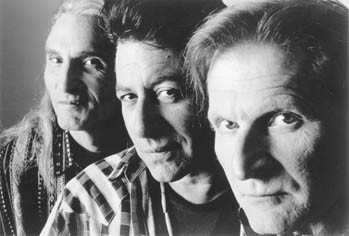
“I’M A DUAL personality,” says singer-songwriter Jimmie Dale Gilmore with a quiet laugh during a phone interview last year. “You know, I’m sort of the new kid on the block–enjoying a newfound success–and I’m the jaded veteran. I guess you could say I’m watching it unfold through both sets of eyes.”

It’s an unusual situation, to be sure.

Nearly 35 years ago, Gilmore’s now-defunct band, the legendary Flatlanders–Gilmore, Joe Ely, and Butch Hancock–helped pave the way for today’s trendy retro- and alt-country sound with an innovative blend of old-timey country, folk, blues, and rock styles. Shunned by the Nashville establishment, this talented trio of Texas troubadours has long enjoyed the dubious status of critics’ darlings. Unlike many of today’s cafe cowboys, these hombres have credentials: Gilmore, born and raised in Lubbock, Texas, had his first demos in 1965 financed by Buddy Holly’s father; Ely, a high school dropout, rambled around the globe as a rock minstrel, and eventually settled back in Lubbock, where he worked as a fruit picker, circus hand, dishwasher, and itinerant musician; and Hancock, also a Lubbock native, spent hours listening to music on border radio stations when he wasn’t driving the tractor on his father’s farm.

In 1971, the Flatlanders–a band that combined modern lyrics and traditional instrumentation, including a musical saw–was, well, big in Lubbock. Their sole 1972 recording (released only on eight-track tape) quickly vanished but became an instant cult classic. In 1990, Rounder Records reissued the album as More a Legend than a Band. Gilmore, Ely, and Hancock became cult heroes, getting the spotlight on Austin City Limits, sometimes making guest appearances on each other’s albums, and, occasionally, to the delight of Americana fans, getting back together for a Flatlanders reunion.

A thousand honky-tonks later, the Flatlanders reunite one more time on Saturday, May 26, at the Mystic Theater in Petaluma.

OF THE THREE, Gilmore probably has enjoyed the widest success. He resurfaced in the mid-’80s on the Oakland-based Hightone label. In 1991, Rolling Stone selected Gilmore as country artist of the year in its prestigious annual rock critics’ poll. And USA Today–and another 100 or so newspapers–named Gilmore’s 1991 major label debut, After Awhile (Elektra), country album of the year. The All Music Guide has noted that he now represents the renegade Austin music scene, in the same way that Willie Nelson once personified the cosmic cowboy.

Ely–who bolstered his career after opening a 1981 British tour for the Clash–found himself locked him out of the Nashville mainstream long before “alt-country” became a commercial option. In a review of his electrifying Live at Antone’s (Rounder) CD last year, Bohemian music critic Karl Byrn opined that “from the opening epic, ‘The Road Goes on Forever,’ to the closing rave-up, ‘Oh Boy!,’ Ely’s originals and covers are spiced with tastefully dueling guitar and pedal steel leads, images of dusty drifters and sweaty roadhouses, and the cheers of hardcore fans who at one point yell out, ‘We love you, Joe!’ ”

Meanwhile, Hancock has languished on the pages of obscure Americana music magazines like No Depression and Dirty Linen. He has released a string of small label CDs–including and self-produced cassettes, including No Two Alike, a 14-tape series recorded during one glorious week at the Cactus Cafe in Austin. He also has penned hit songs for Emmylou Harris and the Texas Tornadoes, but his solo albums–including acoustic-based material that would do Bob Dylan proud–are well worth searching out.

The Flatlanders perform Saturday, May 26, at 8 p.m. at the Mystic Theater, 23 Petaluma Blvd. N., Petaluma. 707/765-2121.

From the May 17-23, 2001 issue of the Northern California Bohemian.

© Metro Publishing Inc.

Summer Guide: North Bay Camping

0

Turn that gas-guzzling SUV into a summer home

GET AWAY from it all on less than a tank of gas. Sound pretty good? Turn that gas-guzzling, global-warming-inducing SUV into a spacious summer home. Why not? The North Bay is a great destination point, as thousands of tourists from outside the region discover each year. Now, with gasoline prices veering toward the $3-a-gallon mark, and that SUV starting to look like a dinosaur, think about postponing that Yosemite summer getaway to explore your own backyard, and just find out what all the fuss is about. After all, you spend hours stuck in gridlock traffic. You might want to relax for a change and enjoy those nearby things that lure so many to the North Bay in the first place.

Here are some of the best natural hideaways in which to pitch a tent, sleep under the stars, and listen to the crickets, for less than a tank of gas, plus all the information for getting a reservation. And, hey, a few nights under the stars and you can shed all that SUV guilt.

How sporting of you.

Sonoma County

Austin Creek State Recreation Area This rugged and natural setting composed of 4,230 acres and scads of towering redwoods, has just 24 primitive hike-in campsites. Trailers and campers of more than 20 feet are prohibited. Armstrong Woods Road, Guerneville. 707/869-2015.

Salt Point State Park There are 130 developed campsites (no showers), 20 hike-in tent sites, and 30 en-route sites on 6,000 acres–all close to one of the coast’s most unusual and beautiful natural rock formations. Trailers and campers of more than 31 feet are prohibited. 25050 Hwy. 1, Jenner. 707/865-2391.

Sugarloaf Ridge State Park This 2,500-acre state park has 50 developed campsites, an excellent astronomical observatory, 25 miles of nature trails, hiking, horseback-riding trails, and exhibits. 2650 Adobe Canyon Road, Kenwood. 707/833-5712.

Bodega Dunes Campground A state beach campground with 98 developed campsites that accommodate trailers and campers up to 28 feet. This site also has a sanitation station. Picnicking, hiking, fishing, horseback riding, and exhibits. Most facilities are wheelchair-accessible. Six miles north of Bodega Bay on Hwy. 1, Bodega Bay. 707/875-3483.

Willowcreek Campground It’s just a small hike from the car to 11 undeveloped camping sites. Picnic tables and fire rings. No showers. Chemical toilets. Willowcreek Road, 1 1/2 miles north of Hwy. 1, Bodega Bay. 707/875-3483.

Pomo Environmental Campground This facility contains 20 undeveloped camping sites, a short hike away from parking. Picnic tables and fire rings. No showers. Chemical toilets. First come, first served; no reservations. Willowcreek Road, three miles off Hwy. 1, Bodega Bay. 707/857-3483.

Marin County

Angel Island State Park Located on Angel Island, surrounded by the waters of San Francisco Bay, this park is for campers willing to do a little work for great rewards. It requires a ferryboat ride from the city, followed by a two-mile hike into one of nine tent sites. But they offer privacy, and the views can be exquisite (if the fog doesn’t become a wet blanket), not to mention the peace and quiet of having the island to yourself at night. Plus, who else can say they’ve gone island hopping without getting on a plane? Info about ferries from San Francisco, Vallejo, and Oakland/ Alameda, 415/705-5555; about Angel Island State Park: 415/435-1915; reservations, 800/444-PARK.

Samuel P. Taylor State Park A beautiful setting tucked deep in the redwoods between San Rafael and the Point Reyes National Seashore, this campground has 25 sites exclusively for tents and 35 others for tents or RVs. There’s a babbling creek, pint-sized wildlife, plenty of shade, and about 20 miles of hiking/biking trails. For a great day trip, the Point Reyes Seashore and surrounding towns are a short and scenic drive away. From Hwy. 101 in Marin County, take the Sir Francis Drake Boulevard exit and head west for 15 miles; the park is on the left. General info, 415/488-9897; reservations, 800/444-PARK.

Steep Ravine Environmental Campsites Located in Mt. Tamalpais State Park, overlooking the wind-swept ocean from Rocky Point, this campground is a real gem. Small, with only six tent sites and 10 primitive cabins, it requires campers to do a little walking, but it’s well worth it. Hikes, ocean views, no RVs, and a real feeling of isolation–and did we mention the wind? From U.S. 101, take the Stinson Beach/ Hwy. 1 exit, turn left at Hwy. 1, and drive north 11 miles to the campground gate on the left. Reservations required. General info, 415/388-2070; reservations, 800/444-PARK.

China Camp State Park Some great hiking surrounds this beautifully wooded and wildlife-rich park adjacent to Pablo Bay. It has 30 walk-in sites for tents, with showers available. From San Francisco head north on Hwy. 101 toward San Rafael. Take the North San Pedro Road exit and head east for five miles to the park entrance at Back Ranch Meadows. The road leading to the campground veers off to the right. Campers will have to park and walk in to their sites, but only a short distance. General info, 415/456-0766; reservations, 800/444-PARK.

Napa County

Bothe-Napa Valley State Park This 1,920-acre state park has 50 developed campsites. Campers up to 31 feet and trailers to 24 feet can be accommodated. No sanitation station. Horseback riding, hiking, swimming, and picnicking. Handicap-accessible in all areas. 3801 St. Helena Hwy. N., Calistoga. 707/942-4575.

Calistoga Ranch Campground In this 167-acre wooded park with 150 campsites for tents, RVs (full hookups), and trailers, amenities include an Olympic-size swimming pool, a fishing lake, hiking trails, picnic areas, restrooms with showers, a laundry, and a snack bar. 580 Lommel Road, Calistoga (southeast of Calistoga off the Silverado Trail on Lommel Road). 707/942-6565.

From the May 17-23, 2001 issue of the Northern California Bohemian.

© Metro Publishing Inc.
Gerald Nicosia

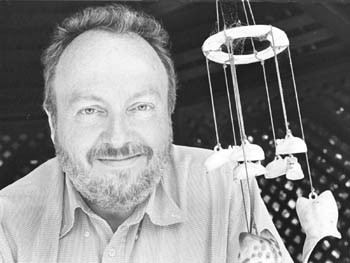
Winds of change: Marin author Gerald Nicosia chronicles the battles that Vietnam vets had to fight, on the inside and in the world.

The War at Home

Gerald Nicosia chronicles struggles of Viet vets

By Jonah Raskin

GERALD NICOSIA never set foot in Vietnam and never served a single day in the military. But after spending much of the last 12 years of his life in the company of volatile Vietnam veterans, he often feels that he’s one of them.

“I feel like I fought in the war,” he says, as we talk in the cozy house on a quiet residential street in Corte Madera, where he lives with his wife and two children.

It’s here that Nicosia wrote Home to War (Crown; $30), a big, heartfelt book that chronicles the battles veterans had to fight–for peace, for health care, for their own dignity–when they returned to the states from the jungles of Southeast Asia.

More than 600 pages long and packed with poignant narratives about the veterans themselves, often in their own explosive words, Home to War is a beautifully told work of contemporary history and a lyrical anti-war epic.

Nicosia is the author of four previous books, including Memory Babe, his award-winning biography of Jack Kerouac. But Home to War feels like his masterwork, the book he had to write to be at peace with himself and with the veterans who brought the war, willy-nilly, into his own life as a teacher and biographer.

“I started it in 1988,” Nicosia says as he sits in the cramped study that boasts photos of Jack London and Jack Kerouac, his long-time literary heroes.

“I interviewed hundreds of people, many of whom have since died of drug overdoses, agent-orange cancers, and suicide,” he recalls. “I’ve been through four publishers–Norton, Grove, Holt, and Crown. If I had known it was going to be this difficult, I might not have started it in the first place.”

In fact, Home to War has been a lot longer in the making than just 12 years. You might say that Nicosia began his journey in 1965, when he was a bright high school student in Berwyn, Ill.–“a redneck, racist place” he calls it–where boys were raised to fight and die for their country.

“I went to a Catholic church where the priest told us it was our moral duty to go to Vietnam and kill Communists,” Nicosia says. “In those days and in that place, you weren’t supposed to read the Bible yourself. The priest was supposed to interpret it for you. But I bought my own Bible, and discovered that St. Matthew says we’re supposed to love our enemies, a sermon I never heard in church.”

Henry David Thoreau’s essay “Civil Disobedience” also inspired him, much as it inspired the civil rights protesters of the 1960s. But it was Walden–and Thoreau’s message to heed a “different drummer”–that made Nicosia a pacifist and impelled him to resist the war in Vietnam.

Walden blew me away,” he says. “It was a liberating book that taught me to make my own declaration of independence. From Thoreau, I learned the political power of books. I decided I was going to be a writer one day, too.”

In 1967, when he turned 18 and became eligible for the draft, Nicosia followed the dictates of his own conscience and joined the ranks of the anti-war movement at the University of Illinois in Chicago, though he never became a visible leader or a spokesman.

His own father urged him to enlist and find a safe job far from the front, but even that option seemed like collaborating with the war-makers, and Nicosia made plans to go into exile in Canada.

Then, in 1971, the draft ended and, like thousands of other young men ripe for military service, Nicosia was off the hook, and finally able to sleep at night. Following graduation, he taught rhetoric at his alma mater and began to learn about Vietnam by meeting veterans face to face.

“One of my best students was a black GI named Al Nellums,” Nicosia says. “In my English class he wrote an essay titled ‘The First Man I Ever Killed,’ in which he describes how he pulled out a pistol and shot, at point-blank range, a Viet Cong guerrilla who was trying to kill him. ‘How do I live with that?’ he wanted to know.

“It was a question I couldn’t answer,” Nicosia continues. “But I began to see how the war had followed the men home, and how they couldn’t shake it.”

Other veterans, including Bill Troutman–who served in Vietnam during the traumatic Tet offensive of 1968–opened Nicosia’s eyes to a war that continued to rage inside.

“My own youth had been traumatized by Vietnam,” Nicosia says. “I had been angry and then I cooled, but for the vets the anger was still red-hot and that was a revelation.”

In 1984, a year after the publication of his monumental biography of Jack Kerouac, Nicosia met Ron Kovic, and though they had taken very different paths in life, they fast became the closest of friends. The author of Born on the Fourth of July (the memoir that Oliver Stone made into a movie), Kovic was then, and probably is still today, the best-known Vietnam veteran–aside from former Nebraska Sen. Bob Kerrey, who made headlines last month with controversial revelations about his military record.

Kovic is also probably the most vocal anti-war soldier of his generation. Wounded in battle in 1968, and a paraplegic ever since, Kovic has spent more than half his life in a wheelchair.

“I hung out with Ron when he lived in a cottage in Sausalito,” Nicosia says. “In public he put up a good front, but in private I got to see his wounds, his withered legs, his gloom and hatred. ‘I wish I could put all of you in chairs so that you’d suffer like I suffer,’ he once said. It was only a moment and it passed, but it was real, too.”

OVER THE YEARS, there were other vets who touched Nicosia, including Bobby Waddell, who became a heroin addict while serving in the Air Force in Vietnam and who later spent four years in prison in California on drug charges.

“I’d visit him in Tehachapi, and he’d say, ‘You’ve got to tell our story. Please write our story,’ ” Nicosia recalls. “After he practically begged me to write the book I couldn’t refuse.”

In Home to War, Nicosia tells heartbreaking stories about Bobby Waddell, Ron Kovic, and a platoon-sized outfit of other soldiers–without either patronizing them or idealizing them.

He also describes the veterans’ fragile organizations, including Vietnam Veterans Against the War and the vets’ ongoing efforts to heal their own wounds and the wounds of the nation itself.

Reading Home to War reminded me how much the veterans had in common with other activists from that era. Like the yippies, the Black Panthers, and radical feminist groups, activist veterans developed a knack for creative guerrilla theater that attracted the attention of the media and aroused the moral conscience of the country. Descending on Washington, D.C., in 1971 and returning their military medals was as dramatic an anti-war gesture as any in the history of the American anti-war movement, and Nicosia describes it in vivid detail.

Moreover, like other radical groups of the 1960s and 1970s, the vets were targets of U.S. government harassment and persecution. FBI agents spied on them, the Department of Justice indicted them on charges of conspiracy–there was a major trial in Gainsville, Fla.–and the White House treated them as pawns in the game of politics.

Still, if there’s a main villain in Nicosia’s book, it’s the Veterans Administration, the bureaucratic agency that ought to have served as a staunch advocate for the veterans, but that often ignored them, neglected them, shipped them off to living deaths in “miserably dirty, understaffed hospitals.” For many of the men who appear in this disturbing book, coming home from Vietnam proved to be a lot more horrible an experience than fighting in the war itself.

At 52, Nicosia is still a pacifist, and still listening to the different drummer that Thoreau describes in Walden.

“I hope that by remembering Vietnam and the vets, we’ll realize that we shouldn’t make war ever again,” he says. “In Vietnam, we never tried to win the hearts and the minds of the people. We weren’t there to save a democracy, but to destroy a country. The vets brought that lesson home from the front. They were inspirational.

“The best of them showed us that you can turn trauma around, cope with pain, and live productive lives.”

Jonah Raskin is a communications professor at Sonoma State University and the author of ‘For the Hell of It: The Life and Times of Abbie Hoffman.’

From the May 17-23, 2001 issue of the Northern California Bohemian.

© Metro Publishing Inc.
Summer Guide: The Vineman Triathlon

0

An amateur triathlete challenges the Vineman

By Ella Lawrence

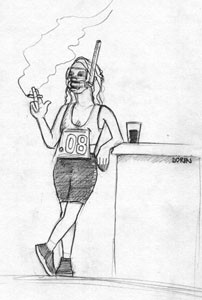
I’M A PSEUDO-JOCK. I have many friends of many different persuasions: student friends, artist friends, winemaker friends, DJ friends. All of them are highly impressed with my level of athletic prowess. I have other friends, too: state record-breaking swimmer friends, pro-cyclist friends, world-class kickboxing friends, dancer friends who’ve been on MTV, and marathon-runner friends. They are highly amused by my level of athletic prowess.

My winemaker friends believe I’m being modest when I insist I’m the slowest swimmer on the JC’s team. My friends from the swim team, however, know this to be no exaggeration. My artist friends are wowed to hear of this morning’s 40-mile bike ride; my biker friends think my snail’s pace is sort of endearing.

I excel at being average.

I have gotten moderately good at volleyball, distance running, swimming, road biking, ballet, swing and hip-hop dancing, kickboxing, and Polynesian fire dancing. I’m good enough at whatever sport it is I’m sampling at the moment to impress people who don’t do that sport, but anyone who’s an actual athlete sees through my jock facade and dismissively commends me for “trying.”

Then a bike-racer friend of mine haughtily told me that triathletes are “athletes who aren’t any good at one particular sport, so they get halfway decent at three and turn it into an event.” I knew triathlon was for me. Training for the Vineman would keep my interest, I rationalized, because I wouldn’t be doing the same sport day after day–I’d be cross-training in three different sports. So this spring, after realizing that swimming was yet another sport I’d never shine in, I decided I was going to do it. I was going to train for, and compete in, the Vineman, a competitive triathlon held each year in Sonoma County that’s been an Ironman qualifier since 1994. (The Ironman is Hawaii’s annual triathlon, 2.6-mile swim, 120-mile bike ride, with a 26.2-mile marathon run to wrap it up.)

This year’s Vineman is on July 8, so I have four months to train. I won’t expect to place well for my age group, but when I’ve done it, I’ll really be able to call myself a triathlete–I’ll have my sport. (Cymbals crashing.) I will have accomplished something.

Although the Vineman is only a half-triathlon, the 1.2-mile swim, 56-mile bike ride, and 13.1-mile run will take all day, and all the endurance that I have yet to build up.

I SPEND the month of March swimming every day, biking slowly twice a week, not running at all, and telling everyone about how I’m going to do the Vineman. I also spend a lot of time going out to have fun. I’m having a hard time drawing the line between serious athlete and fun-loving college student.

On April 1, I realize that the Vineman is a month closer and I’m not a whole lot fitter. I drop swimming down to three days a week (the team spends a lot of time splashing each other and water-wrestling anyway), and start biking three days a week; longer rides. I also begin to run two miles after each ride, to get my legs used to the feeling of running and biking.

The first day I do this, I collapse on the corner and sprain my ankle. “Hey, are you OK?” shout some guys who’ve been watching from across the street. I give them a thumbs-up and limp home, completely mortified.

The next two weeks are spent in the JC’s training room, receiving ultrasound, ice massage, and stem (electric shocks to the muscle surrounding an injury). The sports technicians ask, “How did you sprain your ankle? Aren’t you a swimmer?” I cringe, giving the answer, “I was running, and I fell down.” End of story.

I fell down.

The dichotomy between party girl and triathlete-in-training still holds. I find myself riding out to a friend’s house in Forestville and enjoying a cigarette and a beer on her front porch before riding home again. But this month I’m berating myself about it, instead of finding it as hilarious as I did in March. May rolls around, and I’m beginning to get nervous about the triathlon.

I’ve sent in my registration form and fee, and I’m realizing that in just a few weeks I’ll be competing with over 2,000 other athletes. Luckily, the same cyclist friend who finds it amusing to make disparaging comments about triathletes has decided to be my personal trainer. He puts me through a longer bike ride each week, yelling at me to sprint on climbs. Twice a week is a torture session at the gym, where I practice saying “Dude!” during my bench presses. I’m supposed to have one day per week of complete recovery, but since I’ve given up drinking and clubbing, I’ve got too much energy to sit around for a whole day. And the closer to July 8, the more I think about the fact that lots of people are going to be watching me swim, bike, and run. What if I’m the last one out of the water? What if I fall off my bike? What if I run like a dork?

Maybe I can take up African dance.

From the May 17-23, 2001 issue of the Northern California Bohemian.

© Metro Publishing Inc.
Mark Salzman

0

‘Lying Awake’ offers simple story of faith tested to the limit

IMAGINE BEING handed a gift–something life-changing, something you’ve hoped for and craved for years. Then imagine being told, not long after what you wanted was finally placed in your hands, that a mistake was made. The gift wasn’t meant for you. You have to give it back.

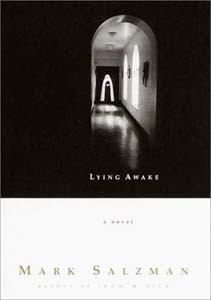
This, simply put, is the predicament that faces Sister John of the Cross–a long-cloistered modern-day Carmelite nun with a terrible choice to make–in author Mark Salzman’s elegantly stunning short novel Lying Awake (Knopf; $21).

The slim volume, weighing in at a brisk 187 pages, was released last year with little fanfare, but has since become a word-of-mouth phenomenon, hand-sold by independent booksellers around the country. In the Bay Area, the book found itself on The Chronicle’s bestseller list for 20 remarkable weeks.

Knopf representatives say that Salzman (Iron & Silk, Lost in Place, The Laughing Sutra, The Soloist) has become increasingly in demand as the book’s fame spreads, receiving numerous requests each week for personal appearances. That such attention should come to a book so spare and so simple, a book as ambiguous as a Zen koan, is rather remarkable.

But Lying Awake is a remarkable book.

For 28 years, Sister John of the Cross–her nun’s name borrowed from that of a Spanish poet and mystic–has been cloistered within the walls of small Carmelite monastery on the outskirts of Los Angeles. Despite her dedication to God, Sister John has not found them to be happy years. The first quarter of a century was spent in strict religious service, during which Sister John earnestly sought a sense of God’s grace but was only rewarded, in Salzman’s words, with “a heart squeezed dry.”

Just when she feels she can bear it no longer, Sister John’s despair is shattered. She begins experiencing dazzling visions so powerful, so intense, they leave her physically wrecked but spiritually aflame.

Here is how Salzman describes one of Sister John’s visions: “Pure awareness stripped her of everything. She became an ember carried upward by the heat of an invisible flame. Higher and higher she rose, away from all she knew, Powerless to save herself, she drifted upward toward infinity until the vacuum sucked the feeble light out of her. . . . In this radiance, she could see forever, and everywhere she looked, she saw God’s love.”

Radically transformed by these experiences, Sister John is suddenly seen as a spiritual master by the other nuns. She begins writing about her experiences, penning volumes of poetry and essays, one of which becomes a modest bestseller. But the headaches that accompany her visions grow worse, and Sister John is ordered to see a physician, who discovers a small tumor in the nun’s brain. The tumor has been triggering epileptic seizures–the source of her visions, as well as her voluminous writing sprees. And it will kill her if it is not immediately removed.

Will Sister John refuse the surgery, choosing death but retaining the soul-stirring visions? Or will she make an even more devastating choice: to save her life and return to the spiritual desert of those unbearable 25 years?

Lying Awake, at its core, is a story of faith colliding with reason. But this is no cynical exercise in agnosticism. On the contrary, Salzman’s book stands in awe of faith, and in Sister John of the Cross, that’s a faith that is most luminous when it is tested to its limit.

From the May 17-23, 2001 issue of the Northern California Bohemian.

© Metro Publishing Inc.
Summer Guide: Baseball

0

Report to the commissioner

By C.D. Payne

WE THE MEMBERS of the Investigating Committee would like to begin by expressing our appreciation to the Commissioner and his staff–especially Mr. Finch, who found the wiretap in the coffee urn, and Miss Needham, who sat at her stenography machine throughout the long ordeal of our investigations, never losing her composure despite the bad language and her neuralgia. Also, we would like to thank club owner Mr. Brinkerhoffer for answering our questions so forthrightly and for removing Mrs. Brinkerhoffer from the room when she became hysterical. Finally, we would like to express our gratitude to those coaches and players on the team who had the maturity to understand that we were not conducting a witch-hunt, but were acting to preserve the dignity and traditions of a great sport and grand pastime. To those four men go our special thanks.

Based on our investigations, we believe we can now reconstruct the series of unfortunate incidents that took place on the field during the fifth inning on July 22. It is not our intention to minimize the severity of these offenses–they were reprehensible and have no place in professional sports. But we feel it is only proper to note for the record the special circumstances that the team found itself in at the commencement of play that day.

As you know it is the nature of competitive sports that in every contest one side must win and one side must lose. Sometimes a team will win more games than it loses, sometimes it will lose more games than it wins, and once in a while it will lose 31 straight games, setting a new major league record in futility. This does not necessarily make the players on that team “losers” even if a photo of the team appears on the cover of a national sports periodical under the headline “Losing Incorporated.” A prolonged losing streak can be distressing, especially when 35,000 hometown fans show up at the stadium wearing clothespins on their noses. Nor is it pleasant when an opposing team sends in a 37-year-old pitcher to pinch-hit and the gimpy veteran powers a rising line drive over the 355 sign, scoring three runs; or when seven minor league players refuse to report to the team, stating they prefer to remain in Double-A ball “where the opportunities for career advancement are better.”

Extensive research by sports psychologists has shown that aside from victories, a positive mental outlook is all that really separates the “winners” from the “losers.” Unfortunately, the team allowed its anemic hitting, execrable pitching, inept fielding, and girlish base-running to defuse its will to win. Rather than finding fresh inspiration in each setback, team members gave way to petulance, self-loathing, and mass hysteria.

We know from the videotapes that the July 22 fracas began when right-fielder Murphy dropped a routine pop fly, allowing two runs to score. Although this error was not critical to the outcome of the game–the team being 13 runs in the hole at this time–it appeared to upset Bixby, the pitcher, who directed a comment at the bungling right-fielder. Bixby testified that he merely shouted “words of encouragement,” but Murphy contends the comments were “profoundly insulting” to his “manhood, way of life, and grandmother.” Incensed by these “unfair criticisms,” Murphy threw the ball at the pitcher, striking him in the groin and causing him “intense discomfort and embarrassment on national TV.”

While “coming to the aid” of the fallen pitcher, Murphy was accosted by center-fielder Pozinski and “rudely slapped.” Pozinski admits “chastising” Murphy, but asserts he did so under “extreme provocation.” It seems Pozinski has a skin condition from the fertilizer used on the center-field grass and must wipe his hands and “other areas” with a clean towel after every inning. This towel, Pozinski alleges, Murphy used surreptitiously in cleaning mud off his spikes despite continued “expostulations of protest” from the allergic center-fielder.

Responding to this assault upon his person, Murphy struck Pozinski in the nose, breaking his “oversize beak” and, Pozinski alleges, “ruining my looks” and “costing me millions in future product endorsements.” For his part, Murphy denies using Pozinski’s towel–not wishing to be “contaminated by his cooties”–and questions how many companies would hire as their spokesman “a .105 hitter with zits.”

After Murphy struck Pozinski, the errant right-fielder was “subdued” by players Tompkins, Gomez, and Jackson, during the course of which Murphy was partially disrobed, causing “great distress and confusion” among the female fans in attendance. While attempting to cover Murphy with a section of ground tarp, Manager Granger was punched in the stomach by someone, possibly third-base coach Dooley, causing him to swallow a “heavy, chrome-plated” police whistle. Manager Granger subsequently underwent abdominal surgery for removal of the whistle and is no longer in baseball. Coach Dooley himself sustained numerous lacerations and a concussion from the “forceful impact of his head” with a bat wielded by media personality and team publicist Melanie Baker. Ms. Baker, who has been linked romantically with right-fielder Murphy, testified she “saw red” and “lost her head” when it appeared “her man” was in danger.

AT THIS POINT the donnybrook became general and it is impossible to know for certain who did what to whom and how much of it was in the region of the groin. We do know that several players received black eyes, Trainer Panetta lost part of an ear and his St. Christopher medal, and third-baseman Collins was “forced to ingest” the business end of an athletic supporter. This last act we find especially distasteful.

Violence, except as required in the course of the game, has no place in competitive sports. Fighting is especially objectionable when, as in this case, so much of it took the form of biting and pinching. The image of baseball can only suffer if such acts are tolerated. The guilty must be punished. Therefore, Mr. Commissioner, it is our recommendation that the suspended coaches and players be recalled from their homes and be compelled to finish out the balance of the season–no matter how distasteful this may be for them. As our old coach used to say, “Strike a man and you make him smart, humble him and you make him wise.”

Yours for a better baseball, The Committee

C. D. Payne is an author residing in Sonoma County, where he crusades for better baseball. This essay is from his forthcoming book ‘Cut to the Twisp: The Lost Parts of Youth in Revolt and Other Stories’ (AIVIA; $12.95).

From the May 17-23, 2001 issue of the Northern California Bohemian.

© Metro Publishing Inc.
Children’s Cookbooks

0

Kids’ Menu

Making meals with your own mini-chefs

By Marina Wolf

IN THE MOVIE Jack, Robin Williams’ character gets together with a group of boys in a treehouse, where they squish all kinds of food together and dare each other to eat the disgusting result. That, says celebrated cookbook author Mollie Katzen of Moosewood Cookbook fame, is what most adults think kids want to do with food, but it’s not true. “If they’re helping you cook, they don’t want to make a mess, and if they do, they want to clean it up,” says Katzen. “They really want to do right by food. They feel really honored to be included in an adult activity.”

These days there are many ways for children to get involved. Katzen herself has contributed two books, Pretend Soup (for preschoolers) and Honest Pretzels (for ages 8 to 13), to the new breed of children’s cookbooks, which put the child in charge and pushing blender buttons at an early age.

At the same time, individuals (like Linda Welch of Sonoma), cooking schools (e.g, Ramekins Sonoma Valley Culinary School), and community centers teach classes that target children but often focus on much the same foods as adult classes. The recipes that Kelly-Ann Hargrove and her instructors teach at Central Market in Austin, Texas, are a far cry from the pseudo-recipes of my youth. Her junior chefs (ages 9 to 12) learn roasted chicken, egg rolls, pesto, and tamales. And even her mini-chef courses, for ages 5 to 8, cover French toast, latkes, and spaghetti and meatballs.

“I only have to tweak the recipes a little bit. Say I have a Hungarian goulash recipe. I’ll change the title and call it cheeseburger casserole, so that they’ll be more willing to try it,” she says. “But as far as the actual things we learn about, and the techniques they have to use to cook the meal, I treat the children as though they have a lot of intelligence, which they do.”

Intelligence there may be, but what about motor skills? It’s been driven home to generations of parents that children and kitchen implements are a recipe for disaster. Instructors and cookbook authors agree that certain developmental facts have to be considered, and certain guidelines enforced, when working with children in the kitchen.

HARGROVE does the cooking for the younger set at the front of the classroom and stands nearby while older children do a minute or two of stir-fry. She only recently began allowing her students to use paring knives in the classroom. She’s had to develop trust that the children can concentrate, and she’s also developed a really good cautionary tale. “I tell them about the time that I cut my thumb off,” she says with a laugh. “It’s true. I mean, just the tip of my thumb. But that always gets to them.”

Joel Olson of the Wisconsin-based HemmaChef, goes through the same basic safety lecture, but he is more inclined to a laissez-faire approach. “The only difference between teaching adults and kids is that the adults are just taller,” he says. “It’s true, because adults do the same stupid things. Kids love it when I tell them the dumb things adults have done in past classes. They know that if they make mistakes, it’s not any worse than what adults have done. So it takes the pressure off.”

Obviously, children are not the only ones who may feel some pressure during a parent-child cooking adventure. Parents often have to slow way down to deal with their children’s cookery. “As adults we often cook to eat, but for children the main event is the process of cooking–not the product,” writes Mollie Katzen in the introduction to Pretend Soup. Even if they make it through a whole cooking session, Katzen has found that parents often slip back into food pressures afterward, when children don’t always want to eat their own food. “Sometime they just want to feed their teacher, their parents,” says Katzen. “I just tell parents not to worry, to sit back, and let them take pride in feeding you.”

Pride in accomplishment is by far not the only thing that children learn from working in the kitchen. Measurements illustrate counting and basic fractions; popovers are an exciting chemistry lesson; decorating bagels with cream cheese and vegetable bits is all about developing a personal aesthetic; and just about everything has to do with hand-eye coordination.

Above all, say the instructors, learning to cook gives children self-confidence. “Cooking gives them a sense of control over part of their life,” says Olson. “Before, they had to ask, ‘When are we gonna eat?’ Now they know.”

The immediate effect of kitchen independence is often startling to parents, report the teachers. Children can actually assist with meal preparations and do some meals by themselves. Olson for one is thinking longer term than Sunday brunch. “I give them things that they can use for the rest of their lives,” he says proudly. “Later in life, when they go on a date, or cook for themselves in college or for roommates, when they’re out on their own, they’re going to eat well.”

From the May 17-23, 2001 issue of the Northern California Bohemian.

© Metro Publishing Inc.

Open Mic

Open MicLost in SpaceBy Lisa MartinovicSO NOW it's official: after summarily debating the president's proposed budget and tax cut, the Senate made like a good doggie and dutifully delivered 54 well-fed and manicured thumbs up onto the doorstep of young Master Bush. But before we lie back and enjoy the pillaging of our national coffers, I want...

Summer Guide: Music Events

Heat Wave Summer sizzles on North Bay arts scene Edited by Greg Cahill and Patrick Sullivan READY, SET, kawabunga! Like a smiling swimmer leaping from the high dive into the sparkling waters of your local swimming pool, we're taking another exuberant splash into the season of warm weather, cold drinks,...

Summer Guide: Car Camping

Drive Time Gadgets for the quintessential car camper By Corinne Asturias THE YUPPIE machine has gone into overdrive in the outdoors world of late. And the result is more choices. The camper will have to decide in his or her own mind: Is it worth carrying...

The Flatlanders

Cow-Pie Serenade The Flatlanders ride again By Greg Cahill "I'M A DUAL personality," says singer-songwriter Jimmie Dale Gilmore with a quiet laugh during a phone interview last year. "You know, I'm sort of the new kid on the block--enjoying a newfound success--and I'm the jaded veteran. I guess you could say I'm...

Summer Guide: North Bay Camping

Turn that gas-guzzling SUV into a summer home GET AWAY from it all on less than a tank of gas. Sound pretty good? Turn that gas-guzzling, global-warming-inducing SUV into a spacious summer home. Why not? The North Bay is a great destination point, as thousands of tourists from outside the region discover each year. Now,...

Gerald Nicosia

Winds of change: Marin author Gerald Nicosia chronicles the battles that Vietnam vets had to fight, on the inside and in the world. The War at Home Gerald Nicosia chronicles struggles of Viet vets By Jonah Raskin GERALD NICOSIA never set foot in Vietnam and never served a...

Summer Guide: The Vineman Triathlon

An amateur triathlete challenges the Vineman By Ella Lawrence I'M A PSEUDO-JOCK. I have many friends of many different persuasions: student friends, artist friends, winemaker friends, DJ friends. All of them are highly impressed with my level of athletic prowess. I have other friends, too: state record-breaking swimmer friends, pro-cyclist friends, world-class kickboxing...

Mark Salzman

'Lying Awake' offers simple story of faith tested to the limit IMAGINE BEING handed a gift--something life-changing, something you've hoped for and craved for years. Then imagine being told, not long after what you wanted was finally placed in your hands, that a mistake was made. The gift wasn't meant for...

Summer Guide: Baseball

Report to the commissioner By C.D. Payne WE THE MEMBERS of the Investigating Committee would like to begin by expressing our appreciation to the Commissioner and his staff--especially Mr. Finch, who found the wiretap in the coffee urn, and Miss Needham, who sat at her stenography machine throughout the long ordeal...

Children’s Cookbooks

Kids' Menu Making meals with your own mini-chefs By Marina Wolf IN THE MOVIE Jack, Robin Williams' character gets together with a group of boys in a treehouse, where they squish all kinds of food together and dare each other to eat the disgusting result. That, says celebrated cookbook author Mollie...
11,084FansLike
4,606FollowersFollow
6,928FollowersFollow


