

Sustainable Agriculture

0

Root Stock

Sustainable ag movement blossoms in the North Bay

By Paula Harris

IMAGINE some not-too-distant future in which American agriculture is vibrant and profitable, and it’s thriving without abandoning environmental and social responsibility and ethics. Imagine how this would translate into a myriad of small farms at which growers are happily serving the consumer, responsive to customers’ needs, and producing flavorful, healthy, locally grown food without toxic chemicals. And imagine consumers who are demanding good food and totally supporting these farmers.

This is sustainable agriculture.

A dream? Maybe, in these times of corporate agriculture, with its rapaciousness and industrial-strength doses of chemicals, fertilizers, pesticides, and preservatives. But not too farfetched, say the supporters of the concept, who are presenting two forums on sustainable agriculture on Aug. 21 and 22 in Sonoma and Napa counties.

“The idea is to bring the processor, the producer, and the consumer together in common cause,” says forum organizer Ann Maurice, a Sebastopol activist who founded the Ad Hoc Committee for Clean Water 15 years ago and remains committed to supporting local environmental issues.

Maurice is bringing in keynote speaker Dr. John Ikerd, professor emeritus of agricultural economics at the University of Missouri, who grew up on a dairy farm and runs a sustainable-agriculture program for the state of Missouri.

“I call sustainable agriculture common-sense agriculture,” replies Ikerd when asked to define a term that often gets lost among such other buzzwords as organic and permaculture. “Economic viability is necessary, but it’s not enough to sustain agriculture over the long run–it goes beyond profits,” Ikerd continues. “It must be socially responsible and provide people with opportunities to be productive and be ecologically sound enough to sustain productivity in the future.”

Ikerd adds that sustainable agriculture is a long-term concept and an idea that’s gaining momentum across society, into such related possibilities as sustainable communities, sustainable fisheries, and sustainable forestry. “People are thinking beyond short-run self-interest and are looking at the broader interest of society in the long term,” he adds. “Consumers are making choices as to how land and people are to be treated and learning that anything that is degrading to society as a whole is not sustainable.”

THERE’S DEFINITELY a certain attitude involved with the concept of sustainable ag–just buying or growing organic produce doesn’t cut it, according to Maurice. “It’s not good just because it’s organic, because people can be hostile in their pursuit of organic,” she claims. “The idea here is that it includes sustaining the farmer. There’s no point in proselytizing about organic if the farmers are out of business and our food is being imported from Mexico and China.”

But, she adds, the increasing popularity of organic produce is helping some of the concepts of sustainable agriculture to sink in. “Organic used to be kind of a ‘radical’ concept associated with a ‘hippie’ fringe, and it’s taken some years but the concept is becoming increasingly mainstream,” she explains. “Americans are tired of produce that doesn’t taste good; tomatoes that have no flavor, fruit that looks like it came out of a photograph from Gourmet magazine but has no aroma or flavor. People are demanding more flavorful, more nutritious produce.”

Maurice touts Petaluma-based dairy Clover-Stornetta Farms as exemplifying the principles of sustainable agriculture. “In response to consumer demand, Clover-Stornetta was one of the first to produce milk free of the artificial bovine growth hormone, and they’ve developed a loyal customer base, and now they even put out an organic line,” she explains. The dairy also brings in individuals who are following a San Francisco drug rehabilitation program into Sonoma County to work in the dairy at St. Anthony’s Farm, a rehabilitation facility just outside Petaluma. “This is a perfect example of bringing together social, environmental, and ethical responsibility,” she says.

There’s a growing movement to promote the principles of sustainable agriculture, but at the same time some wine-grape growers have co-opted the term while implementing practices that fly in the face of the basic concept. Even those growers who have hacked down vintage oaks, ripped out other crops (such as apple trees), planted vineyards on steep hillsides that cause erosion and degradation of streams, or upped their use of pesticides have laid claims to being practitioners of sustainable agriculture.

Indeed, it’s not uncommon for some of the most irresponsible grape growers in the North Bay to portray themselves as stewards of the land and belonging to an environment-friendly industry.

Yet some local grape growers are following the sustainable-ag creed. “We have some excellent organic wines produced here, but they are the minority, though it is growing,” says Maurice, citing Forestville’s Russian River Vineyards and Hopland’s Fetzer (Bonterra brand) as examples. “Even Kendall-Jackson, even Kendall-Jackson, decided to no longer use methyl bromide on any of their acreage. But we want all of these producers, including the corporate moguls, to be responding to educated consumers who are sick of the overapplication of toxic chemicals.”

THE TWO FORUMS come at a time when growers, environmentalists, and county officials (at least in Sonoma County) are cooperating more than ever; the Sonoma County Board of Supervisors last week signed a broad-based agreement to end forced pesticide spraying of the vineyard pest the glassy-winged sharpshooter. However, Maurice says resistance to the concept of sustainable agriculture is great.

“The opposition [comprises] any individuals, politicians, and corporations who are obsessed with money as the bottom line,” she seethes, “whether it’s stockholders obsessed with the monetary value of their portfolio, politicians obsessed with their campaign contributions, or nonprofits who are just looking to see where their next corporate donation is coming from.”

The biggest challenge to the movement, she says, is greed. “If you’re in pursuit of money as your bottom line, we’ve got a problem because that’s what causes degradation of the environment and ethical irresponsibility.”

American agriculture, she adds, is under siege by bad international trade deals. “In exchange for our intellectual property exports, foreign agricultural produce is being dumped in this country,” she avers. “For example, in local supermarkets we have Chinese dried apples–how is it possible for these to be shipped here that great distance when they can be produced across the street from the market? A certain amount of exotic imported produce is one thing, but people need to seriously support local agriculture.”

While there are no specific plans to label locally produced sustainable-ag products or to accredit facilities producing food this way, Maurice suggests consumers demand a “locally produced” section in their supermarket and learn about what’s in season. “People have been so alienated from agriculture we don’t even know what’s in season anymore,” she says. “People aren’t aware fruit has been in storage or been flown in from somewhere else and the hold of the airplane has been sprayed with fumigants.”

Maurice also suggests that interested individuals seek more information at farmers’ markets and natural food supermarkets. There is evidence that the movement is growing: A group in Sebastopol has recently created “Sustainable Sebastopol” and is touting Maurice’s upcoming forums.

Maurice hopes the forums will further increase consumer awareness. With a free five-hour program that includes food, live music, a demonstration of a bio-diesel Jetta that is partially fueled by soybean oil, and insect-controlling tame bats up close, the events promise to take any potential dryness out of the topic.

“I want people to be motivated, not to just sit there and clap and go home, but to actually see how we can apply this locally,” says Maurice. “The people need to lead, and the politicians will follow. That’s how I believe real social change happens.”

The Ad Hoc Committee for Clean Water, the city of Santa Rosa, Clover-Stornetta Farms, and Whole Foods Markets present a forum on sustainable agriculture with various guest speakers and demonstrations, Tuesday, Aug. 21, from 4 to 9 p.m. at Finley Center at Stony Point Road and West College Avenue, Santa Rosa. The forum also will be presented Wednesday, Aug. 22, from 6 to 9 p.m. at the Napa Masonic Hall, 4125 Solano Ave. Admission is free. 707/874-3855.

From the August 16-22, 2001 issue of the Northern California Bohemian.
© Metro Publishing Inc.

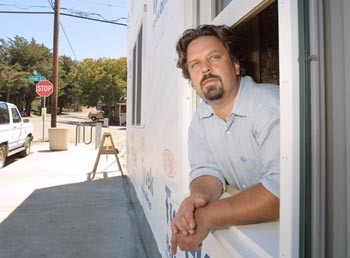
Matthew Greenbaum

0

Birth of a Bistro

Matthew Greenbaum’s ongoing gastronomy in Graton

By Jonah Raskin

BEYOND A DOUBT, the best bistro food I ever ate was in the unpretentious proletarian restaurants around Les Halles, the gargantuan Parisian market–the “belly” of Paris, the novelist Emile Zola called it. Unfortunately, Les Halles closed in 1969, and with it a chapter of French cuisine came to an end. I was a student in Europe at the tail end of that era and I can still remember the stupendous onion soup, the fantastic bifteck and pomme frites, the baguettes, the red wine, and the company of the robust French workers. The food was incredibly good and incredibly cheap. Never again will anyone find bistros that inexpensive, but like many Americans–and like the French themselves, who are notoriously nostalgic–I’ve never given up hope of eating in a bistro that takes me back, gastronomically speaking, to those halcyon days at Les Halles.

Now at last, a bistro and bar will open soon, practically in my own backyard. The French workers who packed the bistros around Les Halles might not find the food familiar, but they’d probably recognize the ambiance.

The Underwood, as it’s called, is meant to be a cozy culinary home away from home, and it’s almost certainly guaranteed to draw large crowds and to inspire great expectations. Matthew Greenbaum, who has Rabelaisian appetities and who was raised in restaurant-rich Manhattan, has already made a reputation–among the cognoscenti–as the master chef at the Willow Wood Market. For years, he’s been preparing, perhaps, the best polenta in Sonoma County, as well as gourmet sandwiches, flavorful fish stews, and my favorite–roast chicken with mashed potatoes and greens.

Why Greenbaum is so eager to open a bistro and bar in Graton is puzzling.

For one thing, bistros are so commonplace in Northern California they’re practically a public nuisance. (Californians often want to one-up the French, whether in food or in wine, and the current bistro explosion seems to be yet another California attempt to out-French the French.) Greenbaum’s bistro is also puzzling because Graton, his hometown, is off the well-beaten restaurant track. Then, too, the Underwood will open directly across the street from the Willow Wood Market. Greenbaum and his partner, Sally Spittles, who is British, will be competing with themselves.

If the Underwood turns out to be as successful as they both suggest, it might undermine the Willow Wood.

AFTER COOKING passionately since he was 17, Greenbaum obviously needs a new venue and new cuisines to conquer. He’s always daydreaming about dishes to serve the world, and apparently the only real way to make his dreams come true is to open another restaurant. Perhaps, too, he needs more recognition than he’s had so far. Last spring, when the Willow Wood received a rave review in a major San Francisco newspaper, Greenbaum wasn’t mentioned. Undoubtedly, he’s one of most invisible gourmet chefs in Northern California, but that seems likely to change once the Underwood gets under way.

Greenbaum plans to do the lion’s share of the cooking, which will be a change from the Willow Wood, where the sous-chefs play a major role. The menu for the Underwood isn’t carved in stone, but Greenbaum’s head is already bursting with creative ideas. You can expect to enjoy dishes like roast lamb with white beans, pancetta, and Roma tomatoes; pan-seared sea bass with green peppercorn vinaigrette and garlic mashed potatoes; pizza with fresh figs and goat cheese. When he won’t be standing over a hot stove, Greenbaum expects to sit at the old-fashioned, full-service bistro-style bar and schmooze with friends. If he’s lucky he’ll get to go home after only 12-14 hours on the job.

The Underwood promises to be less folksy than the Willow Wood Market, which doubles as a kind of convenience store that sells milk, eggs, and bread. Unlike the Willow Wood, the Underwood will be dark, swanky, and sexy. It’ll serve food and drink until late–at least that’s the idea. Whether Sonoma County folk are prepared to eat, drink, and be merry at 10 or 11 p.m. on a weekday night remains to be seen. The Underwood will even have an outside patio designated for cigarette smokers, an idea that might not go over well with west county citizens offended by even a hint of nicotine. But Parisians will probably appreciate it.

Greenbaum has never eaten in a bistro on French soil, but he’s made it his business to eat in as many bistros–from Balthazar to Bouchon–as possible. Not long ago, he went bistro-hopping in Napa, and came back to Graton singing the praises of Jeanty, a small restaurant that made him feel very much at home and very well fed. He’s also made it his business to devour cookbooks about bistro food–Linda Dannenberg’s Paris Bistro Cooking and Daniel Young’s The Paris Café Cookbook. If you’re curious, Greenbaum will explain the differences between a brasserie and a bistro, or complain about the fact that in some towns bistros have gone corporate, thereby betraying their roots. Still, he hasn’t become academic or tradition-bound. Over the last year or so, he’s been experimenting with recipes, aiming for a cuisine that fuses the best of France and California.

Of course, you can count on me to be on hand opening day. I can see myself sitting at the bar drinking a Negroni or maybe a Martini. Chances are–I’ve had a peak at the menu–I’ll order the fried artichoke with fennel aïoli as a starter, and the grilled ahi tuna niçoise–a classic French dish–as an entrée. Granted, I won’t be transported back to Les Halles in the mid-1960s. But Greenbaum’s bistro cooking will be nearly impossible to resist. I don’t think I’ll even try.

From the August 16-22, 2001 issue of the Northern California Bohemian.
© Metro Publishing Inc.

Open Mic

0

Sucking Sound

By Atticus Hart

DO YOU HEAR that sucking sound? Thwooooooop! There it is again. Thwoooooooooop! Shhhhhhhhuuuuuuump! Like a great chrome Hoovermatic slurping up every pebble of dignity left in this teeming asphalt-and-mini-mall landscape. Do you hear it? Thwoooooooop! Brrrrrrrr! Up north, up there, breaking the peaceful calm, up there near the gilded hamlet of Healdsburg. Up there, along the Russian River

Do you wonder what it is?

It’s the sound of money, the sound of enterprise, the sound of the North Bay’s lifeblood being sucked dry.

In case you missed it, on July 25, the Sonoma County Board of Supervisors by a 4-1 vote (with Mike Reilly in dissension) rejected a challenge by environmentalists opposed to a plan that will allow Shamrock Materials Inc. to “skim” 150,000 tons of gravel from the Russian River bed over the next 10 years.

That’s 300 million pounds of gravel that now serves as the filtration system for much of the water running out of your tap. Does that sound like a drop in the bucket?

“We have to look at the facts,” Supervisor Mike Kerns told the local daily when asked about his support of the mining. “The facts show me this is not going to damage the river, jeopardize water quality, or jeopardize the fish.” Yeah, even the county’s own “expert” said scraping 300 million pounds of rock out of the riverbed would be a simple matter with no repercussions.

Environmentalists disagree. They point out–to no avail–that years of deep-pit mining, which is supposed to be suspended in 2004, has left an indelible scar on the beleaguered Russian River. Decades of mining, they argue have lowered the water level, damaged fish-spawning grounds, undermined bridges, threatened the quality of the North Bay’s already limited drinking water, muddied the river, and destroyed natural vegetation.

Of course, the gravel-mining companies are hefty campaign contributors to four fifths of the Sonoma County Board of Supervisors. The seat of power in this county rests squarely on the ability of Shamrock Materials Inc. and similar companies to exploit one of the region’s most valuable natural resources, even if to the detriment of the North Bay’s future health and well-being–but as long as the cash keeps flowing.

Do you hear it now? That’s the sound of your future–that ethereal quality of life for which you pay top dollar on the real estate market and in the marketplace of the soul–going down the drain.

Atticus Hart of Bodega Bay has an uncontrollable urge to consume only clean drinking water.

From the August 16-22, 2001 issue of the Northern California Bohemian.

© Metro Publishing Inc.

Zakir Hussain

0

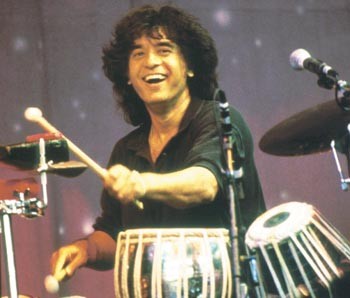
The world at his fingertips: Marin County percussionist Zakir Hussain has a career that ranges from touring with jazz fusionist John McLaughlin to performing classical concerts in his own homeland of India.

King of Rhythm

Zakir Hussain taps a world of sound

By Greg Cahill

“IN INDIA, we were always taught that we’d been playing music for the past 5,000 years, so we arrived in this country thinking, “We’re the ones whom people should learn from. We never thought of ourselves as people who should also be learning from others,” says Zakir Hussain, 50, a world-class tabla player and San Anselmo resident. “That’s why it was so great to go to the University of Washington in Seattle [on his first trip to the States in 1969] to teach because I came in contact with all these great masters of African, Middle Eastern, and Indonesian music who also taught at the school’s ethnomusicology department.

“It just opened my eyes that we in India have to keep learning to expand further, and we can’t do that without opening up to the world of sounds around us.”

He’s learned that lesson well. Hussain–an energetic fireball with lightning-fast hands, boyish good looks, deep-set brown eyes, and charm galore–still spends at least six months each year performing classical North Indian music in his native land and throughout the world while releasing top Indian classical acts on his own Moment! record label. But he also has earned a reputation in the West as a savvy fusionist and “the hottest crossover figure to emerge from India since Ravi Shankar jammed with the Beatles,” as one enthusiastic music writer once opined.

Since his 1969 U.S. concert debut at the Fillmore East in New York (replacing his father, the late Indian tabla master Ustad Allah Rakha, as accompanist for sitarist Shankar), Hussain has racked up an impressive list of credits, playing with Grateful Dead percussionist Mickey Hart (the two shared a 1992 Grammy Award for the evocative Planet Drum CD), jazz fusion guitarist and longtime collaborator John McLaughlin (with whom he performs as part of the acoustic-based group Shakti), jazz saxophonist Joe Henderson, rocker Van Morrison, and dozens of others.

Most recently, Hussain recorded Saturday Night in Bombay (Verve), a newly released reunion album with Shakti, featuring McLaughlin and a cast of other Indian musical heavyweights. Earlier this month, Hussain–who performs a rare North Bay concert Aug. 25 at the Marin Center with sarode master Ali Akbar Khan–wrapped up a whirlwind world tour with Shakti, breezed into town for a pair of San Francisco shows with Tabla Beat Science–producer/bassist Bill Laswell’s eclectic all-star world-beat ensemble–and even managed a couple of well-deserved days off before jetting to Japan for a show with the acclaimed Kodo taiko drummers.

“It is a dizzying schedule,” he admits. “It’s quite a lot of different things, and that is what is exciting about my life at this moment. I’m getting so many different venues to explore. I feel lucky that all this has come my way.”

THAT’S A BIT of an understatement. Hussain–who himself was the subject of a recent documentary film screened at the Mill Valley Film Festival–just finished recording the soundtrack for the latest Merchant-Ivory production, The Mystic Masseur, which will take him next week to the film’s premiere at the 2001 Telluride Film Festival in Colorado; he’s completed recent scores for the Alvin Ailey Dance Company and Lines Contemporary Ballet, and is now composing a new dance piece for New York choreographer Mark Morris that will team up Hussain in April with classical cellist Yo-Yo Ma; he’s preparing for a North American tour next month with the phenomenal L. Shankar, the Indian 10-string double-violin player; and, in November, Hussain returns to his native homeland for another series of classical Indian concerts.

“I don’t consciously go out and look for all these different projects,” Hussain explains modestly, “but people call me up and ask if I’m interested. And, of course, I am. To some extent, it all got started when I did a solo performance for Alonzo King’s dance company in San Francisco–a piece called, ‘Who Dressed You like a Foreigner?’ It got rave reviews and moved to New York, Boston, and other places. That sort of opened the door for some of these other venues.”

Of course, Hussain is no stranger to film scores. In 1976, he collaborated, with Hart, to the soundtracks of the Francis Ford Coppola masterpiece Apocalypse Now (released last week in movie theaters as the expanded Apocalypse Now Redux edition), and later worked on the acclaimed PBS-TV documentary series Vietnam: A Television History. Since then, he’s composed film scores for Ismail Merchant’s film debut In Custody and Bernardo Bertolucci’s Little Buddha, as well a several documentaries and Indian films.

“You know, the bug bit then,” he says of the acclaimed Apocalypse Now score. “It’s fun doing film scores.”

YOU COULD SAY that Hussain has led a charmed life, though that would belie the extraordinarily hard work he has put into his art. But he did get started while still in utero. His father started tapping out the complex tabla beats on his then-pregnant wife’s tummy while Hussain was still in the womb. Hussain’s lessons continued into a childhood that was blessed by contact with many of the world’s greatest musicians. At age 13, he met George Harrison, when the famous Beatle first visited India to study sitar with Ravi Shankar–a pivotal event that led to the introduction of Indian classical music to mainstream Western audiences.

In Mickey Hart’s 1998 book Drumming at the edge of Magic: A Journey into the Spirit of Percussion, Hart describes the marathon chillas: a 40-day ritual retreat during which Hussain locked himself away with his instrument, playing night and day with only short breaks to eat and sleep. During one such event, Hussain drove himself so hard that he hallucinated that his drums were ominous beasts.

On his first trip to the States, Hussain hooked up with Hart and formed the Diga Rhythm Band, a vast lineup of percussionists modeled after the gamelan orchestras of Bali.

In the intervening years, whether jamming with the Dead in a west Sonoma County barn or trading licks with McLaughlin at a North Beach rock club a world away from the concert halls of Bombay, Hussain has learned aspects of drumming to which he was never exposed in his homeland. “There is a certain way we play music in India,” he explains. “We tend to lean toward the perfect execution of a phrase–a tal, or complicated rhythmic cycle. But we don’t necessarily pay attention to what the instrument can do in its range of melodic tone. And that’s what I’ve learned by watching Puerto Rican conga players or the African talking drum or the various subtle ways a jazz drummer places the beat on symbols.

“Playing with groups like Shakti has allowed me to look at my instrument from a different point of view and has shown me what more [the] tabla as an instrument can do.”

That doesn’t mean Hussain isn’t still learning from the Indian masters. For instance, he reveres the venerable Ali Akbar Khan, recipient of a MacArthur genius grant and San Anselmo resident whose longtime San Rafael school is the leading Indian music institute of its kind in the United States. “With Khansahib, you are sitting in front of a master, you go for a ride with the master. With someone like Mickey Hart or John McLaughlin, you are more like a friend and you can play with each other, jump on each other’s back, or roll in the field, but with Khansahib, you are in the presence of a musical godhead and you treat your musical experience in that manner.

“You never know what’s going to come at you or what you’re going to learn, but you keep your eyes and ears open and he will provide the kind of inspiration you need to get another musical lesson. It’s an incredible thing.”

Zakir Hussain will perform Aug. 25, at 8 p.m. with Ali Akbar Khan and Sri Alam Khan on Saturday, at the Marin Center, Avenue of the Flags, San Rafael. Tickets are $40 and $25. 415/472-3500.

From the August 16-22, 2001 issue of the Northern California Bohemian.

© Metro Publishing Inc.

Roommates

0

Surviving the roommate crisis

By Sal Hepatica

BOXES ARE SCATTERED all over the floor, contents spilling out. The closet is packed with clothes, and the rest are hanging on the bathroom shower rod. Stereos, TVs, CD storage boxes, and computers crowd desktops, dressers, and even the beds. A futon, piled with boxes and clothes, blocks the door open. Four college freshmen survey the utter confusion, each thinking, “Now what do we do?”

The months of college preparation are over and it’s finally moving day! This fall, 75 percent of college freshmen will move into dorms, the majority living with roommates for the first time in their lives. Strangers thrown together from different worlds, they need to adjust to each other’s quirks, habits, and schedules without driving each other crazy.

Adjusting to roommates and dorm life is easier when expectations are realistic, explains Paul Bradley, dean of residence life at Northwestern College in Saint Paul, Minn. “So many times we’ve seen students come into the dorm believing their roommates will be their friends for life, their best buddies. The roommates, on the other hand, may see the room only as a place to sleep, since they already have a social network. Then it’s a mess; there’s hurt, confusion, and tension.”

While some colleges attempt to match roommates based on information gathered on housing forms (majors, hobbies, regions of the country), a match is never guaranteed. It’s not unusual to end up with roommates who are stiff and structured, social butterflies, and nose-in-the-book academics–all in one room.

A key to successful adjustment is communication, Bradley says. “Communication is vital to any relationship, even roommates. They need to share openly on such issues as cleanliness, visitation, music, study time, and lights out.”

“It’s best to talk about issues early,” says Joy Santee, a 2000 Northwestern graduate who lived in residence halls for two years. “Agree on perimeters and talk through issues before they become problems and get out of control.”

A big part of the college experience is learning effective confrontational skills and initiating communication when there are problems. Bradley says most students don’t like to confront others. “Often they try to live with the problem or ignore it, but it can go too far and usually someone gets hurt,” he says.

Common aggravations include sloppiness, division of provisions, visitors, personal space, music tastes, and quiet time. When problems arise, try to solve them as a room first, Bradley explains. “Don’t beat around the bush or drop hints. Talk as a room, not belittling or ganging up on anyone. Be factual. Set or reiterate policies. But if problems persist, you may need to ask the residence assistant to act as a liaison.”

However, incompatibility does happen. Be honest, yet tactful, with your roommates as to why you are leaving. “Ask what their plans are, because others could be thinking the same thing, which could eliminate the problem and you won’t have to move,” Bradley says. “Give some advance notice. It’s rude to announce at the last minute you’re moving out. It leaves others with guilt, confusion, and a feeling of failure.”

WHETHER it’s your first roommate arrangement or your fifth, Bradley and Santee do have practical advice to make dorm life harmonious.

1. Practice common courtesy when it comes to visitation. Establish policies or schedules, setting aside nights for quiet and study time. “This is where having a calendar on the message board really comes in handy,” Bradley emphasizes. “It minimizes surprising the roommate who comes home at midnight after a full day of classes and work wanting to get some sleep only to find a party going on. Planning ahead makes it possible for arranging other places to study or spend the night.”

2. Keep a balance of rights and compromise. Be flexible, but not at the expense of your studies or health. Honor your roommates’ rights to guests and socializing; after all, they are paying for the room, too.

3. Express issues and develop tactful, effective confrontation skills. Such skills will pay off in the future.

4. When you or a roommate has a car, set policies on borrowing the car or giving rides, taking into consideration gas, mechanical expenses, and scheduling.

5. Set a policy about borrowing each other’s clothes to avoid problems when clothing is borrowed without asking.

6. Try not to get caught in the middle of roommates’ family issues.

AS FOR THE STATE of confusion and bulging dorm room on moving day, avoid this by contacting your roommates ahead of time to see who is bringing what (furniture, electronic equipment, recreational items).

Contact the college to determine the size of the room, what furnishings are provided, and the number of electrical outlets. Wait to bring seasonal items such as winter clothes and skis until holiday breaks to avoid overcrowding.

And remember, you aren’t the only one who is homesick, disoriented, or undergoing roommate conflict. There is help available, so seek it through your RA, housing coordinator, or, better yet, your roommates!

From the August 16-22, 2001 issue of the Northern California Bohemian.

© Metro Publishing Inc.

Model Missions

0

Model Behavior

Is it time to burn down the mission?

ATTENTION, class–it’s that time again. Time to visit the year 1769, when a great number of stunned, baffled, and recently Christianized Indian laborers–beneath the gaze of Father Junipero Serra and under the guns of Spanish soldiers–began construction on a giant wood-and-clay structure. Mission San Diego de Alcala–part church, part farm, and part military installation–was the first of 21 such installations in the region that came to be called California.

We jump ahead 53 years to behold a mighty chain of such missions, stretching all the way to Mission San Francisco de Solano in Sonoma. Catholic missionaries, bless them, introduced not only Christianity to the Indians, but smallpox, pneumonia, and venereal disease as well. By 1850, the native population was reduced from 30,000 people to a mere 3,000; and the missions–now a potent symbol of cultural contact gone bad–were abandoned by the padres to lie in ruin.

But that’s not the end of the mission story.

Almost 13 decades later, the building begins again, at a rate never dreamed of by Father Serra. To date, literally millions of the baffling edifices–hundreds of thousands per year–have been obediently built, abandoned, and forgotten as part of a massive state-funded program. Last year alone, an estimated quarter of a million native Californians were forced to build missions with only the faintest glimmer as to why.

The reason?

Try the fourth grade.

Most adults who received their education in the public schools of California can recall their fourth-grade mission-model project. From Redding to Chula Vista, the annual building of mission models is as much a part of going to school in this state as are smog alerts and armed-gunman drills.

But how did this tradition begin?

The California public school curriculum–which has ordained fourth grade as the school year that students learn the history of the state–says only, “Teachers should emphasize the daily lives of the people who occupied the ranchos, missions, presidios, haciendas, and pueblos. Reading literature, making trips to a mission, singing songs . . . will bring this period alive.” Models are not required.

But as Diane Silveira, a Sonoma County elementary-school teacher for over 30 years, puts it, “History can be boring. The models are an attempt to make history come alive.”

“The mission story is an important part of the big picture of California,” explains retired educator Dorothy Brenner, who personally oversaw the making of hundreds of such models during her 36-year teaching career in Sonoma County. “There is a major transition during that period, during which the Indian culture is completely destroyed. That’s a big thing for kids to learn. When I was first teaching fourth grade, building the models had a place. By building a model the students could get a sense of what it might have been like to live there.”

But times have changed. Not only are we more willing to look at the atrocities enacted by those Spanish missionaries, but teachers have learned that different children acquire knowledge in different ways; while a model-building assignment might be fine for Jimmy, the hands-on learner, it could be devastating for Jane, the auditory learner.

“Honestly,” says Brenner, “I’m not sure what place the models have in the classroom today–though 20 years ago, I can say that many kids really did look forward to building a mission.”

OF COURSE, that was a time when the models were made of simple household items: shoeboxes, corrugated cardboard with glued-on noodles, sugar cubes, and graham crackers stuck together with marshmallows. Though such low-budget versions still land on the teacher’s desk each year, an increasing number of mission models have gone upscale.

Made of not-inexpensive foam coreboard, painted with special coatings made to simulate the look of whitewash over adobe, with prefabricated sheets of plastic roofing that resemble the terra-cotta shingles of the missions, these sophisticated models make the simple, quaint, old graham-cracker missions look like underfed distant cousins.

Not surprisingly, whole industries have sprung up to support the yearly mission-building tradition. A vast number of cardboard, punch-out-and-assemble pattern books are available, with prices ranging from $5.99 to $25. Canyon Foam Design, in Ontario, Calif., has even trademarked the term “California-Mission Kit” as the name of its prefab Styrofoam missions, available in the exact shapes of all 21 layouts for a tidy $32.99. Create-a-Mission, in Modesto, has come up with an entire line of miniature wagon wheels, mission bells, brooms, saddles, and crucifixes that lend an air of miniature realism to any kid’s project–for “only” $1.99 per item.

The outlay for such materials can add up pretty quickly. According to Isabel Martinez, who for several years managed a craft and model store in Petaluma, the average do-it-yourself mission model ends up costing around $75.

Christine Delgado, general manager of Ben Franklin Crafts store in Novato–which sells a fair amount of mission-model supplies each year–agrees that things seem to be getting out of hand.

“Schools don’t know how expensive these models can be,” she says. “And how much pressure these kids are under to build an impressive model. I helped one kid who was wandering the aisles, almost in tears. He said, ‘My mom only gave me $10 to build my mission. How can I build a good model for only $10?’ ” Delgado, sensibly, showed the boy how to make adobe bricks from $5 worth of clay, and encouraged him to use sticks, leaves, and dirt from his backyard to add detail to the model.

“It has gotten out of hand,” agrees Silveira, who suspects that it’s the parents, not the children, who’ve pushed the model-building project to such architectural extremes. “Most teachers are thrilled to get a cardboard box with holes cut out for windows, as long as the [children] can get up and talk about the model and show that they’ve learned something about the mission they studied. We’d rather have that than some Taj Mahal that the parent built, because usually the kids haven’t learned anything.”

AT THIS POINT it would appear that the educational value of this ritual of the mission model–assuming it ever was an effective tool for teaching history to children–has diminished so much that it now exists mainly to support the mission-model cottage industries. Some teachers now refuse to assign them, preferring to engage their students with other, less time-consuming methods.

Jim Silverman of the California History Project encourages teachers to have students make a quick study of the architectural facts of the missions, then choose a single mission to build as a class. Meanwhile, the classroom is transformed into a politically correct mission environment as the children take on the roles of the Indians, the padres, the soldiers, etc., and act out the culture clash with improvisational theater.

Though it is clearly time to rethink the mission-model tradition, it may be too soon to trash the whole idea, along with the countless dumpster-bound models produced each year. Perhaps, by relating the true story–with all of the riveting, complicated, philosophically complex, and undeniably bloody details–the annual building of a little model can indeed become an experience that fourth graders will never forget.

From the August 16-22, 2001 issue of the Northern California Bohemian.
© Metro Publishing Inc.

People Opposed to Insecticide Spraying on Neighborhoods (POISON)

0

Photograph by Michael Amsler

Chemical Brothers

Napans join opposition to forced-pesticide spraying

By Paula Harris

BY NOW it’s pretty clear how Sonoma County activists would block the use of pesticide spraying during a potential glassy-winged sharpshooter infestation–they’d fight back. Before reaching a recent agreement with grape growers and county officials, the Occidental-based No-Spray Action Network conducted civil disobedience-training classes and lobbied nearby city councils to adopt no-spray resolutions.

Engaging in civil disobedience, holding hunger strikes in jail, blocking roads to homes, and shutting down Highway 101 were all mentioned as possible nonviolent tactics to influence policymakers. And three city councils in Sonoma County–in Sebastopol, Windsor, and Sonoma–passed nonbinding no-spray resolutions.

But what about activists in neighboring Napa County? Environmentalists there seem to be taking a more subdued approach to resisting the possibility of forced spraying on neighborhoods, and opponents appear less vocal than their politically active Sonoma County counterparts.

“We’re quite different from Sonoma County, our communities are different,” explains Lowell Downey, spokesman of the Napa-based POISON (People Opposed to Insecticide Spraying on Neighborhoods), an ad-hoc group that formed last November in response to the state control program that requested that each county come up with a work plan to control the glassy-winged sharpshooter and the vine-killing disease it carries.

“Sonoma County has a university and a history of activism in towns like Sebastopol, but that doesn’t mean people in Napa County aren’t willing to consider civil disobedience.”

Chris Malan, who is active with both Friends of the Napa River and POISON, agrees. “People here are ready to engage in passive resistance if necessary,” she avers.

Residential, not agricultural, pesticide spraying is the focus of the current controversy, as pesticide spraying in neighborhoods is being used to prevent the insect from moving into vineyards. Last year, pesticides were sprayed in neighborhoods of Contra Costa, Fresno, Sacramento, and Tulare counties to control glassy-winged sharpshooter infestations. Most recently, San Jose joined that list.

Malan says more education is necessary for residents to understand the potential problems of chemical drift from vineyards to neighborhoods. “People need to be aware that the pesticide doesn’t just get on the leaf; it goes for miles and lingers in the atmosphere for a very long time,” she warns.

BESIDES pushing for a no-forced-spraying provision in the Napa County GWSS-control plan, POISON wants areas bordering schools, hospitals, and other sensitive places to be off limits to pesticides. “The most important aspect of our work right now is to encourage and support the creation of alternative methods to eradicate or control the glassy-winged sharpshooter,” says Downey.

Among such alternatives are many of those adopted in the Sonoma County compromise, including vacuuming, handpicking the pest off the leaves, using beneficial insects to control the pest, and using registered organic insecticides and repellents.

“We are under no illusion that we can take forced pesticide spraying out of the work plan. We can, however, build a case for alternative use and make it a viable alternative, and give people a choice,” says Downey. “People do not have a choice without the alternatives being available. I think part of the method of the state is to keep alternatives out of the equation.”

POISON has worked with Napa County Agricultural Commissioner Dave Whitmer to put new language into the Napa County work plan that would give the public alternatives to spraying that Whitmer submitted to the state on July 1. However, the commissioner has said that any changes to the county control plan would need state approval, and the no-spray effort could be largely moot if the state uses its authority to bypass local ordinances during an infestation.

In addition, Downey says, the commissioner has asked him to research and locate alternative pest-control companies in the area, of which there are very few. “So far, I have only found one in Petaluma,” he says. “There seem to be none in Napa County.”

Even so, Downey is planning a September forum for local farmers and the public on alternative pest-control education. “We have to look at our options to eradicate this, and then we can go on to use these techniques in the neighborhoods,” he explains.

THERE APPEARS to be plenty of concern about the increased spraying. A petition circulated by POISON in St. Helena netted 300 signatures, most of them from Latina women. “These women live on or near the ranches and are coming forward to say they have had health problems with children and with carrying babies to term, and believe that exposure to pesticides has caused them tremendous harm,” says Downey. “And there are a lot more people out there who are afraid to come forward because of legal ramifications.”

Downey admits that the county will be under a lot of pressure to spray. “Wine is a $4 billion industry here in Napa [County],” he says. “That’s what we’re faced with, but the public shouldn’t be victim to forced spraying and people need to be taught what the ramifications and alternatives are.”

One thing is clear, adds Downey. The age-old rivalry between the wine-producing regions of Sonoma and Napa counties could be laid to rest a little, at least during this potential time of crisis.

“If Sonoma County is hit [with forced spraying] first, Napa County people will come and help and vice-versa,” he says. “The boundaries are shifting because of this, and the two counties are becoming more linked and supportive of each other.”

POISON can be reached at 707/251-8919.

From the August 9-15, 2001 issue of the Northern California Bohemian.

© Metro Publishing Inc.

‘Lumumba’

African Agony

‘Lumumba’ offers sweeping look at hero’s fall

By

IT’S WORTH celebrating that the film Lumumba ever got made–no small feat for a story of an African hero, or for a sweeping period film shot on a low budget. The movie’s very existence is so surprising, in fact, that it’s worth overlooking such faults as the starchy characterization of Patrice Lumumba (played by Eriq Ebouaney, forceful yet likable despite the script).

Director Raoul Peck, a documentary filmmaker from Haiti, is in the martyr-memorializing business: his Lumumba is a hard-working cipher who addresses the audience as if it were a public meeting. We’re not even spared the time-honored scene where his wife tells Lumumba to come to bed because he’s been up working half the night.

Lumumba, murdered in 1961, was the first prime minister of the Democratic Republic of the Congo. As a member of the small Batatele nation, Lumumba understood how tribal conflict threatened an independent Congo; as a European-educated citizen of the Belgian Congo, he understood how much stock the West put into parliamentary procedure.

The forces that wiped out Lumumba included the usual tribal rivalries, inflamed by Europe’s carving up of Africa into plantation-colonies that forced ancient enemies together. Lumumba was also the victim of the larger rivalries between the USSR and the United States; his death was a Cold War crime that the film Lumumba is careful to pin on John F. Kennedy and his CIA.

It’s the movie’s scope that recommends it. Peck’s film, done in Mozambique and Zimbabwe, gives a solid outline of the events around independence. The Belgian government planned a slow pullout, which only precipitated the activities of Lumumba and his fellow politicians. However, major hurdles followed the Belgian withdrawal: the mutiny of the national army, which attacked and raped white settlers (even the nuns weren’t spared), and the secession of the mineral-rich Katanga province.

Peck frames this story in an unfortunate way: it’s narrated by Lumumba after his death, while his body is being dismembered and buried in an unmarked location. Heavy dread hangs over the picture, and Lumumba’s stoic words hardly forestall it. Narration is so often a failure in the movies that its use ought to be discouraged from film schools on up.

The prize line here is “No one foresaw the events that would change everything.” Never has a narrator uttered such an inane remark: the very least you can expect from a movie is events that will change everything that happens in it.

Lumumba is best as an introduction to a figure whose memory should be honored. The film is less worthwhile as yet another lesson in how integrity leads to death.

It would have been hard to make the ending here even implicitly happy. Lumumba was succeeded by Joseph Mobuto (Alex Descas), later known as Mobutu Sese Seko, a thief of such rapacity that he could be compared only to the Congo’s murderous founder, the stupendously greedy King Leopold III. And, of course, the tragedy continues even today, with the region still engulfed in political upheaval and war.

But would it have been possible to show, somehow, that the spirit that will save Africa is living in the continent’s people–rather than buried in a shallow grave?

‘Lumumba’ opens Friday, Aug. 10, at the Rafael Film Center, 1118 Fourth St., San Rafael. For details, see or call 415/454-1222.

From the August 9-15, 2001 issue of the Northern California Bohemian.

© Metro Publishing Inc.

Joe Lovano

0

Joltin’ Joe

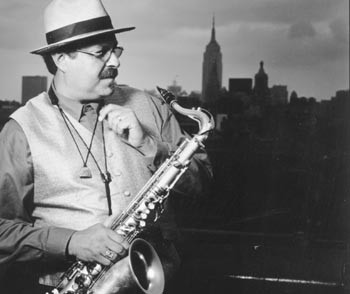
Joe Lovano–the greatest living Italian tenor

By Greg Cahill

“It’s all about collaboration and trying to develop your ideas within the atmosphere and the sounds that are happening all around you,” says jazzman Joe Lovano, during a phone interview from his Seattle hotel room. “With all the great bands in the history of jazz–say, the Miles Davis Quintet, at any period–the energy of the players at that moment created that music, it wasn’t just a matter of trying to tell anyone how to play.

“It’s all about the people that are there and how they play and how they interact.”

Ask tenor saxophonist Joe Lovano about his meteoric career–he just picked up the 2001 Downbeat! Critic’s Poll Jazz Artist of the Year honors–and the conversation quickly turns to the performers with whom he has played over the years.

Lovano–who performs Aug. 12 with his Grammy Award-winning nonet at the Festival on the Green in Rohnert Park–thrives on collaboration, both in concert and on record. He honed his chops as a teen, immersing himself in the Cleveland jam culture and playing bebop with his saxophonist father, Tony “Big T” Lovano. From 1976 to 1979, Lovano, a Berklee School of Music grad, apprenticed under legendary big-band leader Woody Herman and his Thundering Herd, performing with such sax greats as Al Cohn and Zoot Sims. “I was in my early 20s at the time and really learned a lot about that attitude,” says Lovano, who peppers his enthusiasm with a quick laugh. “I was intimidated and shaking like a leaf, but I also had the confidence to play because I was in that music and knew their music.”

One night, at age 23, he got the chance to perform a duet of “Early Autumn” with tenor giant Stan Getz at Carnegie Hall. “It was a thrill to play with him and try to blend my sound with his. I was terrified,” he says, “but I came through because the music takes you to another place. Once I realized that I made it through that, it was a big stepping stone to the next level. I’m still feeling off of that.”

Since the mid-’80s, Lovano has been a charter member of Charlie Haden’s Mingus-inspired Liberation Music Orchestra and has worked with Jack McDuff, the John Scofield Quartet, the Mel Lewis Orchestra, Dave Brubeck, Elvin Jones, Lee Konitz, and a host of others.

He also has 20 solo albums to his credit, including the recent trio excursion Flight of Fancy, Vol. II (Blue Note). Those recordings and his live shows always leave plenty of room for other players to shine, providing a chance for Lovano to savor some of the players he calls the unsung heroes of the genre.

“I want to go out and play, and I want to hear cats play,” he muses. “When I’m not playing, I want to hear some playing. . . . If it weren’t for the players through the generation of jazz that lived to play, we wouldn’t even have this music. A lot of people play to live, but you have to live to play, too. And those are the stronger players who play with a real passion and love in their sound.”

From the August 9-15, 2001 issue of the Northern California Bohemian.

© Metro Publishing Inc.

Open Mic

Film Fetish

By Denise Cushing

IT NEVER CEASES to amaze me. Every day, folks queue up at their local movie house, shell out an outrageous sum to get in the door, cough up even more at the snack bar to consume something called popcorn that bears no resemblance to the real thing, and then enter into something called a theater, where their eyes and ears are assaulted with (a) advertising and (b) hopelessly mundane bits of entertainment trivia.

Then the movie starts, and things get really bad.

I’ve been suckered into this more times than I care to admit and usually wind up angry. I don’t go see “regular” movies very often because the experience leaves me wondering things like, “Hey, what the heck is happening to us as a society?” The annoyances are many: simplistic, predictable plots; an overabundance of noise and special effects; and oh, let’s not forget all those obligatory tit shots (and lest you think me prejudiced, I have two myself that I’m rather fond of).

Sure, everybody has his or her own preferences, and the last time I checked this was still a free country. So if you want to pony up your hard-earned cash to see whatever, have a great time. But it’s a big world, and you owe it to yourself and your peace of mind, as well as your intellect, to break free from the pack.

If so, you might want to do what I’ve started doing.

I’ve escaped from the Hollywood rut. I haven’t been bored since.

When there’s nothing truly sensational at your local Mall-o-Plex, get thee to a real video store. I’m not talking about the Blockbuster-bland variety, but one that carries an extensive collection of the old, odd, bizarre, and unique. [Editor’s note: Video Droid’s a good bet.]

When was the last time you saw Death Takes a Holiday? How about Gamera: Guardian of the Universe or Ray Kellogg’s epic The Giant Gila Monster? Ready for The Lost Continent? The subtitled version of Das Boot?

Hey, give me the classy films of Kurosawa, Juzo Itami, and François Truffaut, or the so-called trash of Ed Wood Jr., Francis Colemam, Robert Lippert–and anything with Gamera in it–and I’m happy.

Hopefully, you will be too.

Denise Cushing of San Anselmo is an eccentric individualist of the highest order, an office manager, and a trained chef.

From the August 9-15, 2001 issue of the Northern California Bohemian.

© Metro Publishing Inc.

Sustainable Agriculture

Root Stock Sustainable ag movement blossoms in the North Bay By Paula Harris IMAGINE some not-too-distant future in which American agriculture is vibrant and profitable, and it's thriving without abandoning environmental and social responsibility and ethics. Imagine how this would translate into a myriad of small farms at which growers are...

Matthew Greenbaum

Birth of a Bistro Matthew Greenbaum's ongoing gastronomy in Graton By Jonah Raskin BEYOND A DOUBT, the best bistro food I ever ate was in the unpretentious proletarian restaurants around Les Halles, the gargantuan Parisian market--the "belly" of Paris, the novelist Emile Zola called it. Unfortunately, Les Halles closed in 1969,...

Open Mic

Sucking Sound By Atticus Hart DO YOU HEAR that sucking sound? Thwooooooop! There it is again. Thwoooooooooop! Shhhhhhhhuuuuuuump! Like a great chrome Hoovermatic slurping up every pebble of dignity left in this teeming asphalt-and-mini-mall landscape. Do you hear it? Thwoooooooop! Brrrrrrrr! Up north, up there, breaking the peaceful calm, up there near the gilded...

Zakir Hussain

The world at his fingertips: Marin County percussionist Zakir Hussain has a career that ranges from touring with jazz fusionist John McLaughlin to performing classical concerts in his own homeland of India. King of Rhythm Zakir Hussain taps a world of sound By Greg Cahill "IN INDIA,...

Roommates

Surviving the roommate crisis By Sal Hepatica BOXES ARE SCATTERED all over the floor, contents spilling out. The closet is packed with clothes, and the rest are hanging on the bathroom shower rod. Stereos, TVs, CD storage boxes, and computers crowd desktops, dressers, and even the beds. A futon, piled with boxes and clothes, blocks...

Model Missions

Model Behavior Is it time to burn down the mission? ATTENTION, class--it's that time again. Time to visit the year 1769, when a great number of stunned, baffled, and recently Christianized Indian laborers--beneath the gaze of Father Junipero Serra and under the guns of Spanish soldiers--began construction on a...

People Opposed to Insecticide Spraying on Neighborhoods (POISON)

Photograph by Michael Amsler Chemical Brothers Napans join opposition to forced-pesticide spraying By Paula Harris BY NOW it's pretty clear how Sonoma County activists would block the use of pesticide spraying during a potential glassy-winged sharpshooter infestation--they'd fight back. Before reaching a recent agreement with grape growers and county...

‘Lumumba’

African Agony 'Lumumba' offers sweeping look at hero's fall By IT'S WORTH celebrating that the film Lumumba ever got made--no small feat for a story of an African hero, or for a sweeping period film shot on a low budget. The movie's very existence is so surprising, in fact, that it's...

Joe Lovano

Joltin' Joe Joe Lovano--the greatest living Italian tenor By Greg Cahill "It's all about collaboration and trying to develop your ideas within the atmosphere and the sounds that are happening all around you," says jazzman Joe Lovano, during a phone interview from his Seattle hotel room. "With all the great bands in...

Open Mic

Film Fetish By Denise Cushing IT NEVER CEASES to amaze me. Every day, folks queue up at their local movie house, shell out an outrageous sum to get in the door, cough up even more at the snack bar to consume something called popcorn that bears no resemblance to the real thing, and then...
11,084FansLike
4,606FollowersFollow
6,928FollowersFollow