

2003 Gift Guide

0

Buy one of the following DVDs Richard von Busack mentioned in his article:

‘M. Hulot’s Holiday’

‘Mon Oncle’

‘Fiend Without a Face’

‘The Devil and Daniel Webster’

‘Haxon (Witchcraft Through the Ages)’

Takashi Miike’s ‘Dead or Alive’ (unrated director’s cut)

‘Bob le Flambeur’

‘The Art of Buster Keaton’

‘The Man Who Laughs’

‘Jacques Brel Is Alive and Well and Living in Paris’

Buy one of the following SACDs Greg Cahill mentioned in his article:

John Coltrane’s ‘Soultrane’

The Bob Dylan limited edition catalog box set

Jaco Pastorius Big Band’s ‘Word of Mouth Revisited’

Pink Floyd’s ‘Dark Side of the Moon’

Rachel Podger’s ‘La Stravaganza’

Roxy Music’s ‘Avalon’

Steely Dan’s ‘Gaucho’

Donald Fagen’s ‘Kamakiriad’

Photograph by Mott Jordan

Anger Management: Angry? Let Bobby Bully Bag have it!

Live to Give

‘Tis the season to give until the giving is done

The holiday gift-giving gestalt these past couple of years has been as shrill as 10 pipers piping: America, open for business! Purchasing is patriotic! Don’t bury that tax refund under your mattress–cash it in for CDs!

Thankfully, the recent elf-sized economic upturn seems to have opened a pressure valve somewhere, and we need no longer feel like Osama is hiding in our wallets. This season, we can go back to giving gifts for the simple reason that we like someone, he lives in our household, or she spent one painful afternoon giving birth to us many years ago.

In this gift guide you will find perfect gift ideas for your special somebodies.

The holidays don’t have to be stressful (remember: there’s no “hell” in “holiday”!) as long as a sense of humor reigns. And if that fails, there’s always Aunt Dotty’s holiday eggnog.

–Traci Vogel

Hell’s Jingle Bells

A gift guide based on perennial heart warmers the Seven Deadly Sins

No responsible heathen is unfamiliar with that illustrious codification of spiritual shortcomings known as the Seven Deadly Sins: pride, envy, gluttony, lust, anger, greed, and sloth. Is there a secret connection between the seven deadly sins and the Seven Dwarfs or the seven castaways on Gilligan’s Island? You’ll have to decide for yourself. In any event, those seven time-tested foibles make perfect categories for a holiday gift guide. Let us begin.

Pride. Also known as vanity, pride is said to be the most serious of sins, the one from which all others derive. It represents a disproportionate belief in your own abilities, a longing to be important forever. If your loved one secretly desires immortality, give him or her a gift membership in the Alcor Life Extension Foundation (www.alcor.org), the world’s largest and most advanced provider of cryonics technology. Membership includes a free subscription to Cryonics magazine. 877.GO.ALCOR.

Anger. Also known as wrath, anger is the result of someone espousing rage instead of love. What a concept. For that angry person in your life, why not opt for a human-shaped punching bag? You don’t even have to don karate clothing to belt the Bobby Bully Bag right smack in the face. It’s a full size, torso-shaped hanging bag for realistic target training, made from durable PVC and filled with urethane foam. The whole thing weighs 40 pounds–perfect for staged release of raw emotion. Available from Bill Wallace’s Superfoot’s Martial Arts Superstore (www.superfoots.com).

Lust. Lust is the opposite of the heavenly virtue of self-control. What more needs to be said? Whether it’s sex, power, or wealth one lusts after, it makes no difference. Jesus Christ himself said that anyone who looks at a woman lustfully has already committed adultery in his heart.” Just substitute www.voyeur-sex-tours.com for “a woman” in that phrase, and you’ve got a nice little sales blurb going. No photo for this one, sorry.

Envy. When it comes down to it, other people are just better looking than you are. You desire their abilities, their social status, their financial situation. When you’re feeling a little self-deprecating or downright jealous, voodoo dolls really do come in handy. Give yourself a gift voodoo kit from Abaxion witchcraft supplies (www.abaxion.com) and let the torture begin. Needles included.

Greed. Also known as covetousness or avarice, greed is the desire for material wealth while ignoring the spiritual world–discounting eternal life for the sake of temporary things. For greed, the punishment in hell is to be boiled alive in oil. But Prov. 15:27 tells us, “He that is greedy of gain troubleth his own house; but he that hateth gifts shall live.” Yes, gifts! A wonderful gift for that greedy one in your life is Arianna Huffington’s wonderful screed Pigs at the Trough: How Corporate Greed and Political Corruption Are Undermining America.

Gluttony. Ah, the pleasures of uninhibited excess, the unwarranted desire to consume more than one requires–which does not necessarily equate to being fat. Gluttony is overindulgence in food or drink to the point where it takes away veneration of God. For a truly insatiable gift, give your gluttonous one the Chocolate Party package from www.catalogcity.com. At $94.99, the package includes Ghirardelli cookies and cream bars, 12 Joseph Schmidt truffles, chocolate graham toffee dunks, chocolate-covered pistachios, popcorn drizzled with white and dark chocolate, chocolate-dipped biscotti, and 12 chocolate cable cars.

Sloth. The sweet avoidance of all work, whether it’s spiritual or physical. If you’re just itching for inactivity, then try the Quartz Action Limited Edition Dotclock, which divides the day into 12 important breaks: snooze, nod off, shut eye, nap, 40 winks, chill, dream, lie in, head down, rest, zonked and catch up. Available exclusively at www.spaceruk.com.

Scrooge Buster: For the silent film seeker, cue Kino’s 11-DVD set of ‘Art of Buster Keaton.’

Silver Scene

DVDs for the season, with all the jingle bells and whistles

By

Outside, there are germs. There are muggers, animals that might attack, and teenage snipers gone spiral-eyed from too many viewings of The Matrix. Inside the house, it is warm, safe, and dark, and there is no cover charge. It’s an easy choice.

Buying movies online for loved ones is just as easy a choice; this way, they won’t have to risk the outside world either.

For the most shut-in of the shut-ins, consider a subscription to Netflix (www.netflix.com) for $19.95 per month. The five-year-old website is still the king of online film rental organizations, with free shipping both ways, 15,000 titles, and no overdue fees. At any time, subscribers can keep up to three DVDs indefinitely. Netflix is beginning to offer exclusives, such as the not-to-be-missed documentary Daughter from Danang, and frequent commentary from the knowledgeable and affable film critic James Rocchi.

Few companies are as aptly named as Criterion (“principle taken in standard of judging,” defines the OED). Known for the highest quality film restoration and the utmost in scholarly annotation, Criterion Collection home video (www.criterionco.com) has yards of titles. Too late for the Christmas season (but there’s always Russian Orthodox Christmas) is their long-awaited DVD reissue of M. Hulot’s Holiday and Mon Oncle by Jacques Tati. 1956’s Mon Oncle is a gentle comedy about an out-of-step Parisian remembered especially for its keen satire of architectural crime.

Criterion’s catalogue includes works by Truffaut, Fellini, Hitchcock, and Bergman. The average price for Criterion’s DVDs are steep, though; on Amazon.com, the titles run about $36 per CD. This connoisseur video company also distributes wilder stuff, such as a restored version of 1958’s Fiend without a Face. (The fiend, a flying brain with a prehensile spinal cord, just had a cameo in Looney Tunes: Back in Action.)

Criterion’s film notes say, “Fiend without a Face is presented in its original theatrical aspect ratio of 1.66:1. Created on a high-definition Spirit Datacine and enhanced for 16 x 9 televisions, this new digital transfer was mastered from a 35mm composite fine-grain master. To further enhance the picture, thousands of instances of dirt, debris, and scratches were removed.”

Sweet! I’m not sure what a Spirit Datacine is, but I’m convinced that this is exactly the right tool to restore a flying-brain movie to the visual splendor its creators intended.

Criterion’s selection of classics of the macabre should be popular during the light-starved, ghost-haunted solstice. Check out William Dieterle’s too-little known The Devil and Daniel Webster (perfect viewing in hard and corrupt times). Criterion’s edition of 1922’s Haxon: Witchcraft throughout the Ages was taken from a master owned by the Swedish Film Institute. It is a DVD no Goth should be without.

The even more hardcore person on the holiday list might deserve a treat from Something Weird Video (www.somethingweird.com), earth’s most sumptuous treasure-chest of cine mauvaise. The one-stop shop for the peculiar works of the late Doris Wishman, plus vintage smut, elderly burlesque reels, 12 volumes of old anti-cine16 educational films (titled Campy Classroom Classics), and several volumes of the Dusk to Dawn Trashorama Show of drive-in movie ads and coming attractions. Perfect for that special someone who longs to see the dancing hot dogs cartoon at least once more in their lives. Almost nothing in the Something Weird catalogue is more than $20.

Kino (www.kino.com) is still in the business of rereleasing films for theatrical exhibition, from Takashi Miike’s odd and poetic policiers to J. P. Melville’s Bob le Flambeur. Their site is indispensable for fans of silent film on DVD. If their warehouse was on fire, the first thing I’d grab is the 11-DVD volume Art of Buster Keaton ($160). Most of Kino’s DVDs are priced in the neighborhood of about $20.

Some of the newest offerings are hard-to-find films by Paul Leni, an expressionist master who died too young. His movie Waxwork (1924), set in a wax museum, is one of the first horror anthology films. Leni’s The Man Who Laughs (1928) stars Conrad Veidt as the disfigured antihero. Veidt gave Batman’s creator Bob Kane the idea for what the Joker should look like.

Just past the 25th anniversary of Jacques Brel’s death, Kino offers Jacques Brel Is Alive and Well and Living in Paris (about $20), the first release of a musical review, out of print for decades. The songs include Brel himself singing his “Ne Me Quitte Pas.” Brel’s cabaret music will apply to the listener a layer of class and world-weariness as thick as the lacquer on a Lexus.

With the help of such websites, you can transform your and your loved ones TVs into shrines of cinema greatness, while the rest of the world goes nuts outside.

It’s a 5.1 World

2003 surround-sound market starts with a whisper, ends with a bang

By Greg Cahill

This will go down in history as the month the recording industry got serious about multichannel sound, even as rumors floated online that Sony–one of the innovators of Super Audio Compact Discs–plan to bail out of the market.

Whereas both DVD-Audio and SACD have entered the marketplace in drips and drabs in the past couple of years to capitalize on the burgeoning home-theater craze, the labels have now turned the spigot on full blast with dozens of titles pouring into the stores every few days. Those recent releases range from classic titles by Elton John (Goodbye Yellow Brick Road) and the Who (Tommy) to new releases by Robert Cray (Time Will Tell) and Ludacris (Chicken-N-Beer)–all brought to you in often beautiful sounding and always confusingly competing formats.

Many consumers got a first taste of this audiophile-for-the-masses craze last month when Rolling Stone magazine included in its 500 Greatest Albums of All Time issue an eight-page ad that promotes the Super Audio CD format. The ad includes a hybrid-layer surround-sound SACD with selections from several of the issue’s picks performed by Bob Dylan, Pink Floyd, the Who, Herbie Hancock, Norah Jones, Elton John, Billy Joel, Miles Davis, and Aerosmith.

Who can keep up with this deluge of remastered music? Still, here are a few favorites from the past year that kept me chasing the ever-elusive perfect audio experience (and helped keep a couple of local home-theater equipment shops in business).

John Coltrane, Soultrane (Mobile Fidelity). Not all good things come in 5.1 surround-sound packaging. This classic 1958 recording featured the jazz legend on tenor sax backed by Red Garland (piano), Paul Chambers (bass), and Arthur Taylor (drums), and it has never sounded better than on this restored mono SACD version.

Bob Dylan, various titles (Columbia). One of the most anticipated SACD releases of the year found 15 titles, from the landmark 1962 release The Freewheelin’ Bob Dylan to the recent Love and Theft. Not everyone agreed on the selection (a lot of folks could have lived without Street Legal or even Planet Waves in lieu of more recent titles), but most agree that Dylan’s catalog sounded terrible. These digitally remastered discs, especially Blood on the Tracks, are a marked improvement. Five titles even sport 5.1 surround sound.

Jaco Pastorius Big Band, Word of Mouth Revisited (Telarc/Heads Up). A who’s who of electric bassists join former bandmates of the late, great Jaco Pastorius (who played bass for Weather Report, Joni Mitchell, and others) on one of the best-sounding jazz SACDs released this year. Impressive all around (and Telarc has emerged as one of the most trusted labels in the surround-sound industry; you can’t go wrong with these guys if your thing is blues, jazz, or classical).

Pink Floyd, Dark Side of the Moon (Capitol). One of the greatest rock albums of all time is one helluva surround disc, though a few audiophiles squabbled over the quality of the hybrid stereo mix. Is it better than the Mobile Fidelity gold-plated Ultradisc version from a few years back? Not really, just different. But the new surround mix really brings out both the nuances (I didn’t realize just how much swearing there is in the incidental chatter on this album) and the sledge-hammer sonic effects. I own this in every format and every version ever released–hell, why not?

Rachel Podger, La Stravaganza (Channel Classics). This young British virtuoso violinist captured a coveted Gramophone magazine award and a lot of hearts with this stunning two-disc set of 12 violin concertos (the seldom-recorded op. 4) by Antonio Vivaldi. Go for Baroque!

Roxy Music, Avalon (Virgin). The British art-rock band regrouped in 1982 to record their swan song. The result was one of the most sophisticated and gorgeous pop albums of all time. This Dutch SACD does it justice, making spare use of the surround effects and highlighting the seductive synthesizers and Bryan Ferry’s wistful vocals.

Steely Dan, Gaucho (MCA). One of the few rock albums released on both SACD and DVD-A. In fact, this classic 1980 album, the band’s last studio release for 16 years, was one of the first surround-sound releases. But that DVD-A version suffered from serious problems, most notably the unbearably shrill horns that emanated from the rear channel. This new SACD is as smooth as the duo’s jazz-inflected pop.

Donald Fagen, Kamakiriad (Rhino/Warner/Reprise). Ten years ago, Fagen, one half of Steely Dan, unleashed this oddball solo concept album (based on a futuristic car and space girls, no less) to little fanfare. This is one of the best examples of DVD-A enhancing a mediocre album. The disc (playable on any DVD player and offering several surround-sound options) sparkles with great graphics, lyrics, a photo gallery, a behind-the-scenes documentary, and a pair of playful music videos for “Snowbound” and “Tomorrow’s Girls.” It’s a perfect match for Fagen’s earlier Nightfly on DVD-A and, one could say, fulfills the promise made at the dawn of the CD age that every disc one day would feature a smorgasbord of flashy eye and ear candy. Fagen got one thing right–the future is now.

The Holiday Sock: Handmade gifts at www.buyolympia.com please even the most rebellious.

Dot-Calm

The Mouse Potato’s Guide to Holiday Shopping

By Christina Waters

You know who you are. Like me, you do a little web shopping even while surfing the Internet for legit job-related purposes. And more than once, you’ve ordered that perfect J.Crew tank top, video game, or DVD release simply by clicking your trusty mouse on the “Order Now” button.

The good news is that you can just as easily point and click your way through your entire holiday shopping list from the comfort of your own keyboard. No shuffling through crowded malls, no soggy umbrellas, and no parking problems. You just sit at your computer and follow our suggestions for absolutely perfect gifts for everybody on your list. You click, they ship. The biggest no-brainer on the planet.

Here’s how it works. Visualize yourself driving over to the Santa Rosa Plaza and swimming upstream toward Banana Republic to snap up one of those hot pink cashmere hooded sweaters for your sweetie, who is so Gwyneth Paltrow.

Now visualize this. Dial www.bananarepublic.com and scroll through the colorful visual menus, find the item you want, click on it (oh, and you do have to provide some method of payment), and it can be delivered to your sweetie, complete with a card from you. Or have it delivered to you, you wrap it up, add a personal card, and deliver it yourself to the lucky recipient. How easy can shopping get?

Here are a few online hot spots to get you started, both mainstream and not-so-mainstream.

Thrill your kids with a personalized letter from Santa, available at www.santamail.org.

Choose heavenly makeup, fragrance, and body lotions in luxurious gift sets at www.sephora.com.

Does someone on your list adore vintage clothing? Then check out the amazing selection of real and faux Victorian jewelry and clothing at www.artandartifact.com. Jewelry practically falls off the keyboard at various sites, including the excellent www.gemstones.com–don’t miss the Amulet.com listing while you’re there.

Need something to raise those holiday pulses? Then get on over to www.trashy.com and ogle the inventive lingerie sets–naughty micropleated skirts with matching bras, that sort of fun. Don’t miss inspired items like the leopard-print bustiers, from www.cameolingerie.com. For off-the-beaten-track bedroom accessories, look no further than www.stormyleather.com. You gotta love a website that offers “whips, floggers, and paddles.”

Everybody knows about the goodies galore–books, DVDs, CDs, computer toys– at the mighty www.Amazon.com. But for rare, used, and out-of-print books, also check out www.powells.com and www.abebooks.com. And if you’re one of those budget-minded consumers who likes to comparison shop, use www.pricegrabber.com to make sure you’re getting the best deal.

Specialty paraphernalia to please the meditation fanatic, like hand-painted tankas from Nepal can be found at www.dharmacrafts.com. Gourmet gifts are as easy as www.epicurious.com, where you’ll find delicious packages of everything from cheeses and imported gravlax, to caviar and chocolate. Thrill your mom with a half pound of deluxe truffles for $46. Surprise the cook with must-have, hand-harvested sea salt from far-flung regions like Brittany, Wales, Sicily, Maine, and Hawaii at www.saltworks.us.

If something even more exotic is craved, try the natural beef, lamb and pork specialty cuts from Niman Ranch at www.nimanranch.com (and click on Products).

Does someone need a Poppie French tank ($110)? A Dede Metal diamond choker ($115)? An e.vil “Fame: I Wanna Live Forever” pullover hooded sweatshirt ($92)? You’ll find all this and more at www.girlshop.com; equally fantastic men’s gifts are available at www.guyshop.com.

Get even funkier with the Olympia, Wash. DIY collective www.buyolympia.com, where you can get your favorite punk-rock sock monkey ($25), blank journals by Amber Bell ($25), and customizable sterling silver ID bracelets by Dottyspeck ($42).

If you can’t find the perfect gift online, it doesn’t exist.

From the December 11-17, 2003 issue of the North Bay Bohemian.
© Metro Publishing Inc.

Russian River Cleanup

0

River Refuse

Summing up Russian River cleanup and First Flush for 2003

By R. V. Scheide

The Russian River is one of the natural resources that makes Sonoma County such a great place to live. But as the volunteer crews responsible for cleaning up the Russian River and monitoring the storm season’s first runoff have discovered, when a river runs through it, more often than not, garbage goes in it.

“This year, we found washers, shopping carts, tires, cars, batteries, pipes, pieces of iron, crates, transmissions, wrappers, boxes, diapers, barbecues–you name it,” says Spiro Dendrinos, a volunteer for the Russian River Watershed Council’s cleanup committee. The two-day cleanup took place the last weekend in September. More than 350 volunteers showed up to comb the Russian River from Cloverdale to Jenner by canoe and on foot.

After years of volunteering for the cleanup, Dendrinos has become expert at guiding 10-member crews in canoes down the river. As much garbage as possible is loaded into the unstable vessels. “Last year I carried out four tires, a washing machine, and an AC unit down the river in one load by myself.”

“Tires seem to be the biggest thing,” Dendrinos continues. “This year, we found 239 tires.” Car tires, truck tires, tractor tires. Obviously, big old worn-out hunks of black rubber don’t belong in the river. So why do people dispose of them there?

“They don’t want to pay the recycling fee,” Dendrinos says. It’s not like they’re saving a ton of money. Tire shops only charge up to $3 per tire to help pay for disposing of the old rubber. But Bob Clemens, chair of the cleanup committee, agrees that the miniscule fee is enough to cause some people to deep-six their old rubber rather than dispose of it properly.

Besides the 239 tires, Clemens says volunteers removed 31 pounds of aluminum cans, 1,086 pounds of glass, 86 pounds of plastic soda bottles and milk jugs, and more than three tons of scrap metal, including the entire drive shaft and rear-end assembly of an automobile. Most of the material was recycled with the help of Healdsburg high school students who separate paper from plastic, metal from glass. Seven tons of nonrecyclable debris was removed from the river as well.

Clemens says the cleanup effort was started more than 10 years ago by local canoeists, kayakers, and other “paddlers” who use the river and were disgusted with the amount of garbage going into it. At Steelhead Beach, for instance, a mound of refuse piled on the bank extended some 60 feet into the river. A similar situation existed at Sunset Beach. A decade later, that’s changed, thanks to the efforts of the volunteers.

“These were two trashed beaches, hypodermic needles, and human feces everywhere,” Clemens said. “But over the past couple of years, they’ve become pristine, requiring very little pickup.” He says the new trouble spots are upriver, near Geyserville Beach and West Soda Rock in the Anderson Valley. “They’ve been used as public dumping grounds for years, and it’s getting worse.”

That’s where the watershed council, funded through grants from the Sonoma County Water Agency, plans to focus its efforts next year. The money is used mainly to pay for plastic garbage bags and rubber gloves used in the clean up, materials which are also provided to smaller sub-watershed volunteer organizations as well.

Clemens and Dendrinos also volunteer for Russian River First Flush, a separate effort involving 15 national, state, and local agencies that monitors rural and urban surface runoff for bacteria, nutrients, suspended solids, and the insecticide diazinon during the first storm event of the season, which this year occurred on Nov. 6.

More than 287 people participated in this year’s First Flush, manning 140 monitoring stations scattered throughout the watershed, according to Don McEnhill of Friends of the Russian River. The volunteers received training in September and then were on call waiting for the first storm to hit.

“We can’t thank everybody who goes out there in the rain enough,” McEnhill says. “It’s an effort that just can’t be done without volunteers. They’re indispensable.”

This was the second year First Flush has been conducted. The results of last year’s flush were recently released, and while most of the watershed fell into normal parameters, McEnhill says there were several trouble spots, including Foss Creek near Healdsburg, Lower Cotati Creek, and an unnamed creek near Sebastopol.

“These three [areas] had higher levels of diazinon,” McEnhill said, adding that the levels, though high in comparison to other monitored spots in the watershed, were comparable to those seen in urban settings. Once it is determined whether the levels are a problem, the information can then be used to help educate the public on proper use of pesticides such as diazinon.

“The biggest help that First Flush provides is that it helps us work with the cities on storm regulations,” McEnhill. “We can focus the educational effort where it is needed most.”

From the December 11-17, 2003 issue of the North Bay Bohemian.
© Metro Publishing Inc.

‘In America’

0

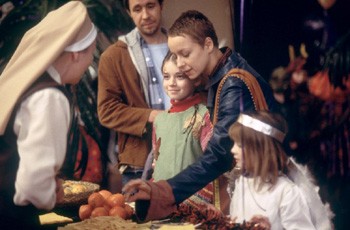
Suffering Succotash: In ‘In America,’ a heartwarming tale to rival any Christmas fodder, an Irish couple find the strength to continue after the death of their son.

Coming to ‘In America’

Don Novello on fearing Christmas, the joy of action figures, and the difficulty of finding a good movie close to home

Writer David Templeton takes interesting people to interesting movies in his ongoing quest for the ultimate postfilm conversation. This is not a review; rather, it’s a freewheeling, tangential discussion of art, alternative ideas, and popular culture.

Folding open my newspaper to the movie listings, I cradle the telephone against my shoulder and scan the page before me. Thanksgiving has just passed and the theaters are crammed with product, the first wave of the big holiday releases. Most of them look awful.

“How about Bad Santa?” I suggest. “Billy Bob Thornton as an unsavory department store Kris Kringle. They say it’s the Shakes the Clown of alcoholic Santa Claus movies.”

There is a long, uncomfortable pause on the other end of the line, followed by the delay-tactic clearing of a reluctant throat. Eventually, Don Novello–comedian, actor, author, sociopolitical prankster, and choosy consumer of motion pictures–speaks up.

“Yeah, you know, I’d rather we pick a movie other than that,” he says, his voice betraying a hint of Father Guido Sarducci’s famous Italian accent, acquired by Novello after 40 years of playing the famous Vatican gossip columnist on television shows like the Smothers Brothers Comedy Hour and Saturday Night Live, and in comedy clubs around the world. “Bad Santa,” he says, “yeah . . . um . . . it’s about Christmas. I sort of have a problem with Christmas. Like a phobia, kind of. You know how some people are afraid of clowns or picket fences? I’m afraid of Christmas. It’s not serious. It’s not like I get terrified or anything, but Christmas movies do sort of freak me out.”

“I assume Elf is out of the question, then?” I ask.

“Yes, thank you,” he replies.

“There’s always The Haunted Mansion,” I tell him.

“Hmmm. . . . Eddie Murphy, that haunted-house movie, yeah–the reviews have been so bad,” Novello says. “They say it’s not even as good as the Disneyland ride, and if a movie can’t be better than a ride, it must be a really bad movie. I’d really hate to have to see that. Hey, you know what I heard is really good? A little movie called In America.

In America. Yep, there’s been good buzz on that one, a little small-budget job from Jim Sheridan, who directed My Left Foot and In the Name of the Father. It’s the story of an Irish immigrant family in the early ’80s, dealing with life in America while also grieving the death of their young son Frankie, who apparently fell down a flight of stairs back in Ireland. The movie’s been nominated for a boatload of Independent Spirit awards, and seems poised to become this year’s dark-horse Oscar favorite. Too bad it’s currently only playing in one small theater in San Francisco, about 50 miles from Novello’s home in Fairfax.

“So, how about Timeline?” I toss out, noting that the big budget time-travel adventure is playing pretty much everywhere. Unfortunately, I make the mistake of further noting that Timeline has been called the hokiest time-travel movie ever made.

“Wow, and that’s really saying something,” Novello replies. “The hokiest time-travel movie ever made. That’s, like, a cataclysmic thing, because time-travel movies are always, you know, pretty hokey.”

I take one more shot.

“Are you by any chance a closet Tupac Shakur fan?” I ask, having just spied the listing for the new Tupac Resurrection documentary.

“No, not really, probably not,” Novello says.

And that’s how Don Novello and I ended up in San Francisco, watching a funny-sad, Oscar-destined love story about a poor Irish couple with adorable children, the junkies and angry artists who share their decrepit tenement, and how they discover through the miraculous healing powers of E.T.: The Extra-Terrestrial (it’s hard to explain; take the drive, see the movie) that it’s time to set aside their dramatic attachment to suffering.

“It’s a sweet movie with great acting,” Novello says upon exiting the theater. “It’s going to get a lot of Oscar nominations, and one of the cute kids sings that song Desperado, so it could also maybe revive the career of the Eagles.”

“Irish Catholics are very good at suffering,” Novello points out a few minutes later, as we hole up in a nearby hotel bar to talk about the film. “I’m half Irish, so I can say that. Of course, all Catholics are pretty good at suffering,” he notes. “In Catholicism, suffering is good, almost. Jesus died on the cross, right? He suffered. So if Jesus suffered, then there must be something about suffering that’s pretty good.

“We believe that we will get rewarded for suffering. And then when you’re a kid and you’re sick, you get attention and sympathy from your parents. So we learn early on that suffering is bad, but suffering is also kind of good.”

“So,” I say, attempting to synthesize his point, “all religion springs from a childhood desire to be the center of the world?”

“Yeah,” he nods. “Or no. I don’t know. But anyway, these people are really into suffering and they do it really well.”

Don Novello, for the record, does a lot of things well.

As an actor, he’s appeared in several movies including Godfather III, in which he played Dominic Abbandando, the Mafia’s publicist. He’s released numerous Grammy-nominated comedy CDs, and written and produced shows for stage and TV (including the Broadway hit Gilda Radner Live from New York). He recently attempted a run at the governorship of California (he never actually made the ballot; some of his nomination signatures were ruled invalid), he’s been thrown out of the Vatican for impersonating a priest, and he even invented the canine baseball-retrieval unit for the Giant’s PacBell Park, in which water dogs are used to fetch homerun baseballs from the San Francisco Bay.

At the moment, he’s working on a photo book and accompanying film, all about the increasing omnipresence of cheap plastic lawn chairs (Possible title: Where Did They Come From and What Do They Want?). For all of Novello’s accomplishments, past and future, he is best known for those old, tasty, absurdist Father Guido Sarducci routines on SNL, and also for his bestselling Lazlo Toth books, The Lazlo Letters (1977), Citizen Lazlo (1983), and the brand-new From Bush to Bush.

Lazlo, one of Novello’s best satirical personifications, spent the last 30 years writing poorly spelled, outrageously strange letters to famous people and major corporations–“Dear Donald Rumsfelt, I had a dream I saw Osama Bin Laden . . . If I were you, I’d send a team of special forces into Mecca to check it out!” Lazlo frequently received letters in return, and they provide some of the books’ most frightening chuckles.

Novello’s favorite job to date, though, was providing the voice of Vinnie the explosives expert in Walt Disney’s animated film Atlantis. “I loved working on that more than anything I’ve worked on,” he says, adding that the film also produced the first and only action figure inspired by a Don Novello character. It makes one wonder why there have been no Father Guido Sarducci action figures.

“I don’t know why, I don’t know,” Novello says. “Actually, I don’t know of any priest action figures–no cardinals, no popes. OK, maybe one or two popes. If it was up to me, I’d have a whole line of Catholic cardinal action figures, 106 different cardinals, and all the popes, with, you know, ‘miracle gliding action’ or something. Someone gave me a little doll once, this little doll made in Hong Kong. It didn’t look like me; it was a little fat priest, but it had a cigarette in his hand and sunglasses on, so it was kinda close. But hey, that’s OK. I have the Vinnie action figure from Atlantis, and one action figure should be enough for anybody.

“Still,” he adds, “Sarducci would make a pretty good action figure.”

“I doubt we’ll be seeing any action figures for In America,” I remark.

“What? Like, an In America play set? Oh, I don’t think so,” Novello laughs. Ah, but now the wheels have started turning. After several seconds of thought, Novello responds, “I guess you could make a little plastic play set of the junkie apartment building, and another little Irish flashback set, with the big flight of stairs.”

“There’d have to be a little Frankie doll,” I contribute, “with ‘miracle tumbling action.'”

“Yeah, or you could have a little Frankie doll with wings,” Novello laughs. “Sounds like something Lazlo Toth would think up. Can you imagine Lazlo Toth writing to Mattel Toys or something. ‘Here’s a great idea! An Irish Immigrant play set!’

“I’d love to see the letter he’d get back for that one.”

From the December 11-17, 2003 issue of the North Bay Bohemian.

© Metro Publishing Inc.

Belle Arti

0

Photograph by Michael Amsler

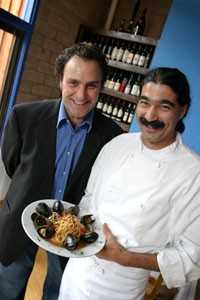
Italian Charm: Co-owner Santi Sacca (left) and chef Fabrizio Castangia infuse Belle Arti with their Sicilian-via-New-York sensibilities.

Cultural Exchange

Belle Arti makes a meal fit for the King

by R. V. Scheide

My entire karaoke repertoire consists of precisely two songs: “Swinging Doors” by Merle Haggard and “Burning Love” by Elvis Presley. At first glance, this fact would apparently have nothing to do with Belle Arti Trattoria Siciliana, the neat little Sicilian restaurant tucked in the back of the Main Street Exchange, the square, brick fortress of a building that also houses the area’s state and national political representatives in downtown Napa. But as the late crime noir writer Jim Thompson used to say, things are not always as they seem.

The early evening chill had chased away most of the tourists as my dining companion and I made our way down Main Street, searching in vain for the trattoria. We had the right building, but no restaurant was in sight. Spinning around to go back the other way, I bumped into a sandwich board set up on the edge of the sidewalk.

The winged face of a woman with snakes for hair gazed out from the sidewalk sign. Three bare female legs splayed out from the Gorgon’s head like evenly spaced spokes on a wheel. The face was strangely compelling.

I froze.

I knew that Greek myth holds that staring into the Gorgon’s eyes can turn a man to stone. Later, I’d learn that the cultish looking symbol on the sandwich board is known as a trinacria, the official symbol of Sicily: the three legs denote the three extreme points of the Mediterranean island off the toe of Italy’s boot; the three chaffs of grain represent the island’s fertility.

It’s the accepted imprimatur for all things Sicilian these days, but spiraling down into the Gorgon’s gaze, I recalled its Greek origins–the horrific creature composed of three daughters of the gods of the seas, their powerful tentacles dragging humans down to watery graves, a constant reminder to a seafaring people that sometimes the ocean’s bounty is dark indeed.

My stomach growled. Hunger pangs. Or nerves, perhaps.

Fortunately, the sign also informed that Belle Arti was in the back of the building. I pulled away from the Gorgon’s gaze, and we stumbled into the building, past frosted-glass office doors of various politicos, through a couple of more doors, and finally into a warm, medium-sized space overlooking the Napa River in the back of the building.

“Belle arti” means “beautiful art” in Italian, and the Italian obsession with trinities dominates the restaurant’s décor, from the room’s primary color scheme–a large painting of a blazing fluorescent red rose, soothing Mediterranean blue walls, cheery canary yellow highlights–to ubiquitous trinacria of various sizes on flags, tapestries, support beams, and tiles. It seems co-owners Santi Sacca and Rosario Patti (also executive chef) brought more than a little bit of Little Italy with them when they relocated from Brooklyn to Napa after 9-11. The place has culture.

This made the trattoria the ideal place to begin our multicultural nocturnal activities, which that night included a karaoke date with Randy Hussong and Kevin Radley’s “Elements from the Hot Rod Rodeo” at the Di Rosa Preserve’s downtown gallery, Off the Preserve, just three blocks away from the restaurant. Hussong was going to plug One Million Watt Karaoke Elvis on Viagra–a 25-foot-long sculpture of a top fuel dragster made out of metal rails, a red velvet headboard, and 1 million watts of audio components–into a karaoke machine and open up the mic to the audience. I was prepared to perform “Burning Love” for the occasion, and the stage fright that has haunted me throughout my karaoke career was already making itself known. Heavy fortification with food and beverage was called for.

Belle Arti did not disappoint. Complimentary slices of Italian bread, olive paste, and a Sicilian-style salsa I didn’t catch the name of (our waiter was a tall, dark, handsome lad for whom English seemed to be the second language, Italian the first) laid a firm foundation for the gustatory pleasures to come.

Sicily is where Italy and the Mediterranean meet, and the dishes offered at Belle Arti are similar to fare you might find at a restaurant specializing in cuisine from southern France or eastern Spain, which border the same sea. The region has an affinity for fine olive oil, and it can be found in most of Belle Arti’s creations. Still, there’s no mistaking that this is Italian cuisine, from pesce del giorno (fish of the day, $12.50), to penne alla norma (noodles and sautéed eggplant, $9, one of the few vegetarian entrées) to bistecca alla Fiorentina (38 oz. porterhouse steak prepared Florentine-style for two people, $38).

We began with zuppa del giorno ($6), the soup of the day, which was lentil, with tender, brown legumes simmered in opaque broth that proved the perfect warmup. Our waiter was attentive but not intrusive, providing us plenty of time between dishes. Our wine selections, Napa Knoll Cabernet Sauvignon 1996 ($9 per glass) and Mario Perelli Minetti Cabernet Sauvignon 2000 ($9), arrived with our salads, insalata di mare ($9.50) and a spinaci e formaggio di capra ($9.50).

The insalata di mare stared up at me in much the same way as the Gorgon, a maze of chilled white squid, pink shrimp, and purple octopus tentacles swimming in lemon juice and olive oil. My favorite bite of the night: I wrapped a leaf of Belgian endive around one of the largest tentacles and soaked it in the sweet, lemony juice, forming sort of a mini seafood burrito that forked easily into my mouth before sliding to its rightful home in my stomach.

The spinaci e formaggio di capra, spinach and goat cheese salad, featured a mound of fresh, clean spinach topped with four silver-dollar-sized wheels of baked goat cheese and finished with a balsamic and olive oil house dressing. The leaves were succulent, the wheels crusty golden brown on the outside and creamy delicious on the inside.

Other appetizers and salads available at Belle Arti include antipasto della casa (an assortment of house-made appetizers that goes beyond the usual salami and olive sampling, $9), caprese di bufala (buffalo mozzarella with fresh roma tomatoes and basil drizzled with olive oil, $9.50) and insalata tre colori (in yet another trinity, a salad of radicchio, endive, and baby greens, $5).

Everything to this point was prepared with extreme competence, but unfortunately, that didn’t prove to be the case with the picatta di vitello ($19), veal scaloppini in a lemon, caper, and garlic butter sauce. The two pale, palm-sized scallops of veal I received were the real milk-fed McCoy. The sauce was superb, light, blended smooth, with just a hint of citrus. But the tiny cutlets were overcooked and tough and chewy as a ham steak, negating the intended purpose of such a politically incorrect menu selection in the first place: to enjoy the luxurious tenderness of genuine veal.

But Belle Arti pulled its fat from the fire with one of that evening’s specials, lobster fettuccine ($21.50). Boiled in what must be the Sicilian version of bay seasoning and served in the shell atop a mountain of perfect al dente noodles slathered with rosemary-rich tomato sauce, the tender chunks of lobster meat brought back fond memories of all the cioppino feeds I’ve attended over the years.

As for the wines, both the Napa Knoll and Mario Perelli Minetti leaned toward the tart, cherry side of the taste spectrum, with the Napa Knoll barely edging the Minetti in boldness. There’s also a large selection of imported Italian wines and dessert apéritifs. Unfortunately, karaoke was calling, and we had to forgo the dolci del giorno (chef’s last minute whimsy of special desserts, $6.50).

The food and wine had done their job, and my stage fright had disappeared by the time we made it over to Off the Preserve. I took my place at the mic and thrilled an audience of teenage girls with my rendition of “Burning Love.” Over their adoring screams, I heard a high-pitched chorus cutting through the karaoke din–Hussong, my dining companion, and an unidentifed patron, howling through the mic that was hooked up to One Million Kilowatt Karaoke Elvis on Viagra.

All and all, it was a night fit for the King, and it all started with dinner at Belle Arti.

Belle Arti Trattoria Siciliana, 1040 Main St., Napa. 707.255.0720. Lunch, Tuesday-Friday, 11:30am-3pm; dinner, Sunday-Thursday, 5-10pm, and Friday-Saturday, 5-11pm. 707.255.0720.

From the December 11-17, 2003 issue of the North Bay Bohemian.

© Metro Publishing Inc.

Desert City Soundtrack

0

Raw Like Sushi: Desert City Soundtrack turn it up to 11 in their live performances, while their studio album shows more nuance.

A Little Bit Softer Now

Desert City Soundtrack grow up and turn it down

By Sara Bir

Let us now praise the time-honored death album. Such well-traversed territory is the death album–almost nearly as much as the breakup album–that any band willing to face down the Grim Reaper has to likewise face Will Oldham, Elliott Smith, Nick Cave, Tom Waits, Johnny Cash, Warren Zevon, and a host of other experts on the inevitable expiration of our earthbound selves. In capable hands, death albums can be cathartic masterpieces; in lesser hands, you have AFI.

Based on just the title alone, it’s not too hard to figure out that Funeral Car is Desert City Soundtrack’s death album, and they tackle the prickly mess of mortality with such feverishness that the beautifully bleak end product makes you sigh wistfully for past misery, like, “Hey, I remember when I felt like shit.” When it came out in October during weeks of happy, sun-kissed late-summer weather, Funeral Car was a good album. Cut ahead a few months to the blah of early winter–darkness at 5pm as bone-chilling rain pours down mercilessly–and Funeral Car is a great album, worthy enough to hold court with its skull-faced predecessors.

Over the past four years, as the band relocated from Santa Rosa to Portland and lost and regained a number of drummers and bassists, one constant has been Desert City Soundtrack’s intensely ear-splitting live shows. I recall seeing a still-new Desert City Soundtrack play in the lobby of the Phoenix Theatre circa spring 2000 and liking them because they were noisy and screamed a lot and were the kind of loud that makes you cherish your earplugs. Nearly four years later, Desert City Soundtrack is still just as loud live; energy’s there in spades, but nuances get pulverized between muddy layers of bloated volume.

Which is not to every critic’s taste, particularly because Desert City Soundtrack is surely capable of delivering meeker songs in the studio. Once they get onstage, this mutant rock gene seems to take over and push everything up to Spinal Tap volume for music that, at its heart, has more in common with the velvet dirges of Black Heart Procession.

Keyboardist Cory Gray’s piano parts tend to be Desert City Soundtrack’s most defining feature, the melodic counterpart to guitarist and vocalist Matt Carrillo’s thoughtful and brutally sentimental lyrics, both of which impart to Funeral Car its most evocative moments.

Digging not so deeply into Sonoma County underground music lore, one will unearth in Desert City’s lineup several core members of the locally lamented Edaline (Carrillo and bassist Mike Casanova), a band that was emo before emo was a bad word (if it is indeed a word at all). Desert City Soundtrack has carried on their tradition of crafting songs about being angry about being sad, but on Funeral Car they thankfully have more up their sleeves than that trusty but hackneyed emo-y trick of playing really loud and then suddenly getting really quiet. The extreme-dynamic-maneuver they pull repeatedly but selectively, as in “Something about a Ghost,” a song that draws its strength as much from Gray’s mellow underscoring of trumpet as Carrillo’s shifting from plaintive balladeer to raw-throated wailing maniac. All the while, Funeral Car’s biggest moments owe a lot to Caitlin Love’s astoundingly powerful arena-rock drumming.

As for the discerning music fan, to best experience the many moods of Desert City Soundtrack, see them live, where you can purchase Funeral Car directly from the band at the merchandise table. And don’t forget your earplugs.

Desert City Soundtrack will perform with the Rum Diary and the New Usual on Friday, Dec. 12, at the Forestville Club. The show starts at 9pm. 6250 Front St., Forestville. 707.887.2594.

From the December 11-17, 2003 issue of the North Bay Bohemian.
© Metro Publishing Inc.

Gift Guide

0

Location, Location, Location: Work from Barry Singer Gallery looks fine on most any wall. Shown: ‘Horse Study 7–Other Series’ by Juliet van Otteren.

Livin’ la Vida Local

From fine art to fine guitars, fine food to fine crafts, gifts that come from local artisans are just plain fine

By Davina Baum, Gretchen Giles, David Templeton, and R. V. Scheide

Pretend for a moment that Christmas is an easy time of year, a subtle and calm moment in which the checkbook and the bank balance meet in sweet agreement, where money can and should just sort of flow in a chocolatey and reasonable way to those who best deserve it. Now consider where that river should both source and end. Luxuriating in the subtle and the calm, a sober gift-giver concludes that this cascading tributary of creamy largesse should naturally end with those best-beloveds, and that the cold hard cash of gift giving might begin not with crafts this year, but, rather, with art.

(This is not to say that crafts don’t have a large barge to float upon the gift-giving stream. Indeed, they do. Those artifacts, for example, found and savagely purchased at the annual Dance Palace Holiday Crafts Fair–slated this year for Dec. 5-7 in Pt. Reyes Station–are recalled in awe-struck tones by those hoping to once again open a simple wrapping enclosing silk handmade handbags wrought entirely from antique kimonos.)

But this year we direct you to a few examples of art that you can buy for less than or just around (gulp) a grand. But borrowing from the haggard home remodeler in referring to a thousand dollars as “a unit,” it magically becomes far less dollars, truly.

The Barry Singer Gallery (7 Western Ave., Petaluma. Open Tuesday-Saturday, 11am-6pm. 707.781.3200) specializes in photography, a high art that many find to be an easier art. For its “Holiday Show IV,” exhibiting through Jan. 17, the Singer goes crazy for color, mostly featuring hand-tinted and straightforward color photographs, though a few of the featured artists work solely in black and white.

A trained architect and painter who of necessity constantly had to photograph his work and found himself liking the result more than his other efforts, Jeffrey Becom’s bold abstract shots of wildly pigmented Latin American walls and buildings ($550-$950) offer luscious licks of pure true hue. Forestville enologist Sondra Barrett captures the rigidly psychedelic structures of wine molecules in her vivid prints, and Albert Koetsier’s elegant shots of fuschias and tulips ($300-$400), captured with a homemade X-ray machine hand-built by the artist, are starkly gorgeous.

Brigitte Carnochan hand-tints each black-and-white print she makes of creamy magnolias, earthy nudes, and other planetbound blooms ($1,500-$2,000). Juliet von Otteren’s startling horse-head shots ($800) and a satisfying clutch of unframed Betti Page pinups ($550-$750), all curves and fleshy derriere, are also available.

A collective of some 32 artists now in its 25th year, Artisans Gallery (78 E. Blithedale Ave., Mill Valley; open Tuesday-Saturday, 11am-6pm, and Sunday, noon-5pm; 415.388.2044) exhibits its annual “Holiday Gifts Invitational” through Dec. 31. Casting a national call for artists, Artisans receives a reliable slate of excellence for its open shows.

Of the regular members, Sheila Tuffanelli’s brass mesh covering for an unlikely head, Hard Hat 1 ($200), Cathy Coe’s structural monoprints ($275), and Nini Linn’s swift pastels and watercolors of drawing-class models ($125 unframed), are each uniquely qualified for the art of gift receipt.

Santa Rosa’s A Street Gallery (312 S. A St.; open Wednesday-Saturday, noon-5pm; 707.578.9124) presents “House Show” through Jan. 24, exhibiting the work of those artists who maintain studios in the warren behind the gallery proper. Painter D. A. Bishop’s eerily mannered still-lifes of buildings and cars are perhaps least expensively purchased when hung just steps from his easel. Other exhibitors include Dominic Egan’s handsome, “what are they?” photographs and work by printmaker Max DuBois, sculptor Virginia Harrison, gallery owner Andrea Speer Hibbard, painter Brad Huck, and glass artisan Laurence.

Slightly younger than the Artisans Gallery, the Gallery Route One (11101 Hwy. 1, Pt. Reyes Station; open Wednesday-Monday, 11am-5pm; 415.663.1347) just celebrated its 20th anniversary as an artists’ collective. Opening Dec. 5 with “Expect the Unexpected,” showing through Jan. 4, the main gallery features work by GRO artists in all media, with a reception on Sunday, Dec. 7, from 3pm to 5pm.

The back gallery boasts an exploration of natural eroticism by recent juried show winner Virginia Shepley titled “Garden: Cut-Outs and Other Works on Paper.” While Shepley’s is largely an installation, some of her drawings of phallic grasses and malevolent biology will be for sale. Small works in the gallery foyer retail for around $75.

Gretchen Giles

Holiday Burl-esque

Nothing says North Bay quite like redwood burl art. Scientifically known as lignotubers (Latin for “woody swelling”), burls are the knobby, gnarled growths found at the base of some redwood trees. Burls are removed during the harvesting process and fetch a high price from both artists and woodworkers, who prize burls for their irregular shapes and unique wood grain. Burls have been made into everything from refrigerator magnets to 8-foot-tall chain-saw sculptures of Bigfoot.

You won’t find big pieces like Bigfoot at the Burl Shop (16780 Armstrong Woods Road, Guerneville; 707.869.1110), but just about everything else is there, from toothpick holders to wall clocks, ranging in price from $2 to $250.

“It’s not as extensive as it used to be, because burl is getting harder to get,” says Burl Shop owner Fred Waszak. “Burl occurs naturally only in one of every 1,000 redwood trees.”

Big pieces such as Bigfoot and bear sculptures have become rarer–which is fine by Waszak, because he was tired of throwing his back out moving them around. Waszak says the nature of his clientele makes it hard to pin down which burl art pieces are the most popular nowadays.

“We’ve always prided ourselves on our distinctive gifts,” he said. “People who like distinctive gifts don’t follow the crowd.”

Waszak says he deals with only reputable artists and craftspeople to avoid so-called bootleg burl–burl that is harvested illegally, sometimes from still-living trees.

“Everything has to be labeled and documented,” adds Tom Vinci, owner of Santa Rosa’s Bellevue Burl (628 Bellevue Ave.; 707.579.2009; open by appointment only). If a piece of burl’s origin is in question or cannot be certified, he won’t buy it, because it might be bootleg. His shop offers burl clocks, tables, and custom furniture ranging in price from $15 to $5,000.

Redwood burl gift items are also available at Aramark Muir Woods Gift Shop, Muir Woods National Monument, Mill Valley, 415.388.7059.

–R. V. Scheide

Local Luthiers Fretting

Why have so many professional luthiers settled in the North Bay? Could it be the close proximity to a steady supply of Humboldt County’s finest agricultural product? No. That would be guitar players, not guitar makers, and even granting that many luthiers also play the instruments they make, that still wouldn’t explain the dozens of professional guitar makers who’ve set up shop in the area.

But it does explain how holiday shoppers can purchase absolutely the best acoustic guitar money can buy for their favorite musician–as long as said favorite musician can wait six months, a year, or even longer for the new guitar to be made, since most of the local luthiers work well in advance of ordering deadlines.

The best bet to score a handmade guitar this Christmas may be Andrew McSpadden. He makes guitars on spec for local music stores, so occasionally he’ll have a new one available for sale on short notice. Prices are around $2,000. Call him at 707.433.3004 to see what he’s got in stock.

“There are basically three reasons why the area is so popular with guitar makers,” McSpadden says. The first and arguably most important is the climate’s predictable levels of humidity. The second is the Bay Area’s reputation as a center for creativity. The third is Luthiers Mercantile International, the world renowned source for wood and other guitar-making supplies located in Healdsburg at 412 Moore Lane. It’s the perfect place to pick up a gift for the hard-to-please luthier on your list. Call 707.433.1823 or visit www.lmii.com.

Probably the most well-known of the local luthiers is Sonoma’s Steve Klein, who’s made guitars for the likes of Steve Miller, Joni Mitchell, Joe Walsh, Bill Frisell, and Lou Reed. Acoustic guitars made by Klein start at around $9,000, so make sure your favorite musician has at least had some guitar lessons before placing your order. Klein Guitars, 521 Broadway, Sonoma. 707.996.2196. www.kleinguitars.

“The scene has changed so much in the last 20 years,” says Taku Sakashta, another local luthier. “But there always seems to be a critical mass of good talent around here.” To order one of Sakashta’s creations, call 707.823.0284 or visit www.sakashtaguitars.com.

Other local luthiers (there literally are too many too list all of them) include Eric Monrad (707.838.7823; www.monradguitars.com), the famous Tom Ribbecke (707.433.3778; www.ribbecke.com), Michael Hemkin (707.963.8256), Bruce Sexauer (707.782.1044; www.sexauerluthier.com), and Harry Fleishman, who also conducts guitar-building classes (707.823.3537).

–R.S.

Lip-Smacking Sustainability

Thanksgiving Coffee is an example for all local businesses to follow, whether they’re in the coffee business or not. Recently outfitted with a fleet of biodiesel trucks, the organic, fair-trade coffee company shuttles its goods here and there with an entirely clear conscience. Gift givers can take part in the goodness by giving a Thanksgiving Coffee Company gift basket. This isn’t your typical gift basket–Thanksgiving fills each one to the gills with thematically appropriate goodies.

The Song Bird Mystery basket ($31.50) comes with two packages of coffee–Song Bird Nicaraguan and Song Bird French Roast–packed fresh when you order it. Your lucky recipient will also get a copy of Death of a Songbird, Christine Goff’s murder mystery about shade-grown coffee and birdwatching; a Thanksgiving Coffee logo mug; and an Ecopapel calendar, handmade by a women’s coop in Ecuador.

The Wyland basket ($47) comes with five varieties of certified organic coffee, packaged with Wyland’s famous marine wildlife images, as well as the Ecopapel calendar. Other baskets celebrate chocolate lovers, Hanukkah, tea drinkers, and more. Unfortunately, they’re not available at the Sebastopol outlet store but via the magic of the Internet (and the telephone). See www.thanksgivingcoffee.com or call 800.648.6491.

–Davina Baum

Sky with Diamonds

The days of asking an attractive, young person to come home with you from a party so they could see the stars on your ceiling are (hopefully) long gone. Those phosphorescent stickers are a great novelty, but a Windsor professional can do a much better job at approximating the night sky on your ceiling. StarMurals’ “startist” Rip Read will come to your house and turn your bedroom–or living room or bathroom or any room–into a home planetarium. Using an entirely nontoxic acrylic paint infused with phosphorescent crystals, Read will paint an astronomically correct skyscape wherever you please. The paint absorbs light during the day and releases it at night, making the stars glow. The whole painting process usually takes about four hours and lasts until you paint over it. If you drink too much wine, maybe you’ll see a shooting star. Read has opened a gallery in Windsor (930 Shiloh Road, Building 44, Ste. H) so that you can see the stars in action before you commit. Call 707.838.4846 or see www.starmurals.com for more information.

–D.B.

Clock Watching

There are cuckoo clocks and then there are cuckoo clocks (as in, you know, clocks that are kind of cuckoo). Mike Weller of Napa is the artistically demented mastermind behind a series of outrageous, whimsically whacked-out clocks, attractively and brightly painted creations that look like something Dr. Seuss would dream up as a thank-you gift for the Cat in the Hat. Oddly shaped, multicolored assemblages of wooden knobs and doodads, stars and moons, these one-of-a-kind accessories (which start at about $150) are cartoons brought to life. The most amusing feature is the cordlike pendulum–if you can call it that–which does not swing back and forth so much as it, well, wiggles and bobs and, uh, dances. There are wall-mounted and freestanding varieties, which can be seen and purchased at Gallery One stores in Petaluma and Sonoma. 209 Western Ave. in Petaluma (707.778.8277) and 115 E. Napa in Sonoma (707.938.9190).

–David Templeton

Seaweed! In Petaluma?

Benedetta Fresh Aromatheraputics, a small, pioneering company founded by “botanical intuitive” Julia Faller, produces a line of all-organic skin-care products that includes several alchemical delights with names like Crystal Radiance Hydrating Elixir and the mysterious Clearing Spray, which turns out to be an “organic-biodynamic hand sanitizer.” The Petaluma company also offers slightly more mundane stuff, such as a skin-sensitive blemish treatment called Control Crème, and various nourishing facial oils, moisturizers, and face cleansers.

But when scanning Benedetta’s product list, what really jumps out are the Seaweed Bath and the Anti-Wrinkle Seaweed Mask. The mask is a blending of spirulina, organic lavender, and nine different kinds of seaweed, all combined into a nonclay face-mask treatment that is rumored to leave your face feeling ready for prime time. The Seaweed Bath is a luxurious, therapeutic body treatment that, according to one Benedetta brochure, combines the arts of balneotherapy (which basically means taking a bath), thalassotherapy (therapy that comes from the sea), and aromatherapy, which probably needs no parenthetical interpretation. The seaweed bath is both relaxing and pampering, the perfect gift for all those stressed-out people on your shopping list.

Benedetta products can be ordered through the company’s website (www.benedetta.com) or by calling them at 888.868.8331.

–D.T.

A Maze Man

Larry Evans is a Petaluma painter and architectural artist with a knack for intricacy and detail. Several years ago, he started combining his various skills in painting wonderfully elaborate mazes, amusing pieces of art that engaged the mind as well as the eye. It all began while vacationing with his family in Hawaii. When the kids began demanding mental stimulation beyond what they could see all around them, Evans sketched out a maze on a paper bath mat from the hotel they were staying in. It was a hit, and Evans ended up using a lot more bath mats before the vacation was over. The rest is maze history.

Though still in demand for his architectural work, Petaluma’s favorite maze man is now known around the world for his brain-teasing treats. These have been published in various forms, from books (more than 30 of them so far) to jigsaw puzzles to calendars. Last year, Evans’ mighty mazes were published in a daily calendar form by Accord Publishing, and it was so popular that a whole new Maze-a-Day Calendar has been brought back for 2004.

Perfect as a brain-warming gift to maze-minded friends and family, the calendar is pretty much what it sounds like: a daily parade of mazes which vary from day to day in how challenging they are. Solutions are shown on the reverse side of each maze, and at $11.99, they are extremely affordable. Available at local Copperfield’s Bookstores.

–D.T.

State Bird Houses

It takes but a few short seconds to be charmed and enthralled by the eye-catching birdhouses of Bob Bally. Made out of license plates from all 50 of our country’s states, these affordable avian domiciles look like the tiny homes of junkyard gnomes. The birdhouses feature roofs made of actual shingles, with chimneys fashioned out of old wine-bottle corks.

Bally has been selling the houses through select galleries from Cambria and Tahoe City and Redondo Beach to Eugene and Portland, Ore. Currently, the only place one can find the houses in this area is at the Gallery One shops in Petaluma and Sonoma. “They’re more popular with people than with birds,” Bally says, “though there are some little songbirds that will inhabit them. I like that.”

–D.T.

Vinegar, Sweet Vinegar

Vinegar has a bad rap. It’s that sour thing, and having that “piss and vinegar” phrase lurking around everywhere doesn’t help. Vinegar is wine that has gone through a secondary fermentation; the alcohol is acted upon by bacteria, converting it to acid. The misconception that vinegar is just wine gone bad is perfectly righted by just one taste of artisan vinegar.

Located way out in Angwin, east of St. Helena, Sparrow Lane produces perfectly crafted vinegars in premium varietals–Champagne, Cabernet Sauvignon, Zinfandel. Their clean, bright tastes and relatively low acidity makes them perfect additions to just about any dish. The Golden Balsamic is smooth and rich, lighter than traditional balsamic. It brightens up salads and brings nuance to summer fruit. The Cabernet Sauvignon is delightfully smoky. The attractive 375 ml bottles make great gifts, selling for $9 each. An assorted case of 12 bottles is available at $100, for the vinegar enthusiast. The vinegars are available at Williams-Sonoma, Dean and Deluca, and online at www.katzandco.com.

–D.B.

From the December 4-10, 2003 issue of the North Bay Bohemian.

© Metro Publishing Inc.

Ranchero Mark West

0

Photograph by Betty Doerksen

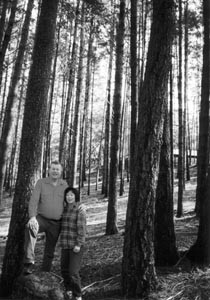
Branching Out: Jim and Betty Doerksen’s land management practices have gained widespread respect.

Stewards of the Land

The Doerksen ranch is a shining example of land management

By Ellen Bicheler

We’ve done a lot towards lowering global warming with our forest,” Jim Doerksen points out. “We’ve planted over a million trees since we bought this property in 1967. The trees, particularly the young ones, absorb the carbon dioxide and put out oxygen. We need a lot more properties like ours.”

Jim and Betty Doerksen’s bucolic 122-acre property, Ranchero Mark West, sits five miles east of Santa Rosa on St. Helena Road. It’s an award-winning sustainable Douglas fir and redwood forest, Christmas tree farm, and conservation easement.

The public is invited to a LandPaths outing on Saturday, Dec. 13, from 8:30am to 2:30pm. Doerksen will lead the group on a hike and discuss his challenges with and successful management strategy used for the forest, as well as provide a glimpse into the forest’s historical past.

The acreage was formerly inhabited by Coast Miwok and inland Pomo Native Americans and has yielded many treasures: a vast collection of arrowheads, scrapers, and the latest student find, a pestle. In 1834 General Mariano Guadalupe Vallejo purchased the property as part of his vast ranchero. The barn and blacksmith shop were built in 1834. The house, erected in the 1850s, is one of the oldest wood houses remaining in Northern California. The red barn was host to square dancers before the depression and still has the corner stage and ticket window intact.

LandPaths director Craig Anderson says, “Jim and Betty manage their property the way most of us clean our desks. If you see the section of Mark West Creek their property abuts, you start getting a feel for how someone can raise and cut timber and simultaneously have crystal-clear water flowing. The roads are cared for; a fully forested buffer is maintained along the creek; the exotic plants are removed, many hand-picked.”

Doerksen’s management of the land includes thinning the trees; pruning branches up to 25 feet; caring for wildlife; and providing watershed, soil, and fire protection. A UC Berkeley School of Forestry study showed a growth of more than 1,000 percent on the property, and the foresters were astounded by the trees’ growth of an inch in diameter per year. In 1999 Doerksen was honored as California Tree Farmer of the Year and the Western Regional Outstanding Tree Farmer.

A three-year study by the California Department of Fish and Game and the Sonoma County Water Agency deemed the Mark West Creek one of the best habitats for coho salmon, and Doerksen’s maintenance of the creek was cited as exemplary. Doerksen has pictures from the 1970s with 27 fish in one spot. Now he only sees a few a year. He attributes the decline to the runoffs from the vineyards and new subdivisions.

Doerksen has identified over 150 different species of birds on his property. “That’s a canyon wren,” he tells me as we look out at the creek. “He’s so nosy. I can be running a chain saw and he’ll come right up to me.” Doerksen shows me where the snowy owls live and talks about the pair of great horned owls that visit him at his hot tub each evening. There are white crowned sparrows, yellow vireos, and red-tailed hawks. He’s kept large areas of native plants and brush for the wildlife. “I’d never take out a toyon,” he confides. “The
birds love them.”

On a one-mile trail, Doerksen reports, the Sonoma Wildflower Society found over 50 different wildflowers, including the rare Calypso borealis (redwood orchid) and redwood lily.

The sociable Doerksens enjoyed the over 4,000 visitors to their property this year. They participated in many of the outings to educate the public about their timber and share their visitors’ enjoyment of the property.

They are the kind of stewards that LandPaths likes to work with. “Jim’s got a stewardship perspective that doesn’t necessarily come from his taking an environmental position,” Anderson says. “It simply comes from being on, and caring for, his land. To be honest, it’s much the same as for a number of ranchers, farmers, and vintners that we too seldom hear about in Sonoma County.”

The Doerksen property is one of more than 25 properties that LandPaths works with. Operating since 1996, LandPaths’ mission is “to foster a love of the land through public access, environmental education, and land stewardship.”

Andrea Mackenzie, director of the Agricultural Preservation and Open Space District says, “LandPaths and the Open Space District have a tremendous partnership. They get Sonoma County residents out on farmlands and wild lands protected by the Open Space District. Their outings tend to showcase the natural and cultural values of the county, and through these outings we learn about longtime farming and ranching families who have been great stewards for generations.

“Both by design and necessity, local communities are going to play an increasingly greater role in the future in open space parks and trails, and that’s where LandPaths comes in. . . . If people are involved and invested in the place, they’ll want to preserve it.”

Both the Doerksens and LandPaths are in agreement about preserving Sonoma County’s rich agricultural heritage. The Doerksens obtained a conservation easement in 1993 to ensure that no subdividing could take place in the future on their land. They’ve been able to maintain a balance with economy and ecology, no simple task. Doerksen says he paid $35,000 for his last timber harvest plan. A neighbor of his recently converted his timber to grapes because of all the regulations and expense with the timber.

Steve Smith, division chief of the Permit and Resource Management Department for Sonoma, Lake, and Napa counties, says, “It’s difficult to comply with regulations and turn a profit. The Doerksens run such a quality operation. They are a beacon for foresters. It would be nice if everyone ran their properties like them.”

The Doerksens are emphatic about how perfect Sonoma County is for growing timber. “We have the ideal weather conditions and soil. We could grow more timber here than a tropical rain forest.”

Doerksen is certain that they will continue to steward their land, provide abundant habitats for wildlife, and offer the flocks of visitors access to a beautiful forest. Both he and LandPaths hinted about future expansion with LandPaths, but nothing has been agreed to yet.

Come for the LandPaths outing on Dec. 13 from 8:30am to 2:30pm. For more information on LandPaths, go to www.landpaths.org or call 707.544.7284. You can purchase Christmas trees at the Doerksen Tree Farm at 7125 St. Helena Road in Santa Rosa. Call 707.539.7004 for more information.

From the December 4-10, 2003 issue of the North Bay Bohemian.
© Metro Publishing Inc.

Dan Hicks

0

I Scare Myself: Over five decades, Dan Hicks has built Hicksville into a burgeoning metropolis.

Get Your Hot Licks!

Dan Hicks hosts a holiday extravaganza, releases new CD and DVD

By Greg Cahill

Dan Hicks is no stranger to the time warp. In the spring of 1965, Hicks, then fresh out of college, pulled up stakes and headed for a small hippie commune in Virginia City, Nev., to help build the notorious Red Dog Saloon. The now-defunct dance hall served as the summer lair of the Charlatans, a San Francisco folk-rock band (Hicks, Mike Wilhelm of the Flaming Groovies, and Boz Scaggs were among its members) with a taste for turn-of-the-century gambler chic and potent hallucinogens–and a penchant for packing sidearms onstage.

It became a popular watering hole for Bay Area bohemians and Sierra residents keen on its Wild West flair and psychedelic atmosphere.

“What I remember most about the Red Dog was all the guns,” said band member and poster artist Michael Ferguson in an interview for The Art of Rock. “That’s the only thing we spent our money on–bullets. One of my favorite things was going down to the dump and spending an hour setting up cans and bottles, then finding an old chair, sitting down, and plunking away. It was a real loose Western scene.”

These days, Hicks downplays the gunplay, but fondly recalls the rustic nature of the town. “It wasn’t like people were shooting each other,” he says during an interview from his Mill Valley home, “but it definitely was a throwback to another time–the town certainly had the feel of another century.”

The same can be said for Hicks’ music–featured on a new two-disc retrospective–and the man himself.

An Arkansas native who grew up in Santa Rosa in the ’50s and graduated from Montgomery High, Hicks and his red-hot acoustic band the Hot Licks shuffled onto the national stage in 1969 with the album Original Recordings, which included Hicks’ signature piece, “I Scare Myself” (penned after an encounter with some potent marijuana brownies). The music was a strict departure from his colleagues in the San Francisco rock scene, who were rapidly psychedelicizing their sound. The debut album showcased the campy outfit that over the next few years would dish up wry country-swing-inflected tunes–sort of a hybrid of Bob Wills and the Texas Playboys, Django Reinhardt’s string band, and the swing-era Andrews Sisters.

It proved a deft blend of humor, beat sensibilities, and pseudo nostalgia that earned Hicks a reputation as one of the most original performers in pop music.

“I didn’t want to go into rock ‘n’ roll–that wasn’t what I liked the best,” Hicks explains. “My sound really emanated from my days as a folk musician, playing all of that acoustic stuff. So the early stuff I came up with was a folk thing with a little bit of jazz.”

Three classic albums and as many decades later, Hicks reemerged in 2000 with the strong comeback album Beatin’ the Heat, his first new studio recording since 1976. It featured guest appearances by Elvis Costello, Tom Waits, Brian Setzer, Bette Midler, and Rickie Lee Jones.

Now he’s back with Dan Hicks and the Hot Licks, a two-disc set recorded live at a 2001 Warfield Theater concert that marked the singer-songwriter’s 60th birthday. The recordings–a CD and DVD–feature an all-star cast of friends that includes 45 musicians who played with Hicks over the years. “Essentially, I invited everybody who had ever been in the band,” Hicks says, “including three of the remaining Charlatans and some of the guys from Santa Rosa that I had learned to play folk guitar with back in high school.”

Originally, Hicks had planned the event as a tongue-in-cheek self-tribute, envisioning that he would be sequestered onstage in an easy chair and looking pleased with himself while those fellow musicians who had played such a big part in his career performed for him.

“Sort of an alumni jam,” he quips.

It didn’t exactly work out that way. In the end, Hicks was centerstage, though he graciously shared the spotlight with his old friends.

Hicks will perform Friday, Dec. 12, at the Fillmore Auditorium in San Francisco at a record-release party that will add a seasonal splash. The concert, the second annual Holidaze in Hicksville, will feature the Christmas Jug Band (featuring several former members of the Lost Planet Airmen) with special guests, a doo-wop group, and a host of new holiday songs.

“And I’m sure I’ll play ‘I Scare Myself,'” he muses before adding dreamily, “I don’t know that I’ve ever done a show where I didn’t play that song, except maybe at open mic night at the Old Mill back in 1974. . . .”

Tickets for Dan Hicks and the Hot Licks second annual Holidaze in Hicksville concert are $35 (all ages). Showtime is 8pm. Visit www.fillmore.com for details.

From the December 4-10, 2003 issue of the North Bay Bohemian.
© Metro Publishing Inc.

Sonoma County Wine Library

0

Photograph by Rory McNamara

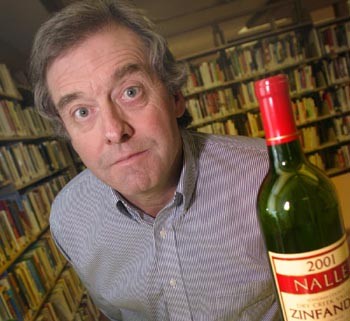
Bo Knows: Bo Simons, the librarian at the Sonoma County Wine Library, oversees a vast repository of enological information.

Drinking in Knowledge

The Sonoma County Wine Library is a veritable cellar of information

By Sara Bir

If you want to know about Lithuania or Zoroastrianism or dollhouses or black holes, you go to a library. Most any well-stocked public library will do. In the North Bay, at least, there are no Lithuanian- or Zoroastrian- or dollhouse-specific libraries. Should you want to know about wine, though, you can go to the wine library–the Sonoma County Wine Library–which has been edifying enologists for 15 years. Anything that 99.9 percent of nonsuperhumans might want to know about wine, they could find here.

Open since 1988, the Sonoma County Wine Library stands in a wing of the Healdsburg Regional Library. At first glance, it looks exactly like most public libraries: fluorescent lights, shelves of books, shelves of periodicals. But in these books, it’s all wine, all the time.

“At first when I came here, it was like, ‘Fill up the shelves, fill up the shelves’–which is a librarian’s dream. But now we’ve reached capacity, so now you’ve got to manage the collection,” says Bo Simons, who’s been librarian since the library’s official inception 15 years ago, with the exception of a three-year period in the mid-’90s when Zita Eastman was librarian (Eastman, who has since retired, still works as a substitute librarian).

While you can find broad and sweeping information at the Wine Library, there’s also a plethora of items offering highly specific single-subject details–The Yeasts: A Taxonomic Study, anyone? And if you really want to get into the nitty-gritty of wine history in California, this is the place to find old newspaper articles, pamphlets, press releases, maps, and wine labels. It’s like stumbling across a long-lost trunk full of scrapbooks, only much more organized.

The more rare and valuable segment of the collection is kept locked in a glass case. On these shelves, you can find everything from a slender, fanciful wine popup book, circa 1995, to a set of eight thick leather-bound volumes, circa 1900. Simons retrieves one of these from the case, his manner revealing both the reverence of a bibliophile and the practicality of a librarian.

“I’ve seen it in bookstores’ catalogues–and not as nice a set as we’ve got–for $18,000,” says Simons. For books that have been around for a hundred years, they’re still pretty useful. “It’s got good information. When Rhone varietals became a hot thing and everybody wanted to know about Viognier and Cinsault and Syrah, this was the best thing I could find.”

One of the oldest items in the shelf isn’t really a book, but a printed law that was later bound. “It was passed in 1656 and printed in 1657 in England,” says Simons. “‘Enacted by his highness lord and protector’–that’s Oliver Cromwell.”

But it’s no longer the granddaddy of the collection. “Since then we’ve bought this book, which is now the oldest book in the collection. Libri de Re Rustica, published by Aldus Manitius, a famous Venetian printer, in 1514. So this thing is 10 years shy of being half a millennium old. It’s in Latin, with four authors, the third of which writes about how the Romans grew grapes and made wine.

“[Manitius] was writing in the first century A.D., and he talks about a bunch of people who make a pile of money in Rome, come out, buy a villa in the country, plant the wrong things in the wrong place, harvest at the wrong time, and wonder why their wines don’t sell. The more it changes, the more it stays the same.”

Less glamorous but equally evocative are the Wine Library’s oral histories. Though some came from outside sources–UC Berkeley’s Bancroft Library and the Napa Valley Wine Library–the Sonoma County Wine Library has been compiling its own since 1988, shortly after the building opened. Two oral histories published late this summer featured retired grape, prune, and apple grower George Greeott (who, at 93, is still an avid horseshoe pitcher) and Bob Sisson, UC Farm Adviser for Sonoma County and an important force in the development of Sonoma County’s winemaking industry.

To date, the Sonoma County Wine Library has produced 36 oral histories. “There’s people going all the time, and they’ve all got a piece of the story, and we’re lucky to collect the memories of folks around here who built this wine industry,” says Simons.

Many of the Wine Library’s patrons don’t even set foot in the library itself, but call or e-mail (if you type “wine library” into Google, the Sonoma County Wine Library’s site is the first one that comes up). Recently, a woman who works for one of the Sonoma County’s larger wineries wanted information on enzymatic hydrolysis. Simons saw a reference to an article, but it was contained in a 50-year-old transcript of conference proceedings in the former Soviet Socialist Republic of Georgia.

“No library in the known universe had this thing,” Simons says. So he e-mailed a professor at Davis, who e-mailed his friend in Moscow, who e-mailed his friend in Georgia, who then e-mailed Simons. “So we go to the ends of the earth to find this stuff.”

The idea for the Sonoma County Wine Library started when the Russian River Wine Road, a group of wineries that got together and decided to do some co-op advertising, formed in the early ’70s. “None of our wineries alone could afford to have a big, full-blown library, but together they could fund one,” Simons says.

The Wine Library found its champion in Millie Howie, who worked as a publicist at Geyser Peak Winery. She convinced the industry that it was a good idea to partner with the public library. “Then she went out trying to get the library to buy into that, and that was a tougher sell,” Simons says.

David Sabsay, director of the Sonoma County Library at the time, at first laughed at Howie: a collection based on alcohol in a public library? “But it’s not a collection on alcohol,” says Simons, “it’s a collection on microbiology, on viticulture, on the economics and marketing associated with selling grapes and wine, the history of wine.”

Eventually Sabsay came around, and he came up with a system of subscriptions to enable wineries and growers to partially fund the Wine Library. “It’s kind of like dues,” Simons explains. “Wineries have a sliding scale based on case production; growers, based on acreage. [Sabsay] kind of said to the wine industry, ‘Put your money where your mouth is.’ They went around and got about half the wineries in the county to support it.”

Today, roughly one-third of the library’s funding comes from these subscriptions. Another third comes from the Wine Library Associates (a support organization similar to Friends of the Library), and the final third is through public funding.

Exposing new patrons to the library’s resources has been an important part of the Wine Library’s mission. “I’ve been trying to figure out for years how to make this place appealing to the pickers, to the pruning crews, to the vineyard workers who power the thing,” says Simons. With Santa Rosa Junior College head viticulture instructor Daniel Robledo, the Wine Library conducted a series of Spanish-language viticulture workshops.

“I’d give them a tour of the library, and these guys were starting to open up,” Simons continues. “I bought a lot of Spanish-language books on enology and stuff, trying to make this attractive as someplace where, if they like what they are doing and they want to stay there, fine, but if they want to get inside the winery and become a supervisor or something like that, that path is at least open to them more.”

The program has since spawned others; there will be another Spanish-language viticulture seminar with Luis Sanchez from the Sonoma County Employee Development Alliance coming up at the Sonoma County Wine Library on Dec. 13.

Despite the obvious vinicultural slant to our own local history, not many other topics call for an entire collection of information so diverse and yet so specialized. “I’ve been trying to think of another agricultural crop that would sustain this kind of thing,” muses Simons. “Tobacco? Beets? Potatoes? There’s a lot of history in tobacco, cotton, things like that, but I can’t see a lot of little farmers who are interested in making better cotton or potatoes or beets to the point where they’ll study up on it in a library.

“When the Sonoma County wine industry boomed in the past, this library’s been no small part of it. I see people coming in here, and making better wines and selling more of it because this library exists.”

The Sonoma County Wine Library is located at the Healdsburg Regional Library, Piper and Center streets, Healdsburg. 707.433.3772.

From the December 4-10, 2003 issue of the North Bay Bohemian.

© Metro Publishing Inc.

Casinos

0

Image Courtesy of the Miwok Archeological Preserve of Marin

Lost Faces: Ethnographer Isabel Kelly studied the Coast Miwok Indians of Marin and southern Sonoma counties, including the family of Maria Copa, whose grandmother is shown at left. Kelly’s work is compiled in ‘Interviews with Tom Smith and Maria Copa.’

The Graton Band’s Last Stand

It’s money, not morals, that stands between the pro and con casino forces

By R. V. Scheide

“I became Indian. I ignored her. Silence, the Indian’s best weapon, an aunt of mine once said. Be an Indian, cut yourself off with silence any way you can. Don’t talk. Don’t give yourself away.”
Greg Sarris, “Reading Narrated American Indian Lives,” from his 1993 collection of essays, Keeping Slug Woman Alive.

Greg Sarris strides into the lobby of the Rohnert Park Doubletree Inn on a sunny afternoon in mid-October, running late as usual, slight beads of perspiration running down his forehead and neck and disappearing down a long-sleeved white shirt open to the second button.

The chairman of the Federated Indians of Graton Rancheria has just returned from Paris, where, in his other persona as Loyola Marymount University professor and critically acclaimed author, he attended a conference on Native Americans with other scholars and American Indians.

The French, he ruefully notes as he sits down and stretches his long legs out under a coffee table, were much more interested in the Indians dressed in authentic beaded and feathered costume than with the academics.

Sarris is rendezvousing at the Doubletree with 30 or so members of the Graton band in preparation for that night’s Rohnert Park City Council meeting, where the tribe’s proposed megacasino and resort was topic A on the agenda. In roughly an hour, they’ll be facing down hundreds of Rohnert Park citizens angered by what they view as the behind-closed-doors agreement between the city council and the tribe that permitted a casino to invade their community without public input. On this night, they’ll get a chance to voice their opposition.

The anticasino activists claim the proposed 360-acre casino, hotel, and restaurant development will exacerbate Rohnert Park’s already significant traffic problems, deplete the region’s scarce water supply, degrade the environment, and create more crime in the area, thereby destroying the city’s way of life. The leader of the opposition, Assembly of God pastor Chip Worthington, openly calls the conflict over the casino a “cultural war.”

The Graton band insists that the $200 million it has agreed to give to the city over the next 20 years will offset the casino’s impact on the community, in addition to putting Rohnert Park’s strapped city budget back in the black. But since no study has yet been done to determine the actual dollar value of those impacts, opponents say the deal is not good enough. Since August, when the tribe announced it was relocating its proposed Indian gaming facility from the Sears Point area to Rohnert Park, the debate has become increasingly incendiary.

Missing from the argument over the casino, at least so far, has been any discussion of gambling’s moral implications. Neither Sarris nor Worthington really views the present conflict over gambling as an ethical issue. That seems odd, because both have been influenced by religions that morally prohibit gambling.

Sarris in particular has been heavily influenced by the Bole Maru, the spiritual resistance movement that helped rescue Northern California Indian tribes such as the Southern Pomo and the Coast Miwok–the ancestors of the present-day Graton band–from the brink of extermination.

Among its many tenets, the Bole Maru forbids mixing blood with whites, drinking alcohol, and gambling. Without the resistance movement, the Graton band might not exist today. Now, ironically, the tribe has turned toward gambling for its survival. Whether it is moral or not is of little concern to either side. In our culture, money talks and morality walks.

As the battle over the casino has heated up, media access to tribal members has been strictly limited. The Graton band have preferred to communicate through a well-organized public-relations campaign rather than grant interviews. Sarris agreed to an interview with the Bohemian after being told the topic of the discussion would be the morality of gambling and how it relates to the Bole Maru.

Flanked by tribal vice-chair Lorelle Ross and tribal secretary Jeanette Anglin, Sarris is no longer the young man gazing out from the back-cover jacket photographs of novels such as Watermelon Nights and Grand Avenue. The shock of black hair has receded and is flecked with gray; faint worry lines crease his face.

But at 52, Sarris–who is of Kashaya (southwestern coastal Pomo), Filipino, and Jewish descent–is still tall and good-looking, with wide shoulders and a thick chest that betray heavy gym work. The heavily caffeinated Ripped Force sports drink he’s sipping cuts through the jet lag fast as Sarris warms to the topic of the Bole Maru.

The Bole Maru was an amalgamation of traditional Native American spiritual beliefs and Victorian-era Christianity. The movement’s origin dates to 1870, when migrant Pomos brought first word of the Ghost Dance from Nevada’s Paiute tribe to Northern California. Stressing resistance to cultural assimilation, the Bole Maru ironically borrowed many of its tenets from white culture, including religious-based prohibitions against alcohol and gambling.

“When the first Dreamer, Richard Taylor, came back [from Nevada], he saw the people in great disarray,” Sarris says. “There was drinking, there was a sense that it was all over.”

For up to 10 millennia, Northern California’s Indians enjoyed a symbiotic relationship with nature that, according to the somewhat romanticized vision of Vinson Brown and Douglas Andrews in The Pomo Indians of California and Their Neighbors, enabled each tribe member to “relate himself deeply to his environment, the woods, the waters, the rocks, the plants, the animals and birds, and other creatures in a way that modern man has surely forgotten.”

Squabbles between neighboring tribes were infrequent; California’s fearsome ecology–featuring drought, flooding, earthquakes, and Mt. Konocti’s eruption 5,000 years ago–was the major enemy.

The Southern Pomo and Coast Miwok occupied what is now southern Sonoma County and northwest Marin County. At the peak of their civilization, they numbered 20,000. They lived in round thatched huts clumped together in small villages of 600 to 1,000 inhabitants known as tribelets, and used their prodigious talent for weaving to make baskets for cooking, storing acorns and water, and for devising ingenious traps to capture fish, rabbits, and other wild game.

Nothing in the Indians’ 10,000 years of existence prepared them for the arrival of the Europeans. By the time the discovery of gold at Sutter’s Mill brought European-Americans flooding into California in 1849, the tribal populations had already been reduced by an estimated 90 percent from the deprivation and disease inflicted by the Spanish and Russian fur traders during the past century and a half.

But if the Spanish and Russians were brutal, the Americans turned out to be oppressors par excellence. The Indians were quickly pushed into the wilderness; many were massacred in cold blood, such as the band of 188 Lake Pomos–men, women, and children–cornered on a small island in Clear Lake that were slaughtered by U.S. Army troops in 1850. Today, only a small plaque next to a grassy knoll not too far from the Robinson Rancheria and Bingo Casino in Nice commemorates the Bloody Island Massacre.

When the Gold Rush was over, the number of the Graton band’s ancestors had dwindled to 20. Without the Bole Maru, the tribe may have never recovered. “The purpose of the Bole Maru was strictly functional: to rebuild a tribe that had been decimated,” Sarris says. “What it did was rebuild the tribe so that the old blood lines were developed.”

The movement’s spiritual leaders were known as Dreamers. They drew upon visions from dreams and dance-induced trances to guide their respective communities through the lean years of the early 20th century, when the federal government and the state of California banished so-called homeless Indians to small rancherias, often in the middle of nowhere.

The Bole Maru rules were harsh, tolerating no mixing of blood between Indians and whites. If Kashaya-Philipino-Jewish Sarris had existed during its early years, he might have been killed at birth or at least banished from the tribe. The prohibitions against drinking alcohol and gambling, adapted from Christian morality, were designed to thwart unscrupulous whites who used liquor and games of chance to pry away from them what little wealth indigenous people had.

“Mabel McKay was the last of the Bole Maru Dreamers,” Sarris says, speaking of the internationally renowned Pomo medicine woman and basket weaver about whom he wrote the biography Mabel McKay: Weaving the Dream. McKay, who passed away in 1993, claimed that the intricate designs for her baskets came from her dreams, and in much the same way, the Bole Maru Dreamers wove the fabric of the material and spiritual worlds together in a blueprint for survival. Something worked, and the Graton band now claims 568 certified members.

Sarris neither drinks alcohol nor gambles and says he’s been heavily influenced by Bole Maru Dreamers like McKay and the late Essie Parrish. Nevertheless, he sees no conflict between the Bole Maru’s prohibition against gambling and the Graton band’s effort to establish a casino in Rohnert Park.

“The Bole Maru doesn’t exist anymore,” he says. “It was a remarkable thing what they did, to keep the tribe going.” But even Dreamers like Essie Parrish eventually backed off the movement’s strict antiassimilation doctrine, he adds. “She said go to school, integrate, we need to survive.”

The Bole Maru borrowed freely from Christian doctrine. Although the Bible contains no passages that specifically forbid gambling, many clerics have long insisted that the teachings of Jesus are incompatible with indulging in games of chance. In a 1999 article for nonprofit conservative Christian group Focus on the Family, writer Ronald Reno cites numerous Biblical passages that have been interpreted in such a manner.

“Jesus commanded, ‘Love your neighbor as yourself (Mark 12:31),'” he writes. “Gambling, meanwhile, is predicated on the losses, pain, and suffering of others.”

Studies have shown that up to 10 percent of those who gamble may have problems controlling their gambling activity, leading to familial problems such as divorce, bankruptcy, child abuse, domestic violence, crime, and suicide. Allowing fellow human beings to suffer thus is immoral, Reno insists, because it violates the commandment to love thy neighbor.

As Reno correctly notes, studies have also shown that poor people tend to gamble in numbers larger than their proportion in the population. “Scripture exhorts us to look out for the poor and disadvantaged, and issues strong warning against taking advantage of their plight,” he says, citing passages such as Prov. 14:21, 14:31, and 22:16.

Gambling also violates the Protestant work ethic. “Work has been part of God’s design for mankind from the very beginning. We are to invest our time and energies into labors that supply our needs and those of our families (Prov. 31, 2 Thess. 3:10, 1 Tim. 5:8), and that allow us to share with others (Eph. 4:28). Gambling, meanwhile, portends something for nothing.”

Since Florida’s Seminole tribe opened the first Indian casino two decades ago, the opposition to the subsequent national gambling boom has been led by Christian ministers, so it’s no surprise that the opposition to the proposed Rohnert Park casino is led by Assembly of God pastor Chip Worthington. What is surprising is that Worthington doesn’t see this as a religious or moral battle.

“This is a cultural war,” he says via telephone from his church office. “The culture of Rohnert Park is family-oriented, with many parks and schools and nice neighborhoods, and a lifestyle that is dominated by families getting together to have barbecues. Culturally, gambling will destroy this city.”

When asked to talk about the religious aspects of his antigaming stance, Worthington says, “It’s the Protestant work ethic. You work hard, you invest your money, you save it in the bank, and over time, you prosper,” he says. “I believe the get-rich-quick morality of Indian gaming is wrong.” However, he insists that casino opponents are not the religious zealots portrayed by local media, but concerned citizens who are mad as hell and not willing to take it anymore.

“Religion and ethics have little to do with this; it’s all about the almighty dollar,” says the Assembly of God pastor. “If we held to our religion and ethics, there probably wouldn’t be any gambling.”

And the genocide of Native Americans might never have occurred, he could have added. Perhaps 19th-century philosopher Friedrich Nietzsche was correct when he wrote, “The last Christian died on the cross.”

Asked to explain what he means by “cultural war,” Worthington leaves the Graton band out of the picture, framing the conflict as one between Rohnert Park citizens concerned about the environment, traffic, crime, and potentially declining home values, and Station Casinos, the Nevada-based gaming company providing financial backing to the proposed casino. Estimates of the proposed casino’s annual take have ranged from $150 million to $500 million.

“Basically, what they want to do is drain our local economy,” he says. By federal law, Stations, which will operate the casino for the tribe, is allowed to collect as much as 50 percent of the casino’s annual revenue. Like the revenue earned by big-box stores like Home Depot, that money will leave the county. That still leaves the $200 million over the next 20 years the tribe has agreed to give to the city, but that isn’t enough for Worthington.

“If they were negotiating with me, they would be giving us a lot more money,” he says.

Apparently, everyone in Babylon has his price.

Sarris and Worthington are a study in contrasts. One leads the push to establish a casino; the other leads the opposition against it. One is a smooth-talking intellectual; the other is a garrulous, plainspoken minister for a church that condemns homosexuality and abortion.

Politically, Sarris leans to the left. The deal the tribe cut with the Rohnert Park City Council contains progressive elements, such as a unionized casino labor force and environmental mitigations that would normally draw praise from local liberal groups if the proposed development didn’t happen to be a casino.

Worthington is a tough-talking conservative who opposes big government “paternalism” but concedes that Indian sovereignty grants the Graton band the right to a casino. “This paternalism drives me crazy,” Worthington says. “I think this is nothing less than Las Vegas-style paternalism. I think the tribe has a right to a casino, but I just hope they can put it in a place where they can get their economic engine to work without destroying our lifestyle.”

He says he’s currently working on a proposal that will move the proposed casino to an undisclosed location outside Rohnert Park. In the mean time, the campaign to recall Rohnert Park’s city council is underway. He suggests the real answer to the problem of Indian self-reliance is to abolish the Bureau of Indian Affairs and distribute its $3 billion annual budget to the Indians, which by his calculations would amount to $50,000 annually per person.

The reality is that Indian gaming is so far the only method that’s been able to restore Native Americans to some semblance of self-reliance. It’s far from perfect. As Newsweek magazine reported last year, only one in 20 Native Americans receives money from gambling. Many tribes are isolated geographically, and casinos are either out of the question or don’t do enough business to provide meaningful income.

But in California, at least, a reserve trust fund established by Proposition 1A in 2000, the Indian self-reliance initiative overwhelmingly approved by voters, has finally started to pay out increments to the state’s nongaming tribes. The Sycuan tribe in Southern California have dramatically raised their standard of living, and casinos in Northern California such as Cache Creek, owned by the Indians of the Rumsey Rancheria, where the Bole Maru Dreamer Mabel McKay grew up, are doing well enough to provide healthcare and college scholarships to tribal members.

Sitting in the Doubletree lobby, Greg Sarris knows the Graton band’s window of opportunity is closing. Some gaming industry experts predict that within the next 10 years Internet gambling may make Indian casinos obsolete. Time is of the essence. For the past decade, he’s led the fight to restore the tribe’s federal recognition, which was removed by the Rancheria Termination Act in 1958. Recognition was restored in 2000, but many Graton band members are still sore about termination.

“They came in August of 1958,” recalls tribal vice-chair Lorelle Ross. The Termination Act disbanded the rancheria but granted individual Indians the right to own the 16 acres of land as private property. Unfortunately, state and federal agents didn’t mention concepts such as property taxes to the new landowners when they showed up at the rancheria. “Anybody who could was out harvesting, and it was never explained to them.”

As levels of indebtedness increased, tribal members began selling off their property. Ross’ father was one of the last ones to hold out, but eventually debt forced him to sell all but one acre of his land.

“Mom is still the original owner of the property,” Ross says. “But in most cases, they lost everything and you don’t have that generational link to the land.”

When recognition was restored, Sarris said publicly that the tribe wasn’t planning on building a casino. The tribe explored other options, such as organic food processing, a cheese factory, and a winery, Sarris says, “all of which need capital or there is already a glut of here.”

“No bank was going to give us money,” he continues. Enter Station Casinos, which also bankrolled a controversial casino in the Sierra foothills outside Auburn. “Any good economist will tell you we made a prudent decision. As I tell my friends, do the math.”

Doing the math has replaced dreaming for the Federated Indians of the Graton Rancheria. It’s simply a matter of survival. Some of Graton band members still weave baskets, but unlike Mabel McKay, they no longer dream their designs. Such dreams no longer have a place in a culture supposedly founded in part on the doctrine of loving thy neighbor. That this culture can only offer the victims of its genocidal rage the right to build casinos is a sign of not just how much they’ve lost, but how much we’ve all lost.

But Sarris is not ruling out the possibility that they may someday dream again.

“Mabel McKay always said the spirit doesn’t go away and hide under a rock,” he says with a mischievous smile.

With that, he stands up to join the rest of the Graton band to prepare to face the angry citizenry of Rohnert Park.

The tribe get their way that night. The Rohnert Park City Council refuse to rescind the deal, despite a raucous crowd of more than 500 protesters.

But Worthington promises the battle is far from over. “The bottom line for me, why I’m fighting this like a dog, is that I’m not going to give up democracy to these guys,” he says, referring to the Rohnert Park City Council. “For too long, we’ve let these guys ruin our city.”

From the December 4-10, 2003 issue of the North Bay Bohemian.

© Metro Publishing Inc.

2003 Gift Guide

Buy one of the following DVDs Richard von Busack mentioned in his article:'M. Hulot's Holiday''Mon Oncle''Fiend Without a Face''The Devil and Daniel Webster''Haxon (Witchcraft Through the Ages)'Takashi Miike's 'Dead or Alive' (unrated director's cut)'Bob le Flambeur''The Art of Buster Keaton''The Man Who Laughs''Jacques Brel Is Alive and Well and Living in Paris'Buy one of the following SACDs Greg Cahill...

Russian River Cleanup

River RefuseSumming up Russian River cleanup and First Flush for 2003By R. V. ScheideThe Russian River is one of the natural resources that makes Sonoma County such a great place to live. But as the volunteer crews responsible for cleaning up the Russian River and monitoring the storm season's first runoff have discovered, when a river runs through it,...

‘In America’

Suffering Succotash: In 'In America,' a heartwarming tale to rival any Christmas fodder, an Irish couple find the strength to continue after the death of their son.Coming to 'In America' Don Novello on fearing Christmas, the joy of action figures, and the difficulty of finding a good movie close to home Writer David Templeton takes interesting people to...

Belle Arti

Photograph by Michael AmslerItalian Charm: Co-owner Santi Sacca (left) and chef Fabrizio Castangia infuse Belle Arti with their Sicilian-via-New-York sensibilities.Cultural ExchangeBelle Arti makes a meal fit for the Kingby R. V. ScheideMy entire karaoke repertoire consists of precisely two songs: "Swinging Doors" by Merle Haggard and "Burning Love" by Elvis Presley. At first glance, this fact would apparently have...

Desert City Soundtrack

Raw Like Sushi: Desert City Soundtrack turn it up to 11 in their live performances, while their studio album shows more nuance. A Little Bit Softer NowDesert City Soundtrack grow up and turn it downBy Sara BirLet us now praise the time-honored death album. Such well-traversed territory is the death album--almost nearly as much as the breakup album--that any...

Gift Guide

Location, Location, Location: Work from Barry Singer Gallery looks fine on most any wall. Shown: 'Horse Study 7--Other Series' by Juliet van Otteren.Livin' la Vida LocalFrom fine art to fine guitars, fine food to fine crafts, gifts that come from local artisans are just plain fineBy Davina Baum, Gretchen Giles, David Templeton, and R. V. Scheide Pretend for a...

Ranchero Mark West

Photograph by Betty DoerksenBranching Out: Jim and Betty Doerksen's land management practices have gained widespread respect. Stewards of the LandThe Doerksen ranch is a shining example of land managementBy Ellen BichelerWe've done a lot towards lowering global warming with our forest," Jim Doerksen points out. "We've planted over a million trees since we bought this property in 1967. The...

Dan Hicks

I Scare Myself: Over five decades, Dan Hicks has built Hicksville into a burgeoning metropolis.Get Your Hot Licks!Dan Hicks hosts a holiday extravaganza, releases new CD and DVDBy Greg CahillDan Hicks is no stranger to the time warp. In the spring of 1965, Hicks, then fresh out of college, pulled up stakes and headed for a small hippie commune...

Sonoma County Wine Library

Photograph by Rory McNamaraBo Knows: Bo Simons, the librarian at the Sonoma County Wine Library, oversees a vast repository of enological information.Drinking in KnowledgeThe Sonoma County Wine Library is a veritable cellar of informationBy Sara BirIf you want to know about Lithuania or Zoroastrianism or dollhouses or black holes, you go to a library. Most any well-stocked public library...

Casinos

Image Courtesy of the Miwok Archeological Preserve of MarinLost Faces: Ethnographer Isabel Kelly studied the Coast Miwok Indians of Marin and southern Sonoma counties, including the family of Maria Copa, whose grandmother is shown at left. Kelly's work is compiled in 'Interviews with Tom Smith and Maria Copa.' The Graton Band's Last StandIt's money, not morals, that stands between...
11,084FansLike
4,606FollowersFollow
6,928FollowersFollow
