Swirl ‘n’ Spit

0

Swirl ‘n’ Spit
Tasting Room of the Week

Gallo of Sonoma Winery

By Heather Irwin

Lowdown: The napkins are neatly pressed, the small tables impeccably set. From the lovely center of downtown Healdsburg, the Gallo of Sonoma tasting room looks out onto the lovely streets where lovely people drive by in lovely cars.

It’s all so very, well, lovely. Except for the not-so-lovely feeling I’m getting from the tasting-room staff. Standing among $80 bottles of Estate Cabernet Sauvignon, there’s a chill. Despite being the only person in the room, I’m being tolerated with about as much cordiality as a picket-sign-wielding UFW worker.

Which is a shock, considering the uphill public-relations battle the family has been fighting the last 20 years. Best known for the convenience-store staples Thunderbird, Boones Farm, Hearty Burgundy and Ripple, Gallo has, since the mid-’80s, worked to create a premium line of wines worthy of something more than a screw top and change from a $5 bill.

Also, a spring visit to Gallo of Sonoma’s Frei Ranch estate (where we sampled a number of the Estate and Reserve wines) was shockingly pleasant. I fell a little in love with the much-maligned brand and was gently guided by the kindest of pourers, who described each of the zesty reds and a particularly tasty Chardonnay in great detail.

So standing here tasting while the staff opens mail and reads from Wine Spectator is a little disappointing. Being looked up and down and asked your age isn’t cute when you’re 13 years past your 21st birthday. Frankly, it feels creepy. And a little elitist. Especially when you’re shown to the “free” bottle tasting. But I’m here to taste, and despite the frost, I push on.

Mouth value: There are clearly some great wines in the upper price range. The estate Cabs and Frei and Stephani Vineyard single vineyard Cabs were dynamite. Those, however, weren’t what I tasted in Healdsburg. The 2001 Laguna Vineyard Chardonnay was like licking the inside of a barrel. Oak, oak and oak–and for $24, I expect a little more complexity. The 2003 Gallo of Sonoma Pinot Gris ($11) lacked character, as did the 2001 Two Rock Pinot Noir which had little of the earthy, dark fruit flavor you’d expect from a $28 pinot.

The 2000 Frei Vineyard Zinfandel ($22) was also bland and failed to deliver on a promise of black pepper spice and ripe berries. The 2000 Barrelli Creek Cabernet Sauvignon ($30) was the best of the bunch, with nice warm tannins but still failed to live up to the memories of its meatier cousins we had tasted last spring. If you go, try the Taste of the Gallo Family Library, which includes the estate wines.

Don’t miss: Healdsburg can sometimes feel a bit snooty, especially when you’re reeling from a tasting-room bum rush. Keep it real with the locals at the Healdsburg Bar and Grill (245 Healdsburg Ave., Healdsburg, 707.433.3333). They feature the best salad ever: rock shrimp ($10.50), with avocado, mango and crunchy rock shrimp on romaine.

Spot: Gallo of Sonoma, 320 Center St., Healdsburg. Open Sunday-Wednesday, 11am-5pm; Thursday through Saturday, 11am-7pm. Tasting fees vary. 707.433.2458.

From the July 7-13, 2004 issue of the North Bay Bohemian.

© Metro Publishing Inc.

Tom Waits

0

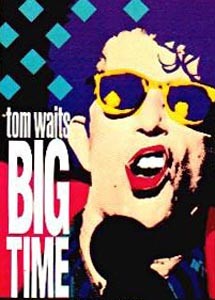
Good Time: ‘Big Time’ is one of the most enthralling music films ever made.

Frank Talk

The Raven screens the Tom Waits classic ‘Big Time’

By Greg Cahill

“Life is picking up a girl with bad teeth,” singer-songwriter Tom Waits told Time magazine in 1978, while describing his philosophy, “or getting to know one of those wild-eyed rummies down on Sixth Avenue.”

The fringe-dwelling characters that populate Waits’ world are a colorful bunch indeed: the one-eyed dwarf shooting craps on a fog-bound waterfront or the haggard hooker in a Minnesota jail who fakes a tale about her trombone-playing sugar daddy–marginal figures one and all, spinning out in a dream world haunted by personal demons.

“These are people trapped in what a patient Christian might call the tunnel toward salvation,” Anthony York wrote in a recent Salon.com article about Waits.

How drawn to these characters is Waits? In the 1980s, this eccentric bohemian and West County resident released a trilogy of albums–Swordfishtrombones (1983), Rain Dogs (1985) and Frank’s Wild Years (1987)–that compose a brooding Beat opera centered around a broken-hearted sailor (Frank) adrift in a sea of despair, a veteran who experiences a psychotic episode and torches his house before fleeing into the night.

The richly textured material from these albums–which marked a highpoint in Waits’ storytelling and a departure from his earlier bluesy piano-bar style in favor of a nightmarish cabaret of bagpipes, accordions and percussive objects–served as the basis for Healdsburg-based director Chris Blum’s classic 1988 performance film Big Time.

That rarely screened film, which is not available on DVD, screens Friday, July 9, at the Raven Film Center in Healdsburg.

It’s one of the most enthralling music films ever made. That’s due, in part, to Waits’ dark humor, his riveting portrayal as a sardonic carnival-barker-type (replete with police bullhorn and work light, the kind you hang from the hood of your ’58 Pontiac while changing the plugs, and which Waits uses to illuminate his sneering expressions) and a crack band that features the famed former Lounge Lizard Marc Ribot on guitar.

But the real star is Frank and the strange songs that tell his story.

In his Salon.com piece, York unearthed several past articles in which the usually reclusive Waits talks about the evolution of his music during that period and especially how liberating he found the transformation.

“Anybody who plays the piano would thrill at seeing and hearing one thrown off a 12-story building, watching it hit the sidewalk and being there to hear that thump,” Waits told Playboy magazine. “It’s like school; you want to watch it burn.”

Freed from the confines of the standard jazz trio, York adds, Waits continued to experiment. He found music in “dragging a chair across the floor or hitting the side of a locker real hard with a two-by-four, a freedom bell, a brake drum with a major imperfection, a police bullhorn.”

He also honed the art of evocative storytelling, a development that began when Waits stopped romanticizing the life of a drunk. “I tried to resolve a few things as far as this cocktail-lounge, maudlin, crying-in-your-beer image that I have,” he said in a Rolling Stone interview. “There ain’t nothin’ funny about a drunk. You know, I was really starting to believe that there was something amusing and wonderfully American about a drunk. I ended up telling myself to cut that shit out.”

In the Frank trilogy, which finds the protagonist transformed over time, Waits has created a modern American version of the Odyssey, one that has invited speculation among fans and inspired countless college dissertations.

But Waits has a much less complicated way to explain his songwriting approach, as in this quote excavated by York. “The best songs come out of the ground, just like a potato,” he once said in a conversation with Roberto Benigni, which was published in Interview magazine. “You plan and plan, and then you wait for the potato.”

‘Big Time’ screens Friday, July 9, at the Raven Film Center, 115 North St., Healdsburg. 9pm. $6. 707.433.6335.

From the July 7-13, 2004 issue of the North Bay Bohemian.

© Metro Publishing Inc.

Swirl ‘n’ Spit

0

Swirl ‘n’ Spit
Tasting Room of the Week

Hall Winery

By Heather Irwin

Lowdown: You’d think a guy who started his own financial group at age 18 with money he began saving at age 10 would run out of steam somewhere, oh, around age 25. But like many of Napa’s boutique winery owners, Craig Hall has a history that includes owning a major league franchise, being a big-time real estate developer, having several published books to his name and being married to the former ambassador to Austria, though Kathryn Hall grew up keeping it real on a Mendocino grape farm. Don’t hate them because they could buy you out a billion times over; the Halls happen to make some damn great wine when it comes right down to it.

Word in the valley is that the couple is buying up property as fast as they can. They currently own some 300 acres of prime real estate in Napa and Alexander valleys and plan to spend $100 million to produce enough grapes for their great big reds. No wussy wines, these. Hall wines are beefy, burly tongue-grabbers that are being snapped up faster than Dean and Deluca’s Saturday sample trays.

Mouth value: After getting over the $10 winetasting sticker shock, settle in for some real rewards. The 2001 Napa Valley Merlot ($28) is a favorite with rich caramel and burnt wood flavors, and is a good value. My guide called it a “wine s’more” (which I can appreciate): faintly sweet and smoky with hints of chocolate and a plush texture. I love a good, campy Merlot. The 2001 T Bar T Vineyard Merlot ($30) was less camp and more vamp. Rich velvet and violets with a hint of leather hiding underneath make this mistress a sexy catch. Cab lovers should head straight for the 1998 Kathryn Hall Sacrashe Vineyard Cabernet Sauvignon ($65). Think of it as a forest romp with your hot archeology professor–earthy and a little bit raw with lots of tobacco and crushed berries.

Don’t miss: Nearby is the foodie mecca, Dean and Deluca (607 S. St. Helena Hwy., St. Helena, 707.967.9980). This New York-based food emporium stuns the senses and empties the wallet in ways you have yet to imagine. Despite its East Coast roots, however, many of the foods featured in the store are local. Plus, all of the 1,400 wines sold in the store are Californian, according to its website. (There are a number of international spirits, however). A favorite recent find: fig and shallot spread ($8), perfect for gliding onto pizzas or crackers.

Five-second snob: The Halls are avid art collectors, focusing much of their collection on sculpture. You can see a number of large-scale works in the tasting room, though scores more are dotted throughout their other private properties surrounding their home. Hall also recently created the Texas sculpture garden in his home state, featuring a number of prominent American artists.

Spot: Hall Winery, 401 St. Helena Hwy. S., St. Helena. Open daily, 10am-5:30pm. $10 tasting fee. 866.667.HALL.

From the June 30-July 6, 2004 issue of the North Bay Bohemian.

© Metro Publishing Inc.

Lars Frederiksen

0

Never Mind the Bollocks: Frederiksen could care less.

Dirty Bastard

Rancid guitarist does it his way

By Greg Cahill

Lars Frederiksen doesn’t give a flying flip. Critics complain that the singer, songwriter and guitarist for the punk band Rancid spray-paints from a limited palette, namely, the Clash, Clash, or Clash. Since joining the Berkeley-based Rancid–formed in 1991 by guitarist and vocalist Tim Armstrong and bassist Matt Freeman, who had honed their chops in the ska-inflected groups Operation Ivy and Dance Hall Crashers, respectively–former U.K. Subs guitarist Frederiksen has agitated detractors who carp that his revivalist approach has forced Rancid into a limited London punk mold, circa 1977.

Yet the influential Rancid have managed to retain their street cred–playing the role of the Rolling Stones to close friends Green Day’s Beatles–by turning their back on major-label overtures and cranking out critically acclaimed, street-level, thrash-driven punk that has come more and more to embrace its hardcore edge.

In 2001, Frederiksen–who brings his own band to the Phoenix Theatre this week–released Lars Frederiksen and the Bastards, a solo album loosely built around his experiences growing up in Campbell, Calif., and bristling with angry political and social commentary decrying war, drugs and other maladies.

The follow-up, Viking, also produced by Armstrong, is due in stores this week. Don’t expect a major departure in an attempt to appease his critics–Frederiksen couldn’t care less what people think of him or his music. “We’re not a band out there trying to make people happy,” he said in a recent Punk Planet interview. “We’re doing what we wanna do and if you like it, that’s great–we’re totally stoked. But if you don’t, hey, that’s fine, go your own way. I don’t wanna hear about it.”

Lars Frederiksen and the Bastards perform Friday, July 2, at the Phoenix Theatre, 201 Washington St., Petaluma. The Briefs and Pistol Grip also appear. 8pm. 707.762.3565.

Music Notes

All she is saying is give peace a chance. While Novato jazz singer and songwriter Pattie Lockard’s new protest song lacks the hook-heavy sing-along ease of John Lennon’s famous antiwar sloganeering, it does convey a powerful message. Lockard, who describes herself as “too old for American Idol and too young for Boca,” has embarked on a 10-city peace tour. Her mission: to send the message to America’s leaders that “war is not the answer” by getting 500,000 people to sing her song “What If They Gave a War and No One Came” at noon (PDT) on Sunday, July 4.

“I am a baby boomer who has never given up my dream and always found a way to keep it alive,” she says. “I still have a vision that my music will and does have an impact on people. I think ‘What If They Gave a War and No One Came’ is a song that could really make people get in touch with the fact that we are all connected and that if one of us doesn’t make it, the rest of us won’t.” To hear the song and get the lyrics, visit www.pattielockard.com.

Synchronize your watches.

Spin Du Jour

Various Artists, ‘Rock against Bush, Vol. 1’ (Fat Wreck Chords)
It’s a strange world. Did you happen to read the March 21 article in the New York Times titled “A Bush Surprise: Fright-Wing Support,” which describes the cult of confused conservative punk rockers backing our very own Banana Republican presidente? Scary. I spent the recent corporate-media orgy of Reagan tributes (did we bury that guy three times?) listening to the torrent of fiery ’80s politico-punk unleashed by Reagan’s repressive policies: the Ramones (“Bonzo Goes to Bitburg”), the Dead Kennedys (“Moral Majority”), Disposable Heroes of Hiphoprisy (“California Über Alles”), the Crucifucks (“Hinckley Had a Vision”), NOFX (“Reagan Sucks”) and the Violent Femmes (“Old Mother Reagan”), to name a few. It helped to keep things in perspective. So does Rock against Bush, a quite unconfused 26-track compilation with songs by the likes of Bad Religion, Social Distortion, Fat Mike of NOFX, Jello Biafra, Less Than Jake and the Offspring, whose 1991 antiwar song “Baghdad” shows that those that don’t learn from history are destined to go to hell in a flaming handcart. At the low, low price of just six bucks, you can’t afford to miss this little history lesson.

–G.C.

From the June 30-July 6, 2004 issue of the North Bay Bohemian.

© Metro Publishing Inc.

Pizza

0

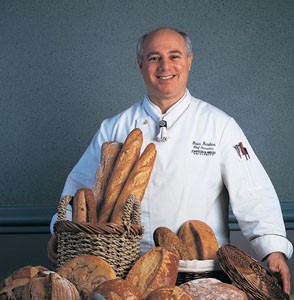
Dough Boi: Peter Reinhart expands his breadth of breads to include pizza.

Mr. American Pie

Brother Peter discovers that pizza is as pizza does

By Heather Irwin

There’s a lot that’s bad about moving some 30 times in your life, like forgetting what state you’ve just moved to or finding out they don’t have MTV in North Dakota. Or, let’s see, celebrating your most pivotal childhood birthdays at Ramada Inns.

But amidst the trauma of all that packing tape and bubble wrap, there are a few perks. Number one: the beauty of fresh starts (enough cannot be said about this). And number two: my cheese-soaked memories of eating pizza from sea to shining sea.

Before the Murphy’s Oil Soap had time to dry or the silverware was unwrapped, Dad had hauled the family wagon out for a large pepperoni and mushroom pizza in Bismarck, Houston, St. Louis, Pittsburgh . . . At this point in my life, I think I can safely say I’ve eaten pizza in at least three-quarters of the 50 states. And I loved every last pepperoni.

Like 94 percent of Americans, I am a die-hard pizza aficionado. Thick or thin, sauced or gourmet, I’ll eat it any way you slice it–and so will most of the rest of you. A recent survey by Bolla Wines found that 93 percent of us eat pizza at least once a month, for a total consumption averaging 46 slices per year. And–get this–studies show most three- to 11-year-olds prefer it over any other food. Shocking!

But as much as the commingling of cheese and tomatoes brings old and young together over the checkered tablecloth, the dark truth is that it can also be the great divider. Far beyond the anchovy debate and light years beyond ordering a soy-vegetarian pizza for the lone vegan in the office, pizza divisiveness gets ugliest over regional rifts that define one’s very soul.

Where do you draw your line in the dough? Are you a New Yorker–one of those rough-and-tumble urbanites who swears that his thin, folded slices of pie are the real deal? Home to the first American pizzeria, Lombardi’s, the Empire State leads the pack with its lengthy history and obsessive devotion to pizzerias. But is it the real deal? Yo, ask again and you’ll get decked, you crazy deep-dish eatin’ moog.

Or are you a Chicagoan, insisting that your mile-high pies are nothing short of perfection? After two years in the Windy City, I’m a convert. Then again, an inch of melted cheese could both win–and clog–anyone’s heart.

Riding the territorial pizza wave, maybe you’re a New Haven clam pizza fanatic, or a St. Louis cracker-crust devotee, or, heaven forbid, a California cultist who puts foie gras, peanut sauce or pineapple on the poor pie.

Confused? So was I. Will the real pizza stand up, already?

Ready to eat his way toward the answer, author Peter Reinhart takes both a practical and philosophical approach to the perfect pizza in his new book, American Pie: My Search for the Perfect Pizza (Ten Speed Press; $24.95). Reinhart– whom you may remember as owner of Brother Juniper’s Cafe and Brother Juniper’s Bakery in Santa Rosa–samples pizza from coast to coast trying to find the answer. Is it the crust, the sauce or simply the idea of the pizza itself?

Reinhart concludes that there aren’t any simple answers. A theologian, baker and philosopher looking for more than just a killer slice, Reinhart is looking for the answer to a bigger truth about how we eat. He describes a childhood memory of a perfect pizza from a restaurant in Philadelphia called Mama’s. Associating the stringy, cheesy goodness with a collection of boyhood rites of passage–basketball games, dating rejection, rowdy high school evenings, family dinners–the pizza was, in many ways, seared into his memory as the ultimate food. However, he proves that you can never go back when he later eats the pie in his adulthood and finds the crust just isn’t the same. It was still wonderful but somehow not the perfect pizza of his boyhood.

What was it about the pizza-of-then that was so magical? Perhaps, he opines, it was simply the synchronicity of time and place. It was a warm, safe, happy memory, much like mine, of family, friends and childhood. This goes on for a bit and is a theme throughout the book. But after a while, one can’t help but want our dear Brother to shut up with the philosophy, already, and get on with the search–and the recipes.

Thankfully, he does. Reinhart starts and ends his American search at Pizzeria Bianco in the most unlikely of places, Phoenix, Ariz. Owner Chris Bianco is a passionate crust-crafter who obviously shares Reinhart’s love for ritual and extols his own simple devotion to his best and first love: pizza.

After leaving Bianco’s benchmark pizzeria, Reinhart travels first to Italy–Genoa, Florence, Rome, Naples–to learn true pizza making in its native environment. It turns out that the Greeks, in fact, take credit for its invention, but let’s be honest here–no one travels to the Parthenon to grab a slice of pie.

In his journey, Reinhart describes the similarly divisive regional differences between the Italian passion for pizza (and its cousin, focaccia), from the Northern Italian focaccia col formaggio di Recco to the highly regulated pizza napoletana. In true Italian fashion, there is a government system that regulates standards for many Italian foods and beverages (mostly cheese and wines). The DOC, or Denominazione di Origine Controllata, makes sure any pizza that calls itself napoletana is made according to strict standards–only certain buffalo mozzarellas, crust ingredients, oils, etc.

Having befriended the many pizzaioli of Italy, Reinhart turns his peel back to the U.S. Traveling to New York, New Haven and the Bay Area (where he lauds tiny Pizzetta 211, Berkeley’s Cheese Board Collective and Roxanne’s raw pizza), to L.A.’s California Pizza Kitchen, to Dallas, Providence and Chicago, he ultimately concludes that pizza is as pizza does. It’s pretty much always good, but some good is better than other good. And though he never really does find that perfect pizza (though he claims Bianco’s is pretty darn close), his transcontinental hunt ends with his saying, “You now, sometimes it just comes down to the old truism: I’ll recognize it when I see it.”

The really useful part of the book continues with tips on how to make that perfect (or near-perfect) pizza at home. Reinhart explains how to bake with or without a pizza stone, and also discusses grilling pizza, types of cheeses, tools for the home pizza chef and the all important “windowpane” test for a dough’s consistency.

I tried making the neo-Neapolitan dough used at many East Coast restaurants. It’s supposedly crispier than many other types and uses both a dab of honey and high-gluten flour to give it a denser, crunchier snap.

Borrowing a stand-mixer, I followed the directions exactly and ended up with slightly sticky soft dough (just as it was described). I’ve never done the windowpane test before, and it proved a bit challenging. The idea is to gently stretch the dough until it creates a translucent “window” you can see light through. If the dough breaks or snaps, it’s time for more kneading. It took several additional minutes of kneading to achieve the effect, but the results paid off.

Pulling my pizza from the oven, the crust (though I used an aluminum pan rather than a stone) was crispy and less rubbery than earlier pizza-making fiascos I’d attempted. Oozing and dripping with cheese, my pizza clearly lacked perfection, however. A bit off-center, needing maybe two more minutes in the oven, the basil cut rather than torn, I pondered future improvements.

Screw perfection, I thought. I’m hungry.


Devil in the Details

The foundation of a great pizza is the flour. Great bakers from around the country seek out San Francisco-based Giusto’s Vita-Grain Flour for its quality and robust baking properties. In the North Bay, high-gluten and regular unbleached Giusto’s is available in the bulk bins at Whole Foods. You can also purchase handcrafted specialty flours from Keith Giusto (a renegade Giusto from the same family) in his Penngrove bakery, Full Circle Baking Company, 10151 Main St., Penngrove. 707.794.9445.

–H.I.

From the June 30-July 6, 2004 issue of the North Bay Bohemian.

© Metro Publishing Inc.

Kurt Vonnegut

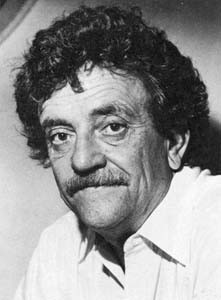
Kurt Vonnegut.

Elder Speak

At age 81, Kurt Vonnegut has earned the right to ramble. Here’s why you should listen.

By Kurt Vonnegut

Many years ago, I was so innocent I still considered it possible that we could become the humane and reasonable America so many members of my generation used to dream of. We dreamed of such an America during the Great Depression, when there were no jobs. And then we fought and often died for that dream during WW II, when there was no peace.

But I know now that there is not a chance in hell of America’s becoming humane and reasonable. Because power corrupts us, and absolute power corrupts absolutely. Human beings are chimpanzees who get crazy drunk on power. By saying that our leaders are power-drunk chimpanzees, am I in danger of wrecking the morale of our soldiers fighting and dying in the Middle East? Their morale, like so many bodies, is already shot to pieces. They are being treated, as I never was, like toys a rich kid got for Christmas.

When you get to my age–if you get to my age, which is 81–and if you have reproduced, you will find yourself asking your own children, who are themselves middle-aged, what life is all about. I have seven kids, four of them adopted.

Many of you reading this are probably the same age as my grandchildren. They, like you, are being royally shafted and lied to by our baby boomer corporations and government.

I put my big question about life to my biological son Mark. Mark is a pediatrician and author of a memoir, The Eden Express. It is about his crackup, straightjacket and padded-cell stuff, from which he recovered sufficiently to graduate from Harvard Medical School.

Dr. Vonnegut said this to his doddering old dad: “Father, we are here to help each other get through this thing, whatever it is.” So I pass that on to you. Write it down and put it in your computer, so you can forget it.

I have to say that’s a pretty good sound bite, almost as good as “Do unto others as you would have them do unto you.” A lot of people think Jesus said that, because it is so much the sort of thing Jesus liked to say. But it was actually said by Confucius, a Chinese philosopher, 500 years before there was that greatest and most humane of human beings named Jesus Christ.

The Chinese also gave us, via Marco Polo, pasta and the formula for gunpowder. The Chinese were so dumb they only used gunpowder for fireworks. And everybody was so dumb back then that nobody in either hemisphere even knew that there was another use.

But back to people like Confucius and Jesus and my son the doctor, Mark, who’ve said how we could behave more humanely and maybe make the world a less painful place. One of my favorites is Eugene Debs, from Terre Haute in my native state of Indiana. Get a load of this: Eugene Debs, who died back in 1926, when I was only four, ran five times as the Socialist Party candidate for president, winning 900,000 votes, 6 percent of the popular vote, in 1912, if you can imagine such a ballot. He had this to say while campaigning: “As long as there is a lower class, I am in it. As long as there is a criminal element, I’m of it. As long as there is a soul in prison, I am not free.”

Doesn’t anything socialistic make you want to throw up? Like great public schools or health insurance for all?

How about Jesus’ Sermon on the Mount, the Beatitudes?

Blessed are the meek, for they shall inherit the Earth. Blessed are the merciful, for they shall obtain mercy. Blessed are the peacemakers, for they shall be called the children of God. . . .

And so on.

Not exactly planks in a Republican platform. Not exactly Donald Rumsfeld or Dick Cheney stuff.

For some reason, the most vocal Christians among us never mention the Beatitudes. But, often with tears in their eyes, they demand that the Ten Commandments be posted in public buildings. And of course that’s Moses, not Jesus. I haven’t heard one of them demand that the Sermon on the Mount, the Beatitudes, be posted anywhere.

“Blessed are the merciful” in a courtroom? “Blessed are the peacemakers” in the Pentagon? Give me a break!

There is a tragic flaw in our precious Constitution, and I don’t know what can be done to fix it. This is it: only nut cases want to be president.

But when you stop to think about it, only a nut case would want to be a human being, if he or she had a choice. Such treacherous, untrustworthy, lying and greedy animals we are!

I was born a human being in 1922 A.D. What does “A.D.” signify? That commemorates an inmate of this lunatic asylum we call Earth who was nailed to a wooden cross by a bunch of other inmates. With him still conscious, they hammered spikes through his wrists and insteps, and into the wood. Then they set the cross upright, so he dangled up there where even the shortest person in the crowd could see him writhing this way and that.

Can you imagine people doing such a thing to a person? No problem. That’s entertainment. Ask the devout Roman Catholic Mel Gibson, who, as an act of piety, has just made a fortune with a movie about how Jesus was tortured. Never mind what Jesus said.

The founder of the Church of England, King Henry VIII, had a counterfeiter boiled alive in public. Show biz again.

Mel Gibson’s next movie should be The Counterfeiter. Box office records will again be broken.

One of the few good things about modern times: If you die horribly on television, you will not have died in vain. You will have entertained us.

And what did the great British historian Edward Gibbon, 1737-1794 A.D., have to say about the human record so far? He said, “History is indeed little more than the register of the crimes, follies and misfortunes of mankind.”

The same can be said about this morning’s edition of the New York Times.

The French-Algerian writer Albert Camus, who won a Nobel Prize for literature in 1957, wrote, “There is but one truly serious philosophical problem, and that is suicide.”

So there’s another barrel of laughs from literature. Camus died in an automobile accident. His dates? 1913-1960 A.D.

Listen. All great literature is about what a bummer it is to be a human being: Moby Dick, Huckleberry Finn, The Red Badge of Courage, the Iliad and the Odyssey, Crime and Punishment, the Bible and “The Charge of the Light Brigade.”

But I have to say this in defense of humankind: no matter in what era in history, including the Garden of Eden, everybody just got there. And except for the Garden of Eden, there were already all these crazy games going on, which could make you act crazy, even if you weren’t crazy to begin with. Some of the games that were already going on when you got here were love and hate, liberalism and conservatism, automobiles and credit cards, golf and girls’ basketball.

Even crazier than golf, though, is modern American politics, where, thanks to TV and for the convenience of TV, you can only be one of two kinds of human beings, either a liberal or a conservative.

Actually, this same sort of thing happened to the people of England generations ago, and Sir William Gilbert, of the radical team of Gilbert and Sullivan, wrote these words for a song about it back then: “I often think it’s comical / How nature always does contrive / That every boy and every gal / That’s born into the world alive / Is either a little liberal / Or else a little conservative.”

Which one are you in this country? It’s practically a law of life that you have to be one or the other. If you aren’t one or the other, you might as well be a doughnut.

If some of you still haven’t decided, I’ll make it easy for you. If you want to take my guns away from me, and you’re all for murdering fetuses, and love it when homosexuals marry each other and want to give them kitchen appliances at their showers, and you’re for the poor–you’re a liberal.

If you are against those perversions and for the rich, you’re a conservative.

What could be simpler?

My government’s got a war on drugs. But get this: the two most widely abused and addictive and destructive of all substances are both perfectly legal.

One, of course, is ethyl alcohol. And President George W. Bush, no less, and by his own admission, was smashed or tiddley-poo or four sheets to the wind a good deal of the time from when he was 16 until he was 41. When he was 41, he says, Jesus appeared to him and made him knock off the sauce, stop gargling nose paint.

And do you know why I think he is so pissed off at Arabs? They invented algebra. Arabs also invented the numbers we use, including a symbol for nothing, which nobody else had ever had before. You think Arabs are dumb? Try doing long division with Roman numerals.

We’re spreading democracy, are we? Same way European explorers brought Christianity to the Indians, what we now call “Native Americans.”

How ungrateful they were! How ungrateful are the people of Baghdad today.

So let’s give another big tax cut to the super-rich. That’ll teach bin Laden a lesson he won’t soon forget. Hail to the Chief.

That chief and his cohorts have as little to do with democracy as the Europeans had to do with Christianity. We the people have absolutely no say in whatever they choose to do next. In case you haven’t noticed, they’ve already cleaned out the treasury, passing it out to pals in the war and national security rackets, leaving your generation and the next one with a perfectly enormous debt that you’ll be asked to repay.

Nobody let out a peep when they did that to you, because they have disconnected every burglar alarm in the Constitution: the House, the Senate, the Supreme Court, the FBI, the free press (which, having been embedded, has forsaken the First Amendment) and We the People.

About my own history of foreign-substance abuse. I’ve been a coward about heroin and cocaine and LSD and so on, afraid they might put me over the edge. I did smoke a joint of marijuana one time with Jerry Garcia and the Grateful Dead, just to be sociable. It didn’t seem to do anything to me, one way or the other, so I never did it again. And by the grace of God, or whatever, I am not an alcoholic, largely a matter of genes. I take a couple of drinks now and then, and will do it again tonight. But two is my limit. No problem.

I am of course notoriously hooked on cigarettes. I keep hoping the things will kill me. A fire at one end and a fool at the other.

But I’ll tell you one thing: I once had a high that not even crack cocaine could match. That was when I got my first driver’s license! Look out, world, here comes Kurt Vonnegut.

And my car back then, a Studebaker, as I recall, was powered, as are almost all means of transportation and other machinery today, and electric power plants and furnaces, by the most abused and addictive and destructive drugs of all: fossil fuels.

When you got here, even when I got here, the industrialized world was already hopelessly hooked on fossil fuels, and very soon now there won’t be any more of those. Cold turkey.

Can I tell you the truth? I mean this isn’t like TV news, is it?

Here’s what I think the truth is: we are all addicts of fossil fuels in a state of denial, about to face cold turkey.

And like so many addicts about to face cold turkey, our leaders are now committing violent crimes to get what little is left of what we’re hooked on.

From the June 30-July 6, 2004 issue of the North Bay Bohemian.

© Metro Publishing Inc.

‘Present Laughter’

0

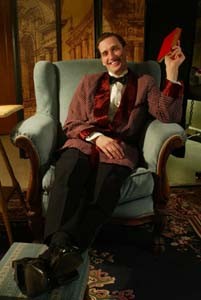
What a Coward: Aaron Lamb shines in ‘Present Laughter.’

King of Comedy

Aaron Lamb’s performance anchors SRT’s top-notch ‘Present Laughter’

Summer’s arrival in the North Bay is annually signaled by three identifiable occurrences: morning fog in Petaluma; a sharp increase of winetasting tourist traffic on the back roads of Sonoma and Napa counties; and the start of a new season of theater by SRJC’s Summer Repertory Theatre program. The first of five to open was Bye Bye Birdie, onstage at Burbank Auditorium. The second, which opened last Friday at the recently refurbished Santa Rosa High School auditorium, is Noël Coward’s vigorous farce Present Laughter.

I can’t say much about Birdie, as I haven’t seen it, and won’t, because that musical, while always quite popular and packed with pleasant tunes, simply gives me hives. I can’t explain it and therapy hasn’t cured it. I just don’t like it.

I am, however, quite happy to have seen Present Laughter. If this is a sign of the quality of this year’s shows, then 2004 is likely to be one of SRT’s best seasons. Present Laughter is a deliciously choreographed delight. Not bad for a show about a middle-aged rich guy with promiscuity issues.

And that would be Garry Essendine, played extraordinarily well here by SRT veteran Aaron Lamb. Essendine is London’s most popular stage actor, an outrageously vain, pampered, middle-aged philanderer who tries to blunt his mounting panic at aging by sleeping with a parade of star-struck young women. Not that he allows himself to be truly touched by any of them.

“I remember her now. I’m mad about her,” he professes, when reminded of a recent conquest. After a beat he adds, “What was her name?” He’s the kind of man who can’t leave the room, even for two seconds, without checking himself in the mirror before he goes (a gag that could grow old, but as played by Lamb, just gets funnier every time it happens).

Essendine is so addicted to larger-than-life theatrics that he can’t ever manage to stop the performance, using comically large and stagy gestures and making overly dramatic pronouncements (“There’s something sad about happiness, isn’t there?”) even when at home among his affectionate collective of faithful colleagues and business partners. These include his manager and his producer, Hugo Lyppiatt and Morris Dixon (Dan Morrison and C. J. Dion); his acerbic assistant Monica (nicely played by Sarah Ragan); and his astonishingly patient wife, Liz (the excellent Marian Partee), who moved out long ago but stays involved as his unofficial protector and designated CEO of the profitable institution that is Essendine’s career.

Throughout the play, Essendine is an emotional wreck, preparing for a career-capping tour of the theaters of Africa, a venture that terrifies him almost as much as the thought of growing old and losing his famous charm. At the same time, he has a number of problems to juggle. Daphne Stillington (Shelby Kocee), the perky fan he recently allowed to spend the night, doesn’t appear to want to go away, and neither does Roland Maule (Matt Hammons), an outrageously unstable young playwright who’s become unhealthily fixated on Essendine. Then there’s Joanna (Hattie Davis), Hugo’s social-climbing wife, who may be having an affair with Morris, but almost certainly hopes to trade up to Essendine, who really just wants to go to bed with a good book and an apple.

The star of any Noël Coward play is, of course, the language–difficult, but delightful when properly performed. Coward has a way of putting the oddest turns of phrase into his characters’ mouths in ways that make them sound witty and brilliant, as when Liz soothes a flustered visitor, saying, “You poor thing, you must be absolutely congealed.” Or when a collapsing Essendine is told that his overly-sensitive nature might be due to his profession. “I suspect it’s because you’re an actor,” Liz tells him. “They’re always a bit papier-mâché.”

It takes a top-notch cast to bring believable life to dialogue like that, and an even better one to make it sing. From Lamb’s elastic Essendine to Miss Erikson (Deanna Cordano), his bizarre Scandinavian housekeeper, this capable cast proves there’s nothing the least bit papier-mâché about it.

‘Present Laughter’ plays at the Santa Rosa High School theater through Aug. 5. June 30, July 1, 9, 15, 20, 28 and Aug. 5 at 8pm; July 18 at 2pm and 7:30pm. Tickets and full schedule are available at the box office (707.527.4343) or online at www.santarosa.edu/srt/tix.html.

From the June 30-July 6, 2004 issue of the North Bay Bohemian.

© Metro Publishing Inc.
Santa Rosa Symphony

0

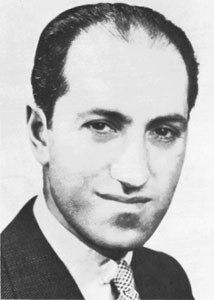
‘Blue’ George: Gershwin’s ‘Rhapsody’ is a cornerstone of the symphony’s Fourth of July program.

Rhapsody in Green

Santa Rosa Symphony swings to Gershwin

By Bruce Robinson

‘I’ve played the Rhapsody more times than I can count, which is a lot,” laughs Jeffrey Kahane. The Santa Rosa Symphony music director is looking ahead to the symphony’s Fourth of July pops concert, at which he will be the featured piano soloist for George Gershwin’s Rhapsody in Blue. Gershwin’s best-known instrumental work highlights the outdoor afternoon concert at Sonoma State University, which both opens the summertime Green Music Festival and precedes a dramatic evening fireworks display.

Although he has often conducted the Rhapsody from the keyboard, Kahane is just pianist this time; guest conductor Alastair Willis of the Seattle Symphony will man the podium for the night. “It will be a great deal of fun for me to play this piece, which I’ve played so much having to do both jobs and only having to worry about one,” Kahane says. Willis will conduct the San Francisco Symphony in much of the same program a few days later.

When I ask Kahane if this reduced role and his love of Gershwin might combine to take this performance of the Rhapsody out of the realm of work and into the realm recreation, he laughs again, then waits a beat. “Almost,” he answers dryly.

For classically trained orchestra musicians, loosening up to play this swing era showcase was once a challenge, but Kahane assures that this is less true of the current generation. “With American orchestras, it’s pretty much second nature to play around with swing by now,” he explains. “I’ve noticed that if they haven’t done it for a while and they’ve been doing a lot of European music, sometimes you have to remind them a little bit to loosen up. The British orchestras also do that very well. Having said that,” he adds with a chuckle, “I’ve also had the experience of playing some of this music in Germany, and that’s a whole other thing!”

He also notes that the well-known full orchestral version of the work–the one he will play this time–is actually the second score that Gershwin prepared for the Rhapsody. “Gershwin originally wrote this for the Paul Whitman Band, and it was composed for a classic jazz ensemble which included just a few violins, no violas or cellos and a double bass,” Kahane explains, noting that the bass player was also expected to double up on the tuba (“that was a very common thing in those days”) and that the arrangement featured saxophones. “It’s a much more raw sounding Rhapsody in Blue than we’re accustomed to,” he says.

At the other end of the classical spectrum, this year’s Green Music Festival will again feature a series of four chamber concerts with a stellar cast that includes violinist Chee-Yun, cellist Alisa Weilerstein and the St. Lawrence String Quartet. Reflecting Kahane’s adventurous programming choices, three of the four programs will feature works by lesser-known modern composers, along with works from Saint-Saëns, Ravel, Bach, Schubert, Brahms, Dvorák and more.

“We have four concerts featuring 12 of the greatest chamber musicians in the world,” enthuses Kahane, who is also the Green Music Festival’s artistic director. “People have said, ‘What program should I go to?’ And I have only one answer: all of them.”

The chamber concerts grew in number from two in 2002 to four last year, and could become an even larger part of the festival in the future. “Once the excitement gets out there and the buzz is out about how remarkable these concerts will be,” the maestro says, “there is every reason to think we can expand it further.”

That expansion may also depend on whether–or how much–Kahane remains involved. Having announced in April that he will leave the Santa Rosa Symphony after the 2004­2005 season to become music director for the Colorado Symphony Orchestra in Denver, his future role in the summertime festival is uncertain. While it would not conflict with his new post, Kahane suggests that it will depend greatly on the development of the new, much-delayed Green Music Center facility, which is now expected to begin construction later this year.

“The hall was very much designed with the festival in mind, and my role in it is going to depend a lot on what happens now–whether it expands at the rate we all hope it will,” he says. “It’s still very much up in the air at this point. But I can tell you that certainly my hope and intention is to continue to be involved with the festival full-tilt.”

‘Independence Day on the Green’ swings 4-10pm, on Sunday, July 4. Campus Lawn, SSU, 1801 E. Cotati Ave., Rohnert Park. $10-$55. The Chamber Music Series runs July 9-18. Evert B. Person Theatre. $25. For tickets, call 886.778.3378; for details, go to http://festival.sonoma.edu.

From the June 30-July 6, 2004 issue of the North Bay Bohemian.

© Metro Publishing Inc.
Glassy-Winged Sharpshooter

0

Keeping Spray at Bay?

Napa weighs options on glassy-winged sharpshooter

By Joy Lanzendorfer

The glassy-winged sharpshooter–the dread bug with yellow, catlike eyes that haunts the nightmares of wine growers statewide–is closer to Napa and Sonoma counties than ever before. Earlier this month, an infestation was found in Vacaville, creating a flurry of anxiety up and down wine country. Since the sharpshooter spreads the vine-killing Pierce’s disease, an infestation could devastate the wine industry. That, many feel, is nothing to kid around about.

“Our number one priority should we find a sharpshooter is to get rid of it,” says Mary Jean McLaughlin of the Napa County Department of Agriculture. “It’s like a cancer that should be removed as quickly as possible before it spreads.”

As understandable as concern over the sharpshooter is, some groups are more interested in the methods that would be used to eradicate it should it show up.

For every glassy-winged sharpshooter found in Napa or Sonoma County, a radius of a quarter mile would be drawn around it, treated and searched for other sharpshooters. Part of that treatment would most likely include forced spraying of pesticides. “Forced spraying” is exactly what it sounds like: whether property owners like it or not, even if they are growing an organic garden or have a newborn baby or are allergic to certain chemicals, the county would come in and spray the property with pesticides.

Some groups, like Napa’s People Opposed to Insecticide Spraying on Neighborhoods (POISON), want the government to spend more time considering the people on those properties before spraying.

“There are all these people who have zero tolerance for pesticides, like the bedridden, elderly and children,” says POISON cofounder Lowell Downey. “Napa’s agricultural commissioner Dave Whitmer is a very responsible man and he told me that he doesn’t want to forcibly spray anybody, but he would be up against a lot of pressure if the sharpshooter were found. The wine industry is very big and very powerful.”

Downey’s is one of several antipesticide groups that recently sued the California Department of Food and Agriculture to require site-specific environmental review on an area before spraying. Under the current law, the state would spray the same amount of chemicals on an industrial park that it would spray in residential neighborhoods or school zones, according to Californians for Alternatives to Toxics (CAT), one of the plaintiffs in the case.

A San Francisco Superior Court Judge ruled in favor of the state of California in the case, and the antipesticide groups are still deciding whether they will appeal the decision. In the meantime, the glassy-winged sharpshooter is making this issue more pressing than ever.

“Look what just happened in Vacaville–they sprayed!” says Patty Clary of CAT. “There was no site-specific review. In other words, no one looked at whether there are 400 kids in this apartment complex, and maybe we should do this in the least toxic way possible.”

Insecticides have been linked to health problems in humans, especially children, and pesticide spraying has a profound impact on the environment. Many antipesticide groups promote the use of such alternatives as biological control (using predators to remove a pest, such as releasing ladybugs to eat aphids) and cultural control (manipulating the environment to remove a pest, as with literally hand-vacuuming plants).

However, alternative methods aren’t as successful as pesticides when it comes to eradicating a pest.

“In the case of something like the glassy-winged sharpshooter, where you want the population at such low levels, causing it to go extinct locally through biological control is extremely rare,” says Alexander Purcell, an entomology professor at UC Berkeley. “And you’re not going to get them all with cultural control. It’s true, pesticide is not a perfect solution, but there are no perfect solutions that I’m aware of.”

Sonoma County has gone through forced spraying before. In the 1980s, the apple industry was plagued with the apple maggot fly, which led to forced spraying and the ripping up of orchards.

“I know of people who stood on their properties with shotguns saying that if you come on my property to spray, I’ll shoot you,” says Clary. “They were spraying cherry trees and there were enormous pesticide drifts. It broke the back of the North Coast apple industry.”

But as the Napa property tax form says, living in an agricultural zone sometimes means giving up certain rights. Still, the degree your rights should be infringed upon is under debate.

“We’re not against the farmers here,” says Downey. “We just want to make sure everyone is represented if someday the sharpshooter is found.”

From the June 23-29, 2004 issue of the North Bay Bohemian.

© Metro Publishing Inc.

Monti’s

0

Photograph by Pablo C. Leites

Rustico: Monti’s interior has a homey, familial feel.

Third Time’s a Charm

The buzz pays off at Monti’s

By Heather Irwin

The buzz over Monti’s Rotisserie and Bar has been palpable for the last month. First there were the rumors. Would this third restaurant to be opened within the last two years by ambitious restaurateurs Mark and Terri Stark be another Willi’s Wine Bar?

Then, as the hubbub settled (yes, it would be a Willi’s-style eatery) and construction began, everyone began asking when it would open. As the paint dried, gaggles of hungry Willi’s fans could be seen–noses pressed against the glass–taking bets on when the doors would officially open.

“I heard they’ll open next week,” one woman said, milling about outside the plastic-sheeted Montgomery Village eatery in late May, sizing up the menu. “Well, I hear they’re doing a soft launch Memorial Day weekend,” another one-upped to the sound of table saws and hammers inside.

I tried to get an answer from a construction worker who’s obviously fielded one too many nosy inquiries from lady mall walkers. He shrugs his shoulders indifferently. “Soon, I guess.”

“Soon” turned out to be the first week of June, and the new rotisserie and bar has been packed from the outset with curious Willi’s devotees and the merely curious. Just after the opening, I was asked no less than four times in
a single day if I’d eaten there. No? Well, we’ve been there, they tell me. Twice.

In a small town, word travels fast and you don’t want to be the last in your circle to go.

Initial reports of the food were generally glowing, slightly tempered with a few opening bungles. The menu, posted outside the doors days before opening, seemed to be a mélange of the original Willi’s small plates and the seafood focus of the Starks’ newer Healdsburg raw bar. The twist here is a large wood-fired rotisserie in the center of the restaurant grilling everything from roast suckling pig to veal.

Vowing to get a sense of the place without feeling overly influenced by my devotion to Monti’s siblings–Willi’s Wine Bar in Santa Rosa and Willi’s Seafood and Raw Bar–I try lunch first. Monti’s bar is a perfect late-afternoon dining spot, boasting a friendly staff who are eager to make menu recommendations. Despite our bartender’s wobbly wine knowledge (a bit surprising considering Willie’s lineage) the wine menu is definitely worth perusing. It’s a characteristically unpretentious collection of many familiar California growers, along with a smattering of international wines, that range from around $5 to $8 a glass. Broken into two pages, the menu lists both whites and reds, with a section on “food-friendly” wines that match well with the rich, savory flavors of the kitchen.

On a hot June afternoon, the Ferrari-Carano Fumé Blanc ($8) was a refreshing choice as I pondered the lunch menu. Broken into seven sections, the menu offers small plates, pasta and pizza, sandwiches, seafood from the raw bar, sides (each $6) and a mix-and-match “tastes” selection of three appetizers for $9. Chef Matt Gordon, who headed up the Healdsburg Willi’s, asserts a heavy Mediterranean influence over the menu, with seafood, goat cheese, olives, dates, tomatoes and lamb as centerpieces.

Since the restaurant’s focus is on the rotisserie, I chose the rotisserie chicken sandwich with onion jam ($8.50) and zucchini fries with goat-cheese ranch ($6). The fries, which varied in shape and size on three visits, were initially thick, finger-sized pieces dipped in a light batter and served with a pungently sour goat-cheese dipping sauce. I had expected much thinner slices–more French-fry-like–and the thicker dinner cuts we received were soggy in the middle. That, however, was just the first of my surprises.

The chicken sandwich, which arrived salad-style, mixed with plenty of mayonnaise on thick slices of wheat bread, was a heartbreakingly disappointing debut. The taste of the chicken was smothered in the heavy mayo and the onion jam was nearly impossible to discern. Was it mixed into the mayonnaise or forgotten altogether? The chicken was also mostly dark meat, which I find overly heavy and off-flavored in chicken salad.

The plate arrived with a side of spicy marinated string beans that were a welcome bit of tangy sourness against the oily mayo coating my mouth. A better choice was the Monti’s Cristo ($8), a take on the traditional Monte Cristo sandwich with Westphalian ham and Gruyère cheese, or the chopped chicken salad ($10).

Focusing, like its sister restaurants, on smaller plates (though there are eight large-portion entrées), Monti’s allows for plenty of sampling–and redemption, if you order up a dud. But economy can be deceiving. Somehow we end up spending even more than we usually would by ordering two or three small plates to share rather than just one apiece. However, having license to poke your fork into someone else’s lunch is a pretty fair tradeoff for the steep tab.

A second visit to the bar for drinks and appetizers was a great chance for sharing plates. People watching reaches its zenith around 7:30pm, when the restaurant is crowded with after-work thirty-somethings. With a good vantage point of the dining room and the bar, we made our way to the raw bar, our friend chatting with the flirty prep cooks pulling together seafood cocktails. The staff was consistently friendly and professional and apologetic for minor snafus inherent in the opening stages of any restaurant.

The tastes menu (three for $9) was a standout winner. We tried the house-made mozzarella, spiced baby beets and duck liver mousse. The small portions were a perfect predinner snack that complemented each other nicely. Crab and rock shrimp fritters ($9) were underwhelming, however, with a too-mushy center despite an abundance of seafood incorporated into the batter. Also off were the crushed Yukon potatoes and caramelized onions, which were grainy and had an odd olive flavor. And once again, we hunted for the onions in vain.

Space, at a premium in Montgomery Village, makes for odd al fresco dining at Monti’s; the two outdoor sections are separated by pedestrian walkways, creating a challenging obstacle course for the wait staff. But supping on steak under the stars can’t be beat on a warm summer night. From the dinner menu, the silky and supple grilled Angus sirloin with crispy onions ($19) became a nearly X-rated experience. We exchanged bites with eye-rolling ecstasy. And finally, we’d found the onions.

The wood-fired pizza, which I’d been told was equally incredible, was the cold shower of the evening. I had opted for the simple Margharita ($10)–tomatoes and torn basil. The basil, while torn, was so anemic as to be an almost ridiculous afterthought; I counted five small pieces. The crust was extraordinarily thin and lacking in flavor, and was unable to stand up to the oil of the cheese. For $10, I expect a serious bit of pizza rather than the paltry slices that arrived only moderately warm.

The boy couldn’t resist a seafood martini ($9), a dish that frankly sounds appalling, but which features a large martini glass filled with fresh crab, calamari, shrimp and scallops mixed in a cocktail sauce. The spiciness of the sauce tends to overwhelm the delicateness of the fresh seafood, but a squirt of aioli and preserved lemon are nice accents despite the ongoing threat of the whole thing tipping into our laps at any moment.

Dessert redeemed any faults. On good advice from our waiter, we tried the dense, flourless chocolate sabayon cake ($6) with vanilla gelato. Nearly all of the desserts arrive in oversized bowls and are plenty for two. The cake was intensely rich and decadent, balanced by the cream and sweet vanilla of the oozy, melty gelato. Sword-fighting with our spoons, we sparred for the last bites, nearly licking the bowl clean.

The convivial atmosphere of the restaurant, done in a sort of rustic farmhouse style, fosters intertable discussions and friendly chatting. We all ooohed and ahhhhed when our neighbors received their enormous dessert platters, asking, “What’s that? What’s that?”

Hey–being part of the buzz is what Monti’s is all about.

Monti’s Rotisserie and Bar, 714 Village Court, Santa Rosa. Lunch and dinner Tuesday-Sunday. Small plates, $6-$10; pizza and entrées, $10-$24; desserts, $6. 707.568.4404.

From the June 23-29, 2004 issue of the North Bay Bohemian.

© Metro Publishing Inc.
Swirl ‘n’ Spit

Swirl 'n' SpitTasting Room of the WeekGallo of Sonoma WineryBy Heather IrwinLowdown: The napkins are neatly pressed, the small tables impeccably set. From the lovely center of downtown Healdsburg, the Gallo of Sonoma tasting room looks out onto the lovely streets where lovely people drive by in lovely cars.It's all so very, well, lovely. Except for the not-so-lovely feeling...

Tom Waits

Good Time: 'Big Time' is one of the most enthralling music films ever made. Frank TalkThe Raven screens the Tom Waits classic 'Big Time'By Greg Cahill"Life is picking up a girl with bad teeth," singer-songwriter Tom Waits told Time magazine in 1978, while describing his philosophy, "or getting to know one of those wild-eyed rummies down on Sixth Avenue."...

Swirl ‘n’ Spit

Swirl 'n' SpitTasting Room of the WeekHall WineryBy Heather IrwinLowdown: You'd think a guy who started his own financial group at age 18 with money he began saving at age 10 would run out of steam somewhere, oh, around age 25. But like many of Napa's boutique winery owners, Craig Hall has a history that includes owning a major...

Lars Frederiksen

Never Mind the Bollocks: Frederiksen could care less. Dirty BastardRancid guitarist does it his wayBy Greg CahillLars Frederiksen doesn't give a flying flip. Critics complain that the singer, songwriter and guitarist for the punk band Rancid spray-paints from a limited palette, namely, the Clash, Clash, or Clash. Since joining the Berkeley-based Rancid--formed in 1991 by guitarist and vocalist Tim...

Pizza

Dough Boi: Peter Reinhart expands his breadth of breads to include pizza.Mr. American PieBrother Peter discovers that pizza is as pizza doesBy Heather IrwinThere's a lot that's bad about moving some 30 times in your life, like forgetting what state you've just moved to or finding out they don't have MTV in North Dakota. Or, let's see, celebrating your...

Kurt Vonnegut

Kurt Vonnegut.Elder SpeakAt age 81, Kurt Vonnegut has earned the right to ramble. Here's why you should listen.By Kurt VonnegutMany years ago, I was so innocent I still considered it possible that we could become the humane and reasonable America so many members of my generation used to dream of. We dreamed of such an America during the Great...

‘Present Laughter’

What a Coward: Aaron Lamb shines in 'Present Laughter.'King of ComedyAaron Lamb's performance anchors SRT's top-notch 'Present Laughter' Summer's arrival in the North Bay is annually signaled by three identifiable occurrences: morning fog in Petaluma; a sharp increase of winetasting tourist traffic on the back roads of Sonoma and Napa counties; and the start of a new season...

Santa Rosa Symphony

'Blue' George: Gershwin's 'Rhapsody' is a cornerstone of the symphony's Fourth of July program.Rhapsody in GreenSanta Rosa Symphony swings to Gershwin By Bruce Robinson'I've played the Rhapsody more times than I can count, which is a lot," laughs Jeffrey Kahane. The Santa Rosa Symphony music director is looking ahead to the symphony's Fourth of July pops concert, at which...

Glassy-Winged Sharpshooter

Keeping Spray at Bay? Napa weighs options on glassy-winged sharpshooterBy Joy LanzendorferThe glassy-winged sharpshooter--the dread bug with yellow, catlike eyes that haunts the nightmares of wine growers statewide--is closer to Napa and Sonoma counties than ever before. Earlier this month, an infestation was found in Vacaville, creating a flurry of anxiety up and down wine country. Since the sharpshooter...

Monti’s

Photograph by Pablo C. LeitesRustico: Monti's interior has a homey, familial feel.Third Time's a CharmThe buzz pays off at Monti'sBy Heather IrwinThe buzz over Monti's Rotisserie and Bar has been palpable for the last month. First there were the rumors. Would this third restaurant to be opened within the last two years by ambitious restaurateurs Mark and Terri Stark...
11,084FansLike
4,606FollowersFollow
6,928FollowersFollow