
The Byrne Report

The Byrne Report

Failed Safe

LAST WEEK, TOM RIDGE resigned as secretary of the Department of Homeland Security after a three-year run commanding the biggest, clumsiest bureaucracy of the modern era. His main achievement, if he had one, was the invention of the color-coded threat advisory. As Ridge promised to vacate the premises by Feb.1, his reality-debased threat system was stuck at yellow–“elevated risk of terrorist attacks”–which is its usual position, since “severe” or “low” would be bad for business. Ridge’s business, that is.

It is appropriate that yellow signifies fear and cowardice, because the mass marketing of unreasonable fears and the institutionalization of cowardice are Ridge’s legacy. Under the leadership of Ridge (and President Bush), tens of millions of paranoid minds learned to unquestioningly accept the squandering of a trillion dollar budget surplus on military and homeland security boondoggles.

In August, Ridge filed his financial disclosure report with the U.S. Office of Government Ethics. The security chief, it turns out, discovered how to make a buck or two for himself during the fog of terror. The report showed that, during 2003, the secretary held private investments worth as much as $815,000 in 45 corporations, many of them defense contractors, several of them contracted with his Department of Homeland Security, which spends $47 billion per year.

The only major paper to cover this story was the Congressional Quarterly, a pricey Capitol Hill newspaper. According to analysis by the Quarterly, Ridge held investments in:

* Microsoft, which has a $90 million contract with the Department of Homeland Security for computers and software;

* General Electric, contracted with the department to provide walk-through explosives detectors;

* Sprint, which recently completed a networking contract for the department;

* Raytheon, subcontractor on a $10 billion visa program contract with the department;

* and Oracle, which has an entire homeland security contracting division.

Additionally, Ridge had as much as $45,000 tied up with three pharmaceutical companies–Baxter International, Merck and Pfizer–all of which have a stake in smallpox vaccine development. He reported receiving as much as $110,000 in dividend cash from his investments in an array of military and homeland security contractors.

While operating as a pro-war Bush administration figure, Ridge privately invested in ExxonMobil ($565 million in defense contracts in 2002), General Electric ($1.6 billion) and Raytheon ($7 billion). As head of homeland security, Ridge had a vested financial interest in maintaining at least the illusion of the existence of a permanent terrorist threat to the homeland as the Bush administration embarked on its program of aggressive war and covert violence in the Third World.

A week before he resigned, his department came under attack from an unexpected quarter: the neoconservative American Enterprise Institute (AEI), whose well-connected ideologues had advised Bush to throw federal money into war as a method of reducing social spending and the size of government. In the institute’s recent report titled “What Does Homeland Security Spending Buy?” AEI research fellow Veronique de Rugy complains that “the Bush administration has followed a remarkably irresponsible course by requesting . . . spending increases . . . in the name of security. . . . [H]omeland security spending is being used for grants to state and local governments, many of which appear to be applied to questionable purposes . . . [S]pending decisions are made on a political basis rather than on a sound cost-benefit analysis.”

De Rugy further argues that homeland-security spending stymies economic growth. She is particularly outraged that the “DHS handed out about $153 million for programs offering food and shelter for the poor [in 2004].” The AEI evidently prefers to create welfare-ending deficits by deploying spies and troops abroad.

Du Rugy reserves her greatest wrath for Ridge’s Transportation Security Administration, which spends $5.3 billion per year on an air-passenger screening operation that federal auditors, and most expert observers, say does not work. (She points out, correctly, that reinforcing cockpit doors is the most effective deterrent to airplane hijackers.)

Right-wing naif de Rugy appears to be genuinely shocked that her neocon friends in the White House are more concerned about preserving political capital than swinging the budget ax. Despite decades of conservative rhetoric decrying government waste, the Reagan, Bush and Bush administrations have shown that, once in power, right-wing ideologues could care less about reducing the size of their governments.

If de Rugy truly wants to understand why Ridge–cunning, if not bright–wasted so much of his budget on such failed programs as federalized passenger screening, she need look no further than the $15,000 or so that the secretary invested in Unisys, which enjoys a $1 billion contract to manage information technology for the Transportation Security Administration.

From the December 8-14, 2004 issue of the North Bay Bohemian.
© Metro Publishing Inc.

CD Sets

0

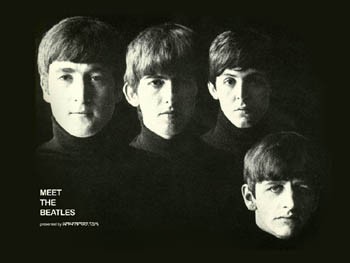
I Wanna Hold Your SACD: Half a century later, the Beatles go high(er) tech.

Box Tops

CD sets are a holiday hit

By Greg Cahill

Those big, pricey box sets, popular as holiday gifts, are a mixed blessing fraught with frustration. The omission of key songs (and the inclusion of marginal material) in what is supposedly a definitive collection can drive a music fan to distraction. Still, box sets make great gifts, for yourself or someone else, frustration factor and all. From The Beatles: The Capitol Albums, Vol. 1 (Apple/Capitol) to Nirvana: With the Lights Out (Geffen), acts separated by decades but sharing similar status among rock hounds, this year is no exception.

In the case of the Fab Four, Capitol Records has been guilty of criminal neglect of one of rock’s most cherished catalogs, even after the resolution of years of legal wrangling that held up the process. For the most part, the Beatles material hasn’t been digitally remastered since its initial CD release more than 20 years ago. While the work of other British Invasion bands–including the Animals, the Kinks and the Rolling Stones–is available on high-definition Super Audio Compact Discs, the Beatles have languished in a digital stone age. The four-CD set The Capitol Years, Vol. 1 helps to rectify that situation, if only slightly.

The discs are packaged in an awkward 8-by-8-inch sleeve, which can be shed to reveal a foldable 4-by-4-inch portfolio that holds mini reproductions of the first four American releases: Meet the Beatles, The Beatles’ Second Album, Something New and Beatles ’65. Two generations of Beatles fans have grown up accustomed to the British versions of the early Beatles after Capitol decided to release only the mono U.K. versions of the band’s early LPs on CD format.

The U.S. stereo versions included here, which have subtle variations, contain fewer tracks (the excluded material was gathered periodically on such titles as Beatles ’65) and feature added reverb. These newly released discs–which feature both mono and stereo mixes–might seem strange to virgin ears, but they crackle with their own electrifying vibrancy. The set also includes a so-so booklet that doesn’t do the band justice.

(For the record, these are the versions the Beatles themselves despised; the infamous but subsequently banned “butcher cover” that graced the Yesterday and Today album–which showed the band members draped in raw meat and dismembered baby-doll parts–was intended as a protest to the “butchering” of their material by EMI’s U.S. label subsidiary.)

Nirvana’s four-disc set With the Lights Out (three CDs and a DVD) is overflowing with 61 tracks of rare demos, alternate takes and B-sides that should thrill even the most diehard fan of the band (these remastered tracks are far better quality than the bootlegged versions available since band leader Kurt Cobain put a shotgun to his head a decade ago). The DVD even features rehearsal footage shot at bassist Krist Novoselic’s mom’s house–how cool is that? The ubiquitous Thurston Moore of Sonic Youth provides a heartfelt essay. The perfect grunge gift.

Eighties rock plays a major role in a pair of other recent box sets. The Cure: Join the Dots (Rhino), spotlights B-sides and rarities from the Friction label years between 1978 and 2001. It finds frontman Robert Smith wailing through a previously unreleased 12-inch version of “Doing the Unstuck” and an unreleased psyched-up rendition of the Doors’ “Hello, I Love You” (one of three versions included among these four discs, though many of the rarities have been previously issued on various tribute albums).

Left of the Dial: Dispatches from the Eighties Underground (Rhino) consists of 82 tracks that essentially replicate the experience of listening to college radio in its formative years. The Cure, R.E.M., the Pretenders, Aztec Camera and Echo and the Bunnymen are among the acts featured here that later enjoyed mainstream success, but you also get such hardcore underground acts as Throbbing Gristle, Gun Club, the Minutemen, Black Flag and the Butthole Surfers.

Still, you gotta wonder what the hell they were thinking at Rhino Records when someone chose to include the lame Prefab Sprout while neglecting the seminal alt-rock band the Mekons. Frustrating? You bet. But the bottom line is, the music is great. You won’t regret ponying up 50 or 60 bucks to bath yourself–or a friend–in these sonic waves.

From the December 8-14, 2004 issue of the North Bay Bohemian.
© Metro Publishing Inc.

RKA

0

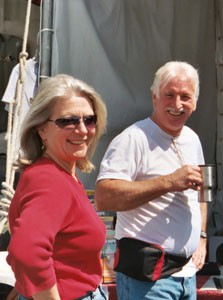
It’s the Ride!: Kathy Storin and Richard Battles of RKA.

Ride On

Healdsburg’s RKA gives motorcyclists the tools to go the distance

By R. V. Scheide

North Bay motorcyclists frequently have to undergo a self-administered reality check. Marin, Napa and Sonoma counties are blessed with some of the best motorcycling roads on the planet–Highway 128, Stewart’s Point Road and Highway 1, to name just three–and many have fallen under the spell of these marvelous twisting ribbons of fairly well-groomed asphalt. Serious aficionados have been known to stay in the saddle for days, just to prolong the buzz.

Staying in the saddle for days is what the folks at RKA are all about. The Healdsburg-based company, which takes its first two initials from founders, owners and avid motorcyclists Richard Battles and Kathy Storin (the A stands for “accessories”), manufactures soft luggage that transforms virtually any mount–even a scooter!–into a serious long-distance touring machine.

For those of you who ride around in cars, or “cages” as they are known by motorcyclists, an explanation is in order. Most motorcycles don’t have trunks or even glove boxes. This presents somewhat of a problem for the long-distance motorcycle traveler. Where, for instance, are you supposed to stash your camera, your lunch, your spare change of underwear?

RKA’s soft luggage is the answer. Manufactured onsite in Healdsburg from tough, water-resistant Cordura or heavy-duty polyester, the luggage comes in a variety of shapes and sizes. Enormous saddlebags that drape over the seat easily hold enough clothes for a week’s worth of camping. Still have more things to pack? Stuff them in a handy tail bag that attaches to the rear of the bike. If you still need more room, there are eight flavors of tank bags to choose from.

Prices range from $49.50 for the smallest tank bag to $211.20 for the largest set of saddlebags. There’s a rainbow of color options, and bags can be designed to match any particular bike’s paint scheme. Richard and Kathy have come along way since 1985, when in a short four-month span, they met, got married, moved from Southern California to Northern California and started RKA in the garage of Richard’s mom’s house in Rincon Valley. Richard supplemented their income by working at Radio Shack, but after five years, sales were strong enough to allow him to quit and focus on the company full-time. The pair, who will celebrate both their own and RKA’s 20th anniversary next year, have developed a close working relationship.

“I’m not a real creative person, I’m a craftsperson,” explains Kathy, who formerly made silks and accessories for the horse-racing industry. (She met Richard, a former thoroughbred trainer, when he came in for a set of blinders.) “Richard is the creative mind. I’m just the technician.”

In the beginning, Richard and Kathy loaded up the RKA trailer and traveled coast to coast, hitting all the motorcycle shows and races they could find, including many visits to America’s premier motorcycling race, the Daytona 200, and its accompanying madness known as Bike Week. With Internet sales from their website burgeoning, the pair decided to cut down on their traveling. But they still occasionally pine for the road.

“We miss the traveling,” Kathy says. “We met so many people. We can go to almost any state and there’s always somebody we can go riding with.” Not that going to Daytona every year didn’t have its drawbacks. “You can only see so many fat people in thongs–men or women!” she laughs.

For the past several years, the couple toyed with the idea of expanding RKA into a first-class motorcycle boutique, with a full line of accessories and even a big-screen TV to host motorcycle-related events at the shop. Unfortunately, Healdsburg turned out to be slightly too far to travel for the hordes of finicky motorcyclists in San Francisco they expected to draw, and Richard tired of trying to keep merchandise they didn’t make themselves in stock.

“Basically, we’re back to doing what we do best,” he says. Because the company is small–in addition to the two of them, they employ an industrial seamstress–it’s able to respond to custom orders more quickly. Winter is the slow period, and Richard uses the spare time to conduct research and development on new luggage items.

He’s currently designing luggage for bicycles after getting bit by the cycling bug last year. But don’t think Richard and Kathy are giving up motorcycles. On any Sunday, you’re likely to find them at the head of a pack of snarling sport bikes winding their way out to Stewart’s Point. As the RKA motto states, “It’s the ride!”

RKA is located at 1423 A Grove St., Healdsburg. Winter hours: Monday-Friday, 8am-4pm. 707.433.3727. www.rka-luggage.com.

From the December 8-14, 2004 issue of the North Bay Bohemian.
© Metro Publishing Inc.

Hail to the Food

Hail to the Food

Bite-Size Elegance

By Jill Koenigsdorf

Right on Magnolia Avenue in the heart of Larkspur stands Emporio Rulli, a bakery that offers a mini-vacation to Italy without the fuss of leaving Marin. The marble counters, the espresso machines, the DeSimone pottery in the windows, the back room filled with edible Italian treasures, the gelato and candies and pastries in the middle room, the panini stacked tidily in the case waiting to be warmed for you in the first room where you enter, the mirrored walls so you can watch someone surreptitiously–it’s all so dolce vita.

Owner Gary Rulli apprenticed in Milan 20 years ago and even carried some of the mother yeast, the pastry starter, back to California where it is still doing its job today, leavening Rulli’s most popular pastry, the pannetoni. And while there are a few more Emporia Rullis now–at the airport, in San Francisco–the headquarters is still this 15-year-old storefront in Larkspur, where all the baking is done.

While many of its tasty cookies and pastries are worthy of rhapsodizing over, Rulli is unique in its ingenious shrinking of a traditional and beloved pastry, thereby enhancing its appeal. In France they are called palmiers (“palm trees”), in Italy, ventaglies (“fans”), but what they share is a lot of butter, a sticky sweet glaze and a feather-weight flakiness that showers your front with delectable crumbs at each bite. But who wants to waste, let alone wear, these morsels? So Rulli has reduced the typically hand-sized ventaglie to the size of a doubloon, thus making it shed less while infinitely increasing its addictiveness. He sells over 600 a week, and after you pop one in your mouth and lick the sticky traces off your fingertips, you’ll know why.

Emporio Rulli, 464 Magnolia Ave., Larkspur. Open daily until 5:30pm. 1.888.88.RULLI.

From the December 8-14, 2004 issue of the North Bay Bohemian.
© Metro Publishing Inc.

Elixir Cafe

0

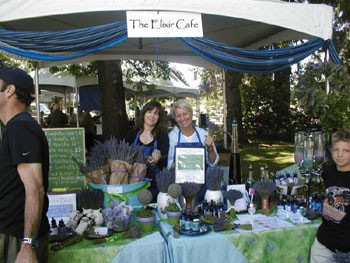
Natural Nostrum: Carrie Moore, right, at a recent Healdsburg Farmers Market.

Magic in a Bottle

The numinous mists of the Elixir Cafe

By David Templeton

On the colorfully trippy, steadily evolving website for the Elixir Cafe, a quote by Dr. Richard Gerber is prominently displayed: “The Einsteinian paradigm as applied to vibrational medicine sees human beings as networks of complex energy fields that interface with physical/cellular systems.” Gerber goes on to describe vibrational medicine as a way to encourage “specialized forms of energy” to positively affect “energetic systems” that may be out of whack due to various “disease states.”

Frankly, I have no idea what any of that means. But Carrie Moore does.

A self-described modern-day shaman and energy worker, Moore had already conjured a unique, and uniquely satisfying, career as a leader of spiritual and personal-empowerment workshops all across the globe.

It was during one such workshop in England that Moore, a Sebastopol resident, had the seed of an idea, a notion that would eventually become the Elixir Cafe.

“I started getting this grocery list in my head,” she laughs. “And it wouldn’t go away. This list of ingredients kept repeating in my head for all three days of the workshop. Once that was done, I finally said ‘OK! OK!’ and I wrote it all down.” Not being one to indiscriminately ignore the inspirations of her inner wisdom, Moore took this mystical cook-book experience seriously and began to research the various healing properties of the materials she’d envisioned.

Her first attempt at whipping up a batch of something resulted in something she now affectionately calls “metaphysical jam,” a concoction of beets, pineapples, ginger, rosemary, sweet violet, juniper berry and a number of other herbs and essences. It began as a gift she’d give to friends and family. But as more folks began asking for her metaphysical jam–claiming it activated energy centers that helped them aspire to higher levels of knowledge–the alchemical chef developed the idea of distilling the same ingredients into an elixir that could be consumed a drop at a time, instilling the same health properties, only more directly and instantly.

Moore’s magic jam eventually came to be called Star Fire, a sublingual (you put it under your tongue) elixir designed to heighten energy, stamina and awareness. She quickly developed other elixirs, with similarly evocative names: Miriam’s Heart Elixir, Ancient Amazon and Lavender Fields Forever, which contains lavender grown in Petaluma and was created to restore the imbiber’s sense of inner peace and relaxation. Moore now sells six elixirs ($18 per one-ounce bottle), with Wisdom of Venus and the Bridge–a “transformational support” for men–rounding out the line.

Every batch takes Moore 45 days to make, a specific, ritualized processes that includes the saying of prayers and blessings over the concoction as it percolates, or whatever it is that elixirs do.

Along the way, she’s added a second line of products called Mantra Mists. Described by Moore as body and space elixirs that are designed for external use (unlike the oral elixirs, you don’t eat these), the Mantra Mists ($24 dollars per four-ounce bottle) are spray-on mists with names like Buddha Blast, Mystic Beet, LavendEssence, Speak Easy and Sanctuary.

“You can use them on your body or on your face to revitalize or calm you, and to protect against negative energies,” Moore says.

Once again, I’m not sure what that means.

“Some people sage their spaces,” Moore patiently explains, “burning sage to cleanse an environment and make it holy. This is something like that. While the Mantra Mists can certainly be used ceremonially, there have been a lot of massage therapists, psychologists, doctors and school teachers who use the mists in their work spaces. Sanctuary is an especially popular mist among schoolteachers. One teacher told me that when the kids are bouncing off the walls, she mists the classroom with Sanctuary, and within a few minutes, the whole classroom is calm and peaceful again.”

For the holidays, Moore has created a number of gift packages and sets and has taken special care to consider the psychic and spiritual needs of both the recipients and the givers of all Elixir-oriented gifts.

“When selecting a gift for a loved one,” Moore suggests, “let yourself be guided by your feelings rather than what you think. Hold that person in your mind, and let your intuition guide you.”

Even I know what that means.

The Elixir Cafe is at www.theinnershaman.com. Carrie Moore can be found every Thursday and Sunday morning at the Marin Farmers Market at the Civic Center, Avenue of the Flags, San Rafael.

From the December 8-14, 2004 issue of the North Bay Bohemian.

© Metro Publishing Inc.

‘Connections 2’

0

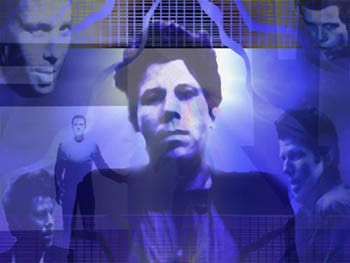
‘Buzz’ Buzz: Waits’ contribution is an unreleased classic.

Sonic ‘Scape

‘Connections 2’ finds bond in our shared community

By Karl Byrn

Charlie Musselwhite, David Grisman, Tom Waits, Camper Van Beethoven, Alex de Grassi–this list sounds like a set of artists found in a random search for “adult alternative” favorites, right?

Actually, these stellar acts all have very cool tracks on Connections 2, a new compilation of 22 Northern California musicians that’s not only a benefit for local public radio station KRCB 90.9-FM, but is also a rich and compelling slice of our best local music.

“It became my mix tape, like the dude in High Fidelity,” says producer and KRCB program host Doug Jayne, who co-owns Santa Rosa’s Last Record Store, plays in two local bands and runs the Route 44 recording studio where much of the disc was recorded and mastered. “The CD sounds more like my radio program [Connections on Wednesdays at 8pm] than a CD. The songs on this album all breathe. I think the CD sounds like Northern California in 2004, and is a good document of a year we won’t soon forget.”

Like Jayne’s 1996 Connections KRCB benefit disc, Connections 2 represents the authentic character of Sonoma County and North Bay music. Rather than being a hotbed of cutting edge rock, jazz or hip-hop, our region has a distinct strength as a blender of American and international folk, rhythm and roots traditions. The disc is sequenced to highlight this hybrid diversity, alternating styles but repeating the connections. From the opening wail of Musselwhite’s blues harmonica solo “Durant Street” to Jayne’s own final reflective folk cut “Not Dead Yet,” Connections 2 finds bonds in the depth of our shared musical community.

Waits’ previously unreleased “Buzz Fledderjohn” shares an eerie delta blues landscape with the Mali-meets-Leadbelly moan of Markus James’ “Midnight.” Grisman’s semiclassical mandolin and violin duet “Desert Dawg” is linked with the European cafe music of the Hot Frittatas. The nu-Celtic romp of Greenhouse complements the pure bluegrass swing of Modern Hicks. Solid Air has a could-be country radio hit with “Local Color,” a contemporary female-led sound echoed in Audrey Auld’s more rock-leaning “Losing Faith.” The acoustic guitar reading of the blues standard “St. James Infirmary” by de Grassi is glistening, as is the pedal-steel instrumental “The Courtship” by local master Bobby Lee.

Connecting the dots wasn’t too difficult for the producer. With his track record and KRCB’s growth in the last decade, Jayne had plenty of volunteers. “When I produced Connections in 1996, I was new to the station. I wanted to show that I was committed to the cause. The CD was like a promise ring: ‘I will be true to you, old 90.9-FM.’ This time, instead of groveling for songs, or having to explain my motivations or what KRCB is about, people were lining up wanting to contribute. I was able to personally pick the songs by the artists. It makes the producer’s job so much easier knowing the pieces will fit in the frame of a compilation.”

Jayne gives the credit to community spirit. “Folks around here know how important public radio is,” he notes, because “KRCB is a great station. Even though it is an NPR affiliate, it is very independent.” KRCB members who had pledged during the station’s fall membership drive were invited to a Nov. 12 concert at New College of California that featured almost half of the disc’s 22 acts. The response? “Sardine city!” says Jayne of the standing-room-only crowd.

With such a terrific turnout by both top-name national acts and local musicians who are ready to be top name, Connections 2 is full of reference points that will strike local music fans for any number of personal reasons. My favorites are songwriter Greg Abel’s “Last Call Dance Hall,” a waltz-time honky-tonk ballad written from the point of view of the bar itself; Holly Near’s anti-Republican gospel romp “Fired Up!”; and Camper Van Beethoven’s live-in-the-studio acoustic take on their alt-rock classic “Take the Skinheads Bowling.”

Jayne’s closing cut “Not Dead Yet” is personal as well, part of his link to this greater community. “I wrote it as a response to the deaths of Warren Zevon and Johnny Cash. I thought it was OK when I wrote it, but after listening to it, I felt depressed. I laughed, I got depressed again. Then I was hopeful. Four feelings in four minutes; I knew I had to share it.”

With Connections 2, Jayne helps the local music scene share its best.

‘Connections 2’ can be purchased through Jackalope Records, 707.696.1100 or www.jackaloperecords.com.

From the December 8-14, 2004 issue of the North Bay Bohemian.

© Metro Publishing Inc.

Swirl ‘n’ Spit

0

Swirl ‘n’ Spit
Tasting Room of the Week

Michel-Schlumberger

By Heather Irwin

Lowdown: Wineries, I’ve found, are a lot like people. The vast majority blur in the memory without much distinction. There are, maybe a few dozen that you know you should like, but don’t. There are a handful that you absolutely hate, and maybe double that you find yourself pretty darn fond of. And then, there are the close few that you really, really love–sometimes despite themselves, often for good reason.

Michel-Schlumberger is the kind of winery that just feels wonderfully right and is among my top 10 favorites. Though the winery’s usually only open by appointment, taking the time to book a tour is something I highly recommend for the winery itself and doubly for the wine.

The simple, Spanish-style, stucco-and-tile building has a large, open-air courtyard and rectangular wading pond at its center, with French doors all around leading into a cozy tasting room. On a recent, cold, drizzly day, we found a crackling fire inside, incredibly friendly staff and wines that, while not perfect, had an endearing mix of French subtlety and California moxie.

Mouth value: Schlumberger specializes in Bordeaux- style wines, which is not surprising considering the family has been making French wines for some 400 years in the Old World. The 2003 Pinot Blanc ($21), aged in steel tanks, has a crisp, tart quality that’s refreshing and less fruity than most Sauvignon Blancs. But Schlumberger is better known for its Chardonnays. The 2002 Chardonnay ($24) has a cleaner, more fruit-forward quality with light oak. Frankly, I liked it a bit better than the oft-lauded 2002 Chardonnay La Brume ($35), which seemed heavy-handed in comparison.

I’ve discovered that’s the one thing that’s hard about doing multiple tastings at Schlumberger: the wines are often subtle and a bit delicate, so I found the 2001 Pinot Noir ($38) a bit weak in the knees in comparison to the tart, tannin-heavy, but delightfully complex 2000 Syrah ($20). The best bet, however, if you can stomach the price tag, is the 1999 Reserve Cabernet ($75), which nearly brought me to my knees with its velvety richness. Hallelujah.

Five-second snob: Jacques Schlumberger, who took a controlling interest in the winery in the 1990s, is an art and music supporter who helped fund the construction of the Green Music Center at Sonoma State, where both he and his wife went to school.

Spot: Michel-Schlumberger Wine Estate, 4155 Wine Creek Road, Healdsburg. By appointment only. 707.433.7427.

From the December 1-7, 2004 issue of the North Bay Bohemian.

© Metro Publishing Inc.

Latino Gangs

0

Unlucky 13: The Sureños gang identify themselves with ‘m,’ also the 13th letter of the alphabet.

Gangsters Anonymous

Local Latino teens talk about jumping in and the gangster lifestyle

By Joy Lanzendorfer

Gang activity is on the rise in Sonoma County. This year, Santa Rosa saw 32 drive-by shootings, up from 25 in 2003. Nine people have been injured, including a seven-month-old girl. Only two arrests have been made in connection with the shootings.

Many of the drive-bys are the result of an intense rivalry between Sonoma County’s two biggest gangs, the Norteños and Sureños. Gangs also participate in other crimes, including graffiti, petty theft and drug trafficking. Despite the formation of the special Gang Task Force in Santa Rosa several years ago, the violence appears to be getting worse.

“Gangs are slowly increasing how dangerous they are willing to get,” says Sean Roney, a coordinator at Teen Court, which works with the juvenile justice system. “The murder rate is increasing, but most of [the gang] activity is in the drug trade.”

According to Rafael Vazquez, a gang research advocate who works with troubled youth in Sonoma County, estimates figure that approximately 2 percent of Santa Rosa’s population alone–some 3,000 people–are thought to be involved in gang activity. That activity includes “generals” from the outside organization, or “mafia,” that controls each gang; the corporate gang captains responsible for funneling money from various criminal rackets back to the mafia; and the kids in the streets who actually sell the drugs and commit the petty crimes that fuel it all.

These gang members exist in a secretive world colored by mysterious signs, rituals and bloodshed. Disloyalty to the gang is not an option, and members who talk about the inner workings of gang life do so at their own risk. Nevertheless, the Bohemian recently located two members, each from a rival gang, willing to speak about their experiences on condition of anonymity.

“Carlos,” 18, is a member of the Norteños. Polite and soft-spoken, Carlos tried to stay neutral to the gangs when he first entered high school. Yet every day he felt pressured to pick sides. If he hung out with people in one gang, he was hassled by the other. Even the color of his clothes was an issue.

“Basically, if you are Hispanic, you couldn’t wear red because one day the Sureños be talking shit to you, and the next day, you couldn’t wear blue because the Norteños be talking shit to you,” he says.

Eventually, Carlos picked sides by default. He became friends with some Norteños, hung out with them and was soon known as one of them.

When Carlos was 16, the rival Sureños did a drive-by on his house, shooting through his bedroom window. No one was hurt, but Carlos was enraged. “I was scared, but at the same time, I had so much anger,” he says. “I just turned it into looking for whoever did it. It made me get more involved in the gang to the point that I wouldn’t care who you were–if you were a Sureños, I was going to get you.”

Not long after the drive-by, Carlos jumped in with the Norteños. (“Jumping in” refers to an initiation rite that consists of established gang members beating up the new guy.)

“There’s no chance of winning; it’s basically hand-to-hand combat,” Carlos explains. “It was a lot of pain, but everyone will tell you if that ever happens, just cover your face.”

Not all gangs perform the rite, but in all cases an older member, or “G,” makes the decision about when someone is ready to join the gang. It usually happens after the wannabe has proven his loyalty.

For Carlos, gang membership meant hanging out, getting drunk and stealing car stereos. After being arrested for stealing, he has curtailed his criminal activity, but he’s still a Norteños and he still dislikes the Sureños.

“I don’t have no respect towards them,” he says. “I don’t understand them; I don’t want to know them; I don’t want to see them.”

The hatred between the two gangs motivates the members of each group. “Pedro,” 16, grew up in a gang neighborhood in Santa Rosa. He says he won’t officially join the Sureños, because “if you jump in, you have to follow the rules. Not jumping in means I can do whatever I want.” Still, Pedro hangs with the Sureños almost as if he were an official member. Practically everyone he knows is in a gang.

“That’s like my family, you know,” he says. “I grew up with them, so I stick with them. A lot of people I know join because they need a family–their mom and dad don’t give them the good love they have, and their friends will.”

Pedro hates the Norteños. A close childhood friend was killed by a Norteños member. Not long ago, Pedro was arrested for hitting a Norteños in the head with a baseball bat.

The names Norteños (north) and Sureños (south) originally designated whether the gang was from the north or south region of Bakersfield. These days, the geographic lines are blurred. In Sonoma County, most gang activity is in north and southeast Santa Rosa. The gangs break into smaller units called “sets,” each with its own name and turf, such as SouthPark, whose members hang out near the fairgrounds, and Varrio Sureño Loco, which operates in Roseland.

Not all gangs in Sonoma County are Latino. There are Asian gangs, most notably the Asian Boyz. There are white racist groups like the Nazi Low Riders and the Peckerwoods. Lately, even Southern California’s Bloods and Crips are appearing in Sonoma County.

While Pedro despises the Norteños and Carlos hates Sureños, neither has a problem with the Asian Boyz. The issue of race and gangs is complicated. While some gangs operate for racist reasons, especially in the case of white pride gangs, most exist for commercial reasons. Still, many members confuse being in a gang with race.

“Sometimes, when I ask Norteños and Sureños why are you in the gang, they say, ‘Oh la raza,'” says Vazquez. “But when I say, ‘OK, but when did la raza change from the Mexican flag to a blue rag?’ they run out of things to say. At the core of it is a sense of self-hatred. When you look at the statistics in L.A., nine out of 10 gang-related murders are Latinos killing Latinos, blacks killing blacks, whites killing whites.”

In addition to wearing the color blue, the Sureños identify themselves with the number 13. Members draw or tattoo three dots on their arms, hands or by their eyes. They use the symbols “13,” “XIII,” “X3,” “Sur” and “Puro Sur” to mark their turf. They call the Norteños “chaps,” “chapetes” and “busters.”

The Norteños wear the color red and identify with the number 14. They draw four dots on their bodies and use the symbols “14,” “XIV,” “X4,” “Norte” and “BPN” (Brown Pride Norteños). They call Sureños “scraps,” “scrapas” and “sewer rats” or “SURats.”

The numbers indicate which Mafia the gang is affiliated with. Th e number “13” indicates m, the 13th letter in the alphabet, for the Mexican Mafia, which controls the Sureños from prison. Likewise, “14” stands for n, the 14th letter, indicating the Nuestra Familia, which controls the Norteños. The rivalry between the two gangs plays itself out in street violence and arcane symbols spray-painted on Sonoma County’s walls.

Prison, rather than serving a rehabilitative function, often serves as a recruiting station for gangs.

“A week or two before a gang member is released from prison, he will be called to this or that cell,” says Vazquez. “He is given a list of people and told when he moves to, let’s say, Windsor, he should contact these people. He’s given a job, to sell drugs or steal stereos. But the kids we see out here on the street, they’re just kids. A lot of them don’t even know how everything works.”

But once inside a gang, a member instantly becomes aware that he has to follow the rules and do what he’s told–or pay the price.

“Right away, you can notice the person who’s a higher rank than you,” says Carlos. “He has the word, because if anything happens, he would be the one to tell us go do this, go to this neighborhood and do this.”

Generally, girls can’t join gangs.

“If something happens, like the girls get cut up, they go snitch and tell people what happened,” says Pedro. “So it’s only guys.”

Some teens are driven to gangs for economic reasons or a sense that their options in life are limited. The word “disrespect” comes up repeatedly, since kids attracted to gangs usually have poor relationships with authority figures. Because of this, convincing kids to leave gangs is a formidable task.

“Regardless of all the pain that these youth cause to our society, they are a symptom of a society that has an illness,” says Vazquez. “Our failure to provide for these youth is coming back to haunt us. We must do something positive and proactive to deal with their pain.”

Santa Rosa’s Teen Court has taken positive steps to salvage kids who’ve fallen prey to gangs. Among other things, it takes teens to San Quentin to show them where gang life inevitably leads.

But even if the court reaches some kids, leaving a gang is dangerous. It is considered a betrayal, making those who want to leave into instant enemies.

Carlos seems to want out of the Norteños, but he doesn’t have a clear idea how he will do it.

“I do think I’ll mature and I’ll get out of it,” he says, before hesitating. “Maybe. Eventually.”

Send a letter to the editor about this story to le*****@*******ws.com.

From the December 1-7, 2004 issue of Metro, Silicon Valley’s Weekly Newspaper.

© Metro Publishing Inc. Metroactive is affiliated with the Boulevards Network.

For more information about the San Jose/Silicon Valley area, visit sanjose.com.

Briefs

0

Briefs

Day Without Nurses

Like the recent film that depicts what a day without a Mexican might be like, 7,000 health care workers at 13 Northern California Sutter hospitals, including Sutter Solano in Vallejo, Sutter Lakeside in Lakeport, Sutter Warrack in Santa Rosa and Sutter Santa Rosa, will stage a one-day strike on Dec. 1. The decision to strike came after six months of failed contract negotiations between the Health Care Worker’s Union (Service Employees International Union 250) and Sutter Health, the largest nonprofit hospital chain in northern California. At issue are staffing levels at Sutter hospitals that, according to healthcare workers, endanger patients and overwork staff, as well unfair labor practices such as the alleged surveillance and intimidation of employees interested in union representation. Sutter officials deny that staffing levels are too low, insisting that the union wants a broad contract that covers all the Sutter hospitals, instead of individually negotiating contracts at each site. “This is not about a single contract,” says Darnita Goodman, a nurse assistant at the Sutter-owned Alta Bates Summit Medical Center in Oakland. “This is about standing up for our patients. Sutter keeps cutting down the number of caregivers and we don’t have time to really take care of people.”

Black Box Van

Was the presidential vote in Ohio rigged? That answer may be revealed sometime after Dec. 6, when a recount demanded by Green and Libertarian presidential candidates is scheduled to begin. In order to shuttle concerned North Bay residents a little closer to the action, Healdsburg attorney Gail Jonas has christened the Black Box Van, or BBV for short, to transport voters who question the election results to events and rallies. The van seats 11, Jonas included. “We’ve labeled it the BBV because we are organizing a ‘Caravan for the Real Count’ to take people to Ohio for the recount,” says Jonas, who adds that she is still looking for a qualified driver.

Unequal Partnership?

From Love Savers, the Marin County chapter of Marriage Equality California, comes news that California’s domestic partners law, due to go into effect Jan. 1, ain’t out of the woods yet. It seems anti-gay marriage group Campaign for Children and Families (CCF), rebuffed in its attempt to declare the domestic partners law unconstitutional in September by Sacramento Superior Court Judge Loren E. McMaster, hasn’t taken the defeat lightly. The group plans to appeal its case, which argued that Proposition 22, a state constitutional amendment passed in 2000, dictates that marriage–and therefore, domestic partnership–can only be between a man and a woman. Moreover, CCF has initiated a recall campaign against Judge McMaster. Meanwhile, as CCF’s website notes, “San Francisco’s homosexual assemblyman, Mark Leno” will introduce a full-blown “homosexual marriage license” bill to the Legislature on Dec. 6.

From the December 1-7, 2004 issue of the North Bay Bohemian.

© Metro Publishing Inc.

Open Mic

0

City Saps Seniors

By Tony White

IN SANTA ROSA, the “City Designed for Living,” one does not have to look very far to see the “two Americas”; that is, a country divided between a few affluent Americans and many hardworking members of society who are struggling to make ends meet, even after reaching retirement age.

What is even more disturbing is that among the latter are employees of the city of Santa Rosa. They are the 28 men and women who operate the toll booths in the five city-owned parking lots. Their ages range from 65 to 89. They work four-hour shifts, sitting in small booths breathing automobile exhaust fumes, and they earn much less than a living wage in Sonoma County.

Besides making change and operating the ticket machines, they are also responsible for security, calling the police or emergency services, arranging for a tow truck in the case of breakdowns and helping when the ticket machines malfunction. Occasionally, they also have to cope with unruly patrons or disturbances in the lots. While the city plans to automate the facilities, an onsite employee will still be needed for these other functions.

For these services, they earn between $8.15 to $9 per hour without benefits. Because they are classified as temporary part-time employees, even though a number have worked 10 to 20 years for the city, they are denied any benefits. If they were reclassified as permanent part-time, they would be entitled to benefits like other city employees, including paid vacations, sick leave and medical insurance.

Why does the city discriminate against this group of city employees? Contrary to public perception, they are not whiling away their “golden years,” but are working to supplement their pensions, life savings or social security. Having worked all their lives, they continue to work in order to pay their bills, especially the increasing costs of medical insurance and prescription drugs. They include professionals, teachers and tradesmen with a wide range of formal education, training and work experiences, and most of the men are veterans.

After the parking lot attendants voted to join SEIU Local 707 in 2003, they negotiated a contract with the city. This year the city offered all its employees a 2 percent pay increase, but given the low wages of the attendants, that amounts to an increase of only 16 cents to 18 cents per hour, or between $2 and $3 per week, the cost of a loaf of bread or a cafe mocha.

Given the high cost of living in Sonoma County, this offer was an insult to these honest, hardworking and loyal city employees. The city also refused to discuss paid holidays, sick leave or healthcare benefits for the parking lot attendants.

When a state negotiator was brought in to mediate, the city refused to reconsider, even though parking lot attendants in several comparable cities in California not only receive higher pay, but also health coverage, including dental care, sick leave, paid vacations and contributions to retirement plans.

As taxpayers, we are the effective employers of all city employees, from the city council to the city manager to the parking lot attendants. Do we want to be on record as supporting this blatant form of exploitation and age discrimination against members of our own community? Shouldn’t we ask why these city employees are treated differently than other classifications? If this practice is illegal, might it subject the city to costly legal action, not to mention embarrassment? If we are in a similar situation in our later years, would we want to be treated in this manner?

According to AARP figures, 4.5 million Americans over 65 continue to work, constituting 3.1 percent of the American labor force. After social security, pensions and savings, employment is the fourth greatest source of income for seniors. About 3.6 million elderly Americans, or 10.4 percent, live below the poverty line and seniors spend disproportionately more on healthcare than other consumers. The plight of the Santa Rosa parking lot attendants, therefore, is not just a local issue, but a national one, which will become worse as our population ages.

As citizens of Santa Rosa who are concerned about human decency, we should insist that the mayor and the city council treat the parking lot attendants with dignity and respect and offer them a living wage with benefits.

Tony White is a professor of history at Sonoma State University and a member of the Living Wage Coalition of Sonoma County. The Byrne Report will return next week.

From the December 1-7, 2004 issue of the North Bay Bohemian.

© Metro Publishing Inc.

The Byrne Report

The Byrne ReportFailed Safe LAST WEEK, TOM RIDGE resigned as secretary of the Department of Homeland Security after a three-year run commanding the biggest, clumsiest bureaucracy of the modern era. His main achievement, if he had one, was the invention of the color-coded threat advisory. As Ridge promised to vacate the premises by Feb.1, his reality-debased threat system was...

CD Sets

I Wanna Hold Your SACD: Half a century later, the Beatles go high(er) tech.Box TopsCD sets are a holiday hitBy Greg CahillThose big, pricey box sets, popular as holiday gifts, are a mixed blessing fraught with frustration. The omission of key songs (and the inclusion of marginal material) in what is supposedly a definitive collection can drive a music...

RKA

It's the Ride!: Kathy Storin and Richard Battles of RKA.Ride OnHealdsburg's RKA gives motorcyclists the tools to go the distanceBy R. V. ScheideNorth Bay motorcyclists frequently have to undergo a self-administered reality check. Marin, Napa and Sonoma counties are blessed with some of the best motorcycling roads on the planet--Highway 128, Stewart's Point Road and Highway 1, to name...

Hail to the Food

Hail to the FoodBite-Size EleganceBy Jill KoenigsdorfRight on Magnolia Avenue in the heart of Larkspur stands Emporio Rulli, a bakery that offers a mini-vacation to Italy without the fuss of leaving Marin. The marble counters, the espresso machines, the DeSimone pottery in the windows, the back room filled with edible Italian treasures, the gelato and candies and pastries in...

Elixir Cafe

Natural Nostrum: Carrie Moore, right, at a recent Healdsburg Farmers Market.Magic in a Bottle The numinous mists of the Elixir CafeBy David TempletonOn the colorfully trippy, steadily evolving website for the Elixir Cafe, a quote by Dr. Richard Gerber is prominently displayed: "The Einsteinian paradigm as applied to vibrational medicine sees human beings as networks of complex energy fields...

‘Connections 2’

'Buzz' Buzz: Waits' contribution is an unreleased classic.Sonic 'Scape'Connections 2' finds bond in our shared communityBy Karl ByrnCharlie Musselwhite, David Grisman, Tom Waits, Camper Van Beethoven, Alex de Grassi--this list sounds like a set of artists found in a random search for "adult alternative" favorites, right?Actually, these stellar acts all have very cool tracks on Connections 2, a new...

Swirl ‘n’ Spit

Swirl 'n' SpitTasting Room of the WeekMichel-SchlumbergerBy Heather IrwinLowdown: Wineries, I've found, are a lot like people. The vast majority blur in the memory without much distinction. There are, maybe a few dozen that you know you should like, but don't. There are a handful that you absolutely hate, and maybe double that you find yourself pretty darn fond...

Latino Gangs

Unlucky 13: The Sureños gang identify themselves with 'm,' also the 13th letter of the alphabet.Gangsters AnonymousLocal Latino teens talk about jumping in and the gangster lifestyleBy Joy LanzendorferGang activity is on the rise in Sonoma County. This year, Santa Rosa saw 32 drive-by shootings, up from 25 in 2003. Nine people have been injured, including a seven-month-old girl....

Briefs

BriefsDay Without NursesLike the recent film that depicts what a day without a Mexican might be like, 7,000 health care workers at 13 Northern California Sutter hospitals, including Sutter Solano in Vallejo, Sutter Lakeside in Lakeport, Sutter Warrack in Santa Rosa and Sutter Santa Rosa, will stage a one-day strike on Dec. 1. The decision to strike came after...

Open Mic

City Saps SeniorsBy Tony WhiteIN SANTA ROSA, the "City Designed for Living," one does not have to look very far to see the "two Americas"; that is, a country divided between a few affluent Americans and many hardworking members of society who are struggling to make ends meet, even after reaching retirement age.What is even more disturbing is that...
11,084FansLike
4,606FollowersFollow
6,928FollowersFollow