
Leonard Shlain

Women’s Work

Author Leonard Shlain brings science to the goddess debate

By Chip McAuley

Trying to keep up with bestselling author Leonard Shlain is a lot like trying to understand the mind of God: every time you think you’ve made some progress, you realize he’s still one step ahead of you. Be that as it may, he’s seemingly more accessible than God, and, thankfully so are his books, the arrival of which keep devoted fans screaming like Deadheads for their next Leonard Shlain intellectual fix. The chairman of laparoscopic surgery at San Francisco’s Pacific Medical Center and a UCSF medical professor, Dr. Shlain is better known as the illuminating author of such tomes as Art & Physics: Parallel Visions in Space, Time & Light and The Alphabet Versus the Goddess: The Conflict between Word and Image. He takes readers on another mind trip with 2003’s Sex, Time and Power: How Women’s Sexuality Shaped Human Evolution (Viking Books; $16).

Shlain is a master of connectivity, bringing seemingly disparate concepts together to form a new synthesis and understanding of human nature, history and existence. For example, Alphabet suggests that the rise of the patriarchy and the demise of goddess culture may be related to the advent of written language. Similarly, in Sex, Time and Power, he makes the bold assertion that the concept of time may have been invented by women, tied as they are to the regular clock of the menses. From menstruation to mathematics, Shlain has his own take on things. There’s always more to this philosopher than meets the eye, just as he finds new and fascinating ways of riffing on his subjects.

I recently connected with Shlain, who has homes in Mill Valley and Sonoma, and was unsurprised to find that this is a man not afraid to go where many others would fear to tread. He’s not just a bestselling author; Shlain is also a family man and philosopher. Both politically and intellectually active, Shlain crosses disciplines and changes minds. He appears at Readers’ Books in Sonoma on May 9.

You’ve tackled an array of issues from the connection of art and physics, women’s sexuality, the development of language and more. How did the process of looking for innovative connections begin?

I am a very curious person. Each book began with a simple question for which I could not find a satisfactory answer. Art & Physics began with the question of why modern art and modern physics can be so hard to understand. Alphabet Versus the Goddess began with, “Hmmm, men used to worship women and then they only worshiped a male deity.” What event in culture could have changed the sex of God? My last book, Sex, Time and Power, arose from the mystery of why women menstruate.

You have sometimes been identified as a New Age writer or philosopher. Which label, if any, do you prefer? Or do you see yourself more based in science?

I am first a scientist. But I also consider myself a philosopher. ‘New Age’ is a label only because I am willing to speculate, because I do not have to worry about what my colleagues might think of my ideas. I cross disciplines because I feel information is so splintered that synthesis is necessary. I came to California in the ’60s from Detroit. I found the intellectual climate stimulating. The mixture of Eastern and Western ideas informs my work.

How does your medical practice factor into your writing?

Being a surgeon allows me to bring a very different perspective to my writing than if I were an anthropologist, historian, psychologist or social scientist. I consider myself to be knowledgeable in all these fields, although I am by no means an expert in them. But then, to make connections, one must cross various disciplines.

Your books show a synthesis of ideas, a connection, that many others have not found before. Do you believe we are entering an era where this concept of synthesis will be necessary for civilization to evolve and exist? If so, how do you see this synthesis evolving?

I believe the human species is evolving and that our technology is the factor that is changing us more than any other.

What’s percolating in your mind right now?

I am writing a book about Leonardo [da Vinci] and why he was so creative in the fields of both art and science.

What is something about you that our readers would not know?

I was transformed by having a serious illness when I was 37 and having to undergo some extreme medical treatments. The experience transformed my life in many unforeseen ways.

[There’s a journalistic and, well, human temptation to delve further here. However, as someone who recently had a tumor removed from his skull, I hold back. Out of respect? Or out of letting some things remain a mystery in a culture where everyone wants to know every bit of trivia, or intense trauma, in another’s life? I’d probably make a bad psychologist.] What is the next great leap that needs to be taken philosophically?

One of the most dangerous trends in the world today is religiosity. Extremists in all the organized religions are advancing an agenda of exclusion and otherness which portends ill for our future.

Leonard Shlain reads from and discusses ‘Sex, Time and Power’ on Monday, May 9, at 7:30pm. Reader’s Books, 130 E. Napa St., Sonoma. Free. 707.939.1779.

From the May 4-10, 2005 issue of the North Bay Bohemian.

© Metro Publishing Inc.

Caudalie Vinotherapie Spa

Infinite Enophile: Dear good grapes, how do we love thee? Let us count the ways.

Grape Skin

Using grape seeds to recapture youth

By Charyn Pfeuffer

‘I just don’t get it.” As we made our way to the Kenwood Inn & Spa, Morgan exclaimed in pure disbelief that people pay good money to be exfoliated. “Skin naturally exfoliates itself–I’m exfoliating right this very minute!” he cried. A heated discussion ensued on the subject of beauty, free radicals and antiaging.

Most people in the beauty know have identified that certain environmental factors such as cigarette smoke, pollution, alcohol and sunlight contain destructive oxygen molecules. These nasty molecules are called free radicals, and they wreak havoc on our skin, tiring it out and aging it prematurely. Many scientists and skin-care experts believe the best way to combat these free radicals is by using antioxidants. As modern medicine learns more about fermentation and the internal benefits of wine, the potent power of grapes as an antioxidant in external antiaging and therapeutic spa treatments is gaining worldwide devotees, especially here on the home front at the Caudalie Vinotherapie Spa at the Kenwood Inn.

Grapes contain antioxidants, polyphenols and resveratrol. Scientific research has shown that the active component of polyphenols–proanthocyanidin (PCO)–is particularly concentrated in grape skins and grape seeds. It was the cutting-edge researcher, professor Joseph Vercauteren of the department of pharmacology at University of Bordeaux, a center of research on wine and health, who helped establish that PCOs are highly effective in countering free radicals. But it has only been over the last two decades that serious attention has been focused on the role of PCOs as a beauty treatment.

During a 1993 visit to Chateau Smith Haut Lafitte, a Bordeaux vineyard, Vercauteren met with property owners Mathilde Cathiard-Thomas and her husband, Bertrand Thomas. He mentioned to the winemakers that once stabilized, the grape seeds discarded at the end of the harvest contained powerful antiaging properties and were a valuable source of PCOs.

Only grape seeds from the winemaking process of white wine are used for the extraction of polyphenols (with red wine, the seeds macerate in vats, where they release their polyphenols, becoming unusable). The grape-seed skins hold the majority of polyphenols, and it takes over a ton of grape seeds to extract one kilo of polyphenols. Vercauteren’s disclosure paved the way to a new approach fighting free radicals, and therefore aging.

With the experience of winemaking behind the Thomas’ and a research agreement with the Pharmacy Faculty of Bordeaux for a patented, stabilized grape seed polyphenol, the beauty line Caudalie and the term “vinotherapie” were born. The Thomas’ extensive skin- and body-care products quickly became a cult favorite, appearing on the shelves of Barney’s, Sephora and Neiman Marcus in the United States. A few years later, they debuted the world’s first dedicated “wine spa,” Les Sources de Caudalie, at their Burgundy chateau.

The Caudalie Vinotherapie Spa at the Kenwood Inn, one of only three Caudalie spas worldwide (the third is in Italy), harnesses the healing properties of grapes in such vinotherapie services as the barrel bath, the Merlot wrap, the crushed Cabernet scrub and the Sauvignon massage. After settling into the luxurious Mediterranean-style setting of the 30-room inn, I indulged myself with three treatments to see for myself: the Caudalie grand facial (80 minutes, $165); a barrel bath (30 minutes, $65); and a brushed Cabernet scrub (50 minutes, $115). Unlike many products, these didn’t overindulge my olfactory senses. I’ve subjected my skin to countless spas and treatments around the country, and this was truly an outstanding all-around spa experience.

Later that night at the inn’s wine bar, Morgan continued to debate the science behind beauty products and asked if it wasn’t enough to get treatments because they feel good, plain and simple. I agreed that that was indeed part of the equation, but as I sat there scrubbed and all aglow, I swear that a few years were shaved off my age that afternoon. I felt like an updated version of myself and that there truly is something to be learned from the European-inspired enophile lifestyle celebrating the powerful properties of one of our region’s finest commodities–the grape.

Caudalie Vinotherapie Spa at the Kenwood Inn, 10400 Sonoma Hwy., Kenwood. 707.833.1293.

From the May 4-10, 2005 issue of the North Bay Bohemian.
© Metro Publishing Inc.

Music Books


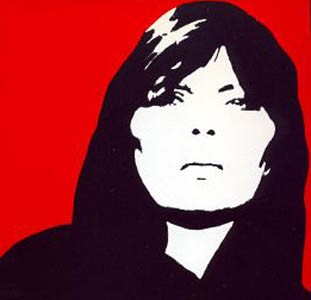
Yesterdays’ Parties: Nico’s voice dripped with booze and benzedrine.

Books Beat

Bios you can tap your toes to

By Greg Cahill

The best music books, like Laurence Bergreen’s exceptional 1998 ode Louis Armstrong: An Extravagant Life, which arguably set the new standard for music biographies, possess the ability to transport the reader to a specific time and place, to lend a visceral quality to a musician or a band, to create context for their artistry and a sense of what motivated the subject. The worst music books, like Rolling Stone bassist Bill Wyman’s woeful 1997 chronicle Stone Alone: The Story of a Rock ‘n’ Roll Band, are little more than lists of events, or in the case of Wyman’s dreadful tome, one big tedious shopping list that meticulously detailed the expenses of the world’s most dangerous band.

Hot on the heels of rock bassist Phil Lesh’s impressive Searching for the Sound: My Life with the Grateful Dead ( on this site two weeks ago), a half-dozen more music books have arrived on store shelves, ranging from a tiresome Beatles history to an ambitious exploration of the Kansas City jazz scene to a fascinating compilation of press materials published at the time the Velvet Underground were laying the foundations of the rock underground.

First, the worst. Tony Bramwell’s Magical Mystery Tours: My Life with the Beatles (Thomas Dunne Books; $24.95) would like to be the authoritative word on the Fab Four (a cover blurb by Paul McCartney informs us, “If you want to know anything about the Beatles, ask Tony Bramwell, he remembers more than I do”), but it reads like the ramblings of a self-absorbed twit who unapologetically boasts that he once attended a private Ravi Shankar concert drunk and still doesn’t quite comprehend the significance of his once-privileged access. If you’re looking for insight into the mop-topped pop stars, read Philip Norman’s excellent 1982 book Shout! The Beatles in Their Generation.

The story behind Julie Blackburn’s new biography of the late great jazz singer Billie Holiday, With Billie (Pantheon; $25), is as fascinating as the naked anecdotes that make up this book. Based entirely on 150 interviews with people who knew Holiday–including prostitutes, friends and colleagues–the material was gathered in the 1960s by ill-fated author Linda Kuehl, who hoped to publish the definitive biography on the tortured Lady Day. But after taping and transcribing seemingly endless hours of interviews, Kuehl could not find her own muse. She wrote two chapters, lost her book deal, negotiated a new book deal, and then plunged to her death after leaping out a hotel window. The tapes and transcripts were sold to a collector who recently gave Blackburn complete access. The result is a rich, if uneven, portrait of the greatest jazz singer of all time.

Kansas City Jazz: From Ragtime to Bebop–A History (Oxford University Press; $32), by jazz authorities Frank Driggs and Chuck Haddix, spotlights the vibrant Kansas City jazz scene of the 1920s, ’30s and ’40s, a fertile ground that produced Charlie Parker, Count Basie and others, but which was overshadowed by New York, New Orleans and Chicago. Still, underemployed jazz players from throughout the country appreciated its style–pianist Mary Lou Williams once said that K.C. was “a heavenly city, [with] musicians everywhere.” And Driggs and Haddix know how to bring them all to life through intricate details.

Rock fans can find a pair of noteworthy new releases. Gigantic: The Story of Frank Black and the Pixies (Omnibus Press; $19.95) chronicles the rise of this influential indie-rock band, from their genesis in a dank Boston basement to the triumphant 2004 reunion that found the band attracting hordes of new fans. It’s a breezy read from a writer who has penned books on Paul McCartney, the Kinks, Kate Bush and others.

The more entertaining read is All Yesterdays’ Parties: The Velvet Underground in Print, 1966-1971 (Da Capo Press; $26), edited by Clinton Heylin (best known for his acclaimed Bob Dylan: Behind the Shades Revisited). Here, Heylin compiles dozens of articles and concert reviews published during the lifetime of this groundbreaking alternative rock band (avant-garde artist Andy Warhol’s house band), from the mainstream and the underground press, but curiously opts out of contributing a preface that would put all of this varied material into perspective. Draw your conclusions. It’s still an interesting way to delve into the beginnings not only of underground rock, but also of the then emerging rock press as such writers as Lester Bangs applied gonzo journalism to their craft.

And who could ever tire of reading about blonde chanteuse Nico? The former European supermodel and onetime Fellini actress (she had a bit part in La Dolce Vita) fronted the band with a voice that was all boredom, bourbon and Benzedrine.

From the May 4-10, 2005 issue of the North Bay Bohemian.

© Metro Publishing Inc.

Bird-Friendly Art Hats

Flock Together: Environmental artist Erica Fielder, and friend, in one of her bird-friendly art hats.

A Bird on the Head

Artist and avians share sense of style

By Jill Koenigsdorf

Erica Fielder talks a lot about watersheds. The way she sees it, people would feel more protective of one another and the species in their vicinity if they thought about the source of the water in their watershed. Watersheds sustain every culture around the world, yet most people don’t even know the name of “their” river or the source of the water in their watershed. This got Fielder thinking about interspecies connections, and from there, it was only a short hop, skip and a jump to making birdfeeder hats.

The biggest dilemma for Fielder, 58, has long been which hat to wear herself, that of the artist or the environmental educator. She has always been active in education, and spent 18 years teaching children about the natural world. But she is also a painter and sculptor with an advanced fine arts degree; the divide between those two worlds perplexed her. Two years ago, she applied for and received an $11,000 grant that enabled her to expand her vision of narrowing this divide through the very physical action of crafting hats that feed birds.

At first her hats were placed among ordinary birdfeeders to get the hungry avians used to the idea. Gradually, the feeders were taken away and the birds ate off the hats. Then, to Fielder’s delight, she was able to don one of the hats and sit very still, and after only a half hour, birds began to roost on her brim and peck at the irresistible food she had placed there.

“I wanted to take people out of the voyeuristic role of watching birds through binoculars or sunsets through a car window or nature shows on TV, and put the human back in the picture,” she says by phone from her home north of Fort Bragg.

The hat is also a way of getting our species to slow down and be aware of another species, something Americans aren’t very good at,” Fielder says. “I wanted the wearer to have a sensory experience, because those are the ones we most remember. When the bird lands, it’s quite an experience. I’m always amazed when I hear what feels like a big bird land and someone watching tells me it’s a chickadee. The hat is like a drum, really, you sit there and you can hear the birds chatter as they eat, little conversations and their talons make tappy noises. The best part is that it gets people to sit very quietly, to be patient, which is a huge contribution.”

The hats themselves are not widely available. As they are individual works of art, Fielder charges between $250 and $300 per hat. Each piece takes her at least eight hours to make. She blows up a balloon and takes the measurement of the customer’s head before wrapping the balloon with papier-mâché. The brims are often three feet in diameter and reinforced with small bamboo skewers so they’re good and sturdy, broad enough, at first, for Fielder to hide under. When the newspaper strips dry, she pops the balloon and uses ribbon so the hat can be secured under the chin.

Fielder uses different colors to adorn the hats and affixes in the branches small seed trays she purchases at a thrift store. She will even place hummingbird feeders on top. “How tolerant birds are to humans is directly related to how fast they can get away, so the hummers are the most bold, and the smaller birds next,” she says.

Since bird watching is second only to gardening as a pastime in the United States, people seem to crave the interspecies connection that most interests Fielder as an artist; her hats offers a crucial sense of immediacy. “I am after that sensory memory, that sense of ‘Ah-ha!’ when they feel the connection,” she explains.

“Once we have a connection with one species and begin to care about them, we will hopefully become more protective of the watershed that those birds, and we, inhabit.”

From the May 4-10, 2005 issue of the North Bay Bohemian.

© Metro Publishing Inc.

‘Picasso at the Lapin Agile’

0

Playboys and Bunnies: SSU’s production takes a surrealist look at the what-ifs of a famous friendship.

Genius on the Rocks

Picasso and Einstein bump heads in ‘Lapin Agile’

By David Templeton

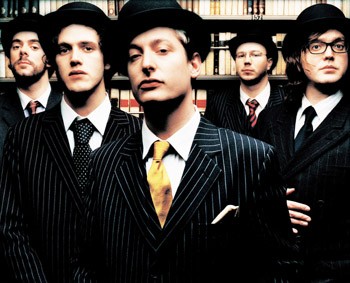
Picasso has a lot of really interesting, really remarkable things to say about art and science and the 20th century,” says Sonoma State University professor Judy Navas. While it might be true that Pablo Picasso the artist had compelling opinions about art and science, the Picasso to which she refers is not the artist but the play Picasso at the Lapin Agile. Written by actor-comedian Steve Martin, the play–an off-Broadway hit from 1996–is set in a French tavern in Paris in 1904, and revolves around a chance meeting between a youthful Albert Einstein and a young, pre-Les Demoiselles D’Avignon Picasso. As viewed by Navas, who directs the play at SSU, the show is part philosophy, part visual surrealism and part wacky slapstick.

“For all of its intellectual word games and its delving into important ideas, it’s pretty hilarious,” Navas says. “The characters are delightful, and it’s really very accessible. It’s important to me that the audience is entertained, and this is a very entertaining show. Which is exactly what one would expect from a play written by the guy who starred in Planes, Trains and Automobiles.”

Working with a vibrant cast of students and nonstudents, Navas’ production makes clever use of the university’s versatile theater space, incorporating such visual effects as a large glass window on which Picasso and Einstein (and other characters) doodle and sketch their emerging ideas, and an enormous replica of a famous painting, which rises up, on cue, to hover above the Lapin Agile.

On a recent Sunday two weeks before opening, Navas admits she’s still tinkering with details. A 28-year veteran teacher at SSU, Navas has established herself as a fearless innovator with a fondness for experimental theater. She once produced a high-tech, computer-enhanced production of Shakespeare’s Tempest and created an original work for SSU titled Mythic Footprints, based on the writings and dreams of the legendary Sioux medicine man Black Elk.

Navas believes that Picasso at the Lapin Agile brings together most of the elements she finds compelling in a script–colorful characters, odd juxtapositions, challenging ideas and a willingness to break the “fourth wall” of theatrical disbelief, as when the characters accuse Einstein of appearing at the wrong point in the show and fetch a program from an audience member to show the sockless scientist where he was supposed to have made his entrance. The most intriguing thing about the show, Navas explains, is its examination of the creative process.

“It’s pretty miraculous,” she says, “making us laugh and think, while also making clear Martin’s thoughts on how ideas come to us. It’s also a very short play–75 minutes with no intermission–so it’s pretty fast and furious. It’s a challenge for the actors, because it’s also a very technically ambitious show, but I couldn’t be happier with how it’s all working out.”

Perhaps it’s a reflection of Navas’ years as a teacher, that in working to put her actors in the right frame of mind, she found herself assigning homework.

Says Navas, “My Picasso, a very talented actor named Damian Sagastume, was given a number of biographies to read, including Arianna Huffington’s bio [Picasso: Creator and Destroyer], and because Arianna is such a gossipy girl, we learned a lot of very interesting things, a lot about his love life, a lot of which we used to understand these characters.” For his part, Joshua Stithem, the actor playing Einstein, was instructed to watch Errol Morris’ documentary on Stephen Hawking, A Brief History of Time, and had to spend time reflecting on physicist Hawking’s, and on Einstein’s, deep sense of wonder about the universe.

“This play is about wonder, in part,” Navas says. “It’s about the nature of art and science, and how they can talk to each other, how they can both help us realize what we are about. It’s about genius, but it’s also about how it doesn’t take a genius to have a world-changing thought or make an extraordinary piece of art. We all have a little bit of Picasso and Einstein in us, somewhere.

‘Picasso at the Lapin Agile’ runs April 28-May 8 at the Evert B. Person Theatre. April 28 and May 4 at 7:30pm; April 30 and May 6 at 8pm; May 1, 7 and 8 at 2pm. SSU, 1801 E. Cotati Ave., Rohnert Park. $8-$15; SSU students, free. 707.664.2353.

From the April 27-May 4, 2005 issue of the North Bay Bohemian.
© Metro Publishing Inc.

Gomez

0

We Will, We Will Audit You: Gomez wants to check your financial statements.

Redemption Song

Gomez go live, split with Virgin

By Greg Cahill

Considering that his band have just lost their contract with one of the world’s hippest major labels, Gomez vocalist, guitarist, keyboardist, bassist and songwriter Tom Gray sounds quite pleased with the way things are shaping up, at least in a low-key British sort of way. “We finished our contract with Virgin Records, and we’ve been through the ups and downs of watching the major-label record industry collapse in on itself,” says the affable Gray during a phone interview from the Ohio University campus.

“It’s been all about the art of survival for the past few years.”

If their recent live shows and the advance copy of the upcoming live album Gomez Out West (ATO) are any indication, the band have come through their ordeal stronger than ever. The two-CD live album captures Gomez’s eclectic Manchester-meets-the-Rolling-Stones sound in all its blues-inflected glory. It features 18 live versions of songs from the band’s four studio albums, as well as a cover of the obscure Tom Waits song “Going Out West” (first recorded in 1998 by British pub rockers Dr. Feelgood) and Nick Drake’s “Black Eyed Dog.” Gomez recorded the album in January during three sold-out nights at the Fillmore in San Francisco and it is due for a June 7 release.

“We wanted to draw a line between that stuff we did with Virgin and what is to follow. We thought a good way to do that would be to record a live record,” Gray explains. “It was a good way to tie up all the loose ends. The band had never done a live album, despite our reputation as a good live band, because Virgin would never let us do one. We were up against the wall all the time with them. They just didn’t understand.”

Gomez have indeed endured their share of ups and downs. The band members grew up in the suburbs and emerged from Liverpool and Manchester bored with the retro sounds of Oasis and the trip-hop of Portishead and other trendy bands riding high on the 1990s Manchester music scene. Their 1998 debut Bring It On was full of catchy, straight-ahead bluesy rock that won rave reviews on both sides of the pond and earned a prestigious Mercury Music Prize.

After the sonic experimentation of 2002’s In Our Gun, last year’s somewhat laid back Split the Difference marked a return to form to the straight-ahead sound of their acclaimed debut. The blues-tinged, slightly psychedelic waltz-time ballad “Sweet Virginia” (not a cover of the Rolling Stones song by the same name) alone was worth the price of admission.

“It was a fun record,” Gray says of Split the Difference. “We had fun making it. In Our Gun was a grand, pretentious record. With Split the Difference we said, let’s make a rock ‘n’ roll record and enjoy ourselves, get a few good tunes together and record them as simply as possible.”

The search for a pace to record Gomez Out West led the band back to San Francisco, its unofficial U.S. base. “It’s quite a strange and beautiful thing that San Francisco has become this American home for us,” Gray muses. “I think that what we do just connects with people there-they just understand it. There’s a whole eclecticism and psychedelic aspect. They’re just ready for what we do.

“I mean we’re saying, fuck musical styles, fuck all of that formula stuff, let’s just enjoy music for what it is. And somehow that makes sense to people in San Francisco.”

Throughout the personnel shakeups at Virgin, which included a series of firings that removed staff responsible for marketing Gomez’s albums, the band struggled to stay together. “Basically, we’ve just stayed on the road the whole time for the past two and a half years,” Gray adds. “It’s sort of a tale of redemption because now we’re done with all this major-label shite–it’s a very exciting time, because we don’t have to worry about the shareholders anymore. The folks at ATO are very cool people who just want to put out great records and take care of them.”

Gomez already is laying plans for a new studio album. “We have a lot of new material written and ready to go,” Gray says. “We’re just waiting for someone to press the button and say, ‘Go for it!’ This is the moment for us. We’ve done the groundwork. We’ve played in every small town in America, we’ve been around the block. And a lot of people have a lot of faith in us. For various reasons, in the past, we never quite connected in a big way, but it seems that it would be quite easy to connect with people, if they could just get to hear it on record.”

So is the straight-ahead sound of Split the Difference a road map for the future?

“No, we’ve done that now,” Gray says with a laugh, “The next thing is something again. I’m feeling a more mellow, lyrical vibe coming along.”

Gomez perform at the Mystic Theatre on Thursday, May 5. 21 Petaluma Blvd. N., Petaluma. 8pm. $25; all ages. 707.762-2121.

From the April 27-May 4, 2005 issue of the North Bay Bohemian.

© Metro Publishing Inc.

Dinosaur, Jr.

0

Together Again

Patching it up and hitting the road

By Sara Bir

Breaking up is hard to do. Reuniting, apparently, is easy. Recently, the three original members of Dinosaur Jr.–J Mascis, Lou Barlow and Murph–announced their plans to tour this summer in support of the re-release of the band’s first three albums.

This is big news, in a way. A big chunk of early Dinosaur Jr.’s youthfully uneven genius was the hate/love creative dynamic between Lou, Murph and J. There’s the classic story, for example, about the band going on tour in 1987, and J catching Lou in the van sucking on the eyeball of his new Cookie Monster doll. That’s only mildly creepy, but incidents like that–little things, tensions piling up–are the stuff that band breakup legends are made of.

Fans relish these stories and weave them into a fetishistic mythology where a defunct but once-promising band’s untimely implosion only adds to the greatness of the works they created, as if it’s nobler to plummet dramatically off a cliff than to soldier on into mediocrity. One special thing about loving Dinosaur Jr. was knowing that the original trio were gone forever, like an ancient civilization who left naught but a trail of wild stories and a few relics of vinyl.

Until now. You know you’re an aging hipster when your favorite long-obliterated bands reunite. The air has been dripping with reunion fertility the past several years. Most notably, the Pixies made enough peace with their mutual disgust with each other to tour the whole dang world, a feat they’ll be repeating this summer. Mission of Burma, Gang of Four, the Sex Pistols, Tears for Fears, Slint, Mötley Cruë and even Sen. John Kerry’s old band the Electras (sans John Kerry) have all gone to band therapy and emerged whole once more, ready to placate devoted fans and revisit the cigarette- and booze-tainted days of yore.

The triumphant return of a band is a complex thing. It takes time–years, even–to adjust when a band breaks up, so there’s a flood of confused emotions (shock, denial, anger, acceptance, joy) to navigate if they reunite. Part of this has to do with divining the band’s intentions, which might variously be any or all of the following: (1) they really miss performing with each other; (2) it’s all to make the fans happy; (3) baby wants a new Jaguar; (4) plans for a supergroup with Scott Weiland, P-Diddy and Rob Halford fell through.

Just as bands break up for many reasons, there are many reasons for them to get back together–some pure, some not. Try to put it in a romantic context. Say you once had a stormy relationship with someone really hot, and the sex was great but everything else sucked. Now think of running into that person years after feelings have mellowed, and you can’t help but connect again on that one functioning level (pure animal lust!) just for old time’s sake. Perhaps creative onstage chemistry between formerly chummy musicians can flare up in the same manner; after years pass, experiencing that sensation again proves to be too much to resist.

We all probably have positive defining moments of our lives, glimmers of exceptionality in a formless string of days. Most of us experience this in our own microcosms, virtually anonymous to the rest of humanity, and yet we still spend our lives reaching to recapture slivers of that completeness. Think of Uncle Rico in Napoleon Dynamite hurling his football into those golden, vacant Idaho hills.

Imagine, then, belonging to a beloved band and living out those defining moments in front of thousands of adoring fans. Albums and songs and snippets of footage exist as artifacts, complete and eternally unchanging, but people continue to grow. They lose their hair and thicken in once-svelte regions and have kids and pay mortgages, and the crystalline lilt of green voices grows a patina of world-weariness. But throughout life, artists remain artists. No one turns a skeptical eye on civil engineers or electricians or manicurists who come out of retirement. Then again, civil engineers and electricians and manicurists are generally not mouthpieces articulating the collective feelings of their generation. Being a musician is a tough job.

Even dinky bands reunite. They have no promise of roaring stadiums or fat ticket fees, no exorbitantly priced comeback-tour T-shirts or profiles in Blender or Spin. Someone, outside of a scattered handful of fans, cares–and that’s the band themselves. I still haven’t decided if I’ll see Dinosaur Jr. yet. I’m excited but conflicted. There’s something consoling in the thought that older, wiser, less up-tight versions of J, Lou and Murph are into sharing a stage again, breathing vital life into cherished nostalgia.

From the April 27-May 4, 2005 issue of the North Bay Bohemian.

© Metro Publishing Inc.

Trey Gerfers

0

Points of Reference: Artist Trey Gerfer’s Point Rays Lamp is intended for seduction.

Light Work

Stereoluz creations set the mood for love

By R. V. Scheide

‘Light is hard to work with, it’s very temperamental,” explains Trey Gerfers as he opens the door of his studio in Point Reyes Station, revealing a pile of ancient speaker cabinets, gutted TV sets and antique radios stacked high against one wall. These are the skeletons of what will eventually become “Stereoluz,” a word Gerfers coined to describe the ambient light sculptures he creates from recycled audio components and modern lighting effects (luz, pronounced “loose,” is Spanish for “light”).

In the back of the studio, a number of completed Stereoluz pieces glow softly in a darkened corner. “Tee-Light” features a pair of rectangular speaker cabinets, cemented together in a T shape, the internals ripped out and replaced with orange, red, blue and green theatrical gel lights. “Reel-2-Real” is, aptly enough, an old tape recorder, reels removed and replaced with a tweed covering, through which red and amber lights shine through. Gerfers tweaks on the recorder’s tuning knobs, which now control the mixture of red and amber, the tone of the light, rather than the tone of the sound. With the knobs, one can quite literally set the mood for just about any situation.

“A lot of these pieces need a special space,” Gerfers says. “I always encourage people to think of something that will provide ambiance in a dining room or a bedroom. It’s something for nighttime, to make love by.”

Gerfers, whose formal training is in languages and translations, has always been interested in lighting design; early creations included old heating lamps transformed into quirky light sculptures. However, his interest really took off after moving to Berlin in the late 1990s. “Berlin is so dark, and there’s a sensibility about ambient lighting that’s not found here,” he says.

He moved to San Francisco in 2000, first working for a design firm building models of buildings for future cities. Around the same time, he started Stereoluz, mass-producing his own designs as well as creating one-off art pieces using old stereo components, maps and other found objects. One of his original designs, the Point Rays Lamp–a perforated cube one foot on each side through which various colored lights emanate–has proven popular enough to support his true love, creating original works of ambient light art.

“It’s funny, they kind of select me,” he says, gesturing toward the stack of old speaker cabinets. For instance, the holes in the speaker cabinet used to create “Planets,” one of the completed pieces in the back of the studio, reminded Gerfers of a 2003 news report he’d seen on the Galileo spacecraft’s visit to Jupiter. The holes now glow a luminous red, reminiscent of the gas giant’s angry red spot, or one of its many moons.

He taps lightly on the touch-sensitive rheostat fixed to the piece’s side, and the light passes through four phases of intensity, from bright to off. Gerfers designs each piece to look good whether it’s on or off. He touches the rheostat on “Tee-Light,” switching it off and transforming it into a marble white abstract sculpture. “Very Yoko Ono,” he quips.

The most aesthetically compelling transition occurs in pieces that employ translucent wood veneer, a medium Gerfers uses often. The most impressive piece is a large former coffee table he has tipped over on its end. When the lighting inside is switched off, it looks like an enormous block of solid wood. When the lighting is switched on, the wood grain becomes liquid and alive, appearing to drip down the surface.

A world traveler, Gerfers is partial to including maps in his designs, including the piece “Sectional Seashore,” in which a map of Point Reyes (a durable, waterproof plastic trail guide made by local cartographer Tom Harrison) is presented in five arranged speaker cabinets, creating a cubist effect.

Gerfers is clearly proud his work, which ranges in price from $150 for the mass produced Point Rays Lamp to $2,300 for one-off pieces. If effort is any gauge, the price is worth it. In order to create Stereoluz, he must work in the light and the dark, with constantly shifting aesthetic variables. That’s why he describes working with light as “temperamental.” Nevertheless, there’s no doubt he loves what he’s doing.

“A lot of people who come out here have seen a lot, they’ve seen it all,” he beams. “But they haven’t seen this.”

Trey Gerfers joins other local artists for Point Reyes Station Open Studios on Memorial Day weekend, May 28-30, from 11am to 5pm. Opening reception Friday, May 27, 4-7pm. For more info, go to www.pointreyesart.com.

From the April 27-May 4, 2005 issue of the North Bay Bohemian.

© Metro Publishing Inc.

The Great Petaluma Chili Cook-Off

0

Some Like It Hot: The Great Petaluma Chili Cook-Off hopes to raise $150,000 for kids’ theater education.

Spice of Life

Annual chili cook-off raises money and spirits

By Charyn Pfeuffer

Summer is nearly upon us, and nothing heats things up like a steaming bowl of chili and an ice-cold beer. To many, chili is pure pleasure in a bowl, and Laura Sunday, the self-proclaimed “Chili Empress” of the annual Great Petaluma Chili Cook-Off, considers the fiery food to be one of the great pleasures of gastronomy. In addition to making mouths happy, the annual bowl o’ red competition has raised much-needed money for the Cinnabar Theater, so that any local child who expresses an interest can participate in the performing arts program.

When Sunday, the president of Cinnabar Theater’s parents guild, went to a chili cook-off in Marin in 1997, she realized that she could do an event like that in Petaluma. Now in its ninth year, the chili cook-off expects to draw more than 1,300 people and should crest the $150,000 mark in donations. With 35 varieties (and counting) of chili available to sample, as well as homemade salsas and microbrews, attendees and local celebrity judges are going to have to rely on having strong stomachs and plenty of palate-cleansing beer to properly taste the entries.

There are many legends and stories about the origin of chili. Although a recipe calling for venison or antelope meat, onions, tomatoes, and chile peppers was documented in a 17th-century Southwestern American Indian legend, later records found by Everette DeGolyer, a Dallas millionaire, indicated that the first chili mix (consisting of pounded dried beef, fat, pepper, salt and chile peppers) was concocted around 1850 by Texan cowboys.

As with so many other great ideas, chili’s inception was probably prompted by need. Pioneer J. C. Clopper, a diarist whose homespun writings illuminate early Texas history, wrote about San Antonio’s chili carne in 1826: “When they have to pay for their meat in the market, a very little is made to suffice for a family; this is generally into a kind of hash with nearly as many peppers as there are pieces of meat–this is all stewed together.” Grander versions of the dish evolved at Hollywood’s swank spot of the noir era, Chasens. Restaurant owner Dave Chasen affectionately called his a “bastard” chili and insisted that it be frozen for a week before serving.

And when it comes to chili cook-offs, the North Bay by no means has a lock on the idea. In fact, the concept only recently crossed the Rio Grande, the first such storied event being organized by Texas newspaperman Joe E. Cooper in 1952 to promote his chili “biography.” Far more famous, however, was the 1967 event in Terlingua, Texas, prompted when another journalist, H. Allen Smith, tauntingly titled a magazine article “Nobody Knows More about Chili Than I Do.” Outraged readers immediately challenged Smith’s supremacy with a legendary cook-off. These days, according to the Chili Appreciation Society International, some 400 cook-offs are held in the United States each year alone.

A most vexing cooking question remains: What goes into making a great bowl of chili? After chiles, which some Spanish priests preached against as an aphrodisiac during the 19th century, meat is the most important part of chili, and probably the most analyzed ingredient. The generally accepted carne is beef; the specific cuts: chuck, flank and even sirloin. In the debate of meaty matters, it is generally agreed upon that hamburger meat makes lousy chili. One-half-inch cubes of beef seem to be the established norm. And if you’re lucky enough to own an electric meat grinder or have access to a local butcher, the classic “chili grind,” where three-eighths inch or half-inch holes in the blades of the meat grinder are used, is really the Rolls-Royce of chili meat choices.

But when it comes down to it, chili isn’t high art and shouldn’t be treated that way. Cook-off contestant Larry Petersen, a firefighter and former third-place chili winner, says, “I think what makes our chili so exceptional is that it’s made at the firehouse with some of the most creative firehouse chefs. It’s a crew effort. I would add that most firefighters are good cooks due to the razzing they would receive if they served a bad meal to the crew.”

Secret ingredients aside, Petersen’s team’s strategy is simple. “First of all, make sure everybody has a fun time. After that, it’s prank time. The fire-department atmosphere is one of practical jokes and a lot of razzing, so we try to take advantage of every opportunity to pull any practical joke. So look out,” he chuckles. However, Petersen does recall a prank that didn’t play out so well. “Two years ago, Petaluma [fire station] set up a bag of flour above our booth and hooked up a water line. At the right time, they would pull a string ripping open the bag and then turn on the water. Well, they missed the booth and it went all over the floor. It was a slippery mess.”

Cattlemen’s restaurant and Willowbrook Ale House also have a friendly rivalry. Heather Nelson, the banquet and marketing coordinator for Cattlemen’s, says, “It all started when we kidnapped Willowbrook’s trophies. We brought them back to our home, and sent Willowbrook ransom notes telling them that the trophies loved their new home.” Willowbrook retaliated, the kidnapping continued, and Nelson hints that this year’s prank is still in the process.

Aside from the hijinks, beer and food, the Great Petaluma Chili Cook-Off plays an important role in helping creative kids nurture their talents. “My children, Jessie and Gabriel, have come through the Cinnabar program and are off creating exciting, wonderful lives with the confidence and self-esteem they learned through being involved in the performing arts,” says Laura Sunday. “We have the perfect community to bring together restaurants, businesses, service organizations and individuals for a fun event that raises needed dollars.” Besides, she smiles, “People often tell me it’s the event they look forward to more than any other.”

The Great Petaluma Chili Cook-Off is scheduled for Sunday, May 1, at the Sonoma-Marin Fairgrounds. 1pm to 5pm. $18-$30. East Washington Boulevard at Highway 101, Herzog Hall, Petaluma. 707.778.2100, ext. 18.

From the April 27-May 4, 2005 issue of the North Bay Bohemian.

© Metro Publishing Inc.

First Bite

First Bite

Terry’s Southern BBQ

By Heather Irwin

Editor’s note: First Bite is a new concept in restaurant writing. We invite you to come along with our writers as they–informed, intelligent eaters like yourselves–have a simple meal at an area restaurant, just like you do. This is not a go-three-times, try-everything-on-the-menu report; rather, this is a quick snapshot of a single experience.

Dissing the dry rub in Texas could very well earn you a free ride on the back of an angry Longhorn, just as putting tomatoes in Eastern Carolina barbecue is about as welcome as a Blue Devil in Chapel Hill. When it comes to the ‘cue, not all sauces are created equal. You’ve got to know the score, and whose team you’re on.

After all, whether it’s Alabama white, Kentucky black or Memphis red, when you’re born to a Southern family, sauce recipes are a matter of family pride, and straying one iota from Grandpappy’s legendary marinade will have you out of the will faster than a duck on a June bug.

Here in Sonoma County, the few barbecue joints that survive are mostly devotees of Memphis-style barbecue, with its sweet, smoky tang and finger-licking goodness. And Terry’s Southern Style Fish & BBQ follows suit. The tantalizing smell of Big Momma’s Boss Sauce wafts through the open screen door of the kitchen, sending you down to Dixie in a sniff.

Despite being newly remodeled, the restaurant isn’t fancy. In fact, the day we went, the front door was busted, most of the tables weren’t bussed and the waitress dropped a bowl of collard greens on my foot. All part of the come-as-you-are, family-style charm.

The menu is similarly simple. Fried catfish, pork ribs, tri-tip, chicken and pork chops dominate, along with uniquely Southern sides like hush puppies, corn bread and those greens. No stumbling over exotic ingredients or names.Catfish ($11.95) was the obvious choice, fried up in cornmeal and still sizzling in the basket. No go. The night we went, they were reportedly sold-out, which happened another night a friend visited. Does something smell fishy here?

Foiled, I settled back on my second choice, barbecue ribs ($13.50). Hot damn, they rocked my world. Pulling off the tender meat and gnawing on the bones was a soul-satisfying experience, which, when paired with a platter of crispy, thin fries and the bitter collard greens, rendered me only able to nod and mumble incoherently for the remainder of the meal, head-down.

Boy went for the beef version, tri-tip ($13.50) smothered in Momma’s Boss Sauce and sided with coleslaw and hush puppies. A sometimes-Southerner, Boy knows his puppies, and gave a thumbs-up to the crispy outside and tender, cornmeal inside studded with onions and herbs. The only disappointment was the cornbread, which was dry, cold and unimpressive.

I regretted not tasting the homemade sweet potato pie ($2.50), but only until we got a piping hot bowl of peach cobbler ($2.50). Now, I’ve had a lot of fancy-pants desserts in my day, but this was one of the best, considering that it’s dessert at a barbecue joint. The crust was crisp and covered in grainy bits of sugar, topping layers of warm, gooey, slightly tart (OK, canned) peaches. I’m not usually a fan of shortcuts, but considering the time of year and, well, the fact that canned fruit is so darned authentic, it seemed perfectly right. Served up in a cheap plastic bowl with spoons for everyone to share, the earnestness of it all felt like home.

Terry’s Southern Style Fish & BBQ, 3345 Santa Rosa Ave., Santa Rosa. Hours TK. 707.526.9090.

From the April 27-May 4, 2005 issue of the North Bay Bohemian.

© Metro Publishing Inc.

Leonard Shlain

Women's WorkAuthor Leonard Shlain brings science to the goddess debateBy Chip McAuley Trying to keep up with bestselling author Leonard Shlain is a lot like trying to understand the mind of God: every time you think you've made some progress, you realize he's still one step ahead of you. Be that as it may, he's seemingly more accessible...

Caudalie Vinotherapie Spa

Infinite Enophile: Dear good grapes, how do we love thee? Let us count the ways.Grape SkinUsing grape seeds to recapture youthBy Charyn Pfeuffer'I just don't get it." As we made our way to the Kenwood Inn & Spa, Morgan exclaimed in pure disbelief that people pay good money to be exfoliated. "Skin naturally exfoliates itself--I'm exfoliating right this very...

Music Books

Yesterdays' Parties: Nico's voice dripped with booze and benzedrine.Books BeatBios you can tap your toes toBy Greg CahillThe best music books, like Laurence Bergreen's exceptional 1998 ode Louis Armstrong: An Extravagant Life, which arguably set the new standard for music biographies, possess the ability to transport the reader to a specific time and place, to lend a visceral quality...

Bird-Friendly Art Hats

Flock Together: Environmental artist Erica Fielder, and friend, in one of her bird-friendly art hats.A Bird on the HeadArtist and avians share sense of styleBy Jill KoenigsdorfErica Fielder talks a lot about watersheds. The way she sees it, people would feel more protective of one another and the species in their vicinity if they thought about the source of...

‘Picasso at the Lapin Agile’

Playboys and Bunnies: SSU's production takes a surrealist look at the what-ifs of a famous friendship.Genius on the RocksPicasso and Einstein bump heads in 'Lapin Agile'By David Templeton'Picasso has a lot of really interesting, really remarkable things to say about art and science and the 20th century," says Sonoma State University professor Judy Navas. While it might be true...

Gomez

We Will, We Will Audit You: Gomez wants to check your financial statements.Redemption SongGomez go live, split with VirginBy Greg CahillConsidering that his band have just lost their contract with one of the world's hippest major labels, Gomez vocalist, guitarist, keyboardist, bassist and songwriter Tom Gray sounds quite pleased with the way things are shaping up, at least in...

Dinosaur, Jr.

Together AgainPatching it up and hitting the roadBy Sara BirBreaking up is hard to do. Reuniting, apparently, is easy. Recently, the three original members of Dinosaur Jr.--J Mascis, Lou Barlow and Murph--announced their plans to tour this summer in support of the re-release of the band's first three albums.This is big news, in a way. A big chunk of...

Trey Gerfers

Points of Reference: Artist Trey Gerfer's Point Rays Lamp is intended for seduction.Light WorkStereoluz creations set the mood for loveBy R. V. Scheide'Light is hard to work with, it's very temperamental," explains Trey Gerfers as he opens the door of his studio in Point Reyes Station, revealing a pile of ancient speaker cabinets, gutted TV sets and antique radios...

The Great Petaluma Chili Cook-Off

Some Like It Hot: The Great Petaluma Chili Cook-Off hopes to raise $150,000 for kids' theater education.Spice of LifeAnnual chili cook-off raises money and spiritsBy Charyn PfeufferSummer is nearly upon us, and nothing heats things up like a steaming bowl of chili and an ice-cold beer. To many, chili is pure pleasure in a bowl, and Laura Sunday, the...

First Bite

First BiteTerry's Southern BBQBy Heather IrwinEditor's note: First Bite is a new concept in restaurant writing. We invite you to come along with our writers as they--informed, intelligent eaters like yourselves--have a simple meal at an area restaurant, just like you do. This is not a go-three-times, try-everything-on-the-menu report; rather, this is a quick snapshot of a single experience.Dissing...
11,084FansLike
4,606FollowersFollow
6,928FollowersFollow