Chet Baker

0

Fine Young Cannibal: Jazz hero Chet Baker, whose breathy vocals and sexy trumpet were good enough to anger Miles Davis, led a life of artistry and tragedy.

Prince of Cool

New box set spotlights Chet Baker’s lush life

By Greg Cahill

You can gauge the significance of a modern jazz player by the number of times his or her name pops up in Miles Davis’ contentious 1989 autobiography, Miles, and by the vociferousness of the attack.

By that standard, trumpeter and singer Chet Baker was a giant.

Blessed with chiseled cheeks and matinee-idol good looks, an ultra-smooth tone and a dreamy voice indicating he was definitely in touch with his feminine side, Baker became the poster boy of the West Coast jazz scene, a group of mostly white musicians that made post-bebop jazz popular with college audiences.

Davis had collaborated with some of the West Coast jazz guys, notably saxophonists Gerry Mulligan and Lee Konitz (both of whom appeared on Davis’ landmark 1949 recording Birth of the Cool), and he goes fairly easy on them in his book, but he spares no venom for Baker.

“A lot of white critics kept talking about all these white jazz musicians, imitators of us, like they was some great motherfuckers and everything . . . like they was gods or something,” Davis wrote. “What bothered me more than anything was that all the critics were starting to talk about Chet Baker . . . like he was the second coming of Christ. And him sounding just like me, worse than me even while I was a terrible junkie.”

Needless to say, Davis wasn’t too pleased when Down Beat magazine named the upstart Baker as Best Trumpet Player of 1953.

A new three-CD box set, Chet Baker: Prince of Cool (Blue Note/Pacific Jazz), highlights Baker’s talents and shows that the 1953 accolade was well-deserved. Culled from sessions recorded for the Pacific Jazz label between 1952 and ’57, the set breaks no new ground; all of these recordings have been available elsewhere, and the 1994 four-CD compilation Chet Baker: The Pacific Jazz Years remains the definitive collection of his work from this period. Still, this newly remastered anthology, neatly divided into three categories, should serve as an accessible introduction to acolytes and offers an easy way for cognoscenti to get Chet-at-a-glance, with or without the vocals.

Disc one (“Chet Sings”) focuses on those dreamy vocal numbers; disc two (“Chet Plays”) zeroes in on his trumpet-led instrumentals; and disc three (“Chet and Friends”) features the trumpeter in band settings collaborating with such jazz luminaries as Mulligan, Art Pepper, Stan Getz and Shelly Manne.

Liner note contributor Ted Gioia, author of West Coast Jazz: Modern Jazz in California, 1945-1960, writes, “[Baker’s] Pacific Jazz recordings . . . feature some of the defining moments of [his] career. From misty-eyed vocals to in-the-groove workouts alongside tenorist Phil Urso and pianist Bobby Timmons, serving as counterfoil to various other ‘name’ players . . . Baker made his mark as one of the defining jazz artists to emerge in the 1950s.”

Baker easily personified the icy romanticism that marked the cool-jazz scene. He also was one of history’s most tragic jazz figures.

Born Chesney Henry Baker Jr. in Oklahoma, Baker grew up in L.A. and served two hitches in the Army. While stationed in the Presidio, he began frequenting San Francisco’s jazz clubs.

After a second discharge in 1952, he rose quickly to prominence, with his big break coming that spring when sax legend Charlie Parker hired him for a few West Coast dates. That summer, Baker joined the Gerry Mulligan Quartet and recorded his first Pacific Jazz sessions. He was just 23.

He made his acting debut in 1955 in the film Hell’s Horizon. His lush life also became the inspiration for the fictionalized 1960 Hollywood film All the Fine Young Cannibals, with Robert Wagner portraying Chad Bixby, the fast-living jazz musician based on Baker.

During the 1960s, the musician lived up to his image, developing a heroin habit and landing in jail. In 1966 he was beaten on the streets of San Francisco, an event that may or may not have contributed to the loss of his front teeth (Baker had neglected his dental hygiene for years).

In 1968, he began wearing dentures, which are a difficult adaptation for a trumpet player who depends on his teeth to shape his embouchure. Baker’s touring and recording schedule diminished, and by the early ’70s he had stopped playing altogether.

In 1973 he staged a comeback, resumed recording, though sporadically, and toured mostly in Europe. Elvis Costello hired him to perform the mournful trumpet solo on his classic “Shipbuilding” in 1983, introducing Baker to a new generation of jazz fans.

In 1987 photographer Bruce Weber began shooting a film documentary about Baker. Let’s Get Lost, released the following year, won widespread acclaim and would have ensured Baker’s return to prominence, but just weeks before its release, the trumpet player toppled to his death from an Amsterdam hotel window after ingesting heroin and cocaine. Fans still debate whether he fell accidentally, committed suicide or was pushed.

Prince of Cool affirms that at least for a few glorious years in the mid- to late ’50s, Chet Baker stood on top of the jazz world, and there’s no disputing that fact.

From the January 5-11, 2005 issue of the North Bay Bohemian.

© Metro Publishing Inc.

David Templeton’s Top 10 of 2004

0

Adult Entertainment: ‘The Woodsman’ is one of the year’s best.

–>Hallelujah! Martin Donovan gets energized as the unctuous Pastor Skip in ‘Saved!’

–>Stub Sandwich

A critic looks back on his top 10 torn tickets of 2004

By David Templeton

A Marin County artist and avid moviegoer calls me at least once a week to analyze the previous week’s movies, television shows, talk-radio programs and other important pop-culture occurrences. He’s not into theater, so we can’t discuss that, but three out of four isn’t bad. Every year, my friend collects and keeps the ticket stubs for every movie he sees. In this way, as the year progresses, he builds an idea as to how that year is stacking up, quality-wise, in regards to films released. Around the time the media start talking about award nominations and top 10 lists, he spreads out his collection of stubs and reassembles them in order of personal preference, ranking them according to those he enjoyed the best down to those he’s still sorry he even bothered to see.

This is, I think, a good system.

Most of us, when the year comes to a close–if we happen to care about such things as rating and ranking our pop-culture experiences–merely think back on our year at the movies, the theater, the rock club, the concert hall or the festival ground, and wait until specific entertainment experiences pop up, waving their metaphorical arms and screaming, “Hey! Remember me? If I’m not top 10 material, what is?”

My comrade’s system has a pleasing orderliness, so in 2004, I have endeavored to save all of my torn and dismembered tickets, to keep them until, well, until now, and to use them as visual aids in looking back on the preceding 12 months. It has been a year of extremes, producing, on the national big-screen scene, both Fahrenheit 9/11 and The Passion of the Christ. The North Bay stages have tested our nervous sociological Zeitgeist (Cinnabar’s eerie production of Cabaret and Actors Theatre’s unexpectedly spiritual Last Night of Ballyhoo, for example), while simultaneously daring us to forget all that stuff and laugh (as in Pacific Alliance Stage Company’s recent female version of the Odd Couple and Marin Shakespeare Company’s raucous Wild West version of The Taming of the Shrew).

Now, as I attempt to rate my own numerous theatrical, musical and cinematic memories, sorting through a hundred or so snips of paper, placing them in order from most rewarding to least, I realize something alarming: the year was not as culturally barren as I’d come to believe. It’s proven harder to select my top 20 entertainment experiences than I would have expected. Though perhaps not as exciting as 1979 (the year that brought Apocalypse Now, Being There and All That Jazz to the screen, while simultaneously giving us Sweeney Todd, Zoot Suit and The Elephant Man on the American stage), 2004 has nevertheless provided its share of quality entertainment. My experiences may have been largely confined to the stages and film festival screens of the North Bay, still my collection of ticket stubs reveals one unmistakable truth: I’ve had a pretty good year. Here, in order from personal best on down, are my 10 favorite ticket stubs of 2004.

1. ‘A Bright Room Called Day.’ Actors Theatre’s vigorous, unflinching, impeccably cast production of Tony Kushner’s early drama about a group of artists dealing with the rise of fascism in 1939 Berlin takes the top spot on my stub stack. Since seeing the play in May, the haunting echoes of Kushner’s bold and angry text (“During times of reactionary backlash, the only people sleeping soundly are the guys who’re giving the rest of us bad dreams!”) and the lingering memory of the ensemble’s soul-shredding performances have made their way into my subconscious, reappearing on several occasions in my dreams. Even Fahrenheit 9/11 hasn’t been able to do that.

2. ‘The Woodsman.’ In the midst of the Mill Valley Film Festival’s strongest season in years, The Woodsman, starring Kevin Bacon and Kyra Sedgewick, became the Movie to Talk About at closing-night festivities. Considering that the festival also brought us face to face us with the full-frontal revelations of Kinsey and the kindly abortions of Mike Leigh’s riveting Vera Drake, that’s really saying something. A drama about a convicted child molester released from prison after 15 years, this tiny yet towering film challenges its audience as it asks some impossible questions. Can a monster ever become human again? What does it take, what forces and realizations must occur inside himself and in the society he re-enters, for that monster to truly reform? And are there some crimes so unforgivable that reformation is beside the point? Not only was The Woodsman the best film at the Mill Valley Film Festival, it’s the best movie of 2004, period.

3. ‘Proof.’ Pacific Alliance Stage Company’s February production of David Auburn’s Proof, a mystery about mental illness and mathematics, marked new artistic director Hector Correa’s arrival on the scene. Not only did the show include one of the most realistic sets in modern North Bay history, it scorched the stage with the searing intelligence of its script and its actors. This is one of those shows that inspired me to obtain the script as soon as I left the theater. I’d see it again right now if I could.

4. ‘Sun Rings’ by Kronos Quartet. I had to go to San Francisco for this one, but the trip was worth it. Terry Riley’s astonishing Sun Rings, written for Kronos Quartet, is a daring enterprise that takes a catalog of recordings made in deep space–the whooshes and pulses and roars of the universe–and presents them as the primary music of the piece, while his eerie string arrangements play as support to the astral rumblings. The live performance, as part of the San Francisco Jazz Festival, was strange, inspiring and weirdly unforgettable.

5. ‘The Illusion.’ Another Kushner show–the author’s clever adaptation of Pierre Corneille’s 17th-century play L’Illusion Comique–was playfully staged by Cinnabar Theater last January. One of those Twilight Zone-ish plays that constantly tests an audience’s assumptions about what’s real and what isn’t, the energetically performed show almost demanded one see it again to get all the clues. I did see it again, and the second viewing was even more rewarding than the first.

6. ‘Saved!’ The closing night film in last April’s Sonoma Valley Film Festival went on to be attacked by the Rev. Jerry Falwell as “among the most evil and dangerous films ever made,” a claim others have made about The Passion of the Christ. Saved!–featuring Jena Malone, who appeared at the festival–explores the lives of a group of teenage Christians whose faith is challenged when life proves to be more complicated, and not so black and white, as they’d believed. It’s now my favorite video of 2004.

7. ‘Barrymore.’ Two words–William Wilson–are enough to describe why this biographical one-man show about stage and screen’s John Barrymore, was among my favorite ticket-stub memories of the year. Wilson’s performance was simultaneously hilarious and heartbreaking.

8-9. ‘Nunsense’ and ‘Nuncrackers.’ Two of Dan Goggins’ affectionately loopy convent musicals chronicling the various misadventures of the Little Sisters of Hoboken, were staged this year by the nomadic Hoochie-Doo Productions. Both were sensational. Featuring the same cast each time, the shows proved that a stage play need not be “important” for it to be thoroughly inspiring.

10. Heart of the Forest Renaissance Faire. At the Ren Faire, now out at Novato’s Stafford Lake, one torn ticket equals a dozen torn tickets, since the annual event features numerous stages with a constant parade of Elizabethan condensations and spoofs (Shakespeare’s Bloody Bits, anyone?), musical revues, and acts of magic and puppetry. Another reason to attend, and one that is seldom discussed in the open is that, large and small, young and old, everyone looks smashing in Elizabethan clothes.

From the December 29, 2004-January 4, 2005 issue of the North Bay Bohemian.

© Metro Publishing Inc.

Open Mic

0

Open Mic

Kids in Prison

By Hank Mattimore

The last time I saw “Paul” (not his real name) was in a dinky cell at Juvenile Hall in Sonoma County. It was hard to believe this 15-year-old baby-faced kid and his buddy had broken into an older woman’s home, tied her up and demanded that she tell them where she was hiding her money. When the frightened woman would not respond, one of the boys (it was never clear which one) beat the victim with her own cane. They left the house with a small amount of cash and some credit cards. Fortunately, the woman was able to untie herself, received treatment for her bruises and eventually testified at the pretrial hearing.

Paul and his 17-year-old buddy, a registered gang member, were arrested the next day trying to use the woman’s credit cards. Paul was never more than a gang wannabe. Both boys were charged with aggravated assault and robbery. The district attorney, intent on making an example of them, insisted they be tried as adults. On the advice of their public defender, who feared they could receive life imprisonment if the case went to trial, both boys pleaded guilty and were sentenced to 20 years in a maximum-security adult prison.

I looked at the kid sitting across from me in his prison sweats and tried to picture him in 20 years. He doesn’t even shave yet, I thought to myself. He will have his first shave in prison. The things he will never experience, anywhere, hit home: the senior prom, graduating with his class from high school, the satisfaction that comes with earning a paycheck, moving into his own apartment for the first time. What a waste of a young life.

“Paul, what was going on in your head when you broke into that old lady’s house?” I ask.

“I don’t know. We weren’t trying to hurt her. We just needed to buy stuff to eat.”

“Are you sorry for what you did?”

“Yeah, it was wrong. We shouldn’t have hurt her. It just sort of happened.” I looked at him again, trying to figure out this boy. I had been a volunteer mentor for Paul for the last two years. I thought I knew him. I guess I didn’t know him at all. “Paul, do you have any idea what 20 years looks like?”

“Oh, it won’t be so bad. I figure to be out when I’m 35. You know my girlfriend, Carrie? She said she’d wait for me.”

My God, I thought, this is scary. He has no idea of what’s in store for him. He’ll be in prison for more years than he has been alive, but it hasn’t dawned on him. I asked him if he was a little bit scared about being locked up in an adult prison with hardened adult felons. I tried to put it as delicately as I could.

“Young guys like you can be preyed upon by the older guys. I guess you know that.”

“Nah,” he answered with adolescent bravado. “I can take care of myself.” I looked at the peach fuzz on his cheeks and his slight build. I didn’t want to tell him that kids in adult correctional facilities are raped five times more frequently than they are at juvenile institutions, or that the suicide rate for juveniles in adult prisons is eight times the rate for kids in juvenile facilities. I just pray that he will survive his sentence.

The 15-year-old who is so sure he can take care of himself does not yet realize that he will no longer be in juvie. He has graduated prematurely from the juvenile justice system. Its protections are no longer there for him. In the last 10 years in our country, we have seen a dramatic change in the way we deal with juvenile criminals–45 states have passed laws making it easier to try defendants younger than 18 in adult courts. Spurred by a few high-profile cases of heinous crimes committed by children, politicians have responded by casting aside the hard-won wisdom that has governed our juvenile justice system for decades: that kids should be treated differently than adults.

Paul and kids like him are boys being made to play a man’s game. Is that fair? Of course he should be held accountable for what he did, but a kid should not be treated as an adult. Neuroscientists confirm what we already knew from life experience: the juvenile brain is not fully developed until at least 18 years of age. This is particularly true of the part of the brain that controls impulse and aggression.

If this is true of normal teenagers, how much truer is it of kids who have themselves been abused or neglected as children? Doesn’t it make sense to recognize that these kids have diminished culpability because of their often tragic life experiences? When a child is born prematurely, we’re smart enough to take that into consideration as she grows up. It takes her longer to catch up with her peers who came to term normally. Very often, the perpetrators of juvenile crime have been victims of abuse that have medically disrupted their cognitive and emotional development.

Physicians for Human Rights, an advocacy group of medical professionals, is highly critical of our return to a tougher policy toward juvenile offenders. Harsh punishment, from incarceration to the death penalty, has eclipsed concern for rehabilitation, accountability and the health and growth of the whole child. Awareness of young people as “works in progress” whose ongoing development, mental health and physical well-being are crucial to their own and society’s future has been overtaken by the political expedience of retribution.

To me, Paul is a poster child for a system in crisis. The product of an abusive home, he was taken away from his addicted mother at age six. His father was a nameless truck driver who had had a one-night stand with Paul’s teenaged mother. Paul’s sole male role model was his mother’s boyfriend, who sexually abused him.

Paul went from group home to group home through the years, like some kind of child yo-yo. Despairing of finding a group home that he wouldn’t run away from, the court eventually released Paul to the custody of his mom. Once again, she was unable to handle her son and told him to find another place to live. He did, on the streets. Living under a bridge and crashing at friends’ houses, it was just a matter of time before he fell in with a gang. They gave him a false sense of family. His girlfriend, an 18-year-old, became the mother he never really had; he had even taken to calling her “Mom.”

I pondered the what-ifs in this kid’s life: What if more resources had been put into helping his mother put her drug habit behind her and becoming a better parent? What if the system had offered professional mental health counseling to both mother and son? What if Paul had been enrolled early on in Head Start or a similar program?

Why do we as a society think that it’s a better investment to spend $40,000 a year to lock up a kid in prison for 20 years instead of putting a fraction of that $800,000 into early intervention programs? And if we have to resort to incarcerating kids, for God’s sake, let’s be humane enough to put them in juvenile correctional facilities, not adult prisons.All of this was academic now. I rose to leave the boy who had entered my life for such a short time but who would haunt my memory. I gave Paul a hug and told him that I loved him and promised to visit him in prison. He said, “Could you bring me some money when you come? They tell me you need money in prison to buy cigarettes and candy and stuff.”

He still didn’t get it. I didn’t expect that he would.

After all, Paul is still just a kid.

A longtime advocate for children’s rights, Hank Mattimore is chair of the Sonoma County Juvenile Justice Commission. ‘The Byrne Report’ will return Jan. 12.

From the December 29, 2004-January 4, 2005 issue of the North Bay Bohemian.

© Metro Publishing Inc.

Wine Bargains

0

Bubbly Bargains

Add some sparkle to your season (and your wine)

By Taylor Eason

Tiny bubbles titillate. There’s something mesmerizing about watching them flood a tall, fluted glass, something intensely satisfying about the fizzy sensation that overtakes your tongue. It’s hard to describe, but “sensual” comes close. Inexpensive sparklers double the effect, with the added pride of a bargain making for a perfect moment.

Thanks to the growing popularity of bubblies in other countries, decent deals are more available now. But finding them, other than relying on the stereotypical bottle shape, can be a little more difficult because of naming rights. The common term in our vernacular is “Champagne,” but the French get a little pissy about us generalizing the name, à la Kleenex. Spanish speakers call them cavas, the Italians call them spumante, the French–outside of the Champagne region–crémant and we should call them “sparkling wines.” No matter what country it hails from, bubbly is rising in quality, and it’s now hard to argue that the Real French Thing is the best for the money.

With your wallet in mind, I’ve assembled a motley crew of labels under $30 per bottle, most under $20. Cheers.

Barefoot Cellars Chardonnay Champagne Extra Dry. $8. Apricots and raspberry flavors make this inexpensive California bubbly like fruit cocktail without the heavy syrup. Great balance of sugar that will please most palates.

Grandin Brut Loire Valley. $10. From another great region for sparkling wines in France, the Loire Valley. Full-bodied, with a taste that smacks of smooth almond butter. If you like your sparklers a bit less tart, this one’s for you. Amazing value.

Lindauer Brut New Zealand. $12. Damn, those kiwis can make fantastic wine. Just as good as the French, at a third of the price. This is easily the best deal out there for dry sparkling wines this year. Very dry with firm acids, citrus and a gorgeous creamy feel in the mouth.

Argyle 1999 Brut Willamette Valley. $14. From Oregon comes a refreshingly citrus, toasty, minerally sparkling wine. Has some great oomph to it in the mouth and finishes clean.

Codorníu Pinot Noir Brut Cava. $14. This pink Spanish sparkler bears the earthiness of a Pinot Noir, mixed with a crisp, tart strawberry. Very light-bodied and easy to drink.

Jean Baptiste Adam Crémant d’Alsace Brut. $18. This French sparkling wine is a bargain from the Alsace region. Toasty citrus, with plenty of fizz to liven up the party.

Mumm Napa Cuvée ‘M’. $18. For fans of sweeter sparkling wines, here comes a doozy. Rich and fruity with strawberries and peaches. Hints of vanilla and caramel as well.

Prestige Mumm Cuvée Napa Valley. $18. Clean and spicy, smelling coolly like wet slate. Citrus and mineral define the flavor.

Roederer Estate Brut Anderson Valley. $20. Full of toasty yeast, lemon and green apple.

Mumm Cuvée Napa Blanc de Noirs Brut. $22. Zesty and tangy sparkling wine with fresh strawberries coming to the party. Crisp and light.

Duval Leroy Brut Champagne. $26. A French, full-bodied, tangerine-y, citrus number. Great deal on the real deal from the old country. Yeasty and floral, too.

Oudinot Cuvée Brut. $29. Light, refreshing raspberry with loads of action on the tongue. Kick-ass fruity finish, too. Quite yummy.

From the December 29, 2004-January 4, 2005 issue of the North Bay Bohemian.

© Metro Publishing Inc.
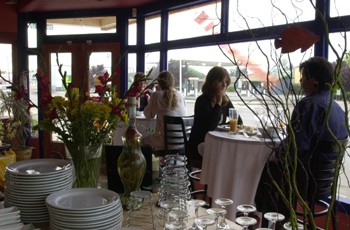
Swirl n’ Spit

0

Swirl n’ Spit
Tasting Room of the Week

Foppiano Vineyards

By Heather Irwin

Lowdown: It takes a special breed of drinker to brave pouring rains, blustery temperatures and near flood conditions on a holiday weekend, no less, just to go winetasting. Despite all of the above, plus a possible sighting of Noah building his ark somewhere around Windsor, the tiny Foppiano tasting room was elbow-to-elbow with eager tasters. What’s wrong with these people?

Apparently they like Petite Sirah.

A 100-(plus)-year-old winery nestled in the heart of the Russian River Valley, Foppiano has weathered more than a century of winemaking and come up with a recipe for some simple, yet incredibly nice, reds that don’t need a million dollar marketing machine to sell.

Mouth value: One of the mysteries I’ve yet to figure out at countless wineries is why one has to endure glass after glass of what the winery doesn’t do well before you get to what it excels at. In fact, despite being wonderfully affable, the tasting-room staff never even suggested that we try the Petite Sirah—the winery’s flagship. Ah, well, being the intrepid drinkers that we are, we stumbled upon it anyway.

The 2002 Russian River Valley Petite Sirah ($23) is a luscious, spicy, bold hussy of a wine with hints of cinnamon and chocolate. This wine could easily age for several more years to ease up some of the tannins, but it’s still nicely drinkable. The 2002 Bacigalupi Russian River Valley ($17.50) is also a well-bodied wine that has a more earthy nose, but a bright, fruity flavor. Also yummy were the 2001 Russian River Merlot ($15), with a surprising spicy green-peppery nose and a gentle finish, and the 2001 Alexander Valley Sangiovese ($17.50).

Don’t miss: The Fox Mountain label is being discontinued, so there are a few cases of the 2001 Sauvignon Blanc and 2002 Chardonnay going for bargain basement prices ($5 or so a bottle). Both are reasonably drinkable, fruit-forward party wines.

Five-second snob: Bacigalupi means kiss of the wolf in Italian. The tasting-room staff refer to the Petite Sirah as “smootch the pooch” red.

Spot: Foppiano Vineyards, 12707 Old Redwood Hwy., Healdsburg. Open daily, 10 am to 4:30pm. No tasting fee. 707.433.7272.

From the December 29, 2004-January 4, 2005 issue of the North Bay Bohemian.

© Metro Publishing Inc.

Donor Fatigue

0

Donor Fatigue

Napa nonprofits worry as philanthropists grow weary

By Gary Brady-Herndon

‘Spare some change?”

As winter’s chill sets in, that’s a question North Bay residents have grown increasingly familiar with. Increasing requests for handouts go hand in hand with declining government services, a weak job market and an economy where millions of workers earn wages below the poverty level.

Local charitable organizations are often the only entity standing between the down-and-out and life in the streets. But what happens when the number of nonprofits seeking financial support reaches overload?

Welcome to the world of donor fatigue, Napa-style.

Riding the crest of the California wine craze, Napa County continues to enjoy a standard of living well above many less fortunate regions in the state. Boutique wineries and 5,000-square-foot homes, however, do not insulate the community from its own disadvantaged population, including migrant farmworkers, many of whom continue to face deplorable living conditions.

Nonprofits have long attempted to fill in the gaps here. With just over 130,000 residents, the county is home to an estimated 500 to 600 nonprofit organizations, each one supporting a worthy cause while vying for a shrinking number of charitable dollars. Despite the success of the Napa Valley Wine Auction and the $52 million it has funneled into the community since 1981, the remaining nonprofits face a dog-eat-dog world of fundraising where the big dogs rule and the little dogs go wanting.

Napa resident Tom Fuller knows Napa’s nonprofit landscape as well as anyone, having organized and worked on a number of county-wide fundraising projects over the years. He sees the needs of area service providers increasing while funding for local charitable causes decreases, especially now in a time when federal, state and local government backing for nonprofits is drying up.

“The smaller nonprofits are getting thrown on their ears by the cutbacks,” he says. “They’re scrambling for new sources of revenue to maintain their support base.”

Part of the Napa conundrum is the presence of a number of highly visible and extremely successful nonprofit behemoths in the county. Providing services ranging from health and human services to social and cultural venues, no one questions their mission or commitment to the community. Nonprofit dollars, however, are governed by the trickle-down effect. For smaller agencies, the problem lies in the fact that a majority of the money goes to the higher-end nonprofits, evaporating before it ever trickles down.

Fundraising is a way of life for Napa Valley Museum executive director Eric Nelson, who knows from years of working in the nonprofit sector that cutbacks come and go in a cyclical nature. Yet the current climate is unusual, he says, in that every facet of the nonprofit community is feeling the pinch.

“When you’ve got more people out there with their hands out, it makes it harder,” Nelson says. “Museums in general are seeing endowment funding going down due to higher interest rates and donors taking a more somber attitude about giving. While our fee-based services are stable, we, like everyone else, are having to compete for donor dollars.”

In a market the size of Napa County, Nelson sees another issue that separates the wealthy nonprofits from those trying to keep their organizational heads above water.

“Being able to define and develop a niche in the community with a group of donors who support you year in, year out is very important,” Nelson says.

Christopher Conway is COPIA’s vice president of external relations. He believes the time has come for nonprofits to police themselves and consolidate services to better serve the community’s needs and stretch donor dollars. “The upper tier nonprofits always have very strong and loyal constituents,” he says. “Organizations with smaller donor bases have a harder time competing. Philanthropy forces mergers. We work better when we work together.”

While Conway agrees with Fuller and Nelson that donor dollars are tighter in the region, he sees the problem as being national in scope. “Corporate support has evaporated over the past few years and government support has been reduced,” he says. “Private foundations funded by family businesses used to drive philanthropy in America. With the shift to corporations, family-owned businesses are almost nonexistent.”

The challenge, as Conway sees it, is to help potential donors identify the needs and opportunities within the community where their donor dollars will do the most good.

Some argue that Napa County’s small size combined with its wine-industry wealth helps it to act as a magnet for nonprofits, sapping donor dollars. Not so, says Terrence Mulligan, president of the Community Foundation of the Napa Valley. His organization recently celebrated its 10th anniversary, raising some $5 million during its tenure, and Mulligan estimates that Napa County is well under the number of nonprofits on a per capita basis than other counties of similar size.

While local fundraisers remain optimistic about their individual organization weathering the storm, with overall donor dollars dwindling even as needs increase, nonprofits large and small—from cultural institutions to social-service providers—face an unenviable task: doing more with less.

Indeed, “Spare some change?” just might be the new year’s first buzz phrase.

From the December 29, 2004-January 4, 2005 issue of the North Bay Bohemian.

© Metro Publishing Inc.

2004 Music

0

THE DIVINE MISS N: This was the year that the whole world fell in love with Joanna Newsom.

–>Best of 2004

The listy thing you love to hate to read

By Sara Bir

End-of-the-year top 10 lists drive me nuts. That’s usually because I disagree with them. But I always read the dang things–it’s a compulsion. There’s something satisfying about seeing crummy records on a top 10 list and thinking, “Geez, this hack simply does not know what she is talking about.”

This year, that hack is me. For a change of pace, here–in no order whatsoever–is a real-life list of 10 things that made me glad to be alive and listening to music in 2004.

Every single damn thing about Loretta Lynn’s ‘Van Lear Rose.’ “Portland, Oregon” = single of the year. Jack White’s production = new trick for one foxy old dog. Loretta’s dress on the album’s cover = what you know you would wear if you were the most ass-kickin’ country music superstar in the world.

Cinephiles and rock nerds had cause to rejoice. The rambunctious Rodney Bingenheimer documentary Mayor of the Sunset Strip, the Ramones tutorial End of the Century, the Metallica group-therapy love/hate-fest Some Kind of Monster and the deluded ego-tripping of Dig! were all as compelling and catchy as brilliant albums are addictively listenable.

So far, I’ve seen the Velvet Teen’s ‘Elysium’ on two top 10 albums of 2004 lists . . . and one of those lists was from The Onion! I may not love top 10 lists, but I love The Onion. Witnessing the Velvet Teen’s evolution from a pop band making bedroom recordings to a pop band capable of moving from orchestral swells to intimate fragility in one fell swoop is gratifying enough; that many other people are noticing as well only makes it that much sweeter.

The entire world fell in love with Joanna Newsom. The Divine Miss N: voice of a mini Melanie, fashion leanings of a Renaissance fairgoer and the lyrical slant of a writer of grown-up nursery rhymes snared the hearts of the hipster set. A story: my friend Schuyler walks into a club where Ms. Newsom prepares to take the stage. Eyeing her huge acoustic harp, he says, “It’s going to start sounding all angelic and shit in here pretty soon.”

Mr. Bir Toujour finds a cassette tape of Orchestral Maneuvers in the Dark’s first album in our garage. While the rest of the world celebrated the talents of neo-new wave bands (if there are such things) with foppish haircuts and designer ties, I rocked out in my car to OMD’s self-titled 1980 debut. Those of you who associate OMD with the fluffy hit song from Pretty in Pink should check out their earlier stuff, which synthesizes the gloom of Joy Division with their own distinctive brand of experimentation.

Electro Group’s EP finally came out. This Sacramento trio, whose fuzz-and-crunch take on shoegaze is more like shoegrunge, is easily one of my favorite bands–especially to see live, as they have a penchant for squabbling onstage that harks back to CBGB’s-era Ramones. I had to wait almost three years for the follow-up to their debut album. Was it worth it? Methinks so.

The Macha show I got dragged to turned out to be really, really good. The Athens, Ga.-based Macha put out a string of solid albums in the ’90s, infusing pop with the exotica of world music without pandering to clichés. When Macha mastermind Joshua McKay returned after four years with a new album and tour, I was skeptical, but the show silenced any remaining doubts. The touring band, featuring members of the Mercury Program and Maserati, deftly traded off dulcimers, marimbas and steel drums without batting an eye. It made me remember how mesmerizing it can be to watch skilled musicians perform.

Sanctuary reissued the Kinks’ ‘Village Green Preservation Society.’ That I listened to this every day for a solid month totally solidifies my rock-nerd status.

Oneida released a new album and an EP. Possibly the noisiest, heaviest, most psychedelic group active today, if not ever. These Brooklynites have mutated from a sloppy party acid-rock band to a blissfully nightmarish, pulsating, audio art installation with a feverishly prodigious output of material.

Brightblack’s ‘Ala.Cali.Tucky.’ Slowcore for rednecks, real and true and easy-drinking, with all the yawning, poetic laziness of the life we dream of living.

From the December 29, 2004-January 4, 2005 issue of the North Bay Bohemian.

© Metro Publishing Inc.

Briefs

0

Briefs

Teen Faces Life

In this week’s Open Mic, Sonoma County Juvenile Justice Commission member Hank Mattimore argues that juvenile offenders should not be sent to adult prisons. That’s exactly what teenager Marco Lopez is facing after being convicted of first degree murder by a Sonoma County jury Dec. 21. Lopez was 15 when he stabbed a 74-year-old Sebastopol man to death during a home robbery in October 2002. Because the murder was committed during a crime, Lopez could be sentenced to either life without the possibility of parole or 25 years to life by Superior Court Judge Cerena Wong. Sentencing is scheduled for Feb. 24.

Hello Kitty

It’s a boy! Genetic Savings and Clone, the Sausalito-based bioengineering firm whose efforts to develop the pet clone market were first detailed locally in the Bohemian ( May 19), announced delivery of its first clone last week. The nine-week-old male kitten, Little Nicky, was manufactured from genetic material provided from a deceased 17-year-old housecat owned by a woman from Texas. Little Nicky is apparently the spitting image of his genetic donor, much to the pleasure of his new owner, who ponied up $50,000 for the cloned kitten.

Tomato-Fish Replica

Luke Snyder, a credentialed teacher, is gathering signatures full-time for GE-Free Sonoma County. Lately, he has taken to wearing a tomato-fish hat. Says Snyder, “People ask, ‘What is on your head? It looks like a tomato-fish!’ It’s an easy way to begin a conversation about genetic engineering.” The hat illustrates a failed experiment in 1991, when researchers forced genetic information from the Arctic flounder into tomato plants, hoping the plants would withstand frost in the field and the tomatoes would resist cold damage in storage. To qualify the GE-Free Initiative for the March 2005 ballot, the campaign must collect several thousand more signatures by Jan 4. For more information, call 707.823.4410 or go to www.gefreesonoma.org.

From the December 29, 2004-January 4, 2005 issue of the North Bay Bohemian.

© Metro Publishing Inc.

Classical Highlights

0

Union Chap: British violin phenom Daniel Hope appears in Mill Valley on March 15.

–>Star Chamber

Big classical acts hit the small stages

By Greg Cahill

Pop, jazz and country music fans often must wait decades for their favorite–and by then washed-up–acts to headline a small, intimate room in the ‘burbs. It’s not everyday that someone of Bruce Springsteen’s stature rewards longtime fans by playing a benefit concert at a 500-seat Asbury Park nightclub, as the Boss did a couple of weeks ago. Just imagine hearing Bob Dylan at Sweetwater Saloon. Or country hunk Tim McGraw at Tradewinds. Or jazz trumpeter Dave Douglas at Zebulon’s Lounge.

But things are different in the classical music world.

Classical record sales are relatively slight, even for the biggest acts, so most artists must rely on constant touring, teaching and paid residencies. There are few large venues, so a performer that might headline Carnegie Hall one week will grace a small stage at a junior college the next. Thanks to the small regional orchestras, chamber-music festivals and a vibrant circuit of chamber-music societies–including the Redwood Arts Council and the Russian River and Mill Valley chamber-music societies–it’s not unusual to hear world-class classical players at a small local church for just $15 to $20 a pop–with free and plentiful parking. The 2004-2005 season is no exception.

The jaw-dropping schedule for the Chamber Music in Napa Valley subscription series alone includes the acclaimed Tokyo String Quartet (Jan. 31); the Takacs String Quartet (Feb. 7), who are Visiting Fellows at the prestigious Guildhall School of Music in London; celebrated pianists Emanuel Ax and Yefim Bronfman (March 25); the venerable Borodin String Quartet (April 6), now celebrating their 60th anniversary; and the Orpheus Chamber Orchestra (May 5), featuring superstar violinist Joshua Bell playing Saint-Saëns’ Violin Concerto no. 3.

Under the auspices of the Redwood Arts Council, the acclaimed Arcangel Baroque Strings, under the direction of violinist Michael Sand and harpsichordist Phebe Craig, perform an all-Bach program on Saturday, Jan. 8, at the Sebastopol United Methodist Church. The concert is underwritten in part by Jack Stuppin, the philanthropist and Sonoma County landscape painter, and his wife, Jane.

On Sunday, Jan. 9, and Tuesday, Jan. 11, virtuoso violinist Nadja Salerno-Sonnenberg– the subject of the probing 1999 documentary Speaking in Strings–performs an evening of romantic music, including Rossini’s Overture to “La Gazza Ladra,” with the Napa Valley Symphony. The concert will be held at the Napa Valley Opera House.

The Grammy-winning Kronos Quartet team up with the Sonos Handbell Ensemble, whom Prairie Home Companion host Garrison Keillor once applauded for “raising the level of our little family radio show from the comic to the cosmic to the something beyond.” This unusual concert brings the avant-garde string ensemble to the Osher Marin Jewish Community Center on Saturday, Jan. 15, as part of the venue’s Strings Attached series.

On Feb. 6, the New Century Chamber Orchestra return to the JCC for an evening of music by the late Argentine composer and bandoneon master Astor Piazzolla, as well as late-20th-century and contemporary works by Henry Cowell, Lou Harrison and Aaron Jay Kernis.

The brilliant Amadeus Trio, one of the world’s foremost piano trios, come to the Healdsburg Community Church on Feb. 11 for an enticing program of Cassadò, Shostakovich and Mendelssohn. The concert is presented by Russian River Chamber Music, which on April 15 brings the spectacular Trio Mediaeval to Our Lady of Guadalupe Church in Windsor–possibly the most anticipated North Bay classical event of the season. The chart-busting trio of female sopranos from Scandinavia will perform Medieval ballads and songs, polyphonic Medieval music from England and France, and contemporary works commissioned for them.

On March 15, British violinist Daniel Hope–recently nominated for a Grammy for his recording of Berg and Britten’s violin concertos–performs a program of Alfred Schnittke, Brahms and Beethoven at the Mt. Tamalpais United Methodist Church. The concert is presented by the Mill Valley Chamber Music Society as part of its exceptional chamber music series. The talented Hope, who literally studied at the feet of violin great Yehudi Menuhin (Hope’s mother was Menuhin’s personal assistant), has considerable insight into Schnittke, the subject of growing interest among young players studying post-Shostakovich Russian composers.

Hope lived right around the corner from Schnittke in London and made frequent visits to the composer’s flat for long chats.

The concerts collected under the Chamber Music in Napa Valley series are sold as seasonal subscriptions for $120. Rush tickets are available on the night of the performance for $10. Concerts are held at the Napa Valley Opera House. For details, go to www.chambermusicnapa.org or call 707.963.1391. The Redwood Arts Council’s concerts are held at the Occidental Community Church. Tickets are $10-$20. For details, go to www.redwoodarts.org or call 707.874.1124 during ordinary business hours. The Osher Marin Jewish Community Center is in San Rafael. Kronos tickets are $20-$40. For details, go to www.marinjcc.org or call 415.444.8000. The Russian River Chamber Music association generally offers postconcert receptions and preconcert discussions. Tickets are $10-$20. For details, go to www.russianrivermusic.org or call 707.524.8700. Mill Valley Chamber Music Society performances are Sundays at 5pm at the Mt. Tamalpais United Methodist Church. Tickets are $10-$20. For details, go to www.chambermusicmillvalley.org or leave a message at 415.381.44531.

From the December 29, 2004-January 4, 2005 issue of the North Bay Bohemian.

© Metro Publishing Inc.

‘A John Waters Christmas’

0

Hot Stuff: John Waters, the greatest living admirer of the terrible?

Kitschy Xmas

John Waters plays the perfect holiday host

By Greg Cahill

Among indie film auteurs, Baltimore director John Waters possesses a unique vision of America. In such campy comedies as Pink Flamingos, Serial Mom and Pecker, Waters holds a funhouse mirror up to middle-class convention and invites audiences to laugh at their own hypocrisy. He has a real knack for revealing the underside of life–like a mischievous kid poking at some slimy thing with a stick–while retaining a quirky good-natured attitude about the social foibles he uncovers. Critic Peter Fawthorp once described him as “the greatest living admirer of terrible.”

Blessedly, pop music has played a big role in his eccentric films. For instance, 1988’s Hairspray, recently revived as a wildly successful musical, found Ricki Lake and her friends battling segregation at a televised teen dance party. And 1990’s Cry Baby teamed Johnny Depp (in his first starring role) and Iggy Pop in a hilarious sendup of ’50s youth culture.

So it’s perfect that Waters has scored a sleeper hit with a 12-track collection of kitschy seasonal singles that he calls the soundtrack for “a merry, rotten, scary, biracial, ludicrous, happy little Christmas.”

For the most part, A John Waters Christmas (New Line Records) slipped under the media’s radar when it hit the racks last month, but word-of-mouth advertising has seen to it that this fun little package is flying off the shelves; most North Bay record stores report that they can’t keep it in stock.

And there are some glittering gems.

The opening track, “Fat Daddy (Is Santa Claus),” is an obscure recording by Fat Daddy himself, a onetime Baltimore R&B DJ who used to host the show Negro Day, and became the inspiration for Hairspray‘s endearing DJ Motormouth Mabel (played in the film by R&B legend Ruth Brown).

Tiny Tim–the ’60s novelty act best known for his high-falsetto rendering of “Tip Toe through the Tulips”–checks in with a reading of “Rudolph the Red-Nosed Reindeer” that is surprisingly charming.

“Happy Birthday Jesus (A Child’s Prayer),” a 1959 single by a motley moppet named Little Cindy, is truly one of the masterpieces of Christian guilt. Those old sentimental trucker ballads by country legend Red Foley seem downright cynical by comparison. And just in case you’re not sobbing yet, Waters slips in Roger Christian’s sappy tale of a crippled orphan, “Little Mary Christmas.”

“I Wish You a Merry Little Christmas” is one of the most soulful seasonal songs around from “Little Eva” Narcissus Boyd, the onetime babysitter for songwriting team Carole King and Gerry Goffin, who wrote Little Eva’s 1962 pop hit “Locomotion.” Waters discloses a sassier side of the soul singer.

Exotica fans will appreciate the floating melody of the Coctails’ blissfully theremin-driven “First Snowfall.” Have another hot toddy and pass the lithium.

Or, you may ask, who needs lithium when you have the aggressively cheery Chipmunks chewing on the Leroy Anderson classic “Sleigh Ride”? It’s just doesn’t seem like Christmas without Alvin, Simon and Theodore, the tiny Tamias trio created in 1958 by Ross Bagdasarian who took $190 of his family’s $200 savings to buy a state-of-the-art tape recorder capable of changing speeds. Ross milked that function for all it was worth.

Waters closes his greetings with what he describes as “the mother lode of crackpot Xmas cards,” the Kwanzaa carol “Santa Claus Is a Black Man” by Akim and the Teddy Vann Production Company, which the liner notes tell us cost Waters a small fortune on eBay.

But how can you put a price on this kind of high camp?

But I’ve saved the, uh, best for last. Ah, yes, track five. What is arguably the most outrageous Christmas song of all time: “Here Comes Fatty Clause” (aka “Here Comes Fatty with His Sack of Shit”), an explicit plaint for beleaguered holders of maxed-out credit cards everywhere.

Hey, what did you expect from the filmmaker who made fat, style-obsessed tranny Divine a star?

From the December 22-28, 2004 issue of the North Bay Bohemian.

© Metro Publishing Inc.

Chet Baker

Fine Young Cannibal: Jazz hero Chet Baker, whose breathy vocals and sexy trumpet were good enough to anger Miles Davis, led a life of artistry and tragedy.Prince of CoolNew box set spotlights Chet Baker's lush lifeBy Greg CahillYou can gauge the significance of a modern jazz player by the number of times his or her name pops up in...

David Templeton’s Top 10 of 2004

Adult Entertainment: 'The Woodsman' is one of the year's best. -->Hallelujah! Martin Donovan gets energized as the unctuous Pastor Skip in 'Saved!' -->Stub SandwichA critic looks back on his top 10 torn tickets of 2004By David TempletonA Marin County artist and avid moviegoer calls me at least once a week to analyze the previous week's movies, television shows, talk-radio...

Open Mic

Open MicKids in PrisonBy Hank MattimoreThe last time I saw "Paul" (not his real name) was in a dinky cell at Juvenile Hall in Sonoma County. It was hard to believe this 15-year-old baby-faced kid and his buddy had broken into an older woman's home, tied her up and demanded that she tell them where she was hiding her...

Wine Bargains

Bubbly Bargains Add some sparkle to your season (and your wine)By Taylor EasonTiny bubbles titillate. There's something mesmerizing about watching them flood a tall, fluted glass, something intensely satisfying about the fizzy sensation that overtakes your tongue. It's hard to describe, but "sensual" comes close. Inexpensive sparklers double the effect, with the added pride of a bargain making for...

Swirl n’ Spit

Swirl n' SpitTasting Room of the WeekFoppiano VineyardsBy Heather IrwinLowdown: It takes a special breed of drinker to brave pouring rains, blustery temperatures and near flood conditions on a holiday weekend, no less, just to go winetasting. Despite all of the above, plus a possible sighting of Noah building his ark somewhere around Windsor, the tiny Foppiano tasting room...

Donor Fatigue

Donor FatigueNapa nonprofits worry as philanthropists grow wearyBy Gary Brady-Herndon'Spare some change?" As winter's chill sets in, that's a question North Bay residents have grown increasingly familiar with. Increasing requests for handouts go hand in hand with declining government services, a weak job market and an economy where millions of workers earn wages below the poverty level.Local charitable organizations...

2004 Music

THE DIVINE MISS N: This was the year that the whole world fell in love with Joanna Newsom. -->Best of 2004 The listy thing you love to hate to readBy Sara BirEnd-of-the-year top 10 lists drive me nuts. That's usually because I disagree with them. But I always read the dang things--it's a compulsion. There's something satisfying about...

Briefs

BriefsTeen Faces LifeIn this week's Open Mic, Sonoma County Juvenile Justice Commission member Hank Mattimore argues that juvenile offenders should not be sent to adult prisons. That's exactly what teenager Marco Lopez is facing after being convicted of first degree murder by a Sonoma County jury Dec. 21. Lopez was 15 when he stabbed a 74-year-old Sebastopol man to...

Classical Highlights

Union Chap: British violin phenom Daniel Hope appears in Mill Valley on March 15. -->Star ChamberBig classical acts hit the small stagesBy Greg CahillPop, jazz and country music fans often must wait decades for their favorite--and by then washed-up--acts to headline a small, intimate room in the 'burbs. It's not everyday that someone of Bruce Springsteen's stature rewards longtime...

‘A John Waters Christmas’

Hot Stuff: John Waters, the greatest living admirer of the terrible?Kitschy XmasJohn Waters plays the perfect holiday hostBy Greg CahillAmong indie film auteurs, Baltimore director John Waters possesses a unique vision of America. In such campy comedies as Pink Flamingos, Serial Mom and Pecker, Waters holds a funhouse mirror up to middle-class convention and invites audiences to laugh at...
11,084FansLike
4,446FollowersFollow
6,928FollowersFollow