


FOLLOW US
Hidden in Plain Sight
Why It Still Matters

Photograph by Felipe Buitrago
In plane view: Maya Harris, executive director of the ACLU of Northern California, announces the organization’s lawsuit against Jeppesen.
By Diane Solomon
The American Civil Liberties Union’s May 30 lawsuit against aviation service company Jeppesen has blown the torture-flight charges against the company, which has offices in the Bay Area, into the national news. But behind the headlines is the story of how European investigative journalists, with the help of government officials in several countries, were able to link Jeppesen to the CIA’s extraordinary rendition program using codes, logs and flight plans.
Claudio Gatti, an investigative journalist with Il Sole 24 Ore, an Italian newspaper, broke the Jeppesen story for the International Herald Tribune. In a phone interview, he explains how his investigation connects the Boeing subsidiary to the rendition of at least five people, including the ACLU’s three plaintiffs, and to the CIA’s best-known victim, German citizen Khaled El-Masri. El-Masri says he was seized while on vacation in Macedonia and flown to a secret prison in Afghanistan, where he was imprisoned, interrogated and tortured for five months before being released without charges. Gatti says El-Masri was rendered in the same Jeppesen-serviced plane as ACLU plaintiff Benyam Mohamed.
According to the ACLU’s lawsuit, Jeppesen provided flight and logistical support to more than 70 CIA rendition flights over a four-year period. The flights transported suspects to secret detention and interrogation facilities in countries where the U.S. Department of State has said the use of torture is “routine” and to U.S.-run detention facilities overseas where the feds say U.S. law doesn’t apply.
Gatti says he began investigating when he became interested in the extraordinary rendition of one of the plaintiffs, Abou El Kassim Britel, an Italian citizen. Because he has written a book about an airplane incident, Gatti has a network of contacts in the civil aviation community. One told him that the CIA has shell companies that own planes but can’t fly them without real companies who have an infrastructure to make and carry out flight arrangements.
The contact said these companies were profiting from the extraordinary renditions and that flight logs would link them to the CIA.
“Flight logs are kept by aviation authorities for years,” he says, “so if you go back and find a flight where you think a prisoner was transported, there’s documentary evidence.”
Gatti obtained flight records from European Parliamentary and Council of Europe commissions, and from civil aviation authorities in Portugal, Spain and the Netherlands. He says his investigation parallels the ACLU’s and proves that Jeppesen played a major role in the program.
“The CIA couldn’t have had this program without Jeppesen’s support providing flight permits, weather reports and assistance with fees and refueling,” he says. “The CIA has planes but no support network.”
Gatti discovered four U.S. companies that arranged the CIA’s extraordinary renditions’ flights during this period: Jeppesen; Air Routing International; Baseops Flight Planning; and Universal Weather and Aviation Inc. Each CIA plane was assigned to one of the four companies, which in turn consistently serviced its flights.
“A Gulfstream V, N379P, became known as the ‘Guantánamo Bay Express’ because it was used so much for these flights,” Gatti says. He says he knows this because each flight log contains codes that specify the flight’s airport departure, arrival and originator.
“The originator files the flight plan and supports the flight,” says Gatti. “That’s how I found out Jeppesen was involved. Their originator code is KSFOXLDI.”
“K” is the international letter for the United States, “SF” is San Francisco and “OXLDI” is unique to Jeppesen.
The ACLU’s lawsuit names a Gulfstream V, formerly registered as N379P, as one of 15 aircraft serviced by Jeppesen for the CIA. Gatti said that right after 9-11, one of the first renditions was almost exposed because of this plane. On Oct. 23, 2001, at Pakistan’s Karachi International Airport, masked men handed an individual over to a group of Americans who had just landed in a Gulfstream V executive jet. The story surfaced three days later in a News International English-language newspaper, which gave the Gulfstream’s tail number: N379P.
“That incident showed that any glitch in the flight-support services could have endangered the entire rendition program,” says Gatti, “and that professionals such as those from Jeppesen were essential to its success.”
The ACLU is using Jeppesen in order to put the CIA’s extraordinary rendition program on trial. Last March, the U.S. Appeals Court dismissed El-Masri’s lawsuit against former CIA director George J. Tenet and 10 unnamed CIA officials after the government invoked “state secrets” privilege. Last month, the ACLU petitioned the United States Supreme Court to review this case.
Meanwhile about 50 congressmembers, including Lynn Woolsey, are co-sponsoring HR 1352, the Torture Outsourcing Prevention Act. If made law, HR 1352 would shut down the CIA’s extraordinary renditions, barring the government and its contractors from transferring suspects to countries where torture is legal.
“Congress cannot delay any longer in addressing the administration’s use–free from any real judicial or congressional oversight–of extraordinary rendition,” says Rep. Edward J. Markey, D-Mass., who drafted this legislation.
“We just don’t discuss who our clients are or what services we provide for them,” says Jeppesen spokesman Tim Neale. “Flight plans require us to know where they want to go and when they want to go, but don’t require us to know the purpose of the flight.”
However, that argument may not hold for much longer. “Torture is not a [California] value,” says Sanjeev Bery of the ACLU, “and our community leaders should tell Jeppesen that they shouldn’t be profiting from the practice of torture. It has no place here.”
First Bite
June 27-July 3, 2007
There’s a lady with a huge sword on her head gyrating next to my table. The curved blade rests sharp-side down on her skull, and her long black hair swirls as she spins and leaps on one foot, whirling to the Goth-Indian music thumping in the background.
She’s fascinating. But the belly dancer is also in the way of the buffet. I wish she’d wrap up her act and move on, because I’ve been really enjoying my dinner at downtown Santa Rosa’s new Nirvana Indian Fusion Sanctuary, yet my copper tray is almost empty. I’m ready to get up and load up on more of the dozen or so tasty dishes that chef-owner Neil Advani has set out as part of his buffet spread. It’s a good deal he’s got going here–just $12.95 for this filling feast.
I’ve eaten my way through rajma curry (like super hot chili with lots of kidney beans and onion) and dum aloo, a simple but satisfying mash of spinach and potatoes. I’ve scraped up every last forkful of vegetarian tikka masala, with its green beans, bell pepper and cauliflower in a thick, creamy sauce of red paprika yogurt, onion and tomato. And while the pepper fish was bland swimming in a slightly spicy beige sauce, it was also nicely meaty, and I greatly liked every bite.
My mom tips her little copper cup of shorba (tomato soup) at me. “Wow,” she says succinctly, extolling its salty, silky, clean, light, deep nuances. Saag chicken is like a bright yellow soup, too, not normally a description I would appreciate for this dish, but the flavors are excellent and we sop the broth with fluffy naan sprinkled with black sesame seeds.
The bejeweled woman moves away to reset the CD that started skipping in its player next to the hostess stand. As she does, a large group of diners in the loft upstairs breaks into a cheer, because they’ve caught sight of their guest, the birthday boy, coming through the front door behind her.
Seizing the opportunity, I take my tray and pile on scoops of masala jeera (spicy tri-colored rice with nuts), dollops of mango chutney and crunchy onion pakora. A heap of the excellent house salad shows the California-fusion aspect Advani touts: it brims with peanuts, chopped romaine, raisins, feta and pickled cucumber in a vibrant balsamic vinaigrette of mint, ginger, cilantro and mustard.
I settle back at the table, and Mom steals my raita; she has happily burned her mouth on the fiery chicken tandoori and tempers her taste buds with the lovely sour-cool cucumber yogurt.
Advani stops by as I’m sipping my mango lassi ($3), the drink intensely fruity-sweet, dashed with saffron and quite exquisite. He asks, and I nod. “All good, all quite happy.”
As we spoon up our dessert of rice pudding perfumed with cardamom and nutmeg, the belly dancer spins by again, dodging diners in her path. It’s a tiny room she’s navigating, but sword be dammed–I’m going back for thirds.
Nirvana Indian Fusion Sanctuary, 420 Mendocino Ave., Santa Rosa. Open for buffet dining lunch ($8.95) and dinner daily. À la carte menu available all meals except Monday evening. 707.575.3608.
Quick-and-dirty dashes through North Bay restaurants. These aren’t your standard “bring five friends and order everything on the menu” dining reviews.
Mad Matches

Photograph by Jenny Graham
Pure ‘gem’:Greta Oglesby shines in ‘Gem of the Ocean.’
By David Templeton
With four plays by William Shakespeare currently on the boards at Ashland’s annual Oregon Shakespeare Festival, the Bard of Avon is being nicely served at the yearly celebration of theater that draws thousands from the Bay Area every summer. As usual, some of the productions are stronger than others, but with a total of eight shows currently being staged and with two more scheduled to open in July, there is plenty to choose from between now and the festival’s closing in late October.
Of the four Shakespeare plays–As You Like It, The Tempest, Romeo and Juliet and The Taming of the Shrew–the first two are pleasant enough, and the “dead teenager play” is a must-see, cleverly tinkered with and visually exciting. But The Taming of the Shrew is nothing short of magnificent.
Ironically, the best show of the OSF 2007 season is not by Shakespeare at all, but by August Wilson. Gem of the Ocean is the late Philadelphia-born playwright’s penultimate work in his epic 10-play cycle telling the African-American story in each decade of the 20th century. Gem, which Wilson wrote late in the project, is chronologically the first, taking place in 1906, a little more than 40 years after the end of slavery in America. It is Wilson’s most beautiful, spiritual and poetic work, and compared with some of his other plays, such as Ma Rainey’s Black Bottom, Fences, The Piano Lesson and Seven Guitars, that’s saying something. As directed with gorgeous detail and musical timing by longtime OSF director Timothy Bond, this production of Gem of the Ocean is alternately thrilling, moving, dazzling and devastating.
Aunt Ester (the great Greta Oglesby, never better than in this role) is a spiritual adviser to the struggling black community in Philadelphia’s Hill District. She claims to be 285 years old and is rumored to have the power to wash men’s souls. In need of some soul-washing is Citizen Barlow (Kevin Kenerly). The son of a former slave, this troubled young man shows up at Aunt Ester’s front door claiming to have killed a man.
With the assistance of her protégée Black Mary (Shona Tucker), “gatekeeper” Eli (Josiah Phillips) and longtime friend and former Underground Railroad conductor Solly Two Kings (G. Valmont Thomas), Aunt Ester takes on the task of transforming Barlow into a true citizen. To do so, he must be imbued with a sense of his people’s history, which, under Aunt Ester’s wise-minded guidance, involves a trancelike trip to the underwater City of Bones on a mystical slave ship called the Gem of the Ocean.
The mystical elements, which have sunk some other productions of Gem (ACT’s 2006 San Francisco production was one of the victims), are staged by Bond with spectacular sensitivity and confident stagecraft. The text is crammed with lovely dialogue and stocked with memorable characters, including Black Mary’s dangerously ambitious brother Caesar (Derrick Lee Weeden), whose job as the Hill District’s constable has put him at odds with his community and his own soul, and the affable white peddler Rutherford Selig (Bill Geisslinger), whom Ester calls upon in times of need.
Though rooted in the black experience and the historical conditions under which black Americans made the shaky transition out of slavery, Wilson’s play ultimately transcends race and time with its multilayered messages of personal empowerment and forgiveness. As Ester says, “You gotta be right with yourself before you can be right with anyone else.”
OSF’s Gem of the Ocean does everything right.
Another non-Shakespeare production worth mentioning is the world premiere musical Tracy’s Tiger, based on a short story by William Saroyan and directed by Penny Metropulos. Born from the rhythms of beat poetry and steeped in a hot, steamy brew of what Richard Brautigan once called American loneliness, Tracy’s Tiger is a rambling, heartfelt poem staged as a musical theater piece.
Thomas Tracy (Jeremy Peter Johnson) is a young man who has an invisible tiger (René Millán), who appears to him as part tiger, part Zoot-suited hipster. Full of dreams and upwardly mobile, Thomas works at a San Francisco coffee company, where he meets the sweet-natured Laura Luthy (Laura Morache), the only other person he’s ever met who also has an invisible tiger (Nell Geisslinger). Their fledgling love affair is scuttled when Thomas makes a major mistake (he kisses Laura’s mother) and finds himself at odds with his tiger-soul. His loss of direction and the eventual journey back to his tiger manages to be deeply powerful without ever making logical sense. Though a bit longer than necessary, with a couple of songs that do nothing to move the story along, the play effectively uses its jazz-tinged music to potently set the atmosphere.
There are those who will not get Tracy’s Tiger, and dismiss it as a failure. It does not play by the rules of traditional musicals, certainly, but since its roots are in poetry, it is not meant to. The best poems of the beat era, from Howl on down, eschewed the rules in order to spin emotions that work beyond and above the rules.
Tracy’s Tiger is like that.
Emotionally flat from beginning to end, The Tempest, performed on the OSF’s large outdoor stage and directed by outgoing artistic director Libby Appel, is the big disappointment of the summer. The cast is fine, especially Derrick Lee Weeden as Prospero and Dan Donohue as the miserable slave-monster Caliban, but the attempts at Cirque du Soleil acrobatics are cramped and embarrassing, the spirit Ariel (Nancy Rodriguez) is burdened with a pack of “shadows” who look and act like a bizarre, Goth-Egyptian hippie cult, and the overall pace is maddeningly slow when it should be fast, and–especially in Prospero’s famous show-ending farewell speech–hyperfast when it should be calm, convincing and rich with emotion.
Romeo and Juliet, directed by incoming artistic director Bill Rauch, fares better, but also suffers from unfortunate pacing, particularly in the famous blood-soaked last act. Rauch’s generation-gap vision of the play is fascinating, with the older generation mostly dressed in authentic Elizabethan costume and the teenagers garbed in parochial school uniforms and tennis shoes, looking like they leapt off the stage of Spring Awakening.
The collision of young and old is reflected in everything from the music (Elizabethan tunes powered by hip-hop scratching and techno beats) to the way the language is spoken, with the older characters affecting a more classical handling of the text while the young ones rip through their speeches like they were contestants in a poetry slam. As the doomed young lovers, Romeo (John Tufts) and Juliet (Christine Albright) are appealing and believable, though the quick pace of the show makes their rush to suicide less tear-inducing than it probably should be.
Romeo and Juliet also make an unscheduled appearance in the opening moments of The Taming of the Shrew–as Punch and Judy puppets. The sight of a comically violent R&J wailing on each other another with sticks (“Soft! What light through yonder window . . . ow!”) perfectly sets the stage for Shakespeare’s famous battle of the sexes, as Petruchio (the charming scallywag Michael Elich) weds the hot-tempered Katherine (Vilma Silva), and attempts to tame her wild side with a series of tricks and manipulations.
Brilliantly staged by director Kate Buckley, this Taming of the Shrew leapfrogs over its more disturbing misogynist elements by making Kate and Petruchio’s attraction to one another mutual, immediate, obvious and electrifying. It is lust at first sight, and the rest is just two inexperienced, eccentric lovers figuring out how to behave together. Entertainingly packed with bits of business and surprising characterizations (Sarah Rutan is especially good as Katherine’s spoiled sister Bianca, and Santa Rosa’s Shad Willingham as her clueless suitor Hortensio is hilarious), the real magic in this wonderful Shrew is watching the mismatched couple fall hopelessly and unexpectedly in love.
As Shakespeare says, “Of all the mad matches, never was the like.” Rarely has this tricky trifle been staged so madly, so likably and so well.
For information of the full OSF schedule, running now through Oct. 28, visit www.orshakes.org..
Museums and gallery notes.
Reviews of new book releases.
Reviews and previews of new plays, operas and symphony performances.
Reviews and previews of new dance performances and events.
Acute Care

June 27-July 3, 2007
Accounts of life under totalitarianism suggest a general rule: Those dictators who forbid everything are easier to live with than the dictatorships where you never know what is allowed and what is forbidden. Nothing wears out the soul faster that constant questioning and worries.
Life under managed healthcare is the latter kind of system. And in America 2007, our healthcare mess is just one more faith-based initiative: pray to your God that you don’t get sick. Meanwhile, as the premiums soar, the airwaves hum with counterintuitive praise of the way it stands today. Absolutely, sure, no question: thrive–if you can afford it.
Warming to the subject, our legislators assure us that a single-payer health system would be a bureaucracy. A bureaucracy? When was the last time they tried telephoning an HMO? Now Michael Moore steps in to stir up this already smoking-hot issue with the infuriating and funny documentary Sicko.
Rather than weep over the 50 million uninsured, Moore gleans horror stories of people who were so certain that paying health insurance was going to keep them covered. The narratives here range from the comic to the horrific. One lady was billed for not getting pre-approval for an ambulance ride (she was unconscious following a car accident). A patient who lost an argument with a table saw was asked to choose which finger should be saved. An infant died of cardiac arrest after being evicted from a hospital.
Assembling evidence of how HMOs deny coverage, Moore retrieves congressional hearings where Dr. Linda Peeno testified. Peeno, a Louisville doctor who was the subject of a Laura Dern bio-pic, says that “Managed care maims and kills patients.”
The HMOs’ myriad ways of wiggling out includes denying a patient for being too fat or too lean. Moore unscrolls a Star Wars-style title crawl to list dozens of preexisting conditions. One turns out to be a yeast infection.
Since he edited down his documentary polemic from the 500-hour original, Moore has plenty of anecdotes. As always, he brings in found footage from the scrap heap: antique documentaries; a snippet of Soviet musicals; and a recording of Ronald Reagan stumping against socialized medicine in the 1950s. One 1971 White House tape shows Nixon and John Ehrlichman discussing the approval of for-profit HMO systems.
Sicko‘s disinterment of Nixon and Reagan, two old demon figures, is one of the few clearly partisan moments in the film. Unless, that is, you count the opening shot: an irresistible malapropism by Dubya on the subject of tort reform. Yet Moore also singles out Hillary Clinton for taking donations from Big Pharma.
This collage grows into a story of long-lasting injustice. Not only is this the juiciest subject Moore has ever chosen, Sicko is his most visually accomplished movie. Being right about Iraq must have done something for his self-confidence. He’s become a more focused filmmaker than he was in Roger & Me.
Having spent so much time as an object of controversy, he also now asks the right questions, anticipating the objections about the cost of single-payer health. Moore quizzes both a British physician and a French taxpayer, asking how they survive systems that supposedly oppress the doctors and bankrupt the patients. The man did his homework; and what’s stressed here is how single-payer is an agreed-upon part of the social contract. One interviewee, the old Labour (and proud of it) MP Tony Benn reminds us that even Margaret Thatcher refused to un-build British National Health.
Maybe it’s politically questionable to storm Cuba with sick Sept. 11 volunteers who were denied coverage in America as he does. But on the mere level of visuals alone, the scenes open up the picture; they look good. Moore, the bugbear of the blogosphere, will get his usual roasting–for demagoguery, for sentimentality, for his willingness to accept a showpiece Cuban hospital at face value. True, France provides science-fiction levels of healthcare and social services–including free house calls–but of course France also struggles with a Pandora’s box full of social problems. The easily impressed may only listen to the part about how good our counterparts have it in Canada and overseas.
In the end, one movie isn’t nearly enough. Sicko needs to be just a part of a study of our peculiarly backward national misery. Say what you will about Moore, he’s taken an issue and placed it where it cannot be ignored or swept off the table as it was in 1992. Just as An Inconvenient Truth forced the acknowledgment of the issue of global warming, Moore has ensured that his fellow Americans will know they’re getting fleeced, hosed and COBRA’d.
‘Sicko’ opens Friday, June 29, at the Rialto Cinemas Lakeside, 551 Summerfield Road, Santa Rosa. 707.525.4840.
New and upcoming film releases.
Browse all movie reviews.
Ask Sydney
June 27-July 3, 2007
Dear Sydney, my friend is having an affair with some girl she met when recently out of town. She has been struggling and unhappy in her relationship for some time. Now, along comes someone new who looks alluring to her. My friend and I have been talking, and I have told her what I think–that this new thing is a distraction from the real problems of her current relationship and that she should be careful. She seems dead set on forging ahead and starting something with this new person. My problem is that I’m very good friends with her whole family, including her girlfriend, who is a decent gal and who appears to be genuinely trying to fix things in the relationship. What do I do now? Every time that I see her, I feel awful and like I’m in on the conspiracy. Do I tell my friend not to tell me anything so that I am not a co-conspirator in this disaster? Do I blow the whistle now? Do I tie her to the table and take her phone away? She is really acting out!–Freaked Out
Dear Freakin’: I keep getting different versions of this question. Is anyone not having an affair? Has the monogamous relationship become, in the 21st century, like believing in the Tooth Fairy, something dear and precious, but totally unrealistic? You could take the safest route and just stay out of it. It’s really none of your business. When it comes to sexual relationships, unless you’re having a threesome, it’s between the two of them, and it’s not for you to judge or participate. However, I would want to know if I was being cheated on, and if my friends knew and didn’t tell me, I would feel seriously let down. How do you feel about it? How would you want to be treated in a similar situation?
While you mull this over, tell your friend that you don’t want to hear about any more of her adventures. Let her know that being put in this situation makes you feel very uncomfortable and that you don’t appreciate having to be a conspirator. In any situation dealing with a secret, most of us choose to stay true to the friend we feel closest to, and as unpleasant as this is, we are often forced to pick sides due to our deepest allegiances. By refusing to engage in the conversation, you are setting clear boundaries, and this gives you more room to remain neutral. With this in mind, the less you know the better.
Dear Sydney, what do you think is the best philosophy to take when it comes to small-town life? There are so many challenges, like keeping your opinions to yourself, not taking sides in people’s personal conflicts with others, etc. I try to be involved in my community while not becoming too attached to the problems therein, but I find myself frustrated with my options. Please help with any suggestions you might have to offer.–Desperate to Move
Dear Outta Here: Ah, small-town life–when you’ve already seen everything in the local video store, everyone knows everyone, and getting involved with other people’s problems is the most entertaining way to pass the time. It’s possible to be supportive, both as a listener and a provider for friends, without picking a side or passing bold verbal judgments on those involved in conflicts. You can think it, just don’t say it. Also, things in life are often inappropriately sensationalized. It’s a survival mechanism to minimize the things we truly fear and replace them with more trivial worries: Joe and Suzy are breaking up; Doug is suing Troy; Betsy and Shirley had an argument out front of the local coffee shop and it’s your fault because you told Betsy that Shirley told you she had a crush on Billy who everyone knows leaves his kids alone at night while he’s at the bar.
All of these can be wonderful distractions from your worries of impending poverty, the possibility that your relationship is in a shambles, fear of unnamable medical conditions and the fact that your youngest is smoking reefer after school. Better to trip out about Betsy and Shirley than to feel freaked out and fatalistic all of the time! Just try to make a conscious effort to find distractions in the more pleasant aspects of small-town life. Plan weekly potlucks for the summer, with an open invitation to your neighbors. Make it a point to rediscover the hidden treasures of your town: go to the creek, take a hike with friends, have lunch at your favorite place. The distractions your town has to offer you are valuable. Just be careful which ones you choose to engage in.
Dear Sydney, my husband and I are into buying and restoring vintage bicycles. Locating parts often requires us to use eBay as a source. Lately, I have had several encounters with “difficult” sellers. It appears that the computer has allowed people to say and do things they normally would not, because it allows them not to have any emotional attachment to their actions. With more and more Internet use, how do we keep ourselves (and others) aware of the “human” element?–Offended
Dear Offended: Anyone who engages in an active Internet life knows the pitfalls and potential for miscommunication that lie within the web’s mystical boundaries. In order to counterattack the problem, a series of symbols called emoticons have been commonly adopted. They can be inserted into the text of an e-mail and represent different emotions: sad, happy, confused, etc. These faces are important, because we now use the computer as a replacement for genuine conversation, and we often blast out e-mails without taking the time to consider the clarity of our tone and intention.
Try to grow a special Internet skin, sort of like an invisible pelt, to protect yourself from other people’s rudeness and your own mistakes. We have to forgive others their online attitude, and hope that they will grant us the same level of forgiveness. Until someone comes up with an emotional representation that doesn’t evoke Hello Kitty, we’ll just have to keep on being rude to each other, often without even realizing it, and accept the fact that while e-mail is great for getting things done, it isn’t necessarily the best way to get to know someone.
‘Ask Sydney’ is penned by a Sonoma County resident. There is no question too big, too small or too off-the-wall. Inquire at www.asksydney.com or write as*******@*on.net.
No question too big, too small or too off-the-wall.
Wine Tasting
Lo! Have you not heard, of the hoary-looking wine-palace that towers high and horn-gabled ‘neath Hood Mountain, a voguish Valhalla in the vale of the moon? This gothic grandiosity looks late of a long gone epoch, but new-built arose in 1990-something; across where the aged their after-days spend, adjacent where adolescents recompense archives of misdeeds. What warlock, many high-way travelers wondered, within those stone walls broods? Local folks fielded a host of fey rumors, but whether nettlesome or noble you name it, the gaudy gambit did gain the county’s go-ahead. Today tourists by the dozens toddle up, to construction-king Steve Ledson’s “Castle of Kenwood,” gawk and gambol, and fill their goblets with wine.
Builder of homes and high-end inns for well-heeled persons, his designs drafted in the fashion of days of yore, Ledson’s clan is not late-arrived to Los Guilicos rancho; only lately has he wended his way as wine-artificer.
No gargoyles glower from the gabled roof, some surprise when seen up close; it’s less than foreboding in fact, on a scale faintly human. A walk ’round finds it wanting of wine vats; that operation is found over in yon Oakville town. Inside: Marble fire-hearths, fine wood-work and great staircases sweep past coffered ceilings to connubial suites. Hundreds may be seated at the manor’s mead-benches, and there’s more: A food-feast, short of roast pheasants only. From salads to smart water, gourmet curd and smoked meats, batteries of balsamics and black tiger prawns; in variety of victuals is this deli verily not outdone. Sadly, scarcely floor-space remains for cheesy tchotchkes and glittery tees; “Wine Chick” for one.
Ledson’s black-clad retainers proffer tasting for “Knights, Nobility and Royalty”–none for knaves of course, fain to fork over a fiver or more. “Have you found something that was looking to tickle your fancy,” oddly offered my awesome bar-host, her voice verily remindful of Victoria Jackson (of SNL days of yore)–in between rote recitation of the roster however, schooling in wine-prowess and wisdom this young woman revealed. The 2006 Napa Valley Sauvignon Blanc ($26) seemed scented like a sweet, white peach, while the 2005 Sonoma Valley Chardonnay ($32) shimmered like a clean cellar floor–no shend meant–with golden apple acidity and accents of cream.
A dark draught of 2004 Diamond Ridge Petite Sirah ($36) was of black licorice and purple felt pen redolent, chock-full with chewy black cherry fruit. Happily, Ledson’s wine-wizard is a Zinfandel zealot, making 10 from the zaftig grape. The 2004 Russian River “Bacigalupi” Zinfandel ($44) brims with both grape and berry jelly, while white pepper wafts nose-ward.
Suddenly–zounds! A live gargoyle burst from the breast of a man, doggedly devouring a disgorged cork. Would the walls crumble, wailing now, the castle of Kenwood otherworldly, cursed after all? Nay–only of those puny pooches, a pocket-sized Chihuahua, a guest’s ghastly small beast gadarening about the bar. Barbarians.
Ledson Winery and Vineyards, 7335 Sonoma Hwy., Kenwood. Open daily 10am to 5pm. Tasting fees vary. Fourth of July celebration June 30 and July 1, 11am to 4pm. 707.537.3810.
Letters to the Editor
June 27-July 3, 2007
Debunking de-watering
In response to (June 13), a couple of clarifications need to be made regarding the groundwater issue he mentions at the Sonoma State University’s Green Music Center project.
First, the letter correctly reports that several “shallow” 25- to 30-foot-deep temporary well (technically called “temporary de-watering systems”) were installed to remove groundwater during the early phases of construction. However, Mr. Stutrud claims no permits were issued. The County of Sonoma Permit and Resource Management Department, Well and Septic Section and the California Regional Water Quality Control Board-North Coast Region would disagree with this claim; permits where issued and a Well Completion Report was filed for the temporary de-watering system.
Secondly, Mr. Stutrud claims that the shallow temporary de-watering system caused the collapse of a permanent 210-foot well casing at Grossi Farms, northeast of the campus, approximately a quarter of mile away. This is an untrue statement supported by the fact that our de-watering system was temporarily started Saturday, June 16, 2006.
Ms. Sharon Grossi’s well casing failed the day before we began, on Friday, June 15, 2006, as confirmed by Ms. Sharon Grossi herself.
Christopher Dinno, Senior Director, Capital Planning, Design, and Construction, Sonoma State University
And she shall be earth
Love your (“Biophilia,” June 20). Pardon me while I drag out my soapbox for a short rant. In English, when we write of a thing, we do not capitalize it. When the dog becomes important in our lives, we give him a name: we call him Spot. Not spot. We capitalize the word to indicate love, reverence, identity, uniqueness, personhood.
Our planet is one of several in this solar system. It is the planet we live on. All the planets have names: Venus, Mars, Jupiter. These are names, so we capitalize them. Our planet has a name, too: Earth. Since Earth is our planet’s name, shouldn’t it be capitalized, too?
If this word is not capitalized, it can rightly be construed to refer to soil or dirt, not the whole, magnificent planet. Psychologically, if we do not capitalize the name of our planet whenever we use it, we are dismissing it as dirt.
I suggest the Bohemian and all persons who revere our planet always capitalize the name Earth. It’s just a little change, but an obvious one, when you think of it. But maybe it will contribute to the shift in consciousness we must undergo in order to save our planet, our beloved, living Earth.
Diane Darling, Graton
In praise of Mr. Penniman
What’s this grumbling I hear about Little Richard’s performance last Saturday at the Russian River Blues Festival in Guerneville? (Table of Contents, June 20 print edition.) When I first heard that the “architect” of rock ‘n’ roll was going to be at the blues festival, I assumed then that I might not hear him play rock ‘n’ roll standards. Now, no one loves origin rock ‘n’ roll more than I do. I am a DJ on Guerneville’s own noncommercial radio station (streaming on the Internet at www.kggvfm.org.)
My specialty is pre-British Invasion, and Little Richard is one of my favorite artists of all time. When he started to play with a band of two drummers, three horns, bass and guitar and his beautiful self on the grand piano, he announced that Saturday is his Sabbath and he doesn’t usually work on that day. So he played mostly old camp meetin’-style spirituals. But they did rock. I mean, how could they not with a band like that and the King (and Queen) of rock ‘n’ roll performing them?
I loved that he broke down that silly gold-tier seating caste system by asking the audience to come forward to the stage (thanks to security for letting us!). So there I was within eye-contact distance of the man himself just appreciating the fact that he was there for us. Reality check: this was one of the latter day performances of someone who started rockin’ more than 50 years ago. He will be 75 next birthday. When I saw him perform five years ago, he stood on the piano. Last Saturday, he walked with crutches when he finally stood up and he left the stage in a golf cart.
Personally, I am thankful I was there to see and hear him perform in my own backyard, and I honor the fact that he chose to emphasize the spiritual that afternoon. We have to let even our most beloved performers be humans not juke boxes.
Sister Glitz, Guerneville
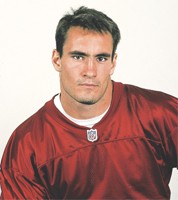
The Exploitation of Pat Tillman
June 27-July 3, 2007
‘Cease fire. Friendlies! I am Pat fucking Tillman, dammit,” shouted former pro football player turned Army Ranger Pat Tillman as a hail of bullets pierced the darkening Afghani sky. “Cease fire! Friendlies! I am Pat fucking Tillman! I am Pat fucking Tillman!”
On patrol in eastern Afghanistan at dusk on April 22, 2004, Tillman and his men hit the dirt, trying to escape swarms of artillery fire coming from the valley below. Tillman detonated a smoke bomb, hoping to signal to his comrades that they were shooting at U.S. troops, known in military parlance as “friendlies.” The firing stopped.
After a moment, Tillman, probably assuming he’d been recognized, stood up. Another barrage of bullets rocketed across the dusty canyon. Three of those bullets shattered Tillman’s skull, ending his life. Other bullets hit his body, with some of the shrapnel becoming embedded in his body armor. An Afghani soldier allied with U.S. forces was also killed, and two other soldiers were injured.
Tillman, lauded by military and government leaders for giving up a multimillion-dollar pro football contract to serve his country, was America’s best-known soldier. A California native, Tillman became the Pac-10 defensive player of the year at Arizona State University and then went pro with the NFL’s Arizona Cardinals.
Even before his death, Tillman was considered a model of self-sacrifice, integrity and decency, not just for his commitment to his country, but for his honesty, candor and conscientiousness. Given his personal integrity, how the U.S. military handled Tillman’s death is that much more appalling.
Kevin Tillman, Pat’s brother, was part of the same 75th Ranger Regiment that Pat served, but the soldiers in his unit didn’t tell him how his brother died. Rangers were ordered not to say a word about the actual circumstances of Pat’s death.
“Immediately after Pat’s death, our family was told that he was shot in the head by the enemy in a fierce firefight outside a narrow canyon,” Kevin Tillman told the Congressional Committee on Oversight and Government Reform during an April 24, 2007, hearing called “Misleading Information from the Battlefield.”
Reading from his brother’s Silver Star citation, referred to in an April 30, 2004, internal Pentagon e-mail as the “Tillman SS game plan,” Kevin Tillman provided an abridged version of what the military had said about his brother’s death. “‘Above the din of battle, Cpl. Tillman was heard issuing fire commands to take the fight to an enemy on the dominating high ground,'” Kevin read. “‘Always leading from the front, Cpl. Tillman aggressively maneuvered his team against the enemy position on a steep slope. As a result of Cpl. Tillman’s effort and heroic action . . . the platoon was able to maneuver through the ambush position . . . without suffering a single casualty.'” Kevin paused.
“This story inspired countless Americans, as intended, [but] there was one small problem with the narrative,” he told the Oversight panel.
“It was utter fiction.”
Idolatry’s Perfect Storm
Kevin Tillman doesn’t believe that the Pentagon’s errors were “missteps” as stated in the Army Inspector General’s report, which was released in late March 2007 and is the most recent of several official inquiries into Pat Tillman’s shooting and its aftermath. The probes, all done by military investigators, have looked into the circumstances of Tillman’s death as well as the false statements about it.
“A terrible tragedy that might have further undermined support for the war in Iraq,” Kevin Tillman says, “was transformed into an inspirational message that served instead to support the . . . wars in Iraq and Afghanistan.”
Rep. Henry Waxman, D-Los Angeles, chair of the Oversight committee, said at the hearing, “The bare minimum we owe our soldiers and their families is the truth. That didn’t happen for the two most famous soldiers in the Iraq and Afghanistan wars. For Jessica Lynch and Pat Tillman, the government violated its most basic responsibility. Sensational details and stories were invented in both cases.”
Waxman noted that “news of [Tillman’s death] flew up the chain of command within days, but the Tillman family was kept in the dark for more than a month. Military officials sat in silence during a nationally televised memorial ceremony highlighting Pat Tillman’s fight against the terrorists. Evidence was destroyed and witness statements were doctored. The Tillman family wants to know how all of this could have happened. And they want to know whether these actions were all just accidents or whether they were deliberate.”
Marin County journalist Norman Solomon, author of the book War Made Easy, agrees with the Tillman family that Pat was used to promote the wars. “This was a perfect storm of idolatry from the Pentagon standpoint: a football hero sacrificing himself for patriotic reasons–it was central casting as far as the Rumsfeld gang was concerned,” he says. “The mythology was so wonderful that the facts were inconvenient and unnecessary.”
What’s astonishing is not just the lengths to which the Army went to create a fictional account, which included changing the testimony of soldiers who witnessed the friendly-fire shooting and the destruction of evidence such as the burning of Tillman’s blood-stained uniform. It’s that this was not an isolated incident, but rather part of a pattern of deception.
In recent months, several other families have pressed the military for details about their loved ones’ deaths, uncovering similar fabrications. These revelations, coming to light after soldiers’ relatives demanded details about their family members’ final hours, may represent a fraction of the military’s effort to conceal friendly-fire or accidental deaths and injuries in Iraq and Afghanistan.
At the April 24, 2007, Oversight hearing, Jessica Lynch–portrayed by the Pentagon in spring 2003 as the “little girl Rambo from the hills of West Virginia who went down fighting”–testified that the story the military told about her was a blatant lie. Lynch never fired a shot when her caravan was ambushed. After being severely wounded, she was kept alive by Iraqi doctors and nurses who donated their blood to replace her own.
Perhaps the most cynical action revealed is that, according to sworn testimony during the Oversight committee’s hearing, Lynch’s “rescue” from the Iraqi hospital was delayed by a day so that the Army could bring in camera crews. After stating Lynch was being held by hostile forces, the military waited 24 hours to rescue her so they could make a propaganda film.
Peter Phillips, the director of Project Censored at Sonoma State University, says the Pentagon has spent $1 billion on public-relations firms to create stories that protect or enhance the image of the military. These firms “will lie for their clients; that’s what they do,” Phillips says. “The news coming out of Iraq is very much packaged by PR firms and embedded reporters.”
Families Deceived
But all-American hero Pat Tillman was one of at least three soldiers killed in Iraq or Afghanistan during a two-month period whose families were lied to about their deaths.
Mountain View resident Karen Meredith lost her only child, Lt. Ken Ballard, on May 30, 2004, just days after the military says that Tillman had died from friendly fire. Speaking at Ballard’s memorial service, an officer recounted that Ballard’s heroics saved the lives of 60 men. Ballard was awarded the Bronze Star.
“The officer says how Ken fought and fought and fought to cover for two platoons so they could get back to base,” Meredith remembers. “Given his heroism, I questioned why Ken was not given the Silver Star [a higher honor than the Bronze Star]. He said that the Silver Star was very rare. I didn’t trust them, but I was still grieving and thought I’d have time to think about that later. I vowed that Ken would get every award he deserved, so I started asking for the incident report.”
Fifteen months after Meredith’s son died, Lt. Col. John O’Brien, the head of the Army casualty division, visited her at her home. Rather than recounting a heroic story of a death that saved 60 lives, O’Brien told her that her son had been killed by an accidental discharge of the unmanned M-240 machine gun on his tank.
“My life was in upheaval–I believed what I believed for 15 months,” Meredith says. “My heart was ripped open again.”
Nadia McCaffrey, whose son Patrick McCaffrey worked as a manager at a Palo Alto automotive shop, says she was told that her son, a member of the National Guard, was shot and killed by insurgents in an ambush. In the spring of 2004 as the Abu Ghraib prisoner-abuse scandal inflamed the Middle East, McCaffrey, assigned to train Iraqi soldiers allied with American troops, became worried about his safety. His mother says that he feared the Iraqi troops would turn on him.
“He had said in an e-mail that because of Abu Ghraib every [U.S.] soldier had a bounty on his head,” McCaffrey remembers, adding that Patrick was “ashamed” by the reports of torture in Iraqi prisons and that U.S. troops were viewed as occupiers.
The divorced father of two young children, McCaffrey, 34, died near Balad, Iraq, on June 22, 2004. It was two years later, Nadia says, that she learned her son was murdered by two Iraqi civil defense force soldiers he was training.
Jesse Buryj’s family was told he was killed in a vehicle accident. Buryj, of Canton, Ohio, died May 5, 2004. A year later, his parents and young wife received the autopsy report, and they found instead that he was shot in the back by allied soldiers. The Military Times still lists the cause of his death as a vehicle accident.
Yet it was Pat Tillman’s tale that riveted the nation. Tillman was the essence of the young, idealistic and intelligent American. Strong in mind and body, a maverick who was willing to make the ultimate sacrifice, placing concern for his fellow Rangers above his own safety, Tillman was a loyal son, good brother and loving husband. And he was a football star with rugged good looks. It’s no accident that he became, against his wishes, the poster boy for the Bush administration’s endless wars.
Shared Sacrifice
Mary Tillman, a teacher at a San Jose middle school, says that her son joined the Army because he believed that “the country was in danger, the country was in need and football seemed trivial.” In a telephone interview, she says that her son believed in shared sacrifice and that the military should be made up of people all across society, not just those who needed a job.
“It was also an experience,” she adds, saying that Tillman was always seeking the exhilaration and understanding that came from placing himself in novel, uncomfortable or challenging situations. He always sought to live passionately.
For Tillman, the football field was a place where he could express his exuberance. Paul Yllana, now an assistant high school principal, played football with Tillman at Leland in the early 1990s. Yllana says Tillman was the best player on the team and the key to its 1993 Central Coast championship.
“He was selfless even at 14 years old. He credited his teammates, coaches–he never took credit. He was our captain, our leader, the guy we followed,” Yllana says. “His emotion and drive fueled the rest of the team. I already saw his sense of commitment in high school. He worked harder and longer than anyone else, and he enjoyed it.”
Tillman had an “intense, emotional approach to the game,” Yllana remembers. Not only was he the defensive star, he was one of the team’s running backs. “He wasn’t physically enormous, but he could see and react so much faster than everybody else. He had incredible vision for a high school athlete.”
Despite Tillman’s accomplishments in high school football, Yllana says that most colleges weren’t interested in an “undersized” player (Tillman was 5-foot-11). “ASU took a chance and gave him their last scholarship, and he became Pac-10 defensive player of the year.”
But Tillman never let his commitment to football interfere with his pursuit of knowledge. He graduated from ASU in less than four years with a 3.84 grade point average. The Arizona Cardinals selected him with a seventh round pick, making him the 227th player drafted.
“They gave him a shot because he’d played for ASU and was a ‘hometown kid,'” Yllana says. But it was a long shot; few seventh-rounders establish themselves in the NFL. After defying the odds and becoming one of the league’s better safeties, Tillman was offered a five-year, $9 million contract from the St. Louis Rams. He turned it down to stay with the Cardinals, the team that gave him a chance.
“We told him the Cardinals would have matched the offer, and he said, ‘Really? Damn!'” says Joe Nedney, a kicker with the San Francisco 49ers who played with Tillman for Arizona in the late ’90s.
Nedney recalls Tillman had “long, flowing hair and wore flip-flops and T-shirts and tattered shorts.” Rather than go out and buy a $50,000 truck with his signing money, Nedney says, Tillman rode a Schwinn beach cruiser bicycle to the practice field.
“He was the epitome of the California boy. But inside, he was an extremely well-read and educated man,” Nedney says. “You could get into any conversation with him, and he would hold his own. We used to joke that you have to do your homework before you spend time with Pat.”
Jared Schreiber, who befriended Tillman at ASU and serves on the board of the Pat Tillman Foundation, remembers, “It was impossible to sit down with Pat without getting into a great debate. Politics and religion, world events–he was so well-informed on issues, so capable of making other people interested. It was never about him or his own opinion. It was about understanding what’s important and pursuing it with passion.”
Tillman also “thirsted for the adrenaline rush,” Nedney says. He remembers that on one day off from football practice, some players and their wives were socializing when someone asked, “Where’s Pat?” Nedney says, “Right after that we saw two flip-flops and a T-shirt hit the ground–Pat was up there on the roof.” A teammate tried to talk him down but Pat vaulted into a long arcing leap, did a back flip and plunged into the pool.
“His wife, Marie, shrugged as if to say, ‘What do you want me to do?’ He came up and gave a big ol’ ‘Whoo!’ and grabbed his beer. He was an adventure freak, always looking for something to defy gravity, logic and sanity.”
After the 9-11 attacks, Tillman began thinking about joining the military. He fulfilled his contract and completed the 2001 NFL season. In May 2002, Pat and his brother Kevin, a professional baseball player in the minor leagues, enlisted in the U.S. Army. The brothers completed Ranger indoctrination later that year and served in Iraq in 2003 before being redeployed to Afghanistan.
Nedney wasn’t surprised when Tillman joined the military. “He was always searching for something meaningful. He talked to his wife, made a decision and never looked back. Coach [Dave] McGinnis [Arizona’s coach at the time] says, ‘You’re going to run into a media shitstorm,’ and Pat says, ‘No, you are–I’m outta here.’
“I thought he’d come back with bin Laden’s head in one hand and Saddam’s in the other.”
Though she’s hesitant to speak for her son, Mary Tillman says that Pat opposed the war in Iraq. He joined the military to root out al Qaida, not to wage war on a country that had no connection to the 9-11 attacks. Regarding Iraq, she says, “Pat and Kevin felt there was no plan, no threat. It was really disturbing.”
April 22, 2004
On April 22, 2004, Tillman and his platoon were in southern Afghanistan, near the border with Pakistan, looking for Taliban insurgents. According to the Department of Defense Inspector General’s report, after a Humvee had a mechanical problem, the soldiers split into two groups, Serial One and Serial Two. Pat Tillman was in the first group, which moved ahead of Serial Two. Kevin Tillman remained at the rear of Serial Two.
After Serial Two was fired upon by suspected insurgents, Serial One moved up the canyon to target the shooters. An Afghani soldier with Serial One began shooting over the canyon. Believing the Afghani was an insurgent, Serial Two soldiers began firing and killed him. Other Serial Two soldiers began shooting in the same direction, driving closer and continuing to fire even after soldiers signaled they were “friendlies.”
That’s when Tillman detonated a smoke grenade, hoping his fellow soldiers would recognize him and his men. When the shooting stopped, Tillman probably believed they were identified and stood up, but a moment later another burst of fire shattered the Afghani evening.
“I noticed blood pooling up around me. I had thought that I was shot,” Ranger Bryan O’Neal told the Oversight panel. O’Neal served alongside Tillman and believes that he may be alive today thanks to Tillman’s efforts. “I was on the ground, and so I started communicating with Pat, not realizing he had passed away, asking him if he was OK. And I had no response. There was a lot of blood everywhere, and I was starting to get really worried. When I could finally get my body to move, I stood up and turned around and looked at Pat, and he was slumped back on the ground, covered in blood. I went up to his position. I grabbed him and realized . . . that he had been shot in the head, and there wasn’t much left of him.”
At the age of 27, Patrick Daniel Tillman Jr., who had seemed as invincible on the battlefield as he’d been on the football field, was killed by American bullets. But that’s not what military commanders told the Tillman family.
‘Outright Lies’
Within hours of Tillman’s shooting, Army officers ordered the burning of his blood-soaked uniform and the destruction of his bullet-riddled body armor. Army spokesman Paul Boyce says soldiers had already determined that friendly fire caused Tillman’s death and burned his clothes and armor because they viewed these items as a biohazard.
Destruction of evidence in a case of friendly fire is a violation of U.S. military regulations. Soldiers also burned his journal, the Army Inspector General’s report stated. “I’m angry they did that,” says Mary Tillman. The soldier who destroyed Tillman’s clothing, body armor and possessions says he was ordered to do so “to prevent security violations, leaks and rumors.”
When the soldier commented that the bullets that shredded Tillman’s body armor appeared to be American, he was told to “keep quiet and let the investigators do their jobs.” According to the IG’s report, commanders cut off telephone and Internet communications at a base in Afghanistan and posted guards on a wounded soldier, Bryan O’Neal, from Tillman’s Ranger unit. The Tillmans believe this was done to keep O’Neal from speaking with reporters and revealing what happened.
Though it’s Army protocol to notify the family as soon as friendly fire (also known as “fratricide”) is suspected, O’Neal testified that he was ordered by battalion commander Lt. Col. Jeffrey Bailey not to tell Kevin Tillman that fratricide appeared to be the cause of his brother’s death.
“Although some within the chain of command were aware of the suspicion that Cpl. Tillman died as a result of friendly fire, they did not publicly reveal this information, because they wanted to ensure a thorough investigative process,” says Army spokesman Boyce. Several changes have since been implemented to ensure more timely notification in suspected friendly-fire cases, Boyce says.
Citing the IG report, Rep. Waxman says that within 72 hours “at least nine military officials knew or were informed that Pat Tillman’s death was a fratricide, including at least three generals.” The report charges that the “chain of command made critical errors in reporting Cpl. Tillman’s death.” But the Inspector General did not find a single instance of criminal negligence.
Waxman asked O’Neal, whose statement about the fratricide was changed in the documentation for Tillman’s Silver Star award, if it “troubles” him that “the Tillman family was kept in the dark” about Pat’s death for more than a month.
“Yes, sir, it does,” O’Neal said. “I wanted right off the bat to let the family know what had happened, especially Kevin, because I worked with him in the platoon. I knew that he and the family all needed to know what had happened. And I was quite appalled that when I was able to speak with Kevin, I was ordered not to tell him what happened, sir.”
“You were ordered not to tell him?” Waxman asked.
“Roger that, sir,” O’Neal replied, stating the order came from Bailey. “He basically just said, ‘Do not let Kevin know. He’s probably in a bad place knowing his brother’s dead.’ And he made it known,” O’Neal continued, “that I would get in trouble, sir, if I spoke with Kevin on it being fratricide.”
Ranger Spc. Russell Baer, who had seen Rangers shooting at Pat Tillman’s position, accompanied his friend Kevin Tillman from Afghanistan to the United States after Pat was killed. According to Associated Press reports, Baer says that he was ordered not to tell Kevin Tillman that friendly fire was the probable cause of Pat’s death. Baer followed orders and did not tell Kevin he’d seen Rangers firing toward Pat. Baer later went AWOL. Testifying in one of the probes into Tillman’s death, he explained, “I lost respect for the people in charge.”
Speaking at Tillman’s nationally televised memorial service on May 3, 2004, Navy SEAL Stephen White, who befriended Tillman in Iraq, spoke of Tillman’s bravery and heroism as he “took the fight to the enemy, uphill to seize the tactical high ground,” repeating what Army commanders had told him: “Pat sacrificed himself so others could live.”
When White found out weeks later that the story he’d told the nation had been a lie, he felt “let down by my military,” he said at the Oversight hearing. “I’m the guy who told America how he died, and it was incorrect. That does not sit well with me.”
Tillman’s father, Patrick Tillman, believes senior Army officers told “outright lies” about his son’s death. In 2005, he told the Washington Post: “All the people in positions of authority went out of their way to script this. They purposely interfered with the investigation, they covered it up. I think they thought they could control it, and they realized that their recruiting efforts were going to go to hell in a hand basket if the truth about his death got out.
“They blew up their poster boy.”
False & Spun
More than three years after Pat Tillman died, his family still has questions. They want to know why battlefield rules of engagement–rules that could have prevented Pat’s death–were not followed; why military and government leaders lied to them; who gave the orders to create the fictional account of Pat’s heroism; and why no one has been held accountable.
“Pat’s death is just a microcosm of what’s happening in this country–the lies, the spinning,” Mary Tillman says. “This exemplifies the way the [Bush] administration handles everything. They’re incompetent, yet no one is held accountable. The documents were falsified–but who are these people? What are you going to do about it?”
Citing connections to the failed federal response to Hurricane Katrina and the debacle at the military’s Walter Reed hospital, Mary Tillman charges, “There’s a lack of empathy on the part of the administration. It’s all lip service. There is no genuine appreciation for the suffering that’s taken place.”
Rep. Waxman is continuing the probe into Tillman’s case and has sent letters to Secretary of Defense Robert Gates and to the White House counsel requesting communications about Tillman’s death.
Mary Tillman, a registered Republican, says, “The personalities in office now are dangerous.” She believes former secretary of defense Donald Rumsfeld, whom she calls a “micromanager,” had to know before Pat’s memorial that her son was killed by friendly fire. Rumsfeld had written a letter to her son, she says, and was well aware of Tillman’s celebrity.
“[Pat] was probably the most high-profile individual in the military at the time,” she says. “The fact that he would be killed by friendly fire and no one would tell Rumsfeld is ludicrous.”
Mary Tillman believes that President Bush knew as well.
On April 28, 2004, six days after Pat died, White House speech writer John Currin sent the Pentagon an e-mail asking for information about Tillman’s death for a speech Bush would deliver at the upcoming correspondent’s dinner. The next day, according to testimony at the Oversight hearing, a high-priority P4 memo was sent to three top generals, including Gen. John Abizaid, then head of Central Command, stating it was “highly possible that Cpl. Tillman was killed by friendly fire.”
Rep. Elijah Cummings, D-Maryland, said this memo “seems to be responding to inquiries from the White House, and here’s what it says: “‘POTUS–meaning President of the United States–and the Secretary of the Army might include comments about Cpl. Tillman’s heroism [without mentioning] the specifics surrounding his death.'” The memo, whose author wasn’t disclosed, expresses concern that the president and Rumsfeld could suffer “public embarrassment if the circumstances of Cpl. Tillman’s death become public.”
When the president spoke at the correspondents’ dinner the following Saturday, “he was careful in his wording,” Rep. Cummings said at the Oversight hearing. “He praised Pat Tillman’s courage, but carefully avoided describing how he was killed. It seems possible that the P4 memo was a direct response to the White House’s inquiry. And if that is true, it means that the White House knew the true facts about Cpl. Tillman’s death before the memorial service and weeks before the Tillman family was told.”
Though Mary Tillman has been frustrated by the Bush administration’s resistance to her inquiries, the family has had some contact from the president. During a halftime ceremony in September 2004 to retire Pat Tillman’s jersey at an Arizona Cardinals game, a video of the president was shown.
“[The Cardinals’ management] didn’t ask us if it was OK to broadcast the video,” Mary Tillman says, adding that thousands in the Arizona crowd booed Bush. “I was angry. It was just [the Bush Administration’s] way of using Pat one more time–it changed the tone of everything.”
Family from Hell
Perhaps the most revealing statements about the heartlessness of Tillman’s military superiors came from Lt. Col. Ralph Kauzlarich, who directed the first official inquiry into Tillman’s death. Kauzlarich says the Army did ballistics work and may know who shot Pat Tillman. “I think they know [who fired the shots that killed Tillman],” Kauzlarich said in an interview with ESPN. “But I never found out.”
Speaking of the Tillman family, Kauzlarich said, “These people have a hard time letting it go. It may be because of their religious beliefs.” Noting that Kevin Tillman declined to have a chaplain say prayers over Pat’s body, Kauzlarich continued: “When you die, there is supposedly a better life, right? Well, if you are an atheist and you don’t believe in anything, if you die, what is there to go to? Nothing. You are worm dirt.”
Mary Tillman says she’d like nothing better than to let go. “I’d like for this to come to a conclusion so we can focus on the more positive aspects of Pat’s life,” she says. But she’s not going to move on until she gets the truth.
Norman Solomon applauds the Tillmans’ courage and perseverance in trying to uncover what happened to Pat.
“They’re tough, smart and not intimidated,” he says. From the Pentagon’s perspective, “the Tillmans have become the family from hell.” But overcoming a widely distributed and oft-repeated lie isn’t easy, Solomon says, because “first impressions are imprinted on people.”
As Mark Twain said more than a century ago, “A lie can get halfway around the world before the truth even gets its boots on.”
Pat’s Run
As the sun broke through a layer of misty clouds in San Jose on the last Sunday morning in April, thousands of runners gathered outside Leland High School for Pat’s Run. The run is a fundraiser for the Pat Tillman Foundation that has raised $4 million so far to support high school and college students engaging in projects for social change. The event draws soldiers, football players, war opponents and cheerleaders. There’s not a trace of political activism, just 5,000 amateur athletes united in their desire to honor Tillman’s memory and support the foundation.
At Leland’s field, renamed “Pat Tillman Stadium,” 15-foot-high burgundy balloon clusters spell out “Pat’s Run.” A quote from Emerson is posted at the finish line: “Do not go where the path may lead; go instead where there is no path and leave a trail.” Some runners race to the finish; others push strollers or jog with their dogs over the 4.2-mile course (42 was Tillman’s football jersey number in high school and college).
After running the race, USMC Lt. Steve Cooney of Santa Rosa called Tillman “a strong American who died an honorable death fighting for his country.” Another soldier, Army reservist Michael B. of Santa Clara, who declined to give his last name, says he understood how friendly-fire deaths can happen, “but if it were my family, I’d want them to know the truth.”
Melanie Corpus, a young woman from San Jose, had the Pat’s Run logo inked on her cheek. She became tearful when speaking about Tillman, saying that he had touched people who didn’t know him personally. “He gave up everything,” she says. “He was just a beautiful person.”
Many who attended the run didn’t know the Tillman family had been deceived about Pat’s death. But some had read about the official mendacity. Jennifer Green of San Jose says she “liked Tillman even better” once she learned the truth about him. “He was a thinker; he read [Noam] Chomsky, he joined [the Army] for all the right reasons.”
Arizona State University student Mackenzie Hopman is enrolled as a Pat Tillman Scholar in ASU’s one-year, accredited Leadership Through Action program, created after Tillman’s death to encourage students to engage in community projects. She traveled from Tempe to be part of the run.
Hopman became a Tillman Scholar because she was inspired by him. “As Pat was walking down the long corridor of life, he had goals in mind: ASU, pro football, the military,” Hopman says. “There were doors on either side of this corridor, and instead of breezing past each door, he’d stop and peek inside and then run a few yards and leave it behind. He never lost sight of what was ahead of him and where he wanted to be. He was always there 150 percent, every day, every practice, every moment.”
Alex Garwood, Pat’s brother-in-law and executive director of the Tillman Foundation, ascends a podium to hand out trophies as U2’s “It’s a Beautiful Day” sweeps across the field.
“What a positive day,” Garwood says in an interview after the ceremony. “But we should not have to be doing this. Pat should be here.”
The New Terrorists

June 27-July 3, 2007
Taped to the door was a sign of the Apocalypse: “Grand Buffet, Rohnert Park, R.I.P.”
My son and I were crestfallen.
I had raised him in the tradition of our people, the Vikings, teaching him the virtues of aimless aggression, hockey, a disinterest in real estate and, of course, the joys of large piles of meat. Our ancestors did not invade Scotland simply to announce, “We’ll take 72 garden salads and split a dessert.” This was something Grand Buffet understood.
It was a place that knew how to throw down a manly feast. Fried chicken. Fried fish. Roast beef. Sausage that may or may not have been someone’s pet. Spend an hour there, and you’d have enough fuel to row the North Atlantic, conquering stuff for the next three years. We always left satiated, our chest hairs enriched by 73 percent.
My family had been going to joints like this for years. But recently my wife and daughters–henceforth known as the race traitors–refused to go. The food wasn’t very good, they complained, as if this was even an issue. For as aficionados of edible fuel well know, food is best measured in volume.
So maybe the Grand had a tendency to overcook and underflavor. Maybe you imagined its meat buyer standing silent at an auction, waiting till everyone else had bid, then purchasing the remainders in bulk. Maybe you knew the green beans were canned in Olathe, Kan., in 1962, then fermented like fine whiskey.
What you also knew was that behind the swinging doors, you’d find nobody named Marcel who called himself “chef.” His name was Mac. Learned how to peel potatoes in the Navy, so our fighting boys had enough energy to load a TOW missile. Called himself a cook. Proud of it.Perhaps the race traitors didn’t appreciate his work, but decent Americans did. The widowers and grandmas would arrive by late afternoon for the senior special. The young families and immigrant clans would follow, speaking languages you couldn’t quite place. There would be softball teams and the requisite supply of fat guys. Fabulous had a name. It was called the Grand Buffet.
As we stood outside the doors of this shuttered temple, I wished to weep, but Vikings only cry when decapitated by broadsword. So we stumbled away like beaten mules.
I blame the foodies.
Surely you’ve met these people, with their exterior of warmth and intelligence. They endlessly rhapsodize about fine food as if it were something important, like the Second Coming or a playoff game. But inside lurks an insidiousness as dark as Satan’s colon. They’re trying to ruin America, one caper rémoulade at a time. The evidence:
1. My daughter turned vegetarian. Needless to say, she will not be invited the next time we invade Iceland.
2. I recently ordered fish at a bar. It was 2-by-2 inches, served on a really big plate, with some chopped-up weeds splattered around to make it look pretty. Fifteen bucks. At a bar, for chrissakes!
3. Their propaganda arm, the Food Network, spends 24 hours a day bragging up recipes for Parmesan-piqued pommes frites and classic cassoulet in a dastardly plot to kill the pot-pie industry.
Normally, we’d pay such people no heed. This is the land of the free. We already tolerate Andy Dick. What’s another irritant? But the foodies hate buffets–unless you call ’em “brunch” and make the cooks wear white jackets and funny hats. They’ve declared jihad on buffets in an attempt to soil their good name and make you feel like a degenerate or a congressman for partaking.
Meet Elaine Cicora. She was recently feted in New York at the James Beard Awards, which are the foodies’ version of the Oscars, only with way less hair product. “The all-you-can-eat buffet is one of the most egregious examples available of Americans’ obsession with overconsumption,” she says. “A messy, boorish chow-down where quantity counts for everything, and quality counts for nothing. Certainly, it sets the whole idea of culinary artistry back to the Stone Age.”
But what she’s really trying to say is “I hate old people and can’t stand to see the joy a child gets from a plate of chicken, bacon bits and jello.”
Because that’s what this is really about, isn’t it? The foodies want to turn this country into France or Yountville, where we all sit around yammering about crème brûlée. But to do so, they must starve off the elderly, the immigrants, the families and the fat guys. So they whacked the Grand.
But this war isn’t over. The foodies may have taken out a weak flank in Rohnert Park. But we’ve established an impenetrable beachhead in a citadel of decency: Fairfield.
Out in Fairfield sits a Hometown Buffet, a national chain that knows how to serve up the vittles. On a weekday afternoon, the place is pleasantly stocked with grandmas, guys from the 7 to 3 shift, and a local baseball team. Placards featuring delectable meat scenes hang from the drop ceiling. Soothing ’80s hits, heavy on the Kenny G sax, play over counters brimming with fried meat and noodles. Those in Fairfield know that when this feast is done, they will feel no hunger for 36 days. And there’s not a damn thing the foodies can do about it.
For as William Wallace once said, “They may take our lives, but they will never take our buffet!”
All You Can What?
While the old-fashioned smorgy barely exists, there are still plenty of buffets that serve their fair share of fried meats
Fuzhou Super Buffet 6090 Redwood Blvd., Ste. H, Novato. 415.899.1668.
Fouzhou II 450 Mendocino Ave., Santa Rosa; 707.523.7000.
Gourmet Garden 100 S. McDowell Blvd., Petaluma. 707.778.3899.
Hometown Buffet Gateway Blvd., 1315 Gateway Blvd., Fairfield. 707.428.6000.
J K’s Four Seasons Buffet 595 Rohnert Park Expressway W., Rohnert Park. 707.588.8629.
King Buffet 2131 County Center Drive, Santa Rosa. 707.576.8388.
Panda Buffet 2005 Novato Blvd., Novato. 415.892.0872.
Panda Palace 1202 W. Steele Lane, Santa Rosa. 707.535.0404.
Quick dining snapshots by Bohemian staffers.
Winery news and reviews.
Food-related comings and goings, openings and closings, and other essays for those who love the kitchen and what it produces.
Recipes for food that you can actually make.
First Bite
June 27-July 3, 2007There's a lady with a huge sword on her head gyrating next to my table. The curved blade rests sharp-side down on her skull, and her long black hair swirls as she spins and leaps on one foot, whirling to the Goth-Indian music thumping in the background.She's fascinating. But the belly dancer is also in the...
Acute Care
June 27-July 3, 2007Accounts of life under totalitarianism suggest a general rule: Those dictators who forbid everything are easier to live with than the dictatorships where you never know what is allowed and what is forbidden. Nothing wears out the soul faster that constant questioning and worries. Life under managed healthcare is the latter kind of system. And in...
Ask Sydney
June 27-July 3, 2007 Dear Sydney, my friend is having an affair with some girl she met when recently out of town. She has been struggling and unhappy in her relationship for some time. Now, along comes someone new who looks alluring to her. My friend and I have been talking, and I have told her what I think--that this...
Letters to the Editor
June 27-July 3, 2007Debunking de-wateringIn response to (June 13), a couple of clarifications need to be made regarding the groundwater issue he mentions at the Sonoma State University's Green Music Center project.First, the letter correctly reports that several "shallow" 25- to 30-foot-deep temporary well (technically called "temporary de-watering systems") were installed to remove groundwater during the early phases...
The Exploitation of Pat Tillman
June 27-July 3, 2007'Cease fire. Friendlies! I am Pat fucking Tillman, dammit," shouted former pro football player turned Army Ranger Pat Tillman as a hail of bullets pierced the darkening Afghani sky. "Cease fire! Friendlies! I am Pat fucking Tillman! I am Pat fucking Tillman!" On patrol in eastern Afghanistan at dusk on April 22, 2004, Tillman and...
The New Terrorists
June 27-July 3, 2007Taped to the door was a sign of the Apocalypse: "Grand Buffet, Rohnert Park, R.I.P."My son and I were crestfallen.I had raised him in the tradition of our people, the Vikings, teaching him the virtues of aimless aggression, hockey, a disinterest in real estate and, of course, the joys of large piles of meat. Our ancestors...

Copyright © Weeklys All rights reserved.
Our Publications
