
Detours

0

June 13-19, 2007


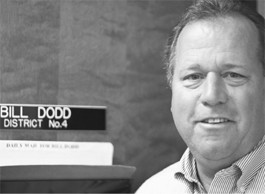
One would hope that the folks running the Bay Area’s Metropolitan Transportation Commission (MTC) would often take public transit as a kind of a vote of confidence in the system. Overseeing the Bay Area’s nine counties, the MTC is responsible for financing, planning and coordinating transportation–including some two dozen transit operators and seven state-owned bridges–in the region. But the MTC’s new chairman, Bill Dodd, typically scoots around in a Cadillac that gets roughly 20 miles to the gallon. (By July 1, he hopes to start driving to MTC meetings in the county’s new hybrid.)

It’s not as though Dodd, who lives in Napa, hasn’t tried taking public transportation to frequent meetings at MTC’s Oakland headquarters.

He has. It’s just that the public transportation system has some holes, and Dodd happens to live in one of them. While it makes sense for his colleagues in San Francisco or Alameda to ride BART, it doesn’t for Dodd. To him, the closest station is almost 40 miles away, and there’s no way to traverse the distance quickly, except by car.

“It would be a lot easier,” Dodd admits, working at his Napa office one morning, “for me as chairman of the MTC to be able to walk the walk and talk the talk, but it just points out some of the challenges we have for public transportation.”

For all that, Dodd does enjoy taking the ferry to San Francisco. But even then he prefers driving himself to the dock. “If I were to take the VINE,” says Dodd, referring to Napa’s public transit system, “to the ferry, it’d probably be one more hour that I could be working or doing something else.” For this reason, Dodd says he is looking into an express bus service that might get people from Napa to the ferry or BART efficiently and on time.

Dodd, 51, sits on the Napa County Board of Supervisors and is the first representative from the Bay Area’s smallest county to serve as MTC chair. His background is in water. For 20 years, he was the president and general manager of Diversified Water Systems, better known as Culligan Water Company. After selling the company in 1998, he had some free time and started learning about local government. After a successful run for Napa’s Board of Supervisors, Dodd was first appointed to the MTC in 2001, and this February, the other commissioners elected him unanimously to the chairmanship.

As MTC chair, Dodd hopes to improve the region’s spotty connectivity. The trouble with Bay Area transit is that there are so many different transit operators to coordinate. “We’re doing the best job we can, I think, with 26 transit agencies,” he says, estimating the number of operators–there are so many that he can’t keep track without double-checking. “But the reality is, if you look at the way it is in New York, Boston, Philadelphia, D.C.–they all have less than four [transit agencies]; it’s just a lot easier when it comes to dividing a pie. It’s absolutely crazy, all the different allocations of funds [here].”

During Dodd’s administration, he will push some of Bay Area systems, like BART and CalTrain, to merge. “But there’s a lot of push back,” he says, anticipating resistance from unions, management and plain old politics.

Some seven years ago, Napa County managed to merge its six small transit agencies into one, the VINE. Solano County is now following suit, and Dodd hopes that Sonoma County will overcome its own reservations and eventually merge its systems together, too.

Another project Dodd hopes to advance is the TransLink program. TransLink will connect the Bay Area’s transportation providers through one fare card that will be programmed to understand each provider’s rate structures. Rolled out last November, TransLink cards can currently be used with some providers getting to and from Alameda, Contra Costa and San Francisco; by 2010, it will be accepted by more than 20 transit providers. That, paired with the MTC’s 511 route planner (www.511.org), may make for less hassle.

But until the Bay Area can whittle its transit system down to fewer providers who can go to more places, Dodd agrees that it’s still going to require extreme fortitude to ride public transportation from the parts of the North Bay into the city. For example, a quick 511 query about traveling from Napa to the Mission District without a car predicts a three-hour-and-45-minute trip that would require four transfers.

Dodd, a Republican straight shooter, hopes that his legacy at the MTC will be one of extending communication throughout the Bay Area. Already, he has set out to attend board meetings for each and every one of the region’s 26 transit providers and listen to their expectations. No other MTC chair has done this.

At the end of the interview, Dodd excuses himself to make a phone call. It’s summer and he has five kids between the ages of 19 and 25 who have co-opted his Cadillac. Speaking into the receiver, Dodd puts himself at the mercy of a pal, “Can I get a ride to Rotary tonight?”


Dispatches from Squigglyville

0

June 13-19, 2007


If it weren’t for its appointment-only policy, Napa’s new Quixote Winery would be a mob scene. The day after it opened this February, the New York Times featured it in the Sunday edition. When the winery staff came to work on Monday, 269 e-mails awaited them.

Some three months after this hubbub began, a crowd of landscape-architecture students meandered over the winery’s grounds while Lew Price, the general manager, led a smaller group of visitors on an official tour and tasting. Clustered together on an uneven brick walkway, the group listened to Price as he debriefed them about the winery, which was designed by the late Austrian artist Friedensreich Hundertwasser.

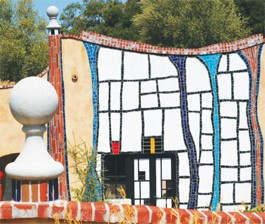
While the group absorbed their Candyland-like surroundings, Price explained that to Hundertwasser, the straight line was humanity’s worst enemy. He went on to say that in designing the whimsical mosaics covering Quixote’s surface, Hundertwasser may have looked to Catalan madman Antoni Gaudí for inspiration. Impressed–and possibly hoping to impress–one visitor suggested that perhaps French sculptor Jean Dubuffet had also been an influence. Price, who only started working at Quixote a few months prior, politely said he didn’t know about that.

A painter and a sculptor rather than an architect, Hundertwasser nevertheless designed a respectable number of wildly unique buildings during his lifetime (he died in 2000 at age 71) and developed an ardent following. Many of his buildings served rather humble purposes: public housing in Vienna and an incinerator in Osaka, for example. Price even told the group that Hundertwasser had refurbished a public toilet in New Zealand, but so many fans had flocked to see the facility that it had backup problems. For a different reason, Price seemed relieved to report that the number of “Hundertwasser people” visiting Quixote, the designer’s only U.S. building, was finally starting to abate. “They think the floor’s too flat,” said Price, looking ever so slightly scandalized.

Quixote’s owner, Carl Doumani, saw Hundertwasser’s designs for the first time on a calendar while visiting a San Francisco architectural firm during the late 1980s. One of the qualities that struck Doumani about Hundertwasser’s buildings was that they were so “human.” Some 10 years later, human was what he got with Quixote. It’s a castle on an almost kid-like scale, and because Hundertwasser abominated straight lines (he thought it was unnatural for humans to interact with them), Quixote practically giggles with squiggles.

A few days after the tour, Doumani greeted a visitor at the winery. Although it was only May, everything about Doumani was already summer-weight, from his snowy hair to his matching pants and creamsicle-colored short sleeves. He sat behind his desk in the squat rotunda under Hundertwasser’s signature dome, a golden fairy tale of an affair. This privileged position gave the impression that Doumani, for all his judiciousness, might have a bit of a despotic streak. In fact, the San Francisco Chronicle once reported on his reputation as “Ayatollah Doumani.” But for all that, Doumani is awfully approachable. He even does a lot of his own scheduling, painstakingly filling in a large desk calendar with tiny block letters.

At his visitor’s request, Doumani attempted to articulate his famously disparate aesthetic taste by pulling a few volumes on some of his favorite artists and architects from two large bookshelves in an adjacent room.

“Excuse me,” he said through the doorway. “I just remembered the best. Oh God, I just bought this damn book! I didn’t remember I had it. This guy–OK. I’m sorry,” he said, returning with a book on the late Italian designer Carlo Scarpa.

As Doumani flipped through the pages, he remarked on Scarpa’s precise shapes of shadow and light. “His detailing,” he said, “it’s kind of classic, but really imaginative.”

The visitor pointed out that this was totally different from Hundertwasser. “Well, yeah, that’s the point,” Doumani replied crisply.

Maybe it had been a mistake to try to pinpoint Doumani’s aesthetic taste with this exercise. Scarpa’s monochromatic tomb with its careful geometric shapes couldn’t have contradicted Hundertwasser’s improvisation any more. Hundertwasser had even gone so far as to smash a custom-made column one day, after it had been imported all the way from Germany and safely installed at Quixote. Apparently, the column had been too perfect.

(To complicate matters of understanding Doumani’s taste even more, he is currently working with the slick, industro-chic New York architects Tod Williams and Billie Tsien to design his private guest house.)

Still flipping through the book, Doumani revealed the key to his architectural tastes, more consistent than they had first appeared. He simply has a great capacity for appreciating wildly divergent brands of creativity–as long as they’re exciting and suit the site.

“Hundertwasser gets exuberant and organic and lyrical with [design], and [Scarpa] does this in a much more refined, much more sophisticated . . .” Here, Doumani trailed off, pausing at a modernist Scarpa mausoleum. “Too bad you have to die to go in here.”

A gust of entrepreneurial spirit tugged Doumani at the tender age of 20 while he was still an undergraduate studying business at UCLA. The owner of the barbecue joint where Doumani worked decided to sell his restaurant, and Doumani made a $200 down payment on it.

While Doumani was busy starting a career as a restaurateur and California property developer, Hundertwasser was a continent away, enjoying an ur-bohemian lifestyle and writing a treatise on why architects shouldn’t preoccupy themselves with rationalism. He changed his name from Freidrich Stowasser to Friedensreich Regentag Dunkelbunt Hundertwasser, which means something to the effect of “peaceland-rainy day-darkly multicolored-hundred-water.” The peculiar artist primarily wore wooden clogs and was often capped in a beret. But sometimes, he didn’t wear anything at all, even while lecturing.

It took Doumani a year to track Hundertwasser down, and they finally met in 1989, to discuss building Quixote next door to Stags Leap Winery, which Doumani founded in 1972 but had since sold to Beringer Wine Estates. They broke ground in 1991, and over the next several years, Hundertwasser corresponded with Doumani through petulant memos penned by his manager, Joram Harel. The flatness of the floors was indeed broached, Harel instructing, “A further crucial and vital matter is the fact that all floors which have no specific use like offices or for technical reasons, or public areas, entrances, doors, will have to be irregular, smooth, wavy floors. It is a sensational revolutionary improvement for the well being of men walking on earth. He recovers his mental equilibrium, a wavy floor is like a melody, like a symphony for the feet, extending to the soul. You may be the first in the United States to introduce and to enjoy these unique proven humanization and experience.”

Although Quixote didn’t open to the public until this year, the building was completed in 1998. Fortunately, Hundertwasser got to see it in its finished form, minus some of the landscaping, before he died. Doumani didn’t go to the funeral and still refers to Hundertwasser in the present tense.

Quixote is built into a hilltop and Hundertwasser insisted that the roof be topped with sod and planted with greenery. He didn’t care what kind, as long as it blended in with the surroundings. He just hoped that if you were looking at the winery from above, you wouldn’t notice it. He clearly wasn’t thinking about the golden dome, which sticks out like a little sun.

Mounting a dirt incline on the side of the building, one comes face to golden face with this dome. The shadows of rainwater rivulets don’t take away much of its sheen. One can walk along the modest brick parapets–wavy, of course–and peer over one side to see a cozy courtyard laid with white and blue tile. Indeed, this is a castle on a human scale, and instead of dumbfounded awe, a sympathetic “Aw” is in order.

According to Doumani, Hundertwasser once promised him that his life would change when he worked under the onion dome.

Has it?

“My answer,” Doumani joked, “to him was, ‘Friedrich, life is pretty good. Maybe you shouldn’t fool around with changing it.’ And, who knows.”

Quixote offers tours that include winetasting along with crackers and cheese scattered Hundertwasser-fashion across the plate. 6126 Silverado Trail, Napa. $25. To arrange, call 707.944.2659, or e-mail le*@***********ry.com.

Quick dining snapshots by Bohemian staffers.

Winery news and reviews.

Food-related comings and goings, openings and closings, and other essays for those who love the kitchen and what it produces.

Recipes for food that you can actually make.

Warren’s Witness

First Bite

With one of the premier locations and best views along the Marin coast, Il Piccolo Caffe on the spirited Sausalito waterfront could probably charge twice what it does for its big, ample portions and get away with it without drawing a glance of suspicion.

My guest and I ordered and paid at the counter, then received directions on where to sit. The young man at the register told us we could not, unfortunately, enjoy the back patio, which hangs over the water. Some policy loophole required instead that we sit at an inferior location along the side of the restaurant, amidst several rustic, splintery tables and under an awning of draping ship ropes and plastic vines. With a glass of 2005 Valle Antica Chianti ($6), we softened while checking out the overhead artwork, the antique piano just inside the door, the artsy photos on the wall taken at Burning Man and the numerous old boat props stationed along the railings, benches and tables.

The food came in a snap. The formaggio platter ($12) carried an air of elegance and pomp, as cheeses tend to do when dressed in luscious dark-brown vinaigrette and bedded on a layer of greens. When I got a closer look and began to eat, however, the mountainous portion revealed itself to be exactly what it was: an excessive amount of entry-level mozzarella, blue cheese, brie and red delicious apple slices, all looking just a bit tired and heavy under the dressing. I ate a half-pound or so before quitting.

The pasta pomodoro ($10), a penne pasta, watery red sauce and scant evidence of the alleged basil, was a disappointment, something my business-major college roommate might have whipped up in five minutes between classes. My companion and I nibbled, contemplated and deemed it boring, though the seagulls waddling along the ground and stalking us with their black eyes would have gone ape over it.

Leave it to me to find grounds for complaining, but I really have only nice things to say about the insalata al tonno ($9). High and mighty and piled with tomatoes, onions, arugula and what must have been one heckuva can of tuna, the salad came drizzled with a mildly acidic olive oil dressing. It was a delicate and delicious relief from the everlasting cheese plate. The large glass of wine, too, lingered on and melded well with the fish. I distributed my efforts and picked at the cheese while my vegan guest reconsidered her pasta before sighing and calling for a takeout box.

Il Piccolo Caffe opens daily at 7am as a traditional Tuscan espresso bar and pastry counter, and while I may hold off for a while before trying the cheese platter again (which I’m still working on and don’t expect to finish before autumn), I see no reason not to stop in some day soon for a hot drink and frittata. Il Piccolo Caffe, 660 Bridgeway, Ste. 3, Sausalito. 415.289.1195.


View All

Quick-and-dirty dashes through North Bay restaurants. These aren’t your standard “bring five friends and order everything on the menu” dining reviews.

Made for These Times

0

music & nightlife |

By Bruce Robinson

As the arranger and primary songwriter for the Beach Boys, Brian Wilson created some of the sunniest pop of the 1960s, from the harmonies he added to a borrowed Chuck Berry riff to create their first major hit (“Surfin’ USA”) to the dazzling mini-suite that was “Good Vibrations,” one of the most complex pieces of music to ever top the pop charts. This was the tease, the preview for Smile, the album Wilson intended to surpass even his own landmark Pet Sounds.

But the other Beach Boys balked, the Beatles raised the bar with Sgt. Pepper and Brian’s personal demons took charge. Tracks and musical fragments from the Smile sessions were altered, erased, re-recorded, lost. Eventually the whole project collapsed.

So, too, did Brian Wilson’s mental health. For most of the 1970s and ’80s, the psychologically fragile figure with the gift for complex harmonies remained a tentative shell of his creative past, appearing with decreasing frequency on the Beach Boys’ progressively weaker recordings.

Eventually, though, he finally found the strength and support to resume record-making on his own, releasing his first solo album in 1988 and a second disc 10 years later. While neither recording comes close to the standard set by his signature Beach Boy hits, they seemed to provide the necessary catalyst for Brian to overcome his life-long stage fright. He began to perform occasionally, then more frequently as the L.A. power-pop band, the Wondermints, became the core of his touring ensemble. Even so, Wilson watchers were stunned and elated when he began to include complete start-to-finish live re-creations of Pet Sounds in his concert dates in 2002. He appears June 8 at the Harmony Festival.

An even bigger shock came in 2004, when, following a third solo disc stiff, Wilson abruptly released a finished version of Smile, and promptly began giving it the full live-concert treatment too. Performing at Davies Symphony Hall late that year, Wilson was surrounded by a full dozen singers, musicians and percussionists, an aural array that added breathtaking live energy to an expansive set that touched on every corner of his imposing catalogue.

But while the music is glorious, there was also a melancholy undercurrent, triggered in those moments when the large, affable man at the center of it all appears momentarily disoriented and fearful, and in his awkward clearly scripted between-song comments. All in all, it’s hard to say which is Brian Wilson’s greater achievement, creating all that soaring beauty as a visionary teen, or surviving to enjoy it once again today.

Brian Wilson headlines the main stage at the Harmony Festival on Friday, June 8, at 7:45pm. Sonoma County Fairgrounds, 1375 Bennett Valley Road, Santa Rosa. Gates open at noon. Friday day pass, $20–$32. www.harmonyfestival.com.


FIND A MUSIC REVIEW

Dancing With Art

0

the arts | visual arts |

By Patricia Lynn Henley

The traditional melodies and rhythms of flamenco will provide a suitable finale for Los Caprichos (The Caprices), a display of 80 highly influential first-edition etchings by 18th-century Spanish artist Francisco Goya. This special exhibition at the Sonoma Valley Museum of Art ends June 10 and the final weekend will literally kick off on Friday, June 8, with the group Aire Flamenco dancing against the backdrop of Goya’s exquisitely detailed sociopolitical commentary on the vices of his native Spanish society.

The five members of Aire Flamenco trained and worked extensively in the birthplace of their art form, the Andalusia region of southern Spain. “With our artists inspired themselves by decades of viewing Goya’s extraordinary work at the Prado, this setting is perfect to experience flamenco’s intensity, statement and sensuality,” says Keni “El Lebrijano,” Air Flamenco’s lead guitarist. The group includes singer Nina Menendez. Known for the distinctive timbre of her voice, Menendez regularly performs with many of the top flamenco artists in the western United States and she is director of the Bay Area Flamenco Partnership. Also in Aire Flamenco are acclaimed dancers Monica and Marina, and guitarist David Gutierrez, who has studied flamenco in both the United States and Spain. The group’s performance at the Goya exhibit will include a range of traditional dances, including alegrias, solea por bulerias, bulerias, sevillanas, tientos and tangos.

Aire Flamenco perform on Friday, June 8, at the Sonoma Valley Museum of Art, 551 Broadway, Sonoma. 8pm. $20–$25. 707.939.7852.


View All


Museums and gallery notes.


Reviews of new book releases.


Reviews and previews of new plays, operas and symphony performances.


Reviews and previews of new dance performances and events.

Open Mic

0

June 6-12, 2007

Good for you! The lesson of how VHS made Betamax obsolete in the ’80s is still part of your folk memory, so you didn’t buy a Blu-ray or HD-DVD player last December. As a video refusenik, unsure which format would win the DVD wars, you demonstrated a sophisticated appreciation of product obsolescence and decided not to buy a new device until you knew it would play movies for years to come. Or perhaps you’re still smarting from being burned again and again by audio obsolescence.

These days, the champion of audio obsolescence is Apple, which successfully combined its iPod with a unique digital format (advanced audio coding, or AAC). By embracing a non-MP3 format, Apple locked you into its world. Now, when your iPod breaks, you have a library of music that you can’t use on other players. You have to buy another iPod. Enjoy your music for as long as your iPod lasts. Apple says that will be for years; for us nitpickers, that means about 13 months.

Yes, the secret is out. After 13 months of heavy use, the lithium-ion battery of the iPod can lose more than half of its functionality. You’ll find that even though you recharge more often, your iPod fades out by the end of a long day. Even though an iPod can cost you $350, these digital music players are designed to be disposable.

Why not get a new battery? Good idea. But Apple deliberately seals the battery inside the iPod. Replacement costs $65 (a new one-gig iPod shuffle costs $79), takes several weeks and, because the new battery comes in a refurbished and wiped-clean iPod, you lose all your songs.

Or you can say, “Screw Apple,” opt for an aftermarket battery kit and repair your own machine. The kit from Sonnet Inc. (www.sonnettech.com) is especially useful. For $19.95, it includes a special iPod opening tool, but best of all, it comes with a DVD showing exactly what to do.

But battery decline is only one way that Apple encourages speedy obsolescence. Another is by introducing spiffy new models shortly after you’ve acquired the latest thing. December’s iPod looks a little duller since the introduction of the iPhone (due to hit stores June 20), doesn’t it? Time to let you know about the three models of next-generation iPods that, scuttlebutt says, will be available this year. As Steve Jobs has so eloquently put it: “If you want the latest and greatest . . . you have to buy a new iPod at least once a year.” Yes, this is from the same man who wants you to know that “Apple has a really strong environmental policy.”

The fact that Apple’s cofounder and CEO seems positively gleeful about the amount of waste his product generates is alarming, since the iPod is designed to be all too easy to throw away. Of course, if you live near an Apple store, you can recycle your obsolete iPod for free. But then, the iPod is only one small aspect of an avalanche of electronic waste that will soon overwhelm America.

Microsoft’s recent release of its memory-hogging, graphics-intense Vista operating system will effectively render many existing PCs obsolete. Industry analysts say that 95 percent of the household PCs in Great Britain won’t be able to run all of Vista’s bells and whistles, and that only a third of laptops currently sold will be able to meet even its minimum requirements. Sooner or later they will all be junked.

In this context, the disposability of the iPod and the fight among manufacturers over DVD formats seem irresponsible if not criminally negligent. iPods are crammed with lead, mercury and flame retardant, and the 70 million already sold represent a sizable amount of toxic chemicals that seep through landfills and contaminate groundwater. Electronic waste accounts for 2 percent of America’s trash in landfills but 70 percent of its toxic garbage. In 2003 alone, 3 million tons of e-waste were generated in the United States.

The good news is that many consumers are reacting to the greedy tactics of force-fed obsolescence in the best possible way. Few people bought new-format DVD players last Christmas, and disillusioned consumers are fighting e-waste. Last year, Greenpeace activists bathed Apple’s Fifth Avenue New York store in green floodlights to publicize the group’s “Green My Apple” campaign, aiming to shame the iPod manufacturer into becoming more environmentally responsible.

Remember Betamax and sit on your money for a few months; think about what you really need. It will cost you at least $200 to replace your iPod, $1,000 or more to replace your PC, and between $400 and $1,500 to upgrade your current DVD player. Take that money and buy something durable, something that will increase in value. Shares in a company like Apple might do the trick. There’s no planned obsolescence for rapacious capitalism.

The Byrne Report returns next week.


Sonic Meteor

0

music & nightlife |

By Gabe Meline

In 1999, the Philadelphia hip-hop group the Roots did two things that massively affected both the world and our sleepy little suburbs, respectively: they released Things Fall Apart, still the greatest and most accomplished album in the band’s 20-year history, and they subsequently came to Petaluma to play a show at the Phoenix Theater.

That the world’s greatest live hip-hop band were coming to Petaluma gave us all enough of a shudder, but when it was announced that they’d be bringing Common, from Chicago’s Southside, with them, it was like an earthquake. The show quickly sold out, and from the first song (which had the Roots beating cowbells through the crowd) to the last (which capped the band backing up Common for an entire set), the energy and temperature in the theater channeled another natural wonder–a meteorite, perhaps, striking Sonoma County with a backbeat to match.

Despite the band’s wellspring of talent, the Roots have since been able only to replicate, and not re-create, the intensity of this era; their latest offering, Game Theory, paints a bleak look at the national landscape in an awkward, if noble, fashion. Common, meanwhile, have been dabbling in fashion of another kind by appearing in commercials for the Gap, making it hard, but not impossible, to swallow his latest album Be as the best hip-hop album of the last two years. Both artists are still among the most respected in their field, and both of them return to Sonoma County for the Harmony Festival on June 10.

Let the shuddering begin, although this time around, it’s spiked with equal parts anxiety and frustration. Though the Roots and Common share the same record label, are booked by the same agency and have played shows together for years, fans of both acts who don’t purchase an all-access “Magic” pass to the fest are required to pay two separate admission costs for two separate shows on the same day in order to piece together the magic. For the casual fan, opting for the Roots’ early-evening appearance (which includes the amazing New Orleans Social Club) should suffice; for the diehard hip-hop lover, Common’s nighttime show, with almost-guaranteed guest appearances by the Roots, is the one to hit up.

The Roots and Common appear this Sunday, June 10, at the Sonoma County Fairgrounds, 1350 Bennett Valley Road, Santa Rosa. The Roots perform outside at 7pm; Common, inside at 11:30pm. $32–$40. For a complete schedule, see www.harmonyfestival.com.


FIND A MUSIC REVIEW

Morsels

0

Flying the Coups

Marin Organic has nabbed famed DIY food writer Michael Pollan for an airy night of dining and discussion under a tent in West Marin. Having name-checked Marin Organic in the Omnivore’s Dilemma, Pollan has starred in at least two of their fundraisers, conversing with Wendell Berry last August and doing a book talk at Toby’s Feed Barn the month before. But for the upcoming fundraiser, Pollan and fans will sup together at Stubbs Vineyard, the only certified organic vineyard in Marin County, and drink new releases of 2005 Pinot Noir, Chardonnay and Merlot. The menu, devised by the excellent chefs of the former Manka’s Inverness Lodge, will be culled–as the restaurant’s was before a tragic fire last December halted business–exactly from what’s fresh and local from the very ground around us. A local quartet will provide the ambiance while Pollan regales diners with what the press release assures will be “heartfelt humor and engaging stories.” A Q&A to follow. An evening with Michael Pollan transpires on Saturday, June 9, at Stubbs Vineyard; directions come with reservations. 5pm–9pm. $150, but $500 snags a seat at Pollan’s table. Proceeds in part benefit school lunch programs. 415.663.9667 or 707.486.3152 . . .

Buncha Brunch

After last fall’s shriveling cutbacks, COPIA can finally concentrate on expanding what it does best, which, by the way, is food and wine. Recently, the nonprofit announced that it would double its “Taste of COPIA” educational programs, which generally offer multicourse meals, drinks, cooking demos, wine/beverage discussion and garden talks. Now, instead of just featuring lunches and “walk-around tastings” in this format, COPIA also hosts winemaker dinners and brunches. Brunch! Now that’s a good idea! Just listen to the menu for the “Here Comes the Sun” brunch on Sunday, June 24: kiwi-coconut cooler; raspberry-infused Royal Blenheim apricots; grilled, vine-leaf-wrapped, garlic-herb turkey sausage with cheesy scrambled eggs . . . it’s definitely not your typical two-pigs-and-a-raft.

And even if the price tag ($25–$35) gives an initial stagger, the meal comes with an interactive cooking demo and, as an extra incentive, COPIA offers a “buy three, get one free” deal for this series. For details on the promotion, along with upcoming Taste of COPIA events–like the Zinfully Elegant Barbeque lunches held Saturdays, June 9–29, and the African-American Vintners Winetasting walk-around winetasting on Saturday, June 16–visit www.copia.org. 500 First St., Napa. 707.259.1600.


SEARCH AVAILABLE RESERVATIONS & BOOK A TABLE

View All


Quick dining snapshots by Bohemian staffers.


Winery news and reviews.


Food-related comings and goings, openings and closings, and other essays for those who love the kitchen and what it produces.


Recipes for food that you can actually make.

Apt Pupils

0

June 6-12, 2007

All Music Guide:

In his seminal rock book Killing Yourself to Live, writer Chuck Klosterman not only proclaims Led Zeppelin the third greatest rock band in history (behind the Beatles and the Stones), he asserts the British quartet’s unique place in the psyches of men, whose so-called Zeppelin phase reportedly occurs only in adolescence. “They are the one thing all young men share, and we shall share it forever,” he proclaims. But San Francisco all-woman cover band Zepparella might beg to differ. They preach the power and majesty of Zep’s music through high-energy shows transcending all temporal and sexual barriers.

“I don’t think Chuck got it right,” says drummer Clementine, who prefers to use just one name. “They’re pretty accessible to most people–and they’re the greatest rock band ever.” Like the other three members–vocalist Anna Kristina, guitarist Gretchen Menn and bassist Nila Minnerock–Clementine fell in love with Zeppelin via the outmoded freeform radio format that served the band so well in the ’70s. “I sat up for three days straight because they were playing them A to Z on the radio,” she recalls with a giggle. “I never know what record anything’s on, because I only know them alphabetically.”

Zepparella morphed from another female tribute to a rock institution, the popular tribute band AC/DShe, of which Clementine and Menn are former members. “As we were driving to a gig one night, [Clem] mentioned that she always had thought that playing Zeppelin songs would be a fun, educational challenge,” recounts Menn, who had the stage name Agnes Young. “We soon realized that the pressure of performing them would ensure we were giving it our all.”

The jump in technical complexity was certainly not lost on Clementine, who was known as Phyllis Rudd in AC/DShe, but she thinks appearances are deceiving. “When I started, I said, ‘Oh, yeah, anybody can play [early AC/DC drummer] Phil Rudd; it’s basic drumbeats,'” she says. “Then I realized that it’s really difficult to make people want to jump up and down when you’re playing a very simple drumbeat.” Still, she enjoys the endless lessons provided by mimicking John Bonham’s famously eclectic bashing. “The technical aspect is so far beyond my own abilities that it’s a constant challenge,” she says.

Not only has Clementine spread her wings stylistically in Zepparella, her studies of Bonzo’s playing led to some unexpected musical empathy. “Of course, there’s the Gene Krupa/big band influence, but he’s also so incredibly funky and groovy,” she says, believing this aspect is chiefly overlooked. “When I first started playing the drums, one of the first things I did was learn some of the real ’50s and ’60s R&B/Motown stuff. It’s basic drumming, yet you learn how to put a lot of feel into it.”

Zepparella has always been a way for the four ladies to grow as musicians. “Playing Zeppelin inspires songwriting,” says Kristina, a well-known local singer, “and the music is so respected that it feels like an honor to do it.” Clementine likens their approach to that of classical musicians. “The second chair violin is not trying to imitate the way the second chair violin was playing in 1890,” she says. “They try to stay true to the original in certain ways and make it their own in certain ways.” Menn adds, “Just as kids learn to speak by imitating their parents, part of the process of becoming fluent in music is imitation.”

Still, like other tribute bands–and like Led Zeppelin themselves–Zepparella weather accusations of being unoriginal. Clementine, though, feels that the catalogue is perfect for spotlighting their own identities. “We spend a lot of the set jamming and doing stuff that’s unexpected, and I think that’s what a Zeppelin audience wants,” she says. “We’ve never been a band who plays everything note for note. [Zeppelin’s] music isn’t built for that.”

Clementine adds that their growing fanbase is owed to onstage musical telepathy. “Hearing the same song over and over and over, no matter how much you love it, would get tiring unless there’s something else,” she insists. “And I think that something else is just our connection.”

“Over time, as we started learning the songs and playing together, we realized we had a pretty cool band just the four of us,” she recalls. “We became a band, rather than just a project.” With an entire album in the can (written and recorded in only six weeks), it’s still a struggle for the women to find proper time to devote to it. “It was a really great experience and we want to do more, but there’s just not enough time in the day,” Clementine laments.

Taking up time are day jobs and their constant immersion in other musical projects. Yet love of craft outweighs fatigue for these workaholics. “Nine to 5 hurts my head,” says Minnerock. “I’d rather be loading gear at 4am again after a 14-hour drive.”

The band have proven to be an alter ego of sorts for Kristina, who does justice to Robert Plant’s anguished growl while giving the orgasmic moans of “Whole Lotta Love” an entirely new aesthetic. “I have my quiet nights at home with a book, and then I have my need to go blow it out,” she says. “I wish I could be a homemaker and bake cookies, but I set kitchens on fire.” She adds: “No, really.”

Any lingering assumption of feminine restraint with the material is extinguished by Zepparella’s aggressive repertoire, consisting solely of early rockers like “Immigrant Song” and “Heartbreaker.” But incorporating an acoustic set and even a keyboardist are high on the band’s list of future plans. “Maybe people would love it,” says Clementine. “At the same time, it’s really neat to see people with their hair plastered to their forehead at the end of the show, with their eyes bugging out because they’re so happy they got to rock out so hard.”

While seemingly ironic for four modern women to the cover songs of a group long accused of misogyny, Clementine attributes Zeppelin folklore to basic human nature rather than gender stereotypes. “Of course, you never know what anybody’s life is like from things that you read,” she says. “But if I were 24 years old, in the greatest rock band in the world, and there were 20 people standing backstage ready to service me in any way, would I go for it? Probably.”

Thankfully, this band’s gender hasn’t been an issue like it was for AC/Dshe. At a show a few years back, a male fan was escorted out for autoerotic activities. The Zepparella stage has been free of mud sharks and theatrical outfits, although the origin of the band’s name almost found its way into their act.

“I’d just seen Barbarella, and I love the way it looks,” Clementine remembers. “So the original concept was that we’d dress similar, but that ended up being a little too kitschy for everybody.” Good thing, too. Who knows what role Angus Young’s signature schoolboy uniform played in the AC/DShe incident?

In learning the inner workings of Zepparella, it becomes even more apparent that the term “tribute band” doesn’t fit. Clementine offers an alternative moniker: “I always thought ‘Great Band’ was it,” she says with a laugh. “I hope that people just say, ‘I saw this great band last night–and they were playing Led Zeppelin.'”

Zepparella appear on Saturday, June 16, at the 19 Broadway Niteclub. 19 Broadway, Fairfax. 9:30pm. $12. 415.459.1091.


Detours

June 13-19, 2007One would hope that the folks running the Bay Area's Metropolitan Transportation Commission (MTC) would often take public transit as a kind of a vote of confidence in the system. Overseeing the Bay Area's nine counties, the MTC is responsible for financing, planning and coordinating transportation--including some two dozen transit operators and seven state-owned bridges--in the region....

Dispatches from Squigglyville

June 13-19, 2007If it weren't for its appointment-only policy, Napa's new Quixote Winery would be a mob scene. The day after it opened this February, the New York Times featured it in the Sunday edition. When the winery staff came to work on Monday, 269 e-mails awaited them. Some three months after this hubbub began, a crowd of landscape-architecture...

First Bite

Made for These Times

music & nightlife | By Bruce Robinson ...

Dancing With Art

the arts | visual arts | By Patricia Lynn...

Open Mic

June 6-12, 2007 Good for you! The lesson of how VHS made Betamax obsolete in the '80s is still part of your folk memory, so you didn't buy a Blu-ray or HD-DVD player last December. As a video refusenik, unsure which format would win the DVD wars, you demonstrated a sophisticated appreciation of product obsolescence and decided not to buy...

Sonic Meteor

music & nightlife | By Gabe Meline ...

Morsels

Apt Pupils

June 6-12, 2007All Music Guide: In his seminal rock book Killing Yourself to Live, writer Chuck Klosterman not only proclaims Led Zeppelin the third greatest rock band in history (behind the Beatles and the Stones), he asserts the British quartet's unique place in the psyches of men, whose so-called Zeppelin phase reportedly occurs only in adolescence. "They are...
11,084FansLike
4,446FollowersFollow
6,928FollowersFollow

