Ask Sydney

July 4-10, 2007

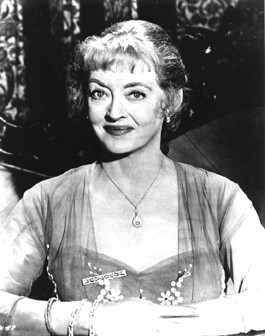
Dear Sydney, I’m a fairly together person, and that sure has drawbacks! I get tired of being the one who is so safe to be around that people can let down their hair and act out all the things they won’t do when they’re being their own fairly together selves. I don’t want to become one of those self-centered jerks who takes and takes or is oblivious to other people’s feelings or keeps all relationships at a superficial level, but it sure would be nice to not have to always be the bigger person. It’s hard having to always enforce my boundaries instead of having friendships or romantic relationships where I get to just relax for a while. How do I turn myself into a partner rather than a mentor or teacher or therapist–or advice columnist?–Not Their Mom

Dear Mom: It seems you naturally find yourself in the role of caretaker, otherwise known as the maternal figure or perpetual nurturer. Because this is a role you take on for yourself, it makes sense that those around you, once they discover your strengths in this regard, will willingly allow themselves to fall apart and become needy in your presence. The best way to deal with this is to examine your own role in these relationship paradigms. It’s not your job to mother the entire world, and if you try, you are apt to become waiflike and depleted, like Angelina Jolie.

Perhaps past experience has told you that your ability to be supportive and helpful is what attracts people to you in the first place. Consider whether or not you take care of others as a way to gain their love or because you genuinely enjoy it. After all, who is more needed than the eternal mother? Defining clear boundaries is important, but so is knowing what it is you need from others.

Begin a new pattern in your relationships, where you provide others with your excellent mothering services, and they provide you with something equally as important in return. If there is no return, then put your energy elsewhere, otherwise you run the risk of becoming the resentful mother, a bitter and unattractive role that many mothers find themselves in and which is detrimental both to themselves and everyone else around them.

Dear Sydney, I met a woman with whom I would like to become friends. We’re both people with busy lives, so I haven’t even tried to arrange a get-together. Kids in school find it easy to make friends, because they’re thrown together every day. The same goes for adult co-workers, but it’s a rare and wonderful thing to find myself in a workplace with people I can be more than happily acquainted. Regarding co-workers with whom I have become actual friends, it’s hard to carve out time for more than a watercooler chat. This woman would be fine to know as a happy acquaintance, but I’d like to see about becoming actual friends. How does one go about this when nobody has time to even go out for coffee any more?–Not a Stalker

Dear NA Stalker: Until you reach retirement age, and unless you are unemployed and childless, it can be difficult to keep up with the friends you already have, much less find time to make new ones. Add to this the fact that we live in a cautious society, and it can seem impossible to meet cool people and make them a part of your authentic life. You can always plan a social event at your house, and then extend a casual invitation. This is a great way to get to know someone better. But who has time to go to parties at someone’s house they hardly know?

Try beginning a friendship through e-mail. If you meet someone interesting, find an excuse to get her e-mail address, then drop her a note. If you say something inquisitive, like “Loved your top, where did you get it?” or “Have you heard about that new play in town?” it will prompt her to write back. Let your relationship travel through cyberspace. Soon it will seem natural to suggest meeting for coffee somewhere, and now that you have shared enough information to know what you have in common, you will both be far more willing and motivated to make time for each other.

Dear Sydney, what is a “coincidence,” exactly? Some people say that there is no such thing as coincidence, that everything happens for a reason. Others feel the exact opposite, that everything is basically one big coincidence, and that life is made up of totally random happenings that have no deeper meanings than the ones we read into them. I have an ongoing debate with a friend as to whether or not everything happens for a reason, or if life is made of genuine random coincidences that we make important by believing they happened for a reason, when really they didn’t. I’m hoping you could lend some perspective to our argument before we “coincidentally” stop talking to each other.–No Deeper Meaning

Dear Shallow: A coincidence, according to Webster’s Dictionary, is a striking occurrence of two or more events at one time, apparently by mere chance, accident, luck or fate. The word “apparently” is very telling–even Noah Webster was clearly unsure as to the true meaning of the word. The three definitions–accident, luck and fate–don’t answer your question either. Which is it? All three are intrinsically different. It’s the nature of coincidences to be mysterious; this is what makes them so fascinating and tantalizing.

I’ll give you an example. Recently, I drove past a car in Carmel that was the same make and color as mine, and with the same bumper sticker that was stolen from my car in Santa Rosa a few months ago. I’ve never seen the bumper sticker on any other car. So I left a note with my e-mail, and asked her where she got her sticker, as I purchased mine on Valencia Street in S.F., and now the store no longer carries them.

She e-mailed me back and said she got hers on Valencia Street, and hers had also been stolen, so she bought another. Not only that, but she saw my car the last time I was in Carmel, with my bumper sticker still intact. And get this: We have the same first name. Life is full of coincidences, and whether they are accidents, luck or fate depends on what you find most satisfying to believe. You and your friend may never agree, because the fact is, you’re both right.

‘Ask Sydney’ is penned by a Sonoma County resident. There is no question too big, too small or too off-the-wall. Inquire at www.asksydney.com or write as*******@*on.net.

No question too big, too small or too off-the-wall.


Wine Tasting

0


When in the course of human events, it becomes necessary to publish a wine column on the Fourth of July, one might well expect a theme. Wine for the barbecue? No-brainer. Save the Pinot, pair the grilled product with a big hearty red. The all-American wine? “Zindependence” celebrations regularly crop up wherever America’s “heritage wine” is the thing. But as we can’t even agree on California’s state grape, how about an all-American winery, the true red, white and blush, some fiercely independent, family-owned place that embodies the Jeffersonian agrarian ideal?

Larson Family Winery fits the bill. At the end of a tree-shaded lane south of Sonoma, it features vineyards, rustic barns and pet sheep. On Sonoma Creek, steamboats once delivered new Americans to this land of promise, and General Mariano Vallejo passed through on his way to secularize the Sonoma mission (and on 07/07/’07, it’s happy 199th, General).

The tasting room is in a barn, with various memorabilia on display. Site of Northern California’s largest rodeo in the last century, the ranch was also a training ground for Seabiscuit, whose story is as plucky and democratic as it gets in horseracing. The bar is backdropped by a mural that weaves the area’s history with the winery today.

Let’s crack open some wine. The 2005 Pinot Grigio ($19.99) is a crisp quaff with a hint of honeysuckle. The 2005 Gewürztraminer ($16.99) is rich and dry with a pungent floral aroma. More complex than strawberry lemonade, the 2005 Pinot Noir Rosé ($25) is just as drinkable. Get that fresh-baked berry-pie noseful of the 2003 Meritage ($24.99). Like all Larson reds, double gold medal winner 2003 Cabernet Sauvignon ($50)–scented of orange rind, fancy candles and black currant–is easy-going on the tannin. Barbecue wine alert! The 2003 Sonoma Red Table Wine ($19.99) is a Cab-heavy, smoky, juicy blend with crackling acidity. Screwcap, in a liter jug, of course.

As for America’s grape, Larson pours a Zinfandel from DenBeste, who parks his cars here during NASCAR and whose wine is made at Larson, with a few others. As it turns out, they have a lot of extra capacity because they formerly operated the 100,000-case Sonoma Creek here. The Larsons built the supermarket brand during the boom of the ’90s, overexpanded and declared bankruptcy following the bust. They reorganized and sold the brand in 2003. What could be more American than that?

Larson Family Winery, 23355 Millerick Road, Sonoma. Tasting room open daily, 10am to 5pm. $5 fee. 707.938.3031.


View All

First Bite

0

July 4-10, 2007

The couple across the sizzling teppanyaki table are grinning from ear to ear.

Since Hikuni opened last month near Montgomery Village in Santa Rosa, they won’t be slogging more than a hundred miles round-trip anymore to get a fix of their favorite food: Japanese meats, seafood and vegetables seared on a giant metal griddle, sliced in dizzying theatrics by a chef wielding an extraordinarily sharp knife and flung through the air to (hopefully) land on their plates.

Bizarre as it sounds, for the past several years this dining duo had regularly been driving, often weekly, all the way to Benihana in San Francisco. They’ve been telling Mom and me about it since they sat down about 15 minutes ago, joining the group of four other new friends at our communal table.

No wonder they’re giddy. At today’s gas prices, I figure they’ve been spending almost as much just on transportation as their entire meal costs tonight. (In addition to its excellent food, Hikuni has impossibly low prices San Francisco can’t match.) The hibachi tuna I’ve been feasting on is easily a pound of primo soy-marinated fish, grilled exquisitely raw inside as I requested, and costs a mere $18.95.

Mom, meanwhile, has been valiantly working her way through a wealth of tooth-tender calamari and chicken ($22.95), dipping bites in house-made ginger and mustard aiolis alongside mounds of sautéed mushroom, onion, zucchini and fluffy fried rice. We’ve been at this task for a while now, but we’re barely making a dent.

And this is after we’ve already stuffed ourselves on the go-withs, including a fine miso soup and an enormous green salad under a lovely homemade dressing of puréed pineapple, cantaloupe, orange, lemon and ginger. Then, as the waitress had cleared the plates (gorgeous pottery, by the way), our chef arrived and–zip-zip!–fired up some freebie lemon-soy shrimp for us.

We’ve got so much good food, in fact, that our appetizers–tamago (egg custard) sushi ($3.50) and naruto roll ($10.95), a fat mosaic of salmon, tuna and yellowtail cradled in rice, avocado and a thick blanket of tobiko–have largely gone untouched. No worries, though; these leftovers are coming home with us, clutched fiercely to my bosom.

The chef is playing now. He makes a tall funnel out of an onion, douses it with sake and touches it with fire. Flames leap up to his chin, he shouts, “Volcano!” and the Benihana couple cheer. The chef hurls a piece of scrambled egg at the man, who catches it in his mouth. The woman screeches with such happiness that I’m almost expecting her to burst into tears.

They live about half an hour away, they gush, which saves them more than an hour’s drive each way over that other place, their favorite . . . whazzit called again? Beni-who?

Hikuni Sushi Bar & Hibachi, 4100 Montgomery Drive, Santa Rosa. Open for lunch and dinner daily. 707.539.9188.


Quick-and-dirty dashes through North Bay restaurants. These aren’t your standard “bring five friends and order everything on the menu” dining reviews.

Baa to the Bone

July 4-10, 2007

We can never get enough cinematic lessons reminding us that there are some doors we must not enter. That Black Sheep, one such lesson, comes from so very far away gives it some special urgency. I accuse the New Zealand government of putting its money into Jonathan King’s Black Sheep as a way of luring us punters to vacation there.

Richard Bluck’s photography, far better than this kind of movie deserves, is sterling. On the one hand, Black Sheep urges us Kiwi-ward with its seascapes, hills and fine blue skies. On the other hand, it warns us of the all-too-real prospect of having our throats torn out by mutant woolies. That’s the perfect vacation–the beauty of nature combined with a hint of peril. Hell, I’ll go.

Black Sheep, written and directed by Jonathan King, tells a story as old as Cain and Abel. The gentle young Henry dotes on a pet lamb; his evil older brother, Angus, slaughters it and jumps out of the darkness of the barn dressed in its gory skin. The trauma causes Henry (played as an adult by Nathan Meister) to suffer from “ovinophobia,” a mortal terror of sheep.

Fifteen years later, on the urging of his therapist, Henry returns to the family farm. Meister, who has all the requisite soulful-sufferer sheepishness the part requires, sweats bullets as his taxi is surrounded by hundreds of ewes. When he arrives, he discovers that Angus (Peter Feeney) has become a remorseless genetic-engineering rancher, trying to create a breed of supersheep and tossing the genetic throwbacks into a toxic dump.

Hiding in the underbrush lurk a pair of eco-activists. The dim Grant (Oliver Driver) and his female, doctrine-spouting companion, Experience (Danielle Mason), steal a gene-spliced lamb as evidence of the cruel experiments going on. The monster escapes, infecting the flock and making them thirst for blood. Their viral bite turns men into murderous weresheep.

It’s surprising how few genuinely million-dollar ideas come along during the course of the movie watcher’s life; it would be even more surprising if Black Sheep‘s original angle on primal terror were a complete success. What does work famously are the shots of sheep looming over the camera, their bald, impassive faces concealing some hidden emotion–fury, maybe, or perhaps they’re just wondering where their next mouthful of cud is coming from.

The cast quivers appropriately whenever a sinister “ba-a-a-aaaaaa” rends the darkness. Feeney boasts an antipodean version of Bruce Campbell’s muttonhead skull, full jaw, vast forehead and slicked-back, Hitler-colored hair. In short, Campbell couldn’t have improved the role. And the scenes of the sheep butting through doors (they’re Weta Workshop puppets snarling with homicidal rage) really bring back happy memories of The Killer Shrews.

The problem is, as always, the case of someone making a cult movie without the twitching fanaticism of a serious filmmaker. One natural way to improve Black Sheep would be to promote Tucker, the Maori manager (Tammy Davis), from merry sidekick to hero. After all, George Romero’s work in this particular end of cinema has a subtext about prejudice: society’s black sheep rising and putting up a hero’s stand.

Another possible strategy would have been to take the material at least a little seriously. The eco-terrorists are clowns, although, at times, good ones. When Experience says that she hopes their mission won’t be a debacle like their previous action at the salmon farm, Grant replies, “Those fish died in freedom!” He’s bleating even before he gets bitten.

But King takes a cozy middle-of-the-road approach to the subject of organic farming and GE. One of his characters mutters good-naturedly about how you can’t brew up a cup of tea in New Zealand without do-gooders interfering. If some Kiwis are cranks on the subject, who can blame them? They must know that their islands will be probably the last hold-out for humanity, from whatever Eurasia, Africa and the Americas do to themselves in the coming century.

Now, if they can just ward off those merinos, a superior intelligence watching their green pastures with envious eyes.

‘Black Sheep’ opens Friday, July 6, at select North Bay theaters.


New and upcoming film releases.

Browse all movie reviews.

News of the Food

0

July 4-10, 2007

Adult guests hoping to enjoy a nice dinner at the popular Simmer restaurant in Corte Madera will have to make other plans. You’ve been usurped by a bunch of uptown toddlers.

Owners Ken Harris and Lesley Kohn have just closed their year-and-a-half-old California-French eatery in order to focus on a new concept called Chefables, a catering company that specializes in high-end meals for children.

And not just any children, but really wee ones, between the ages of one and five. Apparently, pampering the palates of well-heeled rugrats is more profitable than attending to those of fine food-loving grownups.

It was only in April that Harris and Kohn sent the Boho a lyrically worded press release, gushing about hiring a new chef at Simmer. They wooed us with promises of new dishes like la plancha of dayboat salmon with spring rhubarb chutney, watercress and rhubarb Vincotto; chili roasted tofu with tender baby bok choy, apple emulsion and carrot chiffonade; and spring white asparagus with Coppa ham, pistachios and white balsamic.

But at the same time, they had been tinkering with the Chefables idea, which offers custom, three-course hot meals plus optional teatime snack programs delivered daily to select northern California daycare centers and schools. The hoards of deep-pocketed parents too time-pressed to pack a PB&J for their precious progeny responded better than expected.

“We will still be here daily ‘cooking up a storm’ for our littlest of customers,” soothes a notice posted last week on Simmer’s front door and website, “but [we] need the space, time and resources for this rapidly expanding business operation.”

The inspiration came to executive chef Harris after the birth of his first child, Emily, when he found himself creating haute highchair creations for her. That morphed into creating a personal chef service for the sippy-cup set, “like Oprah uses to eat healthy and stay in shape,” the Chefables propaganda exclaims. “Her chef creates tasty, well-balanced meals for her daily, and keeps her on track. Our Chefables Children’s Food Series does just that–chef-created, child-inspired food offerings as easy as ABC.”

That means instead of slumming it with brownbag tuna salad sammys and prefab pudding packs, gourmet guttersnipes can nibble on from-scratch wood fired pizza, seasonal vegetarian lasagna, creamy polenta with quinoa and Parmesan, organic whole-wheat corn bread and LaLoo’s Goat’s Milk Ice Cream.

No word if Chefables execs will pop in a note reading, “Mommy loves you” for an additional fee.

To learn more, go to Chefables at www.chefables.com or call 415.299.2800.

Quick dining snapshots by Bohemian staffers.

Winery news and reviews.

Food-related comings and goings, openings and closings, and other essays for those who love the kitchen and what it produces.

Recipes for food that you can actually make.

Hidden in Plain Sight

Why It Still Matters

0

Photograph by Felipe Buitrago
In plane view: Maya Harris, executive director of the ACLU of Northern California, announces the organization’s lawsuit against Jeppesen.

By Diane Solomon

The American Civil Liberties Union’s May 30 lawsuit against aviation service company Jeppesen has blown the torture-flight charges against the company, which has offices in the Bay Area, into the national news. But behind the headlines is the story of how European investigative journalists, with the help of government officials in several countries, were able to link Jeppesen to the CIA’s extraordinary rendition program using codes, logs and flight plans.

Claudio Gatti, an investigative journalist with Il Sole 24 Ore, an Italian newspaper, broke the Jeppesen story for the International Herald Tribune. In a phone interview, he explains how his investigation connects the Boeing subsidiary to the rendition of at least five people, including the ACLU’s three plaintiffs, and to the CIA’s best-known victim, German citizen Khaled El-Masri. El-Masri says he was seized while on vacation in Macedonia and flown to a secret prison in Afghanistan, where he was imprisoned, interrogated and tortured for five months before being released without charges. Gatti says El-Masri was rendered in the same Jeppesen-serviced plane as ACLU plaintiff Benyam Mohamed.

According to the ACLU’s lawsuit, Jeppesen provided flight and logistical support to more than 70 CIA rendition flights over a four-year period. The flights transported suspects to secret detention and interrogation facilities in countries where the U.S. Department of State has said the use of torture is “routine” and to U.S.-run detention facilities overseas where the feds say U.S. law doesn’t apply.

Gatti says he began investigating when he became interested in the extraordinary rendition of one of the plaintiffs, Abou El Kassim Britel, an Italian citizen. Because he has written a book about an airplane incident, Gatti has a network of contacts in the civil aviation community. One told him that the CIA has shell companies that own planes but can’t fly them without real companies who have an infrastructure to make and carry out flight arrangements.

The contact said these companies were profiting from the extraordinary renditions and that flight logs would link them to the CIA.

“Flight logs are kept by aviation authorities for years,” he says, “so if you go back and find a flight where you think a prisoner was transported, there’s documentary evidence.”

Gatti obtained flight records from European Parliamentary and Council of Europe commissions, and from civil aviation authorities in Portugal, Spain and the Netherlands. He says his investigation parallels the ACLU’s and proves that Jeppesen played a major role in the program.

“The CIA couldn’t have had this program without Jeppesen’s support providing flight permits, weather reports and assistance with fees and refueling,” he says. “The CIA has planes but no support network.”

Gatti discovered four U.S. companies that arranged the CIA’s extraordinary renditions’ flights during this period: Jeppesen; Air Routing International; Baseops Flight Planning; and Universal Weather and Aviation Inc. Each CIA plane was assigned to one of the four companies, which in turn consistently serviced its flights.

“A Gulfstream V, N379P, became known as the ‘Guantánamo Bay Express’ because it was used so much for these flights,” Gatti says. He says he knows this because each flight log contains codes that specify the flight’s airport departure, arrival and originator.

“The originator files the flight plan and supports the flight,” says Gatti. “That’s how I found out Jeppesen was involved. Their originator code is KSFOXLDI.”

“K” is the international letter for the United States, “SF” is San Francisco and “OXLDI” is unique to Jeppesen.

The ACLU’s lawsuit names a Gulfstream V, formerly registered as N379P, as one of 15 aircraft serviced by Jeppesen for the CIA. Gatti said that right after 9-11, one of the first renditions was almost exposed because of this plane. On Oct. 23, 2001, at Pakistan’s Karachi International Airport, masked men handed an individual over to a group of Americans who had just landed in a Gulfstream V executive jet. The story surfaced three days later in a News International English-language newspaper, which gave the Gulfstream’s tail number: N379P.

“That incident showed that any glitch in the flight-support services could have endangered the entire rendition program,” says Gatti, “and that professionals such as those from Jeppesen were essential to its success.”

The ACLU is using Jeppesen in order to put the CIA’s extraordinary rendition program on trial. Last March, the U.S. Appeals Court dismissed El-Masri’s lawsuit against former CIA director George J. Tenet and 10 unnamed CIA officials after the government invoked “state secrets” privilege. Last month, the ACLU petitioned the United States Supreme Court to review this case.

Meanwhile about 50 congressmembers, including Lynn Woolsey, are co-sponsoring HR 1352, the Torture Outsourcing Prevention Act. If made law, HR 1352 would shut down the CIA’s extraordinary renditions, barring the government and its contractors from transferring suspects to countries where torture is legal.

“Congress cannot delay any longer in addressing the administration’s use–free from any real judicial or congressional oversight–of extraordinary rendition,” says Rep. Edward J. Markey, D-Mass., who drafted this legislation.

“We just don’t discuss who our clients are or what services we provide for them,” says Jeppesen spokesman Tim Neale. “Flight plans require us to know where they want to go and when they want to go, but don’t require us to know the purpose of the flight.”

However, that argument may not hold for much longer. “Torture is not a [California] value,” says Sanjeev Bery of the ACLU, “and our community leaders should tell Jeppesen that they shouldn’t be profiting from the practice of torture. It has no place here.”


First Bite

0

June 27-July 3, 2007

There’s a lady with a huge sword on her head gyrating next to my table. The curved blade rests sharp-side down on her skull, and her long black hair swirls as she spins and leaps on one foot, whirling to the Goth-Indian music thumping in the background.

She’s fascinating. But the belly dancer is also in the way of the buffet. I wish she’d wrap up her act and move on, because I’ve been really enjoying my dinner at downtown Santa Rosa’s new Nirvana Indian Fusion Sanctuary, yet my copper tray is almost empty. I’m ready to get up and load up on more of the dozen or so tasty dishes that chef-owner Neil Advani has set out as part of his buffet spread. It’s a good deal he’s got going here–just $12.95 for this filling feast.

I’ve eaten my way through rajma curry (like super hot chili with lots of kidney beans and onion) and dum aloo, a simple but satisfying mash of spinach and potatoes. I’ve scraped up every last forkful of vegetarian tikka masala, with its green beans, bell pepper and cauliflower in a thick, creamy sauce of red paprika yogurt, onion and tomato. And while the pepper fish was bland swimming in a slightly spicy beige sauce, it was also nicely meaty, and I greatly liked every bite.

My mom tips her little copper cup of shorba (tomato soup) at me. “Wow,” she says succinctly, extolling its salty, silky, clean, light, deep nuances. Saag chicken is like a bright yellow soup, too, not normally a description I would appreciate for this dish, but the flavors are excellent and we sop the broth with fluffy naan sprinkled with black sesame seeds.

The bejeweled woman moves away to reset the CD that started skipping in its player next to the hostess stand. As she does, a large group of diners in the loft upstairs breaks into a cheer, because they’ve caught sight of their guest, the birthday boy, coming through the front door behind her.

Seizing the opportunity, I take my tray and pile on scoops of masala jeera (spicy tri-colored rice with nuts), dollops of mango chutney and crunchy onion pakora. A heap of the excellent house salad shows the California-fusion aspect Advani touts: it brims with peanuts, chopped romaine, raisins, feta and pickled cucumber in a vibrant balsamic vinaigrette of mint, ginger, cilantro and mustard.

I settle back at the table, and Mom steals my raita; she has happily burned her mouth on the fiery chicken tandoori and tempers her taste buds with the lovely sour-cool cucumber yogurt.

Advani stops by as I’m sipping my mango lassi ($3), the drink intensely fruity-sweet, dashed with saffron and quite exquisite. He asks, and I nod. “All good, all quite happy.”

As we spoon up our dessert of rice pudding perfumed with cardamom and nutmeg, the belly dancer spins by again, dodging diners in her path. It’s a tiny room she’s navigating, but sword be dammed–I’m going back for thirds.

Nirvana Indian Fusion Sanctuary, 420 Mendocino Ave., Santa Rosa. Open for buffet dining lunch ($8.95) and dinner daily. À la carte menu available all meals except Monday evening. 707.575.3608.


Quick-and-dirty dashes through North Bay restaurants. These aren’t your standard “bring five friends and order everything on the menu” dining reviews.

Mad Matches

0

the arts | stage |

Photograph by Jenny Graham
Pure ‘gem’:Greta Oglesby shines in ‘Gem of the Ocean.’

By David Templeton

With four plays by William Shakespeare currently on the boards at Ashland’s annual Oregon Shakespeare Festival, the Bard of Avon is being nicely served at the yearly celebration of theater that draws thousands from the Bay Area every summer. As usual, some of the productions are stronger than others, but with a total of eight shows currently being staged and with two more scheduled to open in July, there is plenty to choose from between now and the festival’s closing in late October.

Of the four Shakespeare plays–As You Like It, The Tempest, Romeo and Juliet and The Taming of the Shrew–the first two are pleasant enough, and the “dead teenager play” is a must-see, cleverly tinkered with and visually exciting. But The Taming of the Shrew is nothing short of magnificent.

Ironically, the best show of the OSF 2007 season is not by Shakespeare at all, but by August Wilson. Gem of the Ocean is the late Philadelphia-born playwright’s penultimate work in his epic 10-play cycle telling the African-American story in each decade of the 20th century. Gem, which Wilson wrote late in the project, is chronologically the first, taking place in 1906, a little more than 40 years after the end of slavery in America. It is Wilson’s most beautiful, spiritual and poetic work, and compared with some of his other plays, such as Ma Rainey’s Black Bottom, Fences, The Piano Lesson and Seven Guitars, that’s saying something. As directed with gorgeous detail and musical timing by longtime OSF director Timothy Bond, this production of Gem of the Ocean is alternately thrilling, moving, dazzling and devastating.

Aunt Ester (the great Greta Oglesby, never better than in this role) is a spiritual adviser to the struggling black community in Philadelphia’s Hill District. She claims to be 285 years old and is rumored to have the power to wash men’s souls. In need of some soul-washing is Citizen Barlow (Kevin Kenerly). The son of a former slave, this troubled young man shows up at Aunt Ester’s front door claiming to have killed a man.

With the assistance of her protégée Black Mary (Shona Tucker), “gatekeeper” Eli (Josiah Phillips) and longtime friend and former Underground Railroad conductor Solly Two Kings (G. Valmont Thomas), Aunt Ester takes on the task of transforming Barlow into a true citizen. To do so, he must be imbued with a sense of his people’s history, which, under Aunt Ester’s wise-minded guidance, involves a trancelike trip to the underwater City of Bones on a mystical slave ship called the Gem of the Ocean.

The mystical elements, which have sunk some other productions of Gem (ACT’s 2006 San Francisco production was one of the victims), are staged by Bond with spectacular sensitivity and confident stagecraft. The text is crammed with lovely dialogue and stocked with memorable characters, including Black Mary’s dangerously ambitious brother Caesar (Derrick Lee Weeden), whose job as the Hill District’s constable has put him at odds with his community and his own soul, and the affable white peddler Rutherford Selig (Bill Geisslinger), whom Ester calls upon in times of need.

Though rooted in the black experience and the historical conditions under which black Americans made the shaky transition out of slavery, Wilson’s play ultimately transcends race and time with its multilayered messages of personal empowerment and forgiveness. As Ester says, “You gotta be right with yourself before you can be right with anyone else.”

OSF’s Gem of the Ocean does everything right.

Another non-Shakespeare production worth mentioning is the world premiere musical Tracy’s Tiger, based on a short story by William Saroyan and directed by Penny Metropulos. Born from the rhythms of beat poetry and steeped in a hot, steamy brew of what Richard Brautigan once called American loneliness, Tracy’s Tiger is a rambling, heartfelt poem staged as a musical theater piece.

Thomas Tracy (Jeremy Peter Johnson) is a young man who has an invisible tiger (René Millán), who appears to him as part tiger, part Zoot-suited hipster. Full of dreams and upwardly mobile, Thomas works at a San Francisco coffee company, where he meets the sweet-natured Laura Luthy (Laura Morache), the only other person he’s ever met who also has an invisible tiger (Nell Geisslinger). Their fledgling love affair is scuttled when Thomas makes a major mistake (he kisses Laura’s mother) and finds himself at odds with his tiger-soul. His loss of direction and the eventual journey back to his tiger manages to be deeply powerful without ever making logical sense. Though a bit longer than necessary, with a couple of songs that do nothing to move the story along, the play effectively uses its jazz-tinged music to potently set the atmosphere.

There are those who will not get Tracy’s Tiger, and dismiss it as a failure. It does not play by the rules of traditional musicals, certainly, but since its roots are in poetry, it is not meant to. The best poems of the beat era, from Howl on down, eschewed the rules in order to spin emotions that work beyond and above the rules.

Tracy’s Tiger is like that.

Emotionally flat from beginning to end, The Tempest, performed on the OSF’s large outdoor stage and directed by outgoing artistic director Libby Appel, is the big disappointment of the summer. The cast is fine, especially Derrick Lee Weeden as Prospero and Dan Donohue as the miserable slave-monster Caliban, but the attempts at Cirque du Soleil acrobatics are cramped and embarrassing, the spirit Ariel (Nancy Rodriguez) is burdened with a pack of “shadows” who look and act like a bizarre, Goth-Egyptian hippie cult, and the overall pace is maddeningly slow when it should be fast, and–especially in Prospero’s famous show-ending farewell speech–hyperfast when it should be calm, convincing and rich with emotion.

Romeo and Juliet, directed by incoming artistic director Bill Rauch, fares better, but also suffers from unfortunate pacing, particularly in the famous blood-soaked last act. Rauch’s generation-gap vision of the play is fascinating, with the older generation mostly dressed in authentic Elizabethan costume and the teenagers garbed in parochial school uniforms and tennis shoes, looking like they leapt off the stage of Spring Awakening.

The collision of young and old is reflected in everything from the music (Elizabethan tunes powered by hip-hop scratching and techno beats) to the way the language is spoken, with the older characters affecting a more classical handling of the text while the young ones rip through their speeches like they were contestants in a poetry slam. As the doomed young lovers, Romeo (John Tufts) and Juliet (Christine Albright) are appealing and believable, though the quick pace of the show makes their rush to suicide less tear-inducing than it probably should be.

Romeo and Juliet also make an unscheduled appearance in the opening moments of The Taming of the Shrew–as Punch and Judy puppets. The sight of a comically violent R&J wailing on each other another with sticks (“Soft! What light through yonder window . . . ow!”) perfectly sets the stage for Shakespeare’s famous battle of the sexes, as Petruchio (the charming scallywag Michael Elich) weds the hot-tempered Katherine (Vilma Silva), and attempts to tame her wild side with a series of tricks and manipulations.

Brilliantly staged by director Kate Buckley, this Taming of the Shrew leapfrogs over its more disturbing misogynist elements by making Kate and Petruchio’s attraction to one another mutual, immediate, obvious and electrifying. It is lust at first sight, and the rest is just two inexperienced, eccentric lovers figuring out how to behave together. Entertainingly packed with bits of business and surprising characterizations (Sarah Rutan is especially good as Katherine’s spoiled sister Bianca, and Santa Rosa’s Shad Willingham as her clueless suitor Hortensio is hilarious), the real magic in this wonderful Shrew is watching the mismatched couple fall hopelessly and unexpectedly in love.

As Shakespeare says, “Of all the mad matches, never was the like.” Rarely has this tricky trifle been staged so madly, so likably and so well.

For information of the full OSF schedule, running now through Oct. 28, visit www.orshakes.org..


View All


Museums and gallery notes.


Reviews of new book releases.


Reviews and previews of new plays, operas and symphony performances.


Reviews and previews of new dance performances and events.

Acute Care

June 27-July 3, 2007

Accounts of life under totalitarianism suggest a general rule: Those dictators who forbid everything are easier to live with than the dictatorships where you never know what is allowed and what is forbidden. Nothing wears out the soul faster that constant questioning and worries.

Life under managed healthcare is the latter kind of system. And in America 2007, our healthcare mess is just one more faith-based initiative: pray to your God that you don’t get sick. Meanwhile, as the premiums soar, the airwaves hum with counterintuitive praise of the way it stands today. Absolutely, sure, no question: thrive–if you can afford it.

Warming to the subject, our legislators assure us that a single-payer health system would be a bureaucracy. A bureaucracy? When was the last time they tried telephoning an HMO? Now Michael Moore steps in to stir up this already smoking-hot issue with the infuriating and funny documentary Sicko.

Rather than weep over the 50 million uninsured, Moore gleans horror stories of people who were so certain that paying health insurance was going to keep them covered. The narratives here range from the comic to the horrific. One lady was billed for not getting pre-approval for an ambulance ride (she was unconscious following a car accident). A patient who lost an argument with a table saw was asked to choose which finger should be saved. An infant died of cardiac arrest after being evicted from a hospital.

Assembling evidence of how HMOs deny coverage, Moore retrieves congressional hearings where Dr. Linda Peeno testified. Peeno, a Louisville doctor who was the subject of a Laura Dern bio-pic, says that “Managed care maims and kills patients.”

The HMOs’ myriad ways of wiggling out includes denying a patient for being too fat or too lean. Moore unscrolls a Star Wars-style title crawl to list dozens of preexisting conditions. One turns out to be a yeast infection.

Since he edited down his documentary polemic from the 500-hour original, Moore has plenty of anecdotes. As always, he brings in found footage from the scrap heap: antique documentaries; a snippet of Soviet musicals; and a recording of Ronald Reagan stumping against socialized medicine in the 1950s. One 1971 White House tape shows Nixon and John Ehrlichman discussing the approval of for-profit HMO systems.

Sicko‘s disinterment of Nixon and Reagan, two old demon figures, is one of the few clearly partisan moments in the film. Unless, that is, you count the opening shot: an irresistible malapropism by Dubya on the subject of tort reform. Yet Moore also singles out Hillary Clinton for taking donations from Big Pharma.

This collage grows into a story of long-lasting injustice. Not only is this the juiciest subject Moore has ever chosen, Sicko is his most visually accomplished movie. Being right about Iraq must have done something for his self-confidence. He’s become a more focused filmmaker than he was in Roger & Me.

Having spent so much time as an object of controversy, he also now asks the right questions, anticipating the objections about the cost of single-payer health. Moore quizzes both a British physician and a French taxpayer, asking how they survive systems that supposedly oppress the doctors and bankrupt the patients. The man did his homework; and what’s stressed here is how single-payer is an agreed-upon part of the social contract. One interviewee, the old Labour (and proud of it) MP Tony Benn reminds us that even Margaret Thatcher refused to un-build British National Health.

Maybe it’s politically questionable to storm Cuba with sick Sept. 11 volunteers who were denied coverage in America as he does. But on the mere level of visuals alone, the scenes open up the picture; they look good. Moore, the bugbear of the blogosphere, will get his usual roasting–for demagoguery, for sentimentality, for his willingness to accept a showpiece Cuban hospital at face value. True, France provides science-fiction levels of healthcare and social services–including free house calls–but of course France also struggles with a Pandora’s box full of social problems. The easily impressed may only listen to the part about how good our counterparts have it in Canada and overseas.

In the end, one movie isn’t nearly enough. Sicko needs to be just a part of a study of our peculiarly backward national misery. Say what you will about Moore, he’s taken an issue and placed it where it cannot be ignored or swept off the table as it was in 1992. Just as An Inconvenient Truth forced the acknowledgment of the issue of global warming, Moore has ensured that his fellow Americans will know they’re getting fleeced, hosed and COBRA’d.

‘Sicko’ opens Friday, June 29, at the Rialto Cinemas Lakeside, 551 Summerfield Road, Santa Rosa. 707.525.4840.


New and upcoming film releases.

Browse all movie reviews.
Ask Sydney

July 4-10, 2007 Dear Sydney, I'm a fairly together person, and that sure has drawbacks! I get tired of being the one who is so safe to be around that people can let down their hair and act out all the things they won't do when they're being their own fairly together selves. I don't want to become one of...

Wine Tasting

First Bite

July 4-10, 2007The couple across the sizzling teppanyaki table are grinning from ear to ear. Since Hikuni opened last month near Montgomery Village in Santa Rosa, they won't be slogging more than a hundred miles round-trip anymore to get a fix of their favorite food: Japanese meats, seafood and vegetables seared on a giant metal griddle, sliced in dizzying...

Baa to the Bone

July 4-10, 2007We can never get enough cinematic lessons reminding us that there are some doors we must not enter. That Black Sheep, one such lesson, comes from so very far away gives it some special urgency. I accuse the New Zealand government of putting its money into Jonathan King's Black Sheep as a way of luring us punters...

News of the Food

July 4-10, 2007 Adult guests hoping to enjoy a nice dinner at the popular Simmer restaurant in Corte Madera will have to make other plans. You've been usurped by a bunch of uptown toddlers.Owners Ken Harris and Lesley Kohn have just closed their year-and-a-half-old California-French eatery in order to focus on a new concept called Chefables, a...

Why It Still Matters

Photograph by Felipe Buitrago In plane view: Maya Harris,...

First Bite

June 27-July 3, 2007There's a lady with a huge sword on her head gyrating next to my table. The curved blade rests sharp-side down on her skull, and her long black hair swirls as she spins and leaps on one foot, whirling to the Goth-Indian music thumping in the background.She's fascinating. But the belly dancer is also in the...

Mad Matches

the arts | stage | Photograph by Jenny Graham Pure...

Acute Care

June 27-July 3, 2007Accounts of life under totalitarianism suggest a general rule: Those dictators who forbid everything are easier to live with than the dictatorships where you never know what is allowed and what is forbidden. Nothing wears out the soul faster that constant questioning and worries. Life under managed healthcare is the latter kind of system. And in...
11,084FansLike
4,446FollowersFollow
6,928FollowersFollow