His Floating World

0

08.22.07

The great thing about tenure is that I can’t be dismissed summarily,” laughs Sonoma State University professor Michael Schwager. The director of SSU’s prestigious art gallery, Schwager is making a nervous joke about his job’s future because his exhibition space is preparing to hang a series of works by Hawaii-based painter Masami Teraoka that are, well, genital-friendly. And blood-friendly. And breast-friendly. And bestiality-friendly. And sure, the-Pope-as-monster-friendly.

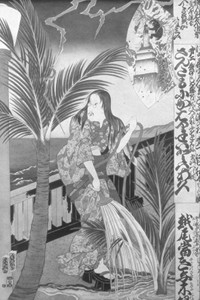
A career retrospective, the show—titled “Drawing on the Parts: The Art of Masami Teraoka”—presents Teraoka’s work in its intended and unabashed form, wonderfully contrasted with ancient Japanese prints that the painter has, in the past, taken for inspiration.

“Drawing on the Parts” is a rare collaboration between one of Teraoka’s most avid supporters, the Palo Alto&–based collector Brian Pawlowski, his San Francisco gallerist Catharine Clark and Schwager. (By coincidence, Schwager and Clark each bought a piece of Teraoka’s work decades ago as their first-ever fine-art purchases.) Now they are teaming up to bring this world-class artist and his very modern vision to the North Bay in an unprecedented exhibition of the type normally reserved for urban museums.

Japanese-born, Teraoka emigrated to L.A. in the early ’60s to attend the Otis College of Art and Design, where he completed both his undergraduate and MFA degrees. With almost no English skills, the artist was startled and invigorated by his new California home and quickly became immersed in what has come to be known as the “second wave” of pop art that emanated in part from the pastel shock of SoCal culture.

Influenced by the traditional wood-print style that marks Japan’s Edo period—a time roughly traced from 1615&–1868, one of calm and prosperity in Japan, when the wealthy merchant class was demoted from power but freed to enjoy what was termed a “floating world” of arts and culture unique to themselves while the Shogun ruled—Teraoka made it his own. Much of the art emanating from that time was as deeply erotic as it was concerned with narrative and storytelling. Bohemian and underground, full of allusions and in-jokes, the culture’s beloved woodblock prints marking that time, known as “ukiyo-e,” are well-known to most children growing up in Japan.

Drawing upon this “floating world” tradition and its arts, Teraoka set about systematically taking ukiyo-e styles out of the realm of the Shoguns and onto the beaches of L.A., using recurring images as individual shorthand. Ancient text, a script known as “jojuri” that is tantamount to Middle English, accompanies the images in cartouches placed throughout, sketching out jokes that Teraoka admits even he can’t often remember. Tissues, an old-fashioned visual reference to carnal pleasure, and condoms, a new-fashioned reference to sex as death, abound. Octopi pleasure women eight different ways while jumping catfish presage disaster.

Looking to the world around him, Teraoka fashioned huge, stylized panels featuring geisha and samurai eating McDonald’s hamburgers and Baskin-Robbins ice cream. He envisioned L.A.’s iconic La Brea tar pits under the shadow of Mt. Fujiyama. He made his geishas titian-haired, blue-eyed girls and gave them condoms to grapple. His samurai sport professional diving equipment and Timex watches. His Japanese women wear Brazilian thong bathing suits and impatiently repel men’s attempt at succor. His blonde-haired Western geishas greedily slurp down labia-shaped sushi. He himself often appears in the works, bemused and clownish, the butt of all cultural jokes.

“It’s never simply copying; there is such a wonderful satirical cultural criticism—the Westernization of Japan,” Schwager says. “Japan has embraced Western culture, and it isn’t always pretty.”

And then, in the ’80s, a friend’s child was tragically transfused with HIV-positive blood, and Teraoka changed his focus. As AIDS raged throughout the art world, the artist slowly moved away from the ukiyo-e style that had made his name and began to learn about and investigate the traditions of Western art, particularly the religious work of the European Renaissance.

Moving from watercolors on paper to oils on canvas, Teraoka has since produced nightmarish, brilliantly conceived triptychs and panels based on old master paintings but ideologically concerned with AIDS, corruption in the Catholic Church, women’s subjugation both in the West and Middle East (one series deals with the role of the burka), the Jesus myth replete with stigmata, and—ceaselessly—with the mysteries and joys of female sexuality. Reminiscent of the lurid scenes of Hieronymus Bosch, these hugely narrative multiframe paintings are political, incisive, fiercely topical and yet retain an ineffable, compelling beauty.

“We get really extreme reactions. I’m used to it, because a lot of the other artists we show here invite that response. That’s what art should do. If you’re pleasing everybody, maybe you’re not working hard enough,” says Teraoka’s chief gallerist, Catharine Clark. “I’ve had clients who are Catholic who might be offended by some of the content that critiques the church, and I have others who say, ‘This is the conversation that needs to be happening.’ I love that art can inspire that kind of conversation. There’s still a pervasive opinion that the role of artists is entertainment, and the purpose is to uplift; I don’t necessarily think that’s an artist’s job. Not all of it is pretty or easy to digest, but then, neither is the news. Masami is almost like a sponge; he takes everything in, and it all gets into the work.”

Acknowledging that Teraoka’s current work can be controversial, Schwager says, “I don’t do anything just to fill the space, but I don’t know if we’ve ever pushed the envelope this far. Art has always played a role one way or another in stretching boundaries and making visible what people sometimes just think or image. This will be a potent combination.

“For the county, for our audiences, for people who really want to see challenging work—and a lot of the work is super-inviting and beautiful—this is going to be a great pleasure.”

‘Drawing on the Past: The Art of Masami Teraoka’ runs Sept. 6&–Oct. 14, opening with a public reception on Thursday, Sept. 6, from 4pm to 6pm. Teraoka appears in discussion with writer Alison Bing on Saturday, Sept. 29, at 2pm. A sushi-filled reception precedes. All events free. Art Gallery, SSU, 1801 E. Cotati Ave., Rohnert Park. 707.664.2295.


Quiet on the Set

0

August 15-21, 2007


Holding her right hand against her portable headset, Stacy Stanzl, 20, listens intently to the instructions being relayed to her and then yells out, “Rolling!” Clad in jeans and a green T-shirt, the San Francisco State University student is standing in front of what appears to be a half-completed wine shop, with walls of racks just waiting to be filled with bottles. At the sound of Stanzl’s voice, the handful of people near her stop talking and working. They don’t want to make any noise that could interfere with filming on the set next door.

This isn’t Hollywood. It’s Sonoma.

At college, Stanzl studies film. This summer, she’s back in her hometown, on the set of the feature film Bottle Shock. She worked in the production company’s office from late May to early August, answering phones and running errands. That was a paid position. Now she’s an intern, putting in 12- to 14-hour days, six days a week. She’s earning school credit and a résumé listing, but no money. She loves every minute.

“It makes more sense than making people lattes in San Francisco for $9 an hour,” Stanzl explains with a huge grin after the “Cut” command has been forwarded and she can talk again. “It’s much more relevant to what I want to do.”

She steps outside. Four gleaming white air-conditioned travel trailers with colorful “Star Wagons” logos are lined up in the rear parking lot of this 9,200-square-foot office and warehouse space in eastside Sonoma. Humming softly nearby is a portable generator. A Hollywood Caterers truck offers refreshments.

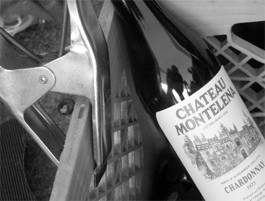
This is the headquarters of Shocking Bottles LLC, the production company formed to turn the Bottle Shock manuscript by entertainment-lawyer-turned-writer Ross Schwartz into a feature-length film. The movie is a light-hearted look at what’s considered the birth of the California wine business in 1976, when Napa vintages emerged triumphant from a blind tasting against their highly regarded French counterparts. It’s a romantic tale woven around actual events and focusing on the father-and-son duo of Jim and Bo Barrett of Chateau Montelena winery, which produced the winning Chardonnay.

In 2005, Marc and Brenda Lhormer, promoters of the Sonoma Valley Film Festival, read the Bottle Shock screenplay and loved it. They recruited director Randall Miller and his writing/producing partner Jody Savin. Also on board are producers J. Todd Harris and Marc Toberoff. After rewrites to the script, Miller’s film industry connections attracted a strong cast headed by English actor Alan Rickman. The long list of Rickman’s credits includes playing Professor Snape in the Harry Potter movies and the villain in Die Hard.

Operating on a shoestring budget (the producers won’t disclose the actual amount), Bottle Shock began a 30-day filming schedule on Aug. 1 in the Napa and Sonoma valleys. That’s how Stanzl came to be a set intern at the Sonoma warehouse site, equipped with a headset and unbridled enthusiasm.

“It’s the most amazing thing ever to happen in Sonoma since the Bear Flag Revolt,” Stanzl asserts, her voice filled with both humor and awe.

It’s hot on the indoor set. Really hot. Large circular lights close to two feet in diameter blaze overhead, creating perfect camera conditions but making people sweat. The air conditioning rumbles loudly. Once everything and everyone is in place, the order goes out to turn off the air conditioning. It takes a few moments before the noise dies away. Then filming begins.

Merely using plywood, paint and attention to detail, this corner of a former wine-label warehouse has been converted into an airport lounge circa 1976. Or at least the center area and three sides give that impression, with bright orange walls, a light yellow ceiling, rows of black chairs and a gray counter area displaying TWA and American Airlines logos. Visible through the “windows” is an image of a plane awaiting boarding. The fourth side of the room is dark, filled with equipment and technicians all supporting the illusion being created for the cameras.

Colorful polyester patterns of the ’70s are everywhere as volunteer extras pretend they’re waiting for a flight. The cameras focus on Rickman, portraying an English wine shop owner who was the chief architect of the tasting, and Chris Pine (The Princess Diaries 2, Just My Luck, Blind Dating) as Bo Barrett.

In today’s scene, Rickman’s character discovers he’s only allowed to carry one bottle of wine onboard his international flight to Paris. Worried that the vintages chosen for the tasting mustn’t be bumped or shaken in the cargo area, Rickman and Pine recruit other passengers to carry the extra bottles.

With a click of a slate showing the scene and take numbers, filming begins.

Rickman’s distinctive, well-modulated voice carries easily as he steps up to the TWA counter. “I’ll be traveling on flight 349 to Paris this morning,” he says smoothly. His voice carries authority and assurance.

With an exceedingly plastic smile, the woman behind the counter explains that he can’t take his 26 wine bottles on board. Rickman and Pine address the crowd. When Pine announces that his family owns a Napa winery, a voice asks, “Is your last name Gallo?”

There’s a minor hitch in the smooth-flowing scene, and a crewmember conveys the director’s order: “Back to one.” Wearing a floppy beige hat, a volunteer extra who was standing at the counter when the scene started doesn’t appear to understand the cue, and begins wandering off the set. A crewmember steps out, gently guiding her back to her starting spot. The main actors and the director don’t even seem to notice the mistake.

The scene is run several times, with a makeup artist patting the sweat off the actors between takes. It’s shortly before noon. Most people in the room began their workday between 6am and 8am, and will keep at it until 8:30pm or 9pm. A total of 60 extras and six principal actors showed up at staggered times this morning, were prepared by the wardrobe and makeup crews, then waited until called to the set.

Sonoma residents Bob Ogle and his wife Lucy Weiger are in the crowded airport scene. “We don’t call ourselves extras,” Ogle explains with a laugh. “We’re ‘background artists.'” A salesman, he took a day off to get his first experience on a movie set. His wife came dressed in a 1970s outfit that she’s owned for 30 years, but he had to be fitted into a suit by the wardrobe people. “The funny thing was trying on the clothes and remembering why I hated the ’70s,” Ogle laughs again. “All that polyester.”

The lights and sound technology fascinate Ogle, but the big draw is making a feature film with an outstanding cast. “I was blown away that Alan Rickman is starring. I walked on the set and there he was. Just hearing his voice, you think of Harry Potter and everything. It’s pretty fun–a memorable day.”

Taking it all in stride is David Hinkley, looking very ’70s in a brown corduroy coat with light-colored elbow patches. “I’m just a local actor who used to do a lot of theater in Sonoma County,” he says. “I got all the leads when I was young and pretty. Now I mostly do character roles.”

Today, he’s an unpaid extra, but in a featured spot. “I had to smoke 10 cigarettes and they got a close-up.”

There’s no way to know if the shot will be included in the final movie, but he doesn’t care. “I’d play a rock just to be in a scene with Alan Rickman and Chris Pine. Those guys are amazing.”

There’s been some controversy about Bottle Shock. It’s in production while another, higher budget film based on George Taber’s original book, The Judgment of Paris, is still being written. But this isn’t a contest or a race. The other movie will be focused on the larger picture. Bottle Shock is a fictionalized story about the Barretts, the self-proclaimed “hicks from the sticks” who shook up the wine establishment.

The script takes a few liberties, including the wine-intern love interest played by Rachael Taylor (Transformers, See No Evil). The mainstream media has made much of the fact that in one playful scene, when stranded by the side of the road, she flashes her breasts to get a passing motorist to stop and help. There was no such woman in 1976, but Taylor’s character adds spice to the story line.

Some shooting is being done in Calistoga and the Napa Valley, including at the Chateau Montelena winery, but in many scenes, Sonoma Valley locations substitute for Paris and Calistoga in the 1970s. Director Miller is thrilled by the local conditions.

“I haven’t seen an afternoon when I haven’t been amazed by the light,” he explains. “It’s very cinematic. People live here and they appreciate it, but they don’t realize how beautiful it really is.”

Before he read the script, Miller wasn’t familiar with the wine competition that’s come to be known as the Judgment of Paris, but he thinks it makes an incredible story element. It was a time when all kinds of people were involved in the fledgling California wine industry. “It’s a story about people,” Miller says. “Some of them were screwy, some were regular guys and they managed to create something wonderful.”

The story, Miller says, attracted an A-list of cast members to work for scale on this independent movie. In addition to Rickman, Pine and Taylor, the movie features Bill Pullman (Independence Day, Zero Effect, Lost Highway), Freddy Rodriguez (Grindhouse, Six Feet Under, and soon to join the TV series Ugly Betty) and Eliza Dushku (City by the Sea, Bring It On, Buffy the Vampire Slayer).

The movie’s 30-day shooting schedule is dictated in part by the limited budget, but it also makes it feasible for these accomplished actors to participate.

“It’s like coming to do an off-Broadway play for a short period of time,” Miller explains. “People want to do an artistic endeavor.”

Lori Laube and Jenifer Coté of Santa Rosa-based American Eagle Casting are charged with filling more than 450 roles for Bottle Shock. “We’ll use a lot of people more than once,” Laube explains. And they’re not just casting people, they’re also rounding up authentic-looking cars and other vehicles.

She’s happily amazed by the number of people volunteering to be in the crowd scenes (details at www.americaneaglestudios.com). “Some of them are here 12 and 14 hours a day. I can’t speak highly enough of the caliber of people we’re getting locally.”

Usually, their company works on documentaries, short films, commercials and print shoots; they’re currently recruiting models for a tourism catalogue. Laube is delighted to be working on a feature film, hoping it will attract other productions to this area. Casting work is demanding but fun, she says.

“You have to be highly organized, you have to have a lot of patience, and you have to be able to talk people into working for free.”

For some, it’s not a hard sell. Daria Taylor is part of the airport crowd scene. She saw an announcement about the project on the Internet just five months after she and her husband moved from Australia to California. They live in San Jose, but she thinks it’s worth the drive. “My husband thinks I’m crazy,” she says happily. To be on the Sonoma set by 8am, she departed San Jose about 6am. She’ll put in a 12- to 14-hour day, mostly standing around waiting, then drive back home, all for no pay.

“It’s not arduous. It’s a bit hot [on the indoor set] but nothing too extreme. This will be a good story to make the people back home jealous,” she smiles. “This is the day I got to stand next to Alan Rickman.”


New and upcoming film releases.

Browse all movie reviews.

Wine Tasting

0


The vinosphere has steadily warmed over recent years, and a thick haze of easygoing, consumer-friendliness has settled in. No one can tell you what’s a good wine. Don’t be bossed around; your palate is the boss. Rare indeed is the place where, as the unwary wine sampler, flattered into believing you have the lead, you are led kicking and screaming by the tongue to what you will like. And you will like it.

Locals is a high-concept tasting room in the sleepy pit stop of Geyserville. They offer over 60 wines from nine wineries in varietal flights. You can compare the 2005 and 2006 Hawley Viogner ($22), for instance, noting how one changes from cat pee to spring blossoms with a little time in the glass, while the latter starts out like sharp cheese on a water cracker.

The trouble started with the Zinfandel. At Locals, said our host, what’s important is your palate. Faced with 10 Zins to choose from, I merely suggested that I was looking for a certain extracted style. “Words, those are just words. Words are funny things,” I was admonished. “I’ll get a feeling for your palate,” our host instructed. “Then I’ll choose what you’ll like.” It sounds so reasonable and service-oriented. It’s all about you, and finding what you like. I felt like an EST seminar initiate, at once violated and enlightened. Words are just words. Do visitors ever resist this approach? “They try, but they’re up against the best.”

A young couple on their first wine country experience suggested that they preferred a green taste in a Cabernet, but were told, “Anything green in a red wine is always bad.” So nix the 2005 Hawley Pinot ($32) with its bacon and green spice. I prefer the strawberry conserve flavors and just-after-the-rain earthy aroma of the 2002 Peterson Anderson Valley Pinot Noir ($35), but I held my tongue. Maybe anything just-after-the-rain is always bad.

I got into trouble again at the end. We decided not to make a purchase that day. “That’s too . . . bad,” the host said. The word “bad” dropped like a heavy magnum on the floor. My friend came out from hiding behind a table of hip merchandise and we fled to recover with a bottle of Meeker from next door.

I’ve brought two people on two different occasions to Geyserville and each time, Locals brought them down. I say, give it a chance for the variety, it’s a great concept, but both erupted in vitriol after walking out the door.

Locals Tasting Room, corner of Geyserville Avenue and Highway 128, Geyserville. Tasting is free. 707.857.4900.

East Bay Vintner’s Alliance Urban Wine Experience

The Bay Area’s most exciting new wine scene is plugged into industrial-scale waste water systems. East Bay winemakers are fashioning excellent wines in warehouses down by the waterfront. In Berkeley, A Donkey and Goat Winery goes micro-Burgundian with its oak puncheon fermenters. Emeryville’s Periscope Cellars is in a former WW II submarine repair facility. Get out of the wine country, and get a rare chance to check out 15 member wineries at the East Bay Vintner’s Alliance 2nd Annual Urban Wine Experience. It’s held at Rosenblum Cellars, the godfather of the scene, in retired military buildings, on Saturday, Aug. 18, from 3pm to 6pm. 2900 Main St., Alameda. $35-$45. www.eastbayvintners.com.


View All

‘Daydream’ Come True

0

August 15-21, 2007

Last month, just before Sonic Youth began their Berkeley Community Theater concert with the familiar jangly strums of their anti-anthem “Teenage Riot,” an awe-inspired concertgoer yelled out “Thank you!” This interjection was right on considering the renown Daydream Nation has gained since its original 1988 release. And here it was, live in its entirety in a strange convergence of two art forms, the LP and the communal concert, like a rock snob’s dream set list realized.

After the last track, singer-guitarist Thurston Moore joked, “Now we’re going to play Sticky Fingers.” But there’s truth to every joke and Daydream has indeed taken its place among classic records by the Beatles and Stones, but also with followers of Radiohead and Nirvana, who’ve been noticeably influenced by its potent amalgam of hushed guitar shimmer and tasteful yet driving feedback freakouts.

The Community Theater’s high school-like setting proved fitting beyond the record’s opening song, symbolizing the affinity still felt by throngs of Converse-wearing indie kids. In fact, when Lee Ranaldo slipped “2006” into his spewing of years to “leave all behind you” at the end of “Hey Joni,” it didn’t feel gimmicky at all. A few years before the alternative nation emerged, Sonic Youth proved they could write great melodies if they wanted to and brought us universal, proto-slacker truths like the admission, “It takes a teenage riot to get me out of bed right now,” from “Teenage Riot,” and the realization “I’ve got to change my mind before it burns out,” from the shimmering, gorgeously layered “Candle,” breathtakingly performed in front of a curtain bearing the famous Gerhard Richter album cover painting.

Released in June, the two-CD Daydream Nation (Deluxe Edition) is a near-worthy second choice for those who missed the Berkeley show. The first disc presents the album, remastered with the group’s supervision and an eternal badge of honor for hipsters with a taste for the subversive yet conventionally rocking. Daydream is still perfectly paced, aided by the revolving singing lineup of deadpan Moore and spoken wordsmiths Kim Gordon and Lee Ranaldo, a contrast that worked exceptionally in its live context.

The real treat, though, is the second disc, which features live versions of each track from the original 1988 tour. A decidedly less polished set of performances than the recent show, we hear these future classics in their rough, skeletal infancy. Rounding out the set are covers of the Beatles (“Within You, Without You”) and early supporter Neil Young, whose “Computer Age” is given a bouncy post-punk treatment. In 2007, these covers don’t seem as ironic as perhaps intended, since Sonic Youth can boast their own timeless album. One listen can still illuminate what all the fuss is about.


News Briefs

August 15-21, 2007

Speak for the trees

Sudden oak death (SOD) is now inside Santa Rosa city limits, making it extremely timely that an SOD informational meeting is being held in Occidental on Saturday, Aug. 18. Scientists believe the devastating disease is caused by a water-borne pathogen. This region experienced extremely wet springs in 2005 and 2006, setting up what experts believe were prime conditions for spreading SOD. “It was kind of the perfect storm as far as the pathogen,” notes Katie Palmeri, of the California Oak Mortality Task Force. “There have been tons of new infections, tons of new die-off.” The North Bay’s coastal fog belt has been hit hard. Providing details about the disease, including current heightened fire risk and other concerns, the workshop will be held from 1pm to 4pm, at the Occidental Fire Department, 3821 Bohemian Hwy.

Detained, deported

Sausalito resident Duane Martinez was one of six rappelling down China’s Great Wall on Aug. 6, unveiling a 450-foot-square banner proclaiming “One World, One Dream, Free Tibet 2008” in English and Chinese. The protest was held one year and one day before the opening of the 2008 Beijing Olympics, which Tibet independence advocates charge is being used to legitimize China’s illegal occupation of that country. “We’re appealing to the international community to shine the light of scrutiny on China in the coming year. The Olympic dream of Tibetans is freedom by August 2008,” says Rinzin Dorjee, deputy director of Students for a Free Tibet. The Great Wall protesters were detained by the Chinese police for two days, then deported to Hong Kong together with two other Free Tibet activists.

Back to paper

After several years using electronic machines, Napa County voters may be returning to traditional paper ballots. On Aug. 3, Secretary of State Debra Bowen released the results of two months of study by University of California experts, showing that the systems could be easily compromised. Bowen “de-certified” the use of Diebold, Hart and Sequoia voting machines except for one per polling venue to satisfy federal accessibility requirements. Bowen’s decision affects about 9 million voters, more than half of the registered voters statewide, says Napa County Clerk John Tuteur. Napa has been using the touchscreen Sequoia machines since March 2003 and according to Tuteur, they work well. The more than 20 counties affected by the de-certification could file a lawsuit. But, says Tuteur, “if it’s not overturned by the courts, we will comply.”


Trees in Love

0

August 15-21, 2007

There are certain rules that must always be considered when staging a play outdoors in a park. Rule number one: Plays involving trees are particularly effective and save the expense of building treelike scenery, since most public parks already have, you know, trees. Rule number two: In an outdoor show, particularly one during which the audience will be eating and drinking, no actor’s voice should be so soft that it cannot be heard by an audience member while that audience member is eating potato chips. Rule number three: None of the above really matters because, with or without trees, watching Shakespeare in the park while eating potato chips is a lot like going to a party, and is as much about sitting outdoors with friends in a beautiful place and having a bit of casual fun as it is about watching and hearing the mighty magic of old Willy Shakespeare.

Though the potato-chip rule is occasionally broken by some of the actors in the Sonoma County Repertory Theater’s wonderfully breezy production of Shakespeare’s As You Like It–the final show of the 14th annual Sebastopol Shakespeare Festival in Ives Park–this is otherwise a perfect example of outdoor Shakespeare done right. Set largely in the semi-magical forest of Arden, As You Like It includes numerous references to trees and occasionally calls for them to be used as props, and director Elizabeth Craven makes excellent use of Ives’ greenery, staging several bits in, on and around the trees that surround the simple platform stage.

As You Like It is one of Shakespeare’s most loosely plotted comedies. In Craven’s hands, however, everything is paced so playfully, and each goofy bit of action or soliloquizing is staged with such imaginative flair and fun, that one barely notices or cares what a hodgepodge the play actually is. And since Shakespeare seemed to be playing fast and loose with his plotting, so does Craven, rearranging things in interesting ways and having some of the actors play several roles.

(The famous “All the world’s a stage” speech describing the seven stages of life in which every player plays “many parts,” is normally delivered by the melancholy nobleman Jacques deep in the first act, but here is used to open the show, with actor John Litton going through the seven stages of as he transforms himself with makeup and costume into the aged servant Adam, whose conversation with young Orlando–a wonderfully energetic Justin Scheuer–then begins the action.)

The plot is beside the point. For various reasons, a number of rich people have given up or been banished from court life and have gathered together in the forest, forming a kind of Elizabethan hippie tribe along with the native shepherds, farmers and other forest dwellers. The spiritual center of the group is the banished Duke Senior (Samson Hood), knocked out of power by his usurping brother Duke Frederick (also played by Hood).

Frederick’s merry band include the manic-depressive Jacques (Litton) and, eventually, a love-struck Orlando, followed by the spirited Rosalind (Jeanette Harrison), Orlando’s object of affection, who is disguised, because Shakespeare was into that kind of thing, as a boy. With Rosalind comes her best friend Celia (Gwen Kingston) and the court jester Touchstone (a marvelously coarse Gary Grossman). Before long, everyone is falling in love with everyone else, and there is plenty of same-sex confusion. Meanwhile, the evil duke sends Orlando’s brother Oliver (Chad Yarish) into the forest to kill him, and . . . oh, forget it.

Never have I seen AYLI performed where the story, loopy and tangential and just plain weird, was played out with this much fun. And under Craven’s clever direction, some things actually make sense that never have, such as the last-minute appearance of a woodland goddess, here performed as a kind of hippie wedding ritual. Nice touch.

With the accent on lightness and the focus on the joyous freedom of the outdoors, this As You like It is one groovy good time in the park.

‘As You Like It’ runs Thursday-Sunday through Aug. 26 at 7pm. Ives Park, Willow Street and Jewell Avenue, Sebastopol. $15-$20; Thursday, pay what you can. Special Sept. 15 performance in Armstrong Redwoods. 707.823.0177.


Museums and gallery notes.

Reviews of new book releases.

Reviews and previews of new plays, operas and symphony performances.

Reviews and previews of new dance performances and events.

Go West

0

August 15-21, 2007

Though the band’s old stomping grounds once included flophouse parties, dirty clubs and, for a brief time in the ’80s, alternative-rock radio, Camper Van Beethoven have settled into a comfortable fixation on the openness of Northern California. The band’s latest release, 2005’s still-relevant New Roman Times, imagines a future battle between the seceded states of Texas and California in a thinly veiled comment on present national conditions; naturally, the Golden State earns the band’s alliance.

While frontman David Lowery’s “other” band, Cracker, continues to explore back-country Americana (itself peppered liberally with California references), New Roman Times is a blast of thunderous, swirling prog rock dead set on firing up new mental pistons and recharging old ones. It should probably be performed in a dank, soulless, underground factory befitting its themes, but luckily for us in Northern California, it comes to life this weekend at a beautiful open field near Pt. Reyes National Seashore at KWMR’s Far West Fest.

Yes, the band still play “Take the Skinheads Bowling,” “Pictures of Matchstick Men” and the poignant “Sweethearts,” but expect potent new material such as the violin-driven “Sons of the New Golden West” and the scathing “I Hate This Part of Texas” to prove that, at 24 years and running, Camper Van Beethoven refuse to allow themselves–or their country–to be counted out anytime soon.

The Far West Fest is slated for Saturday, Aug. 18, at Love Field, Highway 1 and Levee Road, Point Reyes Station. Also appearing are SambaDa, Chrome Johnson, Bo Carper from New Monsoon and others. Noon. $20-$25. www.kwmr.org.

At the same time, peacemaking of another culture happens over hill and dale at the second annual West Marin Himalayan Festival featuring Tsering Wangmo (above) and Ang Tsherin Sherpa. One of the few selected to study in the Tibetan Music, Dance and Drama Society founded by the Dalai Lama in 1959, Tsering Wangmo in 1989 founded Chaksam-Pa, a troupe dedicated to fostering the ancient Tibetan tradition in response to its threat from Chinese occupation.

She has since been seen on ABC’s Profiles in Excellence, performed with Philip Glass and David Byrne, and is widely recognized as a leader in the struggle to preserve an undistilled Tibetan culture. An all-day demonstration and hourly talks will be conducted by Ang Tsherin, a third-generation painter of sacred tankas whose work has appeared in the Asian Art Museum of San Francisco–and sure, in the home of actor Richard Gere. Children’s dance groups, Nepalese paintings, prayer flag making and Himalayan vendors round out the festival this Saturday, Aug. 18, at the San Geronimo Valley Community Center, 6350 Sir Francis Drake Blvd., San Geronimo. 11am to 5pm. $8-$15. www.sgvcc.org.


I Sneaked In

0

August 15-21, 2007

My heart beats at a fast pace, the familiar taste of metal at the back of my throat accompanying the adrenaline rush that would provide victory or defeat any second now. Do not blow it, says that inarticulated voice somewhere, an instinctive, subconscious mantra. Do not blow it. 

Seldom have fast research, perfect timing and a predatory sense of opportunity placed me in such a dilemma. The next move will demand an effortless self-assurance, an easy air of tranquility. This I know; now if I can pull it off. The open-air shuttle is filling. I have just another 10 or 15 seconds to make a move. I take a last drag of my cigarette and get on the bus. 

As a former Green Beret, veteran journalist and freelance intelligence operative, weaseling into places where I am not invited is second nature. I crashed every major event during the 1993 Superbowl in Los Angeles, including the game itself and the Dallas Cowboys’ very private victory celebration afterward. Some months later, I not only cracked the televised end-of-series bash for the sitcom Cheers, I spent a couple of hours at the real party afterwards, tossing back beers with Sam, Norm, Cliff and Carla. Just days after that it was the VIP section at the Naval Academy graduation at Annapolis, having passed myself off as John McCain’s aide. Right this way, sir. Got by the Secret Service more than once and spent an hour talking baseball with Richard Nixon over coffee and dessert.

I’ve done Champagne with Barry Bonds, Willie Mays and the guy who owns the Giants. I have partied with the prime minister of the Bahamas. I even crashed the Elvis Suite at the old Las Vegas Hilton only to find myself standing in the foyer, confronted by Paris’ mom, dad, aunt and uncle. Turns out there was no party, and who the hell was I? Must have taken a wrong turn somewhere. 

The Bohemian Grove is different.

This is hallowed ground to San Francisco natives of a certain sort, San Franciscans like me. Although I never expected to be a member, I revere the place, love everything I’ve come to know of it. A club founded by artists and writers, paid for by the patrons they brought in–Mammon meets the Muses, vintage 1872. I’ve always wanted to crash the Grove. It’s some kind of ultimate test. As the summer camp approached, a good friend who frequents my morning round table in a Napa cafe began to regale us with stories of the place that he heard from a friend who managed it. 

That’s how I find myself at the backstage entrance to the Monte Rio Amphitheater on the last Thursday of July. Turns out the club puts on a fundraiser for the town. It is starting any minute. As I ride my bike over the bridge toward the festivities, “The Star-Spangled Banner” wafts over the river, signaling the beginning of the show.

I turn toward the Grove entrance instead, ride up to the sheriff’s deputies at the gate. So, what is this place? Get a friendly briefing, gauge their attitudes, and then bike every little road and lane around the place, ditch the ride and go to the show. But before I pay my 20 bucks to get in, I find the backstage entrance where they admit the club members to their private seating, befriend the security guard and note the shuttles coming and going–note that the guard did not stop anyone who appears to get off the shuttle. Safety in numbers. Walk with the Bohos, talk with the Bohos. I might have a chance. 

I stand on one of the steps waiting to ascend to a seat when the guy in front of me stops to talk, and in my fevered earnestness to get on the bus–the bus to the Bohemian Grove–I slide by him just as you would getting on any bus, my butt ever so gently grazing his own posterior. Before I clear his ass, he straightens up, turns around and looks down at me–a big man, forty-something. Ever so politely, he says, “Excuse me,” and makes an elaborate production of standing aside. I have been rebuked. I am an outsider. Everyone on the shuttle at that moment knows this, and they wait with a studied lack of concern to see how I will respond.  One does not try to get ahead at the Bohemian Grove. 

I turn to him and gravely say, “Oh, I’m sorry. That was very rude of me.” He smiles, nods, turns away. I continue to the back of the bus. There are no seats, so I squat in the aisle. The bus is on its way to the Grove, everyone’s settled, and the very man I bumped looks back to me and says, “Hey, friend, there’s a seat up here.” Oh, shit, I’m going to have to talk to these people. I take a front seat next to a guy who looks just like a senator, all pink, poreless cheeks, jutting jaw, silver hair. Everyone’s looking at me again; they take me for a guest or a new member. I can work with this: be careful, pay attention, think before talking and don’t ask what anyone does for a living.

I get into a rhythm here. I relax into a heady euphoria, and my natural confidence rides high. Some people find me insufferably arrogant, but as a white man clad in khakis, I’m projecting just the right vibe for this place. I’m the picture–the reality–of contentment, baking an internal glow of alcohol and combustibles, backlit by the redwood-filtered moon. I have a few minutes to wallow in satisfaction. This does not seem real anymore. I’m one of the Bohos! 

We approach the main gate I’d scrutinized a couple of hours earlier, slow down, drive through without stopping, and my new friend starts yelling, joking, “Hey, wait a minute, you didn’t check our papers, you didn’t check for illegals!” Har-dee-har-har. Now we’re inside, I’m inside, and I want to start yelling myself. I did it!

Time to pay attention again. This place is stunning: long, narrow canyon and giant redwoods everywhere, all dark, just a flicker of light here and there between the great trunks. The shuttle meanders the blacktop, headlights illuminating contrived, rustic entrances into clusters of trees. These must be the camps I’ve heard about. Everyone’s assigned to one. God help me if someone should ask about mine; I don’t know any of the names. 

Cigar smoke suffuses the air. Glowing ends bobbing in the dark suggest slow, obese fireflies. Everyone seems to carry a drink, and at each stop, those disembarking pee upon alighting, the image of man watering tree an iconic Grove commonplace. The shuttle travels a half-mile or so. We’re somewhere in the middle of the place, and I’m alone again.

I know some camp names now. I decide to belong to Fore-Peak, a nautical theme. I’m a guest of Bob Weir’s, met him 40 years ago in a first foray as a journalist, dropped in on him and Jerry back in ’67 at the house on Ashbury, killed an hour together. Yeah, Bob and I go way back. But I do not want to have that conversation just yet. Maybe Bob doesn’t hang at Fore-Peak. A short walk into the dark reveals a dim clearing ringed by big logs turned into benches. Above the benches–one named Old Guard; the benches actually have names–hovers a backlit poster of this year’s daily skits: a Sammy Davis Jr. revival; a George Gershwin review.

I hear music. It sounds like a Broadway play. I follow the sound, pass through a column of more trees. An orchestra plays, tenors and basses sing, Irish ballads in brogue. I emerge open-mouthed into yet another clearing. In the near distance, I look up to see leprechauns emerging from a dark, misty sky, a cast of dozens singing, a 50-man orchestra, rich costumes and colors, a chorus singing. I start to weep. I’ve died and gone to Darby O’Gill and the Little People.  A dress rehearsal of the annual play, and even the faux women are convincing. And just after watching the mean old duchess get her comeuppance, they call a break and a great, rangy man–the duchess–comes striding by, arms swinging, a day’s growth of heavy beard.

I retreat back to the benches in the trees and join a young man who expresses his reverence for the place, had always wanted to attend the Grove camp. His grandfather, a great fortune connected to a great brand, brought him as a guest. A twenty-something attending college back east–business major, of course–he laps up my wisdom, the career advice I offer.

Getting out will be the hard part, I think, but wandering down the canyon as instinct directs takes me by the security folk who make sure to ask if I have the card which would get me back in when I return from the Pink Elephant, my ostensible destination. I stop and talk.

We all become fast friends. 


Body and Soul

0

August 15-21, 2007

As a guitarist, I’ve always been absurdly undemanding of my instrument. My first guitar was a warped-neck beater handed down to me by my dad; my second was bought for $100, and slung around my neck with a scrap of rope; my current working guitar was fished out of a dumpster and given to me, thoughtfully, by my mother-in-law. After some toolbox tinkering, it plays beautifully.

None of this, it should be noted, exempts me from absolute awe and wonder at the luthier’s craft. Guitar-making is a fine and precise skill that resides miles above my common comprehension. Drilling some screws into a busted neck to fix a dumpstered axe is one thing, but building one from scratch? I’d be disqualified before I even began, which makes the return of the long-running Healdsburg Guitar Festival all the more welcome.

Now in its 10th year, the festival recently moved to Santa Rosa in order to accommodate the works of over 130 world-renowned guitar makers from as far away as Japan, South Africa, Australia and Italy. But the festival’s appeal isn’t limited to guitarists, says organizer Chris Herrod. “Anybody who’s interested in arts and crafts–and in fine workmanship–will really love to see these instruments,” he says, “and the guitar builders are very open to questions. It’s really just a whole world to discover.”

Within the world of woodworking, guitar makers are a highly respected bunch. “They’re dealing with an element that other woodworkers do not,” Herrod says. “Namely, sound.” One of the goals of the acoustic-guitar builder is to make an instrument that’s light, so it resonates, but is also strong enough to support the pressure of the strings. Herrod describes the skill as “a portion of experience, a portion of science and a portion of intuition.”

Kathy Wingert, a luthier from Long Beach, has been coming to the Healdsburg Guitar Festival since 2001. Most of her colleagues are men, a fact that Wingert brushes aside as unimportant. “Somebody said to me once, ‘You know, they’re only paying attention to you because you’re a woman,'” she remembers. “I said, ‘I don’t care as long as they get a beautiful guitar.'”

Wingert cites the festival as a hallmark of the openness and sharing that raises the level of everyone’s work in the luthier community. Along with hundreds of guitars, the weekend also offers concerts, workshops, demonstrations and seminars on guitar-making, although something tells me Wingert’s sound advice to beginning luthiers is applicable on a universal scale. “Find somebody who will tell you what you’re doing right and find somebody who will tell you what you’re doing wrong,” she cautions. “And then stop doing things wrong.”

The Healdsburg Guitar Festival runs Friday-Sunday, Aug. 17-19, at the Wells Fargo Center, 50 Mark West Springs Road, Santa Rosa. 11am to 6pm. $12-$22. Special Saturday-night concert with Martin Young, Alan Thornhill and Michael Chapdelaine at 8pm (separate admission). 800.477.4437. www.festivalofguitars.com.


The Child in All of Us

0

August 15-21, 2007

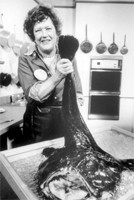
In an age when original cooking shows air on television 24 hours a day, seven days a week, the life work of a former file clerk sticks to our national culinary consciousness like spun sugar. While her television contemporaries Dione Lucas, Justin Wilson and Graham Kerr are primarily Wikipedia footnotes, Julia Child’s voice, humor and wisdom remain not only instantly recognizable but utterly relevant.

Julia died on Aug. 13, 2004, two days shy of her 92nd birthday. Festivities commemorating the anniversary of her birth this year include “Celebrate Julia!” cooking classes at Sur la Table locations nationwide; food bloggers collaborating to collect Julia-related posts at the blog Champaign Taste; and far-flung restaurants across the country independently serving Julia Child-inspired menus. (The scope of these gestures pale in comparison to that of Warner Farm in Sunderland, Mass., which last year created a corn maze in her image.)

But in your own home, the most rewarding way to remember Julia is to kick back on the sofa and watch all three DVD volumes of her groundbreaking television show, The French Chef, which WGBH in Boston produced from 1963 to 1973.

Julia’s defining moment occurred in 1961, with the publication of Mastering the Art of French Cooking, the exhaustive volume that she, Simone Beck and Louisette Bertholle compiled to make authentic French cooking accessible to average American home cooks. Even though battered copies of the book can easily be found at thrift stores and used book sales, the volume has been in print continuously since its debut 46 years ago.

But it was through The French Chef that Julia Child became forever fixed on our pop-culture radar. The show aired in repeats on a handful of PBS affiliates until 1987, which means there’s a whole generation out there more familiar with Dan Aykroyd’s immortal 1978 Saturday Night Live spoof, with his spot-on warbling Julia voice and gallons of fake blood, than with the actual show itself.

For those of us included in this bracket–or those who haven’t seen a full episode of The French Chef in decades–seeing a grainy, black-and-white Julia presiding over her television kitchen is like discovering a long-lost Rosetta stone; everything clicks, and you fall in love with cooking, and with this hunched-over woman, all over again.

During its 10-year run, The French Chef placed Julia in a number of studio kitchens outfitted with the sort of cabinetry and major appliances that homeowners of today dream of replacing: electric stovetops with push-button controls; conventional ovens barely large enough to hold a turkey; and a puttery old Sunbeam electric mixer that Julia herself confesses is perhaps on its last legs. This could either be a case of WGBH’s budget or of Julia acting on her instinct to keep it real; if home cooks in 1967 had an electric mixer, it probably was a Sunbeam.

Though she’s a bit stiff at the outset of the first episode, “Boeuf Bourguignon,” Julia soon enough eases into a relaxed flow as she discusses stew-worthy cuts of beef. She handles the various hunks of uncooked meat lovingly but heartily, as if playfully smacking someone’s butt. (Throughout The French Chef, she was a voracious handler of raw ingredients.)

Many of today’s most popular cooking shows are heavily edited, with close-up shots of beautiful food and eerily amplified cooking sounds–pouring, sizzling, chopping–spliced into the proceedings to act as sensory triggers for the viewer. Mise en place (the tidy little glass bowls of minced parsley and premeasured vanilla extract that some unseen intern assembled offstage) sits at the ready in open, airy kitchens bathed in diffused light.

For very basic reasons of production limitations, The French Chef had no such frippery. Instead, Julia relied on sheer force of personality and the occasional outlandish stunt to hook her viewers–which is perhaps why large, dead animals played a starring role in the most memorable episodes of The French Chef. On “Roast Suckling Pig,” Julia handles the pale-skinned piglet with a glint of mischievousness, as if she knew and even hoped that her somewhat macabre positioning of the inanimate porcine would cause some viewers to wince. And so what if they did? Pork comes from pigs, and pigs have little ears and snouts and cloven hooves. A gigantic live lobster, a flayed mess of tripe, a halibut the size of a saucer sled–she proffered all of these ingredients-as-props to remind us that this is food, take it or leave it.

Impeccable food styling was not The French Chef‘s strong point. While handsome and loglike, the yule log cake she crafts on “Bûche du Nöel” is likewise a bit homely. What happens on the show happens in real time, and dazzling moments arose from the most minor incidents. When a small cake twig droops as she applies chocolate buttercream to her cake log, Julia presses on, musing, “That would probably happen in a forest.”

The knowledge and passion stirred by her discovery of her life’s calling (Julia didn’t start cooking seriously until her late thirties) were still fresh with her in these shows, allowing her to straddle the chasm between home cooks and professional chefs with poise and assurance; she was one of us, only better. Julia made mistakes like we all do, but she knew how to fix them.

Julia’s flubs on The French Chef are our Easter eggs. While they don’t happen as often as modern folklore would have it (it was pommes Anna, and not a raw chicken, that she breezily plopped back into the pan after a failed attempt to flip it), they are a delight to watch. Julia kneads dough and somehow manages to fling her bench knife across the kitchen in the process; she messily dribbles crêpe batter on the stovetop; she unceremoniously–and repeatedly–wipes crumbs onto the studio kitchen’s floor. I do not envy the man or woman whose job it was to clean up after the shoot.

Even when sticking with familiar, workaday ingredients, Julia brought together the exotic and the commonplace. “The Hollandaise Family” is much more riveting than a solid half-hour of a middle-aged woman making two variations of the same sauce should be. She transforms unassuming egg yolks and globs of butter into silky, sunny yellow hollandaise and béarnaise sauces, making kitchen magic happen right before our eyes.

I learned to make hollandaise as a student at the Culinary Institute of America, where the school-sanctified method at the time was to whisk the egg yolks in a bowl over a saucepan of simmering water before whisking in a seemingly never-ending thin stream of clarified butter. It was a horrifying and tedious procedure that our chef-instructors related to us as if it were a ghost story, a process we should regard with awe and fear.

But in “The Hollandaise Family,” Julia voices her disdain for double boilers. “I think you have more confidence in yourself as a cook when you do things directly in the professional manner rather than using subterfuges,” she muses while plopping little blobs of softened, unclarified butter into her copper saucepan of frothy yolks. She makes it look so fun and easy, because guess what? It is. A 10-year-old could make a smashing eggs Benedict after watching that episode.

“Cooking’s just a series of the same old thing; sometimes there’s chocolate and sometimes there’s fish in it, but the principles are all the same,” she once said. That’s why Julia’s popularity and appeal endures. She was not there to impress and intimidate, but to demystify and reassure.

It’s impossible not to wonder if, in 50 years, any of today’s food-media superstars will command comparable admiration. Despite their talent, or any innovations of cookery or public relations, everyone else is inevitably following in Julia Child’s footsteps, because she was the first.

Television is an ideal medium for culinary education; the setting is intimate, and the energy of smaller, kitchenlike spaces translates so fluidly to our own humble homes. Ideally, cooking shows are educational and entertaining, though the latter seems to carry less and less priority in the eyes of network programmers. Edification does not have to be synonymous with boredom, as the sprightly activities of a 6-foot-2-inch woman with liver-spotted hands on The French Chef so readily remind us. Find these shows and relish them. Bon appétit, as Julia would say.

Quick dining snapshots by Bohemian staffers.

Winery news and reviews.

Food-related comings and goings, openings and closings, and other essays for those who love the kitchen and what it produces.

Recipes for food that you can actually make.

His Floating World

08.22.07The great thing about tenure is that I can't be dismissed summarily," laughs Sonoma State University professor Michael Schwager. The director of SSU's prestigious art gallery, Schwager is making a nervous joke about his job's future because his exhibition space is preparing to hang a series of works by Hawaii-based painter Masami Teraoka that are, well, genital-friendly. And blood-friendly....

Quiet on the Set

August 15-21, 2007Holding her right hand against her portable headset, Stacy Stanzl, 20, listens intently to the instructions being relayed to her and then yells out, "Rolling!" Clad in jeans and a green T-shirt, the San Francisco State University student is standing in front of what appears to be a half-completed wine shop, with walls of racks just waiting...

Wine Tasting

‘Daydream’ Come True

August 15-21, 2007 Last month, just before Sonic Youth began their Berkeley Community Theater concert with the familiar jangly strums of their anti-anthem "Teenage Riot," an awe-inspired concertgoer yelled out "Thank you!" This interjection was right on considering the renown Daydream Nation has gained since its original 1988 release. And here it was, live in its entirety in a strange...

News Briefs

August 15-21, 2007 Speak for the trees Sudden oak death (SOD) is now inside Santa Rosa city limits, making it extremely timely that an SOD informational meeting is being held in Occidental on Saturday, Aug. 18. Scientists believe the devastating disease is caused by a water-borne pathogen. This region experienced extremely wet springs in 2005 and 2006, setting up what...

Trees in Love

August 15-21, 2007There are certain rules that must always be considered when staging a play outdoors in a park. Rule number one: Plays involving trees are particularly effective and save the expense of building treelike scenery, since most public parks already have, you know, trees. Rule number two: In an outdoor show, particularly one during which the audience will...

Go West

August 15-21, 2007 Though the band's old stomping grounds once included flophouse parties, dirty clubs and, for a brief time in the '80s, alternative-rock radio, Camper Van Beethoven have settled into a comfortable fixation on the openness of Northern California. The band's latest release, 2005's still-relevant New Roman Times, imagines a future battle between the seceded states of Texas and...

I Sneaked In

August 15-21, 2007My heart beats at a fast pace, the familiar taste of metal at the back of my throat accompanying the adrenaline rush that would provide victory or defeat any second now. Do not blow it, says that inarticulated voice somewhere, an instinctive, subconscious mantra. Do not blow it. Seldom have fast research, perfect timing and a predatory sense...

Body and Soul

August 15-21, 2007 As a guitarist, I've always been absurdly undemanding of my instrument. My first guitar was a warped-neck beater handed down to me by my dad; my second was bought for $100, and slung around my neck with a scrap of rope; my current working guitar was fished out of a dumpster and given to me, thoughtfully, by...

The Child in All of Us

August 15-21, 2007In an age when original cooking shows air on television 24 hours a day, seven days a week, the life work of a former file clerk sticks to our national culinary consciousness like spun sugar. While her television contemporaries Dione Lucas, Justin Wilson and Graham Kerr are primarily Wikipedia footnotes, Julia Child's voice, humor and wisdom remain...
11,084FansLike
4,446FollowersFollow
6,928FollowersFollow