Reel Life Stories

0

11.07.07

We are all singing in different languages, but there is unity and harmony.” Although the late Malian njarka player Hassi Sare—a subject in the documentaryTimbuktoubab—is speaking of his experience blending musical cultures in the West African land known as the roots of blues, he could just as easily be summing up the overall vibration of the Sebastopol Documentary Film Festival, running Nov. 8&–11 at the Sebastopol Center for the Arts.

Timbuktoubab (Thursday, 7pm; Saturday, 8:15pm) follows local musician and filmmaker Markus James and three masters of traditional Malian music through their craft, blending traditional American blues, tribal Songhai lyrics and native Wasalu beats to create a remarkable crosscultural remix. To enhance the experience, Markus James and the Wassonrai, plus didgeridoo master Stephen Kent, are scheduled to play at the Sebastopol Community Center on Nov. 9.

The first of its kind in Sebastopol, the festival is the brainchild of filmmaker Eliza Hemenway, who has brought together a wide array of 40 independent documentary films. Hemenway, who moved to the North Bay from San Francisco a year ago, explains, “The Bay Area is the hub for documentary filmmaking. It’s the heartbeat of it in the country, so I couldn’t believe that there wasn’t a strong population of filmmakers here, and of course there is.”

Amid so much good, there are a few true gems to watch for. The Eloquent Nude (Friday, 7pm) is a beauty of a film examining the life and love between Edward Weston and Charis Wilson. Wilson, now in her 90s, recounts her years with Weston, with some laughs and some regret. Not only was she one of his most famous models, his muse and his lover, she was a young woman struggling to come into her own, both in harmony with and in the shadow of Weston’s genius.

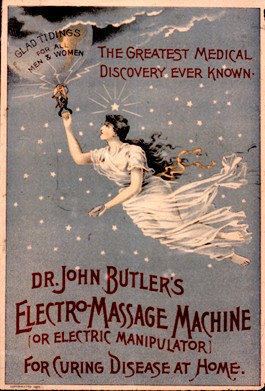
Passion and Power: The Technology of Orgasm (Thursday, 7pm; Saturday, 3pm) traces the history of a simple little invention, the vibrator, from a prescribed medical procedure aimed at ridding women of “hysteria” to a hidden vice, as it relates to the changing views of women’s sexuality. Expect Victorian-era vibrators the size of kitchen tables and information on whether a move to Texas might put a damper on the number of sex toys you can own. Area musician and activist Holly Near hosts a Q&A with filmmakers Emiko Omori and Wendy Slick following the Thursday screening.

There are several other films that highlight resident talent, a conscious goal by Hemenway, who has dubbed this section of the festival “Reel Community.” Texas Gold (Friday, 7pm), directed by Santa Rosa filmmaker Carolyn Scott, follows modern-day fisherwoman Diane Wilson, a mother of five who takes on the petrochemical industry and is dubbed an “unreasonable woman” when she rallies against the toxic pollution of her stretch of ocean.

Every Beat of My Heart: The Johnny Otis Story (Saturday, 7 pm) is a still-in-progress bio of Johnny Otis, a longtime Sebastopol resident who discovered Etta James and is often called the Godfather of R&B. A Q&A with filmmaker Bruce Schmiechen follows directly after the film, itself followed by a Johnny Otis tribute concert with Jackie Payne and Steve Edmonson band at the French Garden Brasserie after the screening, featuring Nicky Otis, Johnny’s son, on drums.

Village HopeCore (Saturday, 12:45 pm), part of the festival’s Youth Forum, was created by Sonoma Academy students Jake Eakle, Becca Heitz, and Myles Lawrence-Briggs and profiles the men and women of Chogoria, a rural village in Kenya, and how micro-lending has changed their lives. Other Forum films include Child of Our Time, which follows the collaboration between the Santa Rosa Symphony and 15 teens who respond through art to the poem and music of Sir Michael Tippett, and The Toolbox Project, a short film developed for West Sonoma County schoolchildren.

Patrick’s Gallery (Saturday, 12:45pm) highlights the work of Sebastopol sculptor Patrick Amiot and how the sculpture of a fisherman changed his life (and the face of Sebastopol). Just wander down Florence Avenue if you want a preview.

The festival also pulls the craft of good filmmaking off the screen and into a series of special personal presentations. Film editor and Santa Rosa resident Vivien Hillgrove (Henry and June, The Unbearable Lightness of Being) hosts “Filmmaking from an Editor’s Perspective” (Saturday, 3pm), an examination of how editing can make or break a film. A retrospective and Q&A session with the award-winning San Francisco&–based documentary filmmaker Ellen Bruno (Saturday, 4:45pm) gives an overview of this prolific documentary filmmaker, whose work has garnered some 25 national and international honors, including a Guggenheim Fellowship.

As with many budding new art shows, entries can be hit and miss, especially if you enjoy the traditional History Channel documentary form, but, hey, this is a Sebastopol festival, and in due fashion, the diversity in opinion and presentation here is impressive. Come explore what global and local independent filmmaking has to offer, and help turn the First Annual Sebastopol Documentary Film Festival into a second annual.

The Sebastopol Documentary Film Festival runs Thursday&–Sunday, Nov. 8&–11, at the Sebastopol Cinemas (6868 McKinley St.) and the Sebastopol Center for the Arts (6780 Depot St.). Tickets are $8 general, $10 for special programs and $20 for the opening-night gala screenings, followed by a food and wine reception. At-the-door tickets are not available at the Sebastopol Cinemas; go to the Center for the Arts to purchase. 707.829.4797. Markus James and the Wassonrai perform ‘Desert Blues III: Mali, Mississippi, Guinea’ at the Sebastopol Community Center, 390 Morris St., on Saturday, Nov. 9, at 8pm. A master class with Bolokada Conde, lead drummer for the National Drum and Dance Ballet of Guinea, precedes at 5:30pm. $7&–$15; includes master class. 707.823.1511.


New and upcoming film releases.

Browse all movie reviews.
News Briefs

11.07.07

Bagging the Ban

A threatened lawsuit is prompting the town of Fairfax to set aside—at least temporarily—its plans to completely ban plastic shopping bags. In July, the Fairfax Town Council unanimously approved banishing the ubiquitous bags from grocery stores, restaurants and shops. The law was supposed to go into effect Feb. 10, but instead the council is making the ordinance voluntary rather than mandatory. Representatives of plastics manufacturers argued the ban would increase the use of paper bags, and threatened to go to court to force Fairfax to pay for an environmental impact report. “It would take probably $50,000 to fight this,” says Fairfax town manager Linda Kelly. Instead, activists hope to put a plastic bag ban on the local ballot, possibly as early as November 2008.

Selling Petaluma

Want to name a community center for your Aunt Bertha or television host Stephen Colbert? Ten eBay auctions will give the highest bidders naming rights for seven parks, two trails and a community center, all part of the 274-unit Quarry Heights subdivision slated to be built on an old rock quarry at the southern edge of Petaluma. The money raised will be used to improve restrooms and concession stands at the Petaluma and Casa Grande high school stadiums. Developer KB Homes teamed with Petaluma City Schools to create the eBay auctions which end Friday, Nov. 16, at 8pm. (Details are online at www.namepetalumaparks.com.) “We’re trying our best to get the word out about this unique opportunity,” says schools superintendent Greta Viguie. Anyone can bid, but a committee has final approval of the names, which can’t be offensive or related to alcohol, tobacco or drugs.

Too Short for Wi-Fi

A deal to have AT&T invest more than $1 million to create a free wireless Internet service inside Napa’s city limits was announced with great fanfare last February, but the plans got nipped because most of Napa’s utility poles are only 30 feet high. The California Public Utility Commission enacted new regulations creating a safety zone around high voltage power wires. Since nothing can be hung from the bottom 16 feet of a utility pole, in Napa that leaves only 14 feet for two high-voltage lines, not enough room to squeeze in WiFi antennas, making the wireless program impossible, says Barry Martin, Napa’s community outreach coordinator. Fortunately, he adds, the city didn’t spend any money on this project.


Long-Haired Redneck

0

music & nightlife |

By Gabe Meline

David Allan Coe is coming to town, and it’s probably the only time that Petaluma’s cowboy population will make the three-block trek from Kodiak Jack’s over the ideological Berlin Wall and into the Phoenix Theater. It’s also probably the only time that the Phoenix will have to mop up Copenhagen and Skoal afterwards. Coe’s pretty much the most extreme example of “outlaw country” there is, and the venerable teen venue may never be the same.

Coe’s written hundreds of songs, and many of them are great, but he’s faced scrutiny for his staunch redneck ways. There’s an oft-recycled story—which Coe has never entirely dismissed—of the singer murdering a fellow inmate in jail rather than supplying sexual favors, and this year it was announced he owes $292,688 in unpaid child support. Even more notoriously, he recorded two underground mail order-only albums in the 1980s full of songs that common decency deems unprintable, including an infamous rant against white women who fornicate with black men. In the years since, Coe’s been called a racist, a misogynist, a smart businessman, a rebel, a genius and an idiot—and all of them apply, in varying degrees.

The racist tag is the one that especially haunts and infuriates Coe, who insists that he was encouraged to release his controversial songs by none other than Screamin’ Jay Hawkins, a black R&B singer, and defensively points to the black people he’s had as band mates. But do Coe’s personal beliefs really matter when he’s obviously attracting, and artistically justifying, intolerance? Coe can talk all he wants about refusing to perform his “joke” songs live, but he still turns an untidy profit by selling the album—clad in images of the Confederate flag—on his website.

Now 68, Coe could easily rest on his back catalogue of hits, which actually includes quite a few tender odes—Johnny Cash did a great version of “Would You Lay with Me (In a Field of Stone)”—but he’s still active, recently recording a country-metal collaboration with the Texas metal band Pantera, who have long been accused, as bad luck would have it, of also being closet racists. It’ll be interesting to see if Coe is ever inducted into the Country Music Hall of Fame, and if so, whether or not he’ll get the same sort of mixed reaction that faced director and House Un-American Activities Committee cooperator Elia Kazan when he took the podium in 1999 to accept a Lifetime Achievement Oscar.

Coe’s career magnifies the exact question that underlined Kazan’s big moment: What’s more important, the man or the artist? The hundreds of contributions to country music, or the one ugly stain? And how widely do we separate the two?

David Allan Coe appears this Sunday, Nov. 11, at the Phoenix Theater, 201 E. Washington St., Petaluma. 8pm. $25. 707.762.3565.


FIND A MUSIC REVIEW

Two-Wheeled Transport

11.07.07

A couple of weeks ago, I found myself confused by the acronym DIY. The fact that it appeared in reference to one of my own articles did nothing to clarify matters. I puzzled over this for some time. Dogs in Yard? Drinking in Yurts? Clearly not cool enough to understand hip acronyms, it wasn’t until I visited Community Bikes on Sebastopol Road in Santa Rosa and saw their bulletin board that I finally got it. A sign there reads, “DIY—Fix a Bike,” and at last the words fell into place.

Obviously, I’m not much of a punk rocker or a do-it-yourself kind of gal. Not that I don’t try; it’s just that my efforts never seem to amount to much. I can’t cut straight, I can’t sew, I can’t draw, paint or grow things, and I definitely cannot fix a bike.

There is one thing I can do, however: imagine things. I can imagine myself with a bike. A pink German beauty of a road bike, to be precise, with a white seat covered in daisies and a bell on the handlebars. One of the volunteers at Community Bikes is currently working on what I quickly begin to think of as “my” bike, the Pink German Beauty.

My PGB, once a rigorous check-list of repairs have been meticulously executed, will join the others at the front of the patched-together building that serves as headquarters, volunteer center, donation station and repair shop for the nonprofit Community Bikes. There my Pink German Beauty will sit until it is sadly snatched out of the row by some other discerning individual with more money than I.

LITE Initiatives, Community Bikes’ mother ship, was founded in 2000 by Sammy Nasr and Portia Sinnott as a way of promoting and supporting communities to live “lightly and more efficiently.” Nasr and I recently met at Community Bikes so he could give me a tour and tell me about this fantastic little rustic shop where people donate hours of their time to taking apart, repairing and teaching others to fix their own bikes.

Nasr stresses the fact that Community Bikes is not a place where others will fix your bike for you; this is a place where volunteers will help you to DIY. The walls are lined with boxes and boxes of well-organized bike parts; just about anything a bike enthusiast could need is available, including spare helmets, extra water bottles and lots of tools and devices that look very important.

Like a bicycle, LITE Initiatives is made up of a number of spokes. Each of these spokes is an endeavor meant to inspire public awareness, car-lite behavior, do-it-yourself capabilities and zero-waste activism. When we meet, Nasr tells me that he and Sinnott have shared a car for years (they live five miles apart), and that it was their car-sharing that initially inspired them to start the nonprofit.

Bicycling can be liberating, Nasr tells me, a way to feel empowered, healthy and strong. Though he puts in over 20 hours a week just to keep the nonprofit running, he is in love with the work, and this love shows not just in the welcoming atmosphere of the place, but in the sheer, impressive nature of this selfless endeavor.

The bikes for sale may not be shiny, they may not meet conventional standards of beauty, but they are quality bikes just the same. Nasr assures me that nonquality donations, of which there are many, never make it into the lineup. What he terms “department store” bikes will be scrapped for a small fee of $10. All other bicycle and part donations are welcomed and painstakingly rehabilitated.

I speak briefly with the volunteer who is working on my Pink German Beauty. He tells me that he spends about 12 hours a week at Community Bikes doing exactly what he is doing now: making sure that every bike, not just mine, is safe, oiled and running smoothly. I admire his handiwork, and run my hand over the shiny chrome thing that is covering the front tire.

In order to give the appearance of a purpose other than just staring at my PGB, I ask a vague question about bicycling. What’s with the clip-on shoes? Am I the only one who gets freaked out by that? I’m assured that though this method of riding does serve a purpose, clip-on shoes are not necessary for the kind of riding I will probably be doing on my PGB.

As I’m leaving, I pause to scan the bulletin board one more time. My eyes land on a “We Need You” list: bike repairing, fundraising, hosting workshops and donating time and work on graphics, videos and the website—almost anything DYI. I wonder if writing articles counts. From deep within, I can feel my inner barterer begin to stir. Pink German beauty, you will be mine. Oh yes, you will be mine.

Community Bikes is open for donations, sales and volunteers, on Thursdays from 5pm to 9pm, and on Sundays, from 1pm to 5pm. 4009 Sebastopol Road, Santa Rosa. For more information, call 707.579.5811. For bicycle safety tips and to find out about street skills seminars in Sonoma County, go to the www.bikesonoma.org; in Marin County, check out www.bikemarin.org. In Napa, the Napa Bike Coalition is supported by the Eagle Cycling Club, www.eaglecyclingclub.org.


Fair Is Foul

11.07.07

Midnight on Halloween, the witching hour. There I was at 11:45pm, chugging caffeinated beverages along with some 15 other theater-loving insomniacs, preparing to experience a special sneak preview of the Loading Zone Theater’s super-creepy new production of the Scottish Play. (Macbeth began its regular run last Friday, beginning each night at the sensible hour of 8pm.) The cast and crew deserve mega-kudos just for attempting this midnight launch, especially when one considers that there was also a 9pm show earlier that night, meaning these actors performed two lengthy stagings back to back.

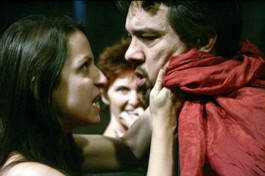
In the Loading Zone’s small 45-seat black box theater, no chair is farther than about 12 feet from the performance area. You can literally hear a whisper—which is good, because this Macbeth is full of hushed asides and softly murmured threats, easily the most intimate staging of Mackers that I’ve ever seen. That intimacy serves the production well. Directed by David Lear, this version, acted out by a cast of five actors shape-shifting from one character to another, highlights the mystical undercurrents in Shakespeare’s text, imbuing the entire play with an aura of pleasantly inevitable dread, bringing the audience intimately within the nightmarish twists and turns of fate, the banal accidents and audacities and desperate improvisations of individual evil.

Macbeth, at its heart, is a classic noir thriller, and this production, though still working through some rough patches and pacing issues on the night I saw it, clearly captures that noirish tone, dousing everything in a hell broth of pagan danger and awestruck wonder. With its knives and thrones made of bones and a soundtrack of rumbling tones, this Macbeth boasts a visual and auditory style that is exhilarating and, in places, remarkably scary.

Encouraged by the unexpected prophesies of a quartet of highland witches (who prowl the stage making off-putting animal noises, creeping and lurching through the set’s atmospherically tangled curtain of rotting trees and twisted branches), the Scottish warrior Macbeth (David Yen, nicely manifesting the ticks and whispers of cautious uncertainty) makes the mistake of telling his wife, Lady Macbeth (Corisa Aaronson), that a bunch of witches just told him he’d someday be king.

Playing on his obvious adoration of her (Lady Macbeth is played by Aaronson as a woman who believes a little too fiercely in her husband’s leadership abilities), she convinces Macbeth to murder the current king and assume the throne. Once the murder is done, all hell breaks loose, with those Fate-like witches (played with intense physical commitment by Denise Elia, Ryan Schmidt and Jan Freifeld) constantly showing up to push the mayhem forward.

Except for Yen, who plays only the one part, the four other actors take on all the other roles in the play, stripping the script of its original grandeur but replacing it with something effectively immediate and otherworldly, lending the play a kind of multiple personality disorder that works well with its themes of madness and flip-flopping identity. The entire cast is excellent, gender-swapping and easing in and out of 20 different characters, but as Malcolm, the son of the murdered king, and especially as Hecate, the queen of the witches (an invention specific to this production), Elia is the standout, giving a performance of mesmerizing intensity that is as brave and assured as it is detailed and riveting.

In the end, the real star of the show is the director. Lear strips Macbeth down and rebuilds it into something fresh and pulse-pounding and incredibly weird. Whether Shakespeare would approve is another question. The final image, in which the audience is invited to imagine themselves following Macbeth’s footsteps to the throne, is effective in reminding us that ultimately Macbeth is not about the seething violence that lurked below the skin of some crazy Medieval Scotsman whose ambitions got the better of him. In the end, it’s about you and me.

‘Macbeth’ runs Friday&–Sunday through Nov. 24. Friday&–Saturday at 8pm; Sunday, 2pm. Loading Zone Theater, in the old Lincoln Arts Center, 709 Davis St., Suite 208, Santa Rosa. All seats are pay-what-you-will; advance reservations necessary. 707.765.4843.


Museums and gallery notes.

Reviews of new book releases.

Reviews and previews of new plays, operas and symphony performances.

Reviews and previews of new dance performances and events.

Goofball Trap

0

11.07.07


Followers of Ween are a motley bunch. Stoners, nerds, scholars, Deadheads, frat guys and folks of otherwise indisputable normality have all wrapped their heads around the paradigm that makes Ween Ween and not just another goofy band.

For years I dismissed them as just that, an irreverent novelty act for college kids, those guys whose nonsensical video, “Push the Little Daisies” was on Beavis and Butt-Head. Who needed Ween?

Turns out I did. As far as I’m concerned, everyone needs at least a little Ween. The band, who have been together since 1984 and just released their ninth album proper, La Cucaracha have produced such a wide-ranging body of songs that even the squarest of the square can grow to love at least one of them.

It’s easy to understand why the un-Weened public would be inclined not to take the band seriously. Song titles like “Flies on My Dick” and “Help Me Scrape the Mucus off My Brain” can bring to mind the notebook snickerings of bratty, white suburban middle-school kids. Pinched, affected vocals, the use of profanity and sly pop-culture references are not infrequent. You figure Ween can’t be serious, but then you realize theyare. . . but they can’t be . . . but they are . . . ad infinitum. Realization of this snake eating its own tail is the Eat Me/Drink Me ticket into Ween’s wonderland, a rewarding and maddening place.

Perhaps the most vehement Ween fans are devoted to the band’s early years. Mickey Melchiondo and Aaron Freeman—otherwise known as Dean Ween and Gene Ween—formed the band in New Hope, Penn., at age 14 and rode out the decade immersed in drugs and tape machines. Output of that era can be unlistenable to regular folks. When “Poop Ship Destroyer” appears on your iPod’s shuffle, best skip the track or risk wrecking the mood of the party.

But dismiss later Ween at your own risk. Genre-hopping (they recorded an entire album with Nashville’s best session musicians) and an unshakable ’70s rock fixation do not overpower the reality that Gener and Deaner grew into powerful, mature songwriters. Even when derision, snark and snickers come in tidal waves, there’s also an equal, omnipresent measure of sincerity, a vital element that rescues their best work from the kitsch sludge pile.

Take “Baby Bitch,” from 1994’s Chocolate and Cheese. A funny and acidic indictment of a vindictive ex-girlfriend (“Baby, baby, baby bitch / Fuck you, you stinky-ass ho”), it’s also a moving and amazingly accurate evocation of post-breakup depression and self-loathing, an undeniably pretty ballad that thumbs its nose at every pretty ballad before and after it.

Ween’s songs hinge on either upending or paying tribute to musical and lyrical clichés; they’re not poking fun so much as running amok for the hell of it. Topicality, the measure of a great parodist, is not part of Ween’s game. They could give a crap, and while you can draw a direct line between many Ween songs and their inspiration (“Pandy Fackler” to Steely Dan; “Buenas Tardes Amigo” to Sergio Leone; “The Mollusk” to some whacked-out Christian prog-rock record for kids), they’re not in the business of inserting humorous couplets into other artist’s current Top 10 songs.

And a lot of their songs are pure Ween. Like the spooky “Spinal Meningitis (Got Me Down)”, which would either be incredibly offensive and hurtful to a child inflicted with the disease, or oddly comforting. I mean, why not sing about how much it would suck to have spinal meningitis?

Besides, a fair amount of Ween songs have to do with their homeland, southeast Pennsylvania. There really is a “Joppa Road.” “Pork Roll Egg and Cheese” is a sandwich featuring pork roll, a high-fat lunchmeat specialty of southern New Jersey. The easy-rocking sway of “Chocolate Town” perhaps recounts a bus ride down to Hershey.

Sadly, La Cucaracha is too unfocused and wanky to serve as a proper introduction to Ween, but everything it’s not (uniformly awesome, for one) does remind us of the greatness Ween have reached, and hopefully will again. That they can initially come off as a joke band might be for the best; we get no huge Ween hype to spoil our fun, no bloated Ween bio-pics or overworked publicity photos of Gener and Deaner looking tortured and artistic. They can go on being totally serious about messed-up music, or as messed-up about totally serious music, for as long as they like.


Letters to the Editor

11.07.07

Bye-Bye Byrne

I just wanted to wish Peter Byrne good luck on his book (“Later Alligators,” the Byrne Report, Oct. 31) and finally let him know that I consider him one of the finest investigative reporters in what is left of this good old U.S.A. I have been a fan of Byrne’s for a long time, and he is the main reason why I seek out the Bohemian. I will miss Byrne and will look forward to his book. He’s a gutsy genius! Stay in touch. Thanks to him for all his efforts.

Dennis Sala , Santa Rosa

State of Journalism, wot-wot

Just wanted you to know how much Peter Byrne will be missed. I’m only sorry I didn’t write before, now that he’s taking a leave. We’ll just wish him well, look forward to a fascinating book and await his return.

The state of journalism in this country has degraded to the point where very few are actually practicing the real craft. And Mr. Byrne is one of the few really good ones out there. I’ve saved many of his articles because they are just so damn good.

Thanks for giving him a home in your publication.

Ann Kennedy , Santa Rosa

Free to Be You and Me

Very intrigued by Peter Byrne’s assignment by the American Institute of Physics to write a bio of Hugh Everett, the “many worlds” theorist whose ideas, with impeccable mathematical support, have seemingly solved physics’ quantum indeterminacy problem. I’m no physicist or mathematician, but would view with glee any well-founded theory that (a) supported Einstein’s dogged assertion that nothing in the cosmos behaves randomly and (b) puts all those “free will” folks—including many Heisenberg-enthralled physicists—down several pegs. It may well turn out that the teeny tiny quanta don’t actually run around randomly, “freely,” after all, ho ho, but live and have their being in an orderly way, even as you and I.

(Strange that randomness should be pointed to as proof of freedom of will. Would we want to live in a truly “free” universe? I think not. I think what each of us wants is freedom for me to do as I desire or “will,” but everybody else had better behave as I expect them to lest their freedom impinge upon mine. In other words, a standard infantile fantasy.)

Constant reader Don Macqueen, Santa Rosa

Dissing Day of the Dead?

The current focus on the Mexican holiday of the Day of the Dead is curious (“Skeleton Crew,” Oct.24). Several years back, I was fortunate to witness this holiday in Tzintzuntzan Michoacan and I was deeply moved by the ritual. The North Bay version of this ancient celebration accentuates the most superficial aspects (sugar skulls, storytelling, etc.) while ignoring the central ritual. The whole point of the holiday is to spend the whole night around the graves of your ancestors. The cemeteries in Mexico are lit up with candles, and the graves are covered with marigolds. People sing and chant, eat and drink, socialize and commune with their ancestors’ spirits. Perhaps our culture’s fear of death influences the skewing of this holiday.

Andrew Haynes, Petaluma


Sleeper Cells

11.07.07

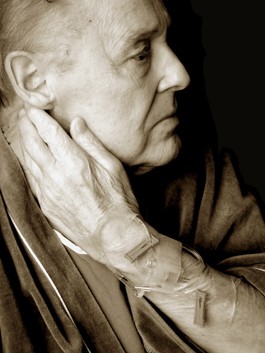
It had to be proven to me that something was going on with my body,” says Sacramento resident Kelly Simpson, even though she came of age aware there was such as thing as Fabry disease. An uncle died of the rare disorder when she was a teen, and she says, “I grew up knowing my brother had this thing and knowing that I might be a carrier.” But she wasn’t ready to confront it within her own metabolism.

Still, the signs were there—pain in her hands and feet, elevated levels of protein in her urine, heart palpitations—and she eventually agreed to medical monitoring of her kidney and heart functions. “There was just a slight decline,” the 40-year-old mother of five recalls, “but enough so that in my mind, I knew that I needed to do something.”

Officially diagnosed in 2002, while pregnant with her youngest, Simpson began getting treatment for the disease 18 months ago, bi-weekly enzyme infusion sessions that keep her symptoms at bay.

Simpson is also keeping a watchful eye on her 10-year-old daughter, Brittany, who has also tested positive for Fabry, the first confirmation that this little-known disease has passed to yet another generation in her family. “If she complains of any of the symptoms,” Simpson says, “then we’ll talk to the doctor.”

First identified by doctors in Europe almost 110 years ago, Fabry is caused by an abnormal gene on the X chromosome that governs the production of a key enzyme, alpha-GAL That’s an important little protein, because its job is to break down a fatty substance known as GL-3, which otherwise builds up in the cells of the heart, kidney, brain and skin, causing damage and decreased function in one or more of those organs.

Fabry is believed to affect somewhere between one in 40,000 and one in 117,000 patients, but some who work closely with the disease suspect those numbers are low. “It could be underdiagnosed,” says Cindy Johnston, a genetic counselor at UCSF, “because in females, the clinical manifestations are not so severe. So those patients may not come to the attention of medical professionals.”

Women, with an additional X chromosome, often have less severe symptoms and higher levels of the alpha-GAL enzyme, and until recently, were thought to be only carriers for the defective gene, as Simpson was told. But for men, Fabry is a slow-release poison, gradually unleashing a veritable Swiss Army knife of pain and problems.

Corrine Casey, a Santa Rosa mortgage broker who asked that her real name not be used, has watched her brother Ed wrestle with a dizzying array of medical issues for years. “The symptoms he has include body pain, fatigue, some kidney problems,” Casey lists. She continues, “He doesn’t sweat, he has an intolerance to heat, he’s got some cardiac problems, he has a particular distinctive rash around his navel [which is common for Fabry], he has a problem with his hands and feet—itching, burning and swelling, which is also common—and he has chronic depression.”

When the family heard of Fabry on a cable TV medical show and asked Ed’s doctor about it, the physician “basically told him he was gonna die and the only way he could be saved was with a kidney transplant,” Casey recounts, “neither of which are true.”

She can say that now because she plunged into researching Fabry herself, digging through Internet sites to confirm and expand what they knew about the disorder. And in doing so, Casey made another discovery: “As I read the list of symptoms, I recognized myself.”

But she also learned there is a treatment available. At the UCSF-Stanford Lysosomal Disease Center, about two dozen patients make regular visits for enzyme replacement therapy that uses a synthetic version of the defective enzyme “which we can infuse into our patients every other week,” says genetic counselor Johnston. Accomplished through an IV drip, that process can take anywhere from two to eight hours per visit. “Basically, you sit there in a chair for however long it takes,” Simpson says.

Qualifying for the costly therapy can be even more daunting. Getting a confirmed Fabry diagnosis requires both blood and DNA tests, and HMO doctors who are unfamiliar with the disease are too often unwilling to order those screening tests.

“But without the testing, without the diagnosis, without the enzyme replacement therapy, people don’t have a chance,” Casey says grimly. “Men will typically die by the time they’re 51.”

Her laywoman’s prescription?

“You have to fight for yourself. You have to go and do the research yourself. You have to educate your doctor yourself. You have to insist on the tests,” she asserts. “As a patient, you have got to become an expert.

“Because your doctor is not gonna do it.”


Heritage for the Holidays

0

11.07.07

Splitting his time between Guerneville and Manhattan, acclaimed consultant Clark Wolf graces these pages with the occasional diatribe from the periodic local.

It’s hard to believe and kind of a giggle to learn that Laura Chenel, our local and national queen of all things goat cheese, once worked at her parent’s Sebastopol eatery, Goobler’s Roosterant. They had a farm where they raised the all-American bird, so naturally a cafe followed. Truth is, the North Bay has for years been Turkey Central.

In certain circles, Petaluma has long been known as “the birth place of bird propagation,” in no small part due to the efforts of one George Nicholas who turned a “mutant” (genetic accident) single white turkey into a broad-breasted juggernaut. This post-’50s embrace of all things technical was built on a long, solid history of chicken and egg production (about which there is no question of order). Even more than Colorado has been known for lamb, the North Bay region has long been lousy with birds. Squab, quail, duck, even geese have all been waddling toward our dinner tables from in and all around what the Miwok Indians referred to as “flat back hills” (pe’ta: “flat”; lu’ma: “back”), those lovely soft rises in the open valley.

As words like “heritage,” “artisan” and “heirloom” have become more popular over the last few years, so too have birds with meat of deeper flavor and hue. Me, I’m a dark-meat boy from way back, so the transition to what is now more commonly called a “heritage” turkey has been easy and pleasant. More flavor than that dry, nasty white blob of butterball seems like the way to go. (If it’s plastic and it pops out of my food, then it’s simply not my food.) That said, I have fond college-day memories of Turkey Wing Thursdays at Berkeley’s Brennan’s Cafeteria, when not much money would get you a whole lot of chew and a side of messy mashed potatoes and gravy.

Recently I had the pleasure of visiting Santa Rosa’s Shone Farm to join in a Slow Food event supporting a local 4-H project raising heritage turkey breeds for holiday slaughter. Our meal was delicious and dear, the farm was beautiful and the 4-H-ers looked surprisingly like skateboarders in farm drag. All worlds happily met to do good and eat well.

It got me thinking about how innovation and advancement can come full circle. Here we were near the home of modern, mass and mediocre bird “production” (such a cold, distancing term), gathering with fresh-faced youths working to restore traditional husbandry to provide for classic American meals long associated with family celebration.

In one of the historical references I recently perused, the excited ad language for the newly mass-produced turkey went something like, “and made formerly expensive birds, once only reserved for special occasions, available every day at low, low prices!”

As a first-generation immigrant well on my way to weeping at a good tissue commercial, nearly every meal is a serious celebration for me. In fact, in many cultures and countless religious permutations, the blessing at mealtime, while often vestigial or rote, really does have meaning. Every meal truly is a gift. Food ought to be of gift and celebration-caliber, in some way, as often as possible. That’s a huge part of what people the world over still comfortably think of as the American dream. Anyway, it’s the one I dream.

Thanksgiving harvest time has always been an opportunity to appreciate the bounty new generations are just now beginning to realize might easily slip away. Getting back to basics—a turkey that can actually run around, hunt and peck, make a little whoopee and sow some new chicks—seems a particularly fitting piece of the puzzle.

Believe me, I have no trouble with the notion of free-spirited innovation, especially where it can help bring good, nourishing food to more folks everywhere. But when the end result rushes headlong toward a water-and-chemicals-pumped turkey “roll,” I’m delighted to see food and fashion swing another way.

Stewardship of our Eden, marshalling of our creative forces and individual talents requires a thoughtful balance between independent thinking and community good. Nowhere is this more obvious or critical than with food; it’s why GMOs are such a hot topic. It may be fine to fiddle with your own peaches, but not if it leads to cross-pollination that wafts across the fence and forever changes your neighbor’s fruit. Sometimes what’s called being independent is just a cover for good old-fashioned selfishness. There, I’ve said it.

So this holiday season, bust the bank and sport for a heritage bird or two. Support a trajectory that, like our beloved tomato, probably originated in what is now Mexico and Central America, went to Europe with the Spanish explorers, then came back via our East Coast settlers (yes, those nattily dressed Pilgrims most likely had turkeys on board) to become what Benjamin Franklin wanted to declare our national bird.

Chow down on a Bourbon Red, Narragansett, a juicy Slate, Standard Bronze, Jersey Buff or Black Spanish, if you can get your hands on one. Order early and pay a premium. Consider it an investment in our future while we celebrate our past.

Clark Wolf is the president of the Clark Wolf Company, specializing in food, restaurant and hospitality consulting.

The Slow Food Russian River chapter facilitates heritage turkey sales this holiday at $7.50 a pound; pickup is in Petaluma. For details, go to www.slowfoodrr.org or call 707.480.0379 or 707.526.2922. Liz Cunninghame of Clark Summit Farm out in Tomales also sells heritage turkeys, but at press time, she’d been sold-out for three full months. To get on next year’s list, write to her at cl*************@*ol.com. Also, Mollie Stone’s markets often carry Mary’s Heritage Turkeys, animals raised free-range in Fresno. Two locations in the North Bay: 100 Harbor Drive, Sausalito; 415.331.6900; and 270 Bon Air Shopping Center, Greenbrae; 415.461.1164.

Quick dining snapshots by Bohemian staffers.

Winery news and reviews.

Food-related comings and goings, openings and closings, and other essays for those who love the kitchen and what it produces.

Recipes for food that you can actually make.

Hoods

10.31.07

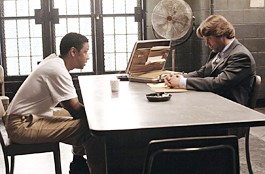
WHEN The Godfather commenced with the phrase “I believe in America,” Francis Coppola wanted us to understand the part America had in the creation of a gangster. It was a shocking idea, and equally shocking was the insistence that a gangster could be just a good family man in a bad line of work. Thirty years later, the critique is stale. Someone approaching that idea—especially by stating it as boldly and flatly as it is in the title American Gangster—had better come up with a new angle. Don’t look for one here. American Gangster is based on the true story of Frank Lucas (Denzel Washington), the black Harlem drug runner who decided to contract with the Golden Triangle’s poppy lords. When cheap and relatively pure heroin plagued Harlem, the crooked NYPD stood aside and took its cut—thus the birth of the DEA. It is the opening salvo of a drug war that’s no one’s idea of a triumph at this point, not even director Ridley Scott’s. The hard work of being a drug cop is all vanity. We can see that from the sorrows of the honest cop Richie Roberts (Russell Crowe) when he gets appointed to the task. Crowe doesn’t bring more to this part than a saintly wounded quality.

A bad gangster movie is more entertaining than other kinds of films, and I probably wouldn’t switch American Gangster off if it were on TV. Marc Jacobson, whose excellent New York profile served as the source for the film, described talking to Lucas as “a season of the Black Sopranos.” On TV, this lengthy, lard-butted opus might seem a little less full of lukewarm air. But as directed by Scott, the film mistakes hastily set-up shots for pace. One can count on every juicy bit of supporting cast being evicted from the film. Not enough of Clarence Williams III’s Bumpy Johnson, kvetching about the superstores to come; not enough Kevin Corrigan as a greasy weasel, way too much of Josh Brolin doing a credible if inferior imitation of the big-mustached Nick Nolte in Sidney Lumet’s Q&A.

There is no central woman to light up the film. As Frank’s wife, Lymari Nadal, making the least auspicious debut in a long time, plays a former Miss Puerto Rico as if she were cast because she was a former Miss Puerto Rico. Richie’s bimbos (“Fuck me like a cop!”) almost have no faces; the other women are naked heroin packagers or vindictive ex-wives. In the most unedifying role, Carla Gugino threatens her Jewish ex-husband Richie with the hell-fire he probably wouldn’t believe in, anyway.

Scott tries to reprise the theme of The Godfather: success in America depends on the strength of one’s family, and unfortunately most families have weak links. In real life, Frank was his own family’s weak link, if you count how many of his brothers went to jail. The point Washington stresses, with his dogged, staid performance, is that Lucas could have been any other kind of driven businessman. Eventually, there’s a point where a gangster movie becomes a knock-off of an Arthur Miller play.

AMERICAN GANGSTER (R; 157 min.), directed by Ridley Scott, written by Steven Zaillian, photographed by Harris Savides and starring Denzel Washington and Russell Crowe, opens Nov. 2 valleywide.


New and upcoming film releases.

Browse all movie reviews.
Reel Life Stories

11.07.07We are all singing in different languages, but there is unity and harmony." Although the late Malian njarka player Hassi Sare—a subject in the documentaryTimbuktoubab—is speaking of his experience blending musical cultures in the West African land known as the roots of blues, he could just as easily be summing up the overall vibration of the Sebastopol Documentary Film...

News Briefs

11.07.07 Bagging the BanA threatened lawsuit is prompting the town of Fairfax to set aside—at least temporarily—its plans to completely ban plastic shopping bags. In July, the Fairfax Town Council unanimously approved banishing the ubiquitous bags from grocery stores, restaurants and shops. The law was supposed to go into effect Feb. 10, but instead the council is making the ordinance...

Long-Haired Redneck

music & nightlife | By Gabe Meline ...

Two-Wheeled Transport

11.07.07 A couple of weeks ago, I found myself confused by the acronym DIY. The fact that it appeared in reference to one of my own articles did nothing to clarify matters. I puzzled over this for some time. Dogs in Yard? Drinking in Yurts? Clearly not cool enough to understand hip acronyms, it wasn't until I visited Community Bikes...

Fair Is Foul

11.07.07Midnight on Halloween, the witching hour. There I was at 11:45pm, chugging caffeinated beverages along with some 15 other theater-loving insomniacs, preparing to experience a special sneak preview of the Loading Zone Theater's super-creepy new production of the Scottish Play. (Macbeth began its regular run last Friday, beginning each night at the sensible hour of 8pm.) The cast and...

Goofball Trap

11.07.07Followers of Ween are a motley bunch. Stoners, nerds, scholars, Deadheads, frat guys and folks of otherwise indisputable normality have all wrapped their heads around the paradigm that makes Ween Ween and not just another goofy band.For years I dismissed them as just that, an irreverent novelty act for college kids, those guys whose nonsensical video, "Push the Little...

Letters to the Editor

11.07.07Bye-Bye ByrneI just wanted to wish Peter Byrne good luck on his book ("Later Alligators," the Byrne Report, Oct. 31) and finally let him know that I consider him one of the finest investigative reporters in what is left of this good old U.S.A. I have been a fan of Byrne's for a long time, and he is the...

Sleeper Cells

11.07.07It had to be proven to me that something was going on with my body," says Sacramento resident Kelly Simpson, even though she came of age aware there was such as thing as Fabry disease. An uncle died of the rare disorder when she was a teen, and she says, "I grew up knowing my brother had this thing...

Heritage for the Holidays

11.07.07Splitting his time between Guerneville and Manhattan, acclaimed consultant Clark Wolf graces these pages with the occasional diatribe from the periodic local.It's hard to believe and kind of a giggle to learn that Laura Chenel, our local and national queen of all things goat cheese, once worked at her parent's Sebastopol eatery, Goobler's Roosterant. They had a farm where...

Hoods

10.31.07WHEN The Godfather commenced with the phrase "I believe in America," Francis Coppola wanted us to understand the part America had in the creation of a gangster. It was a shocking idea, and equally shocking was the insistence that a gangster could be just a good family man in a bad line of work. Thirty years later, the critique...
11,084FansLike
4,446FollowersFollow
6,928FollowersFollow