
Editor’s note: First Bite is a new concept in restaurant writing. This is not a go-three-times, try-everything-on-the-menu report; rather, this is a quick snapshot of a single experience. We invite you to come along with our writers as they—informed, intelligent eaters like yourselves—have a simple meal at an area restaurant, just like you do.
Snuggled on sheepskin throws on a couch before a fire, a disheveled couple feed one another with forks and fingers. Her hair has loosened from its tie and her face is flushed. He extends his fork, she takes a coy bite and makes a pretty moue with her mouth. She giggles. We shouldn’t be watching this.
But the cozy fireside area of Sebastopol’s French Garden Restaurant and Brasserie invites such intimacies. Just celebrating its first anniversary, the restaurant has a large, well-lit dining room and a nicely dim, comfortable bar where lovers may eat tucked away while musicians play.
The dining room’s menu is French, which is a quaint oddity in Mediterranean-obsessed North Bay kitchens, and features such standards as escargot ($7), filet de beouf Wellington ($30) and chocolate soufflé (all desserts are $7). What makes the French Garden exceedingly different is that as much as possible, all fruit and produce come from what our server familiarly referred to as “Dan’s farm.”
“Dan” is co-owner Dan Smith, a community activist and former software developer. When foods come directly from an organic farm, they may be small and they may be misshapen—but they taste like real food. Those so-called baby carrots that woodenly dong out of plastic bags have nothing on Dan’s baby carrots, which are truly small sweet roots pulled right from the earth and lightly sautéed.
Such poetic revelations extend hugely to that humble cruciferous known as broccoli; rarely has it been so exalted as at the French Garden. The Brit had the appetizer du jour, which on this jour consisted of perfect broccoli napped in a cheese gratin ($6). After sharing one grudging forkful begged for review purposes, he ate the whole dish silently, swiftly, greedily. Broccoli! Who knew?
I had the persimmon salad ($8) and couldn’t be silent at all, a madwoman muttering to myself at table over the tiny plump huckleberries, the chopped, toasted hazelnuts, the pomegranate arils, the small lettuces and frisée, the perfect fans of perfectly ripe fuyu persimmon on the plate.
Stubbornly bent on bringing Merlot back into small favor, we chose the only bottle of California Merlot on the excellent French/American wine list, the fragrant Albini ($39).
For our large rations, the Brit had the New York steak ($27) with a shallot butter and served with tiny roasted beets, more little carrots and crisp pommes frites. My freshly caught medium-rare sea bass ($26) gleamed with a Meyer lemon sauce and sat upon salty Yukon gold mashed potatoes with its own raft of tiny perfect veg, including the storied broccoli. I shared none of it.
Too full for a bowl of Dan’s berries, a slice of orange blossom cake or even an assortment of cheeses, we made our way to the bar. With a light menu that includes such as a steak sandwich, all priced at $6&–$10, this is a great place to duck into without reservations.
We sat on sheepskin covers on a couch before the fire. We watched the man feed the woman. We looked at each other. We forgave all broccoli transgressions. Yes, we went home.
French Garden Restaurant and Brasserie, 8050 Bodega Ave., Sebastopol. Open for dinner, Wednesday&–Sunday, 5pm to 10pm. Brunch, Sunday only, 10am to 2pm. 707.824.2030.
Quick-and-dirty dashes through North Bay restaurants. These aren’t your standard “bring five friends and order everything on the menu” dining reviews.
Letters to the Editor
More info on fabry
Thank you for your article on Fabry disease (“Sleeper Cells,” Nov. 7). As discussed, patients need to educate themselves, especially because the disease is so rare. One excellent resource is the Fabry Support and Information Group (www.fabry.org). This small organization was instrumental in making enzyme replacement therapy (ERT) available in the United States in 2003 despite a slug-speed FDA approval process and underfunded “orphan drug” research.
Those taking ERT today can thank FSIG members (and others) who participated in competing drug trials and those who lobbied Congress to prod the FDA along. Perhaps most importantly, the website’s online discussion forum is a place where Fabry patients can connect. My brother Chaz died of the disease before ERT was approved; he was very thankful for the efforts of FSIG and for the circle of friends he met on its website. It’s a rare disease, but it doesn’t have to be a solitary journey. Shoshana LeibowitzSanta Rosa
Holiday hate mail
Regarding “Justice Averted” (June 13), thieves are scum of the earth and should all be shot! What kind of morons buy weed at 4am, especially at somebody’s house? Just buying weed is highly dubious. Blacks have already been known to commit armed robbery at marijuana dispensaries throughout California, so a home invasion of an alleged dealer’s home was inevitable. This was most definitely a robbery. And if they had beaten one of my family members, I would have killed them all.
It’s about time California recognized and enforced some common sense laws allowing citizens to protect themselves from scum like this. We need to take a page out of the book from Texas. Furthermore, if the roles were reversed here, you’d probably be commenting on how great it is that a black family protected themselves from a gang of “white devils.”
You people amaze me and make me sick!
John RobertsTopanga
We print this hateful slick of vitriol, just arrived due to the wonders of the Internet, solely to illustrate why it was perhaps important that Renato Hughes won a change-of-venue motion on his trial. The Associated Press picked up the story, but aired the prosecution’s side as truth, not allegation, prompting similar inflammatory responses across the United States. See
Food as a form of Moral superiority
As we enter the holiday season, the screams of vegan moralists echo across the landscape (Letters, Nov. 14). News flash: Homo sapiens is a bizarre species dissimilar from any other, a species of extreme individual differences. Humans are not primarily herbivorous, although many do well as vegans, nor are we primarily carnivorous, although many do far better physically having this type of diet. Humans are an omnivore species. Lay off the rampant vegan propaganda and let individual needs and preferences establish individual rules. One size fits all doesn’t work with humans!
I, for one, hate vegetables. Hate their texture, hate the way they look, hate how they taste. I can best tolerate the ugly things when they’re pulverized in a blender into an improved form. But an organic, raw fruit salad alongside a large, thick, rare steak? Ah! Euphoria.
Karl BosselmannForestville
Color of Money
On Saturday, Nov. 10, the busiest day of the San Francisco Green Festival, my brother and I drive around in the rain for a good half an hour before finding a parking space outside the Concourse Exhibition Center. There are buses lined up outside and half a parking lot full of bicycles, but even so, the number of cars has eaten up every parking spot within a multiple block radius. My brother finally manages to parallel-park between two motorcycles in a spot so tight that he is greeted with congratulatory applause from a bystander, and together we join the masses who want to find out what it means to live green.
The Green Fest is so crowded it’s hard to maneuver. The men’s bathroom, which I visit because the women’s has a line out the door, boasts a row of clogged urinals. Because it’s difficult to find the recycling stations, people are chucking their trash into anything round, and there are “Not for Garbage” signs posted on for-sale goods that might just look like waste-paper baskets. Some aisles are so packed with people that, on more than one occasion, I have to turn back and go in from another angle.
If, however, I have to be shoved into a crush of humanity, this is a good place to do it. People are friendly, polite and apologetic when they step on you. No one seems to be drinking too much microbrew, and everyone is interested and engaged in what is going on. So while our carbon footprint feels a bit more solid than would be ideal, the green vibe is still pretty strong, and the information and booths are so engaging that a couple of hours slip by almost unnoticed.
Because there’s so much to see, it takes me a while to find my focus. A woman selling portable eating sets with bamboo cutlery that rolls up into a neat little carrying case unwittingly provides it. When I ask who makes her wares, she snaps one word—”Refugees”—before returning to her book. My inner cynic awakened, I instantly lose interest in the host of people who are selling things that poor people, somewhere else in the world, are making for American consumption.
Luckily, I stumble into Brandon Bert of the local green superfood company Amazing Grass (interviewed here Oct. 31), and he feeds me some samples to boost my flagging energy levels and remind me why I’m here. I want to talk to people who are DIY: making their own stuff, keeping it local and choosing sustainable designs and products created right here in California.
I begin the healing process at Luscious Natural Body Care. Luscious is a small cottage business created by Santa Rosan Angelina Artemoff and Angeleno Julianne Lampard. All of their products—which include lotions, solid perfumes and bath salts—are hand-blended and made from pesticide-free and wild-crafted essential oil blends that they create themselves from Snow Lotus Aromatherapy oils, a Santa Rosa&–based company that specializes in therapeutic- and medicinal-grade oils. The two women have taken their passion for plants, aromatherapy and craft and created a line of products that are as beautiful to look at as they are to smell.
My next stop is Jenny Hurth Bags. An East Bay artist, Hurth sews her stylish bags and accessories from discarded vinyl banners. Hurth tells me she was blown away the first time she witnessed the mass of banners at a recycling center—mostly trade-show banners created for convention events such as this one. The next day she returned with her truck, and a forklift filled the back with banners in a range of sizes, some as big as 20-by-60-feet long. Hurth, with the help of a couple of local seamstresses, sews all of her funky shoulder bags, grocery totes and laundry hampers, and claims she has no interest in expanding out of her local area. Her goal is to use up the waste here in the Bay Area, where behemoth banners are never in short supply.
My brother and I reunite at Bear Wallow Herbs, where I’m mooning over a handmade herbal medicine first aid kit, which includes a laminated card that tells you what to do in just about any type of emergency from snake bite to blistered heel. Bear Wallow’s products are handcrafted by Cara Saunders of Sawyer Bar, Calif., who works off the grid producing her own tinctures and salves. I’m almost tempted to hurt myself just so I have an excuse to buy one.
After a brief tête-à-tête, My brother and I agree that we had better leave before I start charging, and so we make our way out of the center and back into the rain, committed to returning next year—provided, of course, that the Green Festival can find a location with more recycle stations, bathrooms and open space.
For Luscious natural body care, visit www.lusciousnaturalbodycare.com. For a hip bag, go to www.jennyhurth.com. For Amazing Grass, go to www.amazinggrass.com. For Snow Lotus Aromatherapy, go to www.snowlotus.org. For an herbal first aid kit, go to www.bearwallowherbs.com. For information on next year’s Green Festival, go to www.greenfestivals.org.
Language Burier

Sushiholic has opened in the Vintage Oaks Shopping Center in Novato. Yet another Japanese restaurant in the North Bay wouldn’t be entirely “stop the presses” material except for its unfortunate name.
It got me to thinking: if raw fish and its Asian ilk is some of the most beautiful food in existence—and I believe that it is—why do modern-day vendors so often insist on insulting the art with increasingly ridiculous titles and food combinations?
The greatest offender, of course, is Tex Wasabi’s in Santa Rosa, with its ungodly “Jackass Roll” (tapioca rice paper with sushi rice, avocado, barbecued pork, French fries and garlic chile mayo) and “Screaming Gobbler Roll” (roast turkey, jalapeños, pepper Jack, avocado, green onion, mayo and siracha mayo in tapioca-paper-wrapped sushi rice). Yes, I understand, it’s attention-getting. For its part, “Sushiholic” implies a dining experience so fantastic that it’s addictive; it also denotes an experience so addictive that it’s harmful. But nowhere does it suggest an experience of pleasure based on thousands of years of art and tradition.
After a meal there, I’ll grant that this place is a nice addition to the local lineup, with a lengthy and well-crafted repertoire including uncommon dishes like nabeyaki udon ($14.95), zaru soba (cold buckwheat noodles; $8.95), yosenabe ($14.95) and sea bass teriyaki ($15.95).
The usual suspects are competently done, with good beef sukiyaki ($14.95), teppan ginger tofu ($11.95) and a sushi list that numbers more than a hundred choices. The setting is classy, with black woods, slate floors and a gold sakura mural on one wall. If I were in the neighborhood, I’d stop in for a rainbow roll ($12.95), the multifish creation inventively stuffed with shrimp tempura.
So why turn me off with a “Swamp Roll” ($10.95), an otherwise satisfying spicy tuna under a mound of crunchy, sweet, seaweed salad? The “Nuclear Crunch” roll ($7.50), meanwhile, isn’t a toxic breakfast cereal after all, but tempura bits and white tuna so spicy that the fish actually cooks itself like ceviche.
Ordering a “Volcano Ash Tofu” ($8.95) doesn’t appeal, either, though the resulting dish is quite delicious. A big slab of tofu is jolted with dots of jalapeño, sesame oil, soy and a dusting of exotically musty seasonings that the chef tells me is a secret. It burns the side of my mouth like black pepper and comes on a big salad of fresh greens, tomato and cucumber.
The “Sub 1000,” unfortunately, is indeed a deep, dark mess, buttery Hawaiian escolar drowning under a gloppy eel sauce tucked in an ungainly unagi roll. The “1000” refers to the depth at which this fish is caught, but it’s this recipe that should be deep-sixed.
Yet, there’s no need to saddle a perfectly decent katsu don buri under the clumsy title “food topped over rice in bowl.” Perhaps in this case, it was simply poor writing, not a funny attempt to sex up an ordinary pork cutlet-veggie-egg stew.
I like the food here just fine. But the experience simply doesn’t dance off my tongue in a way I’m proud of: “Hey, meet me at Sushiholic for a swamp roll, something nuclear and maybe a nice piece of ash.” Of course, I suppose it’s better than inviting a friend out to eat a jackass . . .
Sushiholic, in the Rowland Plaza, 112-C Vintage Way, Novato. Open Monday–Saturday for lunch and dinner. 415.898.8500.
SEARCH AVAILABLE RESERVATIONS & BOOK A TABLE
Quick dining snapshots by Bohemian staffers.
Winery news and reviews.
Food-related comings and goings, openings and closings, and other essays for those who love the kitchen and what it produces.
Recipes for food that you can actually make.
Alias
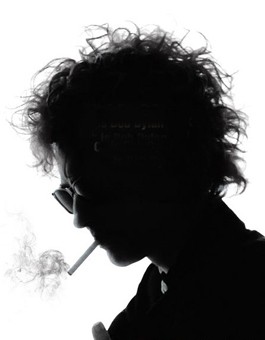
Todd Haynes’ I’m Not There is a masterpiece of deconstruction—actually, it’s a masterpiece, period. It’s the culmination of ideas the director of Far from Heaven started years ago in his unauthorized Barbie-doll biography of Karen Carpenter, Superstar. Later, Haynes’ sometimes maddening Velvet Goldmine tried a dissection of the chameleon David Bowie, but he ended with nothing more substantial than a group of roman a clèf phantoms.
The third time is the charm. Haynes has a complex artist to admire, and a tremendously well-sifted song catalogue to pull from. I’m Not There’s starting point is the 1966 motorcycle accident that supposedly almost killed Dylan. A man like that, Kris Kristofferson’s narrator tells us, leaves more than one ghost.
There are half-dozen Dylans here: a poet under the alias “Arthur Rimbaud” (Ben Whishaw); a rising folk singer (Christian Bale); a movie star and straying husband, Robbie (Heath Ledger); a born-again preacher (Bale again); an Old West hermit (Richard Gere); and a childlike disciple of Woody Guthrie and other bluesmen (the endearing young Marcus Carl Franklin). Finally, the most authentic Dylan: “Jude” the jabbering, speeded-out London mod (Cate Blanchett), pissed off at the pissed-off fans who can’t accept amplified music.
Haynes must have a sweet spot for the Old West Dylan of John Wesley Harding and The Basement Tapes era. I’m Not There’s title comes from a rare and ethereal ballad, a bootleg song that didn’t make the official Basement Tapes release in 1975. Haynes erects a symbolist frontier village called Riddle, Mo. It’s a movie version of album-cover art, like walking right into The Basement Tapes cover with its broken accordion, greasepaint, carnies, belly dancer and fire-eater.
In this sequence, a grave and courtly Richard Gere plays Billy. He’s ruddy, bespectacled, like Dylan’s outlaw Alias in Sam Peckinpah’s Pat Garrett and Billy the Kid. A six-lane freeway is coming through town, just like the railroad displacing the small-town people in the old Westerns.
I’m Not There fights myth with myth, zeroing in on this vanishing-act artist. Whatever Dylan’s self-mythologizing means to Dylan is up to Dylan. It’s what the myths meant to us that Haynes mulls over.
I’m Not There’s principal delight is how it succeeds despite the seeming impossibility of success. I dreaded something like Across the Universe, with its coy, tedious ’60s worship. But Haynes avoids every variety of obviousness. This isn’t a reprise of the self-love orgy of Dylan’s self-made 1977 miasma Renaldo & Clara, or of the elderly kvetching of his 2003 co-effort with Seinfeld’s Larry Charles, Masked and Anonymous. Haynes may be the first filmmaker ever to not approach Dylan on bended knee.
In addition to Blanchett, Julianne Moore does such a deft Joan Baez character that the laughter bubbles up every time you see her, yet there’s not a trace of caricature or condescension on Moore’s part. The rugged-looking Charlotte Gainsbourg is called “Claire” in honor of ex-wife Sara Dylan’s own alias in Renaldo & Clara.
Prettiness isn’t Gainsbourg’s virtue—and who cares? prettiness is a small virtue—but she looks warm and alluring with false eyelashes and untidy hair. She brings in a bass-note of feminine solidity, carrying her man to temporary rest in a tangle of limbs during the song “I Want You.”
Haynes telescopes the various editions of Dylan so well that there’s not a single mixed metaphor in the film. This tour de force of music-love coalesces on one image: the real Dylan at his most angelic, his face invisible in a nimbus of spotlight, playing the waxing, waning, so sad, so sweet, blues-harp solo in the live version of “Mr. Tambourine Man.”
Throughout, Haynes insists that Vietnam was essential to Dylan’s run for cover. Yet by not slamming home the parallels between 1968 and 2007, Haynes matches the two eras better than any fiction filmmaker has yet. Dylan’s songs were right for that terrible age of violence, confusion, rudderlessness and loss. And so they are for ours.
‘I’m Not There’ opens Friday, Nov. 23, at Rialto Cinemas Lakeside (551 Summerfield Road, Santa Rosa, 707.525.4840) and the Rafael Film Center (1118 Fourth St., San Rafael, 415.454.1222)
New and upcoming film releases.
Browse all movie reviews.
Satan’s Taco
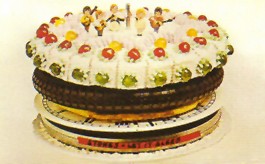
Every issue of Bon Appétit magazine has a list of songs or CDs to play during your fashionable little tapas party or cocktail get-together. It’s in the spirit of fun, but the suggested music always has more to do with coming across as clever or trendy than with, well, food. Or, for that matter, music.
That makes sense. You can’t play music that’s too intense or awesome when your guests are nibbling on frenched lamp chops with mint-cilantro pesto, because great music demands all of your attention. Perhaps that’s because there are precious few rock songs about eating or cooking.
Actually, the role of food in pop music is symbolic. Food stands in for lust, humor, wealth, tradition, corruption, family togetherness and good old-fashioned fun. But rarely are food-related lyrics merely about how tasty food can be.
Movies, art, love affairs, politics and great literature all inspire bands to write songs. Why not a once-in-a-lifetime perfect slice of pizza? Or a multicourse festival of top-notch gluttony at the French Laundry? What about the pancakes your dad made once a month on Saturdays when you were a kid?
There are lots of songs that mention food, sure, but they’re not about food. The B-52’s “Quiche Lorraine” is not about the iconic bacon-laced French egg tart, but a runaway poodle. “Mother Popcorn” is not about James Brown’s favorite buttery movie-theater snack.
Evidence exists that rockers like food. “Joanna Newsom ate here the other night,” my friend who works as a chef at a trendy—and expensive—Chicago cafe informed me. Kara Zuaro’s cookbook I Like Food, Food Tastes Good, which came out earlier this year, collects recipes from dozens of indie rocker types, the sort of folks who spend a great deal of time eating grease-laden bar food served at the venue they happen to be playing that night. But Zuaro’s contributors offer dishes that are hardly tour food; see current critics’ darlings Battles’ preparation of roasted marrow bones accompanied with crisped duck fat, hearth-baked bread and fleur de sel.
And yet we have no influential food-centered concept albums or Billboard smash hits about Taylor’s Automatic Refresher. Is food not arty enough, or is arty food too pretentious to fit nicely into the sweaty confines of an unbridled rock song? Think about the often contrived wankery of molecular gastronomy—sea urchin foams and gelatinized pork belly extracts—then think about how much the last Oneida album jammed. Nope, doesn’t click at all, though the nuance and mastery of great cuisine and fine musicianship come from the same overdriven, obsessed nerve center.
In all but the most stoic of restaurant kitchens, a battered boom box, caked with a sticky film of vaporized grease, is the heart and soul of the kitchen, the electric coxswain that dictates a steady rhythm in an otherwise frantic zone, where the nightly battle is chef vs. time.
Cooking and rocking out go together hand-in hand. But eating and rocking out? Not so much. Rock is the fast food of the music world: 100 percent American in origin, instantly gratifying, available anywhere. But there has to be a bona fide culinary rock song out there somewhere.
Country, being the suffering-fixated genre that it is, tends to lament the scarcity of food rather than celebrate its presence, as with Little Jimmy Dickens’ 1957 “Take an Old Cold Tater and Wait,” whose main story arc concerns getting only the neck and feet from a shared chicken. Dolly Parton, a woman who came from humble means, wrote about the hunger of her youth in her autobiographical “In the Good Old Days (When Times Were Bad),” a song in which hard labor still does not ensure adequate nourishment: “We’ve gone to bed hungry many nights in the past / In the good old days when times were bad.”
Merle Haggard later added a verse in his own version of the song: “And I’ve walked many miles to an old country school / With my lunch in the bib of my overalls.” That’s not a very big lunch.
In blues and soul, food can likewise be indicative of class. What does Annie of Tony Joe White’s “Poke Salad Annie” eat? Pokeweed, a wild plant whose toxic leaves must be boiled prior to ingesting. She was so poor that “that’s about all they had to eat, but they did all right.”
Hip-hop, a genre that rarely shies away from an opportunity to rhapsodize over decadence and physical pleasure, has been the most fertile genre for the celebration of food in song. If something tastes good, your friendly neighborhood MC is gonna say so, as with Sir Mix-a-Lot in “Buttermilk Biscuits”: “Don’t make a difference what food you make / Use buttermilk biscuits to clean your plate.”
And, of course, food is symbolic of sex. In Paul Revere & the Raiders’ 1967 hit “Hungry” (penned by Barry Mann and Cynthia Weil), it’s not a bacon double cheeseburger Mark Lindsay is singing about. Nope, he’s “Hungry for that sweet life, baby / With a real fine girl like you.”
The Pixies’ “Cactus” presents a much sloppier metaphor, in which a lovesick and homesick Black Francis requests his faraway paramour to send him her food-stained dress: “So spill your breakfast and drip your wine / Just wear that dress when you dine.” Suzanne Vega’s “Caramel,” as wistful and resigned as a sigh, smoothly longs after the unattainable, be it burnt sugar or acknowledgement from her beloved.
Food, particularly the multicultural street food of L.A., crops up not infrequently in Beck’s songs, as both a reflection on the delirious muddle of class and ethnicity in Southern California and as mechanism for painting offbeat images of postmodern American pop flotsam. The near-apocalyptic opus “Satan Gave Me a Taco” (“The chicken was all raw and the grease was mighty thick”) is at once about gluttony, starvation and indifference—after all, Beck still accepts the repulsive taco Satan offers him (“There was aphids on the lettuce, and I ate every one / And after I was done, the salsa melted off my tongue).
The Rolling Stones’ “Mother’s Little Helper” is equally horrific but more realistic, an indictment of the cardboard cuisine set out by the medicated housewife in the song: “So she buys an instant cake, and she burns her frozen steak / And goes running for the shelter of her mother’s little helper.” Props to Mick for the insight, but I doubt he’s ever had to face the crushing monotony of feeding an indifferent, finicky family day after day.
“Savoy Truffle,” written by George Harrison, is perhaps the most rollicking of food rock songs. Supposedly, Harrison wrote it as a nod to his friend Eric Clapton’s chocolate fixation, and the verses tick off a list of sticky-sweet bon-bon fillings, ending of course with “But you’ll have to have them all pulled out / After the Savoy truffle.”
“Them” is your teeth, which will rot away after too many candies; the fictional food of song still has potent drawbacks. Primary among them are that there’s not enough of it, guaranteeing that Bon Appétit play lists will remain mediocre for the indefinite future.
Quick dining snapshots by Bohemian staffers.
Winery news and reviews.
Food-related comings and goings, openings and closings, and other essays for those who love the kitchen and what it produces.
Recipes for food that you can actually make.
News Briefs
A Moving Trial
Renato Hughes Jr., 23, will not stand trial for murder in lily-white Lake County. On Nov. 15, a judge ruled that there’s reasonable doubt this young black man can get a fair trial there, and ordered the case moved to another county. As reported earlier this year in these pages (“” June 13), Hughes is being held legally responsible for the deaths of two of his closest friends, who were killed during what police allege was an attempted home-invasion robbery in Clearlake in 2005. The two young black men were shot in the back by the white homeowner, who wasn’t charged with a crime. Hughes is going to trial under a law that holds a person responsible if they provoke an action that leads to death. Lake County district attorney Jon Hopkins says he was “flabbergasted” that the judge approved the motion to move the trial to another county. “The jury selection process had revealed that people were not prejudiced by pretrial publicity and weren’t going to decide the case by race.” Defense attorney Stuart Hanlon says Hopkins “must have been sitting in a different jury selection process than I did.” The problem, Hanlon notes, is not overt but rather unconscious racism. “Lake County is such a homogenous society—it’s 90 percent white—that people there don’t deal with black people, especially black young men.” On Dec. 14 state officials will present three counties as potential new sites for Hughes’ trial. It’s the right move, Hanlon asserts. “The bottom line is everyone should want a fair trial and a chance to get at the truth, and now we have a chance to do that.”
Message for Feinstein
Sen. Diane Feinstein’s support for the successful nomination of Michael Mukasey as U.S. Attorney General despite his refusal to renounce waterboarding and other torture techniques prompted the Sonoma County Democratic Central Committee and Progressive Democrats Sonoma, among others, to ask a California Democratic Party executive board meeting to censure Feinstein. “[Feinstein] needs to pay attention to the people who elected her, and we all oppose torture. Democrats oppose torture,” says Alice Chan, spokeswoman for Progressive Democrats Sonoma. The call for the censure resolution failed, Chan says, in part because it was submitted after the agenda deadline, so under party rules if one committee member objected, the issue would be dropped. “We really didn’t expect it to pass,” Chan explains. She adds, “We’re not finished. There’s another [Democratic Party executive] meeting three months from now.”
Usual Suspects

Something Fishy: Michael C. Storm and Stephen Klum play some 20 roles in PASCO’s ‘A Tuna Christmas.’
By David Templeton
In local theater, the holidays are a lot like those “Secret Santa” gift swaps where you show up with a gift you hope will be appreciated by a stranger whose name you pulled from a hat, while sitting in perversely amused and/or nervous anticipation of the moment when you are handed your own gift-wrapped mystery, chosen (or found in the garage) by whoever it was had the good and/or bad luck to draw your name.
Much like in the game of Secret Santa, when it comes to holiday theater, good intentions only go so far; too much fake sentiment can be deadly, and you never know when you’ll be unwrapping a dud or a Yuletide treasure. With so many Nutcrackers and Christmas Carols to choose from between Thanksgiving and X-Day, it’s good to have some pointers in your pocket when you’re in search of some Christmas entertainment. Here, then, are the basic facts—with a bit of critical commentary—on some of the local sugar plums being served up this season.
For six consecutive years, the Sonoma County Repertory Theater has been staging a nifty, stripped-down version of Dickens’ Christmas Carol, with an adaptation by Preston Lane and Jonathan Moscone. The production has become a tradition for some people, who knew they could count on a good time from Eric Thompson, a religious studies teacher who’s made a bit of a career out of playing nasty, old ghost-haunted Ebenezer Scrooge. This year, there have been a few major changes in London Town, with Thompson sitting this one out due to scheduling conflicts. (Give the man a break! He’s done this six years in a row.)
Director Gene Abravaya, who is known for establishing a comfortable, creative working environment for his actors, makes his Rep debut, and Scrooge will this year be embodied by the Rep’s producing and artistic director Scott Philips, a tasty fit that should create some nicely irascible fireworks when let loose onstage among all those ghosts and plum puddings. The show runs Nov. 23–Dec. 23. Tickets run $18–$23, with pay-what-you-can nights on Thursdays. Call 707.823.0177 or go to www.the-rep.com for more information.
Another Christmas Carol rises from the fog this year, as director Carl Hamilton, known for his dark, minimal stagings of classic works, takes his own crack at Dickens. Expect it to be existential, edgy and to have John Vinson (who directed the Raven Player’s One Flew Over the Cuckoo’s Nest, finishing its run Nov. 24) as Scrooge. The show happens at the Raven Performing Arts Theatre in Healdsburg, Dec. 13–22. Tickets run $10–$18. Call 707.836.0104 or go to www.ravenplayers.org for information.
There is but a hint of the old miser Scrooge in it, but the freshest—and potentially the most hilarious—Christmas Show on the boards this year appears to be Pacific Alliance Stage Company’s two-actor romp A Tuna Christmas, written by Jaston Williams, Joe Sears and Ed Howard. Directed by Hector Correa, the play takes audiences through one wild Christmas in the town of Tuna, the third smallest town in Texas.
Two actors play all of the town’s inhabitants, including the vaguely Neanderthal local radio hosts Thurston Wheelis and Arles Struvie describing Tuna’s outlandish Christmas lawn decorations; Joe Bob Lipsey, the “not the marrying kind” director of the town’s struggling production of A Christmas Carol; the eyebrowless Elmer Watkins; and the snobbish Vera Carp, leader of the religiously right Smut Snatchers of the New Order; and about 20 more. The plot, such as it is, involves the mystery of who has been stealing baby Jesus figurines from the front lawns of local citizens. Could start a trend. The show runs Nov. 23–Dec. 9. $15–$20. Call 707.588.3400 or go to www.spreckelsonline.com.
Aimed squarely at the family audience, Petaluma’s Cinnabar Theater presents a very hip “young actors” musical production of the classic It’s a Wonderful Life. The script by Marcy Telles, with music by Janis Dunson Wilson, does not talk down to the younger audience and contains all the manic-depression and hints of group alcoholism suggested by the original material—making the whole thing somehow even cooler. It runs Nov. 30–Dec. 16. Tickets are $10–$15. Call 707.763.8920 or go to www.cinnabartheater.org to learn more.
Also aimed at families, Santa Rosa’s Sixth Street Playhouse presents an adaptation of C. S. Lewis’ wintry The Lion, the Witch and the Wardrobe, the first official holiday show from Sixth Street’s new School of Drama. Directed by Bronwen Shears and Jenifer Cote, the show is a fully staged production and features a cast made up of kids ages eight to 13. And if kids dressed up as animals isn’t a Christmas tradition, then neither is playing Secret Santa—or stealing baby Jesuses from your neighbor’s lawn. It runs Dec. 7–22. Tickets are $10. Call 707.523.4184 or go to www.6thstreetplayhouse.com for information.
Museums and gallery notes.
Reviews of new book releases.
Reviews and previews of new plays, operas and symphony performances.
Reviews and previews of new dance performances and events.
Torturous Geometry

Four skinheads nearly beat a man to death. Four bystanders—two women and two men—watch the violence unfold. The victim goes to the emergency room with a broken neck, a flattened skull, a broken scapula and a broken hand. Doctors drive 40 staples into his head in order to patch it back together. Two alleged perpetrators are apprehended and charged.
A year passes. Six of the eight persons present at the assault have not yet been questioned, including the man who reportedly lured the victim to his home. Neither have three of the four assailants.
And while the two men charged in the beating face hard time, their victim may wind up in an adjoining cell.
Visualize violent crime justice as an inverted triangle. In the top left corner, alleged perpetrators await trial. Tracking parallel to these defendants, the prosecuting attorney crouches in the triangle’s top-right corner, pointing fingers and tallying investigative discoveries. The judge and jury settle in to decide things from the middle. Meanwhile, the victim hunkers down at the triangle’s pointy bottom—beneath, between and pinned down by dueling antagonists above him. The victim lies on the bottom, at the very nadir of this inverted triangle. Simple gravity demands that all shit slide downward.
Late the night of Nov. 11, 2006, David, who requests that his last name be withheld, says that he entered a converted garage apartment in Santa Rosa. He’d come to sell a power washer to a man named Eli. Two women were in the apartment with Eli. David was told to help himself to a soda from the refrigerator. As he turned toward the fridge, four men burst in through the door. The men beat David with pipes, their fists and their boots.
David, who calls himself “Mestizos, or a half-breed of the Blackfoot Nation,” claims that they taunted him, calling him a “prairie nigger” and a dog while they beat him. David says that they attempted to bind him with duct tape and carry him from the apartment. David says that he fought them off, broke away and made like Indiana Jones through the window, then bounced off a table and a car before hitting the ground outside. He says that he managed to get to his feet and run to a neighbor’s home, screaming for someone to call 911.
That’s the last David recalls of the incident. An emergency vehicle rushed him to urgent care. He remained at Santa Rosa Memorial Hospital for five days before being discharged for breaking hospital regs. He’d sneaked outside to smoke a cigarette.
David was in no shape to camp in the streets, but he had no place to go. A friend offered David her spare bedroom until he recovered. A few days later, on Thanksgiving eve of last year, two Sonoma County deputy sheriffs came to the woman’s home with an arrest warrant for David. They removed his neck guard, his shoulder and hand brace, then handcuffed him and drove him to county lockup.
In a piece ironically titled “The Power of Laughter” and published on TheHuffingtonPost.com and Counterpunch.com, writer and ’60s counterculture icon Paul Krassner describes David’s travails this way: “At the Sonoma County jail, the guards kicked him . . . refused him all medical attention, placed him in solitary confinement, forced him to sleep on a concrete bed without a mattress and did not allow him to shower for six days. They eventually brought him to court, chained to a wheelchair.”
But why arrest David?
Because he’d missed a previously set court date. Instead of standing up in court, he’d been flat on his back, recovering from a severe beating, a registered patient at Santa Rosa Memorial Hospital. Until, that is, he sneaked that cigarette.
Sonoma County deputy district attorney Bob Waner is the latest prosecutor to head up David’s case. He’s politely asked David to testify against the two men charged in his assault, and seems confident that David will. Why? Perhaps because this victim, should he refuse to testify, stands to have his probation revoked.With leverage like that, Waner can afford to be polite.
A week prior to his assault, David made an illegal purchase. A short time later, he was arrested for possession of methamphetamine. Not much meth, but any meth is grist for the system. David’s fateful purchase would complicate his life no end. David claims he bought the drug from one of the guys later charged in his assault, though he says this guy took no physical part in the beating. He just set David up.
Waner told David that since this defendant witnessed but did not participate in David’s beating his conviction would be less than a lock-job. Which means that even should David testify against him, the perp might skate. David fears that, once the trial ends, this gentleman and his friends may come calling.
Testify, and face payback on the outside. Refuse to testify, and get locked up with associates of the accused on the inside. And you just know they’re all dying to hear your side of the story.
Afew months after David’s 2006 Thanksgiving surprise, the district attorney’s office threw him a bone. If he’d agree to testify against the two guys they’d charged with his assault, they’d set him up in the state’s witness protection program. That’s right, they’d even give him his very own room at Santa Rosa’s Flamingo Hotel. Thing is, David didn’t know about the tattoo convention taking place at the hotel the very same weekend he moved in. The Flamingo crawled with hundreds of bikers and shaved heads sporting all nature of inked Teutonica. David freaked, retreating to puff a nervous ciggie in his nonsmoking room. An alarm went off. That cigarette accomplished two things: It got him evicted from the hotel, and it definitely got him booted from the witness protection program. David went back onto the streets of Santa Rosa, homeless and broke.
Not one to miss an obvious lesson, David says that he has since quit smoking and using drugs.
Every prosecuting attorney wants convictions. Every defendant wants to walk. Victims may desire restitution, they may fantasize revenge, they may even plot self-righteous vendettas, but when sober reason sets in, what crime victims really want is simply to have their lives returned to them.
I asked David what he wanted out of any potential deal. Curiously, he wants the district attorney’s office to sell his small business as recompense for his testimony. Not surprisingly, he wants to feel safe again. That might take a while.
On Nov. 13, the guy David claims set him up pled guilty to felony assault, drug charges and being a felon in possession of a firearm. His sentence is eight years and four months, eligible for half-time parole. He goes back for formal sentencing in December. David says that one charge this gentleman pled to stems directly from his attack. David didn’t have to take the stand. Nonetheless, that this man heads to prison expecting that David would have testified against him greatly concerns David.
Meanwhile, the district attorney has served David yet another subpoena. It must be David’s anniversary gift—he’s to take the stand in the second defendant’s trial the week after Thanksgiving.
Back in the Saddle
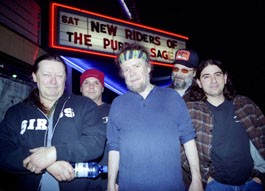
When a couple of young musician fans approached pedal-steel guitar wizard Buddy Cage and suggested he join them in reviving the New Riders of the Purple Sage two years ago, he was less than enthusiastic. “I was absolutely unimpressed by the whole idea,” Cage says.
After all, he had parted ways with the seminal Bay Area country-rock band as they ran out of steam more than 20 years before, after having been a key part of the group through the 10 years of their heyday. And he was reasonably content as an in-demand session player in New York, where he had found a new creative outlet hosting Jam On, on the Sirius satellite radio service’s jam-band channel.”
I hadn’t heard anybody in the promotional area suggest any kind of money figure that was anything less than insulting,” he continues, “so I wasn’t really interested.”
But since Cage is calling from aboard an NRPS tour bus that’s crossing Pennsylvania, it’s obvious that something changed his mind. Call it a “what the hell” epiphany.
Pondering the possibility, Cage checked in with founding Rider David Nelson and discovered that former Grateful Dead bassist Phil Lesh had “cannibalized” Nelson’s Northern California band for a while. “So Nelson was kinda doing nothing,” Cage says, picking up the tale, “and I was doing radio, so I said, ‘Jesus, Nelson, you feel like doing this for a while, for a couple of tours?'” He did, and soon the new New Riders (Ronnie Penque and Johnny Markowski, both from a group called Stir Fried, on bass and drums, respectively, plus former Hot Tuna sideman Michael Falzarano on guitar) were up and, well, riding again. They play Petaluma’s Mystic Theater on Nov. 24.
“The three guys who came in to join Nelson and me, they picked all their favorite New Riders tunes to do, so we could go out and work,” Cage says. “It worked, and younger people started coming to these New Riders gigs, who were, like, in their 20s. And they knew the words!”
It’s been two years now, and the reliance on classic New Riders material—much of it written by John “Marmaduke” Dawson, whose failing health has taken him out of music altogether—is waning. These days, the set lists still include “some of the old catalogue of course,” Cage says, “but some new tunes are coming in. Nelson’s got quite a few.”
A couple are showcased on the recently released double CD set N.R.P.S. Live, recorded last New Year’s Eve at a New Jersey club fittingly called Mexicali Blues, which finds the band in fine form, stretching out on lengthy versions of “Garden of Eden,” “Dirty Business” and Nelson’s previously unreleased “Any Naked Eye.
“During these same two years, a much younger Buddy Cage has also been on public view in the long-lost documentary Festival Express, an intimate video portrait of a rolling rock festival onboard a trans-Canadian train in 1970. Along with the Band, the Dead, Janis Joplin, Buddy Guy and other notables, Cage was there with Ian and Sylvia Tyson and Great Speckled Bird.
Along the way, he recalls, he was recruited by Jerry Garcia to join NRPS. “Garcia knew that he couldn’t any longer play the role of pedal-steel player for New Riders, and had broken the news to the band, like, ‘Sorry guys, I’ve got to stick with my real job, and you guys are going to need a ringer, a real steel player.’ And he heard me playing, and so he chose me.”
It was an offer too good to refuse.
Back in the 21st century, the updated New Riders gradually found a collective capacity for musical exploration that has made extended improvisational segments—such as those on the new CD—an important part of their performances. But Cage resists calling that a change. “I see it moving in the way we always were,” he says. “I see it evolving as something we’ve always done since 1970.”
We never considered ourselves a jam band back then. But I see us as certainly fitting into it,” Cage continues. “Everybody just keeps playing better and better all the time. Now we’re able to go places where we can just pull things out of our hat. I like that a lot.”
That’s why we’re all still together and still doing it,” he concludes. “As for whether we can make it go on for a few more years, that’s just up to the whims of change.”
The New Riders of the Purple Sage jam it down on Saturday, Nov. 24, at the Mystic Theater. 23 Petaluma Blvd. N., Petaluma. 7pm. $25. 707.765.2121.
First Bite
Letters to the Editor
Color of Money
Alias
Satan’s Taco
News Briefs
Torturous Geometry
Back in the Saddle



FOLLOW US
Copyright © Weeklys All rights reserved.
Our Publications
