Naw’lins up North

0

music & nightlife |

By Gabe Meline

W e may not have a Bourbon Street, with all its wrought-iron balusters and urine-drenched side alleys, but that’s not going to stop the North Bay from providing a miles-wide gumbo stew of Mardi Gras celebrations. Conveniently scheduled throughout the weekend both before and on Fat Tuesday here’s a quick smattering of the dirty rice that’s cookin.’

On Friday afternoon, Feb. 1, Napa’s COPIA kicks things off with a demonstration and zesty lunch of shrimp remoulade, jambalaya, cornbread and sweet potato pie. . . . On Saturday night, Feb. 2, there’s a Mardi Gras Mambofest at Mill Valley’s 142 Throckmorton featuring Lady Mem’Fis and Rahni Raines with Rhythmtown Jive; gumbo dinner included. . . . The French Garden in Sebastopol turns into a mini Preservation Hall with the Fourth Street New Orleans Jazz Band, while Marin’s Rancho Nicasio hosts the Tee Fee Swamp Boogie Band with Cajun menu specials. . . . The landmark 85-year-old Monroe Dance Hall in Santa Rosa serves a curious mix of a Cajun dinner paired with tango and swing dancing, while Little Switzerland , an even older dance hall in Sonoma at 102, hosts perennial zydeco favorites Gator Beat.

Nurse that hangover right outta your life on Sunday, Feb. 3, to the Dixieland sounds of Golden Gate Rhythm Machine as they highlight a smattering of jam sessions by “jass” traditionalists T.R.A.D.J.A.S.S. at the Last Day Saloon in Santa Rosa.

After a day to recoup, throw on those nutty outfits and get to drinkin’: it’s Fat Tuesday! First is the KRSH party at the Last Day Saloon with Rhythmtown Jive, kicked off by a parade around Railroad Square—perfect for suggestively tossing your Mardi Gras beads to the host, Bill Bowker. . . . Naw’lins flavor spreads into blues, reggae and R&B when the award-winning Pulsators take over the Tradewinds in Cotati, while Graton’s Ace-in-the-Hole hosts the Canal Street Jazz Band, honking out classics like “Sweet Georgia Brown.”. . . Sabor of Spain in San Rafael goes full-hog with dinner, winetasting, a mask contest and cover tunes by the Erin Band, while the cozy Hurley’s Restaurant in Yountville serves up a traditional Fat Tuesday dinner via guest chef Karen Crouse. . . . And finally, even lil’ ol’ Calistoga gets in on the debauchery with the local all-star Wild Catahoulas bringing down the Calistoga Inn . Laissez les bon temps roulez!


FIND A MUSIC REVIEW

First Bite

E ditor’s note: First Bite is a new concept in restaurant writing. This is not a go-three-times, try-everything-on-the-menu report; rather, this is a quick snapshot of a single experience. We invite you to come along with our writers as they—informed, intelligent eaters like yourselves—have a simple meal at an area restaurant, just like you do.

When Monte Rio was a stop on the North Pacific Coast Railroad, the summertime population would swell to over 30,000, drawn by the dancehalls, the seven-story hotel cleverly built into the side of Starrett Hill, so that every floor was a ground floor, and the elaborate riverboat revels.

You can catch a whiff of old-time Monte Rio at the Highland Dell. Established in 1906, this hotel (gorgeous rooms, $99–$259) with bar and restaurant is redolent of a bygone era, but with some new twists. Owners Herb and Ingrid Loose have taken what was a cozy, rustic dining room and floated the roof up high, so that when we walked in one evening, all I could think of were trapezes and doves. The wall facing the river is all windows, with an amazing view of the bridge, the beach and the roiling, sinuous Russian River.

The rest of the place is beautifully appointed: creamy yellow walls, lots of mahogany and brass, lustrous leather chairs. All the scrappy elements of river culture—which, being a river denizen myself, I love, don’t get me wrong—seemed far away, cast afloat on a rosy sea of the biggest dang cosmopolitan ($7.50) I have ever been served. The place has a pampering elegance that creates an ambiance equally appropriate for conversations about the symbolism of dreams, the history of the platform shoe or tawdry tales of office misalliances. On Friday evenings, diners can enjoy acoustic music by local guitarists.

Jude and I went on a Local’s Night (Monday or Thursday) when a three-course prix fixe meal is priced at an astounding $9.95 in appreciation for local patronage. I appreciate the appreciation whether I order the local’s meal or not, which, as it turns out, neither of us did. We went instead for the Schwabentopf ($17.95) both for the pleasure of saying its name, and because the Highland Dell is known for its German fare. This savory mound of pork, bacon, mushroom and onions on cheese-spaetzle (German for “little sparrow,” and a little like fried macaroni and cheese) puts the comfort in the overused phrase, “comfort food.”

Other traditional German dishes featured include Jaëgerschnitzel ($15.95) and Sauerbraten ($16.95). The catch of the day sounded interesting and tasted, well, interesting. I guess I should have known that seared sea scallops with vanilla lemon bean butter ($21.95) would be on the sweet side, but the scallops were also perfectly cooked and tender.

For punctuation, we chose the brandy chocolate mousse from among other sweet things, including an almond torte, bananas Foster, ice cream sundae and fresh fruit crisp (all $4.95). The mousse was all it promised to be, deeply, darkly, richly, creamily chocolatey with an expanding air of brandy. Oh, for the tongue of giraffe to get inside that parfait glass!

Herb and Ingrid made us feel very welcome indeed. It won’t take a return to train service to draw both visiting and local patrons back to Monte Rio. The Highland Dell is a destination in itself.

Highland Dell Lodge, 21050 River Blvd., Monte Rio. Open for dinner Thursday–Tuesday. Brunch begins Sundays after Easter. 707.865.2300.


View All

Quick-and-dirty dashes through North Bay restaurants. These aren’t your standard “bring five friends and order everything on the menu” dining reviews.

Designing TV

0

01.30.08

Even the clutter looks good in the headquarters of Edelman Productions in Corte Madera. There’s a definite style to the hundreds of crazy-office-party photos taped casually on a long stretch of padded cubicle walls. There’s a decided dash to the way audition tapes fill floor-to-ceiling shelves adjacent to the receptionist’s desk. There’s a distinctive élan to the array of objects, both functional and decorative, perched on desks and cabinets throughout the maze of offices. And there’s an impressive high-tech edge to the stacks of equipment that define the production and editing areas.

This is a local television production company, but there’s nothing bare bones about it. The place has an informal atmosphere, but it’s extremely organized. It’s also infused with a sense of style and presence, which is appropriate, as the majority of Edelman Productions’ shows are created for cable’s HGTV and do-it-yourself networks, with a focus on design.

If it has to do with spiffing up your home, inside or out, Edelman has a show about it.

Founded in 1993 by former reporter, anchorman and syndicated-show host Steve Edelman, this company is a classic illustration of how the industry has moved away from L.A.- and N.Y.-based television shows to a variety of regionally based producers hustling to fill the huge demand for niche cable TV content. The shows created by Edelman Productions highlight extremely personable hosts presenting design information in a clear and coherent fashion.

“It’s the difference between an article in Time magazine about design and an article in a more sophisticated design magazine,” Edelman explains. “If people come to a design channel on a regular basis, they care more, they know more. The fundamental and important thing is interesting, unusual design information.”

As the head honcho of a company dedicated to helping Americans beautify their domiciles, Edelman’s innate sense of style has nurtured a wide range of shows. His company’s shows currently airing on HGTV include Color Splash, Curb Appeal, Designed to Sell, Decorating Cents, Design Remix, Double Take, FreeStyle, House Detective, Landscape Smart and Sensible Chic, plus three new ones that recently premiered, Sleep on It, Get It Sold and Find Your Style. Edelman’s series on the DIY network include Bathroom Renovations, Fresh Coat, Home Transformations, Weekend Handyman, Wood Works and Kitchen Renovations.

A law school grad who chose to work in television instead, for 12 years Edelman hosted the syndicated Good Company show out of Minneapolis with his wife, Sharon Anderson. When their show ended in 1994, he was 49 years old and determined to be his own boss. His timing was perfect.

One of his series ideas was snapped up by the then-fledgling HGTV network, which had just debuted. At the same time, technological advances made television cameras incredibly portable, letting Edelman’s crews film almost entirely in the field. Accordingly, they brought their cameras into people’s homes and to retail stores, wholesale warehouses, artisans’ workshops, furniture factories—anywhere that home design is happening and real.

“It’s a demanding business,” Edelman says. “If you’re going to be current, if you’re going to compete, you’ve got to be on the cutting edge not only with people and ideas but with equipment and your willingness to be flexible.”

As soon as he could, Edelman relocated from Minnesota to California. The company started with a small office on the second floor of a two-story building in Corte Madera. Today Edelman Productions is the largest cable TV production company in the Bay Area. It occupies most of the building, but use of the overall space changes depending on what’s in development and what’s in production.

“It all morphs according to who’s shooting what, when,” explains Sally Wilson, Edelman’s executive assistant, as she leads a brief tour of the company’s space.

Downstairs is the “cage,” a lot room that secures the gear each production team will use during a day of shooting. It’s all color-coded, so each crew gets exactly what it needs. One employee works full-time just keeping things organized.

A day of shooting yields anywhere from 10 to 20 raw tapes, which are immediately brought back to the office. “They’re a precious commodity,” Wilson smiles. The tapes are digitized and logged, then carefully edited. Edelman Productions has one editing room downstairs and four upstairs. They operate on a 24-hour schedule, with two editing shifts and one digitizing shift daily.

Edelman oversees it all, brainstorming concepts for new shows and pitching them to the networks. He also serves as executive producer, helping to fine-tune the first episodes of each new series. It’s a task he enjoys.

“It just one of those things,” he says. “I can watch a TV show and I can say that’s good, that’s bad, change this. It’s almost automatic. It’s just natural. It’s effortless.”

It’s also a vital skill for the company, Wilson says. “He can look at a show and give them five comments that make it perfection.”

Edelman glances across his Corte Madera office, checking the time on a trio of clocks sculpted in rusty metal. He had the hands painted red, making it easier for him to see the time on all three clocks. From a design perspective, the addition of the small bit of red works perfectly, “popping” the smooth glossy color on the hands against the rugged metal of the three clocks.

It’s also highly functional, because in addition to its Marin County headquarters, Edelman Productions now has offices in Minneapolis, Washington, D.C., and Atlanta. In all, the company has some 150 employees, and the trio of clocks lets Edelman know the time in each office, so he knows when he’s calling.

And on a wall just down the hall from his office, there are printouts of pictures and bios for the employees in all four offices, so people in Marin know what the folks working in the other offices look like, and vice versa. It’s one of the ways that Edelman stays in touch with what’s happening and keeps everyone else connected as well.

“I’m very involved in the hiring of people, because I think that’s fundamentally important,” Edelman notes.

The idea for a television show can come from a concept, like one of Edelman Productions’ newest series, Sleep on It, where potential buyers get to spend the night in a home they’re almost certain they want to purchase. Edelman thinks it’s a “killer” idea.

“It’s only been on four times, but it’s been doing big numbers [in the ratings],” Edelman enthuses. “Who knows, that show could actually start a trend.”

Shows are also developed around someone with both design or DIY skills and a warm, friendly personality that comes across well on television.

“There is no formula,” Edelman says. “We find individuals who deserve to have a show wrapped around them.”

But Edelman Productions isn’t limited to just interior design or do-it-yourself shows. It created three shows—Spa Chef Diet Challenge, Ultimate Kitchen and Ultimate Restaurants —for the Food Network. And it even produced two programs for the History Channel. The first was Tactical to Practical, which highlighted items that started as military projects and evolved into consumer products, such as Humvees, GPS and night-vision goggles. The second program is Man, Moment, Machine, which combines rare archival footage, eyewitness interviews, expert opinions, re-enactments and computer imagery to focus on individuals who employ new technologies at pivotal moments in history.

If those topics seem far removed from choosing paint colors, it’s because they are.

“The truth is, we make two different kinds of shows,” Edelman explains. “We make shows that are primarily geared to women and we make shows that are primarily geared to men. I think it’s rare that a company will do shows both for the History Channel—which has been nicknamed Hairy Armed TV—and for HGTV.”

The common denominator is quality, a clear format that engages viewers. Really good television, Edelman says, has a hypnotic quality.

“It requires a certain energy that draws you into it on a regular basis. Otherwise you just kind of float away. In order to keep your attention on that little box—which is now becoming a bigger box—you have to create things that draw you into the set. I call that hypnotic. It’s got to be engaging. You can call it anything you want, but it has to be immersive.”


Climate of Change

01.30.08

T he freedoms and inspirations that led up to our information age arrived with a mighty price tag of environmental devastation attached, a price tag that we must now share with our children. How unfortunate that while we offer them really fast WiFi and a level of access to knowledge that is enough to make even the most lackadaisical quiver with curiosity and excitement, we are also serving up the seeming inevitability of earthly destruction.

How best to help our kids understand and navigate through this conundrum? How to instill them with feelings of joy and hope while making sure that they understand that this is not a time when any of us can afford to be overly thoughtless? I discovered one piece to this puzzle disguised as a relatively mild, and easy enough to instigate, curriculum change.

I met Maitreyi Siruguri, program coordinator for the Cool Schools Program, an offshoot of the Graton-based Climate Protection Campaign (CPC), over lunch. The Climate Protection Campaign is a nonprofit that has dedicated itself, with great success, to taking a proactive approach to dealing with what they call “the climate crisis.” Due largely to the efforts of the CPC, all nine Sonoma County cities and county governments have adopted a commitment to reducing greenhouse gas emissions by 25 percent below 1990 CO2 levels by the year 2015. If Sonoma County is to meet this bold goal, the CPC believes that education is critical. The up-and-coming generation of drivers, thinkers, workers and shoppers needs to be educated and given the tools necessary for creating change.

The Cool Schools program focuses on the integral role schools play in our ability to reduce the emissions that are contributing to climate change. Cool Schools takes a hands-on, student-led approach that aims to empower and educate entire campuses of adolescents, and seeks nothing less than to break down the outdated societal belief system that equates cars with freedom. In 2005, Cool Schools began to work with David Casey, an inspired statistics teacher at Analy High School in Sebastopol. The ultimate goal of the project was to reduce CO2 emissions from students commuting to and from campus.

The students in Casey’s class performed a school-wide survey to figure out the school’s emissions. According to their study, 62 percent of students drive to and from school alone, consume 2,506 gallons of gasoline and drive a total of 42,000 vehicle miles per week. Next, the students engaged local businesses in offering incentives for students who were willing to car pool, bike, skateboard, walk or take the bus to school. The idea was to reduce single-passenger commutes to and from school by 20 percent, a goal that they managed to achieve. In 2006, the Cool Schools program was adopted by Windsor High School, where students renamed it eCO2mmute, and set a target of reducing their schools greenhouse-gas emissions from student commutes by 25 percent.

In order for such a program to be successful and far-reaching, donations are vital, not just in the form of monetary support, but in the form of local incentives for participating students. I, for one, would be much more likely to ride my bike to school for a week if I got a free scoop of ice cream at the end of it. Siruguri tells me that Cool Schools is currently working on a tool kit that teachers can use to bring the program into their classroom. The tool kit will offer a five- to six-month program that takes only an hour per week of class time and yet offers a comprehensive campaign for initiating and maintaining emission reductions on campus.

As we finish up our lunch, Siruguri, a native of India, tells me of her recent travels. During her four-hour layover in Hong Kong, she saw banners on climate change, boldly displayed. In Bombay, she found flyers about carbon credits posted in a friend’s apartment building. Siruguri believes that climate change has become an issue for us all, wherever we are in the world. Because we are now raising a generation of children who are living through the experience of climate change, it is only fair that we offer them education on this issue—education that inspires both hope and action. The next generation needs to be empowered, not overwhelmed, by this daunting responsibility. Luckily for Sonoma County, Cool Schools is here to help students learn not just about the realities of climate change, but about the solutions.

For more information on the Climate Protection Campaign and the Cool Schools Program, visit www.climateprotectioncampaign.org or call 707.823.2665.


This Shouldn’t Even Be a Story

0

01.30.08


The way Vance Sharp III tells it, he and Mac McDonald couldn’t help but strike up a conversation when they found themselves walking toward each other at a wine auction. “There aren’t many people like us around here,” says Sharp, with characteristic understatement. The two men also discovered that both were getting started in second careers in wine. That conversation led to the founding of the Association of African American Vintners (AAAV), now a 10-member group that seeks to promote awareness of minority-owned wineries and help educate consumers. ~

Taking a casual look around, anyone will discover that there exists a singular lack of African Americans in the wine business. Let’s crunch a few numbers. The latest research finds that at least 10 percent of the nation’s wine drinkers are African American, similar to the group’s share of the population. Out of more than 5,600 U.S. wineries, however, fewer than a dozen wineries—a few tenths of 1 percent—are actually African American&–owned. That they exist at all is a continuing source of surprise—not least of all to African American sommeliers and wine enthusiasts.

Although they purchase more than 60 percent of the cognac sold in the United States, the conventional wisdom is that African Americans are not in the market for premium wine. The numbers suggest otherwise. A 2003 Scarborough Research Report found that while 6 percent of all Americans report that they are willing to spend $20 or more when they purchase wine, 39 percent of African Americans will.

Despite these findings, some say that industry interest remains surprisingly lax. In bringing these issues to light, AAAV members can help the wine business generally to connect with this diverse population of 39 million Americans. Their mission is to increase their visibility as a trade group; to help open up new wine careers through scholarships; and to encourage others to develop their own appreciation for wine. Being for the most part successful boutique wineries, they could scarcely sell more wine anyway—no matter who demands it.

The AAAV’s first meeting was a barbecue at McDonald’s house in Windsor; the fourth annual meeting and winetasting was a COPIA event also celebrating the Juneteenth anniversary of slave freedom. During a panel discussion of winemakers, Daniel Bryant of Running Tigers Wines spoke to the audience at large when he stated, “Our goal is to create a day when it’s not a surprise if the sommelier is a person who looks like you.” Indeed, the hundreds of attendees bucked the trend of the typical Napa wine event, a demographic reversal.

During the question-and-answer session, someone noted that cognac brands such as Courvoisier have teamed up with hip-hop artists—might they try a similar marketing approach? But the vintners rejected the idea of being associated with the blingerati. Judging from the audience reaction, it was universally unpopular. “We’re in this for the long run,” explained Bryant. “We must produce nothing but the best—and I think you know why that is,” he intoned.

Some AAAV members’ wines are rapidly becoming stars of the trade, earning high points from critics and in competitions. Negotiating between recognition both of otherness and excellence is the tricky part of their task. Ultimately, in wine there are two colors: red and white. Nevertheless, making reference to their heritage is an important consideration for some. Mac McDonald’s Vision Cellars sports an iconic African ceremonial mask on the label, making it really pop amid a shelf of $60 Pinot Noirs. McDonald says he initially thought of an elephant for his label, then considered a hippo and a variety of other designs. But it turns out that hippos are bad-tempered, so eventually he came back to the jaunty little elephant, in part because of its connotation of memory. “A wine has to be memorable,” Vance Sharp of Sharp Cellars says. “Otherwise, it’s lost in the sea.”

Their stories share a thread with those of many vintners who, smitten with wine earlier in life, are able to realize their deferred winemaking dreams after other careers. McDonald remembers the fruit wines his family made in his childhood in East Texas, where his father was an accomplished distiller of moonshine. But he didn’t care for spirits, until he had a palate-altering experience with a sip of Burgundy in 1955.

After a career as a PG&E supervisor (and a few trips to France), he has realized the “vision” that had captivated him all those years back. Usually seen wearing his trademark straw hat, McDonald’s charismatic manner makes him a natural spokesman for the group, and he spreads the word across the nation. In the Monticello region of Virginia, he discovered Sugarleaf Vineyards, apparently the only African American&–owned winery on the East Coast, and encouraged them to join the organization.

Sharp came to California by way of a 20-year detour in Europe. While serving in the Air Force, he met his wife Monika in Germany, and stayed on. He worked there as a shipping executive, and then operated a car dealership in tony Wiesbaden. When he moved to Sonoma in 1997, Sharp initially looked out over his property and thought that a vineyard would make great landscaping. One of his neighbors was Phil Coturri, who was interested in buying the grapes.

Sharp took viticulture classes at SRJC, and by 1999 had planted an estate vineyard at home as well as one in the Skaggs Island area, each named for his grandchildren. “But the more involved I got in it, the more I wanted to be identified with it,” Sharp says. Before long, he was releasing wine under his own label, with Coturri as consulting winemaker.

Sharp has an easygoing, personable manner. Wearing a black western hat, he gestures toward his rambling villa and jokes, “You want 5,000 square feet? I’ve got more than I need.” In his cellar, he keeps vintage Rieslings from his life in Germany, and admits a weakness for buying amusing special edition salmanazars—those oversized bottles that improbably hold some 12 times as much wine as an ordinary vessel—at auctions, such as John Lasseter’s Toy Story edition.

There is no public tasting bar, so Sharp lays out several vintages for a guest on his black felt pool table. Although he calls the pop of the cork “the most beautiful sound in the world,” he’s switching to Stelvin enclosures (screw-top) with his next vintage. Sharp tuned his palate in Europe, so perhaps he was thinking of the wine of Alsace when he planned the Sonoma Coast vineyard. His 2003 Pinot Blanc has the taste of rich pineapple, subtle acidity with vanilla and honeysuckle on the nose, and was served at a White House dinner that celebrated Black Music Month.

A flight of his Pinot Noir shows a trend toward earthy bouquets of hay on layers of bright candied fruit. But it’s the Zinfandel that originally had people asking Sharp, “Where can I get more of this?” The 2003 Hailey’s Creek Zinfandel is crafted in the Coturri way, with natural yeast fermentation leaving a bit of residual sweetness that carries the intense fruit over the tannin, yet the alcohol is moderate, and it plays its own uniquely intoxicating blackberry melody on the palate. The Sonoma Mission Inn does good trade in this Zin at $25 a glass.

Sharp remembers one day when he was pouring next to Gary Farrell’s booth at an event. At first people crowded around Farrell, anxious to get a taste of the big name Pinot. But as word got out about Sharp’s wine, “by the end of the day it was a little different story,” he chuckles. Even Farrell employees were eagerly trading him bottles. People will find their way to the good stuff.

Back at last year’s COPIA discussion, one young man posed a rather technical question involving the relative merits of single varietals versus blends, and so on. McDonald paused significantly before joking, “We are just now getting people out of Ripple.” The audience roared. Of course, that fortified wine brand of the 1970s is long gone, and it won’t be long before no one even understands the joke.

Association of African-American Vintners members include: A Color of Grape Wine Tours, Black Coyote Chateau, Esterlina Winery and Vineyards, Marc Norwood Vineyards & Winery Inc., Poston Crest Vineyard, Running Tigers Wine, Sharp Cellars, Stover Oaks Vineyard & Winery, Sugarleaf Vineyards and Vision Cellars. For more information, go to www.aaavintners.org.


Teenagers In Other Countries Did Acid Too

1

Prevailing trends in World Music compilations are funny things. After Paul Simon’s Graceland, the record market was flooded with South African compilations; after Buena Vista Social Club came the glut of Cuban compilations; and between U2, Enya, Riverdance, Loreena McKennitt, Sinead O’Connor and Titanic, the ‘90s had a good ten-year run of hot-selling, yawn-inducing Irish compilations.
It’s hard to pinpoint the exact genesis of the latest compilation trend, but lately people can’t seem to get enough of psychedelic music from around the world.
Whether it’s imported from West Africa (Luaka Bop’s excellent Love’s A Real Thing), Ethiopia (the crazy vibraphone sounds of Mulatu on Ethiopiques Vol. 4) or Brazil (Love, Peace and Poetry: Brazilian Psychedelic Music), world psychedelic music is super-duper hot right now. So hot, I hate to say, that lame-ass collections have started popping up under the false banner of “psychedelia,” corruptly hornswaggling us poor music hounds into chasing the diluted coattails of a trend that, barring any basement discoveries of Os Mutantes or Alla Pugachova outtakes anytime soon, appears to have run its ethno-trippy course.
Case in point: The Roots of Chicha: Psychedelic Cumbias From Peru, which is a very fine collection of dance bands from ’68-’78. The music, played largely by working people from poor backgrounds, is tropical and percussive, sometimes utilizing surf-style electric guitars, farfisa organs and moog synthesizers. The culmination of sounds evokes hot, dry days, dirt roads, lush foliage, and butterfly collars, and though rudimentary, it embodies the flavor of its era.
It’s pretty groovy. But is it psychedelic? Not in the slightest.
Just as film sequels are prime fodder for disappointment, music trends can industrially produce truckloads of hoppin’-on-the-bandwagon mediocrity. The difference is that it’s harder to trace the lineage of music trends, which don’t share franchise names as much as movies do. If they did, it’d be easier to sniff out the perpetrators—like if the Dave Clark Five were called “The Beatles Part II.”
But when a certain catch phrase does catch on and starts making the cash registers ring (a mixed blessing for world “psychedelic” music), you can bet your Salvadorean hookah that copycat products will line up and run the whole damn thing into the ground.
I’ll never forget the time I bought Oliver Nelson’s More Blues and the Abstract Truth, excited as all hell ‘cause I’d just discovered his flawless The Blues and the Abstract Truth album. Realistically, More Blues was a decent enough jazz album, but man, he shoulda just called it something different. Similar disappointments have plagued otherwise fine compilations like Night Train To Nashville Vol. 2, Bay Area Funk Vol. 2 or California Soul Vol. 2, all of them overflowing with weak sauce in inevitable comparison to each series’ kickass first volumes (get them now, if you know what’s good for you).
I won’t even start in on the obvious losers like Metallica’s Reload and Run DMC’s Back From Hell, or b-side cash-ins like Sufjan Stevens’ The Avalanche or Ghostface Killah’s More Fish. We’d all just get depressed. On the bright side, a small handful of sequels are warranted— Julie London’s Julie Is Her Name Vol. II isn’t that bad, come to think of it. But, you know. That was 50 years ago.

Lila vs. Kells at the Roll Call

1


It was a hella enjoyable night last week at Kate & Coalmine’s Roll Call, thanks largely in part to the very funny and ultimately surreal set played by Lila Cugini (seen here getting clubbed by, uh… a sadomasochistic police officer?).
The Roll Call, a recurring feature on Wednesday nights at the Toad in the Hole Pub in Santa Rosa’s Railroad Square, operates like a well-organized (and, thanks to the beers on tap, well-oiled) open mic. Performers are booked in advance, but the carefree, anything-goes attitude is the same. Basically, you never know what you’re gonna get; a time-honored concept which can be excruciating when it fails but awesomely surprising when it succeeds.
It worked for Lila, who happened to be celebrating her birthday last Wednesday and had plenty of well-wishers in tow. Lila opened her set by showing off and reading from her latest present, just given to her by a friend outside on the sidewalk: an autographed script of the pilot episode from M*A*S*H.
Then, kicking things off with a tongue-in-cheek ditty called “I Want An Ugly Man,” Lila told a story about copying and pasting the song’s lyrics onto a personal ad on Craigslist, just as an experiment. “And here’s the really terrible thing about dating in Sonoma County,” she related: two hours later, she opened an inbox full of responses from 19 homely, disfigured, fat slobs, all professing their undying, requited love.
Lila plays simple chords and sings simple melodies, and even when she forgets her own lyrics, she’s got a charming, hey-I-could-do-that-too thing going on. Her voice reminds me of a younger Lucinda Williams circa Happy Woman Blues, and her songs—“My Lovin’ Days Are Over,” “She Wants Him Back”—reveal a similar plaintive heartbreak.
But it was the set’s closer that brought the house down.
Last time I saw Lila, oh, about five years ago, she dedicated a cover song—Green Day’s “She”—to her son, Adler. On Wednesday, her cover song of choice had changed considerably: R. Kelly’s “Real Talk.” Totally goddamned hilarious. You haven’t lived ‘til you’ve seen a birthday girl with a voice full of heartbreak, strumming slow chords on an acoustic guitar, singing lines like “I been with you five years and you listenin’ to your motherfuckin’ girlfriends / I don’t know why you fuck with them ol’ jealous, no-man-havin’-ass hoes anyway.”
(P.S.: Throughout the set, North Country bike enthusiast and all-around man-about-town Chris Wells projected weird-ass videos on a screen, and just when the night couldn’t get any stranger, he quickly followed “Real Talk” with a candid clip of Lila, Kate and Dani (all of whom were at the Toad, none of whom knew they had been filmed) sitting around a campfire at a dustbowl hoedown party, singing Neutral Milk Hotel’s “King of Carrot Flowers” at the top of their lungs. Awesome.)

‘Cloverfield’ keeps it . . . kinda real?

0

In our current YouTube- and camera phone-saturated culture, bankable television producer J.J. Abrams (Lost, Alias) hit on quite the clever idea to make a movie imbued with the realest of realism that comes from fictitious found footage. And if there was any genre that needs a good Blair Witch-ing, it’s the oh-so-tired monster movie formula. In the recent box office buster Cloverfield, that whole monster part of the story is indeed sufficiently unique and exhilarating. But for a movie intent on keeping it real, why did writer Drew Goddard insist on saddling his stars with clunky dialogue and a painfully contrived storyline?

For those who haven’t yet seen the film (but don’t mind having it spoiled), it’s fairly amazing that Cloverfield manages to squeeze even a scant 77 minutes of a movie out of a premise that should logically be limited to “Monster attacks New York. We get the fuck out of town. The End.” By having the gang of protagonists get the brain-dead idea to literally run directly into the rampaging beast’s path in an attempt to rescue their trapped friend, the plot is extended.

The reasoning? Leading pretty boy Rob is madly in love with the damsel in distress and in desperate need to save her because of the piss-poor way he treated her earlier that very evening. Now, my heart is not in fact made of stone, but I would hope that my lady friend would understand if, after finding out she was trapped under several tons of rubble and an ornery sea monster’s butt, I text-messaged my heartfelt goodbye and took the nearest freeway exit out of town. Maybe it’s Abrams’ television roots that made him believe this soap opera storyline would work on the big screen, but he seems to have forgotten that the heroes in a film are the people we’re supposed to relate to. And any audience member looking for more than an ear assaulting sound mix will undoubtedly spend most of Cloverfield’s running time trying to figure out why these people who we’re supposed to care about are total idiots.

Whither Thou City Sound Inertia?

7


Why is this blog called City Sound Inertia?
I’m destined to be asked this question sooner or later, so I may as well answer it in my first-ever blog posting.
In 2003, I put together a compilation CD of local Santa Rosa bands who, due to a variety of reasons (lack of press coverage, the nonexistence of MySpace), no one had heard outside of occasional house parties and dingy fly-by-night clubs. I wanted to remedy that. So I collected together 11 songs that I felt were best representative of Santa Rosa’s local music scene at the time, put them on a CD, and sold it for $2.99.
Lots of people, including those at the Bohemian (funny how life works out), took note; but unfortunately, more than a few people, while I was getting songs together, told me something along the lines of “that’s so great, man, ’cause this town sucks for music!”
It hurt. Those of you who know me also know that I’m awfully defensive about Santa Rosa, and by putting together the compilation I wanted to outline precisely that this town does not suck for music; in fact, there’s fantastic music in this town around every corner. It’s hard to get people to take notice of it, true, and being in a band can be a very uphill and very expensive battle, but year in and year out, good music seems to constantly prevail.
With that in mind, I gave the CD a title: City Sound Inertia.
Half the bands on the CD have broken up by now, but the compilation’s liner notes conveying my optimism still hold true. I wrote them quickly but passionately, and in essence, they apply to the future of this blog as well. Read on:

I Love Annie Hayworth

0

Not to take any attention away from Heath Ledger, who was a fine actor and surely would have gone on to inestimable heights, but I have to admit—the death of Suzanne Pleshette last week, relatively untragic though her passing may be (she died last week at 70 of respiratory failure), affected me more.

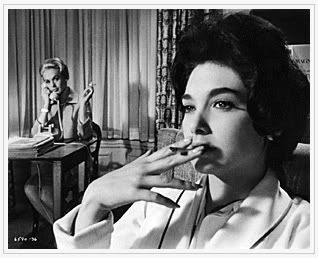
People in the North Bay no doubt know Pleshette as the husky-voiced schoolteacher Annie Hayworth in Alfred Hitchcock’s The Birds, filmed locally in Bodega and Bodega Bay. In contrast to the oafish Mitch Brenner and the vapid Melanie Daniels (characters nonetheless expertly played by Rod Taylor and Tippi Hedren), Pleshette’s hypnotic Annie Hayworth completely steals the film for me. I was so struck with her performance upon first viewing, in fact, that I scrawled “I Love Annie Hayworth” in messy ball-point pen on my high school book bag, successfully confusing my Piner High classmates.

There’s a lot of great stories about the filming of The Birds, some of which can be found on the website for the Inn at the Tides and many of which involve Hitchcock’s attention to local detail. You can hear a news report in the film from real-life radio station KSRO; in it, the radio announcer mentions the real-life Bay Hill Road. Hitchcock wanted a realistic classroom in the Bodega schoolhouse, so he hired my mom’s math teacher to write some realistic-looking math equations on the chalkboard.

But my favorite story involves the time a real-life school bus stopped near the film site to drop off some local schoolchildren during filming of the scene when Annie Hayworth’s pecked and bloodied body is discovered. Some of the young kids, instantly horrified at what they thought was surely a dead woman face-down in the front lawn, started crying. To assuage their fears, Hitchcock halted the filming for over an hour, removing and then reapplying the makeup to Pleshette’s face over and over to sufficiently demonstrate the make-believe world of movies to the local kids. Pretty great.

Pleshette’s brilliant detachment shines brightest in what to me is the film’s best scene: when Annie’s explaining to Melanie why she’s stayed in Bodega Bay all these years—to be close to Mitch. “You see, I still like him a hell of a lot,” she says, with all the cool demeanor that a years-long flame shouldn’t rightfully come close to having. It still floors me, and it’s the first thing that went through my mind when I’d read that Suzanne Pleshette died.

Naw’lins up North

music & nightlife | By...

First Bite

Designing TV

01.30.08Even the clutter looks good in the headquarters of Edelman Productions in Corte Madera. There's a definite style to the hundreds of crazy-office-party photos taped casually on a long stretch of padded cubicle walls. There's a decided dash to the way audition tapes fill floor-to-ceiling shelves adjacent to the receptionist's desk. There's a distinctive élan to the array of...

Climate of Change

01.30.08 T he freedoms and inspirations that led up to our information age arrived with a mighty price tag of environmental devastation attached, a price tag that we must now share with our children. How unfortunate that while we offer them really fast WiFi and a level of access to knowledge that is enough to make even the most lackadaisical...

This Shouldn’t Even Be a Story

01.30.08The way Vance Sharp III tells it, he and Mac McDonald couldn't help but strike up a conversation when they found themselves walking toward each other at a wine auction. "There aren't many people like us around here," says Sharp, with characteristic understatement. The two men also discovered that both were getting started in second careers in wine. That...

Teenagers In Other Countries Did Acid Too

Prevailing trends in World Music compilations are funny things. After Paul Simon’s Graceland, the record market was flooded with South African compilations; after Buena Vista Social Club came the glut of Cuban compilations; and between U2, Enya, Riverdance, Loreena McKennitt, Sinead O’Connor and Titanic, the ‘90s had a good ten-year run of hot-selling, yawn-inducing Irish compilations. It’s hard to pinpoint...

Lila vs. Kells at the Roll Call

It was a hella enjoyable night last week at Kate & Coalmine’s Roll Call, thanks largely in part to the very funny and ultimately surreal set played by Lila Cugini (seen here getting clubbed by, uh... a sadomasochistic police officer?). The Roll Call, a recurring feature on Wednesday nights at the Toad in the Hole Pub in Santa Rosa’s Railroad...

‘Cloverfield’ keeps it . . . kinda real?

In our current YouTube- and camera phone-saturated culture, bankable television producer J.J. Abrams (Lost, Alias) hit on quite the clever idea to make a movie imbued with the realest of realism that comes from fictitious found footage. And if there was any genre that needs a good Blair Witch-ing, it’s the oh-so-tired monster movie formula. In the recent box...

Whither Thou City Sound Inertia?

Why is this blog called City Sound Inertia? I'm destined to be asked this question sooner or later, so I may as well answer it in my first-ever blog posting. In 2003, I put together a compilation CD of local Santa Rosa bands who, due to a variety of reasons (lack of press coverage, the nonexistence of MySpace), no one had...

I Love Annie Hayworth

Not to take any attention away from Heath Ledger, who was a fine actor and surely would have gone on to inestimable heights, but I have to admit—the death of Suzanne Pleshette last week, relatively untragic though her passing may be (she died last week at 70 of respiratory failure), affected me more.People in the North Bay no doubt...
11,084FansLike
4,446FollowersFollow
6,928FollowersFollow