FOLLOW US


Stock up on American microbrews now, for a current availability crisis affecting two of beer’s main ingredients could force many popular beers and even entire microbreweries off the market within the next year. There are those who believe that the shortage of hops and barley will actually be a boon to beer; without them at the ready, brewers may follow creative new whimsies in fermenting. Perhaps there will be herbs like heather tips, yarrow and chamomile to flavor beers, and rice, wheat and honey to create the alcohol. But one thing seems almost certain: The production volume of those big bitter beers and high-alcohol whoppers that hopheads love so dearly will almost certainly decline.
Hop acreage around the globe crashed from 236,067 acres in 1992 to 113,417 acres in 2006, according to 2007 data from Hopunion LLC, a hop-distribution company based in Yakima, Wash. (Compare that number to the more than 800,000 acres of grapevines that grow in California alone.) In the same time period, U.S. hop plantings diminished from 42,266 to 29,435 acres.
But the most startling decline has occurred in the United Kingdom, where 56,000 acres of hops covered the land in 1856. A steady vaporization of the hops industry gave way to 7,700 acres of hops in 1996; today, just 2,400 acres remain. Meanwhile, from 2005 to 2006, North American barley production dropped from 15.3 million metric tons to 13.8 as foreign markets experienced declines as well, making things that much harder for microbrewers already struggling. All the while, the national and international demand for these products has increased as drinkers have come to realize that craft beer is the shit.
So how did this shortage happen? With hops, a small portion of the current problem stems back to October 2006, when a large warehouse fire in Yakima destroyed about 2 million pounds of dried hops. But the warehouse only contained 4 percent of the American hop load. The primary cause of the hopvine pullout that began so brutally in the late 1990s was a price crash generated by a devastating surplus of hops.
“There was a large stockpile of hop extract in warehouses around the world,” says Marc Worona, national sales director with the Santa Rosa arm of Brewers Supply Group West, one of the four leading suppliers of hops in America. “We all had an artificial sense of security, but a couple of years ago, this stockpile ran out. At that point, acres were down and the growers were gone.”
Prices for some highly demanded varietals of hops have surged upward by as much as 600 percent, and many farmers in Yakima and Willamette valleys, the heart and soul of the American industry, are now replanting their lands with hops to cash in once more on the demand. Worona expects to see a healthy crop load in September 2009—but the varietals being replanted are highly bitter alpha hops. These acidic varieties, such as Columbus hops, are often reduced into a simple hop extract oil for quick addition to brewing tanks, and although they’re necessary for many beer operations, they’re not the specialty aromatic sorts that microbrewers so eagerly seek.
“A lot of aromatic hops get low yields, and farmers are replacing them with the high-alpha hops for making extract,” Worona explains. “There’s a very strong alpha market right now. What it comes down to is how much we’re willing to pay for hops, and consumers for beer. If we’re not willing to pay for these hops, we’re going to lose them. We need to put our heads together and decide if it’s time we pay these farmers a fair price.”
Hayward’s Feb. 9 Double IPA Festival offered a telling snapshot of how the global hops shortage is affecting the beer business in our own backyard.
“Last year, we had over 50 beers pouring,” said Vic Kralj, owner of the Bistro, which hosts the annual event. “This year, only 36 brewers showed. Guys just aren’t willing to throw all their hops into one recipe. Right now, there aren’t many hops to get for some guys, and come June or July, there will be some breweries without any hops at all.”
Lagunitas’ Hop Stoopid, a super-Imperial IPA of 90 IBUs (international bitterness units) was entered at the festival, though brewery publicist and self-described “beer doctor” Pat Mace says it will go on hiatus next season.
“We can’t afford to make any more right now. If we did, we’d run out of hops for our IPA, our flagship beer.”
Double, or Imperial, IPAs often require two times or more the hops as milder beers, and as a general rule, craft brewers, who pride themselves on the intensified flavors of their brews, use more hops per unit of beer than the large companies. These little operations also utilize a wider range of hop varieties, and they will feel the shortage most poignantly, particularly those companies that never secured contracts, standard protocol among the macrobreweries.
Samuel Adams, the largest “craft brewery” in the nation, is in the midst of a good-Samaritan effort to help microbrewers out of this emergency. The brewery has announced that it will soon be selling 20,000 pounds of two varieties of hops to small U.S. beer makers in need, asking for no more money above what the big brewery initially paid to suppliers. But these 10 tons amount to a drop in the bucket compared to what the industry needs. Healdsburg’s Bear Republic Brewing Company, for example, uses 40,000 pounds of six varieties of hops per year, while Petaluma’s Lagunitas used 120,000 pounds of hops in 2007.
But some in the brewing business foresee interesting experiments among crafty brewers as they seek to bitter their beers in potential absence of hop flowers.
“When people face economic hardships, creativity really kicks into gear,” says Tom Bleigh, head brewer at Pyramid Breweries. “These kinds of pressures are always good to an extent. They force us to reevaluate what we’re doing and to explore parameters of beer that we otherwise would not have thought of. It’s a healthy pressure that helps us redefine what beer is.”
But some rare varieties of aromatic hops, like Amarillo and Simcoe, are actually at risk of disappearing as farmers adopt more profitable types, which carry both more alpha acids and also produce a greater tonnage of flowers per acre. And some oddities have already gone commercially extinct.
“The Eroica hop disappeared a few years ago,” says Lagunitas’ Mace. “It wasn’t very popular in general. So farmers ripped it all out. We made a beer called Eroica as a goodbye salute to the hop, and it’s totally gone now.”
As hops blow away with wind, there remains the barley shortage, which has boosted prices of malt by approximately 50 percent, according to Worona. Blame floods in from all directions—bad weather everywhere, harvest idiosyncrasies, rising demand for craft beer in developing nations—but the most commonly cited cause is the biodiesel movement. Many farmers who once raised barley have shifted to corn for the making of ethanol.
“We’re now in the position where we need to decide: Do we want to drink beer or drive biofuel cars?” Worona says.
But how dire are these shortages, should they linger longer than predicted? Is beer without hops beer without hope? Is beer without barley barely beer? But yes, some beers are brewed in the partial or complete absence of these ingredients. Lagunitas’ Brown Shugga attains approximately 25 percent of its 9.9 percent ABV from cane sugar.
Brewery Silenrieux in Belgium produces a spelt-based beer called Joseph. Crafted of 30 percent wheat malt, this refreshing and zesty brew carries a notable aroma of perfume and a breadlike body. Pyramid’s Hefeweizen consists of 60 percent wheat malt. Sorghum beers are available for those who avoid gluten, but they are criticized as flavorless and without body or character. MateVeza, a highly rated organic pale ale from Butte Creek Brewing, is bittered in part by the South American yerba maté.
If none of these ideas makes your mouth water, take solace in the opinion of David Teckam, certified beer judge and member of the American Brewers Guild in Woodland. He believes that regardless of how brewers and farmers temporarily mitigate the problems at hand, beer as we know and love it is here to stay.
“There are three items that are recession-proof,” he said. “Flowers, candy and beer. That’s something I read somewhere. I’m not certain about the flowers or candy, but beer’s been around for 10,000 years. It’s not going anywhere.”

Quick dining snapshots by Bohemian staffers.
Winery news and reviews.
Food-related comings and goings, openings and closings, and other essays for those who love the kitchen and what it produces.
Recipes for food that you can actually make.
Can’t wait for the acclaimed 2007 vintage? Sonoma County’s Barrel Tasting Month affords early birds the opportunity to sip the new wine straight from the barrel. The Sonoma Valley version is called Savor Sonoma; expect a wide variety of miniature culinary delights that add up to a meal the more spots you hit (bringing a designated eater is always a good idea). Meanwhile, the Russian River Wine Road’s barrel tasting, including Dry Creek wineries, is too big for one weekend. The event, which started last week, continues this Friday through Sunday with tastings, futures for sale and barbecues aplenty. If you haven’t been, I highly recommend it; it’s become quite a popular crowd-drawing event. Not being in the mood for crowds last weekend, I headed exactly in the opposite direction.
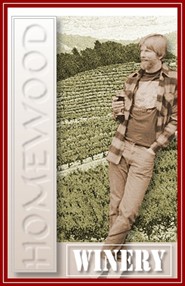
Homewood Winery sits on a quiet country lane just a few doors down from busy Highway 121. It’s in the flat farmlands of the Carneros but doesn’t include much vineyard land. The small tasting room adjacent to the crush pad is guarded by a vociferous canine; the main caution to exercise around Lily is not to step on her while she’s sniffing one’s shoe, as she’s roughly the size of a shoe herself. Homewood offers tasting in a small, somewhat disheveled indoor office or an outdoor deck. Indoors is where the tasty black olive and bread samples are, and the folks are low-pressure and friendly. Free tasting, anything you like. That works for me.
The 2006 Russian River Sauvignon Blanc ($18) was initially pungent with musty dish towel, but poured into a fresh glass it was golden, dude; this is a high-pitched, citrusy-tart sipper that would be a lot better with white fish in a lemon cream sauce, but I’m just guessing. The 2005 McHugh Vineyards Pinot Noir ($18) intrigues with bay leaf and cherry, but lets down with a bit of a bitter finish.
The 2005 Russian River Zinfandel ($18) and the 2005 Dry Creek Zin ($20) seem switched at birth; the former is brambly and dry while the latter is bright, with soft, juicy cherry. Upon closer inspection of a bottle later that evening, it’s confirmed that this light, pleasant Dry Creek Zin has only 12.5 percent alcohol by volume—just the kind of table-friendly claret everybody says they want to take home.
Homewood Winery, 23120 Burndale Road, Sonoma. Open daily, 10am to 4pm. No tasting fee. 707.996.6935. Russian River Wine Road Barrel Tasting continues March 7–9, 11am to 4 pm. $20. www.wineroad.com. Savor Sonoma is March 16–17, 11am–4pm. $55. [ http://www.heartofsonomavalley.com ]www.heartofsonomavalley.com.
A long Fountaingrove Parkway lies the elaborately stone-covered entrance to Varenna, Santa Rosa’s newest soon-to-be completed retirement community. On the approach, a family of deer romp quietly through the grass, but once inside the job site, clang and clamor from hundreds of workmen fills the air. Our car is immediately accosted by a guy dressed in grubbies who, having evidently just lost some of his men, leans in the window. “Hey, can you guys paint?”
Nearby, a taco truck does brisk midmorning business next to two dozen new refrigerators waiting to be installed. Up the tractor-cluttered driveway, some carpet guys are overheard discussing who may or may not be drunk on the job today. And then the grand welcome: the two-tiered fountain, the porte-cochère, the arched entrance and the absolutely gargantuan main lobby. Welcome to this totally insane thing on the hill.
As the baby-boomer generation grows older, assisted-living retirement communities with onsite healthcare have become a secure, bankable industry. Just ask Aegis Senior Living, formerly known as Gallaher Construction, one of the area’s major retirement developers. Gallaher once developed single-family subdivisions in the North Bay, but has for the past 10 years built assisted-living centers almost exclusively. Fountaingrove’s lavish Varenna is in a 29-acre stratosphere of its own.
There’s a cocktail lounge, indoor and outdoor pools, a hobby shop, spa, bocce court, library and barber shop. Regular housekeeping, meals, activities, transportation, valet service and fitness training are included. And for retirement in full regal splendor, chauffeured town-car transportation, delivered meals and personal dry cleaning are an option.
So how much does this all cost? Entrance fees for Varenna’s 250 resort-style units start at $345,000 and go up to $1.3 million; additionally, residents pay a required monthly fee of $2,700&–$5,400. Varenna’s units are not owned by residents, so these fees are essentially for the luxury of renting. And yet, even though Varenna isn’t completed, 85 percent of the units have already been taken.
“There’s been a pent-up need for something of this quality,” says Varenna project manager Bill Mabry via phone. Although the cost is high, Mabry says, there’s nothing like Varenna anywhere in the Bay Area, and “there’re a lot of people who were waiting for something like this.”
Upon move-out or death, the former resident or the estate of the deceased receives 90 percent of the original entrance fee, minus any monies owed, in case “we go into their unit and somebody had a giant beer party in there, and they threw all the chandeliers off the deck,” Mabry jokes.
While touring a model unit at Varenna, a stereo plays Tony Bennett and Barbra Streisand, softly. Hat boxes dot the walk-in closets, and bookshelves are lined with works by Mailer, Grisham and Robert Benchley. A martini shaker and a chess table sit among faux African sculptures and large prints, some of steam ships, some of flowers—victory and serenity.
Extravagance lies around every corner as one stumbles upon the wine cellar, with walls and ceiling sculpted to resemble a rock cave. Up the hill, neighborhood-style units called Casitas feature a two-car garage—with a separate, smaller garage door for a golf cart. The trip from the main patio down to the lake is made easy by a planned sky tram.
For wealthy retirees still on the fence, Varenna has a slam-dunk selling point, and it’s undeniably breathtaking: the 150-degree view looking out over the lake to the coastal mountains. Rolling by on the job site covered in sawdust, even Bob Pospisil, Varenna’s construction manager, echoes the sentiment. “It’s just kick-butt beautiful,” he agrees.
Not all is serene on the hill, however. Though Varenna was welcomed by the Fountaingrove Master Homeowners Association (FMHA), a smaller assisted-care project down the hill, also proposed by Aegis, has been ensnared in public objections from the FMHA and stalled in an environmental impact report for over a year. It’s called the Lodge at Fountaingrove, and it’s oriented specifically toward gays and lesbians.
After two and a half years, Aegis has not yet broken ground on the Lodge and Mabry says that though the costs of the opposition now are reaching over half a million dollars—an amount that would normally kill a project—Aegis remains financially and morally dedicated to the many gay and lesbian seniors waiting to move in. Asked if Aegis plans to stick with it, Mabry’s answer is swift and resolute: “Absolutely.”
Editor’s note: First Bite is a new concept in restaurant writing. This is not a go-three-times, try-everything-on-the-menu report; rather, this is a quick snapshot of a single experience. We invite you to come along with our writers as they—informed, intelligent eaters like yourselves—have a simple meal at an area restaurant, just like you do.
Whether from south of the border, East Africa or the Lower East Side, new arrivals have always brought welcome new culinary opportunities. The North Bay’s significant Eritrean community is going on 20 years here, but aside from the recently closed Santa Trata, good eats from the Horn of Africa have been elusive. So it was particularly exciting that this new restaurant has opened in downtown Santa Rosa between a taqueria and a pizza joint.
The cuisine is called Ethiopian/Eritrean because the nations, politically divided after years of war, share a great deal of culture. Abyssinia’s airy, tiled floor space is somewhat utilitarian but for colorful baskets and decorative lighting, so it’s not a dimly lit den of low archways and palm trees or whatever one may wish for, but just fine for casual dining. Service was smoothly on time for everything from drinks to check, and the two young guys running the shop seemed really committed to it and happy to explain their menu.
The but’echa ($5) sounded like the best bet from a limited appetizer list, which otherwise offered chilled lentils and flax-seed powder. This greenish chickpea dip, served with a tortilla-like flatbread, had an uninspiring stiff porridge consistency. Fortunately, the entrées are deceptively sized, ensuring that appetizers are not a must, and I thoroughly enjoyed a pre-meal Ethiopian Harar ($5.25), an extra smooth style beer like an English cream ale; my friend preferred the more pilsner-like Eritrean Asmara.
There is a big place at the table for vegetarians here, with seven entrée choices. Since my dining comrade is in that fold, we skipped the steak tartare and lamb cube dishes, which the chef explained to us are marinated in spices and best served raw or lightly sautéed. Not ready for beef sushi, I opted instead for miser we’t ($10.95), a lentil purée with red pepper and Ethiopian spices.
My friend had the garbanzo-based shiro ($10.95), and both orders were served together with small salads on a large plate of injera , a spongy, sour flatbread that is like a thick crêpe. Utensils are optional; one digs in by tearing apart the injera and using it to scoop up the currylike mounds. What appear to be modest portions ladled from small bowls turn out, 20 minutes later, to be quite filling. I didn’t guess I’d take home leftovers.
I hadn’t really noticed the tea urns labeled “spiced” and “oregano” until the end of the meal, but for our curiosity we were treated to samples. The spiced tea ($2) is similar to Indian chai, with a cinnamon aroma and semisweet taste, while the palate-cleansing oregano tea ($2), redolent of fresh-picked herbs, would add an entirely different, fragrant dimension to a meal. I look forward to it next time—and there will be a next time, if not for the steak tartare, then for the nicely priced weekend breakfast ($4.50).
Abyssinia Restaurant, 913 Fourth St., Santa Rosa. Open for lunch and dinner daily; breakfast, Saturday&–Sunday only. 707.568.6455.
Quick-and-dirty dashes through North Bay restaurants. These aren’t your standard “bring five friends and order everything on the menu” dining reviews.
Just a selection of records that’ve been on the stereo lately.


Deerhoof – Milk Man LP: I saw them the other week and they were never as good as this record. They eventually evolved a little bit to blend sweetness and chaos – the two are still separated on this album, and that’s great.


Pantera – Far Beyond Driven LP: Me and Hesh used to rock this shit hard in ’94 at 714. Somehow over the years I lost it, but the other day Dave sold it back. Thanks, Dave. Some albums kind of gently work under your skin, or slowly hit your consciousness. This is one that goes straight to your blood.


Kraftwerk – S/T 2LP: Every once in a while I nerd out on some German crapola like Neu! or Peter Brotzmann. This is early stuff, before Kraftwerk had “songs.” It’s a lot of glitchy noise, which matches the sounds in my head, from time to time.


Ruby Braff – Braff! LP: A great trumpet player who unfortunately often sounds like the cliche of ‘jazz trumpet player’ much like Coleman Hawkins sometimes sounds like the cliche of ‘jazz saxophone player.’ Too bad; following his solos is like talking to a really funny, witty person.


The Cribs – Men’s Needs, Women’s Needs, Whatever LP: My favorite record of 2007. It made me guiltlessly happy every single time I listened to it. It still does.


Curtis Mayfield – Live 2LP: The smallest band, the biggest heart. Does he really play a Carpenters song and make it sound like the most sincere thing ever? Yes, he does. An exercise in minimalist soul.


David Murray – 3D Family 2LP: Goddamn eyes rolling into the back of his head, goddamn horn falling apart under the weight of his lungs. I saw him last year in NYC with my dad. Indescribable.


Spank Rock – Yoyoyoyoyoyo 2LP: Sleazy, juicy, do-me, sweaty, sticky, bring it on, dance-even-if-you-can’t-dance album. It grows on you in a pretty harsh way. Production sounds like the dance music from a strip club on Mars.


Pinhead Gunpowder – Carry The Banner 10″: “What a shitty version of a Diana Ross song,” I thought when I first bought this. Then, a couple weeks ago at Gilman, they finished their set with it and it was the GREATEST THING IN THE WORLD. Why is life so unpredictable and why do I love that so much?


The Watery Graves – Caracas LP: If Bill Evans were alive in 2008 and worked at La Sirenita in NE Portland, he’d make music like this.


Celia Cruz – Canta LP: Good old Cuban music. A little goes a long way, but it’s always good for at least Side A or Side B while cleaning up the house.


Bobby Short – S/T LP: None more expressive, down to the tiniest fraction of a syllable. An amazing interpreter and filled with such gayness. In that, yes, gay, and yes, hella vivacious and exuberant. I bought this on the last night Village Music was open, at about 11:45 pm, along with an autographed Atlantic Starr record.


Can – Ege Bamyasi LP: After all these years of working at a record store and I managed to resist the Can thing for almost the entire run. It finally hit me this year.


Mary Lou Williams – Zoning LP: Jazz with a lot of open space in which to think about God and a lot of recurring grooves to pull you back to reality. I never understood why everyone was so crazy about her until I heard this.


Moggs – The White Belt is Not Enough LP: A great Petaluma band. Those words are rarely if ever typed together, I know, but it’s true. Heavy, fucked-up, Sonic Youth art school sort of stuff. Some parts just get repeated forever and ever and it’s so satisfying.


Headlights – Kill Them With Kindness LP: Swirly beautiful pop music with boy-girl harmonies, keyboards, well-crafted songwriting. . . sounds like a rocket taking off. Never gets old. They’ve got a new one that just came out last week and I’m dying to hear it.
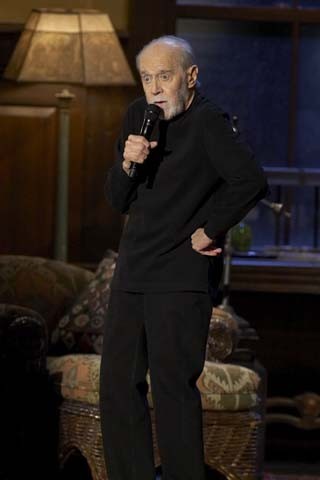
Now that he’s attained the septuagenarian rank of “old fuck,” and like old fucks since humanity’s rude beginnings, will next become a dead fuck, it’s pardonable to take the long view of a George Carlin show and cite a few precedents. But first a rundown Saturday night’s “It’s Bad For Ya,” concert, broadcast live for HBO from the Wells Fargo Center for the Performing Arts. It was a sellout. Carlin got a standing ovation—twice; once in the beginning and once at the end of his hour-long performance.
Carlin still hates humanity, and that’s good. We deserve it. Last night Carlin laid waste to Dr. Phil, families, growing old, Lady Liberty, human rights, Lance Armstrong, ethnic identity, Alzheimer’s, dying, biblical fantasy and other such pufferies currently deluding our species. Carlin’s Bush family digs felt obligatory, but were anticipated and well-received. All in all, Carlin expelled a well-paced load of good ol’ fashioned misanthropic obscenity, which is what we’d all come there to hear.
So on to the precedents. George Carlin comes from that rarified but ill-bred family charged with social criticism and satire. Picture Lenny Bruce shooting up, then reading and regaling our Constitution before a sellout crowd at Carnegie Hall. Lenny was Carlin’s dad. But Lenny never knew his comedic father. Lenny was so obnoxious as a kid that Dad abandoned him. Rumor has it that Lenny’s father was a Hitler look-a-like named Chaplin. And Charlie Chaplin was begot by Twain, and if you’ve never read Letters From Earth, you won’t know what I’m really talking about—so get a copy, and also by Ambrose Bierce, the infamed author of the Devil’s Dictionary, who was begot by Swift, who was begot by that randy monk Rabelais, then before him Chaucer, Boccaccio, Persius and everyone’s favorite Greek cynic, Aristophanes. Somewhere out there, right now, Carlin’s own kid is stirring up shit. I don’t know who he is, but just like the Dalai Lama, we’ll know when it comes time to pass the torch, cuz like Carlin and his seven Supreme Court words, and every last one of his son-of-a-bitch forebears, Carlin’s kid’s headed straight for the kind of trouble and no good that’ll have us rolling in dark, morbid hilarity, ironically illuminating our entirely pathetic existence.
Like Carlin says, “It’s all bullshit. And it’s bad for you.”P. Joseph Potocki


Cursive showcased a lot of new material last night, and even apologized for it (the band’s recording soon and they’re “road-testing” new material), although a number of vintage crowd-pleasers made their way into the set: “Sierra,” “Art is Hard,” and the never-fail one-two punch of “The Casualty” and “The Martyr” from what’s still their greatest album, Domestica. Thusly teased, the crowd heavily laid on the applause at the end.
Backstage, someone in the band must have found one of the scraps of paper with the jettisoned songs, because for their encore, not only did they play them—hell yeah—but for “Big Bang” Tim Kasher brought the microphone out into the middle of the Phoenix Theater’s floor and sang amongst a circular flock of hyped-up fans. It ruled. The song rules. I felt the magnetic pull and joined in.
And then, good god, Kasher started playing the unimposing guitar intro to “Sink to the Beat”—tossing out a “We miss you, Clint” to the ex-drummer who practically defined the song—and plowed into the jam of all jams: “I’d like to make this perfectly clear…” It was mayhem out on the floor: a sweet unification of a great song, a cluster of strangers all singing the great song, and directly in the eye of the storm, weathering the busy tides of excited bodies on all sides, the guy who wrote it.
Kasher grabbed the mic stand, hopped back up on stage, finished the song, and called it a night. Crazy to think that what was originally ripped from the bottom of the set list turned into the awesomest part of the show.
—————————————————
Lookin’ Good: How ’bout those new curtains at the Phoenix on the stage and side walls? And the fresh paint job on the ceiling and balcony? As someone remarked last night, “It looks like a real theater again.” I mentioned it to Tom Gaffey and he was pretty stoked about it too, pointing out that more interior painting is on the way but no, they’re not going to do away with the graffiti murals.
Also: Tim Kasher seemed pretty happy after the show, hanging out and chatting about Omaha, the on-stage patter mastery of Neva Dinova, and how triumphant it felt to perform “Big Bang” in Colorado Springs, a bastion of Christian fundamentalism. Somehow the conversation turned to Fred Phelps and the Westboro Baptist Church, and Tim recalled being a student in Lawrence, Kansas and reading about the funerals that Phelps and his lower-than-shit organization picket. “And I distinctly remember fantasizing,” he said, “in my more-angsty youth, about being the one, you know, that bought the gun…” Right on, brother.


Thursday, May 22: Kool and the Gang
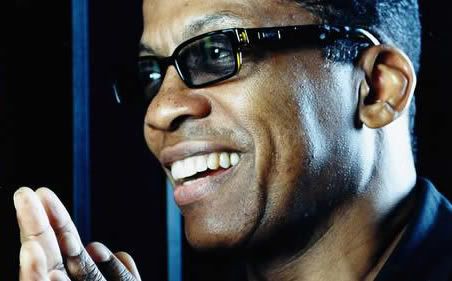
Friday, May 23: Herbie Hancock
Saturday, May 24: Diana Krall
Sunday, May 25: Bonnie Raitt, Keb’ Mo
Yup—as in each of the first three years of the festival, there’s a couple of acts in the Memorial Day Weekend lineup who could hardly be classified as “jazz.” At this point, it’s a local tradition that seems frivolous to argue, but it nonetheless consistently succeeds in getting hardcore jazz fans riled up to the nth degree.
Steve Winwood and Boz Scaggs, both headliners at the 2005 inaugural festival, rose the eyebrows early. Steve Miller and B.B. King stoked the fumes in 2006. Last year may have been the harshest of all: LeAnn Rimes and Michael McDonald.
Maybe that’s why festival directors have changed the name – slightly. Much like the Strictly Bluegrass Festival in Golden Gate Park became “Hardly Strictly Bluegrass,” the Sonoma Jazz Festival is officially known as “Sonoma Jazz +.”
As residents of the “Jazz” arena, both Diana Krall and Herbie Hancock are making return appearances at the festival, with the indefatigable Hancock recently handed a what-the-hell Album of the Year Grammy Award for his Starbucks-friendly sort-of-Joni-Mitchell tribute River: The Joni Letters.
Kool and the Gang, Bonnie Raitt and Keb Mo are gonna have to be content with the “+” category, although after scoping out the crowd in previous years, I hardly think that the average Sonoma Jazz attendee will mind all that much. As for the expensively-dressed and well-Chardonnayed woman sitting behind us last year who continually talked on her cell phone, well, I doubt she’d even notice.
But I have to personally hand it to the directors of this crazy weekend festival. Whatever your take on their choice of booking, they’re bringing world-class talent to an event with an impeccably well-run yet laid-back atmosphere—I mean jeez, it’s held in a tent on a baseball diamond, fer cryin’ out loud. The mood around the festival is jovial and swank, the shows are often sold out, and everyone generally leaves happy.
Here’s another thing you can’t argue with: to reward local residents, tickets go on sale in the town of Sonoma on Saturday, March 8 at the Sonoma Community Center from 2-6pm. Out-of-towners, positively hungry to boogie down to “Ladies’ Night” and “Celebration,” have to wait until the nationwide release of tickets, two days later, on March 10. Pricing and ticket info for the general public is served up here, but the March 8 pre-sale for locals is a strictly in-the-know kind of thing. Cool deal.