Postpeak

07.23.08

Global-warming predictions have long been tossed about by scientists, but until fairly recently, no one seemed to be listening. Now, “global warming” is the term of the day, and anyone who still doesn’t believe in it, like the president of the United States, for instance, is considered by a newly moral majority to have the brain capacity of a newt. Once a term become readily accepted by society, the time arrives to delve past it and start making new ones. Enter “peak oil.”

Coined by geophysicist M. King Hubbert in the 1950s, the term isn’t so new as all that, but for those of us who do not travel among physicists, it is new enough to cause a little head scratching, as well as the usual accusations of Nostradamus-like extremism. The idea behind peak oil is logical enough. Any time you have a finite resource—meaning, it won’t last forever—you will eventually reach a peak of production, at which point, there will be a decline. Sonoma County’s Post Carbon Institute (PCI) not only believes in peak oil, it believes that the decline is happening now, it’s happening fast, and that, if we fail to act now to get society off of this fossil-fuel addiction, this decline could be terminal.

I met with Post Carbon fellow and internationally renowned energy expert Richard Heinberg over coffee to discuss peak oil, the Post Carbon Institute and the PCI’s upcoming launch of an inaugural lecture and community-networking event on Aug. 2. Heinberg and Julian Darley, cofounder of the PCI and author of High Noon for Natural Gas, plan to present on peak oil and local responses to high gas prices in a world that is running short of fossil fuels. Heinberg, a Santa Rosa resident, is the author of eight books, including Peak Everything, The Party’s Over  and Powerdown, has been featured in Leonardo DiCaprio’s film The Eleventh Hour and has given over 300 hundred lectures on oil depletion across the globe.

Heinberg says that scientists have been forecasting this moment for decades, but now that it has arrived, society remains unprepared. What, he asks, are the consequences going to be if we do not respond accordingly? We have entered a new era, and no matter how much we may want to deny it, life is going to change. Our way of life is based on the extraction of nonrenewable resources, but the problem isn’t only oil; it concerns fish and water and everything else that we use up at a rate so unprecedented that recuperation has long since become impossible.

Heinberg is careful to note that the depletion issue is different than the climate-change issue. Climate change is often framed as a moral problem, Heinberg says, something we must consider for the future generations. Depletion, however, is a matter of survival. There is no question, no debatable timetable. Eventually, the oil will be gone, and when it is, either we adapt or we go down.

The job of the PCI is to look at what this depletion means in regards to every aspect of our lives, from transportation to electricity to materials to food, and to then tackle each of these issues one by one. The answer, Heinberg cautions, is not just to figure out a way to make our “stuff” from something else. Yes, we need alternative sources, but we are starting too late. Our consumption is too big; we have to reduce our consumption, and no biodegradable disposable fork is going to change this fact.

Right about now is when your average listener decides to get up and leave the room. Too depressing. The PCI knows this, of course, and works furiously to frame this dilemma intelligently, and in such a way that we can begin to see the benefit of a shift in our current lifestyles. The PCI has a solar car share in place, a public service broadcasting website sending podcasts around the globe and demonstration farms set up across the country. They have created a 12-minute video, Peak Oil for Policy Makers, and actively seek to educate policy makers around the world, helping them, on the municipal level, to get off fossil fuels, and fast.

Richard Heinberg speaks on Saturday, Aug. 2, at the Sebastopol Veterans Memorial Hall at 7pm. A wine and appetizer reception precedes at 6pm. 282 High St., Sebastopol. $5&–$10; childcare available with RSVP. 707.823.8700. For more info, go to www.postcarbon.org.


Blue to the Bone

0

music & nightlife |

It’s a Guy Thing Almost 72, Buddy Guy this year released the album truest to his heart, ‘Skin Deep.’

By David Sason

Despite his hard-drinking, hypermasculine persona—a hulking physical presence, guitar licks that singe, a voice like a wolf and a huge mouth ready to bite your head off—George Thorogood is pretty modest. “My writing ability is very limited, as is my singing ability,” says the longtime purveyor of raucous blues rock, who plays the Marin Center with Buddy Guy on July 30. “As far as my songwriting ability—what limited ability I have—it’s just about used up. How many more Chuck Berry/Elmore James/Bo Diddley things can I do without making it a joke?”

According to Thorogood, there’s “genius” and also “clever.” And for him, there’s no such thing as self-delusion. “I’m not Bob Dylan, where I know I’m going to work the rest of my life,” he admits. “I only got two or three licks in me, and as far as my vocals go, let’s face it, I’m no Aretha Franklin.”

This type of brutal honesty is jarring, sure. But Thorogood sees it as the way of the world. “There are actors like Marlon Brando and there are actors like Bridget Fonda,” he claims, “but Bridget knows what she’s good at.” And by mastering his own expertise, no matter how limited, Thorogood has been one of the most consistent American performers since he and the Destroyers emerged from Delaware in the early ’70s. He and his band still play to packed houses, delivering airtight sets of raunchy, barroom classics like his abrasive cover of Bo Diddley’s “Who Do You Love” and “Bad to the Bone,” his universal hit.

It’s not like modest chart success bothers the ever-humble Thorogood. “A guy once asked me, ‘How does it feel to be a one-hit wonder?'” he recalls, “and I said, ‘A lot better than being a no-hit wonder.'” Possessing a refreshing sense of old-school professionalism, he’s happy to play fan favorites like “One Bourbon, One Scotch, One Beer,” even if his peers begrudge the obligation. “Steve Miller and John Fogerty, I see those guys periodically and they say, ‘I don’t want to play my hits, I want to get creative,’ and I say, ‘Why?'” Thorogood says. “If a promoter came up to me and said, ‘I don’t want you playing anything off your last five records,’ I’d say, ‘Great! How much do you want to pay me?'”

Thorogood’s levelheaded work ethic has stemmed from a fear of “getting fired” since his teenage years, but it’s also just reality. “The level of competition for entertainment now is sky-high,” he says. “You can’t just be good anymore. You can’t even be very good—you have to be great, all the time, every night.”

This refreshing desire to please his audience naturally extends to his opinion of releasing new albums, an act to which he’s grown increasingly reluctant. “I went to see Paul McCartney live, and nobody wanted to hear his new stuff,” he remembers. “Are you a fan of the Rolling Stones? Do you really think they need another album? I’m just gonna play live, baby.”

Although one last album is on its way, don’t expect it to reveal anything new about Thorogood. “I never said, ‘I went through this really bad divorce or my father passed away and I wrote this song,'” he says. “I share pleasure, but I keep the pain to myself.”

Chicago blues master Buddy Guy, on the other hand, has made a fruitful career of bringing pleasure through the expression of pain. And the Rock and Roll Hall of Famer—who unwittingly taught a young Hendrix his stage tricks and bridged the gap between blues and rock—is loving the studio, thanks to the just-released Skin Deep. “This is the most excited I’ve been about an album in quite a while,” Guy says of the new album, his very first fully comprising original material. “Even the first time Muddy Waters ever asked me to play with him, I don’t know if I was as excited about that as I am this.”

While not a confessional songwriter in the traditional sense, Guy calls Skin Deep his most personal record yet, continuing the back-to-roots trend of 2001’s Sweet Tea. The songs are largely informed by his upbringing in Lettsworth, La., including the poignant anti-racism title track. It was inspired by his memories of a white childhood friend whom he was forced to stop playing with around age 13. “We used to have a flashlight, and at night we would shine it through our hands,” he recalls, “and all we saw was red.”

While some may think the song is timely considering Obama’s candidacy, they’d be wrong. “I didn’t have the slightest idea I’d live to see a . . . I’m not going to call him African American or black, because he’s not,” Guy says, practicing what he preaches. “He’s as much white as he is black.”

Throughout his career, though, Guy has found observance to be his greatest source of creative inspiration. “You could be working construction and hear someone say something and turn it into a song,” he says. “You don’t have to live a bad life to write a good blues song, but you probably know someone who did go through it, even if you didn’t.”

Guy turns 72 the day of the upcoming Marin Center show, yet the desire to make Skin Deephad nothing to do with impending mortality. “I’ve wanted to do that from Jump Street,” he says. “Fifty-one years ago, I wanted to do it, but I didn’t have any power.” Shady business methods turned him off to the process in a big way. “Even if I wrote a song in the Chess [Records] days, my name wouldn’t even be on some of these songs,” Guy says. “Like, someone would come in and say ‘Skin Deep’ is all right, but you should change it to ‘Skin Weep.’ Then they’d claim the song.”

As an expert of spontaneous performance, Guy was also annoyed with producers’ constant tinkering. “There’s no time when you’re making a professional record and a producer’s telling you, ‘You sound too much like Tom, Dick and Harry,'” he insists. “When I was in the studio, I was being taught how to play, and I think you’re supposed to play what you already know.”

Like Thorogood, Guy still relishes playing live the most, although his wild-man antics are not what they once were. “You slow down when you get to 72 years old,” he says laughingly. “I can’t jump off the stage like I used to do, but I’ll still give you the best I got.” Judging from his scene-stealing turn last year in the Rolling Stones’ Shine a Light, he means it. It’s a good thing for us that true bluesmen never quit. “I don’t know no blues player who’s ‘retired,'” Guy says. “Blues players just drop.”

Buddy Guy and George Thorogood share a bill on Wednesday, July 30, at the Marin Center, 10 Avenue of the Flags, San Rafael. 8pm. $39–$75. 415.499.6800.


FIND A MUSIC REVIEW

Green Guru

07.23.08


The shades are drawn in Trathen Heckman’s sparsely furnished parlor, and a warm sleepy light gives the room an otherworldly softness. Dressed in a baseball cap, baggy shorts and sneakers, Heckman is at once youthful and wise, composed and energized. In fact, he is the picture of a man who conquers uncertainty and insecurity with vision, creativity and direction.

This sacred balance enables Heckman, 37, to juggle a multitude of jobs and responsibilities, among them directing Daily Acts, an organization that pours forth the message, “You and everything you do matters.” The goal of Daily Acts is to inspire and instill a reverence and active commitment to life, the earth and human relationships in a culture that Heckman says stresses lack and insufficiency. Every little action is crucial.

“It’s literally the difference between a world that’s being killed and that’s dying and the world that’s being born,” Heckman says. “You could just walk down the street and see nothing but problems, or you could walk down the street and see the solutions—lavender with bees all over them, food, medicine, wonder!”

Transforming words into reality are the “sustainability tours,” traveling workshops hosted by Daily Acts. These half-day tours take participants, via green transport, to what Heckman terms various “bright spots” in the North Bay where sustainable solutions are happening and working for regular people. Teaching everything from how to create your own natural, nontoxic wall finish to biodynamic composting, the Sustainability Series runs from March to October, with a brief break in the winter.

“You could read about it,” Heckman explains, “but you need to go out there and have someone stick edible flowers in your mouth and say, ‘Here, smell this rose geranium, you can make tea out of it.'”

The tragedies of Sept. 11 and the subsequent death of his mother drove the Chico State graduate and former professional snowboarder to take his first drastic actions in 2001. “The hurt of those two situations and some other aspects catalyzed me to step up in some way,” he says. “And that’s when I published the first issue of Ripples, did the first sustainability tour.”

Ripples Journal, an independent print publication currently reaching some 6,000 people, carries a joyful yet beseeching tone. Published twice yearly, each issue addresses the positive aspects of daily life and implores readers to live brilliantly and conscientiously.

Though content with the nonfiscal rewards of his work, Heckman acknowledges that even revolutionaries have to support themselves. “We’ve done a lot on very small finances, because we’ve been so supported by the community,” Heckman says.”Two hundred&–plus people volunteering close to 30,000 hours over the last five or six years. But you still gotta pay the bills.”

His commitment is beginning to pay off. Last year, Heckman began taking a part-time paycheck from Daily Acts after volunteering about 50 hours a week. He also took on directing Green Sangha, the second nonprofit to come under his wing. Described by Heckman as “spiritually engaged environmental action,” Green Sangha is a community that combines spiritual practice with environmental activism.

The Petaluma home Heckman shares with his wife, Mary, is a sustainability site in itself, from the earth plaster walls in his home to the graywater system and rain catchment tank in the backyard, all of which the Heckmans constructed with the help of community. A beehive produces a regular bounty of honey, and bottles of homemade brew are concocted with hops from Heckman’s own Humulus bine. With his energy and knowledge, he is inspiring proof that one individual can embody his or her beliefs in both word and deed. 

“It’s a strategy,” he says. “If we just keep inspiring and infecting each other back and forth, and knowing that the little bits are extremely vital.”

Walking outside, Heckman plucks a leaf from a rose geranium plant and sticks it under my nose. Heavenly. I marvel at a baby banana plant, the peas climbing up the fence on recycled metal, the cherry and apple trees. He fills my hands with strawberries, raspberries, herbs and a scone his wife made with blueberries from the backyard.

When it’s time to say goodbye, my senses are dizzy. Stepping out of Heckman’s garden feels like walking into another dimension. A gas station sign sneers in the sunlight—$4.51 per gallon—and my heart sinks. I think about the lack, the insufficiency. Then I notice the sweet smell of rose geraniums on my fingertips, and I remember the beautiful new world that right now is being born.

For more information about Daily Acts, ‘Ripples Journal’ or the Sustainability Tours, visit [ http://www.daily-acts.org/ ]www.daily-acts.org.

Quick dining snapshots by Bohemian staffers.

Winery news and reviews.

Food-related comings and goings, openings and closings, and other essays for those who love the kitchen and what it produces.

Recipes for food that you can actually make.

Camp Clamp Down

0

07.16.08

Driving east from Occidental to Pinole, Tim Johnson was unsure how he should break the bad news to the students at St. Joseph’s School. As a site director for the Caritas Creek environmental education program, based in western Sonoma County, it was one of his many tasks to make on-site visits to the participating Bay Area classes. As with every school he visited, the students would be excited to see him. Tall, boyishly handsome and exuding the sort of benign expression found in kindergarten teachers and Sesame Street characters, Johnson was well-liked by the students at St. Joseph’s.

Johnson’s popularity, of course, was simply a reflection of the students’ love for Caritas. As a heavily enrolled school-year environmental education program for over three decades, Caritas Creek’s unique and engaging approach to inspiring early adolescent children has proven to be an inimitable experience for tens of thousands of Bay Area children over the years.

Technically, however, Johnson was no longer employed. Just days earlier, the entire Caritas staff had been collectively terminated by the program director at Catholic Charities/Catholic Youth Organization (CCCYO) when they conflicted over proposed changes to the core tenants of the thriving program.

Against the demands of CCCYO, Johnson figured he would keep his appointments and at least offer some kind of in-person explanation. Greeting him by his nickname, Gus, the St. Joe’s eighth graders asked Johnson anxious questions about the troubling rumors they heard on MySpace concerning problems with the Caritas Creek program.

“It was all very emotional, especially for the younger kids, who were asking me why they couldn’t go to Caritas anymore,” Johnson says. “The teacher at the time told me that she might need to get grief counselors.”

As the official rationale of a “staffing problem” first leaked out, numerous parents, teachers and administrators, who have long considered the Caritas staff of college-educated teacher-naturalists one of the program’s best assets, deemed the explanation severely insufficient.

“We were very upset about the closure of Caritas at Occidental,” says Karen Francis, an eighth-grade language arts teacher at St. Patrick’s School in Rodeo, “so my students and I wrote letters to CYO and the San Francisco and Oakland [dioceses] about how we felt.”

Matters soon devolved further when CCCYO filed a multimillion dollar federal lawsuit alleging trademark infringement against a few of Johnson’s co-workers who sought to relaunch Caritas at a new location. With emotions running high, a heated tug-of-war ensued over the prevailing identity of the camp.

The Spirit Shot

The origin of the 216-acre CYO site in Occidental goes back to the early 1930s, when Father John Silva purchased 12 acres on Salmon Creek and converted it into a wilderness camp for teenage boys. Shortly after World War II, he donated the camp to the Catholic Youth Organization of the Archdiocese of San Francisco, who within a few years gave more serious attention to developing facilities for a formal outdoor recreation experience.

Later, in the mid-1950s, CYO purchased an additional 74 acres in the area and began running a more complete program for the Bay Area’s schoolchildren.

As a young girl from the Epiphany School in San Francisco’s Excelsior district, Paula Pardini’s time at CYO’s summer camp would become a huge influence on her life’s direction. She volunteered as a junior counselor in high school and worked summers at the CYO camp while in college. In the coming years, her experiences with CYO would prove to be a key inspiration for her founding of Caritas Creek.

“CYO was an amazing experience for me growing up,” says Pardini. “Nothing moves kids the way the camp environment does.”

Now in her 60s, Pardini is upbeat and animated in recollecting her earlier days. With expressive eyes that are as bright as her shiny white hair, she tells of how her CYO experience landed her a job at the more affluent Cloverleaf Ranch camp in Santa Rosa during her mid-20s. There, Pardini would eventually help break the camp’s color line by raising funds to bring a group of inner city youths from Oakland to attend, an act that proved significant beyond its more obvious reasons.

“It was the best session the camp ever had, because you had eight kids who embraced everything with enthusiasm and appreciation,” Pardini explains. “The year-round director told me, ‘This was the spirit shot that this camp needed for years.'”

The unique dynamic of pairing children from vastly different socioeconomic backgrounds was an experience that Pardini kept close as she searched for a Northern California location to establish her own outdoor camp a few years later.

“The idea was to provide children with the opportunity to connect with one another on a common footing,” says Mary Gordon, a cofounder of Caritas Creek, “without the trappings of what your history is or how much money you have, and to have them understand how similar they are rather than different.”

Settling into the spectacular natural setting of the Mendocino Woodlands, Pardini’s young team launched Caritas Creek as a nonprofit organization in the summer of 1975.

“I suggested ‘Caritas,’ because it is the Latin word for ‘God’s love,'” says Pardini, “and we combined it with ‘Creek,’ feeling that it combined the spiritual with the environmental. Caritas is about these connections, with your environment, your contemporaries, your god.”

Environmental Serendipity

In addition to its outdoor summer recreation camp, Caritas Creek began to distinguish itself with a unique school-year environmental education program that took a distinctive spiritual approach to engaging its students. Drawing from numerous sources, including her master’s degree program at the University of San Francisco’s Institute for Catholic Educational Leadership, Pardini generated a vibrant philosophy with a focus that would be summed up as “self, others, nature and spirit.”

“In the beginning, we really had to show people what we were trying to do,” says Gordon, “but over the years we had developed a unique niche. Today, there are many choices for environmental education, but people continue to come back to us because of the history and the reputation we have built.”

Through Pardini’s earlier contacts with CYO, Caritas Creek began to rent out the Occidental facility in 1979 to conduct environmental education. By 1984, the two had joined a partnership, with Caritas running the school-year program and CYO providing financial and facility-related backing.

The program was indeed highly multifaceted. Set among the redwoods, the camp would purposefully schedule schools from sharply differing locations—such as San Francisco’s affluent Marina district with Oakland’s struggling International Boulevard—for a week of its unique curriculum. Recreational activities such as archery, canoeing and ga-ga ball (a more rambunctious though ultimately less sadistic version of dodge ball) were matched with academically oriented nature hikes and scientific study. More spiritually engaging activities proved integral to the program, such as Serendipity, which sought to engage students in matters of community, self-identity and relationship-building by inviting them to share their views and emotions in intimate group conversations led by a teacher-naturalist.

“The activities that are set up for the kids [at Caritas] are well thought-out and have a deeper meaning,” says Sonya Simril, principal of St. Leo the Great School in Oakland. “The Serendipity is one of the best aspects of the trip. The kids have the opportunity to sit down in a circle and share something, personal or not, knowing that everyone will respect them.”

Although documents prepared for their 2007 court case sketch an ever-teetering relationship between Caritas and the upper management of CYO, the program thrived over the years, garnering stellar assessments from teachers, parents and administrators.

“If school were perfect, all of school would be like Caritas,” says Ann Manchester, former superintendent for the Oakland Diocese and the exiting principal of Holy Name School in San Francisco. “The program completely engages kids on all levels and appeals to every kind of learning style. It’s a week of total learning, immersion and complete community formation.”

As teachers and parents saw their kids return from Caritas with better behavior and positive perspectives, the weeklong camping experience became a core curriculum component for numerous schools from San Jose to Lake County. Most noticeably, the students themselves regarded the trip as a special experience that delved far beyond the usual classroom monotony.

“When we were told in the eighth grade that we were going [to Caritas] again, the reaction of everyone was crazy, and we couldn’t stop talking about it until we actually got to camp,” says Hannah Kargoll, a former student of St. Joseph’s of Notre Dame in Alameda. “The lessons really carried over with us when we got back, because at Caritas, they made a really big point that everything we were doing there could be brought back with us into the world.”

Eventually, continuing management conflicts between CYO and Caritas led to Pardini’s resignation in 1999. The camp’s popularity and high evaluation marks from participating parents and teachers would continue under Pardini’s longtime assistant Paul Raia, even as tensions between the partnered organizations heightened.

Programs, Priorities

After CYO completed its merger with Catholic Charities in 2003, it acknowledged the revamping of its winter and summer camps as a defined priority.

In 2005, CCCYO’s HIV director Dr. Glenn Motola’s promotion to director of programs was initially perceived as an encouraging development by members of Caritas, who were eager to see someone from the head office exhibit an on-the-ground understanding of what the program was and where it needed assistance.

“When Glenn Motola started as director of programs, he came to camp and inflated us about how he loved Caritas and how he thought it should be the flagship of CYO programs,” says current Caritas director Erik Oberg. “He really had our support when he first arrived at camp.”

The optimism proved short-lived. Caritas staff members assert that Motola’s promise of a hands-on presence never manifested, as he instead began to reveal a perspective sharply out of touch with the realities of the program.

“I remember Glen Motola promising us that he would be around a lot and watch activities, but he never did,” says Nelson Hernandez, a current teacher-naturalist at Caritas Creek, “so the people who wound up making some really big decisions simply had no real understanding of our program.”

Although CCCYO executive director Brian Cahill recognizes the popularity of the CYO-Caritas program, he asserts that it was not fiscally solvent and was falling short in other key areas. Negative feedback from teachers regarding the environmental education program, however small, typically pointed to the same two concerns: cabin supervision and a need for a higher prioritizing of the science content.

“At the time, there were serious parental concerns regarding supervision,” says Cahill via email. “[Our current] curriculum is now aligned with the California 4&–8 grade science standards, which was not the case prior to 2007.”

While everyone seemed to agree that the use of high school students for cabin supervision needed revamping, the notion of shifting the emphasis away from spiritually engaging activites toward a more explicit academic experience became a lingering point of contention.

“Glen started talking about how we need to shift to a science standards program,” says Oberg, “and if we did that, we could charge more. So everything was then leading to an inevitable goal of a science standards program as Motola started critiquing us in crazy ways.”

Moving into 2006, matters between Motola and Caritas management deteriorated so badly that a legal document prepared by Caritas for its court case one year later characterizes the time period as the point when the divide between the two organizations “became concrete.” The document provides a laundry list of conflicts between Motola and the Caritas management, which ultimately resulted in the resignation of two junior Caritas program directors in the space of about a year. (Motola, who is now the director of the Oak Hill School in Sausalito, declined to comment for this article.)

“The only thing we ever knew was that Paul Raia was struggling with the corporate office,” Johnson says, “we never had any tangible evidence that anything was really wrong, because CYO management were never around. Enrollment was doing great and most teachers were willing to book their week again as they were getting on the bus to leave.”

While some members of the staff caught wind of rumblings with upper management, such squabbling appeared to be a mainstay since the days when Pardini first formed a partnership with CYO.

“I left for Christmas break without any thoughts in my mind of things not going well,” says teacher-naturalist Camilla Guevara. “I knew that CYO was constantly second-guessing the program, but we just thought of Glenn Motola as some guy in the administration who didn’t get it. It was his job to get it—but he didn’t.”

Within a mere few days of returning from break in January, the entire program had fallen to pieces.

Trouble in Paradise

Little more than a week prior to hosting their first class of the 2007 spring semester, Motola called a meeting of the entire Caritas staff on Jan. 17, and presented them with a list of changes to the program that needed to be instituted immediately. Depending on whom you ask, the Caritas senior program director Paul Raia either personally chose to be absent or was prohibited from attending. (Now set to begin as the executive director of the Next Generation nonprofit in Marin, the conditions of Raia’s severance package restrict him from commenting for this article.)

Earlier in the month, Motola had received the final report of a camp evaluation he commissioned from the risk-management firm Camp and School Consulting. While the report acknowledges many positive attributes of the program, it ultimately calls for a sizable overhaul of numerous aspects of the camp and the environmental education program. The assessment echoed many of Motola’s perspectives, particularly on moving toward a more narrowly defined science-oriented curriculum. The list of changes Motola then presented to the staff heavily reflected the recommendations of the evaluation.

“Outside professional consultants had vital recommendations regarding supervision and best practices, [which] were not received in a positive manner by camp leaders,” says Cahill, “and they elected to sever ties.”

Among the list of roughly a dozen changes were issues such as the ever-worrisome dilemma of cabin supervision, disciplinary procedures and numerous facility-related matters, issues which the Caritas staff claim that they had expressed a full willingness to support. However, three points in the area of “Curriculum” proved contentious: revisions to the program’s “Serendipity” activity, a halt to the mixing of school groups and a restructuring of the week-concluding practice of “Celebration.”

It was in these three proposed revisions that the staff saw an effort by CCCYO to revamp the core tenants of Pardini’s program and skew it toward a completely new focus that removed the emphasis on connecting with the kids.

“The one change that I just couldn’t get behind was the separating of the schools,” says Johnson. “Why would you want to separate these kids when the whole point is to bring them together? It’s against what CYO says their mission is.”

When questioned on Motola’s insistence on the segregating of schoolchildren from differing socioeconomic backgrounds, Cahill asserts, “Our camp philosophy is to meet the needs of various groups of kids regardless of socioeconomic background, with specific programming and trained facilitators that meet their distinct, individual needs.”

Befuddled by how such core changes were to be implemented in the space of about nine days, the Caritas staff contends that they requested Motola’s specific plan on how to proceed.

“We said, ‘If you want us to make these changes, how should we do it?'” says current Caritas program director Emily Wood Ordway. “We were willing to hear their ideas. After two hours of discussion, they said we had to vote: ‘Yes’ you’re willing to stay, or ‘no’ you’re not.'”

What ensued is a matter of starkly different recollections. Cahill states that “the former camp leadership was not willing to consider implementing program changes. As a result, the program was temporarily suspended and staff were laid off in order to allow them to receive benefits.”

Conversely, the Caritas staff claims that they had brokered a second meeting set to convene two days later in which Motola and other CCCYO staff would return with a tangible plan for implementing the changes in such a short space of time.

“They came back on Friday and they had no proposal at all,” says Ordway. “There was no dialogue or choice on the matters. Nothing. Just eviction notices and letters of termination.”

Caritas Returns

Shocked and discouraged, many Caritas staff members simply returned to their homes around the country. Some dug in and tried to rally support against CCCYO’s decision, while others began looking forward.

“A lot of staff members were from out of state and left right away,” says Ordway. “A couple of us stuck around, and I started talking to Erik [Oberg] about doing our own camp.”

With the eager support of three schools, the duo successfully spearheaded an effort to run a pilot program for a new camp in nearby Cazadero. Amazingly, they had it up and running with a fully volunteer staff by April.

In late spring, Oberg and Ordway had paired with Gordon and Pardini to launch a new incarnation of Caritas Creek in the fall of 2007 at their new location in Cazadero. Pardini and her new partners mailed out their fall registration forms for environmental education shortly before CCCYO mailed theirs. Unsurprisingly perhaps, both parties claimed to be Caritas Creek.

“Within a week of us sending out our registration, CYO sent out their form for Caritas Creek,” Ordway explains. “That was followed by a lot of confusion and disgruntled responses from school administrators who were trying to piece the story together and decide who to trust. The phone calls just started pouring in.”

In light of the emerging conflict over who had the legitimate rights to Caritas Creek, Oberg, Ordway, Gordon and Pardini were served with papers informing them that CCCYO was suing them for trademark infringement for $9.6 million, as well as a court injunction to halt any further use of the Caritas name and logo in connection with the Cazadero camp.

“We had no resources and we didn’t know what to do,” says Ordway. “We were so passionate about the program, but felt that if we could not continue to call it Caritas Creek, it wouldn’t work.”

However, Pardini’s lawyer soon arranged a meeting with Paul Vapnek of Townsend and Townsend and Crew, one of the most renowned lawyers in the field of patent and trademark law at one of San Francisco’s oldest firms. Soon, the new upstart incarnation of Caritas Creek had a stellar legal team—pro bono.

“One of the reasons I’m still coming into the office on a regular basis is cases like Paula Pardini’s and the other Caritas Creek people,” explains Vapnek, “because these were interesting issues and these were people that desperately needed help. And the firm was willing to let me and several of our younger lawyers represent them without charge.”

When it came time for the hearing, Caritas entered the courtroom as a community. “We rallied people associated with the camp to show up for the hearing,” Ordway says. “On our side of the courtroom we had 44 supporters; on the CYO side of the courtroom they had the executive director [Brian Cahill].”

The judge quickly turned down CCCYO’s request for an injunction, and within the week, a settlement was being brokered. Among the details, CCCYO would relinquish any claim to the Caritas name or logo, while the Caritas staff would be required to state on all of the materials that they are not affiliated with CCCYO. It was a stipulation they were all too ready to accept.

Today, both CCCYO and Caritas Creek operate camp programs in close proximity to each other. The former is quick to cite its compliance with California science standards, and points to the 750 children currently enrolled in its summer camp program. Meanwhile, Caritas is presently running a summer camp in King’s Canyon near Sequoia National Park.

Yet the most telling postscript to the split is that Caritas Creek has ended up with the lion’s share of schools in its environmental education program. Whereas the final 2006 school-year program of CYO-Caritas Creek boasted 88 participating schools, nearly 50 of them had already attended the new incarnation of Caritas in Cazadero, a telling sign as to whether a spiritually oriented program has any staying power with the Bay Area’s Catholic school system.

As one teacher remarked, “It’s ironic to me that it’s a Catholic Youth Organization that wants to focus more on science.”


Farmers as

07.23.08


flat-out adulation

Magazine and newsprint writing about farmers these days has all the oh-my-God! swoon of a CosmoGirl blogger catching the Jonas Brothers shopping for boxer shorts. Simply put, there is nothing hotter than a farmer right now. Growing food, not unwrapping it from some hermetic plastic shell, is suddenly hip and sexy—perhaps for the first time since Laura Ingalls met Almanzo Wilder. And what is sexier and hipper than being the very purveyor of said hipness itself? Indeed.

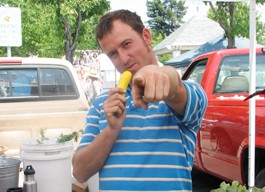
We’ve decided not to hide behind any meek tip-toe about our farmer adoration and to just straight out treat them like the rock stars they are. Accordingly, we’ve asked them the kind of inane questions that are inevitably posed to pale-limbed, heroin-chic guitarists. Not surprisingly, their answers are smart, funny and, most of all, fresh.

Star-struck reporters here are Suzanne Daly, Patricia Lynn Henley and Cassandra Landry.

—Gretchen Giles

Brandon Pugh & Brian Riva
Sol Food Farm

Biggest Hit: “Dry-farm tomatoes. We water once and walk away. The plants reach for deeper water. The tomatoes have a tougher skin, but they’re sweeter. You have to be wearing socks when you eat them, because they’ll knock them off.”

First Pick Up Your Instrument? Brandon Pugh: “I grew up in Arkansas. My mom had a backyard garden. I remember her shelling peas on the newspapers. I got into gardening right outside of high school.”

Brian Riva: “My family grew our own food in New York’s Hudson Valley, near Clinton’s Corners. I remember picking apples.”

Worst Review: “Gophers! I speared one today with a pole. They’re a pain in the neck. They’re crazy. Not only do they eat our plants, I hate stepping in their holes.”

Biggest Surprise: “That’s a tough one. The strawberries. I was surprised how big they were. They were as big as a baby’s hand. I had a strawberry that took three bites to eat—it was a three-biter.”

Best Acoustic Performance: “Strawberries. We can’t keep them longer than two hours in the market. They sell out. You can’t stop eating them. They rock.”

4388 Harrison Grade Road, Sebastopol. 707.874.2300. [ http://www.solfoodfarm.org.%20%3C/i%3E%D1S.D ]www.solfoodfarm.org. —S.D.


Nancy Skall
Middleton Farms

Biggest Hit: “Berries. Especially strawberries.” (A customer interrupts and says enthusiastically, “They’re red through and extremely flavorful. Chez Panisse and Aqua restaurants buy them from her.”)

First Pick Up Your Instrument? “We had a victory garden during World War II, but we didn’t work it ourselves. We had a gardener. My father was a lawyer and commuted, and my mom had no interest in gardening. I was about 11 or 12 years old; I did the flowers. My mom thought that I was a genius because I planted zinnias so thick that they looked like shrubs. She thought that it was a miracle that anything would come out of that patch since we lived outside of Chicago. I also planted iris and petunias.”

Worst Review: Skall laughs. “I have so many I don’t know where to start. I hate talking about negative things. I’d much rather celebrate. I have peach trees that die all the time, sometimes at one year, sometimes at 25 years. I’m much more in favor of good news.”

Biggest Surprise: “Oh gosh, I live in the moment. I can’t think of any.” (The interviewer suggests, as an example, finding 10 gophers dead without doing anything to kill them.) Skall laughs. “I’d go for that fantasy anytime.”

Best Acoustic Performance: “Asparagus. I don’t eat between meals, but the young fronds are delicious. If I find them in the garden, I’ll have a little midday snack.”

2651 Westside Road, Healdsburg. 707.433.4755. —S.D.

Jesus Soto
Oak Hill Farm

Biggest Hit: “I don’t have a favorite. I pretty much love all of my flowers. I think all of the flowers that I grow can be my favorite. Foodwise, when there’s corn in the field, I like that. I like to see the corn growing, and my mouth waters when it’s ready. Corn has been a part of my life all my life.”

First Pick Up Your Instrument? Jesus “Chuy” Soto started with Oak Hill working backstage as a handyman. “I did all kinds of repairs on the farm, from roofing to plumbing to maintenance.” But nurturing the soil was in his blood. “I grew up on a farm in Mexico. Ever since I can remember, I grew things—crops, beans, corn, hay. I grew things for the family, not as a business, but nevertheless, it was year after year. I knew something about how to prepare the soil, things like that.” In 1997, Chuy was tapped for a lead role with the farm’s beautiful blossoms, and he’s been starring with the flowers ever since.

Worst Review: “There are always times when germination is poor, when you plant and something happens. Like in springtime when it rains a lot, and germination is poor. You have to wait a month or so until the soil dries out, and then you have to start over.”

Best Acoustic Performance: It’s all acoustic for Soto. “We’re an organic farm. The preparation of the soil starts in the fall. When the season is done, we cover the field. The cover crop is a mixture of barley, vetch, oats. Flowers don’t need as much to grow as other crops. I think vegetable growers use more organic fertilizers. I don’t use much, or any. I just use cover crops in the fields, and in some of the lower fertility fields, I use some compost.”

The Red Barn at Oak Hill Farm, 15101 Sonoma Hwy., Glen Ellen. 707.996.6643. [ http://www.oakhillfarm.net%3C/i%3E.%D1P.L.H ]www.oakhillfarm.net.—P.L.H.

Brother and sister farmers
Lee and Wayne James
Tierra Vegetables

Biggest Hit Lee: “Strawberries or tomatoes are our bestsellers, but they don’t necessarily grow the best because they’re so dependant on the weather. It used to be the chipotles, but that’s during the winter.”

Wayne: “It’s the tomatoes. No contest.”

First Pick Up Your Instrument? Wayne: “I remember first growing sweet peppers and sunflowers. I loved sunflowers and I still do, and plant them all the time! They’re so impressive. I loved how completely yellow they were as a kid.”

Lee: “I was very into flowers. We always had some around in the house.”

Worst Review Lee: “I once planted an entire two acres of winter squash while Wayne was away with the Peace Corps. It was all seeded and beautiful and sprouting. I went down three or four days later and it was completely bare. The deer had gotten all of it! There wasn’t a piece of greenery left. I just remember staring at it and sobbing.”

Best Acoustic Performance Lee: “Strawberries. Those are definitely the best. Maybe tomatoes, like cherry tomatoes, but strawberries win each time for me.”

Wayne: “Oh yes, strawberries, of course, but carrots can be great, too. You gotta wipe off the grit a little, but it’s worth it.”

Day Job? Lee: “I’d be a dog trainer. I love animals.”

Wayne: “I honestly can’t think of anything else I would rather be doing than what we do here. It’s who I am, completely.”

651 Airport Blvd., Santa Rosa. Open Tuesday and Thursday&–Saturday, 11am&–6pm. 707.837.8366. —C.L.


Robert Stogner
Nelsen Ranch

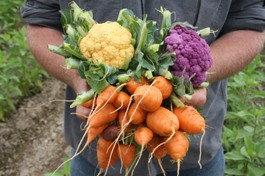
Biggest Hit: “Potatoes. I grow 22 varieties including Purple Peruvian, Yukon, German, Butter Ball and Swedish Peanut, which is a fingerling peanut-shaped potato. I also grow an acre of popcorn, and two acres of winter squash.”

First Pick Up Your Instrument? “Grandma planted a garden in five-gallon buckets. My grandpa was a miner in Sierra County, and the soil was too rocky to plant in. I helped my grandma grow tomatoes, cucumbers and lemon cucumbers. It was the first time I had ever seen a lemon cucumber.”

Worst Review: “None so far, except weeds. And gophers!”

Biggest Surprise: “That’s a good one. I’m never surprised. I guess off-the-wall garlic. An old guy in Occidental gave me some garlic, including Blue Ukrainian and Pink Music. I started with three heads and ended up with 10 pounds each.” (The interview is interrupted by a woman asking, “How do you plant them?” Stogner answers, “Just shove ’em in the ground.”)

Best Acoustic Performance: “Red Torpedo onions. I love ’em, I love ’em.” He laughs. “Try ’em. You’ll love ’em. They even taste good on an onion sandwich!”

Nelsen Ranch, P.O. Box 22, Tomales. 707.762.1562. —S.D.

Heron Fox-Whiteside
Heron Fox Farm

Biggest Hit: “I specialize in native plants, medicinal herbs and mushrooms such as oysters, shiitake and mitake.”

First Pick Up Your Instrument? “I first started growing carnivorous plants when I was 12 years old. It was the classic little-boy fascination of bug-eating plants. I hand-pollinated and hybridized them, and started propagating them from seed. That led to propagating native plants.

Worst Review: “I lived in Monte Rio and had grown carnivorous plants for three years. When I was 15 years old in 1995, a flood came and washed my whole greenhouse away. All my unique plants grown from hand-pollinated seeds were gone. I gave up plants for a few years after that.”

Biggest Surprise: “My biggest surprise is getting rare plants to germinate, like redwood lilies from field-collected seed.”


Best Acoustic Performance: “Huckleberries and gooseberries—but I don’t sell the fruit, I only sell the plants.”

Heron Fox Farm, Cazadero. 707.847.3320. Call for appointments.—S.D. 

Quick dining snapshots by Bohemian staffers.

Winery news and reviews.

Food-related comings and goings, openings and closings, and other essays for those who love the kitchen and what it produces.

Recipes for food that you can actually make.

North Bay Brewpubs

0

07.23.08

Beer doesn’t grow in bottles. It grows in vast sky-high steel tanks visible from the freeway that generate soulless brewskies by the billion, light, cheap and abundant. But we also have a happy medium, where beer is tended to by men and women with names, homes, cell phone plans and all the other poignancies that make people human—and there is nothing quite like drinking these folks’ beer right over the bar from the brewer to you.

In the North Bay market, Russian River Brewing Co. bulls the beer. Captained by brewer Vinnie Cilurzo, who invented the double IPA in 1994 while brewing in San Diego, RRBC’s eight to 10 beers can be found on tap, including the famed Pliny the Elder and Blind Pig, each now available in bottles at retailers, if the pub’s too lively for you. 725 Fourth St., Santa Rosa. 707.545.2337.

Bear Republic Brewing Co., a rising star in the national bottled beer market, still offers a dozen or more beers on tap to its loyal followers, along with appetizers and comfy pub food to soak it up. Three-ounce tastes run $1.25 each, but those short on belly room might go straight to the barrel-aged Black Mamba Belgian, the creamy-topped Black Raven Porter and the Hop Rod Rye. 345 Healdsburg Ave., Healdsburg. 707.433.2337.

Downstream, Stumptown Brewery and Smokehouse toes the brewpub club with a pair of its own house-made beers, while well-known brews from other locals fill in the blanks. 15045 River Road, Guerneville. 707.869.0705.

In Fairfax, shady front seating and passing trays of pub grub make Iron Springs Pub and Brewery a tough one to walk past. The tasting paddle of six three-ounce samples ($7) is the best route toward seeking a favorite. 765 Center Blvd., Fairfax. 415.485.1005.

Locals in Petaluma get their drink on at Dempsey’s Restaurant and Brewery all year as pale, Irish, wheat, red and strong ales—plus the Ugly Dog Stout—flow from the taps. A shaded patio over the river makes that fourth pint seem like a fine idea on hot days. 50 E Washington St., Petaluma. 707.765.9694.

Marin Brewing Co. entered the beer market in 1989 with an unfamiliar liquid called “microbrew,” and the public took the bait and swallowed it gladly. Bluebeery, Stinson Beach Peach and Raspberry Trail Ale are current highlights. 1809 Larkspur Landing, Larkspur. 415.461.4677.

Marin Brew’s brother in business, Moylan’s Restaurant and Brewery, was spawned in 1995, and a comparable lineup of brews and grub heads the bill. A current pomegranate wheat is enjoying life as the star of summer. 15 Rowland Way, Novato. 415.897.0100.

Third Street Aleworks runs the rainbow on beers, from the English-style pale to the bright raspberry wheat to the pitch-black oatmeal stout, and a dozen in between. 610 Third St., Santa Rosa. 707.523.3060.

Around the corner in the Napa Valley, where wine runs like water, there is relief. Step into Silverado Brewing Co., and the wine-heavy barometer drops like a rock. Light beers dominate the summer menu, but for their recent eighth anniversary, the brewers stewed up a rearing and ready barrel-aged barleywine. This beast’s still kicking, so hold on to your wine glass. 3020 St. Helena Hwy., St. Helena. 707.967.9876.

Wine tasters can also try a change of tipple at Napa Valley Brewing Co., located at the Calistoga Inn Restaurant and Brewery. Here, several light beers, a porter and a red ale soak in the summer, but as winter nears, watch the tap list, for brewer Brad Smisloff plans to stir up a cold-weather special, perhaps an imperial stout. 1250 Lincoln Ave., Calistoga. 707.942.4101.

Fresh: The Napa Smith Brewery just opened in the old sake brewery off Highway 29 and conducts tours Monday-Friday. 1 Executive Way, Napa. 707.603.2906.

Quick dining snapshots by Bohemian staffers.

Winery news and reviews.

Food-related comings and goings, openings and closings, and other essays for those who love the kitchen and what it produces.

Recipes for food that you can actually make.

Seeds of Love

07.23.08

Tucked away amid sprawling lawns, a lily-pad-bedecked moat and the scattered shadows of trees in Juilliard Park, Alan Bartl and Andrea Pellicani’s community garden twinkles modestly in the sunlight. Its first seedlings popped up this May, and now the garden looks healthy and young, with bees zooming happily among plants. But this little plot of land isn’t the extraordinary couple’s only responsibility.

Until now, the city of Santa Rosa would periodically spray the pesticide Roundup throughout Juilliard Park. Living literally across the street, the couple was concerned about their own health, as well as that of other residents and park-goers. “The city has a huge amount of acreage to take care of,” Pellicani says, “and they don’t have time to convert to alternative methods.”

The couple petitioned, asking the city to end the spraying, and the city agreed to stop as long as Bartl and Pellicani committed to weeding and mulching parts of the park on a regular basis. In a truly remarkable move, the city also gave them permission to set up a small garden plot, providing them with tools, water, soil and irrigation supplies. “They were really supportive,” Bartl says. Juilliard Park is now the first no-spray sustainable park in Santa Rosa.

Currently, about five people have their own plots in the garden, and about 10 people volunteer in the park on a regular basis. A 14-by-14-square-foot space costs $20 a year plus a commitment to put in two to three hours a month of volunteer work. Bartl and Pellicani, who call their group of gardeners and volunteers “Friends of Juilliard Park,” point out the different plants rising triumphantly from the soil; pineapple sage, potatoes, tomatoes, melon, mint, zucchini, pepper and cucumbers are just a few of the crops already flourishing.

The only objections to Bartl and Pellicani’s labors so far have been neighbors complaining about weeds in the park. Believe it or not, they want the spray. “They want it sterile,” Pellicani says. But in spite of these protests, Friends of Juilliard Park plans to expand the garden, introduce native plants and bring more people into the gardening community. “We want,” Bartl says, “to take back the park.”

Juilliard Park, 227 Santa Rosa Ave., Santa Rosa. 707.525.8673.

Garden Varieties

A number of community gardens are also breaking ground across the North Bay. Stop by any of them to indulge your green thumb or engage in some communal eco-friendly activity.

Harvest for the Hungry Garden relies exclusively on volunteer labor, delivering hundreds of pounds of organically grown produce each week to several programs. The garden consists of 28 raised beds of organic produce, all watered with drip irrigation. 1717 Yulupa Ave., Santa Rosa. 707.566.7937.

Healdsburg Community Garden features elevated beds for handicapped individuals, courses and demonstrations, a compost area, storage shed for tools and other equipment, community bulletin board and 30 plots, each measuring 25-by-30 inches. A garden plot costs $50 per year. Badger Park off Heron Drive, Healdsburg. 707.431.3301.

Larkspur Community Garden invites the public to learn about mulching and watering, discover new gardening techniques, share harvests and build community in an ongoing year-round opportunity. 400 Magnolia Ave., Larkspur. 415.927.6746.

Mill Valley Community Garden produces organic vegetables and plants, and supplies food for the local farmers/gardeners market. Families and individuals are invited to get a plot. 180 Camino Alto, Mill Valley. 415.383.1370.

Napa Nest Giving Garden will grow herbs, vegetables and flowers for those in need and anyone who contributes to the garden’s development. The space features a cool cactus garden, a picnic area and a community veggie patch. 1019 Atlas Peak Road, Napa. 707.255.7484.

Occidental Arts and Ecology Center hosts “Volunteer Wednesdays” in which members of the public are invited to drop by between 10am and 5pm to help in the garden. A vegetarian lunch is served at 12:30pm. Courses, tours and other programs are also offered. 15290 Coleman Valley Road, Occidental. 707.874.1557, ext. 201.

Sonoma Garden Park provides access to land for agriculture, education about sustainable agriculture and landscaping, local food security and community interaction. Volunteer days are Wednesday and Friday from 4pm to 6pm and Saturdays from 10am to 1pm. 19990 Seventh St. E., Sonoma. 707.996.0712, ext. 120.


Sunflower Urban Community Garden hosts programs that provide training, education, food products and even employment to attending youth and families. Corner of Seventh and A streets, Santa Rosa. 707.543.3457.

Quick dining snapshots by Bohemian staffers.

Winery news and reviews.

Food-related comings and goings, openings and closings, and other essays for those who love the kitchen and what it produces.

Recipes for food that you can actually make.

Bring on the Figgy Beers

07.23.08


Summer has arrived and fresh figs are back. We never doubted they’d return, of course. In early summer, the first crop of this uniquely twice-per-year fruit arrives, black, brown, yellow or green, and all as sweet as jam.

But never would we have expected that two craft breweries this year would release an oddity fig beer. Yet with the onset of the summer of 2008, we find on retail shelves Avery Brewing Company’s Fifteen and Schmaltz Brewing Company’s Rejewvenator (“the Chosen Beer”), each brewed this spring with dried California Mission figs. Commercial fig beers are about as rare as beer styles come. Adam Avery, namesake founder of the family brewery in Boulder, Colo., believes that figs are overlooked as beer recipe elements due to their profoundly subdued flavors; they are subtly complex, much less tart than berries, cherries or apricots and almost entirely void of aroma.

Yet Avery notes that dried fig nuances regularly appear in strong, dark ales. “People often say that a beer is ‘figgy’ or has a ‘fig complexity,’ and I just decided, why not throw them right in?”

Avery’s Fifteen was brewed with spices, herbs and Brettanomyces yeast, known for leaving a sour barnyard pungency. The beer comes as a celebration of the brewery’s 15th anniversary and was meant to be a particularly “weird beer,” Avery says. Brewed to 7.7 percent ABV, Fifteen appears a light pink amber, care of the hibiscus flour petals in the recipe, and smells as bright and fresh as an herb garden—with a vibrant livestock aroma and just a teasing trace of horse. The fig flavor hides very furtively beneath and invites the most attuned palates to give this ripe, tangy brew a try. Pair it with a fresh barley salad.

Schmaltz’s Rejewvenator features the fig as a quasi-serious ecclesiastical symbol of new life and spirituality, with the 22-ounce bottle riddled with Holy Book quotes and historical references to the fig. A Belgian Dubbel-Doppelbock hybrid, Rejewvenator is a robust, big-boned animal of 7.8 percent ABV, which could stand proudly on a table spread with the Old World’s richest cheeses. Brewed with 400 gallons of fig purée in the kettle, the beer is heavy, woody, dark and sticky with fudge. Its creamy, candy body is underlaid with a rich complexities of many shades, like caramel, dried apricots, prunes, vanilla, hazelnut, raisins and dates. Far back on the finish, distantly, perhaps, there may even be some fig.

Quick dining snapshots by Bohemian staffers.

Winery news and reviews.

Food-related comings and goings, openings and closings, and other essays for those who love the kitchen and what it produces.

Recipes for food that you can actually make.

Alternativo?

0

07.23.08

Ozomatli, the 10-member, L.A.-based, multi-ethnic music collective, create an appealing genre confusion; well over half of their material comes from traditional Latin styles sung in Spanish, with a slight remainder of funky conscious rap. Yet their biggest audience is the segment of the alt-rock crowd that views global tolerance as a punk ideal. In this particular rock aesthetic, it’s a cool, intriguing plus to have a Japanese band member who plays both Indian tabla and Caribbean percussion.

Ozomatli won Grammy awards in 2002 and 2004 for Best Latin Rock/Alternative Album, but until recently, the iTunes music store mistakenly listed their heavily Latin 2004 disc Street Signs as “hip-hop.” Oddly enough, iTunes caught on late, initially listing Ozomatli’s recent and most eclectic pop-rock disc, 2007’s Don’t Mess with the Dragon, as “Latin.” Now iTunes simply slaps Ozomatli with the semi-appropriate and ethnic-sounding label “Alternativo.”

If there’s an argument to be made that genre mash-ups are essential to the rock tradition, Don’t Mess with the Dragon is it. Here, on the fifth disc, the band realizes its promise with an organic, integrated, upbeat pop sound in which hip-hop isn’t merely the lone spice in a Latin stew. Instead, the band creates a fully detailed yet easy-going brand of horn-filled West Coast funk that builds on reggaeton, classic R&B and hard rock. “City of Angels” sounds just like Kid Rock, while “Here We Go” is some sort of Chinese electro-reggae. “After Party” brings pure good vibes via Stax/Volt soul, while “Magnolia Soul” is Long Beach OG funk screaming for a Snoop Dogg cameo. “When I Close My Eyes” covers catchy emo-punk, while “Violeta” comes as an exquisite canciones-style ballad.

Ozomatli are known for progressive activism—such as supporting striking workers, the L.A. Peace and Justice Center, and music education programs—but they also create fun. Their recent music video of “Take Me Out to the Ball Game,” with its honking saxophone and Dodgers shout-outs, placed in the top three in ESPN’s contest celebrating the 100th anniversary of baseball’s greatest tune [the Dodgers still suck—ed.].

The band brings their genre-blending sense of community tradition to the Sonoma County Fair on Tuesday, July 29, at the Redwood Theater. 1350 Bennett Valley Road, Santa Rosa. 7pm. Free with fair admission; $15 reserved seats available. 707.545.4200.


North Bay Winery Listings

07.23.08

Sonoma County

North County

Alexander Valley Vineyards

At family-run Alexander Valley Vineyards, the Wetzels serve as curators of local history, having restored Cyrus’ original adobe and schoolhouse. 8644 Hwy. 128, Healdsburg. Tasting room open daily, 10am&–5pm. 707.433.7209.

Arista Winery

Nothing big about the wine list: just style-driven, focused wines. 7015 Westside Road, Healdsburg. Tasting room open daily, 11am&–5pm. 707.473.0606.

Armida

The wines are original, and there are three mysterious geodesic domes on the property. Plus: bocce! 2201 Westside Road, Healdsburg. Open daily, 11am&–4pm. 707.433.2222.

Bella Vineyards

(WC) Specializing in Zinfandel, Bella Vineyards farms three vineyards in Sonoma County: Big River Ranch in Alexander Valley, and the Lily Hill Estate and Belle Canyon in Dry Creek Valley. 9711 W. Dry Creek Road, Healdsburg. Open daily, 11am-4:30pm. 866.572.3552.

Camellia Cellars

Like owner Chris Lewand, the wine is just so darned approachable and easy-going. Sangiovese and Cabernet Sauvignon are most consistently strong. 57 Front St., Healdsburg. Open daily, 11am&–6pm. 888.404.9463.

Christopher Creek

The tasting room is a small, wood-paneled anteroom stocked with bins of wine. There are no fountains, Italian tiles or anything not having to do directly with the business of sampling wines made on the premises. Chard and Cab shine. 641 Limerick Lane, Healdsburg. Open daily, 11am&–5pm. 707.433.2001.

Clos du Bois

With picnicking area, friendly staff and knickknacks galore, Clos Du Bois is a reliable treasure. 19410 Geyserville Ave., Geyserville. Open daily, 10am&–4:30pm. 800.222.3189.

David Coffaro Vineyards

Coffaro specializes in unique red blends and Zinfandels. Coffaro keeps an online diary of his daily winemaking activities (www.coffaro.com/diary.html). 7485 Dry Creek Road, Geyserville. Appointment only. 707.433.9715.

Gary Farrell

The namesake is gone but the quality remains. 10701 Westside Road, Healdsburg. Open daily, 11am&–4pm. 707.473.2900.

Fetzer Vineyards

Even as a corporate giant, Fetzer retains its conscience about the earth, the grapes, the land and its wine. Chardonnay is what Fetzer does especially well. The winery also has a small deli and inn. 13601 Old River Road, Hopland. Open daily, 10am&–5pm. 800.846.8637.

Field Stone Winery

(WC) Popular with hikers and bikers passing through, Field Stone Winery is an idyllic 85-acre visit-nature. It was also one of the first underground wine cellars, carved into the hill in the 1970s. 10075 Hwy. 128, Healdsburg. Open daily, 10am&–5pm. 707.433.7266.

First Street Wines

Half a block off of the main street, a cooperative of two family wineries, serving Hart’s Desire Wines and Pendleton Estate Wines in an art gallery setting. 105 E. First St., Cloverdale. Open Friday&–Saturday, 11am&–6pm; Sunday, 11am&–5pm. 707.894.4410.

Foppiano Vineyards

Over 100 years old, Foppiano produces wines that can be described as simple but delicious. 12707 Old Redwood Hwy., Healdsburg. Open daily, 10am&–4:30pm. 707.433.7272.

Francis Ford Coppola Presents Rosso & Bianco

In a fairy-tale setting complete with a castle and friendly, attentive staff, this winery has excellent white wines and an in-house restaurant (currently closed). 300 Via Archimedes, Geyserville. Open daily at 11am. 707.857.1400.

Gallo Family Vineyards

Before there was the box, there was the jug, and among local producers, Gallo has long been a favorite. 320 Center St., Healdsburg. Open daily, 10am&–6pm. 707.433.2458.

Geyser Peak Winery

In the 1990s, the facility was in thrall to Australian overlords the Penfolds, who brought in winemakers Daryl Groom and Mick Shroeter. When their Shiraz won top awards at the Sonoma County Harvest Fair, it was seen as a peak moment in an Aussie invasion. 22281 Chianti Road, Geyserville. Open daily, 10am&–5pm. 800.255.9463

Hop Kiln Winery

Both pleasant and rural, Hop Kiln has an extremely popular crisp white wine (Thousand Flowers) which sells out every year. The grounds are gorgeous, right on the Russian River. 6050 Westside Road, Healdsburg. Open daily, 10am&–5pm. 707.433.6491.

J Winery

Sparkling and then some. Try the food and wine pairing. 11447 Old Redwood Hwy., Healdsburg. Open daily, 11am&–5pm. 707.431.3646.

Locals Tasting Room

Locals is a high-concept tasting room offering over 60 wines from nine wineries in varietal flights. Corner of Geyserville Avenue and Highway 128, Geyserville. Open daily, 11am&–6pm. 707.857.4900.

Longboard Vineyards

If serious surfers are said to anticipate an approaching wave with focused contemplation, then it only follows that they’d pursue winemaking with corresponding studiousness. That’s the case at Longboard. 5 Fitch St., Healdsburg. Open Thursday&–Saturday, 11am&–7pm; Sunday, 11am&–5pm. 707.433.3473.

Martinelli Winery

Only in the 1980s, after hiring a consultant, did Martinelli begin to make A-list wines, but it’s still a funky red-barn establishment at heart. Martinelli Winery, 3360 River Road, Windsor. Open daily, 10am&–5pm. 707.525.0570.

Mauritson Family Winery

Zinfandels are the hallmark of this fledgling winery. Reserve vintages routinely sell out, including the much sought-after Rockpile Zinfandel. There’s a lot of buzz about wines from the Rockpile Appellation. 2859 Dry Creek Road, Healdsburg. Tasting room open daily, 10am&–5pm. 707.431.0804.

Meeker Vineyard

You might expect Meeker to be more slicked-out, what with its big-time Hollywood origins (co-owner Charlie Meeker is a former movie executive). But that’s clearly not the case. 21035 Geyserville Ave., Geyserville. Open Monday&–Saturday, 10:30am&–6pm; Sunday, noon&–5pm. 707.431.2148.

Michel-Schlumberger

Highly recommended, but by appointment only. The family has been making wine in France for 400 years. Well-known for Chardonnay. 4155 Wine Creek Road, Healdsburg. 707.433.7427.

Mill Creek

While the historically inspired building is just spinning a decorative wheel, quaint is just a footnote to quality. All the wines are above average. 1401 Westside Road, Healdsburg. Open daily, 10am&–4pm. 707.431.2121.

Moshin Vineyards

Like so many other enterprising victims littering the area, former math teacher Rick Moshin fell hard for Pinot somewhere along the way. 10295 Westside Road, Healdsburg, Tasting room open daily, 11am&–4:30pm. 707.433.5499.

Murphy-Goode Winery

Value is a premium. Be sure to try the Brenda Block Cabernet and Fume Blanc. The new tasting room is a classy, low-key experience. 20 Matheson St., Healdsburg. Open daily, 10:30am&–5:30pm. 800.499.7644.

Passalacqua Winery

Family-run, boasting good reds and Chardonnay as well as a fun wine-aroma kit to train your senses to identify common wine smells. Large deck, garden and vineyard. 3805 Lambert Bridge Road, Healdsburg. Open daily, 10am&–5pm. 707.433.5575.

Preston Vineyards

Considered one of the better wineries in Sonoma. Try the Mouvedre and Sangiovese. Limited picnicking facilities, organic vegetables and homemade bread for sale. On Sundays, the bread is fresh and the Italian-style jug wine, Guadagni, flows. 9282 W. Dry Creek Road, Healdsburg. Open daily, 11am&–4:30pm. 707.433.3372.

Quivira Winery

Hoping to break free from the stereotype that biodynamic wine equals bad wine, Quivira aims high and hits. Picnicking available. 4900 Dry Creek Road, Healdsburg. Open daily, 11am&–5pm. 800.292.8339.

Ridge Vineyards Lytton Springs

(WC) Paul Draper is one of the top five winemakers nationwide. The wines are fabulous and tend to inspire devotion in drinkers. The tasting room is an environmentally conscious structure (at press time, it was also closed for roof repair; call first). 650 Lytton Springs Road, Healdsburg. Open daily, 11am&–4pm. 707.433.7721.

Rosenblum Cellars

Funky and offbeat with Native American art, rave-review Zinfandels and friendly, low-key staff. 250 Center St., Healdsburg. Open daily, 10am&–5pm. 707.431.1169.

Russian Hill Winery

Simple tasting room, strong Pinots and Syrah, fantastic view. 4525 Slusser Road, Windsor. Open Thursday&–Monday, 10am&–5pm. 707.575.9428.

Sapphire Hill

Sharing a property with such as Camilla Cellars and other boutique wineries on a compound they simply call “Front Street 5,” production is mainly reds, with the exception of an estate Chardonnay. 51 Front St., Healdsburg. Open Thursday&–Monday, 11am&–4:30pm. 707.431.1888.

Sausal Winery

Simple, rural, without corporate cross-promotions and pretense. Good Zinfandel and nice cats. 7370 Hwy. 128, Healdsburg. Open daily, 10am&–4pm. 707.433.5136.

Sbragia Family Vineyards

Ed Sbragia makes stellar Cab in Zin country. 9990 Dry Creek Road, Healdsburg. Open daily, 11am&–5pm. 707.473.2992.

Seghesio Family Winery

Delicious Italian varietals, many of them brought directly from Italy; excellent Zinfandel. 14730 Grove St., Healdsburg. Open daily, 10am&–5pm. 707.433.3579.

Selby Winery

Regularly served at White House state dinners, Selby Chard has been through several administrations. 215 Center St., Healdsburg. Open daily, 11am&–5:30pm. 707.431.1288.

Simi Winery

Pioneered female winemaking by hiring the first female winemaker in the industry. The tasting-room experience is mediocre, but the wine is fantastic and worth the wait. Excellent Chard, Sauvignon Blanc and Cab. 16275 Healdsburg Ave., Healdsburg. Open daily, 10am&–5pm. 707.473.3213.

Stryker Sonoma Vineyards

Off-the-beaten-path winery features beautiful views and spectacular wine, the best of which are the reds. 5110 Hwy. 128, Geyserville. Open daily, 10:30am&–5pm. 707.433.1944.

Thumbprint Cellars

Erica and Scott Lindstrom-Dake started Thumbprint in their garage, and recommend vegetarian food parings with their wine. 36 North St., Healdsburg. Open daily, 11am&–6pm. 707.433.2393.

Timber Crest Farms

Formerly of Lytton Springs Road, Peterson Winery has relocated to Timber Crest, where they pour on weekends right at the cellar door. Also on hand is Papapietro-Perry and the six Family Wineries of Dry Creek. Dashe Cellars crafts mainly powerful Zinfandels and other reds. At Kokomo Winery, it’s about the reds. Also look for Mietz Cellars, Lago di Merlo and Collier Falls. 4791 Dry Creek Road, Healdsburg. Tasting rooms generally open daily from around 10:30am to 4:30pm. 707.433.0100. Peterson Winery is open weekends only. 707.431.7568.

Toad Hollow

A humorous, frog-themed tasting room begun by Robin Williams’ brother Todd Williams and Rodney Strong, both now passed. Refreshing and fun. 409-A Healdsburg Ave., Healdsburg. Open daily, 10:30am&–5:30(ish)pm. 707.431.8667

Unti Vineyards

Very friendly and casual with an emphasis on young Italian-style wines. Yum. 4202 Dry Creek Road, Healdsburg. By appointment. 707.433.5590.

Wilson Winery

Friends should never let friends drink shitty wine. Do you have a truck? After all, friends don’t let friends drink alone. 1960 Dry Creek Road, Healdsburg. Open daily, 11am&–5pm. 707.433.4355.

South County

Adobe Road Winery

Award-winning Cab, Pinot, Zin, Cab Franc, Syrah and Petite Sirah. Their tasting room is located in Petaluma at the Racers Group Porsche race headquarters. 1995 S. McDowell Blvd., Petaluma. 707.939.7967.

Kastania Vineyards

Who knew that here on the border of Marin we’d find one of the most hospitable, no-nonsense, family-winery experiences in the county! 4415 Kastania Road, Petaluma. By appointment. 707.763.6348.

Keller Estate

Nestled in the “Petaluma gap” and specializes in creating artisan, handcrafted Pinot, Chard and Syrah. 5875 Lakeville Hwy., Petaluma. By appointment. 707.765.2117.

Mid County

Baletto & Dutton-Goldfield

They’re making some good stuff over at Dutton-Goldfield and Balletto. Being out of the touring loop, it’s generally a low-key place that picks up a bit on weekends. 5700 Occidental Road, Santa Rosa. Open daily, 10am-4pm. 707.568.2455.

De Loach Vineyards

In the 1970s, Cecil De Loach established this pioneering producer of Russian River Zinfandel and Pinot Noir par excellence. 1791 Olivet Road, Santa Rosa. Open daily, 10am&–4:30pm. 707.526.9111.

Harvest Moon Winery

Modest, comfortable tasting room showcases estate-grown Zin and Gewürz. 2192 Olivet Road, Santa Rosa. Open daily, 10:30am&–5pm. 707.573.8711.

Hook & Ladder

Having sold the brand to a Burgundian clan, the De Loach family reorganized their operation and Hook & Ladder is a favorite. Here’s a place where they’ll proudly serve up estate-grown white Zinfandel. 2134 Olivet Road, Santa Rosa. Open daiy, 10am&–4:30pm. 707.526.2255.

Kendall-Jackson

Amazing gardens and produces the popular wines gracing most American tables. A great place to explore food and wine pairings. 5007 Fulton Road, Fulton. Open daily, 10am&–5pm. 707.571.8100.

Martin Ray

Focus is on mountain Cab. And continuing the old tradition, folks can pick up a gallon of hearty Round Barn Red for $13. 2191 Laguna Road, Santa Rosa. Summer hours, daily, 11am&–5pm. 707.823.2404.

Matanzas Creek Winery

Matanzas Creek Winery features a peaceful tasting room overlooking its famed acres of lavender. 6097 Bennett Valley Road, Santa Rosa. Open daily, 10am&–4:30pm. 707.528.6464.

Novy Family Winery

Daily tastings by appointment in a no-nonsense warehouse, and is better known as a celebrated member of the “Pinot posse” by its other moniker, Siduri. 980 Airway Court, Ste. C, Santa Rosa. 707.578.3882.

Paradise Ridge Winery

A gorgeous, provocative sculpture garden with annually changing exhibits set amid a pygmy forest. Stay for sunset Wednesday evenings April-October. 4545 Thomas Lake Harris Drive, Santa Rosa. Open daily, 11am&–5:30pm. 707.528.9463.

Siduri Winery

A Pinot-heavy slate. 980 Airway Court, Ste. C, Santa Rosa. By appointment. 707.578.3882.

St. Francis Winery

Simple but cozy, inspired by the monk St. Francis and styled as a California mission. Beautiful views and food pairings. 100 Pythian Road, Santa Rosa. Open daily, 10am&–5pm. 800.543.7713, ext. 242.

West County

Atascadero Creek Winery

Produces mostly red wines and specializes in small lots of single vineyard Pinot and Zin. It shares a tasting room with host winery Graton Ridge Cellars and Occidental Cellars. 3541 Gravenstein Hwy. N., Sebastopol. Open Friday&–Sunday, 11am&–5pm. 707.823.3040.

Dutton Estate Winery

Vineyard-designated Pinot, Chard, Syrah and Sauvignon Blanc. 8757 Green Valley Road, Sebastopol. Open daily, 11am&–5pm. 707.829.9463.

Freestone Vineyards

The casual, airy space is furnished in a whitewashed country French theme. Visitors are encouraged to sit down at long tables and even have a picnic. 12747 El Camino Bodega, Freestone. Open Friday&–Monday, 10am&–4pm. 707.874.1010.

Iron Horse

Despite the rustic tasting room, Iron Horse produces sparkling wine and Pinots for the elite. A brilliant view for winetasting. 209786 Ross Station Road, Sebastopol. Open daily, 10am&–3:30pm. 707.887.1507.

Korbel Champagne Cellars

A large, ivy-covered winery with a huge tasting room, fun staff, excellent deli and hourly tours, a perfect stop on the way to the Russian River. 13250 River Road, near Rio Nido. Open daily, 10am&–5pm daily. 707.824.7316.

Lynmar Winery

Produces world-class Pinot and Chard in elegant rural setting. Look for fun food pairings. 3909 Frei Road, Sebastopol. Open daily, 10am-5pm. 707.829.3374.

Marimar Estate

A great stop for locals on a Sunday drive. And the Pinot is fantastic. 11400 Graton Road, Sebastopol Open daily, 11am&–4pm. 707.823.4365.

Paul Hobbs Winery

Unfiltered and unfined wines, fermented with native yeasts. 3355 Gravenstein Hwy. N. (Highway 116), Sebastopol. By appointment. 707.824.9879.

Russian River Vineyards

Special reds and even Charbono. At Topolos. 5700 Gravenstein Hwy. N., Forestville. Open daily, 11am&–5pm. 707.887.3344.

Sheldon Wines

“West County’s smallest tasting room,” the redecorated SP caboose at Gravenstein Station is operated by a couple of young globe-trotting harvest hoboes who caught wine fever like an express train and held on tight. 6761 Sebastopol Ave. #500, Sebastopol. Open Thursday&–Sunday, noon&–4pm. 707.829.8100.

Taft Street Winery

Award-winning Sauvignon Blancs are a great deal. 2030 Barlow Lane, Sebastopol. Monday&–Friday, 11am&–4pm; Saturday&–Sunday, 11am&–4:30pm. 707.823.2049.

Woodenhead

Damn good wine. Pinot, Zin—yum, yum, yum. 5700 River Road, Forestville. Open Thursday&–Sunday, 10:30am&–4:30pm. 707.887.2703.

East County

Arrowood Winery

Most of Arrowood’s wine is done in the Bordeaux style of France. 14347 Sonoma Hwy., Glen Ellen. Tasting room open daily, 10am&–5pm. 707.935.2600.

Audelssa

Audelssa’s wines are indeed as dramatic, dry and rugged as the location suggests. 13647 Arnold Drive, Glen Ellen. Tasting room open Friday&–Sunday, 11am&–5pm; Monday&–Thursday. 707.933.8514.

Bartholomew Park Winery

A scenic locale for something that sounds like it belongs in a Henry James novel. Sauvignon Blanc and Cab are kings here. 1000 Vineyard Lane, Sonoma. Open daily, 11am&–4:30pm. 707.935.9511.

Benziger Winery

A nontraditional, organic, biodynamically farmed winery. Don’t miss the daily 45-minute tram ride replete with a tour of the vineyard, wildlife sanctuaries and caves. 1883 London Ranch Road, Glen Ellen. Open daily, 10am&–5pm. 888.490.2739.

Blackstone Winery

Blackstone was conceived as a “negociant”—the industry’s new pet term for bulk wine brand but this satellite facility produces a variety of ultrapremium-appellation and single-vineyard Sonoma County wines. 8450 Hwy. 12, Kenwood. Open daily, 10am&–4:30pm. 707.833.1999.

Buena Vista Carneros

Syrah, Merlot, Pinot Noir and Chard done to perfection. Buena Vista Carneros, 18000 Winery Road, Sonoma. Open daily, 10am&–4pm. 707.938.1266.

Castle Vineyards & Winery

Outdoor seating on a popular stretch of downtown real estate, perfect for mild imbibing and people watching. 122 W. Spain St., Sonoma. Open daily, 10am&–5pm daily. 707.996.1966.

Charles Creek Vineyards

The wines dazzle. Chardonnays and Merlot, those old workhorses, shine. 483 First St. W., Sonoma. Open daily, 11am&–6pm. 707.935.3848.

Chateau St. Jean Winery

Take the educational tour and sample both reserve and premier wines on acres of vineyard with gardens and gourmet food. 8555 Sonoma Hwy., Kenwood. Open daily, 10am&–5pm. 707.833.4134.

Cline Cellars

Look for single-vineyard designate Zinfandels—gorgeous fruit bombs. 24737 Hwy. 121, Sonoma. Open daily, 10am&–6pm. 707.940.4000.

Gloria Ferrer Winery

(WC) Part of the international Freixenet wine empire, owner Jose Ferrer’s family has been in this business since the 13th century. Explore the Champagne caves on a guided tour. 23555 Carneros Hwy., Sonoma. Open daily, 10am&–5pm. Cave tours at 11am, 1pm and 3pm. 707.996.7256.

Gundlach Bundschu Winery

(WC) A fun, casual winery with enjoyable wines. Shakespeare and Mozart performed on the grounds in the summer. 2000 Denmark St., Sonoma. Open daily, 10am&–5pm. 707.938.5277.

Imagery Estate Winery

Results from a 20-year collaboration between winemaker Joe Benziger and artist Bob Nugent. The concept: Commission unique artwork from contemporary artists for each release of often uncommon varietal wines. The wine gets drunk. The art goes on the gallery wall. Not so complicated. Count on the reds and plan to take a stroll down the informative “varietal walk” on the grounds. 14335 Hwy. 12, Glen Ellen. Summer hours, Sunday&–Thursday, 10am&–4:30pm; Friday&–Saturday, 10am&–5pm. 707.935.4515.

Kaz Vineyard & Winery

Kaz’s motto is “No harm in experimenting.” Organic, low-sulfite winemaking results in fulsome liqueur aromas. Also a trilogy of ports under a second label, the Bodega Bay Portworks. 233 Adobe Canyon Road, Kenwood. Open Friday&–Monday, 11am&–5pm. 877.833.2536.

Kunde Estate Winery

(WC) Kunde is one of 12 wineries in Sonoma County to be distinguished with Second Level Green Business Certification. It also has beautiful wine caves carved into 5-million-year-old volcanic rock. 9825 Sonoma Hwy., Kenwood. Tasting room open daily, 10:30am&–4:30pm. 707.833.5501.

Landmark Vineyards

Chardonnay, Chardonnay, Chardonnay. 101 Adobe Canyon Road, Kenwood. Open daily, 10am&–4:30pm. 707.833.0053.

Larson Family Winery

Barbecue wine alert! 23355 Millerick Road, Sonoma. Open daily, 10am&–5pm. 707.938.3031.

Ledson Winery & Vineyards

What warlock, many high-way travelers wondered, within those stone walls broods? Happily, Ledson’s wine-wizard is a Zinfandel zealot, making 10 from the zaftig grape. 7335 Sonoma Hwy., Kenwood. Open daily, 10am&–5pm. 707.537.3810.

Little Vineyards

All of the Little’s wines are made from their 15-acre estate vineyards, and they’re serious about their product. Zin and Syrah are stars here. 15188 Sonoma Hwy., Glen Ellen. By appointment. 707.996.2750.

Loxton Cellars

At Loxton, the shingle of Aussie Chris Loxton, who forewent a career in physics to save space-time in a bottle, Syrah and Shiraz are king. 11466 Dunbar Road, Glen Ellen. By appointment. 707.935.7221.

Mayo Family Winery

Excellent place to pair food with wine, as tastings are matched with specific food items. 9200 Sonoma Hwy., Kenwood. Open daily, 10:30am&–6:30pm. 707.933.5504.

Nicholson Ranch

(WC) Best known for its Chardonnays and a winery tour from the depths of the caves to the height of the property’s grandmother oak. 4200 Napa Road, Sonoma. Open daily, 11am&–6pm; tours by appointment. 707.938.8822.

Ravenswood Winery

The winery motto is “No wimpy wines,” and they make strong, much-praised Zinfandels. A great place to learn that wine is supposed to be fun. 18701 Gehricke Road, Sonoma. Open daily, 10am&–5pm. 707.933.2332.

Robledo Family Winery

Sauvignon Blanc, Merlot and “Los Braceros” red blend are highly recommended. 21901 Bonness Road, Sonoma. Open daily, Monday&–Saturday, 10am&–5pm; Sunday, 11am&–4pm. 707.939.6903.

Roche Carneros Estate

Chardonnay is king. 28700 Arnold Drive, Sonoma. Open daily, 10am&–5pm. 707.935.7115.

Sebastiani

The winery is charming and warm, with wines that are mostly straightforward, honest affairs. One of the best picnic areas around. 389 Fourth St. E., Sonoma. Open daily, 10am&–5pm. 707.933.3230.

Sonoma Enoteca

Locals long-inured to local delights might also find themselves impressed with the wide and varied selection. 35 E. Napa St., Sonoma. Open Wednesday&–Monday, 10am&–6pm; Tuesday, 10am&–3pm. 707.935.1200.

Ty Caton Vineyards-Muscardini Cellars

Ty Caton is both a hands-in-the-dirt winegrower who planted much of the vineyard himself and savvy entrepreneur. Michael Muscardini is a neighbor who comes from the building trade and focuses on Italian varietals. 8910 Sonoma Hwy. (in the Kenwood Village Plaza), Kenwood. Open daily, 10am&–6pm. 707.833.0526.

Valley of the Moon Winery

This winery was once owned by Sen. George Hearst. Perhaps instead of the epochal utterance “Rosebud,” we could dub in “Rosé.” 777 Madrone Road, Glen Ellen. Open daily, 10am&–4:30pm. 707.996.6941.

Viansa Winery

Large and filled with cross-promotional products, a deli and a pseudo-Italian marketplace. 25200 Arnold Drive, Sonoma. Open daily, 10am&–5pm. 707.935.4700.

Marin County

Bacchus & Venus

A trendy place for beginners and tourists. Great place to learn the basics. 769 Bridgeway, Sausalito. Open daily, noon&–7pm. 415.331.2001.

Point Reyes Vineyards

The tasting room features many varietals but the main reason to go is for the sparkling wines. Open Saturday&–Sunday, 11am&–5pm. 12700 Hwy. 1, Point Reyes. 415.663.1011.

Ross Valley Winery

In existence since 1987, the Ross Valley Winery produces Merlot, Sauvignon Blanc and Zin port wines. 343 San Anselmo Ave., San Anselmo. Open Tuesday&–Sunday, 1&–7pm. 415.457.5157.

Napa County

Upvalley

August Briggs Winery

Tasting room is a white barn lit by skylights and often staffed by the owner’s wife and mother. 333 Silverado Trail, Calistoga. Open Thursday&–Sunday, 11:30am&–4:30pm. 707.942.5854.

Casa Nuestra Winery

Endearingly offbeat, with a dedicated staff and a collection of goats and dogs roaming freely. 3451 Silverado Trail N., St. Helena. Open daily, 10am&–5pm. 707.963.5783.

Chateau Montelena

The winery triumphed at the 1976 “Judgment of Paris” tasting where French judges, quelle horreur, found that they had awarded top honors to a California contender. 1429 Tubbs Lane, Calistoga. Open daily, 9:30am&–4pm. 707.942.5105.

Clos Pegase Winery

(WC) Practically an art museum. A 2,800-square-foot “cave theater” plays frequent host to parties and more. Sadly, tasters are limited to tasting either white or red, so choose well. 1060 Dunaweal Lane, Calistoga. Open daily, 10:30am&–5pm. 800.366.8583.

Corison Winery

Winemaker Cathy Corison proudly describes herself as a “Cabernet chauvinist.” 987 St. Helena Hwy., St. Helena. By appointment. 707.963.0826.

Folie à Deux

A good picnic or party wine, the Ménage à Trois—white, red and rosé—are tasty blends. 3070 N. St. Helena Hwy, St. Helena. Open daily, 10am&–5pm. 1.800.473.4454.

Freemark Abbey

In 1881, Josephine Tychson was the first woman to own and operate a winery in the valley. Enjoy the Cabs. 3022 St. Helena Hwy. N. (at Lodi Lane), St. Helena. Open daily, 10am-5pm. 800.963.9698.

Grgich Hills

Mike Grgich’s Chardonnays famously beat the competition at the 1976 “Judgment of Paris” and the all-estate winery is solar-powered and practices organic and biodynamic. 1829 St. Helena Hwy., Rutherford. Open daily, 9:30am&–4:30pm. 707.963.2784.

Hall Winery

Craig and Kathryn Hall specialize in “beefy” wines favored by Robert Parker. Intensely modern art and all things Austrian. New tasting room will be by Frank Gehry. 401 St. Helena Hwy. S., St. Helena. Open daily, 10am&–5:30pm. 866.667.HALL.

Mumm Cuvée Napa

Photography exhibition that changes regularly. Outdoor seating overlooking the vineyards. Sparkling wines. 8445 Silverado Trail, Rutherford. Open daily, 10am&–5pm. 707.967.7700.

On the Edge

A key stop for devotees of the cult to Charbono. 1255 Lincoln Ave., Calistoga. Open daily, 10am&–5:30pm. 707.942.7410.

Peju Province Vineyards

Talented staff, terrific food pairings and fantastic Cab. 8466 St. Helena Hwy., Rutherford. Open daily, 10am&–6pm. 707.963.3600.

PlumpJack Winery

Part of the huge empire in part helmed by S.F. mayor Gavin Newsom. Syrah, Merlot and more. 620 Oakville Crossroad, Oakville. Open daily, 10am&–4pm. 707.945.1220.

Rubicon Estate

Despite the celebrity hype, the wine is award-winning. 1991 St. Helena Hwy., Rutherford. Open daily, 10am&–5pm. 800.782.4226.

Schramsberg

(WC) Sparkling wine at its best. The “tasting room” is a branch of the cave illuminated with standing candelabras. 1400 Schramsberg Road, Calistoga. By appointment. 707.942.4558.

Smith-Madrone

Riesling is Smith-Madrone’s main fame claim. Its Riesling has steadily gained fame while Napa Valley Riesling in general has become a rare antique. 4022 Spring Mountain Road, St. Helena. By appointment. 707.963.2283.

Storybrook

(WC) Jerry and Sigrid Seps and a few likeminded winemakers founded Zinfandel Advocates and Producers (ZAP), through which they continue to proselytize on behalf of “America’s heritage grape.” 3835 Hwy. 128, Calistoga. By appointment. 707.942.5310.

Summers Estate Wines

Excellent Merlot and that rarest of beasts, Charbono. Small tasting room and friendly staff. 1171 Tubbs Lane, Calistoga. Open daily, 10am&–4:30pm. 707.942.5508.

St. Supéry

Expect to find the tasting room crowded with a harrassed staff, but St. Supéry features an interesting art gallery with changing exhibitions. 8440 St. Helena Hwy., Rutherford. Open daily, 10am&–5pm. 800.942.0809.

V. Sattui

Though a regular stop on the tourist circuit, it remains charming in the Italian style. With no distribution except via the Net, wines can only be purchased onsite. 1111 White Lane, St. Helena. Open daily, 9am&–6pm. 707.963.7774.

Vincent Arroyo Winery

Small, tasting room is essentially a barn with a table near some barrels, but very friendly, with good wines. 2361 Greenwood Ave., Calistoga. Open daily, 10am&–4:30pm. 707.942.6995.

Downvalley

Beringer Vineyards

(WC) This historic winery offers some seven daily tours for nominal fees, most of which end gratefully with a glass and take a spin through the underground wine-aging tunnels. Open daily, 10am&–6pm (summer hours). 2000 Main St., Napa. 707.963.7115.

Black Stallion Winery

Owned by a pair of Midwest liquor-distribution barons who hired a capable winemaker and envision it to be a retail-destination winery. The wines (produced offsite for now) are quite good. 4089 Silverado Trail, Napa. Open daily, 10am&–5pm. 707.253.1400.

Chateau Potelle

Using grapes from as far away as Paso Robles, the winemaker makes a strong Syrah and an interesting meritage of Syrah, Cab, Zin and Merlot that’s definitely worth a try. What you’re here for, however, are the VGS (“very good shit”) wines. 3875 Mt. Veeder Road, Napa. Open daily, 11am&–5pm. 707.255.9440.

Constant

(WC) Boutique winery specializing in the kind of Cabernet that makes the Wine Spectator drool. 2121 Diamond Mountain Road, Napa. By appointment. 707.942.0707.

Cuvaison Estate Wines

(WC) Producing some 65 percent of its product as Chardonnay, Cuvaison has a 22,000-square-foot cave. 4550 Silverado Trail N., Napa. By appointment. 707.942.6266.

Darioush

Exotic locale, with giant columns and a Persian theme, Darioush is justly famous for its Bordeaux. 4240 Silverado Trail, Napa. Open daily, 10:30am&–5pm. 707.257.2345.

Del Dotto Vineyards

(WC) Caves lined with Italian marble and ancient tiles, not to mention Venetian chandeliers and mosaic marble floors. They host candle-lit tastings, replete with cheese and chocolate, Friday&–Sunday. Opera resonates until 4pm; rock rules after 4pm. 1055 Atlas Peak Road, Napa. By appointment. 707.963.2134.

Eagle & Rose Estate

(WC) Tours of this small winery are led either by the winery owner or the winemaker himself. 3000 St. Helena Hwy. N., Napa. By appointment. 707.965.9463.

Fantesca Estate & Winery

(WC) Set on land that was the dowry gift when Charles Krug married in 1860, this estate winery specializing in Cab features a wine-aging cave built right into the side of Spring Mountain. 2920 Spring Mountain Road, Napa. By appointment. 707.968.9229.

Far Niente

(WC) Far Niente was founded in 1885 by John Benson, a ’49er of the California Gold Rush and uncle of the famous American impressionist painter Winslow Homer. The estate boasts beautiful gardens as well as the first modern-built wine caves in North America. 1350 Acacia Drive, Napa. By appointment. 707.944.2861.

Hess Collection Winery

An intellectual outpost of art and wine housed in the century-old Christian Brother’s winery. Cab is the signature varietal. 4411 Redwood Road, Napa. Open daily, 10am&–4pm. 707.255.1144.

Rocca Family Vineyards

The California Vintner’s Club named Rocca’s 2004 Cab “the best of the best.” 1130 Main St., Napa. Open Monday&–Saturday, 1pm&–6pm. 707.257.8467.

Quixote

There is a sense of dignity to the colorful little castle that grows out of the landscape beneath the Stag’s Leap palisades, commensurate with the architect’s humanistic aspirations. 6126 Silverado Trail, Napa. By appointment. 707.944.2659.

Stag’s Leap Wine Cellars

(WC) Their three estate-grown Cabs, are among the most highly regarded in the world. 5766 Silverado Trail, Napa. By appointment. 707.944.2020.

Trefethen Winery

Some critics claim Trefethen’s heyday was in the ’60s, but the winery proves them wrong with dependable, delicious wines. Trefethen is one of the oldest wineries in Napa. 1160 Oak Knoll Ave., Napa. Open daily, 11:30am&–4:30pm. 707.255.7700.

Truchard Vineyards

(WC) No matter how attentive you are to the directions, no matter how much you study the quaint, hand-drawn map found online, no matter how vigilantly you watch the street addresses numerically climb along Old Sonoma Road, you will inevitably miss Truchard Vineyards. What follows is a three-point turn on a blind, two-lane road, with a single thought in your head: “This wine had better be worth the insurance deductible.” But with Cabernet this good, it’s worth the deductible. 3234 Old Sonoma Road, Napa. By appointment. 707.253.7153.

Quick dining snapshots by Bohemian staffers.

Winery news and reviews.

Food-related comings and goings, openings and closings, and other essays for those who love the kitchen and what it produces.

Recipes for food that you can actually make.

Postpeak

07.23.08Global-warming predictions have long been tossed about by scientists, but until fairly recently, no one seemed to be listening. Now, "global warming" is the term of the day, and anyone who still doesn't believe in it, like the president of the United States, for instance, is considered by a newly moral majority to have the brain capacity of a...

Blue to the Bone

music & nightlife | It's a Guy Thing Almost...

Green Guru

07.23.08The shades are drawn in Trathen Heckman's sparsely furnished parlor, and a warm sleepy light gives the room an otherworldly softness. Dressed in a baseball cap, baggy shorts and sneakers, Heckman is at once youthful and wise, composed and energized. In fact, he is the picture of a man who conquers uncertainty and insecurity with vision, creativity and direction.This...

Camp Clamp Down

07.16.08Driving east from Occidental to Pinole, Tim Johnson was unsure how he should break the bad news to the students at St. Joseph's School. As a site director for the Caritas Creek environmental education program, based in western Sonoma County, it was one of his many tasks to make on-site visits to the participating Bay Area classes. As with...

Farmers as

07.23.08 flat-out adulationMagazine and newsprint writing about farmers these days has all the oh-my-God! swoon of a CosmoGirl blogger catching the Jonas Brothers shopping for boxer shorts. Simply put, there is nothing hotter than a farmer right now. Growing food, not unwrapping it from some hermetic plastic shell, is suddenly hip and sexy—perhaps for the first time since Laura...

North Bay Brewpubs

07.23.08Beer doesn't grow in bottles. It grows in vast sky-high steel tanks visible from the freeway that generate soulless brewskies by the billion, light, cheap and abundant. But we also have a happy medium, where beer is tended to by men and women with names, homes, cell phone plans and all the other poignancies that make people human—and there...

Seeds of Love

07.23.08Tucked away amid sprawling lawns, a lily-pad-bedecked moat and the scattered shadows of trees in Juilliard Park, Alan Bartl and Andrea Pellicani's community garden twinkles modestly in the sunlight. Its first seedlings popped up this May, and now the garden looks healthy and young, with bees zooming happily among plants. But this little plot of land isn't the extraordinary...

Bring on the Figgy Beers

07.23.08Summer has arrived and fresh figs are back. We never doubted they'd return, of course. In early summer, the first crop of this uniquely twice-per-year fruit arrives, black, brown, yellow or green, and all as sweet as jam. But never would we have expected that two craft breweries this year would release an oddity fig beer. Yet with the...

Alternativo?

07.23.08Ozomatli, the 10-member, L.A.-based, multi-ethnic music collective, create an appealing genre confusion; well over half of their material comes from traditional Latin styles sung in Spanish, with a slight remainder of funky conscious rap. Yet their biggest audience is the segment of the alt-rock crowd that views global tolerance as a punk ideal. In this particular rock aesthetic, it's...

North Bay Winery Listings

07.23.08Sonoma CountyNorth CountyAlexander Valley VineyardsAt family-run Alexander Valley Vineyards, the Wetzels serve as curators of local history, having restored Cyrus' original adobe and schoolhouse. 8644 Hwy. 128, Healdsburg. Tasting room open daily, 10am&–5pm. 707.433.7209.Arista WineryNothing big about the wine list: just style-driven, focused wines. 7015 Westside Road, Healdsburg. Tasting room open daily, 11am&–5pm. 707.473.0606.ArmidaThe wines are original, and there...
11,084FansLike
4,446FollowersFollow
6,928FollowersFollow